

Ondansetron in GLP-Class Research: Separating Antiemetic Effects From Gastric-Emptying and Intake Measurements
Nearly half of all participants in major semaglutide trials report nausea, yet weight loss outcomes remain robust even in those who never feel sick. That gap between symptom prevalence and therapeutic outcome sits at the heart of a critical methodological challenge: when ondansetron is co-prescribed to manage GLP-1-associated nausea, do researchers risk blurring the very endpoints they are trying to measure?
Ondansetron in GLP-Class Research: Separating Antiemetic Effects From Gastric-Emptying and Intake Measurements is not just a pharmacology question. It is a study-design question that shapes how reliably investigators can attribute changes in food intake, body weight, and gastric motility to the GLP-class agent itself.
Key Takeaways
- GLP-1 receptor agonists slow gastric emptying through peripheral and central mechanisms that are distinct from the pathways that cause nausea.
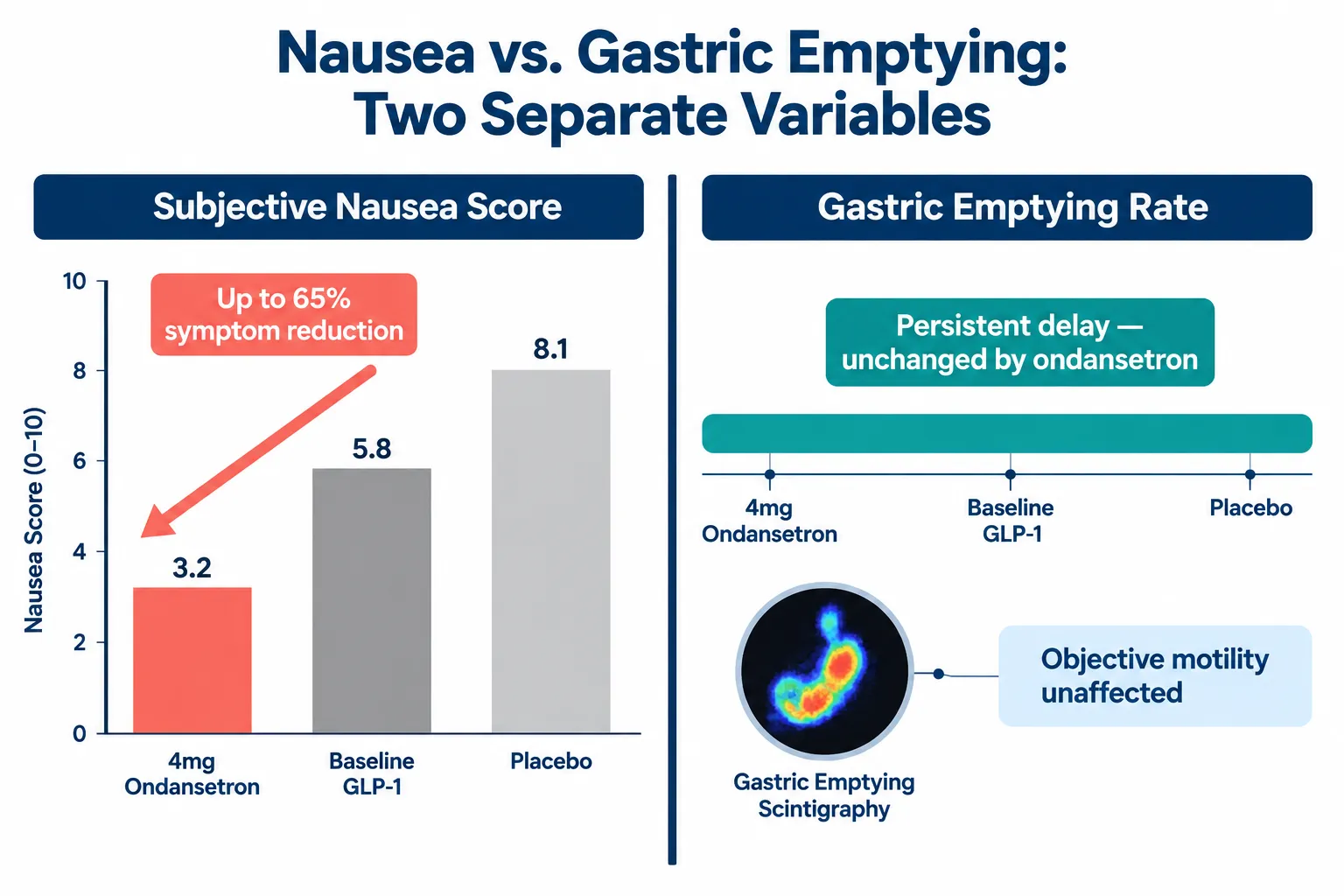
- Ondansetron reduces subjective nausea by blocking 5-HT3 receptors at vagal afferents but does not meaningfully reverse GLP-1-induced gastric stasis.
- Nausea rates in GLP-1 trials range from roughly 17% to 44%, yet all dose groups produce substantial weight loss, showing that nausea alone does not drive intake reduction.
- In research settings, ondansetron should be treated as a time-varying covariate, not a confounder of GLP-1 pharmacodynamics on motility or intake.
- Objective measures such as acetaminophen absorption curves and gastric scintigraphy remain valid even when ondansetron is co-administered.
How GLP-1 Agents Alter Gastric Emptying and Food Intake
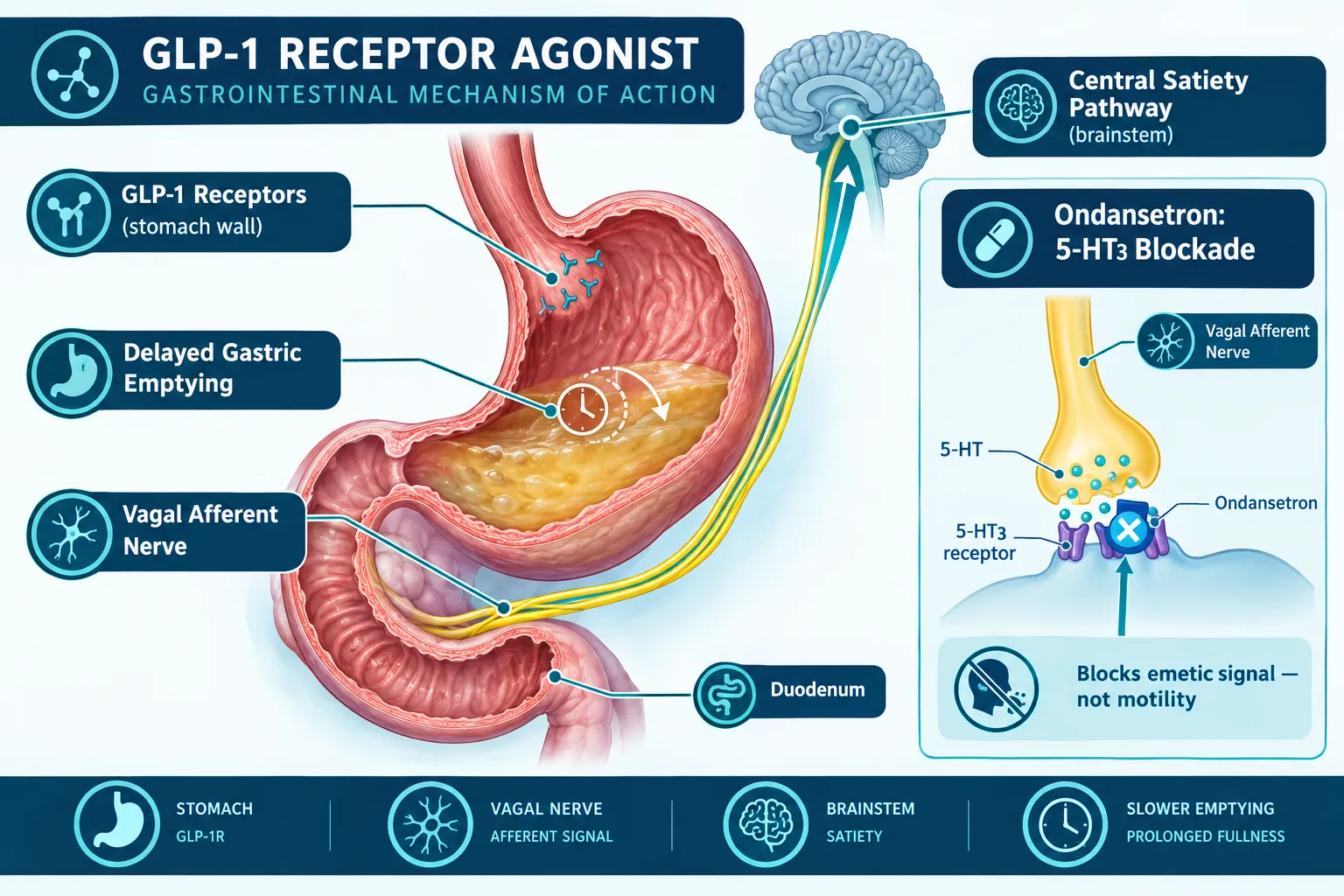
GLP-1 receptor agonists act on receptors located in the stomach wall, the duodenum, and the brainstem. The result is a well-documented slowing of gastric emptying that is independent of whether a patient feels nauseated. Semaglutide, for example, delays gastric emptying by roughly 30-40% in the first weeks of therapy. Even after 12 weeks of chronic use, gastric retention remains 10-33% longer than baseline. Gastric scintigraphy and acetaminophen absorption studies consistently confirm this effect.
This motility change matters for intake because food stays in the stomach longer, prolonging satiety signals and reducing how much a person eats at the next meal. Central appetite pathways reinforce that effect. The practical result is that reduced caloric intake on GLP-class drugs reflects both peripheral gastric slowing and central satiety signaling, not nausea-driven food avoidance.
For researchers exploring the GLP-3 peptide signaling pathway and related incretin biology, understanding this mechanistic separation is foundational before any antiemetic covariate is introduced.
Nausea Prevalence Does Not Equal Mechanism: What Trial Data Show
The pooled STEP trials reported nausea in approximately 42-44% of participants on semaglutide 2.4 mg, compared with roughly 17% on placebo. Tirzepatide trials in the SURPASS and SURMOUNT programs showed nausea rates in the 17-33% range, with a clear dose-response: 24.6% at the lowest dose, rising to 33.3% at mid-dose, then plateauing near 31% at the highest dose. Critically, all dose groups produced substantial and comparable weight loss.
This pattern supports a key conclusion: delayed gastric emptying and central appetite suppression, not nausea per se, are the primary drivers of reduced intake and weight outcomes on GLP-class drugs.
| Trial Program | Agent | Nausea Rate | Weight Outcome |
|---|---|---|---|
| STEP (pooled) | Semaglutide 2.4 mg | ~42-44% | Substantial across all groups |
| SURMOUNT-1 | Tirzepatide 5 mg | ~24.6% | Significant |
| SURMOUNT-1 | Tirzepatide 10 mg | ~33.3% | Significant |
| SURMOUNT-1 | Tirzepatide 15 mg | ~31.0% | Significant |
Nausea is a real side effect, but it is a parallel signal, not the causal pathway. Researchers reviewing GLP-1 third-generation agents should keep this distinction in mind when designing endpoints.
Ondansetron in GLP-Class Research: Separating Antiemetic Effects From Gastric-Emptying and Intake Measurements in Practice
Ondansetron is now the most commonly prescribed antiemetic for GLP-1-associated nausea in clinical practice, typically at 4-8 mg as needed. It is used in roughly 15-20% of patients during early titration or after dose escalations. Expert reviews consistently frame it as a short-term tolerability tool, not a modifier of the pharmacologic effects on gastric emptying or weight.
Mechanistically, the separation is clean:
- GLP-1 agents slow gastric emptying via peripheral GLP-1 receptors and central satiety circuits.
- Ondansetron blocks 5-HT3 receptors at vagal afferents and in the brainstem chemoreceptor trigger zone.
- These are anatomically and pharmacologically distinct targets.
Clinical data back this up. Small retrospective analyses report roughly 40-65% reductions in nausea scores with 4-8 mg ondansetron in GLP-1-treated patients, yet objective gastric-emptying measures remain persistently delayed. Case reports of semaglutide-induced gastroparesis managed with intravenous ondansetron describe improved symptom tolerance but continued motility impairment on imaging.
Preclinical work adds nuance: in a musk shrew model, exendin-4-induced emesis was not blocked by ondansetron, suggesting that GLP-1-triggered vomiting does not rely exclusively on 5-HT3 pathways. Human patients still benefit clinically, but this finding reinforces the conceptual gap between GLP-1 emetic circuitry and the peripheral motility changes that drive intake reduction.
"Ondansetron addresses the symptom without counteracting the therapeutic mechanism", a principle that should anchor how researchers handle antiemetic co-exposure in GLP-class studies.
For broader context on how peptide mechanisms interact across systems, the Peptides 101 resource for research-use buyers provides useful background on receptor-level distinctions.
Research Design: Treating Ondansetron as a Covariate, Not a Confounder
Ondansetron in GLP-Class Research: Separating Antiemetic Effects From Gastric-Emptying and Intake Measurements demands a clear methodological response. As of 2026, no large randomized trial has tested ondansetron for GLP-1 nausea with prespecified gastric-emptying or caloric intake endpoints. Most current evidence comes from retrospective analyses and practice guidelines. That gap creates practical obligations for investigators.
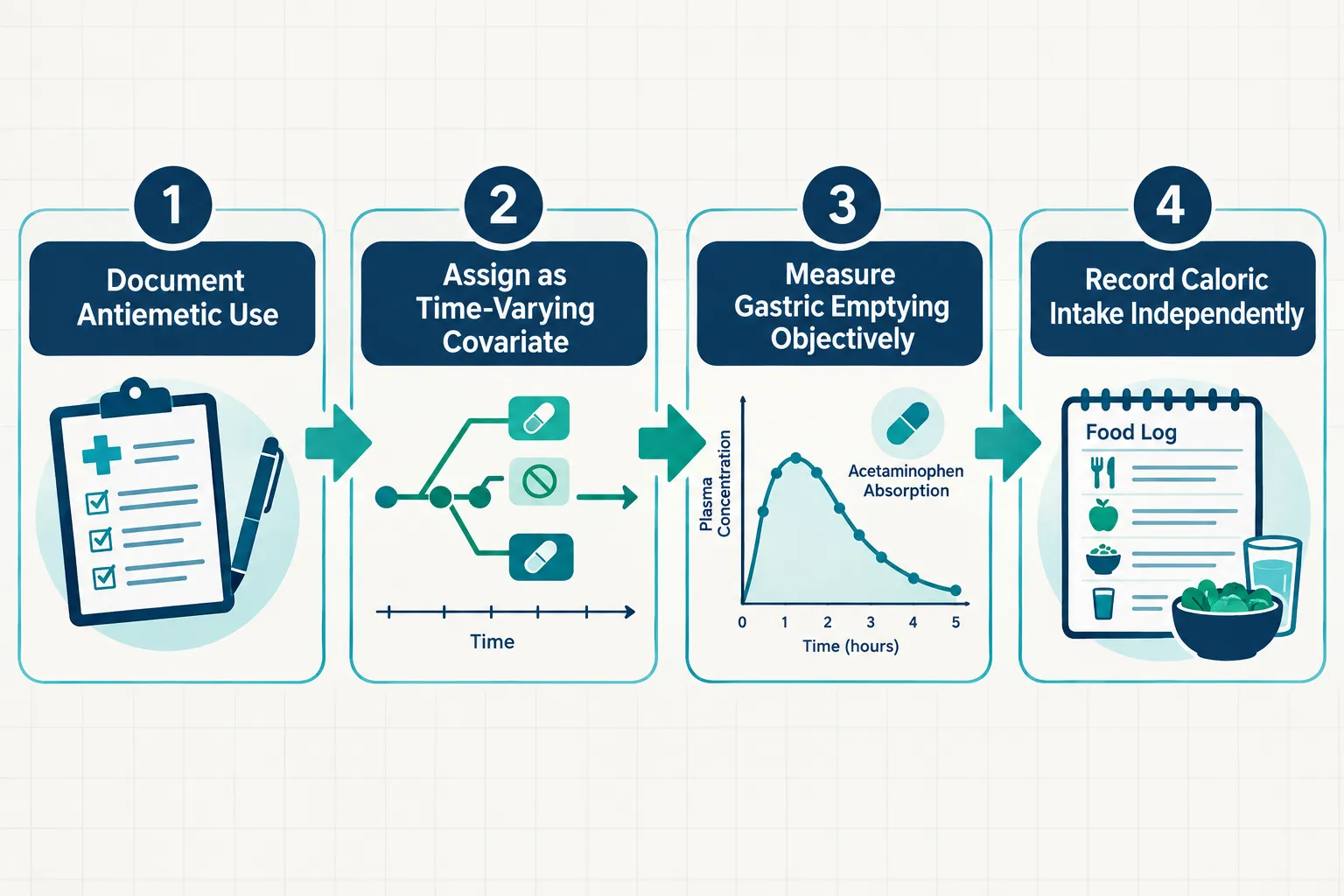
Recommended research-design steps:
- Document antiemetic use prospectively, record dose, timing, and duration for every participant.
- Assign ondansetron as a time-varying covariate in statistical models, not a fixed group variable.
- Use objective gastric-emptying measures, acetaminophen absorption curves or scintigraphy, rather than relying on self-reported fullness.
- Record caloric intake independently using validated dietary recall or direct observation, not nausea-behavior proxies.
- Monitor GI motility endpoints separately, ondansetron can worsen constipation in patients already prone to bowel slowing on GLP-1 agents, making stool frequency a necessary secondary endpoint.
That last point deserves emphasis. A 2026 clinical commentary specifically cautions that ondansetron may exacerbate GLP-1-related constipation, recommending non-pharmacologic alternatives such as hydration, fiber, and ginger when bowel slowing threatens adherence. For any study tracking broader GI motility, ondansetron use becomes a meaningful covariate, not just for nausea, but for the full motility picture.
Researchers also interested in how peptide combinations affect tolerability profiles can review data on cagrilintide and retatrutide as examples of multi-mechanism agents where covariate management becomes even more complex.
No clinically significant pharmacokinetic interaction between ondansetron and semaglutide or other major GLP-1 agents has been identified through mid-2026, and weight-loss or glucose-lowering efficacy appears unchanged when ondansetron is co-prescribed. This strengthens the case for treating it as a symptom-control covariate rather than a variable that alters GLP-1 pharmacodynamics.
Looking Ahead: What Future Studies Need to Resolve
As of 2026, no GLP-1-specific antiemetic has reached phase 3 trials. Growing clinical use of GLP-class agents, including newer agents discussed in resources on GLP-1 reta formulations, is expected to drive development of nausea-targeted adjuncts that modulate GLP-1 emetic pathways without touching gastric emptying or appetite suppression.
Future trials are anticipated to randomize participants to antiemetic versus placebo arms while measuring gastric-emptying times, caloric intake, and weight outcomes in parallel. That design would finally provide definitive data on whether ondansetron or its successors can be used in GLP-class research without confounding mechanistic endpoints.
Until then, the available evidence strongly supports a working framework: ondansetron modifies symptom perception, not gastric-emptying kinetics. Researchers who document its use carefully and apply appropriate statistical controls can preserve the integrity of their motility and intake measurements.
Conclusion
The core finding is straightforward: ondansetron reduces nausea through 5-HT3 receptor blockade at vagal afferents, while GLP-1 agents slow gastric emptying through a separate set of peripheral and central receptors. These mechanisms do not meaningfully overlap, and current evidence confirms that gastric stasis persists even when nausea is well controlled.
Actionable next steps for researchers and clinicians in 2026:
- Pre-register antiemetic use as a time-varying covariate in any GLP-class study that includes gastric-emptying or caloric intake endpoints.
- Use objective motility measures, not patient-reported nausea, as primary evidence of GLP-1 pharmacodynamic activity.
- Track constipation and broader GI motility separately, since ondansetron can compound bowel slowing already induced by GLP-1 agents.
- Advocate for randomized antiemetic sub-studies embedded within larger GLP-class trials to close the current evidence gap.
Separating what ondansetron does from what GLP-class agents do is not merely an academic exercise. It is the methodological foundation that makes gastric-emptying and intake data trustworthy, and that makes the science of GLP-class research credible.