Call or Text 727-513-9780
  • Shopping Cart Shopping Cart
    0Shopping Cart
Pure Tested Peptides | America's most trusted Peptides for sale online
  • Peptides for sale
    • Oral Peptides for sale
      • Peptide Capsules for sale
      • BPC 157 Capsules 1000mcg
      • SLU-PP-332 Capsules | 1000 mcg
      • 5-Amino-1MQ 50mg Capsules
      • Tesofensine 500mcg
    • All Peptides for sale
    • Peptide Sprays
      • BPC 157 Nasal Spray Kit
      • BPC-157 TB500 Nasal Spray Kit
      • Semax Nasal Spray 10mg
      • Selank – Nasal Spray Kit – 10mg
      • Epithalon 50MG Nasal Spray Kit
      • Ipamorelin 10mg Nasal Spray
      • Klow Nasal Spray (BPC-157 + TB-500 + GHK-Cu + KPV) | 80mg
      • Hulk Nasal Spray Tesa / Ipa Blend 6/3 MG
      • Klow Nasal Spray
      • NAD + 500 mg Nasal Spray
      • PT-141 Nasal Spray Kit
    • GHRH Peptides
      • Ipa Peptides
      • CJC-1295 Peptides
        • CJC-1295 with DAC 5 mg
        • CJC-1295 without DAC 5 mg
        • CJC-1295 Ipa 10mg
      • Tesa Peptides
        • Tesa Peptide
        • Tesa 20 mg
    • GHK-Cu Peptides
      • All GHK-Cu Peptides
      • GHK-Cu 100mg
      • KLOW Peptide Blend – Buy KLOW blend online
    • BPC Peptides
      • All BPC Peptides
      • BPC-157
      • BPC-157 TB-500
      • BPC 157 capsules 1000mcg
    • SLU-PP-332 Peptides
      • All SLU-PP-332 Peptides
      • SLU-PP-332 5mg
    • GLP3 Peptides
      • GLP3-R
      • GLP3-R CAG 10mg
      • GLP3-R 20mg
    • PT-141 Peptides
      • PT-141 Peptides for sale
      • PT-141 10mg
      • PT-141 Nasal Spray
    • CAG Peptides
      • Lipo-C Peptide Blend
      • CAG 5mg
      • CAG 10mg
    • MOTS-C Peptides
      • MOTS-C Peptides for sale
      • MOTS-c peptide
      • MOTS-c 10mg *6 pack*
    • 5 Amino 1MQ Peptides
      • 5 Amino 1MQ Peptides for sale
      • 5-Amino-1MQ 50mg Capsules
      • 5-Amino-1MQ 5mg
    • Epithalon Peptides
      • Epithalon Peptides for sale
      • Epithalon 10mg
      • Epithalon 50mg
  • Shop
    • GLPs
      • 5-Amino-1MQ 50mg Capsules
      • 5-Amino-1MQ 5mg
      • GLP3-Reta
      • L-Carnitine 500mg/ml
      • Tesofensine 500mcg
      • SLU-PP-332 5mg
      • MOTS-c 10mg *6 pack*
    • Epithalon & BPC Peptides
      • Epithalon 10mg
      • Epithalon 50mg
      • BPC-157
      • BPC 157 capsules 1000mcg
      • BPC-157 TB-500
      • BPC-157 TB500 Nasal Spray Kit
      • BPC 157 Nasal Spray Kit
    • BPC TB-500 & NAD+ Peptides
      • NAD+ 500 mg
      • KLOW Peptide Blend – Buy KLOW blend online
      • GLOW Peptide Blend
      • TB 500 5mg
      • BPC 157 capsules 1000mcg – Supplement
      • BPC 157 Nasal Spray Kit
      • BPC-157
      • BPC-157 TB500 Nasal Spray Kit
      • BPC-157 TB-500
      • BPC 157 capsules 1000mcg
    • LL-37 Peptide
      • LL-37 10 mg
    • MOTS-C & Selank
      • MOTS-c peptide
      • Selank 10mg
    • GHK Peptides
      • GHK-Cu 100mg
      • GLOW Peptide Blend
      • KLOW Peptide Blend – Buy KLOW blend online
  • COAs
  • Wholesale
    • Wholesale Peptides for sale
  • PTP FAQ
  • Affiliates
    • Affiliate Program
    • Affiliate Signup
  • Contact
    • Contact Customer Service
    • Text Customer Support
  • About US
  • Shop all peptides
  • Login / Register Login / Register Page Link Login / Register Page Link
  • Click to open the search input field Click to open the search input field Search
  • Menu Menu

Tag Archive for: growth hormone secretagogue

Tesamorelin and Ipamorelin: Differentiating Their GHRH Mimetic Activity and Receptor Binding in Research

Tesamorelin and Ipamorelin: Differentiating Their GHRH Mimetic Activity and Receptor Binding in Research

July 13, 2026/0 Comments/in Uncategorized/by

Two peptides can both raise growth hormone levels yet work through entirely different receptor systems, and that distinction changes everything about how researchers design their studies. Understanding the contrast between Tesamorelin and Ipamorelin: Differentiating Their GHRH Mimetic Activity and Receptor Binding in Research is not just an academic exercise. It shapes which experimental models are appropriate, which endpoints are meaningful, and how the two compounds might interact when combined.

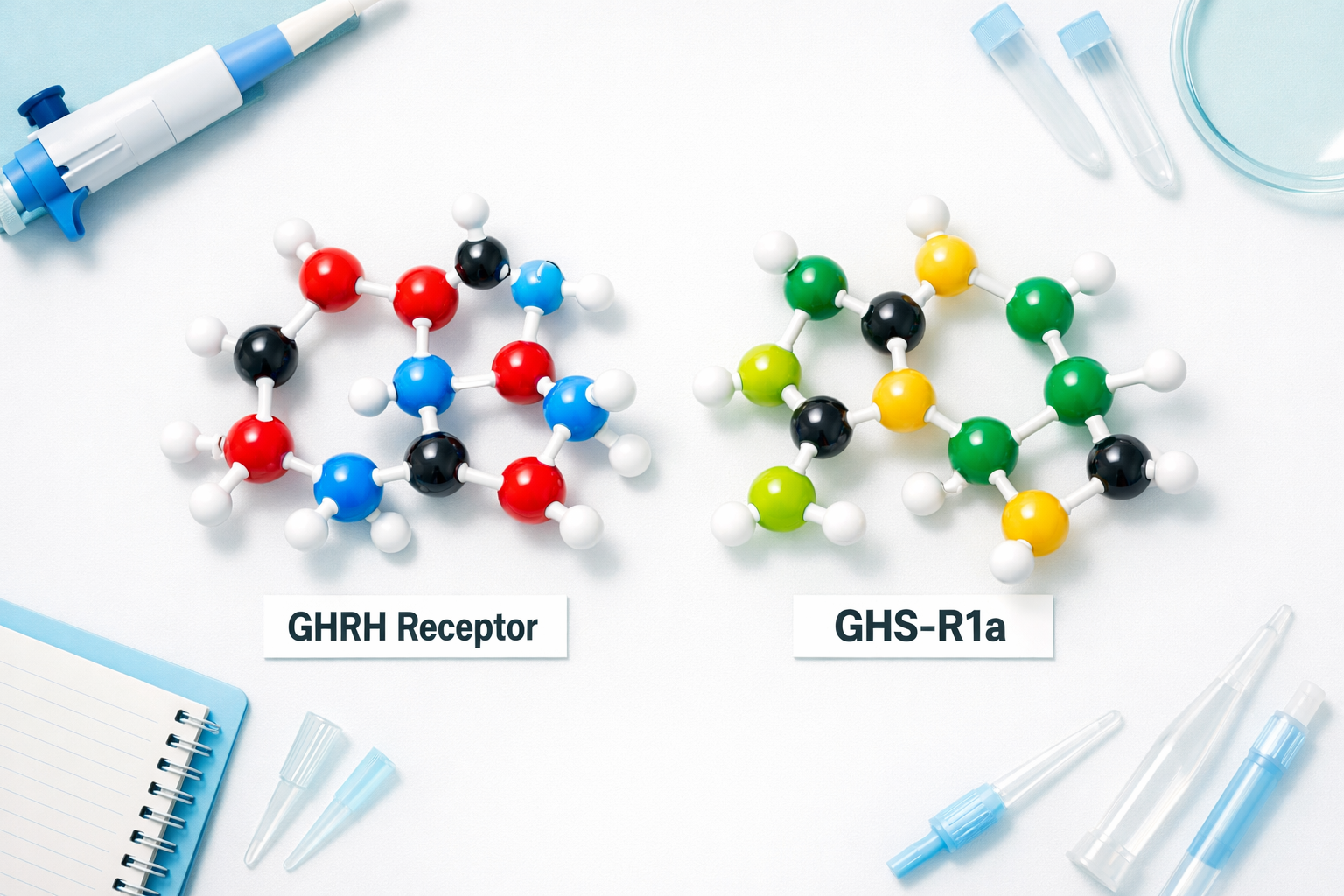
Bright editorial flat-lay landscape (): overhead studio shot of two distinct peptide molecular structure models side by side

Key Takeaways

  • Tesamorelin is a structural analog of GHRH that binds directly to GHRH receptors on pituitary somatotrophs, triggering the cAMP/PKA signaling cascade.
  • Ipamorelin is a selective GHS-R1a agonist that mimics ghrelin's receptor, producing GH release without significant cortisol or prolactin elevation.
  • Tesamorelin carries a trans-3-hexenoic acid modification that extends its half-life to roughly 26 minutes, far beyond native GHRH's sub-two-minute window.
  • Combining both peptides in research models can produce amplified GH secretion because they activate distinct, complementary receptor pathways.
  • Tesamorelin holds FDA approval for HIV-associated lipodystrophy; Ipamorelin remains a research compound as of 2026.

Distinct Receptor Targets: The Core of Differentiating GHRH Mimetic Activity

The most important distinction between these two peptides is where they bind.

Tesamorelin is a synthetic analog of endogenous human GHRH. It binds to GHRH receptors (GHRHR) located on somatotroph cells in the anterior pituitary. Once bound, it activates the cyclic AMP / protein kinase A (cAMP/PKA) pathway, which directly stimulates both GH synthesis and pulsatile GH release. Because it mirrors the body's own GHRH signal, its downstream effects closely replicate physiological GH secretion patterns.

Ipamorelin, by contrast, is a selective agonist of the growth hormone secretagogue receptor 1a (GHS-R1a), the same receptor that endogenous ghrelin activates. This is a fundamentally different binding site. The GHS-R1a pathway operates through a separate intracellular mechanism, and its activation produces GH release without the off-target hormonal effects seen with earlier secretagogues. Specifically, Ipamorelin does not meaningfully raise cortisol, ACTH, or prolactin levels, which makes it a cleaner research tool when isolating GH-specific outcomes.

For a deeper look at how Ipamorelin functions as a secretagogue, the IPA GHRH secretagogue research overview provides useful context.


Structural Modifications and Receptor Binding Kinetics

Structural Modifications and Receptor Binding Kinetics

Receptor binding is only part of the story. Binding kinetics, how long a peptide stays active, determine its practical utility in research protocols.

Native GHRH has a plasma half-life of under two minutes because it is rapidly degraded by dipeptidyl peptidase IV (DPP-IV). Tesamorelin addresses this through a structural addition: a trans-3-hexenoic acid group attached to its N-terminus. This modification confers resistance to enzymatic cleavage, extending its half-life to approximately 26 minutes. That is a roughly 13-fold improvement, allowing sustained receptor engagement and a more prolonged GH pulse.

Ipamorelin is a pentapeptide, just five amino acids, and its compact structure contributes to its receptor selectivity. Its binding affinity for GHS-R1a is high, and its small size reduces the likelihood of cross-reactivity with other receptor families. This selectivity is precisely why Ipamorelin became a benchmark compound in GH secretagogue research.

Feature Tesamorelin Ipamorelin
Receptor Target GHRHR (pituitary) GHS-R1a (ghrelin receptor)
Signaling Pathway cAMP/PKA Separate GHS pathway
Approximate Half-Life ~26 minutes Short (minutes)
Cortisol/Prolactin Effect Minimal Minimal to none
FDA Approval Status Yes (lipodystrophy) No (research only)

Researchers exploring how these kinetics translate to experimental design may also find value in reviewing CJC-1295 and Ipamorelin GH axis research, which examines related GHRH-class combinations.


Synergistic Research Applications and Practical Implications

Because Tesamorelin and Ipamorelin act on different receptors, their combined use in research models produces additive, and in some study designs, synergistic, GH release. This dual-pathway activation is the scientific rationale behind blended peptide formulations studied in preclinical settings.

From a research planning perspective, this complementarity is significant:

  • Tesamorelin drives GH release through the GHRH axis, closely mimicking natural pituitary stimulation.
  • Ipamorelin amplifies that signal through the ghrelin receptor axis, adding a second, independent GH secretion trigger.
  • Together, they may help researchers model more robust GH secretion states without resorting to exogenous GH administration.

Those interested in blended formulation research can explore the Tesamorelin, CJC-1295, and Ipamorelin blend reconstitution resource for technical preparation details.

Tesamorelin's clinical track record also distinguishes it. Approved by the FDA in 2010 under the brand name Egrifta for HIV-associated lipodystrophy, it remains the only GHRH analog to achieve that regulatory milestone. Researchers can review the broader Tesamorelin benefits profile and compare it with related analogs through the Tesamorelin vs. Sermorelin comparison to contextualize its position among GHRH-class peptides.

Ipamorelin, despite its strong selectivity profile and favorable tolerability data in preclinical models, has not received FDA approval for any clinical indication as of 2026. It remains classified as a research compound. For researchers sourcing it, the Ipamorelin research peptide catalog offers relevant product information.

"The receptor-level distinction between Tesamorelin and Ipamorelin is not a minor technical detail, it is the foundation for understanding why their combined use in research produces effects neither achieves independently."

For researchers also exploring metabolic endpoints alongside GH axis modulation, the metabolic modulation research lines overview provides a broader framework for study design.


Conclusion

Differentiating Tesamorelin and Ipamorelin: Differentiating Their GHRH Mimetic Activity and Receptor Binding in Research comes down to one foundational fact: they do not compete for the same receptor. Tesamorelin engages the GHRH receptor via cAMP/PKA signaling with an extended half-life enabled by structural modification. Ipamorelin selectively activates GHS-R1a without off-target hormonal effects. Each compound offers a distinct mechanistic lens for studying GH secretion.

Actionable next steps for researchers:

  • Define your receptor target before selecting a compound, GHRHR vs. GHS-R1a studies require different controls.
  • Consider dual-pathway protocols when studying maximal GH secretion states.
  • Review Tesamorelin's FDA-approved clinical data as a validated reference point for GHRH analog research.
  • Consult current literature on GHS-R1a selectivity when designing Ipamorelin studies to leverage its clean hormonal profile.

Selecting the right peptide for a given research question is not about which compound is "better", it is about which receptor system best models the biological question at hand.

https://www.puretestedpeptides.com/wp-content/uploads/2026/07/tesa-and-ipamorelin-differentiating-their-ghrh-mimetic-activity-and-recep.webp 1024 1536 https://www.puretestedpeptides.com/wp-content/uploads/2026/01/buy-peptides-online.jpg 2026-07-13 13:19:352026-07-13 13:19:35Tesamorelin and Ipamorelin: Differentiating Their GHRH Mimetic Activity and Receptor Binding in Research
CJC-1295 with Ipamorelin: Synergistic Effects and Optimized Protocols in Growth Hormone Research

CJC-1295 with Ipamorelin: Synergistic Effects and Optimized Protocols in Growth Hormone Research

July 6, 2026/0 Comments/in Uncategorized/by

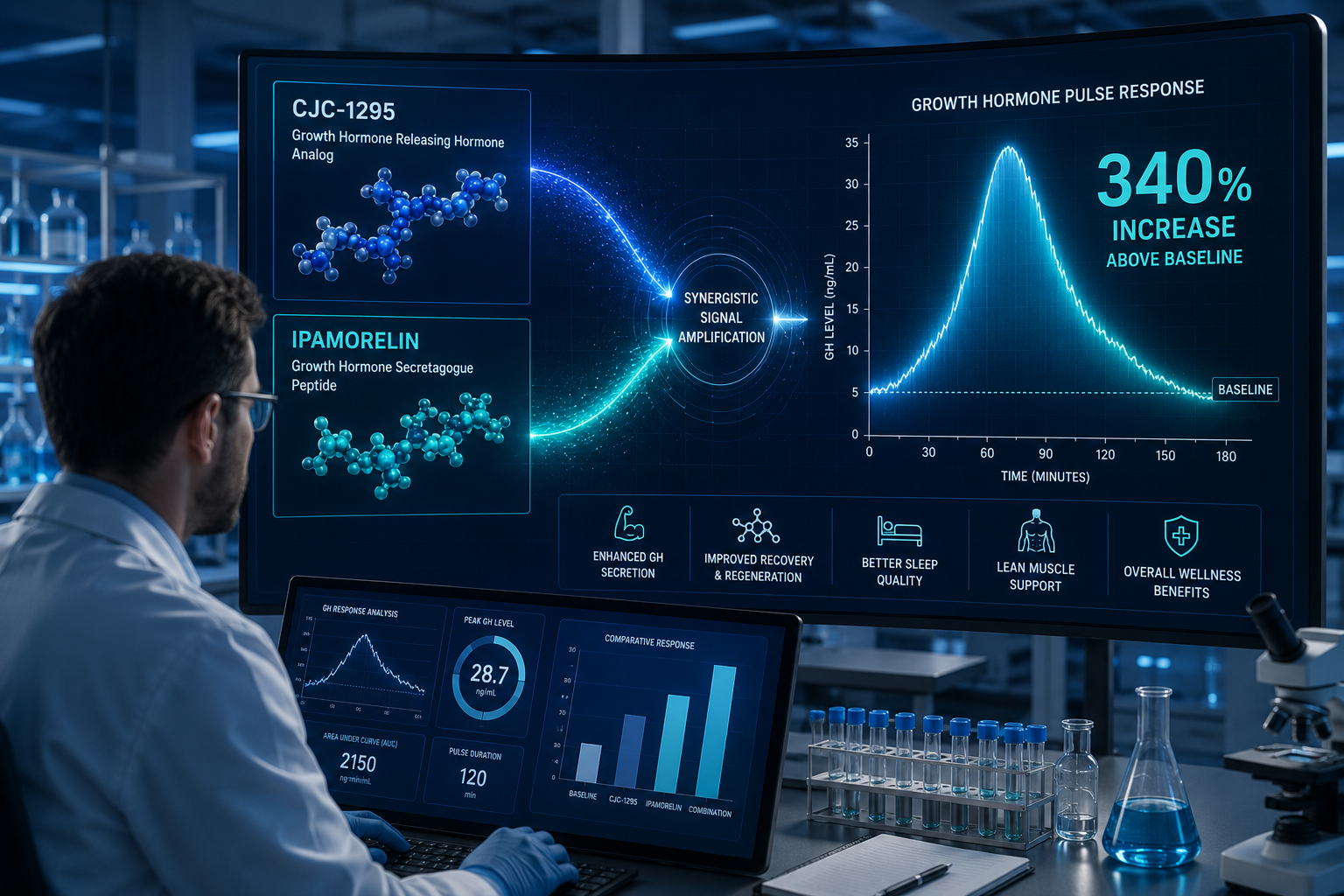
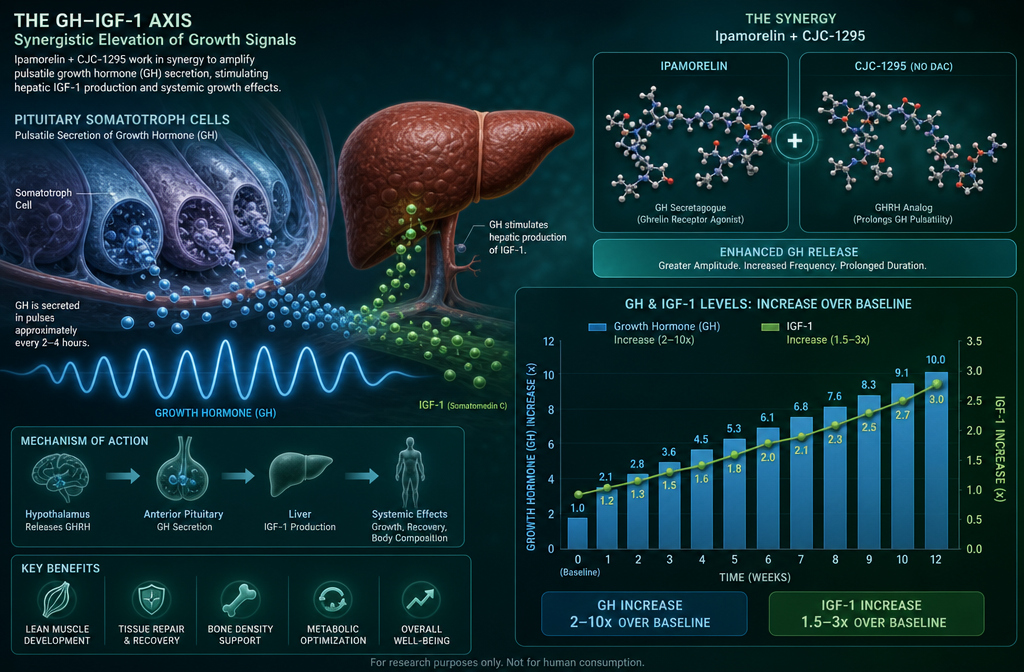
Growth hormone pulse amplitudes reaching 340% above baseline from a single timed dosing sequence, that figure alone explains why researchers studying CJC-1295 with Ipamorelin: Synergistic Effects and Optimized Protocols in Growth Hormone Research have made this peptide pairing one of the most actively investigated combinations in endocrinology today.

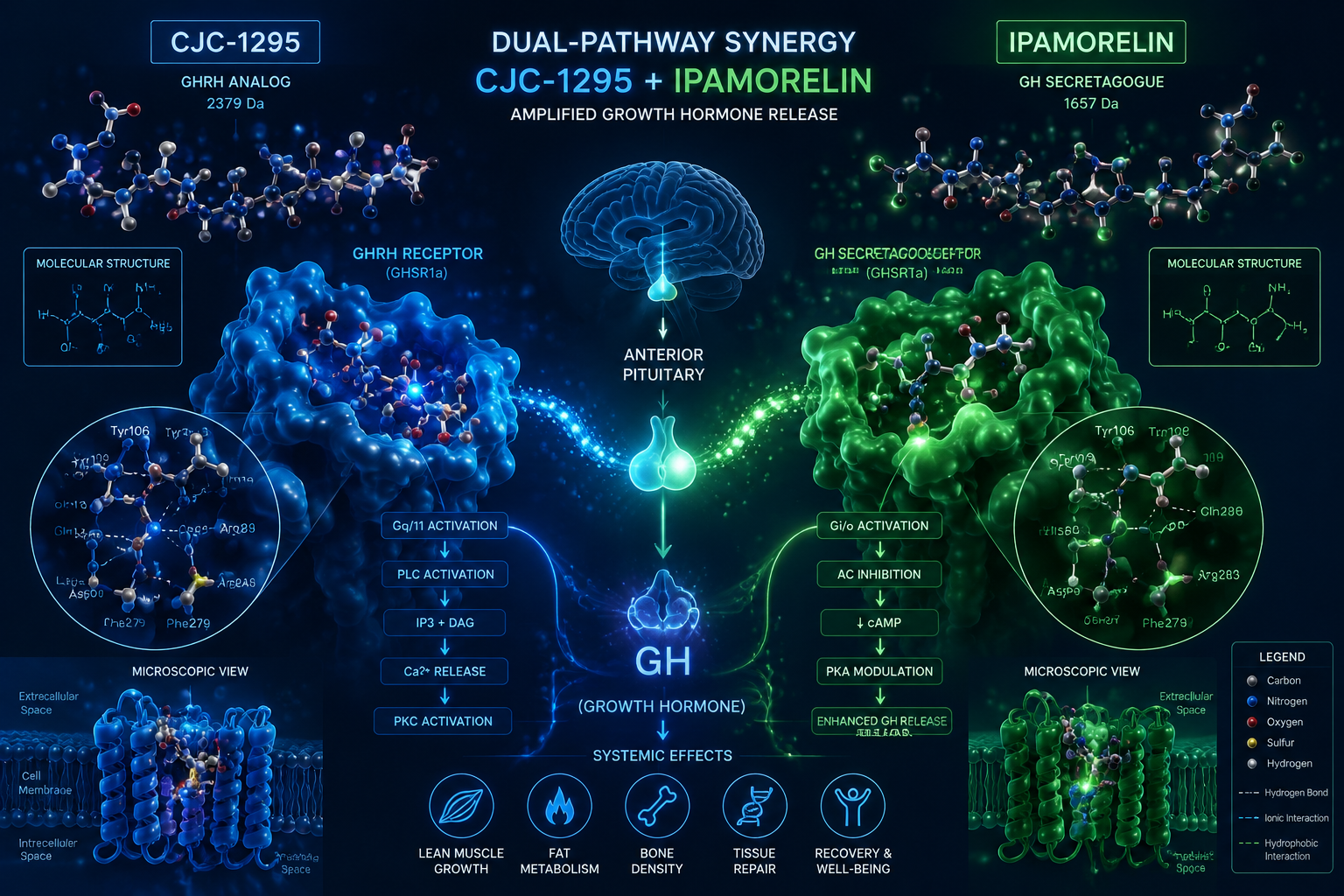
Neither compound achieves that magnitude alone. CJC-1295 (no-DAC) activates GHRH receptors, while Ipamorelin targets ghrelin/GHSR-1a receptors, two separate pathways that, when triggered in sequence, produce a larger yet still pulsatile growth hormone release. That pulsatility matters because it more closely mirrors natural GH physiology than flat, supraphysiologic exposure.
Wide-angle laboratory research scene showing two distinct molecular structures labeled CJC-1295 and Ipamorelin converging

Key Takeaways

  • Combining CJC-1295 no-DAC with Ipamorelin within a 30-minute dosing window produces GH pulses approximately 340% above baseline, significantly higher than either peptide alone.
  • The synergy stems from dual receptor activation: GHRH receptors (CJC-1295) and ghrelin/GHSR-1a receptors (Ipamorelin), preserving natural pulsatility.
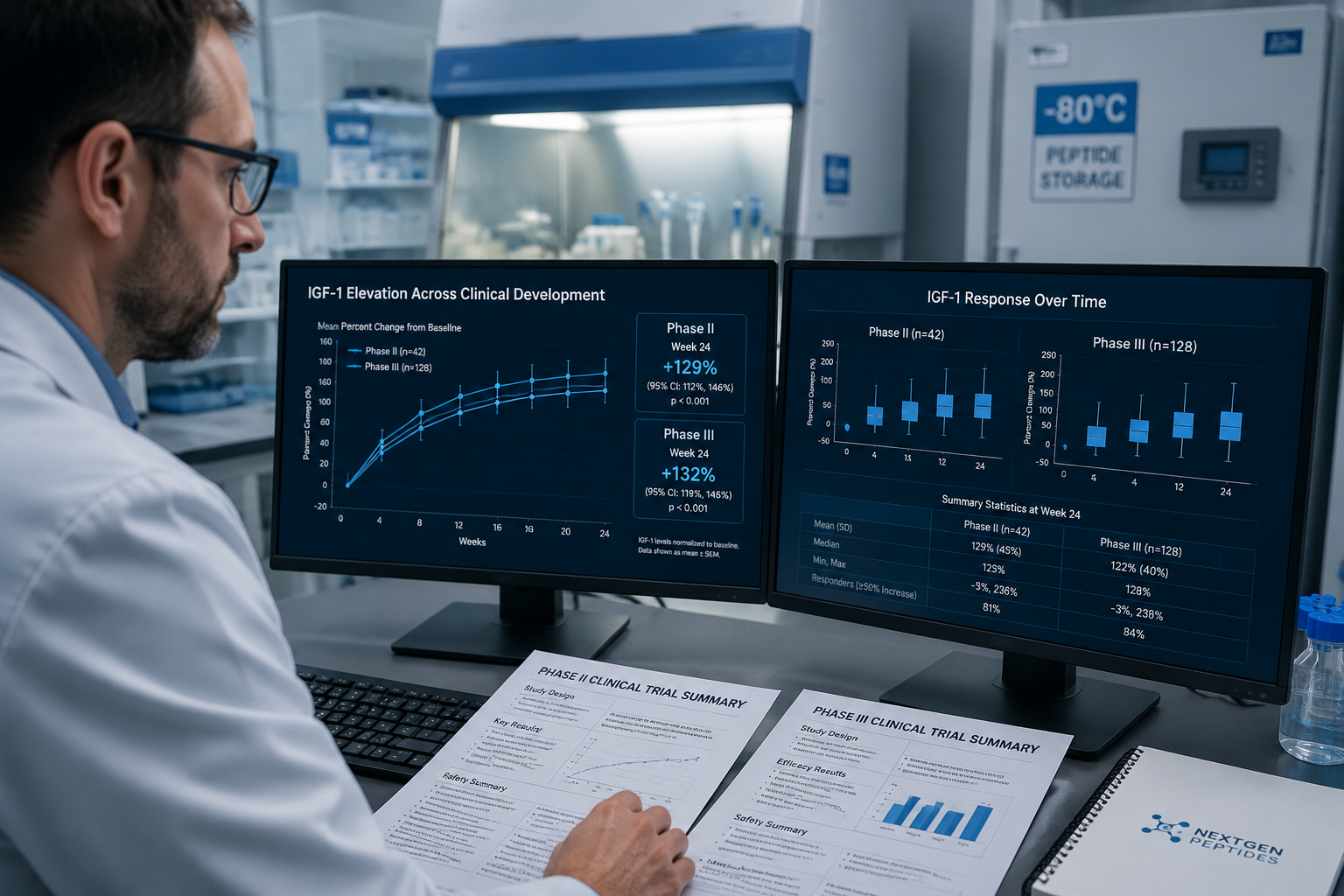
  • Co-administration in research settings has produced IGF-1 elevations of roughly 1.8-2.3 times baseline compared with single-agent protocols.
  • Phase II and Phase III trials in 2026 are actively investigating this pairing for age-related GH deficiency, metabolic dysfunction, and body-composition outcomes.
  • As of 2026, neither peptide holds FDA approval; both remain strictly research-use compounds.

Mechanism Behind the Synergistic Effects

The core reason researchers prioritize CJC-1295 with Ipamorelin: Synergistic Effects and Optimized Protocols in Growth Hormone Research lies in complementary receptor biology.

CJC-1295 no-DAC is a modified GHRH analogue. It binds GHRH receptors on somatotroph cells in the anterior pituitary, stimulating GH synthesis and release. Its relatively short active window, compared with the DAC version, makes it well-suited for protocols that aim to replicate natural pulsatile GH secretion. For a deeper look at the structural differences, the CJC-1295 with DAC deeper dive resource provides useful mechanistic context.

Ipamorelin is a selective growth hormone secretagogue and ghrelin receptor agonist. It stimulates GH release through GHSR-1a receptors while showing minimal effect on cortisol or prolactin, a selectivity profile that makes it a preferred research tool. Researchers exploring the broader secretagogue landscape will find the Ipamorelin as the most important GHRH secretagogue overview informative.

When both peptides are administered within a 30-minute window, the two receptor systems amplify each other's downstream signaling. The result is a GH pulse that is substantially larger than additive effects would predict, a true pharmacological synergy.

"Sequential activation of GHRH and ghrelin receptors generates a larger yet still pulsatile GH release, preserving physiological rhythm while amplifying amplitude."


Optimized Protocols in Growth Hormone Research Settings

Optimized Protocols in Growth Hormone Research Settings

Translating receptor biology into practical research protocols requires attention to timing, frequency, and cycle structure. Current data from ongoing Phase II and Phase III trials in 2026 point toward several consistent design principles.

Timing and Sequencing

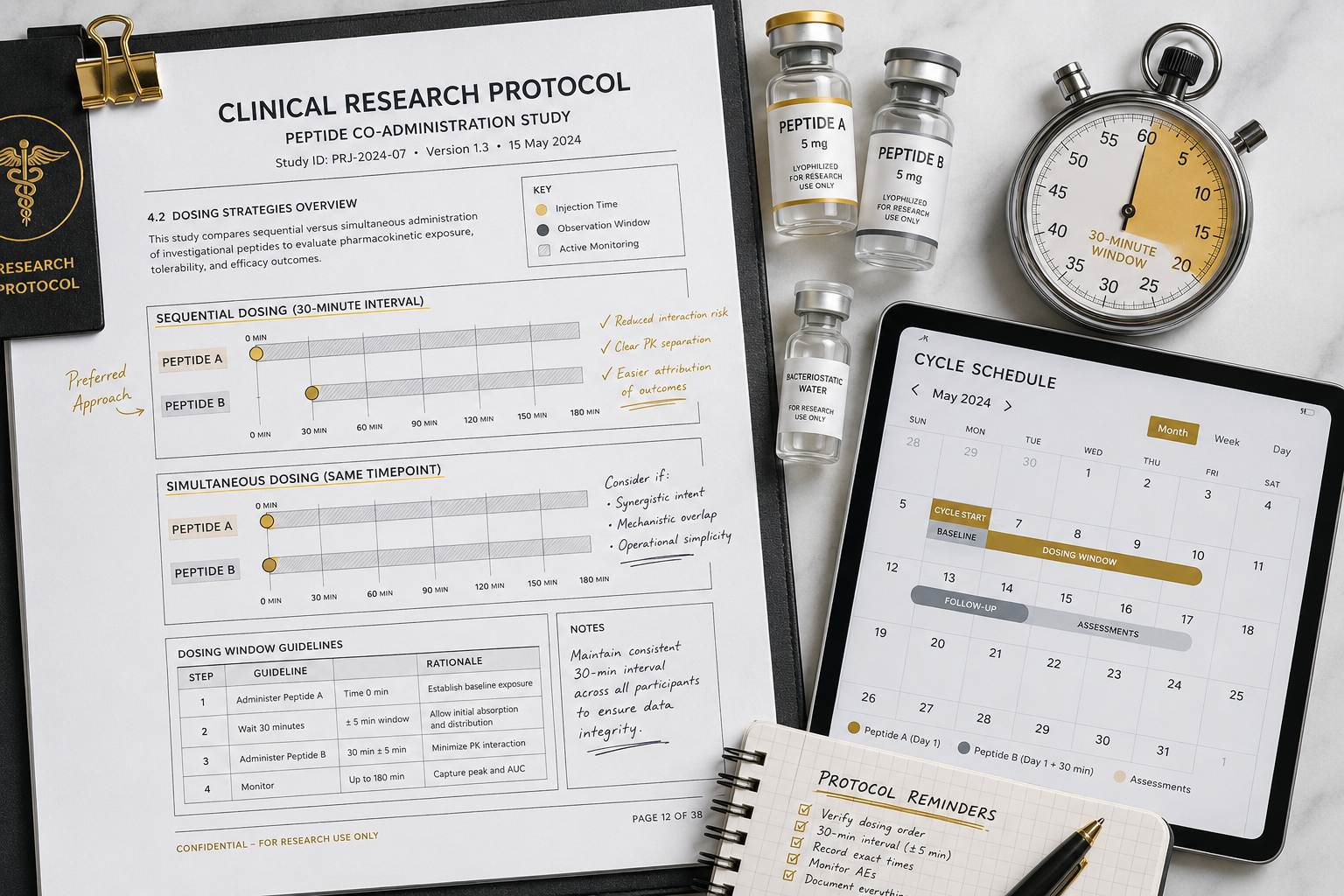
Administering CJC-1295 no-DAC first, followed by Ipamorelin within a 30-minute window, consistently outperforms simultaneous injection in terms of peak GH amplitude. The sequential approach allows GHRH receptor priming before ghrelin receptor activation compounds the signal.

Dosing Frequency

Most active research protocols use twice-daily administration, once in the morning and once before sleep, to align with natural GH secretory patterns. Sleep-time dosing is particularly relevant because endogenous GH pulses are largest during slow-wave sleep.

Cycle Length and IGF-1 Outcomes

Protocol Variable Research Finding
Dosing window Sequential, within 30 minutes
GH pulse amplitude ~340% above baseline
IGF-1 elevation 1.8-2.3x baseline (co-administration)
Frequency Twice daily in most active trials

Researchers combining these peptides with broader metabolic interventions have also explored Tesamorelin, CJC-1295, and Ipamorelin blend protocols to address body-composition endpoints more comprehensively.

For those examining metabolic outcomes specifically, the Tesamorelin body composition research themes page offers relevant parallel data.


2026 Clinical Trial Landscape and Regulatory Considerations

2026 Clinical Trial Landscape and Regulatory Considerations

Active Phase II and Phase III trials in 2026 are examining CJC-1295 with Ipamorelin: Synergistic Effects and Optimized Protocols in Growth Hormone Research across three primary indications: age-related GH deficiency, metabolic dysfunction, and body-composition optimization.

Investigators are specifically studying:

  • Sequential vs. simultaneous dosing to determine which produces superior IGF-1 outcomes with fewer desensitization effects
  • Injection frequency optimization, balancing pulse amplitude against receptor downregulation over extended cycles
  • Cycle length variables to identify the minimum effective duration for meaningful IGF-1 and lean-mass endpoints

Much of this trial data remains unpublished, though secondary summaries from 2026 trial overviews confirm the dual-peptide design as the central mechanistic feature.

Regulatory status as of 2026: Neither CJC-1295 nor Ipamorelin holds FDA approval for any clinical indication. Both remain research-use compounds subject to increasingly strict compounding guidance. Researchers and institutions should review current regulatory frameworks before initiating any protocol. For context on related peptide regulatory considerations, the Ipamorelin and Sermorelin stack research page addresses comparable compliance questions.

Researchers interested in expanding their GH axis investigation may also find value in reviewing what is somatotropin for foundational context, or exploring NAD+ energetics and longevity research themes for adjacent metabolic pathways.


Conclusion

The evidence base for CJC-1295 with Ipamorelin: Synergistic Effects and Optimized Protocols in Growth Hormone Research continues to strengthen in 2026, with mechanistic data confirming 340% GH pulse amplification and IGF-1 elevations nearly 2.3 times baseline under optimized sequential protocols. The dual receptor mechanism, GHRH and GHSR-1a activation in sequence, represents a reproducible and physiologically coherent research strategy.

Actionable next steps for researchers:

  • Prioritize sequential dosing with a 30-minute window between CJC-1295 no-DAC and Ipamorelin administration
  • Design protocols around twice-daily injection schedules aligned with natural GH secretory rhythms
  • Monitor IGF-1 at regular intervals to detect desensitization before it affects endpoint data
  • Stay current with FDA and compounding regulatory updates, as guidance continues to evolve in 2026
  • Review active trial registries for emerging dose and cycle-length data as Phase III results are published
https://www.puretestedpeptides.com/wp-content/uploads/2026/07/CJC-1295-with-Ipamorelin-Synergistic-Effects-and-Optimized-Protocols-in-Growth-Hormone-Research.png 1024 1536 https://www.puretestedpeptides.com/wp-content/uploads/2026/01/buy-peptides-online.jpg 2026-07-06 13:03:562026-07-06 13:03:56CJC-1295 with Ipamorelin: Synergistic Effects and Optimized Protocols in Growth Hormone Research
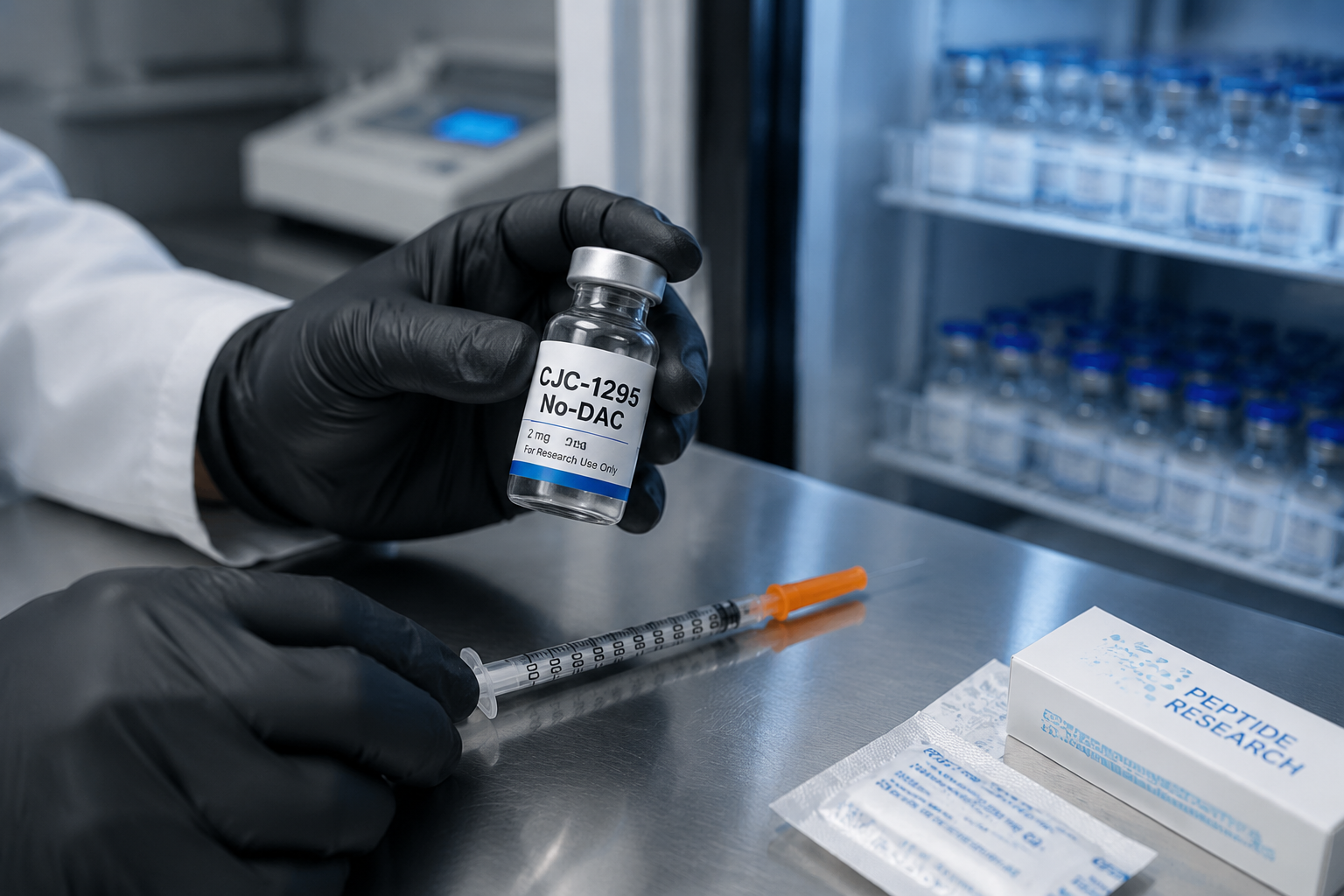
CJC-1295 Without DAC: Why Half-Life Matters in Growth Hormone Research

CJC-1295 Without DAC: Why Half-Life Matters in Growth Hormone Research

June 28, 2026/0 Comments/in Uncategorized/by

A peptide with a 30-minute half-life may sound like a limitation. In growth hormone research, it is often the point. CJC-1295 Without DAC: Why Half-Life Matters in Growth Hormone Research is a question that cuts to the core of how researchers design protocols that respect the body's natural hormonal rhythms rather than override them.

Also known as Modified GRF 1-29, CJC-1295 without DAC is a synthetic analog of growth hormone-releasing hormone (GHRH). Its short active window is not a flaw in the design — it is the design.

Key Takeaways

  • CJC-1295 without DAC has a half-life of approximately 30 minutes, supporting pulsatile GH release
  • The absence of the Drug Affinity Complex (DAC) distinguishes it from the longer-acting DAC variant
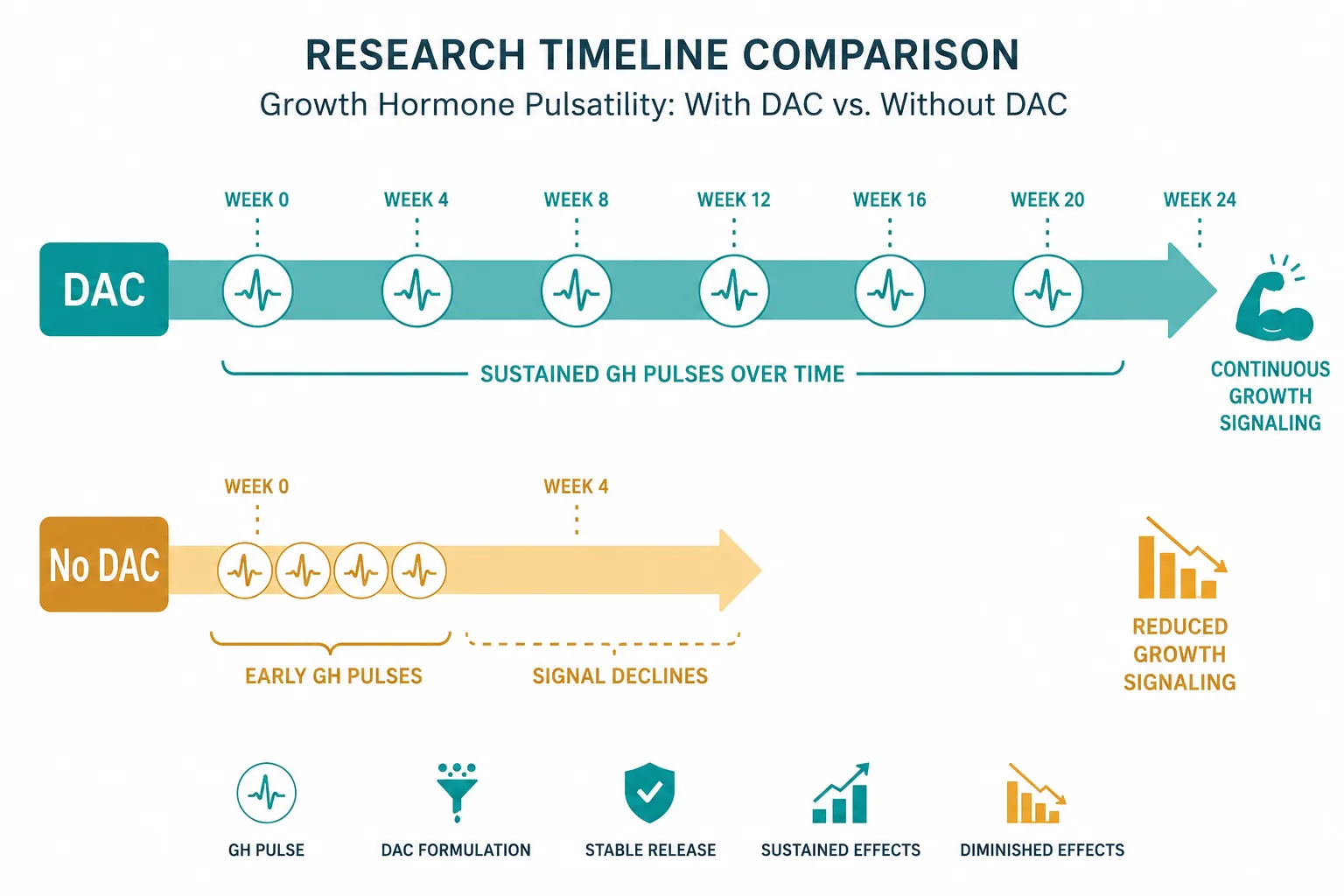
  • Pulsatile GH secretion more closely mirrors natural physiology and may reduce receptor desensitization
  • It is frequently paired with ipamorelin to target complementary GH-release pathways
  • CJC-1295 without DAC is not FDA-approved and is intended strictly for research purposes

Key Takeaways

Understanding the Half-Life Difference in CJC-1295 Without DAC Research

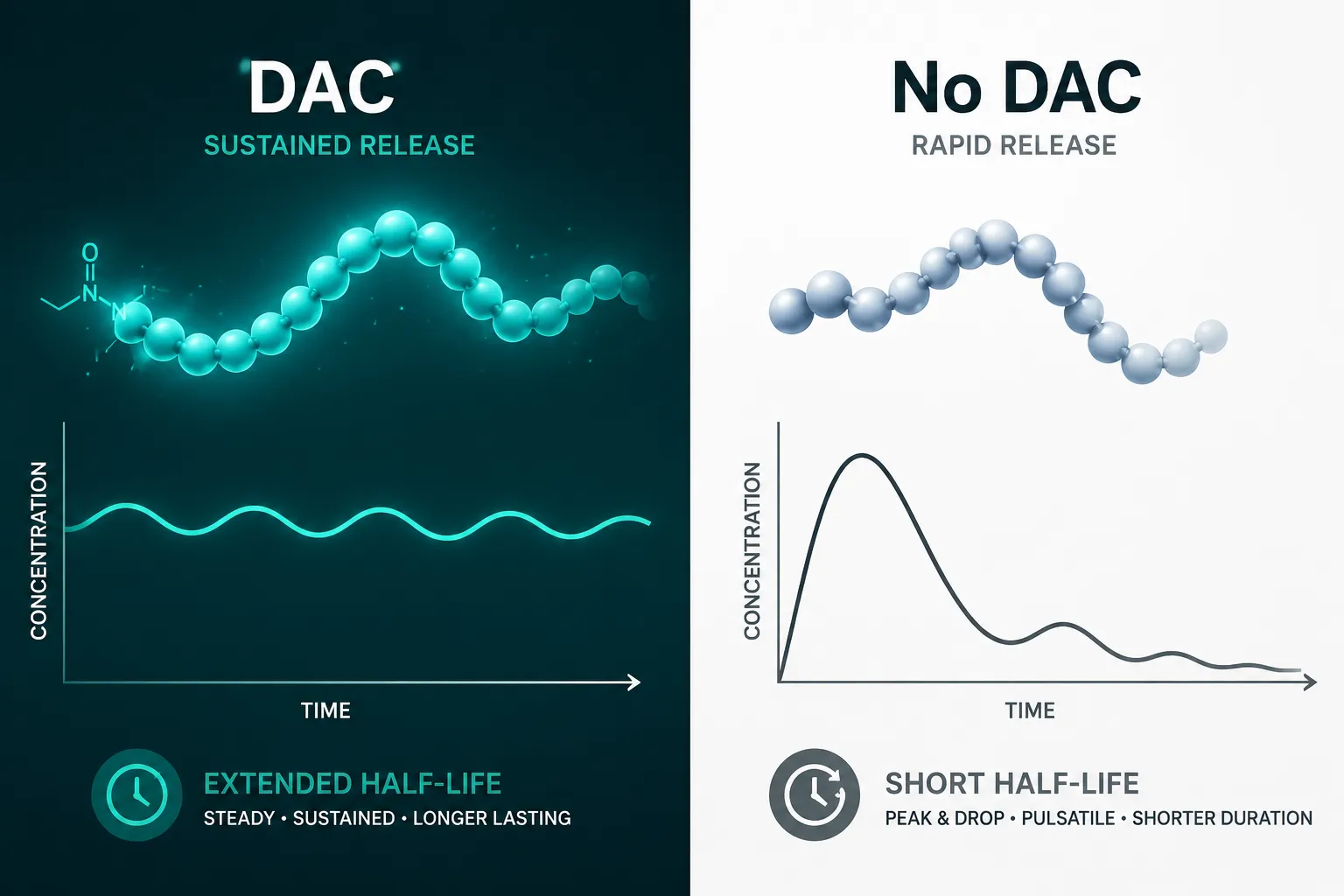
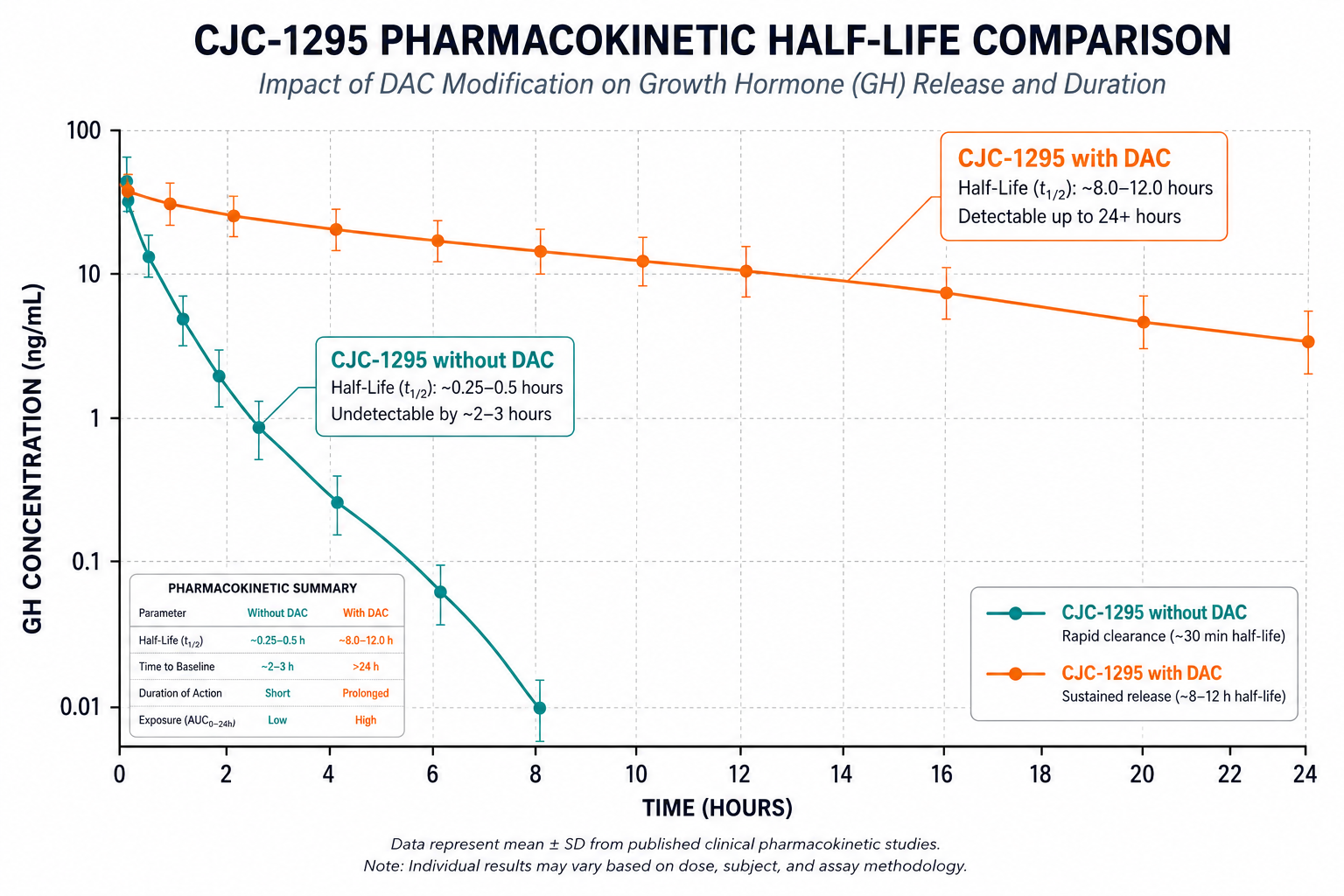
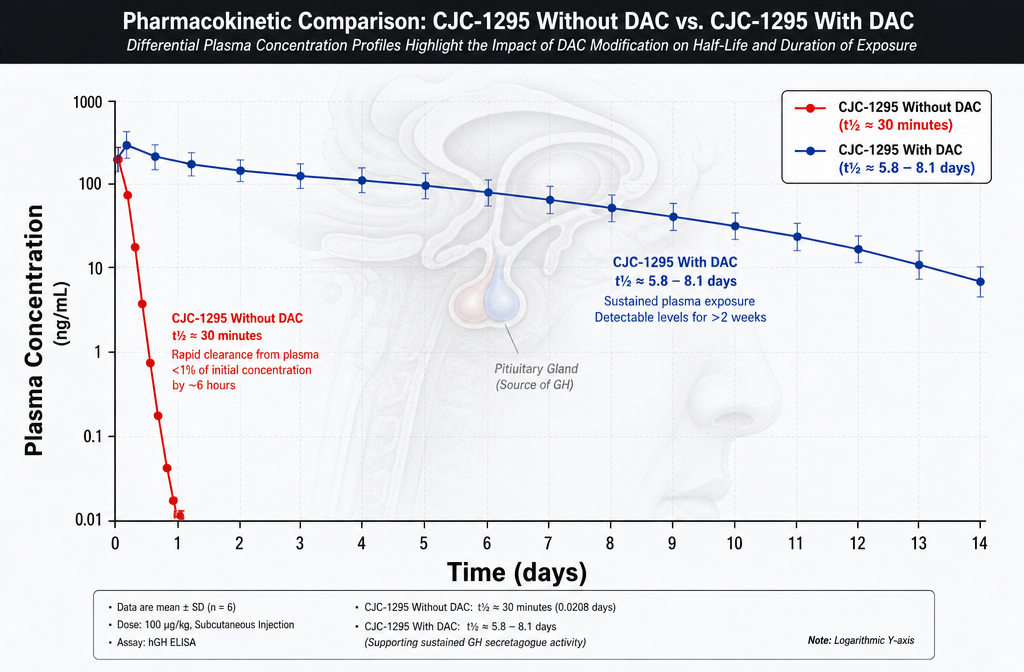
Half-life determines how long a compound remains active in a biological system. For CJC-1295 without DAC, that window is roughly 30 minutes. For the DAC version, the half-life stretches to approximately 5.8 to 8.1 days.

That difference is not trivial. It changes everything about how GH is released.

Variant Half-Life GH Release Pattern
CJC-1295 without DAC ~30 minutes Pulsatile, physiological
CJC-1295 with DAC ~5.8–8.1 days Sustained, continuous

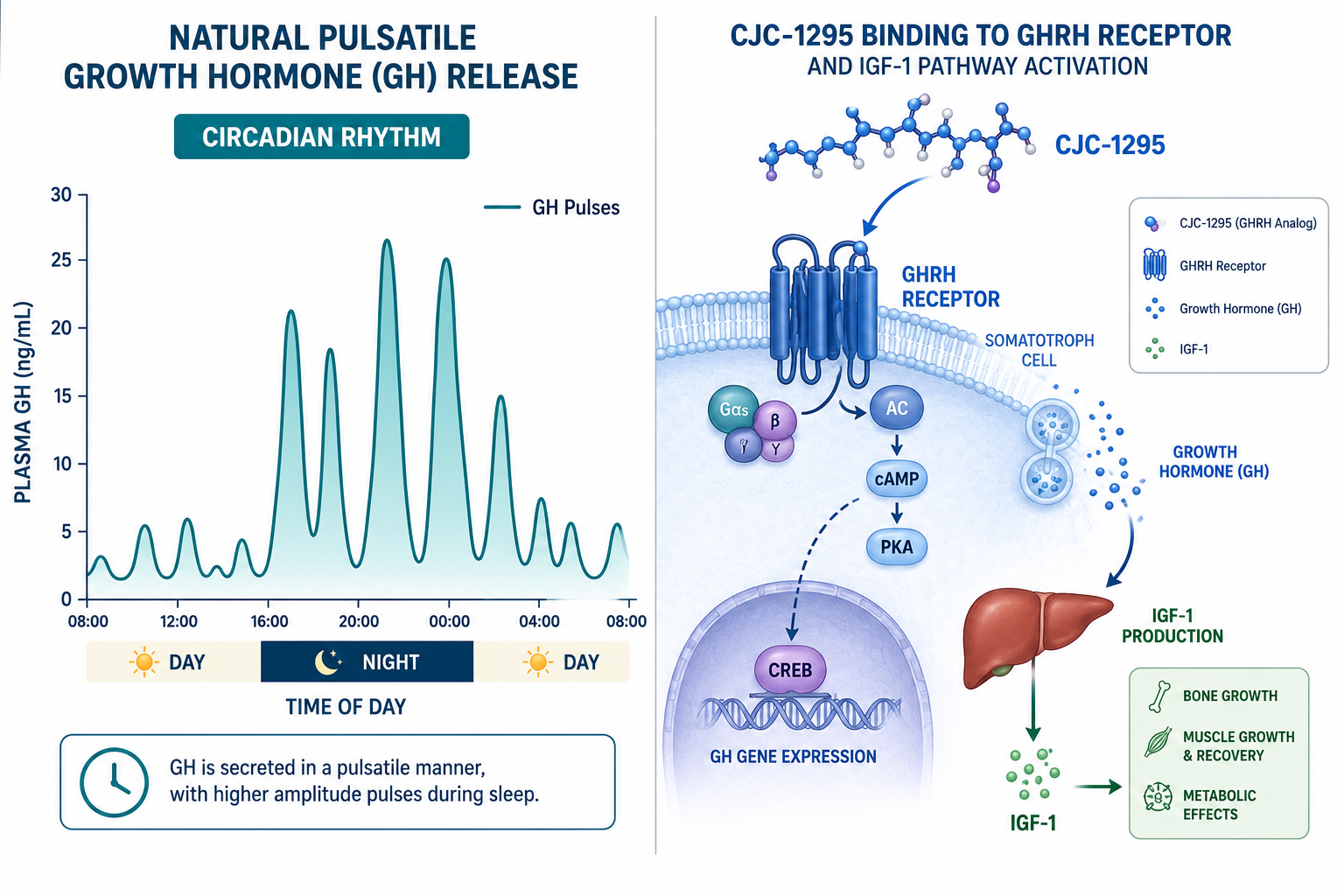
The body does not release GH in a steady stream. It releases it in pulses — sharp peaks followed by quiet troughs. This rhythm is tied to sleep cycles, metabolic signaling, and feedback loops involving IGF-1. A compound that mimics this pattern is considered more physiologically aligned than one that maintains constant elevation.

"The short half-life of the no-DAC variant allows researchers to time GH pulses with precision, which is central to protocols designed around natural secretion windows."

For a deeper look at how the DAC modification changes the pharmacological profile, the CJC-1295 with DAC deeper dive offers a useful comparison.


Mechanism of Action: How the No-DAC Version Triggers GH Pulses

CJC-1295 without DAC binds to GHRH receptors on pituitary somatotroph cells. This binding stimulates the release of GH, which in turn drives IGF-1 production in the liver. The cascade is well-characterized in the scientific literature.

What makes the no-DAC version distinct is its rapid clearance. Because it leaves the system quickly, GH levels rise sharply and then return to baseline — closely matching the body's endogenous pattern.

Why this matters in research:

  • Avoids prolonged receptor activation that can lead to desensitization
  • Allows multiple dosing windows within a single day
  • Enables researchers to observe GH pulse responses in controlled intervals

Typical research protocols use doses of 100–300 mcg administered two to three times daily, often timed around sleep onset and morning windows when natural GH secretion is highest. Cycles in research settings commonly run 12 to 16 weeks.

The CJC-1295 product page provides additional catalog context for researchers sourcing this compound.


Mechanism of Action: How the No-DAC Version Triggers GH Pulses

CJC-1295 Without DAC and Ipamorelin: A Common Research Pairing

One of the most studied combinations in GH research pairs CJC-1295 without DAC with ipamorelin. These two compounds work through different but complementary pathways.

  • CJC-1295 without DAC activates the GHRH receptor, amplifying the GH pulse
  • Ipamorelin activates the growth hormone secretagogue receptor (GHSR), independently triggering GH release

Together, they produce a stronger, more synchronized GH response than either compound alone. Researchers value this pairing because it targets two separate mechanisms while still producing a pulsatile, time-limited GH spike.

Pre-formulated blends are available for research use, including the CJC-1295 and ipamorelin combination and the CJC-1295 plus IPA research blend.

For researchers exploring broader GH-axis protocols, the tesa vs ipamorelin comparison provides useful context on how different GHRH analogs differ in their pharmacological profiles.


CJC-1295 Without DAC and Ipamorelin: A Common Research Pairing

Storage, Safety, and Research Considerations

Lyophilized CJC-1295 without DAC should be stored at 2–8°C. Once reconstituted, it remains stable under refrigeration for up to 30 days.

The available safety data — drawn from studies on the parent CJC-1295 compound — suggest reasonable tolerability at research doses, with no serious adverse reactions reported at doses of 30 or 60 mcg/kg. However, long-term safety data remain limited, and the compound is not FDA-approved for human or veterinary use.

The evidence base includes 18 human studies, 126 animal studies, and over 56 published reviews — a substantial foundation, though researchers should note that studies specific to the no-DAC variant are less numerous than those on the DAC form.

Researchers interested in broader peptide research contexts may also find value in reviewing BPC-157 research documentation and TB-500 and BPC-157 regeneration research as complementary areas of study.


Conclusion

CJC-1295 Without DAC: Why Half-Life Matters in Growth Hormone Research comes down to one core principle: shorter is sometimes smarter. A 30-minute half-life is not a compromise — it is a tool that allows researchers to replicate pulsatile GH dynamics with precision.

Actionable next steps for researchers in 2026:

  1. Review the pharmacokinetic literature on Modified GRF 1-29 before designing protocols
  2. Consider the ipamorelin pairing to target complementary GH-release pathways
  3. Source compounds from verified suppliers with documented purity testing
  4. Align dosing windows with natural GH secretion peaks (sleep onset, morning)
  5. Monitor IGF-1 markers as a downstream indicator of GH pulse activity

Understanding half-life is not a detail — it is the foundation of responsible, reproducible growth hormone research.

https://www.puretestedpeptides.com/wp-content/uploads/2026/06/CJC-1295-Without-DAC-Why-Half-Life-Matters-in-Growth-Hormone-Research.png 1024 1536 https://www.puretestedpeptides.com/wp-content/uploads/2026/01/buy-peptides-online.jpg 2026-06-28 13:04:042026-06-28 13:04:04CJC-1295 Without DAC: Why Half-Life Matters in Growth Hormone Research
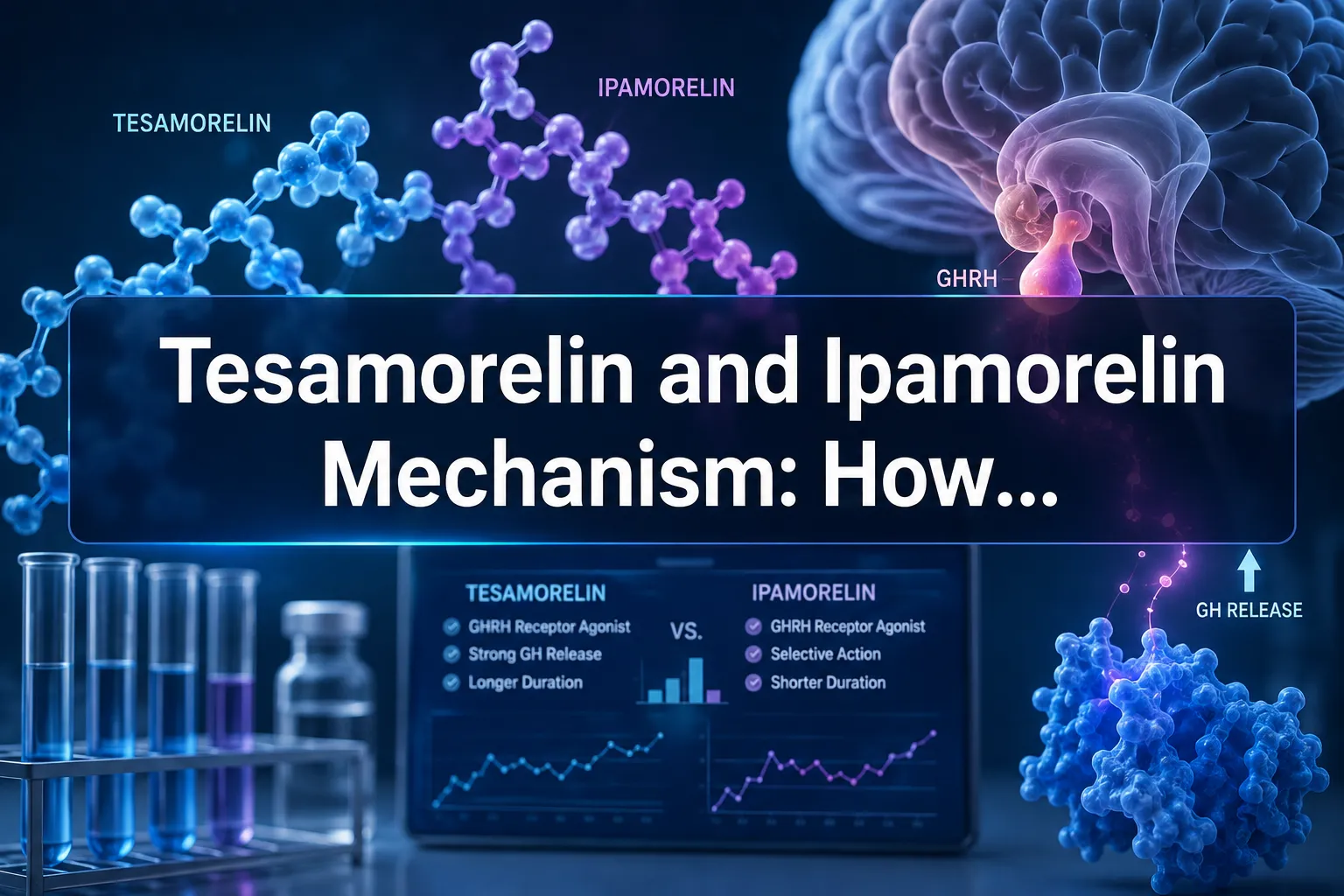
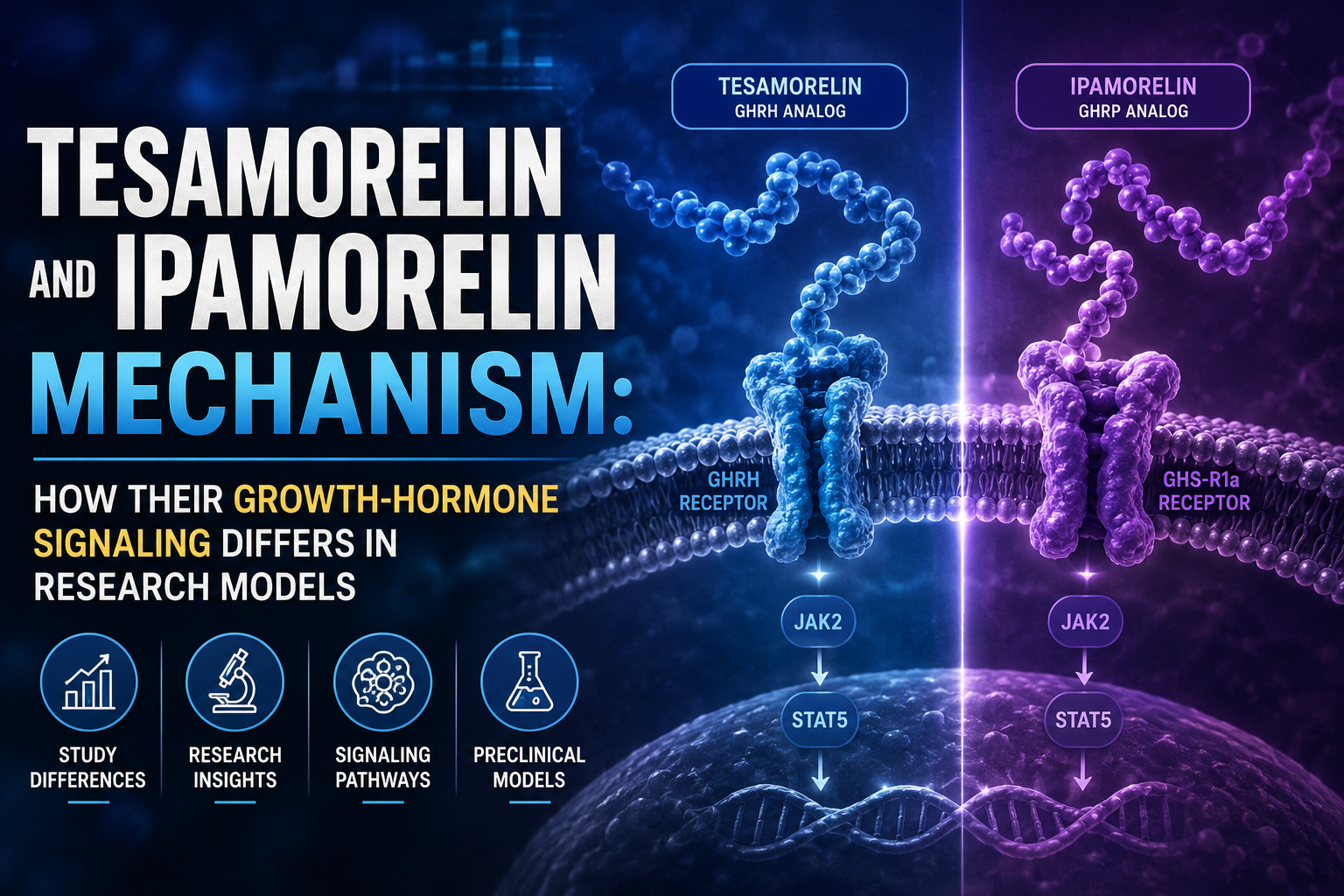
Tesamorelin and Ipamorelin Mechanism: How Their Growth-Hormone Signaling Differs in Research Models

Tesamorelin and Ipamorelin Mechanism: How Their Growth-Hormone Signaling Differs in Research Models

June 27, 2026/0 Comments/in Uncategorized/by

{"cover":"Professional landscape format (1536×1024) hero image with bold text overlay: 'Tesamorelin vs Ipamorelin: How Their GH Signaling Differs' in extra large 72pt white bold sans-serif font with dark semi-transparent overlay box, centered upper third. Background shows a dramatic close-up of a pituitary gland cross-section illustration merged with molecular receptor diagrams, deep navy blue and teal color palette, glowing cAMP and calcium signaling pathway nodes rendered in bright white and gold, editorial magazine cover quality, high contrast, scientific research aesthetic.","content":["Detailed landscape format (1536×1024) scientific diagram illustration showing two distinct receptor pathways side by side: left panel depicts GHRH receptor on a pituitary somatotroph cell with cAMP and PKA cascade arrows in cool blue tones, right panel shows GHS-R1a ghrelin receptor activating phospholipase C and intracellular calcium release in warm amber tones, labeled molecular nodes, clean white background with subtle lab texture, research infographic style, high contrast annotations, editorial quality","Landscape format (1536×1024) data visualization showing two overlapping GH pulse waveform graphs on a dark charcoal background: one smooth physiological pulsatile curve in electric blue representing Tesamorelin-driven GH release, one sharp clean spike in gold representing Ipamorelin-induced GH pulse, time axis labeled in hours, amplitude axis labeled in ng/mL, subtle grid lines, cortisol and prolactin flat reference lines in red dashes, preclinical research model aesthetic, clean scientific chart style, editorial quality","Landscape format (1536×1024) overhead view of a modern preclinical research laboratory bench showing two separate experimental setups: left side has molecular model of Tesamorelin peptide chain with trans-3-hexenoic acid modification highlighted in blue, right side shows Ipamorelin pentapeptide structure in gold, surrounded by pharmacokinetic half-life timeline bars, CT scan visceral fat reduction imagery in background, subtle teal and white lab aesthetic, research-grade editorial photography style, high contrast, scientific publication quality"}

Professional landscape hero image () with : "Tesamorelin and Ipamorelin Mechanism: How Their Growth-Hormone Signaling

Two peptides can both raise growth hormone levels yet work through entirely separate receptor systems — and that distinction matters enormously when designing preclinical studies. Understanding the Tesamorelin and Ipamorelin mechanism: how their growth-hormone signaling differs in research models is not simply academic. It determines which endpoints are valid, which biomarkers to track, and whether combining the two compounds makes mechanistic sense.


Key Takeaways

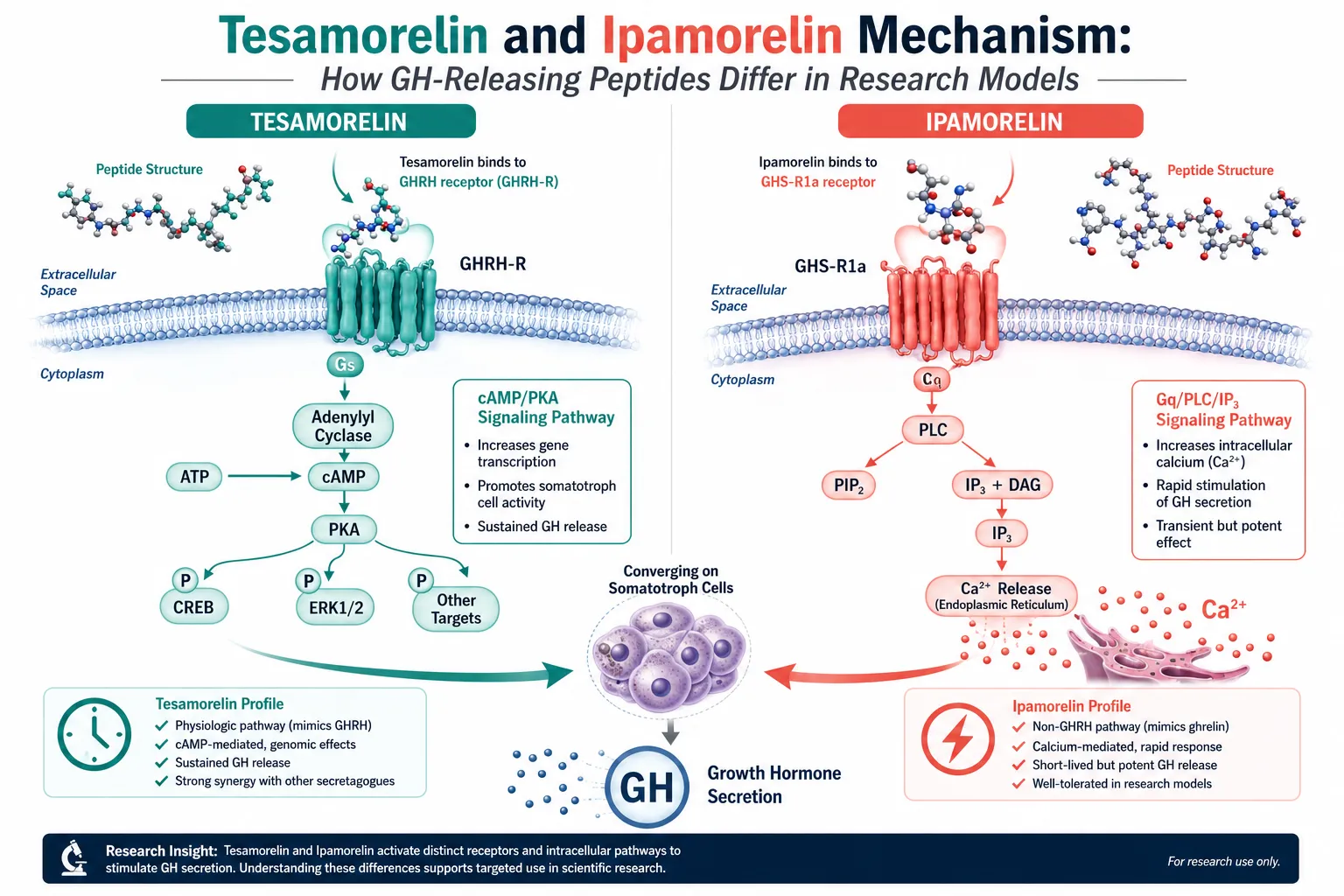
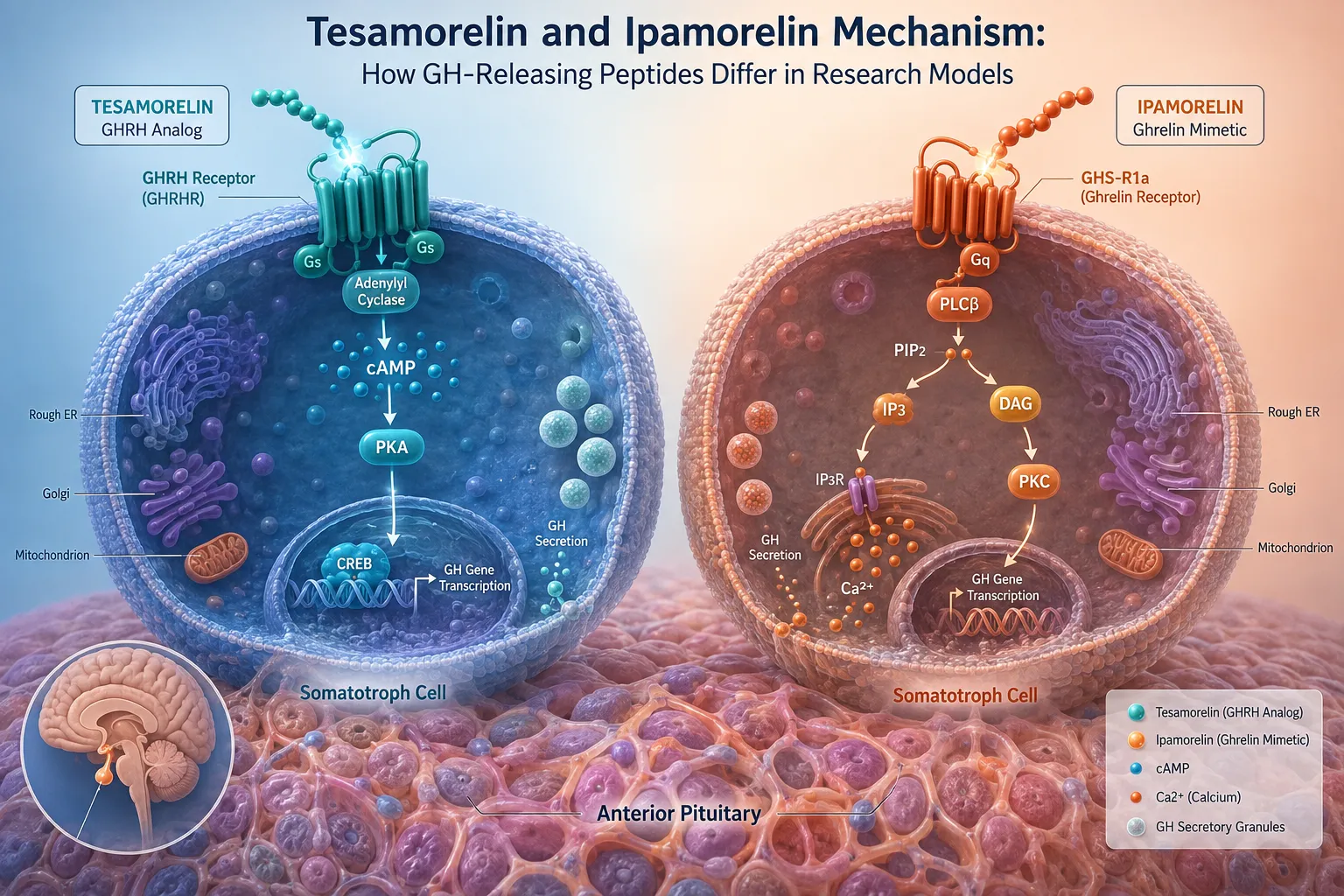
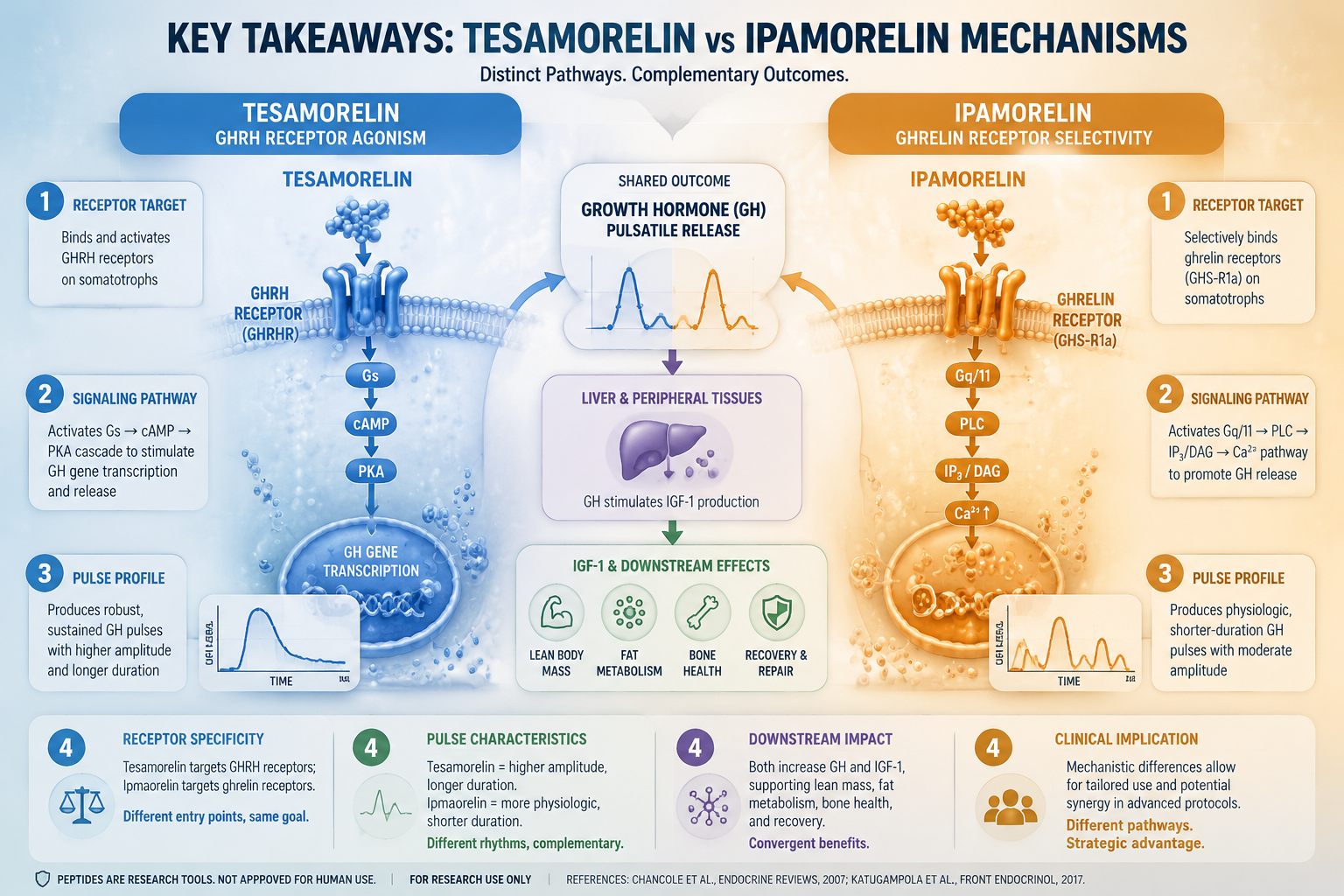
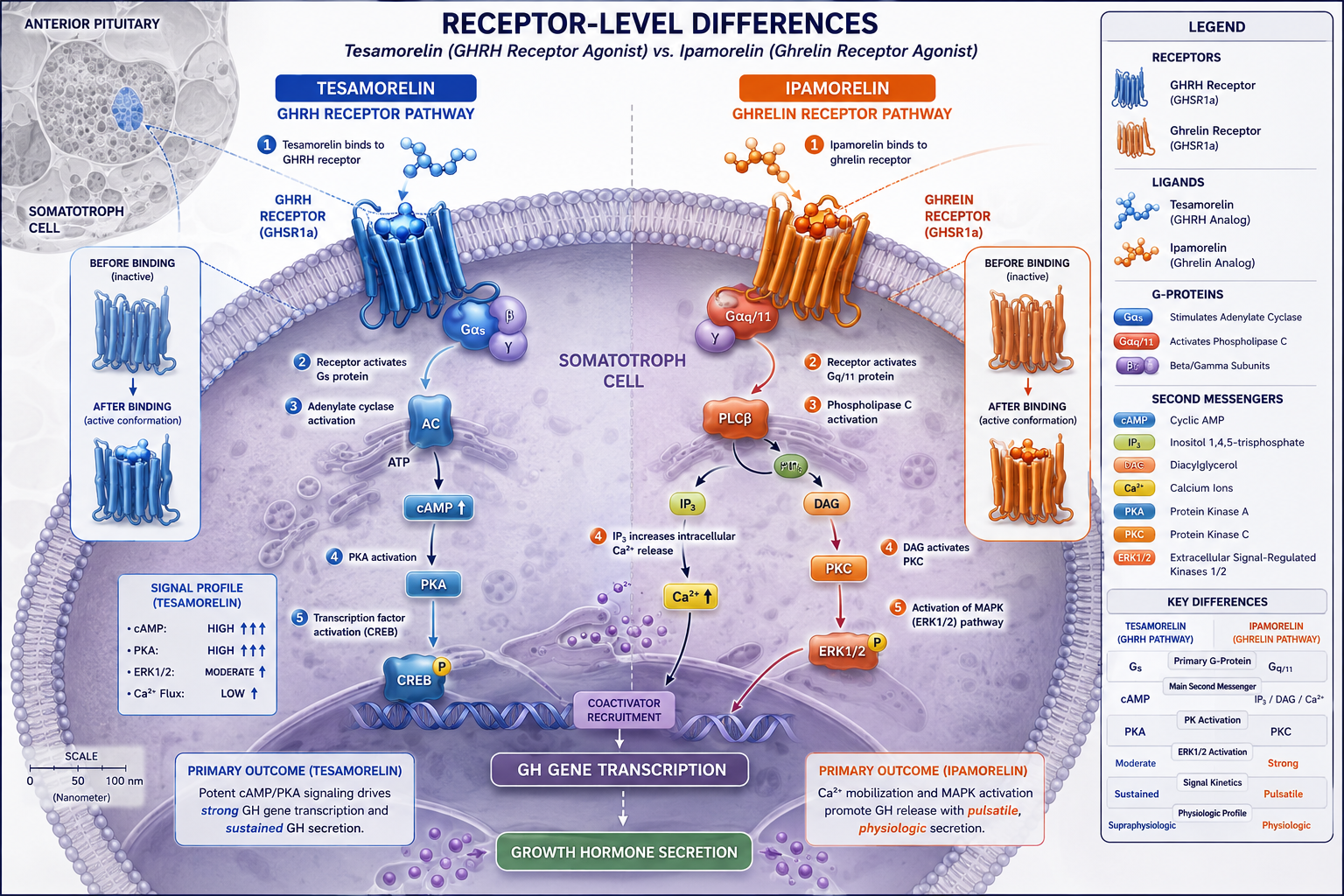
  • Tesamorelin activates the GHRH receptor via the cAMP/PKA pathway; ipamorelin activates the ghrelin receptor (GHS-R1a) via phospholipase C and intracellular calcium.
  • The two pathways are complementary, not redundant, making dual-pathway research designs scientifically justified.
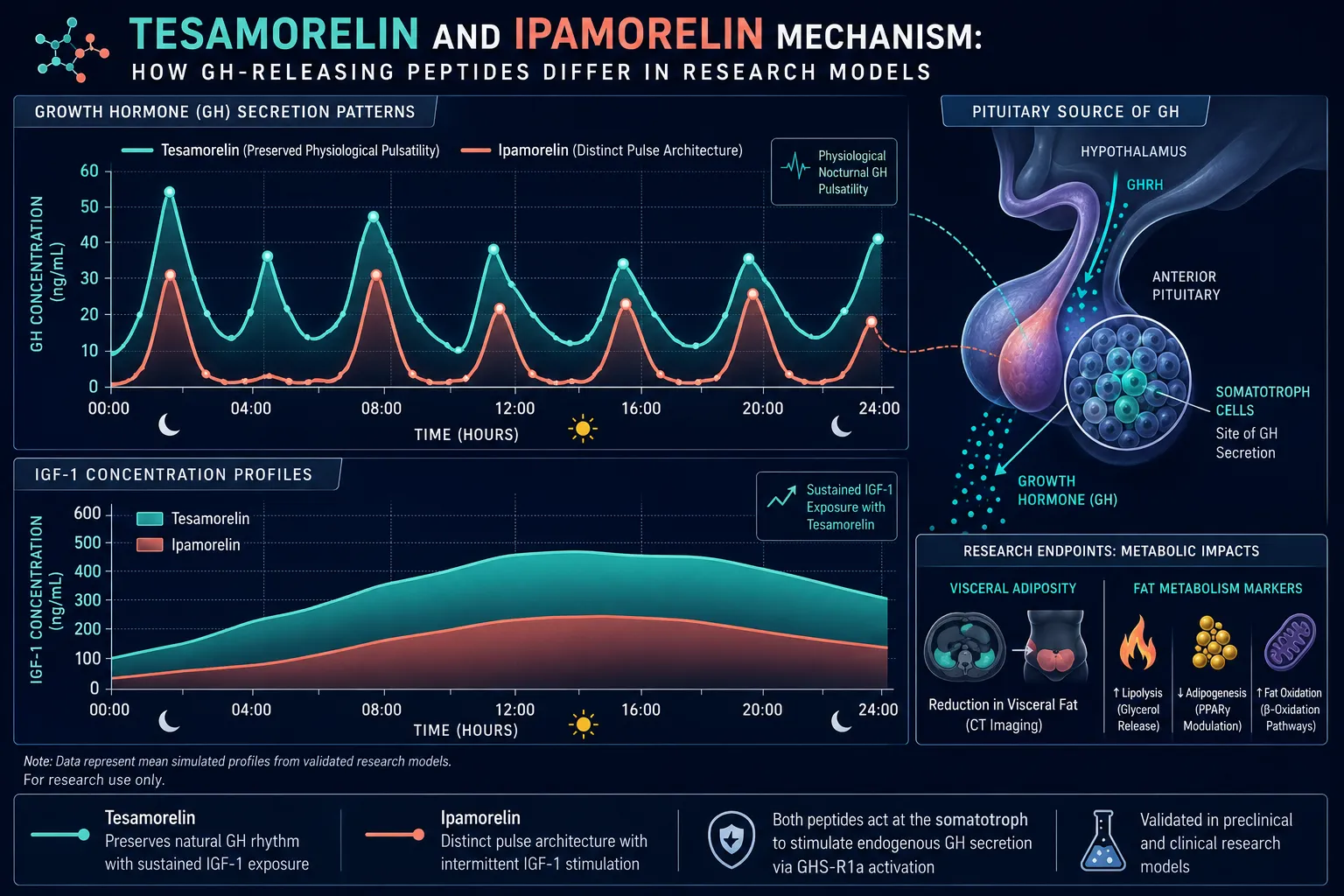
  • Tesamorelin preserves physiological GH pulsatility; ipamorelin produces a selective, "clean" GH pulse without elevating cortisol or prolactin.
  • Half-life differences (25-40 minutes vs. approximately 2 hours) affect dosing interval choices in animal pharmacokinetic models.
  • IGF-1 elevation is a shared downstream endpoint, but the upstream signaling routes remain distinct.

Receptor-Level Differences That Define the Tesamorelin and Ipamorelin Mechanism

Receptor-Level Differences That Define the Tesamorelin and Ipamorelin Mechanism

At the receptor level, these two secretagogues operate on separate systems.

Tesamorelin is a synthetic analog of endogenous growth hormone-releasing hormone (GHRH). Its N-terminal modification with trans-3-hexenoic acid protects it from enzymatic degradation, extending its half-life to roughly 25-40 minutes. It binds selectively to the GHRH receptor (GHRHR) on anterior pituitary somatotrophs and activates the cAMP/PKA signaling cascade, which drives GH gene transcription and pulsatile secretion. This mechanism mirrors the body's own GHRH signaling, preserving the natural rhythm of GH release.

Ipamorelin takes a different route entirely. It is a selective agonist of the growth hormone secretagogue receptor type 1a (GHS-R1a) — the same receptor that endogenous ghrelin activates. Rather than cAMP, GHS-R1a engagement triggers phospholipase C (PLC) activation, leading to IP3-mediated calcium release from intracellular stores. This calcium surge is what drives GH secretion in ipamorelin-treated models.

Feature Tesamorelin Ipamorelin
Target Receptor GHRHR GHS-R1a (ghrelin receptor)
Signaling Cascade cAMP / PKA PLC / intracellular Ca2+
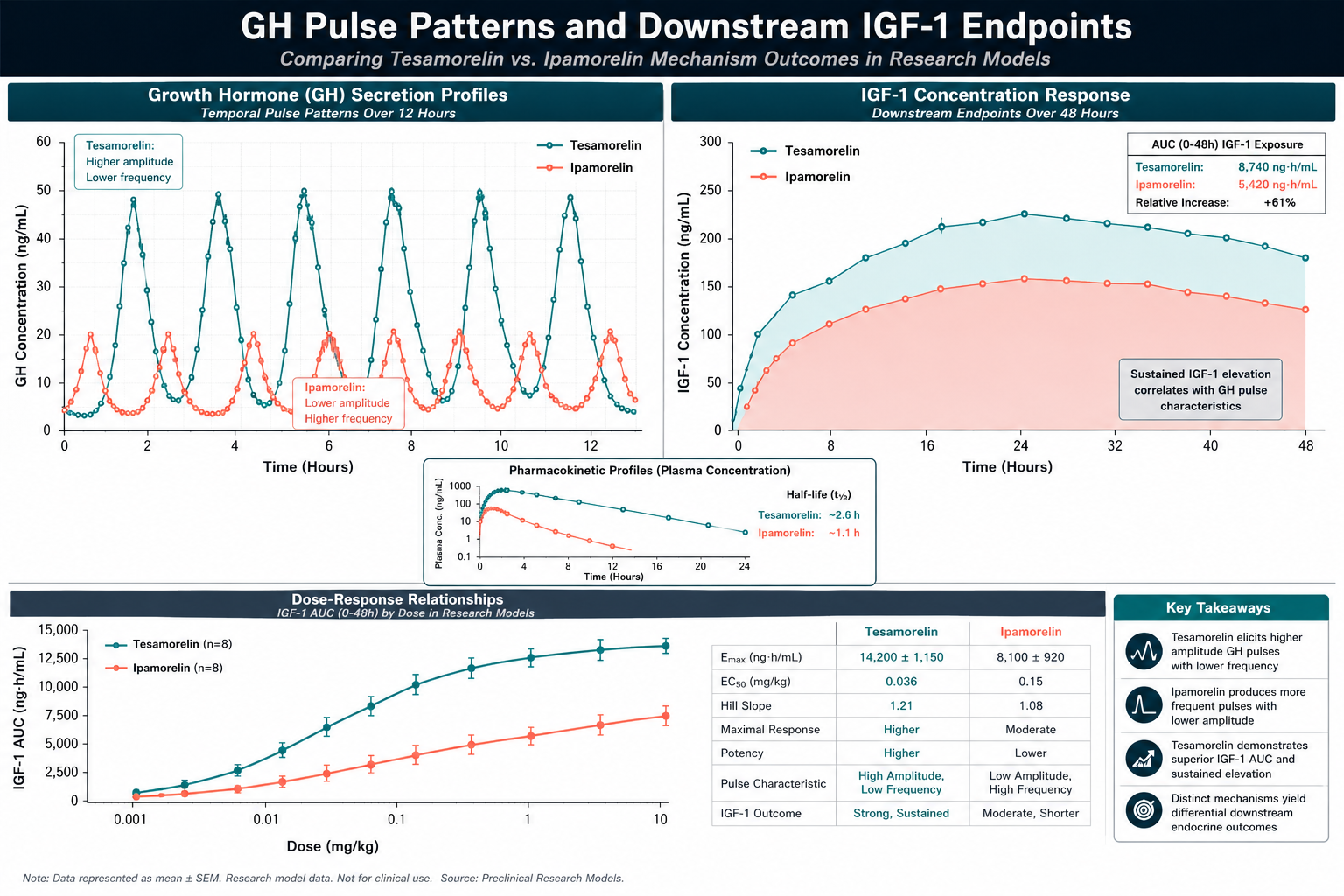
Half-Life ~25-40 minutes ~2 hours
GH Release Pattern Pulsatile, physiological Sharp, selective pulse
Cortisol / ACTH Effect Minimal Negligible

For researchers exploring ipamorelin muscle and fat research themes, this receptor distinction is foundational to interpreting results accurately.


GH Pulse Patterns and Downstream IGF-1 Endpoints in Research Models

GH Pulse Patterns and Downstream IGF-1 Endpoints in Research Models

The pattern of GH release produced by each compound is as important as the magnitude.

Tesamorelin's activation of GHRHR amplifies both basal and pulsatile GH secretion, closely replicating the endogenous GHRH-driven rhythm. This physiological pulsatility is considered advantageous in research models where mimicking natural GH dynamics is a priority. Studies examining tesa peptide benefits often highlight this feature as a key differentiator from synthetic GH administration.

Ipamorelin, by contrast, generates what researchers describe as a "clean" GH pulse. Its selectivity for GHS-R1a means it does not significantly elevate cortisol, ACTH, or prolactin — a profile that distinguishes it from earlier GH secretagogues like GHRP-6 or hexarelin. For models where hormonal specificity is critical, this selectivity reduces confounding variables. Detailed analysis of ipamorelin as a GH secretagogue underscores why this selectivity is valued in controlled research settings.

Downstream, both peptides elevate IGF-1, which serves as a practical shared endpoint. Tesamorelin's IGF-1 effects have been documented in Phase 3 clinical trials — including data from HIV-associated lipodystrophy studies showing measurable visceral adipose tissue (VAT) reduction via CT scan. Ipamorelin's IGF-1 elevation has been confirmed in preclinical models, though large-scale clinical quantification remains limited.

"The upstream receptor divergence between these two secretagogues does not prevent a shared downstream outcome — but it does mean the signaling routes, and therefore the research questions, are fundamentally different."


Preclinical Study Design: Applying the Tesamorelin and Ipamorelin Mechanism to Research Endpoints

Preclinical Study Design: Applying the Tesamorelin and Ipamorelin Mechanism to Research Endpoints

Understanding the Tesamorelin and Ipamorelin mechanism: how their growth-hormone signaling differs in research models has direct implications for study design.

Relevant preclinical endpoints include:

  • Serum GH pulse amplitude and frequency (assessed via serial blood sampling)
  • Plasma IGF-1 levels at defined intervals post-administration
  • Visceral fat mass via imaging or tissue dissection in rodent models
  • Cortisol and ACTH levels to confirm ipamorelin's hormonal selectivity
  • Muscle protein synthesis markers for anabolic pathway assessment

Because the two pathways are complementary — cAMP/PKA versus PLC/calcium — researchers have proposed dual-pathway designs that combine both compounds. The rationale is that simultaneous GHRHR and GHS-R1a activation may produce synergistic GH release exceeding what either compound achieves alone. Blended formulations explored in Tesamorelin, CJC-1295, and Ipamorelin combination research reflect this mechanistic logic.

Half-life differences also shape dosing interval decisions. Tesamorelin's shorter plasma stability (~25-40 minutes) suggests more frequent administration windows in acute models, while ipamorelin's approximately 2-hour half-life in animal pharmacokinetic studies supports less frequent dosing. Researchers reviewing CJC-1295 and ipamorelin combination dosing will find that pairing compounds with complementary half-lives is a common strategy to sustain GH elevation across a study window.

For broader context on metabolic peptide research, exploring metabolic modulation research lines provides useful comparative frameworks alongside GH secretagogue work.


Conclusion

The mechanistic contrast between tesa and ipamorelin is not a minor technical detail — it is the foundation of any rigorous research design involving these compounds. Tesamorelin drives GH release through GHRHR and cAMP/PKA signaling, preserving physiological pulsatility. Ipamorelin activates GHS-R1a and the PLC/calcium pathway, producing a selective GH pulse without hormonal side effects.

Actionable next steps for researchers:

  1. Define whether the study requires physiological GH pulsatility (favor tesa) or hormonal selectivity (favor ipamorelin) before choosing a compound.
  2. Use IGF-1 as a shared downstream biomarker while tracking pathway-specific markers (cAMP vs. intracellular calcium) to confirm receptor engagement.
  3. Consider dual-pathway designs when the research goal is maximal GH output, accounting for the complementary receptor systems.
  4. Align dosing intervals with each compound's half-life data from pharmacokinetic models to avoid under- or over-dosing in timed studies.
https://www.puretestedpeptides.com/wp-content/uploads/2026/06/Tesamorelin-and-Ipamorelin-Mechanism-How-Their-Growth-Hormone-Signaling-Differs-in-Research-Models.png 1024 1536 https://www.puretestedpeptides.com/wp-content/uploads/2026/01/buy-peptides-online.jpg 2026-06-27 13:04:472026-06-27 13:04:47Tesamorelin and Ipamorelin Mechanism: How Their Growth-Hormone Signaling Differs in Research Models
CJC-1295 With Ipamorelin: Why Researchers Pair Them, What Pulsatile GH Signaling Looks Like, and What to Measure

CJC-1295 With Ipamorelin: Why Researchers Pair Them, What Pulsatile GH Signaling Looks Like, and What to Measure

June 18, 2026/0 Comments/in Uncategorized/by

{"cover":"Professional landscape format (1536×1024) hero image with bold text overlay: 'CJC-1295 With Ipamorelin: Pulsatile GH Signaling Explained' in extra large 72pt white bold sans-serif font with deep shadow and semi-transparent dark overlay bar, centered upper-third composition. Background shows a dramatic close-up of a molecular double-helix structure transitioning into a glowing pituitary gland cross-section rendered in deep teal and electric blue tones, with subtle waveform graphs suggesting hormonal pulse patterns. Color palette: deep navy, teal, white accents. Magazine cover aesthetic, editorial quality, high contrast.","content":["Detailed landscape format (1536×1024) scientific illustration showing two distinct molecular receptor pathways side by side — one labeled GHRH receptor pathway glowing in blue, the other labeled GHSR ghrelin receptor pathway glowing in amber — converging at a central pituitary gland diagram. Molecular peptide chain structures of CJC-1295 and Ipamorelin float near their respective receptors. Clean white lab background with subtle grid lines, annotated arrows showing signal amplification, professional research diagram aesthetic, high contrast, editorial quality.","Detailed landscape format (1536×1024) data visualization showing a stylized oscilloscope-style waveform graph representing pulsatile GH secretion over a 24-hour period, with clearly labeled amplitude peaks marked 'Combined CJC-1295 + Ipamorelin' in teal versus a lower flatter line labeled 'Baseline' in gray. The graph sits on a dark navy background with glowing neon-teal pulse lines, subtle clock icons at the x-axis, and a secondary smaller IGF-1 rise curve in amber. Scientific infographic style, professional, high contrast, editorial quality.","Detailed landscape format (1536×1024) flat-lay laboratory bench scene photographed from directly above showing research measurement tools: a serum IGF-1 ELISA assay plate, printed GH pulse amplitude data charts, a digital caliper, a body composition DEXA scan printout, and a researcher's gloved hand annotating results with a red pen. Warm clinical white lighting, organized composition, subtle teal and navy color accents on printed materials, research laboratory aesthetic, editorial quality, high contrast."]

Professional landscape hero image () with : "CJC-1295 With Ipamorelin: Why Researchers Pair Them, What Pulsatile GH

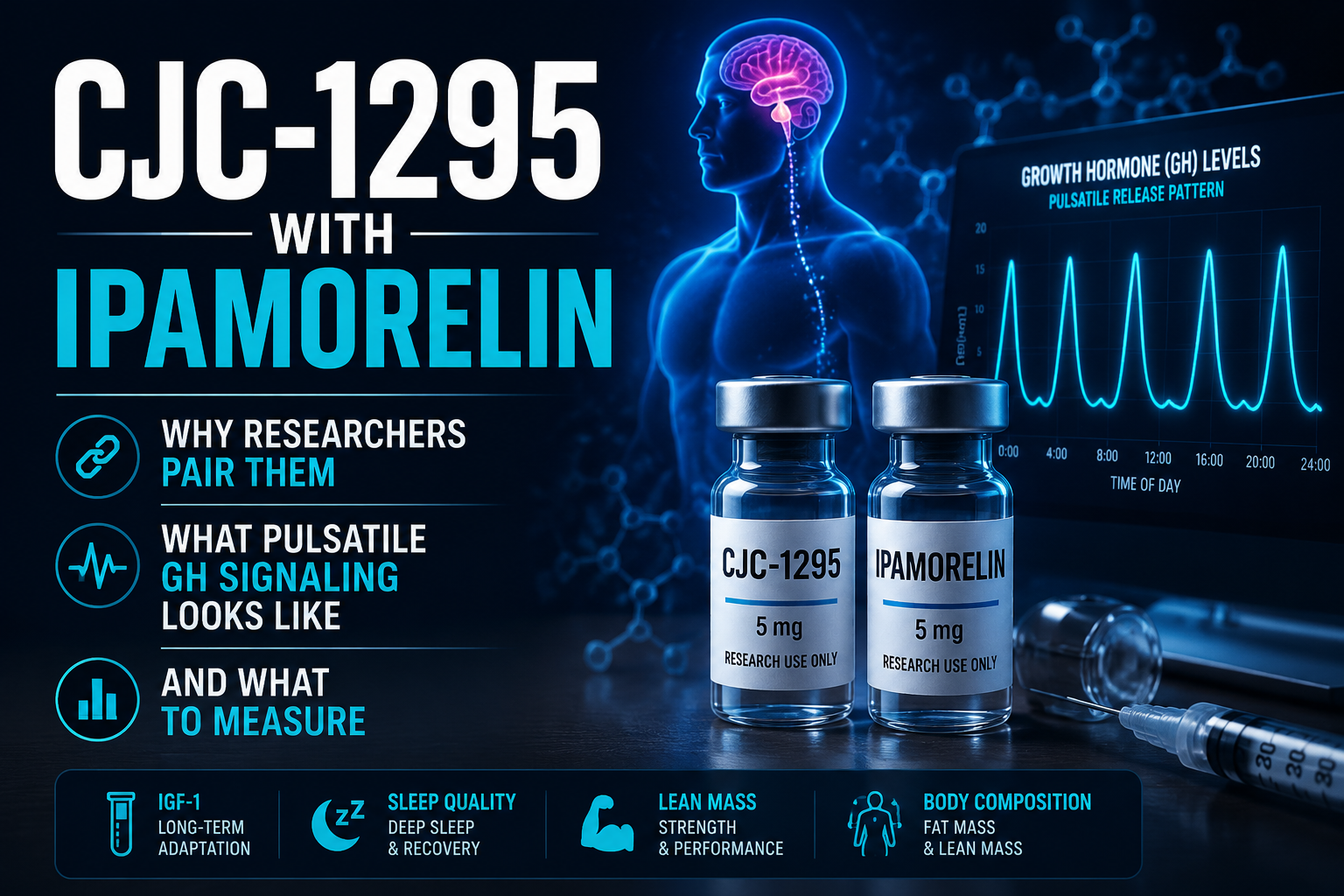
Growth hormone secretion is not continuous — it fires in discrete pulses, and that architecture matters enormously for how researchers design experiments. Understanding CJC-1295 with Ipamorelin: why researchers pair them, what pulsatile GH signaling looks like, and what to measure starts with a single insight: these two peptides activate entirely different receptor classes, and combining them produces a synergistic amplification that neither achieves alone.

Key Takeaways

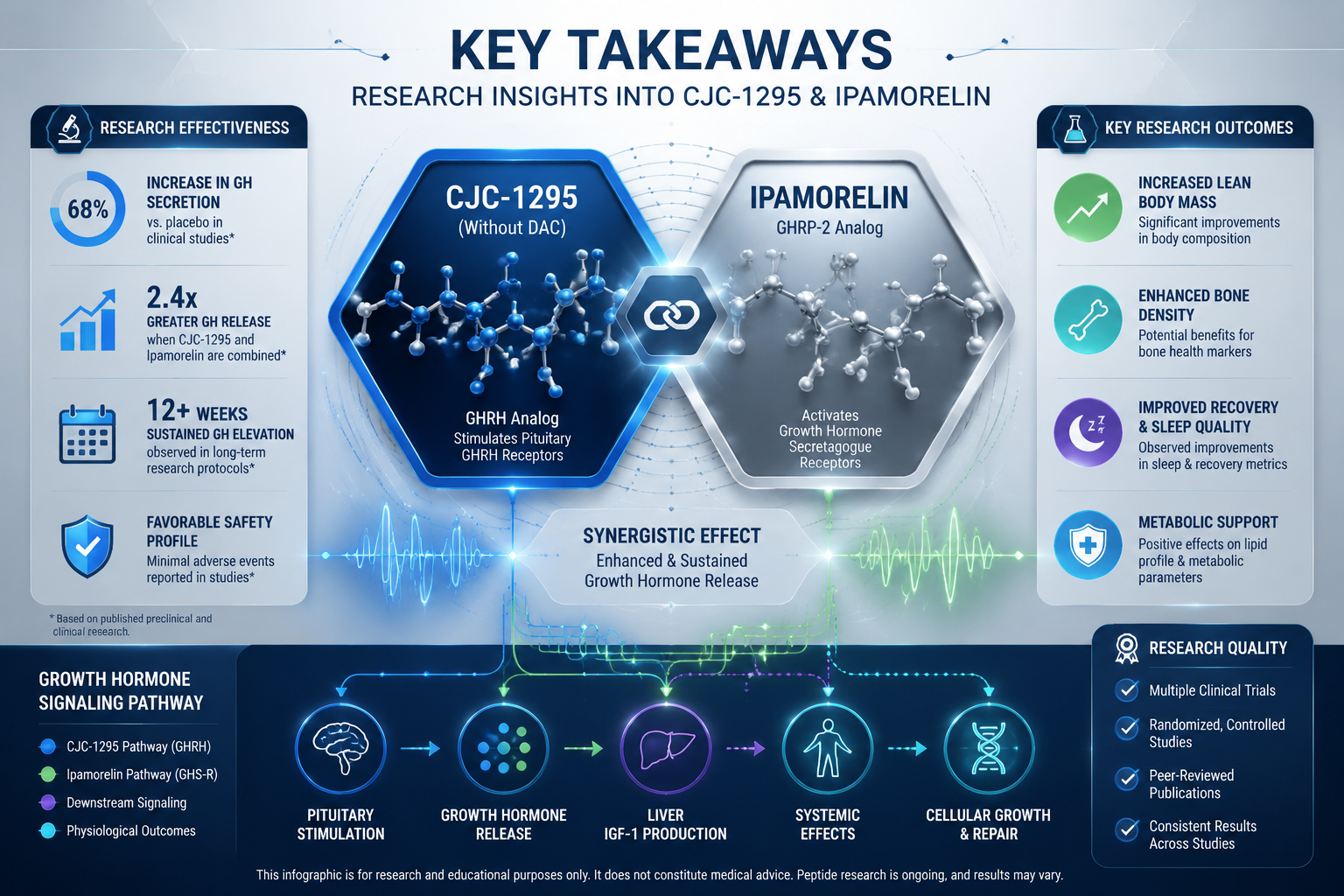
  • CJC-1295 acts on GHRH receptors; Ipamorelin acts on GHSR (ghrelin) receptors — two distinct pathways.
  • Combining them amplifies GH pulse amplitude more than additive effects would predict.
  • Pulsatile GH output preserves downstream receptor sensitivity in a way that continuous infusion does not.
  • Primary research readouts are serum GH pulse amplitude, IGF-1 levels, and body composition markers.
  • Regulatory status for these peptides has tightened in several jurisdictions since the mid-2020s; researchers must verify local compliance before sourcing.

Key Takeaways

The Dual-Pathway Rationale Behind Pairing CJC-1295 With Ipamorelin

The pituitary releases growth hormone through two primary input signals. The first is growth hormone-releasing hormone (GHRH), which binds to GHRH receptors on somatotroph cells and drives GH synthesis and release. The second is ghrelin, which binds to the growth hormone secretagogue receptor (GHSR-1a) and independently stimulates GH release through a separate intracellular cascade.

CJC-1295 is a modified GHRH analogue. The version without a Drug Affinity Complex (DAC) produces a shorter, cleaner pulse, making it the preferred form in most research designs. For a deeper look at how this analogue behaves in isolation, the CJC-1295 no-DAC research themes overview covers the mechanistic literature in detail.

Ipamorelin is a selective GHSR agonist. It is considered one of the cleaner secretagogues because it produces minimal cortisol or prolactin co-release — a significant confound in earlier ghrelin-mimetic research. The Ipamorelin muscle and fat research themes page summarizes its downstream metabolic effects.

"Two keys, one lock system" is a useful mental model: CJC-1295 primes the somatotroph cell while Ipamorelin simultaneously triggers it through a separate gate. The result is a GH pulse that is substantially larger than either peptide produces independently.

This synergistic amplification has been documented in human pharmacokinetic data for CJC-1295, where mean GH peak concentrations rose several-fold above baseline. When a GHSR agonist is added, the amplitude rises further because both intracellular pathways converge on the same exocytotic machinery.


The Dual-Pathway Rationale Behind Pairing CJC-1295 With Ipamorelin

What Pulsatile GH Signaling Looks Like in This Research Context

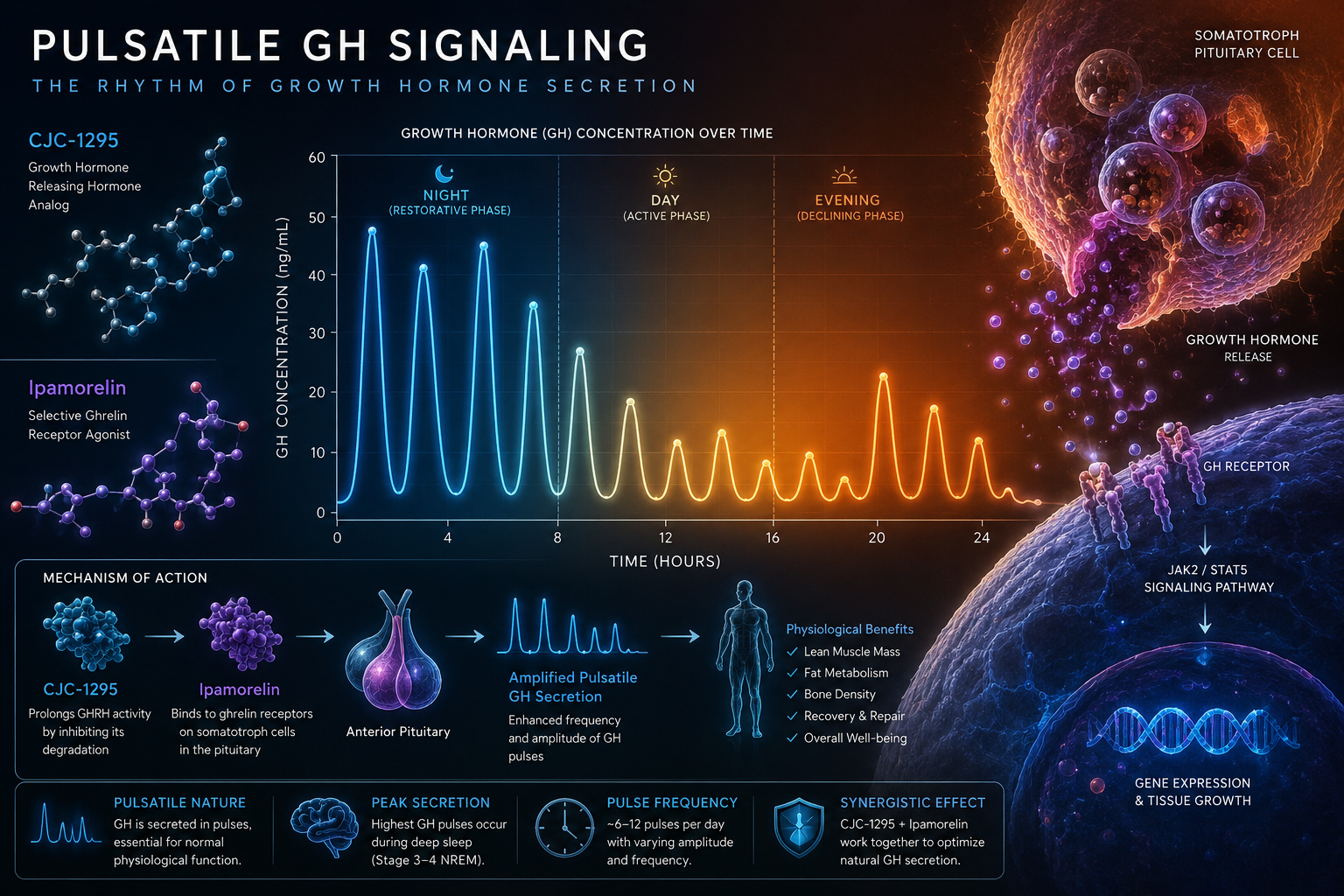
Normal physiological GH secretion occurs in roughly 6-12 pulses per 24 hours, with the largest pulse occurring during slow-wave sleep. Between pulses, serum GH falls to near-undetectable levels. This on-off pattern is not incidental — it is the mechanism that keeps GH receptors sensitive.

When CJC-1295 with Ipamorelin are administered together, the resulting GH pulse mimics this natural architecture rather than producing a sustained elevation. The key features researchers observe are:

  • Higher peak amplitude — the combined pulse reaches concentrations that single-agent protocols rarely achieve
  • Normal inter-pulse trough — GH returns toward baseline between doses, preserving receptor sensitivity
  • Downstream IGF-1 rise — hepatic IGF-1 production responds to the amplified pulses, with measurable increases appearing within days to weeks of consistent dosing

This is the fundamental reason the combination is preferred over continuous GHRH infusion in research models. Sustained GH elevation causes receptor downregulation; pulsatile delivery avoids it.

For researchers considering how this combination fits within a broader GH-axis research framework, the GH axis product line overview and the CJC-IPA GH axis research page provide useful context.


What Pulsatile GH Signaling Looks Like in This Research Context

What to Measure: Key Readouts for CJC-1295 With Ipamorelin Research

Selecting the right endpoints is as important as the pairing rationale itself. Researchers working with this combination in 2026 typically track the following:

Readout Method Typical Timeframe
Serum GH pulse amplitude Serial blood sampling + ELISA Acute (hours post-dose)
Serum IGF-1 Single fasting blood draw 2-6 weeks of dosing
Lean mass / fat mass DEXA scan 8-16 weeks
Fasting glucose and insulin Standard metabolic panel Ongoing
Sleep architecture Polysomnography or actigraphy 4-8 weeks

IGF-1 remains the most practical chronic marker because it integrates GH pulsatility over days rather than requiring timed serial sampling. Emerging 2025 human-oriented data suggest modest improvements in lean body mass and reductions in visceral fat with combined secretagogue protocols, though evidence quality remains low-to-moderate and most studies are small.

Sleep-stage data are increasingly included in research designs because GH pulse amplitude during slow-wave sleep is a sensitive indicator of somatotroph responsiveness. Blunted nocturnal GH is one of the earliest measurable signs of somatopause, making it a meaningful endpoint in aging-focused studies.

For researchers planning assay selection and sourcing logistics, the CJC-1295 Ipamorelin assay planning and sourcing checklist is a practical starting resource. Those evaluating dosing frameworks can also review the Sermorelin, Ipamorelin, and CJC-1295 dosage research guide for comparative context.

Regulatory and Safety Considerations in 2026

Regulatory scrutiny of peptide secretagogues has intensified. Several major jurisdictions, including the United States and Australia, have moved to restrict or reclassify compounded GHRH analogues and GHSRs since the mid-2020s. Researchers must confirm current local regulatory status before sourcing. Purity verification through third-party analytical testing — including HPLC and mass spectrometry — is a non-negotiable step in any credible research protocol.


Conclusion

The logic behind pairing CJC-1295 with Ipamorelin is mechanistically sound: two distinct receptor pathways converge to produce a GH pulse that is larger, cleaner, and more physiologically faithful than either agent generates alone. For researchers, the actionable next steps are straightforward. First, confirm that the research design requires pulsatile GH amplification rather than sustained elevation. Second, select the right biomarkers — IGF-1 for chronic tracking, serial GH sampling for acute pharmacokinetic work, and body composition endpoints for longer studies. Third, verify peptide purity and local regulatory compliance before any experiment begins. Researchers interested in how this combination compares to other secretagogue options can explore the Tesamorelin vs Ipamorelin comparison or review CJC-1295 plus Ipamorelin combination research for additional design considerations. The science is compelling; the rigor of execution determines whether the data are meaningful.

https://www.puretestedpeptides.com/wp-content/uploads/2026/06/CJC-1295-With-Ipamorelin-Why-Researchers-Pair-Them-What-Pulsatile-GH-Signaling-Looks-Like-and-What-to-Measure.png 1024 1536 https://www.puretestedpeptides.com/wp-content/uploads/2026/01/buy-peptides-online.jpg 2026-06-18 13:03:292026-06-18 13:03:29CJC-1295 With Ipamorelin: Why Researchers Pair Them, What Pulsatile GH Signaling Looks Like, and What to Measure
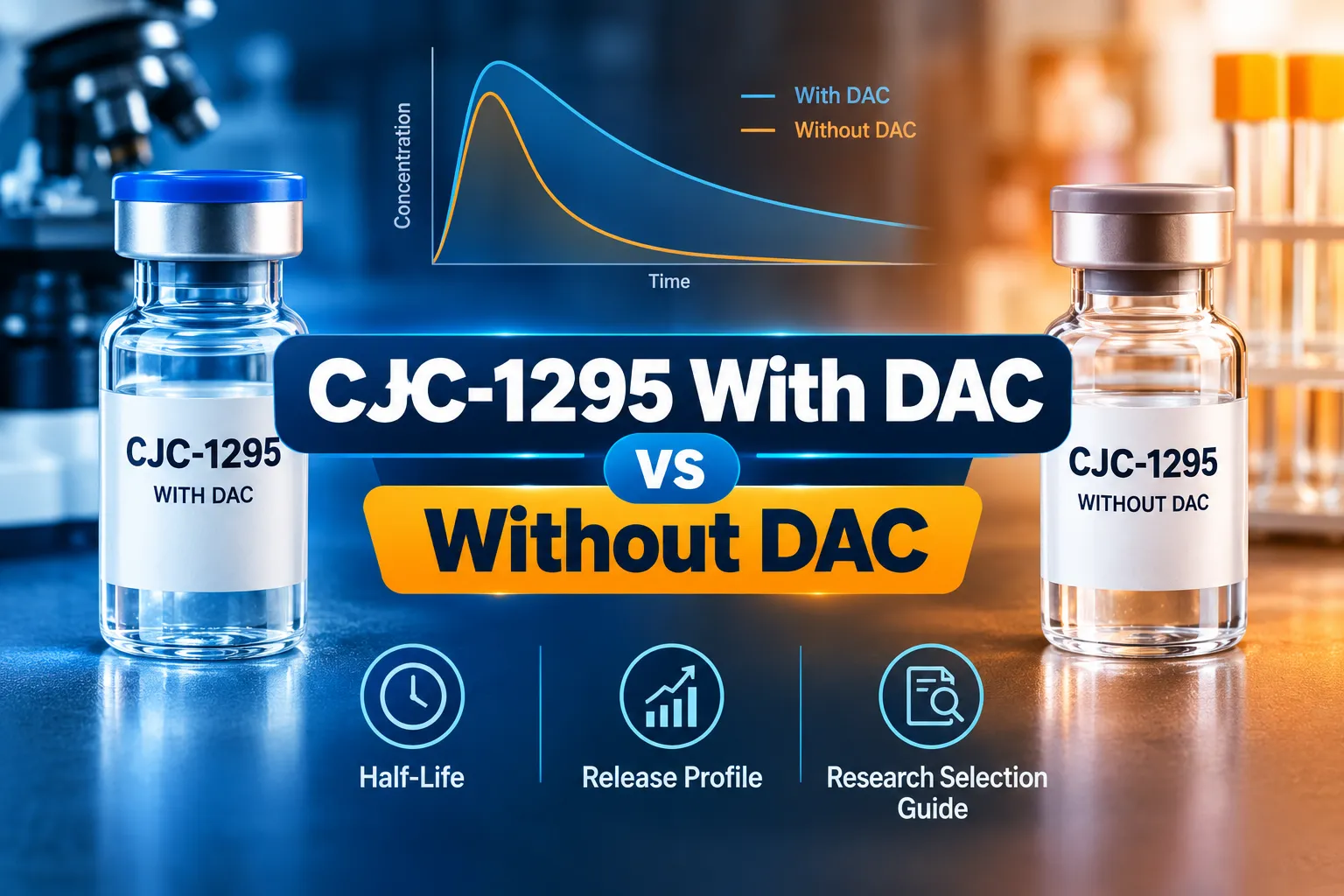
CJC-1295 With and Without DAC: Peptide Structure, Half-Life, and Experimental GH/IGF-1 Dynamics

CJC-1295 With and Without DAC: Peptide Structure, Half-Life, and Experimental GH/IGF-1 Dynamics

June 4, 2026/0 Comments/in Uncategorized/by

A single structural modification — the addition of a maleimidopropionyl group — transforms a peptide with a 30-minute window of activity into one that remains active for nearly eight days. That is the pharmacological story at the heart of CJC-1295 with and without DAC: peptide structure, half-life, and experimental GH/IGF-1 dynamics, and it has significant implications for how researchers design growth hormone secretagogue protocols in vitro and in preclinical models.

Key Takeaways

  • CJC-1295 is a 30-amino-acid synthetic analog of growth hormone-releasing hormone (GHRH).
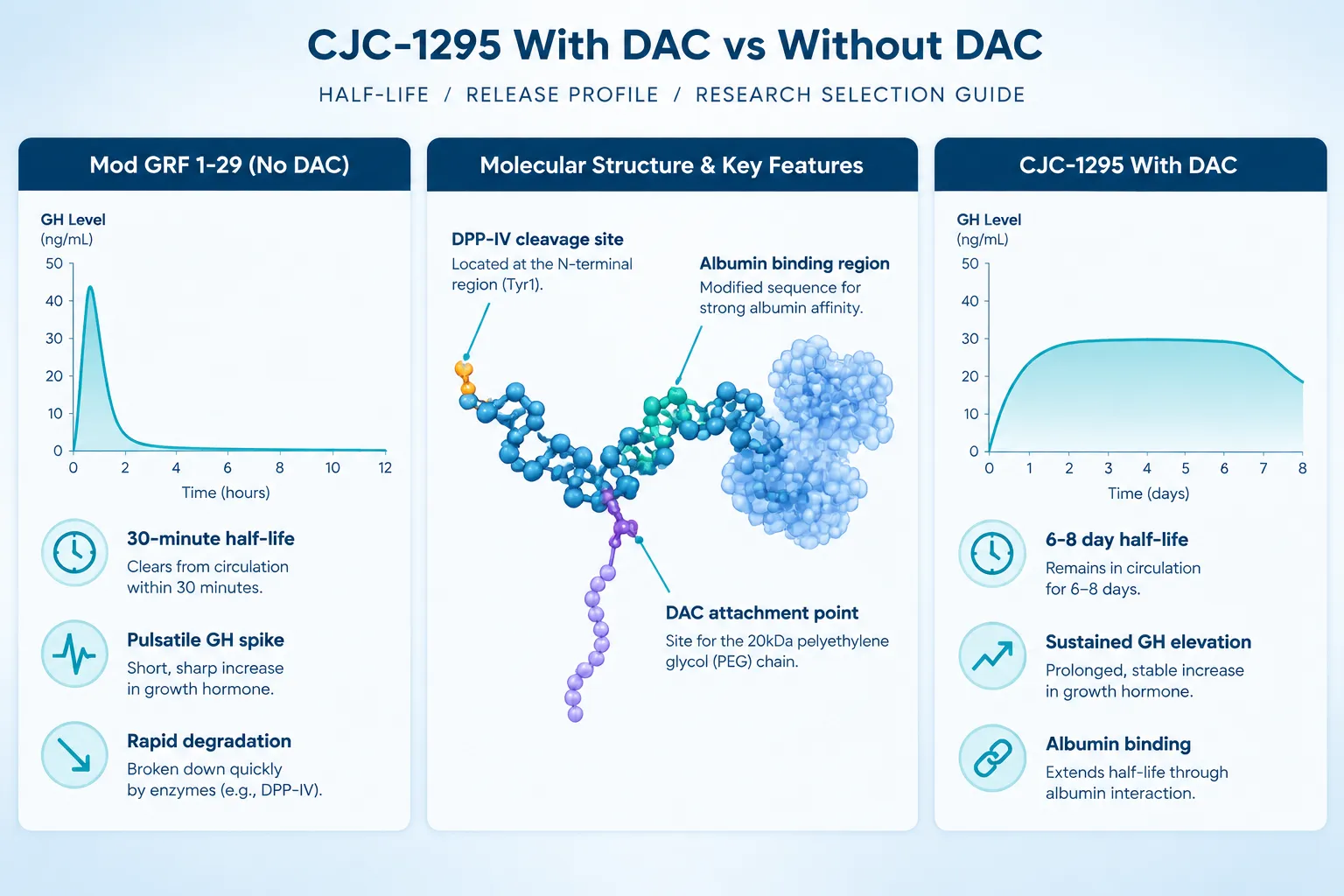
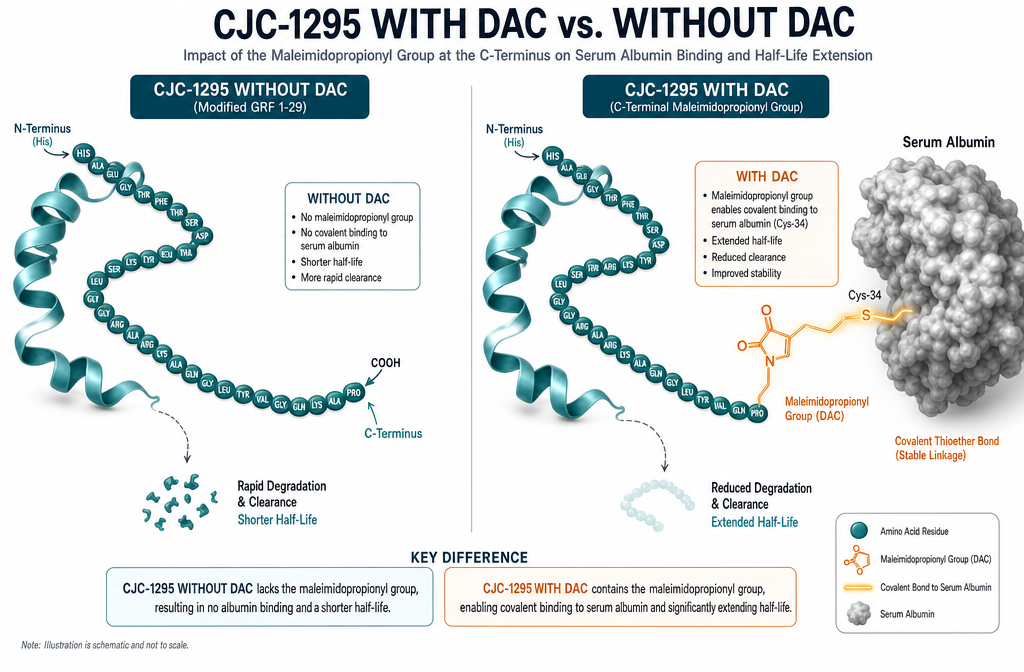
  • The Drug Affinity Complex (DAC) modification extends half-life from roughly 30 minutes to approximately 5.8-8.1 days via covalent albumin binding.
  • Without DAC (Modified GRF 1-29), the peptide requires more frequent dosing to sustain receptor stimulation.
  • A single CJC-1295 with DAC injection can produce a 2- to 10-fold increase in plasma GH lasting up to six days.
  • Combining CJC-1295 with ghrelin mimetics such as ipamorelin produces synergistic GH release through complementary pathways.

Key Takeaways


Peptide Structure: How the DAC Modification Changes Everything

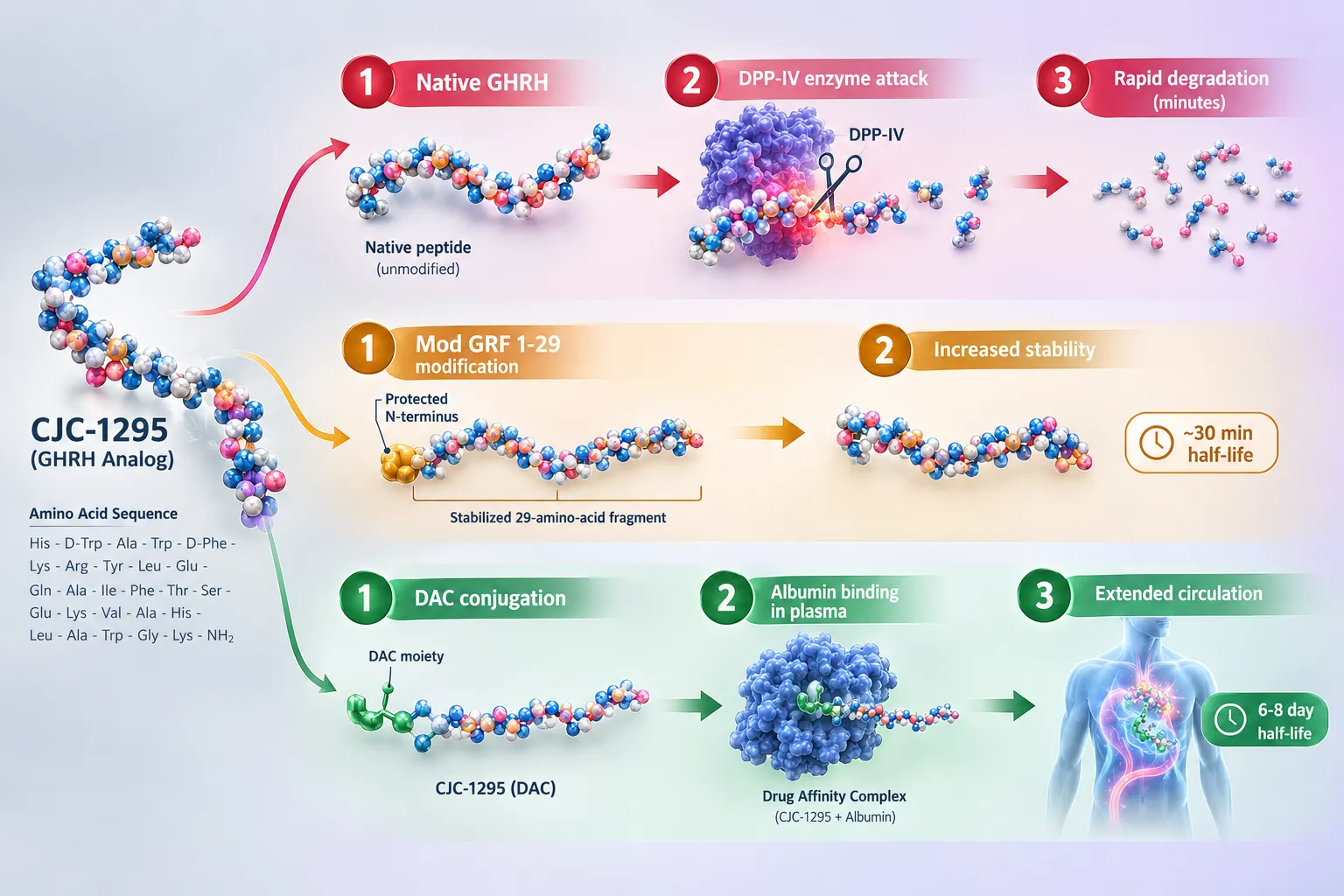
CJC-1295 is built on the first 29 amino acids of endogenous GHRH, with four strategic amino acid substitutions that resist enzymatic degradation. In its unmodified research form — commonly called Modified GRF (1-29) or CJC-1295 without DAC — the peptide retains high receptor affinity but is rapidly cleared from circulation.

The DAC version adds a maleimidopropionyl (MPA) bioconjugate to the peptide's C-terminus. This reactive group forms a covalent thioether bond with the free cysteine-34 residue on circulating serum albumin. Because albumin has a half-life of roughly 19 days and is too large to be filtered by the kidneys, the bound peptide is effectively shielded from proteolytic breakdown.

"The DAC modification does not alter receptor binding affinity — it changes how long the peptide survives long enough to bind."

This distinction matters for assay design. Researchers exploring CJC-1295 and ipamorelin combination protocols must account for whether the DAC form's prolonged presence will create sustained baseline GH stimulation or whether the pulsatile pattern of Modified GRF (1-29) better fits the experimental timeline.


Half-Life Comparison and Experimental Dosing Implications

The pharmacokinetic difference between the two forms is stark:

Form Common Name Approximate Half-Life Dosing Frequency
CJC-1295 with DAC DAC-GRF 5.8 – 8.1 days Once or twice weekly
CJC-1295 without DAC Modified GRF (1-29) ~30 minutes Multiple times daily

For context, other GHRH analogs fall well below even the without-DAC form: sermorelin has a half-life of 10-12 minutes, and tesa sits at approximately 30 minutes. Researchers can review tesa peptide benefits and pharmacology for a useful comparative baseline.

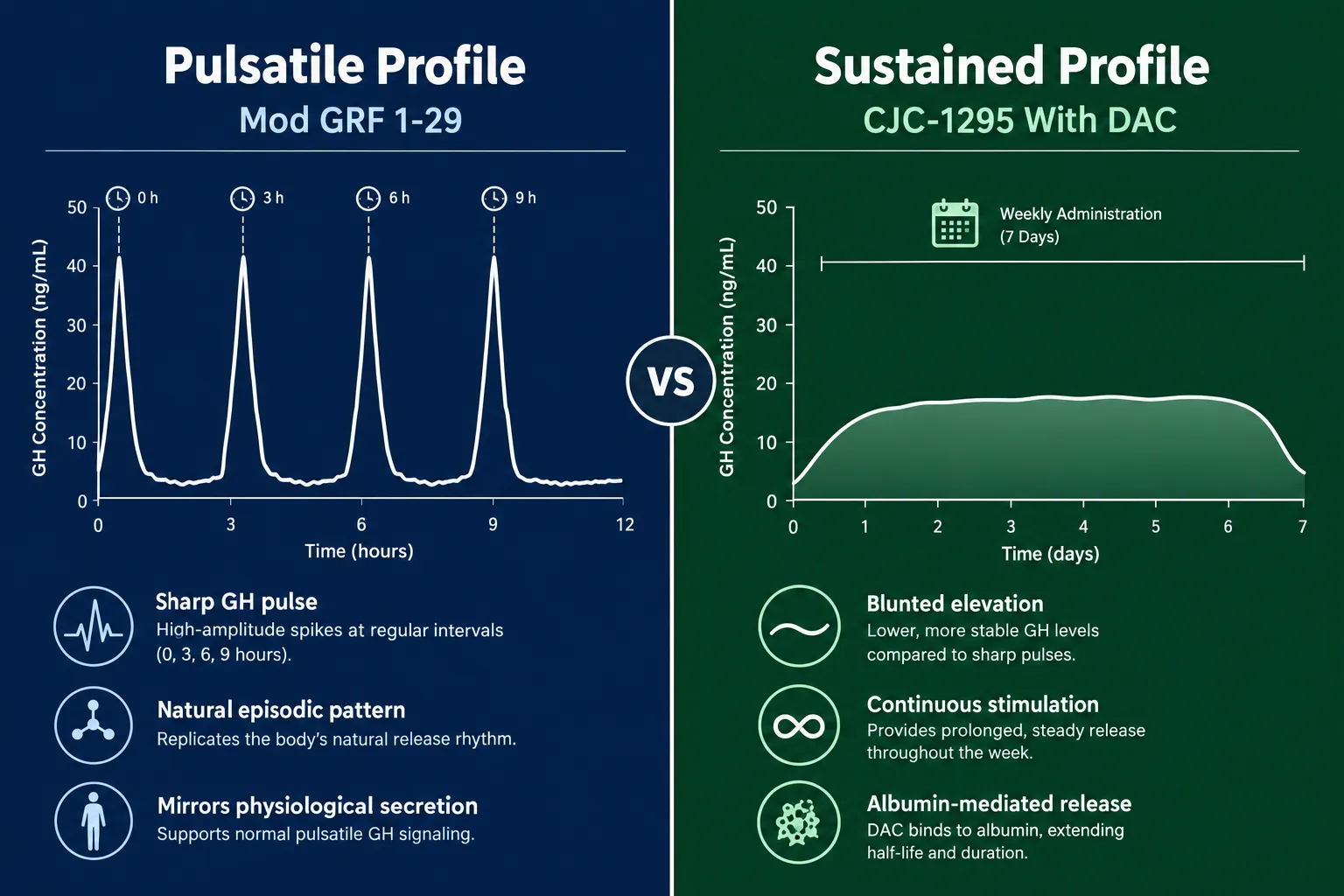
The without-DAC form is often preferred in protocols that require tight temporal control over GH pulses. Its short window allows researchers to time injections around specific assay windows, mimicking the body's natural ultradian GH rhythm. The DAC form, by contrast, produces a sustained elevation that is better suited to protocols measuring cumulative IGF-1 response over days.

For researchers building multi-peptide stacks, the sermorelin, ipamorelin, and CJC-1295 combination overview provides useful context on how different half-lives interact within the same protocol.

Half-Life Comparison and Experimental Dosing Implications


Experimental GH/IGF-1 Dynamics: What the Data Shows

Understanding CJC-1295 with and without DAC: peptide structure, half-life, and experimental GH/IGF-1 dynamics requires examining how each form drives the GH-IGF-1 axis differently.

CJC-1295 with DAC binds GHRH receptors on pituitary somatotroph cells and sustains that stimulation across days. Phase I clinical data shows a single injection can produce:

  • A 2- to 10-fold increase in mean plasma GH levels lasting up to six days
  • A 1.5- to 3-fold increase in IGF-1 levels persisting for nine to eleven days

Critically, this occurs while preserving pulsatile GH secretion — a key advantage over exogenous GH administration, which suppresses the natural feedback loop. Pulsatility is associated with more physiological receptor sensitivity and reduced tachyphylaxis risk.

CJC-1295 without DAC produces sharp, transient GH spikes that closely mirror endogenous GHRH pulses. This makes it valuable for experiments requiring acute GH measurements or when researchers want to avoid prolonged IGF-1 elevation between assay time points.

Synergistic combinations are a major area of interest. Pairing CJC-1295 with a ghrelin mimetic like ipamorelin activates two distinct receptor pathways — GHRH receptors and ghrelin receptors (GHS-R1a) — simultaneously. The result is GH output greater than either peptide alone. The CJC-1295 ipamorelin assay planning and sourcing checklist is a practical resource for structuring such experiments.

Phase I safety data indicates CJC-1295 is well-tolerated at doses of 30-60 mcg/kg, with mild injection site reactions and occasional headaches as the most commonly noted effects. As of 2026, the peptide remains unapproved for human therapeutic use across most jurisdictions and is classified as a research compound.

For researchers sourcing reference-grade material, the GH axis product line overview and sermorelin ipamorelin CJC-1295 dosage reference guide offer structured starting points. Lyophilized CJC-1295 should be stored at 2-8°C and, once reconstituted, used within 30 days.

Experimental GH/IGF-1 Dynamics: What the Data Shows


Conclusion

The DAC modification is not a minor refinement — it fundamentally redefines how CJC-1295 interacts with the GH-IGF-1 axis. Researchers designing protocols in 2026 should base their form selection on experimental objectives: choose the without-DAC form when temporal precision and pulsatile GH mimicry are priorities, and the DAC form when sustained IGF-1 elevation or infrequent dosing windows are required.

Actionable next steps for researchers:

  1. Define whether the assay requires acute GH spikes or sustained IGF-1 elevation before selecting a form.
  2. Consider pairing either form with ipamorelin to leverage synergistic GH secretagogue pathways.
  3. Verify peptide purity through certificates of analysis before initiating any in vitro or preclinical work.
  4. Store lyophilized stock at 2-8°C and track reconstitution dates to maintain compound integrity.
  5. Cross-reference the CJC-1295 product and research reference page for sourcing and specification details.

https://www.puretestedpeptides.com/wp-content/uploads/2026/06/CJC-1295-With-and-Without-DAC-Peptide-Structure-Half-Life-and-Experimental-GHIGF-1-Dynamics.png 672 1024 https://www.puretestedpeptides.com/wp-content/uploads/2026/01/buy-peptides-online.jpg 2026-06-04 13:05:432026-06-04 13:05:43CJC-1295 With and Without DAC: Peptide Structure, Half-Life, and Experimental GH/IGF-1 Dynamics
×

Helpful Links

  • My account
  • Cart
  • Checkout
  • Refund and Returns Policy
  • Privacy Policy
  • SMS Privacy Policy
  • Login
  • My Account
  • Logout

USA Made Lab Tested Peptides

All products are sold for research, laboratory, or analytical purposes only, and are not for human consumption


Pure Tested Peptides is a chemical supplier. Pure Tested Peptides is not a compounding / chemical compounding facility as defined under 503A of the Federal Food, Drug, and Cosmetic act. Pure Tested Peptides is not an outsourcing facility as defined under 503B of the Federal Food, Drug, and Cosmetic act.

The statements made within this website have not been evaluated by the US Food and Drug Administration. The products we offer are not intended to diagnose, treat, cure or prevent any disease.

Human/Animal Consumption Prohibited. Laboratory/In-Vitro Experimental Use Only

Scroll to top Scroll to top Scroll to top