Call or Text 727-513-9780
  • Shopping Cart Shopping Cart
    0Shopping Cart
Pure Tested Peptides | America's most trusted Peptides for sale online
  • Peptides for sale
    • Oral Peptides for sale
      • Peptide Capsules for sale
      • BPC 157 Capsules 1000mcg
      • SLU-PP-332 Capsules | 1000 mcg
      • 5-Amino-1MQ 50mg Capsules
      • Tesofensine 500mcg
    • All Peptides for sale
    • Peptide Sprays
      • BPC 157 Nasal Spray Kit
      • BPC-157 TB500 Nasal Spray Kit
      • Semax Nasal Spray 10mg
      • Selank – Nasal Spray Kit – 10mg
      • Epithalon 50MG Nasal Spray Kit
      • Ipamorelin 10mg Nasal Spray
      • Klow Nasal Spray (BPC-157 + TB-500 + GHK-Cu + KPV) | 80mg
      • Hulk Nasal Spray Tesa / Ipa Blend 6/3 MG
      • Klow Nasal Spray
      • NAD + 500 mg Nasal Spray
      • PT-141 Nasal Spray Kit
    • GHRH Peptides
      • Ipa Peptides
      • CJC-1295 Peptides
        • CJC-1295 with DAC 5 mg
        • CJC-1295 without DAC 5 mg
        • CJC-1295 Ipa 10mg
      • Tesa Peptides
        • Tesa Peptide
        • Tesa 20 mg
    • GHK-Cu Peptides
      • All GHK-Cu Peptides
      • GHK-Cu 100mg
      • KLOW Peptide Blend – Buy KLOW blend online
    • BPC Peptides
      • All BPC Peptides
      • BPC-157
      • BPC-157 TB-500
      • BPC 157 capsules 1000mcg
    • SLU-PP-332 Peptides
      • All SLU-PP-332 Peptides
      • SLU-PP-332 5mg
    • GLP3 Peptides
    • PT-141 Peptides
      • PT-141 Peptides for sale
      • PT-141 10mg
      • PT-141 Nasal Spray
    • CAG Peptides
      • Lipo-C Peptide Blend
      • CAG 5mg
      • CAG 10mg
    • MOTS-C Peptides
      • MOTS-C Peptides for sale
      • MOTS-c peptide
      • MOTS-c 10mg *6 pack*
    • 5 Amino 1MQ Peptides
      • 5 Amino 1MQ Peptides for sale
      • 5-Amino-1MQ 50mg Capsules
      • 5-Amino-1MQ 5mg
    • Epithalon Peptides
      • Epithalon Peptides for sale
      • Epithalon 10mg
      • Epithalon 50mg
  • Shop
    • GLPs
      • 5-Amino-1MQ 50mg Capsules
      • 5-Amino-1MQ 5mg
      • L-Carnitine 500mg/ml
      • Tesofensine 500mcg
      • SLU-PP-332 5mg
      • MOTS-c 10mg *6 pack*
    • Epithalon & BPC Peptides
      • Epithalon 10mg
      • Epithalon 50mg
      • BPC-157
      • BPC 157 capsules 1000mcg
      • BPC-157 TB-500
      • BPC-157 TB500 Nasal Spray Kit
      • BPC 157 Nasal Spray Kit
    • BPC TB-500 & NAD+ Peptides
      • NAD+ 500 mg
      • KLOW Peptide Blend – Buy KLOW blend online
      • GLOW Peptide Blend
      • TB 500 5mg
      • BPC 157 capsules 1000mcg – Supplement
      • BPC 157 Nasal Spray Kit
      • BPC-157
      • BPC-157 TB500 Nasal Spray Kit
      • BPC-157 TB-500
      • BPC 157 capsules 1000mcg
    • LL-37 Peptide
      • LL-37 10 mg
    • MOTS-C & Selank
      • MOTS-c peptide
      • Selank 10mg
    • GHK Peptides
      • GHK-Cu 100mg
      • GLOW Peptide Blend
      • KLOW Peptide Blend – Buy KLOW blend online
  • COAs
  • Wholesale
    • Wholesale Peptides for sale
  • PTP FAQ
  • Affiliates
    • Selank Peptide: Advanced Pharmacological Mechanisms Underlying Its Anxiolytic and Nootropic Effects in Research
      • 5-Amino-1MQ Peptide: Detailed Mechanisms of NNMT Inhibition and Its Impact on Cellular Metabolism Research
        • MOTS-C Peptide: Unraveling Its Role in Mitochondrial Dynamics and Energy Metabolism Research
          • Epithalon Peptide and Telomerase Regulation: Investigating Its Impact on Cellular Senescence and Lifespan Research Models
            • GLP2-T vs GLP2 Tirz Peptide: Understanding the Naming, Mechanistic Nuances, and Research Implications for Gut Health
      • Peptides and Polypeptides in Modern Pharmacology: What Research on Metoprolol, Prednisone, and Amlodipine Reveals
        • Polypeptide Peptides vs NSAIDs: What Naproxen and Diclofenac Teach Tissue-Repair Researchers About BPC‑157 and TB‑500
          • Peptides and Polypeptides in Endocrine Pharmacology: How GLP-1, GLP-2, and GLP-3 Retatrutide Differ From Classic Drugs Like Prednisone and Amlodipine
          • 5‑Amino‑1MQ Peptide and NNMT Inhibition: How It Compares With Statins Like Atorvastatin in Adipose and Lipid Metabolism Research
      • Enclomiphene, Estrogen Receptor Signaling, and Luteinizing Phase Biology: What Hormone Researchers Should Measure
        • Mesenchymal Stem Cells, BPC‑157, and GHK‑Cu: How Tissue Repair Peptides Compare With Classic NSAIDs Like Naproxen in Injury Models
          • Peptide Calculator Use Cases Beyond Growth Hormone: Working Through GLP‑3 Retatrutide, MOTS‑c, and BPC‑157 Research Dosing
        • Polypeptide Peptides in Endocrine and Metabolic Pharmacology: Lessons From Amlodipine, Prednisone, and Metoprolol
        • Peptides Calculator for Advanced Blends: Worked Examples for Tesamorelin, CJC‑1295, and Ipamorelin Stacks
          • Peptides and Polypeptides in Human Physiology: How Molecular Size Shapes Research Applications
            • Selank Peptide: Advanced Pharmacological Mechanisms Underlying Its Anxiolytic and Nootropic Effects in Research
          • 5-Amino-1MQ Peptide: Detailed Mechanisms of NNMT Inhibition and Its Impact on Cellular Metabolism Research
            • MOTS-C Peptide: Unraveling Its Role in Mitochondrial Dynamics and Energy Metabolism Research
              • Epithalon Peptide and Telomerase Regulation: Investigating Its Impact on Cellular Senescence and Lifespan Research Models
                • GLP2-T vs GLP2 Tirz Peptide: Understanding the Naming, Mechanistic Nuances, and Research Implications for Gut Health
                  • Peptides and Polypeptides in Endocrine Pharmacology: How GLP-1, GLP-2, and GLP-3 Retatrutide Differ From Classic Drugs Like Prednisone and Amlodipine
                    • Polypeptide Peptides vs NSAIDs: What Naproxen and Diclofenac Teach Tissue-Repair Researchers About BPC‑157 and TB‑500
                      • Peptides and Polypeptides in Modern Pharmacology: What Research on Metoprolol, Prednisone, and Amlodipine Reveals
                        • 5‑Amino‑1MQ Peptide and NNMT Inhibition: How It Compares With Statins Like Atorvastatin in Adipose and Lipid Metabolism Research
                        • Enclomiphene, Estrogen Receptor Signaling, and Luteinizing Phase Biology: What Hormone Researchers Should Measure
                        • Mesenchymal Stem Cells, BPC‑157, and GHK‑Cu: How Tissue Repair Peptides Compare With Classic NSAIDs Like Naproxen in Injury Models
                        • Peptide Calculator Use Cases Beyond Growth Hormone: Working Through GLP‑3 Retatrutide, MOTS‑c, and BPC‑157 Research Dosing
                        • Polypeptide Peptides in Endocrine and Metabolic Pharmacology: Lessons From Amlodipine, Prednisone, and Metoprolol
                        • Peptides Calculator for Advanced Blends: Worked Examples for Tesamorelin, CJC‑1295, and Ipamorelin Stacks
                        • Peptides and Polypeptides in Human Physiology: How Molecular Size Shapes Research Applications
                        • Selank Peptide: Advanced Pharmacological Mechanisms Underlying Its Anxiolytic and Nootropic Effects in Research
                        • MOTS-C Peptide: Unraveling Its Role in Mitochondrial Dynamics and Energy Metabolism Research
                        • Peptides and Polypeptides in Modern Pharmacology: What Research on Metoprolol, Prednisone, and Amlodipine Reveals
                        • Peptides and Polypeptides in Endocrine Pharmacology: How GLP-1, GLP-2, and GLP-3 Retatrutide Differ From Classic Drugs Like Prednisone and Amlodipine
                        • 5-Amino-1MQ Peptide: Detailed Mechanisms of NNMT Inhibition and Its Impact on Cellular Metabolism Research
                        • Mesenchymal Stem Cells, BPC‑157, and GHK‑Cu: How Tissue Repair Peptides Compare With Classic NSAIDs Like Naproxen in Injury Models
                        • Peptide Calculator Use Cases Beyond Growth Hormone: Working Through GLP‑3 Retatrutide, MOTS‑c, and BPC‑157 Research Dosing
                        • GLP2-T vs GLP2 Tirz Peptide: Understanding the Naming, Mechanistic Nuances, and Research Implications for Gut Health
                        • Polypeptide Peptides in Endocrine and Metabolic Pharmacology: Lessons From Amlodipine, Prednisone, and Metoprolol
                        • Polypeptide Peptides vs NSAIDs: What Naproxen and Diclofenac Teach Tissue-Repair Researchers About BPC‑157 and TB‑500
                        • Peptides and Polypeptides in Human Physiology: How Molecular Size Shapes Research Applications
                        • Peptides Calculator for Advanced Blends: Worked Examples for Tesamorelin, CJC‑1295, and Ipamorelin Stacks
                        • 5‑Amino‑1MQ Peptide and NNMT Inhibition: How It Compares With Statins Like Atorvastatin in Adipose and Lipid Metabolism Research
                        • Enclomiphene, Estrogen Receptor Signaling, and Luteinizing Phase Biology: What Hormone Researchers Should Measure
                        • Epithalon Peptide and Telomerase Regulation: Investigating Its Impact on Cellular Senescence and Lifespan Research Models
                        • Best research protocol Klow blend
                        • best time to take BPC-157
                        • best time to take DSIP (Delta Sleep Inducing Peptide)
                        • best time to take CJC-1295
                        • best time to take AOD-9604
                        • best time to take Follistatin 344
                        • best time to take Ipamorelin
                        • best time to take MK-677 (Ibutamoren)
                        • best time to take Ligandrol (LGD-4033) — research compound
                        • best time to take Ostarine (MK-2866) — research compound
                        • best time to take GHK-CU
                        • best time to take TB-500
                        • best time to take MOTS-c
                        • best time to take Semax
                        • best time to take RAD-140 (Testolone) — research compound
                        • best time to take Thymosin Alpha-1
                        • best time to take PEG-MGF
                        • Biolife Plasma, Octapharma Plasma, and Research Peptides: How Plasma Donation Labs Differ From Peptide Suppliers
                        • best time to take YK-11 — research compound
                        • best time to take PT-141 (Bremelanotide)
                        • Best research protocol Klow blend
                        • 5-Amino-1MQ and MOTS-C Synergy: Metabolic Signaling, Mitochondria, and Research Design
                        • BPC-157 and TB-500: Investigating Their Combined Effects on Angiogenesis and Cellular Migration in Tissue Repair Models
                        • BPC-157 Peptide: Gut Barrier Function, Inflammation, and Tissue-Recovery Research
                        • 5‑Amino‑1MQ and MOTS‑c Synergy in Metabolic Research: Designing NNMT and Mitochondrial Biogenesis Stacks
                        • CJC-1295 with DAC vs. Without DAC: Half-Life, Release Kinetics, and Research Implications
                        • CJC‑1295 with DAC vs. Without DAC: Expanding on Half‑Life Differences Using Tesamorelin and Ipamorelin Blend Case Studies
                        • Collagen Biology and Copper‑Binding Peptides: How GHK‑Cu, Glow Blend, and Klow Blend Interact with Skin and Connective Tissue
                        • Collagen Biology and Regenerative Peptides: How GHK‑Cu, Glow Blend, and Klow Blend Affect Extracellular Matrix Research
                    • DNA, Telomeres, and Longevity Peptides: Positioning Epithalon and MOTS‑c in Genetic Aging Research
                      • Enclomiphene Citrate: serm Mechanism, Testosterone Research, and Stack Compatibility
                        • Enclomiphene vs Enclomiphene Citrate: Formulation, Bioavailability, and Research Distinctions
                        • Epithalon Peptide Research: Telomerase Activation, Aging, and Pineal Gland Function
                        • Estrogen Receptor Signaling and Enclomiphene: How Selective Modulators Compare with Classic Polypeptide Hormones
                        • GHK-Cu Peptide: Advanced Mechanisms in Extracellular Matrix Remodeling and Wound Healing Research
                        • GHK-Cu Peptide: Collagen Synthesis, Wound Repair, and Skin-Barrier Research Models
                        • GLP-1 vs GLP-3 vs GLP-2: Peptide Classification and Research Applications
                        • GLP-2 Peptide Research Guide: Gut Barrier Function, Nutrient Absorption, and Intestinal Recovery Models
                        • GLP-3 Retatrutide vs. GLP-1 Drugs: What Triple-Agonist Biology Changes in Research Models
                        • Ipamorelin and Tesamorelin Combination: Synergistic GH Secretagogue Research and Dosing Protocols
                        • GLP2 Tirz Peptide: What It Is, Why the Name Exists, and How Researchers Should Interpret It
                        • Klow Blend Peptide Nasal Spray: What the Formulation Is Trying to Do in Cognitive Research
                        • Mitochondria, NNMT Inhibition, and Peptide Modulators: Where MOTS‑c and 5‑Amino‑1MQ Fit in Cellular Energy Research
                        • MOTS-c Peptide: Mitochondrial Function, Energy Metabolism, and What Researchers Measure
                        • MOTS-c vs. 5-Amino-1MQ: Which Metabolic Research Questions Each Compound Actually Answers
                        • Nasal Spray Peptides: Bioavailability, Administration, and Semax/Selank Research Applications
                        • PT-141 Peptide Research: Mechanism of Action and Melanocortin Receptor Signaling
                        • Retatrutide for Research: Mechanism, Structure, and GLP-1/GLP-3 Dual Action
                        • Retatrutide for Obesity and Type 2 Diabetes: What the Latest Trial Data Suggest
                        • Tesofensine Peptide Research: Mechanism, Appetite Suppression, and Neuropeptide Y Pathways
  • Contact
    • Contact Customer Service
    • Text Customer Support
  • About US
  • Shop all peptides
  • Affiliate Program
    • Affiliate Signup
  • Login / Register Login / Register Page Link Login / Register Page Link
  • Click to open the search input field Click to open the search input field Search
  • Menu Menu

Tag Archive for: hematocrit and peptides

Metabolic Peptide Research and Hemoglobin: When Oxygen-Carrying Capacity Becomes a Confounding Variable

Metabolic Peptide Research and Hemoglobin: When Oxygen-Carrying Capacity Becomes a Confounding Variable

October 8, 2026/0 Comments/in Uncategorized/by

Roughly one-third of all published metabolic biomarker studies fail to account for hemoglobin status in their subject populations, a methodological gap that can silently distort peptide readouts and lead researchers to false conclusions. Understanding the intersection of metabolic peptide research and hemoglobin: when oxygen-carrying capacity becomes a confounding variable is no longer optional for rigorous study design; it is foundational.

Key Takeaways

  • Hemoglobin concentration directly shapes the oxygen environment in which metabolic peptides are synthesized, released, and measured.
  • Hematocrit, hydration status, iron availability, and erythropoietic activity are upstream variables that can independently alter peptide biomarker readouts.
  • The 2,3-bisphosphoglycerate (2,3-BPG) allosteric mechanism links red cell metabolism to tissue oxygen delivery and downstream peptide signaling.
  • Failing to control for hemoglobin-related variables inflates false-positive and false-negative rates in metabolic peptide trials.
  • A structured control-panel approach, measuring CBC, ferritin, hydration markers, and hematocrit at baseline, is the most practical corrective strategy.

Why Hemoglobin Is More Than a Carrier Protein

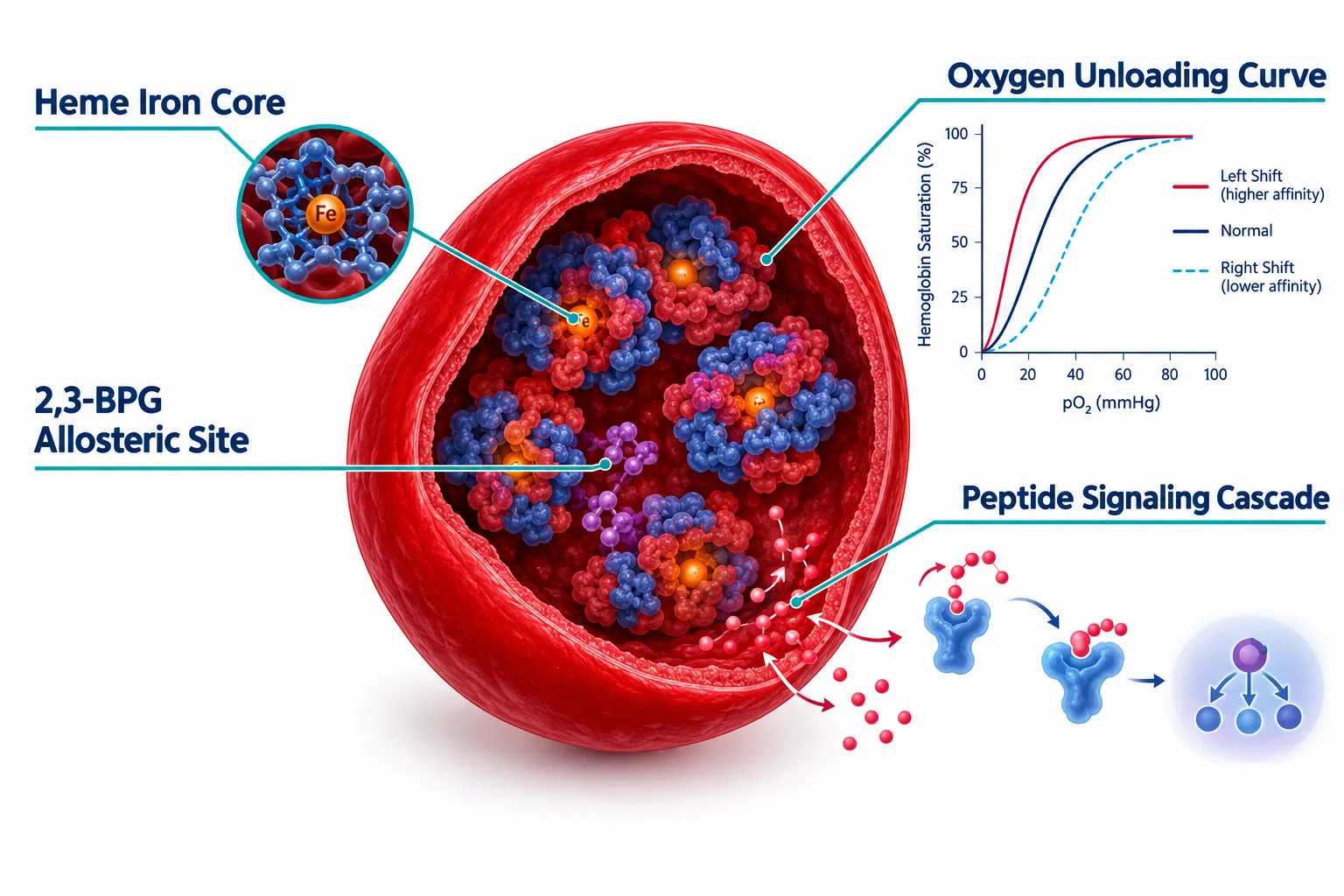
Hemoglobin's job description extends well beyond transporting oxygen from the lungs to peripheral tissues. It functions as a finely regulated integrator of oxygen delivery and cellular metabolism, responding dynamically to pH shifts, carbon dioxide levels, temperature, and allosteric modulators such as 2,3-BPG.
Why Hemoglobin Is More Than a Carrier Protein

When tissue oxygen tension drops, whether from anemia, altitude, dehydration, or intense exercise, erythrocytes increase 2,3-BPG production. This molecule reduces hemoglobin's affinity for oxygen, promoting unloading at the tissue level. The downstream effect is a cascade of metabolic adaptations, including shifts in mitochondrial peptide signaling, changes in hypoxia-inducible factor (HIF-1alpha) activity, and altered release of exercise-related peptides such as MOTS-c. Researchers studying MOTS-c peptide as a mitochondrial-derived signal, for example, must recognize that its circulating levels are tightly coupled to the oxygen environment the mitochondria perceive, an environment shaped directly by hemoglobin status.

Key insight: Hemoglobin is not a passive backdrop. It is an active determinant of the metabolic context in which peptides operate.


How Hemoglobin, Hematocrit, and Hydration Confound Metabolic Peptide Readouts

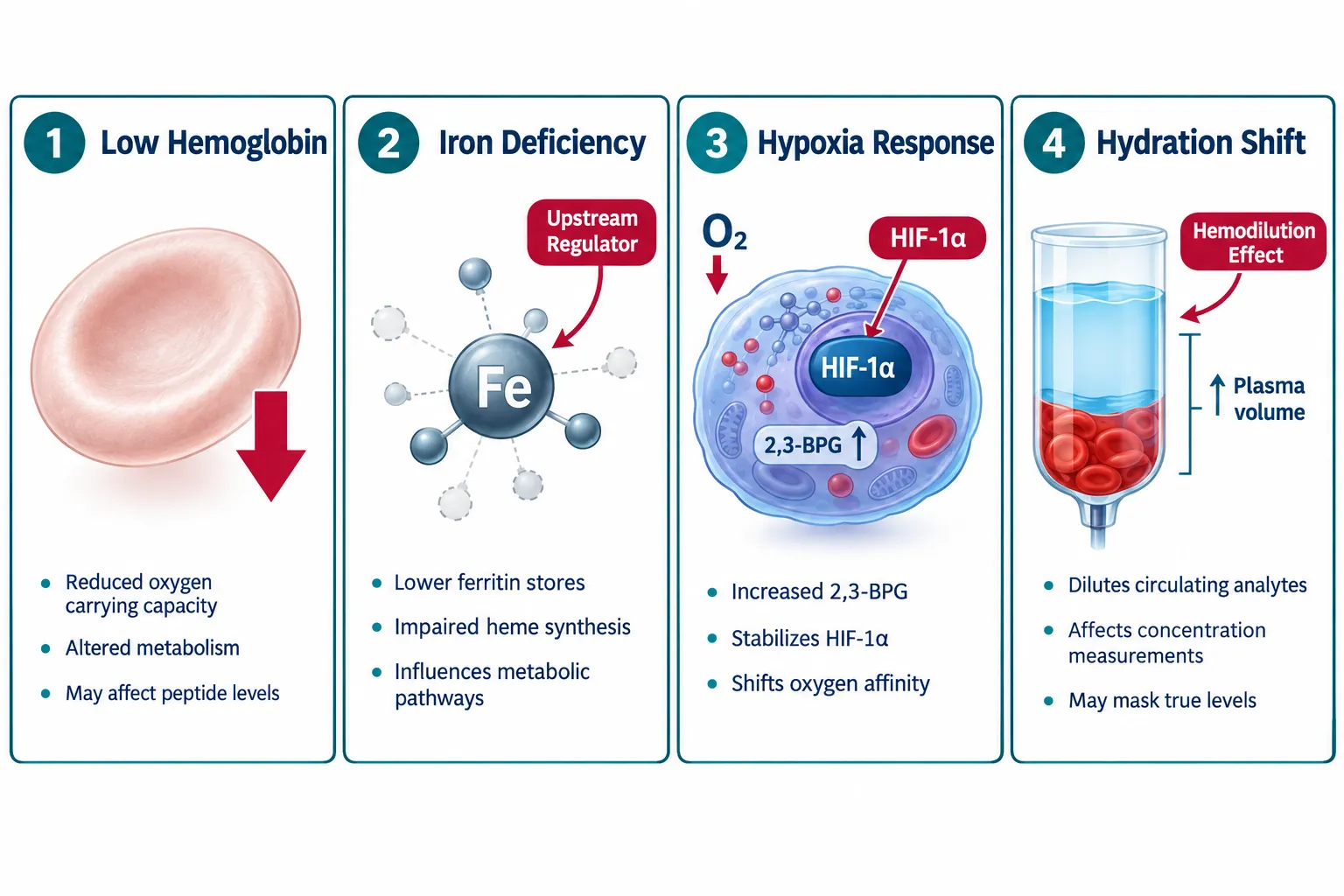
The problem of metabolic peptide research and hemoglobin: when oxygen-carrying capacity becomes a confounding variable becomes most visible when examining how multiple erythrocyte-related factors interact simultaneously.
How Hemoglobin, Hematocrit, and Hydration Confound Metabolic Peptide Readouts

Hemoglobin Concentration

Low hemoglobin reduces oxygen delivery to metabolically active tissues. This triggers compensatory hormonal and peptide responses, including erythropoietin, certain growth hormone secretagogues, and mitochondrial stress peptides, that are unrelated to the intervention being studied. Studies examining tesa peptide benefits or visceral fat research outcomes are particularly vulnerable, because adipose tissue metabolism is highly sensitive to local oxygen availability.

Hematocrit and Plasma Volume

Hematocrit, the proportion of blood volume occupied by red cells, fluctuates with hydration. A dehydrated subject shows a falsely elevated hematocrit and a falsely concentrated peptide readout. Conversely, plasma expansion from overhydration dilutes circulating peptide concentrations without any true biological change. This hemodilution effect is a known confounder in cardiometabolic peptide biomarker studies, including those examining NT-proBNP, where anemia independently elevates the marker and mimics cardiac stress signals.

Iron and Copper Availability

Iron is the upstream determinant of hemoglobin synthesis. Iron deficiency, even before frank anemia develops, reduces erythropoietic output and alters the metabolic microenvironment. Copper deficiency compounds this by impairing ceruloplasmin-mediated iron transport. Both micronutrient gaps can shift peptide readouts in ways that mimic or mask treatment effects. Researchers exploring peptide dosing protocols need to screen for iron and ferritin status before interpreting dose-response curves.

Erythropoietic Activity

Active erythropoiesis, the bone marrow's production of new red cells, consumes significant metabolic resources and generates its own cytokine and peptide milieu. Subjects in a recovery phase after blood loss or altitude exposure will show erythropoietic peptide signals that contaminate readouts for metabolic interventions under study.


Building a Practical Control Panel for Metabolic Peptide Studies

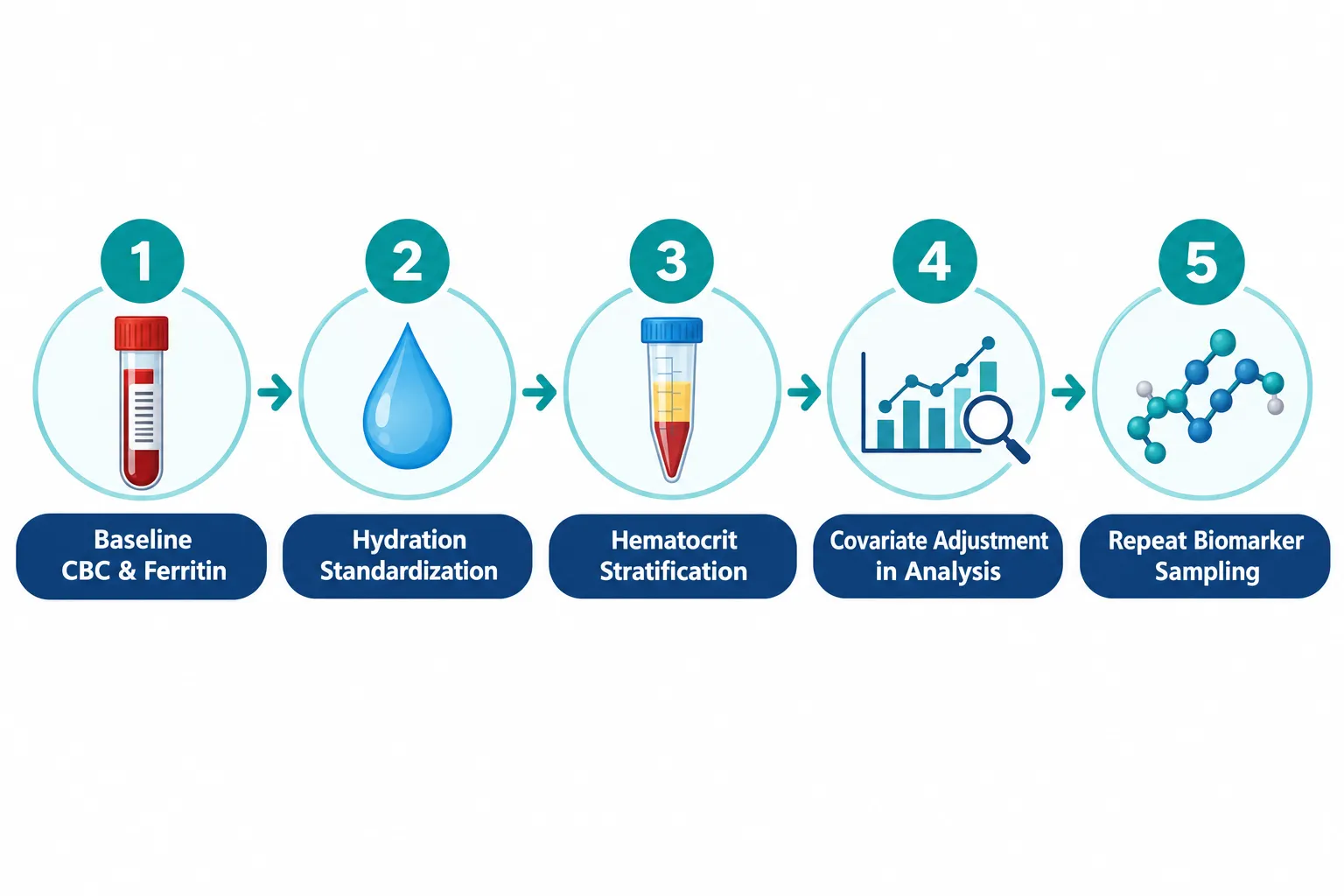
Addressing metabolic peptide research and hemoglobin: when oxygen-carrying capacity becomes a confounding variable requires a systematic pre-study and within-study measurement framework. The table below outlines a recommended control-panel design.
Building a Practical Control Panel for Metabolic Peptide Studies

Variable Measurement Timing
Hemoglobin (Hb) Complete Blood Count (CBC) Baseline and mid-study
Hematocrit (Hct) CBC Baseline and mid-study
Serum ferritin Iron panel Baseline
Serum iron and TIBC Iron panel Baseline
Hydration status Urine specific gravity or osmolality Each sampling day
Reticulocyte count CBC differential Baseline and post-intervention
Copper/ceruloplasmin Micronutrient panel Baseline if deficiency suspected

Stratification matters. Subjects should be grouped by baseline hemoglobin category, normal, borderline low, and clinically low, before randomization. Statistical models should include hemoglobin and hematocrit as covariates, not afterthoughts. This approach is directly analogous to how researchers now handle confounding in GLP-1 receptor agonist studies, where soluble CD36 levels were found to shift independently of the intervention due to uncontrolled metabolic variables.

For peptides with known mitochondrial or oxygen-sensing mechanisms, such as those explored in synergy of LL-37 and SS-31 research, the control panel becomes even more critical. SS-31 targets the inner mitochondrial membrane and its efficacy signals are directly modulated by local oxygen tension.

Functional food research adds another dimension. Walnut oligopeptides, studied in mouse models, demonstrated anti-hypoxia effects partly by increasing hemoglobin concentration and hematocrit, meaning the peptide's apparent benefit was mediated through erythrocyte changes, not direct tissue action. Without hemoglobin tracking, that mechanism would have been invisible.

High-throughput proteomics and machine-learning diagnostic platforms are now identifying hemoglobin-derived bioactive peptides from biological matrices as metabolic agents in their own right. This dual role, hemoglobin as both a confounder and a source of bioactive fragments, makes the case for routine hemoglobin profiling in any metabolic peptide research pipeline. Researchers working with peptides and polypeptides in endocrine pharmacology contexts will find this especially relevant as multi-pathway interactions become the norm.

Hemoglobin levels have also emerged as a biomarker of systemic oxygenation linked to human longevity outcomes, reinforcing its status as a central covariate in aging and metabolic resilience studies. As the field moves toward precision peptide protocols, ignoring this variable is a design flaw, not a minor oversight.


Conclusion

The relationship between metabolic peptide research and hemoglobin, when oxygen-carrying capacity becomes a confounding variable, demands direct, structured attention from every researcher designing a metabolic peptide trial in 2026. The actionable steps are clear:

  • Screen all subjects for hemoglobin, hematocrit, ferritin, and hydration status before enrollment.
  • Stratify randomization by hemoglobin category to prevent group imbalance.
  • Include erythrocyte variables as covariates in all statistical models.
  • Standardize sampling conditions, time of day, hydration state, and activity level, to minimize within-subject variability.
  • Repeat hemoglobin measurements at key study timepoints, not just at baseline.

Researchers exploring IPA Sermorelin stack research or growth hormone-related peptide outcomes should treat this control panel as a minimum standard. The same applies to any team working with MOTS-c peptide dosage calculators where mitochondrial oxygen sensing is central to the mechanism. Hemoglobin is not background noise, it is a signal that must be measured, controlled, and reported.

https://www.puretestedpeptides.com/wp-content/uploads/2026/10/metabolic-peptide-research-and-hemoglobin-when-oxygen-carrying-capacity-becomes.webp 1024 1536 https://www.puretestedpeptides.com/wp-content/uploads/2026/01/buy-peptides-online.jpg 2026-10-08 13:11:342026-10-08 13:11:34Metabolic Peptide Research and Hemoglobin: When Oxygen-Carrying Capacity Becomes a Confounding Variable
×

Helpful Links

  • My account
  • Cart
  • Checkout
  • Refund and Returns Policy
  • Privacy Policy
  • SMS Privacy Policy
  • Login
  • My Account
  • Logout

USA Made Lab Tested Peptides

All products are sold for research, laboratory, or analytical purposes only, and are not for human consumption


Pure Tested Peptides is a chemical supplier. Pure Tested Peptides is not a compounding / chemical compounding facility as defined under 503A of the Federal Food, Drug, and Cosmetic act. Pure Tested Peptides is not an outsourcing facility as defined under 503B of the Federal Food, Drug, and Cosmetic act.

The statements made within this website have not been evaluated by the US Food and Drug Administration. The products we offer are not intended to diagnose, treat, cure or prevent any disease.

Human/Animal Consumption Prohibited. Laboratory/In-Vitro Experimental Use Only

Scroll to top Scroll to top Scroll to top