Call or Text 727-513-9780
  • Shopping Cart Shopping Cart
    0Shopping Cart
Pure Tested Peptides | America's most trusted Peptides for sale online
  • Peptides for sale
    • Oral Peptides for sale
      • Peptide Capsules for sale
      • BPC 157 Capsules 1000mcg
      • SLU-PP-332 Capsules | 1000 mcg
      • 5-Amino-1MQ 50mg Capsules
      • Tesofensine 500mcg
    • All Peptides for sale
    • Peptide Sprays
      • BPC 157 Nasal Spray Kit
      • BPC-157 TB500 Nasal Spray Kit
      • Semax Nasal Spray 10mg
      • Selank – Nasal Spray Kit – 10mg
      • Epithalon 50MG Nasal Spray Kit
      • Ipamorelin 10mg Nasal Spray
      • Klow Nasal Spray (BPC-157 + TB-500 + GHK-Cu + KPV) | 80mg
      • Hulk Nasal Spray Tesa / Ipa Blend 6/3 MG
      • Klow Nasal Spray
      • NAD + 500 mg Nasal Spray
      • PT-141 Nasal Spray Kit
    • GHRH Peptides
      • Ipa Peptides
      • CJC-1295 Peptides
        • CJC-1295 with DAC 5 mg
        • CJC-1295 without DAC 5 mg
        • CJC-1295 Ipa 10mg
      • Tesa Peptides
        • Tesa Peptide
        • Tesa 20 mg
    • GHK-Cu Peptides
      • All GHK-Cu Peptides
      • GHK-Cu 100mg
      • KLOW Peptide Blend – Buy KLOW blend online
    • BPC Peptides
      • All BPC Peptides
      • BPC-157
      • BPC-157 TB-500
      • BPC 157 capsules 1000mcg
    • SLU-PP-332 Peptides
      • All SLU-PP-332 Peptides
      • SLU-PP-332 5mg
    • GLP3 Peptides
      • GLP3-R
      • GLP3-R CAG 10mg
      • GLP3-R 20mg
    • PT-141 Peptides
      • PT-141 Peptides for sale
      • PT-141 10mg
      • PT-141 Nasal Spray
    • CAG Peptides
      • Lipo-C Peptide Blend
      • CAG 5mg
      • CAG 10mg
    • MOTS-C Peptides
      • MOTS-C Peptides for sale
      • MOTS-c peptide
      • MOTS-c 10mg *6 pack*
    • 5 Amino 1MQ Peptides
      • 5 Amino 1MQ Peptides for sale
      • 5-Amino-1MQ 50mg Capsules
      • 5-Amino-1MQ 5mg
    • Epithalon Peptides
      • Epithalon Peptides for sale
      • Epithalon 10mg
      • Epithalon 50mg
  • Shop
    • GLPs
      • 5-Amino-1MQ 50mg Capsules
      • 5-Amino-1MQ 5mg
      • GLP3-Reta
      • L-Carnitine 500mg/ml
      • Tesofensine 500mcg
      • SLU-PP-332 5mg
      • MOTS-c 10mg *6 pack*
    • Epithalon & BPC Peptides
      • Epithalon 10mg
      • Epithalon 50mg
      • BPC-157
      • BPC 157 capsules 1000mcg
      • BPC-157 TB-500
      • BPC-157 TB500 Nasal Spray Kit
      • BPC 157 Nasal Spray Kit
    • BPC TB-500 & NAD+ Peptides
      • NAD+ 500 mg
      • KLOW Peptide Blend – Buy KLOW blend online
      • GLOW Peptide Blend
      • TB 500 5mg
      • BPC 157 capsules 1000mcg – Supplement
      • BPC 157 Nasal Spray Kit
      • BPC-157
      • BPC-157 TB500 Nasal Spray Kit
      • BPC-157 TB-500
      • BPC 157 capsules 1000mcg
    • LL-37 Peptide
      • LL-37 10 mg
    • MOTS-C & Selank
      • MOTS-c peptide
      • Selank 10mg
    • GHK Peptides
      • GHK-Cu 100mg
      • GLOW Peptide Blend
      • KLOW Peptide Blend – Buy KLOW blend online
  • COAs
  • Wholesale
    • Wholesale Peptides for sale
  • PTP FAQ
  • Affiliates
    • Selank Peptide: Advanced Pharmacological Mechanisms Underlying Its Anxiolytic and Nootropic Effects in Research
      • 5-Amino-1MQ Peptide: Detailed Mechanisms of NNMT Inhibition and Its Impact on Cellular Metabolism Research
        • MOTS-C Peptide: Unraveling Its Role in Mitochondrial Dynamics and Energy Metabolism Research
          • Epithalon Peptide and Telomerase Regulation: Investigating Its Impact on Cellular Senescence and Lifespan Research Models
            • GLP2-T vs GLP2 Tirz Peptide: Understanding the Naming, Mechanistic Nuances, and Research Implications for Gut Health
      • Peptides and Polypeptides in Modern Pharmacology: What Research on Metoprolol, Prednisone, and Amlodipine Reveals
        • Polypeptide Peptides vs NSAIDs: What Naproxen and Diclofenac Teach Tissue-Repair Researchers About BPC‑157 and TB‑500
          • Peptides and Polypeptides in Endocrine Pharmacology: How GLP-1, GLP-2, and GLP-3 Retatrutide Differ From Classic Drugs Like Prednisone and Amlodipine
          • 5‑Amino‑1MQ Peptide and NNMT Inhibition: How It Compares With Statins Like Atorvastatin in Adipose and Lipid Metabolism Research
      • Enclomiphene, Estrogen Receptor Signaling, and Luteinizing Phase Biology: What Hormone Researchers Should Measure
        • Mesenchymal Stem Cells, BPC‑157, and GHK‑Cu: How Tissue Repair Peptides Compare With Classic NSAIDs Like Naproxen in Injury Models
          • Peptide Calculator Use Cases Beyond Growth Hormone: Working Through GLP‑3 Retatrutide, MOTS‑c, and BPC‑157 Research Dosing
        • Polypeptide Peptides in Endocrine and Metabolic Pharmacology: Lessons From Amlodipine, Prednisone, and Metoprolol
        • Peptides Calculator for Advanced Blends: Worked Examples for Tesamorelin, CJC‑1295, and Ipamorelin Stacks
          • Peptides and Polypeptides in Human Physiology: How Molecular Size Shapes Research Applications
            • Selank Peptide: Advanced Pharmacological Mechanisms Underlying Its Anxiolytic and Nootropic Effects in Research
          • 5-Amino-1MQ Peptide: Detailed Mechanisms of NNMT Inhibition and Its Impact on Cellular Metabolism Research
            • MOTS-C Peptide: Unraveling Its Role in Mitochondrial Dynamics and Energy Metabolism Research
              • Epithalon Peptide and Telomerase Regulation: Investigating Its Impact on Cellular Senescence and Lifespan Research Models
                • GLP2-T vs GLP2 Tirz Peptide: Understanding the Naming, Mechanistic Nuances, and Research Implications for Gut Health
                  • Peptides and Polypeptides in Endocrine Pharmacology: How GLP-1, GLP-2, and GLP-3 Retatrutide Differ From Classic Drugs Like Prednisone and Amlodipine
                    • Polypeptide Peptides vs NSAIDs: What Naproxen and Diclofenac Teach Tissue-Repair Researchers About BPC‑157 and TB‑500
                      • Peptides and Polypeptides in Modern Pharmacology: What Research on Metoprolol, Prednisone, and Amlodipine Reveals
                        • 5‑Amino‑1MQ Peptide and NNMT Inhibition: How It Compares With Statins Like Atorvastatin in Adipose and Lipid Metabolism Research
                        • Enclomiphene, Estrogen Receptor Signaling, and Luteinizing Phase Biology: What Hormone Researchers Should Measure
                        • Mesenchymal Stem Cells, BPC‑157, and GHK‑Cu: How Tissue Repair Peptides Compare With Classic NSAIDs Like Naproxen in Injury Models
                        • Peptide Calculator Use Cases Beyond Growth Hormone: Working Through GLP‑3 Retatrutide, MOTS‑c, and BPC‑157 Research Dosing
                        • Polypeptide Peptides in Endocrine and Metabolic Pharmacology: Lessons From Amlodipine, Prednisone, and Metoprolol
                        • Peptides Calculator for Advanced Blends: Worked Examples for Tesamorelin, CJC‑1295, and Ipamorelin Stacks
                        • Peptides and Polypeptides in Human Physiology: How Molecular Size Shapes Research Applications
                        • Selank Peptide: Advanced Pharmacological Mechanisms Underlying Its Anxiolytic and Nootropic Effects in Research
                        • MOTS-C Peptide: Unraveling Its Role in Mitochondrial Dynamics and Energy Metabolism Research
                        • Peptides and Polypeptides in Modern Pharmacology: What Research on Metoprolol, Prednisone, and Amlodipine Reveals
                        • Peptides and Polypeptides in Endocrine Pharmacology: How GLP-1, GLP-2, and GLP-3 Retatrutide Differ From Classic Drugs Like Prednisone and Amlodipine
                        • 5-Amino-1MQ Peptide: Detailed Mechanisms of NNMT Inhibition and Its Impact on Cellular Metabolism Research
                        • Mesenchymal Stem Cells, BPC‑157, and GHK‑Cu: How Tissue Repair Peptides Compare With Classic NSAIDs Like Naproxen in Injury Models
                        • Peptide Calculator Use Cases Beyond Growth Hormone: Working Through GLP‑3 Retatrutide, MOTS‑c, and BPC‑157 Research Dosing
                        • GLP2-T vs GLP2 Tirz Peptide: Understanding the Naming, Mechanistic Nuances, and Research Implications for Gut Health
                        • Polypeptide Peptides in Endocrine and Metabolic Pharmacology: Lessons From Amlodipine, Prednisone, and Metoprolol
                        • Polypeptide Peptides vs NSAIDs: What Naproxen and Diclofenac Teach Tissue-Repair Researchers About BPC‑157 and TB‑500
                        • Peptides and Polypeptides in Human Physiology: How Molecular Size Shapes Research Applications
                        • Peptides Calculator for Advanced Blends: Worked Examples for Tesamorelin, CJC‑1295, and Ipamorelin Stacks
                        • 5‑Amino‑1MQ Peptide and NNMT Inhibition: How It Compares With Statins Like Atorvastatin in Adipose and Lipid Metabolism Research
                        • Enclomiphene, Estrogen Receptor Signaling, and Luteinizing Phase Biology: What Hormone Researchers Should Measure
                        • Epithalon Peptide and Telomerase Regulation: Investigating Its Impact on Cellular Senescence and Lifespan Research Models
                        • Best research protocol Klow blend
                        • best time to take BPC-157
                        • best time to take DSIP (Delta Sleep Inducing Peptide)
                        • best time to take CJC-1295
                        • best time to take AOD-9604
                        • best time to take Follistatin 344
                        • best time to take Ipamorelin
                        • best time to take MK-677 (Ibutamoren)
                        • best time to take Ligandrol (LGD-4033) — research compound
                        • best time to take Ostarine (MK-2866) — research compound
                        • best time to take GHK-CU
                        • best time to take TB-500
                        • best time to take MOTS-c
                        • best time to take Semax
                        • best time to take RAD-140 (Testolone) — research compound
                        • best time to take Thymosin Alpha-1
                        • best time to take PEG-MGF
                        • Biolife Plasma, Octapharma Plasma, and Research Peptides: How Plasma Donation Labs Differ From Peptide Suppliers
                        • best time to take YK-11 — research compound
                        • best time to take PT-141 (Bremelanotide)
                        • Best research protocol Klow blend
                        • 5-Amino-1MQ and MOTS-C Synergy: Metabolic Signaling, Mitochondria, and Research Design
                        • BPC-157 and TB-500: Investigating Their Combined Effects on Angiogenesis and Cellular Migration in Tissue Repair Models
                        • BPC-157 Peptide: Gut Barrier Function, Inflammation, and Tissue-Recovery Research
                        • 5‑Amino‑1MQ and MOTS‑c Synergy in Metabolic Research: Designing NNMT and Mitochondrial Biogenesis Stacks
                        • CJC-1295 with DAC vs. Without DAC: Half-Life, Release Kinetics, and Research Implications
                        • CJC‑1295 with DAC vs. Without DAC: Expanding on Half‑Life Differences Using Tesamorelin and Ipamorelin Blend Case Studies
                        • Collagen Biology and Copper‑Binding Peptides: How GHK‑Cu, Glow Blend, and Klow Blend Interact with Skin and Connective Tissue
                        • Collagen Biology and Regenerative Peptides: How GHK‑Cu, Glow Blend, and Klow Blend Affect Extracellular Matrix Research
                    • DNA, Telomeres, and Longevity Peptides: Positioning Epithalon and MOTS‑c in Genetic Aging Research
                      • Enclomiphene Citrate: serm Mechanism, Testosterone Research, and Stack Compatibility
                        • Enclomiphene vs Enclomiphene Citrate: Formulation, Bioavailability, and Research Distinctions
                        • Epithalon Peptide Research: Telomerase Activation, Aging, and Pineal Gland Function
                        • Estrogen Receptor Signaling and Enclomiphene: How Selective Modulators Compare with Classic Polypeptide Hormones
                        • GHK-Cu Peptide: Advanced Mechanisms in Extracellular Matrix Remodeling and Wound Healing Research
                        • GHK-Cu Peptide: Collagen Synthesis, Wound Repair, and Skin-Barrier Research Models
                        • GLP-1 vs GLP-3 vs GLP-2: Peptide Classification and Research Applications
                        • GLP-2 Peptide Research Guide: Gut Barrier Function, Nutrient Absorption, and Intestinal Recovery Models
                        • GLP-3 Retatrutide vs. GLP-1 Drugs: What Triple-Agonist Biology Changes in Research Models
                        • Ipamorelin and Tesamorelin Combination: Synergistic GH Secretagogue Research and Dosing Protocols
                        • GLP2 Tirz Peptide: What It Is, Why the Name Exists, and How Researchers Should Interpret It
                        • Klow Blend Peptide Nasal Spray: What the Formulation Is Trying to Do in Cognitive Research
                        • Mitochondria, NNMT Inhibition, and Peptide Modulators: Where MOTS‑c and 5‑Amino‑1MQ Fit in Cellular Energy Research
                        • MOTS-c Peptide: Mitochondrial Function, Energy Metabolism, and What Researchers Measure
                        • MOTS-c vs. 5-Amino-1MQ: Which Metabolic Research Questions Each Compound Actually Answers
                        • Nasal Spray Peptides: Bioavailability, Administration, and Semax/Selank Research Applications
                        • PT-141 Peptide Research: Mechanism of Action and Melanocortin Receptor Signaling
                        • Retatrutide for Research: Mechanism, Structure, and GLP-1/GLP-3 Dual Action
                        • Retatrutide for Obesity and Type 2 Diabetes: What the Latest Trial Data Suggest
                        • Tesofensine Peptide Research: Mechanism, Appetite Suppression, and Neuropeptide Y Pathways
  • Contact
    • Contact Customer Service
    • Text Customer Support
  • About US
  • Shop all peptides
  • Affiliate Program
    • Affiliate Signup
  • Login / Register Login / Register Page Link Login / Register Page Link
  • Click to open the search input field Click to open the search input field Search
  • Menu Menu

Tag Archive for: hormone studies

Prostate Specific Antigen, Peptides, and Polypeptide Hormones: What Research Labs Measure in Hormone and serm Studies

Prostate Specific Antigen, Peptides, and Polypeptide Hormones: What Research Labs Measure in Hormone and serm Studies

September 3, 2026/0 Comments/in Uncategorized/by

A PSA reading below 0.2 ng/mL within nine months of starting androgen deprivation therapy now ranks as one of the strongest independent predictors of long-term survival in hormone-sensitive prostate cancer research. That single data point illustrates why understanding Prostate Specific Antigen, Peptides, and Polypeptide Hormones: What Research Labs Measure in Hormone and serm Studies matters to anyone working in or following endocrine and oncology research.

Key Takeaways

  • PSA is a serine protease polypeptide and a primary efficacy endpoint in hormone and serm-related prostate research.
  • Research labs routinely pair PSA with testosterone, LH, and FSH to build a complete hormonal picture.
  • serm compounds, including enclomiphene, raise LH and FSH, which in turn elevates testosterone and can influence PSA levels.
  • Novel PSA indices such as the initial-to-nadir PSA ratio are emerging as independent predictors of treatment response.
  • Peptide and polypeptide hormone panels are expanding beyond PSA alone, integrating PSMA metrics and growth hormone secretagogue markers in translational trials.

What PSA Actually Is: A Polypeptide at the Center of Hormone Research
What PSA Actually Is: A Polypeptide at the Center of Hormone Research

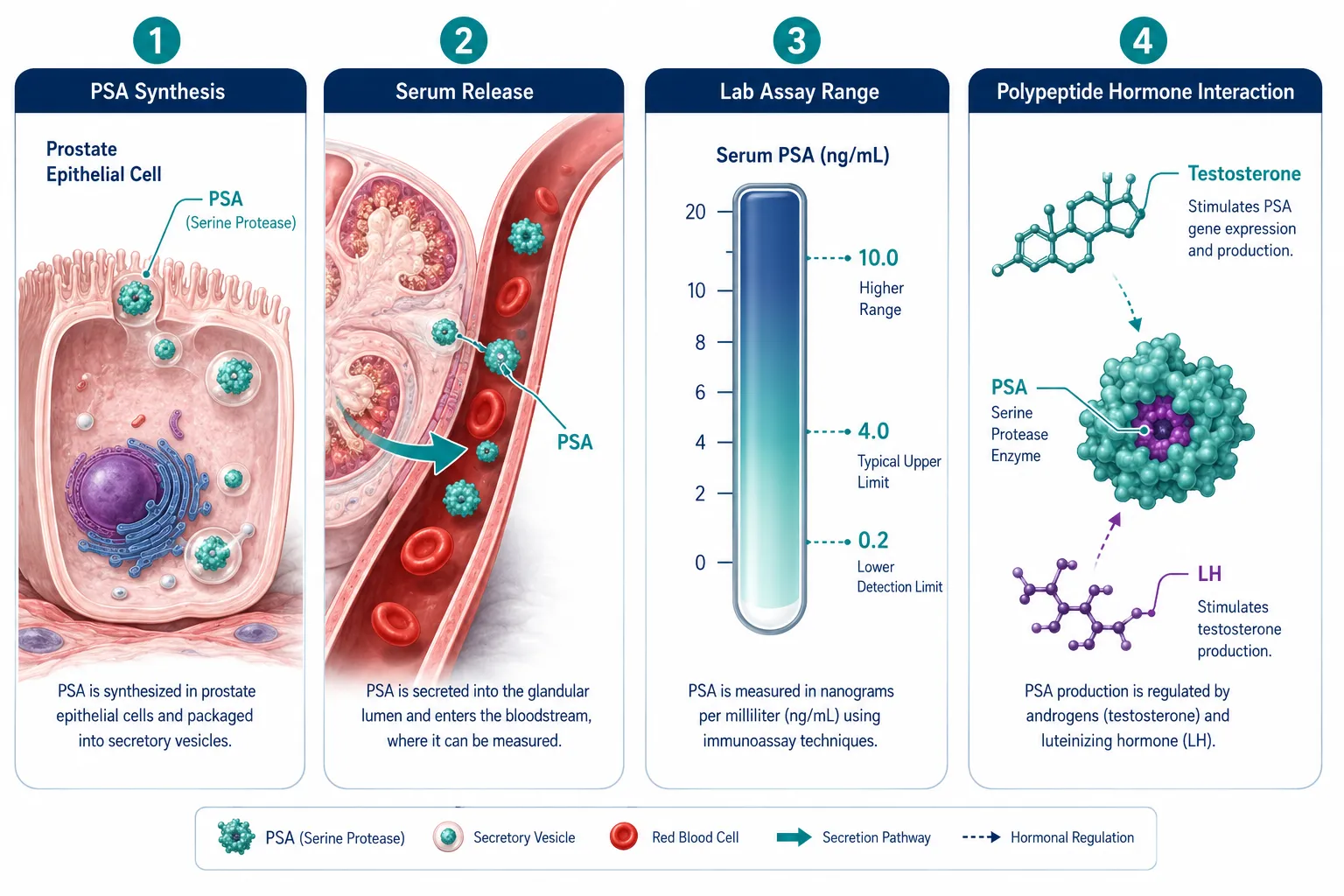
Prostate-specific antigen is not merely a cancer screening number. It is a 237-amino-acid serine protease,a polypeptide produced primarily by prostate epithelial cells and regulated by androgenic signaling. Because testosterone and dihydrotestosterone directly stimulate PSA gene transcription via androgen receptor binding, PSA functions as a sensitive downstream readout of androgen activity. This makes it indispensable in any study that manipulates the hormonal axis.

In the context of Prostate Specific Antigen, Peptides, and Polypeptide Hormones: What Research Labs Measure in Hormone and serm Studies, PSA occupies a unique position: it is itself a polypeptide, it responds to polypeptide hormones such as luteinizing hormone (LH) and follicle-stimulating hormone (FSH), and it serves as the primary efficacy biomarker in androgen deprivation therapy (ADT) and androgen receptor pathway inhibitor (ARPI) trials.

Key polypeptide hormones measured alongside PSA in standard research panels include:

  • LH and FSH, pituitary glycoprotein hormones that regulate gonadal testosterone output
  • Testosterone (total and free), the primary androgenic driver of PSA expression
  • Sex hormone-binding globulin (SHBG), a transport protein that modulates free testosterone availability
  • Growth hormone and IGF-1, relevant in systemic peptide research that intersects with prostate biology

How serm Pharmacology Connects to PSA Monitoring
How serm Pharmacology Connects to PSA Monitoring

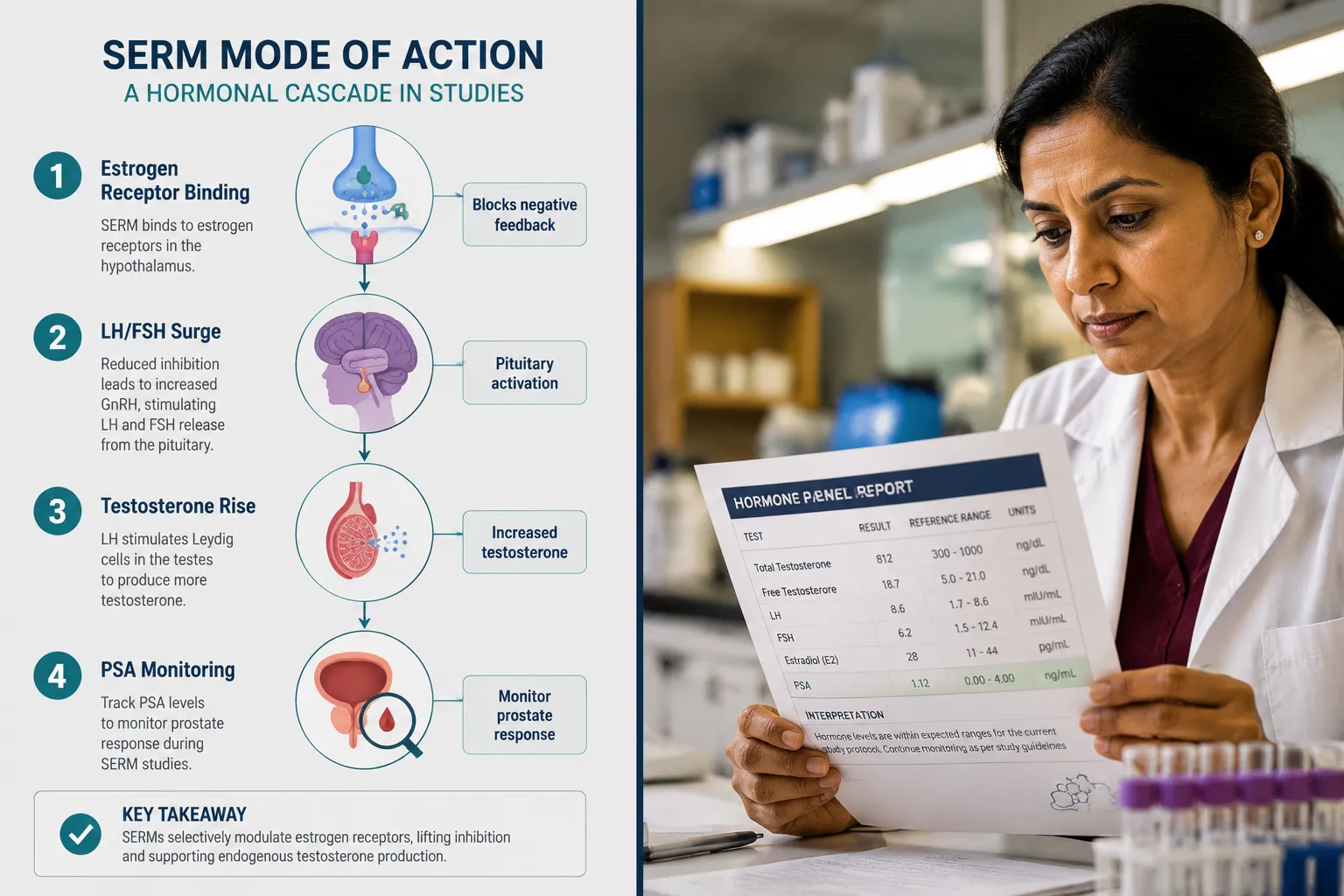
Selective estrogen receptor modulators (serms) such as enclomiphene, tamoxifen, and clomiphene block estrogen receptors in the hypothalamus and pituitary. This blockade removes negative feedback on GnRH pulsatility, causing a rise in LH and FSH, which then stimulates testicular testosterone production. Because PSA is androgen-sensitive, any intervention that raises testosterone carries the potential to shift PSA levels, a critical consideration in research design.

Understanding serm pharmacology is therefore inseparable from understanding PSA dynamics. Labs conducting serm research on male hypogonadism or testosterone restoration protocols routinely include PSA as a safety and efficacy endpoint precisely because of this hormonal cascade.

"In hormone and serm studies, PSA is not just a prostate cancer marker, it is a functional readout of androgenic activity across the entire hypothalamic-pituitary-gonadal axis."

A well-designed serm comparison study will typically measure:

Biomarker Role in Study
PSA (ng/mL) Primary safety and efficacy endpoint
Total testosterone Confirms androgenic response
LH and FSH Validates serm mechanism of action
Estradiol Monitors estrogenic rebound
SHBG Contextualizes free testosterone changes

The ARANOTE trial, which evaluated darolutamide combined with ADT, used undetectable PSA (below 0.2 ng/mL) as its key efficacy marker. Real-world cohort data confirm that PSA at six to twelve months of ADT plus ARPI predicts survival outcomes and guides decisions on treatment escalation or de-escalation.

What Research Labs Measure: The Full Panel in Hormone and serm Studies
What Research Labs Measure: The Full Panel in Hormone and serm Studies

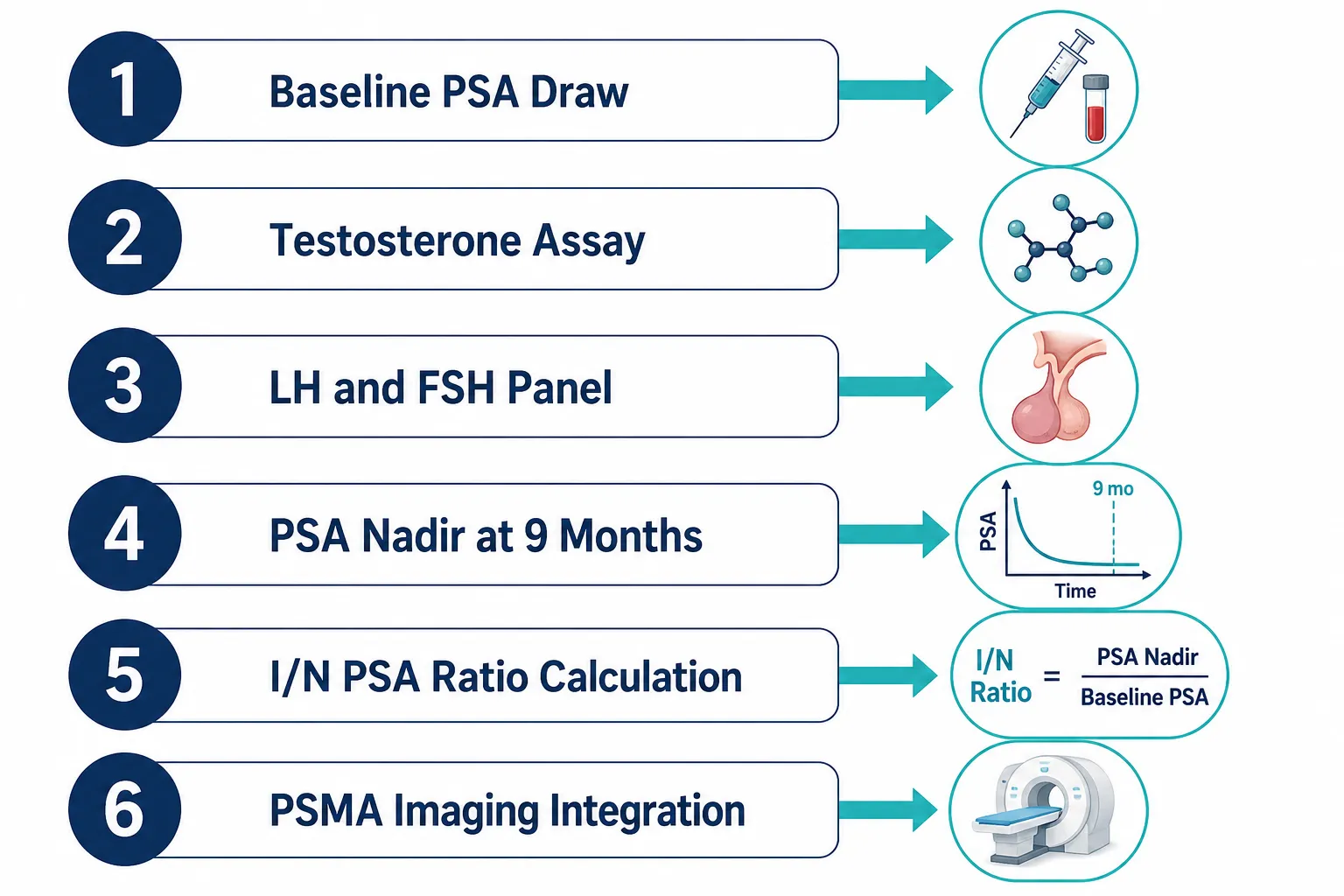
The scope of Prostate Specific Antigen, Peptides, and Polypeptide Hormones: What Research Labs Measure in Hormone and serm Studies has expanded considerably in 2026. Beyond the classic PSA-plus-testosterone panel, modern translational trials incorporate several additional metrics.

Novel PSA Indices

The initial-to-nadir PSA ratio (I/N PSA) has emerged as an independent predictor of both treatment response and overall survival. Labs calculate this by dividing the baseline PSA by the lowest PSA achieved during therapy. A steep ratio signals robust androgen suppression and correlates with improved outcomes in ADT-treated cohorts.

PSA variability and repeat testing protocols have also received renewed attention. Screening analyses confirm that a single PSA draw carries meaningful biological variability, making serial measurements and standardized collection intervals essential for reliable research endpoints.

Integrating PSMA Metrics

Prostate-specific membrane antigen (PSMA) radioligand therapy trials such as the ENZA-p study now integrate both PSA and PSMA imaging metrics. PSMA is itself a transmembrane peptide, and its expression correlates with, but is not identical to, PSA levels. Labs running hormone-refractory disease studies must therefore treat PSA and PSMA as complementary rather than interchangeable endpoints.

Peptide Hormones in Growth Axis Research

Researchers exploring growth hormone secretagogues such as those studied in sermorelin, ipamorelin, and CJC-1295 protocols measure IGF-1 and growth hormone pulse amplitude alongside PSA when subjects are older males. This overlap reflects the broader principle that no single peptide or hormone acts in isolation. Translational research design increasingly demands multi-analyte panels that capture hormonal crosstalk.

For labs exploring mitochondria-targeted peptides, resources such as SS-31 mechanism and research highlight how oxidative stress markers can complement hormone panels in aging-related studies.

ADT-Sparing Strategies and PSA Thresholds

Emerging ADT-sparing research uses PSA as the primary marker for determining whether lifelong castration can be avoided. Guideline and cohort data now define specific PSA thresholds for initiating and timing ADT after local treatment relapse. The PSA-response-adapted radiation approach tested in the RANGER phase II trial exemplifies how a single polypeptide biomarker can drive individualized treatment algorithms.

Conclusion

The relationship between Prostate Specific Antigen, Peptides, and Polypeptide Hormones: What Research Labs Measure in Hormone and serm Studies is more integrated than most summaries suggest. PSA is simultaneously a polypeptide product, an androgen-axis readout, and a safety endpoint in serm and hormone research. Labs that treat it as a standalone number miss the broader hormonal narrative.

Actionable next steps for researchers and lab professionals:

  1. Adopt serial PSA measurement protocols with standardized intervals rather than relying on single-draw values.
  2. Pair PSA with LH, FSH, total testosterone, and SHBG to capture the full hormonal axis in serm and ADT studies.
  3. Calculate the I/N PSA ratio as a supplementary predictor of response and survival in ADT-treated cohorts.
  4. Integrate PSMA imaging data in hormone-refractory protocols to avoid over-relying on PSA alone.
  5. Review current serm research and translational research design frameworks to ensure multi-analyte panels reflect 2026 guideline updates.

Staying current with how PSA interacts with the broader peptide and polypeptide hormone landscape is no longer optional, it is the baseline standard for credible hormone and serm research design.

https://www.puretestedpeptides.com/wp-content/uploads/2026/09/prostate-specific-antigen-peptides-and-polypeptide-hormones-what-research-labs-m.webp 1024 1536 https://www.puretestedpeptides.com/wp-content/uploads/2026/01/buy-peptides-online.jpg 2026-09-03 13:05:362026-09-03 13:05:36Prostate Specific Antigen, Peptides, and Polypeptide Hormones: What Research Labs Measure in Hormone and serm Studies
×

Helpful Links

  • My account
  • Cart
  • Checkout
  • Refund and Returns Policy
  • Privacy Policy
  • SMS Privacy Policy
  • Login
  • My Account
  • Logout

USA Made Lab Tested Peptides

All products are sold for research, laboratory, or analytical purposes only, and are not for human consumption


Pure Tested Peptides is a chemical supplier. Pure Tested Peptides is not a compounding / chemical compounding facility as defined under 503A of the Federal Food, Drug, and Cosmetic act. Pure Tested Peptides is not an outsourcing facility as defined under 503B of the Federal Food, Drug, and Cosmetic act.

The statements made within this website have not been evaluated by the US Food and Drug Administration. The products we offer are not intended to diagnose, treat, cure or prevent any disease.

Human/Animal Consumption Prohibited. Laboratory/In-Vitro Experimental Use Only

Scroll to top Scroll to top Scroll to top