Call or Text 727-513-9780
  • Shopping Cart Shopping Cart
    0Shopping Cart
Pure Tested Peptides | America's most trusted Peptides for sale online
  • Peptides for sale
    • Oral Peptides for sale
      • Peptide Capsules for sale
      • BPC 157 Capsules 1000mcg
      • SLU-PP-332 Capsules | 1000 mcg
      • 5-Amino-1MQ 50mg Capsules
      • Tesofensine 500mcg
    • All Peptides for sale
    • Peptide Sprays
      • BPC 157 Nasal Spray Kit
      • BPC-157 TB500 Nasal Spray Kit
      • Semax Nasal Spray 10mg
      • Selank – Nasal Spray Kit – 10mg
      • Epithalon 50MG Nasal Spray Kit
      • Ipamorelin 10mg Nasal Spray
      • Klow Nasal Spray (BPC-157 + TB-500 + GHK-Cu + KPV) | 80mg
      • Hulk Nasal Spray Tesa / Ipa Blend 6/3 MG
      • Klow Nasal Spray
      • NAD + 500 mg Nasal Spray
      • PT-141 Nasal Spray Kit
    • GHRH Peptides
      • Ipa Peptides
      • CJC-1295 Peptides
        • CJC-1295 with DAC 5 mg
        • CJC-1295 without DAC 5 mg
        • CJC-1295 Ipa 10mg
      • Tesa Peptides
        • Tesa Peptide
        • Tesa 20 mg
    • GHK-Cu Peptides
      • All GHK-Cu Peptides
      • GHK-Cu 100mg
      • KLOW Peptide Blend – Buy KLOW blend online
    • BPC Peptides
      • All BPC Peptides
      • BPC-157
      • BPC-157 TB-500
      • BPC 157 capsules 1000mcg
    • SLU-PP-332 Peptides
      • All SLU-PP-332 Peptides
      • SLU-PP-332 5mg
    • GLP3 Peptides
      • GLP3-R
      • GLP3-R CAG 10mg
      • GLP3-R 20mg
    • PT-141 Peptides
      • PT-141 Peptides for sale
      • PT-141 10mg
      • PT-141 Nasal Spray
    • CAG Peptides
      • Lipo-C Peptide Blend
      • CAG 5mg
      • CAG 10mg
    • MOTS-C Peptides
      • MOTS-C Peptides for sale
      • MOTS-c peptide
      • MOTS-c 10mg *6 pack*
    • 5 Amino 1MQ Peptides
      • 5 Amino 1MQ Peptides for sale
      • 5-Amino-1MQ 50mg Capsules
      • 5-Amino-1MQ 5mg
    • Epithalon Peptides
      • Epithalon Peptides for sale
      • Epithalon 10mg
      • Epithalon 50mg
  • Shop
    • GLPs
      • 5-Amino-1MQ 50mg Capsules
      • 5-Amino-1MQ 5mg
      • GLP3-Reta
      • L-Carnitine 500mg/ml
      • Tesofensine 500mcg
      • SLU-PP-332 5mg
      • MOTS-c 10mg *6 pack*
    • Epithalon & BPC Peptides
      • Epithalon 10mg
      • Epithalon 50mg
      • BPC-157
      • BPC 157 capsules 1000mcg
      • BPC-157 TB-500
      • BPC-157 TB500 Nasal Spray Kit
      • BPC 157 Nasal Spray Kit
    • BPC TB-500 & NAD+ Peptides
      • NAD+ 500 mg
      • KLOW Peptide Blend – Buy KLOW blend online
      • GLOW Peptide Blend
      • TB 500 5mg
      • BPC 157 capsules 1000mcg – Supplement
      • BPC 157 Nasal Spray Kit
      • BPC-157
      • BPC-157 TB500 Nasal Spray Kit
      • BPC-157 TB-500
      • BPC 157 capsules 1000mcg
    • LL-37 Peptide
      • LL-37 10 mg
    • MOTS-C & Selank
      • MOTS-c peptide
      • Selank 10mg
    • GHK Peptides
      • GHK-Cu 100mg
      • GLOW Peptide Blend
      • KLOW Peptide Blend – Buy KLOW blend online
  • COAs
  • Wholesale
    • Wholesale Peptides for sale
  • PTP FAQ
  • Affiliates
    • Selank Peptide: Advanced Pharmacological Mechanisms Underlying Its Anxiolytic and Nootropic Effects in Research
      • 5-Amino-1MQ Peptide: Detailed Mechanisms of NNMT Inhibition and Its Impact on Cellular Metabolism Research
        • MOTS-C Peptide: Unraveling Its Role in Mitochondrial Dynamics and Energy Metabolism Research
          • Epithalon Peptide and Telomerase Regulation: Investigating Its Impact on Cellular Senescence and Lifespan Research Models
            • GLP2-T vs GLP2 Tirz Peptide: Understanding the Naming, Mechanistic Nuances, and Research Implications for Gut Health
      • Peptides and Polypeptides in Modern Pharmacology: What Research on Metoprolol, Prednisone, and Amlodipine Reveals
        • Polypeptide Peptides vs NSAIDs: What Naproxen and Diclofenac Teach Tissue-Repair Researchers About BPC‑157 and TB‑500
          • Peptides and Polypeptides in Endocrine Pharmacology: How GLP-1, GLP-2, and GLP-3 Retatrutide Differ From Classic Drugs Like Prednisone and Amlodipine
          • 5‑Amino‑1MQ Peptide and NNMT Inhibition: How It Compares With Statins Like Atorvastatin in Adipose and Lipid Metabolism Research
      • Enclomiphene, Estrogen Receptor Signaling, and Luteinizing Phase Biology: What Hormone Researchers Should Measure
        • Mesenchymal Stem Cells, BPC‑157, and GHK‑Cu: How Tissue Repair Peptides Compare With Classic NSAIDs Like Naproxen in Injury Models
          • Peptide Calculator Use Cases Beyond Growth Hormone: Working Through GLP‑3 Retatrutide, MOTS‑c, and BPC‑157 Research Dosing
        • Polypeptide Peptides in Endocrine and Metabolic Pharmacology: Lessons From Amlodipine, Prednisone, and Metoprolol
        • Peptides Calculator for Advanced Blends: Worked Examples for Tesamorelin, CJC‑1295, and Ipamorelin Stacks
          • Peptides and Polypeptides in Human Physiology: How Molecular Size Shapes Research Applications
            • Selank Peptide: Advanced Pharmacological Mechanisms Underlying Its Anxiolytic and Nootropic Effects in Research
          • 5-Amino-1MQ Peptide: Detailed Mechanisms of NNMT Inhibition and Its Impact on Cellular Metabolism Research
            • MOTS-C Peptide: Unraveling Its Role in Mitochondrial Dynamics and Energy Metabolism Research
              • Epithalon Peptide and Telomerase Regulation: Investigating Its Impact on Cellular Senescence and Lifespan Research Models
                • GLP2-T vs GLP2 Tirz Peptide: Understanding the Naming, Mechanistic Nuances, and Research Implications for Gut Health
                  • Peptides and Polypeptides in Endocrine Pharmacology: How GLP-1, GLP-2, and GLP-3 Retatrutide Differ From Classic Drugs Like Prednisone and Amlodipine
                    • Polypeptide Peptides vs NSAIDs: What Naproxen and Diclofenac Teach Tissue-Repair Researchers About BPC‑157 and TB‑500
                      • Peptides and Polypeptides in Modern Pharmacology: What Research on Metoprolol, Prednisone, and Amlodipine Reveals
                        • 5‑Amino‑1MQ Peptide and NNMT Inhibition: How It Compares With Statins Like Atorvastatin in Adipose and Lipid Metabolism Research
                        • Enclomiphene, Estrogen Receptor Signaling, and Luteinizing Phase Biology: What Hormone Researchers Should Measure
                        • Mesenchymal Stem Cells, BPC‑157, and GHK‑Cu: How Tissue Repair Peptides Compare With Classic NSAIDs Like Naproxen in Injury Models
                        • Peptide Calculator Use Cases Beyond Growth Hormone: Working Through GLP‑3 Retatrutide, MOTS‑c, and BPC‑157 Research Dosing
                        • Polypeptide Peptides in Endocrine and Metabolic Pharmacology: Lessons From Amlodipine, Prednisone, and Metoprolol
                        • Peptides Calculator for Advanced Blends: Worked Examples for Tesamorelin, CJC‑1295, and Ipamorelin Stacks
                        • Peptides and Polypeptides in Human Physiology: How Molecular Size Shapes Research Applications
                        • Selank Peptide: Advanced Pharmacological Mechanisms Underlying Its Anxiolytic and Nootropic Effects in Research
                        • MOTS-C Peptide: Unraveling Its Role in Mitochondrial Dynamics and Energy Metabolism Research
                        • Peptides and Polypeptides in Modern Pharmacology: What Research on Metoprolol, Prednisone, and Amlodipine Reveals
                        • Peptides and Polypeptides in Endocrine Pharmacology: How GLP-1, GLP-2, and GLP-3 Retatrutide Differ From Classic Drugs Like Prednisone and Amlodipine
                        • 5-Amino-1MQ Peptide: Detailed Mechanisms of NNMT Inhibition and Its Impact on Cellular Metabolism Research
                        • Mesenchymal Stem Cells, BPC‑157, and GHK‑Cu: How Tissue Repair Peptides Compare With Classic NSAIDs Like Naproxen in Injury Models
                        • Peptide Calculator Use Cases Beyond Growth Hormone: Working Through GLP‑3 Retatrutide, MOTS‑c, and BPC‑157 Research Dosing
                        • GLP2-T vs GLP2 Tirz Peptide: Understanding the Naming, Mechanistic Nuances, and Research Implications for Gut Health
                        • Polypeptide Peptides in Endocrine and Metabolic Pharmacology: Lessons From Amlodipine, Prednisone, and Metoprolol
                        • Polypeptide Peptides vs NSAIDs: What Naproxen and Diclofenac Teach Tissue-Repair Researchers About BPC‑157 and TB‑500
                        • Peptides and Polypeptides in Human Physiology: How Molecular Size Shapes Research Applications
                        • Peptides Calculator for Advanced Blends: Worked Examples for Tesamorelin, CJC‑1295, and Ipamorelin Stacks
                        • 5‑Amino‑1MQ Peptide and NNMT Inhibition: How It Compares With Statins Like Atorvastatin in Adipose and Lipid Metabolism Research
                        • Enclomiphene, Estrogen Receptor Signaling, and Luteinizing Phase Biology: What Hormone Researchers Should Measure
                        • Epithalon Peptide and Telomerase Regulation: Investigating Its Impact on Cellular Senescence and Lifespan Research Models
                        • Best research protocol Klow blend
                        • best time to take BPC-157
                        • best time to take DSIP (Delta Sleep Inducing Peptide)
                        • best time to take CJC-1295
                        • best time to take AOD-9604
                        • best time to take Follistatin 344
                        • best time to take Ipamorelin
                        • best time to take MK-677 (Ibutamoren)
                        • best time to take Ligandrol (LGD-4033) — research compound
                        • best time to take Ostarine (MK-2866) — research compound
                        • best time to take GHK-CU
                        • best time to take TB-500
                        • best time to take MOTS-c
                        • best time to take Semax
                        • best time to take RAD-140 (Testolone) — research compound
                        • best time to take Thymosin Alpha-1
                        • best time to take PEG-MGF
                        • Biolife Plasma, Octapharma Plasma, and Research Peptides: How Plasma Donation Labs Differ From Peptide Suppliers
                        • best time to take YK-11 — research compound
                        • best time to take PT-141 (Bremelanotide)
                        • Best research protocol Klow blend
                        • 5-Amino-1MQ and MOTS-C Synergy: Metabolic Signaling, Mitochondria, and Research Design
                        • BPC-157 and TB-500: Investigating Their Combined Effects on Angiogenesis and Cellular Migration in Tissue Repair Models
                        • BPC-157 Peptide: Gut Barrier Function, Inflammation, and Tissue-Recovery Research
                        • 5‑Amino‑1MQ and MOTS‑c Synergy in Metabolic Research: Designing NNMT and Mitochondrial Biogenesis Stacks
                        • CJC-1295 with DAC vs. Without DAC: Half-Life, Release Kinetics, and Research Implications
                        • CJC‑1295 with DAC vs. Without DAC: Expanding on Half‑Life Differences Using Tesamorelin and Ipamorelin Blend Case Studies
                        • Collagen Biology and Copper‑Binding Peptides: How GHK‑Cu, Glow Blend, and Klow Blend Interact with Skin and Connective Tissue
                        • Collagen Biology and Regenerative Peptides: How GHK‑Cu, Glow Blend, and Klow Blend Affect Extracellular Matrix Research
                    • DNA, Telomeres, and Longevity Peptides: Positioning Epithalon and MOTS‑c in Genetic Aging Research
                      • Enclomiphene Citrate: serm Mechanism, Testosterone Research, and Stack Compatibility
                        • Enclomiphene vs Enclomiphene Citrate: Formulation, Bioavailability, and Research Distinctions
                        • Epithalon Peptide Research: Telomerase Activation, Aging, and Pineal Gland Function
                        • Estrogen Receptor Signaling and Enclomiphene: How Selective Modulators Compare with Classic Polypeptide Hormones
                        • GHK-Cu Peptide: Advanced Mechanisms in Extracellular Matrix Remodeling and Wound Healing Research
                        • GHK-Cu Peptide: Collagen Synthesis, Wound Repair, and Skin-Barrier Research Models
                        • GLP-1 vs GLP-3 vs GLP-2: Peptide Classification and Research Applications
                        • GLP-2 Peptide Research Guide: Gut Barrier Function, Nutrient Absorption, and Intestinal Recovery Models
                        • GLP-3 Retatrutide vs. GLP-1 Drugs: What Triple-Agonist Biology Changes in Research Models
                        • Ipamorelin and Tesamorelin Combination: Synergistic GH Secretagogue Research and Dosing Protocols
                        • GLP2 Tirz Peptide: What It Is, Why the Name Exists, and How Researchers Should Interpret It
                        • Klow Blend Peptide Nasal Spray: What the Formulation Is Trying to Do in Cognitive Research
                        • Mitochondria, NNMT Inhibition, and Peptide Modulators: Where MOTS‑c and 5‑Amino‑1MQ Fit in Cellular Energy Research
                        • MOTS-c Peptide: Mitochondrial Function, Energy Metabolism, and What Researchers Measure
                        • MOTS-c vs. 5-Amino-1MQ: Which Metabolic Research Questions Each Compound Actually Answers
                        • Nasal Spray Peptides: Bioavailability, Administration, and Semax/Selank Research Applications
                        • PT-141 Peptide Research: Mechanism of Action and Melanocortin Receptor Signaling
                        • Retatrutide for Research: Mechanism, Structure, and GLP-1/GLP-3 Dual Action
                        • Retatrutide for Obesity and Type 2 Diabetes: What the Latest Trial Data Suggest
                        • Tesofensine Peptide Research: Mechanism, Appetite Suppression, and Neuropeptide Y Pathways
  • Contact
    • Contact Customer Service
    • Text Customer Support
  • About US
  • Shop all peptides
  • Affiliate Program
    • Affiliate Signup
  • Login / Register Login / Register Page Link Login / Register Page Link
  • Click to open the search input field Click to open the search input field Search
  • Menu Menu

Tag Archive for: ipamorelin stacking

CJC‑1295 With and Without DAC Beyond Growth Hormone: Emerging Questions in Metabolic and Recovery Research Models

CJC‑1295 With and Without DAC Beyond Growth Hormone: Emerging Questions in Metabolic and Recovery Research Models

August 29, 2026/0 Comments/in Uncategorized/by

Fewer than a dozen peer-reviewed human trials have examined CJC‑1295 in any form since its synthesis, yet community dosing protocols for metabolic optimization and injury recovery have multiplied rapidly. That gap between widespread use and thin clinical evidence is exactly what makes CJC‑1295 With and Without DAC Beyond Growth Hormone: Emerging Questions in Metabolic and Recovery Research Models one of the most pressing topics in peptide science heading into 2026.

Key Takeaways

  • CJC‑1295 with DAC has a confirmed extended half-life of roughly six to eight days; the without-DAC variant acts in minutes and is largely uncharacterized in peer-reviewed human literature.
  • Growth hormone and IGF‑1 response data exist primarily for the DAC form; metabolic, body-composition, and recovery outcomes remain evidence gaps for both variants.
  • Community dosing for recovery and metabolism is protocol-driven, not evidence-driven, creating meaningful safety unknowns.
  • Stacking CJC‑1295 with Tesamorelin or Ipamorelin is a growing research model, but formal combination trial data are absent.
  • Regulatory and compounding restrictions tightened between 2023 and 2026, making purity verification a critical step for any research application.

The Pharmacokinetic Foundation: DAC vs. Without DAC

The Pharmacokinetic Foundation: DAC vs. Without DAC

Understanding CJC‑1295 With and Without DAC Beyond Growth Hormone: Emerging Questions in Metabolic and Recovery Research Models begins with the chemistry that separates the two variants.

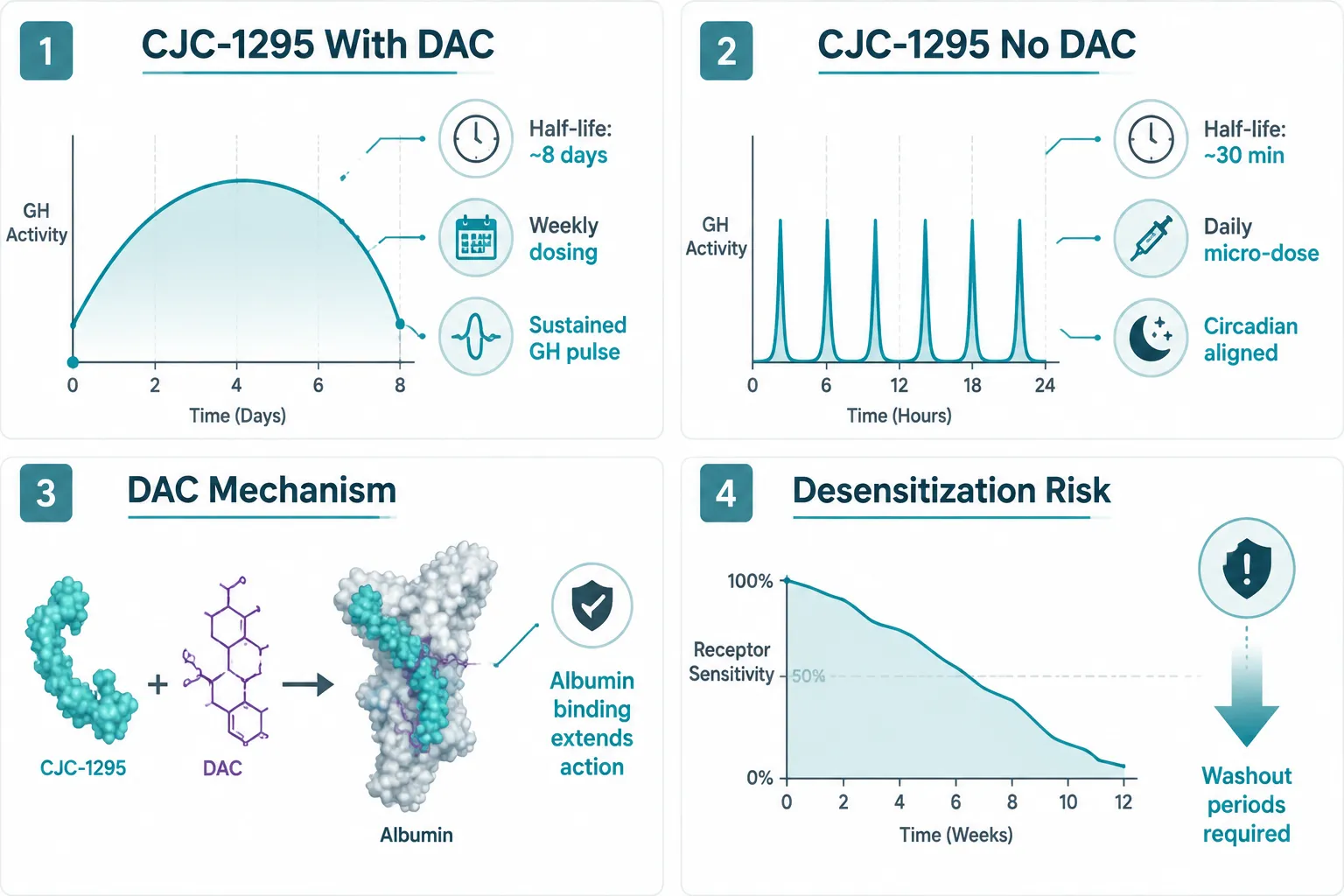
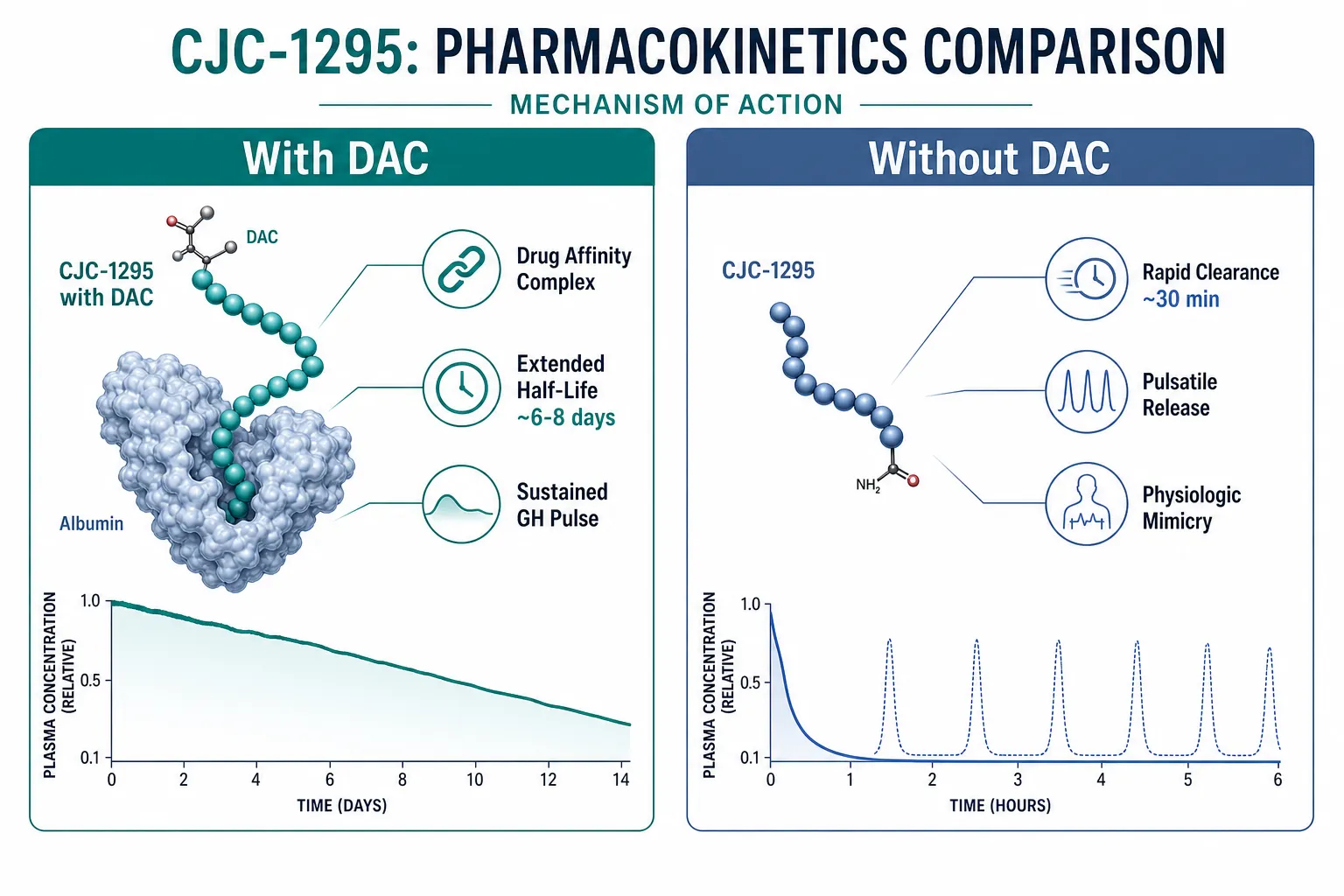
CJC‑1295 with DAC incorporates a Drug Affinity Complex, a chemical modification that allows the peptide to bind reversibly to serum albumin. This binding dramatically extends its half-life to approximately six to eight days, producing a sustained elevation of growth hormone-releasing hormone (GHRH) activity. The result is a prolonged, blunted GH pulse that differs significantly from the body's natural pulsatile secretion pattern.

CJC‑1295 without DAC (sometimes called Modified GRF 1-29 or Mod GRF) lacks that albumin-binding modification. Its half-life is roughly 30 minutes, making it far more aligned with physiologic GHRH signaling. This shorter window is precisely why researchers and practitioners pair it with a GHRP such as Ipamorelin, to amplify a single, timed GH pulse.

Feature With DAC Without DAC
Half-life ~6-8 days ~30 minutes
GH pulse pattern Sustained, blunted Pulsatile, physiologic
Human trial data Limited but present Essentially absent
Peer-reviewed metabolic data Minimal Near zero

For a deeper look at why half-life differences matter in research design, see CJC-1295 Without DAC: Why Half-Life Matters in Growth Hormone Research.

Metabolic and Body-Composition Research: Where the Evidence Stands

Metabolic and Body-Composition Research: Where the Evidence Stands

Most published data on CJC‑1295 focus narrowly on GH and IGF‑1 elevation. The metabolic story, lipolysis, insulin sensitivity, visceral fat reduction, and lean mass accrual, is far less developed.

What is reasonably supported:

  • Elevated IGF‑1 is associated with improved nitrogen retention and lean tissue support in multiple GH-axis studies, though not specifically attributed to CJC‑1295 without DAC in controlled trials.
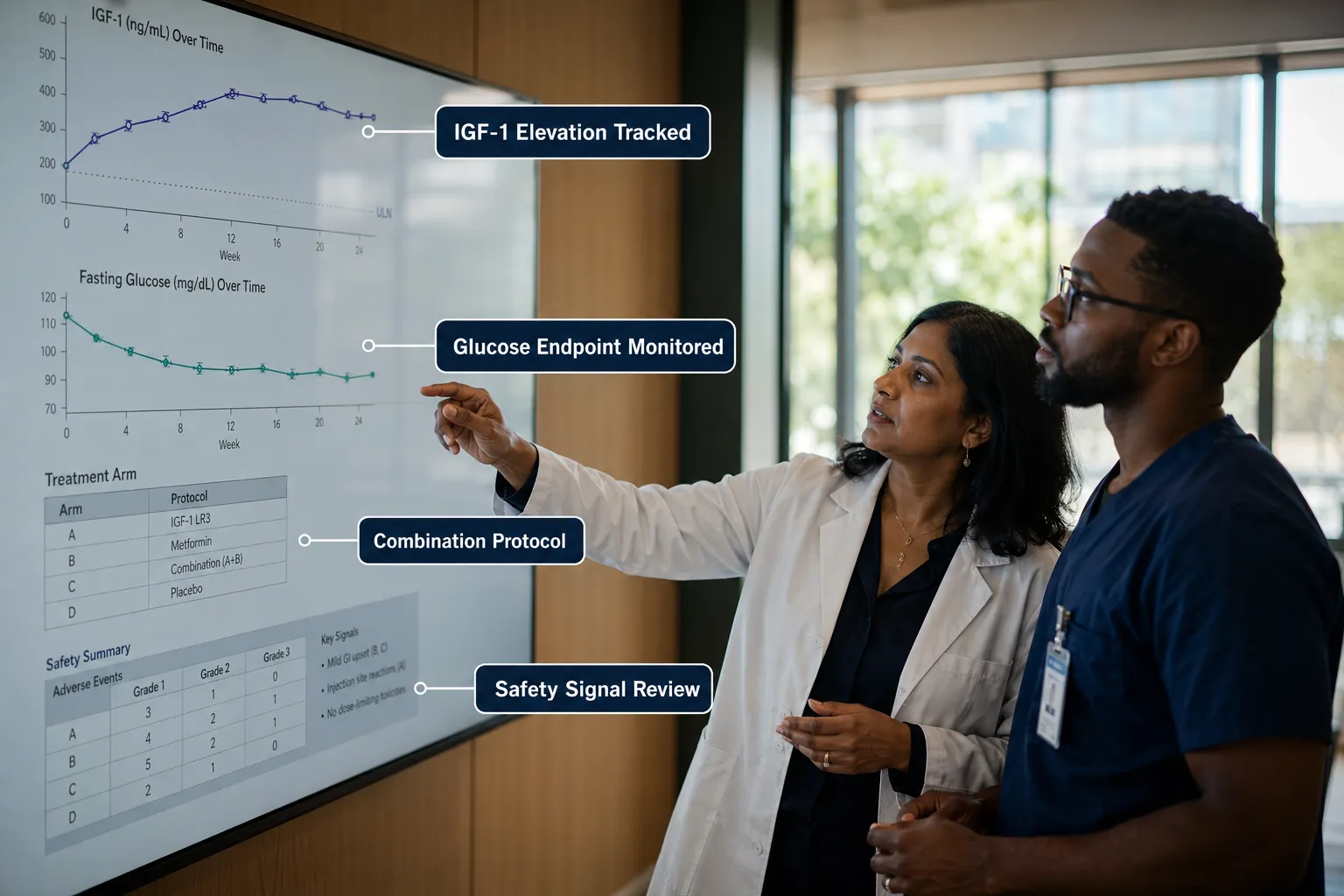
  • The DAC form has shown statistically significant IGF‑1 elevation lasting up to 28 days in early human dose-escalation work.
  • Tesamorelin, a distinct GHRH analog with an FDA-approved indication for HIV-associated lipodystrophy, provides the closest proxy for what sustained GHRH stimulation can do to visceral adipose tissue. Researchers comparing these agents should review Ipamorelin vs Tesamorelin for mechanistic context.

What remains speculative:

  • Direct fat-loss outcomes attributable to CJC‑1295 without DAC in healthy subjects.
  • Sleep quality improvements, often cited in community forums, have no controlled human data linking them specifically to either CJC‑1295 variant.
  • Insulin sensitivity modulation, plausible given GH's known effects on glucose metabolism, but unstudied for this peptide directly.

"The absence of evidence is not evidence of absence, but in a regulatory and safety context, it functions as one until trials are conducted."

Recovery Models, Stacking Protocols, and the Evidence Gap

Recovery Models, Stacking Protocols, and the Evidence Gap

Injury recovery is perhaps the most enthusiastically discussed application of CJC‑1295 With and Without DAC Beyond Growth Hormone: Emerging Questions in Metabolic and Recovery Research Models, and the one with the least formal support.

The theoretical basis is coherent. GH and IGF‑1 both play established roles in collagen synthesis, satellite cell activation, and connective tissue repair. If CJC‑1295 reliably elevates these signals, downstream recovery benefits are biologically plausible. The problem is the inferential leap from plausibility to protocol.

Stacking With Tesamorelin and Ipamorelin

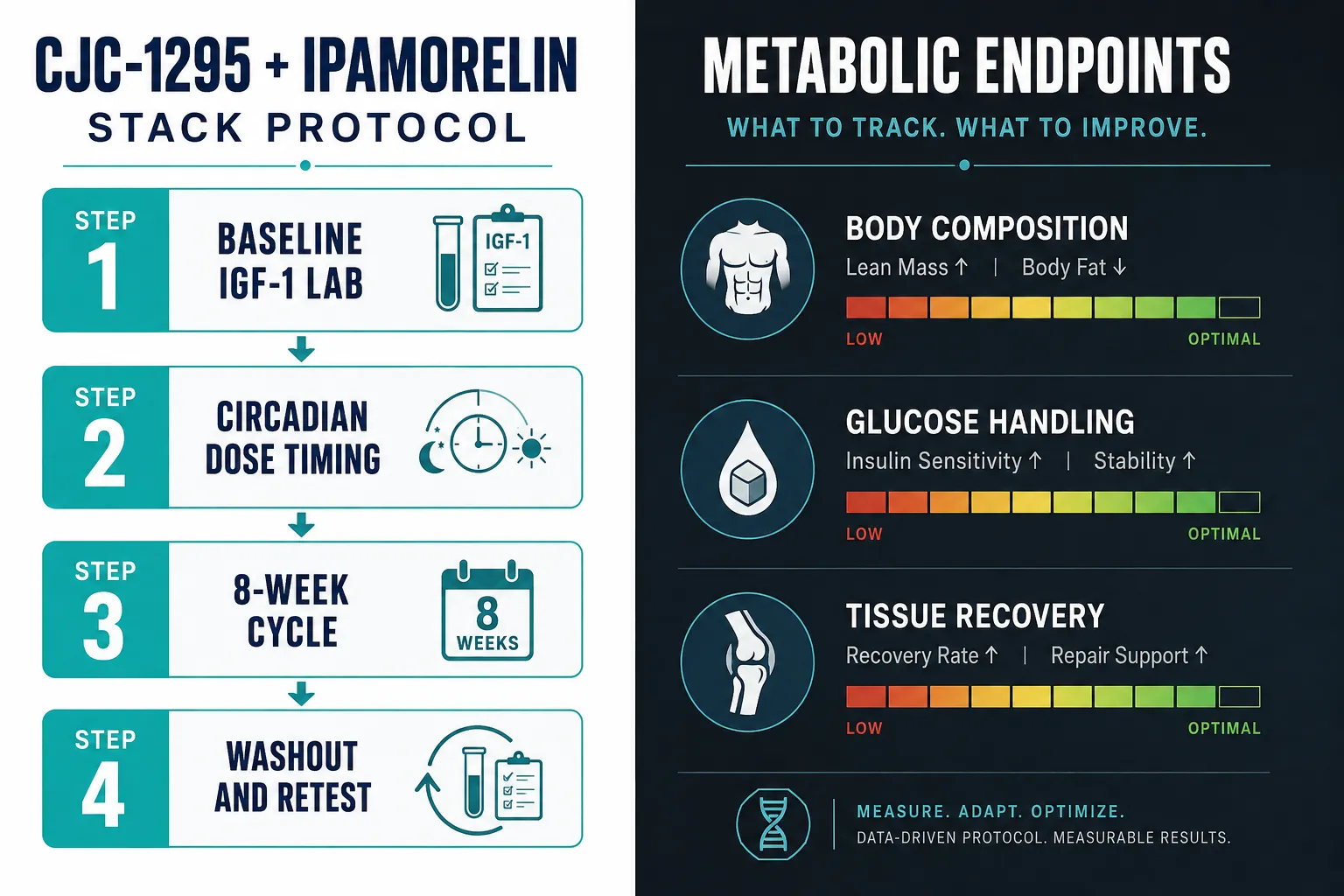
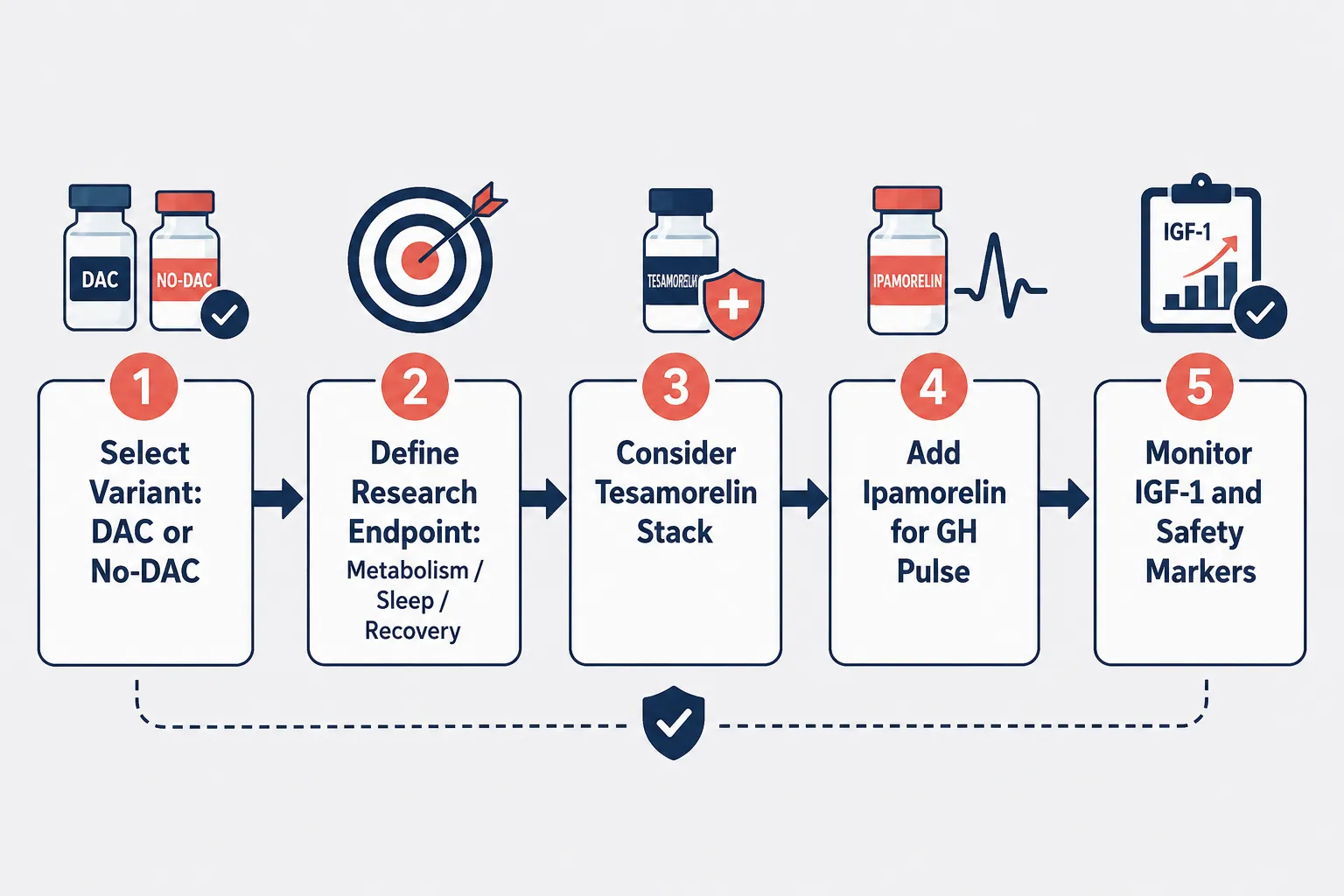
A growing number of research models combine CJC‑1295 without DAC with either Tesamorelin or Ipamorelin to target complementary points on the GH axis. Multi-peptide blends designed for this purpose are available for research use, for example, formulations such as the Tesamorelin, AOD9604, CJC-1295, Ipamorelin 12mg blend represent how researchers are structuring combination protocols in 2026.

Key considerations for combination research models:

  • Receptor saturation: Stacking a GHRH analog with a GHRP creates synergistic GH release, but the ceiling effect and desensitization timeline are not well-mapped.
  • IGF‑1 overshoot risk: Sustained supraphysiologic IGF‑1 carries theoretical oncogenic and insulin-resistance concerns that no long-term CJC‑1295 trial has adequately addressed.
  • Protocol standardization: Community dosing is largely reverse-engineered from Tesamorelin clinical data. Researchers using Tesamorelin and CJC-1295 Ipamorelin 12mg blend formulations should treat dosing guidance as investigational, not clinical.

Regulatory and Purity Context in 2026

The FDA's tightened compounding restrictions between 2023 and 2026 have directly affected the availability and sourcing landscape for both CJC‑1295 variants. For any preclinical or in-vitro research application, purity verification through third-party Certificate of Analysis (CoA) documentation is non-negotiable. Resources on peptide CoA verification and high-purity peptide sourcing provide practical guidance for maintaining research integrity.

The clinical development program for CJC‑1295 was halted before Phase III completion, meaning no modern large-scale trial data exist. Sports and performance-enhancement literature in 2026 continues to flag both variants as prohibited substances under WADA rules, reinforcing their strictly investigational status.

Conclusion

CJC‑1295 With and Without DAC Beyond Growth Hormone: Emerging Questions in Metabolic and Recovery Research Models represents a field where biological plausibility has raced far ahead of controlled evidence. The pharmacokinetic distinction between the two variants is well-established; the metabolic, recovery, and sleep-related outcomes that dominate community discussion are not.

Actionable next steps for researchers and informed readers:

  1. Distinguish the variants clearly before designing any protocol, half-life differences make the two compounds functionally distinct research tools.
  2. Anchor expectations to Tesamorelin data when evaluating metabolic claims, as it provides the closest evidence-based proxy for GHRH analog effects on body composition.
  3. Prioritize purity verification, regulatory tightening in 2026 makes sourcing integrity a first-order concern, not an afterthought.
  4. Treat stacking protocols as hypothesis-generating, not validated, combination models with Ipamorelin or Tesamorelin are promising research directions, not proven therapies.
  5. Monitor the clinical trial landscape, the absence of modern Phase II/III data for either variant is the single largest obstacle to evidence-based application.

The questions surrounding CJC‑1295 beyond GH elevation are worth asking. Answering them rigorously will require the kind of controlled human research that, as of 2026, has yet to arrive.

https://www.puretestedpeptides.com/wp-content/uploads/2026/08/cjc-1295-with-and-without-dac-beyond-growth-hormone-emerging-questions-in-metabo.webp 1024 1536 https://www.puretestedpeptides.com/wp-content/uploads/2026/01/buy-peptides-online.jpg 2026-08-29 13:09:222026-08-29 13:09:22CJC‑1295 With and Without DAC Beyond Growth Hormone: Emerging Questions in Metabolic and Recovery Research Models
×

Helpful Links

  • My account
  • Cart
  • Checkout
  • Refund and Returns Policy
  • Privacy Policy
  • SMS Privacy Policy
  • Login
  • My Account
  • Logout

USA Made Lab Tested Peptides

All products are sold for research, laboratory, or analytical purposes only, and are not for human consumption


Pure Tested Peptides is a chemical supplier. Pure Tested Peptides is not a compounding / chemical compounding facility as defined under 503A of the Federal Food, Drug, and Cosmetic act. Pure Tested Peptides is not an outsourcing facility as defined under 503B of the Federal Food, Drug, and Cosmetic act.

The statements made within this website have not been evaluated by the US Food and Drug Administration. The products we offer are not intended to diagnose, treat, cure or prevent any disease.

Human/Animal Consumption Prohibited. Laboratory/In-Vitro Experimental Use Only

Scroll to top Scroll to top Scroll to top