Call or Text 727-513-9780
  • Shopping Cart Shopping Cart
    0Shopping Cart
Pure Tested Peptides | America's most trusted Peptides for sale online
  • Peptides for sale
    • Oral Peptides for sale
      • Peptide Capsules for sale
      • BPC 157 Capsules 1000mcg
      • SLU-PP-332 Capsules | 1000 mcg
      • 5-Amino-1MQ 50mg Capsules
      • Tesofensine 500mcg
    • All Peptides for sale
    • Peptide Sprays
      • BPC 157 Nasal Spray Kit
      • BPC-157 TB500 Nasal Spray Kit
      • Semax Nasal Spray 10mg
      • Selank – Nasal Spray Kit – 10mg
      • Epithalon 50MG Nasal Spray Kit
      • Ipamorelin 10mg Nasal Spray
      • Klow Nasal Spray (BPC-157 + TB-500 + GHK-Cu + KPV) | 80mg
      • Hulk Nasal Spray Tesa / Ipa Blend 6/3 MG
      • Klow Nasal Spray
      • NAD + 500 mg Nasal Spray
      • PT-141 Nasal Spray Kit
    • GHRH Peptides
      • Ipa Peptides
      • CJC-1295 Peptides
        • CJC-1295 with DAC 5 mg
        • CJC-1295 without DAC 5 mg
        • CJC-1295 Ipa 10mg
      • Tesa Peptides
        • Tesa Peptide
        • Tesa 20 mg
    • GHK-Cu Peptides
      • All GHK-Cu Peptides
      • GHK-Cu 100mg
      • KLOW Peptide Blend – Buy KLOW blend online
    • BPC Peptides
      • All BPC Peptides
      • BPC-157
      • BPC-157 TB-500
      • BPC 157 capsules 1000mcg
    • SLU-PP-332 Peptides
      • All SLU-PP-332 Peptides
      • SLU-PP-332 5mg
    • GLP3 Peptides
      • GLP3-R
      • GLP3-R CAG 10mg
      • GLP3-R 20mg
    • PT-141 Peptides
      • PT-141 Peptides for sale
      • PT-141 10mg
      • PT-141 Nasal Spray
    • CAG Peptides
      • Lipo-C Peptide Blend
      • CAG 5mg
      • CAG 10mg
    • MOTS-C Peptides
      • MOTS-C Peptides for sale
      • MOTS-c peptide
      • MOTS-c 10mg *6 pack*
    • 5 Amino 1MQ Peptides
      • 5 Amino 1MQ Peptides for sale
      • 5-Amino-1MQ 50mg Capsules
      • 5-Amino-1MQ 5mg
    • Epithalon Peptides
      • Epithalon Peptides for sale
      • Epithalon 10mg
      • Epithalon 50mg
  • Shop
    • GLPs
      • 5-Amino-1MQ 50mg Capsules
      • 5-Amino-1MQ 5mg
      • GLP3-Reta
      • L-Carnitine 500mg/ml
      • Tesofensine 500mcg
      • SLU-PP-332 5mg
      • MOTS-c 10mg *6 pack*
    • Epithalon & BPC Peptides
      • Epithalon 10mg
      • Epithalon 50mg
      • BPC-157
      • BPC 157 capsules 1000mcg
      • BPC-157 TB-500
      • BPC-157 TB500 Nasal Spray Kit
      • BPC 157 Nasal Spray Kit
    • BPC TB-500 & NAD+ Peptides
      • NAD+ 500 mg
      • KLOW Peptide Blend – Buy KLOW blend online
      • GLOW Peptide Blend
      • TB 500 5mg
      • BPC 157 capsules 1000mcg – Supplement
      • BPC 157 Nasal Spray Kit
      • BPC-157
      • BPC-157 TB500 Nasal Spray Kit
      • BPC-157 TB-500
      • BPC 157 capsules 1000mcg
    • LL-37 Peptide
      • LL-37 10 mg
    • MOTS-C & Selank
      • MOTS-c peptide
      • Selank 10mg
    • GHK Peptides
      • GHK-Cu 100mg
      • GLOW Peptide Blend
      • KLOW Peptide Blend – Buy KLOW blend online
  • COAs
  • Wholesale
    • Wholesale Peptides for sale
  • PTP FAQ
  • Affiliates
    • Affiliate Program
    • Affiliate Signup
  • Contact
    • Contact Customer Service
    • Text Customer Support
  • About US
  • Shop all peptides
  • Login / Register Login / Register Page Link Login / Register Page Link
  • Click to open the search input field Click to open the search input field Search
  • Menu Menu

Tag Archive for: lab tested peptides

Decoding the Molecular Language: Peptides vs. Polypeptides in Advanced Research

Decoding the Molecular Language: Peptides vs. Polypeptides in Advanced Research

July 16, 2026/0 Comments/in Uncategorized/by

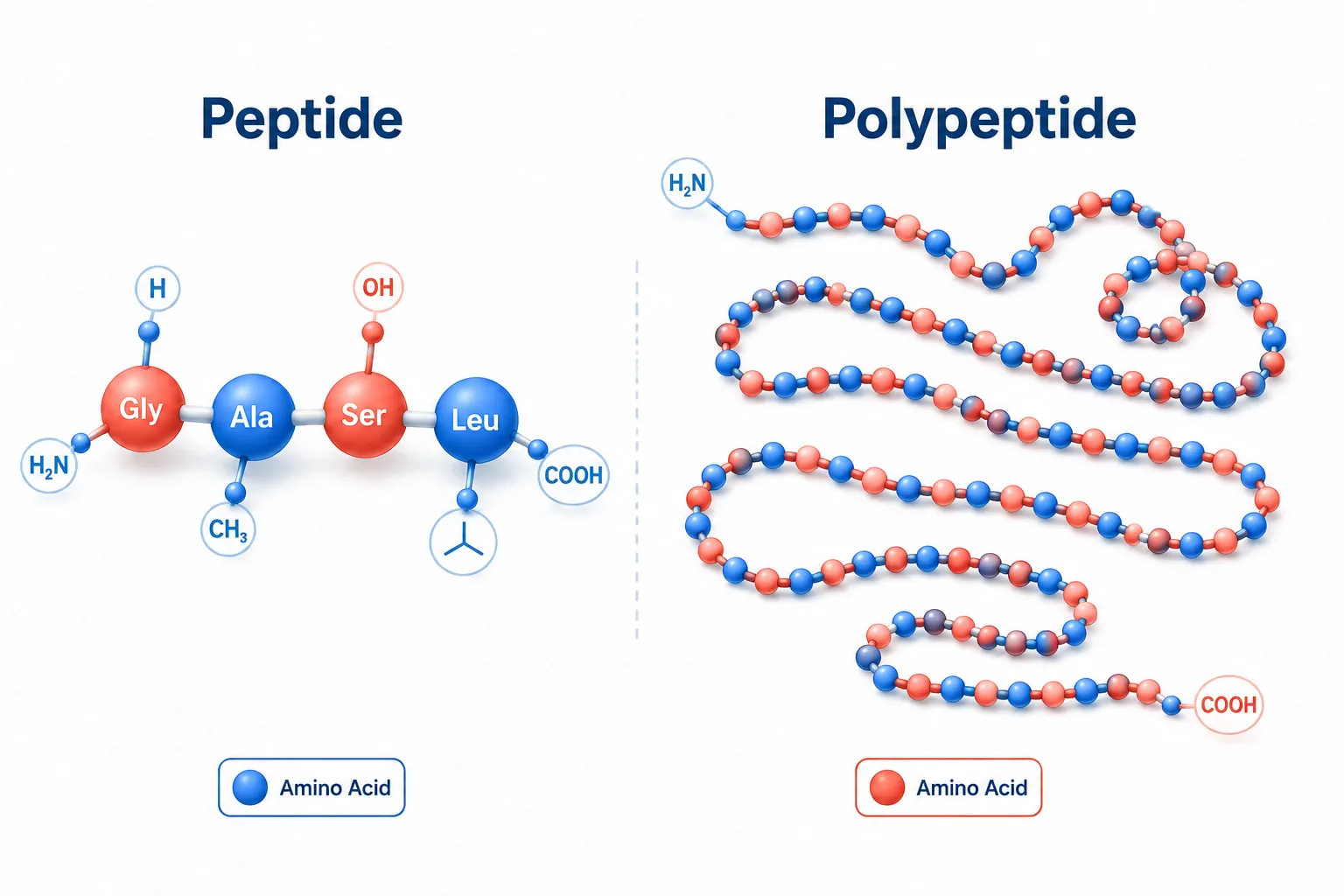
Fewer than 50 amino acids or more than 50, that single threshold separates two classes of molecules that are reshaping modern biochemistry, drug design, and therapeutic development in 2026. The distinction sounds simple, yet decoding the molecular language: peptides vs. polypeptides in advanced research reveals a world of structural complexity, functional diversity, and rapidly evolving applications that every serious researcher needs to understand.

Key Takeaways

  • Peptides typically contain 2-50 amino acid residues; polypeptides exceed that threshold and approach protein-level complexity.
  • Chain length directly determines folding behavior, receptor selectivity, and pharmacokinetic profile.
  • Polypeptides are driving innovation in nano-drug delivery systems and as potential replacements for PEG in biopharmaceuticals.
  • Circular RNA-encoded polypeptides represent one of the most exciting emerging frontiers in 2026 peptide science.
  • Researchers must select compounds based on size, stability, and target pathway, not just perceived potency.

Defining the Boundary: What Separates Peptides from Polypeptides

Defining the Boundary: What Separates Peptides from Polypeptides

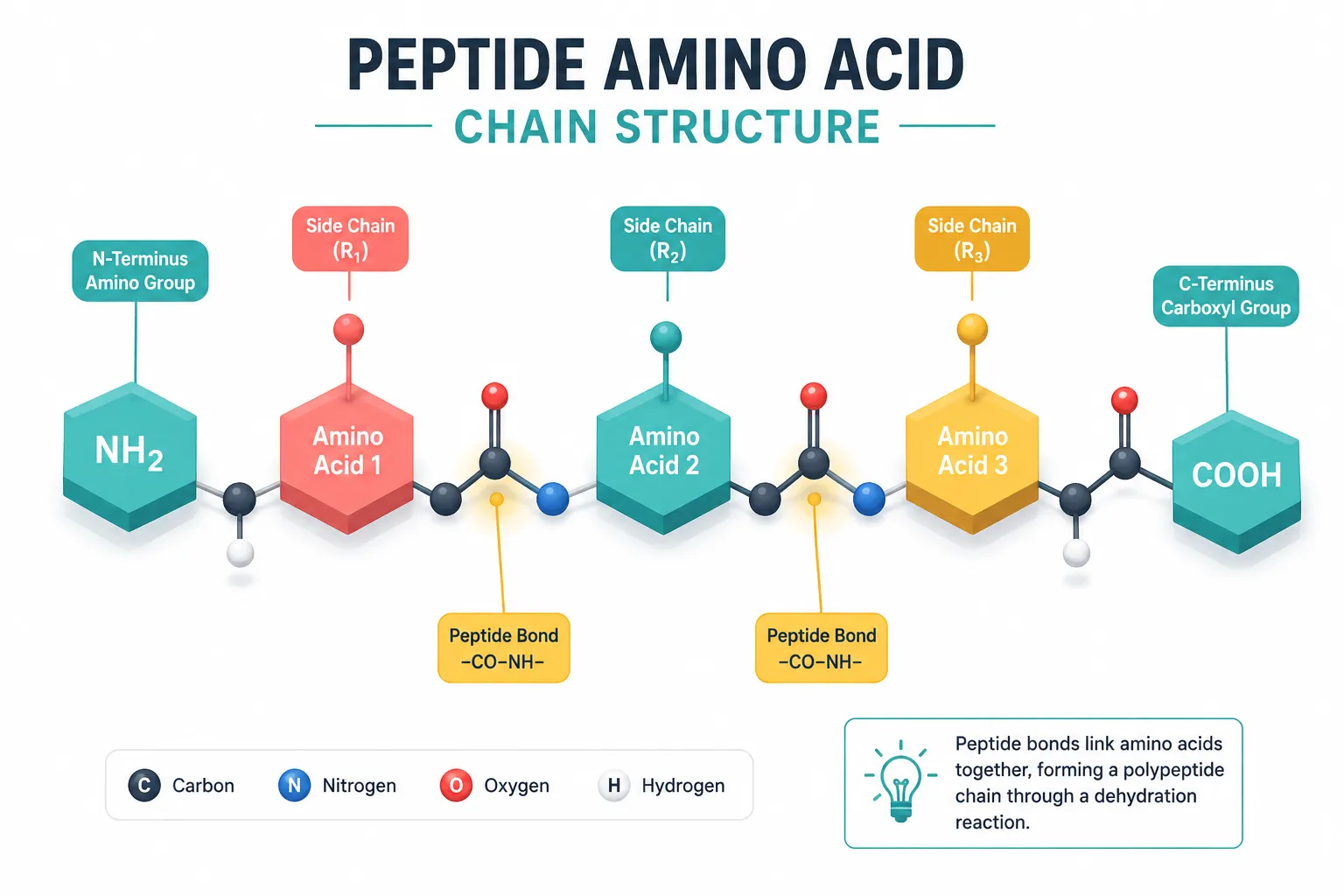
At the most fundamental level, both peptides and polypeptides are chains of amino acids linked by peptide bonds. The difference lies in chain length and the structural consequences that follow.

Peptides are generally defined as chains containing 2 to approximately 50 amino acid residues. Within this category, researchers further distinguish:

  • Dipeptides and tripeptides, 2 to 3 residues, often used as signaling fragments
  • Oligopeptides, up to roughly 10 residues
  • Polypeptides, chains exceeding ~50 residues, though some classifications place this threshold at 100

Polypeptides occupy the structural space between short peptides and full proteins. A single polypeptide chain can fold into secondary structures such as alpha-helices and beta-sheets, giving it far greater three-dimensional complexity than a short peptide.

"Chain length is not merely a counting exercise, it determines how a molecule folds, how long it survives in circulation, and which cellular targets it can reach."

This structural distinction has direct research implications. Short peptides such as BPC-157 and TB-500 are studied for their targeted receptor interactions and favorable tissue-penetration profiles. Longer polypeptide chains, by contrast, are being engineered as sophisticated drug-delivery scaffolds.


Why Chain Length Matters in Advanced Research Applications

Why Chain Length Matters in Advanced Research Applications

Decoding the molecular language: peptides vs. polypeptides in advanced research requires understanding how size affects every stage of a compound's research lifecycle, from synthesis to biological activity.

Stability and Half-Life

Short peptides are metabolically fragile. Proteolytic enzymes cleave them rapidly, which limits their circulation time but also makes them easier to control in research settings. Polypeptides, with their more complex folding, can resist enzymatic degradation more effectively, a property that researchers are actively engineering into next-generation therapeutics.

Receptor Selectivity

Smaller peptides tend to interact with specific receptors through well-defined binding motifs. Compounds like GHK-Cu and Epithalon demonstrate how even short sequences can trigger precise biological responses. Polypeptides, with their larger surface area, can engage multiple receptor sites simultaneously, a double-edged quality that demands careful experimental design.

Synthesis Complexity

Feature Peptides Polypeptides
Chain length 2-50 residues 50+ residues
Synthesis method Solid-phase peptide synthesis (SPPS) SPPS or recombinant expression
Folding complexity Minimal to moderate Significant secondary structure
Metabolic stability Lower Higher
Drug delivery use Direct receptor targeting Nano-carrier scaffolding

Researchers sourcing compounds for precise studies should prioritize lab-tested peptides to ensure purity data supports valid experimental conclusions.


Emerging Frontiers: Polypeptides in Drug Delivery and Beyond

Emerging Frontiers: Polypeptides in Drug Delivery and Beyond

The most consequential area where decoding the molecular language: peptides vs. polypeptides in advanced research pays dividends is drug delivery innovation.

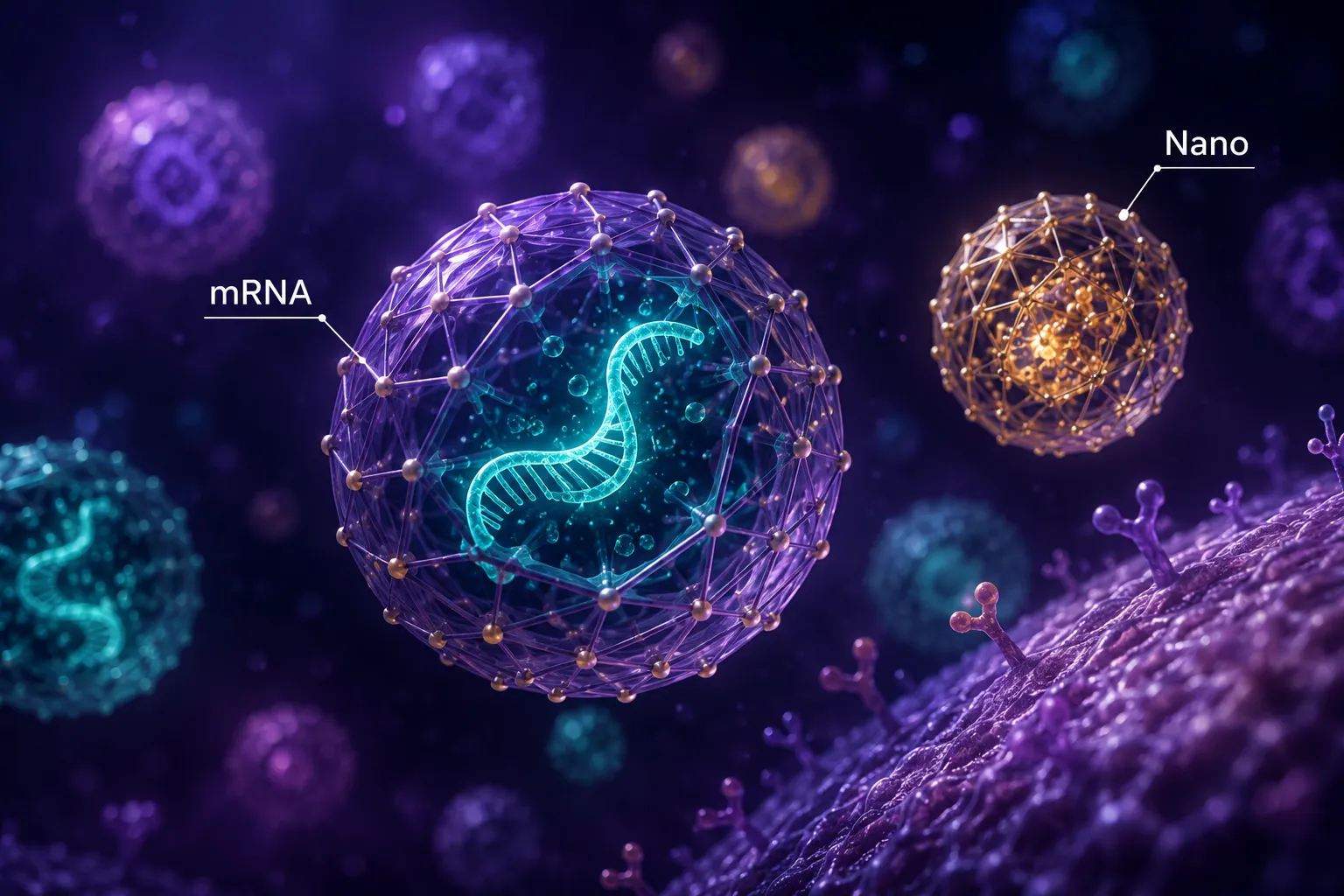
Recent work on polypeptide-based nano-drug carriers has demonstrated that engineered polypeptide chains can self-assemble into nanoparticles capable of encapsulating therapeutic cargo, including mRNA sequences. While no polypeptide-based mRNA delivery systems have received regulatory approval as of 2026, the pipeline is intensely active.

Three key trends shaping this space:

  1. Unstructured polypeptides as PEG alternatives, Polyethylene glycol (PEG) has long been used to extend drug circulation time, but immunogenicity concerns have driven interest in intrinsically disordered polypeptide sequences as biocompatible replacements.
  2. CircRNA-encoded polypeptides, Circular RNA molecules can encode short polypeptide sequences with unusual stability, opening a new design space for peptide drug candidates.
  3. Multi-pathway research blends, Combinations of peptides targeting complementary pathways, such as those explored in MOTS-c metabolic flexibility research, illustrate how layered molecular strategies are becoming standard.

Researchers exploring recovery and tissue biology can also consult the recovery and tissue biology overview for context on how peptide size influences regenerative applications.


Conclusion

The boundary between peptides and polypeptides is not arbitrary, it reflects genuine differences in structure, stability, receptor engagement, and research utility. As the field advances into nano-delivery systems, circular RNA biology, and multi-target therapeutic design, researchers who understand these molecular distinctions will be better positioned to design rigorous experiments and interpret results accurately.

Actionable next steps for researchers in 2026:

  • Audit current compound selections against chain-length data to ensure the right molecule class is matched to the target pathway.
  • Review quality-testing documentation before sourcing, consult resources on quality testing protocols to establish purity baselines.
  • Explore the full range of peptides available for research to identify compounds aligned with specific molecular weight and stability requirements.
  • Stay current with polypeptide nano-carrier literature, as this area is advancing faster than any other segment of the field.

Mastering the molecular language is the foundation of credible, reproducible peptide research.

https://www.puretestedpeptides.com/wp-content/uploads/2026/07/decoding-the-molecular-language-peptides-vs-polypeptides-in-advanced-research.webp 1024 1536 https://www.puretestedpeptides.com/wp-content/uploads/2026/01/buy-peptides-online.jpg 2026-07-16 13:06:082026-07-16 13:06:08Decoding the Molecular Language: Peptides vs. Polypeptides in Advanced Research
Where to Buy High-Purity Research Peptides: A Guide to Trusted Suppliers and COA Verification

Where to Buy High-Purity Research Peptides: A Guide to Trusted Suppliers and COA Verification

June 30, 2026/0 Comments/in Uncategorized/by

Roughly 40% of peptide samples purchased from unverified online vendors fail independent purity testing — a figure that should stop any serious researcher before placing an order. For laboratories and research professionals navigating this guide to trusted suppliers and COA verification, the stakes are not just financial. Contaminated or mislabeled peptides can invalidate months of experimental work. This guide to buying high-purity research peptides lays out a systematic, verifiable framework for finding trustworthy sources and confirming the quality documents they provide.

Key Takeaways

  • Supplier verifiability — not marketing language — is the first and most critical filter when sourcing research peptides.
  • A legitimate Certificate of Analysis (COA) must come from an accredited, independent third-party laboratory, not the vendor's in-house team.
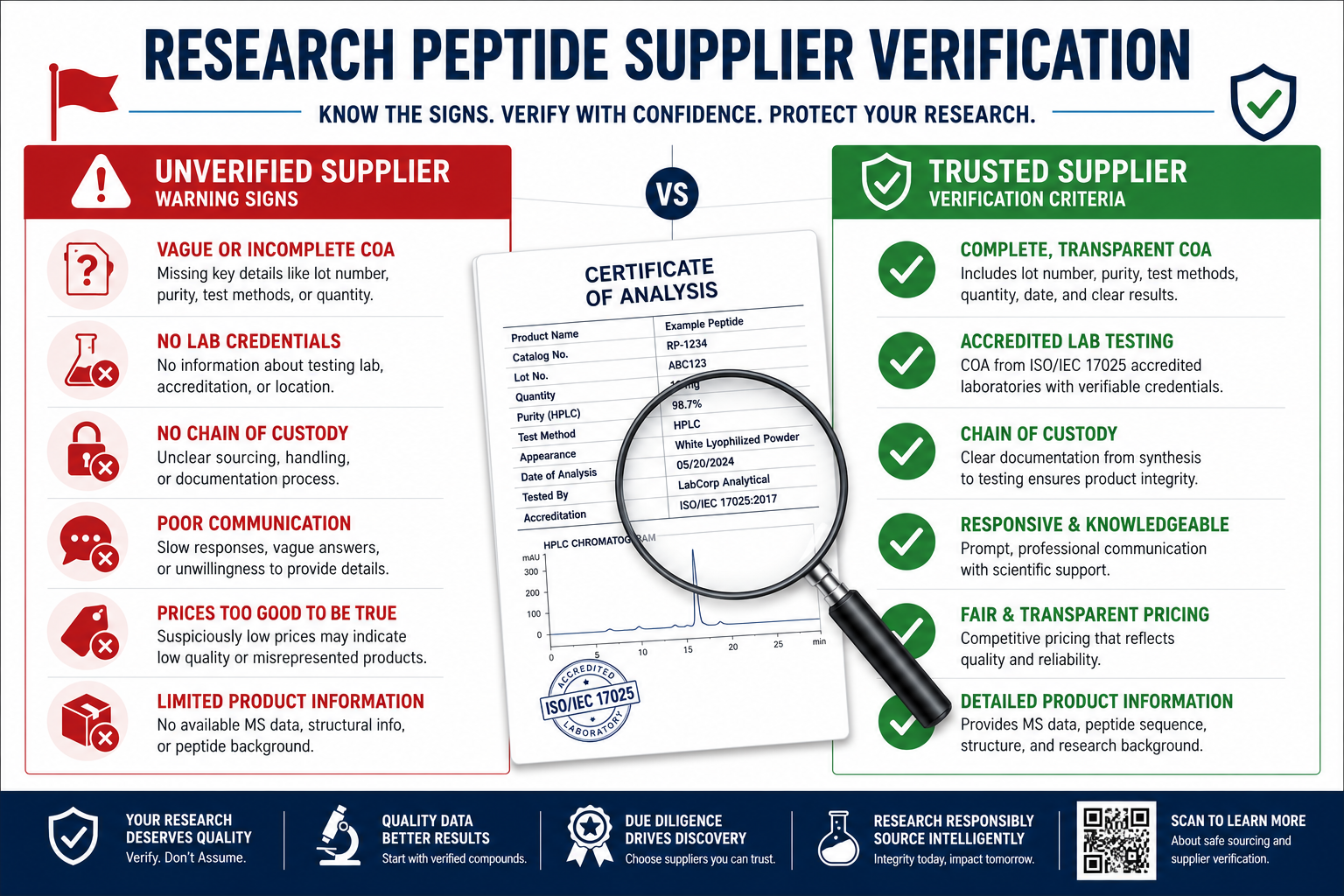
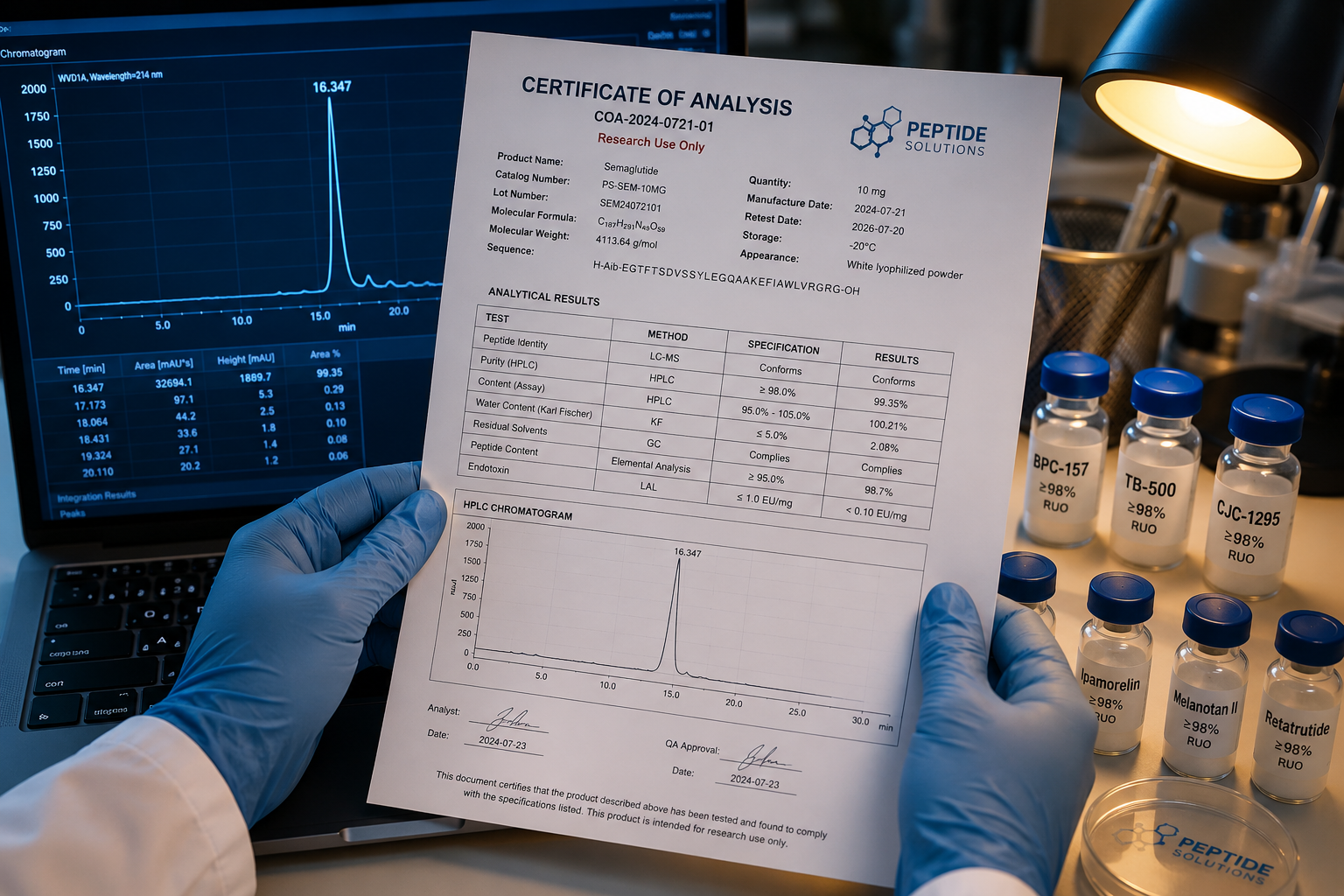
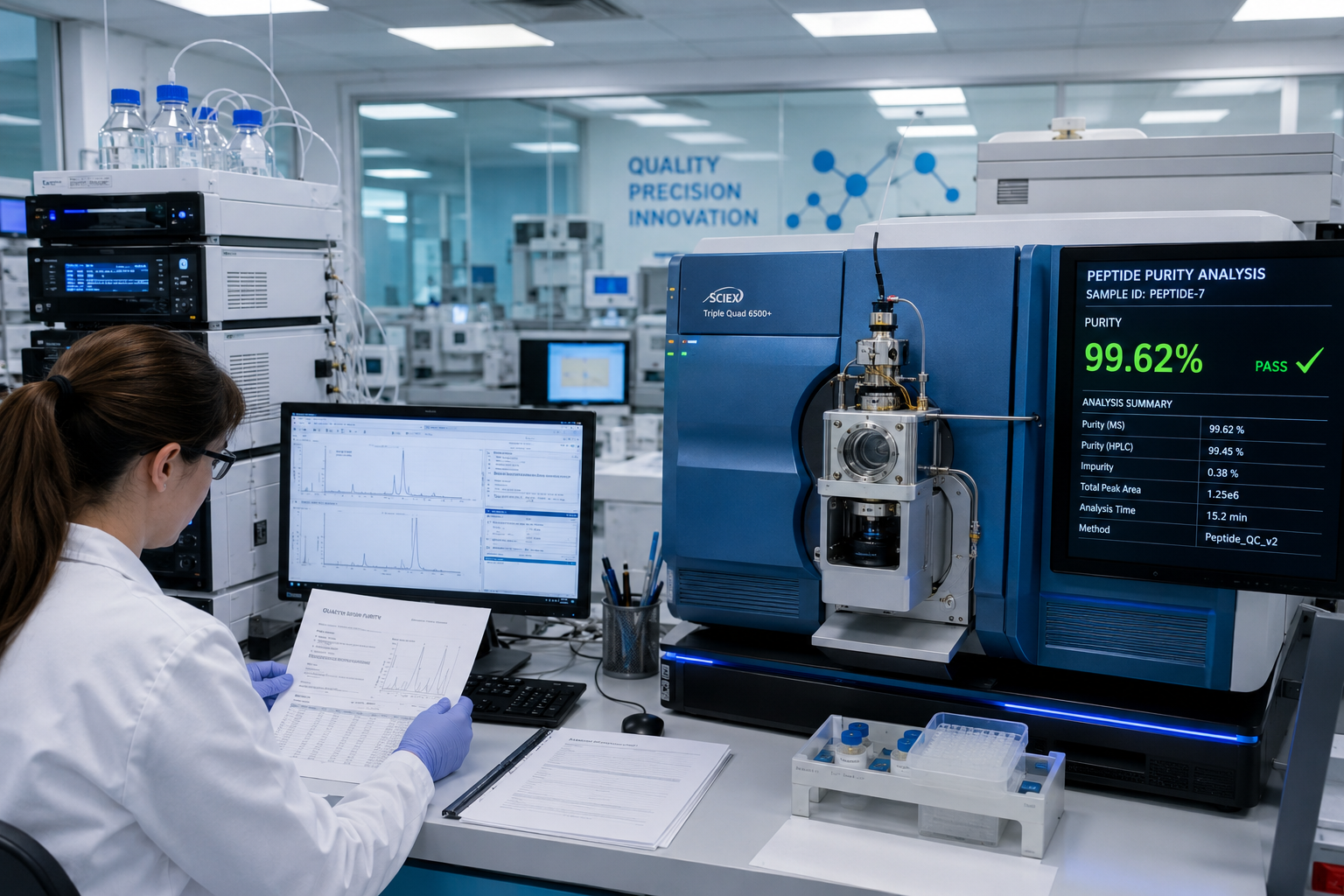
  • HPLC purity data, mass spectrometry confirmation, and lot-specific results are the three non-negotiable elements of a credible COA.
  • Red flags include COAs without named testing labs, purity claims above 99.9% with no supporting data, and pricing that is economically implausible for genuine analytical testing.
  • Matching lot numbers between the COA and the product vial is a simple, fast verification step that filters out recycled or fabricated documents.

Key Takeaways

How to Evaluate a Trusted Supplier Before Ordering

When the goal is finding where to buy high-purity research peptides, the evaluation process must begin with the supplier's identity and infrastructure — not its product catalog. In 2026, analytical guides consistently prioritize supplier verifiability over promotional claims.

Start with these supplier-level checks:

  • Physical address and registration: A verifiable business address, not a P.O. box, is a baseline requirement.
  • Transparent manufacturing or sourcing chain: Reputable vendors disclose whether peptides are synthesized in-house or sourced from established GMP-adjacent facilities.
  • Customer service responsiveness: Send a pre-purchase question about a specific COA. A credible supplier answers with technical specificity, not generic reassurance.
  • Peer-reviewed community presence: Look for the supplier's name in researcher forums, published procurement notes, or third-party review platforms — not just testimonials on their own website.
  • Return and dispute policy: A clear, published refund and returns policy signals accountability.

Suppliers who invest in lab-tested peptides will make that testing infrastructure visible and easy to verify. If locating the testing documentation requires more than two clicks, treat that as a warning sign.


How to Evaluate a Trusted Supplier Before Ordering

COA Verification: The Non-Negotiable Steps

A Certificate of Analysis is only as valuable as the process that produced it. Expert procurement protocols now begin by proving the COA is real and economically plausible — not simply present.

A credible COA must include:

Element What to Look For
Testing laboratory name Accredited, independent, named facility
HPLC chromatogram Visible peak data, not just a percentage
Mass spectrometry result Confirms molecular identity of the peptide
Lot or batch number Must match the number printed on the vial
Testing date Recent; ideally within 12 months of purchase
Purity percentage Typically 98%+ for research-grade material

"A COA without a named third-party laboratory is a marketing document, not an analytical one."

Always cross-reference the lot number on the COA against the physical product. Vendors who publish a dedicated COA verification page make this step straightforward. If the COA is a generic document with no lot-specific data, it may have been recycled across multiple batches.

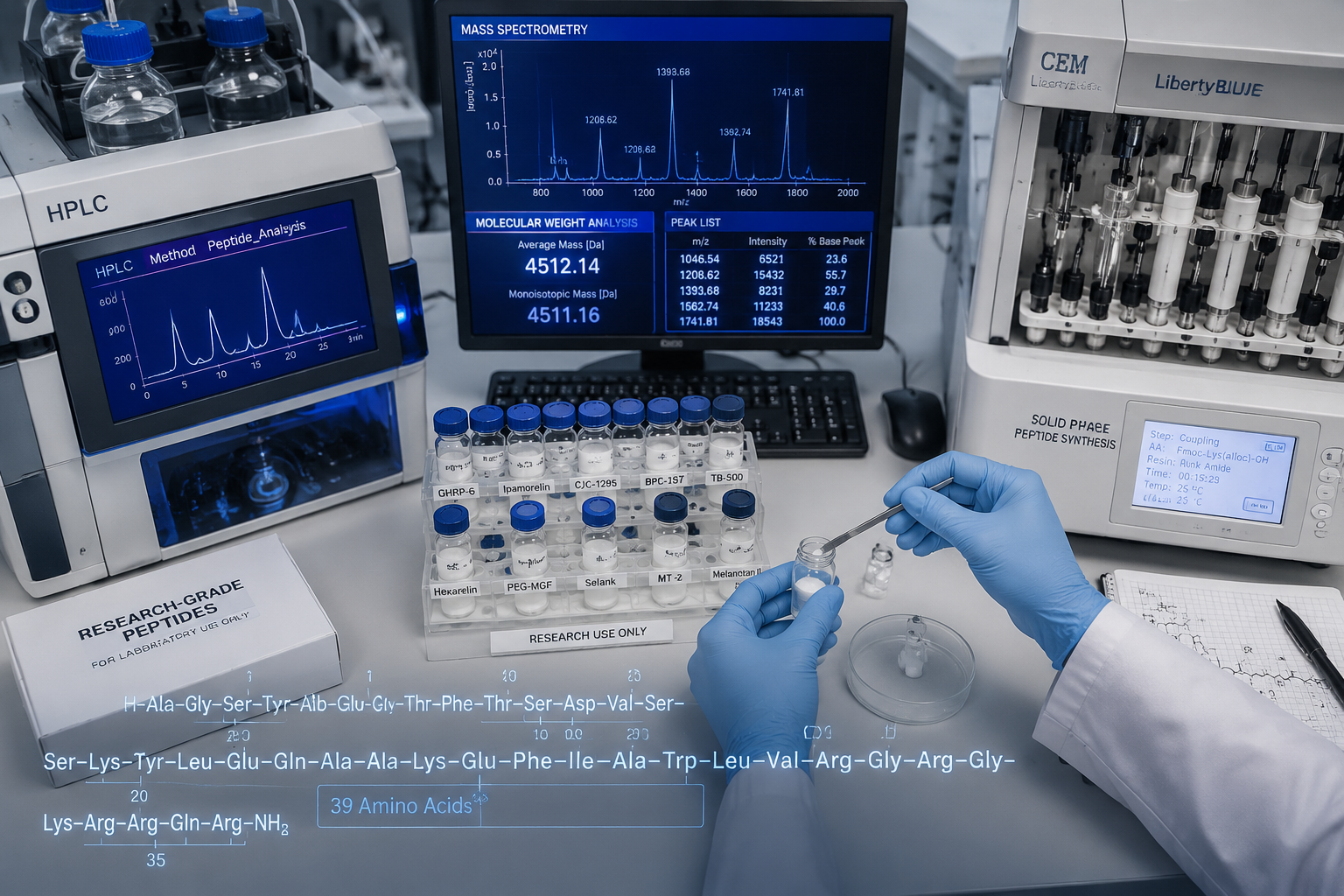
For specific compounds, purity requirements can vary. Researchers sourcing peptides such as BPC-157, CJC-1295 without DAC, or Tesamorelin should request compound-specific COAs rather than accepting a blanket purity certificate for an entire product line.


COA Verification: The Non-Negotiable Steps

Applying This Guide to Specific Research Peptides

The principles above apply universally, but practical sourcing decisions benefit from compound-specific context. Researchers exploring longevity-focused peptide research or metabolic compounds like AOD-9604 should confirm that COA documentation covers the precise analog or salt form being purchased — not just the base peptide name.

For mitochondrial compounds such as SS-31 (Elamipretide), purity verification is especially critical because structural analogs can differ significantly in biological activity. Similarly, researchers working with neuropeptides like Selank should verify sequence fidelity through mass spectrometry data, not HPLC alone.

Pricing as a purity signal: Genuine third-party HPLC and mass spectrometry testing carries real cost. If a vendor's pricing is dramatically lower than the market average, that gap often reflects skipped analytical steps. Economically implausible pricing is a COA red flag before the document is even reviewed.


Conclusion

Sourcing high-purity research peptides in 2026 demands a structured, skeptical approach. The guide to trusted suppliers and COA verification outlined here reduces research risk through a clear sequence: verify the supplier exists and operates transparently, then verify the COA is compound-specific, lot-matched, and produced by a named independent laboratory. Researchers should bookmark their supplier's COA page, save lot-number records alongside purchase receipts, and repeat the verification process with every new batch — not just the first order. Applying these steps consistently protects both experimental integrity and research investment.

https://www.puretestedpeptides.com/wp-content/uploads/2026/06/Where-to-Buy-High-Purity-Research-Peptides-A-Guide-to-Trusted-Suppliers-and-COA-Verification.png 1024 1536 https://www.puretestedpeptides.com/wp-content/uploads/2026/01/buy-peptides-online.jpg 2026-06-30 13:03:242026-06-30 13:03:24Where to Buy High-Purity Research Peptides: A Guide to Trusted Suppliers and COA Verification
Top Research Peptides for 2026: How GLP-3 Retatrutide, MOTS-c, GHK-Cu, and CJC-1295 Fit Into Current Lab Interest

Top Research Peptides for 2026: How GLP-3 Retatrutide, MOTS-c, GHK-Cu, and CJC-1295 Fit Into Current Lab Interest

June 18, 2026/0 Comments/in Uncategorized/by

Four peptides account for a disproportionate share of researcher search queries in 2026, yet their mechanisms, regulatory status, and evidence bases differ sharply from one another. Understanding why these compounds keep surfacing in lab discussions requires more than a surface-level overview. This article examines the top research peptides for 2026 — Retatrutide, MOTS-c, GHK-Cu, and CJC-1295 — and explains what makes each one relevant to current scientific interest.

Key Takeaways

  • Retatrutide is a triple receptor agonist targeting GLP-1, GIP, and glucagon pathways, with Phase III data showing up to 28.7% mean body weight reduction at 68 weeks.
  • MOTS-c is a mitochondria-derived peptide still in preclinical stages, with limited but growing human data.
  • GHK-Cu holds FDA approval for topical cosmetic use but faces restrictions on injectable applications due to safety concerns.
  • CJC-1295 has an estimated half-life of 6 to 8 days, making it one of the longer-acting growth hormone-releasing analogs under study.
  • Supply chain integrity and regulatory enforcement are shaping which vendors remain viable sources for research-grade compounds in 2026.

Key Takeaways

Why These Four Compounds Lead the Top Research Peptides for 2026 Discussion

Peptide research has expanded rapidly, but not all compounds receive equal scientific attention. Retatrutide, MOTS-c, GHK-Cu, and CJC-1295 each occupy a distinct research niche — metabolic modulation, mitochondrial biology, skin and tissue repair, and growth hormone axis stimulation, respectively. Together, they represent the breadth of where peptide science is heading.

Retatrutide (GLP-3): The Triple Agonist Reshaping Metabolic Research

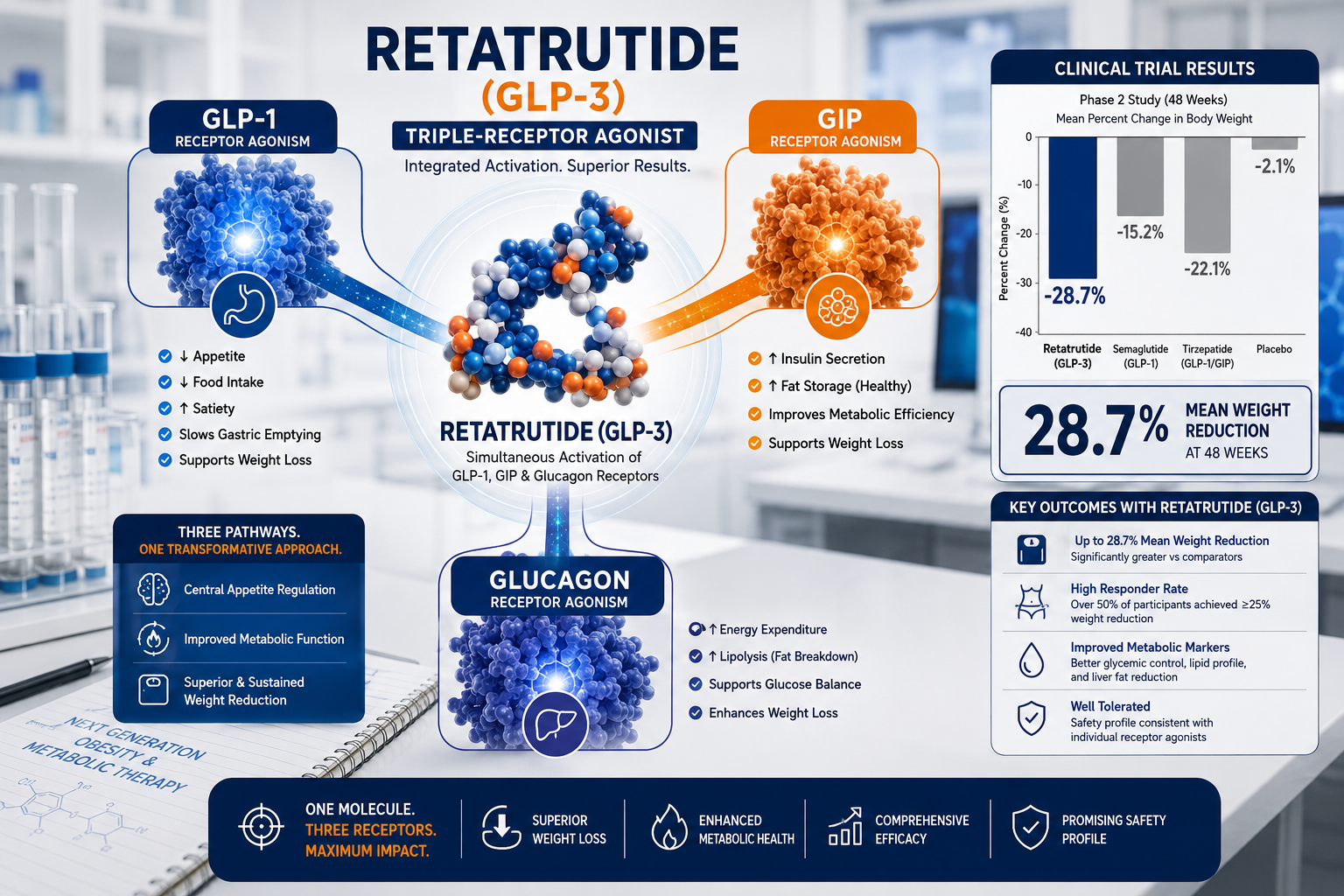
Retatrutide stands apart from earlier GLP-1 drugs because it simultaneously targets three receptors: GLP-1, GIP, and glucagon. This triple agonism distinguishes it from dual agonists like tirzepatide and has made it a focal point in obesity and metabolic disease research.

Phase III clinical data published in 2026 reported a mean body weight reduction of 28.7% at a 12 mg dose over 68 weeks — a figure that has drawn significant attention from both academic and commercial research communities. An FDA New Drug Application submission is anticipated in late 2026, which would mark a major regulatory milestone.

However, supply chain integrity is a serious concern. Counterfeit batches containing no active retatrutide have been identified in the research market. FDA enforcement actions in late 2025 and early 2026 removed several low-tier vendors and required the removal of human-use claims from product listings. Researchers sourcing this compound should prioritize verified, lab-tested peptide suppliers and review available GLP-3 Retatrutide research documentation before proceeding.

For broader context on incretin-based research, the GLP-1 and incretin research themes overview provides useful background on receptor pharmacology across this class.


Retatrutide (GLP-3): The Triple Agonist Reshaping Metabolic Research

MOTS-c and GHK-Cu: Mitochondrial and Tissue-Level Research Themes

MOTS-c: A Mitochondria-Derived Peptide With Growing Preclinical Interest

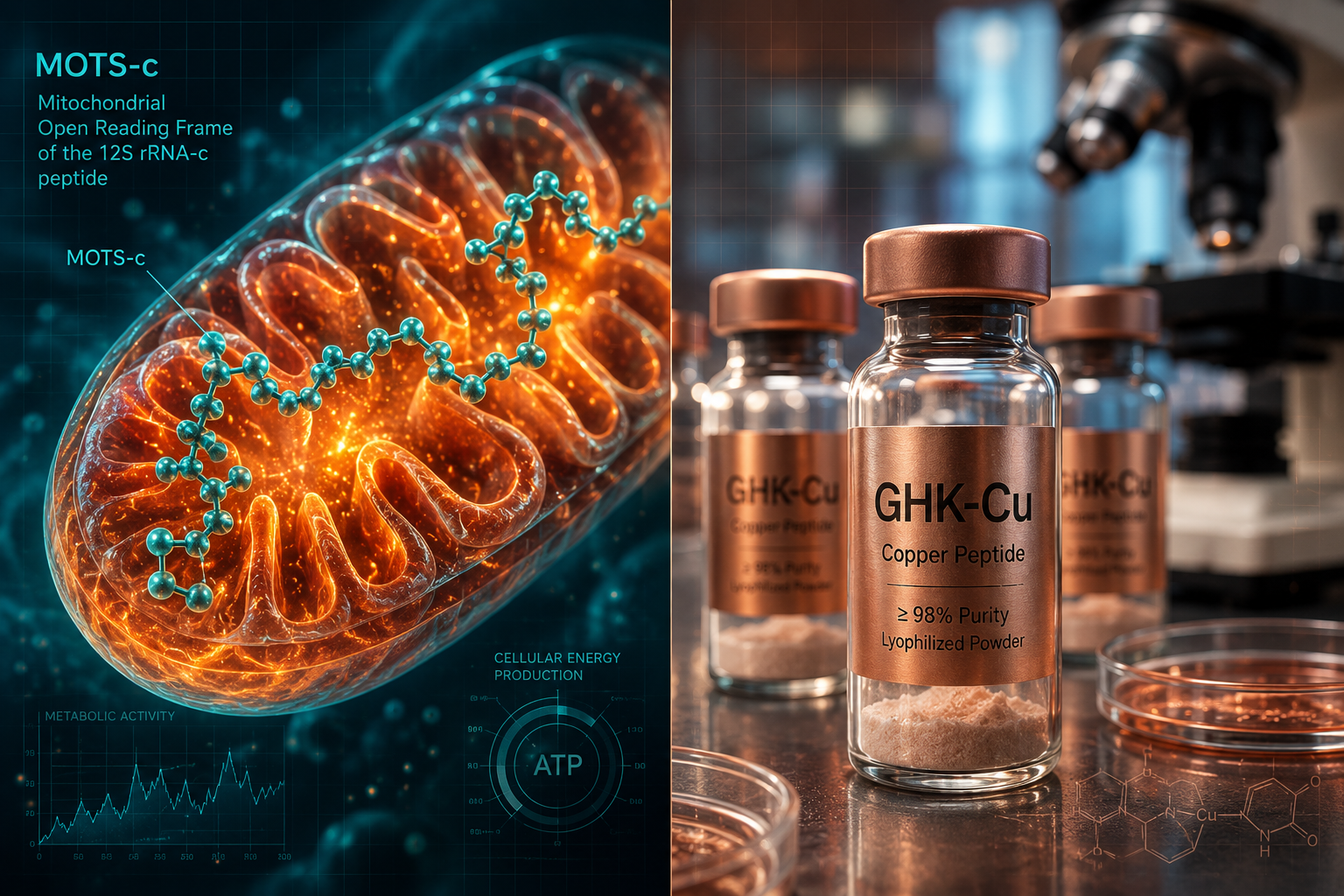
MOTS-c is encoded within mitochondrial DNA, which makes it biologically unusual among peptides. It is thought to regulate metabolic stress responses and energy homeostasis at the cellular level. As of mid-2026, MOTS-c remains primarily in the preclinical research phase, with limited human data available.

Despite this early-stage status, interest in MOTS-c has grown steadily because of its potential relevance to aging biology and exercise physiology. Researchers exploring this area can find detailed MOTS-c mitochondrial research themes and related MOTS-c metabolic stress documentation to understand the current evidence base.

GHK-Cu: Topical Approval, Injectable Restrictions

GHK-Cu (copper peptide) occupies a unique regulatory position. The FDA has approved it for use in topical anti-aging cosmetics, where it is widely incorporated into skincare formulations. However, injectable forms face restrictions due to safety concerns, including potential immune reactions linked to impurities.

This regulatory split means GHK-Cu research must be carefully scoped. For sourcing guidance and mechanism documentation, the GHK-Cu copper peptide research sourcing guide outlines what researchers should verify before acquiring this compound.

Peptide Primary Research Area Current Status
Retatrutide Metabolic / Weight Phase III / NDA Pending
MOTS-c Mitochondrial Biology Preclinical
GHK-Cu Tissue Repair / Skin Topical Approved
CJC-1295 Growth Hormone Axis Phase II (Discontinued)

GHK-Cu: Topical Approval, Injectable Restrictions

CJC-1295 and the Growth Hormone Axis: Pharmacokinetics and Lab Context

Why CJC-1295 Remains a Staple in Growth Hormone Research

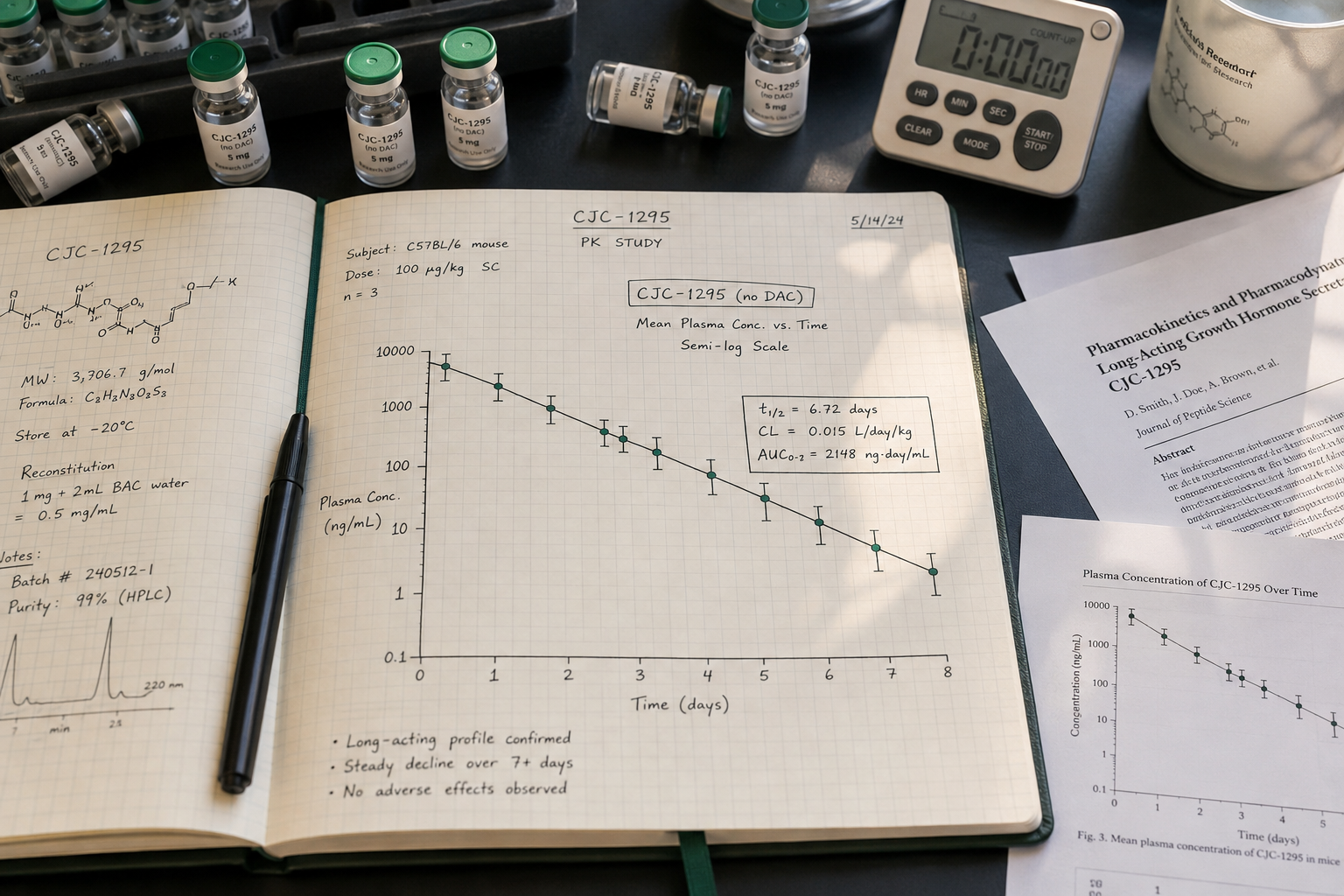
CJC-1295 is a synthetic analog of growth hormone-releasing hormone (GHRH). Its estimated half-life of 6 to 8 days in humans — confirmed in recent endocrinology research — allows for prolonged stimulation of growth hormone and IGF-1 secretion. This extended activity profile is a primary reason it continues to attract research interest compared to shorter-acting GHRH analogs.

The compound reached Phase II clinical trials but was discontinued after a participant's death, which investigators deemed unrelated to the treatment. Despite this, CJC-1295 remains one of the most studied growth hormone secretagogues in the preclinical and research peptide space.

Researchers frequently combine it with ipamorelin to target complementary points in the growth hormone axis. Relevant documentation is available for both CJC-1295 with DAC research findings and CJC-1295 without DAC research themes.

Note on stacking: Some researchers combine CJC-1295 and ipamorelin with GLP-1 class drugs to explore simultaneous fat loss and lean mass outcomes. These combinations currently lack clinical validation and should be approached with appropriate caution.

For those exploring broader longevity-focused peptide research, the longevity peptide research overview provides additional context on how these compounds fit into aging-related research frameworks.


Conclusion

The top research peptides for 2026 — Retatrutide, MOTS-c, GHK-Cu, and CJC-1295 — each represent a distinct frontier in peptide science. Retatrutide's Phase III data and pending NDA make it the most clinically advanced of the four. MOTS-c offers compelling preclinical biology but requires patience as human data accumulates. GHK-Cu demands careful attention to regulatory scope. CJC-1295 remains a pharmacokinetically distinctive tool for growth hormone axis research.

Actionable next steps for researchers:

  • Verify vendor quality and testing documentation before sourcing any of these compounds.
  • Review mechanism-specific pages for each peptide to align sourcing with research objectives.
  • Monitor FDA enforcement updates, particularly as Retatrutide moves toward NDA review.
  • Consult the what is new in peptide research resource for ongoing regulatory and scientific developments.
https://www.puretestedpeptides.com/wp-content/uploads/2026/06/Top-Research-Peptides-for-2026-How-GLP-3-Retatrutide-MOTS-c-GHK-Cu-and-CJC-1295-Fit-Into-Current-Lab-Interest.png 1024 1536 https://www.puretestedpeptides.com/wp-content/uploads/2026/01/buy-peptides-online.jpg 2026-06-18 13:03:542026-06-18 13:03:54Top Research Peptides for 2026: How GLP-3 Retatrutide, MOTS-c, GHK-Cu, and CJC-1295 Fit Into Current Lab Interest
Carbohydrate Antigens, GLP Peptides, and Gut Hormone Biology: How GLP‑2‑T and GLP‑3 Retatrutide Are Used in Laboratory Metabolic Models

Carbohydrate Antigens, GLP Peptides, and Gut Hormone Biology: How GLP‑2‑T and GLP‑3 Retatrutide Are Used in Laboratory Metabolic Models

June 8, 2026/0 Comments/in Uncategorized/by

Researchers searching for carbohydrate antigens often arrive at a broader and more complex story than they expected — one that connects gut-surface glycoproteins, enteroendocrine signaling, and next-generation incretin peptides into a single field of immunometabolic inquiry. Understanding Carbohydrate Antigens, GLP Peptides, and Gut Hormone Biology: How GLP‑2‑T and GLP‑3 Retatrutide Are Used in Laboratory Metabolic Models requires tracing how the intestinal epithelium functions simultaneously as an immune interface and a hormone-secreting organ.

Key Takeaways

  • Carbohydrate antigens on gut epithelial surfaces are structurally linked to the same L cells that secrete GLP-1 and GLP-2 peptides
  • GLP-2 (sometimes labeled GLP-2-T in research contexts) is a short-lived postprandial hormone with a half-life of roughly seven minutes, primarily driving intestinal growth
  • Retatrutide, informally called GLP-3 in research communities, is a triple agonist targeting GLP-1, GIP, and glucagon receptors simultaneously
  • The gut microbiome modulates incretin secretion through short-chain fatty acid (SCFA) production, linking microbial ecology to metabolic peptide biology
  • Laboratory metabolic models use these peptides to study obesity, glucose homeostasis, liver fat, and intestinal barrier function

Key Takeaways

The Gut Epithelium as Both Antigen Display and Hormone Factory

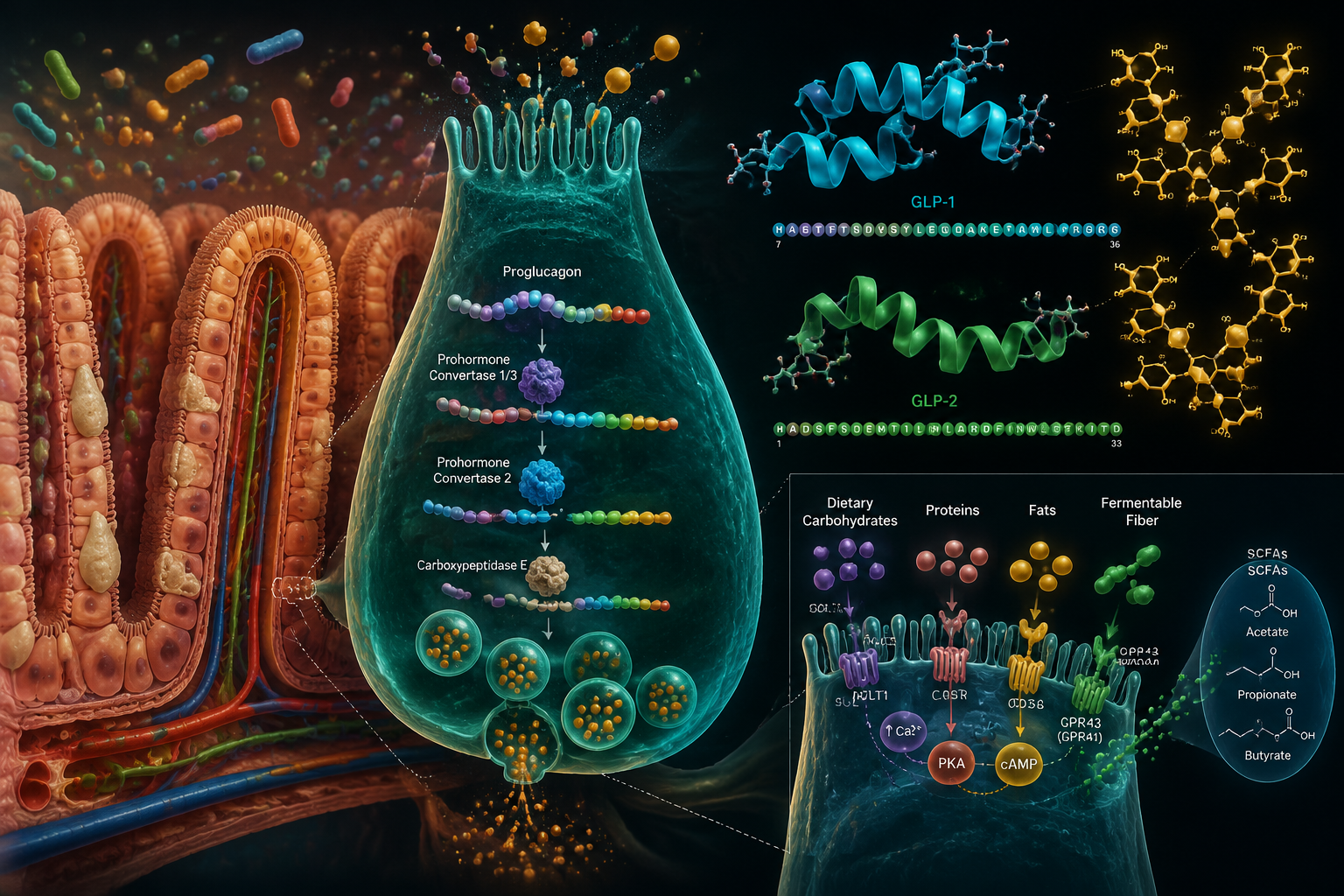
The intestinal lining does two jobs at once. Its surface is decorated with carbohydrate antigens — complex sugar chains attached to glycoproteins and glycolipids — that interact with immune cells, pathogens, and the gut microbiome. At the same time, specialized enteroendocrine L cells embedded in that same epithelium sense luminal nutrients and release proglucagon-derived peptides (PGDPs), including GLP-1 and GLP-2.

This dual role is not coincidental. The same nutrient-sensing machinery that triggers incretin release also modulates surface antigen expression. Short-chain fatty acids produced by gut bacteria bind to free fatty acid receptors on L cells, stimulating GLP-1 and peptide YY (PYY) secretion. Disruptions in this axis — whether from dysbiosis, inflammation, or altered glycan expression — impair glucose homeostasis at a fundamental level.

GLP-2, released alongside GLP-1 from the same L cells, has a distinct role: it promotes intestinal mucosal growth, enhances barrier integrity, and reduces gut permeability. Its half-life is approximately seven minutes in native form, which is why research models use stabilized analogs (sometimes designated GLP-2-T) to study its effects over longer windows. For researchers exploring generations of GLP-1 analogs and their differences, understanding GLP-2's parallel biology adds important context.

"The intestinal epithelium is not a passive barrier — it is an active endocrine and immunological organ whose carbohydrate surface determines how both pathogens and peptide hormones interact with the host."

GLP‑2‑T and GLP‑3 Retatrutide in Laboratory Metabolic Models

GLP‑2‑T and GLP‑3 Retatrutide in Laboratory Metabolic Models

This is where Carbohydrate Antigens, GLP Peptides, and Gut Hormone Biology: How GLP‑2‑T and GLP‑3 Retatrutide Are Used in Laboratory Metabolic Models becomes directly actionable for research design.

Retatrutide (LY3437943), informally called GLP-3 to emphasize its triple mechanism, is a 39-amino-acid synthetic peptide. It simultaneously activates GLP-1, GIP, and glucagon receptors — a profile that distinguishes it sharply from semaglutide (GLP-1 only) and tirzepatide (GLP-1 plus GIP). Its structure includes 2-aminoisobutyric acid (Aib) substitutions and a C20 fatty-diacid moiety, synthesized via solid-phase peptide synthesis for research-grade precision.

Phase 2 data showed dose-dependent reductions in body weight, liver fat content, and fasting glucose, alongside improvements in body composition. The glucagon receptor component adds a metabolic dimension absent in earlier incretin therapies — driving hepatic glucose output modulation and energy expenditure in ways that pure GLP-1 agonism cannot replicate. Researchers can explore the GLP-3 triple agonist research overview for deeper mechanistic detail.

Comparing Key Metabolic Peptides Used in Research Models

Peptide Receptor Targets Primary Research Focus
GLP-2 / GLP-2-T GLP-2R Intestinal growth, barrier integrity
Tirzepatide GLP-1R + GIPR Glycemic control, weight loss
Retatrutide (GLP-3) GLP-1R + GIPR + GCGR Weight, liver fat, energy expenditure
MOTS-C AMPK via AICAR Mitochondrial metabolism

For researchers also studying mitochondrial metabolic pathways, MOTS-C as a mitochondrial-derived peptide represents a complementary but mechanistically distinct tool. Similarly, the cagrilintide and GLP-1 synergy research illustrates how combination approaches are reshaping metabolic model design in 2026.

Applying This Framework to Advanced Immunometabolic Research

Applying This Framework to Advanced Immunometabolic Research

The convergence of Carbohydrate Antigens, GLP Peptides, and Gut Hormone Biology: How GLP‑2‑T and GLP‑3 Retatrutide Are Used in Laboratory Metabolic Models opens specific experimental opportunities.

First, carbohydrate antigen panels (such as CA 19-9 or Lewis antigen variants) are increasingly used alongside incretin assays to characterize gut epithelial status in metabolic disease models. Altered glycan expression correlates with L-cell density changes, which directly affects GLP-1 and GLP-2 output.

Second, receptor distribution matters. GLP-1R, GLP-2R, and GIPR are expressed in distinct cell populations within the gastrointestinal tract, each with unique downstream signaling circuits. Designing a model that conflates these receptors produces unreliable data. Researchers using lab-tested peptides for metabolic studies should verify receptor specificity before drawing mechanistic conclusions.

Third, the gut microbiome variable cannot be ignored. SCFA-driven incretin secretion means that germ-free versus colonized animal models will produce meaningfully different GLP peptide profiles, even when the same compound is administered.

For researchers sourcing compounds, reviewing peptide supplier comparisons and ensuring purity documentation is essential before beginning any gut hormone biology protocol.

Conclusion

The bridge between carbohydrate antigen biology and GLP peptide research is not theoretical — it is structural. The same intestinal epithelium that displays immunologically active glycan antigens is the tissue that secretes GLP-1, GLP-2, and the hormones that next-generation compounds like Retatrutide are designed to engage. For researchers building metabolic models in 2026, the actionable steps are clear: characterize epithelial antigen status alongside incretin output, distinguish receptor targets precisely when selecting GLP-2-T versus GLP-3 analogs, and account for microbiome-driven SCFA variability in experimental design. Sourcing research-grade peptides with verified purity and cross-referencing mechanistic data from the GLP-1 dual receptor agonism research breakdown will strengthen the validity of any gut hormone biology protocol.

https://www.puretestedpeptides.com/wp-content/uploads/2026/06/Carbohydrate-Antigens-GLP-Peptides-and-Gut-Hormone-Biology-How-GLP‑2‑T-and-GLP‑3-Retatrutide-Are-Used-in-Laboratory-Metabolic-Models.png 1024 1536 https://www.puretestedpeptides.com/wp-content/uploads/2026/01/buy-peptides-online.jpg 2026-06-08 13:03:242026-06-08 13:03:24Carbohydrate Antigens, GLP Peptides, and Gut Hormone Biology: How GLP‑2‑T and GLP‑3 Retatrutide Are Used in Laboratory Metabolic Models
×

Helpful Links

  • My account
  • Cart
  • Checkout
  • Refund and Returns Policy
  • Privacy Policy
  • SMS Privacy Policy
  • Login
  • My Account
  • Logout

USA Made Lab Tested Peptides

All products are sold for research, laboratory, or analytical purposes only, and are not for human consumption


Pure Tested Peptides is a chemical supplier. Pure Tested Peptides is not a compounding / chemical compounding facility as defined under 503A of the Federal Food, Drug, and Cosmetic act. Pure Tested Peptides is not an outsourcing facility as defined under 503B of the Federal Food, Drug, and Cosmetic act.

The statements made within this website have not been evaluated by the US Food and Drug Administration. The products we offer are not intended to diagnose, treat, cure or prevent any disease.

Human/Animal Consumption Prohibited. Laboratory/In-Vitro Experimental Use Only

Scroll to top Scroll to top Scroll to top