Call or Text 727-513-9780
  • Shopping Cart Shopping Cart
    0Shopping Cart
Pure Tested Peptides | America's most trusted Peptides for sale online
  • Peptides for sale
    • Oral Peptides for sale
      • Peptide Capsules for sale
      • BPC 157 Capsules 1000mcg
      • SLU-PP-332 Capsules | 1000 mcg
      • 5-Amino-1MQ 50mg Capsules
      • Tesofensine 500mcg
    • All Peptides for sale
    • Peptide Sprays
      • BPC 157 Nasal Spray Kit
      • BPC-157 TB500 Nasal Spray Kit
      • Semax Nasal Spray 10mg
      • Selank – Nasal Spray Kit – 10mg
      • Epithalon 50MG Nasal Spray Kit
      • Ipamorelin 10mg Nasal Spray
      • Klow Nasal Spray (BPC-157 + TB-500 + GHK-Cu + KPV) | 80mg
      • Hulk Nasal Spray Tesa / Ipa Blend 6/3 MG
      • Klow Nasal Spray
      • NAD + 500 mg Nasal Spray
      • PT-141 Nasal Spray Kit
    • GHRH Peptides
      • Ipa Peptides
      • CJC-1295 Peptides
        • CJC-1295 with DAC 5 mg
        • CJC-1295 without DAC 5 mg
        • CJC-1295 Ipa 10mg
      • Tesa Peptides
        • Tesa Peptide
        • Tesa 20 mg
    • GHK-Cu Peptides
      • All GHK-Cu Peptides
      • GHK-Cu 100mg
      • KLOW Peptide Blend – Buy KLOW blend online
    • BPC Peptides
      • All BPC Peptides
      • BPC-157
      • BPC-157 TB-500
      • BPC 157 capsules 1000mcg
    • SLU-PP-332 Peptides
      • All SLU-PP-332 Peptides
      • SLU-PP-332 5mg
    • GLP3 Peptides
      • GLP3-R
      • GLP3-R CAG 10mg
      • GLP3-R 20mg
    • PT-141 Peptides
      • PT-141 Peptides for sale
      • PT-141 10mg
      • PT-141 Nasal Spray
    • CAG Peptides
      • Lipo-C Peptide Blend
      • CAG 5mg
      • CAG 10mg
    • MOTS-C Peptides
      • MOTS-C Peptides for sale
      • MOTS-c peptide
      • MOTS-c 10mg *6 pack*
    • 5 Amino 1MQ Peptides
      • 5 Amino 1MQ Peptides for sale
      • 5-Amino-1MQ 50mg Capsules
      • 5-Amino-1MQ 5mg
    • Epithalon Peptides
      • Epithalon Peptides for sale
      • Epithalon 10mg
      • Epithalon 50mg
  • Shop
    • GLPs
      • 5-Amino-1MQ 50mg Capsules
      • 5-Amino-1MQ 5mg
      • GLP3-Reta
      • L-Carnitine 500mg/ml
      • Tesofensine 500mcg
      • SLU-PP-332 5mg
      • MOTS-c 10mg *6 pack*
    • Epithalon & BPC Peptides
      • Epithalon 10mg
      • Epithalon 50mg
      • BPC-157
      • BPC 157 capsules 1000mcg
      • BPC-157 TB-500
      • BPC-157 TB500 Nasal Spray Kit
      • BPC 157 Nasal Spray Kit
    • BPC TB-500 & NAD+ Peptides
      • NAD+ 500 mg
      • KLOW Peptide Blend – Buy KLOW blend online
      • GLOW Peptide Blend
      • TB 500 5mg
      • BPC 157 capsules 1000mcg – Supplement
      • BPC 157 Nasal Spray Kit
      • BPC-157
      • BPC-157 TB500 Nasal Spray Kit
      • BPC-157 TB-500
      • BPC 157 capsules 1000mcg
    • LL-37 Peptide
      • LL-37 10 mg
    • MOTS-C & Selank
      • MOTS-c peptide
      • Selank 10mg
    • GHK Peptides
      • GHK-Cu 100mg
      • GLOW Peptide Blend
      • KLOW Peptide Blend – Buy KLOW blend online
  • COAs
  • Wholesale
    • Wholesale Peptides for sale
  • PTP FAQ
  • Affiliates
    • Selank Peptide: Advanced Pharmacological Mechanisms Underlying Its Anxiolytic and Nootropic Effects in Research
      • 5-Amino-1MQ Peptide: Detailed Mechanisms of NNMT Inhibition and Its Impact on Cellular Metabolism Research
        • MOTS-C Peptide: Unraveling Its Role in Mitochondrial Dynamics and Energy Metabolism Research
          • Epithalon Peptide and Telomerase Regulation: Investigating Its Impact on Cellular Senescence and Lifespan Research Models
            • GLP2-T vs GLP2 Tirz Peptide: Understanding the Naming, Mechanistic Nuances, and Research Implications for Gut Health
      • Peptides and Polypeptides in Modern Pharmacology: What Research on Metoprolol, Prednisone, and Amlodipine Reveals
        • Polypeptide Peptides vs NSAIDs: What Naproxen and Diclofenac Teach Tissue-Repair Researchers About BPC‑157 and TB‑500
          • Peptides and Polypeptides in Endocrine Pharmacology: How GLP-1, GLP-2, and GLP-3 Retatrutide Differ From Classic Drugs Like Prednisone and Amlodipine
          • 5‑Amino‑1MQ Peptide and NNMT Inhibition: How It Compares With Statins Like Atorvastatin in Adipose and Lipid Metabolism Research
      • Enclomiphene, Estrogen Receptor Signaling, and Luteinizing Phase Biology: What Hormone Researchers Should Measure
        • Mesenchymal Stem Cells, BPC‑157, and GHK‑Cu: How Tissue Repair Peptides Compare With Classic NSAIDs Like Naproxen in Injury Models
          • Peptide Calculator Use Cases Beyond Growth Hormone: Working Through GLP‑3 Retatrutide, MOTS‑c, and BPC‑157 Research Dosing
        • Polypeptide Peptides in Endocrine and Metabolic Pharmacology: Lessons From Amlodipine, Prednisone, and Metoprolol
        • Peptides Calculator for Advanced Blends: Worked Examples for Tesamorelin, CJC‑1295, and Ipamorelin Stacks
          • Peptides and Polypeptides in Human Physiology: How Molecular Size Shapes Research Applications
            • Selank Peptide: Advanced Pharmacological Mechanisms Underlying Its Anxiolytic and Nootropic Effects in Research
          • 5-Amino-1MQ Peptide: Detailed Mechanisms of NNMT Inhibition and Its Impact on Cellular Metabolism Research
            • MOTS-C Peptide: Unraveling Its Role in Mitochondrial Dynamics and Energy Metabolism Research
              • Epithalon Peptide and Telomerase Regulation: Investigating Its Impact on Cellular Senescence and Lifespan Research Models
                • GLP2-T vs GLP2 Tirz Peptide: Understanding the Naming, Mechanistic Nuances, and Research Implications for Gut Health
                  • Peptides and Polypeptides in Endocrine Pharmacology: How GLP-1, GLP-2, and GLP-3 Retatrutide Differ From Classic Drugs Like Prednisone and Amlodipine
                    • Polypeptide Peptides vs NSAIDs: What Naproxen and Diclofenac Teach Tissue-Repair Researchers About BPC‑157 and TB‑500
                      • Peptides and Polypeptides in Modern Pharmacology: What Research on Metoprolol, Prednisone, and Amlodipine Reveals
                        • 5‑Amino‑1MQ Peptide and NNMT Inhibition: How It Compares With Statins Like Atorvastatin in Adipose and Lipid Metabolism Research
                        • Enclomiphene, Estrogen Receptor Signaling, and Luteinizing Phase Biology: What Hormone Researchers Should Measure
                        • Mesenchymal Stem Cells, BPC‑157, and GHK‑Cu: How Tissue Repair Peptides Compare With Classic NSAIDs Like Naproxen in Injury Models
                        • Peptide Calculator Use Cases Beyond Growth Hormone: Working Through GLP‑3 Retatrutide, MOTS‑c, and BPC‑157 Research Dosing
                        • Polypeptide Peptides in Endocrine and Metabolic Pharmacology: Lessons From Amlodipine, Prednisone, and Metoprolol
                        • Peptides Calculator for Advanced Blends: Worked Examples for Tesamorelin, CJC‑1295, and Ipamorelin Stacks
                        • Peptides and Polypeptides in Human Physiology: How Molecular Size Shapes Research Applications
                        • Selank Peptide: Advanced Pharmacological Mechanisms Underlying Its Anxiolytic and Nootropic Effects in Research
                        • MOTS-C Peptide: Unraveling Its Role in Mitochondrial Dynamics and Energy Metabolism Research
                        • Peptides and Polypeptides in Modern Pharmacology: What Research on Metoprolol, Prednisone, and Amlodipine Reveals
                        • Peptides and Polypeptides in Endocrine Pharmacology: How GLP-1, GLP-2, and GLP-3 Retatrutide Differ From Classic Drugs Like Prednisone and Amlodipine
                        • 5-Amino-1MQ Peptide: Detailed Mechanisms of NNMT Inhibition and Its Impact on Cellular Metabolism Research
                        • Mesenchymal Stem Cells, BPC‑157, and GHK‑Cu: How Tissue Repair Peptides Compare With Classic NSAIDs Like Naproxen in Injury Models
                        • Peptide Calculator Use Cases Beyond Growth Hormone: Working Through GLP‑3 Retatrutide, MOTS‑c, and BPC‑157 Research Dosing
                        • GLP2-T vs GLP2 Tirz Peptide: Understanding the Naming, Mechanistic Nuances, and Research Implications for Gut Health
                        • Polypeptide Peptides in Endocrine and Metabolic Pharmacology: Lessons From Amlodipine, Prednisone, and Metoprolol
                        • Polypeptide Peptides vs NSAIDs: What Naproxen and Diclofenac Teach Tissue-Repair Researchers About BPC‑157 and TB‑500
                        • Peptides and Polypeptides in Human Physiology: How Molecular Size Shapes Research Applications
                        • Peptides Calculator for Advanced Blends: Worked Examples for Tesamorelin, CJC‑1295, and Ipamorelin Stacks
                        • 5‑Amino‑1MQ Peptide and NNMT Inhibition: How It Compares With Statins Like Atorvastatin in Adipose and Lipid Metabolism Research
                        • Enclomiphene, Estrogen Receptor Signaling, and Luteinizing Phase Biology: What Hormone Researchers Should Measure
                        • Epithalon Peptide and Telomerase Regulation: Investigating Its Impact on Cellular Senescence and Lifespan Research Models
                        • Best research protocol Klow blend
                        • best time to take BPC-157
                        • best time to take DSIP (Delta Sleep Inducing Peptide)
                        • best time to take CJC-1295
                        • best time to take AOD-9604
                        • best time to take Follistatin 344
                        • best time to take Ipamorelin
                        • best time to take MK-677 (Ibutamoren)
                        • best time to take Ligandrol (LGD-4033) — research compound
                        • best time to take Ostarine (MK-2866) — research compound
                        • best time to take GHK-CU
                        • best time to take TB-500
                        • best time to take MOTS-c
                        • best time to take Semax
                        • best time to take RAD-140 (Testolone) — research compound
                        • best time to take Thymosin Alpha-1
                        • best time to take PEG-MGF
                        • Biolife Plasma, Octapharma Plasma, and Research Peptides: How Plasma Donation Labs Differ From Peptide Suppliers
                        • best time to take YK-11 — research compound
                        • best time to take PT-141 (Bremelanotide)
                        • Best research protocol Klow blend
  • Contact
    • Contact Customer Service
    • Text Customer Support
  • About US
  • Shop all peptides
  • Affiliate Program
    • Affiliate Signup
  • Login / Register Login / Register Page Link Login / Register Page Link
  • Click to open the search input field Click to open the search input field Search
  • Menu Menu

Tag Archive for: obesity research

5-Amino-1MQ Peptide: Mechanisms of NNMT Inhibition and Research into Metabolic Disorders

5-Amino-1MQ Peptide: Mechanisms of NNMT Inhibition and Research into Metabolic Disorders

June 21, 2026/0 Comments/by Pure Tested

{"cover":"Professional landscape format (1536×1024) hero image with bold text overlay: '5-Amino-1MQ: NNMT Inhibition & Metabolic Research' in extra large 72pt white bold sans-serif font with dark semi-transparent background panel, centered upper third. Background shows a high-resolution 3D molecular structure of the NNMT enzyme with glowing blue and teal energy pathways representing NAD+ biosynthesis, surrounded by abstract mitochondrial networks. Color palette: deep navy, electric teal, white. Editorial magazine cover quality, high contrast, scientific aesthetic.","content":["Detailed landscape format (1536×1024) scientific illustration showing a cross-section molecular diagram of the NNMT enzyme active site with 5-Amino-1MQ small molecule docking into the binding pocket, highlighted in glowing amber. Surrounding elements show the SAM cycle with methyl group transfer arrows blocked by a red inhibition symbol, and NAD+ salvage pathway molecules flowing upward in teal. Clean white background with subtle grid lines, labeled molecular structures, professional biochemistry textbook aesthetic.","Landscape format (1536×1024) split-panel infographic comparing white adipose tissue cell morphology before and after NNMT inhibition. Left panel shows enlarged lipid-filled adipocytes in pale yellow with low mitochondrial density markers. Right panel shows reduced adipocyte size with dense mitochondrial networks glowing orange-red, representing increased energy expenditure. Central dividing line labeled 'NNMT Inhibition by 5-Amino-1MQ'. Clean clinical infographic style, teal and orange color scheme, professional research poster aesthetic.","Landscape format (1536×1024) overhead laboratory research scene showing a researcher in a white lab coat reviewing preclinical data charts on a tablet, with glass vials of compound samples in a rack labeled '5-Amino-1MQ', a metabolic assay plate, and printed graphs showing fat mass reduction curves over time. Soft clinical lighting, shallow depth of field on the compound vials in foreground, blurred researcher in background. Muted blue-gray and white tones with warm amber lab lighting accents, photorealistic editorial quality."]

Professional landscape hero image () with : "5-Amino-1MQ Peptide: Mechanisms of NNMT Inhibition and Research into Metabolic

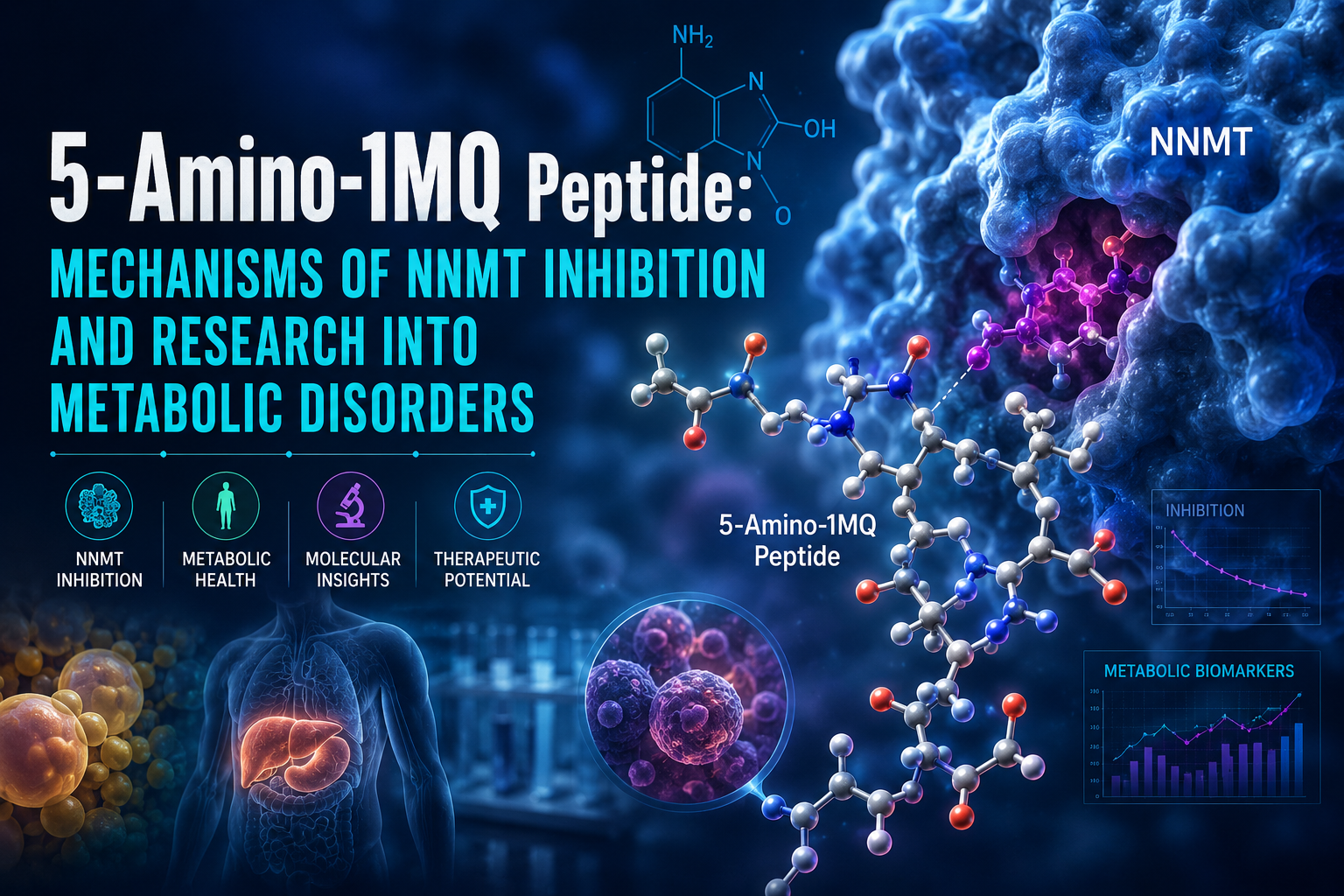
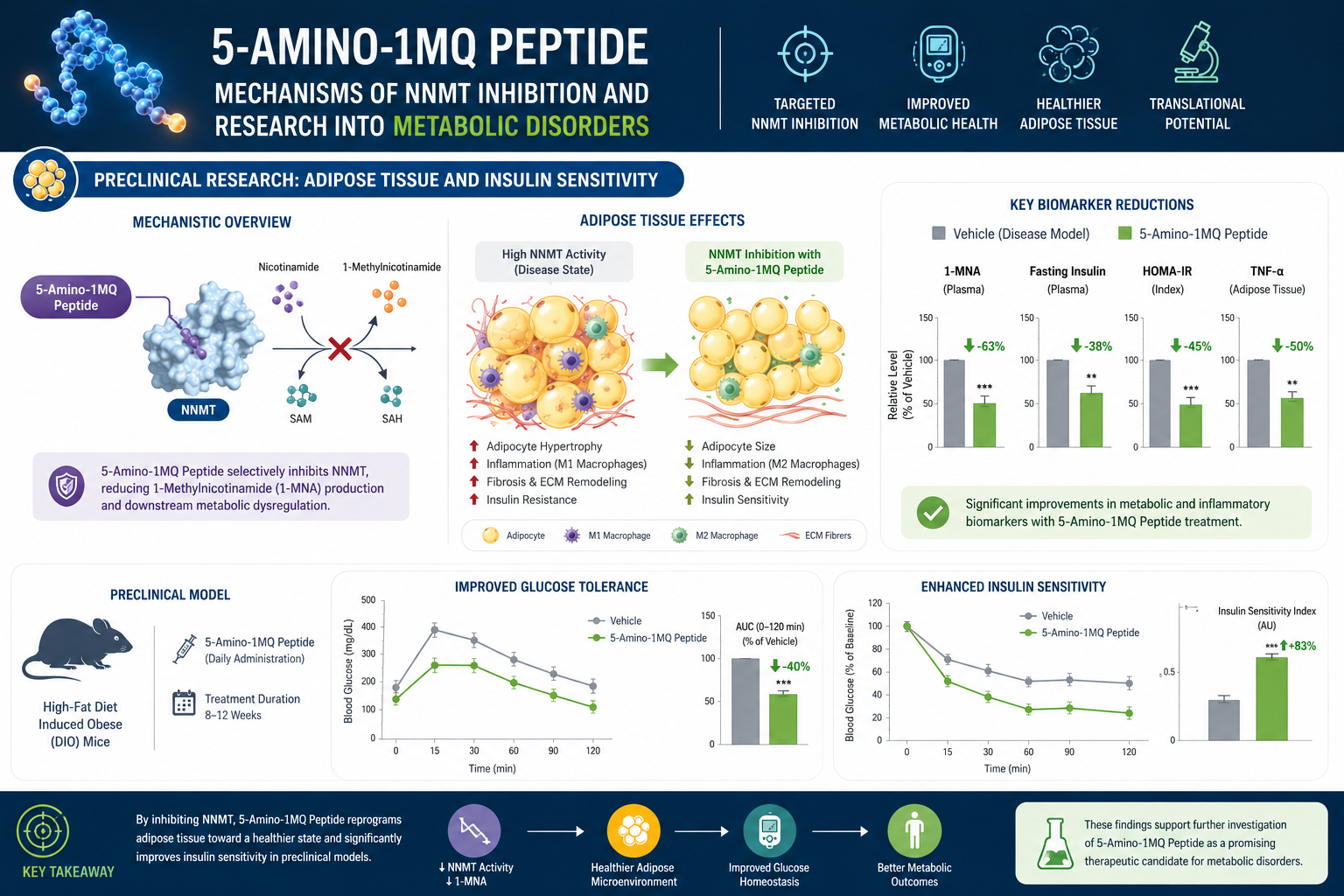
Nicotinamide N-methyltransferase (NNMT) is overexpressed in the fat tissue of obese individuals at rates significantly higher than in lean controls — a detail that has pushed this enzyme to the center of metabolic research. The compound drawing the most attention as a precise NNMT inhibitor is 5-Amino-1MQ, a small molecule with a targeted mechanism that may reshape how researchers approach obesity, insulin resistance, and metabolic syndrome. Understanding the 5-Amino-1MQ Peptide: Mechanisms of NNMT Inhibition and Research into Metabolic Disorders requires a close look at the biochemistry involved and what preclinical data currently shows.

Key Takeaways

  • 5-Amino-1MQ directly inhibits NNMT, redirecting nicotinamide toward NAD+ biosynthesis and improving mitochondrial energy output
  • Preclinical models show reductions in white adipose tissue mass without changes in food intake, suggesting a direct metabolic effect
  • The compound also preserves S-adenosylmethionine (SAM) for essential methylation reactions, influencing gene expression
  • Research is currently limited to animal models; no human clinical trials have been published as of 2026
  • Oral dosing in research settings typically ranges from 50 to 100 mg per day with a half-life of 4 to 7 hours

Key Takeaways

How 5-Amino-1MQ Inhibits NNMT at the Molecular Level

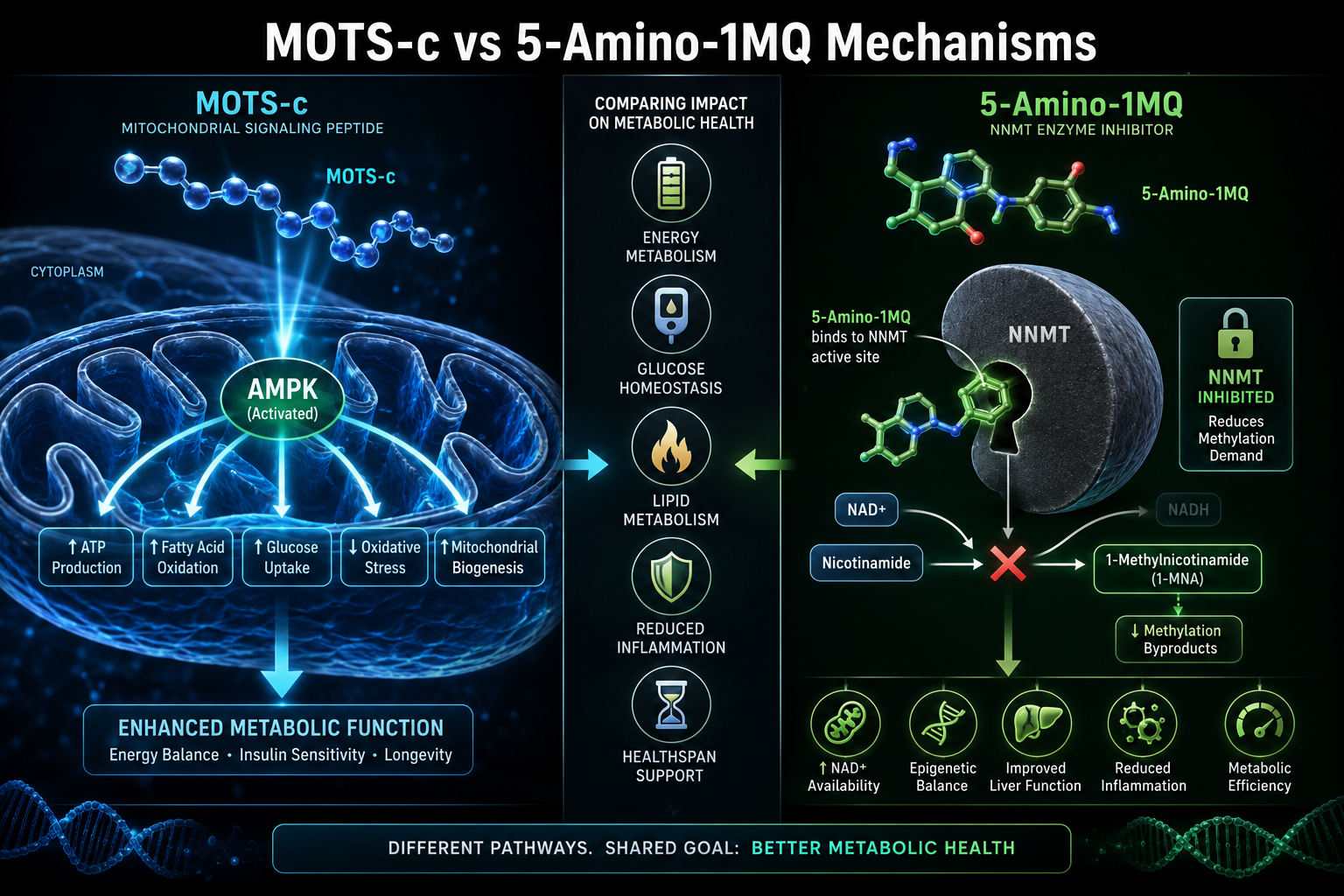
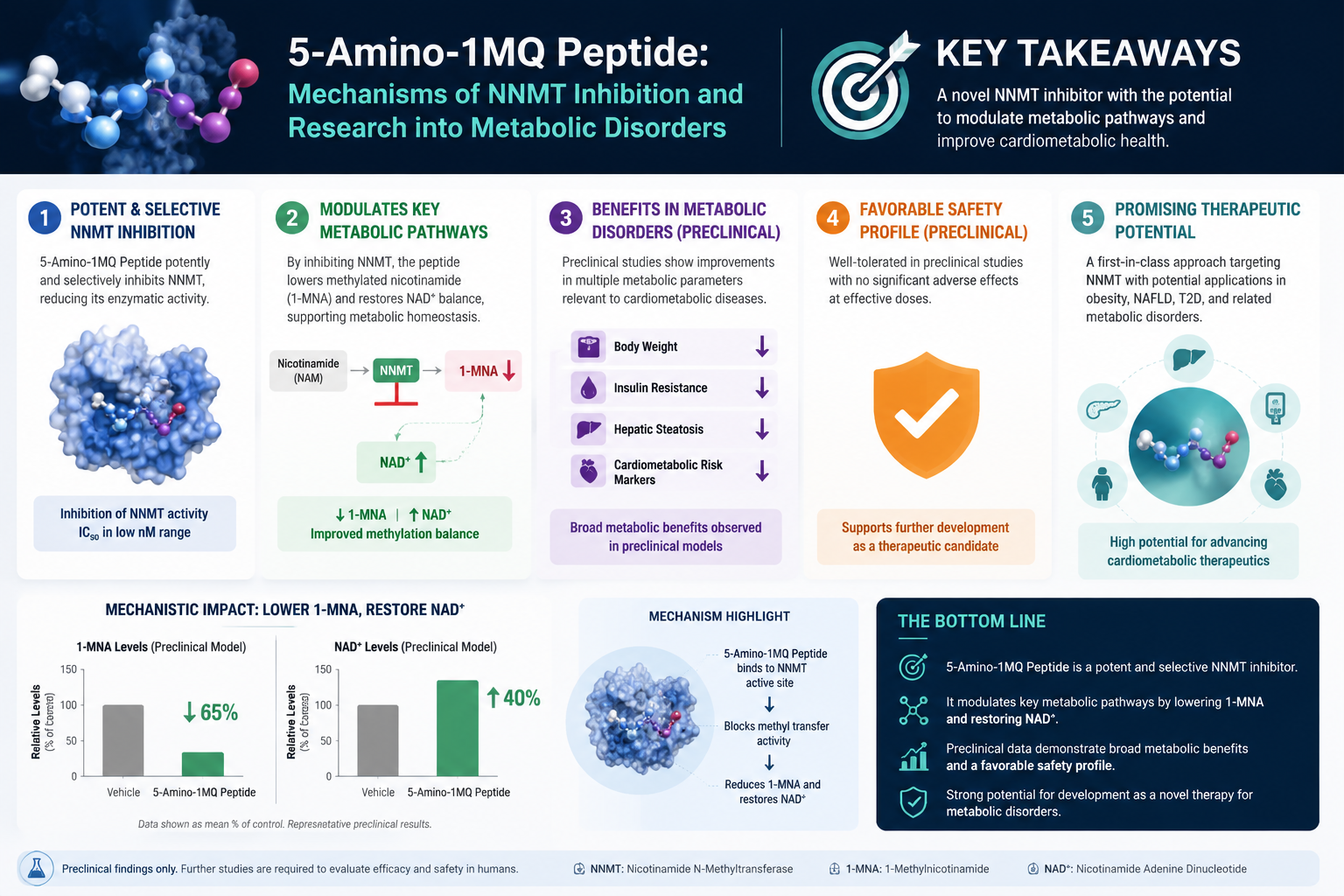
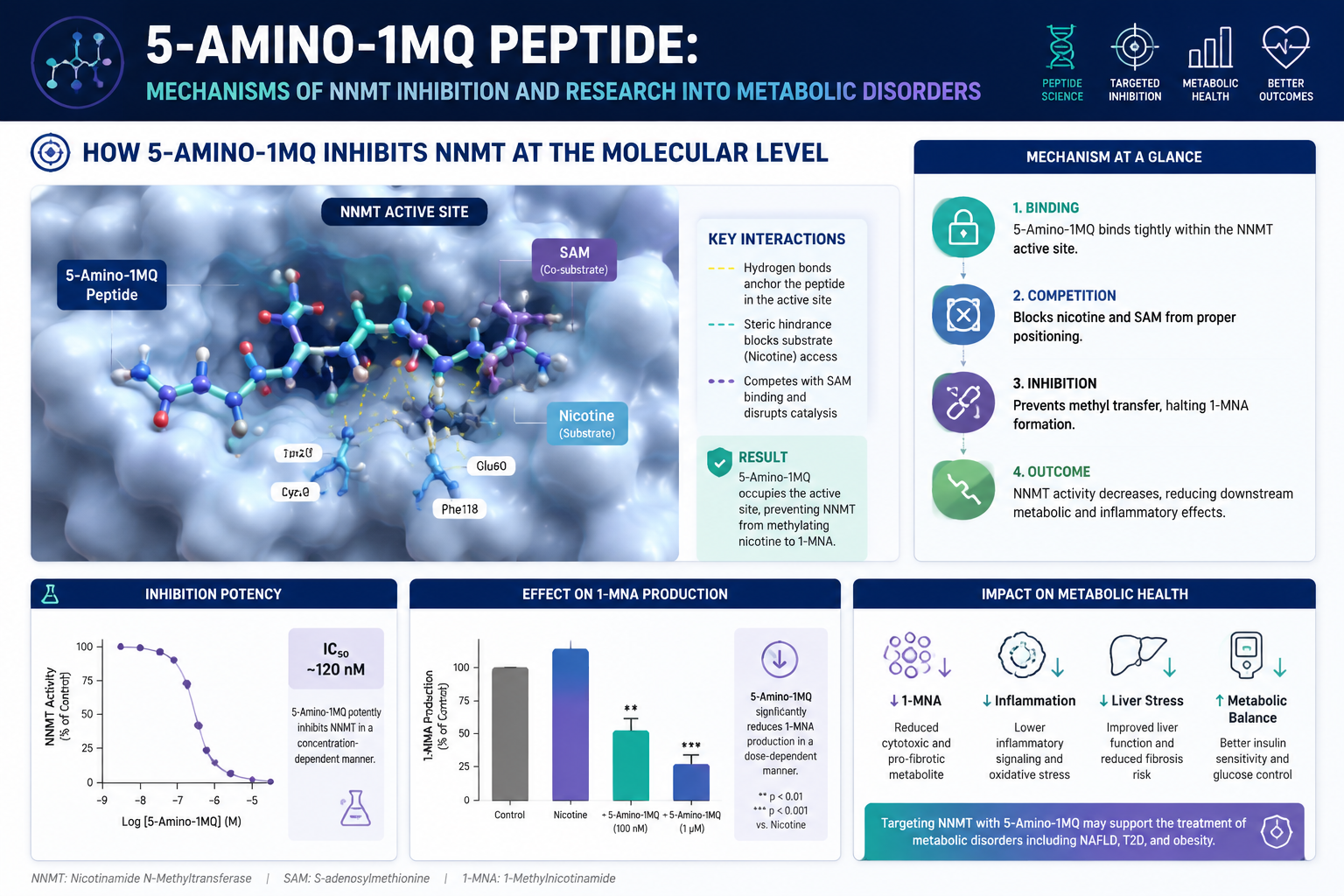
NNMT is an enzyme responsible for methylating nicotinamide, converting it into 1-methylnicotinamide (1-MNA). This reaction consumes both nicotinamide and S-adenosylmethionine (SAM), the body's primary methyl donor. When NNMT activity is high — as it often is in obese or metabolically compromised tissue — this process depletes two critical resources simultaneously.

5-Amino-1MQ blocks the NNMT active site, preventing this methylation reaction from occurring. The downstream effects are significant:

  • Nicotinamide is preserved, making it available for the NAD+ salvage pathway
  • NAD+ levels rise, supporting mitochondrial biogenesis and oxidative phosphorylation
  • SAM is conserved, keeping methyl groups available for DNA methylation, histone modification, and other regulatory processes

This dual preservation of nicotinamide and SAM creates a cascade that improves cellular energy metabolism at a foundational level. Researchers studying metabolic flexibility and mitochondrial function have noted similar upstream effects with other metabolic compounds, but the NNMT-specific targeting of 5-Amino-1MQ makes its mechanism particularly precise.

For a broader look at how peptides interact with metabolic pathways, the ultimate guide to peptide therapy provides useful foundational context.


How 5-Amino-1MQ Inhibits NNMT at the Molecular Level

Preclinical Research: Adipose Tissue and Insulin Sensitivity

The most compelling data on 5-Amino-1MQ Peptide: Mechanisms of NNMT Inhibition and Research into Metabolic Disorders comes from animal studies examining body composition and metabolic markers.

Key findings from preclinical models include:

Outcome Measured Observed Result
White adipose tissue mass Significant reduction
Food intake No meaningful change
Insulin sensitivity Measurable improvement
Energy expenditure Increased
Mitochondrial function Enhanced

The fact that fat mass decreased without changes in food consumption is a critical detail. It points to a direct metabolic effect rather than an appetite-suppressing one. The compound appears to shift how cells process and expend energy rather than simply reducing caloric input.

This profile makes 5-Amino-1MQ a subject of interest alongside other metabolic research compounds. For comparison, researchers have also examined SLU-PP-332 for metabolic modulation and Tesamorelin for body composition outcomes, both of which target metabolic dysfunction through different mechanisms.

Those interested in exploring the compound itself can review the 5-Amino-1MQ research profile for detailed compound information.


Preclinical Research: Adipose Tissue and Insulin Sensitivity

Research Limitations and Current Status in 2026

Despite promising preclinical results, the research landscape for 5-Amino-1MQ Peptide: Mechanisms of NNMT Inhibition and Research into Metabolic Disorders carries important caveats that any serious reader should weigh.

Current limitations include:

  • All published efficacy data comes from animal models, not human trials
  • Long-term safety data is limited even in preclinical settings
  • Independent replication of findings remains sparse
  • No official clinical trial announcements have been made as of 2026

In research settings, oral dosing protocols typically use 50 to 100 mg per day, with the compound's half-life of approximately 4 to 7 hours supporting once-daily administration. However, these parameters are derived from preclinical work and cannot be extrapolated directly to human use.

Researchers exploring metabolic peptides more broadly may also find value in reviewing mitochondrial longevity research and MOTS-c metabolic research themes, which share mechanistic overlap with NAD+ pathway modulation.


Conclusion

The science behind 5-Amino-1MQ Peptide: Mechanisms of NNMT Inhibition and Research into Metabolic Disorders is precise, biologically grounded, and genuinely compelling. By blocking NNMT, this compound preserves nicotinamide for NAD+ synthesis, protects SAM for essential methylation reactions, and drives measurable improvements in fat mass and insulin sensitivity in animal models — all without altering food intake.

Actionable next steps for researchers and informed readers:

  1. Review the current 5-Amino-1MQ compound data to understand purity standards and research-grade sourcing
  2. Examine how NNMT inhibition compares mechanistically to other metabolic compounds like Tesamorelin and SLU-PP-332
  3. Monitor peer-reviewed literature for human trial announcements, which will be the critical next step in validating preclinical findings
  4. Approach any application outside controlled research settings with caution until human safety and efficacy data are established

The NNMT pathway is a legitimate and underexplored frontier in metabolic science. 5-Amino-1MQ sits at its center — and the research, while early, warrants close attention.

https://www.puretestedpeptides.com/wp-content/uploads/2026/06/5-Amino-1MQ-Peptide-Mechanisms-of-NNMT-Inhibition-and-Research-into-Metabolic-Disorders.png 1024 1536 Pure Tested https://www.puretestedpeptides.com/wp-content/uploads/2026/01/buy-peptides-online.jpg Pure Tested2026-06-21 13:06:042026-07-20 15:02:375-Amino-1MQ Peptide: Mechanisms of NNMT Inhibition and Research into Metabolic Disorders
Retatrutide Trial Results in 2026: What the New Phase III Headlines Mean for Research Use Only Readers

Retatrutide Trial Results in 2026: What the New Phase III Headlines Mean for Research Use Only Readers

June 15, 2026/0 Comments/by Pure Tested

{"cover":"Professional landscape format (1536×1024) hero image with bold text overlay: 'Retatrutide Phase III Results 2026' in extra large 72pt white bold sans-serif font with dark semi-transparent overlay box, centered upper-third composition. Background shows a clean pharmaceutical research laboratory with glowing molecular structure models, clinical trial data charts on screens, and soft blue lighting. Color palette: deep navy blue, crisp white, and electric teal accents. Magazine cover aesthetic, high contrast, editorial quality, science-forward visual style.","content":["Landscape format (1536×1024) scientific infographic illustration showing a triple hormone receptor diagram with GLP-1, GIP, and glucagon receptor nodes connected by glowing pathways, overlaid on a clean white clinical background. Include subtle weight loss percentage data callouts (28.3% at 80 weeks, 30.3% at 104 weeks) as floating annotation labels in teal and navy. Modern flat-design aesthetic with molecular iconography, research-lab feel, no people, data-visualization focus.","Landscape format (1536×1024) editorial-style split comparison image: left side shows a detailed bar chart comparing retatrutide weight loss outcomes versus bariatric surgery benchmarks (25-35% range), right side shows smaller secondary charts for HbA1c reduction, AHI sleep apnea improvement, and WOMAC knee pain score reduction. Clean white background with navy and teal color scheme, bold percentage labels, professional medical data visualization aesthetic, no people, clinical research context.","Landscape format (1536×1024) overhead flat-lay research desk scene showing a printed Phase III clinical trial document labeled TRIUMPH-1, a glass vial with peptide label, a researcher notebook with handwritten protocol notes, and a laptop displaying a peptide sourcing checklist. Soft natural lighting from upper left, muted neutral tones with teal accent highlights, research-use-only stamp visible on document corner, clean and professional editorial composition."]

Professional landscape hero image () with : "Retatrutide Trial Results in 2026: What the New Phase III Headlines Mean for

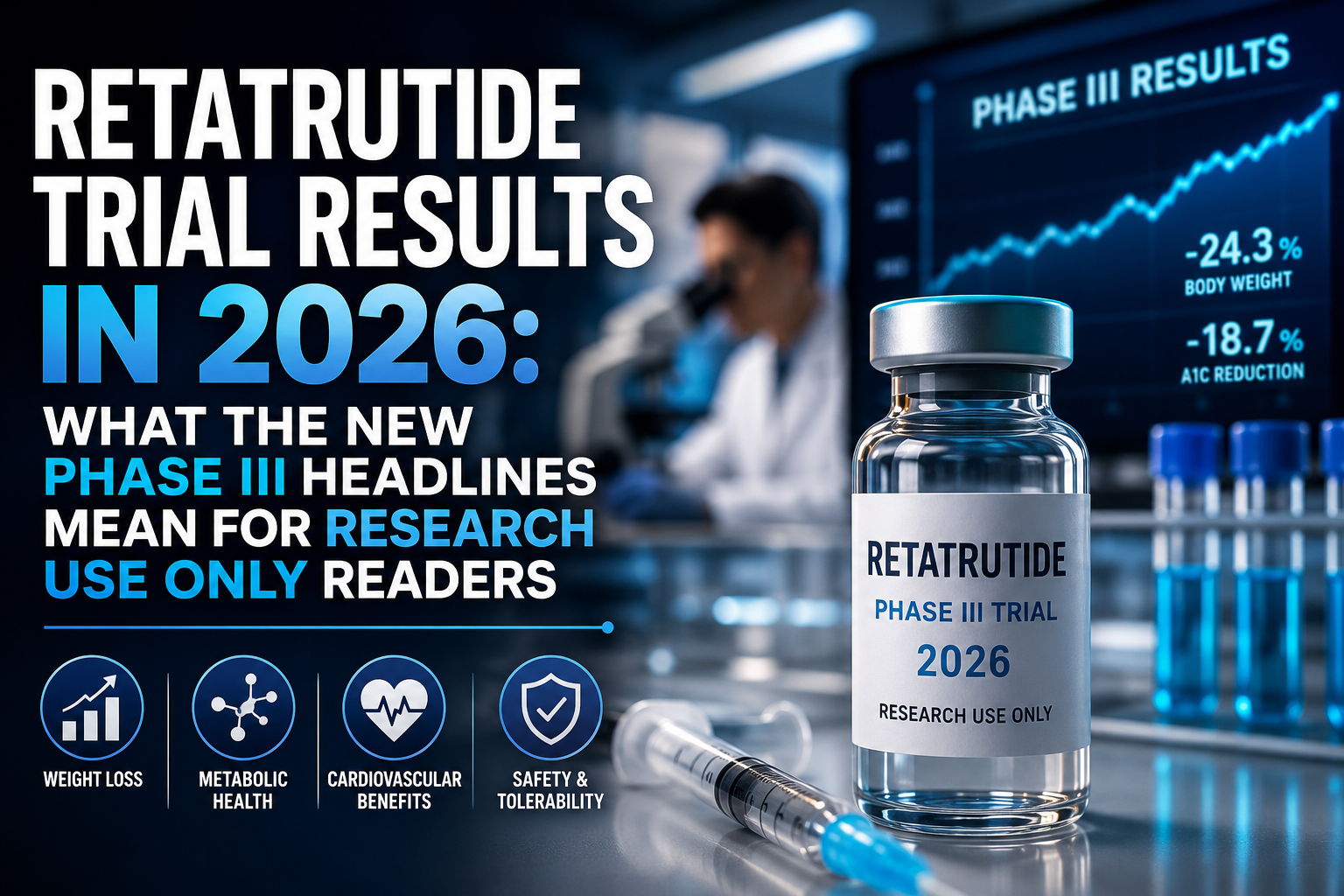
A weight-loss drug that matches bariatric surgery outcomes without an operating room — that is the headline now circulating across the research community. The Retatrutide Trial Results in 2026 have moved from Phase II speculation into confirmed Phase III data, and the numbers are forcing researchers to rethink what pharmacological intervention can realistically achieve. For research-use-only readers tracking this compound, understanding what changed, what was confirmed, and what still remains open is essential before drawing any conclusions.

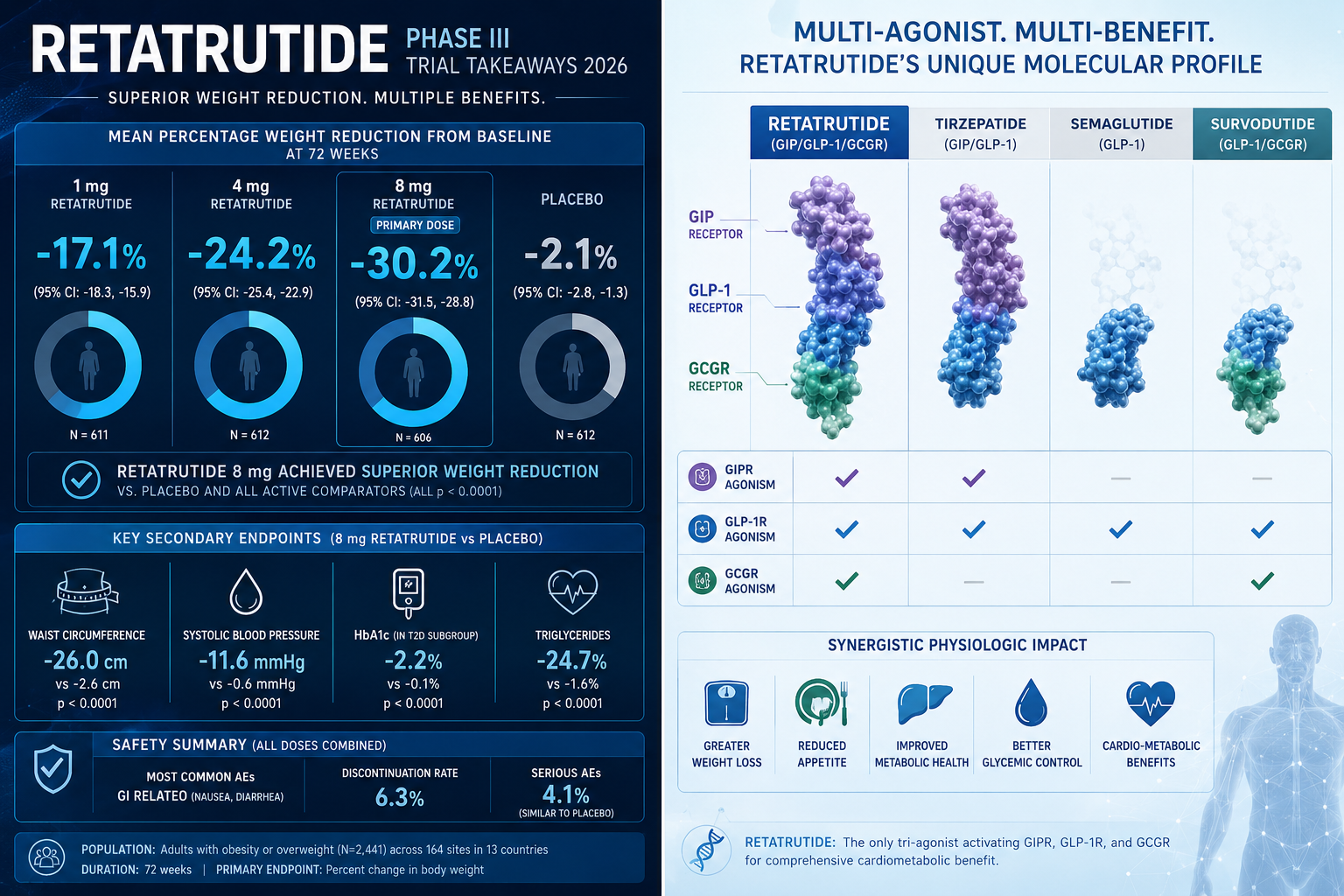
Split-screen medical research infographic visualizing key Retatrutide Phase III trial takeaways in 2026, left side showing

Key Takeaways

  • Retatrutide is a triple agonist targeting GLP-1, GIP, and glucagon receptors simultaneously.
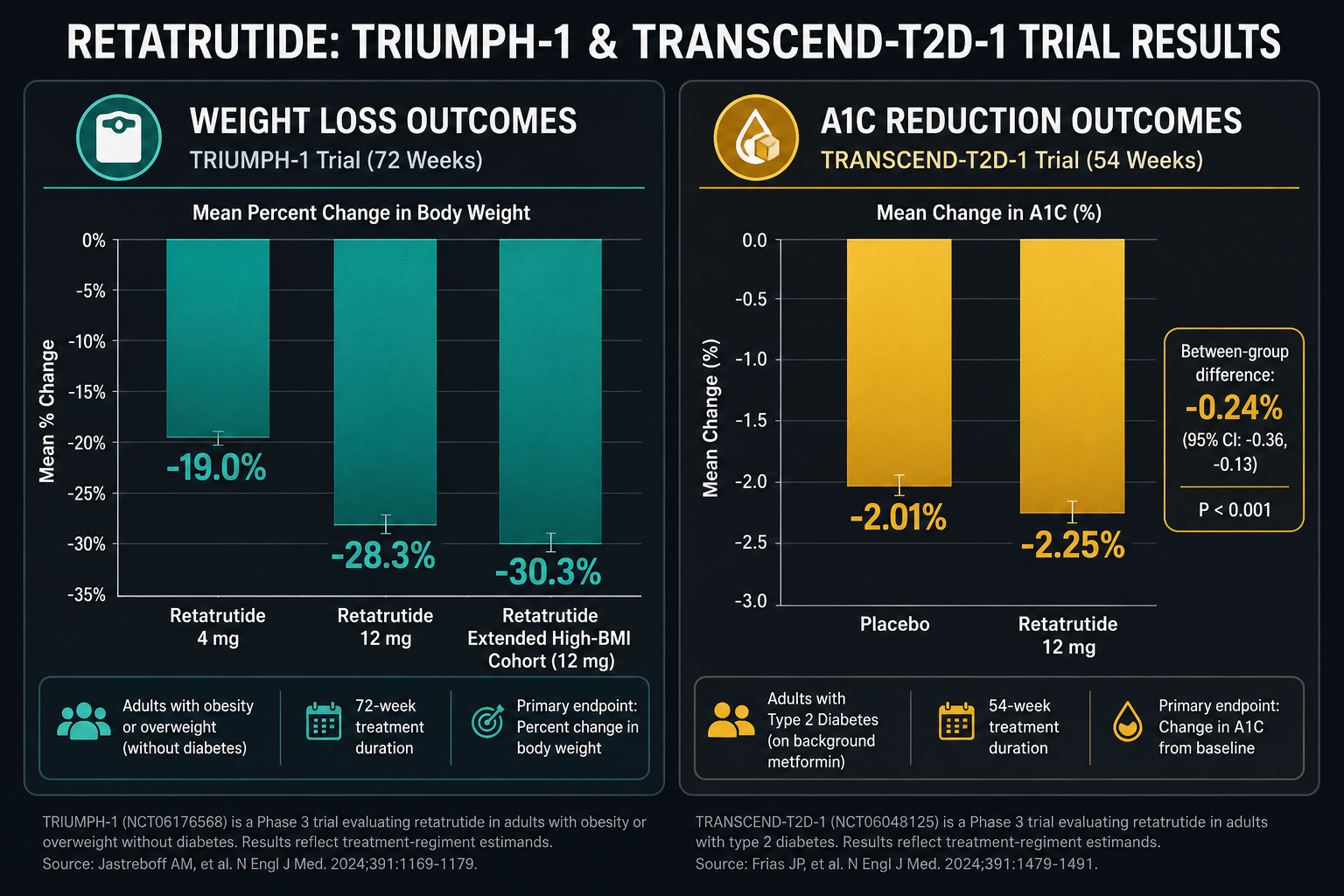
  • TRIUMPH-1 Phase III data showed an average weight loss of 28.3% at 80 weeks and 30.3% at 104 weeks on the 12 mg dose.
  • Beyond weight, the trial documented improvements in cardiovascular markers, sleep apnea severity, knee osteoarthritis pain, and glycemic control.
  • Weight loss outcomes are now comparable to bariatric surgery benchmarks of 25-35%.
  • Regulatory review is anticipated, but research-use-only readers should track sourcing standards and documentation carefully.

What the Phase III TRIUMPH-1 Data Actually Confirmed

The TRIUMPH-1 trial delivered the clearest picture yet of retatrutide's weight-reduction potential. Participants receiving the 12 mg weekly dose lost an average of 28.3% of body weight — roughly 70.3 lbs — over 80 weeks. A pre-specified extension pushed that figure to 30.3%, or approximately 85.0 lbs, at 104 weeks.

Perhaps more striking than the raw weight numbers are the BMI reclassifications. Among participants on the 12 mg dose:

  • 65.3% dropped below a BMI of 30, exiting the obesity category entirely
  • 33.3% reached a BMI under 25, classified as normal weight

These are not incremental improvements. They represent a categorical shift in health status for a majority of participants.

Cardiovascular markers also improved. Researchers documented reductions in waist circumference, non-HDL cholesterol, triglycerides, systolic blood pressure, and high-sensitivity C-reactive protein (hsCRP) — a cluster of risk factors that typically resist lifestyle intervention alone.

"The weight loss achieved with retatrutide is now comparable to outcomes typically associated with bariatric surgery, which generally results in 25% to 35% weight loss depending on the procedure."

For readers sourcing GLP-1 class peptides for research documentation, these Phase III benchmarks provide a meaningful reference point for experimental design.


Beyond Weight: Secondary Endpoints That Changed the Conversation

Beyond Weight: Secondary Endpoints That Changed the Conversation

The Retatrutide Trial Results in 2026 extended well beyond body weight, and the secondary endpoints are where the research narrative became genuinely broader.

Obstructive Sleep Apnea (OSA): A nested study within TRIUMPH-1 found that retatrutide reduced the apnea-hypopnea index (AHI) by up to 36.1 events per hour — a 60.6% reduction from a baseline of 58.6 events per hour in participants with moderate-to-severe OSA.

Knee Osteoarthritis Pain: A separate nested study measured WOMAC pain subscale scores. Retatrutide reduced scores by up to 4.3 points (73.1%) from a baseline of 6.0. This signals a potential indirect benefit through mechanical offloading, though researchers note that direct anti-inflammatory mechanisms cannot be ruled out.

Type 2 Diabetes (TRANSCEND-T2D-1): The dedicated diabetes trial demonstrated significant HbA1c reductions in individuals whose glycemic control was inadequate with diet and exercise alone.

Endpoint Baseline Reduction
Body weight (12 mg, 80 wk) — 28.3%
AHI (sleep apnea events/hr) 58.6 60.6%
WOMAC pain score 6.0 73.1%

For researchers already familiar with metabolic peptides like AOD-9604 and its fat metabolism research context, or those reviewing GLP-1 retatrutide product documentation, these secondary findings add important context to experimental protocols.


What Still Remains Uncertain for Research Use Only Readers

What Still Remains Uncertain for Research Use Only Readers

Understanding the Retatrutide Trial Results in 2026 also means acknowledging what Phase III has not yet resolved.

Long-term safety beyond two years remains under evaluation. The 104-week extension is encouraging, but researchers tracking compounds like retatrutide 10 mg for research sourcing should note that post-marketing surveillance data does not yet exist.

Lean mass preservation is still being quantified. Weight loss at this magnitude raises questions about the ratio of fat to muscle lost — a variable that matters significantly in research models focused on body composition.

Regulatory timeline remains open. Eli Lilly has signaled intent to seek FDA approval, but approval timelines are not confirmed. Research-use-only readers operate in a distinct context from clinical use, and sourcing standards must reflect that distinction.

For those building broader peptide research frameworks, resources like the BPC-157 core peptides documentation guide and CJC-1295 with DAC research findings offer useful models for structuring documentation and traceability protocols across compound classes.

Researchers interested in metabolic and aging-related peptide categories can also explore the aging support peptide category for broader context on where retatrutide fits within current research landscapes.


Conclusion

The Phase III data released in 2026 confirms that retatrutide is not a modest improvement over existing GLP-1 therapies — it is a structurally different intervention with outcomes that rival surgical benchmarks. For research-use-only readers, the actionable steps are clear:

  1. Update experimental frameworks to reflect the 104-week efficacy data, not just the earlier Phase II findings.
  2. Expand secondary endpoint tracking to include cardiovascular markers, sleep metrics, and pain indices where relevant.
  3. Maintain rigorous sourcing and documentation standards, particularly as regulatory review approaches and compound availability evolves.
  4. Monitor lean mass data as it emerges from ongoing analyses.

The headline numbers are real. The research questions they generate are just beginning.

https://www.puretestedpeptides.com/wp-content/uploads/2026/06/Retatrutide-Trial-Results-in-2026-What-the-New-Phase-III-Headlines-Mean-for-Research-Use-Only-Readers.png 1024 1536 Pure Tested https://www.puretestedpeptides.com/wp-content/uploads/2026/01/buy-peptides-online.jpg Pure Tested2026-06-15 13:04:342026-07-20 15:03:00Retatrutide Trial Results in 2026: What the New Phase III Headlines Mean for Research Use Only Readers
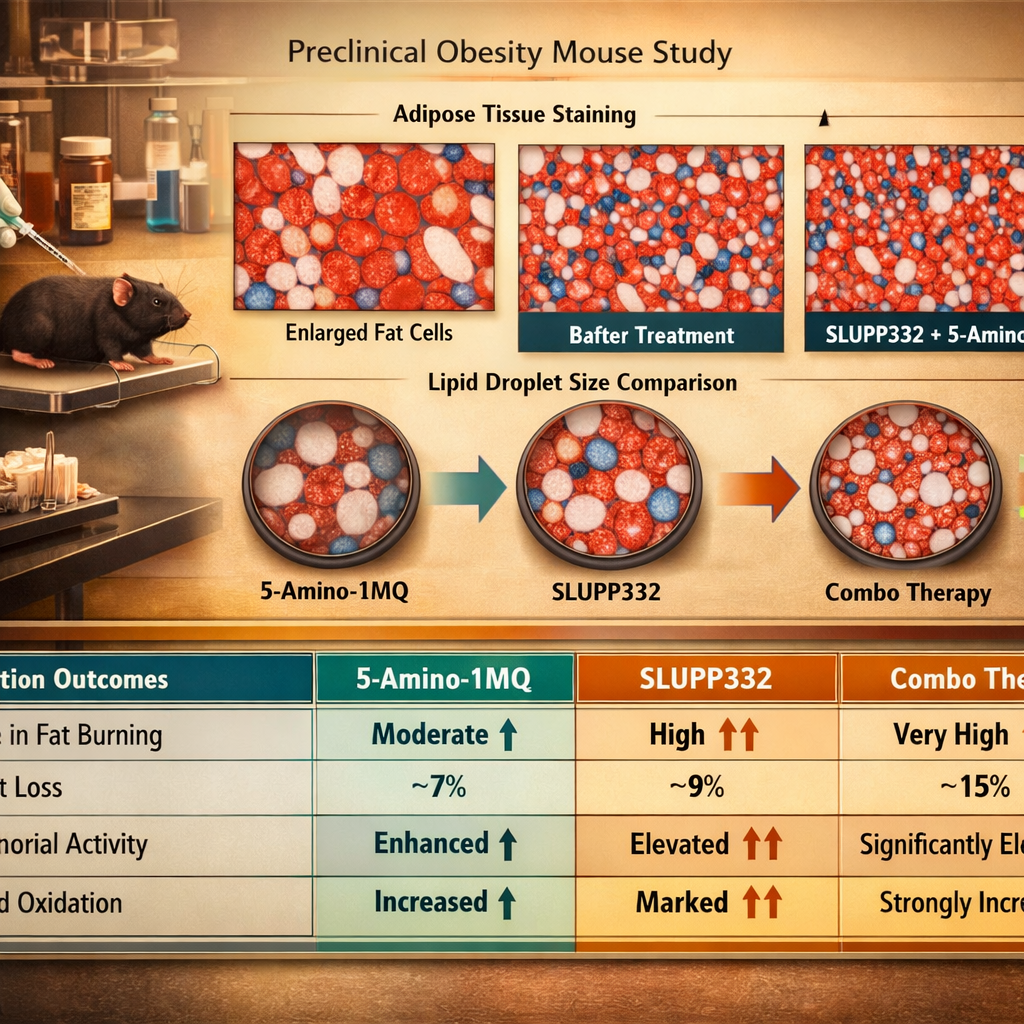
SLUPP332 With 5-Amino-1MQ: Designing Mitochondrial and NNMT-Targeted Peptide Stacks for Obesity Research

SLUPP332 With 5-Amino-1MQ: Designing Mitochondrial and NNMT-Targeted Peptide Stacks for Obesity Research

June 14, 2026/0 Comments/by Pure Tested

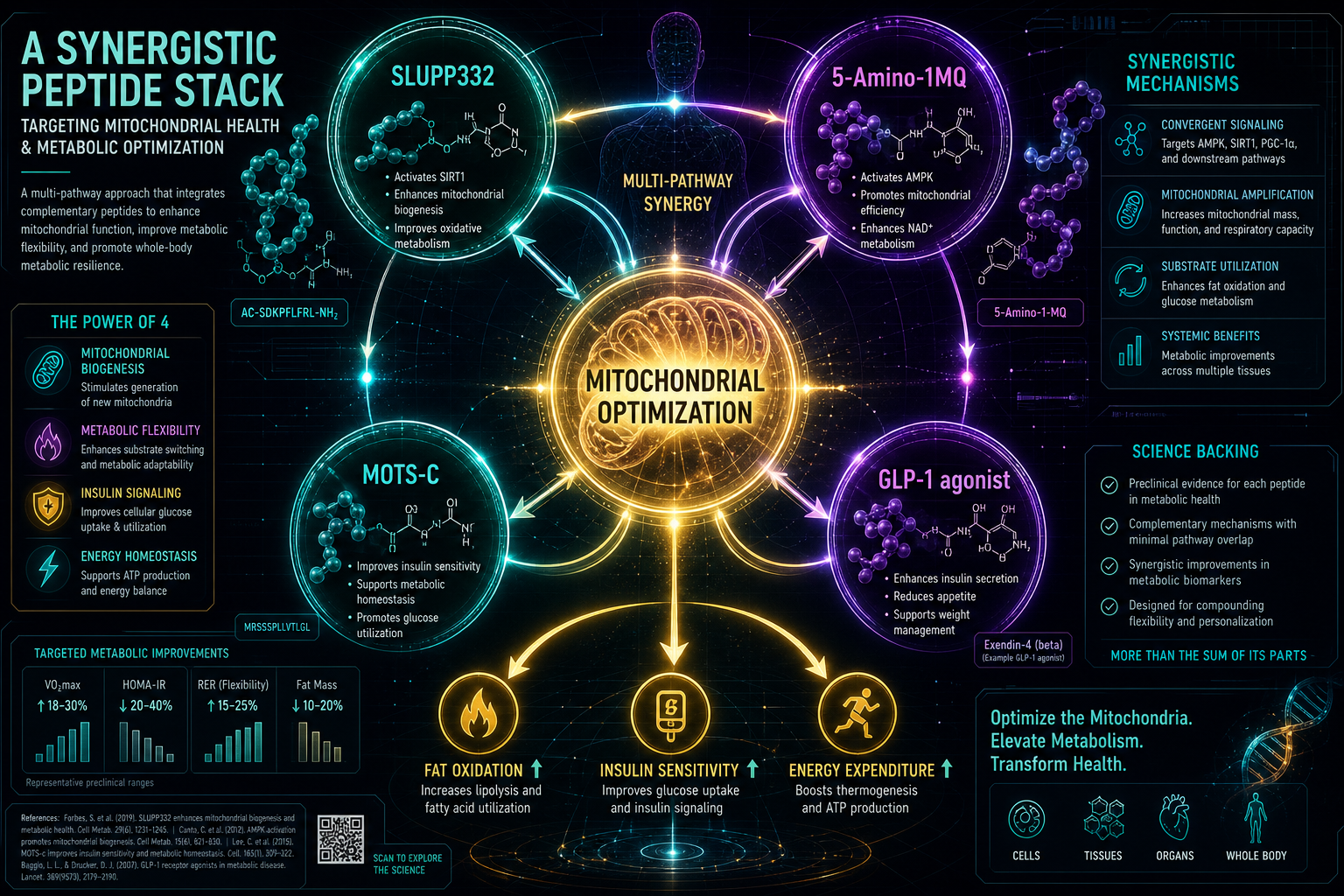
Global obesity rates have more than doubled since 1990, yet the molecular tools available to researchers studying fat metabolism remain limited. Two compounds — SLUPP332 and 5-Amino-1MQ — are drawing serious attention in preclinical science because they target distinct but overlapping pathways inside fat cells. Exploring SLUPP332 with 5-Amino-1MQ: designing mitochondrial and NNMT-targeted peptide stacks for obesity research represents one of the more mechanistically coherent strategies emerging from metabolic biology labs in 2026.

Key Takeaways

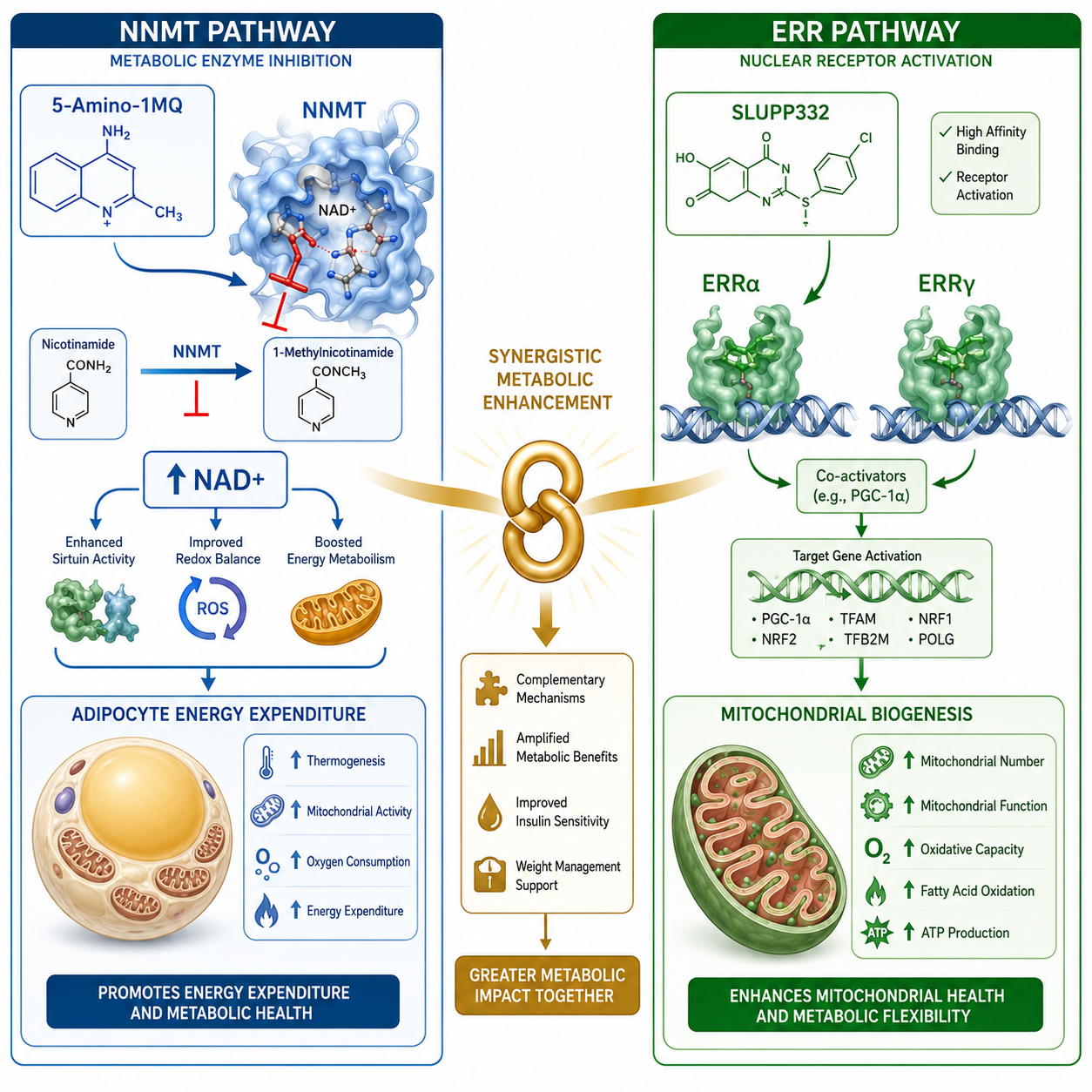
  • SLUPP332 activates estrogen-related receptors (ERRalpha/gamma), stimulating mitochondrial biogenesis and fat oxidation in adipocytes
  • 5-Amino-1MQ inhibits the NNMT enzyme, raising intracellular NAD+ levels and activating sirtuin-driven metabolic programs
  • Combined, these two compounds may produce complementary effects on mitochondrial function and energy expenditure
  • All current evidence is derived from cell culture and rodent models — no human clinical trials exist as of 2026
  • Researchers designing stacks with these compounds must account for unknown long-term NNMT inhibition consequences

How SLUPP332 and 5-Amino-1MQ Each Target Metabolism

To understand the rationale behind combining these compounds, it helps to examine what each one does independently.

SLUPP332: Activating the Mitochondrial Gene Network

SLUPP332 is a synthetic small-molecule agonist of estrogen-related receptors, specifically ERRalpha and ERRgamma. These nuclear receptors function as master regulators of mitochondrial biogenesis — the process by which cells generate new mitochondria. When ERRalpha/gamma are activated, downstream gene expression shifts toward increased fatty acid oxidation, oxidative phosphorylation, and overall energy expenditure.

In rodent models, SLUPP332 has been shown to mimic aspects of exercise-induced metabolic adaptation, making it a subject of interest for researchers studying SLU-PP-332 metabolic modulation in obesity and insulin resistance contexts. For a deeper look at its preclinical profile, the SLU-PP-332 research overview provides additional mechanistic context.

5-Amino-1MQ: Blocking NNMT to Raise NAD+

5-Amino-1MQ takes a different entry point. It inhibits nicotinamide N-methyltransferase (NNMT), an enzyme that consumes S-adenosyl methionine and diverts nicotinamide away from the NAD+ synthesis pathway. By blocking NNMT, 5-Amino-1MQ allows intracellular NAD+ concentrations to rise. Elevated NAD+ then activates sirtuin enzymes — particularly SIRT1 and SIRT3 — which regulate mitochondrial function, fat oxidation, and insulin sensitivity.

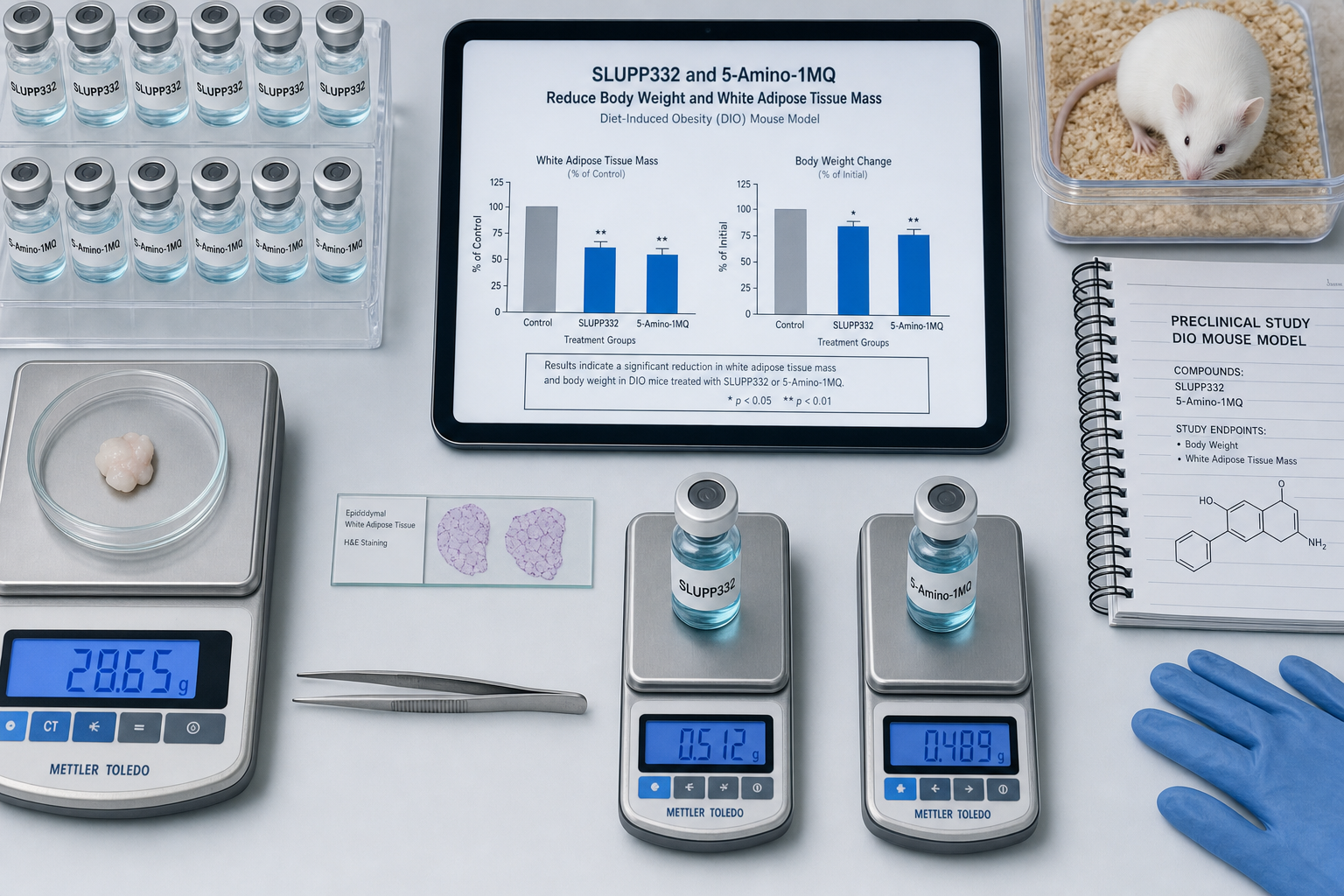
In preclinical studies, 5-Amino-1MQ administration produced significant reductions in body weight, white adipose tissue mass, and adipocyte cell size without altering food intake — a notable finding suggesting the effect is metabolic rather than appetite-driven. Oral dosing in animal models has ranged from 50 to 100 mg daily, though these figures are strictly for research reference and have no established human equivalent. Researchers interested in the broader NAD+ pathway can explore the NAD+ research overview for related context. The dedicated 5-Amino-1MQ compound page also outlines its research profile in detail.


Designing the Stack: Synergistic Logic Behind SLUPP332 With 5-Amino-1MQ

Designing the Stack: Synergistic Logic Behind SLUPP332 With 5-Amino-1MQ

The rationale for pairing these two compounds in SLUPP332 with 5-Amino-1MQ: designing mitochondrial and NNMT-targeted peptide stacks for obesity research lies in their complementary mechanisms.

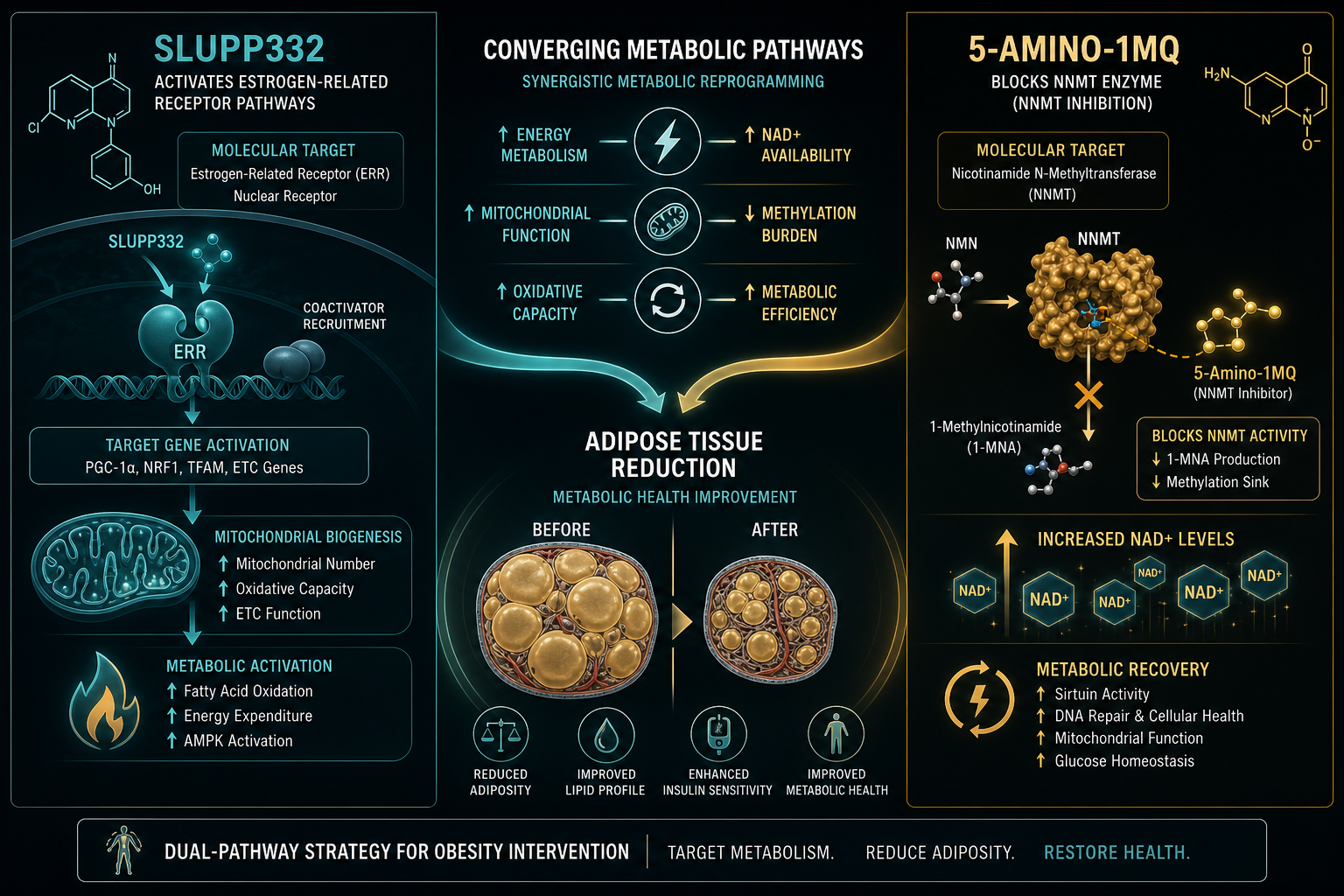
Compound Primary Target Downstream Effect
SLUPP332 ERRalpha/gamma receptors Mitochondrial biogenesis, fat oxidation
5-Amino-1MQ NNMT enzyme inhibition Elevated NAD+, sirtuin activation

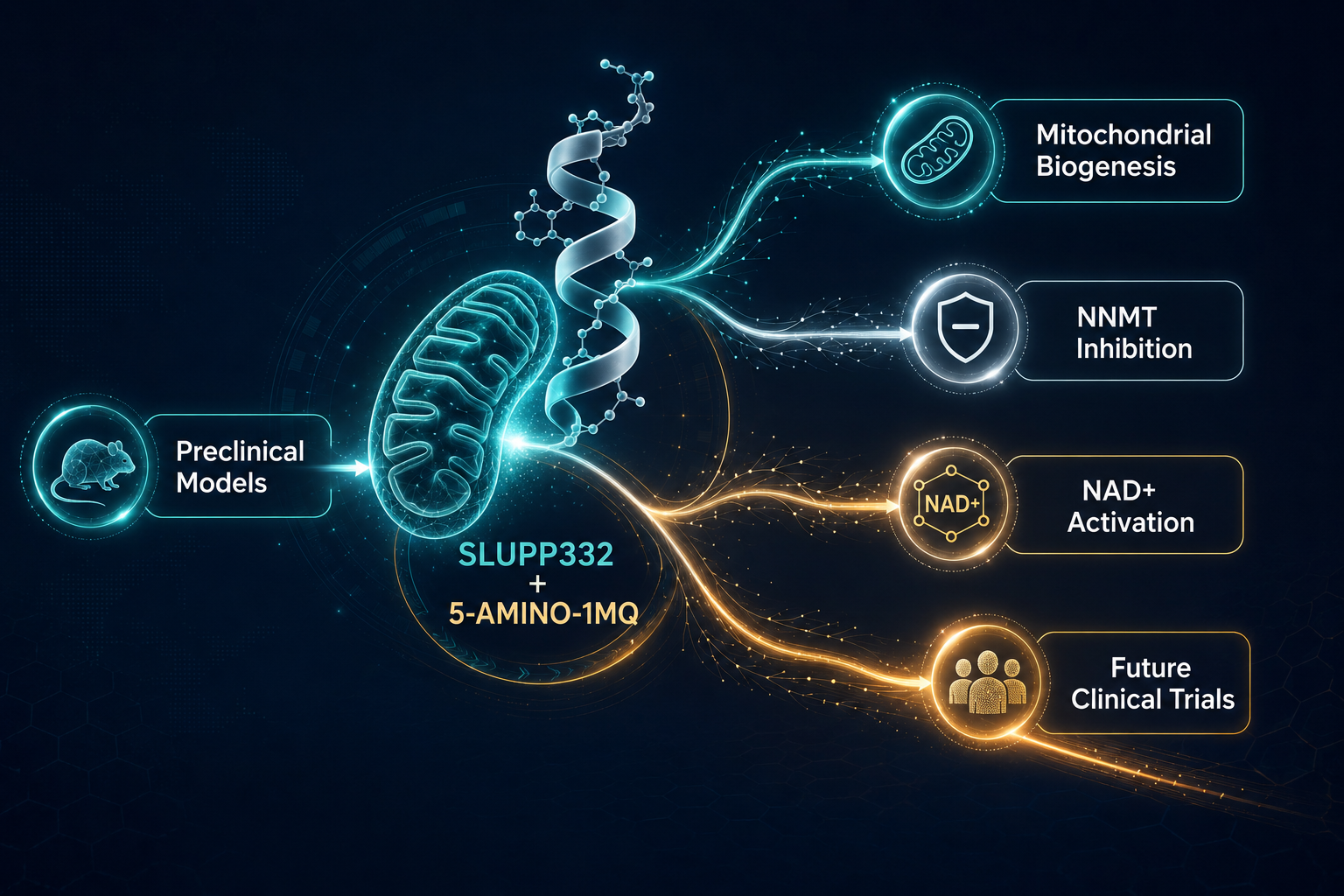
SLUPP332 drives the structural expansion of the mitochondrial network. 5-Amino-1MQ raises the NAD+ fuel that sirtuins need to function. Together, they may address mitochondrial quantity and metabolic efficiency simultaneously — two variables that are both impaired in obese adipose tissue.

This dual-pathway logic mirrors approaches seen in other mitochondrial research stacks. For instance, MOTS-c mitochondrial research themes explore a peptide encoded in mitochondrial DNA that also influences AMPK signaling and glucose uptake, showing that multi-target approaches to metabolic dysfunction are gaining traction across the field. Similarly, mitochondrial longevity research highlights how overlapping mitochondrial interventions are being studied in aging and metabolic disease models.

A critical note for researchers: NNMT participates in methylation reactions across multiple cell types beyond adipocytes. Chronic inhibition carries unknown systemic consequences, and this uncertainty demands rigorous safety evaluation before any translational application is considered.


Current Evidence, Limitations, and Research Outlook

As of 2026, every data point supporting the SLUPP332 and 5-Amino-1MQ combination originates from cell culture experiments or rodent obesity models. No published human clinical trials exist for either compound individually, let alone in combination. Researchers and analysts working in this area consistently emphasize that preclinical promise does not guarantee clinical translation.

Current Evidence, Limitations, and Research Outlook

The absence of human data means:

  • Optimal dosing ratios for the stack are entirely unknown
  • Long-term safety of NNMT inhibition has not been characterized in humans
  • ERR agonism via SLUPP332 may have off-target hormonal effects not yet identified
  • Bioavailability and pharmacokinetics in human subjects remain unstudied

Those designing research protocols around SLUPP332 with 5-Amino-1MQ: designing mitochondrial and NNMT-targeted peptide stacks for obesity research should treat these compounds strictly as investigational tools. Researchers exploring adjacent metabolic peptides may also find value in reviewing what is new in peptide research for the broader landscape of compounds under investigation in 2026.
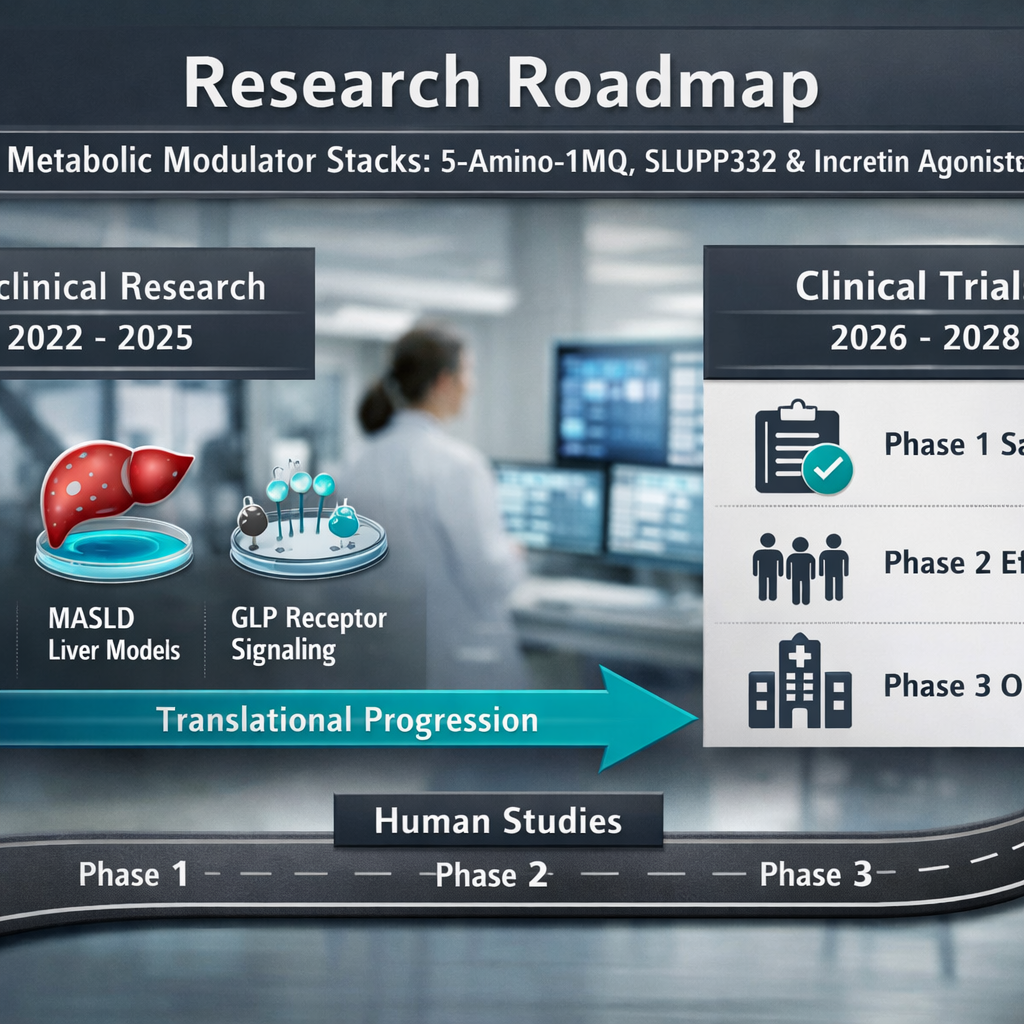
If ongoing rodent studies produce consistent, reproducible results, the scientific community may have grounds to design Phase I safety trials within the next several years — though this timeline remains speculative.


Conclusion

The combination of SLUPP332 and 5-Amino-1MQ represents a mechanistically grounded approach to studying mitochondrial dysfunction and fat storage in obesity models. SLUPP332 drives mitochondrial biogenesis through ERR receptor activation; 5-Amino-1MQ raises NAD+ availability by blocking NNMT, enabling sirtuin-mediated metabolic reprogramming. Together, they address two distinct but interconnected failure points in obese adipose tissue.

Actionable next steps for researchers:

  • Review published rodent model data for each compound independently before designing combination protocols
  • Establish baseline mitochondrial function markers in study subjects to measure stack effects accurately
  • Monitor systemic methylation markers when using 5-Amino-1MQ to detect off-target NNMT inhibition effects
  • Follow emerging preclinical literature closely, as this field is moving quickly in 2026
  • Ensure all compounds used meet verified purity standards before inclusion in any research protocol

The field is early-stage but scientifically coherent. Rigorous preclinical work now will determine whether this dual-pathway stack earns a path toward human investigation.

https://www.puretestedpeptides.com/wp-content/uploads/2026/06/SLUPP332-With-5-Amino-1MQ-Designing-Mitochondrial-and-NNMT-Targeted-Peptide-Stacks-for-Obesity-Research.png 1024 1536 Pure Tested https://www.puretestedpeptides.com/wp-content/uploads/2026/01/buy-peptides-online.jpg Pure Tested2026-06-14 13:20:312026-07-20 15:03:14SLUPP332 With 5-Amino-1MQ: Designing Mitochondrial and NNMT-Targeted Peptide Stacks for Obesity Research
SLUPP332 and 5‑Amino‑1MQ in Obesity Research: Building Mitochondrial and NNMT‑Targeted Multi‑Peptide Protocols

SLUPP332 and 5‑Amino‑1MQ in Obesity Research: Building Mitochondrial and NNMT‑Targeted Multi‑Peptide Protocols

June 14, 2026/0 Comments/by Pure Tested

Obesity affects more than one billion people globally, yet most research compounds still target only appetite or caloric intake — leaving the mitochondrial and enzymatic roots of metabolic dysfunction largely unaddressed. The convergence of SLUPP332 and 5-Amino-1MQ in obesity research opens a distinct experimental avenue: building mitochondrial and NNMT-targeted multi-peptide protocols that act on energy production and fat storage simultaneously, rather than suppressing hunger alone.

Detailed () scientific illustration showing a split-panel diagram: left side depicts SLUPP332 activating estrogen-related

Key Takeaways

  • 5-Amino-1MQ inhibits NNMT to raise cellular NAD+ and activate SIRT1, shifting adipose tissue toward a leaner metabolic phenotype.
  • SLUPP332 activates estrogen-related receptors (ERRs), directly driving mitochondrial biogenesis and oxidative capacity.
  • Combining both compounds with MOTS-C or GLP-1-based peptides creates layered, complementary mechanisms in preclinical models.
  • Endpoint selection — energy expenditure, insulin sensitivity, adipocyte size — is critical to meaningful experimental design.
  • All compounds discussed remain research-stage; no human clinical trials have been published as of 2026.

Mechanistic Foundations: What SLUPP332 and 5-Amino-1MQ Each Bring

Understanding why these two compounds are studied together starts with their distinct but complementary targets.

5-Amino-1MQ is a small-molecule inhibitor of nicotinamide N-methyltransferase (NNMT), an enzyme overexpressed in the adipose tissue of obese subjects. When NNMT is overactive, it consumes SAM (S-adenosylmethionine) and depletes the methyl donor pool, suppressing NAD+ availability. By blocking NNMT, 5-Amino-1MQ restores NAD+ levels and activates SIRT1 — a deacetylase that promotes a lean, energy-expending cellular state. In diet-induced obese mouse models, this mechanism produced measurable reductions in body weight, white adipose tissue mass, and adipocyte size without altering food intake. For a deeper look at the compound's research profile, see the 5-Amino-1MQ research and data page.

SLUPP332 (SLU-PP-332) is a synthetic ERR (estrogen-related receptor) agonist. ERRs are nuclear receptors that govern mitochondrial biogenesis, fatty acid oxidation, and oxidative phosphorylation gene networks. Activating ERRs with SLUPP332 essentially instructs cells to build more mitochondria and burn more fuel — an effect sometimes described as "exercise mimicry" at the molecular level. Research on SLUPP332 oral and subcutaneous evidence outlines the current understanding of its bioavailability and tissue distribution.

Compound Primary Target Key Downstream Effect
5-Amino-1MQ NNMT inhibition NAD+ elevation, SIRT1 activation
SLUPP332 ERR agonism Mitochondrial biogenesis, fat oxidation
MOTS-C AMPK activation Metabolic flexibility, glucose uptake

Experimental Design for SLUPP332 and 5-Amino-1MQ in Obesity Research: Building Mitochondrial and NNMT-Targeted Multi-Peptide Protocols

Experimental Design for SLUPP332 and 5-Amino-1MQ in Obesity Research: Building Mitochondrial and NNMT-Targeted Multi-Peptide

Rigorous experimental design is what separates publishable data from noise. When planning a dual-compound study, three decisions matter most: model selection, endpoint battery, and dosing schedule.

Model Selection

Diet-induced obesity (DIO) mouse models remain the standard because they replicate the high-fat, sedentary phenotype seen in human metabolic syndrome. Genetic models (ob/ob, db/db) are useful for isolating specific pathways but may not reflect the NNMT overexpression pattern that makes 5-Amino-1MQ relevant. For SLUPP332, aged DIO models are particularly informative because ERR activity naturally declines with age.

Endpoint Battery

A meaningful protocol should measure:

  • Indirect calorimetry (VO2, VCO2, respiratory exchange ratio) to quantify energy expenditure shifts
  • Glucose tolerance and insulin sensitivity tests (GTT/ITT) to capture metabolic flexibility
  • Adipocyte morphology via histology — adipocyte size is a sensitive marker of lipid mobilization
  • Mitochondrial density in skeletal muscle and brown adipose tissue via electron microscopy or citrate synthase activity
  • Plasma NAD+ metabolomics to confirm NNMT inhibition is pharmacologically active

Dosing Considerations

Preclinical data suggest 5-Amino-1MQ at 50-100 mg/kg orally, with a half-life of roughly 4-6 hours, requiring once or twice-daily administration. SLUPP332 dosing varies by route; researchers should consult the SLUPP332 research overview for current preclinical parameters. Running a 4-week washout arm between single-agent and combination phases helps isolate additive versus synergistic effects.


Building Complex Stacks: Adding GLP-Based and Mitochondrial Peptides

Building Complex Stacks: Adding GLP-Based and Mitochondrial Peptides

The most compelling frontier in SLUPP332 and 5-Amino-1MQ in obesity research is their integration into broader multi-peptide protocols targeting mitochondrial and NNMT pathways alongside appetite and hormonal regulators.

MOTS-C is a mitochondria-derived peptide that activates AMPK, improving glucose utilization and metabolic flexibility. Its mechanism complements both SLUPP332 (upstream mitochondrial biogenesis) and 5-Amino-1MQ (NAD+ restoration), creating a three-node mitochondrial stack. Research on MOTS-C mitochondrial dynamics supports its use as a third agent in such protocols.

GLP-1-based peptides address the appetite and incretin axis that SLUPP332 and 5-Amino-1MQ do not directly target. Combining a GLP-1 agonist with NNMT inhibition may produce additive body composition effects: the GLP-1 agent reduces caloric intake while 5-Amino-1MQ and SLUPP332 improve the metabolic efficiency of remaining calories. For context on GLP-1 evolution and receptor pharmacology, the generations of GLP-1 differences article provides useful background. Similarly, cagrilintide synergy with GLP-1 illustrates how dual hormonal targeting is already being explored in research models.

SS-31, a mitochondria-targeted antioxidant peptide, is another candidate for stack inclusion when oxidative stress is a confounding variable. Its role in protecting inner mitochondrial membrane integrity is detailed in SS-31 mitochondrial research themes.

"The most productive multi-peptide stacks in obesity research are not simply additive — they are architecturally designed, with each compound addressing a distinct node in the metabolic failure cascade."

Practical Stack Design Principles

  • Introduce compounds sequentially in pilot studies before combining
  • Use vehicle-matched controls for each agent
  • Monitor hepatic enzyme panels and renal markers throughout
  • Confirm each compound reaches its target tissue before attributing endpoint changes to combination effects

Conclusion

The pairing of SLUPP332 and 5-Amino-1MQ in obesity research represents a scientifically grounded approach to building mitochondrial and NNMT-targeted multi-peptide protocols that go beyond appetite suppression. SLUPP332 drives mitochondrial biogenesis via ERR activation; 5-Amino-1MQ restores NAD+ by blocking NNMT; together, they address two of the most underexplored nodes in metabolic dysfunction.

For researchers designing studies in 2026, the actionable next steps are clear: select DIO models that reflect NNMT overexpression, deploy a full endpoint battery including indirect calorimetry and insulin sensitivity testing, and consider layering MOTS-C or a GLP-1 agent to build mechanistically complete stacks. All compounds remain research-stage with no approved human applications, so rigorous preclinical design is not optional — it is the foundation on which any future translational work must rest. Explore the latest developments in peptide research to stay current as this field evolves rapidly.

https://www.puretestedpeptides.com/wp-content/uploads/2026/06/SLUPP332-and-5‑Amino‑1MQ-in-Obesity-Research-Building-Mitochondrial-and-NNMT‑Targeted-Multi‑Peptide-Protocols.png 1024 1536 Pure Tested https://www.puretestedpeptides.com/wp-content/uploads/2026/01/buy-peptides-online.jpg Pure Tested2026-06-14 13:04:582026-07-20 15:03:15SLUPP332 and 5‑Amino‑1MQ in Obesity Research: Building Mitochondrial and NNMT‑Targeted Multi‑Peptide Protocols
GLP3 Peptide vs Retatrutide: Why the Naming Confusion Matters in Obesity Research

GLP3 Peptide vs Retatrutide: Why the Naming Confusion Matters in Obesity Research

June 11, 2026/0 Comments/by Pure Tested

Over 1 billion adults worldwide live with obesity, and the race to find more effective treatments has never moved faster. Yet one of the biggest obstacles in 2026 is not a scientific one — it is a language problem. The debate around GLP3 Peptide vs Retatrutide: Why the Naming Confusion Matters in Obesity Research is more than a semantic argument. When researchers, clinicians, and consumers use the same term to mean different things, the consequences range from misread study data to misguided purchasing decisions.

() scientific infographic-style illustration showing two labeled molecular structures side by side — one labeled 'GLP-3

Key Takeaways

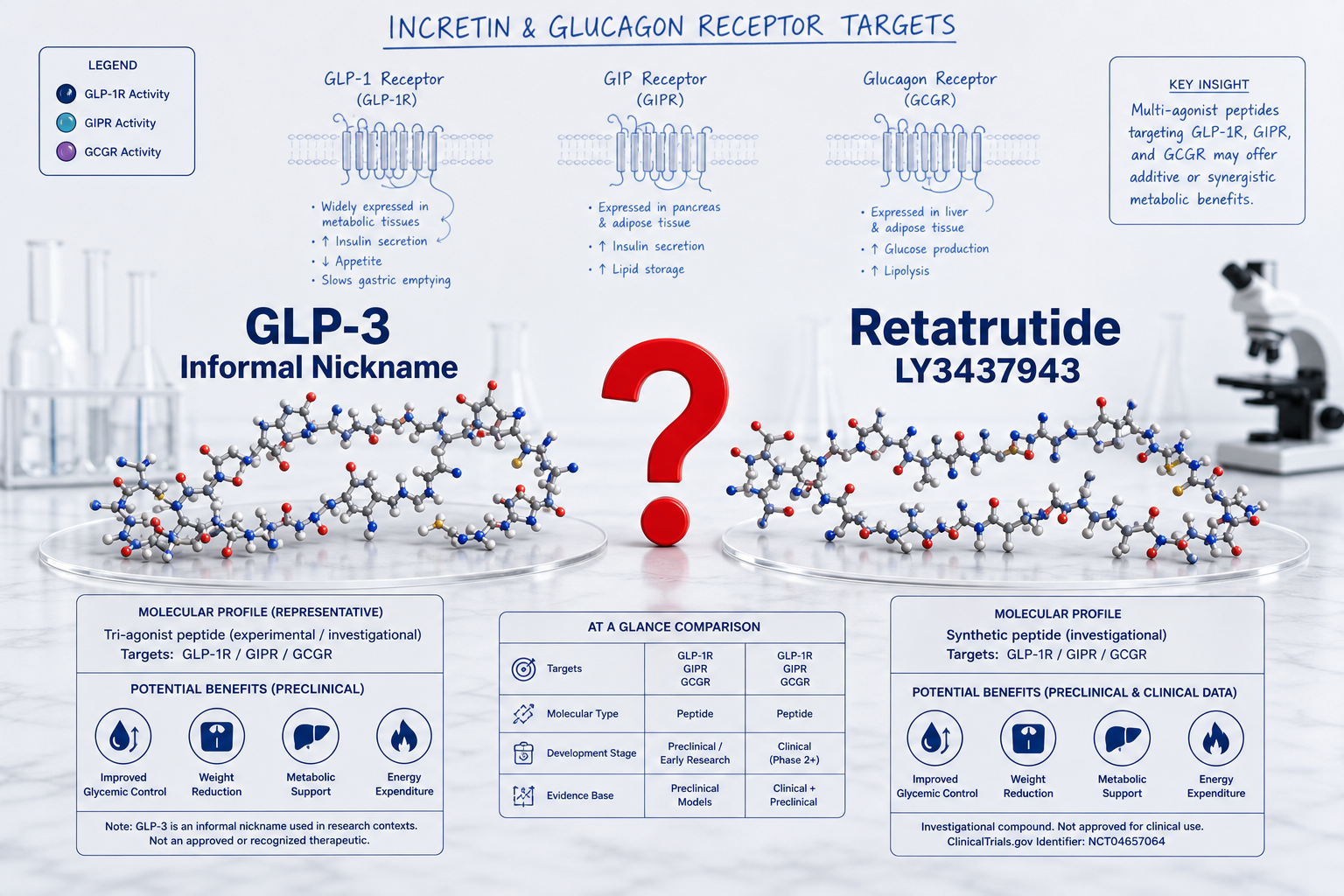
  • "GLP-3" is an informal, consumer-driven nickname — not a recognized scientific classification for retatrutide.
  • Retatrutide (LY3437943) is a triple-receptor agonist targeting GLP-1, GIP, and glucagon receptors simultaneously.
  • Phase 3 trials have shown weight loss results as high as 28.7%, the highest ever recorded in an obesity drug trial.
  • Terminology confusion can distort research interpretation, marketplace trust, and regulatory understanding.
  • Researchers and buyers should verify compound identity by chemical name or CAS number, not informal labels.

What Is Retatrutide and Where Does "GLP-3" Come From

Retatrutide, developed by Eli Lilly under the code name LY3437943, is a first-in-class triple-receptor agonist. It activates three distinct hormone receptors at once:

Receptor Role in Metabolism
GLP-1 Appetite suppression, insulin secretion
GIP Fat metabolism, insulin sensitivity
Glucagon Energy expenditure, liver fat reduction

No approved drug before retatrutide has hit all three targets simultaneously. Semaglutide (Ozempic, Wegovy) targets only GLP-1. Tirzepatide (Mounjaro, Zepbound) targets GLP-1 and GIP. Retatrutide adds glucagon to the mix.

The nickname "GLP-3" emerged organically in consumer forums and social media. The logic was simple: GLP-1 targets one receptor, tirzepatide targets two, so this "third generation" drug must be GLP-3. The label stuck — but it is scientifically inaccurate.

"GLP-3" does not describe a receptor, a peptide family, or a drug class. It is marketing shorthand that has migrated into research discussions where precision is critical.

For a broader look at where peptide research is heading, the latest updates in peptide research provide useful context on how naming conventions evolve in this space.


Why the Naming Confusion Matters in Obesity Research and Clinical Trials

Why the Naming Confusion Matters in Obesity Research and Clinical Trials

The stakes of this terminology gap become clear when looking at the trial data. In the TRIUMPH-4 Phase 3 trial, retatrutide produced a mean weight loss of 28.7% at 68 weeks in adults with obesity and knee osteoarthritis — the highest figure ever recorded in any Phase 3 obesity drug trial. The TRIUMPH-3 trial, presented at the American College of Cardiology Annual Scientific Session in March 2026, reported 24.2% mean weight loss at 72 weeks in adults with elevated cardiovascular risk.

These are landmark numbers. But when a researcher searches for "GLP-3 trial results" and finds a mix of retatrutide data alongside unrelated GLP receptor biology, the confusion compounds.

Three specific risks created by the GLP-3 label:

  • Research misattribution: Studies on actual GLP receptor peptide biology get conflated with retatrutide clinical outcomes.
  • Regulatory misunderstanding: Eli Lilly plans to file a New Drug Application in late 2026 or early 2027. Informal naming can create confusion in public commentary on regulatory submissions.
  • Marketplace errors: Buyers searching for research-grade retatrutide may encounter mislabeled products. Reviewing a detailed GLP-3 and retatrutide compound overview helps clarify what is actually being sourced.

For those researching metabolic peptides more broadly, resources on AOD9604 metabolic research and tesa benefits show how naming precision matters across the entire category.


How Researchers and Buyers Can Navigate the GLP3 Peptide vs Retatrutide Naming Issue

How Researchers and Buyers Can Navigate the GLP3 Peptide vs Retatrutide Naming Issue

The clearest solution is to anchor every discussion to the compound's chemical identity, not its nickname.

Best practices for accurate identification:

  • Always reference retatrutide by its INN (International Nonproprietary Name) or Eli Lilly's code: LY3437943.
  • Cross-check any "GLP-3" product listing against verified chemical specifications.
  • Use peer-reviewed databases rather than consumer forums as primary sources.
  • When sourcing for research, prioritize suppliers with transparent quality testing protocols and third-party verification.

The GLP-3 retatrutide product page and the RETA GLP-3 research overview are examples of how suppliers can bridge the naming gap by providing both the informal label and the verified compound name together.

For researchers exploring related metabolic compounds, the 5-Amino-1MQ research overview offers a useful parallel on how novel compounds gain informal names before formal classification catches up.


Conclusion

The GLP3 Peptide vs Retatrutide naming confusion is not a trivial issue. It shapes how clinical trial data is interpreted, how regulatory conversations unfold, and how research-grade compounds are sourced. Retatrutide is a precisely defined triple-receptor agonist with Phase 3 data that sets a new benchmark for obesity pharmacology. "GLP-3" is a convenient shorthand that, when used carelessly, undermines that precision.

Actionable next steps:

  • Replace "GLP-3" with "retatrutide" or "LY3437943" in all research documentation.
  • Verify any compound labeled "GLP-3" against its full chemical specification before use.
  • Stay current with TRIUMPH trial publications and the anticipated NDA filing timeline.
  • Source research peptides only from suppliers who publish verified testing data alongside both the common and scientific names.

Precision in language is the foundation of precision in science. In obesity research, where the stakes are high and the compounds are complex, that foundation matters more than ever.

https://www.puretestedpeptides.com/wp-content/uploads/2026/06/GLP3-Peptide-vs-Retatrutide-Why-the-Naming-Confusion-Matters-in-Obesity-Research.png 1024 1536 Pure Tested https://www.puretestedpeptides.com/wp-content/uploads/2026/01/buy-peptides-online.jpg Pure Tested2026-06-11 13:06:552026-07-20 15:03:30GLP3 Peptide vs Retatrutide: Why the Naming Confusion Matters in Obesity Research
Retatrutide vs GLP-1 and GLP-2 Pathways: How Triple Agonism Changes the Research Conversation

Retatrutide vs GLP-1 and GLP-2 Pathways: How Triple Agonism Changes the Research Conversation

June 6, 2026/0 Comments/by Pure Tested

A single peptide producing nearly 29% body weight reduction in a Phase 3 trial is not an incremental advance — it is a structural shift in how researchers think about metabolic intervention. That result, recorded in the TRIUMPH-4 trial with retatrutide, has forced a direct comparison between the emerging triple agonist approach and the narrower incretin pathways that have defined obesity pharmacology for the past decade. The discussion around Retatrutide vs GLP-1 and GLP-2 Pathways: How Triple Agonism Changes the Research Conversation is no longer speculative; it is grounded in late-stage clinical data that demands a closer look at mechanism.

() scientific infographic showing a side-by-side molecular comparison of three peptide receptor pathways: GIP receptor node

Key Takeaways

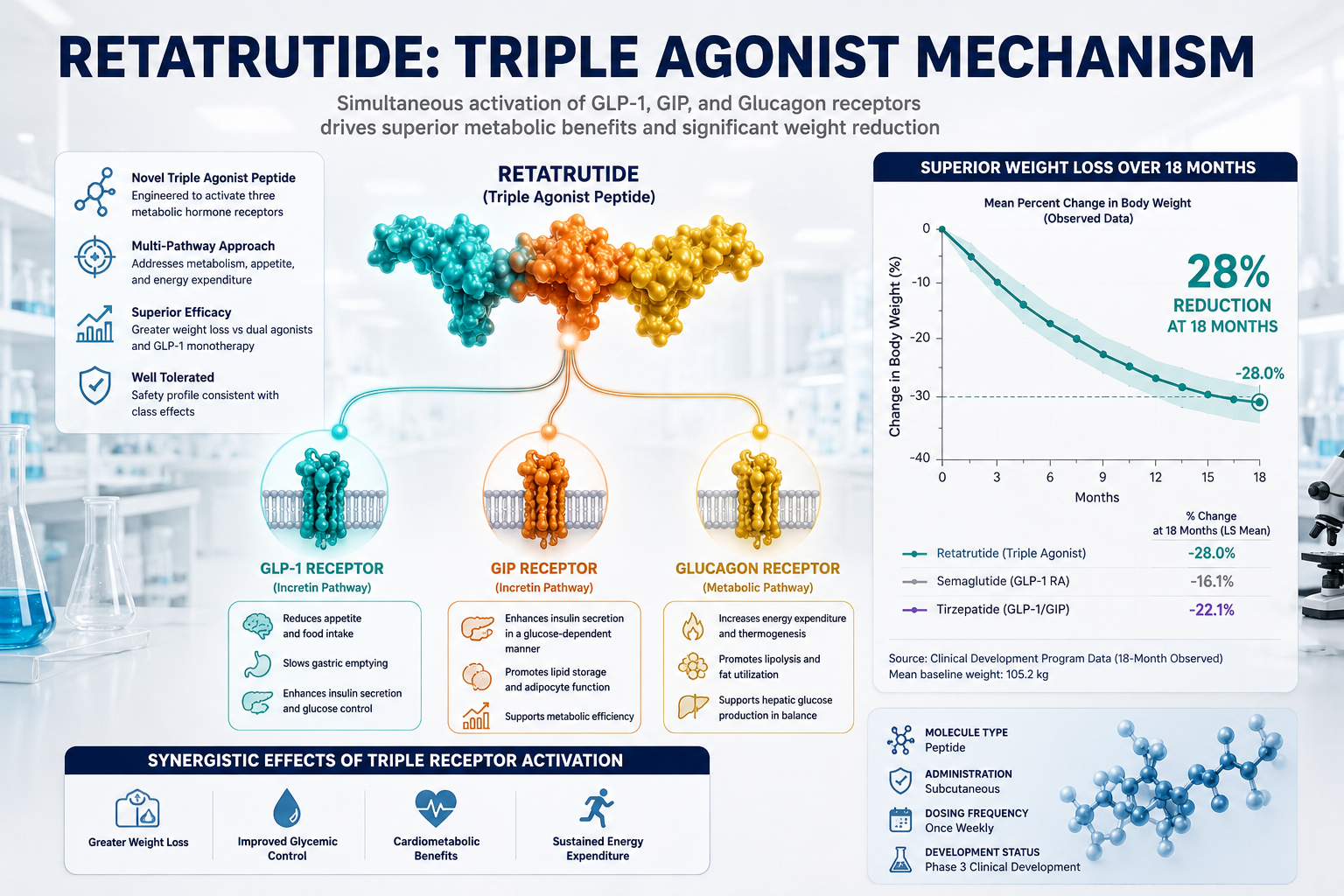
  • Retatrutide activates three receptors — GIP, GLP-1, and glucagon — making it mechanistically distinct from both semaglutide (single agonist) and tirzepatide (dual agonist).
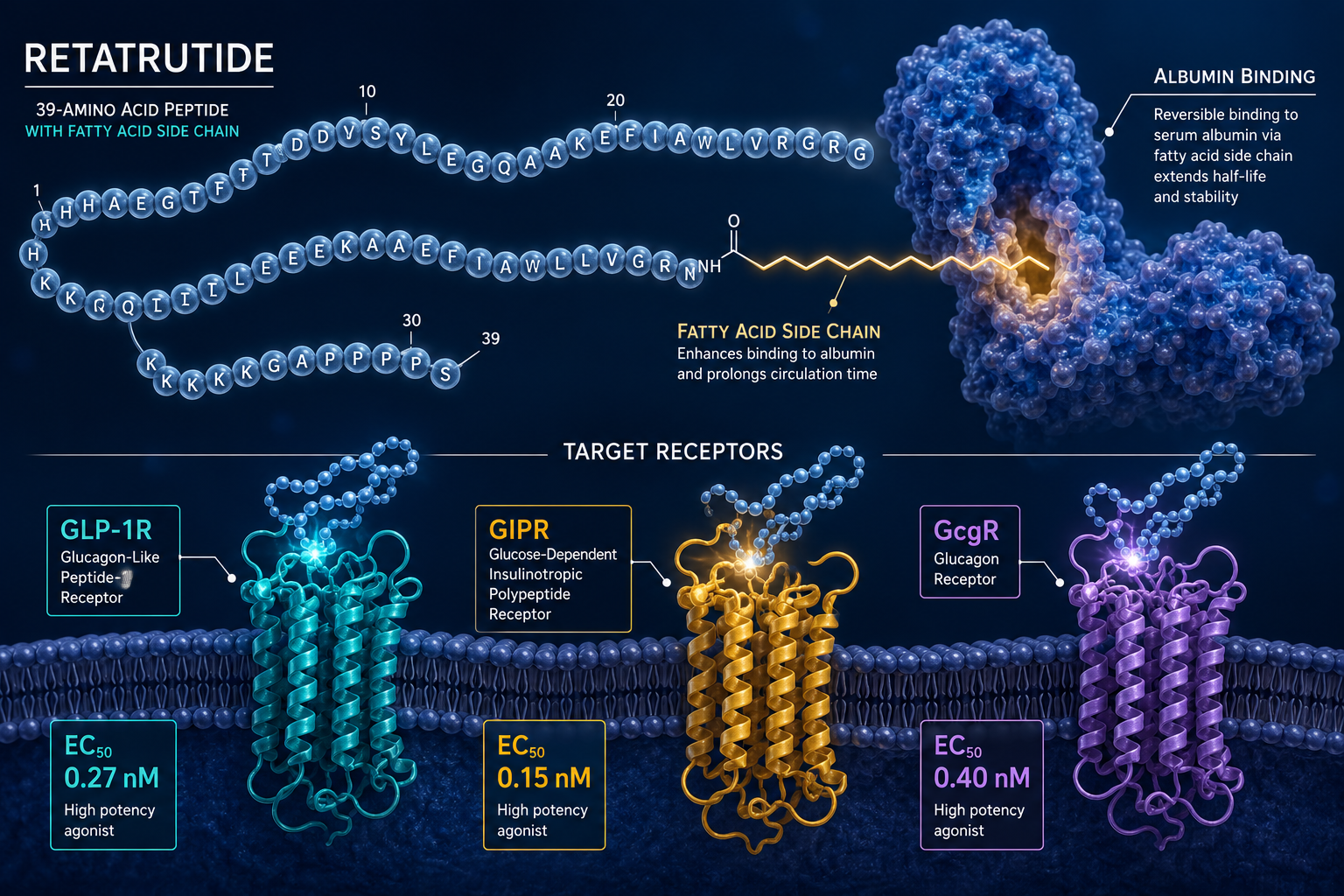
  • Its receptor potency is GIP-primary, with EC50 values of 0.0643 nM at GIP, 0.775 nM at GLP-1, and 5.79 nM at glucagon.
  • TRIUMPH-4 Phase 3 data showed an average weight loss of 28.7% over 68 weeks, roughly 71 pounds from a baseline of 249 pounds.
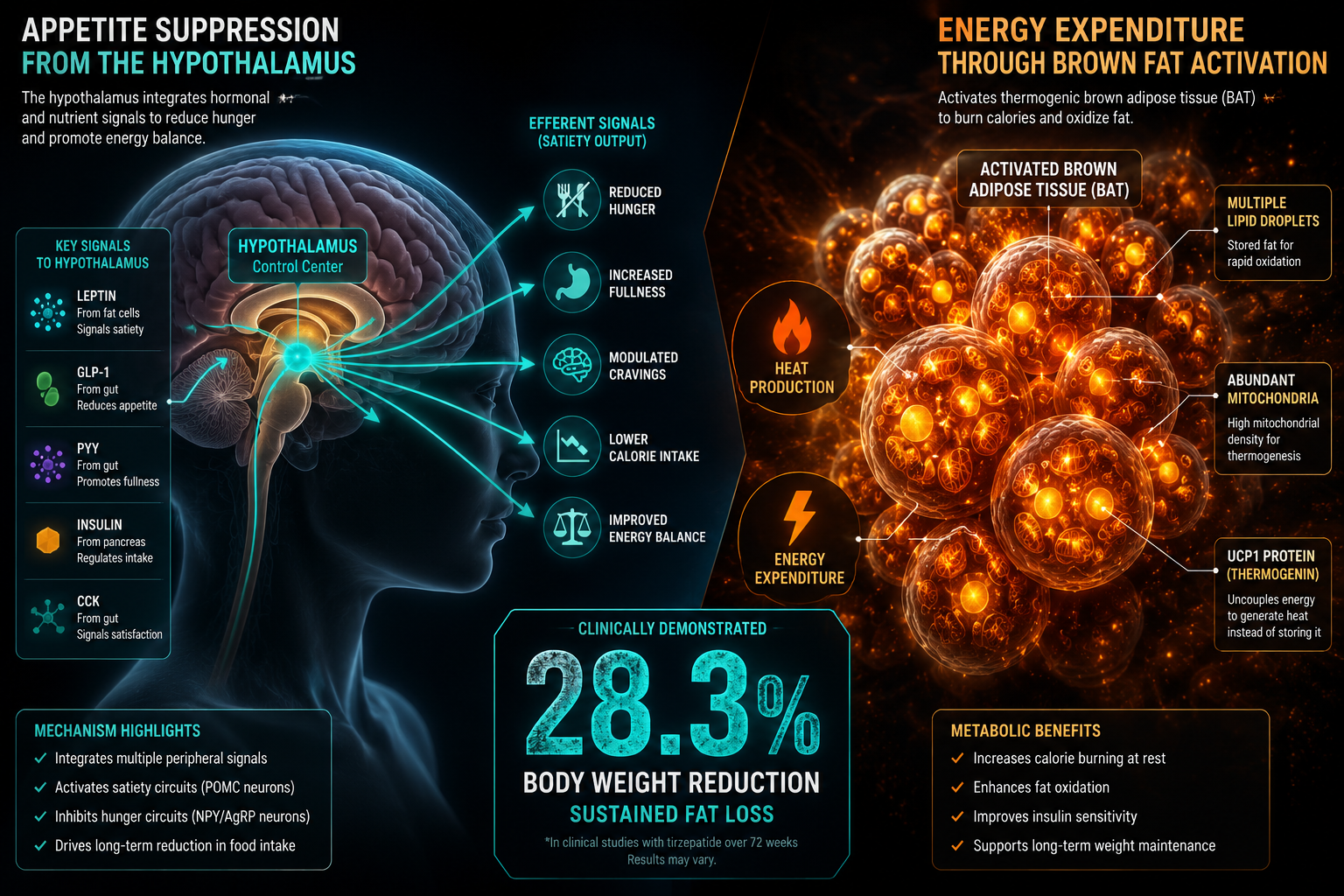
  • Glucagon receptor activity is considered a key driver of enhanced energy expenditure, separating retatrutide from pure incretin strategies.
  • As of 2026, retatrutide is not FDA-approved, with Eli Lilly targeting a regulatory submission by late 2026.

What Separates Triple Agonism from Incretin-Only Approaches

The GLP-1 receptor pathway has been the dominant target in metabolic research since the early success of semaglutide. GLP-1 agonism reduces appetite, slows gastric emptying, and improves insulin secretion. Adding GIP receptor activation — as tirzepatide does — brought a meaningful improvement in both glucose control and weight outcomes. However, both approaches remain within the incretin framework.

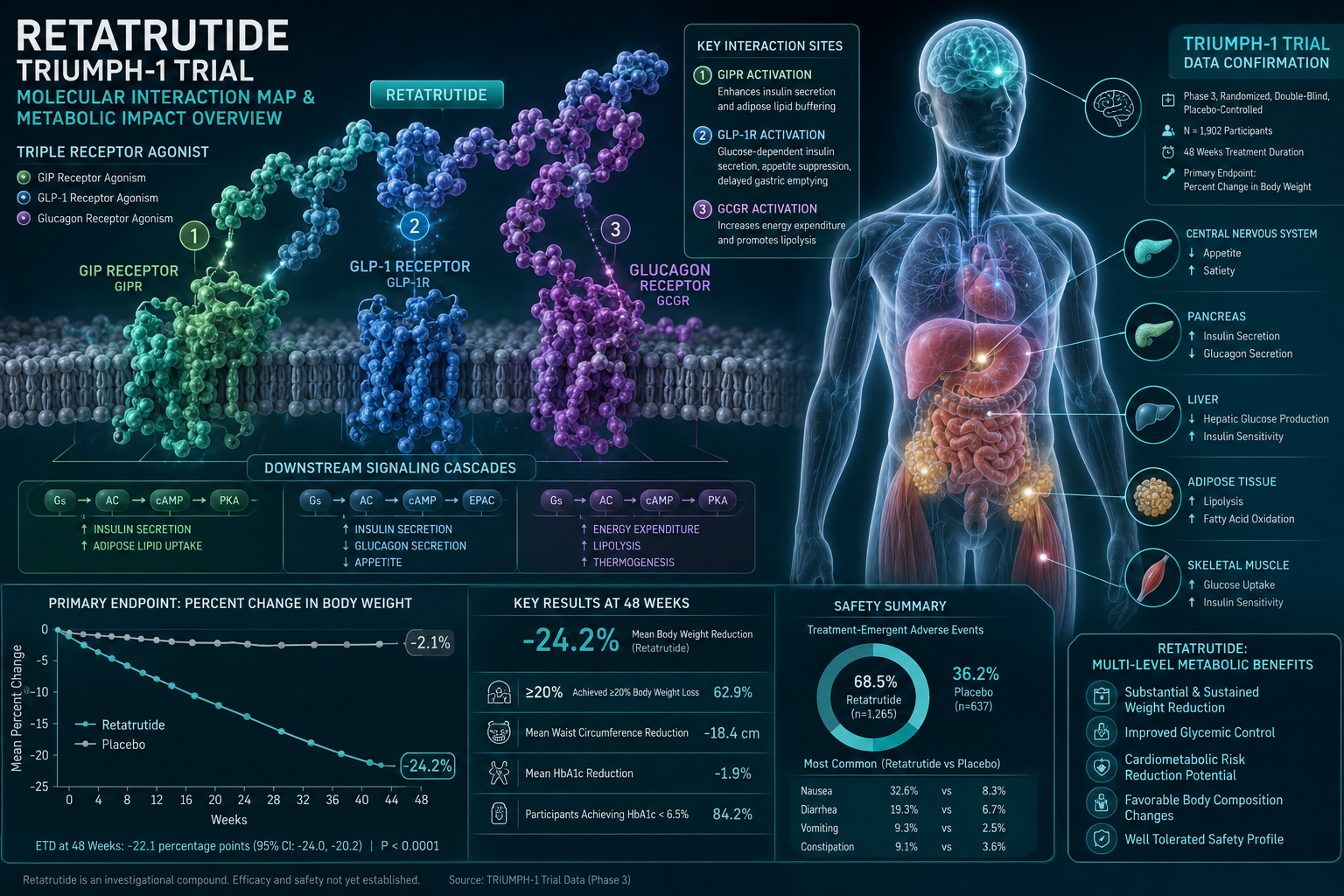
Retatrutide steps outside that framework. As a 39-amino acid peptide, it simultaneously activates the GIP, GLP-1, and glucagon receptors. The glucagon component is what most fundamentally changes the research conversation. Glucagon receptor activation increases energy expenditure and promotes fat breakdown in the liver, effects that incretin-only molecules cannot replicate. Researchers exploring GLP-3 and incretin research themes have noted that this third receptor engagement may explain why retatrutide's weight loss outcomes exceed what dual agonists have produced.

"The inclusion of glucagon receptor activity may represent the ceiling-raising mechanism that separates retatrutide from every prior pharmacological approach to obesity."

The potency hierarchy matters here. Retatrutide's EC50 values place GIP activation as the primary driver (0.0643 nM), followed by GLP-1 (0.775 nM), then glucagon (5.79 nM). This graduated profile is intentional — high glucagon activity without GLP-1 co-activation would raise blood sugar, so the balance is a deliberate design feature, not a side effect.

For researchers comparing generational differences in GLP-1 receptor approaches, this receptor hierarchy represents a fundamentally new design philosophy rather than a refinement of existing ones.


Retatrutide vs GLP-1 and GLP-2 Pathways: What the Phase 3 Data Reveals

Retatrutide vs GLP-1 and GLP-2 Pathways: What the Phase 3 Data Reveals

The TRIUMPH-4 trial enrolled participants with obesity and knee osteoarthritis. Over 68 weeks, the average participant lost 28.7% of body weight — approximately 71 pounds from a starting weight of 249 pounds. No approved pharmacological therapy has produced comparable results in a controlled Phase 3 setting.

Comparison of key obesity drug mechanisms:

Drug Receptors Targeted Avg. Weight Loss (Phase 3)
Semaglutide GLP-1 ~15%
Tirzepatide GIP + GLP-1 ~20-22%
Retatrutide GIP + GLP-1 + Glucagon ~28.7%

The TRIUMPH program spans multiple indications, including type 2 diabetes and metabolic liver disease, reflecting the breadth of conditions that researchers believe triple agonism may address. Eli Lilly is targeting an FDA submission by late 2026, though as of 2026 the compound remains investigational.

Side effects reported in trials include nausea, vomiting, constipation, and diarrhea — a profile consistent with other GLP-class peptides. Researchers sourcing compounds for preclinical models can review the retatrutide research compound page for current availability context.

Those tracking the broader landscape of what is new in peptide research will recognize that retatrutide's data has elevated expectations across the entire metabolic peptide category.


How Triple Agonism Reshapes Metabolic Research Models

The Retatrutide vs GLP-1 and GLP-2 Pathways conversation extends beyond weight loss percentages. It raises questions about how researchers should model metabolic intervention going forward. Single-pathway models are increasingly insufficient for studying complex conditions like obesity-related liver disease or insulin resistance, where energy expenditure, appetite, and hepatic fat metabolism must be addressed simultaneously.

How Triple Agonism Reshapes Metabolic Research Models

Researchers working with metabolic modulation research lines are already integrating multi-receptor thinking into their experimental designs. The question is no longer whether multi-agonism outperforms single-agonism — the data answers that — but which receptor combinations produce the most favorable benefit-to-risk profiles for specific conditions.

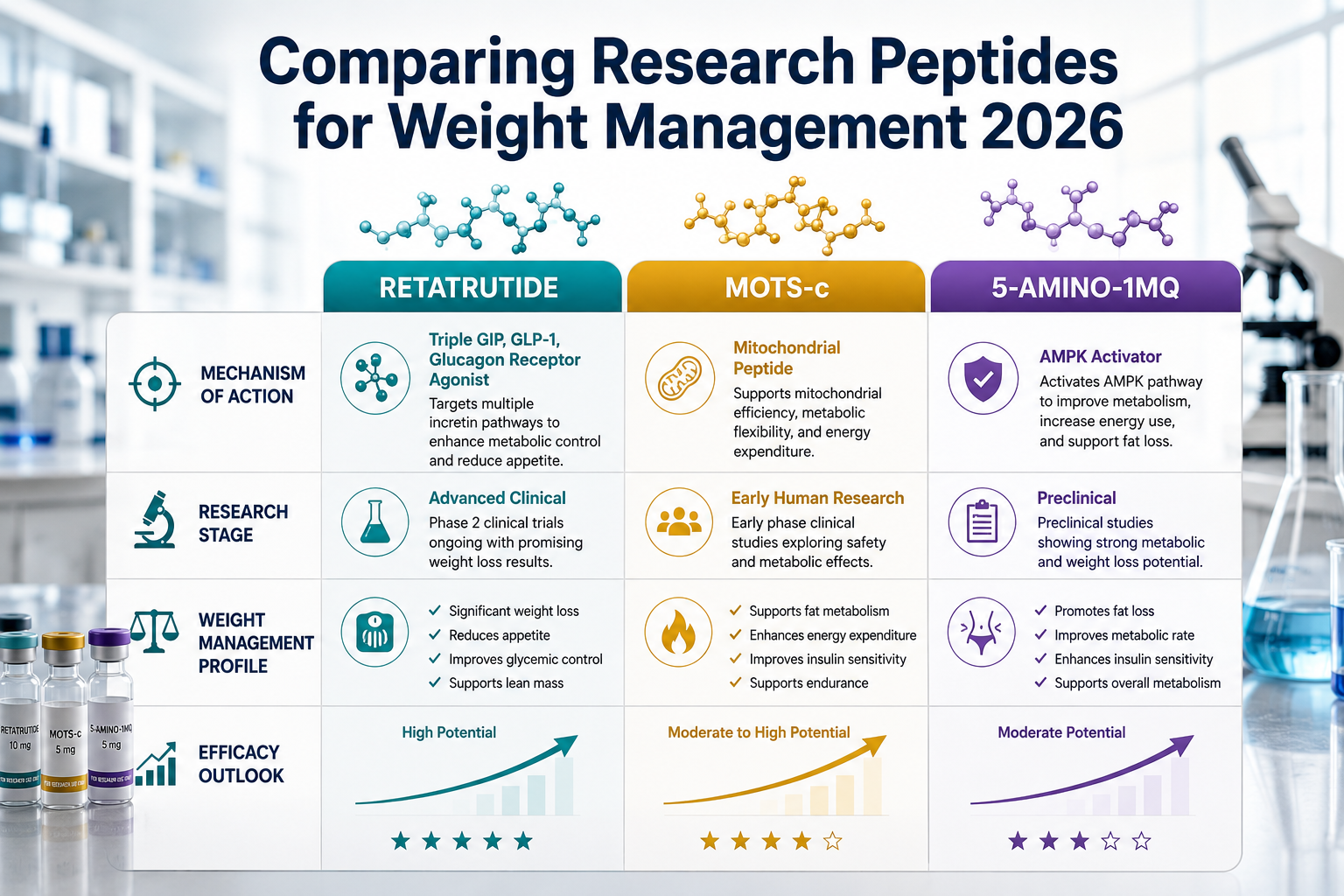
Complementary research areas are also gaining attention. Compounds like MOTS-c, studied for metabolic flexibility, and SLU-PP-332, explored for metabolic modulation, represent parallel lines of inquiry that may eventually intersect with incretin-based approaches in combination research models.

The GLP-1 receptor remains central, but retatrutide's data suggests that anchoring research exclusively to that pathway may limit what is discoverable. For researchers sourcing GLP-1 class compounds, the GLP-1 peptide research and sourcing notes page provides useful context on how this category has evolved.


Conclusion

The evidence from retatrutide's Phase 3 program makes the case clearly: triple agonism is not a variation on existing GLP-1 therapy — it is a different category of metabolic intervention. The glucagon receptor component adds an energy expenditure dimension that incretin-only approaches cannot replicate, and the clinical outcomes reflect that mechanistic difference.

For researchers, the actionable steps are straightforward. First, review the TRIUMPH trial data to understand how the three-receptor model performs across different patient populations. Second, evaluate whether current research models account for glucagon receptor activity alongside incretin pathways. Third, monitor the regulatory timeline, as Eli Lilly's planned FDA submission by late 2026 will bring additional data into the public domain. The research conversation has shifted — and the mechanism is the reason why.

https://www.puretestedpeptides.com/wp-content/uploads/2026/06/Retatrutide-vs-GLP-1-and-GLP-2-Pathways-How-Triple-Agonism-Changes-the-Research-Conversation.png 1024 1536 Pure Tested https://www.puretestedpeptides.com/wp-content/uploads/2026/01/buy-peptides-online.jpg Pure Tested2026-06-06 13:04:302026-07-20 15:03:51Retatrutide vs GLP-1 and GLP-2 Pathways: How Triple Agonism Changes the Research Conversation
Retatrutide Clinical Trial Timeline: What TRIUMPH-1 and Phase 3 Results Mean for Research Use Only Buyers

Retatrutide Clinical Trial Timeline: What TRIUMPH-1 and Phase 3 Results Mean for Research Use Only Buyers

June 3, 2026/0 Comments/by Pure Tested

On May 21, 2026, Eli Lilly announced Phase 3 results showing that retatrutide produced an average body weight reduction of 28.3% over 80 weeks — a figure that rivals bariatric surgery outcomes. For researchers and research-use-only (RUO) buyers tracking the retatrutide clinical trial timeline, understanding what TRIUMPH-1 and Phase 3 results mean is now more important than ever. These findings reframe how the scientific community evaluates triple-receptor agonism and where legitimate access to this compound currently stands.

Key Takeaways

  • TRIUMPH-1 Phase 3 data confirmed dose-dependent weight loss up to 28.3% at the 12 mg dose over 80 weeks
  • Retatrutide remains investigational and is not FDA-approved as of mid-2026
  • The FDA has explicitly stated retatrutide cannot be used in compounding under federal law
  • An NDA submission is expected to follow Phase 3 completion, with potential approval in 2027 or 2028
  • RUO-labeled retatrutide products are strictly for laboratory research and carry significant risks if misused

Key Takeaways

TRIUMPH-1 Phase 3 Findings: A Closer Look at the Numbers

The TRIUMPH-1 trial is the pivotal Phase 3 study evaluating retatrutide for obesity management. Its results, released in 2026, showed a clear dose-response relationship across three active arms:

Dose Average Weight Loss Average Pounds Lost
4 mg 19.0% 47.2 lbs
8 mg 25.9% 64.4 lbs
12 mg 28.3% 70.3 lbs

At the highest dose, 45.3% of participants lost 30% or more of their body weight. In a subgroup with a baseline BMI of 35 or higher, weight loss reached 30.3% — approximately 85 pounds — at 104 weeks. For context, bariatric surgery typically produces 25% to 35% total body weight loss depending on the procedure. Retatrutide is now firmly in that range.

Why does this matter for researchers? These endpoints validate the triple-agonist mechanism targeting GIP, GLP-1, and glucagon receptors simultaneously. The glucagon component, in particular, appears to enhance metabolic outcomes beyond what dual-agonist compounds achieve. Researchers studying GLP-3 and incretin research themes will find these results directly relevant to understanding receptor synergy.

Adverse events were primarily gastrointestinal and followed a dose-dependent pattern. Discontinuation rates increased with higher doses, which is consistent with findings from earlier Phase 2 work.


TRIUMPH-1 Phase 3 Findings: A Closer Look at the Numbers

Regulatory Status and What the Retatrutide Clinical Trial Timeline Means for RUO Buyers

Understanding the retatrutide clinical trial timeline is essential for any RUO buyer making sourcing decisions in 2026. The current regulatory picture is straightforward:

  • Retatrutide is not FDA-approved for any indication as of May 2026
  • Legal access exists only through enrollment in Eli Lilly's ongoing clinical trials
  • The FDA has confirmed that retatrutide cannot be used in compounding because it is not a component of any approved drug and lacks established safety and efficacy for any condition

Following Phase 3 completion, Eli Lilly is expected to submit a New Drug Application. FDA review typically takes 10 to 12 months, placing potential public availability in 2027 or 2028 at the earliest.

"Products labeled as retatrutide peptide available online are intended strictly for laboratory research and are not approved for human use."

RUO products occupy a specific and legally distinct category. They support preclinical research in controlled laboratory environments. Researchers exploring dual receptor agonism research breakdowns or metabolic modulation research lines should treat RUO-labeled compounds accordingly — as tools for in vitro or preclinical investigation, not clinical application.

Unregulated products sold outside this framework may pose significant safety risks. Researchers should also review quality testing protocols when evaluating any RUO peptide supplier.


Regulatory Status and What the Retatrutide Clinical Trial Timeline Means for RUO Buyers

Practical Implications for Research-Oriented Buyers Tracking the Phase 3 Timeline

For buyers focused on legitimate research applications, the TRIUMPH-1 data shifts the priority from "will it work" to "what comes next." Several research themes become more relevant in light of these results:

  • Body composition endpoints: The magnitude of fat mass reduction seen in TRIUMPH-1 makes retatrutide a compelling reference compound for studies examining body composition research themes
  • Receptor pathway comparison: Researchers comparing single, dual, and triple agonist profiles can now benchmark against validated Phase 3 data; generations of GLP-1 differences provides useful context
  • Metabolic synergy models: Preclinical work pairing retatrutide analogs with compounds like those reviewed in SLU-PP-332 metabolic modulation research may yield mechanistic insights

Researchers can also browse the GLP-3 Reta product page for RUO-grade material specifications and purity documentation.


Conclusion

The TRIUMPH-1 Phase 3 results represent a meaningful inflection point in obesity pharmacology. Weight loss approaching 30% positions retatrutide alongside surgical interventions in terms of efficacy. However, the compound remains investigational, and the gap between clinical trial data and approved prescribing remains real. RUO buyers should take three concrete steps: confirm that any retatrutide-labeled product is sourced from a supplier with documented purity testing, restrict use to approved preclinical research protocols, and monitor Eli Lilly's NDA submission timeline as the clearest indicator of when the regulatory landscape will shift. The science is compelling — the access pathway is not yet open.


https://www.puretestedpeptides.com/wp-content/uploads/2026/06/Retatrutide-Clinical-Trial-Timeline-What-TRIUMPH-1-and-Phase-3-Results-Mean-for-Research-Use-Only-Buyers.png 672 1024 Pure Tested https://www.puretestedpeptides.com/wp-content/uploads/2026/01/buy-peptides-online.jpg Pure Tested2026-06-03 13:04:532026-07-20 15:04:11Retatrutide Clinical Trial Timeline: What TRIUMPH-1 and Phase 3 Results Mean for Research Use Only Buyers
GLP-3 Retatrutide vs Traditional GLP-1 Agonists: Mechanisms, Early Data, and Research-Only Use Cases

GLP-3 Retatrutide vs Traditional GLP-1 Agonists: Mechanisms, Early Data, and Research-Only Use Cases

June 3, 2026/0 Comments/by Pure Tested

A single peptide producing nearly 29% mean body weight loss in a clinical trial is not a headline most metabolic researchers expected to see this decade. Yet that is precisely what early data from retatrutide's Phase 3 program suggests. Understanding the comparison of GLP-3 Retatrutide vs Traditional GLP-1 Agonists: Mechanisms, Early Data, and Research-Only Use Cases requires looking closely at receptor biology, trial outcomes, and the strict research boundaries that currently govern this compound.

Key Takeaways

  • Retatrutide is a triple agonist activating GLP-1, GIP, and glucagon receptors simultaneously, while classic GLP-1 agents target only one receptor.
  • Phase 2 and early Phase 3 data show weight reductions of 24.2% to 28.7%, surpassing results seen with semaglutide or tirzepatide.
  • Retatrutide reduced liver fat by up to 82.4% in clinical studies, pointing to broad metabolic utility.
  • As of 2026, retatrutide is not FDA-approved and is designated for laboratory and research use only.
  • An FDA filing is anticipated between 2026 and 2027, making this a critical period for preclinical researchers to build foundational knowledge.

Receptor Mechanisms: How Retatrutide Differs from Classic GLP-1 Agonists

Receptor Mechanisms: How Retatrutide Differs from Classic GLP-1 Agonists

Traditional GLP-1 receptor agonists such as semaglutide work by mimicking the incretin hormone GLP-1. This single-receptor approach suppresses appetite, slows gastric emptying, and improves insulin secretion. The results are clinically meaningful, but the mechanism is inherently limited to one signaling pathway.

Retatrutide expands that model significantly. It activates three distinct receptors:

Receptor Primary Role
GLP-1 Appetite suppression, delayed gastric emptying
GIP Enhanced insulin secretion, lipid metabolism
Glucagon Increased energy expenditure, fat oxidation

This triple-agonist design means the compound addresses energy balance from multiple angles at once. The glucagon receptor component is particularly notable. While glucagon is classically associated with raising blood glucose, its activation in a balanced incretin context appears to drive thermogenesis and fat oxidation without destabilizing glycemic control.

Cryo-electron microscopy studies have mapped exactly how retatrutide engages all three receptor types at the molecular level, providing a structural explanation for its activity profile. For researchers exploring the broader GLP-1 generations overview, this mechanistic leap from single to triple agonism represents a defining shift in incretin pharmacology.

Tirzepatide, a dual GLP-1/GIP agonist, sits between semaglutide and retatrutide on this spectrum. Retatrutide's additional glucagon receptor activation is the primary differentiator that researchers believe accounts for its superior efficacy signals in early trials.


Early Clinical Data: What the Trial Numbers Show

Early Clinical Data: What the Trial Numbers Show

The numbers from retatrutide's clinical program are difficult to ignore. In a Phase 2 trial published in the New England Journal of Medicine, participants receiving the 12 mg dose achieved a mean body weight reduction of 24.2% at 48 weeks. That figure exceeded the weight loss benchmarks set by both semaglutide and tirzepatide in comparable timeframes.

Preliminary data from the Phase 3 TRIUMPH-4 trial pushed that figure further. At 68 weeks, the mean body weight loss reached 28.7%, the highest reduction recorded in an obesity trial to date.

Beyond weight, the metabolic data is equally compelling:

  • Liver fat reduction of up to 82.4%, suggesting significant potential for non-alcoholic fatty liver disease research
  • Improvements in glycemic control and lipid profiles across trial cohorts
  • Once-weekly subcutaneous dosing with a half-life of approximately 6 days, supporting practical research protocols

The side effect profile is consistent with other incretin-based compounds. Gastrointestinal effects including nausea and vomiting were the most commonly reported adverse events, which aligns with what researchers observe across the GLP-1 class.

For those tracking how body composition peptides interact with metabolic pathways, the TESA body composition research themes page offers relevant context on related investigational compounds. Similarly, researchers studying fat metabolism may find value in reviewing AOD-9604 research method notes as a complementary reference point.


Research-Only Use Cases for GLP-3 Retatrutide vs Traditional GLP-1 Agonists

Research-Only Use Cases for GLP-3 Retatrutide vs Traditional GLP-1 Agonists

As of 2026, retatrutide holds no FDA approval and is not available for commercial or clinical use outside of authorized trials. It is strictly designated for laboratory and research purposes. This boundary is not a limitation to work around; it is the appropriate framework for a compound still moving through regulatory evaluation.

Within that framework, legitimate research use cases include:

  • Receptor binding studies examining triple-agonist pharmacodynamics
  • In vitro metabolic models exploring GIP and glucagon receptor co-activation
  • Preclinical obesity models comparing retatrutide's efficacy signals against established GLP-1 benchmarks
  • Liver health investigations given the striking hepatic fat reduction data

Researchers building metabolic study panels may also find it useful to explore cagrilintide synergy with GLP-1 as a complementary area of investigation, since amylin-GLP-1 combinations represent another emerging research direction. For broader metabolic and longevity research themes, the GLP-3 Reta incretin research themes resource provides a structured overview of where the science currently stands.

Researchers interested in how mitochondrial function intersects with metabolic peptide research can also reference MOTS-c mitochondrial peptide research for related mechanistic context.

An FDA filing is anticipated between 2026 and 2027. Until that process concludes, all use must remain within certified research environments with appropriate oversight.


Conclusion

The comparison of GLP-3 Retatrutide vs Traditional GLP-1 Agonists: Mechanisms, Early Data, and Research-Only Use Cases reveals a compound that is mechanistically distinct and clinically promising. Its triple-receptor design addresses metabolic dysfunction through pathways that single and dual agonists cannot reach simultaneously. The trial data, while still maturing, places retatrutide ahead of any previously studied obesity intervention by weight-loss magnitude.

Actionable next steps for researchers in 2026:

  1. Review the Phase 2 NEJM publication and TRIUMPH-4 preliminary data to establish baseline familiarity with the efficacy and safety signals.
  2. Map retatrutide's receptor pharmacology against your existing GLP-1 or dual-agonist research models to identify where triple agonism adds mechanistic value.
  3. Ensure all procurement and use of retatrutide complies strictly with research-only designations and institutional oversight requirements.
  4. Monitor FDA filing developments expected in the 2026-2027 window, as regulatory milestones will reshape the research landscape quickly.

The science is moving fast. Researchers who build foundational knowledge now will be best positioned to interpret and apply what comes next.


https://www.puretestedpeptides.com/wp-content/uploads/2026/06/GLP-3-Retatrutide-vs-Traditional-GLP-1-Agonists-Mechanisms-Early-Data-and-Research-Only-Use-Cases.png 1024 1536 Pure Tested https://www.puretestedpeptides.com/wp-content/uploads/2026/01/buy-peptides-online.jpg Pure Tested2026-06-03 13:04:222026-07-20 15:04:12GLP-3 Retatrutide vs Traditional GLP-1 Agonists: Mechanisms, Early Data, and Research-Only Use Cases
Page 2 of 212
×

Helpful Links

  • My account
  • Cart
  • Checkout
  • Refund and Returns Policy
  • Privacy Policy
  • SMS Privacy Policy
  • Login
  • My Account
  • Logout

USA Made Lab Tested Peptides

All products are sold for research, laboratory, or analytical purposes only, and are not for human consumption


Pure Tested Peptides is a chemical supplier. Pure Tested Peptides is not a compounding / chemical compounding facility as defined under 503A of the Federal Food, Drug, and Cosmetic act. Pure Tested Peptides is not an outsourcing facility as defined under 503B of the Federal Food, Drug, and Cosmetic act.

The statements made within this website have not been evaluated by the US Food and Drug Administration. The products we offer are not intended to diagnose, treat, cure or prevent any disease.

Human/Animal Consumption Prohibited. Laboratory/In-Vitro Experimental Use Only

Scroll to top Scroll to top Scroll to top