Call or Text 727-513-9780
  • Shopping Cart Shopping Cart
    0Shopping Cart
Pure Tested Peptides | America's most trusted Peptides for sale online
  • Peptides for sale
    • Oral Peptides for sale
      • Peptide Capsules for sale
      • BPC 157 Capsules 1000mcg
      • SLU-PP-332 Capsules | 1000 mcg
      • 5-Amino-1MQ 50mg Capsules
      • Tesofensine 500mcg
    • All Peptides for sale
    • Peptide Sprays
      • BPC 157 Nasal Spray Kit
      • BPC-157 TB500 Nasal Spray Kit
      • Semax Nasal Spray 10mg
      • Selank – Nasal Spray Kit – 10mg
      • Epithalon 50MG Nasal Spray Kit
      • Ipamorelin 10mg Nasal Spray
      • Klow Nasal Spray (BPC-157 + TB-500 + GHK-Cu + KPV) | 80mg
      • Hulk Nasal Spray Tesa / Ipa Blend 6/3 MG
      • Klow Nasal Spray
      • NAD + 500 mg Nasal Spray
      • PT-141 Nasal Spray Kit
    • GHRH Peptides
      • Ipa Peptides
      • CJC-1295 Peptides
        • CJC-1295 with DAC 5 mg
        • CJC-1295 without DAC 5 mg
        • CJC-1295 Ipa 10mg
      • Tesa Peptides
        • Tesa Peptide
        • Tesa 20 mg
    • GHK-Cu Peptides
      • All GHK-Cu Peptides
      • GHK-Cu 100mg
      • KLOW Peptide Blend – Buy KLOW blend online
    • BPC Peptides
      • All BPC Peptides
      • BPC-157
      • BPC-157 TB-500
      • BPC 157 capsules 1000mcg
    • SLU-PP-332 Peptides
      • All SLU-PP-332 Peptides
      • SLU-PP-332 5mg
    • GLP3 Peptides
    • PT-141 Peptides
      • PT-141 Peptides for sale
      • PT-141 10mg
      • PT-141 Nasal Spray
    • CAG Peptides
      • Lipo-C Peptide Blend
      • CAG 5mg
      • CAG 10mg
    • MOTS-C Peptides
      • MOTS-C Peptides for sale
      • MOTS-c peptide
      • MOTS-c 10mg *6 pack*
    • 5 Amino 1MQ Peptides
      • 5 Amino 1MQ Peptides for sale
      • 5-Amino-1MQ 50mg Capsules
      • 5-Amino-1MQ 5mg
    • Epithalon Peptides
      • Epithalon Peptides for sale
      • Epithalon 10mg
      • Epithalon 50mg
  • Shop
    • GLPs
      • 5-Amino-1MQ 50mg Capsules
      • 5-Amino-1MQ 5mg
      • L-Carnitine 500mg/ml
      • Tesofensine 500mcg
      • SLU-PP-332 5mg
      • MOTS-c 10mg *6 pack*
    • Epithalon & BPC Peptides
      • Epithalon 10mg
      • Epithalon 50mg
      • BPC-157
      • BPC 157 capsules 1000mcg
      • BPC-157 TB-500
      • BPC-157 TB500 Nasal Spray Kit
      • BPC 157 Nasal Spray Kit
    • BPC TB-500 & NAD+ Peptides
      • NAD+ 500 mg
      • KLOW Peptide Blend – Buy KLOW blend online
      • GLOW Peptide Blend
      • TB 500 5mg
      • BPC 157 capsules 1000mcg – Supplement
      • BPC 157 Nasal Spray Kit
      • BPC-157
      • BPC-157 TB500 Nasal Spray Kit
      • BPC-157 TB-500
      • BPC 157 capsules 1000mcg
    • LL-37 Peptide
      • LL-37 10 mg
    • MOTS-C & Selank
      • MOTS-c peptide
      • Selank 10mg
    • GHK Peptides
      • GHK-Cu 100mg
      • GLOW Peptide Blend
      • KLOW Peptide Blend – Buy KLOW blend online
  • COAs
  • Wholesale
    • Wholesale Peptides for sale
  • PTP FAQ
  • Affiliates
    • Selank Peptide: Advanced Pharmacological Mechanisms Underlying Its Anxiolytic and Nootropic Effects in Research
      • 5-Amino-1MQ Peptide: Detailed Mechanisms of NNMT Inhibition and Its Impact on Cellular Metabolism Research
        • MOTS-C Peptide: Unraveling Its Role in Mitochondrial Dynamics and Energy Metabolism Research
          • Epithalon Peptide and Telomerase Regulation: Investigating Its Impact on Cellular Senescence and Lifespan Research Models
            • GLP2-T vs GLP2 Tirz Peptide: Understanding the Naming, Mechanistic Nuances, and Research Implications for Gut Health
      • Peptides and Polypeptides in Modern Pharmacology: What Research on Metoprolol, Prednisone, and Amlodipine Reveals
        • Polypeptide Peptides vs NSAIDs: What Naproxen and Diclofenac Teach Tissue-Repair Researchers About BPC‑157 and TB‑500
          • Peptides and Polypeptides in Endocrine Pharmacology: How GLP-1, GLP-2, and GLP-3 Retatrutide Differ From Classic Drugs Like Prednisone and Amlodipine
          • 5‑Amino‑1MQ Peptide and NNMT Inhibition: How It Compares With Statins Like Atorvastatin in Adipose and Lipid Metabolism Research
      • Enclomiphene, Estrogen Receptor Signaling, and Luteinizing Phase Biology: What Hormone Researchers Should Measure
        • Mesenchymal Stem Cells, BPC‑157, and GHK‑Cu: How Tissue Repair Peptides Compare With Classic NSAIDs Like Naproxen in Injury Models
          • Peptide Calculator Use Cases Beyond Growth Hormone: Working Through GLP‑3 Retatrutide, MOTS‑c, and BPC‑157 Research Dosing
        • Polypeptide Peptides in Endocrine and Metabolic Pharmacology: Lessons From Amlodipine, Prednisone, and Metoprolol
        • Peptides Calculator for Advanced Blends: Worked Examples for Tesamorelin, CJC‑1295, and Ipamorelin Stacks
          • Peptides and Polypeptides in Human Physiology: How Molecular Size Shapes Research Applications
            • Selank Peptide: Advanced Pharmacological Mechanisms Underlying Its Anxiolytic and Nootropic Effects in Research
          • 5-Amino-1MQ Peptide: Detailed Mechanisms of NNMT Inhibition and Its Impact on Cellular Metabolism Research
            • MOTS-C Peptide: Unraveling Its Role in Mitochondrial Dynamics and Energy Metabolism Research
              • Epithalon Peptide and Telomerase Regulation: Investigating Its Impact on Cellular Senescence and Lifespan Research Models
                • GLP2-T vs GLP2 Tirz Peptide: Understanding the Naming, Mechanistic Nuances, and Research Implications for Gut Health
                  • Peptides and Polypeptides in Endocrine Pharmacology: How GLP-1, GLP-2, and GLP-3 Retatrutide Differ From Classic Drugs Like Prednisone and Amlodipine
                    • Polypeptide Peptides vs NSAIDs: What Naproxen and Diclofenac Teach Tissue-Repair Researchers About BPC‑157 and TB‑500
                      • Peptides and Polypeptides in Modern Pharmacology: What Research on Metoprolol, Prednisone, and Amlodipine Reveals
                        • 5‑Amino‑1MQ Peptide and NNMT Inhibition: How It Compares With Statins Like Atorvastatin in Adipose and Lipid Metabolism Research
                        • Enclomiphene, Estrogen Receptor Signaling, and Luteinizing Phase Biology: What Hormone Researchers Should Measure
                        • Mesenchymal Stem Cells, BPC‑157, and GHK‑Cu: How Tissue Repair Peptides Compare With Classic NSAIDs Like Naproxen in Injury Models
                        • Peptide Calculator Use Cases Beyond Growth Hormone: Working Through GLP‑3 Retatrutide, MOTS‑c, and BPC‑157 Research Dosing
                        • Polypeptide Peptides in Endocrine and Metabolic Pharmacology: Lessons From Amlodipine, Prednisone, and Metoprolol
                        • Peptides Calculator for Advanced Blends: Worked Examples for Tesamorelin, CJC‑1295, and Ipamorelin Stacks
                        • Peptides and Polypeptides in Human Physiology: How Molecular Size Shapes Research Applications
                        • Selank Peptide: Advanced Pharmacological Mechanisms Underlying Its Anxiolytic and Nootropic Effects in Research
                        • MOTS-C Peptide: Unraveling Its Role in Mitochondrial Dynamics and Energy Metabolism Research
                        • Peptides and Polypeptides in Modern Pharmacology: What Research on Metoprolol, Prednisone, and Amlodipine Reveals
                        • Peptides and Polypeptides in Endocrine Pharmacology: How GLP-1, GLP-2, and GLP-3 Retatrutide Differ From Classic Drugs Like Prednisone and Amlodipine
                        • 5-Amino-1MQ Peptide: Detailed Mechanisms of NNMT Inhibition and Its Impact on Cellular Metabolism Research
                        • Mesenchymal Stem Cells, BPC‑157, and GHK‑Cu: How Tissue Repair Peptides Compare With Classic NSAIDs Like Naproxen in Injury Models
                        • Peptide Calculator Use Cases Beyond Growth Hormone: Working Through GLP‑3 Retatrutide, MOTS‑c, and BPC‑157 Research Dosing
                        • GLP2-T vs GLP2 Tirz Peptide: Understanding the Naming, Mechanistic Nuances, and Research Implications for Gut Health
                        • Polypeptide Peptides in Endocrine and Metabolic Pharmacology: Lessons From Amlodipine, Prednisone, and Metoprolol
                        • Polypeptide Peptides vs NSAIDs: What Naproxen and Diclofenac Teach Tissue-Repair Researchers About BPC‑157 and TB‑500
                        • Peptides and Polypeptides in Human Physiology: How Molecular Size Shapes Research Applications
                        • Peptides Calculator for Advanced Blends: Worked Examples for Tesamorelin, CJC‑1295, and Ipamorelin Stacks
                        • 5‑Amino‑1MQ Peptide and NNMT Inhibition: How It Compares With Statins Like Atorvastatin in Adipose and Lipid Metabolism Research
                        • Enclomiphene, Estrogen Receptor Signaling, and Luteinizing Phase Biology: What Hormone Researchers Should Measure
                        • Epithalon Peptide and Telomerase Regulation: Investigating Its Impact on Cellular Senescence and Lifespan Research Models
                        • Best research protocol Klow blend
                        • best time to take BPC-157
                        • best time to take DSIP (Delta Sleep Inducing Peptide)
                        • best time to take CJC-1295
                        • best time to take AOD-9604
                        • best time to take Follistatin 344
                        • best time to take Ipamorelin
                        • best time to take MK-677 (Ibutamoren)
                        • best time to take Ligandrol (LGD-4033) — research compound
                        • best time to take Ostarine (MK-2866) — research compound
                        • best time to take GHK-CU
                        • best time to take TB-500
                        • best time to take MOTS-c
                        • best time to take Semax
                        • best time to take RAD-140 (Testolone) — research compound
                        • best time to take Thymosin Alpha-1
                        • best time to take PEG-MGF
                        • Biolife Plasma, Octapharma Plasma, and Research Peptides: How Plasma Donation Labs Differ From Peptide Suppliers
                        • best time to take YK-11 — research compound
                        • best time to take PT-141 (Bremelanotide)
                        • Best research protocol Klow blend
                        • 5-Amino-1MQ and MOTS-C Synergy: Metabolic Signaling, Mitochondria, and Research Design
                        • BPC-157 and TB-500: Investigating Their Combined Effects on Angiogenesis and Cellular Migration in Tissue Repair Models
                        • BPC-157 Peptide: Gut Barrier Function, Inflammation, and Tissue-Recovery Research
                        • 5‑Amino‑1MQ and MOTS‑c Synergy in Metabolic Research: Designing NNMT and Mitochondrial Biogenesis Stacks
                        • CJC-1295 with DAC vs. Without DAC: Half-Life, Release Kinetics, and Research Implications
                        • CJC‑1295 with DAC vs. Without DAC: Expanding on Half‑Life Differences Using Tesamorelin and Ipamorelin Blend Case Studies
                        • Collagen Biology and Copper‑Binding Peptides: How GHK‑Cu, Glow Blend, and Klow Blend Interact with Skin and Connective Tissue
                        • Collagen Biology and Regenerative Peptides: How GHK‑Cu, Glow Blend, and Klow Blend Affect Extracellular Matrix Research
                    • DNA, Telomeres, and Longevity Peptides: Positioning Epithalon and MOTS‑c in Genetic Aging Research
                      • Enclomiphene Citrate: serm Mechanism, Testosterone Research, and Stack Compatibility
                        • Enclomiphene vs Enclomiphene Citrate: Formulation, Bioavailability, and Research Distinctions
                        • Epithalon Peptide Research: Telomerase Activation, Aging, and Pineal Gland Function
                        • Estrogen Receptor Signaling and Enclomiphene: How Selective Modulators Compare with Classic Polypeptide Hormones
                        • GHK-Cu Peptide: Advanced Mechanisms in Extracellular Matrix Remodeling and Wound Healing Research
                        • GHK-Cu Peptide: Collagen Synthesis, Wound Repair, and Skin-Barrier Research Models
                        • GLP-1 vs GLP-3 vs GLP-2: Peptide Classification and Research Applications
                        • GLP-2 Peptide Research Guide: Gut Barrier Function, Nutrient Absorption, and Intestinal Recovery Models
                        • GLP-3 Retatrutide vs. GLP-1 Drugs: What Triple-Agonist Biology Changes in Research Models
                        • Ipamorelin and Tesamorelin Combination: Synergistic GH Secretagogue Research and Dosing Protocols
                        • GLP2 Tirz Peptide: What It Is, Why the Name Exists, and How Researchers Should Interpret It
                        • Klow Blend Peptide Nasal Spray: What the Formulation Is Trying to Do in Cognitive Research
                        • Mitochondria, NNMT Inhibition, and Peptide Modulators: Where MOTS‑c and 5‑Amino‑1MQ Fit in Cellular Energy Research
                        • MOTS-c Peptide: Mitochondrial Function, Energy Metabolism, and What Researchers Measure
                        • MOTS-c vs. 5-Amino-1MQ: Which Metabolic Research Questions Each Compound Actually Answers
                        • Nasal Spray Peptides: Bioavailability, Administration, and Semax/Selank Research Applications
                        • PT-141 Peptide Research: Mechanism of Action and Melanocortin Receptor Signaling
                        • Retatrutide for Research: Mechanism, Structure, and GLP-1/GLP-3 Dual Action
                        • Retatrutide for Obesity and Type 2 Diabetes: What the Latest Trial Data Suggest
                        • Tesofensine Peptide Research: Mechanism, Appetite Suppression, and Neuropeptide Y Pathways
  • Contact
    • Contact Customer Service
    • Text Customer Support
  • About US
  • Shop all peptides
  • Affiliate Program
    • Affiliate Signup
  • Login / Register Login / Register Page Link Login / Register Page Link
  • Click to open the search input field Click to open the search input field Search
  • Menu Menu

Tag Archive for: peptide drug interactions

Peptides and Common Prescription Drugs: A Researcher’s Interaction-Mapping Framework for Metoprolol, Lisinopril, Omeprazole, and More

Peptides and Common Prescription Drugs: A Researcher’s Interaction-Mapping Framework for Metoprolol, Lisinopril, Omeprazole, and More

September 23, 2026/0 Comments/in Uncategorized/by

Over 60% of adults in developed nations take at least two prescription medications daily, yet the growing use of research peptides in preclinical and translational studies means that co-exposure scenarios involving agents like metoprolol, lisinopril, and omeprazole are now routine in laboratory settings. This reality makes a structured approach to Peptides and Common Prescription Drugs: A Researcher's Interaction-Mapping Framework for Metoprolol, Lisinopril, Omeprazole, and More not just useful, but essential for producing reliable, reproducible data.


Key Takeaways

  • Most therapeutic peptides are broken down by proteolytic enzymes, not cytochrome P450 (CYP) enzymes, which significantly reduces classic pharmacokinetic drug-drug interaction risk compared with small molecules.
  • Pharmacodynamic overlap, such as additive blood pressure lowering when GLP-1 peptides combine with metoprolol or lisinopril, often represents the most clinically relevant interaction category in research models.
  • Omeprazole introduces two distinct interaction mechanisms: pH-mediated absorption changes and CYP2C19 inhibition, both of which must be mapped separately in any co-exposure framework.
  • Researchers should classify interactions into four categories, pharmacokinetic, pharmacodynamic, assay interference, and co-exposure design, before selecting study controls.
  • Targeted, mechanistic interaction studies are more informative than broad panels when the peptide class has a known physiological signal (e.g., gastric motility changes or renal clearance shifts).

Building the Four-Category Interaction Map

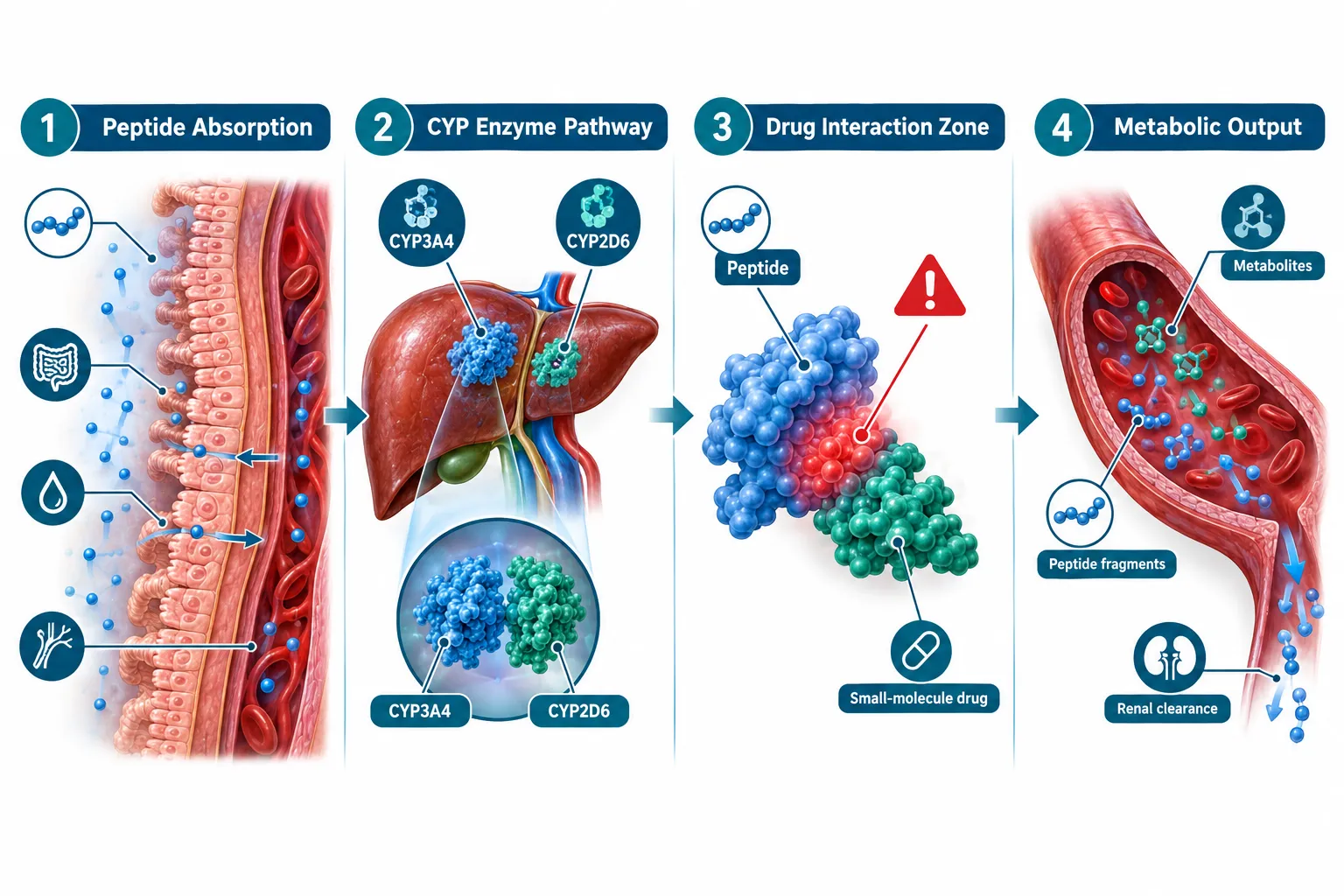
The foundation of Peptides and Common Prescription Drugs: A Researcher's Interaction-Mapping Framework for Metoprolol, Lisinopril, Omeprazole, and More rests on separating four distinct interaction types before any study design is finalized. Conflating these categories is the most common source of ambiguous results.

Four-panel interaction-mapping framework for peptides and prescription drugs

Category 1: Pharmacokinetic (PK) Interactions

Peptides are primarily metabolized by ubiquitous proteolytic enzymes into amino acids. This pathway operates largely outside the CYP450 system, which governs the metabolism of most small-molecule drugs. The practical result: direct PK interactions between peptides and CYP-metabolized drugs are markedly lower than interactions between two small molecules.

However, this does not mean PK concerns disappear entirely. Key variables to monitor include:

  • Gastric emptying rate, GLP-1 class peptides slow gastric motility, delaying the absorption of co-administered oral drugs. Drugs with narrow therapeutic windows (warfarin, levothyroxine, certain antiepileptics) require particular attention.
  • Renal clearance, Lisinopril, an ACE inhibitor, is eliminated almost entirely by the kidneys. Peptides that alter renal perfusion or glomerular filtration can shift lisinopril exposure without any CYP involvement.
  • Bioavailability shifts from pH changes, Omeprazole raises gastric pH, which can increase digoxin bioavailability by roughly 10% on average and up to 30% in some individuals. Any peptide co-administered with omeprazole in a polypharmacy model inherits this pH-altered environment.

Researcher note: When designing absorption studies, include a vehicle-only arm that still receives the omeprazole or proton pump inhibitor (PPI) to isolate pH effects from peptide-specific effects.

Category 2: Pharmacodynamic (PD) Interactions

PD interactions occur when two agents produce overlapping or opposing effects on the same physiological system, independent of changes in drug concentration. This is where peptide-drug combinations involving cardiovascular agents carry the most meaningful risk in research models.

Metoprolol is a selective beta-1 adrenergic blocker metabolized by CYP2D6. It lowers heart rate and blood pressure. GLP-1 receptor agonist peptides also modulate cardiovascular endpoints. When combined, the monitoring variables should include:

Variable Metoprolol Effect GLP-1 Peptide Effect Combined Signal Risk
Heart rate Decrease Modest increase (acute) Attenuated or masked
Blood pressure Decrease Decrease Additive lowering
Glucose regulation Mild impairment Improvement Opposing, requires tracking

Lisinopril adds another layer. As an ACE inhibitor, it reduces angiotensin II and aldosterone, lowering blood pressure and affecting potassium handling. Peptides that independently affect the renin-angiotensin-aldosterone system (RAAS) or renal electrolyte balance require electrolyte panels as mandatory monitoring variables in any co-exposure protocol.

For researchers exploring polypeptide peptides in cardiometabolic models, understanding how these PD overlaps differ from classic small-molecule drug interactions is a critical starting point.


Omeprazole as a Framework Stress Test

Omeprazole deserves its own section in any Peptides and Common Prescription Drugs: A Researcher's Interaction-Mapping Framework because it simultaneously introduces two mechanistically distinct interaction pathways.

GLP-1 peptide effect on oral drug absorption and gastric pH

Pathway 1: CYP2C19 Inhibition

Omeprazole is a competitive inhibitor of CYP2C19. This means it can increase plasma concentrations of CYP2C19 substrates such as diazepam, phenytoin, and warfarin. Simultaneously, it reduces the conversion of clopidogrel to its active metabolite, a clinically significant reduction in antiplatelet effect. The magnitude of these interactions is dose-dependent; co-administration of omeprazole 40 mg with certain antiretroviral agents has been shown to reduce drug exposure by more than 90%, illustrating the dramatic range possible.

Pathway 2: pH-Mediated Absorption Changes

By raising gastric pH, omeprazole alters the solubility and ionization state of co-administered drugs. This affects absorption independent of any enzyme involvement. Researchers should classify each drug in their model as either acid-dependent or acid-independent for absorption, then apply appropriate controls.

Framework rule: When omeprazole is present in a co-exposure model, interaction signals must be attributed to either CYP2C19 inhibition, pH alteration, or both, never lumped under a single "omeprazole interaction" label.

Researchers studying peptide dosing protocols in models that include PPIs should build separate arms to isolate each mechanism.


Study Controls, Assay Interference, and Co-Exposure Design

The third and fourth categories, assay interference and co-exposure design, are often overlooked but can invalidate results if ignored.

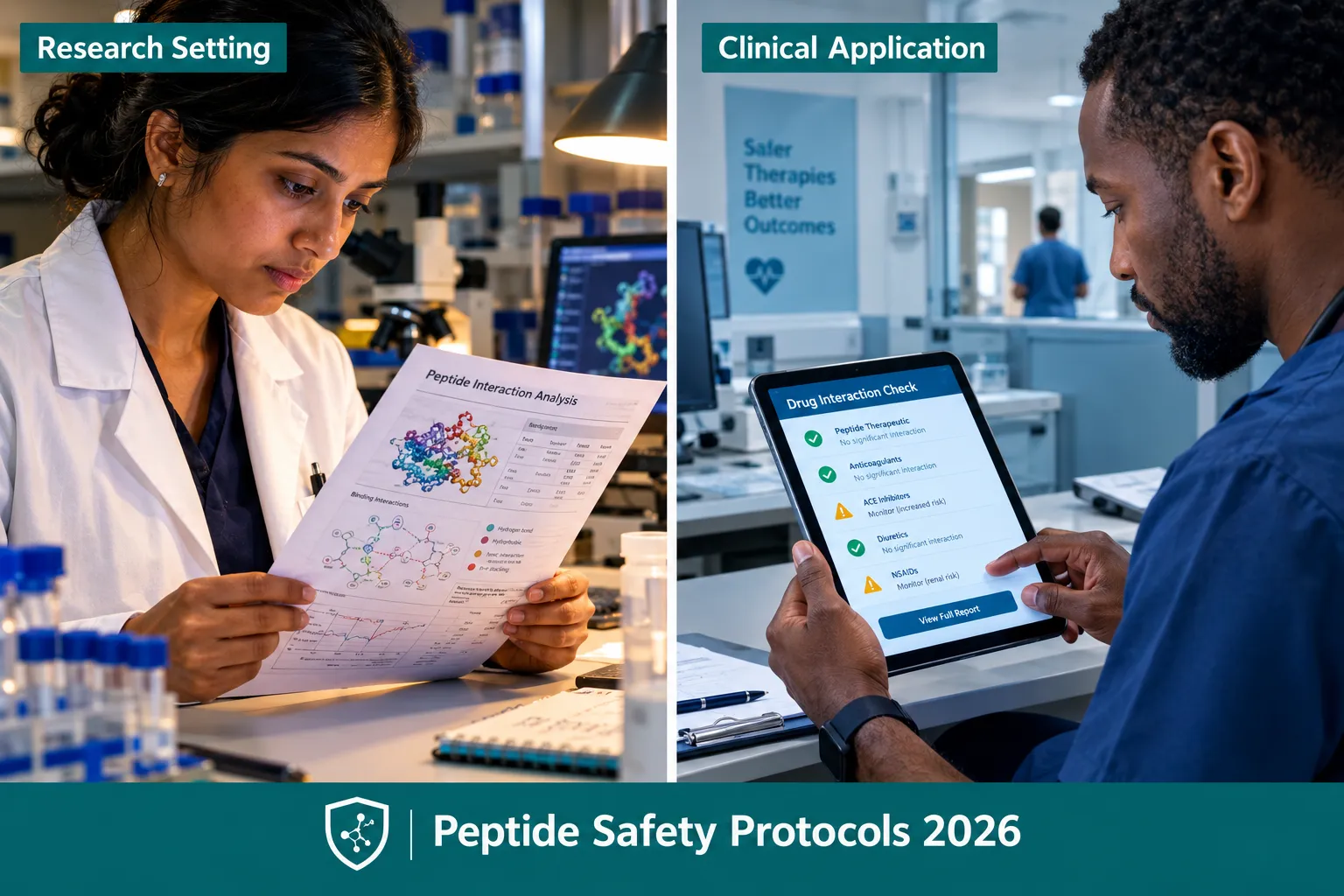
Step-by-step peptide-drug interaction monitoring protocol for researchers

Assay Interference

Peptides can interfere with immunoassays and chromatographic methods used to measure small-molecule drug concentrations. Cross-reactivity in ELISA-based assays, co-elution in HPLC runs, and matrix effects in mass spectrometry are all documented issues. Before running a co-exposure experiment, validate each assay in the presence of the peptide at the expected study concentration.

Co-Exposure Design Controls

A rigorous framework requires at minimum four study arms:

  1. Drug alone, establishes baseline PK and PD parameters
  2. Peptide alone, establishes peptide-specific physiological effects
  3. Simultaneous co-administration, tests interaction at peak co-exposure
  4. Staggered administration, tests whether timing offsets (e.g., spacing oral drugs 1 hour before or 4 hours after peptide injection) reduce the interaction signal

This four-arm structure applies whether the peptide under study is a growth hormone secretagogue like those discussed in sermorelin, ipamorelin, and CJC-1295 combinations, a metabolic peptide, or a wound repair peptide being evaluated alongside standard-of-care medications.

Regulatory guidance increasingly supports targeted, mechanistic DDI studies over broad panels. If the peptide class has a known physiological signal, gastric motility, renal clearance, immune modulation, that signal defines which monitoring variables are mandatory. Researchers working with IPA peptides or other ipamorelin-class agents should map growth hormone axis effects against any cardiovascular drug that responds to changes in insulin sensitivity or fluid balance.

For mitochondria-targeted agents, SS-31 peptide benefits research illustrates how organ-level effects on renal and cardiac mitochondria can produce PD overlaps with lisinopril and metoprolol that would not appear in a standard CYP-based interaction screen.


Conclusion

A well-constructed interaction-mapping framework separates what is pharmacokinetic from what is pharmacodynamic, what is assay artifact from what is true co-exposure effect. For researchers working at the intersection of peptides and common prescription drugs, the actionable steps are clear:

  1. Classify before designing. Assign every potential interaction to one of the four categories before selecting assays or study arms.
  2. Treat omeprazole as a dual-mechanism variable. Map CYP2C19 and pH effects independently in any polypharmacy model.
  3. Prioritize PD monitoring for cardiovascular drugs. Metoprolol and lisinopril co-exposure with peptides demands heart rate, blood pressure, renal function, and electrolyte panels as primary endpoints, not just drug concentration curves.
  4. Validate assays in the peptide matrix. Never assume that a validated small-molecule assay performs identically in the presence of a co-administered peptide.
  5. Use staggered dosing arms. Timing offsets are a practical and informative variable, not a workaround.

As the peptide pipeline expands and co-administration with cardiovascular and gastrointestinal drugs becomes more common, this structured approach will remain the most defensible path to interpretable, reproducible research data.

https://www.puretestedpeptides.com/wp-content/uploads/2026/09/peptides-and-common-prescription-drugs-a-researchers-interaction-mapping-framewo.webp 1024 1536 https://www.puretestedpeptides.com/wp-content/uploads/2026/01/buy-peptides-online.jpg 2026-09-23 13:21:022026-09-23 13:21:03Peptides and Common Prescription Drugs: A Researcher’s Interaction-Mapping Framework for Metoprolol, Lisinopril, Omeprazole, and More
Peptide Drug Interactions: How Research Peptides Interact With Common Medications

Peptide Drug Interactions: How Research Peptides Interact With Common Medications

September 14, 2026/0 Comments/in Uncategorized/by

Fewer than 20% of research peptides currently in active laboratory use have been formally evaluated for drug-drug interactions, a gap that carries real consequences as these compounds move closer to clinical and wellness applications. Understanding Peptide Drug Interactions: How Research Peptides Interact With Common Medications is no longer a niche concern for pharmacologists alone. Researchers, clinicians, and informed consumers need a clear, evidence-informed framework for thinking about these risks in 2026.

Key Takeaways

  • Most research peptides have limited CYP enzyme involvement, but this does not mean they are interaction-free.
  • GLP-1 type peptides and growth hormone secretagogues carry the highest real-world interaction risk, particularly with insulin and antidiabetic drugs.
  • Peptide size, structural motifs, and route of administration all influence interaction potential.
  • Formal regulatory guidance on peptide drug interactions remains incomplete as of mid-2026.
  • Researchers and clinicians should apply a precautionary framework, especially in patients on anticoagulants, cardiovascular drugs, or CNS medications.

Why Peptide Drug Interactions Are Poorly Understood

Why Peptide Drug Interactions Are Poorly Understood

The science of peptide pharmacokinetics has advanced rapidly, but the field of peptide-drug interactions has not kept pace. A 2025 clinical review confirmed that formal guidance on this topic is still largely absent, leaving researchers to extrapolate from limited mechanistic data.

One reason for the knowledge gap is structural. Unlike small-molecule drugs, most peptides are broken down by proteases rather than by cytochrome P450 (CYP) liver enzymes. This means the classic drug interaction framework, built around CYP3A4, CYP2D6, and related pathways, does not map cleanly onto peptide pharmacology.

However, minimal CYP involvement is not the same as zero interaction risk. Peptides can still alter drug behavior through:

  • Receptor-level competition or synergy
  • Hormonal and metabolic downstream effects
  • Changes in gastric emptying, fluid balance, or hemodynamics
  • Indirect modulation of enzyme expression over time

A humanized mouse model published in 2025 confirmed low CYP-mediated drug-drug interaction (DDI) risk for larger peptides, and a 2024-2025 pharmacological interaction matrix analysis found that risk correlates with peptide size and the presence of non-peptide motifs. Smaller peptides with synthetic or hybrid structures carry meaningfully higher interaction potential.

For researchers exploring polypeptide peptides in cardiometabolic models, understanding this distinction is foundational.

"The absence of CYP involvement creates a false sense of safety. The real interaction risks for research peptides lie elsewhere, in hormonal cascades, receptor overlap, and hemodynamic shifts."

Peptide Drug Interactions: How Research Peptides Interact With Common Medications in Practice

Peptide Drug Interactions: How Research Peptides Interact With Common Medications in Practice

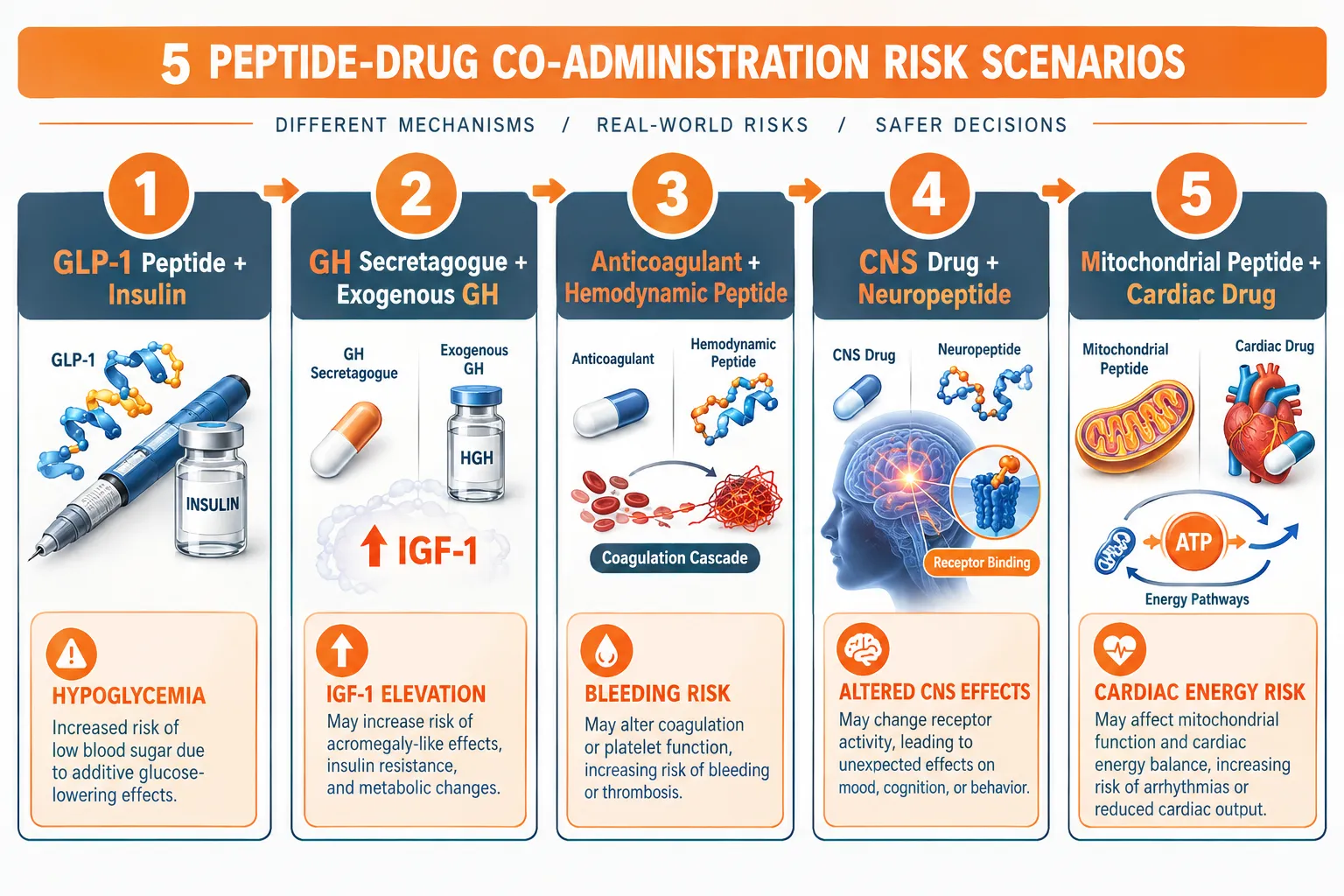
The most clinically significant interaction scenarios involve four major drug categories. Each presents a distinct mechanism and risk profile.

Insulin and Antidiabetic Drugs

GLP-1 peptides and growth hormone secretagogues can substantially amplify the glucose-lowering effects of insulin, metformin, and sulfonylureas. Co-administration creates a compounding hypoglycemia risk that is not always predictable from either agent alone. This is one of the best-documented interaction categories in the research peptide space.

Growth Hormone and IGF-1 Pathways

Peptides that stimulate endogenous growth hormone release, including several widely studied secretagogues, should generally not be combined with exogenous growth hormone. The additive effect on IGF-1 elevation carries metabolic and cardiovascular consequences. This combination is broadly flagged as one to avoid in research protocols.

For context on how one mitochondrial-targeted peptide is evaluated in isolation, see SS-31 10mg research peptide considerations.

Anticoagulants and Cardiovascular Medications

Even when CYP pathways are uninvolved, peptides that alter hemodynamics, endothelial function, or fluid balance can change the effective exposure of anticoagulants like warfarin or direct oral anticoagulants (DOACs). This is a pharmacodynamic interaction rather than a pharmacokinetic one, and it is frequently overlooked.

Interaction Risk Summary by Drug Class

Drug Class Interaction Type Risk Level
Insulin / Antidiabetics Pharmacodynamic (additive) High
Exogenous Growth Hormone Hormonal cascade (additive) High
Anticoagulants / CVD drugs Hemodynamic / fluid balance Moderate-High
CNS Medications Receptor-level overlap Moderate (context-dependent)

CNS and Neurological Drugs

Neuropeptides and peptides with CNS activity, including some under active Semax research protocols, may interact with antidepressants, anxiolytics, or antiepileptics through receptor-level mechanisms. The interaction data here is sparse, and safety advocacy groups flagged in June 2026 that interaction risk for wellness and "PCAC" peptides remains largely unknown.

Regulatory Context and What It Means for Researchers

Regulatory Context and What It Means for Researchers

The regulatory landscape shifted meaningfully in the first half of 2026. In March and April 2026, the FDA took enforcement action against sellers of "research-use-only" GLP-1 analog peptides, signaling a harder line on compounds that blur the boundary between research chemicals and unapproved therapeutics. Then, in July 2026, a regulatory framework update confirmed that while CYP involvement for most peptides remains minimal, caution is warranted in high-risk patient populations.

On July 28, 2026, the FDA also shifted its scientific position on generic peptide products, a move with downstream implications for how interaction data will be required and evaluated going forward.

For researchers sourcing compounds, working with lab tested peptides that carry documented purity profiles is a baseline requirement. Impurities and degradation products can introduce interaction variables that are entirely separate from the peptide's intended pharmacology.

Researchers studying endocrine-active compounds should also review how peptides interface with receptor biology, as covered in the analysis of peptides and polypeptides in endocrine pharmacology.

Practical precautions for 2026 research contexts:

  • Document all co-administered agents before initiating any peptide protocol
  • Apply heightened scrutiny when subjects are on insulin, anticoagulants, or cardiovascular drugs
  • Treat absence of CYP data as absence of evidence, not evidence of absence
  • Monitor for pharmacodynamic interactions even when pharmacokinetic data is reassuring
  • Consult updated FDA guidance before working with GLP-1 class analogs

Conclusion

Peptide Drug Interactions: How Research Peptides Interact With Common Medications represent a genuine and underappreciated safety domain. The low CYP involvement of most peptides does not eliminate interaction risk, it simply shifts where that risk lives. The highest-priority concerns in 2026 involve GLP-1 and growth hormone-related peptides combined with insulin or exogenous GH, anticoagulants in patients with hemodynamic-active peptides, and CNS drugs paired with neuropeptides.

Actionable next steps for researchers and practitioners:

  1. Build a complete co-medication profile before any peptide protocol begins.
  2. Prioritize compounds with documented purity and available pharmacological data.
  3. Monitor the FDA's evolving position on peptide classification, particularly for GLP-1 analogs.
  4. Apply pharmacodynamic interaction logic even when pharmacokinetic data is absent.
  5. Revisit interaction assumptions regularly, the evidence base is moving fast in 2026.

The field is advancing. Staying ahead of the interaction risk curve is not optional, it is foundational to responsible research practice.

https://www.puretestedpeptides.com/wp-content/uploads/2026/09/peptide-drug-interactions-how-research-peptides-interact-with-common-medications-1.webp 1024 1536 https://www.puretestedpeptides.com/wp-content/uploads/2026/01/buy-peptides-online.jpg 2026-09-14 13:06:172026-09-14 13:06:17Peptide Drug Interactions: How Research Peptides Interact With Common Medications
×

Helpful Links

  • My account
  • Cart
  • Checkout
  • Refund and Returns Policy
  • Privacy Policy
  • SMS Privacy Policy
  • Login
  • My Account
  • Logout

USA Made Lab Tested Peptides

All products are sold for research, laboratory, or analytical purposes only, and are not for human consumption


Pure Tested Peptides is a chemical supplier. Pure Tested Peptides is not a compounding / chemical compounding facility as defined under 503A of the Federal Food, Drug, and Cosmetic act. Pure Tested Peptides is not an outsourcing facility as defined under 503B of the Federal Food, Drug, and Cosmetic act.

The statements made within this website have not been evaluated by the US Food and Drug Administration. The products we offer are not intended to diagnose, treat, cure or prevent any disease.

Human/Animal Consumption Prohibited. Laboratory/In-Vitro Experimental Use Only

Scroll to top Scroll to top Scroll to top