Call or Text 727-513-9780
  • Shopping Cart Shopping Cart
    0Shopping Cart
Pure Tested Peptides | America's most trusted Peptides for sale online
  • Peptides for sale
    • Oral Peptides for sale
      • Peptide Capsules for sale
      • BPC 157 Capsules 1000mcg
      • SLU-PP-332 Capsules | 1000 mcg
      • 5-Amino-1MQ 50mg Capsules
      • Tesofensine 500mcg
    • All Peptides for sale
    • Peptide Sprays
      • BPC 157 Nasal Spray Kit
      • BPC-157 TB500 Nasal Spray Kit
      • Semax Nasal Spray 10mg
      • Selank – Nasal Spray Kit – 10mg
      • Epithalon 50MG Nasal Spray Kit
      • Ipamorelin 10mg Nasal Spray
      • Klow Nasal Spray (BPC-157 + TB-500 + GHK-Cu + KPV) | 80mg
      • Hulk Nasal Spray Tesa / Ipa Blend 6/3 MG
      • Klow Nasal Spray
      • NAD + 500 mg Nasal Spray
      • PT-141 Nasal Spray Kit
    • GHRH Peptides
      • Ipa Peptides
      • CJC-1295 Peptides
        • CJC-1295 with DAC 5 mg
        • CJC-1295 without DAC 5 mg
        • CJC-1295 Ipa 10mg
      • Tesa Peptides
        • Tesa Peptide
        • Tesa 20 mg
    • GHK-Cu Peptides
      • All GHK-Cu Peptides
      • GHK-Cu 100mg
      • KLOW Peptide Blend – Buy KLOW blend online
    • BPC Peptides
      • All BPC Peptides
      • BPC-157
      • BPC-157 TB-500
      • BPC 157 capsules 1000mcg
    • SLU-PP-332 Peptides
      • All SLU-PP-332 Peptides
      • SLU-PP-332 5mg
    • GLP3 Peptides
      • GLP3-R
      • GLP3-R CAG 10mg
      • GLP3-R 20mg
    • PT-141 Peptides
      • PT-141 Peptides for sale
      • PT-141 10mg
      • PT-141 Nasal Spray
    • CAG Peptides
      • Lipo-C Peptide Blend
      • CAG 5mg
      • CAG 10mg
    • MOTS-C Peptides
      • MOTS-C Peptides for sale
      • MOTS-c peptide
      • MOTS-c 10mg *6 pack*
    • 5 Amino 1MQ Peptides
      • 5 Amino 1MQ Peptides for sale
      • 5-Amino-1MQ 50mg Capsules
      • 5-Amino-1MQ 5mg
    • Epithalon Peptides
      • Epithalon Peptides for sale
      • Epithalon 10mg
      • Epithalon 50mg
  • Shop
    • GLPs
      • 5-Amino-1MQ 50mg Capsules
      • 5-Amino-1MQ 5mg
      • GLP3-Reta
      • L-Carnitine 500mg/ml
      • Tesofensine 500mcg
      • SLU-PP-332 5mg
      • MOTS-c 10mg *6 pack*
    • Epithalon & BPC Peptides
      • Epithalon 10mg
      • Epithalon 50mg
      • BPC-157
      • BPC 157 capsules 1000mcg
      • BPC-157 TB-500
      • BPC-157 TB500 Nasal Spray Kit
      • BPC 157 Nasal Spray Kit
    • BPC TB-500 & NAD+ Peptides
      • NAD+ 500 mg
      • KLOW Peptide Blend – Buy KLOW blend online
      • GLOW Peptide Blend
      • TB 500 5mg
      • BPC 157 capsules 1000mcg – Supplement
      • BPC 157 Nasal Spray Kit
      • BPC-157
      • BPC-157 TB500 Nasal Spray Kit
      • BPC-157 TB-500
      • BPC 157 capsules 1000mcg
    • LL-37 Peptide
      • LL-37 10 mg
    • MOTS-C & Selank
      • MOTS-c peptide
      • Selank 10mg
    • GHK Peptides
      • GHK-Cu 100mg
      • GLOW Peptide Blend
      • KLOW Peptide Blend – Buy KLOW blend online
  • COAs
  • Wholesale
    • Wholesale Peptides for sale
  • PTP FAQ
  • Affiliates
    • Selank Peptide: Advanced Pharmacological Mechanisms Underlying Its Anxiolytic and Nootropic Effects in Research
      • 5-Amino-1MQ Peptide: Detailed Mechanisms of NNMT Inhibition and Its Impact on Cellular Metabolism Research
        • MOTS-C Peptide: Unraveling Its Role in Mitochondrial Dynamics and Energy Metabolism Research
          • Epithalon Peptide and Telomerase Regulation: Investigating Its Impact on Cellular Senescence and Lifespan Research Models
            • GLP2-T vs GLP2 Tirz Peptide: Understanding the Naming, Mechanistic Nuances, and Research Implications for Gut Health
      • Peptides and Polypeptides in Modern Pharmacology: What Research on Metoprolol, Prednisone, and Amlodipine Reveals
        • Polypeptide Peptides vs NSAIDs: What Naproxen and Diclofenac Teach Tissue-Repair Researchers About BPC‑157 and TB‑500
          • Peptides and Polypeptides in Endocrine Pharmacology: How GLP-1, GLP-2, and GLP-3 Retatrutide Differ From Classic Drugs Like Prednisone and Amlodipine
          • 5‑Amino‑1MQ Peptide and NNMT Inhibition: How It Compares With Statins Like Atorvastatin in Adipose and Lipid Metabolism Research
      • Enclomiphene, Estrogen Receptor Signaling, and Luteinizing Phase Biology: What Hormone Researchers Should Measure
        • Mesenchymal Stem Cells, BPC‑157, and GHK‑Cu: How Tissue Repair Peptides Compare With Classic NSAIDs Like Naproxen in Injury Models
          • Peptide Calculator Use Cases Beyond Growth Hormone: Working Through GLP‑3 Retatrutide, MOTS‑c, and BPC‑157 Research Dosing
        • Polypeptide Peptides in Endocrine and Metabolic Pharmacology: Lessons From Amlodipine, Prednisone, and Metoprolol
        • Peptides Calculator for Advanced Blends: Worked Examples for Tesamorelin, CJC‑1295, and Ipamorelin Stacks
          • Peptides and Polypeptides in Human Physiology: How Molecular Size Shapes Research Applications
            • Selank Peptide: Advanced Pharmacological Mechanisms Underlying Its Anxiolytic and Nootropic Effects in Research
          • 5-Amino-1MQ Peptide: Detailed Mechanisms of NNMT Inhibition and Its Impact on Cellular Metabolism Research
            • MOTS-C Peptide: Unraveling Its Role in Mitochondrial Dynamics and Energy Metabolism Research
              • Epithalon Peptide and Telomerase Regulation: Investigating Its Impact on Cellular Senescence and Lifespan Research Models
                • GLP2-T vs GLP2 Tirz Peptide: Understanding the Naming, Mechanistic Nuances, and Research Implications for Gut Health
                  • Peptides and Polypeptides in Endocrine Pharmacology: How GLP-1, GLP-2, and GLP-3 Retatrutide Differ From Classic Drugs Like Prednisone and Amlodipine
                    • Polypeptide Peptides vs NSAIDs: What Naproxen and Diclofenac Teach Tissue-Repair Researchers About BPC‑157 and TB‑500
                      • Peptides and Polypeptides in Modern Pharmacology: What Research on Metoprolol, Prednisone, and Amlodipine Reveals
                        • 5‑Amino‑1MQ Peptide and NNMT Inhibition: How It Compares With Statins Like Atorvastatin in Adipose and Lipid Metabolism Research
                        • Enclomiphene, Estrogen Receptor Signaling, and Luteinizing Phase Biology: What Hormone Researchers Should Measure
                        • Mesenchymal Stem Cells, BPC‑157, and GHK‑Cu: How Tissue Repair Peptides Compare With Classic NSAIDs Like Naproxen in Injury Models
                        • Peptide Calculator Use Cases Beyond Growth Hormone: Working Through GLP‑3 Retatrutide, MOTS‑c, and BPC‑157 Research Dosing
                        • Polypeptide Peptides in Endocrine and Metabolic Pharmacology: Lessons From Amlodipine, Prednisone, and Metoprolol
                        • Peptides Calculator for Advanced Blends: Worked Examples for Tesamorelin, CJC‑1295, and Ipamorelin Stacks
                        • Peptides and Polypeptides in Human Physiology: How Molecular Size Shapes Research Applications
                        • Selank Peptide: Advanced Pharmacological Mechanisms Underlying Its Anxiolytic and Nootropic Effects in Research
                        • MOTS-C Peptide: Unraveling Its Role in Mitochondrial Dynamics and Energy Metabolism Research
                        • Peptides and Polypeptides in Modern Pharmacology: What Research on Metoprolol, Prednisone, and Amlodipine Reveals
                        • Peptides and Polypeptides in Endocrine Pharmacology: How GLP-1, GLP-2, and GLP-3 Retatrutide Differ From Classic Drugs Like Prednisone and Amlodipine
                        • 5-Amino-1MQ Peptide: Detailed Mechanisms of NNMT Inhibition and Its Impact on Cellular Metabolism Research
                        • Mesenchymal Stem Cells, BPC‑157, and GHK‑Cu: How Tissue Repair Peptides Compare With Classic NSAIDs Like Naproxen in Injury Models
                        • Peptide Calculator Use Cases Beyond Growth Hormone: Working Through GLP‑3 Retatrutide, MOTS‑c, and BPC‑157 Research Dosing
                        • GLP2-T vs GLP2 Tirz Peptide: Understanding the Naming, Mechanistic Nuances, and Research Implications for Gut Health
                        • Polypeptide Peptides in Endocrine and Metabolic Pharmacology: Lessons From Amlodipine, Prednisone, and Metoprolol
                        • Polypeptide Peptides vs NSAIDs: What Naproxen and Diclofenac Teach Tissue-Repair Researchers About BPC‑157 and TB‑500
                        • Peptides and Polypeptides in Human Physiology: How Molecular Size Shapes Research Applications
                        • Peptides Calculator for Advanced Blends: Worked Examples for Tesamorelin, CJC‑1295, and Ipamorelin Stacks
                        • 5‑Amino‑1MQ Peptide and NNMT Inhibition: How It Compares With Statins Like Atorvastatin in Adipose and Lipid Metabolism Research
                        • Enclomiphene, Estrogen Receptor Signaling, and Luteinizing Phase Biology: What Hormone Researchers Should Measure
                        • Epithalon Peptide and Telomerase Regulation: Investigating Its Impact on Cellular Senescence and Lifespan Research Models
                        • Best research protocol Klow blend
                        • best time to take BPC-157
                        • best time to take DSIP (Delta Sleep Inducing Peptide)
                        • best time to take CJC-1295
                        • best time to take AOD-9604
                        • best time to take Follistatin 344
                        • best time to take Ipamorelin
                        • best time to take MK-677 (Ibutamoren)
                        • best time to take Ligandrol (LGD-4033) — research compound
                        • best time to take Ostarine (MK-2866) — research compound
                        • best time to take GHK-CU
                        • best time to take TB-500
                        • best time to take MOTS-c
                        • best time to take Semax
                        • best time to take RAD-140 (Testolone) — research compound
                        • best time to take Thymosin Alpha-1
                        • best time to take PEG-MGF
                        • Biolife Plasma, Octapharma Plasma, and Research Peptides: How Plasma Donation Labs Differ From Peptide Suppliers
                        • best time to take YK-11 — research compound
                        • best time to take PT-141 (Bremelanotide)
                        • Best research protocol Klow blend
  • Contact
    • Contact Customer Service
    • Text Customer Support
  • About US
  • Shop all peptides
  • Affiliate Program
    • Affiliate Signup
  • Login / Register Login / Register Page Link Login / Register Page Link
  • Click to open the search input field Click to open the search input field Search
  • Menu Menu

Tag Archive for: peptide research

PT-141 in Research: Mechanism, Receptor Targets, and How It Differs from PDE5 Inhibitors

PT-141 in Research: Mechanism, Receptor Targets, and How It Differs from PDE5 Inhibitors

June 25, 2026/0 Comments/by Pure Tested

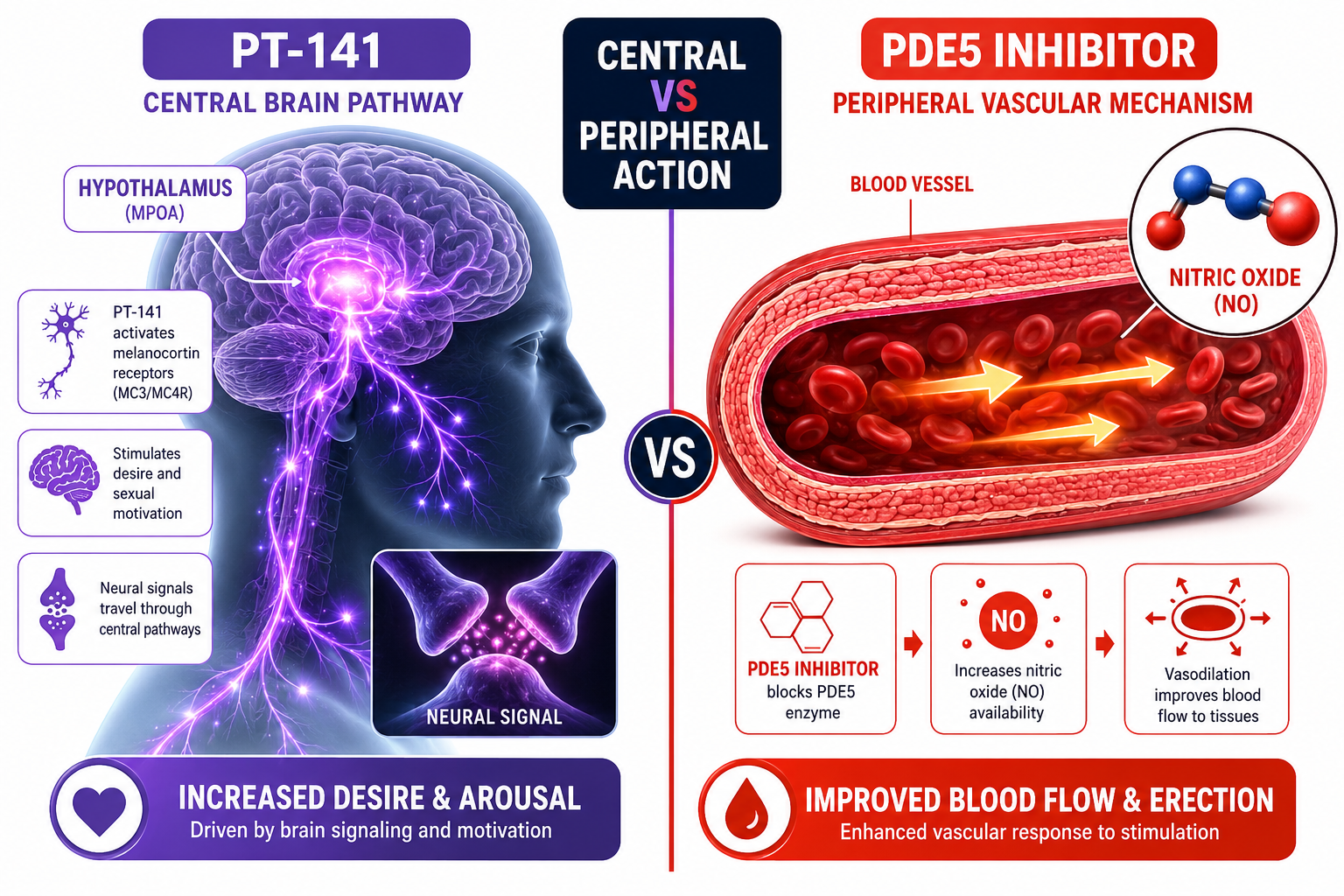
Most compounds studied for sexual dysfunction work from the outside in — targeting blood vessels, smooth muscle, and nitric oxide signaling. PT-141 takes the opposite approach, working from the brain down. That fundamental difference is what makes PT-141 in research: mechanism, receptor targets, and how it differs from PDE5 inhibitors such a compelling area of scientific inquiry in 2026.

PT-141 (bremelanotide) is a synthetic analog of alpha-melanocyte-stimulating hormone (alpha-MSH). Rather than acting on peripheral vasculature, it engages central melanocortin pathways — a mechanism that places it in an entirely different research category than sildenafil or tadalafil.

Key Takeaways

  • PT-141 activates melanocortin-4 receptors (MC4R) in the hypothalamus and limbic system, driving sexual desire centrally.
  • Unlike PDE5 inhibitors, PT-141 does not depend on nitric oxide or vascular function to produce its effects.
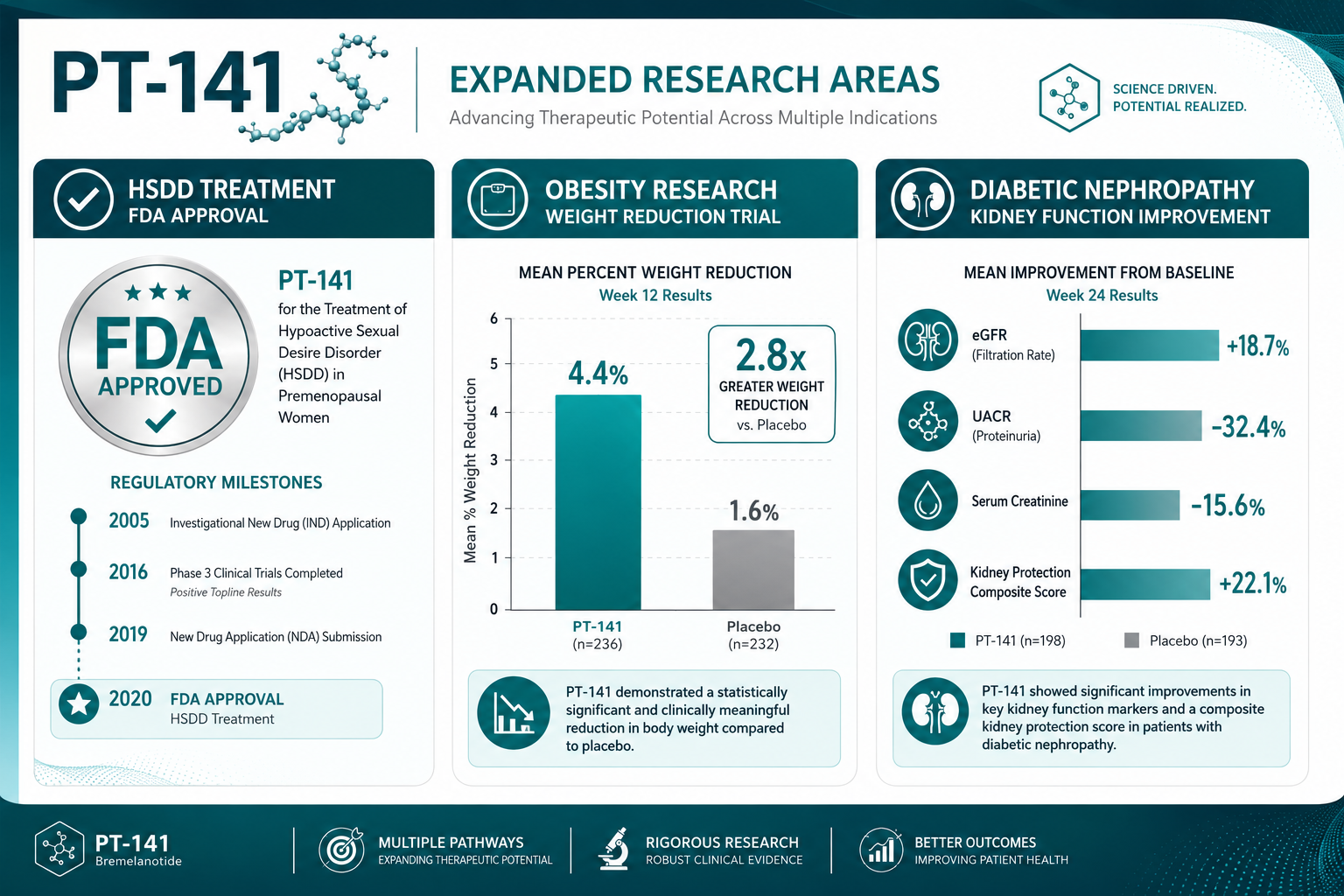
  • The FDA approved PT-141 (Vyleesi) in 2019 for hypoactive sexual desire disorder (HSDD) in premenopausal women.
  • Early research suggests PT-141 may benefit individuals who do not respond to PDE5 inhibitors.
  • Emerging studies point to potential roles in obesity management and renal protection.

The Central Mechanism Behind PT-141 in Research

PT-141 binds primarily to melanocortin-4 receptors (MC4R), which are densely expressed in the hypothalamus and limbic system — regions governing motivation, emotion, and sexual behavior. This central action is the defining feature of PT-141 in research: mechanism, receptor targets, and how it differs from PDE5 inhibitors.

When MC4R is activated, it modulates two key downstream pathways:

  • Dopaminergic signaling — increasing motivation and reward-seeking behavior linked to sexual arousal
  • Oxytocinergic signaling — promoting bonding and desire responses

This neurochemical cascade produces sexual motivation without requiring external stimulation or intact vascular function. That is a meaningful distinction from every major PDE5 inhibitor currently on the market.

PT-141 also binds to MC1R and MC3R, though MC4R activation is considered the primary driver of its pro-sexual effects. Researchers studying peptide-based neuromodulation — including work on compounds like BPC-157 and its tissue-level signaling — recognize that central receptor targeting opens research doors that peripheral compounds simply cannot.


How PT-141 Differs from PDE5 Inhibitors

How PT-141 Differs from PDE5 Inhibitors

Understanding PT-141 in research: mechanism, receptor targets, and how it differs from PDE5 inhibitors requires a clear comparison of their pharmacological targets.

Feature PT-141 (Bremelanotide) PDE5 Inhibitors (e.g., Sildenafil)
Primary target MC4R in hypothalamus PDE5 enzyme in vascular smooth muscle
Site of action Central nervous system Peripheral vasculature
Requires nitric oxide? No Yes
Affects sexual desire? Yes, directly No
Requires sexual stimulation? Not necessarily Yes

PDE5 inhibitors block the enzyme that breaks down cyclic GMP, which relaxes smooth muscle and increases genital blood flow. They are entirely dependent on the nitric oxide pathway. If that pathway is compromised — as it often is in diabetic or cardiovascular patients — PDE5 inhibitors lose effectiveness.

PT-141 bypasses this limitation entirely. Early clinical studies showed it could induce erections in men who had not responded adequately to PDE5 inhibitors, which strongly supports its mechanistic independence. This makes PT-141 a subject of serious interest alongside other centrally acting peptides such as Selank, which also modulates neurochemical signaling.


Expanding Research Frontiers for PT-141

Expanding Research Frontiers for PT-141

The FDA approved PT-141 as Vyleesi in 2019 for HSDD in premenopausal women, based on Phase 3 trial data showing significant improvements in sexual desire scores and reductions in distress. That approval validated the melanocortin pathway as a legitimate therapeutic target.

Research has since expanded beyond sexual dysfunction:

Obesity and metabolic regulation: A Phase 2 trial combining PT-141 with tirzepatide produced a 4.4% weight reduction versus 1.6% with placebo, suggesting MC4R activation may influence appetite and energy balance. This parallels metabolic research themes seen in compounds like GLP-1 dual receptor agonism studies.

Renal protection: The BREAKOUT Phase 2b study found that 71% of patients with type 2 diabetic kidney disease achieved more than a 30% reduction in urine protein/creatinine ratio with PT-141 treatment — a striking finding that researchers are still working to fully explain.

Female sexual dysfunction beyond HSDD: Ongoing studies are evaluating PT-141 for broader female sexual dysfunction categories, building on the established HSDD approval.

Safety profile: Common adverse effects include nausea and transient flushing. Long-term safety data collection is ongoing, but current profiles are considered manageable in research contexts.

Researchers interested in peptide purity and quality for controlled studies can review lab-tested peptide research options and the site's quality testing protocols for sourcing considerations.

For broader context on how peptides engage receptor systems at the cellular level, the research themes around MOTS-c and mitochondrial dynamics offer a useful comparative framework for understanding receptor-driven peptide biology.


Conclusion

PT-141 occupies a unique position in peptide research precisely because it does not follow the vascular playbook. Its activation of MC4R in the hypothalamus and limbic system drives sexual desire through dopaminergic and oxytocinergic pathways — mechanisms that PDE5 inhibitors never touch. The 2019 FDA approval for HSDD confirmed the clinical relevance of this pathway, while emerging data on obesity and renal protection suggest the research scope is still widening.

Actionable next steps for researchers:

  1. Review published Phase 2 and Phase 3 trial data on MC4R agonism to understand dose-response relationships.
  2. Compare PT-141's central mechanism against other neuromodulatory peptides to identify synergy opportunities.
  3. Prioritize sourcing from suppliers with verified purity documentation and transparent quality testing protocols before initiating any controlled study.

The melanocortin system is proving to be far more than a sexual function switch — and PT-141 is the compound that opened that research door.

https://www.puretestedpeptides.com/wp-content/uploads/2026/06/PT-141-in-Research-Mechanism-Receptor-Targets-and-How-It-Differs-from-PDE5-Inhibitors.png 1024 1536 Pure Tested https://www.puretestedpeptides.com/wp-content/uploads/2026/01/buy-peptides-online.jpg Pure Tested2026-06-25 13:19:112026-07-20 15:02:16PT-141 in Research: Mechanism, Receptor Targets, and How It Differs from PDE5 Inhibitors
Selank Peptide in Research: Anxiolytic Pathways, Intranasal Use, and Study Endpoints

Selank Peptide in Research: Anxiolytic Pathways, Intranasal Use, and Study Endpoints

June 24, 2026/0 Comments/by Pure Tested

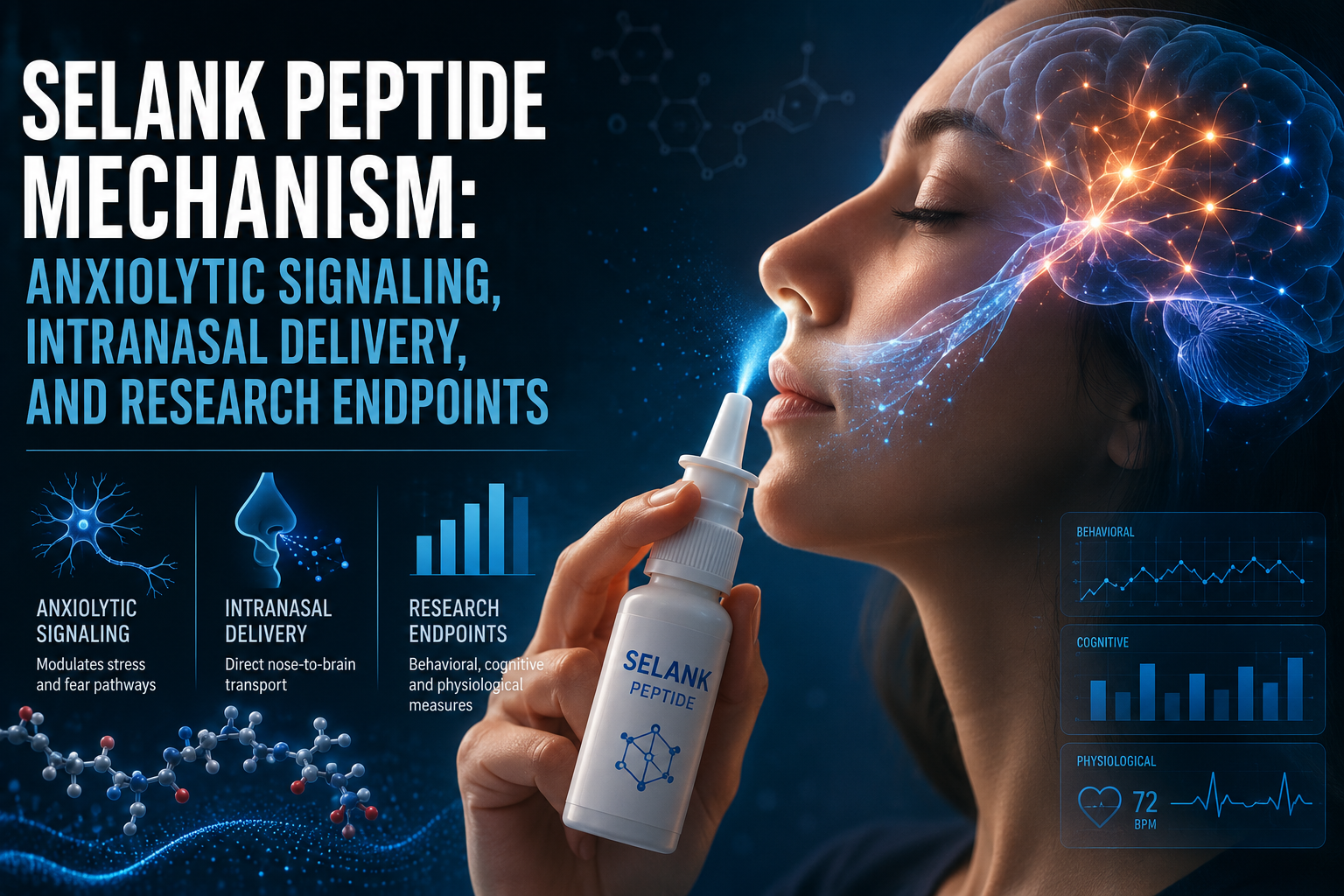
Anxiety disorders affect roughly one in three adults globally over their lifetime, yet the dominant pharmacological tools — benzodiazepines — carry well-documented risks of sedation, cognitive blunting, and physical dependence. Against that backdrop, Selank Peptide in Research: Anxiolytic Pathways, Intranasal Use, and Study Endpoints has emerged as a focused area of scientific inquiry, drawing attention from neurochemists and clinical researchers who want a cleaner mechanistic profile. This article unpacks what the current evidence shows about how Selank works, how it is delivered, and how researchers are measuring its effects.

Key Takeaways

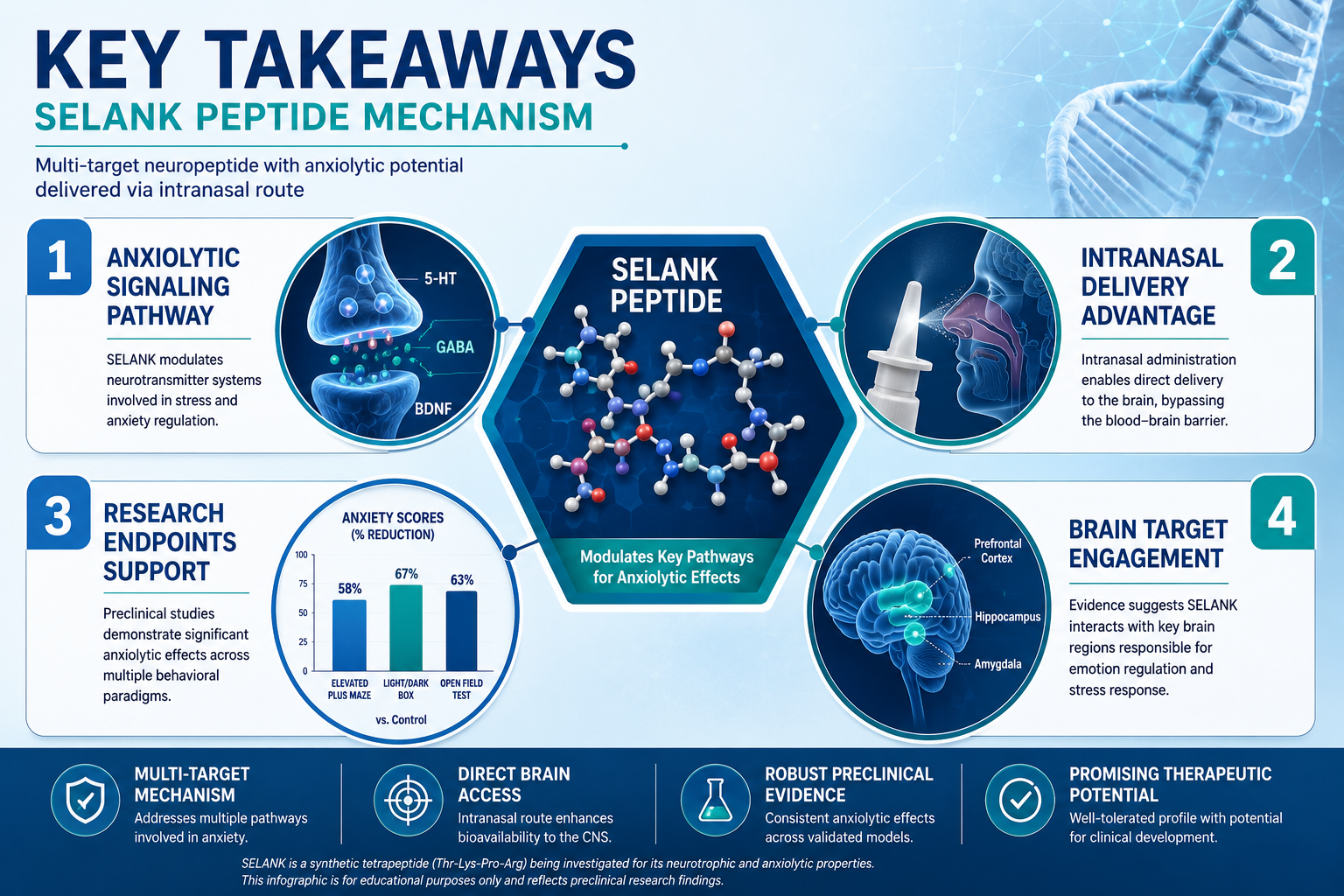
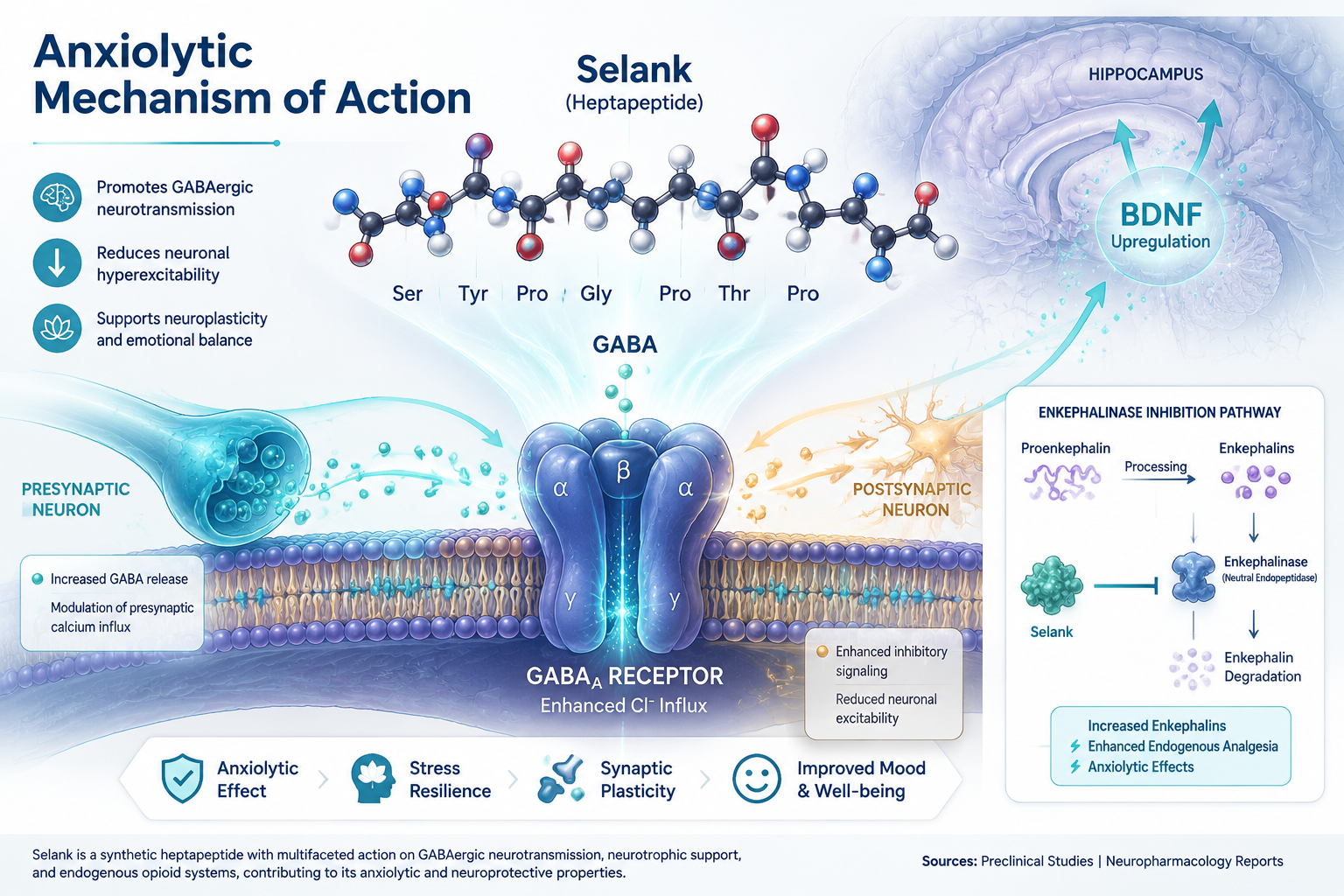
  • Selank is a synthetic heptapeptide derived from tuftsin that modulates GABAergic signaling and inhibits enkephalin-degrading enzymes.
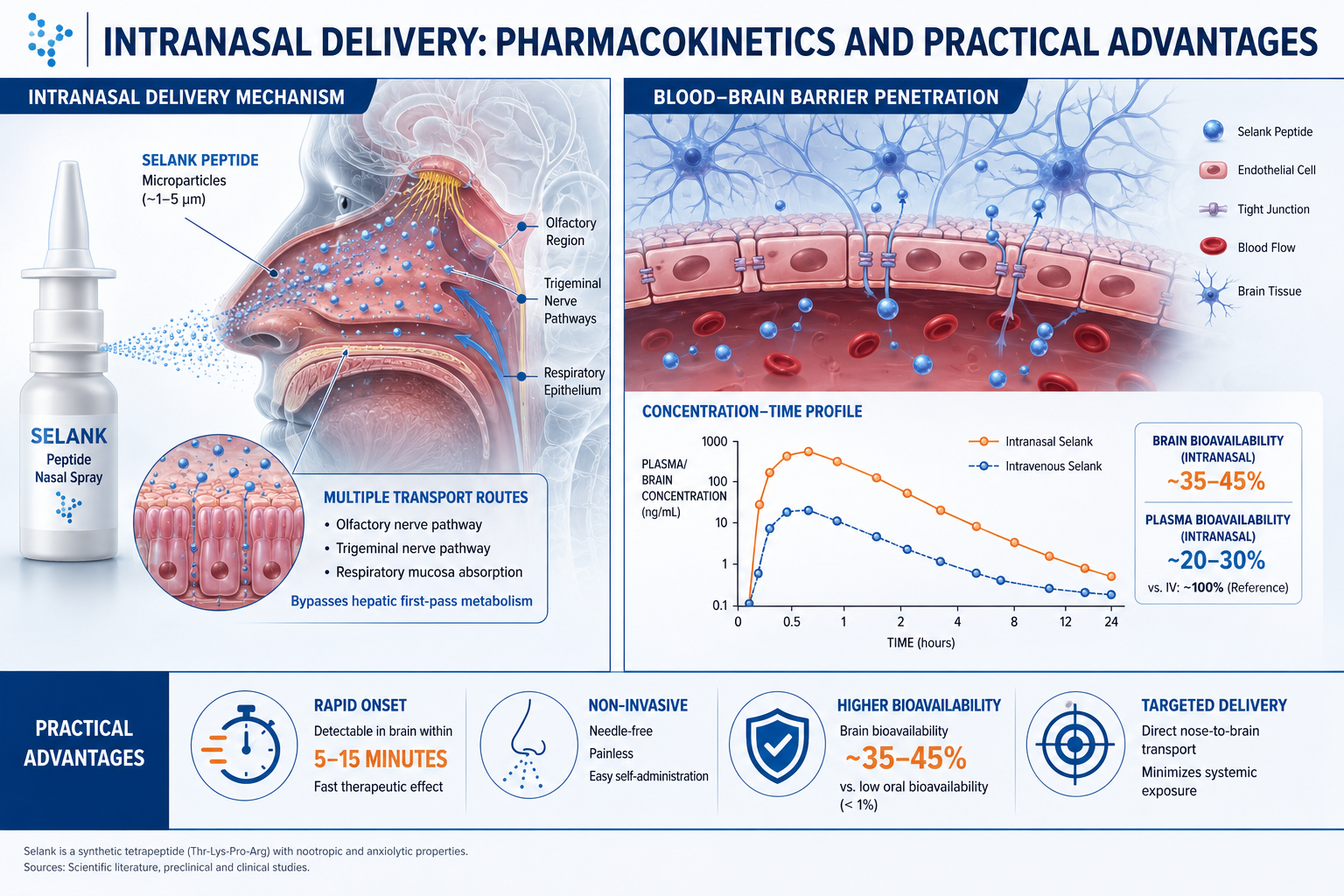
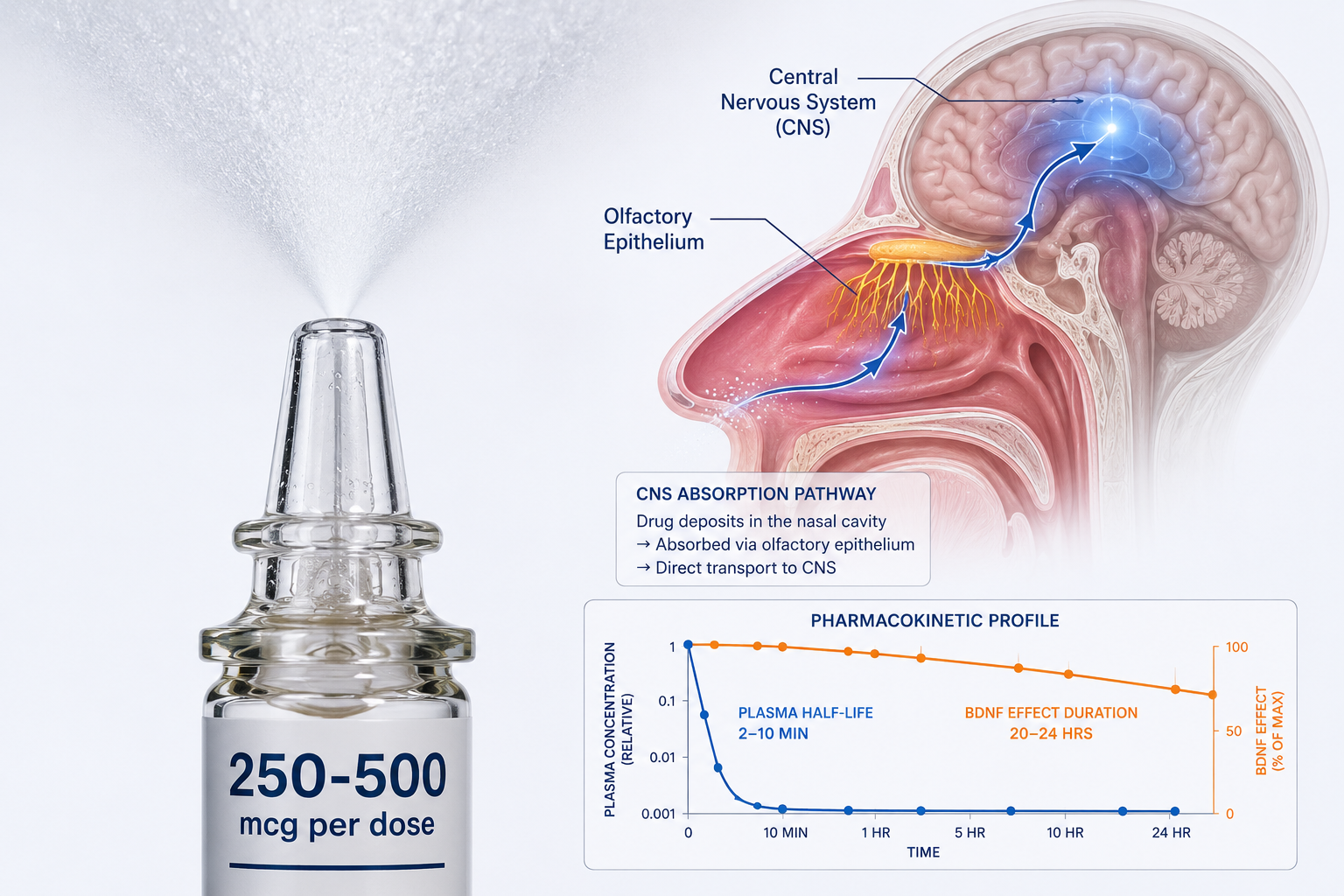
  • Intranasal delivery provides rapid CNS access, with a plasma half-life of roughly 2-10 minutes but pharmacodynamic effects lasting up to 24 hours.
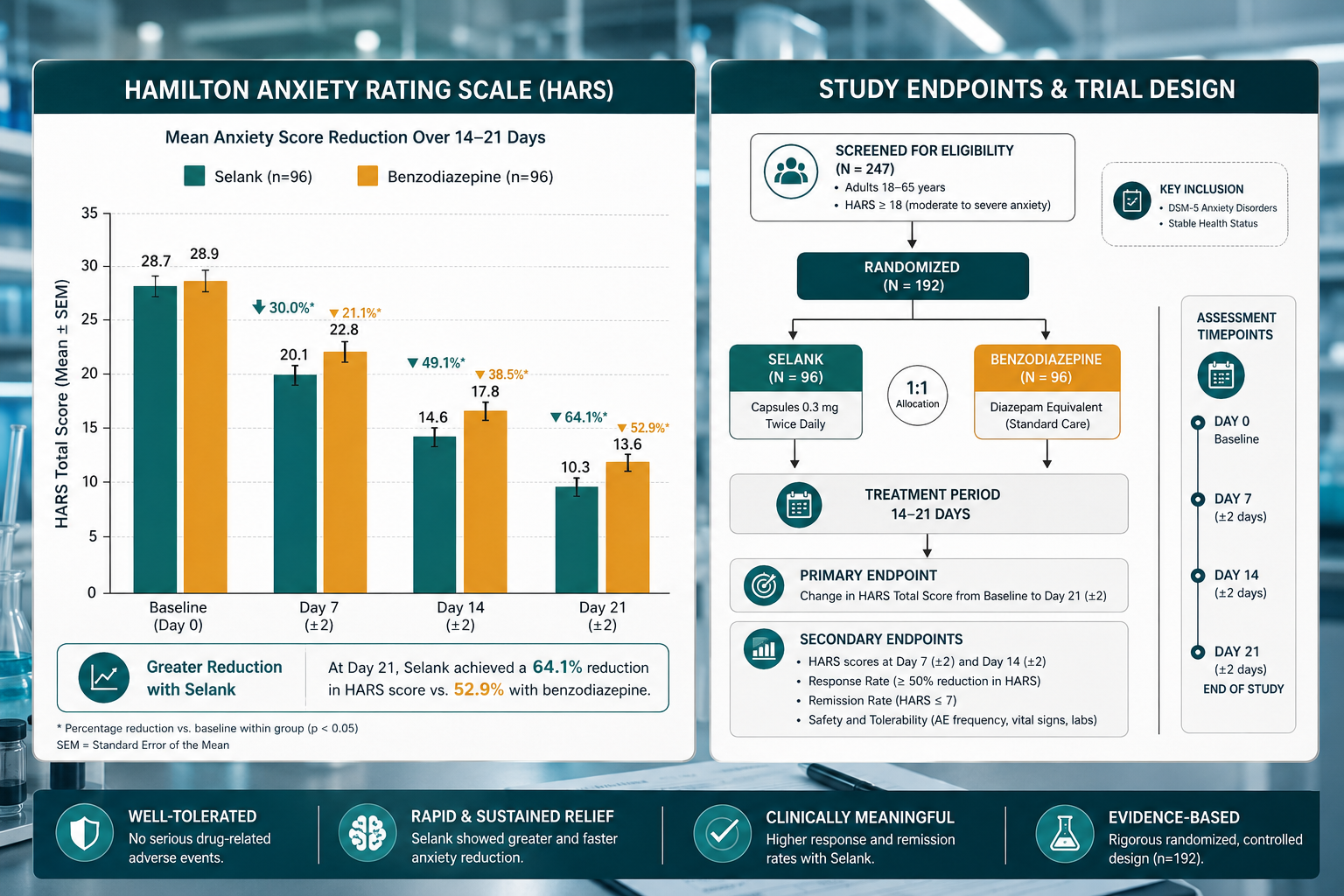
  • Russian clinical trials comparing Selank to benzodiazepines report comparable anxiolytic efficacy without sedation or dependence.
  • The Hamilton Anxiety Rating Scale (HARS) is the primary endpoint used in published trials.
  • Selank is not FDA- or EMA-approved; most clinical data originate from Russian research, and independent Western replication remains limited.

Key Takeaways

Anxiolytic Pathways: How Selank Works at the Molecular Level

Selank is a seven-amino-acid (heptapeptide) analog of tuftsin, an endogenous tetrapeptide naturally produced in the spleen. Its anxiolytic profile rests on at least three converging mechanisms.

GABAergic modulation is the most studied pathway. Selank appears to enhance the sensitivity of GABA-A receptors, the same receptor class targeted by benzodiazepines. However, unlike benzodiazepines, it does not bind directly to the benzodiazepine allosteric site, which may explain why it avoids the sedation and tolerance seen with classical drugs in that class.

Enkephalin preservation adds a second layer. Selank inhibits enzymes responsible for breaking down enkephalins — endogenous opioid peptides that contribute to stress regulation. By extending enkephalin activity, Selank may reduce the neurochemical "noise" that sustains anxious states.

Monoamine and BDNF effects round out the picture. Research shows upregulation of brain-derived neurotrophic factor (BDNF) in the hippocampus following Selank exposure, a finding relevant to both mood regulation and neuroprotection. Serotonin and dopamine turnover are also modestly influenced, though these effects appear secondary to GABAergic action.

Selank also demonstrates immunomodulatory properties, shifting the balance between T-helper 1 and T-helper 2 cytokines. This neuroimmune dimension connects it to broader research themes explored in areas like neuroendocrine and innate immunity interactions, where peptide signaling bridges the nervous and immune systems.


Anxiolytic Pathways: How Selank Works at the Molecular Level

Intranasal Use: Delivery Rationale and Dosing Parameters

The intranasal route is the defining feature of Selank's research administration protocol, and the choice is mechanistically deliberate.

"Intranasal delivery bypasses hepatic first-pass metabolism and provides near-direct access to the central nervous system via the olfactory epithelium — a critical advantage for a peptide with a plasma half-life of just 2-10 minutes."

Despite that brief systemic half-life, Selank's pharmacodynamic footprint is far longer. BDNF upregulation and anxiolytic behavioral effects have been documented to persist for 20-24 hours after a single dose, suggesting receptor-level or transcriptional changes that outlast the peptide's presence in circulation.

Standard research dosing parameters:

Parameter Typical Range
Dose per administration 250-500 micrograms
Frequency 2-3 times daily
Cycle length 14-21 days
Route Intranasal spray

This delivery model shares conceptual ground with other peptides studied via mucosal or alternative routes. Researchers interested in delivery optimization may also find value in reviewing BPC-157 research themes and oral BPC-157 delivery considerations, where route selection similarly affects bioavailability outcomes.


Intranasal Use: Delivery Rationale and Dosing Parameters

Study Endpoints in Selank Peptide Research

Understanding Selank Peptide in Research: Anxiolytic Pathways, Intranasal Use, and Study Endpoints requires close attention to how trials are actually designed and measured.

The Hamilton Anxiety Rating Scale (HARS) is the primary psychometric tool used in published Selank trials. HARS scores track somatic and psychological anxiety symptoms across 14 items, giving researchers a validated, quantitative endpoint for comparing treatment arms.

In Russian clinical trials involving approximately 192 patients, Selank produced HARS score reductions comparable to medazepam and phenazepam — two benzodiazepine-class drugs — over 14-21 day treatment periods. Critically, the Selank groups showed no clinically significant sedation, cognitive impairment, or signs of physical dependence, distinguishing it sharply from the comparator drugs.

Key endpoints used in Selank trials:

  • HARS total score reduction
  • Cognitive function assessments (attention, memory tasks)
  • Sedation scales
  • Dependence and withdrawal indicators
  • Immune marker panels (cytokine profiling)

Selank received regulatory approval in Russia in 2009 for generalized anxiety disorder and neurasthenia. It has not received FDA or EMA approval. A brief listing under FDA Category 2 in September 2023 was withdrawn by September 2024 after the nominator pulled the nomination.

The primary limitation of the existing evidence base is geographic concentration. Nearly all controlled data originate from Russian institutions, and independent replication in Western research settings remains sparse. This gap is a recognized priority for the field.

Researchers building multi-peptide experimental frameworks may find it useful to cross-reference metabolic modulation research lines and NAD+ energetics and longevity research themes for comparative endpoint design strategies, as well as reference standard benchmarking practices when establishing assay reliability.


Conclusion

Selank occupies a genuinely distinct position in peptide neuroscience research. Its multi-pathway anxiolytic mechanism — spanning GABAergic modulation, enkephalin preservation, and BDNF upregulation — gives researchers a compound with a cleaner safety signal than classical benzodiazepines, at least within the existing trial data. The intranasal delivery model is well-matched to its short plasma half-life, and the HARS-based endpoint framework provides a replicable measurement structure for future studies.

Actionable next steps for researchers:

  • Prioritize HARS as the primary endpoint alongside cognitive battery tests to capture both efficacy and safety dimensions.
  • Design cycle lengths of 14-21 days with intranasal dosing at 250-500 mcg per administration to align with published protocols.
  • Plan for cytokine profiling as a secondary endpoint to capture immunomodulatory effects.
  • Seek independently verified peptide sourcing with documented purity standards to ensure experimental reproducibility.

The field needs well-designed, independently replicated trials outside Russia to either confirm or refine the current evidence. Until that data exists, Selank remains a compelling but incompletely validated research compound — one that rewards rigorous experimental design.

https://www.puretestedpeptides.com/wp-content/uploads/2026/06/Selank-Peptide-in-Research-Anxiolytic-Pathways-Intranasal-Use-and-Study-Endpoints.png 1024 1536 Pure Tested https://www.puretestedpeptides.com/wp-content/uploads/2026/01/buy-peptides-online.jpg Pure Tested2026-06-24 13:07:052026-07-20 15:02:20Selank Peptide in Research: Anxiolytic Pathways, Intranasal Use, and Study Endpoints

Polypeptide Peptides vs Small-Molecule Drugs: What Research on Amlodipine, Prednisone and Metoprolol Reveals About Mechanism Differences

June 23, 2026/0 Comments/by Pure Tested

Over 90% of approved drugs on the market today are small molecules — yet peptide-based therapeutics are advancing through clinical pipelines at a faster phase-transition rate than either small molecules or biologics. That contrast raises a precise and important question for researchers: what actually separates these two drug classes at the mechanistic level, and what do familiar drugs like amlodipine, prednisone, and metoprolol teach about those differences?

Understanding polypeptide peptides vs small-molecule drugs is no longer an abstract academic exercise. It shapes how researchers design experiments, select targets, and interpret pharmacological data.

Key Takeaways

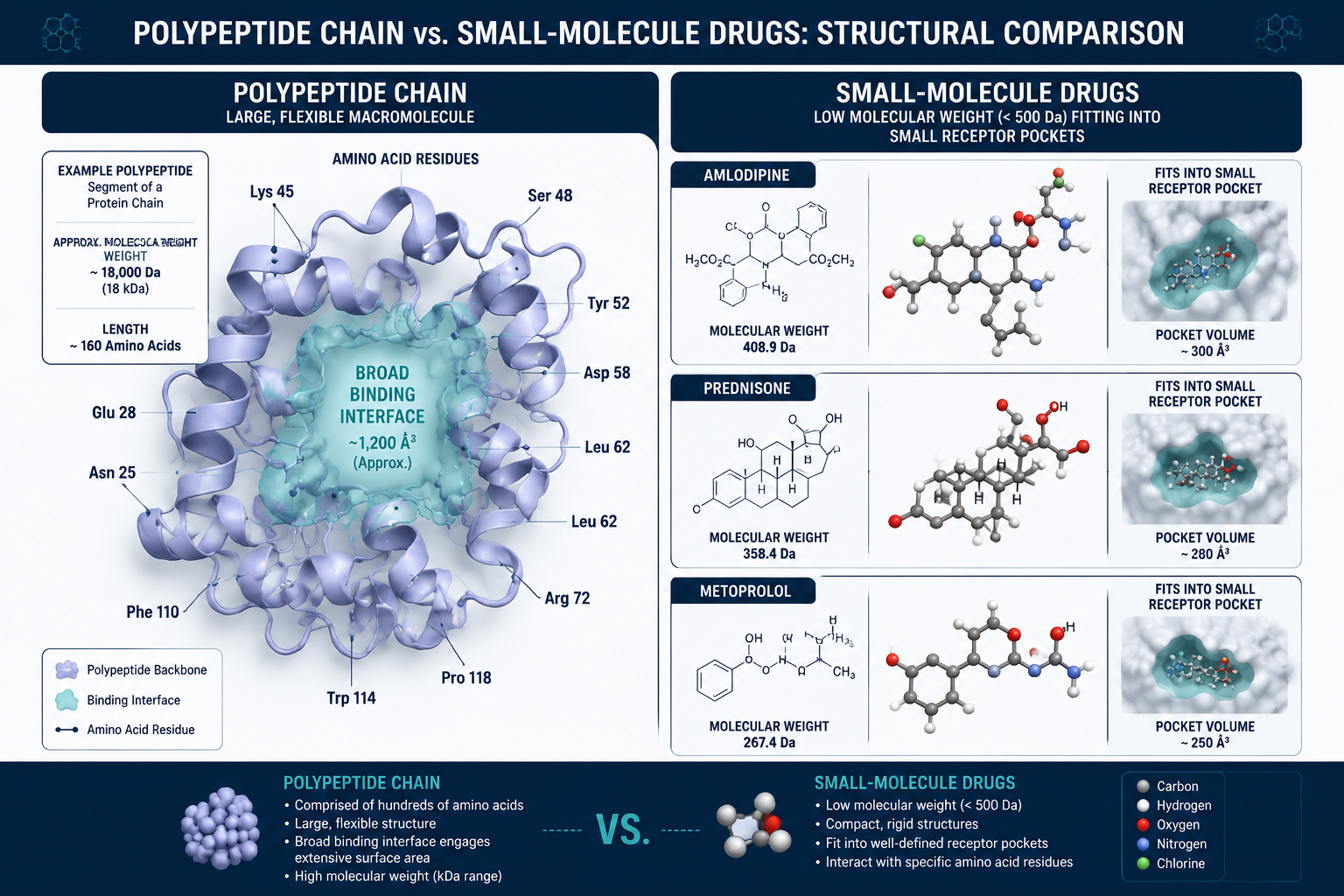
  • Small molecules like amlodipine, prednisone, and metoprolol are rigid, low-molecular-weight compounds that bind precisely to defined receptor pockets.
  • Polypeptide peptides engage broad protein-protein interaction surfaces, functioning more like molecular Velcro than a key-in-lock mechanism.
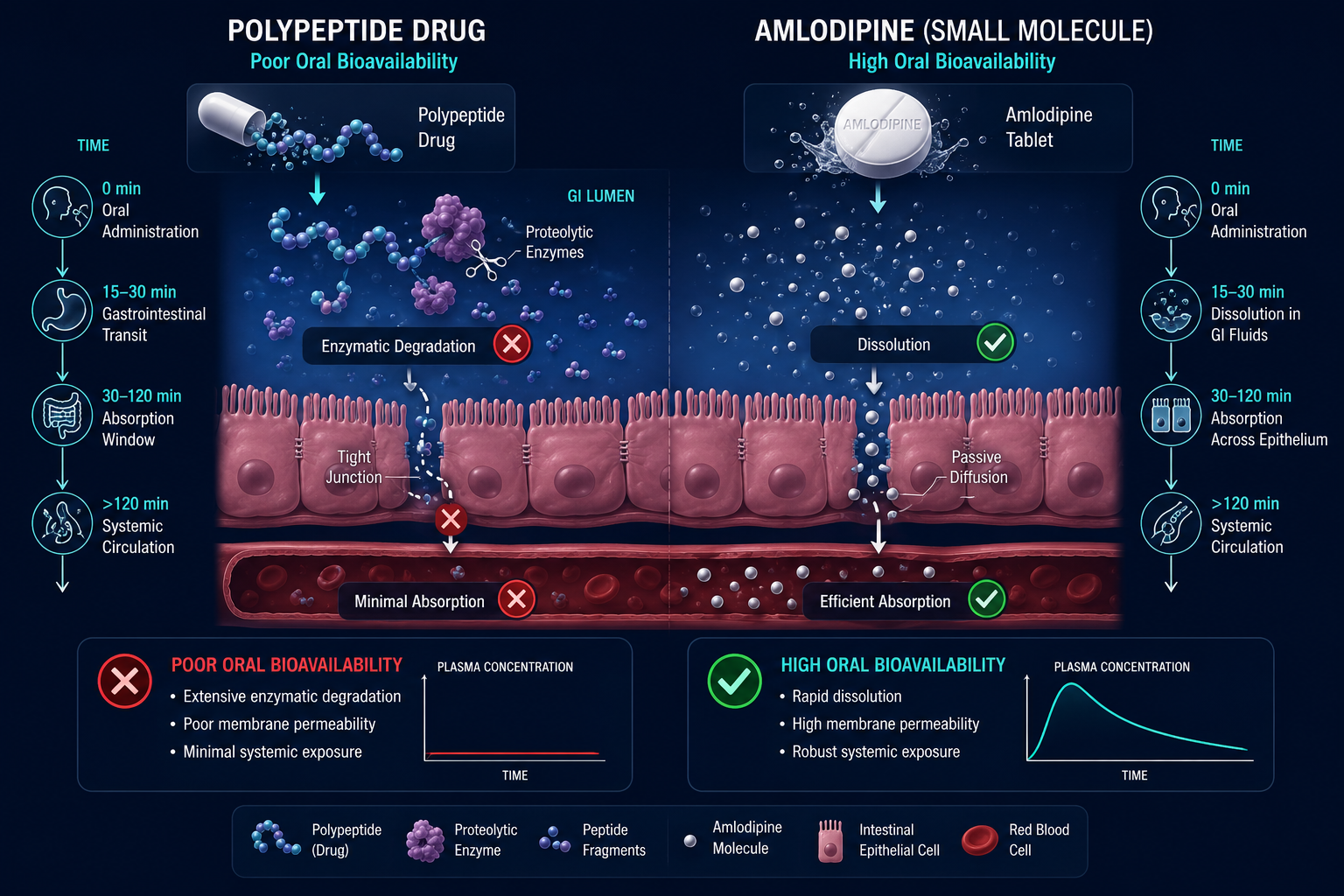
  • Small molecules generally offer oral bioavailability; peptides typically require alternative delivery due to enzymatic degradation.
  • Peptides face a conformational entropy cost upon binding that small molecules largely avoid.
  • Peptide clinical development is accelerating, with higher phase-1-to-phase-2 success rates than small molecules.

Key Takeaways

How Small Molecules Work: Lessons From Amlodipine, Prednisone, and Metoprolol

The three drugs most commonly cited in cardiovascular and anti-inflammatory research — amlodipine, prednisone, and metoprolol — are textbook examples of small-molecule pharmacology.

Amlodipine is a calcium channel blocker. It inhibits calcium ion influx into vascular smooth muscle and cardiac cells, producing vasodilation and reduced blood pressure. Its molecular weight sits well under 500 Daltons, and it binds with high precision to a defined pocket on the L-type calcium channel.

Prednisone is a synthetic glucocorticoid. It suppresses inflammation by inhibiting phospholipase A2, cutting off the production of prostaglandins and leukotrienes. Its mechanism depends on entering cells and modulating gene transcription — a task only possible because of its small size and lipophilicity.

Metoprolol selectively blocks beta-1 adrenergic receptors in the heart, reducing heart rate and myocardial contractility. Like the others, it achieves this through enthalpy-driven binding — matching hydrogen bond donors and acceptors within a compact receptor pocket.

"Small molecules derive binding affinity through precise geometric fit — they are rigid keys designed for specific locks."

This precision is their strength. It is also their limitation: small molecules struggle to disrupt large, flat protein-protein interaction (PPI) surfaces where no obvious pocket exists.

Polypeptide Peptides vs Small-Molecule Drugs: Receptor Targeting and Binding Mechanics

Polypeptides — chains of up to 40 amino acids — operate on fundamentally different principles. Rather than fitting into a small binding pocket, they spread across broad molecular interfaces, mimicking the surface of a protein partner. This makes them uniquely suited to disrupting PPIs that small molecules cannot reach.

However, this flexibility carries a cost. Peptides must shed conformational entropy — essentially paying a thermodynamic tax — to adopt the precise active shape required for binding. They exchange that flexibility for enthalpic stabilization upon target engagement. Small molecules, being structurally rigid, largely bypass this penalty.

Research on mitochondria-targeting peptides such as SS-31 (elamipretide) illustrates this well. SS-31 binds cardiolipin on the inner mitochondrial membrane — a large, diffuse lipid surface that no small molecule could engage with equivalent specificity. Explore the SS-31 mitochondrial research themes for a detailed look at this target engagement model.

Similarly, growth hormone secretagogue peptides like those reviewed in tesa peptide benefits research demonstrate how peptides activate receptor cascades through surface-level mimicry rather than pocket occupation.

Polypeptide Peptides vs Small-Molecule Drugs: Receptor Targeting and Binding Mechanics

Pharmacokinetics, Half-Life, and Tissue Specificity

This is where the practical gap between drug classes becomes most visible.

Property Small Molecules Polypeptide Peptides
Oral bioavailability Generally high Generally poor
Membrane permeability High (lipophilic) Low
Enzymatic stability Moderate to high Susceptible to proteolysis
Half-life Hours to days Minutes to hours (unmodified)
Tissue specificity Moderate High (surface-driven)

Amlodipine, prednisone, and metoprolol are all orally bioavailable precisely because their small size and lipophilicity allow passive diffusion across intestinal membranes. Peptides, by contrast, are broken down by proteases in the gut before reaching systemic circulation, which is why most peptide research protocols involve subcutaneous or intravenous delivery.

Tissue specificity tells a different story. Because peptides engage specific surface architectures, they can be engineered for highly targeted action. Research on MOTS-c metabolic flexibility and GLP-1 incretin research themes demonstrates how peptide ligands can preferentially activate receptors in metabolically relevant tissues with minimal off-target effects.

For researchers exploring peptide half-life optimization, CJC-1295 research themes offer a useful case study in how structural modifications extend plasma stability without sacrificing receptor specificity.

Polypeptide Peptides vs Small-Molecule Drugs: Clinical Trends and Research Implications

The clinical pipeline data reinforces these mechanistic distinctions. Peptides show higher phase-1-to-phase-2 success rates than small molecules, partly because their larger interaction surfaces allow more selective target engagement and a reduced likelihood of off-target toxicity.

Researchers investigating metabolic modulation, tissue repair, or neuroendocrine signaling increasingly look to peptides where small molecules have historically underperformed — particularly at PPI targets. The metabolic modulation research lines overview provides a useful reference for current peptide research directions in this space.

For quality-conscious researchers, ensuring compound integrity is essential. Reviewing quality testing protocols before sourcing any peptide for study is a practical first step.

Conclusion

The comparison of polypeptide peptides vs small-molecule drugs — illustrated through amlodipine, prednisone, and metoprolol — reveals two pharmacological philosophies operating at different scales and surfaces. Small molecules excel at precise, pocket-targeted inhibition with favorable oral pharmacokinetics. Peptides excel at broad surface engagement, PPI disruption, and tissue-selective signaling, at the cost of oral stability.

Actionable next steps for researchers in 2026:

  • Map your target: if it presents a defined binding pocket, a small molecule may suffice; if it involves a PPI surface, prioritize peptide candidates.
  • Account for delivery route early — peptide studies should plan for non-oral administration from the outset.
  • Review half-life data and consider modified analogs for extended in vivo study windows.
  • Cross-reference SS-31 dosage and timing research and tesa body composition research themes as model examples of peptide mechanistic study design.

Understanding these distinctions at a mechanistic level is the foundation of rigorous peptide research.

https://www.puretestedpeptides.com/wp-content/uploads/2026/01/buy-peptides-online.jpg 0 0 Pure Tested https://www.puretestedpeptides.com/wp-content/uploads/2026/01/buy-peptides-online.jpg Pure Tested2026-06-23 13:21:052026-07-20 15:02:21Polypeptide Peptides vs Small-Molecule Drugs: What Research on Amlodipine, Prednisone and Metoprolol Reveals About Mechanism Differences
CJC-1295 with DAC vs. Without DAC: Impact on Growth Hormone Secretion and Experimental Design

CJC-1295 with DAC vs. Without DAC: Impact on Growth Hormone Secretion and Experimental Design

June 21, 2026/0 Comments/by Pure Tested

A single structural modification — the addition of a Drug Affinity Complex linker — transforms a short-acting peptide into one with a half-life measured in days rather than minutes. That pharmacokinetic gap sits at the heart of the debate around CJC-1295 with DAC vs. Without DAC: Impact on Growth Hormone Secretion and Experimental Design, and it shapes every variable a researcher must account for when designing a growth hormone (GH) study.

Key Takeaways

  • CJC-1295 with DAC binds covalently to serum albumin, extending its half-life to approximately 6-8 days.
  • CJC-1295 without DAC (Mod GRF 1-29) has a half-life of roughly 30 minutes and produces pulsatile GH release.
  • The DAC variant sustains GH elevation but may disrupt natural pulsatile secretion and risk receptor desensitization.
  • Experimental design choices — dosing frequency, combination partners, and outcome measures — differ significantly between the two forms.
  • Researchers often pair CJC-1295 without DAC with GHRPs like Ipamorelin to closely mimic physiological GH rhythms.

Key Takeaways

The Molecular Difference: What DAC Actually Does

The Drug Affinity Complex (DAC) is a maleimidopropionic acid linker attached to the C-terminus of CJC-1295. This addition allows the peptide to form a covalent bond with the Cys34 residue of serum albumin, effectively anchoring it to a long-lived carrier protein circulating in the bloodstream.

The result is a meaningful increase in molecular weight — from approximately 3,367 Da (without DAC) to roughly 3,647 Da (with DAC) — and a dramatic extension of circulating half-life.

Feature CJC-1295 with DAC CJC-1295 without DAC
Half-life ~6-8 days ~30 minutes
Molecular weight ~3,647 Da ~3,367 Da
Albumin binding Covalent (Cys34) None
GH release pattern Sustained, continuous Pulsatile, transient
Dosing frequency Once or twice weekly Multiple times daily

For researchers exploring CJC-1295 research findings, understanding this structural distinction is the essential first step before any protocol is designed.


GH Secretion Patterns: Sustained Elevation vs. Physiological Pulses

GH Secretion Patterns: Sustained Elevation vs. Physiological Pulses

The pharmacokinetic difference between the two variants produces fundamentally different growth hormone secretion profiles, each with distinct research implications.

CJC-1295 with DAC: Continuous Stimulation

Clinical data from Phase I and II trials conducted in the mid-2000s showed that a single dose of CJC-1295 with DAC produced a 2-10 fold increase in GH levels lasting up to six days. IGF-1 levels remained elevated for 9-11 days following that single administration. This sustained profile makes the DAC variant well-suited for studies requiring prolonged GH elevation without frequent dosing.

However, continuous GH stimulation carries a notable concern: receptor desensitization. Prolonged activation of GHRH receptors may reduce their sensitivity over time, potentially blunting the GH response in longer-term protocols.

CJC-1295 without DAC: Mimicking Natural Rhythms

CJC-1295 without DAC — also called Mod GRF 1-29 — produces short, sharp GH pulses that closely mirror the body's natural pulsatile secretion pattern. This pulsatility is considered important for maintaining insulin sensitivity and preserving receptor responsiveness.

"Pulsatile GH release is not merely a physiological quirk — it is a functional requirement for downstream signaling fidelity."

Researchers focused on physiological accuracy tend to favor the non-DAC variant. It is frequently combined with growth hormone-releasing peptides (GHRPs) such as Ipamorelin to amplify pulsatile release. The Sermorelin, Ipamorelin, and CJC-1295 combination represents a common multi-peptide research approach built on this principle. Similarly, Ipamorelin and Sermorelin stack research provides additional context for synergistic GHRH-GHRP protocols.


Experimental Design Considerations for Each Variant

Experimental Design Considerations for Each Variant

Choosing between these two forms in a research context is not simply a matter of convenience — it determines the biological question the experiment can validly answer.

When to Use the DAC Variant

  • Studies examining sustained GH elevation and downstream IGF-1 responses
  • Protocols where infrequent dosing (once or twice weekly) is operationally necessary
  • Research into conditions historically linked to GH deficiency, reflecting the peptide's Phase II trial history

When to Use the Non-DAC Variant

  • Protocols designed to replicate natural pulsatile GH secretion
  • Studies assessing receptor sensitivity over time
  • Combination research with GHRPs, where timing and pulse synchronization matter

For researchers also exploring related GHRH analogs, comparing Tesamorelin vs. Sermorelin offers useful pharmacokinetic context. The Tesamorelin and CJC-1295 blend research further illustrates how multi-peptide designs can address complex GH axis questions. Researchers interested in body composition outcomes may also find the Tesamorelin body composition research themes page a valuable reference point.

Dosing frequency is perhaps the most practical design variable. The DAC variant's weekly schedule reduces protocol complexity, while the non-DAC variant's multiple-daily-injection requirement demands tighter experimental control but yields data more reflective of physiological GH dynamics.


Conclusion

The comparison of CJC-1295 with DAC vs. Without DAC: Impact on Growth Hormone Secretion and Experimental Design ultimately comes down to one core question: does the research require sustained GH elevation or physiological pulsatility?

The DAC variant offers convenience and prolonged action through albumin binding, making it appropriate for sustained-elevation protocols. The non-DAC variant preserves natural GH rhythm, reduces receptor desensitization risk, and pairs effectively with GHRPs for synergistic research designs.

Actionable next steps for researchers in 2026:

  1. Define the GH secretion profile your study requires before selecting a variant.
  2. Account for dosing frequency in your experimental timeline and resource planning.
  3. Consider combination protocols with verified GHRPs when pulsatile secretion fidelity is the priority.
  4. Review available CJC-1295 research findings and related blend data to inform protocol selection.
https://www.puretestedpeptides.com/wp-content/uploads/2026/06/CJC-1295-with-DAC-vs.-Without-DAC-Impact-on-Growth-Hormone-Secretion-and-Experimental-Design.png 1024 1536 Pure Tested https://www.puretestedpeptides.com/wp-content/uploads/2026/01/buy-peptides-online.jpg Pure Tested2026-06-21 13:07:122026-07-20 15:02:36CJC-1295 with DAC vs. Without DAC: Impact on Growth Hormone Secretion and Experimental Design
5-Amino-1MQ Peptide: Mechanisms of NNMT Inhibition and Research into Metabolic Disorders

5-Amino-1MQ Peptide: Mechanisms of NNMT Inhibition and Research into Metabolic Disorders

June 21, 2026/0 Comments/by Pure Tested

{"cover":"Professional landscape format (1536×1024) hero image with bold text overlay: '5-Amino-1MQ: NNMT Inhibition & Metabolic Research' in extra large 72pt white bold sans-serif font with dark semi-transparent background panel, centered upper third. Background shows a high-resolution 3D molecular structure of the NNMT enzyme with glowing blue and teal energy pathways representing NAD+ biosynthesis, surrounded by abstract mitochondrial networks. Color palette: deep navy, electric teal, white. Editorial magazine cover quality, high contrast, scientific aesthetic.","content":["Detailed landscape format (1536×1024) scientific illustration showing a cross-section molecular diagram of the NNMT enzyme active site with 5-Amino-1MQ small molecule docking into the binding pocket, highlighted in glowing amber. Surrounding elements show the SAM cycle with methyl group transfer arrows blocked by a red inhibition symbol, and NAD+ salvage pathway molecules flowing upward in teal. Clean white background with subtle grid lines, labeled molecular structures, professional biochemistry textbook aesthetic.","Landscape format (1536×1024) split-panel infographic comparing white adipose tissue cell morphology before and after NNMT inhibition. Left panel shows enlarged lipid-filled adipocytes in pale yellow with low mitochondrial density markers. Right panel shows reduced adipocyte size with dense mitochondrial networks glowing orange-red, representing increased energy expenditure. Central dividing line labeled 'NNMT Inhibition by 5-Amino-1MQ'. Clean clinical infographic style, teal and orange color scheme, professional research poster aesthetic.","Landscape format (1536×1024) overhead laboratory research scene showing a researcher in a white lab coat reviewing preclinical data charts on a tablet, with glass vials of compound samples in a rack labeled '5-Amino-1MQ', a metabolic assay plate, and printed graphs showing fat mass reduction curves over time. Soft clinical lighting, shallow depth of field on the compound vials in foreground, blurred researcher in background. Muted blue-gray and white tones with warm amber lab lighting accents, photorealistic editorial quality."]

Professional landscape hero image () with : "5-Amino-1MQ Peptide: Mechanisms of NNMT Inhibition and Research into Metabolic

Nicotinamide N-methyltransferase (NNMT) is overexpressed in the fat tissue of obese individuals at rates significantly higher than in lean controls — a detail that has pushed this enzyme to the center of metabolic research. The compound drawing the most attention as a precise NNMT inhibitor is 5-Amino-1MQ, a small molecule with a targeted mechanism that may reshape how researchers approach obesity, insulin resistance, and metabolic syndrome. Understanding the 5-Amino-1MQ Peptide: Mechanisms of NNMT Inhibition and Research into Metabolic Disorders requires a close look at the biochemistry involved and what preclinical data currently shows.

Key Takeaways

  • 5-Amino-1MQ directly inhibits NNMT, redirecting nicotinamide toward NAD+ biosynthesis and improving mitochondrial energy output
  • Preclinical models show reductions in white adipose tissue mass without changes in food intake, suggesting a direct metabolic effect
  • The compound also preserves S-adenosylmethionine (SAM) for essential methylation reactions, influencing gene expression
  • Research is currently limited to animal models; no human clinical trials have been published as of 2026
  • Oral dosing in research settings typically ranges from 50 to 100 mg per day with a half-life of 4 to 7 hours

Key Takeaways

How 5-Amino-1MQ Inhibits NNMT at the Molecular Level

NNMT is an enzyme responsible for methylating nicotinamide, converting it into 1-methylnicotinamide (1-MNA). This reaction consumes both nicotinamide and S-adenosylmethionine (SAM), the body's primary methyl donor. When NNMT activity is high — as it often is in obese or metabolically compromised tissue — this process depletes two critical resources simultaneously.

5-Amino-1MQ blocks the NNMT active site, preventing this methylation reaction from occurring. The downstream effects are significant:

  • Nicotinamide is preserved, making it available for the NAD+ salvage pathway
  • NAD+ levels rise, supporting mitochondrial biogenesis and oxidative phosphorylation
  • SAM is conserved, keeping methyl groups available for DNA methylation, histone modification, and other regulatory processes

This dual preservation of nicotinamide and SAM creates a cascade that improves cellular energy metabolism at a foundational level. Researchers studying metabolic flexibility and mitochondrial function have noted similar upstream effects with other metabolic compounds, but the NNMT-specific targeting of 5-Amino-1MQ makes its mechanism particularly precise.

For a broader look at how peptides interact with metabolic pathways, the ultimate guide to peptide therapy provides useful foundational context.


How 5-Amino-1MQ Inhibits NNMT at the Molecular Level

Preclinical Research: Adipose Tissue and Insulin Sensitivity

The most compelling data on 5-Amino-1MQ Peptide: Mechanisms of NNMT Inhibition and Research into Metabolic Disorders comes from animal studies examining body composition and metabolic markers.

Key findings from preclinical models include:

Outcome Measured Observed Result
White adipose tissue mass Significant reduction
Food intake No meaningful change
Insulin sensitivity Measurable improvement
Energy expenditure Increased
Mitochondrial function Enhanced

The fact that fat mass decreased without changes in food consumption is a critical detail. It points to a direct metabolic effect rather than an appetite-suppressing one. The compound appears to shift how cells process and expend energy rather than simply reducing caloric input.

This profile makes 5-Amino-1MQ a subject of interest alongside other metabolic research compounds. For comparison, researchers have also examined SLU-PP-332 for metabolic modulation and Tesamorelin for body composition outcomes, both of which target metabolic dysfunction through different mechanisms.

Those interested in exploring the compound itself can review the 5-Amino-1MQ research profile for detailed compound information.


Preclinical Research: Adipose Tissue and Insulin Sensitivity

Research Limitations and Current Status in 2026

Despite promising preclinical results, the research landscape for 5-Amino-1MQ Peptide: Mechanisms of NNMT Inhibition and Research into Metabolic Disorders carries important caveats that any serious reader should weigh.

Current limitations include:

  • All published efficacy data comes from animal models, not human trials
  • Long-term safety data is limited even in preclinical settings
  • Independent replication of findings remains sparse
  • No official clinical trial announcements have been made as of 2026

In research settings, oral dosing protocols typically use 50 to 100 mg per day, with the compound's half-life of approximately 4 to 7 hours supporting once-daily administration. However, these parameters are derived from preclinical work and cannot be extrapolated directly to human use.

Researchers exploring metabolic peptides more broadly may also find value in reviewing mitochondrial longevity research and MOTS-c metabolic research themes, which share mechanistic overlap with NAD+ pathway modulation.


Conclusion

The science behind 5-Amino-1MQ Peptide: Mechanisms of NNMT Inhibition and Research into Metabolic Disorders is precise, biologically grounded, and genuinely compelling. By blocking NNMT, this compound preserves nicotinamide for NAD+ synthesis, protects SAM for essential methylation reactions, and drives measurable improvements in fat mass and insulin sensitivity in animal models — all without altering food intake.

Actionable next steps for researchers and informed readers:

  1. Review the current 5-Amino-1MQ compound data to understand purity standards and research-grade sourcing
  2. Examine how NNMT inhibition compares mechanistically to other metabolic compounds like Tesamorelin and SLU-PP-332
  3. Monitor peer-reviewed literature for human trial announcements, which will be the critical next step in validating preclinical findings
  4. Approach any application outside controlled research settings with caution until human safety and efficacy data are established

The NNMT pathway is a legitimate and underexplored frontier in metabolic science. 5-Amino-1MQ sits at its center — and the research, while early, warrants close attention.

https://www.puretestedpeptides.com/wp-content/uploads/2026/06/5-Amino-1MQ-Peptide-Mechanisms-of-NNMT-Inhibition-and-Research-into-Metabolic-Disorders.png 1024 1536 Pure Tested https://www.puretestedpeptides.com/wp-content/uploads/2026/01/buy-peptides-online.jpg Pure Tested2026-06-21 13:06:042026-07-20 15:02:375-Amino-1MQ Peptide: Mechanisms of NNMT Inhibition and Research into Metabolic Disorders
PT-141 Peptide: Melanocortin Receptor Agonism and Its Role in Sexual Function Research

PT-141 Peptide: Melanocortin Receptor Agonism and Its Role in Sexual Function Research

June 21, 2026/0 Comments/by Pure Tested

Roughly 40% of women and 30% of men report some form of sexual dysfunction during their lifetimes, yet for decades, pharmacological research focused almost exclusively on vascular mechanisms. PT-141 Peptide: Melanocortin Receptor Agonism and Its Role in Sexual Function Research represents a fundamentally different approach — one that targets desire and motivation at the level of the brain rather than blood flow.

Key Takeaways

  • PT-141 (bremelanotide) acts as an agonist at melanocortin receptor subtypes MC3R and MC4R in the central nervous system, not through vascular pathways.
  • The FDA approved bremelanotide under the brand name Vyleesi in June 2019 for hypoactive sexual desire disorder (HSDD) in premenopausal women.
  • Phase IIB trials showed a 33.5% positive erectile response rate in men treated with bremelanotide, versus 8.5% in the placebo group.
  • Its cyclic lactam structure resists enzymatic breakdown, giving it biological effects that outlast its 2.7-hour plasma half-life.
  • Research continues to explore its applications in both male and female sexual dysfunction, including cases where PDE5 inhibitors have failed.

Key Takeaways

Melanocortin Receptor Subtypes and the Central Mechanism of PT-141

Understanding PT-141 Peptide: Melanocortin Receptor Agonism and Its Role in Sexual Function Research begins with the melanocortin system itself. The melanocortin receptor family includes five G-protein-coupled receptor subtypes (MC1R through MC5R), each distributed across different tissues with distinct physiological roles.

PT-141 selectively targets MC3R and MC4R, both of which are expressed in regions of the central nervous system associated with motivation, reward, and autonomic regulation. MC4R, in particular, is densely expressed in the hypothalamus — a brain region central to sexual behavior and hormonal signaling.

This central mechanism sets PT-141 apart from phosphodiesterase type 5 (PDE5) inhibitors such as sildenafil. PDE5 inhibitors work peripherally by enhancing blood flow in genital tissue, and they require sexual stimulation to be effective. PT-141, by contrast, modulates desire and motivation upstream — in the brain — before any peripheral response occurs.

"PT-141 acts on the neural circuits that generate sexual interest, not merely the vascular response that follows it."

This distinction is clinically significant. Conditions like HSDD are characterized by a deficiency of desire, not a failure of vascular response. A vascular drug cannot address a motivational deficit. Melanocortin receptor agonism can.

For researchers exploring broader neuroendocrine signaling, the central arousal research context for PT-141 provides additional mechanistic background worth reviewing alongside this work.


Clinical Research Findings: Efficacy Across Male and Female Populations

Clinical Research Findings: Efficacy Across Male and Female Populations

Evidence in Women

The RECONNECT Phase III clinical trials provided the pivotal data that led to FDA approval of bremelanotide (Vyleesi) in June 2019. These trials enrolled premenopausal women diagnosed with HSDD and demonstrated statistically significant improvements in:

  • Sexual desire scores on validated patient-reported outcome measures
  • Distress levels associated with low sexual desire
  • Overall satisfaction with sexual experiences

The approved dosing protocol calls for 1.75 mg administered subcutaneously at least 45 minutes before anticipated sexual activity. This on-demand dosing model differs from daily hormonal therapies, offering flexibility that many patients prefer.

Research has also examined bremelanotide in women with female sexual arousal disorder (FSAD), finding positive effects on subjective sexual response — suggesting the compound's utility may extend beyond HSDD alone.

Evidence in Men

Although Vyleesi is FDA-approved only for premenopausal women with HSDD, Phase IIB trials in men produced compelling data. 33.5% of bremelanotide-treated men experienced positive erectile responses compared to 8.5% in the placebo group — a four-fold difference.

Perhaps more notable is the compound's performance in men who did not respond to sildenafil. Bremelanotide demonstrated a capacity to rescue erectile function in this treatment-resistant subgroup, pointing to its value in cases where vascular-focused therapies fall short.

Off-label use data in men has also reported improvements in:

Outcome Responder Rate
Erectile function 52%
Sexual desire 39%
Performance anxiety reduction 39%
Orgasm quality 17%

Researchers interested in peptide combinations addressing multiple physiological pathways may find value in reviewing peptide blend research for comparative context.


Pharmacokinetics, Safety Profile, and Research Considerations

Pharmacokinetics, Safety Profile, and Research Considerations

Structural Stability and Half-Life

PT-141's cyclic lactam structure is a key pharmacological feature. This configuration provides resistance to enzymatic degradation, which explains why biological effects persist beyond the compound's plasma elimination half-life of approximately 2.7 hours. Researchers studying peptide stability will recognize this as a meaningful advantage over linear peptide analogs.

Early intranasal administration studies demonstrated significant erectile responses at doses above 7 mg, with onset approximately 30 minutes post-administration — suggesting the compound's mechanism is rapid once absorption occurs.

Adverse Effect Profile

Common adverse effects reported in clinical trials include:

  • Flushing (the most frequently reported event)
  • Headache
  • Injection-site reactions
  • Nausea

A less common but notable finding is focal hyperpigmentation, observed in individuals using the medication more than eight times per month. This effect is linked to MC1R activity in skin melanocytes, a reminder that melanocortin receptor agonism is not tissue-specific in its entirety.

For researchers sourcing research-grade material, the PT-141 research context, Q&A, and controls page outlines purity standards and experimental controls relevant to in vitro and in vivo study design.

Those examining neuroendocrine peptide interactions more broadly may also find the neuroendocrine and innate immunity research overview useful for situating melanocortin signaling within wider physiological networks.

Researchers exploring innovative delivery systems for peptides like PT-141 should consult the innovative peptide delivery systems research overview for emerging administration strategies. Additionally, those comparing receptor-level agonism across compound classes may benefit from the GLP-1 dual receptor agonism breakdown as a structural parallel in receptor-targeted peptide pharmacology.


Conclusion

PT-141 Peptide: Melanocortin Receptor Agonism and Its Role in Sexual Function Research occupies a unique and well-supported position in the landscape of sexual health pharmacology. By targeting MC3R and MC4R in the central nervous system, bremelanotide addresses the neurological roots of sexual desire — a mechanism that neither hormonal therapies nor vascular drugs can replicate.

Actionable next steps for researchers and clinicians:

  1. Review the RECONNECT trial data in full to understand validated outcome measures used in HSDD research.
  2. Examine the off-label male data critically, noting the distinction between Phase IIB findings and anecdotal reports.
  3. Assess the cyclic lactam structural features of PT-141 when designing stability comparisons with other research peptides.
  4. Consider the focal hyperpigmentation risk as a dose-frequency variable in any long-term study protocol.
  5. Cross-reference melanocortin receptor distribution maps when hypothesizing secondary physiological effects beyond sexual function.

The central nervous system pathway that PT-141 activates remains one of the most promising and underexplored frontiers in sexual medicine research as of 2026.

https://www.puretestedpeptides.com/wp-content/uploads/2026/06/PT-141-Peptide-Melanocortin-Receptor-Agonism-and-Its-Role-in-Sexual-Function-Research.png 1024 1536 Pure Tested https://www.puretestedpeptides.com/wp-content/uploads/2026/01/buy-peptides-online.jpg Pure Tested2026-06-21 13:05:182026-07-20 15:02:38PT-141 Peptide: Melanocortin Receptor Agonism and Its Role in Sexual Function Research
CJC-1295 with Ipamorelin: Optimizing Growth Hormone Release for Research Studies

CJC-1295 with Ipamorelin: Optimizing Growth Hormone Release for Research Studies

June 20, 2026/0 Comments/by Pure Tested

}

Professional () hero image with : 'CJC-1295 with Ipamorelin: Optimizing Growth Hormone Release' in extra large white with

A single subcutaneous injection of CJC-1295 produced a 2- to 10-fold increase in mean plasma growth hormone levels lasting up to six days — a finding that reshaped how researchers think about pulsatile GH stimulation. When paired with Ipamorelin, this effect takes on a new dimension entirely. Understanding the science behind CJC-1295 with Ipamorelin: optimizing growth hormone release for research studies requires examining both peptides at the receptor level and then exploring what happens when their pathways converge.

Detailed () scientific diagram illustration showing dual receptor pathway activation: left panel labeled GHRH receptor with

Key Takeaways

  • CJC-1295 is a long-acting GHRH analog; Ipamorelin is a selective ghrelin receptor agonist — they activate distinct GH-release pathways.
  • Combining both peptides produces greater GH pulse amplitude and frequency than either compound alone.
  • A 2006 clinical study confirmed CJC-1295's extended half-life of 5.8 to 8.1 days and elevated IGF-1 for up to 11 days.
  • Neither peptide is FDA-approved; both are classified as research chemicals and appear on the WADA prohibited list.
  • No published randomized controlled trials exist for the combination as of 2026, making rigorous preclinical study design critical.

Mechanisms Behind the Synergy

CJC-1295 is a modified analog of Growth Hormone-Releasing Hormone (GHRH). It binds to GHRH receptors on the anterior pituitary, signaling somatotroph cells to synthesize and release GH. Its key structural modification — Drug Affinity Complex (DAC) technology — allows it to bind albumin in plasma, dramatically extending its half-life to between 5.8 and 8.1 days. This stands in sharp contrast to sermorelin and CJC-1295 comparisons where sermorelin clears the body in roughly 10 to 12 minutes and tesa in approximately 30 minutes.

Ipamorelin operates through an entirely separate mechanism. It mimics ghrelin by binding to the GHS-R1a receptor, a G-protein-coupled receptor found on pituitary somatotrophs and hypothalamic neurons. Critically, Ipamorelin achieves GH stimulation without meaningfully elevating cortisol or prolactin, which distinguishes it from older secretagogues like GHRP-6 or GHRP-2.

When both peptides are used together, the result is a dual-pathway amplification of GH release. GHRH receptor activation raises the ceiling on GH output, while ghrelin receptor stimulation increases the frequency of GH pulses. Research models studying this combination can explore the CJC-1295 no-DAC research themes alongside full DAC variants to isolate half-life variables.


Clinical Evidence and Research Protocols for CJC-1295 with Ipamorelin

The foundational human data for CJC-1295 comes from a pivotal 2006 study published in the Journal of Clinical Endocrinology and Metabolism. Key findings included:

Parameter Observed Outcome
Plasma GH increase 2- to 10-fold above baseline
Duration of GH elevation Up to 6 days post-injection
IGF-1 increase 1.5- to 3-fold above baseline
IGF-1 elevation duration 9 to 11 days
Estimated half-life 5.8 to 8.1 days
Tolerated dose range 30 to 60 mcg/kg

No serious adverse reactions were observed at these doses. However, no additional human RCTs have been published since 2006, and the CJC-1295/Ipamorelin combination has not been formally tested in published human controlled trials as of 2026.

Clinical Evidence and Research Protocols for CJC-1295 with Ipamorelin

For preclinical research, the combination is typically studied using models that track pulsatile GH secretion patterns over 24-hour windows. Researchers interested in multi-peptide blends can also review tesa, CJC-1295, and Ipamorelin blend protocols to understand how additional GHRH analogs interact within the same framework. A related resource on combining tesa with CJC-1295 and Ipamorelin safety considerations addresses stack-level safety questions relevant to protocol design.

"While CJC-1295 and Ipamorelin can synergistically enhance GH release, their long-term safety and efficacy remain under-researched." — Dr. Quinn Stillson, April 2026


Regulatory Status, Risks, and Research Sourcing

As of 2026, neither CJC-1295 nor Ipamorelin holds FDA approval for any indication. Both are classified as research chemicals for laboratory use only and are listed on the World Anti-Doping Agency's prohibited substances list. This regulatory status has direct implications for study design, institutional review, and sourcing standards.

Key risk considerations for research models include:

  • Potential receptor desensitization with prolonged GH secretagogue exposure
  • Difficulty assessing long-term consequences of sustained elevated IGF-1 without longitudinal human data
  • Variability in peptide purity across suppliers, which can confound results

Sourcing peptides with verified purity documentation is non-negotiable for valid research outcomes. Reviewing certificates of analysis before procurement ensures compound integrity. Researchers building broader metabolic panels may also find value in MOTS-c metabolic flexibility research themes or BPC-157 research themes as complementary study arms.

For those sourcing the combination directly, the CJC-1295 with Ipamorelin 10mg research product provides a pre-blended option with documented testing standards.

Regulatory Status, Risks, and Research Sourcing


Conclusion

CJC-1295 with Ipamorelin: optimizing growth hormone release for research studies represents one of the most mechanistically coherent dual-peptide strategies in current GH research. The GHRH/ghrelin receptor co-activation model offers a compelling framework for studying pulsatile GH dynamics, IGF-1 modulation, and downstream metabolic effects.

Actionable next steps for researchers in 2026:

  1. Define your GH endpoint clearly — pulse amplitude, IGF-1 area under the curve, or downstream tissue response.
  2. Source verified, tested peptides with published certificates of analysis to eliminate purity as a confounding variable.
  3. Design time-course sampling protocols that capture the extended half-life profile of CJC-1295 (up to 11 days for IGF-1 elevation).
  4. Consult current regulatory guidance before initiating any study involving WADA-listed compounds.
  5. Review adjacent peptide research — including Ipamorelin and sermorelin stack research — to contextualize your findings within the broader secretagogue literature.

The data foundation exists. Rigorous, well-sourced research design is what transforms that foundation into meaningful scientific contribution.

https://www.puretestedpeptides.com/wp-content/uploads/2026/06/CJC-1295-with-Ipamorelin-Optimizing-Growth-Hormone-Release-for-Research-Studies.png 1024 1536 Pure Tested https://www.puretestedpeptides.com/wp-content/uploads/2026/01/buy-peptides-online.jpg Pure Tested2026-06-20 13:03:202026-07-20 15:02:41CJC-1295 with Ipamorelin: Optimizing Growth Hormone Release for Research Studies
5-Amino-1MQ Peptide: Exploring its Metabolic Pathway and Emerging Research Applications

5-Amino-1MQ Peptide: Exploring its Metabolic Pathway and Emerging Research Applications

June 19, 2026/0 Comments/by Pure Tested

Obesity affects more than one billion people worldwide, yet the enzyme at the center of its cellular machinery — nicotinamide N-methyltransferase (NNMT) — remains largely outside mainstream awareness. Research into 5-Amino-1MQ Peptide: Exploring its Metabolic Pathway and Emerging Research Applications has placed this small molecule at the forefront of metabolic science, offering a targeted approach to fat regulation and cellular energy that differs fundamentally from conventional strategies.

Key Takeaways

  • 5-Amino-1MQ selectively inhibits NNMT, an enzyme overexpressed in the fat tissue of obese individuals, raising intracellular NAD+ levels and activating key metabolic regulators.
  • Preclinical studies in obese mice show significant reductions in body weight and white adipose tissue without changes in food intake.
  • Aged mice treated with 5-Amino-1MQ demonstrated up to a 60% improvement in muscle function when combined with exercise, suggesting anti-sarcopenia potential.
  • The compound also appears to alter gut microbiome composition, adding another layer to its metabolic influence.
  • As of 2026, 5-Amino-1MQ remains a research compound with no approved human clinical trials, requiring further validation before any therapeutic conclusions can be drawn.

Key Takeaways

How 5-Amino-1MQ Targets the Metabolic Pathway

The core mechanism of 5-Amino-1MQ centers on NNMT inhibition. NNMT is an enzyme found at elevated levels in the adipose tissue of obese individuals. It consumes SAM (S-adenosylmethionine) and diverts it away from NAD+ biosynthesis, effectively slowing the cell's energy machinery.

By selectively blocking NNMT, 5-Amino-1MQ redirects metabolic resources. Within 48 hours of administration in diet-induced obese mice, researchers observed a 34% increase in intracellular NAD+ concentrations. This surge in NAD+ then activates sirtuins — particularly SIRT1 — which are proteins that regulate mitochondrial biogenesis, fat oxidation, and energy expenditure.

Key metabolic effects observed in preclinical models:

Effect Observation
NAD+ increase 34% within 48 hours
Body weight reduction Significant vs. control
White adipose tissue mass Measurably reduced
Food intake change None observed
Muscle function (aged mice + exercise) 60% improvement

This cascade — NNMT inhibition leading to NAD+ elevation, sirtuin activation, and mitochondrial enhancement — forms the backbone of 5-Amino-1MQ's proposed metabolic pathway. For researchers interested in related mitochondrial energy research, MOTS-c mitochondrial research themes offer a useful comparative framework.

"Raising NAD+ through NNMT inhibition represents a fundamentally different strategy than caloric restriction — it targets the enzyme machinery directly."

The compound also shows promise for metabolic syndrome components, including insulin resistance and dyslipidemia, in preclinical models. This positions it alongside other metabolically active compounds such as those explored in SLU-PP-332 metabolic research.


How 5-Amino-1MQ Targets the Metabolic Pathway

Emerging Research Applications of 5-Amino-1MQ Peptide

Beyond fat metabolism, 5-Amino-1MQ Peptide: Exploring its Metabolic Pathway and Emerging Research Applications reveals several compelling research directions.

Muscle Function and Aging

A 2024 preclinical study found that aged mice receiving 5-Amino-1MQ showed a 40% improvement in grip strength — double the 20% improvement seen with exercise alone. When treatment was combined with exercise, muscle function improved by 60%. This finding positions 5-Amino-1MQ as a candidate for research into age-related sarcopenia, a field also explored through mitochondrial longevity-focused compounds.

Gut Microbiome Modulation

Research in obese mice indicates that 5-Amino-1MQ treatment increases the abundance of Lactobacillus species — bacteria associated with favorable metabolic outcomes. This gut-metabolism connection adds a systemic dimension to what was initially viewed as a purely cellular mechanism.

Pharmacokinetics

  • Oral half-life: approximately 6.9 hours
  • Typical research dose range: 50–100 mg daily
  • Supports once-daily dosing regimens

This oral bioavailability profile distinguishes 5-Amino-1MQ from many peptide compounds that require injection. Researchers comparing delivery methods may also find value in reviewing NAD+ scientific evidence for related pathway context.

Safety and Regulatory Status

Preclinical studies report no significant adverse effects at therapeutic doses. However, no published human clinical trials exist as of 2026, and the compound remains classified as a research chemical — not approved by the FDA for therapeutic use. Independent replication of existing findings is also limited, which is a meaningful caveat for any research team evaluating this compound.

For those sourcing compounds for research, peptide purity testing and working with a best peptide manufacturer are critical steps in ensuring data integrity.


Emerging Research Applications of 5-Amino-1MQ Peptide

Research Limitations and the Road Ahead

The science behind 5-Amino-1MQ Peptide: Exploring its Metabolic Pathway and Emerging Research Applications is promising, but it carries important caveats. Most studies originate from a small number of research groups, and independent replication remains sparse. All data are preclinical, meaning translation to human physiology is unconfirmed.

Future research directions may include:

  • Muscle regeneration therapy models
  • Synergistic protocols combining 5-Amino-1MQ with structured exercise in aging populations
  • Gut microbiome interaction studies in metabolic syndrome models
  • Long-term safety profiling across diverse preclinical models

Researchers exploring adjacent metabolic pathways may also benefit from reviewing Tesamorelin peptide research and AOD-9604 fat metabolism research for comparative context.


Conclusion

5-Amino-1MQ occupies a genuinely unique space in metabolic research. Its selective inhibition of NNMT, downstream elevation of NAD+, and activation of sirtuin pathways create a multi-layered mechanism that addresses fat storage, energy regulation, and potentially muscle aging from a single molecular target. The gut microbiome findings add further depth to an already compelling preclinical profile.

Actionable next steps for researchers:

  1. Review the existing preclinical literature critically, noting the limited number of independent replication studies.
  2. Ensure any research-grade compound is sourced from verified, purity-tested suppliers and review quality testing protocols before procurement.
  3. Design studies that pair 5-Amino-1MQ with exercise interventions, given the synergistic muscle function data.
  4. Monitor regulatory updates, as the compound's status may evolve as human trial data emerge.
  5. Cross-reference findings with related NAD+ and mitochondrial pathway research to build a more complete metabolic picture.

The compound is not a clinical therapy — it is a research tool with significant potential. Treating it as such, with rigorous methodology and appropriate sourcing standards, is the most responsible path forward.

https://www.puretestedpeptides.com/wp-content/uploads/2026/06/5-Amino-1MQ-Peptide-Exploring-its-Metabolic-Pathway-and-Emerging-Research-Applications.png 1024 1536 Pure Tested https://www.puretestedpeptides.com/wp-content/uploads/2026/01/buy-peptides-online.jpg Pure Tested2026-06-19 13:07:122026-07-20 15:02:435-Amino-1MQ Peptide: Exploring its Metabolic Pathway and Emerging Research Applications
CJC-1295 With Ipamorelin: Why Researchers Pair Them, What Pulsatile GH Signaling Looks Like, and What to Measure

CJC-1295 With Ipamorelin: Why Researchers Pair Them, What Pulsatile GH Signaling Looks Like, and What to Measure

June 18, 2026/0 Comments/by Pure Tested

{"cover":"Professional landscape format (1536×1024) hero image with bold text overlay: 'CJC-1295 With Ipamorelin: Pulsatile GH Signaling Explained' in extra large 72pt white bold sans-serif font with deep shadow and semi-transparent dark overlay bar, centered upper-third composition. Background shows a dramatic close-up of a molecular double-helix structure transitioning into a glowing pituitary gland cross-section rendered in deep teal and electric blue tones, with subtle waveform graphs suggesting hormonal pulse patterns. Color palette: deep navy, teal, white accents. Magazine cover aesthetic, editorial quality, high contrast.","content":["Detailed landscape format (1536×1024) scientific illustration showing two distinct molecular receptor pathways side by side — one labeled GHRH receptor pathway glowing in blue, the other labeled GHSR ghrelin receptor pathway glowing in amber — converging at a central pituitary gland diagram. Molecular peptide chain structures of CJC-1295 and Ipamorelin float near their respective receptors. Clean white lab background with subtle grid lines, annotated arrows showing signal amplification, professional research diagram aesthetic, high contrast, editorial quality.","Detailed landscape format (1536×1024) data visualization showing a stylized oscilloscope-style waveform graph representing pulsatile GH secretion over a 24-hour period, with clearly labeled amplitude peaks marked 'Combined CJC-1295 + Ipamorelin' in teal versus a lower flatter line labeled 'Baseline' in gray. The graph sits on a dark navy background with glowing neon-teal pulse lines, subtle clock icons at the x-axis, and a secondary smaller IGF-1 rise curve in amber. Scientific infographic style, professional, high contrast, editorial quality.","Detailed landscape format (1536×1024) flat-lay laboratory bench scene photographed from directly above showing research measurement tools: a serum IGF-1 ELISA assay plate, printed GH pulse amplitude data charts, a digital caliper, a body composition DEXA scan printout, and a researcher's gloved hand annotating results with a red pen. Warm clinical white lighting, organized composition, subtle teal and navy color accents on printed materials, research laboratory aesthetic, editorial quality, high contrast."]

Professional landscape hero image () with : "CJC-1295 With Ipamorelin: Why Researchers Pair Them, What Pulsatile GH

Growth hormone secretion is not continuous — it fires in discrete pulses, and that architecture matters enormously for how researchers design experiments. Understanding CJC-1295 with Ipamorelin: why researchers pair them, what pulsatile GH signaling looks like, and what to measure starts with a single insight: these two peptides activate entirely different receptor classes, and combining them produces a synergistic amplification that neither achieves alone.

Key Takeaways

  • CJC-1295 acts on GHRH receptors; Ipamorelin acts on GHSR (ghrelin) receptors — two distinct pathways.
  • Combining them amplifies GH pulse amplitude more than additive effects would predict.
  • Pulsatile GH output preserves downstream receptor sensitivity in a way that continuous infusion does not.
  • Primary research readouts are serum GH pulse amplitude, IGF-1 levels, and body composition markers.
  • Regulatory status for these peptides has tightened in several jurisdictions since the mid-2020s; researchers must verify local compliance before sourcing.

Key Takeaways

The Dual-Pathway Rationale Behind Pairing CJC-1295 With Ipamorelin

The pituitary releases growth hormone through two primary input signals. The first is growth hormone-releasing hormone (GHRH), which binds to GHRH receptors on somatotroph cells and drives GH synthesis and release. The second is ghrelin, which binds to the growth hormone secretagogue receptor (GHSR-1a) and independently stimulates GH release through a separate intracellular cascade.

CJC-1295 is a modified GHRH analogue. The version without a Drug Affinity Complex (DAC) produces a shorter, cleaner pulse, making it the preferred form in most research designs. For a deeper look at how this analogue behaves in isolation, the CJC-1295 no-DAC research themes overview covers the mechanistic literature in detail.

Ipamorelin is a selective GHSR agonist. It is considered one of the cleaner secretagogues because it produces minimal cortisol or prolactin co-release — a significant confound in earlier ghrelin-mimetic research. The Ipamorelin muscle and fat research themes page summarizes its downstream metabolic effects.

"Two keys, one lock system" is a useful mental model: CJC-1295 primes the somatotroph cell while Ipamorelin simultaneously triggers it through a separate gate. The result is a GH pulse that is substantially larger than either peptide produces independently.

This synergistic amplification has been documented in human pharmacokinetic data for CJC-1295, where mean GH peak concentrations rose several-fold above baseline. When a GHSR agonist is added, the amplitude rises further because both intracellular pathways converge on the same exocytotic machinery.


The Dual-Pathway Rationale Behind Pairing CJC-1295 With Ipamorelin

What Pulsatile GH Signaling Looks Like in This Research Context

Normal physiological GH secretion occurs in roughly 6-12 pulses per 24 hours, with the largest pulse occurring during slow-wave sleep. Between pulses, serum GH falls to near-undetectable levels. This on-off pattern is not incidental — it is the mechanism that keeps GH receptors sensitive.

When CJC-1295 with Ipamorelin are administered together, the resulting GH pulse mimics this natural architecture rather than producing a sustained elevation. The key features researchers observe are:

  • Higher peak amplitude — the combined pulse reaches concentrations that single-agent protocols rarely achieve
  • Normal inter-pulse trough — GH returns toward baseline between doses, preserving receptor sensitivity
  • Downstream IGF-1 rise — hepatic IGF-1 production responds to the amplified pulses, with measurable increases appearing within days to weeks of consistent dosing

This is the fundamental reason the combination is preferred over continuous GHRH infusion in research models. Sustained GH elevation causes receptor downregulation; pulsatile delivery avoids it.

For researchers considering how this combination fits within a broader GH-axis research framework, the GH axis product line overview and the CJC-IPA GH axis research page provide useful context.


What Pulsatile GH Signaling Looks Like in This Research Context

What to Measure: Key Readouts for CJC-1295 With Ipamorelin Research

Selecting the right endpoints is as important as the pairing rationale itself. Researchers working with this combination in 2026 typically track the following:

Readout Method Typical Timeframe
Serum GH pulse amplitude Serial blood sampling + ELISA Acute (hours post-dose)
Serum IGF-1 Single fasting blood draw 2-6 weeks of dosing
Lean mass / fat mass DEXA scan 8-16 weeks
Fasting glucose and insulin Standard metabolic panel Ongoing
Sleep architecture Polysomnography or actigraphy 4-8 weeks

IGF-1 remains the most practical chronic marker because it integrates GH pulsatility over days rather than requiring timed serial sampling. Emerging 2025 human-oriented data suggest modest improvements in lean body mass and reductions in visceral fat with combined secretagogue protocols, though evidence quality remains low-to-moderate and most studies are small.

Sleep-stage data are increasingly included in research designs because GH pulse amplitude during slow-wave sleep is a sensitive indicator of somatotroph responsiveness. Blunted nocturnal GH is one of the earliest measurable signs of somatopause, making it a meaningful endpoint in aging-focused studies.

For researchers planning assay selection and sourcing logistics, the CJC-1295 Ipamorelin assay planning and sourcing checklist is a practical starting resource. Those evaluating dosing frameworks can also review the Sermorelin, Ipamorelin, and CJC-1295 dosage research guide for comparative context.

Regulatory and Safety Considerations in 2026

Regulatory scrutiny of peptide secretagogues has intensified. Several major jurisdictions, including the United States and Australia, have moved to restrict or reclassify compounded GHRH analogues and GHSRs since the mid-2020s. Researchers must confirm current local regulatory status before sourcing. Purity verification through third-party analytical testing — including HPLC and mass spectrometry — is a non-negotiable step in any credible research protocol.


Conclusion

The logic behind pairing CJC-1295 with Ipamorelin is mechanistically sound: two distinct receptor pathways converge to produce a GH pulse that is larger, cleaner, and more physiologically faithful than either agent generates alone. For researchers, the actionable next steps are straightforward. First, confirm that the research design requires pulsatile GH amplification rather than sustained elevation. Second, select the right biomarkers — IGF-1 for chronic tracking, serial GH sampling for acute pharmacokinetic work, and body composition endpoints for longer studies. Third, verify peptide purity and local regulatory compliance before any experiment begins. Researchers interested in how this combination compares to other secretagogue options can explore the Tesamorelin vs Ipamorelin comparison or review CJC-1295 plus Ipamorelin combination research for additional design considerations. The science is compelling; the rigor of execution determines whether the data are meaningful.

https://www.puretestedpeptides.com/wp-content/uploads/2026/06/CJC-1295-With-Ipamorelin-Why-Researchers-Pair-Them-What-Pulsatile-GH-Signaling-Looks-Like-and-What-to-Measure.png 1024 1536 Pure Tested https://www.puretestedpeptides.com/wp-content/uploads/2026/01/buy-peptides-online.jpg Pure Tested2026-06-18 13:03:292026-07-20 15:02:54CJC-1295 With Ipamorelin: Why Researchers Pair Them, What Pulsatile GH Signaling Looks Like, and What to Measure
Epithalon and Telomere Biology: What the Research Actually Suggests About Longevity Signaling

Epithalon and Telomere Biology: What the Research Actually Suggests About Longevity Signaling

June 17, 2026/0 Comments/by Pure Tested

Telomeres shorten with every cell division — and when they become critically short, cells stop dividing or die. That single biological fact has made telomere biology one of the most intensely studied areas in longevity science. Into this space steps Epithalon, a synthetic tetrapeptide (Ala-Glu-Asp-Gly) derived from the pineal gland peptide epithalamin. The conversation around Epithalon and telomere biology: what the research actually suggests about longevity signaling is more nuanced than most popular sources admit. This article separates mechanistic hypotheses from what experimental systems have actually demonstrated.

Detailed () scientific illustration showing a cross-section diagram of a human somatic cell nucleus with highlighted

Key Takeaways

  • Epithalon activates telomerase and elongates telomeres in cell culture, but most evidence comes from a single research group.
  • Animal studies report a 24-38% increase in mean lifespan, but these findings have not been independently replicated at scale.
  • Human observational data on mortality reduction is promising yet methodologically limited.
  • Epithalon lacks FDA approval and comprehensive safety data as of 2026.
  • Independent replication and randomized controlled trials remain the critical next step.

The Mechanistic Case: How Epithalon Is Proposed to Influence Telomere Biology

The core hypothesis is straightforward. Epithalon is proposed to upregulate hTERT expression — the catalytic subunit of telomerase — thereby activating the enzyme that rebuilds telomere sequences. In vitro studies support this model. A 2025 study demonstrated telomerase induction and measurable telomere elongation in both normal and cancer human somatic cell lines. Notably, normal cells required roughly three weeks of incubation to show the effect, while cancer cells responded within four days. This difference likely reflects the already-elevated baseline telomerase activity in malignant cells.

"The mechanistic rationale for Epithalon is biologically plausible — but plausibility is not the same as demonstrated efficacy."

What makes this relevant to longevity signaling is the broader context. Telomere attrition is linked to cellular senescence, chronic inflammation, and age-related tissue dysfunction. A peptide that reliably activates telomerase could, in theory, slow these downstream processes. For researchers also exploring mitochondrial aging pathways, SS-31 mitochondrial research themes offer a complementary lens on cellular energy decline in aging.

The mechanistic picture is incomplete, however. The hTERT upregulation pathway has been validated primarily in cell culture. In vivo confirmation — particularly in human tissue — is still lacking.


What Animal and Human Studies Have and Have Not Shown

What Animal and Human Studies Have and Have Not Shown

Rodent studies represent the strongest body of preclinical evidence. Long-term chronic administration of Epithalon has been associated with a 24 to 38% increase in mean lifespan relative to control groups. Treated animals also showed reduced tumor incidence, particularly mammary and hepatic tumors. These are meaningful effect sizes by any standard.

Human data is more limited. A 6-to-8-year observational study involving 266 elderly patients reported a 1.6-to-1.8-fold decrease in mortality among those receiving epithalamin, the natural peptide extract from which Epithalon is derived. That is a striking number. But these were not randomized controlled trials, and the absence of proper controls makes causal interpretation difficult.

For researchers building a broader longevity research framework, it is useful to compare evidence quality across compounds. NAD+ energetics and longevity research themes and NAD scientific evidence illustrate how compounds with more diverse research pipelines are evaluated.

Evidence Type Finding Limitation
In vitro (human cells) Telomerase activation confirmed Single lab, no independent replication
Animal models (rodents) 24-38% lifespan extension Not replicated across independent groups
Human observational 1.6-1.8x mortality reduction No randomization, small cohort

Critical Gaps: What Epithalon Research Still Needs to Establish

Critical Gaps: What Epithalon Research Still Needs to Establish

The most significant limitation in the entire Epithalon literature is concentration of origin. The majority of key studies trace back to a single Russian research group. Independent replication — the bedrock of scientific confidence — has not occurred at the scale needed to validate the reported effects.

Safety data is another gap. Comprehensive information on genotoxicity, carcinogenic potential, and long-term organ-level effects is not yet available. This matters especially given that telomerase activation in cancer cells is a known driver of tumor progression. Researchers should weigh this carefully.

As of 2026, Epithalon holds no approval from major regulatory agencies including the FDA. It remains a research compound. For those sourcing it for experimental purposes, reviewing where to buy SS-31 and Epithalon online provides useful procurement context. The Epithalon product page also outlines current catalog specifications.

When benchmarked against SS-31 (Elamipretide), which has completed Phase 2/3 clinical trials and received FDA approval for specific indications, Epithalon's evidence base is considerably less mature. Researchers interested in peptide delivery innovations may also find value in innovative peptide delivery systems as the field evolves.

Future research priorities include randomized controlled trials, independent replication of animal findings, and systematic safety profiling across diverse populations.


Conclusion

The science of Epithalon and telomere biology: what the research actually suggests about longevity signaling points to a compound with a credible mechanistic hypothesis and intriguing early data — but one that has not yet cleared the evidentiary bar required for clinical confidence. Telomerase activation in cell culture is real. Lifespan extension in rodents is notable. Human mortality data is suggestive. None of these, however, constitute proof of efficacy or safety in humans.

Actionable next steps for researchers:

  • Prioritize sourcing Epithalon only from verified, analytically tested suppliers.
  • Design experiments with appropriate controls and document outcomes rigorously.
  • Monitor the literature for independent replication studies, which will be the decisive factor in evaluating this compound.
  • Consider pairing Epithalon research with complementary longevity pathways such as MOTS-c mitochondrial signaling or GHK-Cu peptide research for a broader experimental framework.

The biology is compelling. The evidence, for now, demands caution.

https://www.puretestedpeptides.com/wp-content/uploads/2026/06/Epithalon-and-Telomere-Biology-What-the-Research-Actually-Suggests-About-Longevity-Signaling.png 1024 1536 Pure Tested https://www.puretestedpeptides.com/wp-content/uploads/2026/01/buy-peptides-online.jpg Pure Tested2026-06-17 13:03:502026-07-20 15:02:57Epithalon and Telomere Biology: What the Research Actually Suggests About Longevity Signaling
Page 4 of 6«‹23456›»
×

Helpful Links

  • My account
  • Cart
  • Checkout
  • Refund and Returns Policy
  • Privacy Policy
  • SMS Privacy Policy
  • Login
  • My Account
  • Logout

USA Made Lab Tested Peptides

All products are sold for research, laboratory, or analytical purposes only, and are not for human consumption


Pure Tested Peptides is a chemical supplier. Pure Tested Peptides is not a compounding / chemical compounding facility as defined under 503A of the Federal Food, Drug, and Cosmetic act. Pure Tested Peptides is not an outsourcing facility as defined under 503B of the Federal Food, Drug, and Cosmetic act.

The statements made within this website have not been evaluated by the US Food and Drug Administration. The products we offer are not intended to diagnose, treat, cure or prevent any disease.

Human/Animal Consumption Prohibited. Laboratory/In-Vitro Experimental Use Only

Scroll to top Scroll to top Scroll to top