Call or Text 727-513-9780
  • Shopping Cart Shopping Cart
    0Shopping Cart
Pure Tested Peptides | America's most trusted Peptides for sale online
  • Peptides for sale
    • Oral Peptides for sale
      • Peptide Capsules for sale
      • BPC 157 Capsules 1000mcg
      • SLU-PP-332 Capsules | 1000 mcg
      • 5-Amino-1MQ 50mg Capsules
      • Tesofensine 500mcg
    • All Peptides for sale
    • Peptide Sprays
      • BPC 157 Nasal Spray Kit
      • BPC-157 TB500 Nasal Spray Kit
      • Semax Nasal Spray 10mg
      • Selank – Nasal Spray Kit – 10mg
      • Epithalon 50MG Nasal Spray Kit
      • Ipamorelin 10mg Nasal Spray
      • Klow Nasal Spray (BPC-157 + TB-500 + GHK-Cu + KPV) | 80mg
      • Hulk Nasal Spray Tesa / Ipa Blend 6/3 MG
      • Klow Nasal Spray
      • NAD + 500 mg Nasal Spray
      • PT-141 Nasal Spray Kit
    • GHRH Peptides
      • Ipa Peptides
      • CJC-1295 Peptides
        • CJC-1295 with DAC 5 mg
        • CJC-1295 without DAC 5 mg
        • CJC-1295 Ipa 10mg
      • Tesa Peptides
        • Tesa Peptide
        • Tesa 20 mg
    • GHK-Cu Peptides
      • All GHK-Cu Peptides
      • GHK-Cu 100mg
      • KLOW Peptide Blend – Buy KLOW blend online
    • BPC Peptides
      • All BPC Peptides
      • BPC-157
      • BPC-157 TB-500
      • BPC 157 capsules 1000mcg
    • SLU-PP-332 Peptides
      • All SLU-PP-332 Peptides
      • SLU-PP-332 5mg
    • GLP3 Peptides
      • GLP3-R
      • GLP3-R CAG 10mg
      • GLP3-R 20mg
    • PT-141 Peptides
      • PT-141 Peptides for sale
      • PT-141 10mg
      • PT-141 Nasal Spray
    • CAG Peptides
      • Lipo-C Peptide Blend
      • CAG 5mg
      • CAG 10mg
    • MOTS-C Peptides
      • MOTS-C Peptides for sale
      • MOTS-c peptide
      • MOTS-c 10mg *6 pack*
    • 5 Amino 1MQ Peptides
      • 5 Amino 1MQ Peptides for sale
      • 5-Amino-1MQ 50mg Capsules
      • 5-Amino-1MQ 5mg
    • Epithalon Peptides
      • Epithalon Peptides for sale
      • Epithalon 10mg
      • Epithalon 50mg
  • Shop
    • GLPs
      • 5-Amino-1MQ 50mg Capsules
      • 5-Amino-1MQ 5mg
      • GLP3-Reta
      • L-Carnitine 500mg/ml
      • Tesofensine 500mcg
      • SLU-PP-332 5mg
      • MOTS-c 10mg *6 pack*
    • Epithalon & BPC Peptides
      • Epithalon 10mg
      • Epithalon 50mg
      • BPC-157
      • BPC 157 capsules 1000mcg
      • BPC-157 TB-500
      • BPC-157 TB500 Nasal Spray Kit
      • BPC 157 Nasal Spray Kit
    • BPC TB-500 & NAD+ Peptides
      • NAD+ 500 mg
      • KLOW Peptide Blend – Buy KLOW blend online
      • GLOW Peptide Blend
      • TB 500 5mg
      • BPC 157 capsules 1000mcg – Supplement
      • BPC 157 Nasal Spray Kit
      • BPC-157
      • BPC-157 TB500 Nasal Spray Kit
      • BPC-157 TB-500
      • BPC 157 capsules 1000mcg
    • LL-37 Peptide
      • LL-37 10 mg
    • MOTS-C & Selank
      • MOTS-c peptide
      • Selank 10mg
    • GHK Peptides
      • GHK-Cu 100mg
      • GLOW Peptide Blend
      • KLOW Peptide Blend – Buy KLOW blend online
  • COAs
  • Wholesale
    • Wholesale Peptides for sale
  • PTP FAQ
  • Affiliates
    • Selank Peptide: Advanced Pharmacological Mechanisms Underlying Its Anxiolytic and Nootropic Effects in Research
      • 5-Amino-1MQ Peptide: Detailed Mechanisms of NNMT Inhibition and Its Impact on Cellular Metabolism Research
        • MOTS-C Peptide: Unraveling Its Role in Mitochondrial Dynamics and Energy Metabolism Research
          • Epithalon Peptide and Telomerase Regulation: Investigating Its Impact on Cellular Senescence and Lifespan Research Models
            • GLP2-T vs GLP2 Tirz Peptide: Understanding the Naming, Mechanistic Nuances, and Research Implications for Gut Health
      • Peptides and Polypeptides in Modern Pharmacology: What Research on Metoprolol, Prednisone, and Amlodipine Reveals
        • Polypeptide Peptides vs NSAIDs: What Naproxen and Diclofenac Teach Tissue-Repair Researchers About BPC‑157 and TB‑500
          • Peptides and Polypeptides in Endocrine Pharmacology: How GLP-1, GLP-2, and GLP-3 Retatrutide Differ From Classic Drugs Like Prednisone and Amlodipine
          • 5‑Amino‑1MQ Peptide and NNMT Inhibition: How It Compares With Statins Like Atorvastatin in Adipose and Lipid Metabolism Research
      • Enclomiphene, Estrogen Receptor Signaling, and Luteinizing Phase Biology: What Hormone Researchers Should Measure
        • Mesenchymal Stem Cells, BPC‑157, and GHK‑Cu: How Tissue Repair Peptides Compare With Classic NSAIDs Like Naproxen in Injury Models
          • Peptide Calculator Use Cases Beyond Growth Hormone: Working Through GLP‑3 Retatrutide, MOTS‑c, and BPC‑157 Research Dosing
        • Polypeptide Peptides in Endocrine and Metabolic Pharmacology: Lessons From Amlodipine, Prednisone, and Metoprolol
        • Peptides Calculator for Advanced Blends: Worked Examples for Tesamorelin, CJC‑1295, and Ipamorelin Stacks
          • Peptides and Polypeptides in Human Physiology: How Molecular Size Shapes Research Applications
            • Selank Peptide: Advanced Pharmacological Mechanisms Underlying Its Anxiolytic and Nootropic Effects in Research
          • 5-Amino-1MQ Peptide: Detailed Mechanisms of NNMT Inhibition and Its Impact on Cellular Metabolism Research
            • MOTS-C Peptide: Unraveling Its Role in Mitochondrial Dynamics and Energy Metabolism Research
              • Epithalon Peptide and Telomerase Regulation: Investigating Its Impact on Cellular Senescence and Lifespan Research Models
                • GLP2-T vs GLP2 Tirz Peptide: Understanding the Naming, Mechanistic Nuances, and Research Implications for Gut Health
                  • Peptides and Polypeptides in Endocrine Pharmacology: How GLP-1, GLP-2, and GLP-3 Retatrutide Differ From Classic Drugs Like Prednisone and Amlodipine
                    • Polypeptide Peptides vs NSAIDs: What Naproxen and Diclofenac Teach Tissue-Repair Researchers About BPC‑157 and TB‑500
                      • Peptides and Polypeptides in Modern Pharmacology: What Research on Metoprolol, Prednisone, and Amlodipine Reveals
                        • 5‑Amino‑1MQ Peptide and NNMT Inhibition: How It Compares With Statins Like Atorvastatin in Adipose and Lipid Metabolism Research
                        • Enclomiphene, Estrogen Receptor Signaling, and Luteinizing Phase Biology: What Hormone Researchers Should Measure
                        • Mesenchymal Stem Cells, BPC‑157, and GHK‑Cu: How Tissue Repair Peptides Compare With Classic NSAIDs Like Naproxen in Injury Models
                        • Peptide Calculator Use Cases Beyond Growth Hormone: Working Through GLP‑3 Retatrutide, MOTS‑c, and BPC‑157 Research Dosing
                        • Polypeptide Peptides in Endocrine and Metabolic Pharmacology: Lessons From Amlodipine, Prednisone, and Metoprolol
                        • Peptides Calculator for Advanced Blends: Worked Examples for Tesamorelin, CJC‑1295, and Ipamorelin Stacks
                        • Peptides and Polypeptides in Human Physiology: How Molecular Size Shapes Research Applications
                        • Selank Peptide: Advanced Pharmacological Mechanisms Underlying Its Anxiolytic and Nootropic Effects in Research
                        • MOTS-C Peptide: Unraveling Its Role in Mitochondrial Dynamics and Energy Metabolism Research
                        • Peptides and Polypeptides in Modern Pharmacology: What Research on Metoprolol, Prednisone, and Amlodipine Reveals
                        • Peptides and Polypeptides in Endocrine Pharmacology: How GLP-1, GLP-2, and GLP-3 Retatrutide Differ From Classic Drugs Like Prednisone and Amlodipine
                        • 5-Amino-1MQ Peptide: Detailed Mechanisms of NNMT Inhibition and Its Impact on Cellular Metabolism Research
                        • Mesenchymal Stem Cells, BPC‑157, and GHK‑Cu: How Tissue Repair Peptides Compare With Classic NSAIDs Like Naproxen in Injury Models
                        • Peptide Calculator Use Cases Beyond Growth Hormone: Working Through GLP‑3 Retatrutide, MOTS‑c, and BPC‑157 Research Dosing
                        • GLP2-T vs GLP2 Tirz Peptide: Understanding the Naming, Mechanistic Nuances, and Research Implications for Gut Health
                        • Polypeptide Peptides in Endocrine and Metabolic Pharmacology: Lessons From Amlodipine, Prednisone, and Metoprolol
                        • Polypeptide Peptides vs NSAIDs: What Naproxen and Diclofenac Teach Tissue-Repair Researchers About BPC‑157 and TB‑500
                        • Peptides and Polypeptides in Human Physiology: How Molecular Size Shapes Research Applications
                        • Peptides Calculator for Advanced Blends: Worked Examples for Tesamorelin, CJC‑1295, and Ipamorelin Stacks
                        • 5‑Amino‑1MQ Peptide and NNMT Inhibition: How It Compares With Statins Like Atorvastatin in Adipose and Lipid Metabolism Research
                        • Enclomiphene, Estrogen Receptor Signaling, and Luteinizing Phase Biology: What Hormone Researchers Should Measure
                        • Epithalon Peptide and Telomerase Regulation: Investigating Its Impact on Cellular Senescence and Lifespan Research Models
                        • Best research protocol Klow blend
                        • best time to take BPC-157
                        • best time to take DSIP (Delta Sleep Inducing Peptide)
                        • best time to take CJC-1295
                        • best time to take AOD-9604
                        • best time to take Follistatin 344
                        • best time to take Ipamorelin
                        • best time to take MK-677 (Ibutamoren)
                        • best time to take Ligandrol (LGD-4033) — research compound
                        • best time to take Ostarine (MK-2866) — research compound
                        • best time to take GHK-CU
                        • best time to take TB-500
                        • best time to take MOTS-c
                        • best time to take Semax
                        • best time to take RAD-140 (Testolone) — research compound
                        • best time to take Thymosin Alpha-1
                        • best time to take PEG-MGF
                        • Biolife Plasma, Octapharma Plasma, and Research Peptides: How Plasma Donation Labs Differ From Peptide Suppliers
                        • best time to take YK-11 — research compound
                        • best time to take PT-141 (Bremelanotide)
                        • Best research protocol Klow blend
  • Contact
    • Contact Customer Service
    • Text Customer Support
  • About US
  • Shop all peptides
  • Affiliate Program
    • Affiliate Signup
  • Login / Register Login / Register Page Link Login / Register Page Link
  • Click to open the search input field Click to open the search input field Search
  • Menu Menu

Tag Archive for: peptide research

Prostate-Specific Antigen and Peptide Research: Why PSA Appears in Hormone, Prostate, and Biomarker Content Strategy

Prostate-Specific Antigen and Peptide Research: Why PSA Appears in Hormone, Prostate, and Biomarker Content Strategy

June 16, 2026/0 Comments/by Pure Tested

Fewer than 5% of men under 40 have elevated PSA levels — yet the term "PSA" appears in an enormous share of research content spanning hormones, peptides, and biomarker diagnostics. That overlap is not accidental. Understanding Prostate-Specific Antigen and Peptide Research: Why PSA Appears in Hormone, Prostate, and Biomarker Content Strategy requires a clear look at what PSA actually is, how peptide science intersects with its measurement and targeting, and why content covering endocrine health, prostate biology, and research peptides so often converges on this single biomarker.

Key Takeaways

  • PSA is a serine protease enzyme — a peptide-cleaving protein — making it directly relevant to peptide research frameworks.
  • Hormone regulation, particularly androgen signaling, controls PSA expression, linking it firmly to endocrine content.
  • Newer biomarkers such as GRPR and modified PSA assays are expanding the diagnostic landscape beyond standard PSA testing.
  • Peptide-based prodrugs and imaging agents that exploit PSA's enzymatic activity represent an active research frontier.
  • Content covering prostate health, biomarker science, or research peptides will naturally intersect with PSA as a reference point.

Key Takeaways

What PSA Actually Is — And Why Peptide Research Overlaps

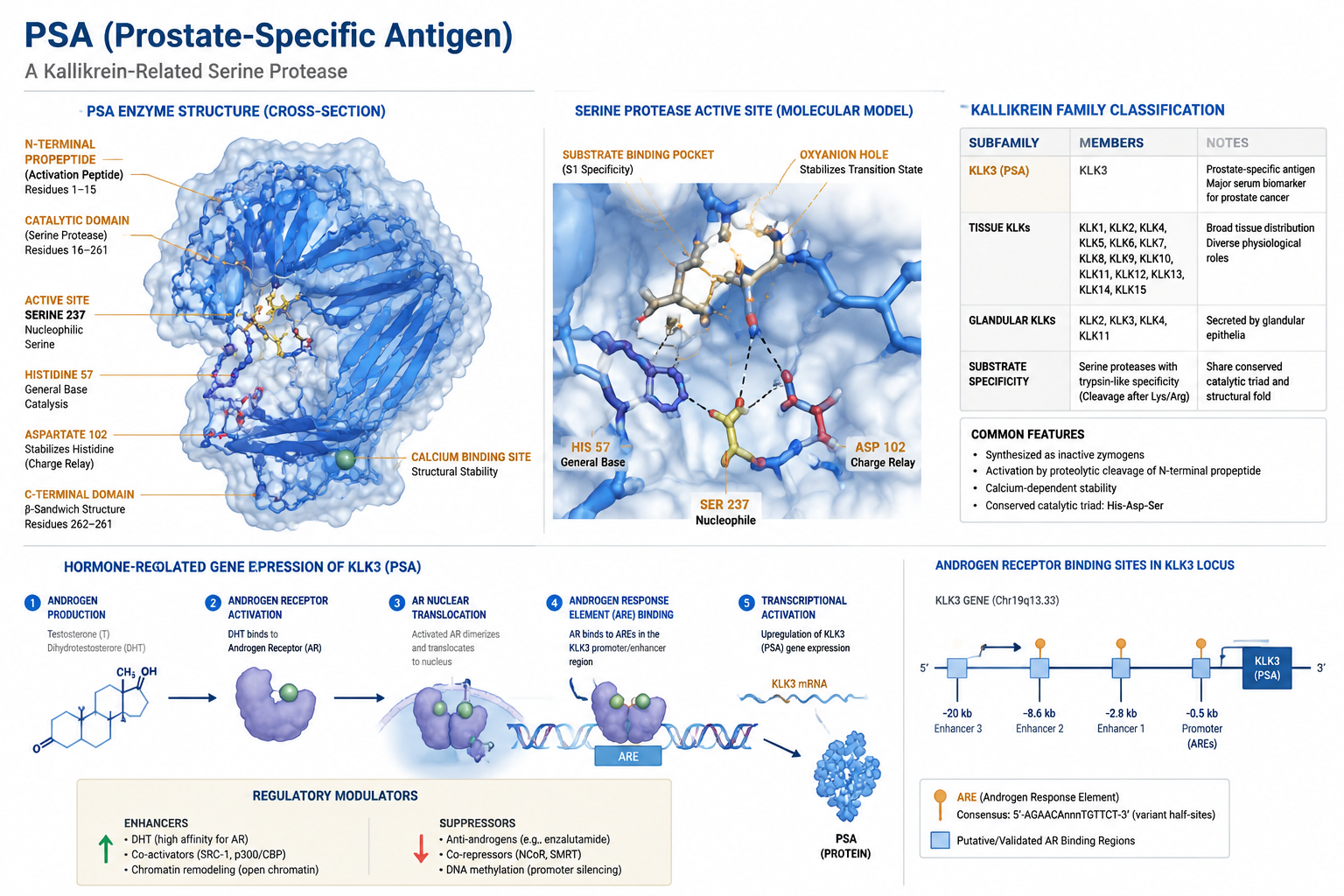
PSA, or Prostate-Specific Antigen, is a serine protease enzyme produced primarily by prostate epithelial cells. Its biological job is to liquefy seminal proteins — it does this by cleaving peptide bonds. That single function places PSA squarely within peptide biochemistry, not just urology.

Because PSA belongs to the human kallikrein family (specifically KLK3), it shares structural and functional characteristics with other kallikrein peptidases. Researchers studying peptide substrates, enzyme kinetics, or protease-activated drug delivery systems encounter PSA as a natural reference point.

"PSA is not merely a cancer screening number — it is an active peptide-processing enzyme whose substrate specificity has been mapped and exploited for targeted drug design."

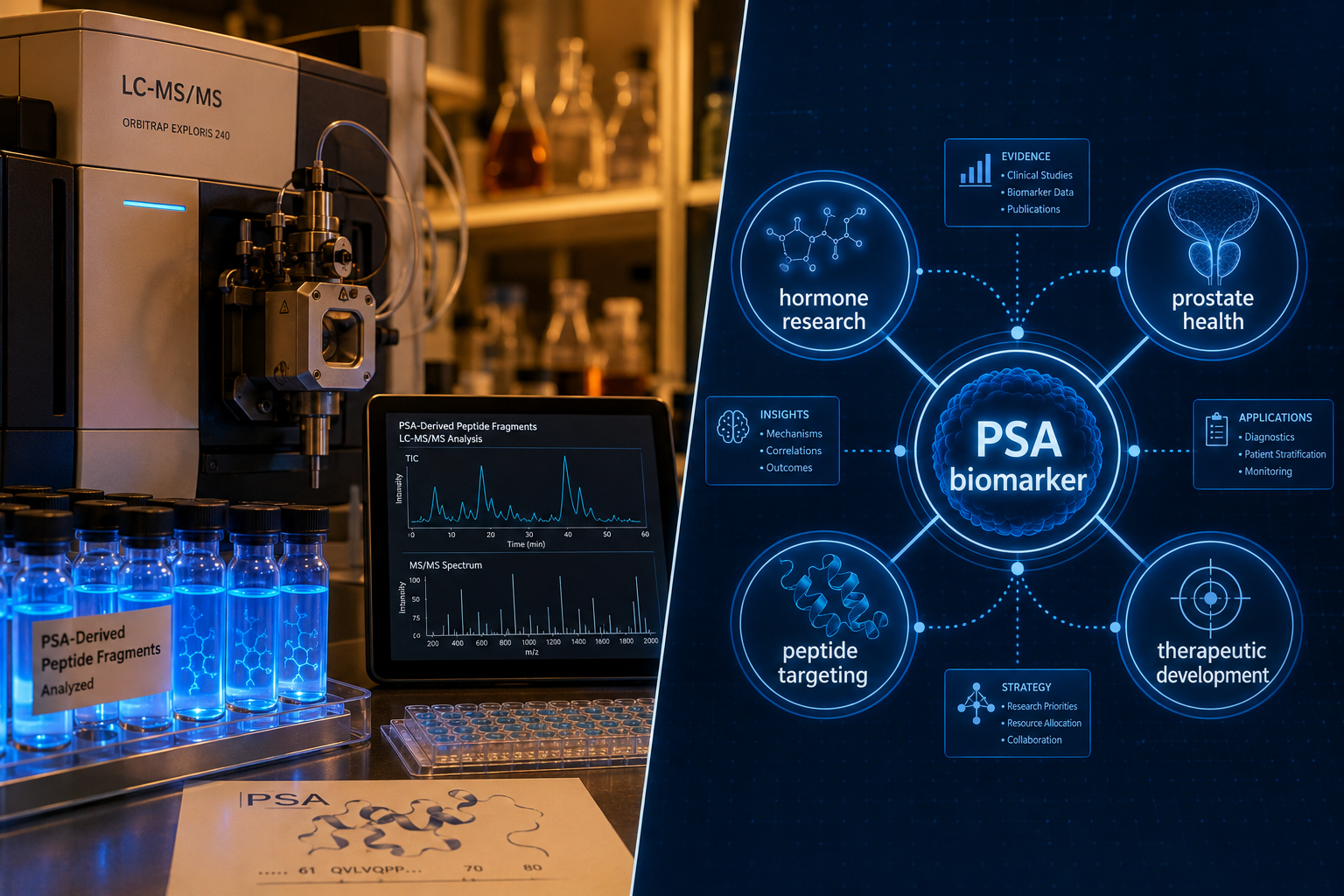
This enzymatic identity explains why Prostate-Specific Antigen and Peptide Research topics appear together so frequently. Researchers have used phage display screening to identify peptides that bind specifically to PSA-low prostate cancer cells — work that is directly relevant to castration-resistant prostate cancer targeting. Separately, peptide-based inhibitors of PSA have been optimized as targeted imaging agents, and PSA-cleavable peptide substrates have been screened to develop albumin-binding anticancer prodrugs.

For researchers already exploring peptide mechanisms and research applications, PSA represents a well-characterized enzymatic model with translational implications.


What PSA Actually Is — And Why Peptide Research Overlaps

Hormone Regulation, Androgen Signaling, and PSA Expression

PSA expression is tightly regulated by androgen hormones, particularly testosterone and dihydrotestosterone (DHT), acting through androgen receptors. This hormonal control is why PSA levels drop when androgen deprivation therapy is used in prostate cancer management.

This connection to hormone signaling is a key reason Prostate-Specific Antigen and Peptide Research: Why PSA Appears in Hormone, Prostate, and Biomarker Content Strategy is such a relevant framework. Any content platform covering endocrine health, growth hormone peptides, or hormonal biomarkers will encounter PSA as a downstream androgen-regulated marker.

Key hormonal relationships involving PSA:

Factor Effect on PSA
Testosterone / DHT Upregulates PSA gene transcription
Androgen deprivation Suppresses PSA production
Estrogen (high levels) May reduce PSA expression
Inflammation Can elevate PSA independent of cancer

Research exploring gonadorelin and GnRH pulsatility is directly upstream of androgen signaling — and therefore upstream of PSA regulation. Similarly, content covering GLP-1 peptide research concepts or NAD research and metabolic peptides sits within the same broad endocrine-metabolic ecosystem that PSA inhabits.


Hormone Regulation, Androgen Signaling, and PSA Expression

Biomarker Evolution: Beyond Standard PSA Testing

Standard PSA immunoassays have well-documented limitations in specificity. Recent research has moved in two important directions: refining PSA measurement and identifying companion biomarkers.

On the measurement side, mass spectrometry-based approaches now allow direct quantification of PSA-derived peptides, offering a path to harmonize inconsistencies across different immunoassay platforms. A first-in-class antibody targeting alpha-1,6-fucosylated PSA has also been developed to improve diagnostic specificity — a glycoproteomic refinement that sits at the intersection of peptide chemistry and clinical diagnostics.

On the companion biomarker side, Gastrin-Releasing Peptide Receptor (GRPR) has emerged as a significant parallel target. Studies evaluating GRPR alongside PSMA and Neurotensin Receptor 1 suggest that multi-receptor panels improve prostate cancer stratification compared to PSA alone. Research published in 2026 continues to explore theranostic targets beyond PSMA, reflecting a broader shift toward peptide-receptor-based diagnostics.

Ultrasensitive biosensors using octabranched peptide scaffolds and silver nanoparticles now enable PSA quantification at extremely low concentrations in human serum — a development with direct implications for early detection research.

For those tracking quality testing protocols in peptide research, this evolution in biomarker measurement methodology is directly applicable. Researchers interested in epithalon and aging biomarkers or GHK-Cu longevity research themes will recognize the same pattern: single-marker approaches give way to multi-pathway, peptide-informed frameworks.

PSA-Targeted Prodrugs and Peptide Delivery

One of the most compelling intersections between Prostate-Specific Antigen and Peptide Research: Why PSA Appears in Hormone, Prostate, and Biomarker Content Strategy is the field of PSA-activated prodrugs. Because PSA cleaves specific peptide sequences, researchers have engineered prodrugs that remain inactive until PSA cleaves a peptide linker — releasing the therapeutic payload selectively at the tumor site. Disulfide-constrained peptides that bind to the extracellular portion of PSMA (Prostate-Specific Membrane Antigen, a related but distinct target) have also been identified, further expanding the peptide-targeting toolkit.


Conclusion

PSA occupies a unique position in biomedical research — it is simultaneously a clinical screening marker, an androgen-regulated gene product, and an active peptide-cleaving enzyme. That triple identity explains precisely why Prostate-Specific Antigen and Peptide Research: Why PSA Appears in Hormone, Prostate, and Biomarker Content Strategy is a legitimate and valuable content framework, not keyword overlap.

Actionable next steps for researchers and content strategists:

  • Treat PSA as a peptide biochemistry topic, not just a urology metric, when building research content architecture.
  • Explore companion biomarkers (GRPR, Neurotensin Receptor 1) alongside PSA for a more complete prostate health research picture.
  • Follow developments in PSA-cleavable prodrug design as a model for targeted peptide delivery systems.
  • Use PSA's hormonal regulation as a bridge between endocrine peptide content and prostate health discussions.

Readers exploring broader peptide research themes can find relevant context in MOTS-C mitochondrial peptide research and IPA muscle and fat research themes — both of which operate within the same endocrine-metabolic landscape that PSA monitoring informs.

https://www.puretestedpeptides.com/wp-content/uploads/2026/06/Prostate-Specific-Antigen-and-Peptide-Research-Why-PSA-Appears-in-Hormone-Prostate-and-Biomarker-Content-Strategy.png 1024 1536 Pure Tested https://www.puretestedpeptides.com/wp-content/uploads/2026/01/buy-peptides-online.jpg Pure Tested2026-06-16 13:05:072026-07-20 15:02:58Prostate-Specific Antigen and Peptide Research: Why PSA Appears in Hormone, Prostate, and Biomarker Content Strategy
BPC-157 vs TB-500: What Each Peptide Does in Tissue-Repair Research and When Comparison Makes Sense

BPC-157 vs TB-500: What Each Peptide Does in Tissue-Repair Research and When Comparison Makes Sense

June 16, 2026/0 Comments/by Pure Tested

Over 100 preclinical studies have examined BPC-157 alone — yet researchers still routinely pair it with TB-500 in comparative models. Understanding why requires looking at what each peptide actually does at the biological level. This article examines the BPC-157 vs TB-500 question from an experimental logic standpoint: what each compound is believed to do, where their mechanisms overlap, and when a side-by-side comparison genuinely adds scientific value in tissue-repair research.

Key Takeaways

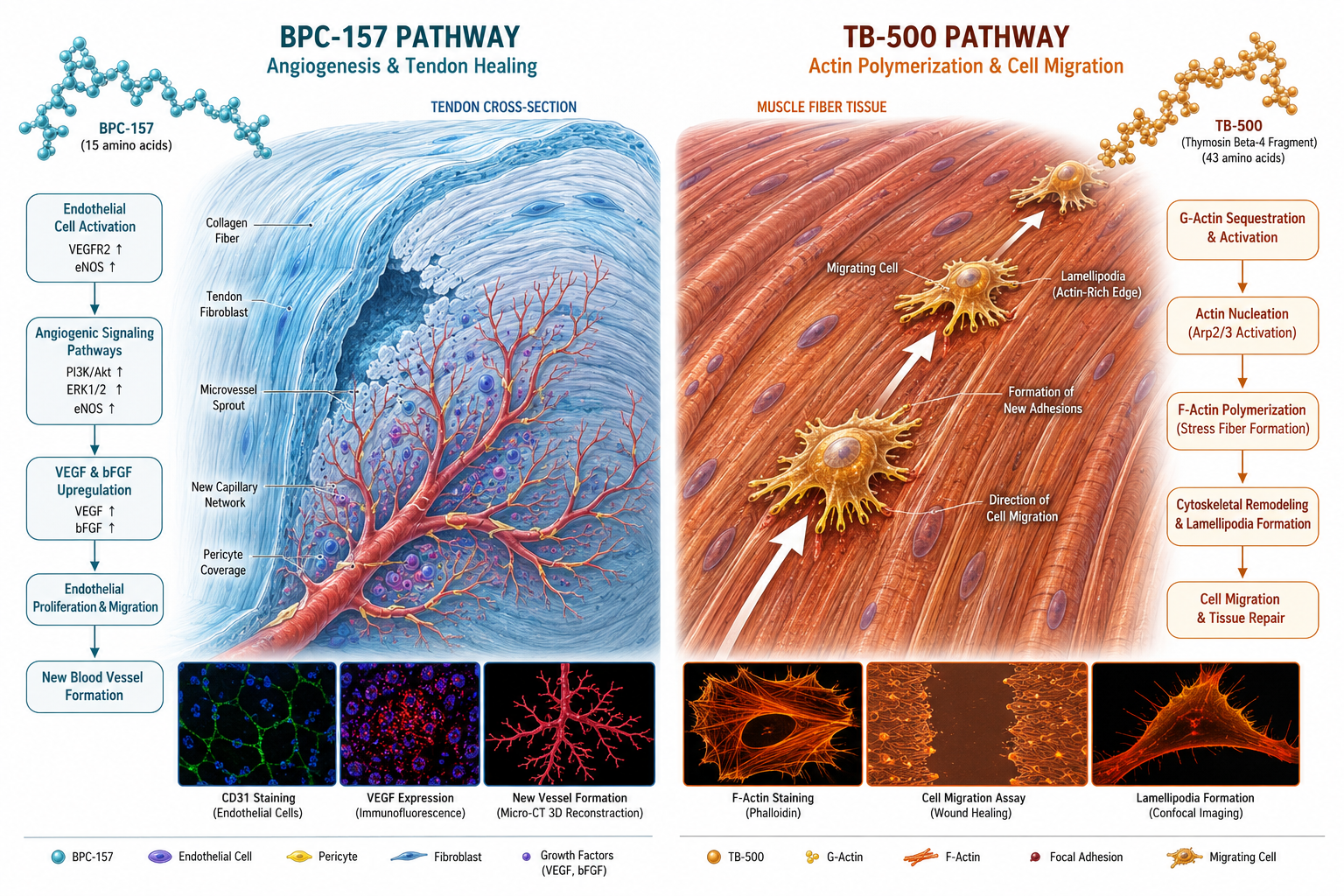
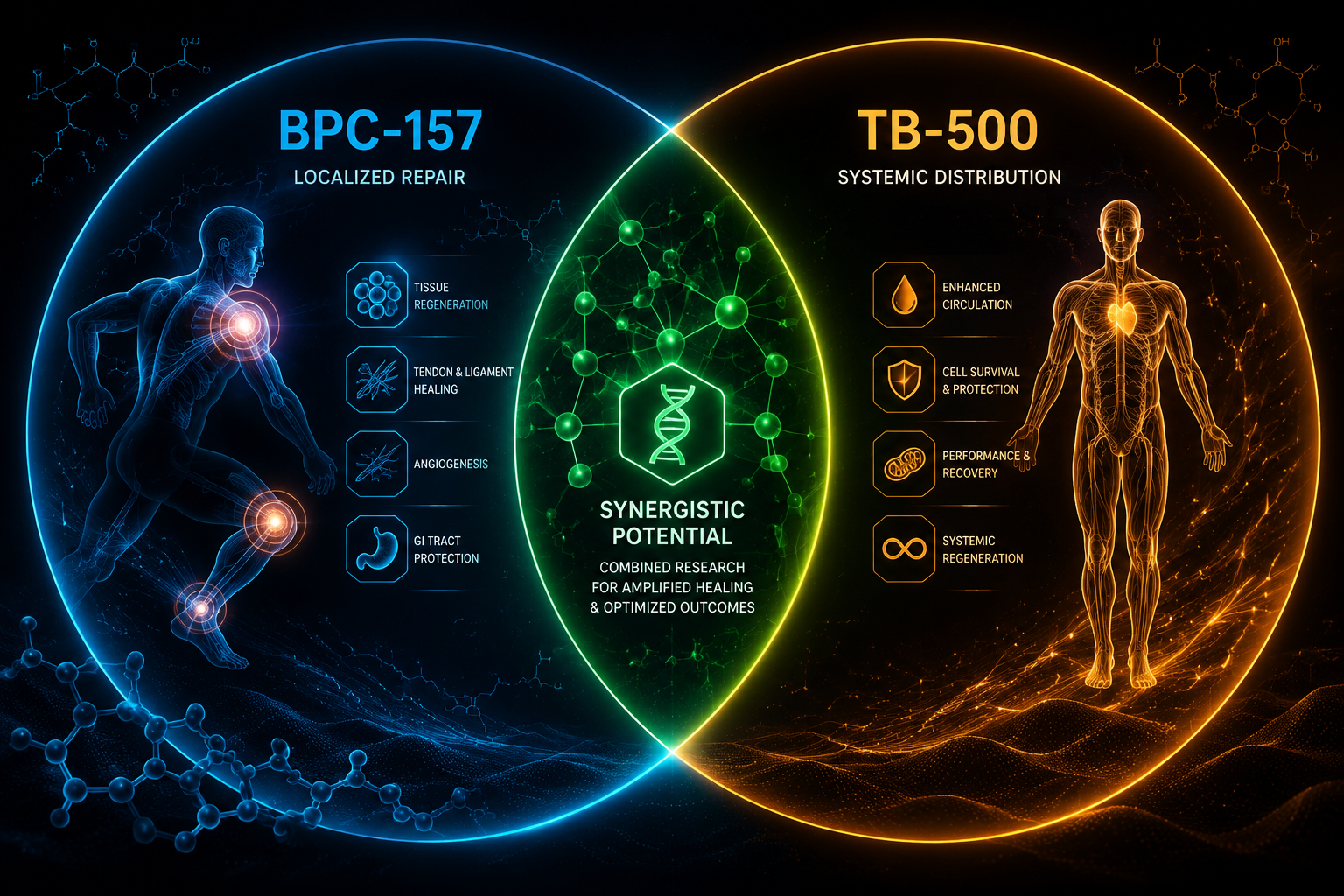
  • BPC-157 is a 15-amino-acid synthetic peptide that primarily drives localized repair through angiogenesis and nitric oxide signaling.
  • TB-500 is a synthetic fragment of Thymosin Beta-4 that promotes systemic healing by regulating actin polymerization and cell migration.
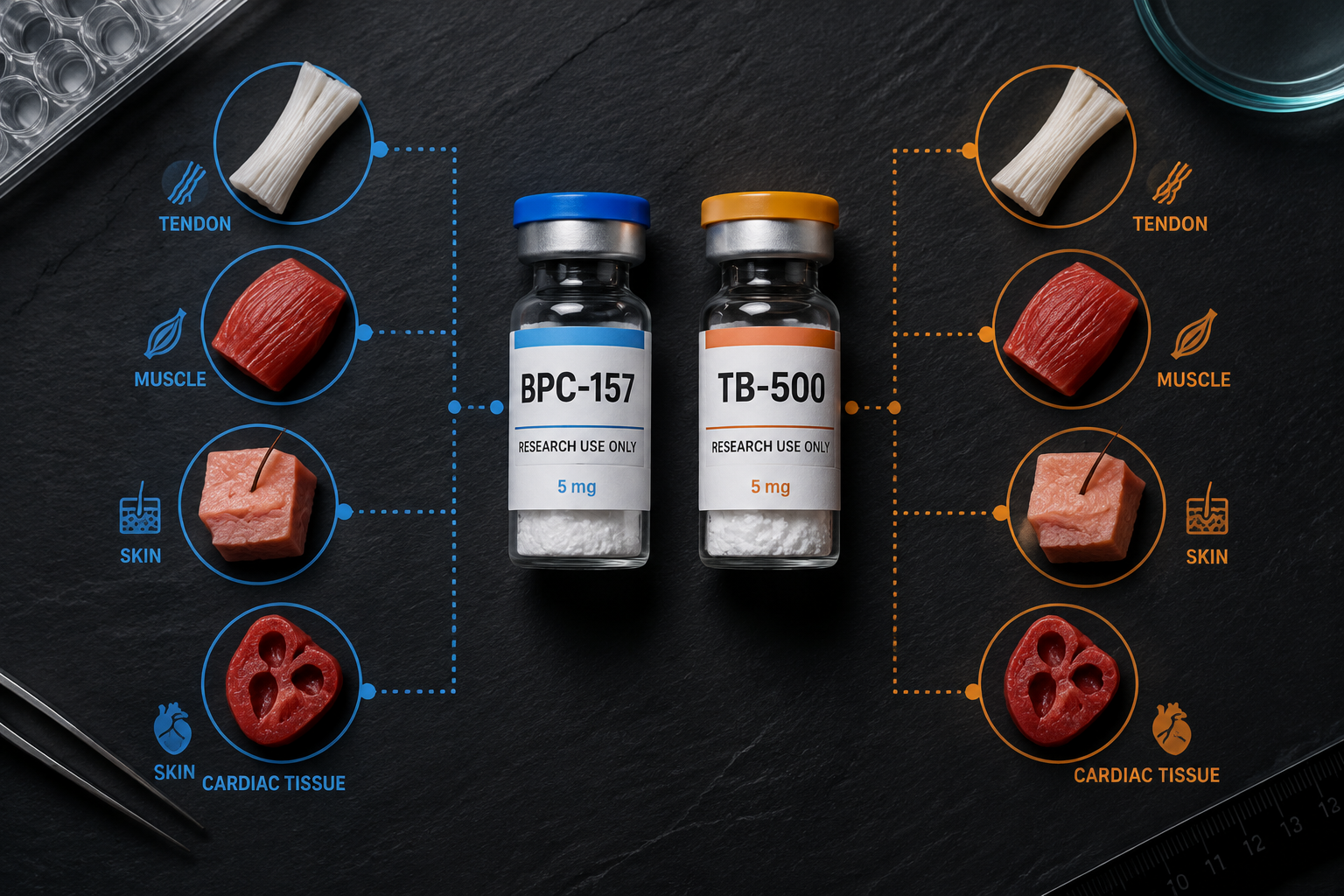
  • Their tissue targets differ: BPC-157 favors tendons, ligaments, and gut tissue; TB-500 shows stronger signals in muscle, skin, and cardiac tissue.
  • Neither peptide is FDA-approved; both are prohibited by WADA under the S0 category for non-approved substances.
  • Combination research suggests complementary, potentially synergistic effects — making the comparison scientifically meaningful rather than arbitrary.

Key Takeaways

Distinct Mechanisms: Where the Biology Diverges

The BPC-157 vs TB-500 comparison starts with fundamentally different molecular strategies. BPC-157 is a synthetic 15-amino-acid sequence derived from human gastric juice protein. Its primary repair actions are believed to operate through angiogenesis — the formation of new blood vessels — and upregulation of nitric oxide pathways. This makes its effects highly localized. When administered near an injury site, it appears to accelerate the vascular supply that damaged tissue needs to regenerate.

TB-500, by contrast, is a synthetic fragment of Thymosin Beta-4, a naturally occurring protein found throughout the body. Its core mechanism involves regulating actin polymerization — the process by which cells build their internal scaffolding. By influencing actin dynamics, TB-500 enhances cell migration, which is essential for systemic wound repair. Because it distributes broadly after administration, its effects are not limited to the injection site.

Key mechanistic differences at a glance:

Feature BPC-157 TB-500
Origin Gastric juice protein fragment Thymosin Beta-4 fragment
Primary mechanism Angiogenesis, nitric oxide signaling Actin polymerization, cell migration
Distribution Localized Systemic
Half-life (IV, animal models) Under 30 minutes Not precisely established

For researchers exploring BPC-157 angiogenesis and tendon repair mechanisms, this localized vascular focus is the defining biological signature.


Tissue Targets and Preclinical Evidence

Tissue specificity is where the BPC-157 vs TB-500 comparison becomes most practically useful for research design. BPC-157 has shown the strongest preclinical signals in tendon, ligament, and gastrointestinal tissue. Its gastric origin may partly explain its documented activity in gut-lining repair models. TB-500, on the other hand, demonstrates more consistent effects in muscle, skin, and cardiac tissue — areas where widespread cell migration drives recovery.

This tissue-level divergence is important because it shapes which model a researcher would choose when designing an experiment. A tendon repair study and a cardiac wound model are asking very different biological questions, and selecting the wrong peptide as a comparator can produce misleading null results.

Both peptides have been studied in the context of inflammation reduction, which creates a genuine area of mechanistic overlap. This overlap is part of why top healing peptides in research contexts are often discussed together. Researchers interested in broader repair biology may also find value in examining GHK-Cu longevity and tissue research themes as a complementary reference point.

Tissue Targets and Preclinical Evidence


When the BPC-157 vs TB-500 Comparison Makes Sense in Research

Not every study benefits from comparing these two peptides directly. The comparison makes the most experimental sense under three conditions:

  1. Overlapping injury context — When the target tissue receives input from both vascular supply (BPC-157's domain) and cell migration (TB-500's domain), a head-to-head model can isolate which mechanism contributes more.
  2. Combination hypothesis testing — Preclinical data suggest that using both peptides together may produce synergistic repair outcomes. Testing this requires understanding each compound's independent effect first.
  3. Systemic vs. localized repair questions — When a study needs to distinguish between localized and body-wide healing responses, these two peptides serve as useful biological contrasts.

Regulatory context matters here. Neither BPC-157 nor TB-500 is FDA-approved. BPC-157 holds a Category 2 bulk drug substance classification, and both are prohibited under WADA's S0 category. Any research use must account for these regulatory boundaries.

For context on how other repair-relevant peptides are positioned in research, the oral BPC-157 research overview and longevity peptide research themes offer useful framing. Researchers sourcing verified compounds may also want to review lab-tested peptides to ensure research-grade purity standards.

When the BPC-157 vs TB-500 Comparison Makes Sense in Research


Conclusion

The BPC-157 vs TB-500 comparison is not a matter of which peptide is "better." It is a question of biological fit. BPC-157 operates locally through vascular and nitric oxide pathways; TB-500 acts systemically through actin dynamics and cell migration. Their tissue targets differ, their pharmacokinetics differ, and their research applications reflect those differences.

Actionable next steps for researchers:

  • Define the target tissue and injury type before selecting a comparator model.
  • Review the preclinical literature for each peptide's specific tissue signals before designing combination studies.
  • Confirm regulatory classification in the relevant jurisdiction before initiating any research protocol.
  • Prioritize verified, purity-tested compounds to ensure data integrity across experimental runs.

The comparison makes scientific sense when the research question genuinely spans both localized and systemic repair biology. In those contexts, studying these two peptides together is not redundant — it is the most informative approach available.

https://www.puretestedpeptides.com/wp-content/uploads/2026/06/BPC-157-vs-TB-500-What-Each-Peptide-Does-in-Tissue-Repair-Research-and-When-Comparison-Makes-Sense.png 1024 1536 Pure Tested https://www.puretestedpeptides.com/wp-content/uploads/2026/01/buy-peptides-online.jpg Pure Tested2026-06-16 13:05:062026-07-20 15:02:59BPC-157 vs TB-500: What Each Peptide Does in Tissue-Repair Research and When Comparison Makes Sense
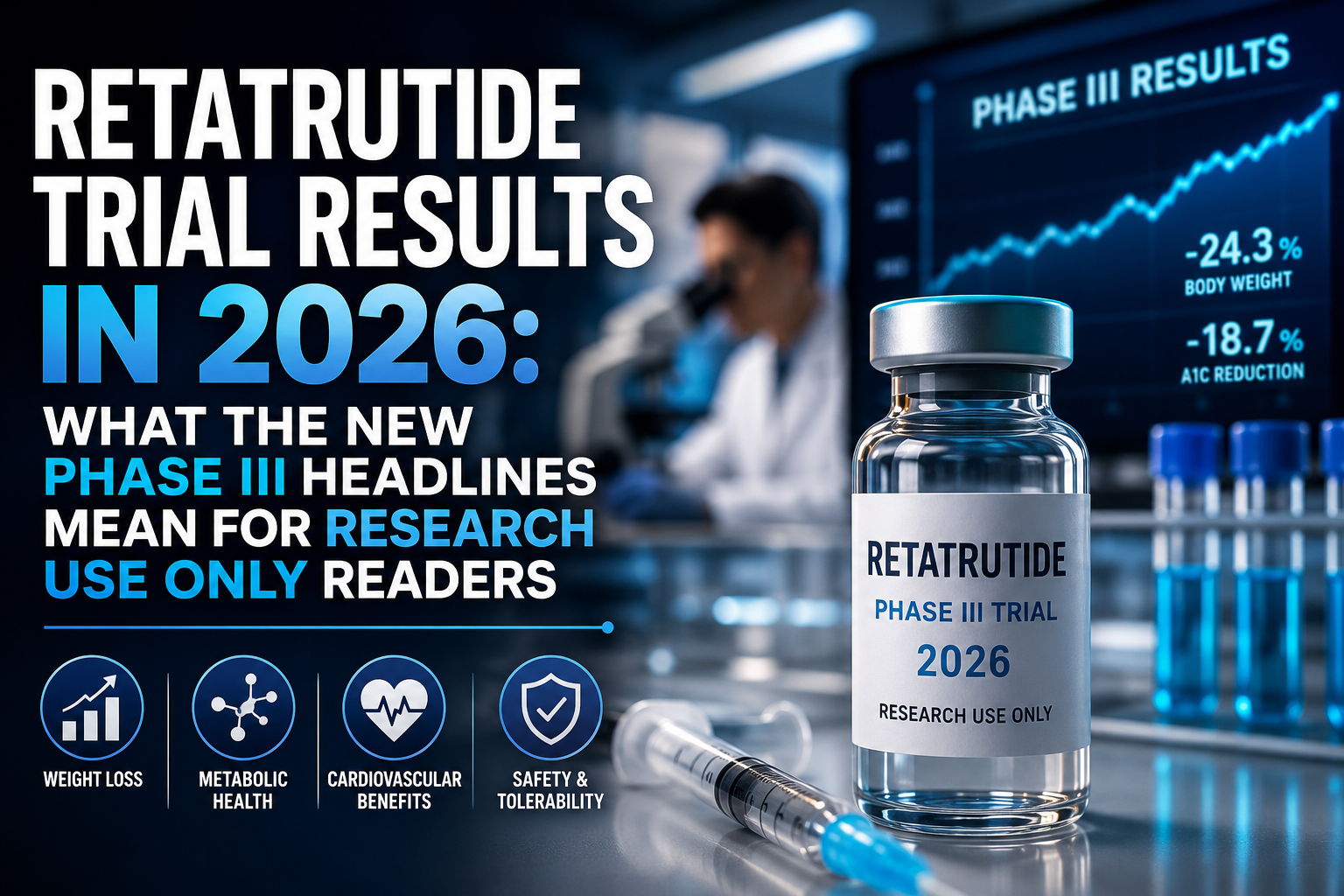
Retatrutide Trial Results in 2026: What the New Phase III Headlines Mean for Research Use Only Readers

Retatrutide Trial Results in 2026: What the New Phase III Headlines Mean for Research Use Only Readers

June 15, 2026/0 Comments/by Pure Tested

{"cover":"Professional landscape format (1536×1024) hero image with bold text overlay: 'Retatrutide Phase III Results 2026' in extra large 72pt white bold sans-serif font with dark semi-transparent overlay box, centered upper-third composition. Background shows a clean pharmaceutical research laboratory with glowing molecular structure models, clinical trial data charts on screens, and soft blue lighting. Color palette: deep navy blue, crisp white, and electric teal accents. Magazine cover aesthetic, high contrast, editorial quality, science-forward visual style.","content":["Landscape format (1536×1024) scientific infographic illustration showing a triple hormone receptor diagram with GLP-1, GIP, and glucagon receptor nodes connected by glowing pathways, overlaid on a clean white clinical background. Include subtle weight loss percentage data callouts (28.3% at 80 weeks, 30.3% at 104 weeks) as floating annotation labels in teal and navy. Modern flat-design aesthetic with molecular iconography, research-lab feel, no people, data-visualization focus.","Landscape format (1536×1024) editorial-style split comparison image: left side shows a detailed bar chart comparing retatrutide weight loss outcomes versus bariatric surgery benchmarks (25-35% range), right side shows smaller secondary charts for HbA1c reduction, AHI sleep apnea improvement, and WOMAC knee pain score reduction. Clean white background with navy and teal color scheme, bold percentage labels, professional medical data visualization aesthetic, no people, clinical research context.","Landscape format (1536×1024) overhead flat-lay research desk scene showing a printed Phase III clinical trial document labeled TRIUMPH-1, a glass vial with peptide label, a researcher notebook with handwritten protocol notes, and a laptop displaying a peptide sourcing checklist. Soft natural lighting from upper left, muted neutral tones with teal accent highlights, research-use-only stamp visible on document corner, clean and professional editorial composition."]
Professional landscape hero image () with : "Retatrutide Trial Results in 2026: What the New Phase III Headlines Mean for

A weight-loss drug that matches bariatric surgery outcomes without an operating room — that is the headline now circulating across the research community. The Retatrutide Trial Results in 2026 have moved from Phase II speculation into confirmed Phase III data, and the numbers are forcing researchers to rethink what pharmacological intervention can realistically achieve. For research-use-only readers tracking this compound, understanding what changed, what was confirmed, and what still remains open is essential before drawing any conclusions.

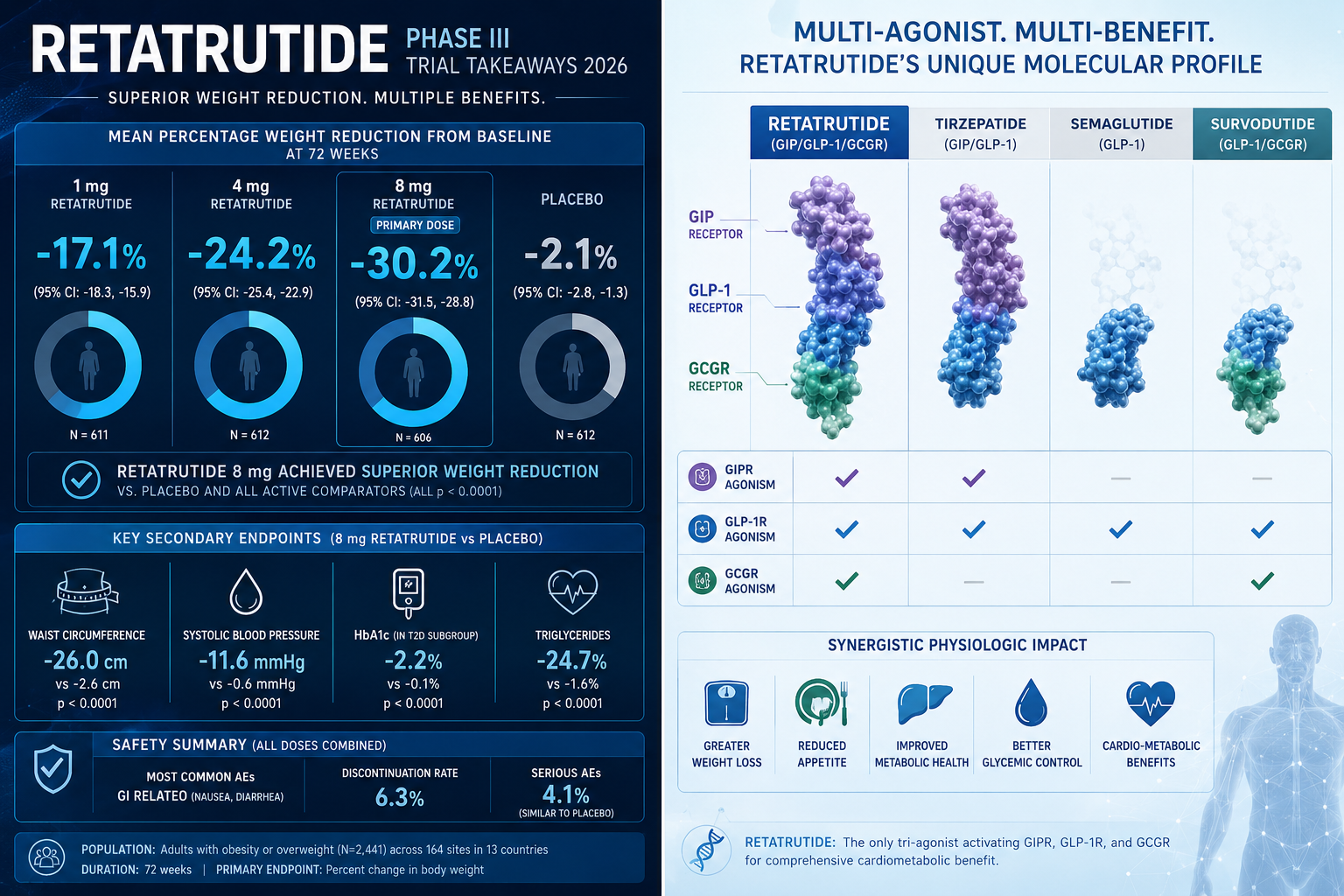
Split-screen medical research infographic visualizing key Retatrutide Phase III trial takeaways in 2026, left side showing

Key Takeaways

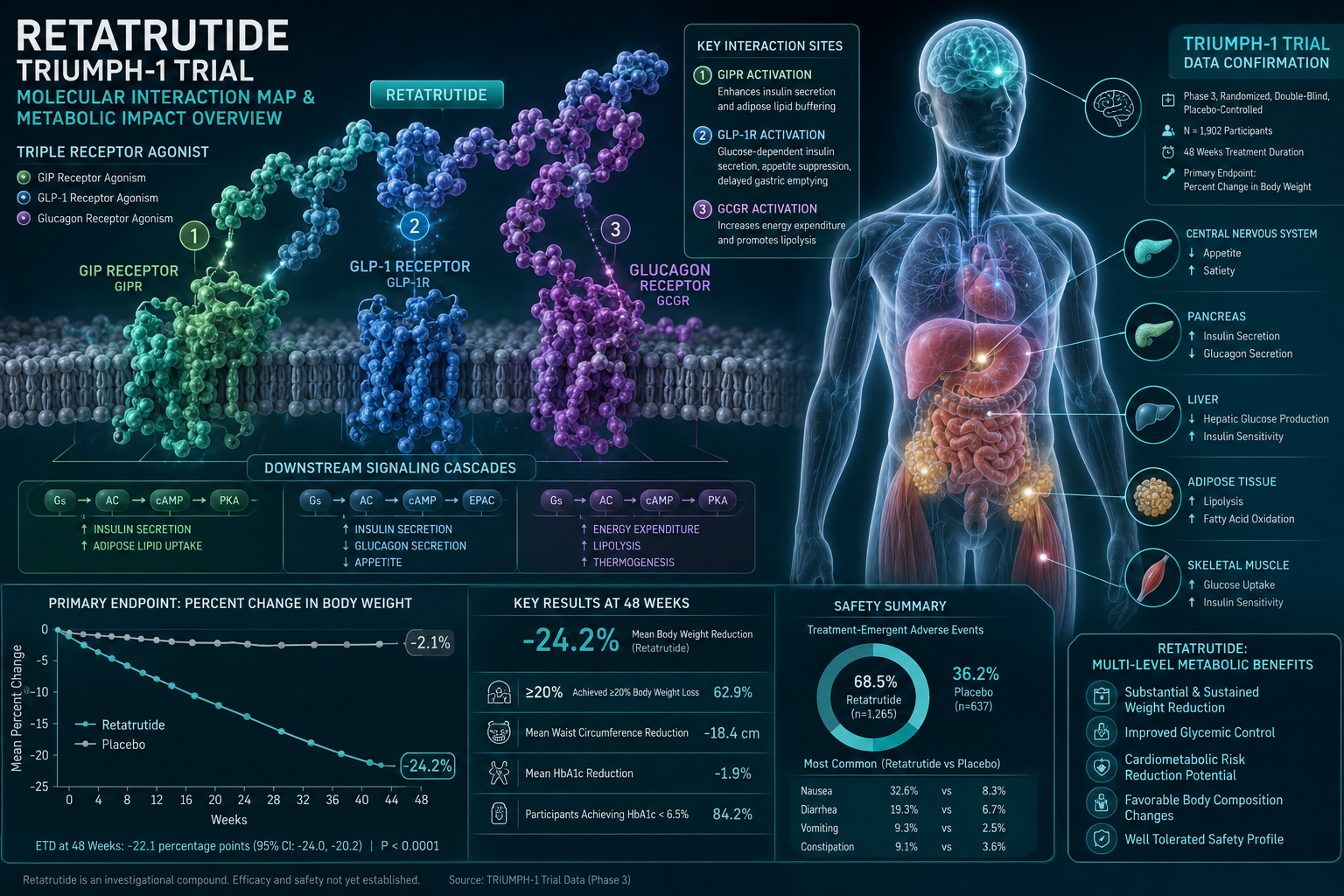
  • Retatrutide is a triple agonist targeting GLP-1, GIP, and glucagon receptors simultaneously.
  • TRIUMPH-1 Phase III data showed an average weight loss of 28.3% at 80 weeks and 30.3% at 104 weeks on the 12 mg dose.
  • Beyond weight, the trial documented improvements in cardiovascular markers, sleep apnea severity, knee osteoarthritis pain, and glycemic control.
  • Weight loss outcomes are now comparable to bariatric surgery benchmarks of 25-35%.
  • Regulatory review is anticipated, but research-use-only readers should track sourcing standards and documentation carefully.

What the Phase III TRIUMPH-1 Data Actually Confirmed

The TRIUMPH-1 trial delivered the clearest picture yet of retatrutide's weight-reduction potential. Participants receiving the 12 mg weekly dose lost an average of 28.3% of body weight — roughly 70.3 lbs — over 80 weeks. A pre-specified extension pushed that figure to 30.3%, or approximately 85.0 lbs, at 104 weeks.

Perhaps more striking than the raw weight numbers are the BMI reclassifications. Among participants on the 12 mg dose:

  • 65.3% dropped below a BMI of 30, exiting the obesity category entirely
  • 33.3% reached a BMI under 25, classified as normal weight

These are not incremental improvements. They represent a categorical shift in health status for a majority of participants.

Cardiovascular markers also improved. Researchers documented reductions in waist circumference, non-HDL cholesterol, triglycerides, systolic blood pressure, and high-sensitivity C-reactive protein (hsCRP) — a cluster of risk factors that typically resist lifestyle intervention alone.

"The weight loss achieved with retatrutide is now comparable to outcomes typically associated with bariatric surgery, which generally results in 25% to 35% weight loss depending on the procedure."

For readers sourcing GLP-1 class peptides for research documentation, these Phase III benchmarks provide a meaningful reference point for experimental design.


Beyond Weight: Secondary Endpoints That Changed the Conversation

Beyond Weight: Secondary Endpoints That Changed the Conversation

The Retatrutide Trial Results in 2026 extended well beyond body weight, and the secondary endpoints are where the research narrative became genuinely broader.

Obstructive Sleep Apnea (OSA): A nested study within TRIUMPH-1 found that retatrutide reduced the apnea-hypopnea index (AHI) by up to 36.1 events per hour — a 60.6% reduction from a baseline of 58.6 events per hour in participants with moderate-to-severe OSA.

Knee Osteoarthritis Pain: A separate nested study measured WOMAC pain subscale scores. Retatrutide reduced scores by up to 4.3 points (73.1%) from a baseline of 6.0. This signals a potential indirect benefit through mechanical offloading, though researchers note that direct anti-inflammatory mechanisms cannot be ruled out.

Type 2 Diabetes (TRANSCEND-T2D-1): The dedicated diabetes trial demonstrated significant HbA1c reductions in individuals whose glycemic control was inadequate with diet and exercise alone.

Endpoint Baseline Reduction
Body weight (12 mg, 80 wk) — 28.3%
AHI (sleep apnea events/hr) 58.6 60.6%
WOMAC pain score 6.0 73.1%

For researchers already familiar with metabolic peptides like AOD-9604 and its fat metabolism research context, or those reviewing GLP-1 retatrutide product documentation, these secondary findings add important context to experimental protocols.


What Still Remains Uncertain for Research Use Only Readers

What Still Remains Uncertain for Research Use Only Readers

Understanding the Retatrutide Trial Results in 2026 also means acknowledging what Phase III has not yet resolved.

Long-term safety beyond two years remains under evaluation. The 104-week extension is encouraging, but researchers tracking compounds like retatrutide 10 mg for research sourcing should note that post-marketing surveillance data does not yet exist.
Lean mass preservation is still being quantified. Weight loss at this magnitude raises questions about the ratio of fat to muscle lost — a variable that matters significantly in research models focused on body composition.

Regulatory timeline remains open. Eli Lilly has signaled intent to seek FDA approval, but approval timelines are not confirmed. Research-use-only readers operate in a distinct context from clinical use, and sourcing standards must reflect that distinction.
For those building broader peptide research frameworks, resources like the BPC-157 core peptides documentation guide and CJC-1295 with DAC research findings offer useful models for structuring documentation and traceability protocols across compound classes.

Researchers interested in metabolic and aging-related peptide categories can also explore the aging support peptide category for broader context on where retatrutide fits within current research landscapes.


Conclusion

The Phase III data released in 2026 confirms that retatrutide is not a modest improvement over existing GLP-1 therapies — it is a structurally different intervention with outcomes that rival surgical benchmarks. For research-use-only readers, the actionable steps are clear:

  1. Update experimental frameworks to reflect the 104-week efficacy data, not just the earlier Phase II findings.
  2. Expand secondary endpoint tracking to include cardiovascular markers, sleep metrics, and pain indices where relevant.
  3. Maintain rigorous sourcing and documentation standards, particularly as regulatory review approaches and compound availability evolves.
  4. Monitor lean mass data as it emerges from ongoing analyses.

The headline numbers are real. The research questions they generate are just beginning.

https://www.puretestedpeptides.com/wp-content/uploads/2026/06/Retatrutide-Trial-Results-in-2026-What-the-New-Phase-III-Headlines-Mean-for-Research-Use-Only-Readers.png 1024 1536 Pure Tested https://www.puretestedpeptides.com/wp-content/uploads/2026/01/buy-peptides-online.jpg Pure Tested2026-06-15 13:04:342026-07-20 15:03:00Retatrutide Trial Results in 2026: What the New Phase III Headlines Mean for Research Use Only Readers
Tesamorelin and Ipamorelin: How the Two Growth Hormone Secretagogues Differ Mechanistically

Tesamorelin and Ipamorelin: How the Two Growth Hormone Secretagogues Differ Mechanistically

June 15, 2026/0 Comments/by Pure Tested

Tesamorelin vs Ipamorelin receptor pathway comparison diagram

Two peptides. Two completely different locks on the same door. Tesamorelin and Ipamorelin are both classified as growth hormone secretagogues, yet they reach the pituitary gland by separate molecular routes, produce distinct GH secretion patterns, and serve different research purposes. Understanding exactly how these two growth hormone secretagogues differ mechanistically is not just academic — it shapes how researchers design protocols and interpret outcomes.

Key Takeaways

  • Tesamorelin is a GHRH analog that binds the GHRH receptor; ipamorelin is a ghrelin mimetic that binds the GHS-R1a receptor — two entirely separate receptor systems.
  • Tesamorelin drives a sustained elevation in GH and IGF-1; ipamorelin generates short, pulsatile GH spikes that mirror natural secretory rhythms.
  • Because they target different upstream nodes of the GH axis, the two peptides are complementary rather than redundant.
  • Ipamorelin is noted for high selectivity — it stimulates GH release with minimal effect on cortisol or prolactin.
  • Researchers studying the GH axis benefit from understanding both pathways before designing combination or standalone protocols.
Receptor-Level Differences: Where the Pathways Diverge

Receptor-Level Differences: Where the Pathways Diverge

The clearest way to understand Tesamorelin and Ipamorelin and how the two growth hormone secretagogues differ mechanistically is to start at the receptor.

Tesamorelin is a synthetic analog of endogenous growth hormone-releasing hormone (GHRH). It binds selectively to the GHRH receptor located on pituitary somatotroph cells. By occupying this receptor, tesa amplifies the hypothalamic GHRH signal, prompting somatotrophs to produce and release more growth hormone. Its structure closely mirrors native GHRH(1-44) but includes a trans-3-hexenoic acid modification that extends its stability in plasma — a key reason it outperforms unmodified GHRH in sustained signaling.

Ipamorelin, by contrast, is a selective agonist of the ghrelin receptor, formally called the Growth Hormone Secretagogue Receptor type 1a (GHS-R1a). This receptor is pharmacologically and structurally distinct from the GHRH receptor. Ipamorelin acts as a ghrelin mimetic, meaning it mimics the hunger-signaling peptide ghrelin to unlock GH release through a pathway that operates independently of GHRH. Crucially, ipamorelin achieves this with high receptor selectivity — it does not significantly activate pathways that elevate cortisol or prolactin, which distinguishes it from older, less selective GHS compounds.

Feature Tesamorelin Ipamorelin
Receptor target GHRH receptor GHS-R1a (ghrelin receptor)
Peptide class GHRH analog Ghrelin mimetic
Signaling pathway GHRH axis Ghrelin axis
Cortisol/prolactin effect Minimal Minimal

For a deeper look at tesa's pharmacology, the science behind tesa provides useful foundational context.


GH Secretion Patterns: Sustained Amplification vs Pulsatile Spikes

GH Secretion Patterns: Sustained Amplification vs Pulsatile Spikes

Receptor differences translate directly into different hormonal output profiles — and this is where the practical research implications become most visible.

Tesamorelin produces a more sustained elevation in both GH and insulin-like growth factor 1 (IGF-1). Because it continuously reinforces the GHRH signal, circulating IGF-1 rises measurably over time. Clinical data show this sustained IGF-1 increase drives downstream metabolic effects, particularly visceral fat reduction in HIV-associated lipodystrophy — the only FDA-approved indication for tesa. Researchers often position tesa as the "heavy-lift" GH/IGF-1 amplifier within the GH axis. For those tracking outcomes over time, the tesa before and after data illustrates how this sustained signaling manifests in measurable endpoints.

Ipamorelin generates short-lived, pulsatile GH peaks. These bursts closely mimic the natural GH secretory rhythm the body uses throughout the day and during sleep. Rather than chronically flattening or overriding the pulsatile rhythm, ipamorelin reinforces it. This makes ipamorelin a "pulse-shaping" secretagogue — one that works with the body's existing GH architecture rather than overwriting it.

"Tesamorelin amplifies the signal; ipamorelin restores the rhythm."

This distinction matters for researchers concerned about receptor desensitization or downstream feedback suppression. Sustained GHRH receptor stimulation carries a different long-term receptor dynamics profile than intermittent GHS-R1a activation.

Researchers interested in ipamorelin's standalone profile can explore whether ipamorelin is the most beneficial peptide for a broader discussion of its research applications.


Research Implications: Pairing, Separating, and Protocol Design

Research Implications: Pairing, Separating, and Protocol Design

Understanding Tesamorelin and Ipamorelin and how the two growth hormone secretagogues differ mechanistically has direct implications for protocol design.

Because the two peptides act on separate receptor systems, they are not redundant — they target different upstream control nodes of the GH axis. This is why combination approaches appear in the research literature. When used together, tesa provides sustained IGF-1 elevation through the GHRH pathway while ipamorelin adds pulsatile GH bursts through the ghrelin pathway. The result is a more complete stimulation of GH secretion than either agent alone can produce. Researchers considering this approach can review safety considerations for combining tesa with ipamorelin before designing protocols.

For researchers who prefer standalone use, the choice depends on the research question:

  • Choose tesa when the goal is sustained IGF-1 elevation and metabolic endpoints. See tesa dosage guidance for reference ranges used in research settings.
  • Choose ipamorelin when the goal is pulsatile GH reinforcement with minimal hormonal side effects. The ipamorelin research overview covers its selectivity profile in detail.

Researchers comparing tesa to other GHRH analogs may also find the tesa vs sermorelin comparison useful for situating tesa within the broader GHRH analog class.

One additional consideration: peptide purity directly affects receptor binding fidelity. Impure peptides produce inconsistent receptor activation, making mechanistic conclusions unreliable. Sourcing from suppliers with verified quality testing protocols is a non-negotiable step for credible research.


Conclusion

Tesamorelin and ipamorelin are not interchangeable tools — they are complementary instruments that operate on separate molecular circuits within the GH axis. Tesamorelin amplifies GH and IGF-1 through sustained GHRH receptor engagement; ipamorelin restores physiologic GH pulsatility through selective GHS-R1a activation. Researchers who understand this mechanistic split can design more precise protocols, interpret results more accurately, and avoid the common mistake of treating all growth hormone secretagogues as functionally equivalent.

Actionable next steps for researchers:

  • Map the specific GH axis endpoint under study before selecting a peptide.
  • Review the receptor selectivity and hormonal side-effect profiles of each compound.
  • If combining both agents, study the complementary pathway rationale and available safety data.
  • Verify peptide purity through third-party testing before any research use.
  • Consult dosage reference data and existing clinical literature to anchor protocol design.
https://www.puretestedpeptides.com/wp-content/uploads/2026/06/Tesamorelin-and-Ipamorelin-How-the-Two-Growth-Hormone-Secretagogues-Differ-Mechanistically.png 1024 1536 Pure Tested https://www.puretestedpeptides.com/wp-content/uploads/2026/01/buy-peptides-online.jpg Pure Tested2026-06-15 13:03:312026-07-20 15:03:10Tesamorelin and Ipamorelin: How the Two Growth Hormone Secretagogues Differ Mechanistically
GHK-Cu Peptide in Tissue Remodeling Research: Collagen Signaling, Copper Biology, and Experimental Readouts

GHK-Cu Peptide in Tissue Remodeling Research: Collagen Signaling, Copper Biology, and Experimental Readouts

June 15, 2026/0 Comments/by Pure Tested

Plasma concentrations of GHK-Cu drop by roughly 60% between the ages of 20 and 60 — a decline that coincides with measurable reductions in tissue repair capacity, collagen density, and extracellular matrix integrity. That single data point has driven decades of research into what this tripeptide-copper complex actually does at the molecular level. Understanding GHK-Cu peptide in tissue remodeling research — including its collagen signaling mechanisms, copper biology, and experimental readouts — requires moving past surface-level claims and into the underlying biochemistry.

Detailed () scientific illustration showing GHK-Cu peptide molecular structure binding to copper(II) ions, with branching

Key Takeaways

  • GHK-Cu is a naturally occurring tripeptide that binds copper(II) ions and modulates expression of more than 4,000 human genes.
  • It stimulates Type I, III, and IV collagen synthesis through TGF-beta1 upregulation and activates copper-dependent enzymes critical for matrix stability.
  • Plasma levels decline significantly with age, making it a relevant target in longevity and tissue repair research.
  • Experimental readouts include hydroxyproline assays, gene expression panels, and tensile strength measurements.
  • Controlled injectable human trial data remain limited, representing a key gap for researchers in 2026.

The Copper Biology Behind GHK-Cu

The "Cu" in GHK-Cu is not incidental. Copper(II) binding is central to the peptide's function. The tripeptide glycyl-L-histidyl-L-lysine chelates copper with high affinity, creating a stable complex that acts as a targeted delivery vehicle for this essential trace metal.

Once delivered, copper activates two enzymes that directly shape the extracellular matrix:

  • Lysyl oxidase — catalyzes the cross-linking of collagen and elastin fibers, giving connective tissue its mechanical strength
  • Superoxide dismutase (SOD) — neutralizes reactive oxygen species, protecting newly synthesized matrix components from oxidative degradation

Without adequate copper bioavailability, both processes stall. GHK-Cu's chelation chemistry makes copper accessible at the tissue level in a controlled, enzymatically useful form. This distinguishes it from free copper supplementation, which carries toxicity risks at elevated concentrations.

Researchers studying recovery and tissue biology will recognize this copper-enzyme axis as a foundational mechanism in matrix remodeling cascades.


Collagen Signaling Pathways in GHK-Cu Peptide Research

The peptide's influence on collagen is not limited to copper delivery. GHK-Cu upregulates transforming growth factor-beta 1 (TGF-beta1), a master regulator of connective tissue synthesis. This pathway drives increased production of:

Collagen Type Primary Location Research Relevance
Type I Skin, bone, tendon Wound tensile strength
Type III Skin, vasculature Early wound repair scaffold
Type IV Basement membranes Barrier integrity

Beyond collagen, GHK-Cu also promotes elastin synthesis and glycosaminoglycan deposition — both markers of functional matrix remodeling rather than simple scar formation.

A critical distinction for researchers: GHK-Cu simultaneously suppresses pro-fibrotic TGF-beta signaling in excess, helping to balance matrix deposition against pathological fibrosis. It also reduces inflammatory cytokines including TNF-alpha and IL-6, creating a microenvironment more conducive to organized tissue repair.

This dual role — stimulating matrix production while dampening excessive inflammation — makes it a compelling subject for studies that pair it with other repair-oriented compounds. Researchers exploring topical GHK-Cu formulations can observe these collagen signaling effects through standardized dermal assays.


Experimental Readouts for GHK-Cu Peptide in Tissue Remodeling Research

Experimental Readouts for GHK-Cu Peptide in Tissue Remodeling Research

Translating GHK-Cu's molecular biology into reproducible data requires selecting the right assay formats. The following readouts are most commonly used in preclinical tissue remodeling studies:

Biochemical assays:

  • Hydroxyproline content measurement (quantifies total collagen deposition)
  • ELISA panels for TGF-beta1, TNF-alpha, and IL-6 levels
  • SOD activity assays to confirm copper-enzyme activation

Molecular readouts:

  • RT-PCR and RNA sequencing for gene expression profiling (GHK-Cu has documented effects across more than 4,000 genes)
  • Western blotting for lysyl oxidase and collagen isoform protein levels

Functional tissue measurements:

  • Wound tensile strength testing in excisional wound models
  • Histological scoring of collagen fiber organization and density

"The breadth of GHK-Cu's gene expression footprint means that single-marker readouts are likely to underrepresent its actual biological activity in tissue remodeling experiments."

Researchers should also note that cosmetic studies using topical formulations have shown improvements in skin thickness and elasticity, but many lack placebo controls. Injectable human trial data remain absent as of 2026, which represents a significant validation gap. This context matters when designing protocols and interpreting results.

For comparison with other peptides that operate through overlapping repair pathways, the GHK-Cu product page and resources on peptide blend formulations for skin biology provide useful reference points. Researchers interested in broader matrix and longevity signaling may also find value in reviewing epithalon peptide research and NAD+ energetics and longevity themes, which intersect with cellular repair mechanisms.


Age-Related Decline and Research Implications

Age-Related Decline and Research Implications

The drop from approximately 200 ng/mL at age 20 to roughly 80 ng/mL by age 60 is not merely a biomarker curiosity. It correlates with reduced fibroblast activity, slower wound closure, and declining collagen turnover — all measurable endpoints in aging tissue models.

This decline positions GHK-Cu as a relevant variable in longevity-focused research alongside compounds that address mitochondrial function and metabolic efficiency. Its gene expression reach — spanning pathways related to inflammation, oxidative stress, and matrix remodeling — makes it one of the more biologically complex peptides currently under investigation.


Conclusion

GHK-Cu peptide in tissue remodeling research sits at the intersection of copper biology, collagen signaling, and broad gene expression modulation. For researchers in 2026, the most productive path forward involves multi-readout experimental designs that capture both molecular and functional endpoints. Key next steps include:

  1. Pair hydroxyproline assays with gene expression panels to capture both structural and transcriptional effects.
  2. Include appropriate controls for copper-only conditions to isolate peptide-specific contributions.
  3. Prioritize placebo-controlled designs in any topical or systemic application studies.
  4. Track cytokine panels alongside collagen markers to document the anti-inflammatory component of remodeling.

The gap between preclinical promise and controlled human data remains the field's central challenge — and its most important research opportunity.

https://www.puretestedpeptides.com/wp-content/uploads/2026/06/GHK-Cu-Peptide-in-Tissue-Remodeling-Research-Collagen-Signaling-Copper-Biology-and-Experimental-Readouts.png 1024 1536 Pure Tested https://www.puretestedpeptides.com/wp-content/uploads/2026/01/buy-peptides-online.jpg Pure Tested2026-06-15 13:03:312026-07-20 15:03:11GHK-Cu Peptide in Tissue Remodeling Research: Collagen Signaling, Copper Biology, and Experimental Readouts
Retatrutide for Liver Fat and MASLD Research: What the Phase 2 Data Suggests

Retatrutide for Liver Fat and MASLD Research: What the Phase 2 Data Suggests

June 14, 2026/0 Comments/by Pure Tested

Metabolic dysfunction-associated steatotic liver disease (MASLD) now affects roughly one in four adults worldwide, yet until recently, no pharmacological agent had produced liver fat reductions dramatic enough to shift clinical expectations. The Phase 2 trial data on retatrutide for liver fat and MASLD research changes that picture in ways researchers are still working to fully understand.

Key Takeaways

  • Retatrutide reduced liver fat by up to 86% at 48 weeks in Phase 2 participants receiving the 12 mg dose.
  • A substantial proportion of participants achieved normal liver fat content (below 5%) by week 24.
  • The drug's triple-receptor mechanism — targeting GLP-1, GIP, and glucagon receptors — appears to drive hepatic fat oxidation beyond what dual-agonist therapies achieve.
  • Liver fat reductions correlated strongly with body weight loss, with the 12 mg group averaging a 24.2% weight reduction at 48 weeks.
  • Phase 3 trials are underway, with FDA approval pathways being actively pursued by Eli Lilly.

How Retatrutide Works: A Triple-Agonist Mechanism

Retatrutide is not a standard GLP-1 receptor agonist. It simultaneously activates three receptors: glucagon-like peptide-1 (GLP-1), glucose-dependent insulinotropic polypeptide (GIP), and the glucagon receptor. This triple-agonist profile is central to understanding why the GLP-1 and incretin research landscape has shifted so sharply toward this compound.

The glucagon receptor component is particularly relevant for liver health. Glucagon receptor activation is believed to enhance hepatic fatty acid oxidation — the process by which liver cells burn stored fat for energy. This mechanism goes beyond the appetite suppression and insulin sensitization offered by GLP-1 alone, which may explain why retatrutide outperforms earlier incretin-based therapies in head-to-head comparisons of liver fat endpoints.

Researchers interested in the broader GLP-1 peptide research and sourcing landscape will note that this triple-agonist approach represents a meaningful structural departure from earlier single or dual-receptor compounds.

How Retatrutide Works: A Triple-Agonist Mechanism


Phase 2 Data: Liver Fat and MASLD Outcomes in Detail

The Phase 2 findings on retatrutide for liver fat and MASLD research are among the most compelling hepatic endpoints reported for any investigational metabolic agent to date.

Liver fat reduction at 24 weeks by dose group:

Dose Group Liver Fat Reduction (%)
Placebo +0.3% (slight increase)
Low dose Moderate reduction
8 mg Substantial reduction
12 mg Near-complete reduction

By week 24, a meaningful percentage of participants in the higher-dose groups had achieved normal liver fat content, defined as below 5% hepatic fat fraction. This threshold matters clinically because crossing it is associated with reduced risk of fibrosis progression.

At 48 weeks, the 12 mg dose group achieved an 86% mean reduction in liver fat — a figure that has few precedents in the MASLD pharmacology literature. These reductions were durable, not simply a front-loaded effect that faded over time.

"An 86% reduction in liver fat at 48 weeks positions retatrutide in a category that no prior incretin-based agent has reached."

Liver fat outcomes also correlated strongly with systemic weight loss. Participants in the 12 mg group experienced a mean body weight reduction of 24.2% at 48 weeks. While weight loss alone can reduce hepatic steatosis, the glucagon receptor pathway is thought to contribute additional, weight-independent effects on liver fat metabolism.

For researchers following related metabolic peptides, tesa's research profile offers a useful comparison point, as tesa has also demonstrated visceral and hepatic fat reduction in specific populations through a growth hormone-mediated pathway.

Phase 2 Data: Liver Fat and MASLD Outcomes in Detail


Safety, Comparisons, and What the Data Suggests for Phase 3

Retatrutide was generally well-tolerated across the Phase 2 cohort. The most common adverse events were gastrointestinal in nature — nausea, vomiting, and diarrhea — consistent with the GLP-1 class profile. These effects were typically mild to moderate and tended to diminish over time with dose titration.

Key safety observations:

  • Gastrointestinal events were the primary adverse effect category
  • No unexpected safety signals emerged at higher doses
  • Discontinuation rates remained comparable to other GLP-1-class agents

When compared to other incretin-based therapies, retatrutide's liver fat reductions are notably superior. Semaglutide and tirzepatide have both shown hepatic benefit, but neither has matched the magnitude of effect observed here. This positions retatrutide as a leading candidate for MASLD-specific indications, not just general obesity management.

Researchers exploring complementary metabolic peptide research may also find value in reviewing IPA muscle and fat research themes and longevity peptide research for context on how different mechanisms intersect in metabolic health models.

Eli Lilly's Phase 3 program is now actively enrolling, with endpoints that include liver histology, fibrosis markers, and cardiometabolic outcomes. FDA approval pathways are being pursued pending successful Phase 3 results.

Those sourcing retatrutide for research purposes can explore GLP-3 retatrutide research-grade options and the retatrutide product page for current availability.

Safety, Comparisons, and What the Data Suggests for Phase 3


Conclusion

The Phase 2 data on retatrutide for liver fat and MASLD research establishes a new benchmark for hepatic steatosis reduction in a pharmacological setting. An 86% liver fat reduction at 48 weeks, durable outcomes, and a manageable safety profile make this compound a priority to watch as Phase 3 data matures.

Actionable next steps for researchers and clinicians:

  • Monitor Phase 3 trial publications for histological fibrosis endpoints, which will determine clinical utility beyond fat reduction alone.
  • Examine the glucagon receptor agonism component separately to understand its independent contribution to hepatic fatty acid oxidation.
  • Compare retatrutide's liver outcomes against emerging MASLD-specific agents entering late-stage trials in 2026.
  • Review related GLP-1 receptor agonist research resources to build a complete picture of the incretin class landscape.

The liver-specific data from this trial is not a secondary finding — it may ultimately define retatrutide's most important clinical role.

https://www.puretestedpeptides.com/wp-content/uploads/2026/06/Retatrutide-for-Liver-Fat-and-MASLD-Research-What-the-Phase-2-Data-Suggests.png 1024 1536 Pure Tested https://www.puretestedpeptides.com/wp-content/uploads/2026/01/buy-peptides-online.jpg Pure Tested2026-06-14 16:49:092026-07-20 15:03:12Retatrutide for Liver Fat and MASLD Research: What the Phase 2 Data Suggests
PT-141 Peptide: Melanocortin Signaling, Research Applications, and Study Design Considerations

PT-141 Peptide: Melanocortin Signaling, Research Applications, and Study Design Considerations

June 14, 2026/0 Comments/by Pure Tested

Fewer than five peptides in modern pharmacology act directly on the central nervous system to influence arousal rather than working through vascular or hormonal pathways — PT-141 is one of them. This distinction makes PT-141 Peptide: Melanocortin Signaling, Research Applications, and Study Design Considerations a topic of genuine scientific interest well beyond its approved clinical use.

Bremelanotide, the active compound behind PT-141, received U.S. FDA approval in June 2019 under the brand name Vyleesi for acquired, generalized hypoactive sexual desire disorder (HSDD) in premenopausal women. It remains unapproved for men or any other indication, yet preclinical and exploratory research continues to expand its profile.

Key Takeaways

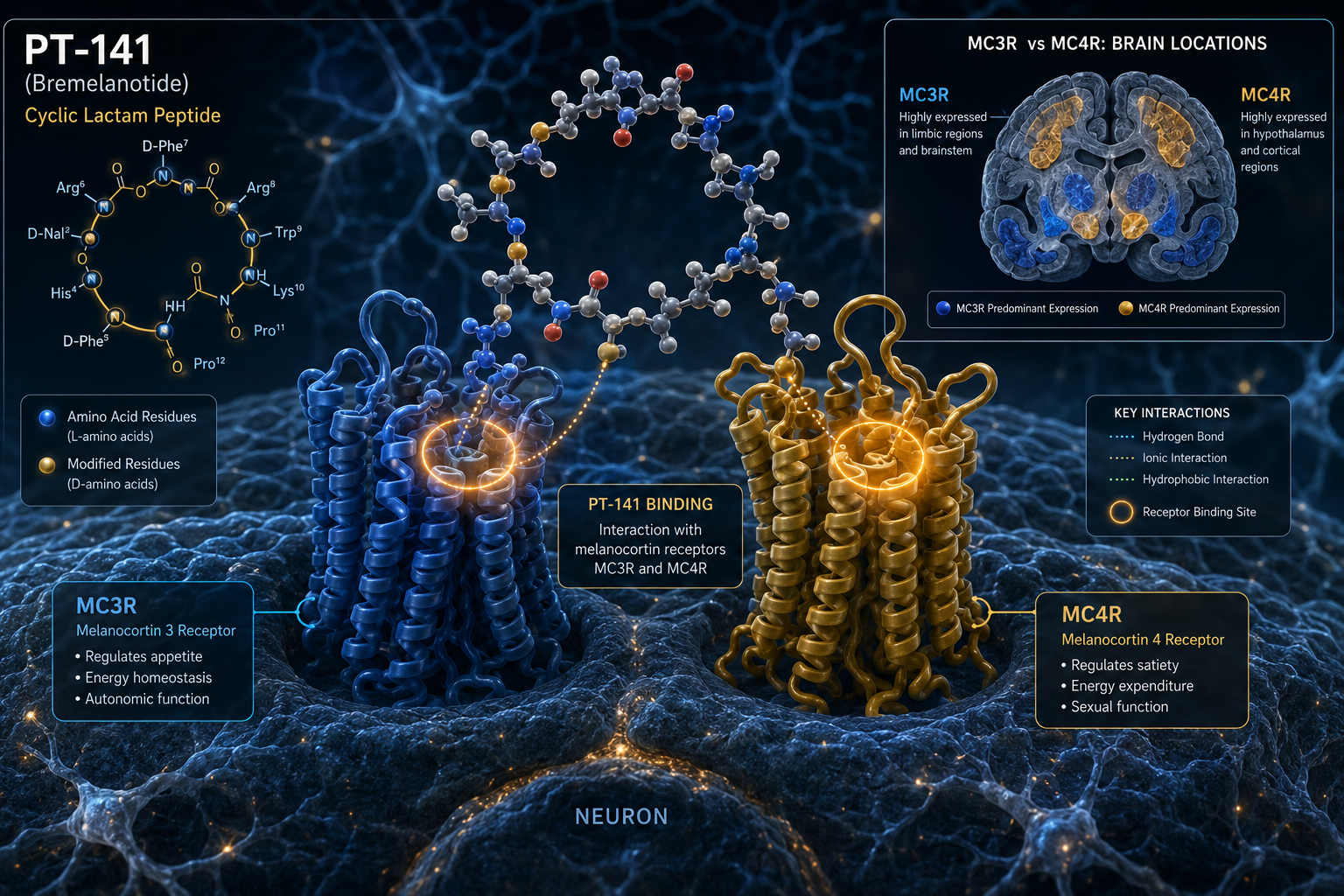
  • PT-141 (bremelanotide) targets melanocortin receptors — primarily MC3R and MC4R — in the central nervous system, not peripheral vascular tissue.
  • FDA approval is limited to HSDD in premenopausal women; use in men or other contexts remains investigational.
  • Receptor subtype selectivity is the central variable in study design for this compound.
  • Purity verification and standardized dosing protocols are non-negotiable for credible preclinical research.
  • Emerging research explores PT-141 alongside other neuroendocrine-active peptides in multi-axis study models.

How Melanocortin Signaling Drives PT-141 Research

Understanding PT-141 Peptide: Melanocortin Signaling, Research Applications, and Study Design Considerations begins at the receptor level. The melanocortin system comprises five G-protein-coupled receptor subtypes (MC1R through MC5R), each distributed across different tissues and governing distinct physiological functions.

PT-141 shows preferential binding affinity for MC3R and MC4R, both expressed heavily in hypothalamic nuclei. This central localization is what separates PT-141 mechanistically from phosphodiesterase inhibitors, which act peripherally on vascular smooth muscle. By activating MC4R in particular, PT-141 modulates dopaminergic and oxytocinergic signaling pathways that researchers associate with motivational and arousal-related behavior.

Key receptor targets at a glance:

Receptor Primary Location Research Relevance
MC1R Melanocytes, immune cells Pigmentation, inflammation
MC3R Hypothalamus, limbic system Energy balance, arousal
MC4R Hypothalamus, brainstem Sexual function, appetite
MC5R Exocrine glands Secretory function

This receptor profile also intersects with neuroendocrine immune research, a domain explored in resources like neuroendocrine and innate immunity research, which highlights how peptide signaling bridges CNS and immune function.

Researchers interested in the broader landscape of CNS-active peptides will find context in what is new in peptide research, which tracks emerging targets across multiple receptor families.

How Melanocortin Signaling Drives PT-141 Research


Research Applications: Where PT-141 Study Is Heading

The compound's CNS-centric mechanism opens several investigational avenues beyond its approved indication.

Current and emerging research areas include:

  • Sexual motivation neuroscience — mapping MC4R activation to dopamine release in nucleus accumbens circuits
  • Energy homeostasis — MC3R's role in feeding behavior and adipose regulation creates overlap with metabolic peptide research
  • Inflammation modulation — melanocortin receptors on immune cells suggest anti-inflammatory potential
  • Neuroprotection models — early-stage inquiry into melanocortin signaling in neuronal stress responses

For researchers building multi-peptide study panels, PT-141's central arousal profile complements compounds with peripheral or metabolic targets. The PT-141 central arousal research overview provides a focused starting point for protocol development.

Comparisons with metabolic peptides such as those covered in SLU-PP-332 metabolic modulation research themes illustrate how multi-axis models can test CNS and peripheral signaling simultaneously.

Researchers sourcing compounds for these studies should prioritize lab-tested peptides with documented purity certificates, as receptor-binding assays are highly sensitive to impurity interference.


Study Design Considerations for PT-141 Peptide Research

Study Design Considerations for PT-141 Peptide Research

Study Design Considerations for PT-141 Peptide Research

Rigorous study design is where PT-141 Peptide: Melanocortin Signaling, Research Applications, and Study Design Considerations becomes most practically relevant. Several variables require deliberate control.

Critical design parameters:

  1. Receptor selectivity assays — confirm MC3R vs. MC4R binding ratios before behavioral endpoint measurement
  2. Dose-response modeling — subcutaneous delivery kinetics differ markedly from intranasal routes; nasal spray peptide delivery research offers comparative pharmacokinetic data
  3. Endpoint selection — distinguish motivational endpoints from performance endpoints to avoid conflation
  4. Reference standards — using validated benchmarks, as discussed in building robust peptide benchmarks with reference standards, ensures cross-study comparability
  5. Confounding neuroendocrine variables — baseline hormonal status affects MC4R sensitivity; controlling for this is essential

"The mechanistic specificity of melanocortin receptor agonism demands equally specific outcome measures — broad behavioral endpoints will obscure the signal."

Researchers can also review how parallel neuroendocrine peptides are studied by examining gonadorelin GnRH pulsatility research, which demonstrates rigorous pulsatile dosing methodology applicable to other CNS-active compounds.

For those sourcing PT-141 for preclinical work, verified supply is available through PT-141 for sale online with accompanying documentation.


Conclusion

PT-141's value to researchers lies in its mechanistic precision: a centrally acting melanocortin agonist with a well-characterized receptor profile and an approved clinical precedent. That combination is rare.

Actionable next steps for researchers:

  • Map your study endpoints directly to MC3R or MC4R activation to avoid ambiguous results
  • Verify peptide purity through third-party COA documentation before any receptor assay
  • Review existing CNS peptide study frameworks to benchmark your dosing and endpoint selection
  • Consider multi-peptide panel designs that pair PT-141 with metabolic or neuroendocrine compounds for broader mechanistic insight

As melanocortin research matures in 2026, PT-141 remains one of the most mechanistically instructive peptides available for CNS-focused preclinical investigation.

https://www.puretestedpeptides.com/wp-content/uploads/2026/06/PT-141-Peptide-Melanocortin-Signaling-Research-Applications-and-Study-Design-Considerations.png 1024 1536 Pure Tested https://www.puretestedpeptides.com/wp-content/uploads/2026/01/buy-peptides-online.jpg Pure Tested2026-06-14 16:48:442026-07-20 15:03:12PT-141 Peptide: Melanocortin Signaling, Research Applications, and Study Design Considerations
Retatrutide Side Effects, Tolerability, and Dose Escalation: What the Clinical Literature Shows

Retatrutide Side Effects, Tolerability, and Dose Escalation: What the Clinical Literature Shows

June 14, 2026/0 Comments/by Pure Tested

Sixty percent of participants on the highest retatrutide dose reported nausea in Phase 2 trials. That single data point tells you more about managing this triple-receptor agonist than any headline about weight loss ever could. For clinicians, researchers, and informed readers, understanding Retatrutide Side Effects, Tolerability, and Dose Escalation: What the Clinical Literature Shows is the essential starting point before any other conversation about this compound.

Key Takeaways

  • Gastrointestinal adverse events are the most common side effects and are strongly dose-dependent.
  • Dysesthesia (abnormal skin sensation) is a unique side effect not seen with semaglutide or tirzepatide.
  • Slow, structured dose escalation is the primary strategy for improving tolerability.
  • Most adverse events are mild to moderate and tend to decrease after the titration phase.
  • Understanding the adverse-event profile helps set realistic expectations for any research or clinical context.

Key Takeaways

The Gastrointestinal Adverse Event Profile

The dominant safety signal across all retatrutide trials is gastrointestinal (GI) in nature. In the TRIUMPH-4 Phase 3 trial, participants receiving the 12 mg dose reported the following rates compared to placebo:

Adverse Event Retatrutide 12 mg Placebo
Nausea 43.2% 10.7%
Diarrhea 33.1% 13.4%
Constipation 25.0% 8.7%
Vomiting 20.9% 0.0%
Decreased appetite 18.2% 9.4%

These numbers are significant but not unexpected. Retatrutide activates three receptors simultaneously: GLP-1, GIP, and glucagon. This triple-agonist mechanism, which you can explore further through the GLP-3 retatrutide research overview, amplifies both efficacy and GI burden compared to single or dual-receptor agents.

It is also worth noting how retatrutide compares within the broader evolution of incretin-based therapies. The generations of GLP-1 receptor agonists page provides useful context for how each new class has shifted the tolerability landscape.

"The GI side effect profile of retatrutide is consistent with its mechanism but is meaningfully more pronounced at higher doses than what is observed with dual agonists."


The Gastrointestinal Adverse Event Profile

Dose-Dependent Tolerability: What the Phase 2 Data Reveals

One of the clearest findings from the TRIUMPH-1 Phase 2 trial is that side effects scale with dose. The nausea data across dose groups tells a direct story:

  • 1 mg dose: 14% reported nausea
  • 4 mg dose: 36% reported nausea
  • 8 mg dose: 44% reported nausea
  • 12 mg dose: 60% reported nausea

Diarrhea followed a less linear pattern, peaking at the 4 mg and 8 mg doses (both at 20%) before dropping slightly at 12 mg (15%), which may reflect GI adaptation over time.

This dose-response relationship is the primary reason that structured titration protocols exist. Gradual escalation allows the body to adapt to receptor activation before reaching therapeutic doses. Researchers interested in how similar peptide compounds handle titration can review CJC-1295 with DAC research findings for comparative context on incremental dosing strategies.

Understanding the GIP receptor and its importance also helps explain why the GI burden of retatrutide differs from GLP-1-only agents. GIP receptor co-activation affects gastric emptying and gut motility in ways that compound the nausea signal.


Dose-Dependent Tolerability: What the Phase 2 Data Reveals

Dysesthesia and Other Notable Findings in Retatrutide Side Effects, Tolerability, and Dose Escalation

Beyond GI effects, dysesthesia stands out as a clinically distinctive finding. In TRIUMPH-4, 20.9% of participants on the 12 mg dose reported this abnormal skin sensation, compared to just 0.7% in the placebo group. This side effect has not been observed with semaglutide or tirzepatide, making it a potential marker of retatrutide's unique glucagon receptor activity.

The mechanism behind dysesthesia is not fully characterized, but it is thought to relate to the glucagon receptor's role in peripheral nervous system signaling. Most reported cases were mild and did not lead to discontinuation.

For those studying peptide compounds with overlapping metabolic and neurological effects, the metabolic modulation research lines resource offers broader context on how receptor cross-talk can produce unexpected systemic signals.

Additional findings from the clinical literature on Retatrutide Side Effects, Tolerability, and Dose Escalation: What the Clinical Literature Shows include:

  • Injection site reactions (mild, consistent with subcutaneous peptide administration)
  • Heart rate increases at higher doses, consistent with glucagon receptor activity
  • No new cardiovascular safety signals identified in Phase 2 or Phase 3 data to date

Researchers exploring synergistic incretin mechanisms may also find the cagrilintide synergy with GLP-1 article relevant, as it addresses how combination receptor strategies influence tolerability profiles.


Conclusion

The clinical picture of Retatrutide Side Effects, Tolerability, and Dose Escalation: What the Clinical Literature Shows is one of manageable but meaningful adverse events, primarily GI in nature and clearly dose-dependent. Dysesthesia remains the most pharmacologically interesting finding, given its absence in comparable drug classes.

Actionable next steps for researchers and clinicians:

  1. Prioritize slow dose escalation protocols to reduce peak GI burden.
  2. Monitor for dysesthesia specifically, as it may be under-recognized without active questioning.
  3. Assess individual GI tolerance at each dose step before advancing.
  4. Review the full product research catalog for related metabolic peptide compounds with established tolerability data.
  5. Cross-reference the metabolic modulation research lines for mechanistic context when interpreting adverse event patterns.

The efficacy data for retatrutide is compelling. But sound research and clinical decision-making begins with a clear-eyed view of the safety profile, not the weight-loss headline.

https://www.puretestedpeptides.com/wp-content/uploads/2026/06/Retatrutide-Side-Effects-Tolerability-and-Dose-Escalation-What-the-Clinical-Literature-Shows.png 1024 1536 Pure Tested https://www.puretestedpeptides.com/wp-content/uploads/2026/01/buy-peptides-online.jpg Pure Tested2026-06-14 16:48:432026-07-20 15:03:13Retatrutide Side Effects, Tolerability, and Dose Escalation: What the Clinical Literature Shows
Designing Experiments With BPC‑157 and TB‑500: Dose‑Response Curves, Administration Routes, and Outcome Measures in Animal Models

Designing Experiments With BPC‑157 and TB‑500: Dose‑Response Curves, Administration Routes, and Outcome Measures in Animal Models

June 13, 2026/0 Comments/by Pure Tested

{"cover":"Professional landscape format (1536×1024) hero image with bold text overlay: 'Designing Experiments With BPC-157 and TB-500: Dose-Response Curves, Administration Routes & Outcome Measures in Animal Models', modern bold sans-serif 70pt white text with dark semi-transparent overlay box, centered upper-third composition. Background shows a high-resolution laboratory scene with rodent surgical preparation, peptide vials, syringes, and a dose-response curve graph on a monitor. Color palette: deep navy blue, crisp white, steel gray accents. Editorial magazine quality, high contrast, scientific research aesthetic.","content":["Detailed landscape format (1536×1024) scientific infographic illustration showing side-by-side molecular diagrams of BPC-157 (15-amino-acid chain) and TB-500 (thymosin beta-4 fragment) with labeled structural features, actin polymerization pathway arrows, VEGF and FGF upregulation icons, angiogenesis vessel diagrams, and nitric oxide pathway annotations. Clean white background with navy and teal color scheme, bold sans-serif labels, research-grade visual style, peptide mechanism comparison focus.","Detailed landscape format (1536×1024) showing a split-composition experimental design diagram: left side depicts a rodent subcutaneous injection site with dose-response curve graph overlay showing BPC-157 doses 250-500mcg plotted against tissue healing scores; right side shows TB-500 loading phase timeline bar chart (2.0-2.5mg twice weekly over 4-6 weeks) with maintenance phase reduction. Laboratory bench background with syringes, vials, and a researcher's gloved hands. Teal, white, and charcoal color scheme, annotated with administration route labels.","Detailed landscape format (1536×1024) showing a comprehensive outcome measures dashboard for animal model experiments: grid layout featuring histological tissue cross-section photomicrographs of tendon healing, wound closure percentage bar graphs, angiogenesis vessel density heat maps, inflammation biomarker line charts, and cell migration assay images. Rodent silhouette in background. Bold data visualization style with navy, orange, and white color palette, scientific poster aesthetic, clearly labeled endpoints and confounders annotations."]

Professional landscape hero image () with : "Designing Experiments With BPC‑157 and TB‑500: Dose‑Response Curves,

Fewer than 15% of peptide studies published in preclinical literature include a fully justified dose-response design — a gap that makes reproducibility nearly impossible. Designing experiments with BPC‑157 and TB‑500: dose‑response curves, administration routes, and outcome measures in animal models demands far more than selecting a dose and observing results. A rigorous methods framework separates publishable data from inconclusive noise.

Key Takeaways

  • BPC‑157 and TB‑500 operate through distinct mechanisms, requiring separate dosing schedules and administration strategies in animal models.
  • Dose-response curves should span at least three concentration points to identify threshold, optimal, and saturation effects.
  • Route of administration directly influences bioavailability and must match the target tissue and study objective.
  • Outcome measures must include both functional and histological endpoints to capture the full repair profile.
  • Confounders such as animal age, sex, housing conditions, and peptide purity can invalidate results if not controlled.

Key Takeaways

Understanding the Mechanisms Before Designing the Protocol

Effective experimental design begins with mechanism. BPC‑157 is a 15-amino-acid peptide derived from human gastric juice. It promotes localized tissue repair through angiogenesis, upregulation of growth factors including VEGF, FGF, and EGF, and modulation of nitric oxide pathways. Its action is predominantly local, making proximity of administration to the injury site a key variable.

TB‑500 is a synthetic fragment of thymosin beta-4. It facilitates systemic healing by regulating actin polymerization, promoting cell migration, and modulating integrin-linked kinase signaling. Unlike BPC‑157, its systemic distribution means injection site is less critical to outcome.

"Understanding whether a peptide acts locally or systemically is the single most important factor in selecting administration route."

Researchers exploring broader tissue biology and recovery mechanisms can review the recovery and tissue biology overview for foundational context before finalizing a protocol.


Dose‑Response Curves and Administration Routes in Animal Models

Dose‑Response Curves and Administration Routes in Animal Models

Establishing the Dose-Response Curve

A valid dose-response curve requires a minimum of three dose levels: a subthreshold dose, an expected optimal dose, and a supramaximal dose. For BPC‑157, typical doses in rodent models range from 250 to 500 micrograms per day. Its short half-life — under 30 minutes — necessitates once or twice daily dosing to maintain meaningful plasma and tissue concentrations.

For TB‑500, common loading-phase doses are 2.0 to 2.5 milligrams administered subcutaneously twice per week over a 4-to-6-week period, followed by a reduced maintenance phase. Its longer half-life supports less frequent dosing without significant loss of effect.

Recommended dose-range structure:

Peptide Low Dose Mid Dose High Dose Frequency
BPC‑157 100 mcg/day 250 mcg/day 500 mcg/day Once or twice daily
TB‑500 1.0 mg 2.0 mg 2.5 mg Twice weekly

Selecting Administration Routes

Route selection must match the study objective:

  • BPC‑157 subcutaneous (near injury): Best for tendon, ligament, and musculoskeletal repair models.
  • BPC‑157 oral: Appropriate for gastrointestinal studies. BPC‑157 shows notable stability in gastric juice, supporting oral bioavailability.
  • TB‑500 subcutaneous or intramuscular: Either route is acceptable given its systemic distribution profile.

Researchers comparing peptide delivery strategies may also find value in reviewing nasal spray peptide delivery approaches as an emerging alternative administration route in preclinical work.

Peptide purity is a non-negotiable variable. Verifying source quality through a certificate of analysis before any experiment prevents batch-to-batch variability from contaminating results.


Outcome Measures and Confounders in Designing Experiments With BPC‑157 and TB‑500

Outcome Measures and Confounders in Designing Experiments With BPC‑157 and TB‑500

Primary Outcome Measures

Functional endpoints:

  • Grip strength testing (musculoskeletal models)
  • Wound closure rate measured by standardized photography
  • Gait analysis scores in limb injury models

Histological endpoints:

  • Collagen fiber density and alignment via Masson's trichrome staining
  • Vessel density count for angiogenesis quantification
  • Inflammatory cell infiltration via hematoxylin and eosin staining

Biochemical endpoints:

  • Serum VEGF, TNF-alpha, and IL-6 levels via ELISA
  • Nitric oxide metabolite concentrations in tissue homogenates

BPC‑157 has demonstrated measurable efficacy in tendon and ligament healing, inflammation reduction, and angiogenesis promotion across multiple rodent models. TB‑500 has shown consistent improvements in wound closure rates, reduced inflammatory markers, and enhanced cell migration in comparable preclinical settings.

For context on how other peptides such as SS‑31 influence tissue-level outcomes, particularly in mitochondrial and oxidative stress endpoints, cross-referencing related peptide research strengthens experimental rationale.

Critical Confounders to Control

Failing to account for confounders is the leading cause of irreproducible peptide research. Key variables include:

  • Animal age and sex: Healing rates differ significantly between young and aged rodents, and between male and female cohorts.
  • Housing and stress: Group versus isolated housing alters corticosterone levels, which directly affects tissue repair.
  • Injury model standardization: Punch biopsy depth, tendon transection length, and ischemia duration must be identical across groups.
  • Peptide reconstitution and storage: Degradation between preparation and injection introduces silent variability.

Researchers working with mitochondrial peptides like MOTS-C alongside repair peptides should also account for metabolic state as a confounder, since baseline metabolic function modulates tissue repair capacity.

Additionally, reviewing TB‑500 product specifications and thymosin alpha-1 mechanism data provides useful comparative context when designing multi-peptide protocols.


Conclusion

Designing experiments with BPC‑157 and TB‑500: dose‑response curves, administration routes, and outcome measures in animal models requires systematic planning at every stage. The next steps for any research team are clear: define the mechanistic question first, build a three-point dose-response curve for each peptide, match the administration route to the target tissue, and pre-specify both functional and histological endpoints before any animal is enrolled. Control confounders with written standard operating procedures. Verify peptide purity before each experiment cycle. These steps do not guarantee a positive result — but they guarantee that the result, whatever it is, will be interpretable and reproducible.

https://www.puretestedpeptides.com/wp-content/uploads/2026/06/Designing-Experiments-With-BPC‑157-and-TB‑500-Dose‑Response-Curves-Administration-Routes-and-Outcome-Measures-in-Animal-Models.png 1024 1536 Pure Tested https://www.puretestedpeptides.com/wp-content/uploads/2026/01/buy-peptides-online.jpg Pure Tested2026-06-13 13:04:122026-07-20 15:03:17Designing Experiments With BPC‑157 and TB‑500: Dose‑Response Curves, Administration Routes, and Outcome Measures in Animal Models
BPC-157 Peptide: Gastrointestinal, Tendon, and Neurological Findings From Animal Models

BPC-157 Peptide: Gastrointestinal, Tendon, and Neurological Findings From Animal Models

June 12, 2026/0 Comments/by Pure Tested

A single synthetic peptide derived from a naturally occurring gastric protein has produced consistent healing results across three entirely different tissue types in rodent studies — that convergence is what makes the preclinical literature on BPC-157 so compelling for new investigators.

BPC-157 (Body Protection Compound-157) is a 15-amino-acid sequence isolated from human gastric juice. The breadth of findings documented in BPC-157 Peptide: Gastrointestinal, Tendon, and Neurological Findings From Animal Models spans gut mucosa repair, connective tissue regeneration, and nerve recovery — all within controlled animal experiments. Understanding this literature is a useful starting point before any translational research is designed.

Key Takeaways

  • BPC-157 consistently accelerates mucosal healing in rodent GI injury models, including NSAID-induced lesions.
  • Tendon and ligament studies show improved collagen organization, cell migration, and biomechanical strength.
  • Neurological models demonstrate functional recovery following spinal cord injury in rats.
  • Angiogenesis — new blood vessel formation — appears to be a shared mechanism across all three tissue types.
  • All findings to date come from animal and in vitro models; human clinical data remain limited.

Key Takeaways

Gastrointestinal Findings in Rodent Models

The GI tract is where BPC-157 research began. The peptide was first studied for its ability to counteract damage caused by non-steroidal anti-inflammatory drugs (NSAIDs), which are well-known for eroding the stomach lining. In rat models, BPC-157 administration — both oral and parenteral — significantly reduced the size and severity of NSAID-induced gastric lesions.

Beyond NSAID damage, researchers observed that BPC-157 accelerated healing across a range of GI injuries, including:

  • Esophageal lesions caused by reflux-like conditions
  • Intestinal anastomosis sites, where surgical reconnection of bowel segments was performed
  • Colitis models, in which chemically induced colon inflammation was measurably reduced

A key mechanism identified in these studies is upregulation of growth factor expression, particularly vascular endothelial growth factor (VEGF), which promotes the formation of new blood vessels in damaged tissue. This angiogenic effect helps restore blood supply to injured mucosa, accelerating cellular repair.

For investigators exploring related tissue repair pathways, a review of recovery and tissue biology fundamentals provides useful background context.


Gastrointestinal Findings in Rodent Models

Tendon and Ligament Findings in Animal Studies

Musculoskeletal research on BPC-157 Peptide: Gastrointestinal, Tendon, and Neurological Findings From Animal Models has produced some of the most reproducible results in the preclinical literature.

In a widely cited 2003 study, BPC-157 was administered to rats following complete transection of the Achilles tendon. Animals receiving BPC-157 showed:

Outcome Measure BPC-157 Group Control Group
Tendon fiber organization Improved Disorganized
Tendocyte proliferation (in vitro) Stimulated Baseline
Functional recovery speed Faster Slower

A 2010 study on medial collateral ligament (MCL) injuries in rats found that BPC-157 improved outcomes across functional, biomechanical, macroscopic, and histological assessments. The ligaments of treated animals showed denser collagen fiber alignment and greater tensile strength at follow-up.

A 2021 study extended these findings to myotendinous junctions — the critical interface between muscle and tendon. BPC-157 repaired disabled junctions in rats, confirmed through macro/microscopic imaging, biomechanical testing, and functional assessments.

Cell-level research confirms that BPC-157 enhances tendon outgrowth, cell survival, and cell migration, which explains the structural improvements seen in whole-animal studies.

Researchers interested in related musculoskeletal peptide research may find the BPC-157 10mg vial research themes page and the broader top healing peptides overview useful for comparative context.


Tendon and Ligament Findings in Animal Studies

Neurological Findings From Animal Models

The neurological data on BPC-157 Peptide: Gastrointestinal, Tendon, and Neurological Findings From Animal Models is perhaps the most surprising given the peptide's gastric origins.

A 2019 study examined BPC-157 in a rat spinal cord injury model. Animals treated with BPC-157 showed measurable functional recovery compared to untreated controls, with improvements in motor coordination and limb use. Researchers attributed this partly to the peptide's ability to promote angiogenesis near the injury site, restoring microvascular supply to damaged neural tissue.

Additional neurological findings from rodent models include:

  • Reduced dopaminergic system disruption following neurotoxin exposure
  • Modulation of serotonin and dopamine pathways, relevant to behavioral outcomes
  • Protection against excitotoxic damage in brain tissue models

The shared thread across GI, tendon, and neurological findings is the peptide's consistent pro-angiogenic and cytoprotective profile. New blood vessel formation supports healing regardless of tissue type, which may explain BPC-157's broad activity across systems.

Investigators comparing peptides with overlapping cytoprotective mechanisms may also want to review GHK-Cu peptide research and oral BPC-157 formulation notes for route-of-administration considerations.

For those building a broader peptide research framework, the longevity peptide research overview and quality testing protocols are practical next references.


Conclusion

The preclinical record on BPC-157 is notable for its consistency across tissue types. Rodent and in vitro studies point to a peptide that accelerates mucosal healing in the GI tract, improves structural and functional outcomes in tendons and ligaments, and supports neurological recovery following spinal cord injury. Angiogenesis and cytoprotection appear to be the central mechanisms linking these effects.

Actionable next steps for new investigators:

  1. Review the primary rodent studies organized by tissue type before designing any translational protocol.
  2. Clarify route of administration (systemic vs. local) based on the target tissue, as delivery method affects outcomes in the literature.
  3. Consult quality testing protocols to ensure peptide purity standards are met before any experimental use.
  4. Compare BPC-157's angiogenic profile against related peptides such as GHK-Cu to identify potential mechanistic overlaps.
  5. Note that all current evidence is preclinical — human trials are needed before any clinical conclusions can be drawn.
https://www.puretestedpeptides.com/wp-content/uploads/2026/06/BPC-157-Peptide-Gastrointestinal-Tendon-and-Neurological-Findings-From-Animal-Models.png 1024 1536 Pure Tested https://www.puretestedpeptides.com/wp-content/uploads/2026/01/buy-peptides-online.jpg Pure Tested2026-06-12 13:03:222026-07-20 15:03:28BPC-157 Peptide: Gastrointestinal, Tendon, and Neurological Findings From Animal Models
Page 5 of 6«‹3456›
×

Helpful Links

  • My account
  • Cart
  • Checkout
  • Refund and Returns Policy
  • Privacy Policy
  • SMS Privacy Policy
  • Login
  • My Account
  • Logout

USA Made Lab Tested Peptides

All products are sold for research, laboratory, or analytical purposes only, and are not for human consumption


Pure Tested Peptides is a chemical supplier. Pure Tested Peptides is not a compounding / chemical compounding facility as defined under 503A of the Federal Food, Drug, and Cosmetic act. Pure Tested Peptides is not an outsourcing facility as defined under 503B of the Federal Food, Drug, and Cosmetic act.

The statements made within this website have not been evaluated by the US Food and Drug Administration. The products we offer are not intended to diagnose, treat, cure or prevent any disease.

Human/Animal Consumption Prohibited. Laboratory/In-Vitro Experimental Use Only

Scroll to top Scroll to top Scroll to top