Call or Text 727-513-9780
  • Shopping Cart Shopping Cart
    0Shopping Cart
Pure Tested Peptides | America's most trusted Peptides for sale online
  • Peptides for sale
    • Oral Peptides for sale
      • Peptide Capsules for sale
      • BPC 157 Capsules 1000mcg
      • SLU-PP-332 Capsules | 1000 mcg
      • 5-Amino-1MQ 50mg Capsules
      • Tesofensine 500mcg
    • All Peptides for sale
    • Peptide Sprays
      • BPC 157 Nasal Spray Kit
      • BPC-157 TB500 Nasal Spray Kit
      • Semax Nasal Spray 10mg
      • Selank – Nasal Spray Kit – 10mg
      • Epithalon 50MG Nasal Spray Kit
      • Ipamorelin 10mg Nasal Spray
      • Klow Nasal Spray (BPC-157 + TB-500 + GHK-Cu + KPV) | 80mg
      • Hulk Nasal Spray Tesa / Ipa Blend 6/3 MG
      • Klow Nasal Spray
      • NAD + 500 mg Nasal Spray
      • PT-141 Nasal Spray Kit
    • GHRH Peptides
      • Ipa Peptides
      • CJC-1295 Peptides
        • CJC-1295 with DAC 5 mg
        • CJC-1295 without DAC 5 mg
        • CJC-1295 Ipa 10mg
      • Tesa Peptides
        • Tesa Peptide
        • Tesa 20 mg
    • GHK-Cu Peptides
      • All GHK-Cu Peptides
      • GHK-Cu 100mg
      • KLOW Peptide Blend – Buy KLOW blend online
    • BPC Peptides
      • All BPC Peptides
      • BPC-157
      • BPC-157 TB-500
      • BPC 157 capsules 1000mcg
    • SLU-PP-332 Peptides
      • All SLU-PP-332 Peptides
      • SLU-PP-332 5mg
    • GLP3 Peptides
      • GLP3-R
      • GLP3-R CAG 10mg
      • GLP3-R 20mg
    • PT-141 Peptides
      • PT-141 Peptides for sale
      • PT-141 10mg
      • PT-141 Nasal Spray
    • CAG Peptides
      • Lipo-C Peptide Blend
      • CAG 5mg
      • CAG 10mg
    • MOTS-C Peptides
      • MOTS-C Peptides for sale
      • MOTS-c peptide
      • MOTS-c 10mg *6 pack*
    • 5 Amino 1MQ Peptides
      • 5 Amino 1MQ Peptides for sale
      • 5-Amino-1MQ 50mg Capsules
      • 5-Amino-1MQ 5mg
    • Epithalon Peptides
      • Epithalon Peptides for sale
      • Epithalon 10mg
      • Epithalon 50mg
  • Shop
    • GLPs
      • 5-Amino-1MQ 50mg Capsules
      • 5-Amino-1MQ 5mg
      • GLP3-Reta
      • L-Carnitine 500mg/ml
      • Tesofensine 500mcg
      • SLU-PP-332 5mg
      • MOTS-c 10mg *6 pack*
    • Epithalon & BPC Peptides
      • Epithalon 10mg
      • Epithalon 50mg
      • BPC-157
      • BPC 157 capsules 1000mcg
      • BPC-157 TB-500
      • BPC-157 TB500 Nasal Spray Kit
      • BPC 157 Nasal Spray Kit
    • BPC TB-500 & NAD+ Peptides
      • NAD+ 500 mg
      • KLOW Peptide Blend – Buy KLOW blend online
      • GLOW Peptide Blend
      • TB 500 5mg
      • BPC 157 capsules 1000mcg – Supplement
      • BPC 157 Nasal Spray Kit
      • BPC-157
      • BPC-157 TB500 Nasal Spray Kit
      • BPC-157 TB-500
      • BPC 157 capsules 1000mcg
    • LL-37 Peptide
      • LL-37 10 mg
    • MOTS-C & Selank
      • MOTS-c peptide
      • Selank 10mg
    • GHK Peptides
      • GHK-Cu 100mg
      • GLOW Peptide Blend
      • KLOW Peptide Blend – Buy KLOW blend online
  • COAs
  • Wholesale
    • Wholesale Peptides for sale
  • PTP FAQ
  • Affiliates
    • Selank Peptide: Advanced Pharmacological Mechanisms Underlying Its Anxiolytic and Nootropic Effects in Research
      • 5-Amino-1MQ Peptide: Detailed Mechanisms of NNMT Inhibition and Its Impact on Cellular Metabolism Research
        • MOTS-C Peptide: Unraveling Its Role in Mitochondrial Dynamics and Energy Metabolism Research
          • Epithalon Peptide and Telomerase Regulation: Investigating Its Impact on Cellular Senescence and Lifespan Research Models
            • GLP2-T vs GLP2 Tirz Peptide: Understanding the Naming, Mechanistic Nuances, and Research Implications for Gut Health
      • Peptides and Polypeptides in Modern Pharmacology: What Research on Metoprolol, Prednisone, and Amlodipine Reveals
        • Polypeptide Peptides vs NSAIDs: What Naproxen and Diclofenac Teach Tissue-Repair Researchers About BPC‑157 and TB‑500
          • Peptides and Polypeptides in Endocrine Pharmacology: How GLP-1, GLP-2, and GLP-3 Retatrutide Differ From Classic Drugs Like Prednisone and Amlodipine
          • 5‑Amino‑1MQ Peptide and NNMT Inhibition: How It Compares With Statins Like Atorvastatin in Adipose and Lipid Metabolism Research
      • Enclomiphene, Estrogen Receptor Signaling, and Luteinizing Phase Biology: What Hormone Researchers Should Measure
        • Mesenchymal Stem Cells, BPC‑157, and GHK‑Cu: How Tissue Repair Peptides Compare With Classic NSAIDs Like Naproxen in Injury Models
          • Peptide Calculator Use Cases Beyond Growth Hormone: Working Through GLP‑3 Retatrutide, MOTS‑c, and BPC‑157 Research Dosing
        • Polypeptide Peptides in Endocrine and Metabolic Pharmacology: Lessons From Amlodipine, Prednisone, and Metoprolol
        • Peptides Calculator for Advanced Blends: Worked Examples for Tesamorelin, CJC‑1295, and Ipamorelin Stacks
          • Peptides and Polypeptides in Human Physiology: How Molecular Size Shapes Research Applications
            • Selank Peptide: Advanced Pharmacological Mechanisms Underlying Its Anxiolytic and Nootropic Effects in Research
          • 5-Amino-1MQ Peptide: Detailed Mechanisms of NNMT Inhibition and Its Impact on Cellular Metabolism Research
            • MOTS-C Peptide: Unraveling Its Role in Mitochondrial Dynamics and Energy Metabolism Research
              • Epithalon Peptide and Telomerase Regulation: Investigating Its Impact on Cellular Senescence and Lifespan Research Models
                • GLP2-T vs GLP2 Tirz Peptide: Understanding the Naming, Mechanistic Nuances, and Research Implications for Gut Health
                  • Peptides and Polypeptides in Endocrine Pharmacology: How GLP-1, GLP-2, and GLP-3 Retatrutide Differ From Classic Drugs Like Prednisone and Amlodipine
                    • Polypeptide Peptides vs NSAIDs: What Naproxen and Diclofenac Teach Tissue-Repair Researchers About BPC‑157 and TB‑500
                      • Peptides and Polypeptides in Modern Pharmacology: What Research on Metoprolol, Prednisone, and Amlodipine Reveals
                        • 5‑Amino‑1MQ Peptide and NNMT Inhibition: How It Compares With Statins Like Atorvastatin in Adipose and Lipid Metabolism Research
                        • Enclomiphene, Estrogen Receptor Signaling, and Luteinizing Phase Biology: What Hormone Researchers Should Measure
                        • Mesenchymal Stem Cells, BPC‑157, and GHK‑Cu: How Tissue Repair Peptides Compare With Classic NSAIDs Like Naproxen in Injury Models
                        • Peptide Calculator Use Cases Beyond Growth Hormone: Working Through GLP‑3 Retatrutide, MOTS‑c, and BPC‑157 Research Dosing
                        • Polypeptide Peptides in Endocrine and Metabolic Pharmacology: Lessons From Amlodipine, Prednisone, and Metoprolol
                        • Peptides Calculator for Advanced Blends: Worked Examples for Tesamorelin, CJC‑1295, and Ipamorelin Stacks
                        • Peptides and Polypeptides in Human Physiology: How Molecular Size Shapes Research Applications
                        • Selank Peptide: Advanced Pharmacological Mechanisms Underlying Its Anxiolytic and Nootropic Effects in Research
                        • MOTS-C Peptide: Unraveling Its Role in Mitochondrial Dynamics and Energy Metabolism Research
                        • Peptides and Polypeptides in Modern Pharmacology: What Research on Metoprolol, Prednisone, and Amlodipine Reveals
                        • Peptides and Polypeptides in Endocrine Pharmacology: How GLP-1, GLP-2, and GLP-3 Retatrutide Differ From Classic Drugs Like Prednisone and Amlodipine
                        • 5-Amino-1MQ Peptide: Detailed Mechanisms of NNMT Inhibition and Its Impact on Cellular Metabolism Research
                        • Mesenchymal Stem Cells, BPC‑157, and GHK‑Cu: How Tissue Repair Peptides Compare With Classic NSAIDs Like Naproxen in Injury Models
                        • Peptide Calculator Use Cases Beyond Growth Hormone: Working Through GLP‑3 Retatrutide, MOTS‑c, and BPC‑157 Research Dosing
                        • GLP2-T vs GLP2 Tirz Peptide: Understanding the Naming, Mechanistic Nuances, and Research Implications for Gut Health
                        • Polypeptide Peptides in Endocrine and Metabolic Pharmacology: Lessons From Amlodipine, Prednisone, and Metoprolol
                        • Polypeptide Peptides vs NSAIDs: What Naproxen and Diclofenac Teach Tissue-Repair Researchers About BPC‑157 and TB‑500
                        • Peptides and Polypeptides in Human Physiology: How Molecular Size Shapes Research Applications
                        • Peptides Calculator for Advanced Blends: Worked Examples for Tesamorelin, CJC‑1295, and Ipamorelin Stacks
                        • 5‑Amino‑1MQ Peptide and NNMT Inhibition: How It Compares With Statins Like Atorvastatin in Adipose and Lipid Metabolism Research
                        • Enclomiphene, Estrogen Receptor Signaling, and Luteinizing Phase Biology: What Hormone Researchers Should Measure
                        • Epithalon Peptide and Telomerase Regulation: Investigating Its Impact on Cellular Senescence and Lifespan Research Models
                        • Best research protocol Klow blend
                        • best time to take BPC-157
                        • best time to take DSIP (Delta Sleep Inducing Peptide)
                        • best time to take CJC-1295
                        • best time to take AOD-9604
                        • best time to take Follistatin 344
                        • best time to take Ipamorelin
                        • best time to take MK-677 (Ibutamoren)
                        • best time to take Ligandrol (LGD-4033) — research compound
                        • best time to take Ostarine (MK-2866) — research compound
                        • best time to take GHK-CU
                        • best time to take TB-500
                        • best time to take MOTS-c
                        • best time to take Semax
                        • best time to take RAD-140 (Testolone) — research compound
                        • best time to take Thymosin Alpha-1
                        • best time to take PEG-MGF
                        • Biolife Plasma, Octapharma Plasma, and Research Peptides: How Plasma Donation Labs Differ From Peptide Suppliers
                        • best time to take YK-11 — research compound
                        • best time to take PT-141 (Bremelanotide)
                        • Best research protocol Klow blend
  • Contact
    • Contact Customer Service
    • Text Customer Support
  • About US
  • Shop all peptides
  • Affiliate Program
    • Affiliate Signup
  • Login / Register Login / Register Page Link Login / Register Page Link
  • Click to open the search input field Click to open the search input field Search
  • Menu Menu

Tag Archive for: peptide research

Best Research Peptides for Enhanced Cognitive Function: A Comparative Review

Best Research Peptides for Enhanced Cognitive Function: A Comparative Review

July 3, 2026/0 Comments/by Pure Tested

{"cover":"Professional landscape format (1536×1024) hero image with bold text overlay: 'Best Research Peptides for Cognitive Function: A Comparative Review' in extra large 72pt white bold sans-serif font with deep shadow effect, centered upper-third composition. Background features a stunning macro visualization of neural synaptic connections rendered in electric blue and gold against a dark navy backdrop, with subtle molecular peptide chain structures floating in the foreground. Color palette: deep navy, electric blue, gold accents. Magazine cover aesthetic, editorial quality, high contrast, cinematic depth of field.","content":["Detailed landscape format (1536×1024) scientific illustration showing side-by-side molecular structure comparison of Semax and Selank peptides as glowing 3D ribbon diagrams in blue and amber tones, with labeled arrows pointing to BDNF and NGF receptor binding sites on a stylized neuron cross-section. Dark background with faint brain scan imagery. Clean laboratory aesthetic, research journal quality, with subtle text labels 'Semax' and 'Selank' in white sans-serif. Cognitive peptide research theme, high detail.","Landscape format (1536×1024) overhead flat-lay composition of a research laboratory bench showing multiple peptide vials arranged in a comparison grid, each labeled with peptide names including Dihexa, Cerebrolysin, Pinealon, and PE-22-28. A researcher's gloved hand holds a pipette over a test tube. Warm clinical lighting, teal and white color palette, with a blurred brain MRI scan visible on a lightbox in the background. Scientific research quality, editorial photography style, sharp focus on vials.","Landscape format (1536×1024) infographic-style visualization showing a decision flowchart for selecting cognitive research peptides, with branching pathways from 'Research Goal' through nodes labeled 'Neuroprotection', 'Synaptogenesis', 'Anxiety Reduction', and 'Neurogenesis'. Each node features a small peptide name badge in contrasting colors. Background is a clean white-to-light-gray gradient with subtle hexagonal molecular pattern overlay. Bold sans-serif typography, professional data visualization aesthetic, teal and charcoal color scheme."}

Professional landscape hero image () with : "Best Research Peptides for Enhanced Cognitive Function: A Comparative Review".

Fewer than 15% of adults consistently perform at their cognitive peak under real-world stress conditions, yet a growing body of preclinical and clinical research suggests that certain bioactive peptides may directly address the neurobiological gaps responsible for that shortfall. This comparative review of the best research peptides for enhanced cognitive function examines the leading compounds, their mechanisms, and what current evidence actually supports.

Key Takeaways

  • Semax and Selank are the most clinically documented cognitive peptides, operating through complementary but distinct mechanisms involving BDNF, NGF, and GABAergic pathways.
  • Emerging compounds such as Dihexa, PE-22-28, and Pinealon show strong preclinical promise but lack extensive human safety data.
  • No cognitive peptide currently holds FDA approval for use in healthy adults; most human data originates from Russian clinical research.
  • Purity and sourcing quality are critical variables that directly affect research reliability and reproducibility.
  • Combining peptides with non-overlapping mechanisms, such as Semax and Selank, is a common research strategy for broader cognitive coverage.

Key Takeaways

Semax and Selank: The Benchmark Pair in Cognitive Peptide Research

When evaluating the best research peptides for enhanced cognitive function in a comparative review, Semax consistently ranks at the top of the evidence hierarchy. Approved in Russia for stroke recovery and cognitive disorders, Semax is a synthetic heptapeptide derived from ACTH(4-10). Its primary mechanism involves upregulating Brain-Derived Neurotrophic Factor (BDNF) and Nerve Growth Factor (NGF), two proteins essential for neuronal survival, synaptic plasticity, and memory consolidation.

Selank complements Semax through a fundamentally different pathway. Rather than boosting neurotrophic factors directly, Selank modulates GABAergic transmission and enkephalin metabolism, reducing anxiety-driven cognitive interference. This makes the Semax-Selank combination particularly relevant in research models where stress-induced cognitive impairment is a variable.

"The Semax-Selank pairing is widely studied precisely because their mechanisms do not overlap, one builds neural infrastructure while the other clears the psychological noise that disrupts it."

For researchers interested in anxiety-adjacent cognitive research, reviewing Selank side effects and research considerations provides important context before designing protocols.


Semax and Selank: The Benchmark Pair in Cognitive Peptide Research

Emerging Compounds: Dihexa, Pinealon, PE-22-28, and P21

The landscape of cognitive peptide research extends well beyond the Semax-Selank pair. Several newer compounds are generating significant preclinical interest.

Dihexa is perhaps the most discussed emerging synaptogenic peptide. It promotes synapse formation at concentrations far lower than traditional neurotrophic factors, with preclinical data suggesting substantial improvements in memory and learning tasks. However, human safety data remains limited, making it strictly a research compound at this stage.

Pinealon, a synthetic tripeptide (Glu-Asp-Arg), has been studied for neuroprotective effects in traumatic brain injury models and age-related memory decline. Its small size allows efficient cellular penetration, and early studies suggest it may support memory consolidation through epigenetic mechanisms.

PE-22-28, a shortened analog of spadin, functions as a TREK-1 potassium channel blocker. By inhibiting this channel, PE-22-28 promotes hippocampal neurogenesis and synaptogenesis, two processes directly tied to long-term memory formation. Its targeted mechanism makes it a compelling subject for future cognitive research.

P21, derived from ciliary neurotrophic factor (CNTF), shows preclinical promise for promoting neurogenesis and protecting against neurodegeneration. Early animal studies indicate potential cognitive benefits, though the compound requires significantly more investigation.

A 2026 study published in Food Chemistry added further depth to this field, identifying five novel peptides from porcine brain hydrolysates, including FPLHP and WGQKPW, that enhance memory by targeting Keap1, p38α, AChE, and BACE1 simultaneously.

For researchers exploring neuroprotective peptides alongside cognitive compounds, humanin and cellular protection research and epithalon peptide research offer relevant mechanistic parallels.


Peptide Primary Mechanism Evidence Level Human Data
Semax BDNF/NGF upregulation High (clinical) Yes (Russia)
Selank GABAergic/enkephalin modulation Moderate-High Yes (Russia)
Dihexa Synaptogenesis promotion Moderate (preclinical) Limited
Pinealon Epigenetic neuroprotection Early preclinical Minimal
PE-22-28 TREK-1 channel blockade Early preclinical None confirmed
P21 CNTF-derived neurogenesis Early preclinical None confirmed

Sourcing, Purity, and Research Protocol Considerations

Any meaningful comparative review of the best research peptides for enhanced cognitive function must address a variable that often receives insufficient attention: peptide purity. Impure compounds introduce confounding variables that invalidate results and create safety concerns in research settings.

Researchers should prioritize suppliers that provide third-party verified purity documentation. Understanding peptide purity testing standards is a foundational step before any cognitive peptide protocol begins. Similarly, understanding reference standards and benchmarking practices ensures that experimental results can be meaningfully compared across studies.

Delivery method also matters. Semax and Selank are typically administered intranasally in research settings, which bypasses first-pass metabolism and allows direct CNS access. Advances in innovative peptide delivery systems are expanding options for researchers working with less bioavailable compounds.

It is also worth noting that none of these peptides hold FDA approval for cognitive enhancement in healthy adults. The most robust human data originates from Russian clinical research, which has not yet been fully replicated in Western randomized controlled trials. Researchers should treat all findings as preliminary until that replication gap is closed.


Sourcing, Purity, and Research Protocol Considerations

Conclusion

The best research peptides for enhanced cognitive function represent a scientifically compelling but still-evolving field. Semax remains the gold standard based on clinical evidence, while Selank provides a complementary anxiolytic mechanism that makes the pair greater than the sum of its parts. Emerging compounds, Dihexa, Pinealon, PE-22-28, and P21, offer intriguing preclinical signals that warrant rigorous follow-up research.

Actionable next steps for researchers:

  • Prioritize compounds with the strongest evidence base (Semax, Selank) before exploring newer analogs.
  • Verify peptide purity through third-party testing before initiating any protocol.
  • Design studies that account for stress variables, where Selank's anxiolytic properties may be a confounding or complementary factor.
  • Monitor the replication of Russian clinical data in Western trials, this will be the defining development for the field in the coming years.
  • Explore neuroendocrine and innate immunity research for broader context on how peptide systems interact with cognitive pathways.

The science is advancing rapidly. Staying current with high-quality sourcing and evidence standards will separate meaningful research from noise.

https://www.puretestedpeptides.com/wp-content/uploads/2026/07/Best-Research-Peptides-for-Enhanced-Cognitive-Function-A-Comparative-Review.png 1024 1536 Pure Tested https://www.puretestedpeptides.com/wp-content/uploads/2026/01/buy-peptides-online.jpg Pure Tested2026-07-03 13:04:422026-07-20 15:01:11Best Research Peptides for Enhanced Cognitive Function: A Comparative Review
BPC-157 and TB-500 Synergy: Optimizing Tissue Regeneration Protocols in Research Models

BPC-157 and TB-500 Synergy: Optimizing Tissue Regeneration Protocols in Research Models

July 2, 2026/0 Comments/by Pure Tested

Fewer than 5% of peptide research protocols test compounds in combination — yet preclinical data consistently show that multi-peptide stacking can produce outcomes no single agent achieves alone. The study of BPC-157 and TB-500 Synergy: Optimizing Tissue Regeneration Protocols in Research Models sits at exactly that frontier, drawing growing attention from researchers exploring accelerated connective tissue repair, angiogenesis, and cellular recovery in animal models.

Detailed () scientific infographic illustration showing two peptide molecular structures labeled BPC-157 and TB-500

Key Takeaways

  • BPC-157 and TB-500 target distinct but complementary biological pathways, making their combination mechanistically rational.
  • Preclinical models suggest the pairing may accelerate tendon, muscle, and ligament repair beyond what either peptide achieves independently.
  • Dosing timing, route of administration, and peptide purity are critical variables in well-controlled research protocols.
  • Neither peptide is approved for human use; all applications remain within research and investigational contexts.
  • Sourcing lab-tested peptides is a non-negotiable quality control step for reproducible results.

Understanding the Two Peptides and Why Combination Research Makes Sense

BPC-157 (Body Protection Compound-157) is a synthetic pentadecapeptide derived from a protein found in gastric juice. In rodent models, it has demonstrated consistent activity in tendon-to-bone healing, gut mucosal repair, and neurological recovery. Its primary mechanisms include upregulation of growth hormone receptors, promotion of angiogenesis via VEGF pathways, and modulation of nitric oxide synthesis.

TB-500 is a synthetic analogue of Thymosin Beta-4, a naturally occurring peptide present in virtually all human and animal cells. It promotes actin polymerization, supports endothelial cell migration, and reduces local inflammation. Critically, TB-500 facilitates the formation of new blood vessels and supports the migration of stem cells to injury sites.

"The mechanistic complementarity between BPC-157 and TB-500 is not incidental — one primes the vascular scaffold while the other drives structural repair."

When researchers evaluate BPC-157 and TB-500 synergy, the rationale becomes clear:

Feature BPC-157 TB-500
Primary pathway VEGF / GH receptor Actin / Thymosin Beta-4
Key tissue targets Tendon, gut, nerve Muscle, cardiac, connective
Anti-inflammatory Moderate Strong
Angiogenic effect High Moderate-High
Stem cell mobilization Indirect Direct

This complementary profile is why combined protocols have become a focus in tissue regeneration research. Researchers can also explore how similar synergy principles apply in other peptide pairings, such as the synergy of LL-37 and SS-31, which demonstrates comparable multi-pathway logic.


Optimizing Tissue Regeneration Protocols in Research Models: Dosing and Design

Optimizing Tissue Regeneration Protocols in Research Models: Dosing and Design

Designing a rigorous protocol for optimizing tissue regeneration protocols in research models requires attention to four core variables: dose, frequency, route, and timing relative to the injury event.

Typical Preclinical Dosing Ranges

Research in rodent models has used the following approximate ranges:

  • BPC-157: 1–10 mcg/kg body weight, administered intraperitoneally or subcutaneously, once daily
  • TB-500: 2.0–7.5 mg/kg body weight, administered subcutaneously, two to three times per week

When used in combination, some protocols apply a loading phase (higher frequency in weeks 1–2) followed by a maintenance phase (reduced frequency in weeks 3–6). This mirrors the approach used in other multi-peptide blends, such as the Klow Blend multi-pathway research framework, which also employs phased administration strategies.

Route of Administration Considerations

Subcutaneous injection remains the most common route in preclinical models for both peptides. Intraperitoneal delivery is also documented for BPC-157. Oral administration of BPC-157 has shown activity in gut-related endpoints but is generally considered less reliable for systemic musculoskeletal targets.

Key Protocol Design Checkpoints

  • Randomize subject assignment to control and treatment groups
  • Standardize injury induction method (e.g., Achilles tendon transection, muscle crush)
  • Use blinded outcome assessment (histology, tensile strength testing, immunohistochemistry)
  • Log reconstitution conditions and storage temperature for each peptide lot
  • Verify peptide identity and purity via third-party certificate of analysis

Researchers interested in related regenerative peptides may also find value in reviewing GHK-Cu longevity research themes, as copper peptide activity intersects with collagen synthesis pathways relevant to tissue repair models.


Practical Sourcing and Quality Control for BPC-157 and TB-500 Research

Practical Sourcing and Quality Control for BPC-157 and TB-500 Research

The reproducibility of any BPC-157 and TB-500 synergy study depends directly on peptide quality. Impure or misidentified compounds introduce confounding variables that invalidate results. Researchers should prioritize suppliers who provide:

  • HPLC purity certificates (minimum 98% purity recommended)
  • Mass spectrometry confirmation of molecular identity
  • Sterility testing documentation
  • Clearly labeled lot numbers for traceability

For reference, the BPC-157 and TB-500 combined research page and the dedicated TB-500 research resource provide sourcing context and compound-specific notes useful for protocol planning.

Researchers should also note that peptide stability varies. BPC-157 is generally stable at 4°C for short-term storage and at -20°C for longer periods. TB-500 follows similar cold-chain requirements. Both should be reconstituted with bacteriostatic water immediately before use and protected from repeated freeze-thaw cycles.

For those building broader regenerative research programs, exploring complementary compounds such as LL-37 innate research themes or IPA muscle and fat research themes can help contextualize where BPC-157/TB-500 protocols fit within a wider investigational framework.


Conclusion

The investigation of BPC-157 and TB-500 Synergy: Optimizing Tissue Regeneration Protocols in Research Models represents one of the most mechanistically grounded areas of current peptide science. The two compounds address distinct but interlocking repair pathways, making their combined study both logical and productive for preclinical researchers.

Actionable next steps for researchers:

  1. Review existing rodent tendon and muscle repair literature to benchmark expected outcomes before designing new protocols.
  2. Establish purity verification as a non-negotiable pre-study step — source only from suppliers with documented third-party testing.
  3. Apply phased dosing designs (loading plus maintenance) to better mirror physiological repair timelines.
  4. Include histological and biomechanical endpoints alongside functional assessments for multi-dimensional data.
  5. Document all reconstitution, storage, and administration variables in a standardized research log to support reproducibility.

As 2026 brings increased scrutiny to peptide research standards, well-designed combination protocols will be essential for generating data that withstands peer review and advances the field.

https://www.puretestedpeptides.com/wp-content/uploads/2026/07/BPC-157-and-TB-500-Synergy-Optimizing-Tissue-Regeneration-Protocols-in-Research-Models.png 1024 1536 Pure Tested https://www.puretestedpeptides.com/wp-content/uploads/2026/01/buy-peptides-online.jpg Pure Tested2026-07-02 13:08:092026-07-20 15:01:14BPC-157 and TB-500 Synergy: Optimizing Tissue Regeneration Protocols in Research Models
How Peptide Calculator Tools Aid in Accurate Research Dosing and Reconstitution

How Peptide Calculator Tools Aid in Accurate Research Dosing and Reconstitution

July 1, 2026/0 Comments/by Pure Tested

A single decimal point error during peptide reconstitution can render an entire research protocol meaningless. As peptide research expands in 2026, digital calculator tools have moved from optional convenience to essential infrastructure. Understanding how peptide calculator tools aid in accurate research dosing and reconstitution is now a foundational skill for any serious researcher working with lyophilized compounds.

() close-up overhead flat-lay of a research lab workspace showing a peptide vial labeled '5mg', a 3mL bacteriostatic water

Key Takeaways

  • Peptide calculator tools automate the three-variable reconstitution formula, eliminating common unit conversion errors.
  • A standardized calculation approach converts vial size, reconstitution volume, and target dose into a precise draw volume in milliliters.
  • Digital platforms now offer integrated research suites combining dosing calculators with protocol planners and stack compatibility tools.
  • As of mid-2026, leading peptide calculator apps have logged over one million dose events, confirming widespread real-world adoption.
  • Accurate reconstitution math is especially critical for multi-compound protocols and blended peptide formulations.

The Core Math Behind Peptide Reconstitution

Every reconstitution calculation relies on three variables:

  1. Vial size (total peptide content, expressed in mg)
  2. Reconstitution volume (amount of bacteriostatic water added, in mL)
  3. Target research dose (desired dose per administration, in mcg or mg)

The formula is straightforward:

Draw volume (mL) = (Target dose / Total vial content) x Reconstitution volume

A practical example makes this concrete. A 5 mg vial reconstituted with 3 mL of bacteriostatic water, with a target dose of 250 mcg, produces a draw volume of 0.15 mL, which corresponds to 15 units on a standard insulin syringe.

Without a calculator, researchers must manually convert mg to mcg, divide, and then translate mL into syringe units. Each step introduces potential error. Calculator tools codify this formula, embed unit toggles between mcg and mg, and include vial-size presets, removing the most common failure points.

This matters enormously for complex compounds. Researchers working with a Tesamorelin/CJC-1295/Ipamorelin blend face a higher-mg vial requiring precise dilution math to avoid under- or over-dosing any single peptide component.


How Peptide Calculator Tools Aid in Accurate Research Dosing and Reconstitution Across Platforms

How Peptide Calculator Tools Aid in Accurate Research Dosing and Reconstitution Across Platforms

The landscape of available tools has expanded significantly. As of March 2026, platforms like Peptide Protocol Wiki launched 18 free interactive research tools, including dosing calculators, protocol planners, stack compatibility checkers, and evidence explorers. This shift reflects a broader trend: calculators are no longer standalone utilities but components of integrated research suites tied directly to published literature.

Key features researchers should look for in a quality peptide calculator:

Feature Why It Matters
Unit toggle (mcg/mg) Prevents the most common conversion error
Vial size presets Speeds input for standard commercial vials
Reconstitution volume input Accounts for researcher-defined dilution ratios
Draw volume in syringe units Translates mL into practical insulin syringe markings
Protocol logging Tracks dose consistency over time

For researchers using compounds like GHK-Cu or CJC-1295, where dosing windows are relatively narrow, these features directly support protocol integrity.


Longitudinal Tracking and the Future of Research Dosing Tools

How peptide calculator tools aid in accurate research dosing and reconstitution extends beyond single-dose math. The Peptides Calculator iOS and Apple Watch app surpassed 50,000 users and logged over one million recorded dose events by June 2026. This scale of data demonstrates that researchers are using these tools for longitudinal protocol tracking, not just one-time calculations.

Consistent dose logging enables researchers to:

  • Identify administration timing patterns across a protocol window
  • Confirm dose-to-dose reproducibility
  • Flag deviations that could confound results

This is particularly relevant for multi-peptide research programs. Protocols involving compounds like PT-141 or GLP-1 pathway agents often span weeks, making consistent dosing records a research quality control asset.

Researchers exploring blended formulations, such as the Klow Blend multi-pathway protocol, benefit especially from tools that handle multiple compounds simultaneously rather than requiring separate calculations for each.

Longitudinal Tracking and the Future of Research Dosing Tools

Pairing a reliable calculator with a verified peptide supplier and a well-documented tesa dosage reference creates a complete accuracy framework from sourcing through administration.


Conclusion

Peptide calculator tools are not a luxury for researchers who value precision. They are a practical safeguard against the arithmetic errors that undermine reproducibility. The actionable steps are clear: adopt a calculator that handles unit conversion, vial presets, and draw volume output in syringe units; use longitudinal logging features to maintain dose consistency across a full protocol; and integrate dosing tools with evidence-based stack compatibility resources. As research compounds grow more complex and protocols longer, the role of these tools in maintaining data integrity will only grow.

https://www.puretestedpeptides.com/wp-content/uploads/2026/07/How-Peptide-Calculator-Tools-Aid-in-Accurate-Research-Dosing-and-Reconstitution.png 1024 1536 Pure Tested https://www.puretestedpeptides.com/wp-content/uploads/2026/01/buy-peptides-online.jpg Pure Tested2026-07-01 13:04:382026-07-20 15:01:17How Peptide Calculator Tools Aid in Accurate Research Dosing and Reconstitution
GLP-2 and GLP-2-T Peptides: Unpacking Their Roles in Gut Microbiome Modulation and Barrier Function Research

GLP-2 and GLP-2-T Peptides: Unpacking Their Roles in Gut Microbiome Modulation and Barrier Function Research

June 29, 2026/0 Comments/by Pure Tested

Roughly 70% of the human immune system resides in the gut — yet the peptide signals that regulate its structural defenses remain underappreciated in mainstream research discourse. Among those signals, GLP-2 and GLP-2-T peptides stand out for their measurable influence on intestinal architecture, microbial balance, and epithelial integrity. For researchers focused on gut biology, unpacking their roles in gut microbiome modulation and barrier function research is increasingly essential.

Key Takeaways

  • GLP-2 is a 33-amino acid peptide secreted by intestinal L-cells that drives intestinal growth, barrier tightening, and nutrient absorption.
  • GLP-2-T is a truncated analog with modified pharmacokinetics, offering researchers a tool for studying receptor-specific and duration-dependent effects.
  • Both peptides upregulate tight junction proteins, including claudin-3 and claudin-7, reducing paracellular permeability.
  • GLP-2 modulates gut microbiota composition and immune crosstalk, influencing the broader mucosal environment.
  • Research models ranging from aged rats to Caco-2 cell cultures confirm consistent barrier-protective effects across experimental conditions.

Key Takeaways

What Are GLP-2 and GLP-2-T Peptides

Glucagon-like peptide-2 (GLP-2) is a 33-amino acid hormone produced and secreted by enteroendocrine L-cells in the distal small intestine and colon. Its release is triggered by nutrient intake, particularly fats and fermentable carbohydrates. GLP-2 acts primarily through the GLP-2 receptor (GLP-2R), which is expressed on enteric neurons, subepithelial myofibroblasts, and enteroendocrine cells.

GLP-2-T refers to truncated or analog variants of GLP-2 engineered to resist dipeptidyl peptidase-4 (DPP-4) cleavage — the enzyme responsible for rapidly degrading native GLP-2. This structural modification extends biological half-life and allows researchers to examine dose-response dynamics with greater precision.

Feature GLP-2 (Native) GLP-2-T (Truncated Analog)
Half-life ~7 minutes Extended (DPP-4 resistant)
Receptor target GLP-2R GLP-2R (modified affinity)
Primary research use Barrier and growth studies Pharmacokinetic modeling
Secretion source Intestinal L-cells Synthetic/research grade

Both forms are central to GLP-2 and GLP-2-T peptides research exploring gut microbiome modulation and barrier function. Researchers studying related metabolic peptide pathways may also find value in reviewing metabolic modulation research lines for broader context.


Barrier Function Research: How GLP-2 and GLP-2-T Peptides Strengthen the Intestinal Wall

Barrier Function Research: How GLP-2 and GLP-2-T Peptides Strengthen the Intestinal Wall

The intestinal barrier is a single-cell-thick epithelial layer that separates luminal contents from systemic circulation. When this barrier is compromised, bacterial endotoxins and antigens can translocate — a process linked to systemic inflammation and metabolic dysfunction.

Research in Regulatory Peptides demonstrated that GLP-2 treatment in mice significantly reduced intestinal conductance and paracellular flux of markers including Na+, Cr-EDTA, and HRP. These findings indicate a measurable tightening of the epithelial barrier at the molecular level.

A key mechanism involves tight junction proteins. Studies published in Endocrinology confirmed that GLP-2 upregulates claudin-3 and claudin-7 — two proteins that form the structural backbone of paracellular seals between epithelial cells. Without adequate claudin expression, gaps in the barrier allow unwanted molecular traffic.

"GLP-2 does not simply stimulate growth — it actively reorganizes the molecular architecture of the intestinal wall."

Caco-2 cell model research further showed that GLP-2 attenuates TNF-alpha-induced barrier disruption, suggesting a protective role during inflammatory challenge. In aged rat models, GLP-2 treatment restored mucosal barrier metrics that had declined with age, pointing toward potential applications in age-related gut dysfunction research.

GLP-2-T analogs replicate these barrier effects while allowing researchers to control exposure duration more precisely — a critical variable in mechanistic studies. For parallel research on peptides with tissue-protective properties, the BPC-157 research themes overview provides useful comparative context.


GLP-2 and GLP-2-T Peptides: Unpacking Their Roles in Gut Microbiome Modulation

GLP-2 and GLP-2-T Peptides: Unpacking Their Roles in Gut Microbiome Modulation

Beyond structural barrier effects, GLP-2 participates in a bidirectional dialogue with the gut microbiome. A review published in Microorganisms highlighted GLP-2's role in maintaining intestinal barrier integrity while simultaneously modulating microbial community composition and immune system interactions.

Key microbiome-related effects observed in research models include:

  • Increased abundance of beneficial bacterial genera associated with mucus layer integrity
  • Reduced translocation of gram-negative bacterial components (lipopolysaccharides)
  • Modulation of mucosal immune cell populations, including intraepithelial lymphocytes
  • Enhanced secretory IgA production in some experimental contexts

The GLP-2 receptor's indirect signaling pathway — operating through enteric neurons and subepithelial cells rather than directly on enterocytes — means that its microbiome effects are likely mediated through multiple downstream intermediaries. This complexity makes GLP-2 a particularly rich subject for systems-level gut research.

GLP-2-T variants allow researchers to isolate receptor-dependent effects from those driven by metabolic byproducts of native peptide degradation. Researchers interested in related GLP-family receptor dynamics may find the GLP-1-T dual receptor agonism breakdown and the GLP-3 triple agonist overview useful for comparative receptor pharmacology.

For researchers building multi-peptide experimental frameworks, the recovery and tissue biology overview and LL-37 innate research themes offer complementary perspectives on mucosal immunity and epithelial defense.


Conclusion

GLP-2 and GLP-2-T peptides represent a well-supported and mechanistically rich area of gut biology research. The evidence base — spanning animal models, cell culture systems, and mechanistic reviews — consistently points to meaningful roles in epithelial barrier tightening, tight junction protein regulation, nutrient absorption enhancement, and microbiome-immune crosstalk.

Actionable next steps for researchers:

  1. Review published dose-response data for GLP-2 and GLP-2-T in relevant model systems before designing experimental protocols.
  2. Consider DPP-4 resistance profiles when selecting between native GLP-2 and truncated analogs for time-course studies.
  3. Pair barrier function assays (TEER measurements, paracellular flux) with microbiome profiling to capture the full scope of peptide effects.
  4. Explore the full peptide research catalog to identify complementary research-grade compounds for multi-target gut studies.

As gut-brain and gut-immune axis research continues to expand in 2026, GLP-2 and GLP-2-T peptides remain foundational tools for researchers seeking to understand how the intestinal environment is regulated at both the structural and microbial level.

https://www.puretestedpeptides.com/wp-content/uploads/2026/06/GLP-2-and-GLP-2-T-Peptides-Unpacking-Their-Roles-in-Gut-Microbiome-Modulation-and-Barrier-Function-Research.png 1024 1536 Pure Tested https://www.puretestedpeptides.com/wp-content/uploads/2026/01/buy-peptides-online.jpg Pure Tested2026-06-29 13:06:382026-07-20 15:01:56GLP-2 and GLP-2-T Peptides: Unpacking Their Roles in Gut Microbiome Modulation and Barrier Function Research
GLP-3, GLP-1, and GLP-2 Explained: A Researcher’s Guide to the Peptide Family

GLP-3, GLP-1, and GLP-2 Explained: A Researcher’s Guide to the Peptide Family

June 28, 2026/0 Comments/by Pure Tested

The term "GLP-3" now appears in clinical trial press releases, investor calls, and research databases — yet no such peptide exists in standard biochemistry textbooks. That naming gap reveals something important: the glucagon-like peptide family is evolving faster than its own vocabulary. This guide to GLP-3, GLP-1, and GLP-2 explained as a peptide family cuts through the marketing language to focus on mechanism, receptor biology, and what the evidence actually shows.

Key Takeaways

  • GLP-1 and GLP-2 are both derived from the same precursor protein, proglucagon, through tissue-specific processing.
  • GLP-1 targets the GLP-1 receptor to regulate insulin secretion and appetite; GLP-2 targets a separate receptor to support intestinal growth and repair.
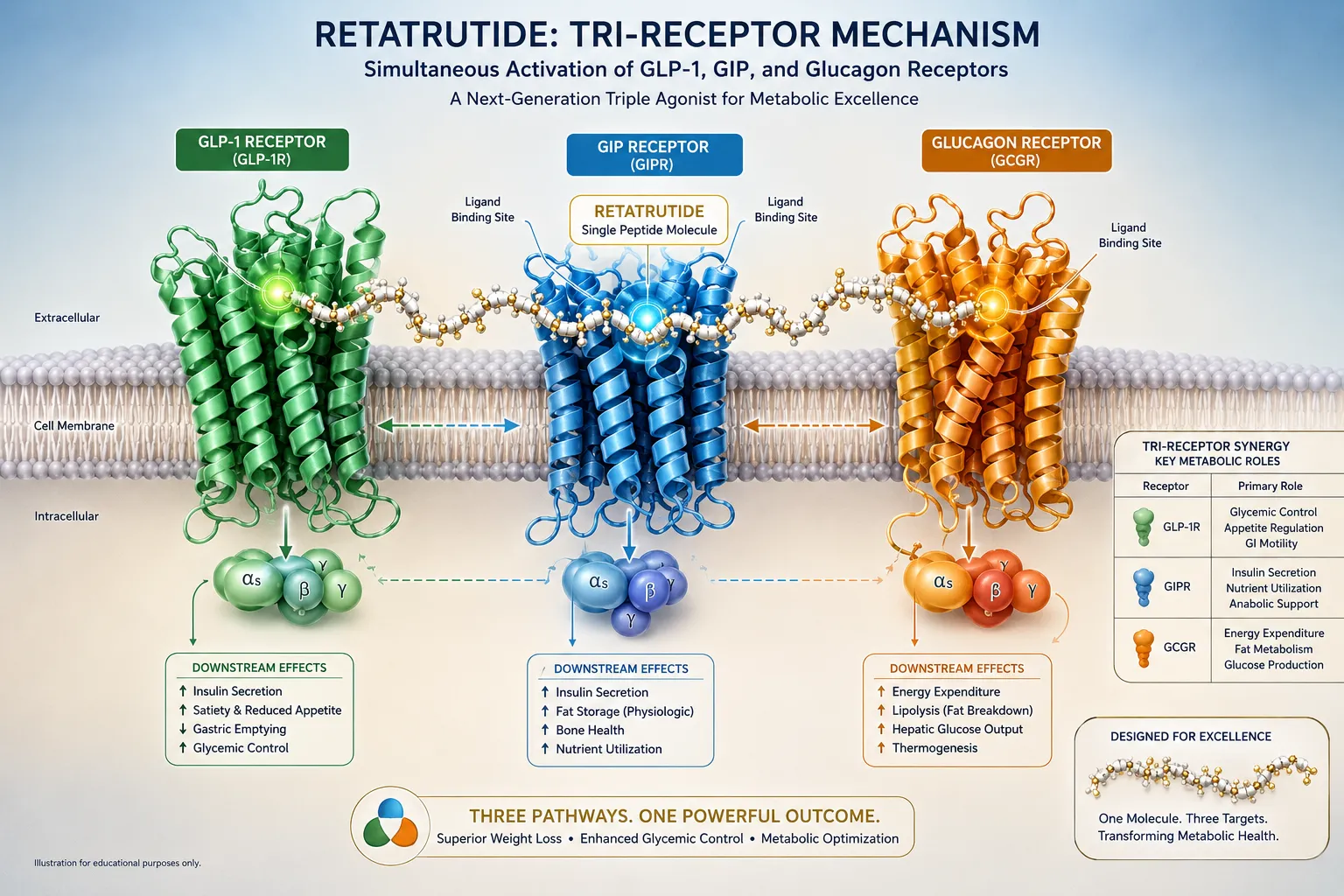
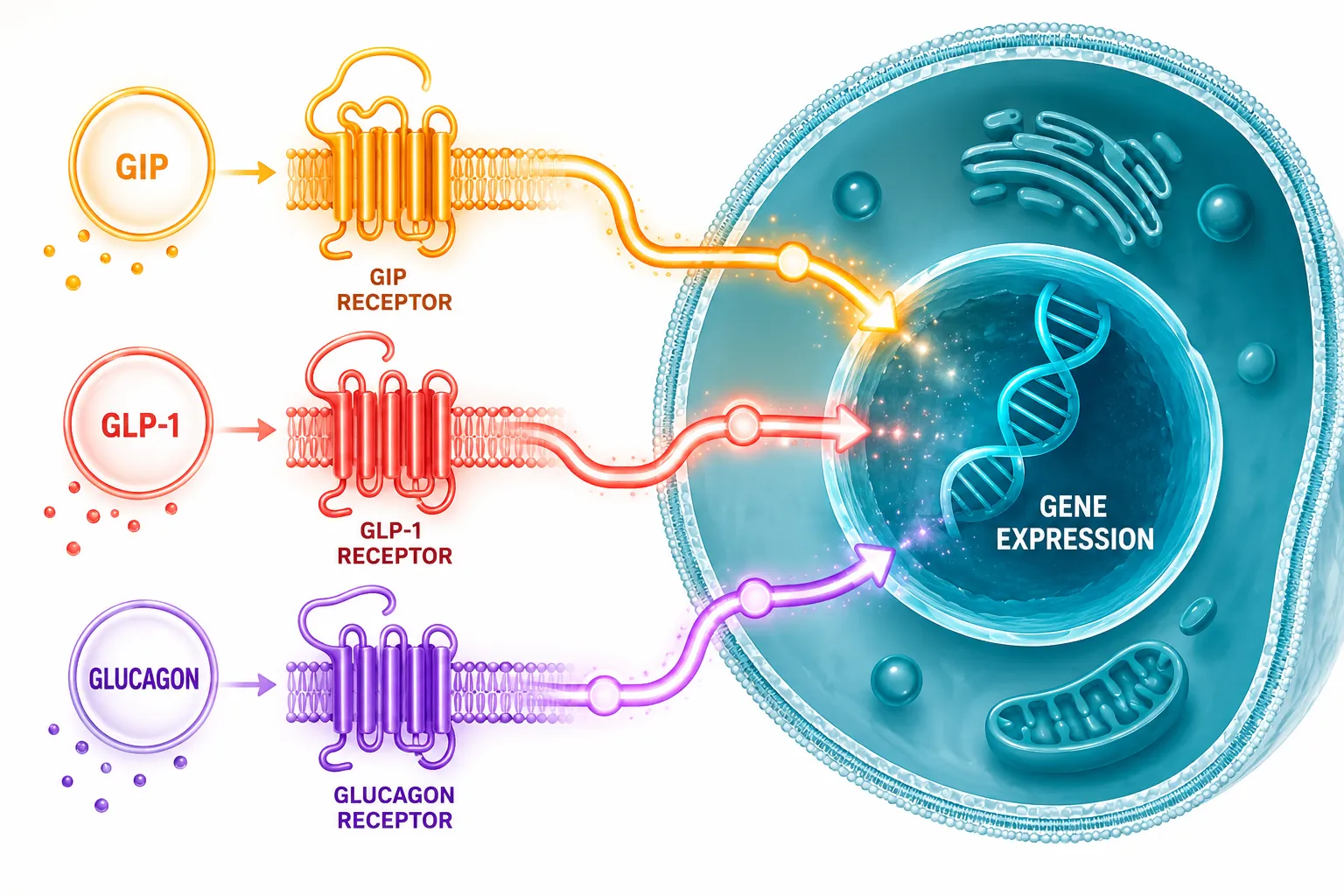
  • "GLP-3" is an informal nickname for retatrutide, a triple agonist hitting GLP-1, GIP, and glucagon receptors — not a distinct endogenous peptide.
  • Multiple next-generation agents in 2026 are blurring receptor boundaries, making precise terminology more important than ever.
  • Researchers should distinguish receptor pharmacology from peptide taxonomy to avoid conflating mechanism with marketing.

GLP-1, GLP-2, and GLP-3 peptide family molecular overview

The Proglucagon Origin: Where GLP-1 and GLP-2 Begin

Understanding GLP-3, GLP-1, and GLP-2 explained as a peptide family starts with a single precursor: proglucagon. This 160-amino-acid protein is encoded by the GCG gene and processed differently depending on the tissue.

Tissue-specific cleavage produces distinct peptides:

Tissue Primary Products
Pancreatic alpha cells Glucagon, glicentin-related peptide
Intestinal L-cells GLP-1, GLP-2, oxyntomodulin
Brain neurons GLP-1, glicentin

This differential processing is controlled by prohormone convertases — PC2 in the pancreas and PC1/3 in the gut and brain. The result is that GLP-1 and GLP-2 are co-secreted from intestinal L-cells in a roughly 1:1 molar ratio following nutrient ingestion.

GLP-1 (glucagon-like peptide-1) is a 30-amino-acid incretin hormone. It binds the GLP-1 receptor (GLP-1R), a class B G-protein-coupled receptor expressed in pancreatic beta cells, the vagus nerve, the hypothalamus, and the heart. Activation drives glucose-dependent insulin secretion, suppresses glucagon, slows gastric emptying, and reduces appetite. Its plasma half-life is under two minutes due to rapid degradation by DPP-4 enzyme.

GLP-2 (glucagon-like peptide-2) is a 33-amino-acid peptide that binds its own distinct receptor, GLP-2R, expressed primarily in intestinal enteroendocrine cells, submucosal neurons, and the hypothalamus. Its core functions center on intestinal epithelial growth, barrier integrity, and nutrient absorption — not glucose regulation. Teduglutide (Gattex/Revestive), a GLP-2 analog, is the only approved agent in this class and generates over $800 million annually. As of 2026, at least six novel GLP-2 analog programs are in active clinical development targeting short bowel syndrome, Crohn's disease, and gut barrier dysfunction. Researchers exploring GLP-1 incretin research themes will find the GLP-2 pathway a compelling parallel.

"GLP-1 and GLP-2 are not interchangeable — they share a precursor but act on entirely different receptor systems with non-overlapping physiological roles."


What "GLP-3" Actually Means: Receptor Taxonomy vs. Peptide Naming

Researcher comparing GLP peptide vials and clinical trial data

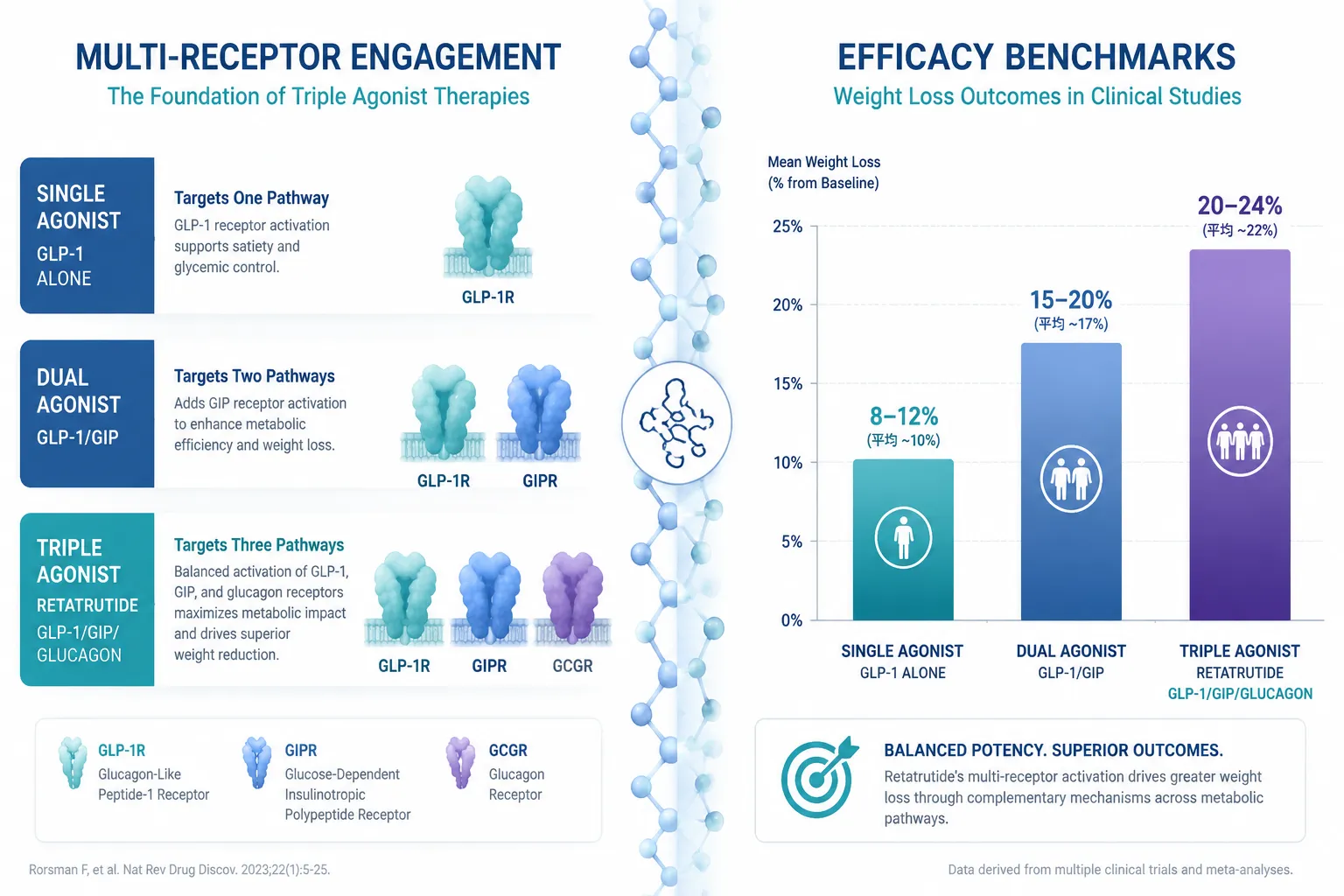
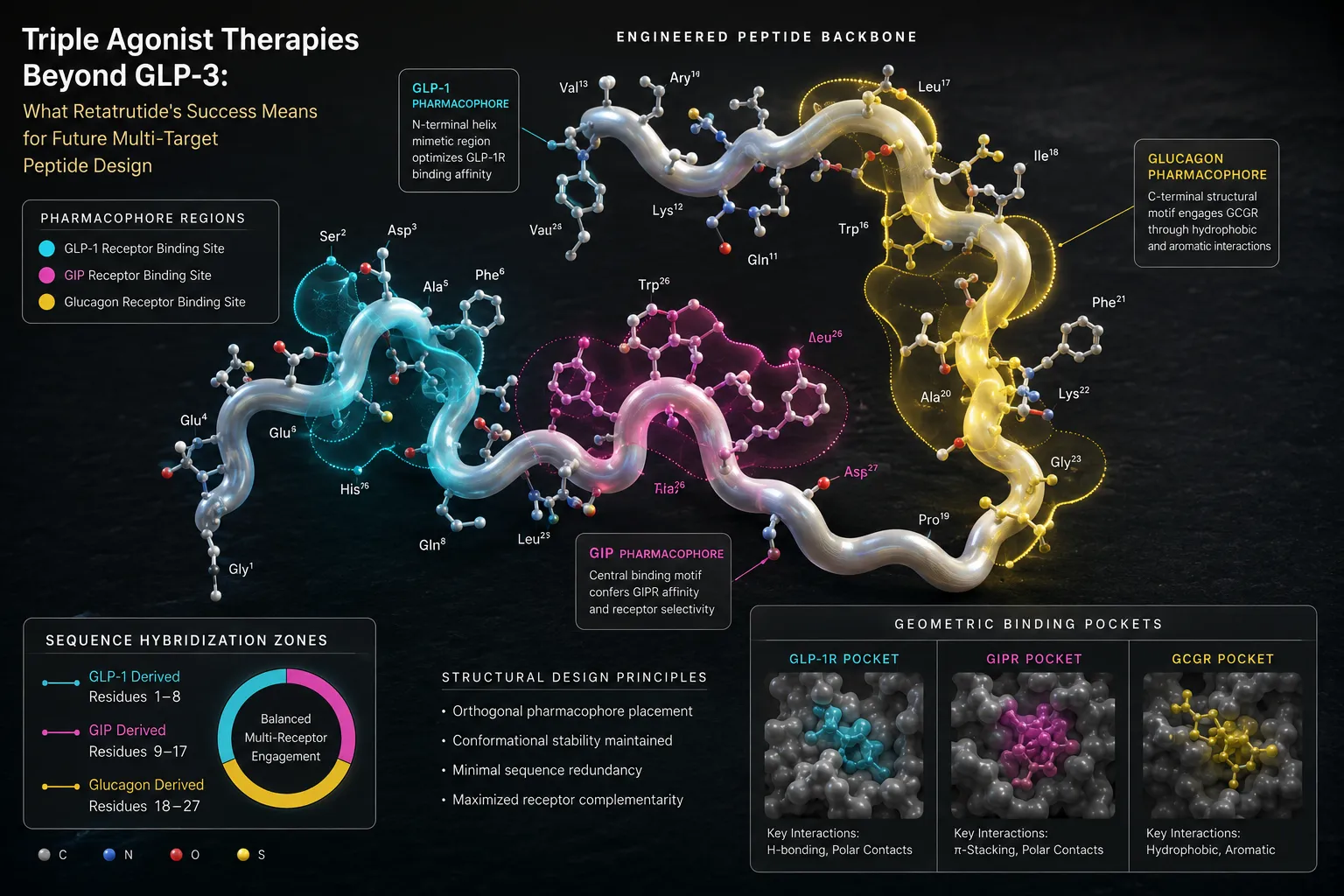
The phrase "GLP-3" does not describe a third endogenous glucagon-like peptide. It is an informal shorthand for retatrutide, a synthetic triple agonist developed by Eli Lilly that simultaneously targets three receptors: GLP-1R, GIP receptor (GIPR), and glucagon receptor (GCGR). The "3" refers to the number of receptor targets, not a peptide sequence.

This distinction matters enormously for researchers. Calling retatrutide "GLP-3" is pharmacologically imprecise. The correct terminology is triple receptor agonist or GLP-1/GIP/glucagon tri-agonist. Retatrutide is not FDA-approved as of 2026 and remains available only through clinical trials. Phase 3 data have shown up to 28.7% weight loss, with approval anticipated no earlier than 2027. For more on this compound's research profile, see the dedicated retatrutide and GLP-3 research overview.

Why does the naming confusion persist?

  • Dual agonists like tirzepatide (GLP-1/GIP) were informally called "GLP-2" by some media outlets before that term was corrected.
  • The pharmaceutical pipeline moves faster than regulatory taxonomy.
  • Marketing teams favor simple numerical progressions.

Researchers should also note the generational differences across GLP-1 drug classes to contextualize where triple agonists sit in the therapeutic timeline.


The 2026 Pipeline: Next-Generation Agents Across the GLP Family

Next-generation GLP peptide pipeline timeline and weight-loss data chart

The peptide family landscape in 2026 is defined by receptor combination strategies rather than single-target approaches. Key agents include:

Orforglipron (Foundayo) — Eli Lilly
A once-daily oral GLP-1 receptor agonist. In the ACHIEVE-3 trial, the 17.2 mg dose produced 57.1% greater relative A1C reduction and 73.6% greater relative weight loss compared to oral semaglutide 14 mg. Lilly plans FDA submission by end of Q2 2026.

PF-08653944 — Pfizer
An ultra-long-acting injectable GLP-1 RA achieving 12.3% mean placebo-adjusted weight loss at 28 weeks in the VESPER-3 Phase 2b study, with weight loss continuing after transitioning from weekly to monthly dosing. Ten Phase 3 trials are anticipated in 2026.

Amycretin — Novo Nordisk
A single molecule activating both amylin and GLP-1 receptors, showing 22% weight loss in 36 weeks in Phase 1b/2a trials. Both oral and injectable formulations advance to Phase 3 in 2026.
Survodutide — Boehringer Ingelheim
A dual glucagon/GLP-1 agonist showing 18.7% weight loss at 46 weeks in Phase 2, with 62% of MASH patients achieving disease resolution. Phase 3 trials span 14 countries.

Researchers interested in the broader metabolic peptide landscape can explore metabolic modulation research lines and GIP receptor biology for mechanistic context. Those studying adjacent metabolic compounds may also find value in reviewing AOD9604 metabolic research and SLU-PP-332 metabolic research as comparative reference points.


Conclusion

The GLP peptide family is one of the most productive areas in current biomedical research, but imprecise language creates real confusion. GLP-1 and GLP-2 are endogenous peptides with distinct receptors and non-overlapping functions — both derived from proglucagon but acting on entirely separate physiological systems. "GLP-3" is not a peptide; it is a colloquial label for a triple-receptor agonist strategy.

Actionable next steps for researchers:

  • Anchor all literature searches to receptor nomenclature (GLP-1R, GLP-2R, GIPR, GCGR) rather than informal drug nicknames.
  • Track the orforglipron and retatrutide Phase 3 readouts expected in 2026-2027 as benchmark data for receptor combination strategies.
  • Distinguish between endogenous peptide biology and synthetic analog pharmacology when designing assay protocols.
  • Review the GLP-1 peptide product research library for current research-grade compound availability.

Precise taxonomy is not pedantry — it is the foundation of reproducible science.

https://www.puretestedpeptides.com/wp-content/uploads/2026/06/GLP-3-GLP-1-and-GLP-2-Explained-A-Researchers-Guide-to-the-Peptide-Family.png 1024 1536 Pure Tested https://www.puretestedpeptides.com/wp-content/uploads/2026/01/buy-peptides-online.jpg Pure Tested2026-06-28 13:27:522026-07-20 15:01:58GLP-3, GLP-1, and GLP-2 Explained: A Researcher’s Guide to the Peptide Family
GLP-3, GLP-1, and GLP-2 Explained: A Researcher’s Guide to the Peptide Family

GLP-3, GLP-1, and GLP-2 Explained: A Researcher’s Guide to the Peptide Family

June 28, 2026/0 Comments/by Pure Tested

The term "GLP-3" now appears in clinical trial press releases, investor calls, and research databases — yet no such peptide exists in standard biochemistry textbooks. That naming gap reveals something important: the glucagon-like peptide family is evolving faster than its own vocabulary. This guide to GLP-3, GLP-1, and GLP-2 explained as a peptide family cuts through the marketing language to focus on mechanism, receptor biology, and what the evidence actually shows.

Key Takeaways

  • GLP-1 and GLP-2 are both derived from the same precursor protein, proglucagon, through tissue-specific processing.
  • GLP-1 targets the GLP-1 receptor to regulate insulin secretion and appetite; GLP-2 targets a separate receptor to support intestinal growth and repair.
  • "GLP-3" is an informal nickname for retatrutide, a triple agonist hitting GLP-1, GIP, and glucagon receptors — not a distinct endogenous peptide.
  • Multiple next-generation agents in 2026 are blurring receptor boundaries, making precise terminology more important than ever.
  • Researchers should distinguish receptor pharmacology from peptide taxonomy to avoid conflating mechanism with marketing.

GLP-1, GLP-2, and GLP-3 peptide family molecular overview

The Proglucagon Origin: Where GLP-1 and GLP-2 Begin

Understanding GLP-3, GLP-1, and GLP-2 explained as a peptide family starts with a single precursor: proglucagon. This 160-amino-acid protein is encoded by the GCG gene and processed differently depending on the tissue.

Tissue-specific cleavage produces distinct peptides:

Tissue Primary Products
Pancreatic alpha cells Glucagon, glicentin-related peptide
Intestinal L-cells GLP-1, GLP-2, oxyntomodulin
Brain neurons GLP-1, glicentin

This differential processing is controlled by prohormone convertases — PC2 in the pancreas and PC1/3 in the gut and brain. The result is that GLP-1 and GLP-2 are co-secreted from intestinal L-cells in a roughly 1:1 molar ratio following nutrient ingestion.

GLP-1 (glucagon-like peptide-1) is a 30-amino-acid incretin hormone. It binds the GLP-1 receptor (GLP-1R), a class B G-protein-coupled receptor expressed in pancreatic beta cells, the vagus nerve, the hypothalamus, and the heart. Activation drives glucose-dependent insulin secretion, suppresses glucagon, slows gastric emptying, and reduces appetite. Its plasma half-life is under two minutes due to rapid degradation by DPP-4 enzyme.

GLP-2 (glucagon-like peptide-2) is a 33-amino-acid peptide that binds its own distinct receptor, GLP-2R, expressed primarily in intestinal enteroendocrine cells, submucosal neurons, and the hypothalamus. Its core functions center on intestinal epithelial growth, barrier integrity, and nutrient absorption — not glucose regulation. Teduglutide (Gattex/Revestive), a GLP-2 analog, is the only approved agent in this class and generates over $800 million annually. As of 2026, at least six novel GLP-2 analog programs are in active clinical development targeting short bowel syndrome, Crohn's disease, and gut barrier dysfunction. Researchers exploring GLP-1 incretin research themes will find the GLP-2 pathway a compelling parallel.

"GLP-1 and GLP-2 are not interchangeable — they share a precursor but act on entirely different receptor systems with non-overlapping physiological roles."


What "GLP-3" Actually Means: Receptor Taxonomy vs. Peptide Naming

Researcher comparing GLP peptide vials and clinical trial data

The phrase "GLP-3" does not describe a third endogenous glucagon-like peptide. It is an informal shorthand for retatrutide, a synthetic triple agonist developed by Eli Lilly that simultaneously targets three receptors: GLP-1R, GIP receptor (GIPR), and glucagon receptor (GCGR). The "3" refers to the number of receptor targets, not a peptide sequence.

This distinction matters enormously for researchers. Calling retatrutide "GLP-3" is pharmacologically imprecise. The correct terminology is triple receptor agonist or GLP-1/GIP/glucagon tri-agonist. Retatrutide is not FDA-approved as of 2026 and remains available only through clinical trials. Phase 3 data have shown up to 28.7% weight loss, with approval anticipated no earlier than 2027. For more on this compound's research profile, see the dedicated retatrutide and GLP-3 research overview.

Why does the naming confusion persist?

  • Dual agonists like tirzepatide (GLP-1/GIP) were informally called "GLP-2" by some media outlets before that term was corrected.
  • The pharmaceutical pipeline moves faster than regulatory taxonomy.
  • Marketing teams favor simple numerical progressions.

Researchers should also note the generational differences across GLP-1 drug classes to contextualize where triple agonists sit in the therapeutic timeline.


The 2026 Pipeline: Next-Generation Agents Across the GLP Family

Next-generation GLP peptide pipeline timeline and weight-loss data chart

The peptide family landscape in 2026 is defined by receptor combination strategies rather than single-target approaches. Key agents include:

Orforglipron (Foundayo) — Eli Lilly
A once-daily oral GLP-1 receptor agonist. In the ACHIEVE-3 trial, the 17.2 mg dose produced 57.1% greater relative A1C reduction and 73.6% greater relative weight loss compared to oral semaglutide 14 mg. Lilly plans FDA submission by end of Q2 2026.

PF-08653944 — Pfizer
An ultra-long-acting injectable GLP-1 RA achieving 12.3% mean placebo-adjusted weight loss at 28 weeks in the VESPER-3 Phase 2b study, with weight loss continuing after transitioning from weekly to monthly dosing. Ten Phase 3 trials are anticipated in 2026.
Amycretin — Novo Nordisk
A single molecule activating both amylin and GLP-1 receptors, showing 22% weight loss in 36 weeks in Phase 1b/2a trials. Both oral and injectable formulations advance to Phase 3 in 2026.
Survodutide — Boehringer Ingelheim
A dual glucagon/GLP-1 agonist showing 18.7% weight loss at 46 weeks in Phase 2, with 62% of MASH patients achieving disease resolution. Phase 3 trials span 14 countries.

Researchers interested in the broader metabolic peptide landscape can explore metabolic modulation research lines and GIP receptor biology for mechanistic context. Those studying adjacent metabolic compounds may also find value in reviewing AOD9604 metabolic research and SLU-PP-332 metabolic research as comparative reference points.


Conclusion

The GLP peptide family is one of the most productive areas in current biomedical research, but imprecise language creates real confusion. GLP-1 and GLP-2 are endogenous peptides with distinct receptors and non-overlapping functions — both derived from proglucagon but acting on entirely separate physiological systems. "GLP-3" is not a peptide; it is a colloquial label for a triple-receptor agonist strategy.

Actionable next steps for researchers:

  • Anchor all literature searches to receptor nomenclature (GLP-1R, GLP-2R, GIPR, GCGR) rather than informal drug nicknames.
  • Track the orforglipron and retatrutide Phase 3 readouts expected in 2026-2027 as benchmark data for receptor combination strategies.
  • Distinguish between endogenous peptide biology and synthetic analog pharmacology when designing assay protocols.
  • Review the GLP-1 peptide product research library for current research-grade compound availability.

Precise taxonomy is not pedantry — it is the foundation of reproducible science.

https://www.puretestedpeptides.com/wp-content/uploads/2026/06/GLP-3-GLP-1-and-GLP-2-Explained-A-Researchers-Guide-to-the-Peptide-Family.png 1024 1536 Pure Tested https://www.puretestedpeptides.com/wp-content/uploads/2026/01/buy-peptides-online.jpg Pure Tested2026-06-28 13:27:522026-07-20 15:01:59GLP-3, GLP-1, and GLP-2 Explained: A Researcher’s Guide to the Peptide Family
GLP-3, GLP-1, and GLP-2 Explained: A Researcher’s Guide to the Peptide Family

GLP-3, GLP-1, and GLP-2 Explained: A Researcher’s Guide to the Peptide Family

June 28, 2026/0 Comments/by Pure Tested

The term "GLP-3" now appears in clinical trial press releases, investor calls, and research databases — yet no such peptide exists in standard biochemistry textbooks. That naming gap reveals something important: the glucagon-like peptide family is evolving faster than its own vocabulary. This guide to GLP-3, GLP-1, and GLP-2 explained as a peptide family cuts through the marketing language to focus on mechanism, receptor biology, and what the evidence actually shows.

Key Takeaways

  • GLP-1 and GLP-2 are both derived from the same precursor protein, proglucagon, through tissue-specific processing.
  • GLP-1 targets the GLP-1 receptor to regulate insulin secretion and appetite; GLP-2 targets a separate receptor to support intestinal growth and repair.
  • "GLP-3" is an informal nickname for retatrutide, a triple agonist hitting GLP-1, GIP, and glucagon receptors — not a distinct endogenous peptide.
  • Multiple next-generation agents in 2026 are blurring receptor boundaries, making precise terminology more important than ever.
  • Researchers should distinguish receptor pharmacology from peptide taxonomy to avoid conflating mechanism with marketing.

GLP-1, GLP-2, and GLP-3 peptide family molecular overview

The Proglucagon Origin: Where GLP-1 and GLP-2 Begin

Understanding GLP-3, GLP-1, and GLP-2 explained as a peptide family starts with a single precursor: proglucagon. This 160-amino-acid protein is encoded by the GCG gene and processed differently depending on the tissue.

Tissue-specific cleavage produces distinct peptides:

Tissue Primary Products
Pancreatic alpha cells Glucagon, glicentin-related peptide
Intestinal L-cells GLP-1, GLP-2, oxyntomodulin
Brain neurons GLP-1, glicentin

This differential processing is controlled by prohormone convertases — PC2 in the pancreas and PC1/3 in the gut and brain. The result is that GLP-1 and GLP-2 are co-secreted from intestinal L-cells in a roughly 1:1 molar ratio following nutrient ingestion.

GLP-1 (glucagon-like peptide-1) is a 30-amino-acid incretin hormone. It binds the GLP-1 receptor (GLP-1R), a class B G-protein-coupled receptor expressed in pancreatic beta cells, the vagus nerve, the hypothalamus, and the heart. Activation drives glucose-dependent insulin secretion, suppresses glucagon, slows gastric emptying, and reduces appetite. Its plasma half-life is under two minutes due to rapid degradation by DPP-4 enzyme.

GLP-2 (glucagon-like peptide-2) is a 33-amino-acid peptide that binds its own distinct receptor, GLP-2R, expressed primarily in intestinal enteroendocrine cells, submucosal neurons, and the hypothalamus. Its core functions center on intestinal epithelial growth, barrier integrity, and nutrient absorption — not glucose regulation. Teduglutide (Gattex/Revestive), a GLP-2 analog, is the only approved agent in this class and generates over $800 million annually. As of 2026, at least six novel GLP-2 analog programs are in active clinical development targeting short bowel syndrome, Crohn's disease, and gut barrier dysfunction. Researchers exploring GLP-1 incretin research themes will find the GLP-2 pathway a compelling parallel.

"GLP-1 and GLP-2 are not interchangeable — they share a precursor but act on entirely different receptor systems with non-overlapping physiological roles."


What "GLP-3" Actually Means: Receptor Taxonomy vs. Peptide Naming

Researcher comparing GLP peptide vials and clinical trial data

The phrase "GLP-3" does not describe a third endogenous glucagon-like peptide. It is an informal shorthand for retatrutide, a synthetic triple agonist developed by Eli Lilly that simultaneously targets three receptors: GLP-1R, GIP receptor (GIPR), and glucagon receptor (GCGR). The "3" refers to the number of receptor targets, not a peptide sequence.

This distinction matters enormously for researchers. Calling retatrutide "GLP-3" is pharmacologically imprecise. The correct terminology is triple receptor agonist or GLP-1/GIP/glucagon tri-agonist. Retatrutide is not FDA-approved as of 2026 and remains available only through clinical trials. Phase 3 data have shown up to 28.7% weight loss, with approval anticipated no earlier than 2027. For more on this compound's research profile, see the dedicated retatrutide and GLP-3 research overview.

Why does the naming confusion persist?

  • Dual agonists like tirzepatide (GLP-1/GIP) were informally called "GLP-2" by some media outlets before that term was corrected.
  • The pharmaceutical pipeline moves faster than regulatory taxonomy.
  • Marketing teams favor simple numerical progressions.

Researchers should also note the generational differences across GLP-1 drug classes to contextualize where triple agonists sit in the therapeutic timeline.


The 2026 Pipeline: Next-Generation Agents Across the GLP Family

Next-generation GLP peptide pipeline timeline and weight-loss data chart

The peptide family landscape in 2026 is defined by receptor combination strategies rather than single-target approaches. Key agents include:

Orforglipron (Foundayo) — Eli Lilly
A once-daily oral GLP-1 receptor agonist. In the ACHIEVE-3 trial, the 17.2 mg dose produced 57.1% greater relative A1C reduction and 73.6% greater relative weight loss compared to oral semaglutide 14 mg. Lilly plans FDA submission by end of Q2 2026.

PF-08653944 — Pfizer
An ultra-long-acting injectable GLP-1 RA achieving 12.3% mean placebo-adjusted weight loss at 28 weeks in the VESPER-3 Phase 2b study, with weight loss continuing after transitioning from weekly to monthly dosing. Ten Phase 3 trials are anticipated in 2026.
Amycretin — Novo Nordisk
A single molecule activating both amylin and GLP-1 receptors, showing 22% weight loss in 36 weeks in Phase 1b/2a trials. Both oral and injectable formulations advance to Phase 3 in 2026.
Survodutide — Boehringer Ingelheim
A dual glucagon/GLP-1 agonist showing 18.7% weight loss at 46 weeks in Phase 2, with 62% of MASH patients achieving disease resolution. Phase 3 trials span 14 countries.

Researchers interested in the broader metabolic peptide landscape can explore metabolic modulation research lines and GIP receptor biology for mechanistic context. Those studying adjacent metabolic compounds may also find value in reviewing AOD9604 metabolic research and SLU-PP-332 metabolic research as comparative reference points.


Conclusion

The GLP peptide family is one of the most productive areas in current biomedical research, but imprecise language creates real confusion. GLP-1 and GLP-2 are endogenous peptides with distinct receptors and non-overlapping functions — both derived from proglucagon but acting on entirely separate physiological systems. "GLP-3" is not a peptide; it is a colloquial label for a triple-receptor agonist strategy.

Actionable next steps for researchers:

  • Anchor all literature searches to receptor nomenclature (GLP-1R, GLP-2R, GIPR, GCGR) rather than informal drug nicknames.
  • Track the orforglipron and retatrutide Phase 3 readouts expected in 2026-2027 as benchmark data for receptor combination strategies.
  • Distinguish between endogenous peptide biology and synthetic analog pharmacology when designing assay protocols.
  • Review the GLP-1 peptide product research library for current research-grade compound availability.

Precise taxonomy is not pedantry — it is the foundation of reproducible science.

https://www.puretestedpeptides.com/wp-content/uploads/2026/06/GLP-3-GLP-1-and-GLP-2-Explained-A-Researchers-Guide-to-the-Peptide-Family.png 1024 1536 Pure Tested https://www.puretestedpeptides.com/wp-content/uploads/2026/01/buy-peptides-online.jpg Pure Tested2026-06-28 13:27:512026-07-20 15:01:59GLP-3, GLP-1, and GLP-2 Explained: A Researcher’s Guide to the Peptide Family
GLP-3, GLP-1, and GLP-2 Explained: A Researcher’s Guide to the Peptide Family

GLP-3, GLP-1, and GLP-2 Explained: A Researcher’s Guide to the Peptide Family

June 28, 2026/0 Comments/by Pure Tested

The term "GLP-3" now appears in clinical trial press releases, investor calls, and research databases — yet no such peptide exists in standard biochemistry textbooks. That naming gap reveals something important: the glucagon-like peptide family is evolving faster than its own vocabulary. This guide to GLP-3, GLP-1, and GLP-2 explained as a peptide family cuts through the marketing language to focus on mechanism, receptor biology, and what the evidence actually shows.

Key Takeaways

  • GLP-1 and GLP-2 are both derived from the same precursor protein, proglucagon, through tissue-specific processing.
  • GLP-1 targets the GLP-1 receptor to regulate insulin secretion and appetite; GLP-2 targets a separate receptor to support intestinal growth and repair.
  • "GLP-3" is an informal nickname for retatrutide, a triple agonist hitting GLP-1, GIP, and glucagon receptors — not a distinct endogenous peptide.
  • Multiple next-generation agents in 2026 are blurring receptor boundaries, making precise terminology more important than ever.
  • Researchers should distinguish receptor pharmacology from peptide taxonomy to avoid conflating mechanism with marketing.

GLP-1, GLP-2, and GLP-3 peptide family molecular overview

The Proglucagon Origin: Where GLP-1 and GLP-2 Begin

Understanding GLP-3, GLP-1, and GLP-2 explained as a peptide family starts with a single precursor: proglucagon. This 160-amino-acid protein is encoded by the GCG gene and processed differently depending on the tissue.

Tissue-specific cleavage produces distinct peptides:

Tissue Primary Products
Pancreatic alpha cells Glucagon, glicentin-related peptide
Intestinal L-cells GLP-1, GLP-2, oxyntomodulin
Brain neurons GLP-1, glicentin

This differential processing is controlled by prohormone convertases — PC2 in the pancreas and PC1/3 in the gut and brain. The result is that GLP-1 and GLP-2 are co-secreted from intestinal L-cells in a roughly 1:1 molar ratio following nutrient ingestion.

GLP-1 (glucagon-like peptide-1) is a 30-amino-acid incretin hormone. It binds the GLP-1 receptor (GLP-1R), a class B G-protein-coupled receptor expressed in pancreatic beta cells, the vagus nerve, the hypothalamus, and the heart. Activation drives glucose-dependent insulin secretion, suppresses glucagon, slows gastric emptying, and reduces appetite. Its plasma half-life is under two minutes due to rapid degradation by DPP-4 enzyme.

GLP-2 (glucagon-like peptide-2) is a 33-amino-acid peptide that binds its own distinct receptor, GLP-2R, expressed primarily in intestinal enteroendocrine cells, submucosal neurons, and the hypothalamus. Its core functions center on intestinal epithelial growth, barrier integrity, and nutrient absorption — not glucose regulation. Teduglutide (Gattex/Revestive), a GLP-2 analog, is the only approved agent in this class and generates over $800 million annually. As of 2026, at least six novel GLP-2 analog programs are in active clinical development targeting short bowel syndrome, Crohn's disease, and gut barrier dysfunction. Researchers exploring GLP-1 incretin research themes will find the GLP-2 pathway a compelling parallel.

"GLP-1 and GLP-2 are not interchangeable — they share a precursor but act on entirely different receptor systems with non-overlapping physiological roles."


What "GLP-3" Actually Means: Receptor Taxonomy vs. Peptide Naming

Researcher comparing GLP peptide vials and clinical trial data

The phrase "GLP-3" does not describe a third endogenous glucagon-like peptide. It is an informal shorthand for retatrutide, a synthetic triple agonist developed by Eli Lilly that simultaneously targets three receptors: GLP-1R, GIP receptor (GIPR), and glucagon receptor (GCGR). The "3" refers to the number of receptor targets, not a peptide sequence.

This distinction matters enormously for researchers. Calling retatrutide "GLP-3" is pharmacologically imprecise. The correct terminology is triple receptor agonist or GLP-1/GIP/glucagon tri-agonist. Retatrutide is not FDA-approved as of 2026 and remains available only through clinical trials. Phase 3 data have shown up to 28.7% weight loss, with approval anticipated no earlier than 2027. For more on this compound's research profile, see the dedicated retatrutide and GLP-3 research overview.

Why does the naming confusion persist?

  • Dual agonists like tirzepatide (GLP-1/GIP) were informally called "GLP-2" by some media outlets before that term was corrected.
  • The pharmaceutical pipeline moves faster than regulatory taxonomy.
  • Marketing teams favor simple numerical progressions.

Researchers should also note the generational differences across GLP-1 drug classes to contextualize where triple agonists sit in the therapeutic timeline.


The 2026 Pipeline: Next-Generation Agents Across the GLP Family

Next-generation GLP peptide pipeline timeline and weight-loss data chart

The peptide family landscape in 2026 is defined by receptor combination strategies rather than single-target approaches. Key agents include:

Orforglipron (Foundayo) — Eli Lilly
A once-daily oral GLP-1 receptor agonist. In the ACHIEVE-3 trial, the 17.2 mg dose produced 57.1% greater relative A1C reduction and 73.6% greater relative weight loss compared to oral semaglutide 14 mg. Lilly plans FDA submission by end of Q2 2026.

PF-08653944 — Pfizer
An ultra-long-acting injectable GLP-1 RA achieving 12.3% mean placebo-adjusted weight loss at 28 weeks in the VESPER-3 Phase 2b study, with weight loss continuing after transitioning from weekly to monthly dosing. Ten Phase 3 trials are anticipated in 2026.

Amycretin — Novo Nordisk
A single molecule activating both amylin and GLP-1 receptors, showing 22% weight loss in 36 weeks in Phase 1b/2a trials. Both oral and injectable formulations advance to Phase 3 in 2026.

Survodutide — Boehringer Ingelheim
A dual glucagon/GLP-1 agonist showing 18.7% weight loss at 46 weeks in Phase 2, with 62% of MASH patients achieving disease resolution. Phase 3 trials span 14 countries.

Researchers interested in the broader metabolic peptide landscape can explore metabolic modulation research lines and GIP receptor biology for mechanistic context. Those studying adjacent metabolic compounds may also find value in reviewing AOD9604 metabolic research and SLU-PP-332 metabolic research as comparative reference points.


Conclusion

The GLP peptide family is one of the most productive areas in current biomedical research, but imprecise language creates real confusion. GLP-1 and GLP-2 are endogenous peptides with distinct receptors and non-overlapping functions — both derived from proglucagon but acting on entirely separate physiological systems. "GLP-3" is not a peptide; it is a colloquial label for a triple-receptor agonist strategy.

Actionable next steps for researchers:

  • Anchor all literature searches to receptor nomenclature (GLP-1R, GLP-2R, GIPR, GCGR) rather than informal drug nicknames.
  • Track the orforglipron and retatrutide Phase 3 readouts expected in 2026-2027 as benchmark data for receptor combination strategies.
  • Distinguish between endogenous peptide biology and synthetic analog pharmacology when designing assay protocols.
  • Review the GLP-1 peptide product research library for current research-grade compound availability.

Precise taxonomy is not pedantry — it is the foundation of reproducible science.

https://www.puretestedpeptides.com/wp-content/uploads/2026/06/GLP-3-GLP-1-and-GLP-2-Explained-A-Researchers-Guide-to-the-Peptide-Family.png 1024 1536 Pure Tested https://www.puretestedpeptides.com/wp-content/uploads/2026/01/buy-peptides-online.jpg Pure Tested2026-06-28 13:27:512026-07-20 15:02:00GLP-3, GLP-1, and GLP-2 Explained: A Researcher’s Guide to the Peptide Family
Epithalon Peptide and Telomere Biology: What Researchers Actually Measure in Longevity Studies

Epithalon Peptide and Telomere Biology: What Researchers Actually Measure in Longevity Studies

June 28, 2026/0 Comments/by Pure Tested

Telomere length in human somatic cells shortens by roughly 50 to 200 base pairs with every cell division — a measurable countdown that researchers now treat as one of the most reliable proxies for biological aging. That single fact explains why Epithalon peptide and telomere biology has attracted serious scientific attention, and why longevity researchers are careful to distinguish between a mechanistic hypothesis and a reproducible, quantified outcome.

This article examines what investigators actually record in Epithalon studies: the assays used, the biomarkers tracked, and the honest limitations of the current evidence base.


Key Takeaways

  • Epithalon is a synthetic tetrapeptide (Ala-Glu-Asp-Gly) reported to activate the hTERT catalytic subunit of telomerase, leading to measurable telomere elongation in cell models.
  • Researchers track telomere length, telomerase activity, oxidative stress markers, and gene expression — not simply lifespan — as primary endpoints.
  • Animal studies report up to a 13% increase in maximum lifespan; a multi-year human observational study found a 1.6 to 1.8-fold decrease in mortality among treated elderly patients.
  • The majority of published Epithalon research originates from a single laboratory group, making independent replication a critical unmet need.
  • Epithalon is not FDA-approved and is sold as a research chemical only; concerns about telomerase activation and oncogenesis remain an active area of scrutiny.

Key Takeaways

The Core Mechanism: What Epithalon Does at the Cellular Level

Epithalon is a synthetic tetrapeptide derived from epithalamin, a polypeptide extract of the pineal gland. Its proposed primary action is the activation of hTERT — the catalytic subunit of telomerase — in human somatic cells. In a 2003 cell study, Epithalon induced measurable telomerase activity and telomere elongation in human fetal fibroblasts, cells that normally do not express telomerase at significant levels.

What makes this relevant to longevity research is the Hayflick limit: somatic cells stop dividing once telomeres shorten below a critical threshold. If telomerase can be upregulated in a controlled, tissue-specific way, the theoretical result is extended replicative capacity.

Researchers measure several downstream variables to test this hypothesis:

  • Telomere length (via quantitative PCR or Southern blot)
  • Telomerase enzymatic activity (TRAP assay)
  • Expression levels of hTERT mRNA
  • Markers of oxidative DNA damage such as 8-OHdG
  • Melatonin and cortisol rhythms, which Epithalon may influence through pineal modulation

Beyond telomere biology, Epithalon has been studied alongside other peptides that target cellular aging pathways. Researchers interested in mitochondrial aging often compare it with compounds like SS-31, which focuses on mitochondrial membrane dynamics rather than telomere length. These represent distinct but potentially complementary mechanisms.


Measurable Outcomes in Epithalon Longevity Studies

Measurable Outcomes in Epithalon Longevity Studies

Understanding Epithalon peptide and telomere biology: what researchers actually measure in longevity studies requires separating three tiers of evidence: cell-based assays, animal models, and human observational data.

Cell and Animal Data

In rodent studies, Anisimov and colleagues reported that Epithalon increased maximum lifespan by approximately 13% in female SHR mice. The measured endpoints included tumor incidence, spontaneous mutation frequency, and estrous cycle regularity — not simply survival time.

Human Observational Evidence

A 6 to 8-year observational study involving 266 elderly patients found that those treated with epithalamin experienced a 1.6 to 1.8-fold decrease in mortality compared to untreated controls. Researchers tracked:

Endpoint Measurement Tool
Mortality rate Actuarial survival analysis
Immune function T-cell subset counts
Cardiovascular markers Lipid panels, blood pressure
Melatonin levels Urinary 6-sulfatoxymelatonin

These are concrete, quantifiable outcomes — not subjective wellness scores.

The Replication Problem

A critical issue in evaluating Epithalon peptide and telomere biology research is that most published data originates from one laboratory group in St. Petersburg, Russia. Independent replication using blinded protocols and diverse cell lines has not yet been published at scale. This is not a reason to dismiss the findings, but it is a reason to hold conclusions at a hypothesis level rather than treat them as established fact.

Researchers sourcing Epithalon for preclinical work can review available Epithalon research peptide options and detailed Epithalon research documentation to understand current purity standards and protocols.


Comparing Epithalon to Other Longevity-Focused Peptides

Comparing Epithalon to Other Longevity-Focused Peptides

Placing Epithalon peptide and telomere biology: what researchers actually measure in longevity studies into context means comparing it against other research-stage peptides targeting aging pathways.

Key distinctions:

  • Epithalon targets telomerase activation and pineal/melatonin restoration
  • SS-31 (Elamipretide) targets mitochondrial inner membrane cardiolipin, with stronger independent evidence and FDA Breakthrough Therapy designation for certain conditions
  • GHK-Cu targets extracellular matrix remodeling and gene expression via copper-dependent pathways — relevant to skin matrix biology research
  • MOTS-c targets mitochondrial-derived metabolic signaling, as covered in MOTS-c metabolic flexibility research

Researchers interested in where to source both compounds can consult the SS-31 and Epithalon sourcing guide for comparative procurement information.

The Oncogenesis Concern

Telomerase is highly active in approximately 85% of human cancer cells. Any compound that broadly upregulates hTERT activity carries a theoretical oncogenic risk. This concern does not invalidate Epithalon research, but it does mean that studies must measure cell proliferation rates, tumor marker panels, and apoptosis indices alongside telomere length — and that protocols without these controls are incomplete.

Researchers studying peptide combinations in aging models may also find value in reviewing Pinealon neuroprotection research, which shares a pineal-derived origin with Epithalon and offers complementary mechanistic data.


Conclusion

The evidence base for Epithalon peptide and telomere biology is genuinely interesting and mechanistically coherent — but it is not yet definitive. Researchers who engage with this literature rigorously should:

  1. Prioritize studies that report quantified biomarkers (telomere length in base pairs, hTERT mRNA expression levels, oxidative stress indices) over those reporting only survival curves.
  2. Weight independent replications more heavily than studies from a single research group.
  3. Track oncogenesis safety markers in any protocol involving telomerase activators.
  4. Compare Epithalon's evidence tier against peptides with broader independent validation before drawing equivalence claims.

For researchers building a longevity-focused peptide library, browsing the full peptide catalog by research theme provides a structured way to identify compounds with overlapping or synergistic mechanisms. The science of telomere biology is advancing rapidly in 2026 — and the most valuable contribution any researcher can make is demanding measurable, reproducible outcomes at every step.

https://www.puretestedpeptides.com/wp-content/uploads/2026/06/Epithalon-Peptide-and-Telomere-Biology-What-Researchers-Actually-Measure-in-Longevity-Studies.png 1024 1536 Pure Tested https://www.puretestedpeptides.com/wp-content/uploads/2026/01/buy-peptides-online.jpg Pure Tested2026-06-28 13:04:002026-07-20 15:02:01Epithalon Peptide and Telomere Biology: What Researchers Actually Measure in Longevity Studies
Selank Peptide Mechanism: Anxiolytic Signaling, Intranasal Delivery, and Research Endpoints

Selank Peptide Mechanism: Anxiolytic Signaling, Intranasal Delivery, and Research Endpoints

June 27, 2026/0 Comments/by Pure Tested

{"cover":"Professional landscape format (1536×1024) hero image with bold text overlay: 'Selank Peptide Mechanism: Anxiolytic Signaling, Intranasal Delivery & Research Endpoints' in extra large 72pt white bold sans-serif font with dark semi-transparent background bar for contrast, centered upper-third composition. Background shows a high-resolution macro photograph of a human brain neural network rendered in glowing blue and teal tones with synaptic connections visible, overlaid with faint molecular peptide chain diagrams. Color palette: deep navy blue, electric teal, clean white text. Magazine cover aesthetic, editorial quality, cinematic lighting.","content":["Detailed landscape format (1536×1024) scientific illustration showing a cross-sectional diagram of GABA receptor signaling in the brain, with labeled neural pathways highlighted in teal and gold. Foreground features a molecular model of the Selank heptapeptide chain with labeled amino acid nodes. Background shows a softly blurred neuron network in deep blue. Include small inset showing enkephalin enzyme inhibition pathway with arrows. Clean infographic style, clinical research aesthetic, white labels on dark background, no emojis.","Detailed landscape format (1536×1024) showing a close-up anatomical cross-section illustration of the human nasal cavity and olfactory pathway, with a highlighted delivery route from nasal mucosa through the cribriform plate to the brain. A translucent blue droplet representing intranasal peptide solution is shown entering the nasal passage. Overlay includes a bioavailability percentage callout (92.8%) in bold teal text. Background is a clean medical white-to-navy gradient. Clinical diagram style, precise anatomical labels, editorial quality.","Detailed landscape format (1536×1024) showing a research laboratory scene from an elevated angle, featuring a scientist in a white lab coat reviewing data charts on a large monitor displaying bar graphs of BDNF expression levels and anxiety scale scores. Foreground shows peptide vials, lab notebooks, and a molecular structure model. Color palette: cool grey, white, electric blue accents. Subtle overlay text reads 'Research Endpoints' in 36pt bold teal sans-serif. High contrast, professional editorial style, depth of field effect."]

Professional landscape hero image () with : "Selank Peptide Mechanism: Anxiolytic Signaling, Intranasal Delivery, and

A synthetic peptide achieving 92.8% intranasal bioavailability while producing anxiolytic effects comparable to benzodiazepines — without sedation or dependence — is a remarkable pharmacological profile. That is precisely what decades of Russian research have documented for Selank. Understanding the Selank peptide mechanism: anxiolytic signaling, intranasal delivery, and research endpoints requires a close look at its molecular design, its multi-target neurochemical activity, and the measurable outcomes researchers use to evaluate it.

Key Takeaways

  • Selank is a synthetic heptapeptide derived from tuftsin, engineered for metabolic stability and extended pharmacological activity.
  • It modulates GABA receptors, inhibits enkephalin-degrading enzymes, and influences monoamine neurotransmitters across several brain regions.
  • Intranasal administration delivers approximately 92.8% bioavailability with a pharmacodynamic window of 20 to 24 hours.
  • Selank upregulates BDNF in the hippocampus, supporting both neuroprotection and cognitive function in preclinical models.
  • It is approved in Russia for generalized anxiety disorder but remains a research chemical outside that regulatory framework.

Key Takeaways

Anxiolytic Signaling: How Selank Acts on the Brain

The Selank peptide mechanism: anxiolytic signaling, intranasal delivery, and research endpoints begins at the molecular level. Selank is a seven-amino-acid peptide derived from tuftsin, a naturally occurring immunomodulatory tetrapeptide. Researchers added a proline-glycine-proline sequence to the tuftsin backbone to dramatically slow enzymatic degradation, extending its biological half-life and making it viable for pharmacological study.

GABAergic Modulation

Selank's most studied anxiolytic pathway involves the GABAergic system. Rather than binding directly to GABA-A receptors the way benzodiazepines do, Selank modulates GABA metabolism and receptor sensitivity indirectly. This distinction is critical: it produces meaningful anxiety reduction without the sedation, motor impairment, tolerance development, or physical dependence that accompany classical GABA-A agonists.

"Selank produces anxiolytic effects equivalent to classical benzodiazepines without causing sedation, cognitive impairment, motor dysfunction, tolerance, or physical dependence."

Enkephalin Pathway

Selank also inhibits enkephalinase, the enzyme responsible for breaking down endogenous enkephalins. By slowing enkephalin degradation, Selank prolongs the activity of these naturally calming opioid peptides, contributing an additional layer of anxiolytic signaling that operates independently of the GABAergic axis.

Monoamine Neurotransmitter Effects

Research has documented Selank's influence on serotonin, norepinephrine, and dopamine levels across multiple brain regions, including the hippocampus, hypothalamus, striatum, and frontal cortex. This broad monoamine modulation is thought to underlie both its anxiety-reducing properties and its observed cognitive-enhancing effects in preclinical models.

BDNF Upregulation

One of the most clinically significant findings in Selank research is its ability to increase brain-derived neurotrophic factor (BDNF) expression in the hippocampus. BDNF supports neuronal survival, synaptic plasticity, and memory consolidation. Elevated BDNF is associated with resilience to stress-related neurodegeneration, making this pathway a key research endpoint. Researchers interested in neuroprotective peptide signaling may also find relevant context in studies on GHK-Cu longevity and neurotrophic research themes and NAD+ energetics and longevity research themes.


BDNF Upregulation

Intranasal Delivery: Pharmacokinetics and Practical Advantages

The delivery method is inseparable from the Selank peptide mechanism: anxiolytic signaling, intranasal delivery, and research endpoints. Selank's intranasal bioavailability has been measured at approximately 92.8%, a figure that far exceeds what most peptides achieve via this route. The olfactory epithelium and nasal mucosa provide a direct pathway to the central nervous system, bypassing the blood-brain barrier and hepatic first-pass metabolism.

Parameter Value
Intranasal bioavailability ~92.8%
Pharmacodynamic duration 20 to 24 hours
Route of administration Intranasal spray
Regulatory approval (Russia) 2009 (GAD, neurasthenia)

This extended pharmacodynamic window of 20 to 24 hours is particularly notable for anxiety research, as it suggests sustained receptor engagement from a single administration. For researchers comparing peptide delivery strategies, the Selank side effects research profile provides additional context on tolerability data from existing studies.


Intranasal Delivery: Pharmacokinetics and Practical Advantages

Research Endpoints and Regulatory Context

Selank received regulatory approval in the Russian Federation in 2009 for the treatment of generalized anxiety disorder and neurasthenia. As of 2026, however, no large placebo-controlled trials have been conducted outside Russia, and neither the FDA nor the EMA has reviewed or approved the compound. Outside Russia and select CIS countries, Selank is classified as a research chemical.

Common research endpoints used in Selank studies include:

  • Anxiety scale scores (Hamilton Anxiety Rating Scale, elevated plus maze in animal models)
  • BDNF expression levels in hippocampal tissue
  • Monoamine metabolite concentrations in cerebrospinal fluid
  • Enkephalin degradation rates
  • Cognitive performance metrics (working memory, attention tasks)
  • Neuroimmune markers, including interleukin profiles

Researchers exploring overlapping neuroimmune and peptide signaling topics may find useful comparative data in studies on LL-37 innate immunity research themes and KPV epithelial barrier research. For those cataloging peptide research by biological theme, the full peptide catalog organized by research theme offers a structured reference point.


Conclusion

The Selank peptide mechanism: anxiolytic signaling, intranasal delivery, and research endpoints represents a convergence of elegant molecular engineering and multi-pathway neurochemical activity. Its indirect GABAergic modulation, enkephalinase inhibition, monoamine regulation, and BDNF upregulation give researchers several distinct measurable targets. Its near-complete intranasal bioavailability and long pharmacodynamic duration make it a practical subject for CNS peptide delivery studies.

Actionable next steps for researchers:

  • Define primary endpoints (BDNF expression, anxiety scale scores, or monoamine profiling) before study design.
  • Review existing Russian clinical literature on GAD and neurasthenia outcomes as a baseline.
  • Confirm regulatory classification in your jurisdiction before procurement or use.
  • Cross-reference neuroimmune endpoints with related peptide research to build a broader mechanistic picture.
https://www.puretestedpeptides.com/wp-content/uploads/2026/06/Selank-Peptide-Mechanism-Anxiolytic-Signaling-Intranasal-Delivery-and-Research-Endpoints.png 1024 1536 Pure Tested https://www.puretestedpeptides.com/wp-content/uploads/2026/01/buy-peptides-online.jpg Pure Tested2026-06-27 13:04:442026-07-20 15:02:03Selank Peptide Mechanism: Anxiolytic Signaling, Intranasal Delivery, and Research Endpoints
Page 3 of 6‹12345›»
×

Helpful Links

  • My account
  • Cart
  • Checkout
  • Refund and Returns Policy
  • Privacy Policy
  • SMS Privacy Policy
  • Login
  • My Account
  • Logout

USA Made Lab Tested Peptides

All products are sold for research, laboratory, or analytical purposes only, and are not for human consumption


Pure Tested Peptides is a chemical supplier. Pure Tested Peptides is not a compounding / chemical compounding facility as defined under 503A of the Federal Food, Drug, and Cosmetic act. Pure Tested Peptides is not an outsourcing facility as defined under 503B of the Federal Food, Drug, and Cosmetic act.

The statements made within this website have not been evaluated by the US Food and Drug Administration. The products we offer are not intended to diagnose, treat, cure or prevent any disease.

Human/Animal Consumption Prohibited. Laboratory/In-Vitro Experimental Use Only

Scroll to top Scroll to top Scroll to top