Call or Text 727-513-9780
  • Shopping Cart Shopping Cart
    0Shopping Cart
Pure Tested Peptides | America's most trusted Peptides for sale online
  • Peptides for sale
    • Oral Peptides for sale
      • Peptide Capsules for sale
      • BPC 157 Capsules 1000mcg
      • SLU-PP-332 Capsules | 1000 mcg
      • 5-Amino-1MQ 50mg Capsules
      • Tesofensine 500mcg
    • All Peptides for sale
    • Peptide Sprays
      • BPC 157 Nasal Spray Kit
      • BPC-157 TB500 Nasal Spray Kit
      • Semax Nasal Spray 10mg
      • Selank – Nasal Spray Kit – 10mg
      • Epithalon 50MG Nasal Spray Kit
      • Ipamorelin 10mg Nasal Spray
      • Klow Nasal Spray (BPC-157 + TB-500 + GHK-Cu + KPV) | 80mg
      • Hulk Nasal Spray Tesa / Ipa Blend 6/3 MG
      • Klow Nasal Spray
      • NAD + 500 mg Nasal Spray
      • PT-141 Nasal Spray Kit
    • GHRH Peptides
      • Ipa Peptides
      • CJC-1295 Peptides
        • CJC-1295 with DAC 5 mg
        • CJC-1295 without DAC 5 mg
        • CJC-1295 Ipa 10mg
      • Tesa Peptides
        • Tesa Peptide
        • Tesa 20 mg
    • GHK-Cu Peptides
      • All GHK-Cu Peptides
      • GHK-Cu 100mg
      • KLOW Peptide Blend – Buy KLOW blend online
    • BPC Peptides
      • All BPC Peptides
      • BPC-157
      • BPC-157 TB-500
      • BPC 157 capsules 1000mcg
    • SLU-PP-332 Peptides
      • All SLU-PP-332 Peptides
      • SLU-PP-332 5mg
    • GLP3 Peptides
      • GLP3-R
      • GLP3-R CAG 10mg
      • GLP3-R 20mg
    • PT-141 Peptides
      • PT-141 Peptides for sale
      • PT-141 10mg
      • PT-141 Nasal Spray
    • CAG Peptides
      • Lipo-C Peptide Blend
      • CAG 5mg
      • CAG 10mg
    • MOTS-C Peptides
      • MOTS-C Peptides for sale
      • MOTS-c peptide
      • MOTS-c 10mg *6 pack*
    • 5 Amino 1MQ Peptides
      • 5 Amino 1MQ Peptides for sale
      • 5-Amino-1MQ 50mg Capsules
      • 5-Amino-1MQ 5mg
    • Epithalon Peptides
      • Epithalon Peptides for sale
      • Epithalon 10mg
      • Epithalon 50mg
  • Shop
    • GLPs
      • 5-Amino-1MQ 50mg Capsules
      • 5-Amino-1MQ 5mg
      • GLP3-Reta
      • L-Carnitine 500mg/ml
      • Tesofensine 500mcg
      • SLU-PP-332 5mg
      • MOTS-c 10mg *6 pack*
    • Epithalon & BPC Peptides
      • Epithalon 10mg
      • Epithalon 50mg
      • BPC-157
      • BPC 157 capsules 1000mcg
      • BPC-157 TB-500
      • BPC-157 TB500 Nasal Spray Kit
      • BPC 157 Nasal Spray Kit
    • BPC TB-500 & NAD+ Peptides
      • NAD+ 500 mg
      • KLOW Peptide Blend – Buy KLOW blend online
      • GLOW Peptide Blend
      • TB 500 5mg
      • BPC 157 capsules 1000mcg – Supplement
      • BPC 157 Nasal Spray Kit
      • BPC-157
      • BPC-157 TB500 Nasal Spray Kit
      • BPC-157 TB-500
      • BPC 157 capsules 1000mcg
    • LL-37 Peptide
      • LL-37 10 mg
    • MOTS-C & Selank
      • MOTS-c peptide
      • Selank 10mg
    • GHK Peptides
      • GHK-Cu 100mg
      • GLOW Peptide Blend
      • KLOW Peptide Blend – Buy KLOW blend online
  • COAs
  • Wholesale
    • Wholesale Peptides for sale
  • PTP FAQ
  • Affiliates
    • Selank Peptide: Advanced Pharmacological Mechanisms Underlying Its Anxiolytic and Nootropic Effects in Research
      • 5-Amino-1MQ Peptide: Detailed Mechanisms of NNMT Inhibition and Its Impact on Cellular Metabolism Research
        • MOTS-C Peptide: Unraveling Its Role in Mitochondrial Dynamics and Energy Metabolism Research
          • Epithalon Peptide and Telomerase Regulation: Investigating Its Impact on Cellular Senescence and Lifespan Research Models
            • GLP2-T vs GLP2 Tirz Peptide: Understanding the Naming, Mechanistic Nuances, and Research Implications for Gut Health
      • Peptides and Polypeptides in Modern Pharmacology: What Research on Metoprolol, Prednisone, and Amlodipine Reveals
        • Polypeptide Peptides vs NSAIDs: What Naproxen and Diclofenac Teach Tissue-Repair Researchers About BPC‑157 and TB‑500
          • Peptides and Polypeptides in Endocrine Pharmacology: How GLP-1, GLP-2, and GLP-3 Retatrutide Differ From Classic Drugs Like Prednisone and Amlodipine
          • 5‑Amino‑1MQ Peptide and NNMT Inhibition: How It Compares With Statins Like Atorvastatin in Adipose and Lipid Metabolism Research
      • Enclomiphene, Estrogen Receptor Signaling, and Luteinizing Phase Biology: What Hormone Researchers Should Measure
        • Mesenchymal Stem Cells, BPC‑157, and GHK‑Cu: How Tissue Repair Peptides Compare With Classic NSAIDs Like Naproxen in Injury Models
          • Peptide Calculator Use Cases Beyond Growth Hormone: Working Through GLP‑3 Retatrutide, MOTS‑c, and BPC‑157 Research Dosing
        • Polypeptide Peptides in Endocrine and Metabolic Pharmacology: Lessons From Amlodipine, Prednisone, and Metoprolol
        • Peptides Calculator for Advanced Blends: Worked Examples for Tesamorelin, CJC‑1295, and Ipamorelin Stacks
          • Peptides and Polypeptides in Human Physiology: How Molecular Size Shapes Research Applications
            • Selank Peptide: Advanced Pharmacological Mechanisms Underlying Its Anxiolytic and Nootropic Effects in Research
          • 5-Amino-1MQ Peptide: Detailed Mechanisms of NNMT Inhibition and Its Impact on Cellular Metabolism Research
            • MOTS-C Peptide: Unraveling Its Role in Mitochondrial Dynamics and Energy Metabolism Research
              • Epithalon Peptide and Telomerase Regulation: Investigating Its Impact on Cellular Senescence and Lifespan Research Models
                • GLP2-T vs GLP2 Tirz Peptide: Understanding the Naming, Mechanistic Nuances, and Research Implications for Gut Health
                  • Peptides and Polypeptides in Endocrine Pharmacology: How GLP-1, GLP-2, and GLP-3 Retatrutide Differ From Classic Drugs Like Prednisone and Amlodipine
                    • Polypeptide Peptides vs NSAIDs: What Naproxen and Diclofenac Teach Tissue-Repair Researchers About BPC‑157 and TB‑500
                      • Peptides and Polypeptides in Modern Pharmacology: What Research on Metoprolol, Prednisone, and Amlodipine Reveals
                        • 5‑Amino‑1MQ Peptide and NNMT Inhibition: How It Compares With Statins Like Atorvastatin in Adipose and Lipid Metabolism Research
                        • Enclomiphene, Estrogen Receptor Signaling, and Luteinizing Phase Biology: What Hormone Researchers Should Measure
                        • Mesenchymal Stem Cells, BPC‑157, and GHK‑Cu: How Tissue Repair Peptides Compare With Classic NSAIDs Like Naproxen in Injury Models
                        • Peptide Calculator Use Cases Beyond Growth Hormone: Working Through GLP‑3 Retatrutide, MOTS‑c, and BPC‑157 Research Dosing
                        • Polypeptide Peptides in Endocrine and Metabolic Pharmacology: Lessons From Amlodipine, Prednisone, and Metoprolol
                        • Peptides Calculator for Advanced Blends: Worked Examples for Tesamorelin, CJC‑1295, and Ipamorelin Stacks
                        • Peptides and Polypeptides in Human Physiology: How Molecular Size Shapes Research Applications
                        • Selank Peptide: Advanced Pharmacological Mechanisms Underlying Its Anxiolytic and Nootropic Effects in Research
                        • MOTS-C Peptide: Unraveling Its Role in Mitochondrial Dynamics and Energy Metabolism Research
                        • Peptides and Polypeptides in Modern Pharmacology: What Research on Metoprolol, Prednisone, and Amlodipine Reveals
                        • Peptides and Polypeptides in Endocrine Pharmacology: How GLP-1, GLP-2, and GLP-3 Retatrutide Differ From Classic Drugs Like Prednisone and Amlodipine
                        • 5-Amino-1MQ Peptide: Detailed Mechanisms of NNMT Inhibition and Its Impact on Cellular Metabolism Research
                        • Mesenchymal Stem Cells, BPC‑157, and GHK‑Cu: How Tissue Repair Peptides Compare With Classic NSAIDs Like Naproxen in Injury Models
                        • Peptide Calculator Use Cases Beyond Growth Hormone: Working Through GLP‑3 Retatrutide, MOTS‑c, and BPC‑157 Research Dosing
                        • GLP2-T vs GLP2 Tirz Peptide: Understanding the Naming, Mechanistic Nuances, and Research Implications for Gut Health
                        • Polypeptide Peptides in Endocrine and Metabolic Pharmacology: Lessons From Amlodipine, Prednisone, and Metoprolol
                        • Polypeptide Peptides vs NSAIDs: What Naproxen and Diclofenac Teach Tissue-Repair Researchers About BPC‑157 and TB‑500
                        • Peptides and Polypeptides in Human Physiology: How Molecular Size Shapes Research Applications
                        • Peptides Calculator for Advanced Blends: Worked Examples for Tesamorelin, CJC‑1295, and Ipamorelin Stacks
                        • 5‑Amino‑1MQ Peptide and NNMT Inhibition: How It Compares With Statins Like Atorvastatin in Adipose and Lipid Metabolism Research
                        • Enclomiphene, Estrogen Receptor Signaling, and Luteinizing Phase Biology: What Hormone Researchers Should Measure
                        • Epithalon Peptide and Telomerase Regulation: Investigating Its Impact on Cellular Senescence and Lifespan Research Models
                        • Best research protocol Klow blend
                        • best time to take BPC-157
                        • best time to take DSIP (Delta Sleep Inducing Peptide)
                        • best time to take CJC-1295
                        • best time to take AOD-9604
                        • best time to take Follistatin 344
                        • best time to take Ipamorelin
                        • best time to take MK-677 (Ibutamoren)
                        • best time to take Ligandrol (LGD-4033) — research compound
                        • best time to take Ostarine (MK-2866) — research compound
                        • best time to take GHK-CU
                        • best time to take TB-500
                        • best time to take MOTS-c
                        • best time to take Semax
                        • best time to take RAD-140 (Testolone) — research compound
                        • best time to take Thymosin Alpha-1
                        • best time to take PEG-MGF
                        • Biolife Plasma, Octapharma Plasma, and Research Peptides: How Plasma Donation Labs Differ From Peptide Suppliers
                        • best time to take YK-11 — research compound
                        • best time to take PT-141 (Bremelanotide)
                        • Best research protocol Klow blend
                        • 5-Amino-1MQ and MOTS-C Synergy: Metabolic Signaling, Mitochondria, and Research Design
                        • BPC-157 and TB-500: Investigating Their Combined Effects on Angiogenesis and Cellular Migration in Tissue Repair Models
                        • BPC-157 Peptide: Gut Barrier Function, Inflammation, and Tissue-Recovery Research
                        • 5‑Amino‑1MQ and MOTS‑c Synergy in Metabolic Research: Designing NNMT and Mitochondrial Biogenesis Stacks
                        • CJC-1295 with DAC vs. Without DAC: Half-Life, Release Kinetics, and Research Implications
                        • CJC‑1295 with DAC vs. Without DAC: Expanding on Half‑Life Differences Using Tesamorelin and Ipamorelin Blend Case Studies
                        • Collagen Biology and Copper‑Binding Peptides: How GHK‑Cu, Glow Blend, and Klow Blend Interact with Skin and Connective Tissue
                        • Collagen Biology and Regenerative Peptides: How GHK‑Cu, Glow Blend, and Klow Blend Affect Extracellular Matrix Research
                    • DNA, Telomeres, and Longevity Peptides: Positioning Epithalon and MOTS‑c in Genetic Aging Research
                      • Enclomiphene Citrate: serm Mechanism, Testosterone Research, and Stack Compatibility
                        • Enclomiphene vs Enclomiphene Citrate: Formulation, Bioavailability, and Research Distinctions
                        • Epithalon Peptide Research: Telomerase Activation, Aging, and Pineal Gland Function
                        • Estrogen Receptor Signaling and Enclomiphene: How Selective Modulators Compare with Classic Polypeptide Hormones
                        • GHK-Cu Peptide: Advanced Mechanisms in Extracellular Matrix Remodeling and Wound Healing Research
                        • GHK-Cu Peptide: Collagen Synthesis, Wound Repair, and Skin-Barrier Research Models
                        • GLP-1 vs GLP-3 vs GLP-2: Peptide Classification and Research Applications
                        • GLP-2 Peptide Research Guide: Gut Barrier Function, Nutrient Absorption, and Intestinal Recovery Models
                        • GLP-3 Retatrutide vs. GLP-1 Drugs: What Triple-Agonist Biology Changes in Research Models
                        • Ipamorelin and Tesamorelin Combination: Synergistic GH Secretagogue Research and Dosing Protocols
                        • GLP2 Tirz Peptide: What It Is, Why the Name Exists, and How Researchers Should Interpret It
                        • Klow Blend Peptide Nasal Spray: What the Formulation Is Trying to Do in Cognitive Research
                        • Mitochondria, NNMT Inhibition, and Peptide Modulators: Where MOTS‑c and 5‑Amino‑1MQ Fit in Cellular Energy Research
                        • MOTS-c Peptide: Mitochondrial Function, Energy Metabolism, and What Researchers Measure
                        • MOTS-c vs. 5-Amino-1MQ: Which Metabolic Research Questions Each Compound Actually Answers
                        • Nasal Spray Peptides: Bioavailability, Administration, and Semax/Selank Research Applications
                        • PT-141 Peptide Research: Mechanism of Action and Melanocortin Receptor Signaling
                        • Retatrutide for Research: Mechanism, Structure, and GLP-1/GLP-3 Dual Action
                        • Retatrutide for Obesity and Type 2 Diabetes: What the Latest Trial Data Suggest
                        • Tesofensine Peptide Research: Mechanism, Appetite Suppression, and Neuropeptide Y Pathways
  • Contact
    • Contact Customer Service
    • Text Customer Support
  • About US
  • Shop all peptides
  • Affiliate Program
    • Affiliate Signup
  • Login / Register Login / Register Page Link Login / Register Page Link
  • Click to open the search input field Click to open the search input field Search
  • Menu Menu

Tag Archive for: sildenafil preclinical

Best Research-Use Sexual Dysfunction Peptides: PT-141, Sildenafil Comparisons, and Melanocortin vs PDE5 Pathways

Best Research-Use Sexual Dysfunction Peptides: PT-141, Sildenafil Comparisons, and Melanocortin vs PDE5 Pathways

September 4, 2026/0 Comments/in Uncategorized/by

Sexual dysfunction affects an estimated 40-45% of women and 30% of men at some point in their lives, yet the mechanistic toolkit available to preclinical researchers has expanded dramatically only in the last decade. The emergence of melanocortin-pathway peptides, most notably PT-141 (bremelanotide), alongside well-characterized sildenafil preclinical data has created a richer landscape for laboratory teams designing sexual function models. Understanding how these compounds compare at the mechanistic level is now central to selecting appropriate endpoints and building reproducible protocols. This guide examines the best research-use sexual dysfunction peptides, with a focus on PT-141, sildenafil comparisons, and the melanocortin vs PDE5 pathway debate.

Key Takeaways

  • PT-141 (bremelanotide) acts centrally via MC4R, making it mechanistically distinct from peripheral PDE5 inhibitors such as sildenafil.
  • Preclinical and Phase 2-3 data support PT-141's utility in both female hypoactive sexual desire disorder (HSDD) and male erectile dysfunction (ED) models.
  • Combining melanocortin agonists with PDE5 inhibitors produces synergistic responses in animal models, opening co-formulation research avenues.
  • Endpoint selection, central desire metrics versus vascular flow measures, must align with the pathway being interrogated.
  • Research-use compounds require strict study-design controls; they are not approved therapeutic products for human self-administration.

Mechanistic Foundations: Melanocortin vs PDE5 Pathways
Mechanistic Foundations: Melanocortin vs PDE5 Pathways

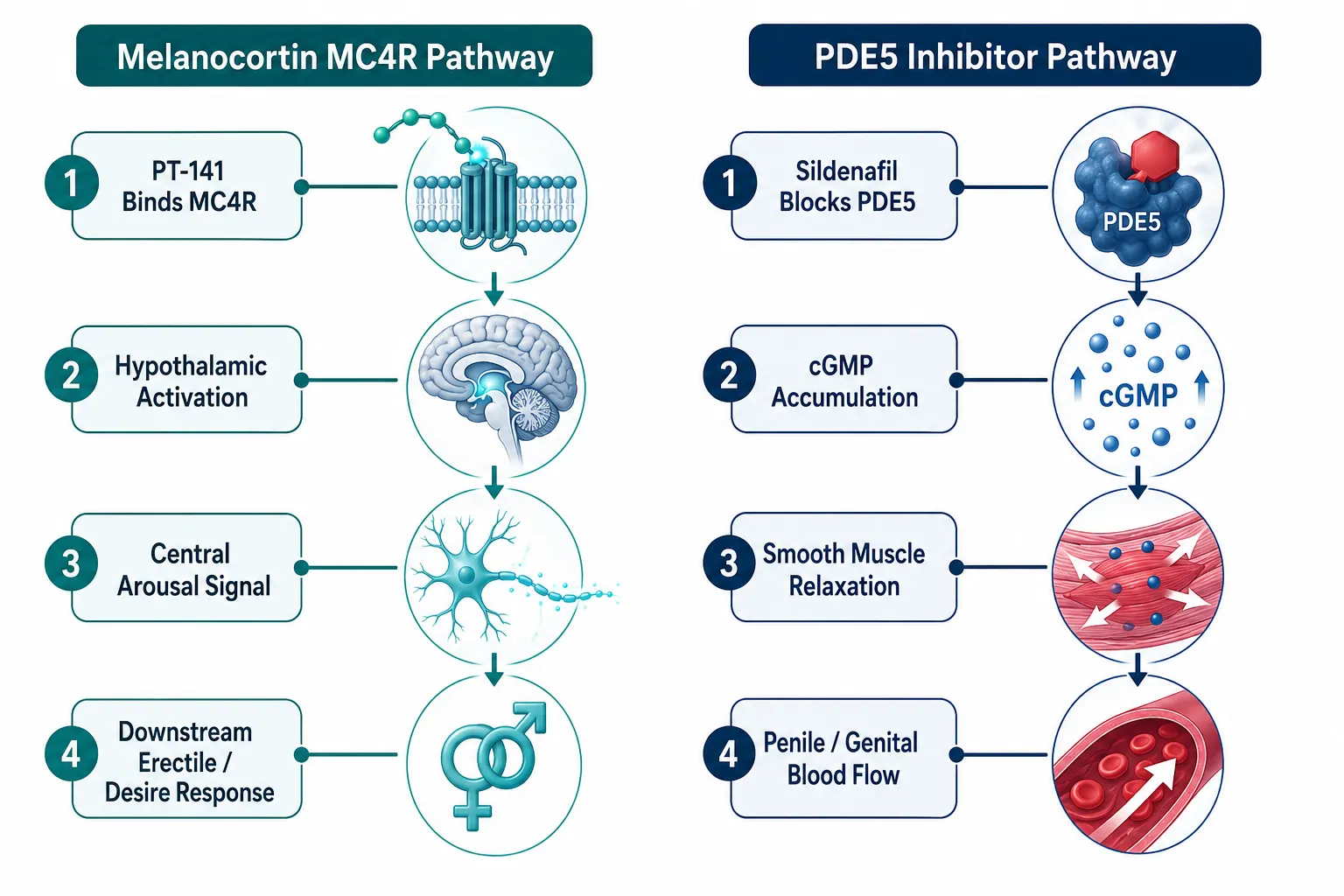
The distinction between melanocortin and PDE5 pathways is not merely academic, it determines which endpoints are valid, which models are appropriate, and whether combination designs are scientifically justified.

Melanocortin (MC4R) pathway:
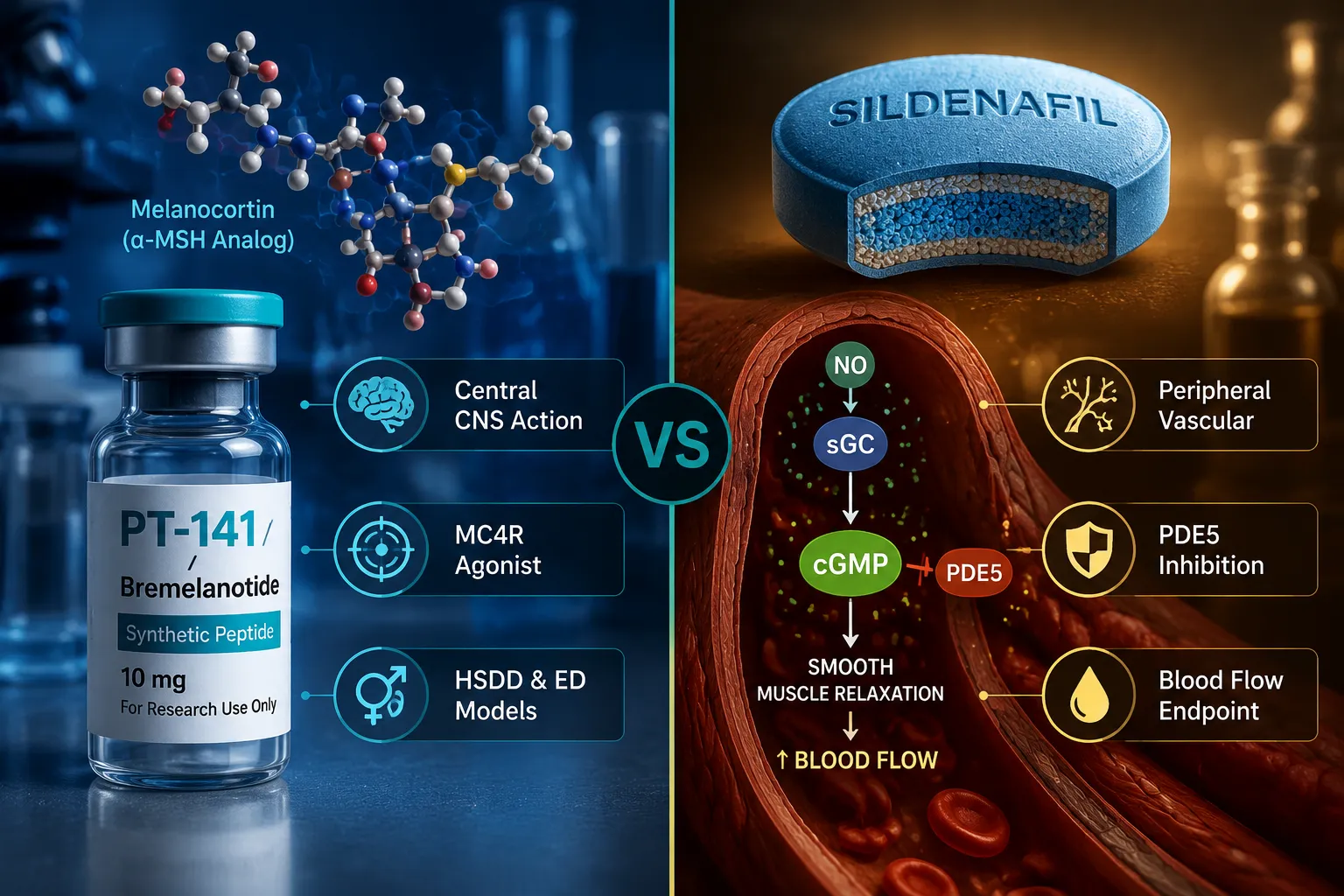
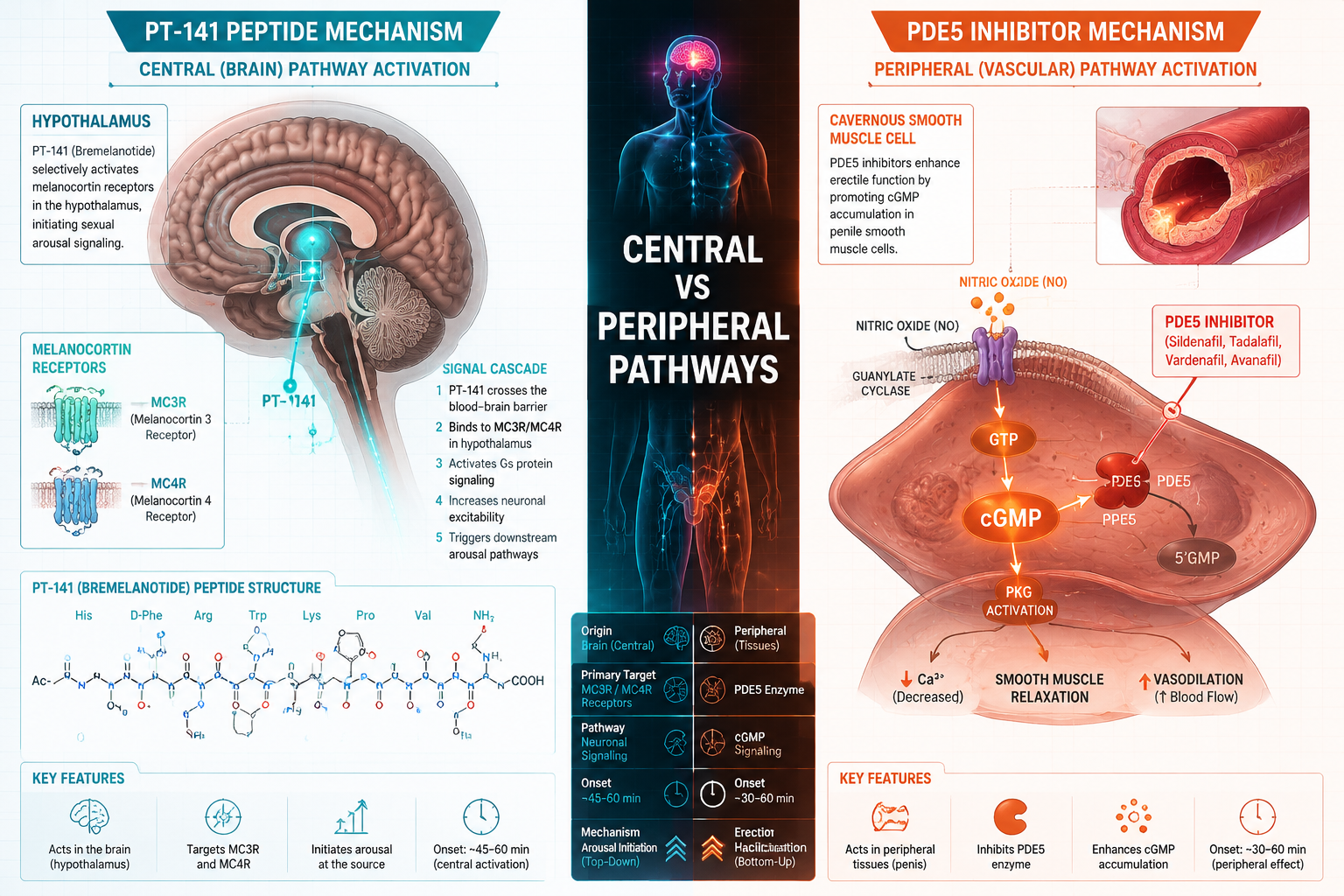
PT-141 is a cyclic heptapeptide analog of alpha-melanocyte-stimulating hormone (alpha-MSH). It binds melanocortin receptor subtypes MC3R and MC4R in the hypothalamus, triggering central nervous system arousal cascades that modulate both desire and erectile function. Because the signal originates in the brain, this pathway is relevant to models of low libido, HSDD, and psychogenic ED, conditions where peripheral blood flow is intact but central drive is suppressed.

PDE5 inhibitor pathway:
Sildenafil and related compounds block phosphodiesterase type 5, preventing the breakdown of cyclic guanosine monophosphate (cGMP). The result is smooth-muscle relaxation and increased genital blood flow. This mechanism is peripheral and vascular; it does not address central desire deficits. PDE5 inhibitors are therefore appropriate endpoints for vasculogenic ED models but show limited utility in desire-focused assays.

"Selecting the wrong mechanistic tool for a given model is the most common source of null results in preclinical sexual function research."

This mechanistic split has direct implications for study design peptides and endpoint batteries. Researchers should not use PDE5-centric vascular measures as the sole readout when testing a melanocortin agonist, and vice versa.

PT-141 Efficacy Data: HSDD, ED, and Combination Protocols
PT-141 Efficacy Data: HSDD, ED, and Combination Protocols

Female Sexual Dysfunction Models

The RECONNECT Phase 3 program provided the most rigorous human evidence for bremelanotide in premenopausal women with HSDD. Across multiple endpoints, satisfying sexual events (SSEs), the Female Sexual Function Index (FSFI), and the Female Sexual Distress Scale-Desire/Arousal/Orgasm (FSDS-DAO), PT-141 demonstrated statistically significant improvements versus placebo. As of 2026, updated evidence synthesis confirms a moderate-to-large effect size on desire-domain scores, with the SSE endpoint showing consistent gains across diverse participant populations.

For preclinical teams, this translates into validated multidomain outcome frameworks. Rodent models using the paracopulatory behavior assay and solicitation frequency counts map reasonably well onto the desire-domain constructs measured in Phase 3, making them useful translational tools.

Male Erectile Dysfunction Models

In male subjects, PT-141 produces dose-dependent increases in erectile function scores (IIEF-EF domain) and penile tumescence measures in both vasculogenic and psychogenic ED cohorts. Notably, response rates in men who are partial non-responders to PDE5 inhibitors remain clinically meaningful, suggesting a complementary rather than redundant mechanism.

Synergistic Combination Data

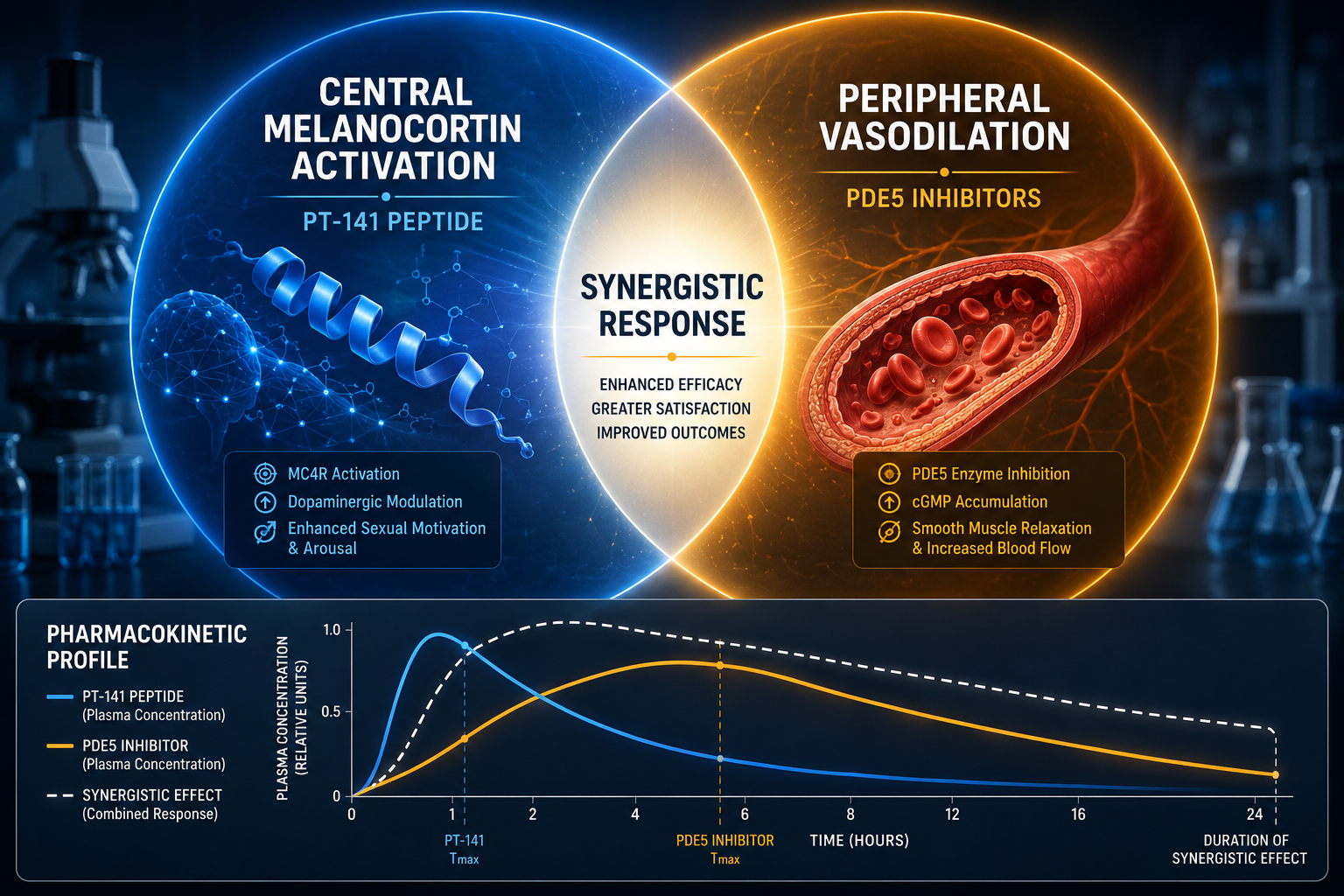
Preclinical studies combining bremelanotide with sildenafil have reported synergistic erectile responses at sub-threshold doses of each compound, an effect not observed with either agent alone at equivalent doses. Palatin Technologies' ongoing co-formulation program (2025-2026) is translating this preclinical signal into a formal development candidate for PDE5 non-responders. For laboratory teams, this justifies factorial study designs that cross melanocortin agonist doses against PDE5 inhibitor doses to map the interaction surface.

Protocol Design and Endpoint Selection for Research Use
Protocol Design and Endpoint Selection for Research Use

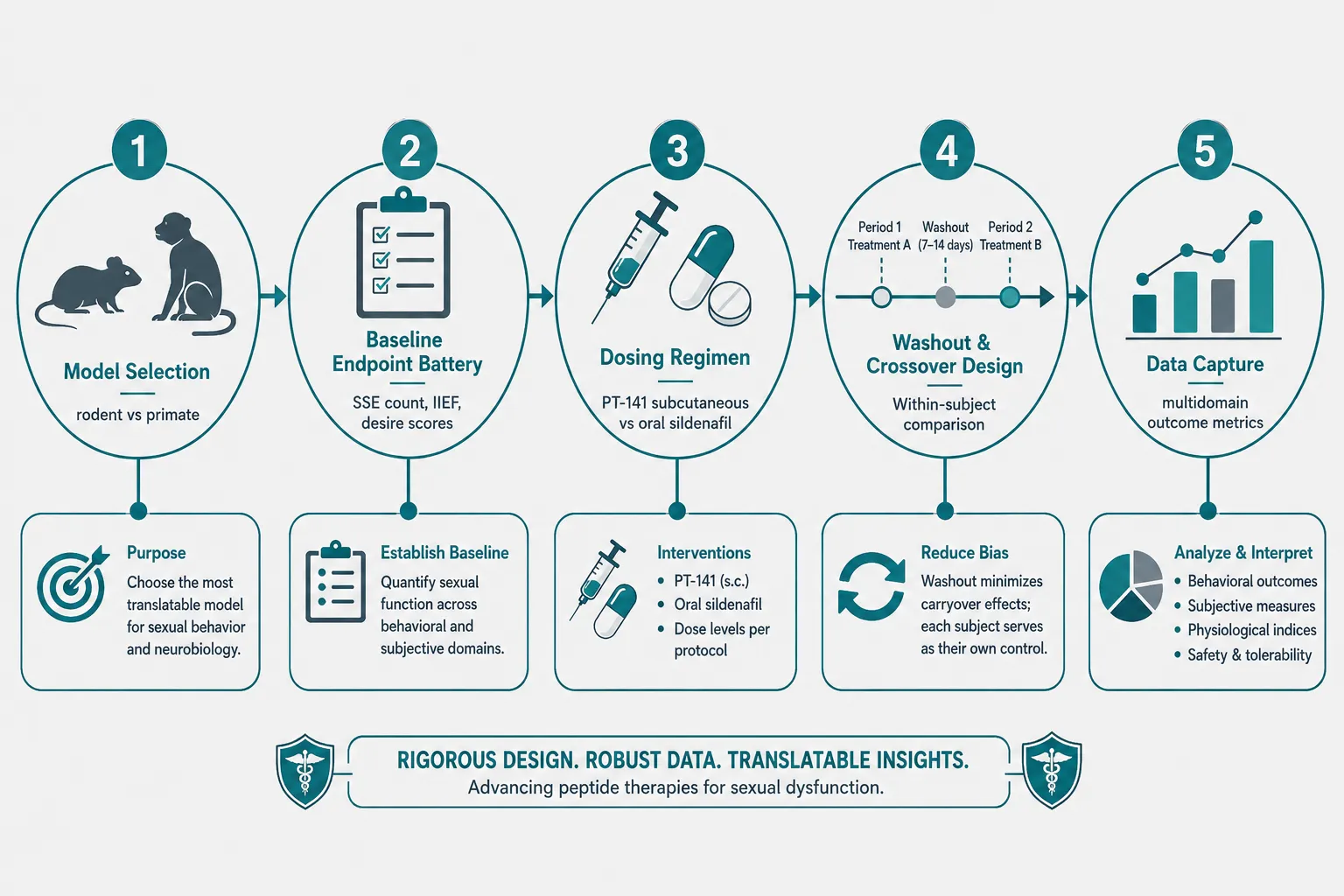
Translating mechanistic knowledge into reproducible protocols requires deliberate endpoint selection. The table below summarizes recommended endpoint categories by pathway and model type.

Model Type Primary Compound Recommended Endpoints
Psychogenic / desire deficit PT-141 (MC4R agonist) SSE count, desire-domain score, solicitation frequency
Vasculogenic ED Sildenafil (PDE5i) Penile tumescence, IIEF-EF, intracavernous pressure
Mixed / PDE5 non-responders PT-141 + Sildenafil Multidomain IIEF, SSE, dose-response interaction
HSDD (female) PT-141 FSFI desire subscale, FSDS-DAO, SSE frequency

Key protocol considerations:

  • Washout periods: Because PT-141 has a half-life of approximately 2.7 hours, crossover designs require minimal washout compared to longer-acting compounds. Sildenafil's half-life of 3-5 hours is comparable, but active metabolites may extend effects.
  • Route of administration: PT-141 is administered subcutaneously in most research protocols; intranasal formulations have also been studied. Sildenafil is typically oral in preclinical rodent gavage models.
  • Nausea confound: PT-141 produces dose-dependent nausea via MC3R activation. Protocols must include nausea scoring to distinguish true desire/erectile effects from suppressed behavior secondary to malaise.
  • Blinding and controls: Vehicle-matched controls are essential. For combination studies, a four-arm design (vehicle, PT-141 alone, sildenafil alone, combination) is the minimum acceptable structure.

Researchers exploring adjacent neuropeptide mechanisms may also find value in reviewing stimuli responsive peptides and therapeutic peptides literature for complementary endpoint frameworks. Teams working on hormonal co-variables should cross-reference serm research data, as estrogenic tone modulates MC4R sensitivity in female models. For labs also running metabolic co-morbidity studies, Tesamorelin research provides relevant context on peptide tolerability profiling.

Safety and Tolerability Considerations

PT-141's central mechanism produces a different tolerability signature than PDE5 inhibitors. Where sildenafil's primary adverse effects are hemodynamic (headache, flushing, hypotension), PT-141's most reported effects are nausea, flushing, and transient blood pressure elevation. In research settings, cardiovascular monitoring at baseline and post-dose is standard. Importantly, PT-141 does not require sexual stimulation to initiate its central effect, a meaningful design difference from PDE5 inhibitors, which are stimulus-dependent.

Conclusion

The best research-use sexual dysfunction peptides occupy distinct mechanistic niches that demand equally distinct experimental designs. PT-141's central MC4R agonism addresses desire and psychogenic dysfunction in ways that sildenafil's peripheral PDE5 inhibition cannot replicate, and the two compounds show genuine synergy in combination models, a finding with direct implications for co-formulation research targeting PDE5 non-responders.

Actionable next steps for research teams:

  1. Define the target mechanism first (central desire vs peripheral vascular) before selecting a compound.
  2. Build multidomain endpoint batteries that capture both desire and vascular outcomes when running combination protocols.
  3. Include nausea scoring as a mandatory co-variate in all PT-141 studies.
  4. Use factorial dose-response designs to characterize the PT-141/sildenafil interaction surface rather than fixed-dose comparisons.
  5. Source compounds from suppliers with verified purity documentation to ensure data reproducibility across study sites.

As 2026 evidence continues to refine effect-size estimates and combination dosing windows, preclinical teams that invest in rigorous protocol architecture now will be best positioned to generate translatable data in this rapidly evolving field.

https://www.puretestedpeptides.com/wp-content/uploads/2026/09/best-research-use-sexual-dysfunction-peptides-pt-141-sildenafil-comparisons-and.webp 1024 1536 https://www.puretestedpeptides.com/wp-content/uploads/2026/01/buy-peptides-online.jpg 2026-09-04 13:04:392026-09-04 13:04:39Best Research-Use Sexual Dysfunction Peptides: PT-141, Sildenafil Comparisons, and Melanocortin vs PDE5 Pathways

Tag Archive for: sildenafil preclinical

PT-141, Tadalafil, and Sildenafil in Erectile Function Research: When Do Peptides Outperform Pills in Preclinical Models?

PT-141, Tadalafil, and Sildenafil in Erectile Function Research: When Do Peptides Outperform Pills in Preclinical Models?

June 18, 2026/0 Comments/by Pure Tested

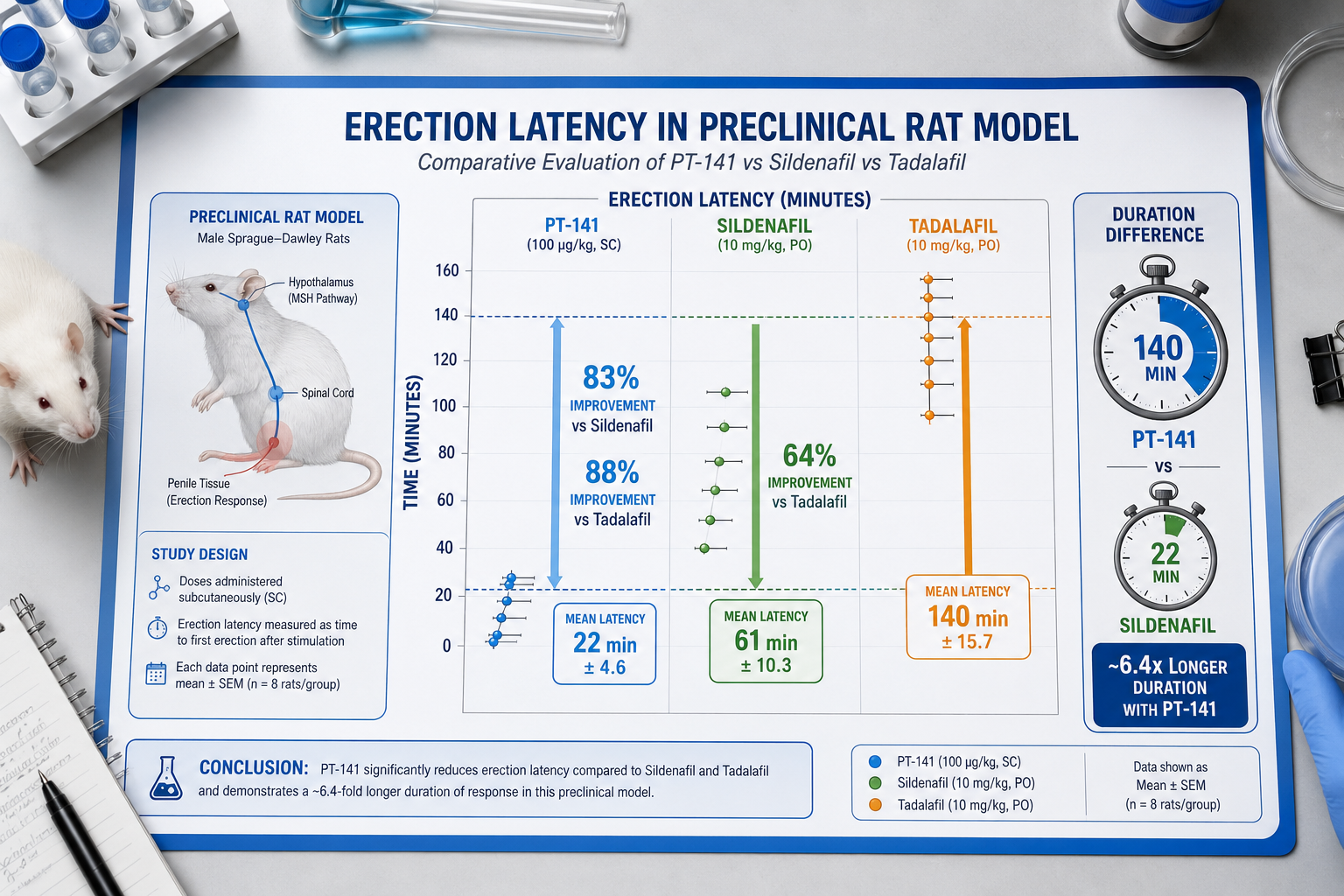
Erection duration in a PT-141-treated group ran approximately 140 minutes in controlled trials — compared to just 22 minutes in the placebo group. That single data point raises a mechanistically important question for researchers studying erectile function: does a centrally acting peptide offer advantages that peripheral vasodilators simply cannot replicate? Exploring PT-141, Tadalafil, and Sildenafil in Erectile Function Research — specifically when peptides outperform pills in preclinical models — requires a close look at receptor biology, pathway architecture, and what animal data actually show.

Key Takeaways

  • PT-141 (bremelanotide) acts centrally through melanocortin receptors MC3R and MC4R, while tadalafil and sildenafil act peripherally via PDE5 inhibition.
  • Preclinical rodent models show PT-141 significantly increases spontaneous erection frequency through central neural pathways.
  • PT-141 has demonstrated erectile responses in sildenafil non-responders, suggesting a non-overlapping mechanism.
  • Combination data indicate a synergistic effect when PT-141 and sildenafil are co-administered.
  • Mechanistic divergence makes these compounds complementary research tools rather than simple substitutes.

Key Takeaways

Mechanistic Divergence: Central Peptide vs. Peripheral Pill

The foundational difference between PT-141 and PDE5 inhibitors lies in where each compound acts.

Sildenafil and tadalafil both inhibit phosphodiesterase type 5, preventing the breakdown of cyclic GMP (cGMP) in penile smooth muscle. This prolongs nitric oxide-driven vasodilation and facilitates engorgement — but the pathway depends entirely on prior sexual stimulation to generate nitric oxide in the first place. Without that upstream signal, PDE5 inhibitors have limited effect.

PT-141, by contrast, is a synthetic melanocortin receptor agonist. It binds preferentially to MC3R and MC4R in the central nervous system, particularly in hypothalamic regions associated with sexual arousal circuitry. This central activation can initiate an erectile response independent of peripheral vascular priming.

"PT-141 does not require nitric oxide as a prerequisite signal — it bypasses the peripheral dependency entirely."

This mechanistic split is why researchers studying neurogenic or psychogenic components of erectile dysfunction find PT-141 particularly informative as a research tool. For a broader overview of how peptides interact with neuroendocrine pathways, the PT-141 central arousal research overview provides useful context.


What Preclinical Models Reveal About PT-141, Tadalafil, and Sildenafil in Erectile Function Research: When Do Peptides Outperform Pills in Preclinical Models?

Animal models — primarily rodents — have been the primary setting for comparing these compounds mechanistically.

Rodent Erection Latency and Frequency Data

In rat studies, intranasal PT-141 administration produced a statistically significant increase in spontaneous erection frequency compared to vehicle controls. The response did not require external stimulation, which directly mirrors its central mechanism. PDE5 inhibitors in the same models show weaker spontaneous erection induction, reinforcing that their efficacy is stimulus-dependent.

Parameter PT-141 Sildenafil Tadalafil
Primary site of action CNS (MC3R/MC4R) Peripheral (PDE5) Peripheral (PDE5)
Stimulus dependency Low High High
Erection latency reduction Significant Moderate Moderate
Duration advantage Extended Moderate Extended (longer half-life)

Non-Responder Models

A critical finding in the research literature involves subjects with inadequate responses to sildenafil. Subcutaneous PT-141 at 4 mg and 6 mg doses produced statistically significant erectile responses in this population. This is a mechanistically logical result: if the peripheral pathway is compromised (vascular insufficiency, receptor downregulation), central activation via melanocortin signaling offers an alternative route.

Researchers interested in PT-141 peptide for research contexts will find this non-responder data particularly relevant for experimental design.


Non-Responder Models

Synergy Data and Combination Research Findings

One of the more compelling findings in this research area involves co-administration. A crossover study using 25 mg sildenafil combined with 7.5 mg intranasal PT-141 produced a significantly greater erectile response than sildenafil alone. This synergy is mechanistically coherent: PT-141 amplifies the central arousal signal while sildenafil sustains the peripheral vascular response once initiated.

This complementary profile suggests that in preclinical research designs, combining a melanocortin agonist with a PDE5 inhibitor can model the full erectile pathway — central initiation plus peripheral amplification — more completely than either agent alone.

For researchers building multi-peptide experimental frameworks, resources like the ultimate guide to peptide therapy research offer broader context on stacking and synergy considerations.


Synergy Data and Combination Research Findings

Pharmacokinetics and Practical Research Considerations

PT-141's pharmacokinetic profile adds another dimension to its research utility. Following intranasal administration, peak serum concentrations occur roughly 30 minutes post-dose, with a half-life of approximately 2 hours. This rapid onset supports time-locked experimental protocols where researchers need a predictable arousal window.

Tadalafil's much longer half-life (17–21 hours) makes it better suited for studies examining sustained vascular tone, while sildenafil's intermediate profile (~4 hours) fits acute response models.

Key pharmacokinetic comparison:

  • PT-141: Onset ~30 min, half-life ~2 hours, central action
  • Sildenafil: Onset ~30–60 min, half-life ~4 hours, peripheral action
  • Tadalafil: Onset ~1–2 hours, half-life ~17–21 hours, peripheral action

Researchers sourcing research-grade peptides should prioritize verified purity documentation. The PT-141 for sale research page and PT-141 for sale online resources outline quality control considerations relevant to preclinical work.

Safety data from controlled studies show no significant hemodynamic changes with PT-141 at research-relevant doses, which contrasts with PDE5 inhibitors that can produce measurable blood pressure effects — an important variable to control in animal models.

For researchers also examining mitochondrial or vascular biology alongside erectile function research, SS-31 mitochondrial dynamics research offers a complementary mechanistic lens on vascular tissue health.


Conclusion

The comparison of PT-141, Tadalafil, and Sildenafil in Erectile Function Research — specifically when peptides outperform pills in preclinical models — points to one clear answer: PT-141 outperforms PDE5 inhibitors when the research question centers on central arousal mechanisms, stimulus-independent erection induction, or non-responder populations. PDE5 inhibitors remain superior tools for studying peripheral vascular amplification and sustained engorgement.

Actionable next steps for researchers in 2026:

  • Design experiments that isolate central versus peripheral pathways using PT-141 and PDE5 inhibitors as mechanistic controls.
  • Use non-responder models to probe the independence of melanocortin-driven arousal from nitric oxide availability.
  • Consider combination protocols when the research goal is modeling the full erectile response arc.
  • Verify peptide purity through certificate of analysis documentation before any preclinical use.

Understanding where each compound excels mechanistically — rather than treating them as interchangeable — produces more precise, reproducible preclinical data.

https://www.puretestedpeptides.com/wp-content/uploads/2026/06/PT-141-Tadalafil-and-Sildenafil-in-Erectile-Function-Research-When-Do-Peptides-Outperform-Pills-in-Preclinical-Models.png 1024 1536 Pure Tested https://www.puretestedpeptides.com/wp-content/uploads/2026/01/buy-peptides-online.jpg Pure Tested2026-06-18 13:03:492026-07-20 15:02:53PT-141, Tadalafil, and Sildenafil in Erectile Function Research: When Do Peptides Outperform Pills in Preclinical Models?
×

Helpful Links

  • My account
  • Cart
  • Checkout
  • Refund and Returns Policy
  • Privacy Policy
  • SMS Privacy Policy
  • Login
  • My Account
  • Logout

USA Made Lab Tested Peptides

All products are sold for research, laboratory, or analytical purposes only, and are not for human consumption


Pure Tested Peptides is a chemical supplier. Pure Tested Peptides is not a compounding / chemical compounding facility as defined under 503A of the Federal Food, Drug, and Cosmetic act. Pure Tested Peptides is not an outsourcing facility as defined under 503B of the Federal Food, Drug, and Cosmetic act.

The statements made within this website have not been evaluated by the US Food and Drug Administration. The products we offer are not intended to diagnose, treat, cure or prevent any disease.

Human/Animal Consumption Prohibited. Laboratory/In-Vitro Experimental Use Only

Scroll to top Scroll to top Scroll to top