

Polypeptide Peptides and Drug Mechanisms: What Common Medications Reveal About Research-Use Peptide Pharmacology
More than 80 FDA-approved peptide-based drugs are currently on the market, generating over $50 billion in annual global sales, yet most researchers exploring novel compounds have only scratched the surface of what polypeptide pharmacology can teach them. The field of polypeptide peptides and drug mechanisms: what common medications reveal about research-use peptide pharmacology sits at a unique crossroads: approved drugs like insulin and GLP-1 agonists have mapped receptor signaling pathways that directly inform how newer, research-only compounds are designed, tested, and interpreted.
Understanding this bridge between clinical medications and experimental peptides is not just academic. It shapes how researchers evaluate half-life engineering, receptor selectivity, and structure-activity relationships (SAR) for compounds that are not yet approved for human use.
Key Takeaways
- Approved polypeptide drugs (insulin, GLP-1 agonists, oxytocin) established the receptor signaling blueprints that research peptides now exploit.
- Half-life engineering, through PEGylation, DAC technology, and amino acid substitution, is the central design challenge separating short-lived natural peptides from viable drug candidates.
- Structure-activity relationships (SAR) explain why small changes in peptide sequence produce large changes in receptor binding affinity and biological effect.
- Research-only peptides such as GLP-3 analogs, CJC-1295, and MOTS-c extend these pharmacological principles into territories not yet covered by approved medicines.
- Purity and sourcing quality directly affect the reliability of any peptide pharmacology research.
How Approved Polypeptide Drugs Built the Pharmacology Roadmap
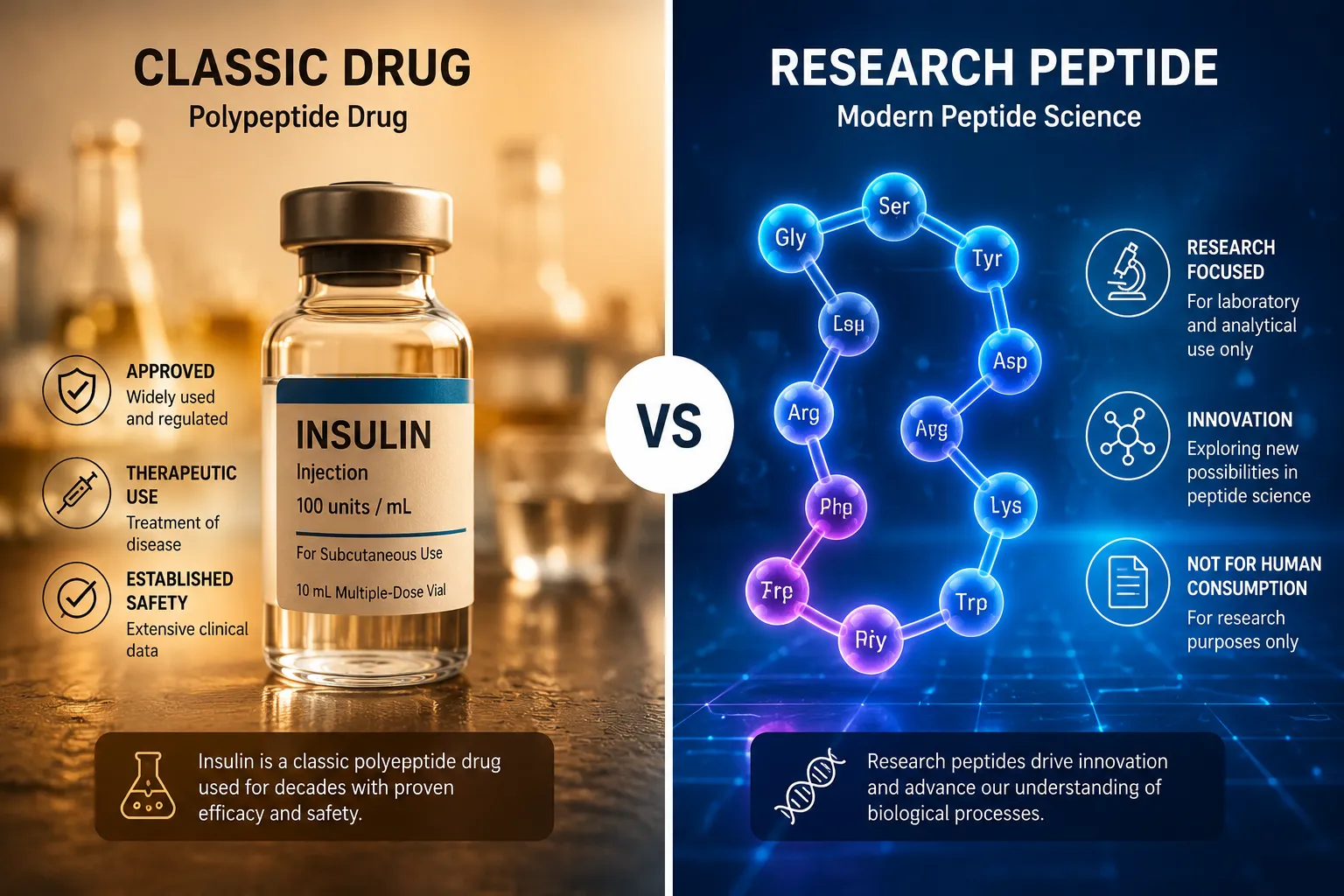
The story of polypeptide peptides and drug mechanisms begins with insulin. Discovered in 1921, insulin is a 51-amino-acid polypeptide that binds the insulin receptor tyrosine kinase, triggering a phosphorylation cascade that drives glucose uptake. Every modern research peptide targeting metabolic pathways owes something to this foundational mechanism.
GLP-1 receptor agonists extended this roadmap dramatically. Drugs like semaglutide and liraglutide are engineered analogs of native glucagon-like peptide-1, a 30-amino-acid incretin hormone. Their pharmacological success revealed three principles now central to peptide drug design:
| Principle | Clinical Example | Research Application |
|---|---|---|
| Receptor selectivity | GLP-1R agonism vs. GLP-2R | GLP-3 analog design |
| Half-life extension | Fatty acid conjugation (liraglutide) | DAC-modified CJC-1295 |
| Structural mimicry | Exendin-4 from Gila monster venom | Non-mammalian peptide scaffolds |
Native GLP-1 has a plasma half-life of under two minutes due to DPP-4 enzyme cleavage. Pharmaceutical engineers solved this by attaching C18 fatty acid chains, enabling albumin binding and extending half-life to 13 hours or more. Researchers studying GLP-1 peptide analogs apply this same logic when evaluating modified sequences in preclinical settings.
Similarly, GLP-3 and related peptide analogs represent the next generation of incretin-pathway research, building directly on the receptor mapping done by approved GLP-1 drugs.
Receptor Signaling and Structure-Activity Relationships in Peptide Pharmacology
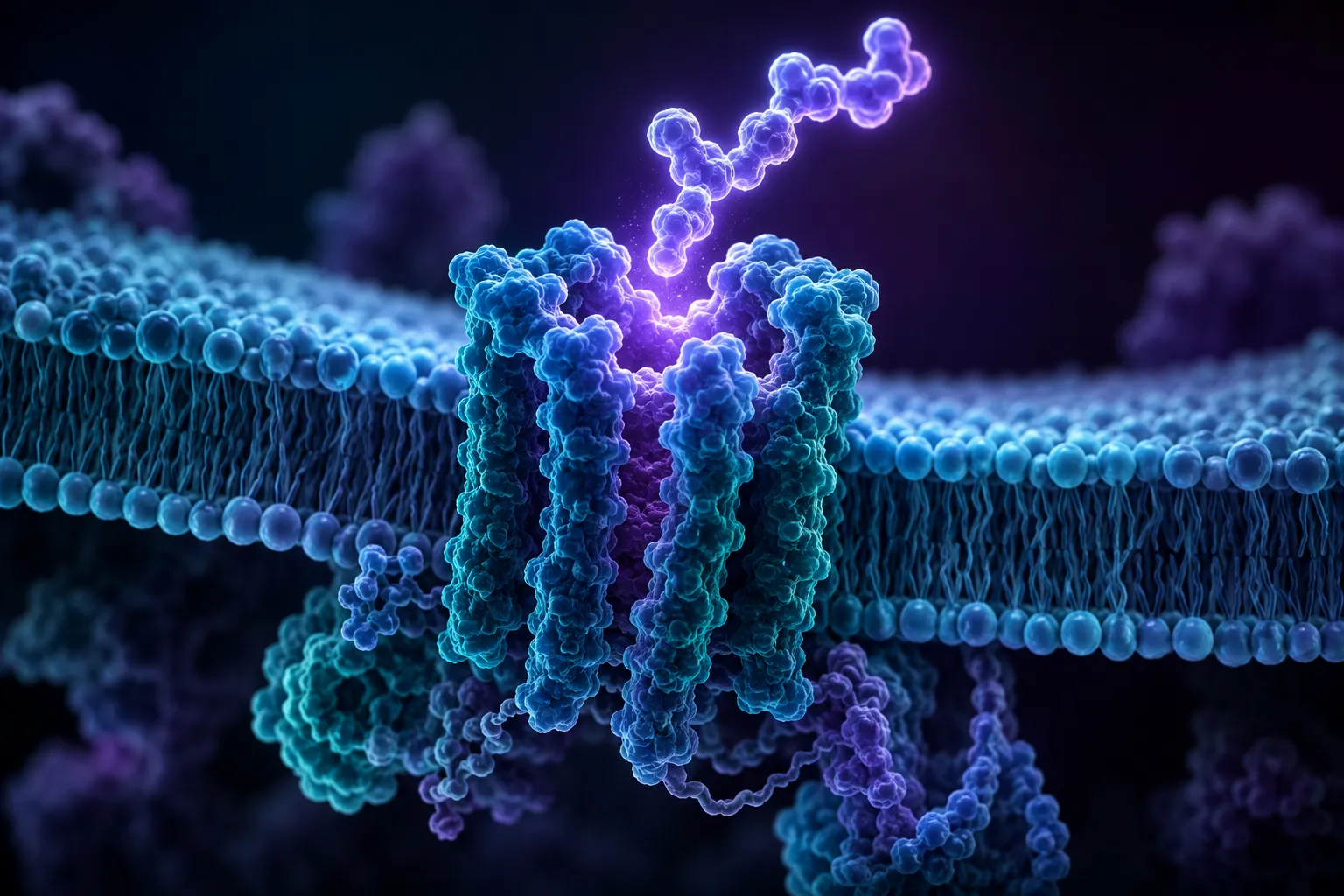
Most therapeutic peptides act on one of three receptor classes: G-protein coupled receptors (GPCRs), receptor tyrosine kinases, or nuclear receptors. Understanding which class a research peptide targets is the first step in predicting its downstream effects.
GPCRs are the most common target. When a peptide ligand binds a GPCR, it triggers either Gs (stimulatory), Gi (inhibitory), or Gq (phospholipase C) signaling cascades. The melanocortin system, targeted by research compounds like MT-1 peptide and PT-141, operates through MC1R and MC4R GPCRs. Approved drugs like afamelanotide (for erythropoietic protoporphyria) validated this receptor pathway before research analogs entered laboratory use.
Structure-activity relationships explain why even single amino acid substitutions matter enormously:
- D-amino acid substitution resists proteolytic degradation without altering binding affinity
- N-terminal acetylation increases lipophilicity and membrane permeability
- Cyclization locks the peptide in a bioactive conformation, improving receptor fit
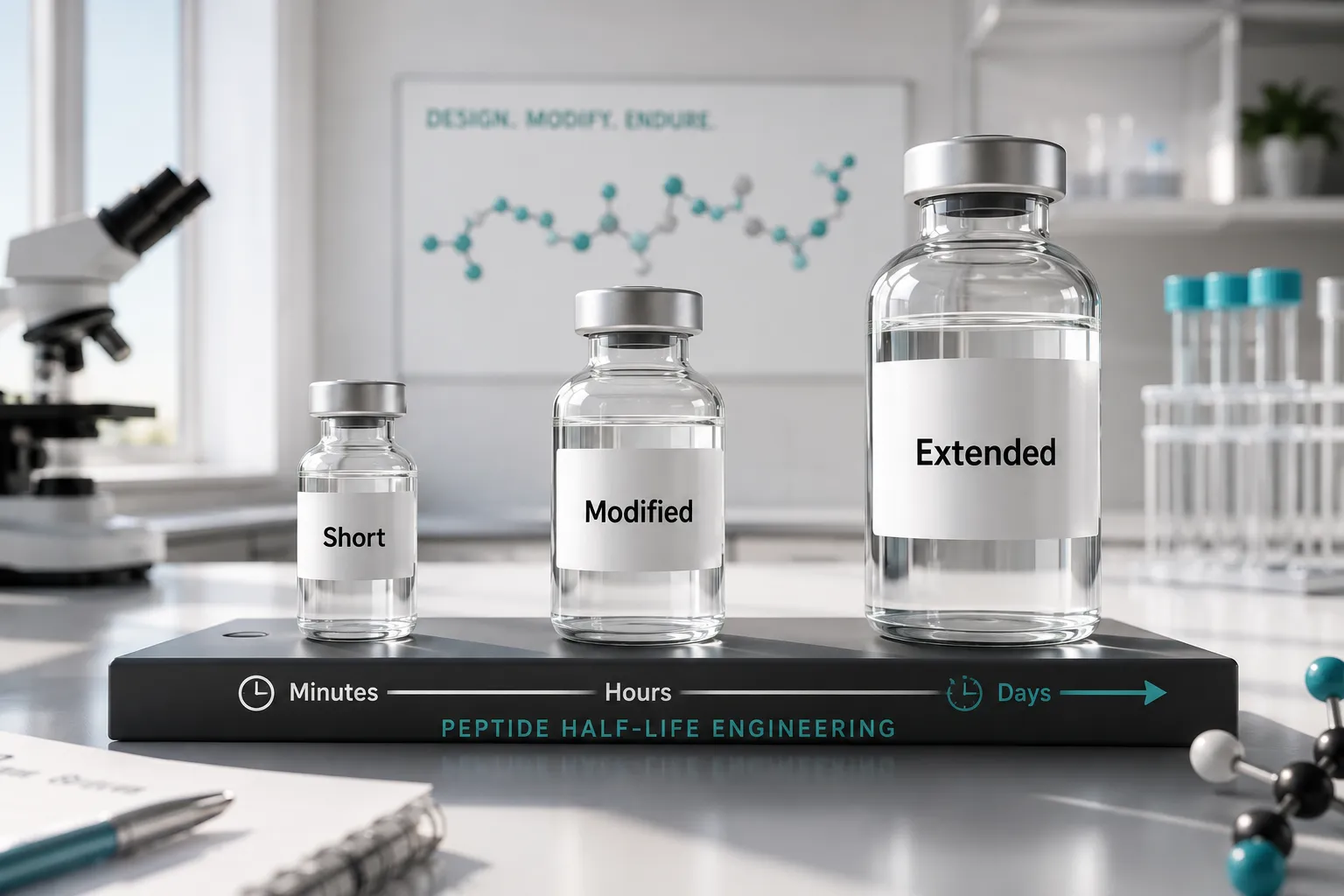
These are not theoretical concepts. They are the same tools used to engineer CJC-1295, a growth hormone-releasing hormone (GHRH) analog that uses Drug Affinity Complex (DAC) technology, essentially covalent albumin binding, to extend its half-life from minutes to days. Researchers studying CJC-1295 and ipamorelin combinations rely on this half-life engineering to design stable, reproducible experimental protocols.
"The difference between a peptide that lasts two minutes and one that lasts two days is almost entirely a structural chemistry decision, not a biological one."
Mitochondria-targeted peptides like SS-31 represent another frontier. Unlike GPCR-acting peptides, SS-31 penetrates the inner mitochondrial membrane through electrostatic interactions, scavenging reactive oxygen species at the source. Researchers exploring SS-31 peptide mechanisms are working in a pharmacological space that approved cardioprotective drugs have only partially mapped.
Research-Only Peptides: Extending the Pharmacological Blueprint
The principles established by approved polypeptide drugs now guide a generation of research-only compounds. The key distinction is regulatory status: these peptides are not approved for human therapeutic use and are studied exclusively in controlled research contexts.
MOTS-c is a 16-amino-acid peptide encoded within mitochondrial DNA, a discovery that overturned assumptions about where bioactive peptides originate. Its mechanism involves AMPK pathway activation, the same energy-sensing pathway targeted by metformin, the world's most prescribed diabetes drug. This pharmacological parallel gives researchers a validated reference point for interpreting MOTS-c data.
Epithalon (a tetrapeptide) and TB-500 (a thymosin beta-4 fragment) operate through entirely different mechanisms, telomerase activation and actin polymerization regulation, respectively, yet both reflect the same SAR principle: minimal sequence, maximal specificity. Researchers can explore Epithalon peptide research and TB-500 peptide studies with a clearer interpretive framework when they understand the approved-drug pharmacology that preceded them.
BPC-157, a 15-amino-acid gastric pentadecapeptide fragment, activates the NO-cGMP pathway and modulates VEGF expression, mechanisms shared with several approved wound-healing and gastroprotective agents. The BPC-157 research documentation available to researchers reflects years of preclinical data building on these established pathways.
Sourcing and Purity: The Variable That Changes Everything
Pharmacological research is only as reliable as the compound being studied. A peptide with 85% purity produces different receptor-binding data than one at 99%+ purity, not because the peptide itself is different, but because impurities compete for binding sites or trigger off-target effects. Researchers should consult peptide supplier comparison resources and prioritize vendors who provide third-party mass spectrometry and HPLC certificates of analysis.
Conclusion
The field of polypeptide peptides and drug mechanisms offers researchers a powerful interpretive lens. Approved medications, from insulin to semaglutide to afamelanotide, have already validated the receptor systems, signaling cascades, and structural engineering principles that research-only peptides now explore further.
Actionable next steps for researchers:
- Map any research peptide to its closest approved-drug analog to identify the validated receptor pathway it likely engages.
- Evaluate half-life data critically, always ask whether a modification (DAC, PEGylation, fatty acid conjugation) is present and how it affects experimental timing.
- Prioritize purity documentation. Request HPLC and mass spec data before any experimental protocol begins.
- Use SAR principles to interpret unexpected results, a single amino acid change can shift a peptide from agonist to antagonist.
- Stay current with preclinical literature on emerging peptides like MOTS-c and GLP-3 analogs, where the pharmacological blueprint is still being drawn.
The gap between a common medication and a research-use peptide is often smaller than it appears, and understanding that gap is what separates rigorous research from guesswork.


Leave a Reply
Want to join the discussion?Feel free to contribute!