Call or Text 727-513-9780
  • Shopping Cart Shopping Cart
    0Shopping Cart
Pure Tested Peptides | America's most trusted Peptides for sale online
  • Peptides for sale
    • Oral Peptides for sale
      • Peptide Capsules for sale
      • BPC 157 Capsules 1000mcg
      • SLU-PP-332 Capsules | 1000 mcg
      • 5-Amino-1MQ 50mg Capsules
      • Tesofensine 500mcg
    • All Peptides for sale
    • Peptide Sprays
      • BPC 157 Nasal Spray Kit
      • BPC-157 TB500 Nasal Spray Kit
      • Semax Nasal Spray 10mg
      • Selank – Nasal Spray Kit – 10mg
      • Epithalon 50MG Nasal Spray Kit
      • Ipamorelin 10mg Nasal Spray
      • Klow Nasal Spray (BPC-157 + TB-500 + GHK-Cu + KPV) | 80mg
      • Hulk Nasal Spray Tesa / Ipa Blend 6/3 MG
      • Klow Nasal Spray
      • NAD + 500 mg Nasal Spray
      • PT-141 Nasal Spray Kit
    • GHRH Peptides
      • Ipa Peptides
      • CJC-1295 Peptides
        • CJC-1295 with DAC 5 mg
        • CJC-1295 without DAC 5 mg
        • CJC-1295 Ipa 10mg
      • Tesa Peptides
        • Tesa Peptide
        • Tesa 20 mg
    • GHK-Cu Peptides
      • All GHK-Cu Peptides
      • GHK-Cu 100mg
      • KLOW Peptide Blend – Buy KLOW blend online
    • BPC Peptides
      • All BPC Peptides
      • BPC-157
      • BPC-157 TB-500
      • BPC 157 capsules 1000mcg
    • SLU-PP-332 Peptides
      • All SLU-PP-332 Peptides
      • SLU-PP-332 5mg
    • GLP3 Peptides
      • GLP3-R
      • GLP3-R CAG 10mg
      • GLP3-R 20mg
    • PT-141 Peptides
      • PT-141 Peptides for sale
      • PT-141 10mg
      • PT-141 Nasal Spray
    • CAG Peptides
      • Lipo-C Peptide Blend
      • CAG 5mg
      • CAG 10mg
    • MOTS-C Peptides
      • MOTS-C Peptides for sale
      • MOTS-c peptide
      • MOTS-c 10mg *6 pack*
    • 5 Amino 1MQ Peptides
      • 5 Amino 1MQ Peptides for sale
      • 5-Amino-1MQ 50mg Capsules
      • 5-Amino-1MQ 5mg
    • Epithalon Peptides
      • Epithalon Peptides for sale
      • Epithalon 10mg
      • Epithalon 50mg
  • Shop
    • GLPs
      • 5-Amino-1MQ 50mg Capsules
      • 5-Amino-1MQ 5mg
      • GLP3-Reta
      • L-Carnitine 500mg/ml
      • Tesofensine 500mcg
      • SLU-PP-332 5mg
      • MOTS-c 10mg *6 pack*
    • Epithalon & BPC Peptides
      • Epithalon 10mg
      • Epithalon 50mg
      • BPC-157
      • BPC 157 capsules 1000mcg
      • BPC-157 TB-500
      • BPC-157 TB500 Nasal Spray Kit
      • BPC 157 Nasal Spray Kit
    • BPC TB-500 & NAD+ Peptides
      • NAD+ 500 mg
      • KLOW Peptide Blend – Buy KLOW blend online
      • GLOW Peptide Blend
      • TB 500 5mg
      • BPC 157 capsules 1000mcg – Supplement
      • BPC 157 Nasal Spray Kit
      • BPC-157
      • BPC-157 TB500 Nasal Spray Kit
      • BPC-157 TB-500
      • BPC 157 capsules 1000mcg
    • LL-37 Peptide
      • LL-37 10 mg
    • MOTS-C & Selank
      • MOTS-c peptide
      • Selank 10mg
    • GHK Peptides
      • GHK-Cu 100mg
      • GLOW Peptide Blend
      • KLOW Peptide Blend – Buy KLOW blend online
  • COAs
  • Wholesale
    • Wholesale Peptides for sale
  • PTP FAQ
  • Affiliates
    • Selank Peptide: Advanced Pharmacological Mechanisms Underlying Its Anxiolytic and Nootropic Effects in Research
      • 5-Amino-1MQ Peptide: Detailed Mechanisms of NNMT Inhibition and Its Impact on Cellular Metabolism Research
        • MOTS-C Peptide: Unraveling Its Role in Mitochondrial Dynamics and Energy Metabolism Research
          • Epithalon Peptide and Telomerase Regulation: Investigating Its Impact on Cellular Senescence and Lifespan Research Models
            • GLP2-T vs GLP2 Tirz Peptide: Understanding the Naming, Mechanistic Nuances, and Research Implications for Gut Health
      • Peptides and Polypeptides in Modern Pharmacology: What Research on Metoprolol, Prednisone, and Amlodipine Reveals
        • Polypeptide Peptides vs NSAIDs: What Naproxen and Diclofenac Teach Tissue-Repair Researchers About BPC‑157 and TB‑500
          • Peptides and Polypeptides in Endocrine Pharmacology: How GLP-1, GLP-2, and GLP-3 Retatrutide Differ From Classic Drugs Like Prednisone and Amlodipine
          • 5‑Amino‑1MQ Peptide and NNMT Inhibition: How It Compares With Statins Like Atorvastatin in Adipose and Lipid Metabolism Research
      • Enclomiphene, Estrogen Receptor Signaling, and Luteinizing Phase Biology: What Hormone Researchers Should Measure
        • Mesenchymal Stem Cells, BPC‑157, and GHK‑Cu: How Tissue Repair Peptides Compare With Classic NSAIDs Like Naproxen in Injury Models
          • Peptide Calculator Use Cases Beyond Growth Hormone: Working Through GLP‑3 Retatrutide, MOTS‑c, and BPC‑157 Research Dosing
        • Polypeptide Peptides in Endocrine and Metabolic Pharmacology: Lessons From Amlodipine, Prednisone, and Metoprolol
        • Peptides Calculator for Advanced Blends: Worked Examples for Tesamorelin, CJC‑1295, and Ipamorelin Stacks
          • Peptides and Polypeptides in Human Physiology: How Molecular Size Shapes Research Applications
            • Selank Peptide: Advanced Pharmacological Mechanisms Underlying Its Anxiolytic and Nootropic Effects in Research
          • 5-Amino-1MQ Peptide: Detailed Mechanisms of NNMT Inhibition and Its Impact on Cellular Metabolism Research
            • MOTS-C Peptide: Unraveling Its Role in Mitochondrial Dynamics and Energy Metabolism Research
              • Epithalon Peptide and Telomerase Regulation: Investigating Its Impact on Cellular Senescence and Lifespan Research Models
                • GLP2-T vs GLP2 Tirz Peptide: Understanding the Naming, Mechanistic Nuances, and Research Implications for Gut Health
                  • Peptides and Polypeptides in Endocrine Pharmacology: How GLP-1, GLP-2, and GLP-3 Retatrutide Differ From Classic Drugs Like Prednisone and Amlodipine
                    • Polypeptide Peptides vs NSAIDs: What Naproxen and Diclofenac Teach Tissue-Repair Researchers About BPC‑157 and TB‑500
                      • Peptides and Polypeptides in Modern Pharmacology: What Research on Metoprolol, Prednisone, and Amlodipine Reveals
                        • 5‑Amino‑1MQ Peptide and NNMT Inhibition: How It Compares With Statins Like Atorvastatin in Adipose and Lipid Metabolism Research
                        • Enclomiphene, Estrogen Receptor Signaling, and Luteinizing Phase Biology: What Hormone Researchers Should Measure
                        • Mesenchymal Stem Cells, BPC‑157, and GHK‑Cu: How Tissue Repair Peptides Compare With Classic NSAIDs Like Naproxen in Injury Models
                        • Peptide Calculator Use Cases Beyond Growth Hormone: Working Through GLP‑3 Retatrutide, MOTS‑c, and BPC‑157 Research Dosing
                        • Polypeptide Peptides in Endocrine and Metabolic Pharmacology: Lessons From Amlodipine, Prednisone, and Metoprolol
                        • Peptides Calculator for Advanced Blends: Worked Examples for Tesamorelin, CJC‑1295, and Ipamorelin Stacks
                        • Peptides and Polypeptides in Human Physiology: How Molecular Size Shapes Research Applications
                        • Selank Peptide: Advanced Pharmacological Mechanisms Underlying Its Anxiolytic and Nootropic Effects in Research
                        • MOTS-C Peptide: Unraveling Its Role in Mitochondrial Dynamics and Energy Metabolism Research
                        • Peptides and Polypeptides in Modern Pharmacology: What Research on Metoprolol, Prednisone, and Amlodipine Reveals
                        • Peptides and Polypeptides in Endocrine Pharmacology: How GLP-1, GLP-2, and GLP-3 Retatrutide Differ From Classic Drugs Like Prednisone and Amlodipine
                        • 5-Amino-1MQ Peptide: Detailed Mechanisms of NNMT Inhibition and Its Impact on Cellular Metabolism Research
                        • Mesenchymal Stem Cells, BPC‑157, and GHK‑Cu: How Tissue Repair Peptides Compare With Classic NSAIDs Like Naproxen in Injury Models
                        • Peptide Calculator Use Cases Beyond Growth Hormone: Working Through GLP‑3 Retatrutide, MOTS‑c, and BPC‑157 Research Dosing
                        • GLP2-T vs GLP2 Tirz Peptide: Understanding the Naming, Mechanistic Nuances, and Research Implications for Gut Health
                        • Polypeptide Peptides in Endocrine and Metabolic Pharmacology: Lessons From Amlodipine, Prednisone, and Metoprolol
                        • Polypeptide Peptides vs NSAIDs: What Naproxen and Diclofenac Teach Tissue-Repair Researchers About BPC‑157 and TB‑500
                        • Peptides and Polypeptides in Human Physiology: How Molecular Size Shapes Research Applications
                        • Peptides Calculator for Advanced Blends: Worked Examples for Tesamorelin, CJC‑1295, and Ipamorelin Stacks
                        • 5‑Amino‑1MQ Peptide and NNMT Inhibition: How It Compares With Statins Like Atorvastatin in Adipose and Lipid Metabolism Research
                        • Enclomiphene, Estrogen Receptor Signaling, and Luteinizing Phase Biology: What Hormone Researchers Should Measure
                        • Epithalon Peptide and Telomerase Regulation: Investigating Its Impact on Cellular Senescence and Lifespan Research Models
                        • Best research protocol Klow blend
                        • best time to take BPC-157
                        • best time to take DSIP (Delta Sleep Inducing Peptide)
                        • best time to take CJC-1295
                        • best time to take AOD-9604
                        • best time to take Follistatin 344
                        • best time to take Ipamorelin
                        • best time to take MK-677 (Ibutamoren)
                        • best time to take Ligandrol (LGD-4033) — research compound
                        • best time to take Ostarine (MK-2866) — research compound
                        • best time to take GHK-CU
                        • best time to take TB-500
                        • best time to take MOTS-c
                        • best time to take Semax
                        • best time to take RAD-140 (Testolone) — research compound
                        • best time to take Thymosin Alpha-1
                        • best time to take PEG-MGF
                        • Biolife Plasma, Octapharma Plasma, and Research Peptides: How Plasma Donation Labs Differ From Peptide Suppliers
                        • best time to take YK-11 — research compound
                        • best time to take PT-141 (Bremelanotide)
                        • Best research protocol Klow blend
                        • 5-Amino-1MQ and MOTS-C Synergy: Metabolic Signaling, Mitochondria, and Research Design
                        • BPC-157 and TB-500: Investigating Their Combined Effects on Angiogenesis and Cellular Migration in Tissue Repair Models
                        • BPC-157 Peptide: Gut Barrier Function, Inflammation, and Tissue-Recovery Research
                        • 5‑Amino‑1MQ and MOTS‑c Synergy in Metabolic Research: Designing NNMT and Mitochondrial Biogenesis Stacks
                        • CJC-1295 with DAC vs. Without DAC: Half-Life, Release Kinetics, and Research Implications
                        • CJC‑1295 with DAC vs. Without DAC: Expanding on Half‑Life Differences Using Tesamorelin and Ipamorelin Blend Case Studies
                        • Collagen Biology and Copper‑Binding Peptides: How GHK‑Cu, Glow Blend, and Klow Blend Interact with Skin and Connective Tissue
                        • Collagen Biology and Regenerative Peptides: How GHK‑Cu, Glow Blend, and Klow Blend Affect Extracellular Matrix Research
                    • DNA, Telomeres, and Longevity Peptides: Positioning Epithalon and MOTS‑c in Genetic Aging Research
                      • Enclomiphene Citrate: serm Mechanism, Testosterone Research, and Stack Compatibility
                        • Enclomiphene vs Enclomiphene Citrate: Formulation, Bioavailability, and Research Distinctions
                        • Epithalon Peptide Research: Telomerase Activation, Aging, and Pineal Gland Function
                        • Estrogen Receptor Signaling and Enclomiphene: How Selective Modulators Compare with Classic Polypeptide Hormones
                        • GHK-Cu Peptide: Advanced Mechanisms in Extracellular Matrix Remodeling and Wound Healing Research
                        • GHK-Cu Peptide: Collagen Synthesis, Wound Repair, and Skin-Barrier Research Models
                        • GLP-1 vs GLP-3 vs GLP-2: Peptide Classification and Research Applications
                        • GLP-2 Peptide Research Guide: Gut Barrier Function, Nutrient Absorption, and Intestinal Recovery Models
                        • GLP-3 Retatrutide vs. GLP-1 Drugs: What Triple-Agonist Biology Changes in Research Models
                        • Ipamorelin and Tesamorelin Combination: Synergistic GH Secretagogue Research and Dosing Protocols
                        • GLP2 Tirz Peptide: What It Is, Why the Name Exists, and How Researchers Should Interpret It
                        • Klow Blend Peptide Nasal Spray: What the Formulation Is Trying to Do in Cognitive Research
                        • Mitochondria, NNMT Inhibition, and Peptide Modulators: Where MOTS‑c and 5‑Amino‑1MQ Fit in Cellular Energy Research
                        • MOTS-c Peptide: Mitochondrial Function, Energy Metabolism, and What Researchers Measure
                        • MOTS-c vs. 5-Amino-1MQ: Which Metabolic Research Questions Each Compound Actually Answers
                        • Nasal Spray Peptides: Bioavailability, Administration, and Semax/Selank Research Applications
                        • PT-141 Peptide Research: Mechanism of Action and Melanocortin Receptor Signaling
                        • Retatrutide for Research: Mechanism, Structure, and GLP-1/GLP-3 Dual Action
                        • Retatrutide for Obesity and Type 2 Diabetes: What the Latest Trial Data Suggest
                        • Tesofensine Peptide Research: Mechanism, Appetite Suppression, and Neuropeptide Y Pathways
  • Contact
    • Contact Customer Service
    • Text Customer Support
  • About US
  • Shop all peptides
  • Affiliate Program
    • Affiliate Signup
  • Login / Register Login / Register Page Link Login / Register Page Link
  • Click to open the search input field Click to open the search input field Search
  • Menu Menu
BPC-157 Peptide: Understanding Its Regenerative Mechanisms and Diverse Research Applications

BPC-157 Peptide: Understanding Its Regenerative Mechanisms and Diverse Research Applications

August 24, 2026/0 Comments/in Uncategorized/by

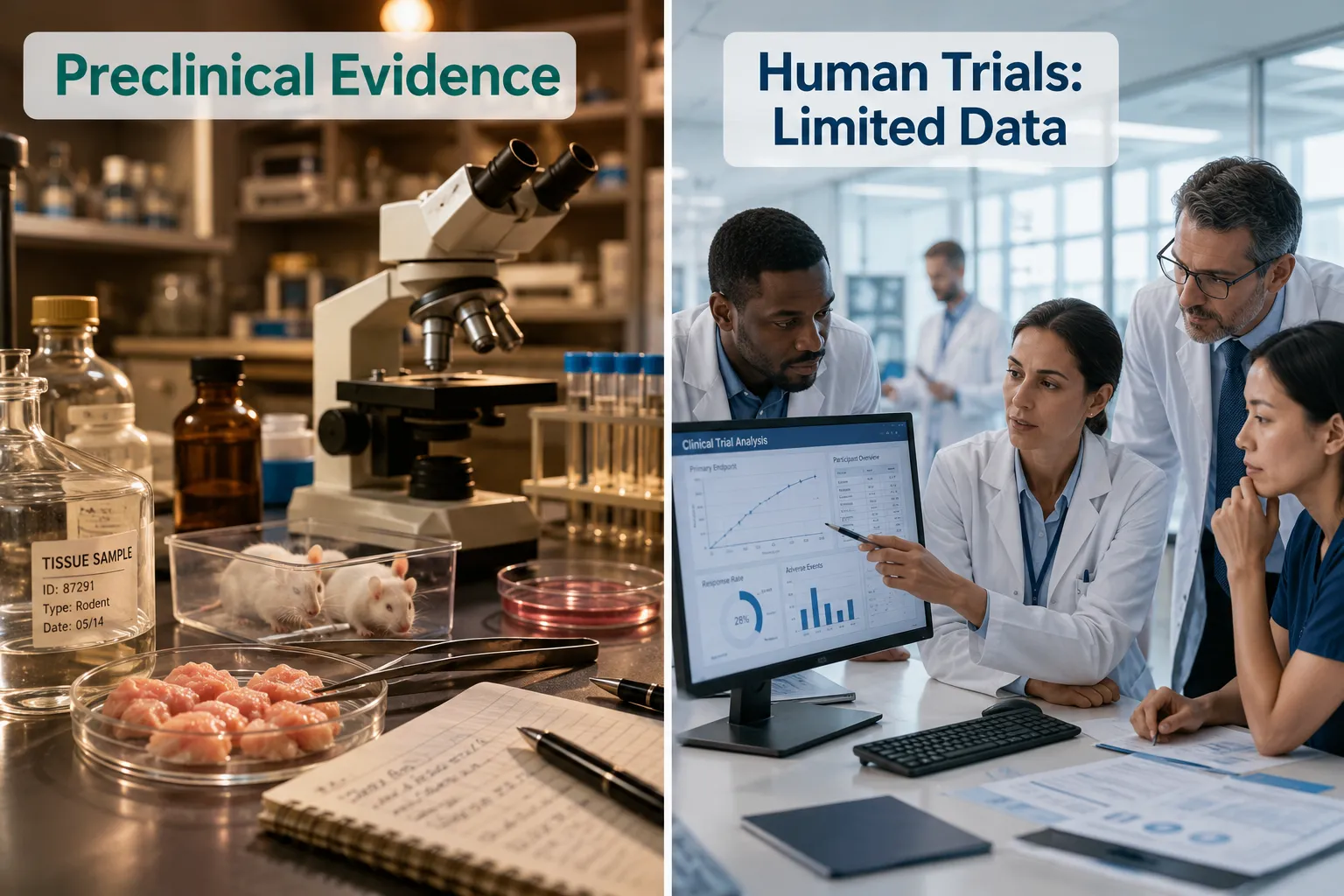
Only two registered human clinical trials exist for a compound that has generated years of intense scientific debate, widespread preclinical data, and growing regulatory scrutiny. That gap between laboratory promise and clinical evidence sits at the heart of every serious conversation about BPC-157 peptide: understanding its regenerative mechanisms and diverse research applications demands both scientific curiosity and careful skepticism.

Key Takeaways

  • BPC-157 is a synthetic pentadecapeptide derived from a protective gastric protein, studied primarily in preclinical animal models.
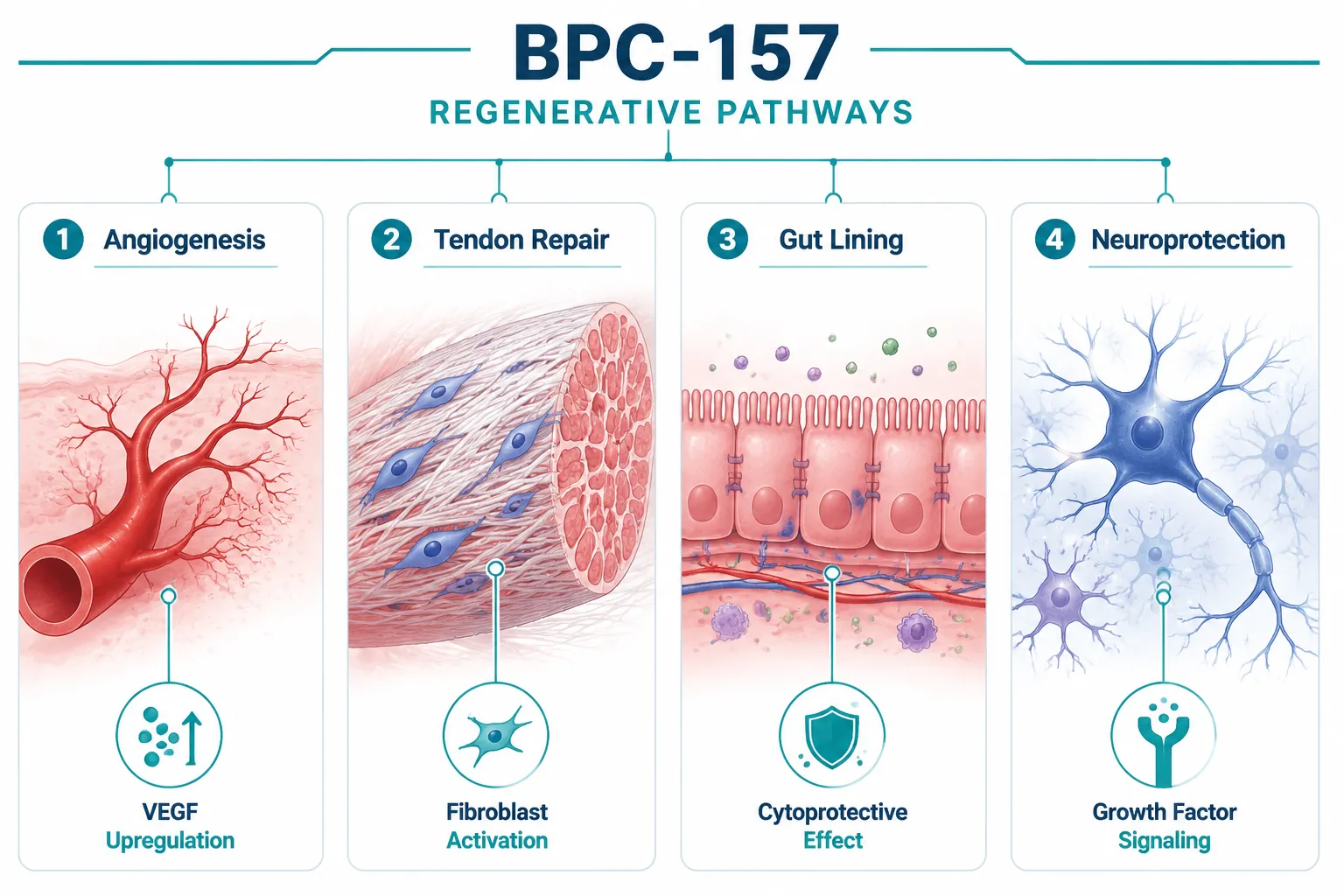
  • Its proposed mechanisms include angiogenesis promotion, collagen synthesis support, and cytoprotective signaling across multiple tissue types.
  • As of 2026, the FDA has flagged BPC-157 as presenting "significant safety risks" in compounding contexts, and no approved human use exists.
  • The first major controlled musculoskeletal human trial (NCT07437547) is underway in 2026-2027, but no published efficacy data is available yet.
  • BPC-157 remains a banned substance in competitive sports under anti-doping regulations.

What Is BPC-157 and Where Does It Come From

BPC-157 stands for Body Protection Compound-157. It is a synthetic, 15-amino-acid peptide sequence derived from a naturally occurring protein found in human gastric juice. Researchers first isolated and studied it for its apparent ability to protect the stomach lining, but interest quickly expanded as animal studies suggested effects far beyond the gut.

The peptide is stable in gastric acid, which makes it an interesting subject for oral administration research, a property that distinguishes it from many other research peptides. For a broader understanding of how molecular size and structure influence peptide behavior, the resource on peptides and polypeptides in modern research offers useful context.
What Is BPC-157 and Where Does It Come From

BPC-157 does not belong to a hormone class, but its downstream signaling effects touch on pathways that overlap with growth factors and tissue repair cascades. Researchers studying hormone research compounds often encounter BPC-157 in the same literature due to these shared signaling intersections.

Core Regenerative Mechanisms in Preclinical Research

Angiogenesis and Vascular Signaling

One of the most consistently reported findings in animal studies is BPC-157's ability to promote angiogenesis, the formation of new blood vessels. It appears to upregulate vascular endothelial growth factor (VEGF) and activate nitric oxide pathways, both of which are critical for tissue perfusion and repair. In wound healing models, this vascular effect translates to faster tissue closure and improved blood supply to injured areas.

Collagen Synthesis and Tendon Repair

Animal models of tendon and ligament injury show accelerated collagen deposition and fibroblast activity following BPC-157 administration. Fibroblasts are the cells responsible for laying down the structural proteins that repair connective tissue. This mechanism has driven significant interest among sports medicine researchers, though it is important to note that no controlled human data currently confirms these effects in people.

Cytoprotection in the Gastrointestinal Tract

The peptide's original area of study remains one of its most robust. In rodent models of inflammatory bowel disease, gastric ulcers, and intestinal damage, BPC-157 consistently reduces lesion size and supports mucosal integrity. It appears to modulate inflammatory cytokines and protect epithelial cells from oxidative stress.

Neuroprotective Signaling

More recent preclinical work points toward neuroprotective properties. BPC-157 may influence dopamine and serotonin systems, and some animal studies suggest it can reduce neurological damage following traumatic brain injury or stroke models. This area remains highly exploratory.

"The preclinical profile of BPC-157 is unusually broad, but breadth of animal data has historically been a poor predictor of human clinical success."

Diverse Research Applications and the Current Evidence Gap

Musculoskeletal and Sports Medicine Research

The most active area of BPC-157 research involves musculoskeletal repair. Studies in rats and rabbits report faster healing of bone fractures, muscle tears, and ligament injuries. This has made it a subject of interest, and misuse, in athletic communities. However, BPC-157 is currently banned by the World Anti-Doping Agency (WADA), and its use in competitive sports carries serious consequences.

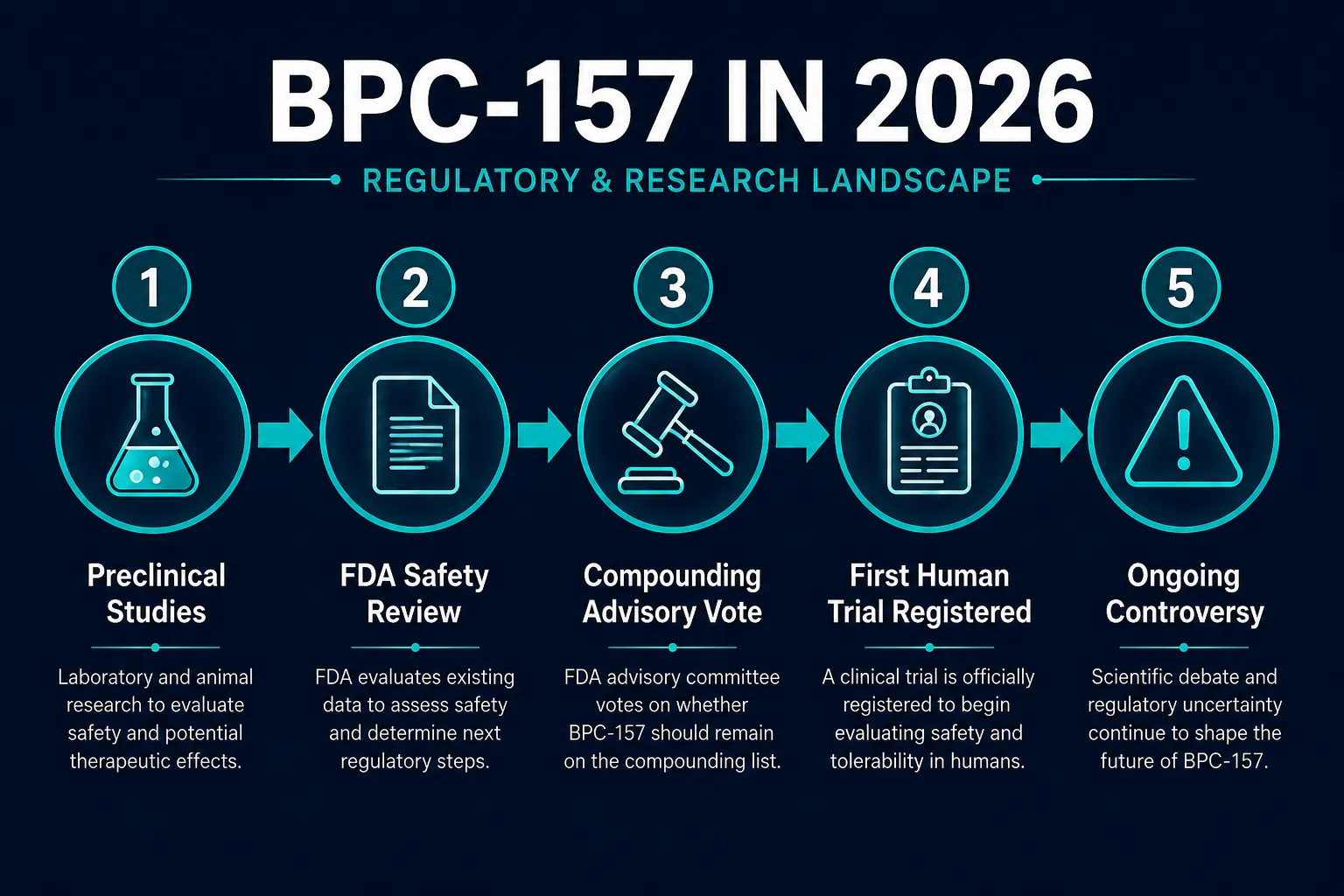
The first major controlled human trial in musculoskeletal applications (NCT07437547) launched in 2026-2027, marking a significant step. Still, no published efficacy results exist, and experts caution against drawing conclusions from animal data alone.
Musculoskeletal and Sports Medicine Research

Inflammatory and Gut Health Research

BPC-157's gastrointestinal applications continue to attract researchers studying inflammatory conditions. Its cytoprotective mechanisms overlap with pathways explored in GLP peptide research; those interested in gut-related peptide signaling can explore the GLP-1 and GLP-2 peptide family research guide for comparative context.

Mitochondrial and Systemic Research Crossover

Some researchers have noted functional overlaps between BPC-157's cellular protective effects and mitochondrial-targeted peptides. For those exploring mitochondrial research themes, the SS-31 mitochondrial research themes resource provides relevant comparative data on cytoprotective peptide mechanisms.

Regulatory Status and Safety Considerations in 2026

FDA Position and Compounding Restrictions

As of April 2026, the FDA has formally identified BPC-157 as presenting "significant safety risks" in compounding pharmacy contexts. The FDA Pharmacy Compounding Advisory Committee convened in July 2026 to vote on its status, but that advisory vote does not constitute approval, nor does it grant legal over-the-counter access.

BPC-157 remains an unapproved drug in the United States. It is not classified as a dietary supplement, and its sale for human use exists in a legally gray area that regulators are actively narrowing.

Expert and Media Reaction

Medical experts and science journalists have repeatedly emphasized that there is "little human safety data" available. The concern is not that BPC-157 is definitively dangerous, but that its risk profile in humans is largely unknown. This gap between preclinical enthusiasm and clinical evidence has been described as a "peptide cliff", a point where premature adoption outpaces validated science.

Researchers sourcing peptides for legitimate laboratory work should prioritize high purity peptide sourcing to ensure experimental integrity and reproducibility.
Expert and Media Reaction

Conclusion

BPC-157 peptide: understanding its regenerative mechanisms and diverse research applications is an exercise in holding two truths simultaneously. The preclinical data is genuinely compelling, spanning tissue repair, gut protection, vascular signaling, and neuroprotection. At the same time, the human evidence base is nearly empty, regulatory bodies are tightening restrictions, and the risks of premature clinical diffusion are real.

Actionable next steps for researchers and clinicians:

  • Monitor NCT07437547 and other emerging human trials for published results before drawing clinical conclusions.
  • Treat all BPC-157 research as preclinical until robust human data is published and peer-reviewed.
  • Ensure any laboratory use adheres to current regulatory guidelines and relies on verified, high purity peptide sourcing.
  • Consult the hormone research protocols resource for guidance on structuring peptide research responsibly.
  • Avoid conflating animal model findings with human outcomes, the science demands patience.

The regenerative promise of BPC-157 is real enough to warrant continued rigorous investigation. It is not yet real enough to justify unsupervised human use.

Tags: angiogenesis, bpc-157 peptide, fda compounding regulations, peptide mechanisms, preclinical research, regenerative peptides, sports peptides, tissue repair research
https://www.puretestedpeptides.com/wp-content/uploads/2026/08/bpc-157-peptide-understanding-its-regenerative-mechanisms-and-diverse-research-a.webp 1024 1536 https://www.puretestedpeptides.com/wp-content/uploads/2026/01/buy-peptides-online.jpg 2026-08-24 13:03:222026-08-24 13:03:22BPC-157 Peptide: Understanding Its Regenerative Mechanisms and Diverse Research Applications
You might also like
Peptides 101 for Research-Use Only Buyers: Structure, Mechanisms, and Where GLP-3, MOTS-c, and 5-Amino-1MQ Fit In Peptides 101 for Research-Use Only Buyers: Structure, Mechanisms, and Where GLP-3, MOTS-c, and 5-Amino-1MQ Fit In
Research-Use Only BPC-157: What It Is, What It Is Not, and Where It Fits in Tissue-Repair Models Research-Use Only BPC-157: What It Is, What It Is Not, and Where It Fits in Tissue-Repair Models
Complete Guide to Peptide Mechanisms: How GLP-1, GLP-3, and Growth Hormone Peptides Work at the Molecular Level Complete Guide to Peptide Mechanisms: How GLP-1, GLP-3, and Growth Hormone Peptides Work at the Molecular Level
Complete Guide to Research Peptides: Types, Mechanisms, and Laboratory Use Cases Complete Guide to Research Peptides: Types, Mechanisms, and Laboratory Use Cases
Mesenchymal Stem Cells and Peptide-Based Modulators: How BPC‑157, GHK‑Cu, and Glow Blend Are Used in Regenerative Research Models Mesenchymal Stem Cells and Peptide-Based Modulators: How BPC‑157, GHK‑Cu, and Glow Blend Are Used in Regenerative Research Models
Tesamorelin and Ipamorelin: A Comparative Analysis of Their Mechanisms in Growth Hormone Secretion Research Tesamorelin and Ipamorelin: A Comparative Analysis of Their Mechanisms in Growth Hormone Secretion Research
GHK-Cu Peptide: Its Role in Copper Transport, Wound Healing, and Anti-Aging Research GHK-Cu Peptide: Its Role in Copper Transport, Wound Healing, and Anti-Aging Research
5-Amino-1MQ Peptide: Investigating Its Impact on NAD+ Metabolism and Cellular Energetics in Research Models 5-Amino-1MQ Peptide: Investigating Its Impact on NAD+ Metabolism and Cellular Energetics in Research Models
0 replies

Leave a Reply

Want to join the discussion?
Feel free to contribute!

Leave a Reply Cancel reply

Your email address will not be published. Required fields are marked *

×

Helpful Links

  • My account
  • Cart
  • Checkout
  • Refund and Returns Policy
  • Privacy Policy
  • SMS Privacy Policy
  • Login
  • My Account
  • Logout

USA Made Lab Tested Peptides

All products are sold for research, laboratory, or analytical purposes only, and are not for human consumption


Pure Tested Peptides is a chemical supplier. Pure Tested Peptides is not a compounding / chemical compounding facility as defined under 503A of the Federal Food, Drug, and Cosmetic act. Pure Tested Peptides is not an outsourcing facility as defined under 503B of the Federal Food, Drug, and Cosmetic act.

The statements made within this website have not been evaluated by the US Food and Drug Administration. The products we offer are not intended to diagnose, treat, cure or prevent any disease.

Human/Animal Consumption Prohibited. Laboratory/In-Vitro Experimental Use Only

Link to: Slupp332 with 5-Amino-1MQ: An Advanced Look at Synergistic Metabolic Pathways in Research Link to: Slupp332 with 5-Amino-1MQ: An Advanced Look at Synergistic Metabolic Pathways in Research Slupp332 with 5-Amino-1MQ: An Advanced Look at Synergistic Metabolic Pathways...Slupp332 with 5-Amino-1MQ: An Advanced Look at Synergistic Metabolic Pathways in Research Link to: PT-141 Peptide: Investigating Its Melanocortin Receptor Agonism and Applications in Sexual Function Research Link to: PT-141 Peptide: Investigating Its Melanocortin Receptor Agonism and Applications in Sexual Function Research PT-141 Peptide: Investigating Its Melanocortin Receptor Agonism and Applications in Sexual Function ResearchPT-141 Peptide: Investigating Its Melanocortin Receptor Agonism and Applications...
Scroll to top Scroll to top Scroll to top