Call or Text 727-513-9780
  • Shopping Cart Shopping Cart
    0Shopping Cart
Pure Tested Peptides | America's most trusted Peptides for sale online
  • Peptides for sale
    • Oral Peptides for sale
      • Peptide Capsules for sale
      • BPC 157 Capsules 1000mcg
      • SLU-PP-332 Capsules | 1000 mcg
      • 5-Amino-1MQ 50mg Capsules
      • Tesofensine 500mcg
    • All Peptides for sale
    • Peptide Sprays
      • BPC 157 Nasal Spray Kit
      • BPC-157 TB500 Nasal Spray Kit
      • Semax Nasal Spray 10mg
      • Selank – Nasal Spray Kit – 10mg
      • Epithalon 50MG Nasal Spray Kit
      • Ipamorelin 10mg Nasal Spray
      • Klow Nasal Spray (BPC-157 + TB-500 + GHK-Cu + KPV) | 80mg
      • Hulk Nasal Spray Tesa / Ipa Blend 6/3 MG
      • Klow Nasal Spray
      • NAD + 500 mg Nasal Spray
      • PT-141 Nasal Spray Kit
    • GHRH Peptides
      • Ipa Peptides
      • CJC-1295 Peptides
        • CJC-1295 with DAC 5 mg
        • CJC-1295 without DAC 5 mg
        • CJC-1295 Ipa 10mg
      • Tesa Peptides
        • Tesa Peptide
        • Tesa 20 mg
    • GHK-Cu Peptides
      • All GHK-Cu Peptides
      • GHK-Cu 100mg
      • KLOW Peptide Blend – Buy KLOW blend online
    • BPC Peptides
      • All BPC Peptides
      • BPC-157
      • BPC-157 TB-500
      • BPC 157 capsules 1000mcg
    • SLU-PP-332 Peptides
      • All SLU-PP-332 Peptides
      • SLU-PP-332 5mg
    • GLP3 Peptides
    • PT-141 Peptides
      • PT-141 Peptides for sale
      • PT-141 10mg
      • PT-141 Nasal Spray
    • CAG Peptides
      • Lipo-C Peptide Blend
      • CAG 5mg
      • CAG 10mg
    • MOTS-C Peptides
      • MOTS-C Peptides for sale
      • MOTS-c peptide
      • MOTS-c 10mg *6 pack*
    • 5 Amino 1MQ Peptides
      • 5 Amino 1MQ Peptides for sale
      • 5-Amino-1MQ 50mg Capsules
      • 5-Amino-1MQ 5mg
    • Epithalon Peptides
      • Epithalon Peptides for sale
      • Epithalon 10mg
      • Epithalon 50mg
  • Shop
    • GLPs
      • 5-Amino-1MQ 50mg Capsules
      • 5-Amino-1MQ 5mg
      • L-Carnitine 500mg/ml
      • Tesofensine 500mcg
      • SLU-PP-332 5mg
      • MOTS-c 10mg *6 pack*
    • Epithalon & BPC Peptides
      • Epithalon 10mg
      • Epithalon 50mg
      • BPC-157
      • BPC 157 capsules 1000mcg
      • BPC-157 TB-500
      • BPC-157 TB500 Nasal Spray Kit
      • BPC 157 Nasal Spray Kit
    • BPC TB-500 & NAD+ Peptides
      • NAD+ 500 mg
      • KLOW Peptide Blend – Buy KLOW blend online
      • GLOW Peptide Blend
      • TB 500 5mg
      • BPC 157 capsules 1000mcg – Supplement
      • BPC 157 Nasal Spray Kit
      • BPC-157
      • BPC-157 TB500 Nasal Spray Kit
      • BPC-157 TB-500
      • BPC 157 capsules 1000mcg
    • LL-37 Peptide
      • LL-37 10 mg
    • MOTS-C & Selank
      • MOTS-c peptide
      • Selank 10mg
    • GHK Peptides
      • GHK-Cu 100mg
      • GLOW Peptide Blend
      • KLOW Peptide Blend – Buy KLOW blend online
  • COAs
  • Wholesale
    • Wholesale Peptides for sale
  • PTP FAQ
  • Affiliates
    • Selank Peptide: Advanced Pharmacological Mechanisms Underlying Its Anxiolytic and Nootropic Effects in Research
      • 5-Amino-1MQ Peptide: Detailed Mechanisms of NNMT Inhibition and Its Impact on Cellular Metabolism Research
        • MOTS-C Peptide: Unraveling Its Role in Mitochondrial Dynamics and Energy Metabolism Research
          • Epithalon Peptide and Telomerase Regulation: Investigating Its Impact on Cellular Senescence and Lifespan Research Models
            • GLP2-T vs GLP2 Tirz Peptide: Understanding the Naming, Mechanistic Nuances, and Research Implications for Gut Health
      • Peptides and Polypeptides in Modern Pharmacology: What Research on Metoprolol, Prednisone, and Amlodipine Reveals
        • Polypeptide Peptides vs NSAIDs: What Naproxen and Diclofenac Teach Tissue-Repair Researchers About BPC‑157 and TB‑500
          • Peptides and Polypeptides in Endocrine Pharmacology: How GLP-1, GLP-2, and GLP-3 Retatrutide Differ From Classic Drugs Like Prednisone and Amlodipine
          • 5‑Amino‑1MQ Peptide and NNMT Inhibition: How It Compares With Statins Like Atorvastatin in Adipose and Lipid Metabolism Research
      • Enclomiphene, Estrogen Receptor Signaling, and Luteinizing Phase Biology: What Hormone Researchers Should Measure
        • Mesenchymal Stem Cells, BPC‑157, and GHK‑Cu: How Tissue Repair Peptides Compare With Classic NSAIDs Like Naproxen in Injury Models
          • Peptide Calculator Use Cases Beyond Growth Hormone: Working Through GLP‑3 Retatrutide, MOTS‑c, and BPC‑157 Research Dosing
        • Polypeptide Peptides in Endocrine and Metabolic Pharmacology: Lessons From Amlodipine, Prednisone, and Metoprolol
        • Peptides Calculator for Advanced Blends: Worked Examples for Tesamorelin, CJC‑1295, and Ipamorelin Stacks
          • Peptides and Polypeptides in Human Physiology: How Molecular Size Shapes Research Applications
            • Selank Peptide: Advanced Pharmacological Mechanisms Underlying Its Anxiolytic and Nootropic Effects in Research
          • 5-Amino-1MQ Peptide: Detailed Mechanisms of NNMT Inhibition and Its Impact on Cellular Metabolism Research
            • MOTS-C Peptide: Unraveling Its Role in Mitochondrial Dynamics and Energy Metabolism Research
              • Epithalon Peptide and Telomerase Regulation: Investigating Its Impact on Cellular Senescence and Lifespan Research Models
                • GLP2-T vs GLP2 Tirz Peptide: Understanding the Naming, Mechanistic Nuances, and Research Implications for Gut Health
                  • Peptides and Polypeptides in Endocrine Pharmacology: How GLP-1, GLP-2, and GLP-3 Retatrutide Differ From Classic Drugs Like Prednisone and Amlodipine
                    • Polypeptide Peptides vs NSAIDs: What Naproxen and Diclofenac Teach Tissue-Repair Researchers About BPC‑157 and TB‑500
                      • Peptides and Polypeptides in Modern Pharmacology: What Research on Metoprolol, Prednisone, and Amlodipine Reveals
                        • 5‑Amino‑1MQ Peptide and NNMT Inhibition: How It Compares With Statins Like Atorvastatin in Adipose and Lipid Metabolism Research
                        • Enclomiphene, Estrogen Receptor Signaling, and Luteinizing Phase Biology: What Hormone Researchers Should Measure
                        • Mesenchymal Stem Cells, BPC‑157, and GHK‑Cu: How Tissue Repair Peptides Compare With Classic NSAIDs Like Naproxen in Injury Models
                        • Peptide Calculator Use Cases Beyond Growth Hormone: Working Through GLP‑3 Retatrutide, MOTS‑c, and BPC‑157 Research Dosing
                        • Polypeptide Peptides in Endocrine and Metabolic Pharmacology: Lessons From Amlodipine, Prednisone, and Metoprolol
                        • Peptides Calculator for Advanced Blends: Worked Examples for Tesamorelin, CJC‑1295, and Ipamorelin Stacks
                        • Peptides and Polypeptides in Human Physiology: How Molecular Size Shapes Research Applications
                        • Selank Peptide: Advanced Pharmacological Mechanisms Underlying Its Anxiolytic and Nootropic Effects in Research
                        • MOTS-C Peptide: Unraveling Its Role in Mitochondrial Dynamics and Energy Metabolism Research
                        • Peptides and Polypeptides in Modern Pharmacology: What Research on Metoprolol, Prednisone, and Amlodipine Reveals
                        • Peptides and Polypeptides in Endocrine Pharmacology: How GLP-1, GLP-2, and GLP-3 Retatrutide Differ From Classic Drugs Like Prednisone and Amlodipine
                        • 5-Amino-1MQ Peptide: Detailed Mechanisms of NNMT Inhibition and Its Impact on Cellular Metabolism Research
                        • Mesenchymal Stem Cells, BPC‑157, and GHK‑Cu: How Tissue Repair Peptides Compare With Classic NSAIDs Like Naproxen in Injury Models
                        • Peptide Calculator Use Cases Beyond Growth Hormone: Working Through GLP‑3 Retatrutide, MOTS‑c, and BPC‑157 Research Dosing
                        • GLP2-T vs GLP2 Tirz Peptide: Understanding the Naming, Mechanistic Nuances, and Research Implications for Gut Health
                        • Polypeptide Peptides in Endocrine and Metabolic Pharmacology: Lessons From Amlodipine, Prednisone, and Metoprolol
                        • Polypeptide Peptides vs NSAIDs: What Naproxen and Diclofenac Teach Tissue-Repair Researchers About BPC‑157 and TB‑500
                        • Peptides and Polypeptides in Human Physiology: How Molecular Size Shapes Research Applications
                        • Peptides Calculator for Advanced Blends: Worked Examples for Tesamorelin, CJC‑1295, and Ipamorelin Stacks
                        • 5‑Amino‑1MQ Peptide and NNMT Inhibition: How It Compares With Statins Like Atorvastatin in Adipose and Lipid Metabolism Research
                        • Enclomiphene, Estrogen Receptor Signaling, and Luteinizing Phase Biology: What Hormone Researchers Should Measure
                        • Epithalon Peptide and Telomerase Regulation: Investigating Its Impact on Cellular Senescence and Lifespan Research Models
                        • Best research protocol Klow blend
                        • best time to take BPC-157
                        • best time to take DSIP (Delta Sleep Inducing Peptide)
                        • best time to take CJC-1295
                        • best time to take AOD-9604
                        • best time to take Follistatin 344
                        • best time to take Ipamorelin
                        • best time to take MK-677 (Ibutamoren)
                        • best time to take Ligandrol (LGD-4033) — research compound
                        • best time to take Ostarine (MK-2866) — research compound
                        • best time to take GHK-CU
                        • best time to take TB-500
                        • best time to take MOTS-c
                        • best time to take Semax
                        • best time to take RAD-140 (Testolone) — research compound
                        • best time to take Thymosin Alpha-1
                        • best time to take PEG-MGF
                        • Biolife Plasma, Octapharma Plasma, and Research Peptides: How Plasma Donation Labs Differ From Peptide Suppliers
                        • best time to take YK-11 — research compound
                        • best time to take PT-141 (Bremelanotide)
                        • Best research protocol Klow blend
                        • 5-Amino-1MQ and MOTS-C Synergy: Metabolic Signaling, Mitochondria, and Research Design
                        • BPC-157 and TB-500: Investigating Their Combined Effects on Angiogenesis and Cellular Migration in Tissue Repair Models
                        • BPC-157 Peptide: Gut Barrier Function, Inflammation, and Tissue-Recovery Research
                        • 5‑Amino‑1MQ and MOTS‑c Synergy in Metabolic Research: Designing NNMT and Mitochondrial Biogenesis Stacks
                        • CJC-1295 with DAC vs. Without DAC: Half-Life, Release Kinetics, and Research Implications
                        • CJC‑1295 with DAC vs. Without DAC: Expanding on Half‑Life Differences Using Tesamorelin and Ipamorelin Blend Case Studies
                        • Collagen Biology and Copper‑Binding Peptides: How GHK‑Cu, Glow Blend, and Klow Blend Interact with Skin and Connective Tissue
                        • Collagen Biology and Regenerative Peptides: How GHK‑Cu, Glow Blend, and Klow Blend Affect Extracellular Matrix Research
                    • DNA, Telomeres, and Longevity Peptides: Positioning Epithalon and MOTS‑c in Genetic Aging Research
                      • Enclomiphene Citrate: serm Mechanism, Testosterone Research, and Stack Compatibility
                        • Enclomiphene vs Enclomiphene Citrate: Formulation, Bioavailability, and Research Distinctions
                        • Epithalon Peptide Research: Telomerase Activation, Aging, and Pineal Gland Function
                        • Estrogen Receptor Signaling and Enclomiphene: How Selective Modulators Compare with Classic Polypeptide Hormones
                        • GHK-Cu Peptide: Advanced Mechanisms in Extracellular Matrix Remodeling and Wound Healing Research
                        • GHK-Cu Peptide: Collagen Synthesis, Wound Repair, and Skin-Barrier Research Models
                        • GLP-1 vs GLP-3 vs GLP-2: Peptide Classification and Research Applications
                        • GLP-2 Peptide Research Guide: Gut Barrier Function, Nutrient Absorption, and Intestinal Recovery Models
                        • GLP-3 Retatrutide vs. GLP-1 Drugs: What Triple-Agonist Biology Changes in Research Models
                        • Ipamorelin and Tesamorelin Combination: Synergistic GH Secretagogue Research and Dosing Protocols
                        • GLP2 Tirz Peptide: What It Is, Why the Name Exists, and How Researchers Should Interpret It
                        • Klow Blend Peptide Nasal Spray: What the Formulation Is Trying to Do in Cognitive Research
                        • Mitochondria, NNMT Inhibition, and Peptide Modulators: Where MOTS‑c and 5‑Amino‑1MQ Fit in Cellular Energy Research
                        • MOTS-c Peptide: Mitochondrial Function, Energy Metabolism, and What Researchers Measure
                        • MOTS-c vs. 5-Amino-1MQ: Which Metabolic Research Questions Each Compound Actually Answers
                        • Nasal Spray Peptides: Bioavailability, Administration, and Semax/Selank Research Applications
                        • PT-141 Peptide Research: Mechanism of Action and Melanocortin Receptor Signaling
                        • Retatrutide for Research: Mechanism, Structure, and GLP-1/GLP-3 Dual Action
                        • Retatrutide for Obesity and Type 2 Diabetes: What the Latest Trial Data Suggest
                        • Tesofensine Peptide Research: Mechanism, Appetite Suppression, and Neuropeptide Y Pathways
  • Contact
    • Contact Customer Service
    • Text Customer Support
  • About US
  • Shop all peptides
  • Affiliate Program
    • Affiliate Signup
  • Login / Register Login / Register Page Link Login / Register Page Link
  • Click to open the search input field Click to open the search input field Search
  • Menu Menu
Methylprednisolone, Dexamethasone, and Peptide-Based Immunomodulation: Designing Inflammation Studies With BPC-157 and GLP-Class Adjuncts

Methylprednisolone, Dexamethasone, and Peptide-Based Immunomodulation: Designing Inflammation Studies With BPC-157 and GLP-Class Adjuncts

September 22, 2026/0 Comments/in Uncategorized/by

Fewer than 15% of preclinical inflammation studies account for pharmacokinetic differences between corticosteroids when adding novel peptide adjuncts, a gap that can invalidate cytokine readouts before data collection even begins. For researchers designing protocols that combine methylprednisolone, dexamethasone, and peptide-based immunomodulation, understanding how each agent interacts at the molecular level is not optional; it is the foundation of reproducible science.

This article maps the current evidence landscape for combining or comparing classic glucocorticoids with tissue-repair peptides such as BPC-157 and GLP-class compounds, with a focus on cytokine endpoints and safety considerations relevant to 2026 laboratory practice.

Key Takeaways

  • Methylprednisolone and dexamethasone differ meaningfully in half-life, tissue penetration, and mineralocorticoid activity, which affects how they interact with peptide adjuncts in study designs.
  • GLP-1 receptor agonists demonstrate robust, clinically validated anti-inflammatory effects, reducing CRP, TNF-alpha, IL-6, and IL-1beta across multiple trial populations.
  • BPC-157 shows promising preclinical cytokine data but remains at an early evidentiary stage with no large randomized trials completed as of mid-2026.
  • Combining corticosteroids with immunomodulatory peptides requires stratified dosing and careful timing to avoid overlapping immunosuppressive effects.
  • Cytokine panel selection, particularly CRP, TNF-alpha, IL-6, and adiponectin, is critical for detecting both suppressive and pro-resolving signals in multi-agent models.

Corticosteroid Pharmacology: Why Methylprednisolone and Dexamethasone Are Not Interchangeable
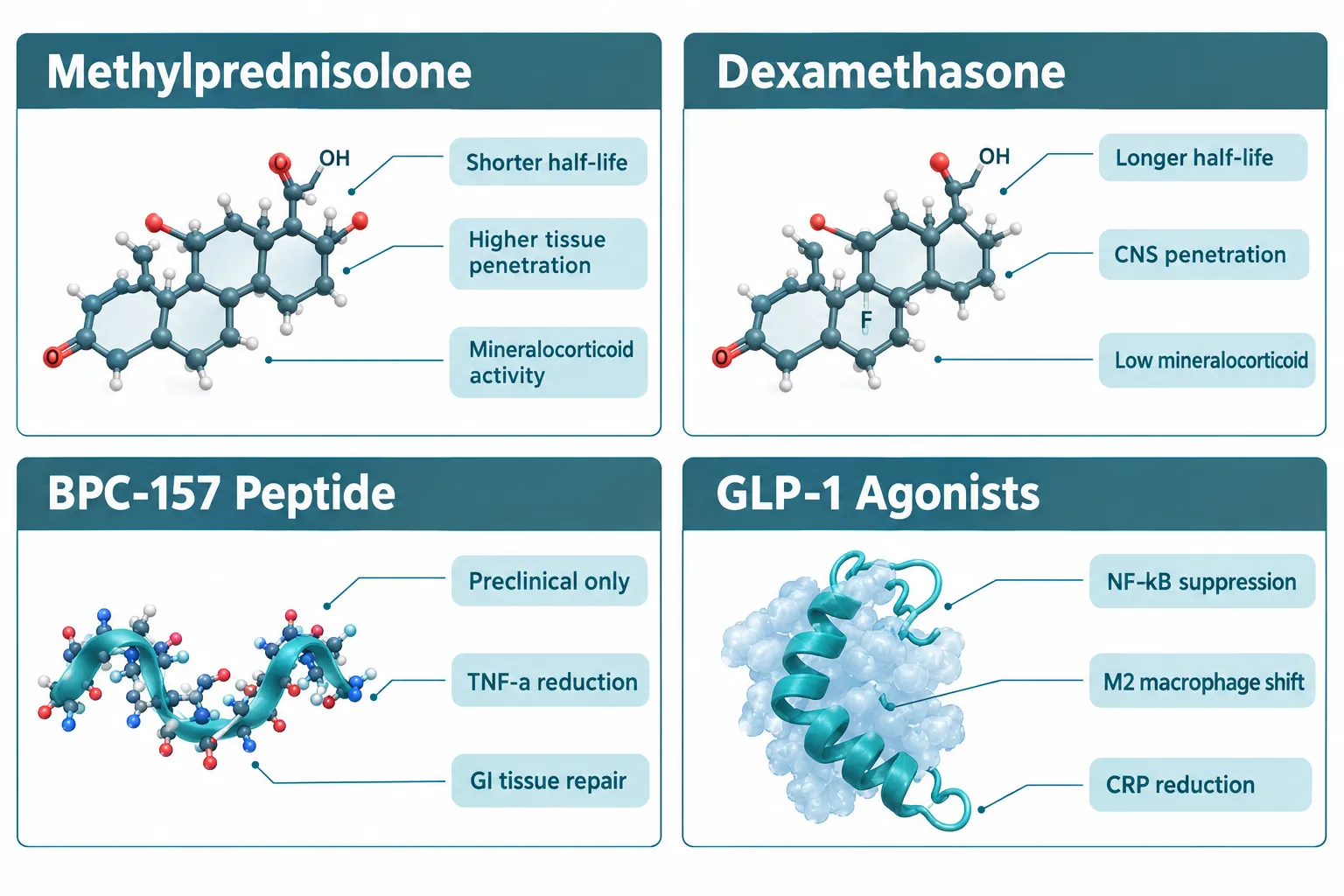
Corticosteroid Pharmacology: Why Methylprednisolone and Dexamethasone Are Not Interchangeable

Both methylprednisolone and dexamethasone are synthetic glucocorticoids that suppress inflammation through genomic and non-genomic pathways, but their pharmacological profiles diverge in ways that matter enormously for study design.

Dexamethasone carries a longer biological half-life, superior central nervous system penetration, and negligible mineralocorticoid activity. In 2025 comparative analyses of moderate-to-severe COVID-19 patients, dexamethasone produced faster symptom resolution, shorter hospital stays, and more favorable CRP trajectories than methylprednisolone in certain acute viral-inflammatory contexts.

Methylprednisolone, by contrast, may be preferred in hypoxic pulmonary settings where its distinct tissue-penetration profile and intermediate half-life offer advantages. Clinical analyses published in 2025 specifically support methylprednisolone over dexamethasone in hypoxic COVID-19 patients, reinforcing that optimal steroid selection depends on disease phase and organ involvement, not a single universal hierarchy.

Key design implication: Because dose equivalence and tissue distribution differ between the two steroids, any protocol introducing a peptide adjunct must account for these variables before assigning treatment arms.

For inflammation studies, the practical differences include:

Feature Methylprednisolone Dexamethasone
Biological half-life 18-36 hours 36-54 hours
Mineralocorticoid activity Low-moderate Minimal
CNS penetration Moderate High
Dose equivalence (vs. prednisolone) 0.8x 0.13x

GLP-Class Adjuncts: The Evidence Base for Anti-Inflammatory Peptide Immunomodulation
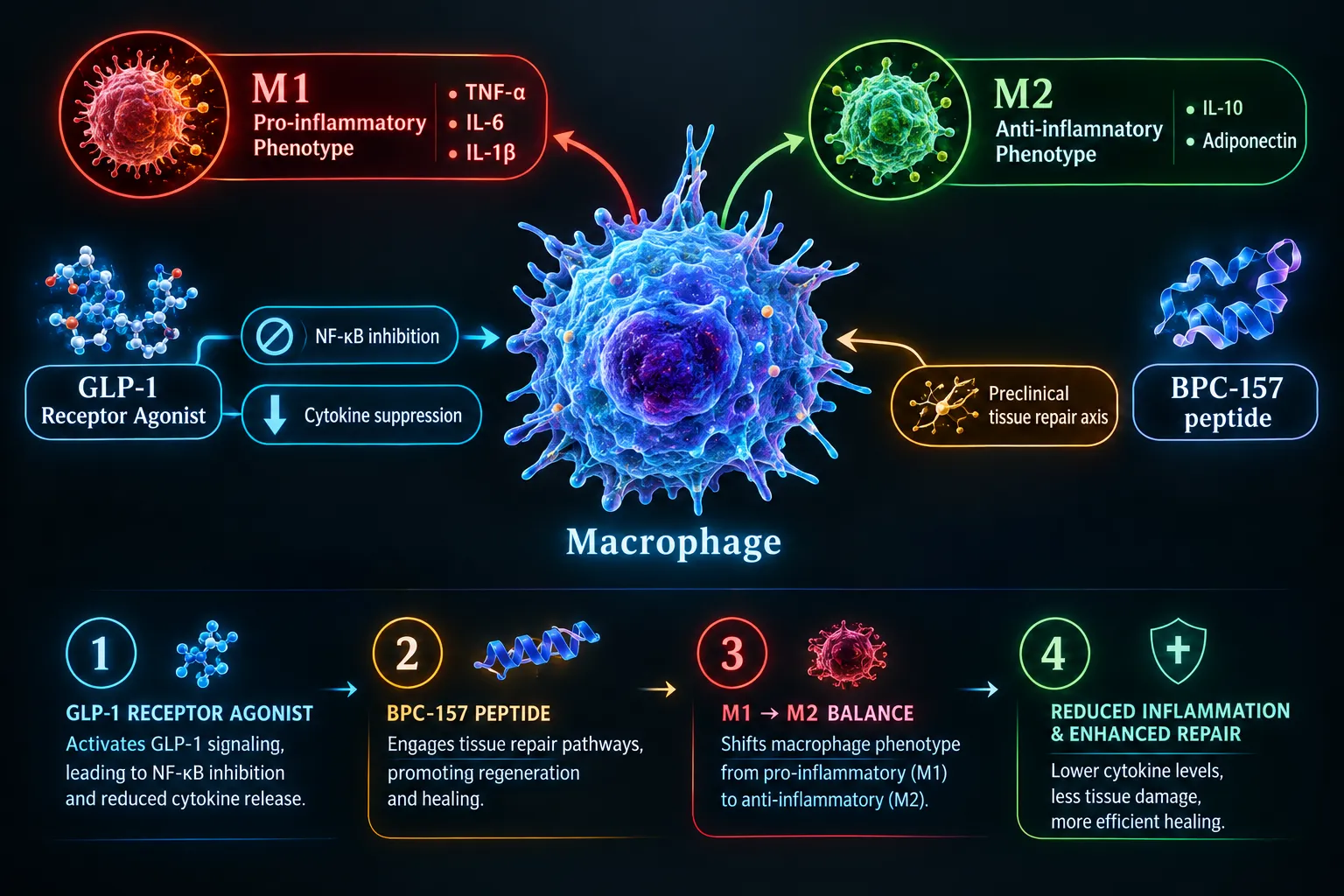
GLP-Class Adjuncts: The Evidence Base for Anti-Inflammatory Peptide Immunomodulation

The strongest peptide-level evidence for immunomodulation in 2026 belongs to GLP-1 receptor agonists. A systematic review and meta-analysis of 40 randomized controlled trials, covering more than 6,000 participants with type 2 diabetes, confirmed that GLP-1 receptor agonists significantly reduced key systemic inflammatory biomarkers compared to placebo, insulin, and oral agents.

Quantified effects from a February 2026 meta-analysis include:

  • CRP: standardized mean difference of approximately -0.63
  • TNF-alpha: approximately -0.92
  • IL-6: approximately -0.76
  • IL-1beta: approximately -3.89
  • Leptin: approximately -0.67
  • Adiponectin: increased by approximately +0.69

These are not trivial shifts. The adiponectin increase signals a genuine pro-resolving phenotypic change, not merely cytokine suppression. Mechanistic data compiled through 2025 and 2026 show that GLP-1 receptor agonists promote macrophage M2 (anti-inflammatory) polarization, inhibit M1 (pro-inflammatory) phenotypes, reduce microglial activation, and suppress TNF-alpha, IL-6, IL-1beta, IL-2, IL-17A, and interferon-gamma simultaneously.

Across neurodegenerative and ischemic stroke models, GLP-1 receptor agonists modulate neuroinflammation through a regulatory T-cell to microglia to neuron signaling axis, positioning them as multi-organ immunomodulatory agents rather than purely metabolic drugs. Researchers exploring GLP-3 peptide variants should note that mechanistic overlap with GLP-1 pathways may influence cytokine panel design when these compounds are used alongside corticosteroids.

For labs sourcing research compounds, working with a best peptide supplier that provides verified purity documentation is essential for maintaining data integrity in multi-agent studies. Researchers can also explore GLP-3 peptide for sale options when designing GLP-class adjunct arms. For broader context on how GLP-class peptides compare to small-molecule drugs in metabolic models, see this detailed analysis on polypeptide peptides in cardiometabolic models.


BPC-157 in Inflammation Models: Preclinical Promise, Clinical Caution
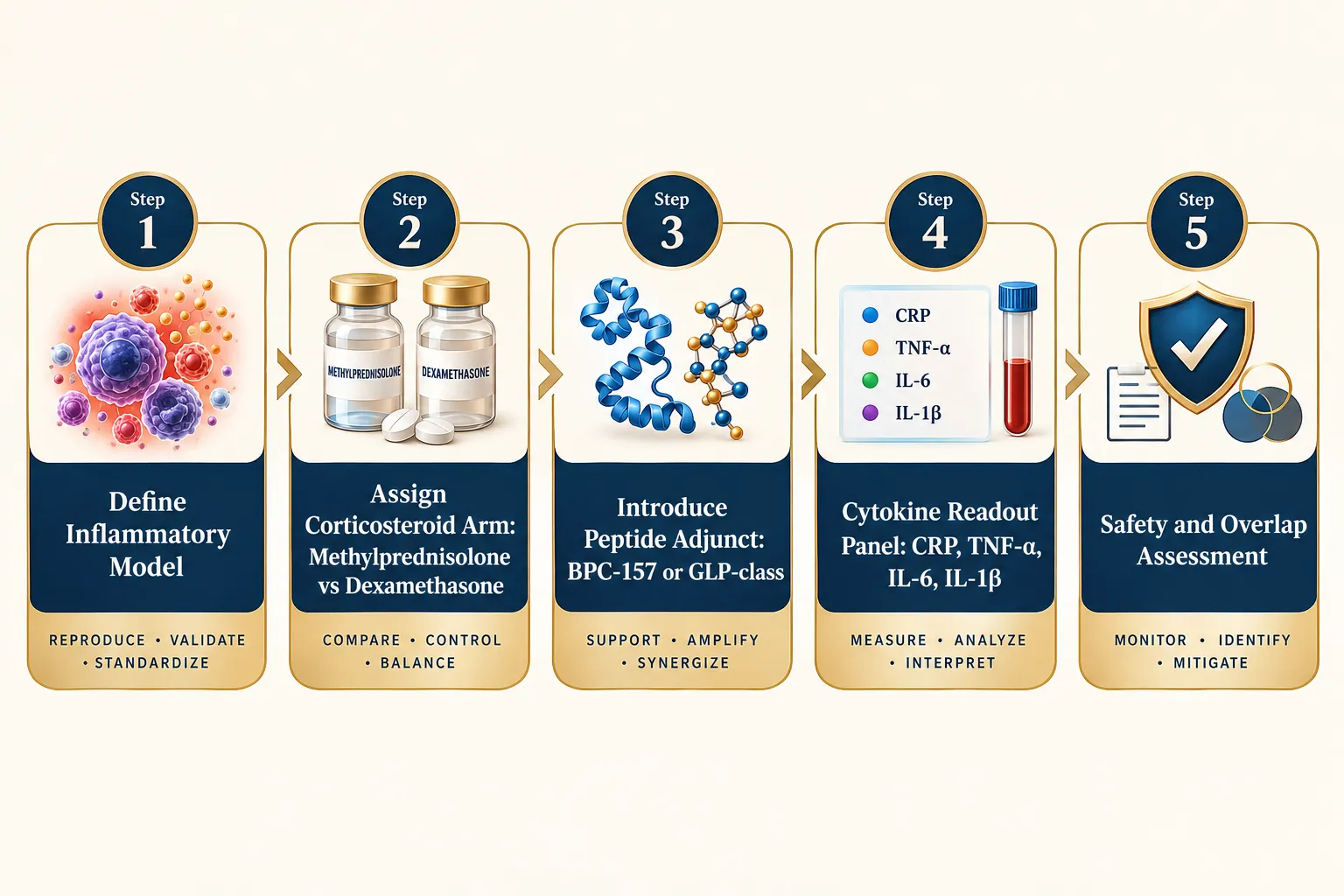
BPC-157 in Inflammation Models: Preclinical Promise, Clinical Caution

BPC-157 occupies a fundamentally different position in the evidence hierarchy. As of mid-2026, only three pilot human studies exist, covering intra-articular knee pain, interstitial cystitis, and an intravenous safety and pharmacokinetics evaluation, all small and non-definitive. No large randomized trials or regulatory approvals for any inflammatory indication have been completed.

Preclinical data, however, are genuinely interesting. BPC-157 markedly reduces TNF-alpha, IL-6, and interferon-gamma in animal models and supports tissue repair in gastrointestinal, vascular, and neural systems. The ongoing safety trial PCO-02 (NCT02637284) continues to evaluate basic safety rather than efficacy, meaning any use of BPC-157 as a corticosteroid adjunct remains experimental and off-label.

Researchers designing studies that combine methylprednisolone, dexamethasone, and peptide-based immunomodulation with BPC-157 should:

  1. Power the study for preclinical endpoints only until human data mature
  2. Include full cytokine panels (TNF-alpha, IL-6, IL-1beta, CRP, interferon-gamma)
  3. Pre-register dosing rationale and timing relative to corticosteroid administration
  4. Monitor for additive immunosuppressive effects, particularly on interferon-gamma

Labs interested in mitochondria-targeted peptide adjuncts alongside anti-inflammatory protocols may also find value in reviewing SS-31 peptide benefits, given its role in oxidative stress reduction within inflammatory models. Those sourcing compounds for multi-arm studies can explore options to buy SS-31 peptide from verified suppliers. For growth hormone-related peptide adjuncts with documented metabolic and anti-inflammatory overlap, Tesamorelin peptide benefits provide useful comparative context.


Designing Multi-Agent Inflammation Studies: Cytokine Readouts and Safety Considerations

Combining corticosteroids with immunomodulatory peptides introduces compounding variables that can obscure or amplify cytokine signals. The following framework addresses the most common design failures.

Cytokine Panel Minimum Requirements

For studies involving methylprednisolone, dexamethasone, and peptide-based immunomodulation, a minimum cytokine readout panel should include:

  • Pro-inflammatory: CRP, TNF-alpha, IL-6, IL-1beta, IL-17A
  • Anti-inflammatory/resolving: IL-10, adiponectin
  • Immune cell markers: macrophage M1/M2 ratio where feasible

Timing and Overlap Risks

Because dexamethasone has a longer half-life than methylprednisolone, staggered dosing with any GLP-class peptide must account for residual glucocorticoid activity. Overlapping NF-kB suppression from both a corticosteroid and a GLP-1 receptor agonist could mask the peptide's independent contribution to cytokine reduction, producing falsely attributed effect sizes.

Safety Monitoring

GLP-1 receptor agonist therapy has not been shown to increase inflammatory bowel disease exacerbation rates in 2025-2026 analyses, supporting its safety in patients with baseline gut inflammation. BPC-157, however, lacks equivalent safety data at scale, requiring conservative dose escalation protocols in any combination study.


Conclusion

The intersection of methylprednisolone, dexamethasone, and peptide-based immunomodulation represents one of the most methodologically demanding areas in current inflammation research. GLP-class adjuncts now carry a substantial clinical evidence base for cytokine suppression and immune-cell polarization, making them credible candidates for combination study designs with corticosteroids. BPC-157 remains preclinical in scope, requiring careful framing of any multi-agent protocol as exploratory.

Actionable next steps for research teams:

  • Audit existing protocols for steroid dose-equivalence errors before adding peptide arms
  • Select cytokine panels that capture both suppressive (TNF-alpha, IL-6) and pro-resolving (IL-10, adiponectin) endpoints
  • Source compounds from lab tested peptides suppliers with documented purity certificates to protect data validity
  • Pre-register BPC-157 combination studies as exploratory to accurately represent the current evidence stage
  • Monitor for overlapping NF-kB suppression when combining dexamethasone with GLP-1 receptor agonists in the same arm

Rigorous design at the intersection of classic steroids and emerging peptide immunomodulators will determine whether these combinations advance from promising preclinical signals to validated therapeutic strategies.

Tags: bpc-157, corticosteroid research, cytokine readouts, dexamethasone, glp-1 receptor agonists, inflammation study design, methylprednisolone, peptide immunomodulation
https://www.puretestedpeptides.com/wp-content/uploads/2026/09/methylprednisolone-dexamethasone-and-peptide-based-immunomodulation-designing-in.webp 1024 1536 https://www.puretestedpeptides.com/wp-content/uploads/2026/01/buy-peptides-online.jpg 2026-09-22 13:04:262026-09-22 13:04:26Methylprednisolone, Dexamethasone, and Peptide-Based Immunomodulation: Designing Inflammation Studies With BPC-157 and GLP-Class Adjuncts
You might also like
Complete Guide to Research Peptides: Types, Mechanisms, and Laboratory Use Cases Complete Guide to Research Peptides: Types, Mechanisms, and Laboratory Use Cases
BPC-157 and TB-500 Synergy: Advanced Tissue Repair and Regeneration Protocols BPC-157 and TB-500 Synergy: Advanced Tissue Repair and Regeneration Protocols
Mesenchymal Stem Cells and Peptide Signaling: Where MOTS-c, BPC-157, and GHK-Cu Fit in Regenerative Research Mesenchymal Stem Cells and Peptide Signaling: Where MOTS-c, BPC-157, and GHK-Cu Fit in Regenerative Research
Where to Buy Glow Blend, Klow Blend, and Klow Nasal Peptide Sprays: Lab-Grade vs Cosmetic-Grade Options Where to Buy Glow Blend, Klow Blend, and Klow Nasal Peptide Sprays: Lab-Grade vs Cosmetic-Grade Options
Metoprolol in Incretin and Growth-Hormone Studies: Separating Heart-Rate Effects From Peptide Responses Metoprolol in Incretin and Growth-Hormone Studies: Separating Heart-Rate Effects From Peptide Responses
Tesofensine vs GLP-3 Peptides in Metabolic Research: How Labs Decide Which Compounds to Order Tesofensine vs GLP-3 Peptides in Metabolic Research: How Labs Decide Which Compounds to Order
GLP-1 Receptor Agonists vs Research Peptides: Where Retatrutide, GLP-3, and GLP-2 Fit Mechanistically GLP-1 Receptor Agonists vs Research Peptides: Where Retatrutide, GLP-3, and GLP-2 Fit Mechanistically
Klow Blend Peptide: Investigating Its Unique Formulation and Research Applications for Wellness Studies Klow Blend Peptide: Investigating Its Unique Formulation and Research Applications for Wellness Studies
0 replies

Leave a Reply

Want to join the discussion?
Feel free to contribute!

Leave a Reply Cancel reply

Your email address will not be published. Required fields are marked *

×

Helpful Links

  • My account
  • Cart
  • Checkout
  • Refund and Returns Policy
  • Privacy Policy
  • SMS Privacy Policy
  • Login
  • My Account
  • Logout

USA Made Lab Tested Peptides

All products are sold for research, laboratory, or analytical purposes only, and are not for human consumption


Pure Tested Peptides is a chemical supplier. Pure Tested Peptides is not a compounding / chemical compounding facility as defined under 503A of the Federal Food, Drug, and Cosmetic act. Pure Tested Peptides is not an outsourcing facility as defined under 503B of the Federal Food, Drug, and Cosmetic act.

The statements made within this website have not been evaluated by the US Food and Drug Administration. The products we offer are not intended to diagnose, treat, cure or prevent any disease.

Human/Animal Consumption Prohibited. Laboratory/In-Vitro Experimental Use Only

Link to: Creatine Supplementation vs MOTS-c and 5-Amino-1MQ: Comparing Phosphagen and Mitochondrial Peptide Pathways in Muscle Cell Models Link to: Creatine Supplementation vs MOTS-c and 5-Amino-1MQ: Comparing Phosphagen and Mitochondrial Peptide Pathways in Muscle Cell Models Creatine Supplementation vs MOTS-c and 5-Amino-1MQ: Comparing Phosphagen and...Creatine Supplementation vs MOTS-c and 5-Amino-1MQ: Comparing Phosphagen and Mitochondrial Peptide Pathways in Muscle Cell Models Link to: Optimizing Epithalon Lyophilization and Storage: Temperature-Dependent Degradation Rates in Telomere Research Link to: Optimizing Epithalon Lyophilization and Storage: Temperature-Dependent Degradation Rates in Telomere Research Optimizing Epithalon Lyophilization and Storage: Temperature-Dependent Degradation Rates in Telomere ResearchOptimizing Epithalon Lyophilization and Storage: Temperature-Dependent Degradation...
Scroll to top Scroll to top Scroll to top