Call or Text 727-513-9780
  • Shopping Cart Shopping Cart
    0Shopping Cart
Pure Tested Peptides | America's most trusted Peptides for sale online
  • Peptides for sale
    • Oral Peptides for sale
      • Peptide Capsules for sale
      • BPC 157 Capsules 1000mcg
      • SLU-PP-332 Capsules | 1000 mcg
      • 5-Amino-1MQ 50mg Capsules
      • Tesofensine 500mcg
    • All Peptides for sale
    • Peptide Sprays
      • BPC 157 Nasal Spray Kit
      • BPC-157 TB500 Nasal Spray Kit
      • Semax Nasal Spray 10mg
      • Selank – Nasal Spray Kit – 10mg
      • Epithalon 50MG Nasal Spray Kit
      • Ipamorelin 10mg Nasal Spray
      • Klow Nasal Spray (BPC-157 + TB-500 + GHK-Cu + KPV) | 80mg
      • Hulk Nasal Spray Tesa / Ipa Blend 6/3 MG
      • Klow Nasal Spray
      • NAD + 500 mg Nasal Spray
      • PT-141 Nasal Spray Kit
    • GHRH Peptides
      • Ipa Peptides
      • CJC-1295 Peptides
        • CJC-1295 with DAC 5 mg
        • CJC-1295 without DAC 5 mg
        • CJC-1295 Ipa 10mg
      • Tesa Peptides
        • Tesa Peptide
        • Tesa 20 mg
    • GHK-Cu Peptides
      • All GHK-Cu Peptides
      • GHK-Cu 100mg
      • KLOW Peptide Blend – Buy KLOW blend online
    • BPC Peptides
      • All BPC Peptides
      • BPC-157
      • BPC-157 TB-500
      • BPC 157 capsules 1000mcg
    • SLU-PP-332 Peptides
      • All SLU-PP-332 Peptides
      • SLU-PP-332 5mg
    • GLP3 Peptides
    • PT-141 Peptides
      • PT-141 Peptides for sale
      • PT-141 10mg
      • PT-141 Nasal Spray
    • CAG Peptides
      • Lipo-C Peptide Blend
      • CAG 5mg
      • CAG 10mg
    • MOTS-C Peptides
      • MOTS-C Peptides for sale
      • MOTS-c peptide
      • MOTS-c 10mg *6 pack*
    • 5 Amino 1MQ Peptides
      • 5 Amino 1MQ Peptides for sale
      • 5-Amino-1MQ 50mg Capsules
      • 5-Amino-1MQ 5mg
    • Epithalon Peptides
      • Epithalon Peptides for sale
      • Epithalon 10mg
      • Epithalon 50mg
  • Shop
    • GLPs
      • 5-Amino-1MQ 50mg Capsules
      • 5-Amino-1MQ 5mg
      • L-Carnitine 500mg/ml
      • Tesofensine 500mcg
      • SLU-PP-332 5mg
      • MOTS-c 10mg *6 pack*
    • Epithalon & BPC Peptides
      • Epithalon 10mg
      • Epithalon 50mg
      • BPC-157
      • BPC 157 capsules 1000mcg
      • BPC-157 TB-500
      • BPC-157 TB500 Nasal Spray Kit
      • BPC 157 Nasal Spray Kit
    • BPC TB-500 & NAD+ Peptides
      • NAD+ 500 mg
      • KLOW Peptide Blend – Buy KLOW blend online
      • GLOW Peptide Blend
      • TB 500 5mg
      • BPC 157 capsules 1000mcg – Supplement
      • BPC 157 Nasal Spray Kit
      • BPC-157
      • BPC-157 TB500 Nasal Spray Kit
      • BPC-157 TB-500
      • BPC 157 capsules 1000mcg
    • LL-37 Peptide
      • LL-37 10 mg
    • MOTS-C & Selank
      • MOTS-c peptide
      • Selank 10mg
    • GHK Peptides
      • GHK-Cu 100mg
      • GLOW Peptide Blend
      • KLOW Peptide Blend – Buy KLOW blend online
  • COAs
  • Wholesale
    • Wholesale Peptides for sale
  • PTP FAQ
  • Affiliates
    • Selank Peptide: Advanced Pharmacological Mechanisms Underlying Its Anxiolytic and Nootropic Effects in Research
      • 5-Amino-1MQ Peptide: Detailed Mechanisms of NNMT Inhibition and Its Impact on Cellular Metabolism Research
        • MOTS-C Peptide: Unraveling Its Role in Mitochondrial Dynamics and Energy Metabolism Research
          • Epithalon Peptide and Telomerase Regulation: Investigating Its Impact on Cellular Senescence and Lifespan Research Models
            • GLP2-T vs GLP2 Tirz Peptide: Understanding the Naming, Mechanistic Nuances, and Research Implications for Gut Health
      • Peptides and Polypeptides in Modern Pharmacology: What Research on Metoprolol, Prednisone, and Amlodipine Reveals
        • Polypeptide Peptides vs NSAIDs: What Naproxen and Diclofenac Teach Tissue-Repair Researchers About BPC‑157 and TB‑500
          • Peptides and Polypeptides in Endocrine Pharmacology: How GLP-1, GLP-2, and GLP-3 Retatrutide Differ From Classic Drugs Like Prednisone and Amlodipine
          • 5‑Amino‑1MQ Peptide and NNMT Inhibition: How It Compares With Statins Like Atorvastatin in Adipose and Lipid Metabolism Research
      • Enclomiphene, Estrogen Receptor Signaling, and Luteinizing Phase Biology: What Hormone Researchers Should Measure
        • Mesenchymal Stem Cells, BPC‑157, and GHK‑Cu: How Tissue Repair Peptides Compare With Classic NSAIDs Like Naproxen in Injury Models
          • Peptide Calculator Use Cases Beyond Growth Hormone: Working Through GLP‑3 Retatrutide, MOTS‑c, and BPC‑157 Research Dosing
        • Polypeptide Peptides in Endocrine and Metabolic Pharmacology: Lessons From Amlodipine, Prednisone, and Metoprolol
        • Peptides Calculator for Advanced Blends: Worked Examples for Tesamorelin, CJC‑1295, and Ipamorelin Stacks
          • Peptides and Polypeptides in Human Physiology: How Molecular Size Shapes Research Applications
            • Selank Peptide: Advanced Pharmacological Mechanisms Underlying Its Anxiolytic and Nootropic Effects in Research
          • 5-Amino-1MQ Peptide: Detailed Mechanisms of NNMT Inhibition and Its Impact on Cellular Metabolism Research
            • MOTS-C Peptide: Unraveling Its Role in Mitochondrial Dynamics and Energy Metabolism Research
              • Epithalon Peptide and Telomerase Regulation: Investigating Its Impact on Cellular Senescence and Lifespan Research Models
                • GLP2-T vs GLP2 Tirz Peptide: Understanding the Naming, Mechanistic Nuances, and Research Implications for Gut Health
                  • Peptides and Polypeptides in Endocrine Pharmacology: How GLP-1, GLP-2, and GLP-3 Retatrutide Differ From Classic Drugs Like Prednisone and Amlodipine
                    • Polypeptide Peptides vs NSAIDs: What Naproxen and Diclofenac Teach Tissue-Repair Researchers About BPC‑157 and TB‑500
                      • Peptides and Polypeptides in Modern Pharmacology: What Research on Metoprolol, Prednisone, and Amlodipine Reveals
                        • 5‑Amino‑1MQ Peptide and NNMT Inhibition: How It Compares With Statins Like Atorvastatin in Adipose and Lipid Metabolism Research
                        • Enclomiphene, Estrogen Receptor Signaling, and Luteinizing Phase Biology: What Hormone Researchers Should Measure
                        • Mesenchymal Stem Cells, BPC‑157, and GHK‑Cu: How Tissue Repair Peptides Compare With Classic NSAIDs Like Naproxen in Injury Models
                        • Peptide Calculator Use Cases Beyond Growth Hormone: Working Through GLP‑3 Retatrutide, MOTS‑c, and BPC‑157 Research Dosing
                        • Polypeptide Peptides in Endocrine and Metabolic Pharmacology: Lessons From Amlodipine, Prednisone, and Metoprolol
                        • Peptides Calculator for Advanced Blends: Worked Examples for Tesamorelin, CJC‑1295, and Ipamorelin Stacks
                        • Peptides and Polypeptides in Human Physiology: How Molecular Size Shapes Research Applications
                        • Selank Peptide: Advanced Pharmacological Mechanisms Underlying Its Anxiolytic and Nootropic Effects in Research
                        • MOTS-C Peptide: Unraveling Its Role in Mitochondrial Dynamics and Energy Metabolism Research
                        • Peptides and Polypeptides in Modern Pharmacology: What Research on Metoprolol, Prednisone, and Amlodipine Reveals
                        • Peptides and Polypeptides in Endocrine Pharmacology: How GLP-1, GLP-2, and GLP-3 Retatrutide Differ From Classic Drugs Like Prednisone and Amlodipine
                        • 5-Amino-1MQ Peptide: Detailed Mechanisms of NNMT Inhibition and Its Impact on Cellular Metabolism Research
                        • Mesenchymal Stem Cells, BPC‑157, and GHK‑Cu: How Tissue Repair Peptides Compare With Classic NSAIDs Like Naproxen in Injury Models
                        • Peptide Calculator Use Cases Beyond Growth Hormone: Working Through GLP‑3 Retatrutide, MOTS‑c, and BPC‑157 Research Dosing
                        • GLP2-T vs GLP2 Tirz Peptide: Understanding the Naming, Mechanistic Nuances, and Research Implications for Gut Health
                        • Polypeptide Peptides in Endocrine and Metabolic Pharmacology: Lessons From Amlodipine, Prednisone, and Metoprolol
                        • Polypeptide Peptides vs NSAIDs: What Naproxen and Diclofenac Teach Tissue-Repair Researchers About BPC‑157 and TB‑500
                        • Peptides and Polypeptides in Human Physiology: How Molecular Size Shapes Research Applications
                        • Peptides Calculator for Advanced Blends: Worked Examples for Tesamorelin, CJC‑1295, and Ipamorelin Stacks
                        • 5‑Amino‑1MQ Peptide and NNMT Inhibition: How It Compares With Statins Like Atorvastatin in Adipose and Lipid Metabolism Research
                        • Enclomiphene, Estrogen Receptor Signaling, and Luteinizing Phase Biology: What Hormone Researchers Should Measure
                        • Epithalon Peptide and Telomerase Regulation: Investigating Its Impact on Cellular Senescence and Lifespan Research Models
                        • Best research protocol Klow blend
                        • best time to take BPC-157
                        • best time to take DSIP (Delta Sleep Inducing Peptide)
                        • best time to take CJC-1295
                        • best time to take AOD-9604
                        • best time to take Follistatin 344
                        • best time to take Ipamorelin
                        • best time to take MK-677 (Ibutamoren)
                        • best time to take Ligandrol (LGD-4033) — research compound
                        • best time to take Ostarine (MK-2866) — research compound
                        • best time to take GHK-CU
                        • best time to take TB-500
                        • best time to take MOTS-c
                        • best time to take Semax
                        • best time to take RAD-140 (Testolone) — research compound
                        • best time to take Thymosin Alpha-1
                        • best time to take PEG-MGF
                        • Biolife Plasma, Octapharma Plasma, and Research Peptides: How Plasma Donation Labs Differ From Peptide Suppliers
                        • best time to take YK-11 — research compound
                        • best time to take PT-141 (Bremelanotide)
                        • Best research protocol Klow blend
                        • 5-Amino-1MQ and MOTS-C Synergy: Metabolic Signaling, Mitochondria, and Research Design
                        • BPC-157 and TB-500: Investigating Their Combined Effects on Angiogenesis and Cellular Migration in Tissue Repair Models
                        • BPC-157 Peptide: Gut Barrier Function, Inflammation, and Tissue-Recovery Research
                        • 5‑Amino‑1MQ and MOTS‑c Synergy in Metabolic Research: Designing NNMT and Mitochondrial Biogenesis Stacks
                        • CJC-1295 with DAC vs. Without DAC: Half-Life, Release Kinetics, and Research Implications
                        • CJC‑1295 with DAC vs. Without DAC: Expanding on Half‑Life Differences Using Tesamorelin and Ipamorelin Blend Case Studies
                        • Collagen Biology and Copper‑Binding Peptides: How GHK‑Cu, Glow Blend, and Klow Blend Interact with Skin and Connective Tissue
                        • Collagen Biology and Regenerative Peptides: How GHK‑Cu, Glow Blend, and Klow Blend Affect Extracellular Matrix Research
                    • DNA, Telomeres, and Longevity Peptides: Positioning Epithalon and MOTS‑c in Genetic Aging Research
                      • Enclomiphene Citrate: serm Mechanism, Testosterone Research, and Stack Compatibility
                        • Enclomiphene vs Enclomiphene Citrate: Formulation, Bioavailability, and Research Distinctions
                        • Epithalon Peptide Research: Telomerase Activation, Aging, and Pineal Gland Function
                        • Estrogen Receptor Signaling and Enclomiphene: How Selective Modulators Compare with Classic Polypeptide Hormones
                        • GHK-Cu Peptide: Advanced Mechanisms in Extracellular Matrix Remodeling and Wound Healing Research
                        • GHK-Cu Peptide: Collagen Synthesis, Wound Repair, and Skin-Barrier Research Models
                        • GLP-1 vs GLP-3 vs GLP-2: Peptide Classification and Research Applications
                        • GLP-2 Peptide Research Guide: Gut Barrier Function, Nutrient Absorption, and Intestinal Recovery Models
                        • GLP-3 Retatrutide vs. GLP-1 Drugs: What Triple-Agonist Biology Changes in Research Models
                        • Ipamorelin and Tesamorelin Combination: Synergistic GH Secretagogue Research and Dosing Protocols
                        • GLP2 Tirz Peptide: What It Is, Why the Name Exists, and How Researchers Should Interpret It
                        • Klow Blend Peptide Nasal Spray: What the Formulation Is Trying to Do in Cognitive Research
                        • Mitochondria, NNMT Inhibition, and Peptide Modulators: Where MOTS‑c and 5‑Amino‑1MQ Fit in Cellular Energy Research
                        • MOTS-c Peptide: Mitochondrial Function, Energy Metabolism, and What Researchers Measure
                        • MOTS-c vs. 5-Amino-1MQ: Which Metabolic Research Questions Each Compound Actually Answers
                        • Nasal Spray Peptides: Bioavailability, Administration, and Semax/Selank Research Applications
                        • PT-141 Peptide Research: Mechanism of Action and Melanocortin Receptor Signaling
                        • Retatrutide for Research: Mechanism, Structure, and GLP-1/GLP-3 Dual Action
                        • Retatrutide for Obesity and Type 2 Diabetes: What the Latest Trial Data Suggest
                        • Tesofensine Peptide Research: Mechanism, Appetite Suppression, and Neuropeptide Y Pathways
  • Contact
    • Contact Customer Service
    • Text Customer Support
  • About US
  • Shop all peptides
  • Affiliate Program
    • Affiliate Signup
  • Login / Register Login / Register Page Link Login / Register Page Link
  • Click to open the search input field Click to open the search input field Search
  • Menu Menu
Slupp332 With 5-Amino-1MQ: How Researchers Frame This Metabolic Stack

Slupp332 With 5-Amino-1MQ: How Researchers Frame This Metabolic Stack

September 22, 2026/0 Comments/in Uncategorized/by

Fewer than a dozen published preclinical studies exist on SLU-PP-332, yet by 2026 it has already become one of the most discussed compounds in advanced metabolic research circles, almost always alongside 5-Amino-1MQ. The pairing is not accidental. Researchers who study energy regulation have begun framing Slupp332 with 5-Amino-1MQ: how researchers frame this metabolic stack as a mechanistically logical combination, one where two distinct enzyme targets converge on a shared outcome: improved mitochondrial efficiency and NAD+ availability. This article unpacks that framing, explains the underlying study logic, and clarifies what the current evidence actually supports.

Key Takeaways

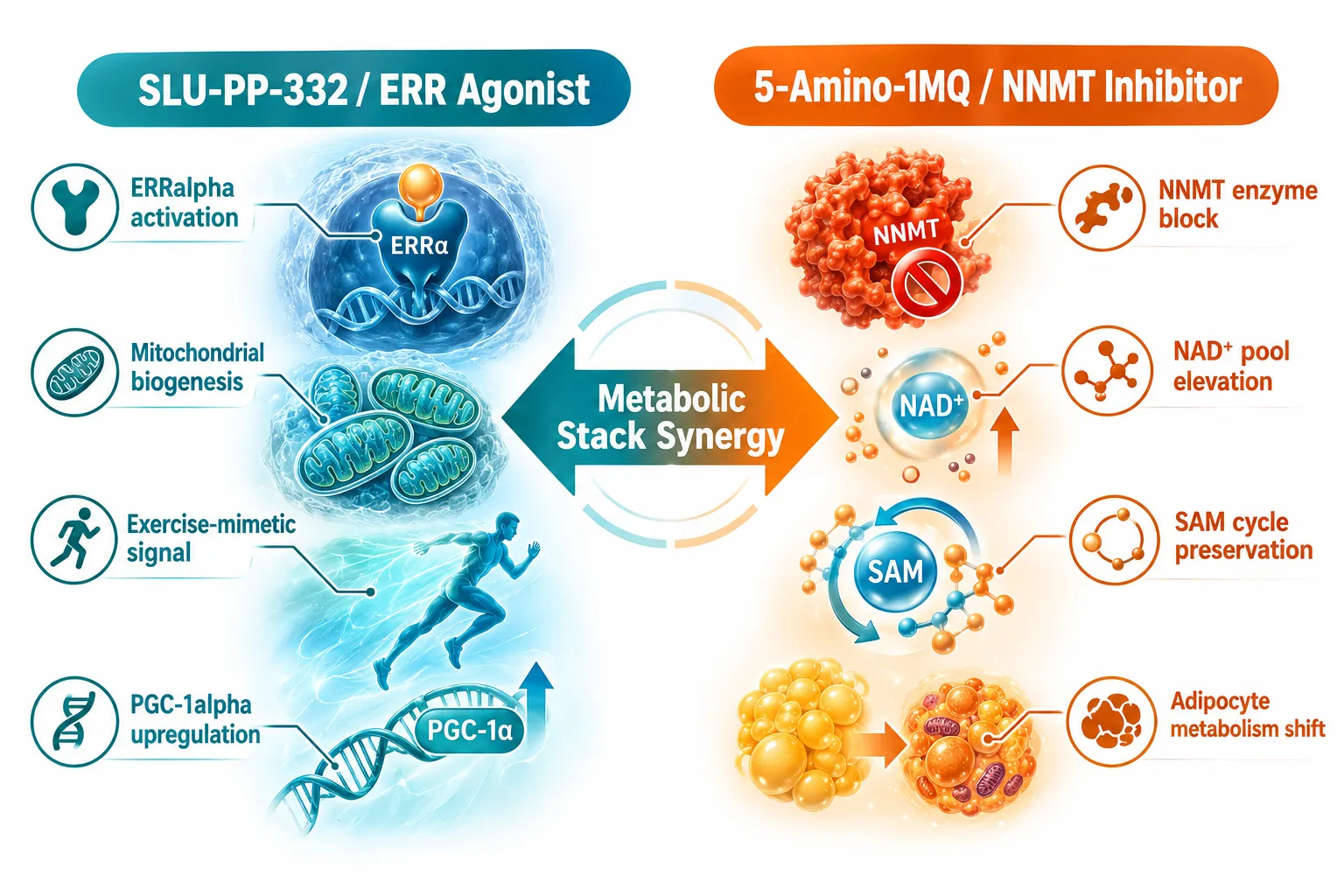
  • SLU-PP-332 activates estrogen-related receptors (ERRs), mimicking the gene-expression signature of aerobic exercise in preclinical models.
  • 5-Amino-1MQ inhibits the NNMT enzyme, preserving the SAM cycle and elevating intracellular NAD+ levels.
  • Researchers frame the stack as complementary because the two compounds target different upstream nodes of the same metabolic pathway.
  • Both compounds remain strictly preclinical and research-only as of 2026, with no completed human clinical trials.
  • A tri-compound extension adding MOTS-c is increasingly discussed as a "metabolic trifecta" in analyst commentary, though evidence remains early-stage.

What SLU-PP-332 and 5-Amino-1MQ Each Do Individually
What SLU-PP-332 and 5-Amino-1MQ Each Do Individually

Understanding the stack begins with understanding each compound in isolation.

SLU-PP-332 is a small-molecule agonist that activates the estrogen-related receptor (ERR) family, specifically ERRalpha, ERRbeta, and ERRgamma. These nuclear receptors regulate genes involved in mitochondrial biogenesis, fatty acid oxidation, and oxidative phosphorylation. In rodent models, SLU-PP-332 administration produced measurable increases in endurance capacity and activated a gene-expression profile that closely resembles the cellular response to sustained aerobic exercise. This is why researchers frequently describe it using the term "exercise mimetic," though that label carries important caveats: the downstream metabolic effects observed in animal tissue do not automatically translate to human physiology.

5-Amino-1MQ works through a completely different mechanism. It is a selective inhibitor of nicotinamide N-methyltransferase (NNMT), an enzyme highly expressed in adipose tissue and the liver. When NNMT is active, it consumes S-adenosylmethionine (SAM) and converts nicotinamide into a methylated byproduct that exits the NAD+ biosynthesis cycle. By blocking NNMT, 5-Amino-1MQ preserves both the SAM pool and the nicotinamide available for NAD+ resynthesis. The result, in preclinical models, is an elevation of intracellular NAD+, a coenzyme central to energy metabolism, sirtuin activation, and mitochondrial repair signaling. Researchers interested in 5-Amino-1MQ and related NAD+ modulators often pair it with compounds that act downstream of NAD+ availability.


The Research Logic Behind Slupp332 With 5-Amino-1MQ: How Researchers Frame This Metabolic Stack
The Research Logic Behind Slupp332 With 5-Amino-1MQ: How Researchers Frame This Metabolic Stack

The core argument researchers make for combining these two compounds is mechanistic complementarity, not additive redundancy.

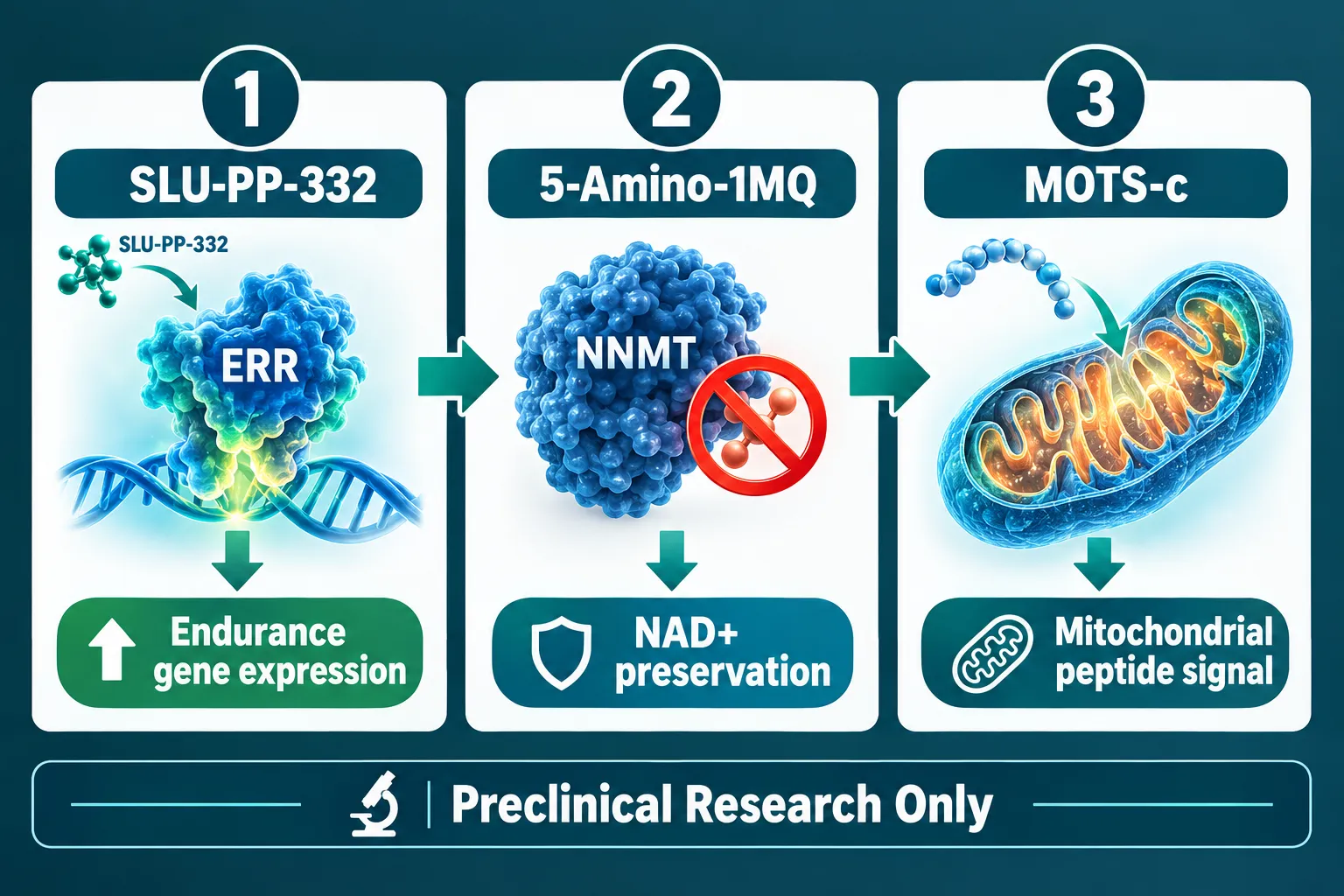
SLU-PP-332 drives the demand side of mitochondrial metabolism: it signals cells to build more mitochondria and upregulate oxidative pathways. 5-Amino-1MQ addresses the supply side: it ensures that the NAD+ substrate required to fuel those pathways is more readily available. In that framing, the stack functions like simultaneously upgrading both an engine and its fuel supply.

"The appeal of this combination is that it targets two separate rate-limiting steps in the same metabolic cascade, ERR activation and NAD+ substrate availability, without obvious mechanistic overlap."

This logic has appeared in commercial research bundle descriptions, analyst newsletters, and preclinical study design discussions throughout 2025 and 2026. It is worth noting, however, that no published study has directly tested this combination in a controlled animal model, let alone in humans. The synergy argument remains inferential, built from the individual compound literatures rather than direct co-administration data.

The Tri-Compound Extension: Adding MOTS-c

A growing subset of researchers extends the stack further by adding MOTS-c, a mitochondria-derived peptide that activates AMPK and influences glucose uptake in skeletal muscle. This three-way framing, SLU-PP-332 for ERR activation, 5-Amino-1MQ for NAD+ preservation, and MOTS-c for AMPK-mediated glucose handling, is sometimes called a "metabolic trifecta" in analyst commentary. Those interested in the broader mitochondrial peptide landscape can explore SS-31 mitochondrial research themes and SS-31 mitochondrial dynamics for adjacent mechanistic context, since mitochondrial-targeting compounds share several overlapping research questions.


Regulatory Status, Safety Framing, and 2026 Market Presentation
Regulatory Status, Safety Framing, and 2026 Market Presentation

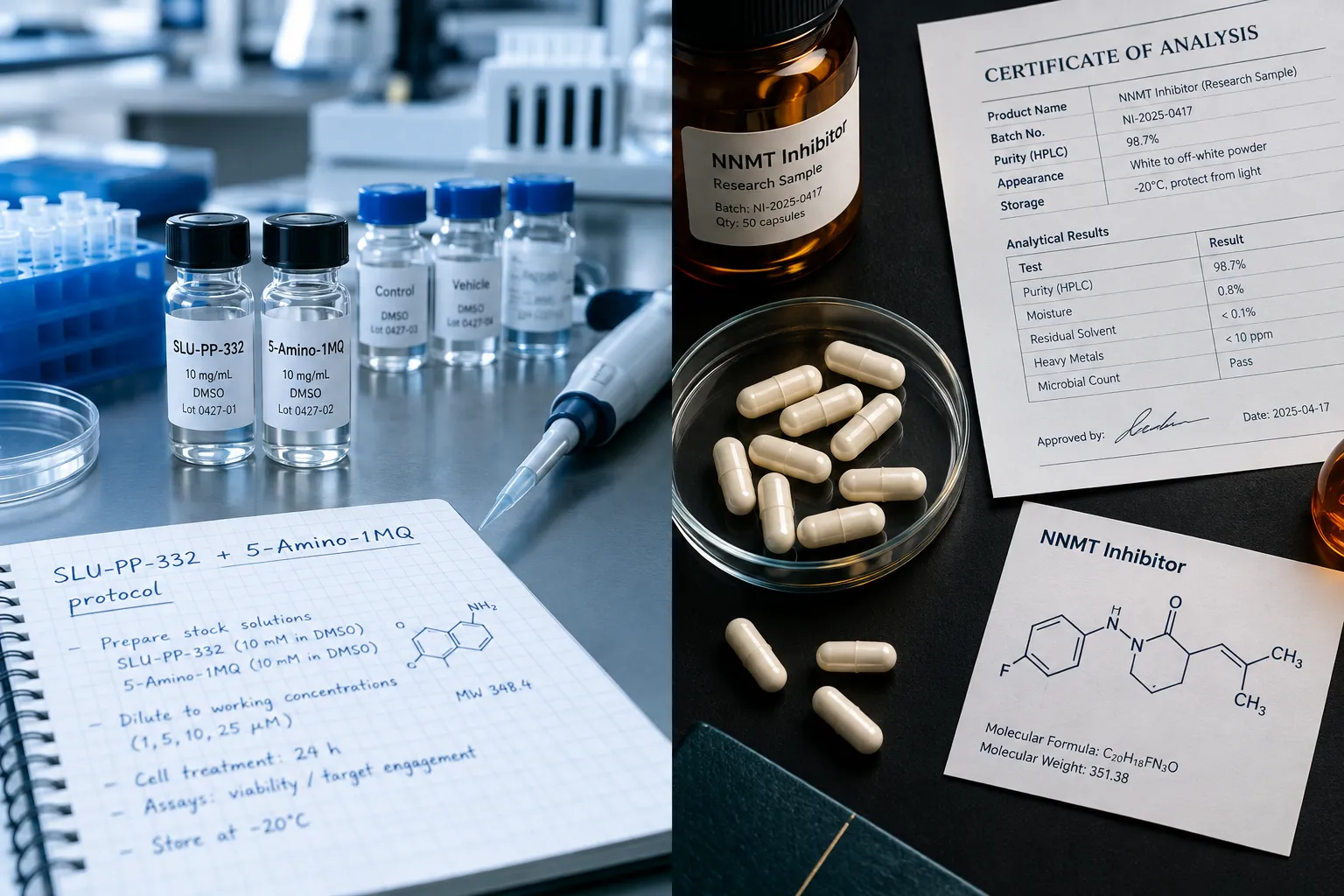
Both SLU-PP-332 and 5-Amino-1MQ are classified strictly as research chemicals. As of 2026, neither compound has completed Phase I human clinical trials. They are not approved drugs, not dietary supplements, and not intended for human consumption. Expert commentary consistently emphasizes this classification, even as commercial interest has grown.

The 2026 market landscape shows these compounds increasingly available in capsule and tablet formats from research suppliers, often accompanied by third-party purity certificates. Suppliers emphasize lab-tested peptides and research compounds as a quality differentiator, and certificate-of-analysis documentation has become a standard expectation among serious researchers. That said, purity claims vary significantly across vendors, and researchers are advised to verify independent testing before use in any study context.

Key safety framing points from 2026 guidance:

  • No human dose-response data exists for either compound.
  • Rodent studies used weight-adjusted doses that do not directly translate to human equivalents.
  • Long-term toxicity profiles remain unknown for both compounds.
  • Stacking introduces additional complexity because interaction effects have not been studied.
  • Regulatory bodies in most jurisdictions have not issued specific guidance on these compounds, leaving their legal status ambiguous outside of research use.

Researchers interested in other metabolic compounds with more established preclinical profiles, such as those exploring SIRT1-related pathways or SS-31 elamipretide, will find that the evidence base for those compounds is comparatively more developed, which provides a useful benchmark for evaluating where SLU-PP-332 and 5-Amino-1MQ currently stand.

How Stacking Protocols Are Currently Described

Research protocol discussions in 2026 typically describe the following framing parameters, presented here strictly as reported research context, not as dosing recommendations:

Parameter SLU-PP-332 (Reported Range) 5-Amino-1MQ (Reported Range)
Administration route Oral (capsule) Oral (capsule)
Cycle length discussed 4-8 weeks 4-8 weeks
Primary research endpoint ERR activation markers NAD+ metabolite levels
Evidence tier Rodent preclinical only Rodent preclinical only

These figures reflect how researchers describe their protocols in published commentary, not clinically validated parameters.


Conclusion

The framing of Slupp332 with 5-Amino-1MQ: how researchers frame this metabolic stack is built on a coherent mechanistic argument, two compounds targeting distinct but complementary nodes in mitochondrial energy regulation. SLU-PP-332 drives ERR-mediated mitochondrial biogenesis from the demand side; 5-Amino-1MQ preserves NAD+ substrate availability from the supply side. The tri-compound extension with MOTS-c adds a third layer targeting AMPK and glucose handling.

That logic is intellectually compelling, but the evidence base remains firmly preclinical. No human trials have validated the combination, and safety data is limited.

Actionable next steps for researchers:

  1. Review the individual compound literatures separately before evaluating stack claims.
  2. Prioritize vendors that provide independent third-party purity documentation.
  3. Treat any synergy claims as hypothesis-generating rather than evidence-confirmed.
  4. Monitor peer-reviewed preprint servers for emerging co-administration studies, which remain the missing link in this research narrative.
  5. Consult regulatory guidance in your jurisdiction before designing any study involving these compounds.

The study logic is sound enough to warrant serious research attention. The evidence, as of 2026, has not yet caught up with the framing.

Tags: 5-amino-1mq, err agonist, exercise mimetic, metabolic stack, mitochondrial biogenesis, nad+ research, nnmt inhibitor, slu-pp-332
https://www.puretestedpeptides.com/wp-content/uploads/2026/09/slupp332-with-5-amino-1mq-how-researchers-frame-this-metabolic-stack.webp 1024 1536 https://www.puretestedpeptides.com/wp-content/uploads/2026/01/buy-peptides-online.jpg 2026-09-22 13:04:382026-09-22 13:04:38Slupp332 With 5-Amino-1MQ: How Researchers Frame This Metabolic Stack
You might also like
Where to Buy Research-Grade MOTS-c and 5-Amino-1MQ: Vendor Selection, Purity Standards, and Certificate of Analysis Essentials Where to Buy Research-Grade MOTS-c and 5-Amino-1MQ: Vendor Selection, Purity Standards, and Certificate of Analysis Essentials
Adenosine Triphosphate, Cellular Energy, and Metabolic Peptides: How MOTS‑c and 5‑Amino‑1MQ Influence ATP-Linked Pathways Adenosine Triphosphate, Cellular Energy, and Metabolic Peptides: How MOTS‑c and 5‑Amino‑1MQ Influence ATP-Linked Pathways
Dual Mitochondrial Targeted Research: Real-Time Insights into MOTS-c and 5-Amino-1MQ Simultaneous Protocols Dual Mitochondrial Targeted Research: Real-Time Insights into MOTS-c and 5-Amino-1MQ Simultaneous Protocols
Peptides in Modern Research: From Simple Chains to Complex Polypeptide Hormones Peptides in Modern Research: From Simple Chains to Complex Polypeptide Hormones
Top 5 Research Peptides for Metabolic Health: An Updated Buyer's Guide Top 5 Research Peptides for Metabolic Health: An Updated Buyer’s Guide
How 5-Amino-1MQ and MOTS-c Are Studied Together in Metabolic Research How 5-Amino-1MQ and MOTS-c Are Studied Together in Metabolic Research
Peptides and Polypeptides in Modern Research: How MOTS-c, 5-Amino-1MQ, and GLP-3 Retatrutide Fit Into the Big Picture Peptides and Polypeptides in Modern Research: How MOTS-c, 5-Amino-1MQ, and GLP-3 Retatrutide Fit Into the Big Picture
Peptides vs Classic Small‑Molecule Drugs: How GLP-3 Retatrutide, MOTS-c, and 5-Amino-1MQ Change Lab Design Compared With Prednisone and Atorvastatin Peptides vs Classic Small‑Molecule Drugs: How GLP-3 Retatrutide, MOTS-c, and 5-Amino-1MQ Change Lab Design Compared With Prednisone and Atorvastatin
0 replies

Leave a Reply

Want to join the discussion?
Feel free to contribute!

Leave a Reply Cancel reply

Your email address will not be published. Required fields are marked *

×

Helpful Links

  • My account
  • Cart
  • Checkout
  • Refund and Returns Policy
  • Privacy Policy
  • SMS Privacy Policy
  • Login
  • My Account
  • Logout

USA Made Lab Tested Peptides

All products are sold for research, laboratory, or analytical purposes only, and are not for human consumption


Pure Tested Peptides is a chemical supplier. Pure Tested Peptides is not a compounding / chemical compounding facility as defined under 503A of the Federal Food, Drug, and Cosmetic act. Pure Tested Peptides is not an outsourcing facility as defined under 503B of the Federal Food, Drug, and Cosmetic act.

The statements made within this website have not been evaluated by the US Food and Drug Administration. The products we offer are not intended to diagnose, treat, cure or prevent any disease.

Human/Animal Consumption Prohibited. Laboratory/In-Vitro Experimental Use Only

Link to: Optimizing Epithalon Lyophilization and Storage: Temperature-Dependent Degradation Rates in Telomere Research Link to: Optimizing Epithalon Lyophilization and Storage: Temperature-Dependent Degradation Rates in Telomere Research Optimizing Epithalon Lyophilization and Storage: Temperature-Dependent Degradation...Optimizing Epithalon Lyophilization and Storage: Temperature-Dependent Degradation Rates in Telomere Research Link to: Liquid IV and Electrolyte Management in Intensive Peptide Studies: How Osmolality Affects GLP-3, MOTS-c, and Growth Hormone Secretagogue Experiments Link to: Liquid IV and Electrolyte Management in Intensive Peptide Studies: How Osmolality Affects GLP-3, MOTS-c, and Growth Hormone Secretagogue Experiments Liquid IV and Electrolyte Management in Intensive Peptide Studies: How Osmolality Affects GLP-3, MOTS-c, and Growth Hormone Secretagogue ExperimentsLiquid IV and Electrolyte Management in Intensive Peptide Studies: How Osmolality...
Scroll to top Scroll to top Scroll to top