

Prednisone and Metabolic Peptides: A Glucocorticoid-Control Framework for Glucose, Appetite, and Inflammation Experiments
}
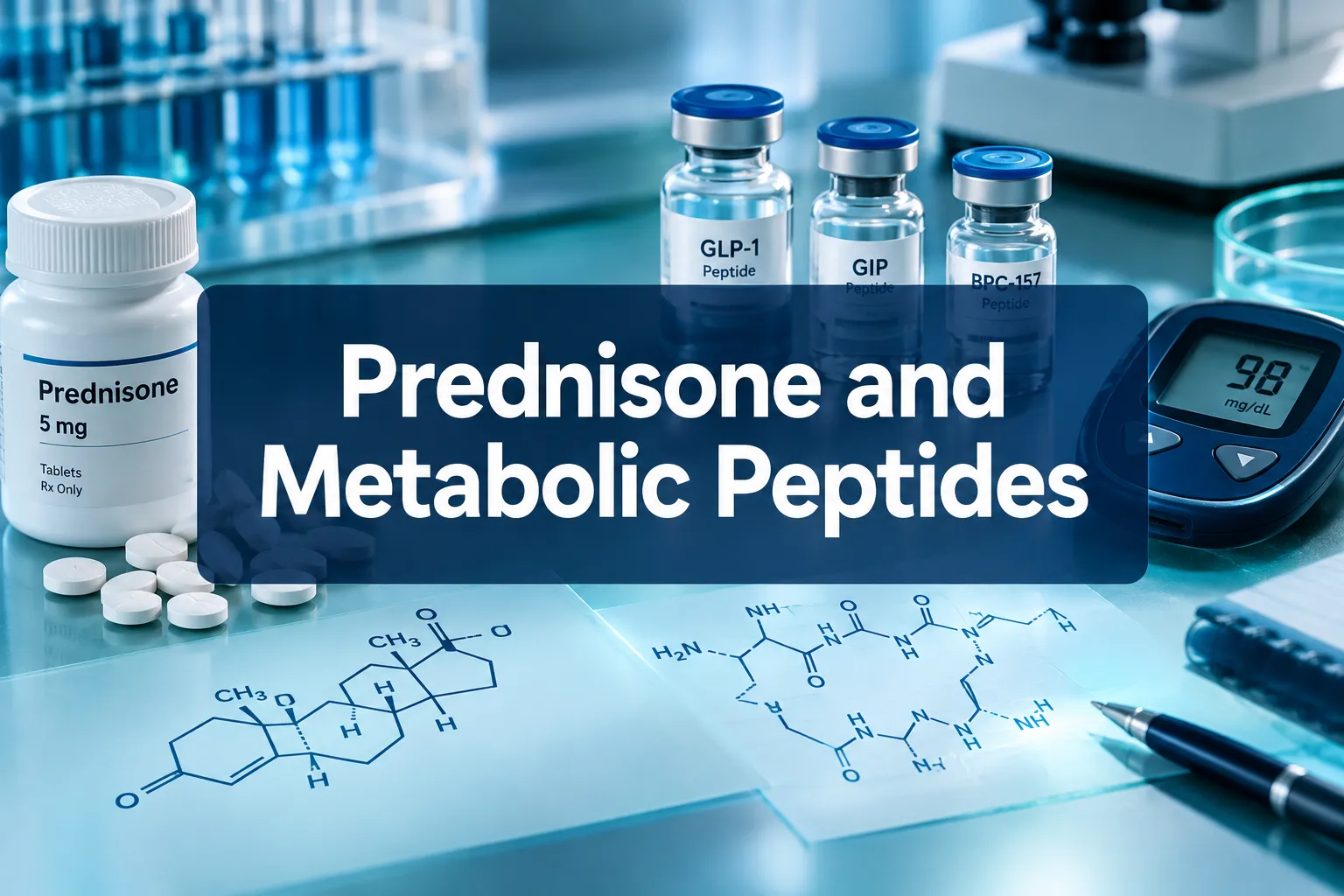
Glucocorticoids cause measurable hyperglycemia in roughly 50 percent of hospitalized patients who receive them, yet most experimental designs still treat prednisone as a simple background variable rather than an active metabolic driver. That gap matters enormously when researchers are trying to isolate peptide activity from steroid noise. Building a rigorous Prednisone and Metabolic Peptides: A Glucocorticoid-Control Framework for Glucose, Appetite, and Inflammation Experiments requires separating three overlapping effects, glucose dysregulation, appetite amplification, and inflammatory signaling, and assigning each a mechanistic control arm that can be tested independently.
Key Takeaways
- Prednisone activates glucocorticoid receptors in multiple organs simultaneously, producing coordinated changes in glucose, appetite peptides, and inflammatory markers.
- Acute medium-dose exposure creates a predictable midday-to-midnight postprandial glucose and peptide profile that can anchor time-structured experimental sampling.
- Chronic low-dose exposure produces a distinct "mild steroid diabetes" phenotype dominated by hepatic insulin resistance rather than sustained fasting hyperglycemia.
- Adipokines such as leptin and resistin serve as measurable intermediaries linking glucocorticoid exposure to both appetite and inflammation endpoints.
- GLP-1 receptor agonists are the leading peptide class for countering glucocorticoid metabolic toxicity and represent a strong experimental comparator arm.
How Prednisone Disrupts the Glucose-Peptide Axis
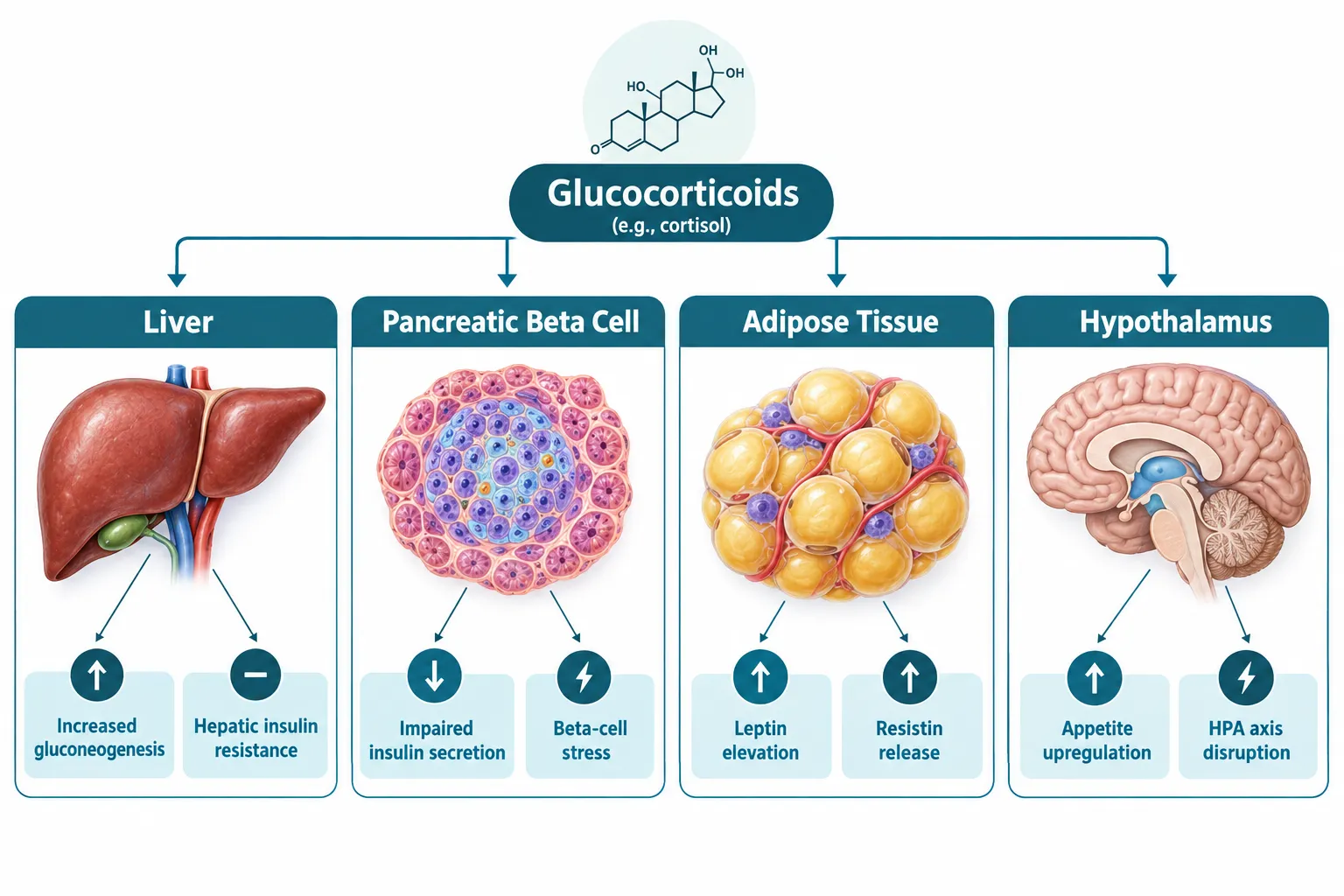
Prednisone is converted to prednisolone in the liver, where it binds glucocorticoid receptors and triggers a cascade that spans at least five organ systems. Understanding each node is essential before selecting experimental endpoints.
The four primary disruption sites are:
| Organ | Glucocorticoid Effect | Measurable Peptide Change |
|---|---|---|
| Liver | Increased gluconeogenesis | Elevated fasting glucose, altered C-peptide |
| Pancreatic beta cells | Impaired insulin secretion | Reduced insulin, suppressed C-peptide |
| Adipose tissue | Leptin and resistin release | Elevated adipokines, insulin resistance |
| Hypothalamus | Appetite upregulation | Altered hunger signaling, increased caloric intake |
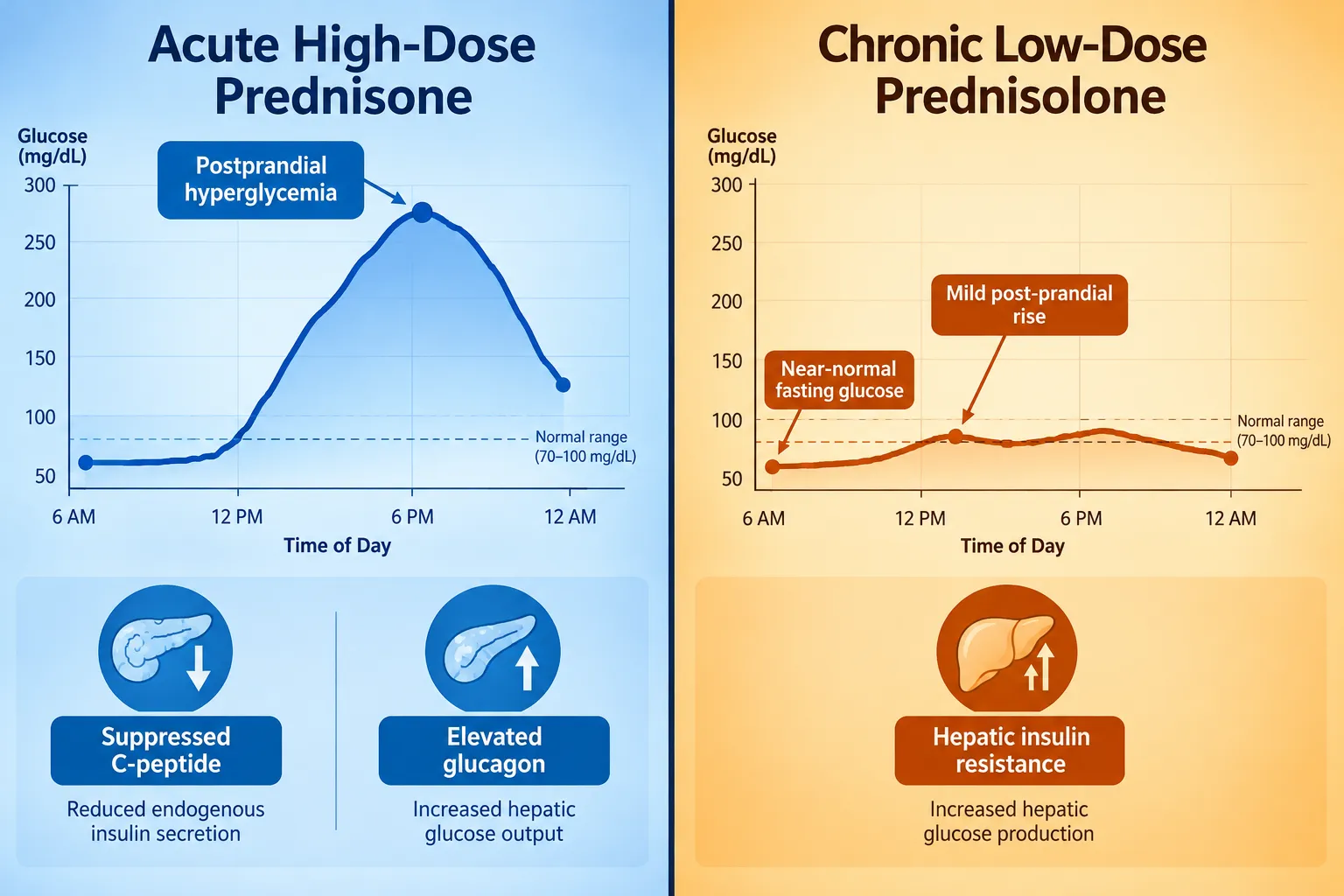
Acute medium-dose prednisone in controlled studies produces marked postprandial hyperglycemia from midday through midnight. In individuals with type 2 diabetes, insulin and C-peptide secretion are suppressed during this window, while at-risk subjects show altered C-peptide patterns even without overt diabetes. This predictable 24-hour glucose and peptide profile is highly useful as a temporal anchor for sampling schedules.
Short-term moderate doses in healthy volunteers significantly increase circulating glucose, insulin, C-peptide, glucagon, and IGF-I, while simultaneously lowering IGF-II and specific IGF-binding proteins. Notably, these changes occur without immediate impairment of whole-body muscle protein metabolism, which means acute experiments can focus on the glucose-peptide axis without confounding from skeletal muscle wasting in the early window.
"Prednisone does not act on one pathway, it acts on an inter-organ control system, and experiments that ignore that architecture will produce uninterpretable peptide data."
Designing the Glucocorticoid-Control Framework for Glucose, Appetite, and Inflammation Experiments
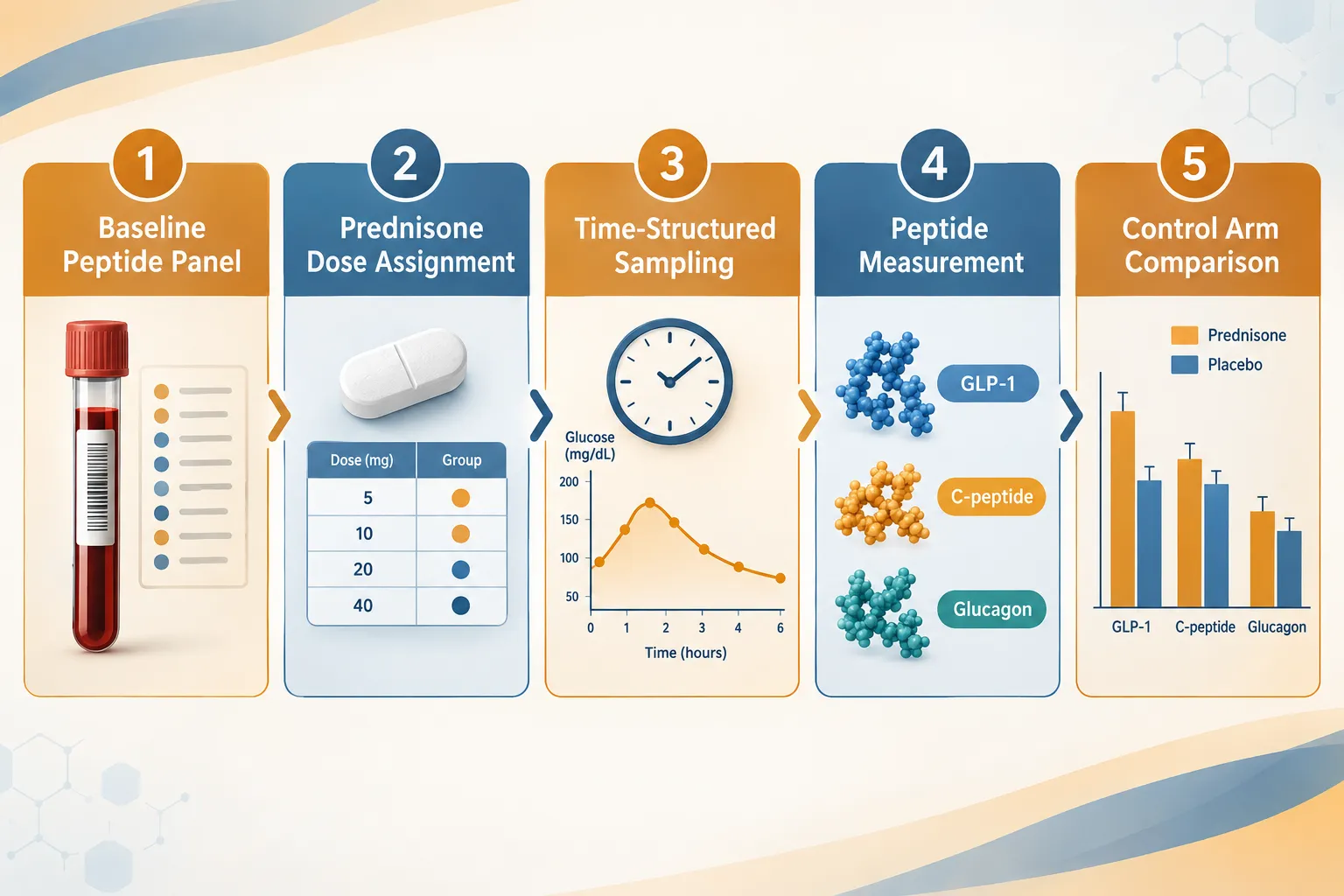
A well-structured Prednisone and Metabolic Peptides: A Glucocorticoid-Control Framework for Glucose, Appetite, and Inflammation Experiments separates dose-dependent effects into three distinct experimental arms.
Arm 1, Acute High-Dose Glucose and Peptide Profiling
Acute high-dose exposure is characterized by rapid fluid retention, appetite stimulation, and a sharp postprandial glucose rise. The recommended peptide panel for this arm includes:
- Insulin and C-peptide (sampled hourly from 0800 to 2400)
- Glucagon (to capture counter-regulatory response)
- IGF-I and IGF-II (to detect early anabolic-catabolic shift)
- Leptin and resistin (adipokine intermediaries linking appetite and inflammation)
High-dose prednisolone increases both leptin and resistin, making these adipokines reliable biomarkers of glucocorticoid intensity. Incorporating them into the panel connects glucose dysregulation to appetite and inflammatory signaling within a single measurement framework.
For researchers working with lab tested peptides in this context, purity verification is a non-negotiable prerequisite to avoid confounding the peptide signal with degradation products.
Arm 2, Chronic Low-Dose Steroid Diabetes Control
Chronic low-dose prednisolone at 10 mg/day or less produces a distinct phenotype: hepatic insulin resistance and reduced peripheral non-oxidative glucose disposal, resulting in mild postprandial hyperglycemia while fasting glucose and HbA1c remain near baseline. This "mild steroid diabetes" profile is easily missed by fasting-only sampling protocols.
Critical design points for this arm:
- Use postprandial glucose sampling rather than fasting-only measures
- Include hepatic insulin sensitivity indices alongside peripheral measures
- Track weight trajectory and fluid balance as appetite endpoints
- Sample adipokines at baseline and at four-week intervals
Arm 3, GLP-1 Peptide Comparator
GLP-1 receptor agonists are now the leading peptide class for countering glucocorticoid-related hyperglycemia and weight gain. Early evidence positions them as central candidates in experimental designs examining peptide-based control of glucocorticoid metabolic toxicity. Researchers exploring GLP-1 peptide sourcing and research concepts will find that this comparator arm requires careful dose-timing relative to prednisone administration to avoid masking the steroid's glucose signature.
Related incretin-based research can also draw on GLP-3 peptide formulations and cagrilintide peptide combinations, which target both appetite suppression and glucose regulation through complementary receptor pathways.
Separating Appetite Effects from Glucose Effects in Prednisone Research
One of the most common errors in glucocorticoid research is conflating appetite-driven weight gain with glucose-driven metabolic change. The Prednisone and Metabolic Peptides: A Glucocorticoid-Control Framework for Glucose, Appetite, and Inflammation Experiments addresses this by assigning independent measurement tracks to each pathway.
Appetite track endpoints:
- Daily caloric intake logs (validated recall instruments)
- Leptin and resistin at fasting and two hours postprandial
- Body weight and waist circumference at weekly intervals
- Fluid balance (to separate fluid-related weight gain from fat mass gain)
Glucose track endpoints:
- Continuous glucose monitoring or hourly postprandial sampling
- Fasting insulin, C-peptide, and HOMA-IR
- Urinary 3-methylhistidine (early muscle wasting marker from metabolomic profiling)
- DHEA-S (decreases under glucocorticoid load, useful as an exposure marker)
Metabolomic studies of prednisolone in healthy subjects show increased urinary and serum proteinogenic amino acids alongside elevated glucose and carnitine-related metabolites. These profiles offer rich readouts that can integrate glucocorticoid dose with downstream inflammation or muscle outcomes when added to a standard peptide panel.
For mitochondrial and oxidative stress dimensions of glucocorticoid exposure, SS-31 peptide research offers a mechanistically distinct comparator, given SS-31's role in cardiolipin stabilization and mitochondrial membrane protection under metabolic stress conditions.
Researchers interested in cellular energy metabolism alongside glucocorticoid effects may also find value in reviewing NAD peptides as a complementary readout for mitochondrial function during steroid exposure.
Conclusion
A rigorous glucocorticoid-control framework does not treat prednisone as background noise, it treats it as an active experimental variable with predictable, dose-dependent effects on glucose, appetite peptides, and inflammatory markers. The actionable next steps for researchers are clear:
- Select dose tier first. Acute high-dose and chronic low-dose regimens produce mechanistically distinct phenotypes that require different sampling schedules and peptide panels.
- Build a multi-peptide panel. Insulin, C-peptide, glucagon, IGF-I, leptin, and resistin together cover the glucose, appetite, and inflammation axes simultaneously.
- Assign a GLP-1 comparator arm. GLP-1 receptor agonists are the best-evidenced peptide class for countering glucocorticoid metabolic toxicity and provide a clean experimental contrast.
- Separate appetite from glucose tracking. Use independent measurement instruments for caloric intake and fluid balance so that weight gain data can be correctly attributed.
- Verify peptide purity. Every peptide used in the experimental panel should come from a verified, lab-tested source to ensure signal integrity across the full measurement window.
Applying these principles transforms prednisone from a confounding variable into a well-characterized experimental tool, and makes every downstream peptide measurement more interpretable.


Leave a Reply
Want to join the discussion?Feel free to contribute!