Call or Text 727-513-9780
  • Shopping Cart Shopping Cart
    0Shopping Cart
Pure Tested Peptides | America's most trusted Peptides for sale online
  • Peptides for sale
    • Oral Peptides for sale
      • Peptide Capsules for sale
      • BPC 157 Capsules 1000mcg
      • SLU-PP-332 Capsules | 1000 mcg
      • 5-Amino-1MQ 50mg Capsules
      • Tesofensine 500mcg
    • All Peptides for sale
    • Peptide Sprays
      • BPC 157 Nasal Spray Kit
      • BPC-157 TB500 Nasal Spray Kit
      • Semax Nasal Spray 10mg
      • Selank – Nasal Spray Kit – 10mg
      • Epithalon 50MG Nasal Spray Kit
      • Ipamorelin 10mg Nasal Spray
      • Klow Nasal Spray (BPC-157 + TB-500 + GHK-Cu + KPV) | 80mg
      • Hulk Nasal Spray Tesa / Ipa Blend 6/3 MG
      • Klow Nasal Spray
      • NAD + 500 mg Nasal Spray
      • PT-141 Nasal Spray Kit
    • GHRH Peptides
      • Ipa Peptides
      • CJC-1295 Peptides
        • CJC-1295 with DAC 5 mg
        • CJC-1295 without DAC 5 mg
        • CJC-1295 Ipa 10mg
      • Tesa Peptides
        • Tesa Peptide
        • Tesa 20 mg
    • GHK-Cu Peptides
      • All GHK-Cu Peptides
      • GHK-Cu 100mg
      • KLOW Peptide Blend – Buy KLOW blend online
    • BPC Peptides
      • All BPC Peptides
      • BPC-157
      • BPC-157 TB-500
      • BPC 157 capsules 1000mcg
    • SLU-PP-332 Peptides
      • All SLU-PP-332 Peptides
      • SLU-PP-332 5mg
    • GLP3 Peptides
    • PT-141 Peptides
      • PT-141 Peptides for sale
      • PT-141 10mg
      • PT-141 Nasal Spray
    • CAG Peptides
      • Lipo-C Peptide Blend
      • CAG 5mg
      • CAG 10mg
    • MOTS-C Peptides
      • MOTS-C Peptides for sale
      • MOTS-c peptide
      • MOTS-c 10mg *6 pack*
    • 5 Amino 1MQ Peptides
      • 5 Amino 1MQ Peptides for sale
      • 5-Amino-1MQ 50mg Capsules
      • 5-Amino-1MQ 5mg
    • Epithalon Peptides
      • Epithalon Peptides for sale
      • Epithalon 10mg
      • Epithalon 50mg
  • Shop
    • GLPs
      • 5-Amino-1MQ 50mg Capsules
      • 5-Amino-1MQ 5mg
      • L-Carnitine 500mg/ml
      • Tesofensine 500mcg
      • SLU-PP-332 5mg
      • MOTS-c 10mg *6 pack*
    • Epithalon & BPC Peptides
      • Epithalon 10mg
      • Epithalon 50mg
      • BPC-157
      • BPC 157 capsules 1000mcg
      • BPC-157 TB-500
      • BPC-157 TB500 Nasal Spray Kit
      • BPC 157 Nasal Spray Kit
    • BPC TB-500 & NAD+ Peptides
      • NAD+ 500 mg
      • KLOW Peptide Blend – Buy KLOW blend online
      • GLOW Peptide Blend
      • TB 500 5mg
      • BPC 157 capsules 1000mcg – Supplement
      • BPC 157 Nasal Spray Kit
      • BPC-157
      • BPC-157 TB500 Nasal Spray Kit
      • BPC-157 TB-500
      • BPC 157 capsules 1000mcg
    • LL-37 Peptide
      • LL-37 10 mg
    • MOTS-C & Selank
      • MOTS-c peptide
      • Selank 10mg
    • GHK Peptides
      • GHK-Cu 100mg
      • GLOW Peptide Blend
      • KLOW Peptide Blend – Buy KLOW blend online
  • COAs
  • Wholesale
    • Wholesale Peptides for sale
  • PTP FAQ
  • Affiliates
    • Selank Peptide: Advanced Pharmacological Mechanisms Underlying Its Anxiolytic and Nootropic Effects in Research
      • 5-Amino-1MQ Peptide: Detailed Mechanisms of NNMT Inhibition and Its Impact on Cellular Metabolism Research
        • MOTS-C Peptide: Unraveling Its Role in Mitochondrial Dynamics and Energy Metabolism Research
          • Epithalon Peptide and Telomerase Regulation: Investigating Its Impact on Cellular Senescence and Lifespan Research Models
            • GLP2-T vs GLP2 Tirz Peptide: Understanding the Naming, Mechanistic Nuances, and Research Implications for Gut Health
      • Peptides and Polypeptides in Modern Pharmacology: What Research on Metoprolol, Prednisone, and Amlodipine Reveals
        • Polypeptide Peptides vs NSAIDs: What Naproxen and Diclofenac Teach Tissue-Repair Researchers About BPC‑157 and TB‑500
          • Peptides and Polypeptides in Endocrine Pharmacology: How GLP-1, GLP-2, and GLP-3 Retatrutide Differ From Classic Drugs Like Prednisone and Amlodipine
          • 5‑Amino‑1MQ Peptide and NNMT Inhibition: How It Compares With Statins Like Atorvastatin in Adipose and Lipid Metabolism Research
      • Enclomiphene, Estrogen Receptor Signaling, and Luteinizing Phase Biology: What Hormone Researchers Should Measure
        • Mesenchymal Stem Cells, BPC‑157, and GHK‑Cu: How Tissue Repair Peptides Compare With Classic NSAIDs Like Naproxen in Injury Models
          • Peptide Calculator Use Cases Beyond Growth Hormone: Working Through GLP‑3 Retatrutide, MOTS‑c, and BPC‑157 Research Dosing
        • Polypeptide Peptides in Endocrine and Metabolic Pharmacology: Lessons From Amlodipine, Prednisone, and Metoprolol
        • Peptides Calculator for Advanced Blends: Worked Examples for Tesamorelin, CJC‑1295, and Ipamorelin Stacks
          • Peptides and Polypeptides in Human Physiology: How Molecular Size Shapes Research Applications
            • Selank Peptide: Advanced Pharmacological Mechanisms Underlying Its Anxiolytic and Nootropic Effects in Research
          • 5-Amino-1MQ Peptide: Detailed Mechanisms of NNMT Inhibition and Its Impact on Cellular Metabolism Research
            • MOTS-C Peptide: Unraveling Its Role in Mitochondrial Dynamics and Energy Metabolism Research
              • Epithalon Peptide and Telomerase Regulation: Investigating Its Impact on Cellular Senescence and Lifespan Research Models
                • GLP2-T vs GLP2 Tirz Peptide: Understanding the Naming, Mechanistic Nuances, and Research Implications for Gut Health
                  • Peptides and Polypeptides in Endocrine Pharmacology: How GLP-1, GLP-2, and GLP-3 Retatrutide Differ From Classic Drugs Like Prednisone and Amlodipine
                    • Polypeptide Peptides vs NSAIDs: What Naproxen and Diclofenac Teach Tissue-Repair Researchers About BPC‑157 and TB‑500
                      • Peptides and Polypeptides in Modern Pharmacology: What Research on Metoprolol, Prednisone, and Amlodipine Reveals
                        • 5‑Amino‑1MQ Peptide and NNMT Inhibition: How It Compares With Statins Like Atorvastatin in Adipose and Lipid Metabolism Research
                        • Enclomiphene, Estrogen Receptor Signaling, and Luteinizing Phase Biology: What Hormone Researchers Should Measure
                        • Mesenchymal Stem Cells, BPC‑157, and GHK‑Cu: How Tissue Repair Peptides Compare With Classic NSAIDs Like Naproxen in Injury Models
                        • Peptide Calculator Use Cases Beyond Growth Hormone: Working Through GLP‑3 Retatrutide, MOTS‑c, and BPC‑157 Research Dosing
                        • Polypeptide Peptides in Endocrine and Metabolic Pharmacology: Lessons From Amlodipine, Prednisone, and Metoprolol
                        • Peptides Calculator for Advanced Blends: Worked Examples for Tesamorelin, CJC‑1295, and Ipamorelin Stacks
                        • Peptides and Polypeptides in Human Physiology: How Molecular Size Shapes Research Applications
                        • Selank Peptide: Advanced Pharmacological Mechanisms Underlying Its Anxiolytic and Nootropic Effects in Research
                        • MOTS-C Peptide: Unraveling Its Role in Mitochondrial Dynamics and Energy Metabolism Research
                        • Peptides and Polypeptides in Modern Pharmacology: What Research on Metoprolol, Prednisone, and Amlodipine Reveals
                        • Peptides and Polypeptides in Endocrine Pharmacology: How GLP-1, GLP-2, and GLP-3 Retatrutide Differ From Classic Drugs Like Prednisone and Amlodipine
                        • 5-Amino-1MQ Peptide: Detailed Mechanisms of NNMT Inhibition and Its Impact on Cellular Metabolism Research
                        • Mesenchymal Stem Cells, BPC‑157, and GHK‑Cu: How Tissue Repair Peptides Compare With Classic NSAIDs Like Naproxen in Injury Models
                        • Peptide Calculator Use Cases Beyond Growth Hormone: Working Through GLP‑3 Retatrutide, MOTS‑c, and BPC‑157 Research Dosing
                        • GLP2-T vs GLP2 Tirz Peptide: Understanding the Naming, Mechanistic Nuances, and Research Implications for Gut Health
                        • Polypeptide Peptides in Endocrine and Metabolic Pharmacology: Lessons From Amlodipine, Prednisone, and Metoprolol
                        • Polypeptide Peptides vs NSAIDs: What Naproxen and Diclofenac Teach Tissue-Repair Researchers About BPC‑157 and TB‑500
                        • Peptides and Polypeptides in Human Physiology: How Molecular Size Shapes Research Applications
                        • Peptides Calculator for Advanced Blends: Worked Examples for Tesamorelin, CJC‑1295, and Ipamorelin Stacks
                        • 5‑Amino‑1MQ Peptide and NNMT Inhibition: How It Compares With Statins Like Atorvastatin in Adipose and Lipid Metabolism Research
                        • Enclomiphene, Estrogen Receptor Signaling, and Luteinizing Phase Biology: What Hormone Researchers Should Measure
                        • Epithalon Peptide and Telomerase Regulation: Investigating Its Impact on Cellular Senescence and Lifespan Research Models
                        • Best research protocol Klow blend
                        • best time to take BPC-157
                        • best time to take DSIP (Delta Sleep Inducing Peptide)
                        • best time to take CJC-1295
                        • best time to take AOD-9604
                        • best time to take Follistatin 344
                        • best time to take Ipamorelin
                        • best time to take MK-677 (Ibutamoren)
                        • best time to take Ligandrol (LGD-4033) — research compound
                        • best time to take Ostarine (MK-2866) — research compound
                        • best time to take GHK-CU
                        • best time to take TB-500
                        • best time to take MOTS-c
                        • best time to take Semax
                        • best time to take RAD-140 (Testolone) — research compound
                        • best time to take Thymosin Alpha-1
                        • best time to take PEG-MGF
                        • Biolife Plasma, Octapharma Plasma, and Research Peptides: How Plasma Donation Labs Differ From Peptide Suppliers
                        • best time to take YK-11 — research compound
                        • best time to take PT-141 (Bremelanotide)
                        • Best research protocol Klow blend
                        • 5-Amino-1MQ and MOTS-C Synergy: Metabolic Signaling, Mitochondria, and Research Design
                        • BPC-157 and TB-500: Investigating Their Combined Effects on Angiogenesis and Cellular Migration in Tissue Repair Models
                        • BPC-157 Peptide: Gut Barrier Function, Inflammation, and Tissue-Recovery Research
                        • 5‑Amino‑1MQ and MOTS‑c Synergy in Metabolic Research: Designing NNMT and Mitochondrial Biogenesis Stacks
                        • CJC-1295 with DAC vs. Without DAC: Half-Life, Release Kinetics, and Research Implications
                        • CJC‑1295 with DAC vs. Without DAC: Expanding on Half‑Life Differences Using Tesamorelin and Ipamorelin Blend Case Studies
                        • Collagen Biology and Copper‑Binding Peptides: How GHK‑Cu, Glow Blend, and Klow Blend Interact with Skin and Connective Tissue
                        • Collagen Biology and Regenerative Peptides: How GHK‑Cu, Glow Blend, and Klow Blend Affect Extracellular Matrix Research
                    • DNA, Telomeres, and Longevity Peptides: Positioning Epithalon and MOTS‑c in Genetic Aging Research
                      • Enclomiphene Citrate: serm Mechanism, Testosterone Research, and Stack Compatibility
                        • Enclomiphene vs Enclomiphene Citrate: Formulation, Bioavailability, and Research Distinctions
                        • Epithalon Peptide Research: Telomerase Activation, Aging, and Pineal Gland Function
                        • Estrogen Receptor Signaling and Enclomiphene: How Selective Modulators Compare with Classic Polypeptide Hormones
                        • GHK-Cu Peptide: Advanced Mechanisms in Extracellular Matrix Remodeling and Wound Healing Research
                        • GHK-Cu Peptide: Collagen Synthesis, Wound Repair, and Skin-Barrier Research Models
                        • GLP-1 vs GLP-3 vs GLP-2: Peptide Classification and Research Applications
                        • GLP-2 Peptide Research Guide: Gut Barrier Function, Nutrient Absorption, and Intestinal Recovery Models
                        • GLP-3 Retatrutide vs. GLP-1 Drugs: What Triple-Agonist Biology Changes in Research Models
                        • Ipamorelin and Tesamorelin Combination: Synergistic GH Secretagogue Research and Dosing Protocols
                        • GLP2 Tirz Peptide: What It Is, Why the Name Exists, and How Researchers Should Interpret It
                        • Klow Blend Peptide Nasal Spray: What the Formulation Is Trying to Do in Cognitive Research
                        • Mitochondria, NNMT Inhibition, and Peptide Modulators: Where MOTS‑c and 5‑Amino‑1MQ Fit in Cellular Energy Research
                        • MOTS-c Peptide: Mitochondrial Function, Energy Metabolism, and What Researchers Measure
                        • MOTS-c vs. 5-Amino-1MQ: Which Metabolic Research Questions Each Compound Actually Answers
                        • Nasal Spray Peptides: Bioavailability, Administration, and Semax/Selank Research Applications
                        • PT-141 Peptide Research: Mechanism of Action and Melanocortin Receptor Signaling
                        • Retatrutide for Research: Mechanism, Structure, and GLP-1/GLP-3 Dual Action
                        • Retatrutide for Obesity and Type 2 Diabetes: What the Latest Trial Data Suggest
                        • Tesofensine Peptide Research: Mechanism, Appetite Suppression, and Neuropeptide Y Pathways
  • Contact
    • Contact Customer Service
    • Text Customer Support
  • About US
  • Shop all peptides
  • Affiliate Program
    • Affiliate Signup
  • Login / Register Login / Register Page Link Login / Register Page Link
  • Click to open the search input field Click to open the search input field Search
  • Menu Menu
Epithalon Research: Comparing Telomerase, DNA-Damage, and Senescence Assays Across Cell Models

Epithalon Research: Comparing Telomerase, DNA-Damage, and Senescence Assays Across Cell Models

October 19, 2026/0 Comments/in Uncategorized/by

Telomerase activity, telomere length, gamma-H2AX foci, p16/p21 expression, and replicative senescence are five distinct biological readouts, yet researchers studying Epithalon frequently treat them as interchangeable proxies for the same outcome. They are not. Each measures a different node in the aging cascade, and conflating them produces misleading conclusions. A rigorous look at Epithalon research: comparing telomerase, DNA-damage, and senescence assays across cell models reveals exactly where the evidence is strong, where it is thin, and what future studies must address.

Key Takeaways

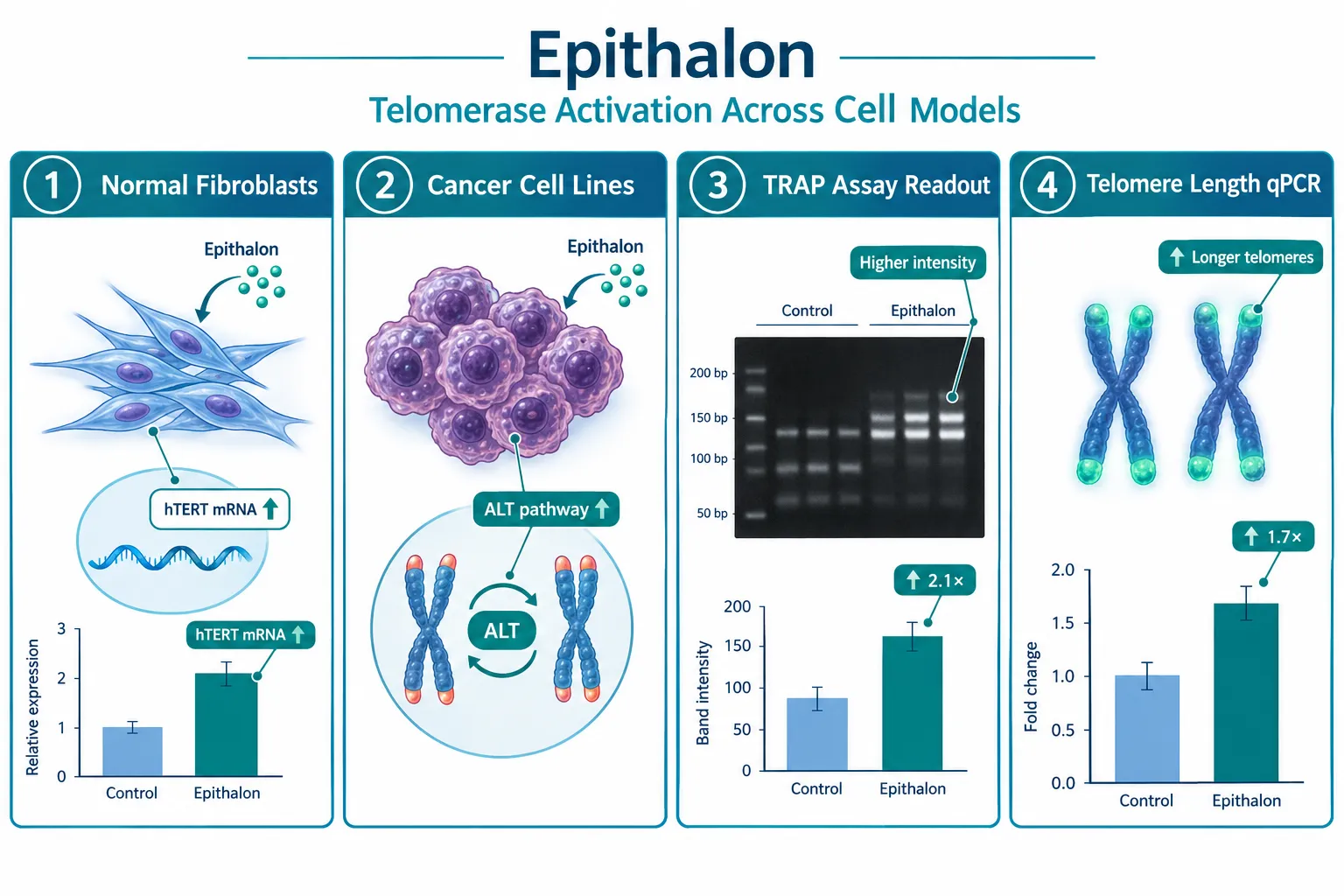
  • Epithalon consistently activates telomerase (TRAP assay, hTERT mRNA) in normal human fibroblast and epithelial models, with fold-changes of roughly 2- to 12-fold depending on dose and cell type.
  • In malignant cell lines, Epithalon extends telomeres primarily through the alternative lengthening of telomeres (ALT) pathway, not by further boosting telomerase catalytic activity, making TRAP-only assay designs inadequate for cancer models.
  • DNA-damage endpoints (gamma-H2AX, chromosomal aberration counts) show benefit in mouse oocyte and senescence-accelerated animal models but remain largely unmeasured in human somatic cell studies.
  • Senescence markers such as SA-beta-galactosidase staining and p16/p21 protein expression are rarely co-reported with telomerase data, leaving a critical gap in mechanistic understanding.
  • As of 2026, all robust Epithalon data remain preclinical; no completed human trial has systematically measured telomere or senescence outcomes under controlled conditions.

Why Assay Choice Defines What Epithalon Research Can Conclude
Why Assay Choice Defines What Epithalon Research Can Conclude

The tetrapeptide Epithalon (Ala-Glu-Asp-Gly) was first characterized in pineal gland extracts and has since become one of the most studied peptides in cellular aging research. The bulk of Epithalon research: comparing telomerase, DNA-damage, and senescence assays across cell models shows that most published work clusters around one assay type, the telomeric repeat amplification protocol (TRAP), while other endpoints receive far less systematic attention.

Why this matters: TRAP measures the catalytic activity of the telomerase enzyme complex. It does not measure telomere length, DNA strand-break burden, or whether a cell has entered stable growth arrest. A peptide could theoretically raise TRAP signal while leaving telomere length unchanged, or could reduce DNA damage without touching telomerase at all. Treating a TRAP result as evidence of "anti-aging" broadly defined is a category error.

Telomerase Assays: The Strongest Evidence Base

A 2025 Biogerontology study conducted at Brunel University London provided the most rigorous independent data to date. In normal human fibroblast and epithelial cells, Epithalon dose-dependently increased hTERT mRNA by up to approximately 12-fold at 1 microgram per milliliter in one cell line, with corresponding increases in TRAP-measured telomerase activity and telomere lengthening confirmed by both qPCR and immunofluorescence. A correction published later in 2025 clarified figure labeling issues but explicitly upheld all main quantitative conclusions, reinforcing confidence in the core findings.

Earlier work in human somatic fibroblasts reported that Epithalon extended average telomere length by approximately 33.3% and pushed proliferative lifespan from roughly 34 passages to more than 44, well beyond the classical Hayflick limit. Independent laboratory replication in fibroblast, endothelial, and mesenchymal stem cell cultures has produced roughly 2.0- to 3.2-fold TRAP activation, closely matching published values and suggesting reasonable technical reproducibility across labs.

Key point: Fetal lung fibroblast cultures exposed to Epithalon at concentrations between 20 nM and 2 micromolar showed approximately 2- to 3-fold TRAP increases versus untreated controls. These telomerase changes connect mechanistically to replicative senescence thresholds via the ATM/ATR-p53-p21 DNA-damage response pathway, but that connection is inferred from pathway biology, not from co-measured senescence markers in the same experiments.

"A TRAP result tells you the enzyme is more active. It does not tell you whether the cell has escaped senescence, repaired its DNA breaks, or changed its inflammatory secretome."


DNA-Damage Assays: A Narrower but Informative Evidence Window
DNA-Damage Assays: A Narrower but Informative Evidence Window

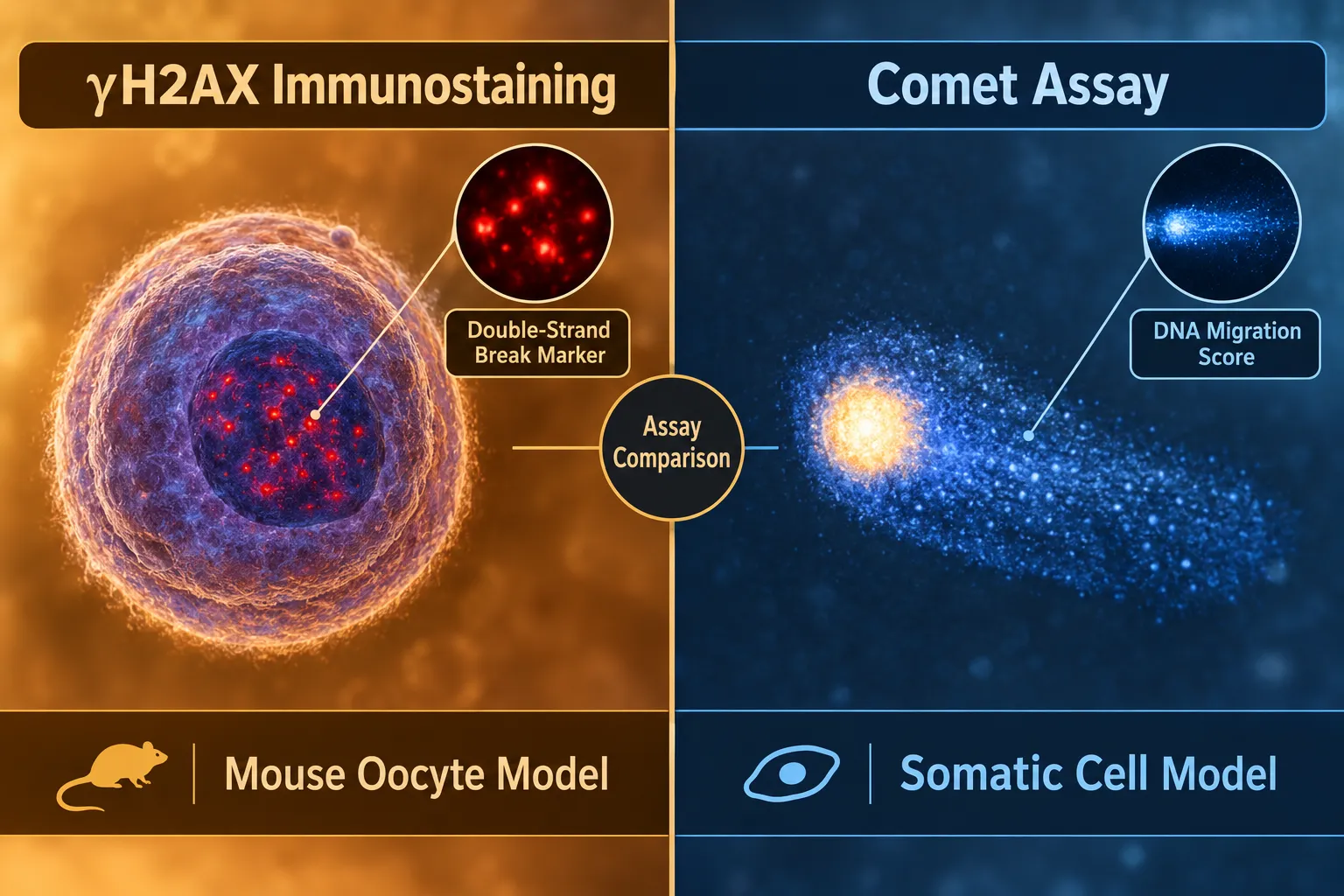
DNA-damage readouts in Epithalon research are concentrated in two model systems: mouse oocytes undergoing in-vitro post-ovulatory aging, and senescence-accelerated mouse strains. Neither maps directly onto human somatic cell telomere biology, which is an important limitation.

In the oocyte model, adding Epithalon during aging reduced gamma-H2AX foci, a validated marker of double-strand DNA breaks, lowered apoptosis rates, and improved spindle and chromosome morphology. These findings are meaningful because they show the peptide can act on DNA-integrity endpoints independently of a pure telomerase mechanism. Gamma-H2AX immunostaining and apoptosis assays are well-validated, quantitative, and reproducible, making this a technically sound data set even if the cell type is specialized.

In senescence-accelerated mouse models, Epithalon treatment reduced the incidence of chromosome aberrations by approximately 17.9 to 30.1 percent compared to age-matched controls. Cytogenetic assays measuring chromosomal instability are a legitimate DNA-damage endpoint, and this magnitude of effect is biologically meaningful.

What is missing: The comet assay (single-cell gel electrophoresis), 8-OHdG oxidative DNA-damage quantification, and 53BP1 foci analysis have not been systematically reported in Epithalon studies. These assays would allow researchers to distinguish between double-strand break repair, base-excision repair, and oxidative damage pathways, distinctions that matter for understanding mechanism.

Assay Reported in Epithalon Studies Cell/Animal Model Used
TRAP (telomerase activity) Yes, extensively Human fibroblasts, epithelial cells, endothelial cells
hTERT mRNA (qPCR) Yes Human fibroblasts, epithelial cells
Telomere length (qPCR/IF) Yes Human fibroblasts, breast cancer lines
gamma-H2AX foci Yes, limited Mouse oocytes
Chromosomal aberration count Yes, limited Senescence-accelerated mice
SA-beta-galactosidase staining Rarely reported Not systematically published
p16/p21 protein expression Rarely reported Not systematically published
Comet assay Not reported —

Senescence Markers and the Gap That Most Studies Leave Open
Senescence Markers and the Gap That Most Studies Leave Open

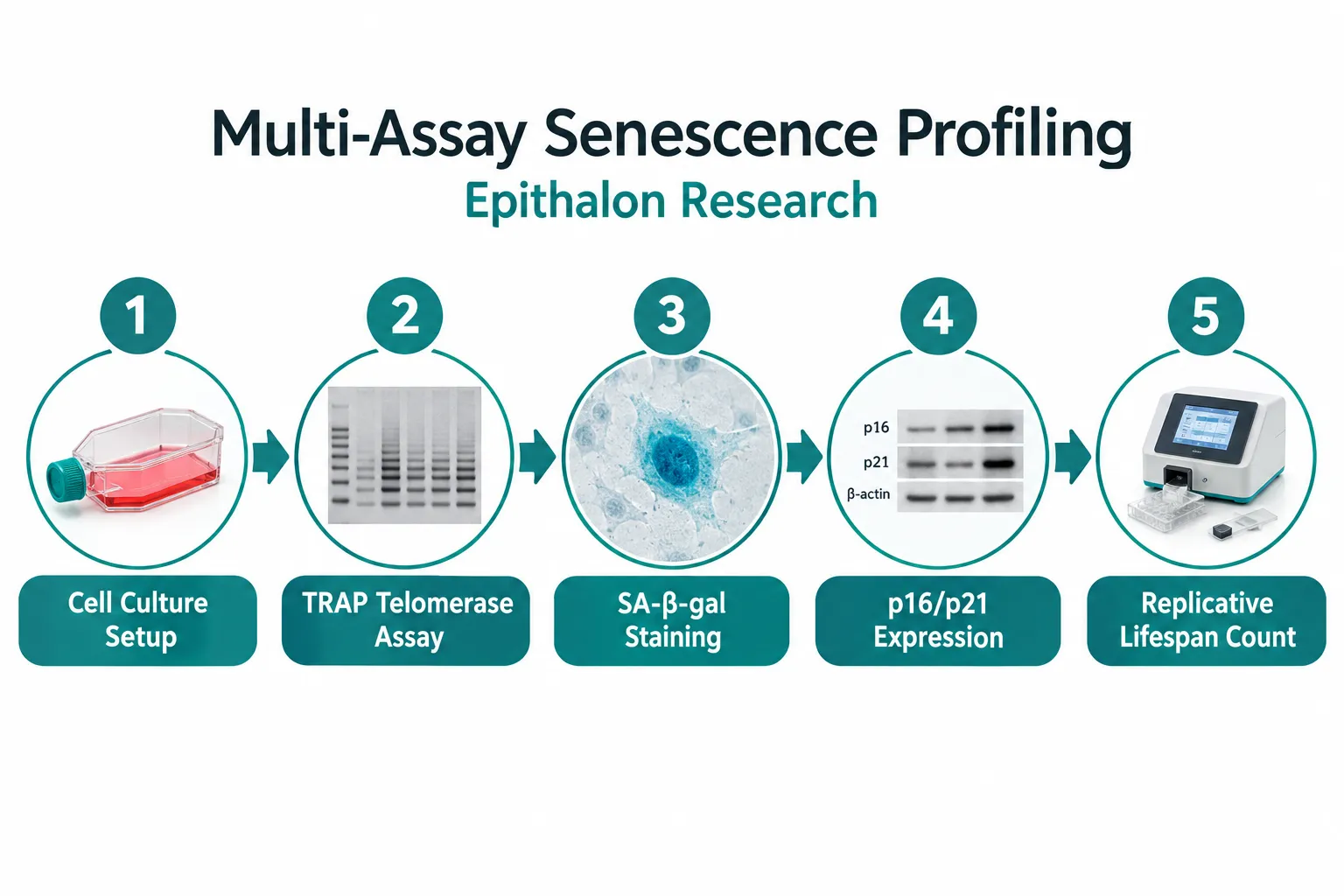
Cellular senescence is not simply "short telomeres." A cell enters stable senescence when multiple reinforcing signals converge: telomere dysfunction triggers ATM/ATR kinases, which stabilize p53, which induces p21 (CDKN1A), which blocks CDK2 and halts the cell cycle. Separately, p16 (CDKN2A) inhibits CDK4/6 independently of telomere length. SA-beta-galactosidase activity at pH 6.0 is a widely used cytochemical marker of this arrested state. None of these endpoints are routinely co-reported in published Epithalon studies alongside TRAP data.

This is the central methodological gap in Epithalon research: comparing telomerase, DNA-damage, and senescence assays across cell models. A study that shows telomerase activation without measuring p16, p21, SA-beta-gal, or long-term growth arrest cannot confirm that telomerase activation translated into delayed senescence. The mechanistic chain is plausible, and the proliferative lifespan data from fibroblast passage studies supports it indirectly, but direct senescence marker co-measurement is largely absent.

Researchers and labs sourcing lab-tested peptides for cell-based work should design experiments that pair TRAP assays with at least SA-beta-gal staining and p21 immunoblotting in the same culture wells. This design would allow direct correlation between telomerase activation magnitude and senescence entry delay, producing far more interpretable data than single-endpoint studies.

For context on how complementary peptides with mitochondrial and oxidative-stress mechanisms are studied alongside telomere-focused compounds, the SS-31 mechanism and research overview provides a useful parallel. Similarly, SS-31 kidney health research demonstrates how multi-endpoint organ-level studies are structured when a single mechanism does not capture the full biological picture.

Cancer Cell Models Require ALT Marker Inclusion

The 2025 Biogerontology study identified a critical model-specific finding: in breast cancer cell lines, Epithalon extended telomeres primarily through the alternative lengthening of telomeres (ALT) pathway rather than by further increasing telomerase catalytic activity. This means that a TRAP-only assay design in malignant models will systematically underestimate, or entirely miss, the telomere-lengthening effect. ALT activity should be confirmed with C-circle assay, APB (ALT-associated PML bodies) immunofluorescence, or telomere sister chromatid exchange (T-SCE) analysis whenever cancer-derived lines are used.

For researchers exploring peptide purity standards relevant to cell-based assay reliability, the GHK-Cu peptide purchase and copper peptide research sourcing guide and the research-grade Glow Blend peptide evaluation guide both address how impurity profiles can confound cell-model outcomes, a concern equally relevant to Epithalon studies.


Conclusion

The evidence base for Epithalon is more coherent than critics suggest and more limited than proponents often claim. Telomerase activation in normal human fibroblasts and epithelial cells is the best-supported finding, with independent replication and a plausible mechanistic pathway. DNA-damage reduction is supported in specialized models but not yet in human somatic cell systems. Senescence marker data is the weakest link across the entire literature.

Actionable next steps for researchers:

  1. Design multi-endpoint experiments. Pair every TRAP assay with SA-beta-gal staining, p21 immunoblot, and a telomere-length measurement in the same culture condition.
  2. Add ALT markers in any cancer-derived model. C-circle assay or APB immunofluorescence should accompany TRAP when using malignant lines.
  3. Include DNA-damage co-readouts in human somatic models. Gamma-H2AX and 53BP1 foci analysis would bridge the gap between the oocyte/mouse data and human cell findings.
  4. Prioritize normal stem cell and immune cell models. Mesenchymal stem cells and T-lymphocytes are biologically relevant to systemic aging and remain understudied in this context.
  5. Use verified, high-purity research-grade material. Assay reproducibility depends on peptide integrity; impurity-driven artifacts are a known confounder in low-concentration cell-culture work.

As of 2026, no human clinical trial has systematically measured telomere length or telomerase activity before and after Epithalon under controlled conditions. Until that data exists, Epithalon remains a mechanistic research tool of genuine scientific interest, not an established therapeutic. The path from promising preclinical signal to validated intervention runs directly through the multi-assay, multi-model experimental designs described above.

Tags: cellular senescence, dna damage markers, epithalon research, gamma-h2ax, htert mrna, telomerase assays, telomere length, trap assay
https://www.puretestedpeptides.com/wp-content/uploads/2026/10/epithalon-research-comparing-telomerase-dna-damage-and-senescence-assays-across.webp 1024 1536 https://www.puretestedpeptides.com/wp-content/uploads/2026/01/buy-peptides-online.jpg 2026-10-19 13:04:152026-10-19 13:04:15Epithalon Research: Comparing Telomerase, DNA-Damage, and Senescence Assays Across Cell Models
You might also like
Epithalon in Cellular-Aging Models: Separating Telomerase Activity, Telomere Length, DNA Damage, and Senescence Epithalon in Cellular-Aging Models: Separating Telomerase Activity, Telomere Length, DNA Damage, and Senescence
Epithalon Peptide in Longevity Research: Telomeres, Cellular Aging, and What Labs Measure Epithalon Peptide in Longevity Research: Telomeres, Cellular Aging, and What Labs Measure
Epithalon Peptide: Telomerase Activation and Cellular Senescence Research Applications Epithalon Peptide: Telomerase Activation and Cellular Senescence Research Applications
Epithalon Peptide Research: Telomere-Length Measurement Pitfalls and Better Senescence Controls Epithalon Peptide Research: Telomere-Length Measurement Pitfalls and Better Senescence Controls
Epithalon, Telomerase, and Senescence Assays: Choosing qPCR, Telomere-Length, and Senescence-Associated Readouts Epithalon, Telomerase, and Senescence Assays: Choosing qPCR, Telomere-Length, and Senescence-Associated Readouts
Epithalon, Telomerase, and Senescence Assays: Choosing qPCR, Telomere-Length, and Senescence-Associated Readouts Epithalon and Telomere Research: Designing Longitudinal Experiments That Separate Telomere Length From Senescence
0 replies

Leave a Reply

Want to join the discussion?
Feel free to contribute!

Leave a Reply Cancel reply

Your email address will not be published. Required fields are marked *

×

Helpful Links

  • My account
  • Cart
  • Checkout
  • Refund and Returns Policy
  • Privacy Policy
  • SMS Privacy Policy
  • Login
  • My Account
  • Logout

USA Made Lab Tested Peptides

All products are sold for research, laboratory, or analytical purposes only, and are not for human consumption


Pure Tested Peptides is a chemical supplier. Pure Tested Peptides is not a compounding / chemical compounding facility as defined under 503A of the Federal Food, Drug, and Cosmetic act. Pure Tested Peptides is not an outsourcing facility as defined under 503B of the Federal Food, Drug, and Cosmetic act.

The statements made within this website have not been evaluated by the US Food and Drug Administration. The products we offer are not intended to diagnose, treat, cure or prevent any disease.

Human/Animal Consumption Prohibited. Laboratory/In-Vitro Experimental Use Only

Link to: Selank Peptide Research: Anxiolytic, Stress, and Cognitive Readouts in Animal Models Link to: Selank Peptide Research: Anxiolytic, Stress, and Cognitive Readouts in Animal Models Selank Peptide Research: Anxiolytic, Stress, and Cognitive Readouts in Animal...Selank Peptide Research: Anxiolytic, Stress, and Cognitive Readouts in Animal Models Link to: GLP-3 Retatrutide Alternatives for Metabolic Research: When to Choose Tesofensine, MOTS-c, or 5-Amino-1MQ Link to: GLP-3 Retatrutide Alternatives for Metabolic Research: When to Choose Tesofensine, MOTS-c, or 5-Amino-1MQ GLP-3 Retatrutide Alternatives for Metabolic Research: When to Choose Tesofensine, MOTS-c, or 5-Amino-1MQGLP-3 Retatrutide Alternatives for Metabolic Research: When to Choose Tesofensine,...
Scroll to top Scroll to top Scroll to top