Call or Text 727-513-9780
  • Shopping Cart Shopping Cart
    0Shopping Cart
Pure Tested Peptides | America's most trusted Peptides for sale online
  • Peptides for sale
    • Oral Peptides for sale
      • Peptide Capsules for sale
      • BPC 157 Capsules 1000mcg
      • SLU-PP-332 Capsules | 1000 mcg
      • 5-Amino-1MQ 50mg Capsules
      • Tesofensine 500mcg
    • All Peptides for sale
    • Peptide Sprays
      • BPC 157 Nasal Spray Kit
      • BPC-157 TB500 Nasal Spray Kit
      • Semax Nasal Spray 10mg
      • Selank – Nasal Spray Kit – 10mg
      • Epithalon 50MG Nasal Spray Kit
      • Ipamorelin 10mg Nasal Spray
      • Klow Nasal Spray (BPC-157 + TB-500 + GHK-Cu + KPV) | 80mg
      • Hulk Nasal Spray Tesa / Ipa Blend 6/3 MG
      • Klow Nasal Spray
      • NAD + 500 mg Nasal Spray
      • PT-141 Nasal Spray Kit
    • GHRH Peptides
      • Ipa Peptides
      • CJC-1295 Peptides
        • CJC-1295 with DAC 5 mg
        • CJC-1295 without DAC 5 mg
        • CJC-1295 Ipa 10mg
      • Tesa Peptides
        • Tesa Peptide
        • Tesa 20 mg
    • GHK-Cu Peptides
      • All GHK-Cu Peptides
      • GHK-Cu 100mg
      • KLOW Peptide Blend – Buy KLOW blend online
    • BPC Peptides
      • All BPC Peptides
      • BPC-157
      • BPC-157 TB-500
      • BPC 157 capsules 1000mcg
    • SLU-PP-332 Peptides
      • All SLU-PP-332 Peptides
      • SLU-PP-332 5mg
    • GLP3 Peptides
    • PT-141 Peptides
      • PT-141 Peptides for sale
      • PT-141 10mg
      • PT-141 Nasal Spray
    • CAG Peptides
      • Lipo-C Peptide Blend
      • CAG 5mg
      • CAG 10mg
    • MOTS-C Peptides
      • MOTS-C Peptides for sale
      • MOTS-c peptide
      • MOTS-c 10mg *6 pack*
    • 5 Amino 1MQ Peptides
      • 5 Amino 1MQ Peptides for sale
      • 5-Amino-1MQ 50mg Capsules
      • 5-Amino-1MQ 5mg
    • Epithalon Peptides
      • Epithalon Peptides for sale
      • Epithalon 10mg
      • Epithalon 50mg
  • Shop
    • GLPs
      • 5-Amino-1MQ 50mg Capsules
      • 5-Amino-1MQ 5mg
      • L-Carnitine 500mg/ml
      • Tesofensine 500mcg
      • SLU-PP-332 5mg
      • MOTS-c 10mg *6 pack*
    • Epithalon & BPC Peptides
      • Epithalon 10mg
      • Epithalon 50mg
      • BPC-157
      • BPC 157 capsules 1000mcg
      • BPC-157 TB-500
      • BPC-157 TB500 Nasal Spray Kit
      • BPC 157 Nasal Spray Kit
    • BPC TB-500 & NAD+ Peptides
      • NAD+ 500 mg
      • KLOW Peptide Blend – Buy KLOW blend online
      • GLOW Peptide Blend
      • TB 500 5mg
      • BPC 157 capsules 1000mcg – Supplement
      • BPC 157 Nasal Spray Kit
      • BPC-157
      • BPC-157 TB500 Nasal Spray Kit
      • BPC-157 TB-500
      • BPC 157 capsules 1000mcg
    • LL-37 Peptide
      • LL-37 10 mg
    • MOTS-C & Selank
      • MOTS-c peptide
      • Selank 10mg
    • GHK Peptides
      • GHK-Cu 100mg
      • GLOW Peptide Blend
      • KLOW Peptide Blend – Buy KLOW blend online
  • COAs
  • Wholesale
    • Wholesale Peptides for sale
  • PTP FAQ
  • Affiliates
    • Selank Peptide: Advanced Pharmacological Mechanisms Underlying Its Anxiolytic and Nootropic Effects in Research
      • 5-Amino-1MQ Peptide: Detailed Mechanisms of NNMT Inhibition and Its Impact on Cellular Metabolism Research
        • MOTS-C Peptide: Unraveling Its Role in Mitochondrial Dynamics and Energy Metabolism Research
          • Epithalon Peptide and Telomerase Regulation: Investigating Its Impact on Cellular Senescence and Lifespan Research Models
            • GLP2-T vs GLP2 Tirz Peptide: Understanding the Naming, Mechanistic Nuances, and Research Implications for Gut Health
      • Peptides and Polypeptides in Modern Pharmacology: What Research on Metoprolol, Prednisone, and Amlodipine Reveals
        • Polypeptide Peptides vs NSAIDs: What Naproxen and Diclofenac Teach Tissue-Repair Researchers About BPC‑157 and TB‑500
          • Peptides and Polypeptides in Endocrine Pharmacology: How GLP-1, GLP-2, and GLP-3 Retatrutide Differ From Classic Drugs Like Prednisone and Amlodipine
          • 5‑Amino‑1MQ Peptide and NNMT Inhibition: How It Compares With Statins Like Atorvastatin in Adipose and Lipid Metabolism Research
      • Enclomiphene, Estrogen Receptor Signaling, and Luteinizing Phase Biology: What Hormone Researchers Should Measure
        • Mesenchymal Stem Cells, BPC‑157, and GHK‑Cu: How Tissue Repair Peptides Compare With Classic NSAIDs Like Naproxen in Injury Models
          • Peptide Calculator Use Cases Beyond Growth Hormone: Working Through GLP‑3 Retatrutide, MOTS‑c, and BPC‑157 Research Dosing
        • Polypeptide Peptides in Endocrine and Metabolic Pharmacology: Lessons From Amlodipine, Prednisone, and Metoprolol
        • Peptides Calculator for Advanced Blends: Worked Examples for Tesamorelin, CJC‑1295, and Ipamorelin Stacks
          • Peptides and Polypeptides in Human Physiology: How Molecular Size Shapes Research Applications
            • Selank Peptide: Advanced Pharmacological Mechanisms Underlying Its Anxiolytic and Nootropic Effects in Research
          • 5-Amino-1MQ Peptide: Detailed Mechanisms of NNMT Inhibition and Its Impact on Cellular Metabolism Research
            • MOTS-C Peptide: Unraveling Its Role in Mitochondrial Dynamics and Energy Metabolism Research
              • Epithalon Peptide and Telomerase Regulation: Investigating Its Impact on Cellular Senescence and Lifespan Research Models
                • GLP2-T vs GLP2 Tirz Peptide: Understanding the Naming, Mechanistic Nuances, and Research Implications for Gut Health
                  • Peptides and Polypeptides in Endocrine Pharmacology: How GLP-1, GLP-2, and GLP-3 Retatrutide Differ From Classic Drugs Like Prednisone and Amlodipine
                    • Polypeptide Peptides vs NSAIDs: What Naproxen and Diclofenac Teach Tissue-Repair Researchers About BPC‑157 and TB‑500
                      • Peptides and Polypeptides in Modern Pharmacology: What Research on Metoprolol, Prednisone, and Amlodipine Reveals
                        • 5‑Amino‑1MQ Peptide and NNMT Inhibition: How It Compares With Statins Like Atorvastatin in Adipose and Lipid Metabolism Research
                        • Enclomiphene, Estrogen Receptor Signaling, and Luteinizing Phase Biology: What Hormone Researchers Should Measure
                        • Mesenchymal Stem Cells, BPC‑157, and GHK‑Cu: How Tissue Repair Peptides Compare With Classic NSAIDs Like Naproxen in Injury Models
                        • Peptide Calculator Use Cases Beyond Growth Hormone: Working Through GLP‑3 Retatrutide, MOTS‑c, and BPC‑157 Research Dosing
                        • Polypeptide Peptides in Endocrine and Metabolic Pharmacology: Lessons From Amlodipine, Prednisone, and Metoprolol
                        • Peptides Calculator for Advanced Blends: Worked Examples for Tesamorelin, CJC‑1295, and Ipamorelin Stacks
                        • Peptides and Polypeptides in Human Physiology: How Molecular Size Shapes Research Applications
                        • Selank Peptide: Advanced Pharmacological Mechanisms Underlying Its Anxiolytic and Nootropic Effects in Research
                        • MOTS-C Peptide: Unraveling Its Role in Mitochondrial Dynamics and Energy Metabolism Research
                        • Peptides and Polypeptides in Modern Pharmacology: What Research on Metoprolol, Prednisone, and Amlodipine Reveals
                        • Peptides and Polypeptides in Endocrine Pharmacology: How GLP-1, GLP-2, and GLP-3 Retatrutide Differ From Classic Drugs Like Prednisone and Amlodipine
                        • 5-Amino-1MQ Peptide: Detailed Mechanisms of NNMT Inhibition and Its Impact on Cellular Metabolism Research
                        • Mesenchymal Stem Cells, BPC‑157, and GHK‑Cu: How Tissue Repair Peptides Compare With Classic NSAIDs Like Naproxen in Injury Models
                        • Peptide Calculator Use Cases Beyond Growth Hormone: Working Through GLP‑3 Retatrutide, MOTS‑c, and BPC‑157 Research Dosing
                        • GLP2-T vs GLP2 Tirz Peptide: Understanding the Naming, Mechanistic Nuances, and Research Implications for Gut Health
                        • Polypeptide Peptides in Endocrine and Metabolic Pharmacology: Lessons From Amlodipine, Prednisone, and Metoprolol
                        • Polypeptide Peptides vs NSAIDs: What Naproxen and Diclofenac Teach Tissue-Repair Researchers About BPC‑157 and TB‑500
                        • Peptides and Polypeptides in Human Physiology: How Molecular Size Shapes Research Applications
                        • Peptides Calculator for Advanced Blends: Worked Examples for Tesamorelin, CJC‑1295, and Ipamorelin Stacks
                        • 5‑Amino‑1MQ Peptide and NNMT Inhibition: How It Compares With Statins Like Atorvastatin in Adipose and Lipid Metabolism Research
                        • Enclomiphene, Estrogen Receptor Signaling, and Luteinizing Phase Biology: What Hormone Researchers Should Measure
                        • Epithalon Peptide and Telomerase Regulation: Investigating Its Impact on Cellular Senescence and Lifespan Research Models
                        • Best research protocol Klow blend
                        • best time to take BPC-157
                        • best time to take DSIP (Delta Sleep Inducing Peptide)
                        • best time to take CJC-1295
                        • best time to take AOD-9604
                        • best time to take Follistatin 344
                        • best time to take Ipamorelin
                        • best time to take MK-677 (Ibutamoren)
                        • best time to take Ligandrol (LGD-4033) — research compound
                        • best time to take Ostarine (MK-2866) — research compound
                        • best time to take GHK-CU
                        • best time to take TB-500
                        • best time to take MOTS-c
                        • best time to take Semax
                        • best time to take RAD-140 (Testolone) — research compound
                        • best time to take Thymosin Alpha-1
                        • best time to take PEG-MGF
                        • Biolife Plasma, Octapharma Plasma, and Research Peptides: How Plasma Donation Labs Differ From Peptide Suppliers
                        • best time to take YK-11 — research compound
                        • best time to take PT-141 (Bremelanotide)
                        • Best research protocol Klow blend
                        • 5-Amino-1MQ and MOTS-C Synergy: Metabolic Signaling, Mitochondria, and Research Design
                        • BPC-157 and TB-500: Investigating Their Combined Effects on Angiogenesis and Cellular Migration in Tissue Repair Models
                        • BPC-157 Peptide: Gut Barrier Function, Inflammation, and Tissue-Recovery Research
                        • 5‑Amino‑1MQ and MOTS‑c Synergy in Metabolic Research: Designing NNMT and Mitochondrial Biogenesis Stacks
                        • CJC-1295 with DAC vs. Without DAC: Half-Life, Release Kinetics, and Research Implications
                        • CJC‑1295 with DAC vs. Without DAC: Expanding on Half‑Life Differences Using Tesamorelin and Ipamorelin Blend Case Studies
                        • Collagen Biology and Copper‑Binding Peptides: How GHK‑Cu, Glow Blend, and Klow Blend Interact with Skin and Connective Tissue
                        • Collagen Biology and Regenerative Peptides: How GHK‑Cu, Glow Blend, and Klow Blend Affect Extracellular Matrix Research
                    • DNA, Telomeres, and Longevity Peptides: Positioning Epithalon and MOTS‑c in Genetic Aging Research
                      • Enclomiphene Citrate: serm Mechanism, Testosterone Research, and Stack Compatibility
                        • Enclomiphene vs Enclomiphene Citrate: Formulation, Bioavailability, and Research Distinctions
                        • Epithalon Peptide Research: Telomerase Activation, Aging, and Pineal Gland Function
                        • Estrogen Receptor Signaling and Enclomiphene: How Selective Modulators Compare with Classic Polypeptide Hormones
                        • GHK-Cu Peptide: Advanced Mechanisms in Extracellular Matrix Remodeling and Wound Healing Research
                        • GHK-Cu Peptide: Collagen Synthesis, Wound Repair, and Skin-Barrier Research Models
                        • GLP-1 vs GLP-3 vs GLP-2: Peptide Classification and Research Applications
                        • GLP-2 Peptide Research Guide: Gut Barrier Function, Nutrient Absorption, and Intestinal Recovery Models
                        • GLP-3 Retatrutide vs. GLP-1 Drugs: What Triple-Agonist Biology Changes in Research Models
                        • Ipamorelin and Tesamorelin Combination: Synergistic GH Secretagogue Research and Dosing Protocols
                        • GLP2 Tirz Peptide: What It Is, Why the Name Exists, and How Researchers Should Interpret It
                        • Klow Blend Peptide Nasal Spray: What the Formulation Is Trying to Do in Cognitive Research
                        • Mitochondria, NNMT Inhibition, and Peptide Modulators: Where MOTS‑c and 5‑Amino‑1MQ Fit in Cellular Energy Research
                        • MOTS-c Peptide: Mitochondrial Function, Energy Metabolism, and What Researchers Measure
                        • MOTS-c vs. 5-Amino-1MQ: Which Metabolic Research Questions Each Compound Actually Answers
                        • Nasal Spray Peptides: Bioavailability, Administration, and Semax/Selank Research Applications
                        • PT-141 Peptide Research: Mechanism of Action and Melanocortin Receptor Signaling
                        • Retatrutide for Research: Mechanism, Structure, and GLP-1/GLP-3 Dual Action
                        • Retatrutide for Obesity and Type 2 Diabetes: What the Latest Trial Data Suggest
                        • Tesofensine Peptide Research: Mechanism, Appetite Suppression, and Neuropeptide Y Pathways
  • Contact
    • Contact Customer Service
    • Text Customer Support
  • About US
  • Shop all peptides
  • Affiliate Program
    • Affiliate Signup
  • Login / Register Login / Register Page Link Login / Register Page Link
  • Click to open the search input field Click to open the search input field Search
  • Menu Menu
Epithalon Peptide Research: Telomere-Length Measurement Pitfalls and Better Senescence Controls

Epithalon Peptide Research: Telomere-Length Measurement Pitfalls and Better Senescence Controls

October 10, 2026/0 Comments/in Uncategorized/by

Fewer than a dozen completed human trials have ever prospectively measured telomere length before and after any peptide intervention, and epitalon is not yet among them. That gap between compelling cell-culture data and verified human outcomes sits at the heart of the current debate in Epithalon Peptide Research: Telomere-Length Measurement Pitfalls and Better Senescence Controls, where the quality of the assay used to measure telomeres can determine whether a study's conclusion holds up or quietly collapses under replication pressure.

Key Takeaways

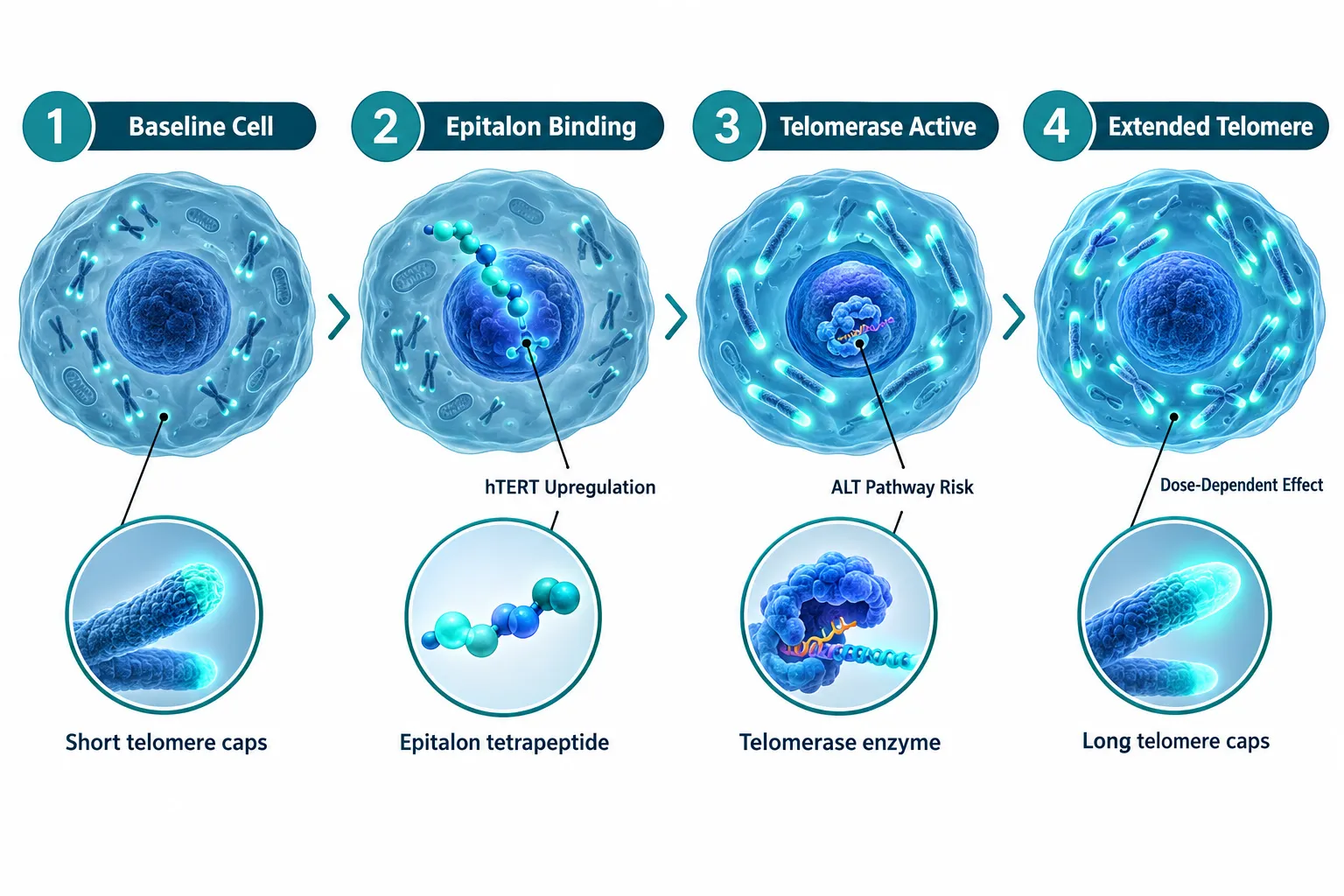
  • Epitalon has demonstrated dose-dependent telomere elongation and hTERT upregulation in normal human fibroblasts and mammary epithelial cells in controlled culture studies, with some lines showing roughly 12-fold increases in hTERT expression at 1 ug/ml.
  • The same peptide elongated telomeres in breast cancer cell lines through an Alternative Lengthening of Telomeres (ALT) mechanism, raising important questions about oncogenic risk in telomerase-targeting research.
  • qPCR, the most common telomere assay in epitalon studies, reports only average telomere length and suffers from significant inter-laboratory variability, making it insufficient as a standalone measure.
  • No completed, well-controlled human clinical trial has yet linked epitalon administration to measurable telomere extension in living people.
  • Robust epitalon research requires multi-method telomere validation paired with functional senescence markers, not telomere length data alone.

What the Cell-Culture Evidence Actually Shows

A 2025 study from Brunel University London published in Biogerontology produced some of the most detailed quantitative data on epitalon's telomere effects to date. Using both qPCR and telomere immunofluorescence, researchers documented telomere elongation in normal human fibroblasts and mammary epithelial cells that was both dose-dependent and time-dependent. In certain normal cell lines, 1 ug/ml epitalon drove approximately 12-fold upregulation of hTERT, the catalytic subunit of telomerase, while 0.5 ug/ml produced roughly 5-fold upregulation. Overall telomere length in some cultures reached about 2.4 times the baseline measurement.
What the Cell-Culture Evidence Actually Shows

A correction published later in 2025 refined the mechanistic interpretation of that study without overturning the core quantitative findings. The key clarification involved distinguishing between telomerase-driven elongation in normal cells and ALT-mediated elongation in cancer cell lines. In breast cancer lines (21NT and BT474), epitalon did extend telomeres, but via ALT rather than canonical telomerase activation. That distinction matters enormously for safety evaluation.

The takeaway is not that epitalon fails in cancer cells, it is that the mechanism differs, and the implications for oncogenic risk require separate, careful assessment.

A 2026 review on therapeutic peptides in gerontology confirmed that epitalon's telomerase effects in normal somatic cells have been replicated across independent laboratories, strengthening the mechanistic case. Additional 2025 experimental work extended these findings to bovine cumulus cells and cumulus-oocyte complexes, suggesting the peptide's influence on telomerase is not limited to a single cell type.

For researchers sourcing compounds for controlled studies, understanding purity and batch consistency is critical. Resources on lab tested peptides and guidance on choosing a best peptide manufacturer are relevant starting points for experimental design.


Telomere-Length Measurement Pitfalls in Epithalon Peptide Research
Telomere-Length Measurement Pitfalls in Epithalon Peptide Research

The most significant methodological vulnerability in current Epithalon Peptide Research: Telomere-Length Measurement Pitfalls and Better Senescence Controls literature is over-reliance on a single assay type, particularly qPCR.

Why qPCR Alone Is Not Enough

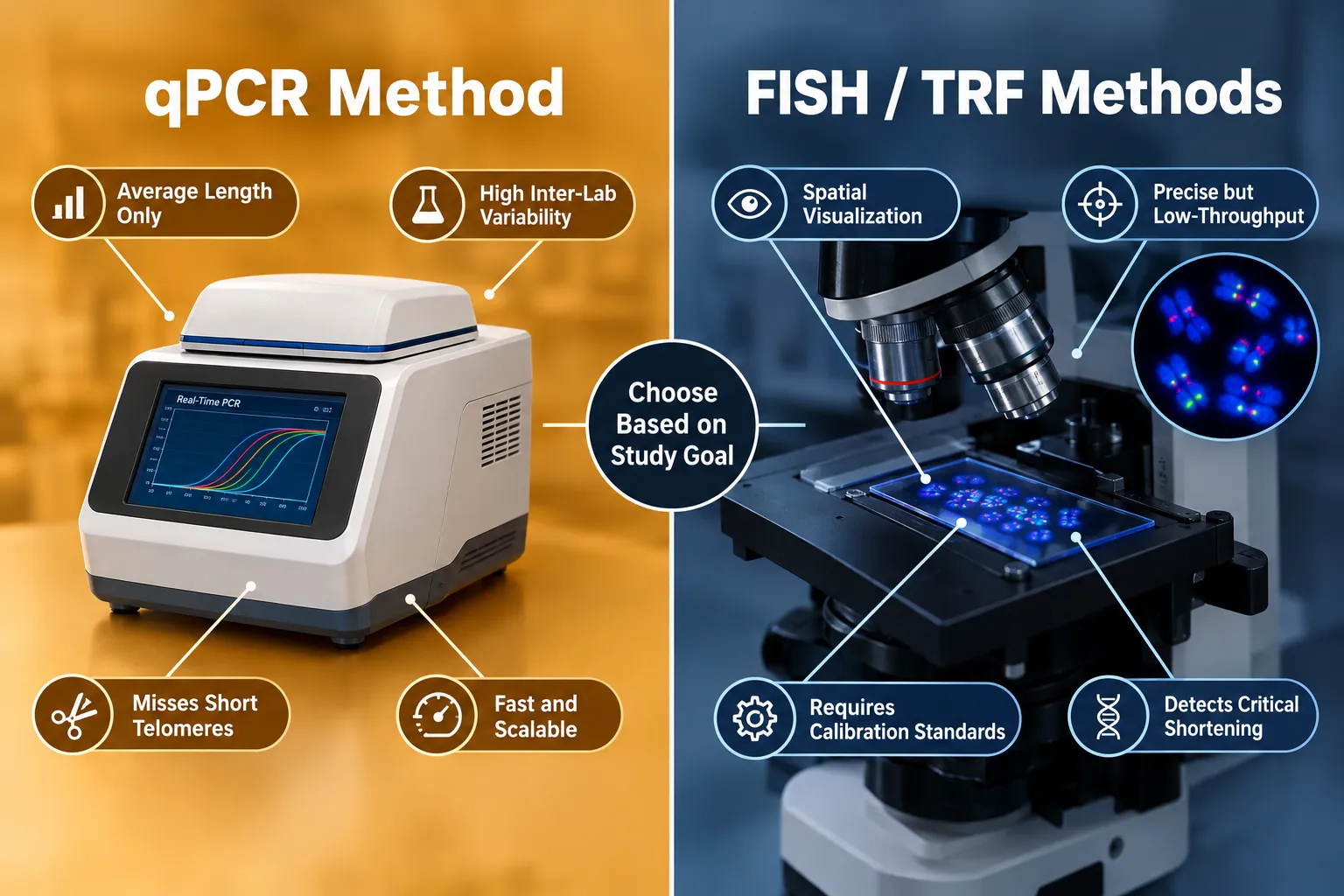
qPCR-based telomere measurement is fast and scalable, which explains its dominance. However, it carries serious limitations:

Limitation Why It Matters for Epitalon Studies
Reports average telomere length only Misses critically short telomeres that drive senescence
High inter-laboratory variability Results may not replicate across research groups
Sensitive to DNA quality and normalization Small technical errors produce large apparent differences
Cannot resolve telomere length distributions A few very long telomeres can mask many short ones

Critically short telomeres, not average telomere length, are the primary drivers of genomic instability and replicative senescence. A treatment that lengthens average telomeres while leaving critically short ones intact may show impressive qPCR numbers without meaningfully reducing senescence burden.

Alternative Methods and Their Trade-Offs

Fluorescence in situ hybridization (FISH) and quantitative FISH (Q-FISH) allow spatial visualization of individual telomeres and can detect length distributions rather than averages. However, they require meticulous calibration with standards of known telomeric repeat content and are low throughput. Terminal Restriction Fragment (TRF) analysis offers greater precision but is labor-intensive and difficult to scale.

The expert consensus from 2025-2026 methodology reviews is clear: multi-method validation combining qPCR with FISH/Q-FISH or TRF is the minimum standard for interventional telomere research. Cross-laboratory comparisons without harmonized protocols should be avoided.

Research teams exploring synergistic peptide combinations, such as those examining Epithalon and MOTS-c synergy, face compounded assay complexity, since each compound may affect telomere biology through distinct pathways that interact unpredictably in mixed-assay conditions.


Better Senescence Controls: Moving Beyond Telomere Length
Better Senescence Controls: Moving Beyond Telomere Length

The most important shift recommended by 2026 gerontology and methodology reviews is reframing the research question. Telomere elongation is a molecular event. Cellular senescence is a functional state. The two are related but not identical, and Epithalon Peptide Research: Telomere-Length Measurement Pitfalls and Better Senescence Controls must address both to produce actionable conclusions.

Recommended Senescence Control Strategies

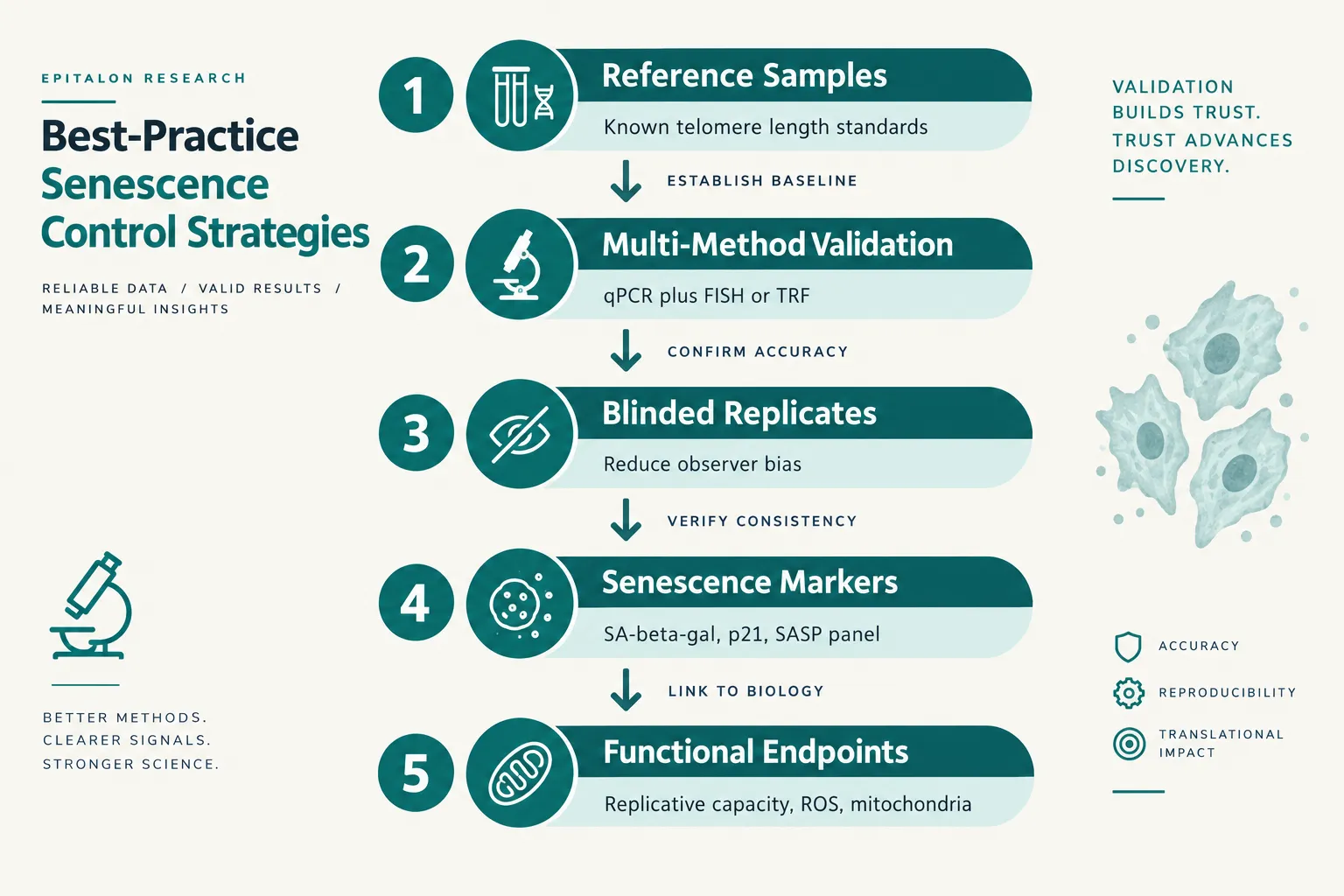
Leading experts propose the following framework for future epitalon studies:

  • Include reference samples with independently verified telomere lengths in every assay run
  • Report assay variability explicitly, including coefficient of variation across replicates
  • Use blinded replicates to reduce observer bias in both measurement and interpretation
  • Characterize telomere length distributions, not just means, to identify critically short telomere populations
  • Add functional senescence markers: senescence-associated beta-galactosidase (SA-beta-gal), p21 expression, DNA damage foci (gamma-H2AX), and senescence-associated secretory phenotype (SASP) components
  • Measure replicative capacity: does epitalon-treated cell culture actually divide more times before reaching the Hayflick limit?
  • Assess mitochondrial function and reactive oxygen species as independent indicators of cellular health

This multi-endpoint approach transforms a telomere chemistry study into a genuine senescence biology study. Researchers interested in comparing mitochondrial-targeting peptides alongside epitalon may find the MOTS-c peptide dosage calculator and information on buying MOTS-c peptide useful for designing comparative experimental arms.

The Human Translation Gap

Despite strong in vitro data, no completed, well-controlled human clinical trial has prospectively linked epitalon administration to telomere length changes in blood or tissue samples. Existing human data, primarily from older Khavinson-era studies, are limited in sample size and methodologically heterogeneous. This gap does not invalidate the cell-culture findings, but it does mean that claims about epitalon extending human lifespan or reversing human aging remain scientifically unsupported as of 2026.

Telomerase activation also carries a theoretical oncogenic risk. The ALT-pathway findings in cancer cell lines are not evidence that epitalon causes cancer, but they are a clear signal that telomerase-modulating interventions require rigorous long-term safety monitoring in any future human studies.

For researchers building out broader peptide research programs, resources on wholesale peptides and buying bulk peptide can support the scale needed for properly powered, multi-endpoint studies.


Conclusion

The cell-culture evidence for epitalon's telomere-extending and telomerase-activating effects is reproducible and quantitatively significant. However, the field's current reliance on average telomere length measured by qPCR alone is a structural weakness that undermines the translational value of many published findings.

Actionable next steps for researchers:

  1. Adopt multi-method telomere measurement protocols (qPCR plus Q-FISH or TRF) as a minimum standard for any new epitalon study.
  2. Add functional senescence endpoints, SA-beta-gal, p21, SASP markers, and replicative capacity, to every telomere-focused experimental design.
  3. Distinguish clearly between telomerase-driven and ALT-mediated elongation, especially when working with any cancer-derived cell lines.
  4. Prioritize harmonized protocols before conducting cross-laboratory comparisons.
  5. Treat the human translation gap as an open research question requiring prospective, controlled clinical study design, not an assumption that can be bridged by extrapolating cell-culture data.

The science of epitalon is genuinely promising. Making that promise actionable requires the field to hold itself to the same measurement standards it would demand of any other longevity intervention.

Tags: alt pathway, cellular senescence, epithalon peptide research, htert upregulation, qpcr telomere assay, senescence controls, telomerase activation, telomere length measurement
https://www.puretestedpeptides.com/wp-content/uploads/2026/10/epithalon-peptide-research-telomere-length-measurement-pitfalls-and-better-senes.webp 1024 1536 https://www.puretestedpeptides.com/wp-content/uploads/2026/01/buy-peptides-online.jpg 2026-10-10 13:04:472026-10-10 13:04:47Epithalon Peptide Research: Telomere-Length Measurement Pitfalls and Better Senescence Controls
You might also like
Optimizing Epithalon Lyophilization and Storage: Temperature-Dependent Degradation Rates in Telomere Research Optimizing Epithalon Lyophilization and Storage: Temperature-Dependent Degradation Rates in Telomere Research
Epithalon Peptide in Longevity Research: Telomeres, Cellular Aging, and What Labs Measure Epithalon Peptide in Longevity Research: Telomeres, Cellular Aging, and What Labs Measure
Epithalon Peptide Formulations: How Labs Compare Lyophilized vs Solution Stability in Telomere Research Epithalon Peptide Formulations: How Labs Compare Lyophilized vs Solution Stability in Telomere Research
Epithalon Peptide: Telomerase Activation and Cellular Senescence Research Applications Epithalon Peptide: Telomerase Activation and Cellular Senescence Research Applications
Epithalon Peptide: Unveiling Its Research Potential in Telomere Maintenance and Anti-Aging Studies Epithalon and Telomere Research: Designing Longitudinal Experiments That Separate Telomere Length From Senescence
Epithalon Peptide: Unveiling Its Research Potential in Telomere Maintenance and Anti-Aging Studies Epithalon Peptide: Unveiling Its Research Potential in Telomere Maintenance and Anti-Aging Studies
0 replies

Leave a Reply

Want to join the discussion?
Feel free to contribute!

Leave a Reply Cancel reply

Your email address will not be published. Required fields are marked *

×

Helpful Links

  • My account
  • Cart
  • Checkout
  • Refund and Returns Policy
  • Privacy Policy
  • SMS Privacy Policy
  • Login
  • My Account
  • Logout

USA Made Lab Tested Peptides

All products are sold for research, laboratory, or analytical purposes only, and are not for human consumption


Pure Tested Peptides is a chemical supplier. Pure Tested Peptides is not a compounding / chemical compounding facility as defined under 503A of the Federal Food, Drug, and Cosmetic act. Pure Tested Peptides is not an outsourcing facility as defined under 503B of the Federal Food, Drug, and Cosmetic act.

The statements made within this website have not been evaluated by the US Food and Drug Administration. The products we offer are not intended to diagnose, treat, cure or prevent any disease.

Human/Animal Consumption Prohibited. Laboratory/In-Vitro Experimental Use Only

Link to: GHK-Cu Peptide Research: Copper Availability, Fibroblast Signaling, and Matrix-Remodeling Assay Design Link to: GHK-Cu Peptide Research: Copper Availability, Fibroblast Signaling, and Matrix-Remodeling Assay Design GHK-Cu Peptide Research: Copper Availability, Fibroblast Signaling, and Matrix-Remodeling...GHK-Cu Peptide Research: Copper Availability, Fibroblast Signaling, and Matrix-Remodeling Assay Design Link to: BPC-157 Peptide Research: Separating Angiogenesis, Barrier Repair, and Inflammatory Signaling Link to: BPC-157 Peptide Research: Separating Angiogenesis, Barrier Repair, and Inflammatory Signaling BPC-157 Peptide Research: Separating Angiogenesis, Barrier Repair, and Inflammatory SignalingBPC-157 Peptide Research: Separating Angiogenesis, Barrier Repair, and Inflammatory...
Scroll to top Scroll to top Scroll to top