

Epithalon in Circadian and DNA-Repair Models: Choosing Melatonin, Clock-Gene, and Senescence Readouts
Fewer than 5% of published peptide longevity studies measure circadian outputs at all, yet the timing of cellular repair is as important as the repair machinery itself. This gap is precisely where Epithalon in circadian and DNA-repair models: choosing melatonin, clock-gene, and senescence readouts becomes a critical methodological question rather than a niche footnote. The tetrapeptide Ala-Glu-Asp-Gly (AEDG) has accumulated a distinct body of evidence linking it not only to telomere biology but also to the re-entrainment of the pineal axis and core clock genes, two systems that converge nightly to orchestrate DNA repair, immune surveillance, and senescence control.
Key Takeaways
- Epithalon raises nocturnal melatonin output roughly 1.6-1.7-fold and normalizes key circadian clock genes, including CLOCK, CRY2, and CSNK1E, in peripheral blood cells.
- Melatonin metabolite assays (urinary 6-sulfatoxymelatonin) and peripheral gene-expression panels serve as practical, non-invasive readouts of Epithalon response.
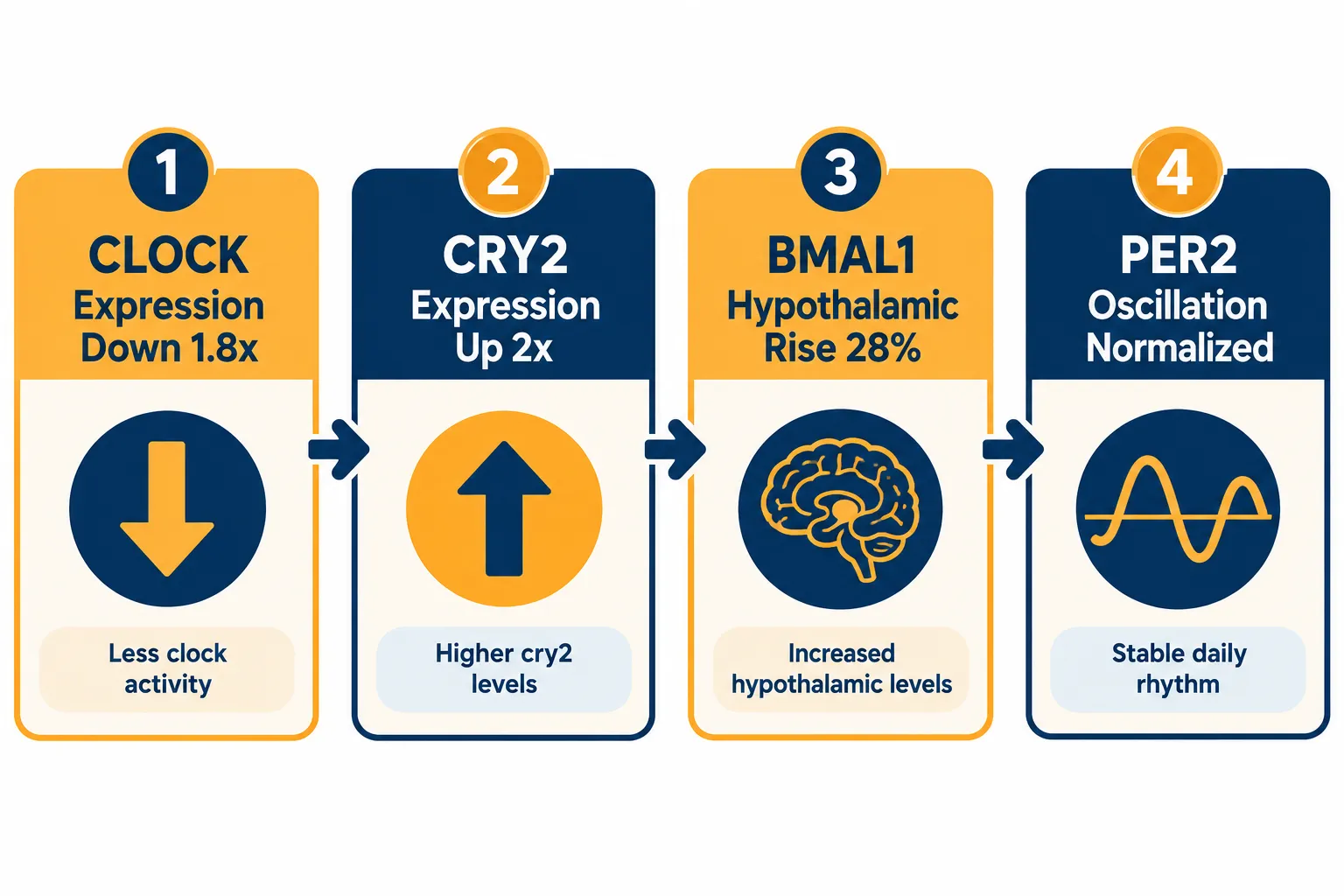
- Clock-gene modulation extends beyond hormone levels: BMAL1 rises roughly 28% in hypothalamic tissue, and PER2 oscillation amplitude normalizes in aged animal models.
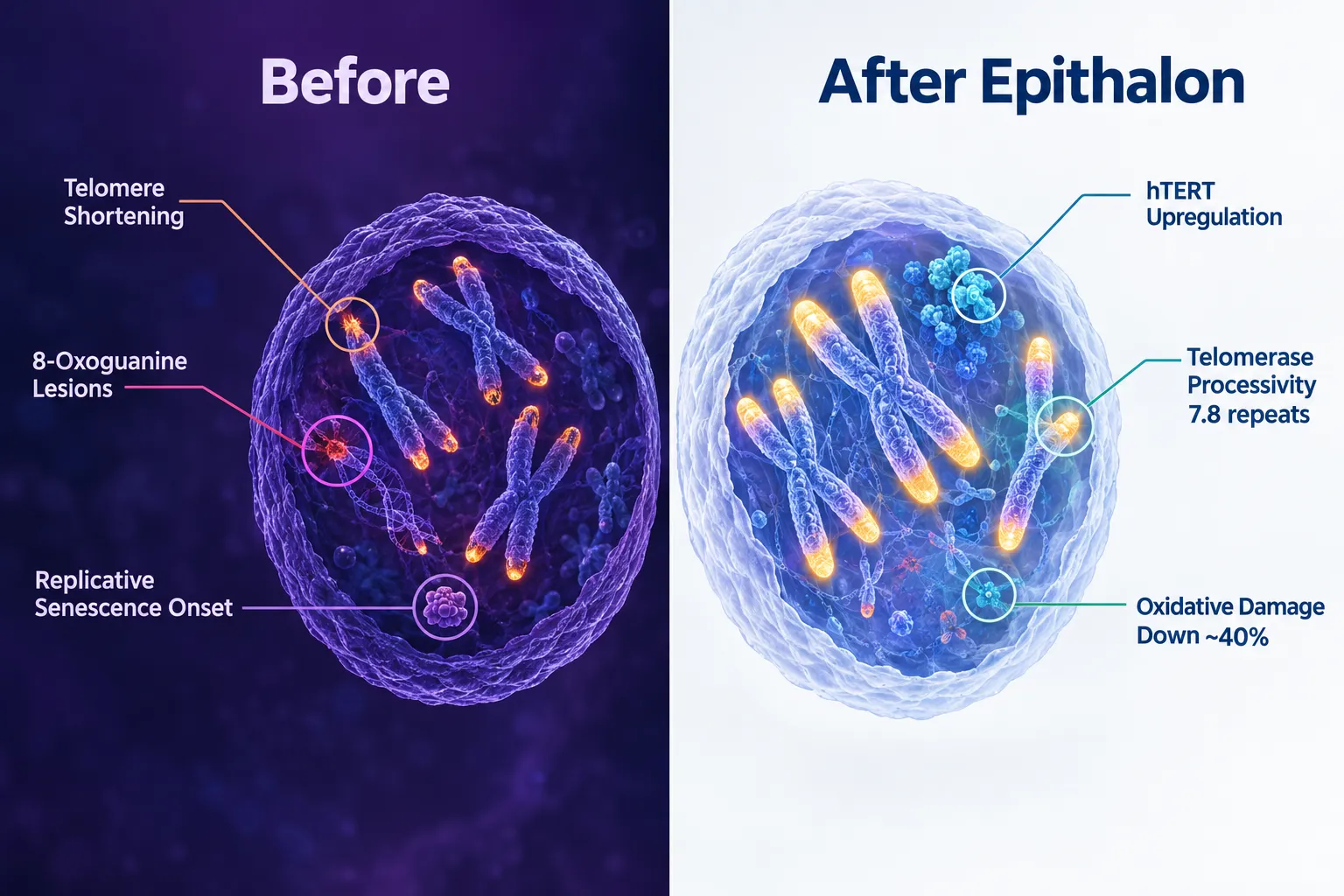
- Epithalon's DNA-repair relevance hinges on telomerase activation and a roughly 40% reduction in telomeric oxidative lesions (8-oxoguanine), effects linked mechanistically to its melatonin-synchronized antioxidant window.
- Most supporting evidence originates from a limited number of research groups; independent replication is increasing but large-scale outcome trials remain absent as of 2026.
Why Melatonin Readouts Matter in Epithalon Research
The pineal gland is the primary target through which Epithalon exerts circadian influence. Aging progressively blunts nocturnal melatonin secretion, flattening the rhythm that coordinates downstream repair processes. Epithalon appears to act on the enzymatic machinery responsible for melatonin synthesis, specifically AANAT and ASMT, rather than supplying exogenous melatonin. This mechanistic distinction makes urinary 6-sulfatoxymelatonin (aMT6s), the main melatonin metabolite excreted in urine, a highly practical primary readout.
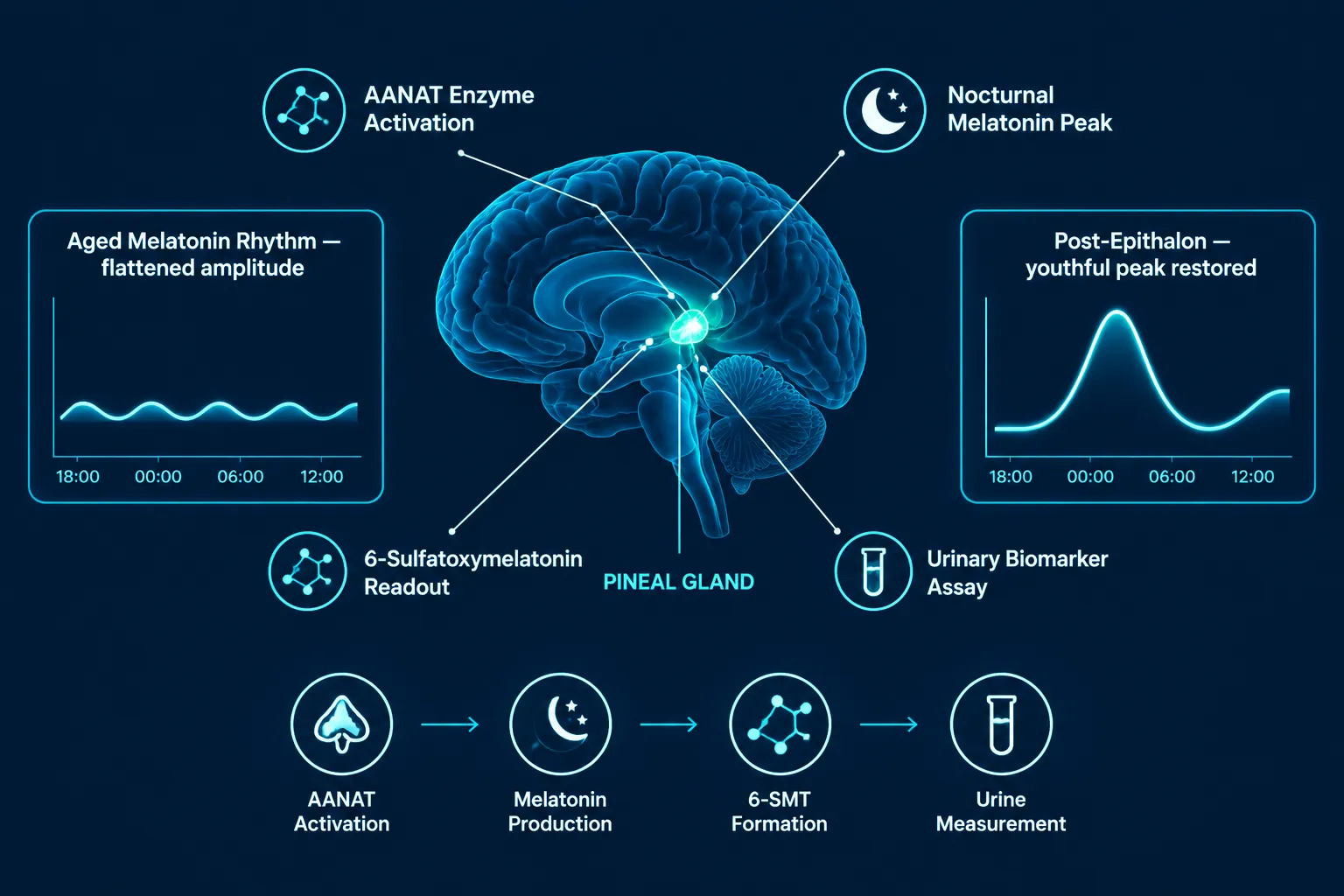
In a randomized clinical study involving 75 women administered sublingual Epithalon at 500 µg daily for 20 days, melatonin synthesis rose approximately 1.6-fold compared with placebo. The same cohort showed a 1.8-fold decrease in CLOCK expression and a 2.1-fold decrease in CSNK1E, along with a doubling of CRY2 expression, in peripheral blood cells. Taken together, these shifts describe a clock-gene signature consistent with restoration of youthful melatonin patterning rather than simple hormonal supplementation.
Practical readout selection for melatonin endpoints:
| Readout | Sample Type | Timing Sensitivity |
|---|---|---|
| Urinary 6-sulfatoxymelatonin (aMT6s) | First-morning urine | Moderate, integrates overnight output |
| Salivary melatonin (DLMO) | Serial saliva, evening | High, captures onset timing |
| Serum melatonin at 2-3 AM | Blood draw | Highest, captures peak amplitude |
For most translational models, aMT6s provides an accessible, non-invasive index. Where phase alignment is the question, dim-light melatonin onset (DLMO) from serial saliva collection is preferred.
Clock-Gene Panels: Selecting the Right Molecular Readouts
Choosing the right gene targets is central to evaluating Epithalon in circadian and DNA-repair models. The published literature points to a coherent cluster of clock-gene changes:
- CLOCK: Decreased approximately 1.8-fold post-Epithalon in human peripheral blood
- CRY2: Increased roughly 2-fold, suggesting a shift toward enhanced negative-feedback arm activity
- CSNK1E: Decreased 2.1-fold, implying slower phosphorylation-driven PER protein degradation
- BMAL1: Increased roughly 28% in hypothalamic tissue in aged rodent models
- PER2: Oscillation amplitude normalized in aged rats, consistent with re-entrainment of the central pacemaker
"Epithalon re-entrains central clock circuitry rather than acting solely via peripheral hormone levels."
This pattern suggests that researchers should include both the positive-arm genes (BMAL1, CLOCK) and the negative-arm genes (CRY1/2, PER1/2) when designing expression panels. PER1 carries additional relevance: it participates in cell-cycle checkpointing and DNA damage responses in human cancer cell models, linking the circadian panel directly to genomic stability endpoints.
Recommended minimum clock-gene panel for Epithalon studies:
- BMAL1 (positive arm, central pacemaker marker)
- CLOCK (positive arm, expression decreases with treatment)
- CRY2 (negative arm, expression increases with treatment)
- PER1 (DNA-damage checkpoint linkage)
- PER2 (oscillation amplitude, central re-entrainment)
- CSNK1E (post-translational clock speed regulator)
Peripheral blood mononuclear cells (PBMCs) are an accessible source for expression profiling and have been validated in the human Epithalon trials to date. Hypothalamic tissue provides deeper mechanistic data in animal models. Researchers working on senescence questions should also consider adding p16INK4a and p21 expression alongside the clock panel, since circadian disruption accelerates senescence onset through overlapping oxidative-stress pathways.
For researchers interested in how peptide stacks influence overlapping signaling pathways, the SS-31 mitochondrial research context offers a useful parallel, given SS-31's convergence on mitochondrial oxidative stress, a shared upstream driver of both clock dysfunction and telomere damage.
Senescence Readouts and the DNA-Repair Window
Epithalon's most-discussed molecular mechanism outside melatonin biology is telomerase activation. In cell culture, the tetrapeptide reportedly engages the human TERT promoter within 4-6 hours of exposure, increasing telomerase processivity from roughly 4.2 to 7.8 repeats per binding event. A 2025 in-vitro study from Brunel University's Centre for Genome Engineering and Maintenance provided the first widely cited independent replication, reporting dose-dependent telomere extension in normal epithelial and fibroblast cells via hTERT upregulation, and telomere maintenance in breast cancer lines through an alternative lengthening of telomeres (ALT) pathway.
The circadian connection here is direct: the nocturnal window of elevated melatonin coincides with the period of peak DNA-repair enzyme activity, reduced oxidative load, and telomere-maintenance cycling. Epithalon's melatonin-mediated antioxidant effects are associated with roughly 40% reductions in telomeric 8-oxoguanine lesions, a marker of oxidative DNA damage that accelerates telomere shortening and promotes senescence entry.
Key senescence-relevant readouts to pair with circadian endpoints:
- Telomere length (qPCR-based T/S ratio or TRF Southern blot)
- Telomerase activity (TRAP assay or direct hTERT expression)
- 8-Oxoguanine in telomeric repeats (immuno-FISH or OxiDIP-seq)
- p16INK4a / p21 expression (senescence marker genes)
- Senescence-associated secretory phenotype (SASP) cytokines (IL-6, IL-8)
- SA-beta-galactosidase staining (in-vitro models)
The chronopharmacological implication is that evening dosing, timed to overlap with the natural onset of the melatonin window, may enhance the synchrony between peptide exposure, telomerase activity, and repair enzyme availability. Formal chronopharmacology trials have not yet been published, but the mechanistic logic is consistent with established circadian DNA-repair biology.
Those comparing peptide interventions in the anti-aging space may also find the SS-31 kidney health research informative, as mitochondrial protection and oxidative-lesion reduction represent adjacent endpoints to the telomeric damage markers most relevant to Epithalon studies. Similarly, the ideal dosage of SS-31 discussion illustrates how dose-response considerations in repair-focused peptide research are handled across different mechanistic models.
For researchers designing multi-peptide protocols, the Semax peptide neuroprotective literature offers an example of how neuroregulatory peptides can modulate CNS targets relevant to clock entrainment, given Semax's influence on BDNF and hypothalamic signaling.
A note on evidence quality is warranted. The majority of published Epithalon studies originate from a single Russian research network (Khavinson and colleagues), and the independent replication base remains small. No large randomized controlled trials with hard clinical endpoints, such as reduced cancer incidence or measured functional-decline trajectories, have been completed as of 2026. Researchers building Epithalon-focused study designs should treat the current mechanistic and small-study data as hypothesis-generating rather than confirmatory.
Practitioners exploring the broader peptide landscape can consult a peptides doctor near me resource to find clinical oversight appropriate for translational or supervised investigational use.
Conclusion
Applying Epithalon in circadian and DNA-repair models: choosing melatonin, clock-gene, and senescence readouts effectively requires a layered measurement strategy. The most actionable steps for researchers in 2026 are:
- Use urinary aMT6s as the primary melatonin endpoint in human studies; add DLMO for phase-alignment questions.
- Build a six-gene clock panel covering both arms of the circadian transcription-translation feedback loop, with PER1 included specifically for DNA-damage checkpoint relevance.
- Pair clock-gene data with telomere and senescence endpoints, particularly 8-oxoguanine lesion frequency and hTERT expression, to test whether circadian normalization and DNA-repair improvement are mechanistically linked.
- Test evening dosing as a chronopharmacological variable in preclinical models before committing to protocol design in human studies.
- Seek independent replication: the Brunel University telomere study is a useful model for how external groups can rigorously test existing claims.
Circadian biology and repair timing are not peripheral details in longevity peptide research, they are the scheduling system that determines whether the molecular tools actually reach the right targets at the right moment.


Leave a Reply
Want to join the discussion?Feel free to contribute!