Call or Text 727-513-9780
  • Shopping Cart Shopping Cart
    0Shopping Cart
Pure Tested Peptides | America's most trusted Peptides for sale online
  • Peptides for sale
    • Oral Peptides for sale
      • Peptide Capsules for sale
      • BPC 157 Capsules 1000mcg
      • SLU-PP-332 Capsules | 1000 mcg
      • 5-Amino-1MQ 50mg Capsules
      • Tesofensine 500mcg
    • All Peptides for sale
    • Peptide Sprays
      • BPC 157 Nasal Spray Kit
      • BPC-157 TB500 Nasal Spray Kit
      • Semax Nasal Spray 10mg
      • Selank – Nasal Spray Kit – 10mg
      • Epithalon 50MG Nasal Spray Kit
      • Ipamorelin 10mg Nasal Spray
      • Klow Nasal Spray (BPC-157 + TB-500 + GHK-Cu + KPV) | 80mg
      • Hulk Nasal Spray Tesa / Ipa Blend 6/3 MG
      • Klow Nasal Spray
      • NAD + 500 mg Nasal Spray
      • PT-141 Nasal Spray Kit
    • GHRH Peptides
      • Ipa Peptides
      • CJC-1295 Peptides
        • CJC-1295 with DAC 5 mg
        • CJC-1295 without DAC 5 mg
        • CJC-1295 Ipa 10mg
      • Tesa Peptides
        • Tesa Peptide
        • Tesa 20 mg
    • GHK-Cu Peptides
      • All GHK-Cu Peptides
      • GHK-Cu 100mg
      • KLOW Peptide Blend – Buy KLOW blend online
    • BPC Peptides
      • All BPC Peptides
      • BPC-157
      • BPC-157 TB-500
      • BPC 157 capsules 1000mcg
    • SLU-PP-332 Peptides
      • All SLU-PP-332 Peptides
      • SLU-PP-332 5mg
    • GLP3 Peptides
    • PT-141 Peptides
      • PT-141 Peptides for sale
      • PT-141 10mg
      • PT-141 Nasal Spray
    • CAG Peptides
      • Lipo-C Peptide Blend
      • CAG 5mg
      • CAG 10mg
    • MOTS-C Peptides
      • MOTS-C Peptides for sale
      • MOTS-c peptide
      • MOTS-c 10mg *6 pack*
    • 5 Amino 1MQ Peptides
      • 5 Amino 1MQ Peptides for sale
      • 5-Amino-1MQ 50mg Capsules
      • 5-Amino-1MQ 5mg
    • Epithalon Peptides
      • Epithalon Peptides for sale
      • Epithalon 10mg
      • Epithalon 50mg
  • Shop
    • GLPs
      • 5-Amino-1MQ 50mg Capsules
      • 5-Amino-1MQ 5mg
      • L-Carnitine 500mg/ml
      • Tesofensine 500mcg
      • SLU-PP-332 5mg
      • MOTS-c 10mg *6 pack*
    • Epithalon & BPC Peptides
      • Epithalon 10mg
      • Epithalon 50mg
      • BPC-157
      • BPC 157 capsules 1000mcg
      • BPC-157 TB-500
      • BPC-157 TB500 Nasal Spray Kit
      • BPC 157 Nasal Spray Kit
    • BPC TB-500 & NAD+ Peptides
      • NAD+ 500 mg
      • KLOW Peptide Blend – Buy KLOW blend online
      • GLOW Peptide Blend
      • TB 500 5mg
      • BPC 157 capsules 1000mcg – Supplement
      • BPC 157 Nasal Spray Kit
      • BPC-157
      • BPC-157 TB500 Nasal Spray Kit
      • BPC-157 TB-500
      • BPC 157 capsules 1000mcg
    • LL-37 Peptide
      • LL-37 10 mg
    • MOTS-C & Selank
      • MOTS-c peptide
      • Selank 10mg
    • GHK Peptides
      • GHK-Cu 100mg
      • GLOW Peptide Blend
      • KLOW Peptide Blend – Buy KLOW blend online
  • COAs
  • Wholesale
    • Wholesale Peptides for sale
  • PTP FAQ
  • Affiliates
    • Selank Peptide: Advanced Pharmacological Mechanisms Underlying Its Anxiolytic and Nootropic Effects in Research
      • 5-Amino-1MQ Peptide: Detailed Mechanisms of NNMT Inhibition and Its Impact on Cellular Metabolism Research
        • MOTS-C Peptide: Unraveling Its Role in Mitochondrial Dynamics and Energy Metabolism Research
          • Epithalon Peptide and Telomerase Regulation: Investigating Its Impact on Cellular Senescence and Lifespan Research Models
            • GLP2-T vs GLP2 Tirz Peptide: Understanding the Naming, Mechanistic Nuances, and Research Implications for Gut Health
      • Peptides and Polypeptides in Modern Pharmacology: What Research on Metoprolol, Prednisone, and Amlodipine Reveals
        • Polypeptide Peptides vs NSAIDs: What Naproxen and Diclofenac Teach Tissue-Repair Researchers About BPC‑157 and TB‑500
          • Peptides and Polypeptides in Endocrine Pharmacology: How GLP-1, GLP-2, and GLP-3 Retatrutide Differ From Classic Drugs Like Prednisone and Amlodipine
          • 5‑Amino‑1MQ Peptide and NNMT Inhibition: How It Compares With Statins Like Atorvastatin in Adipose and Lipid Metabolism Research
      • Enclomiphene, Estrogen Receptor Signaling, and Luteinizing Phase Biology: What Hormone Researchers Should Measure
        • Mesenchymal Stem Cells, BPC‑157, and GHK‑Cu: How Tissue Repair Peptides Compare With Classic NSAIDs Like Naproxen in Injury Models
          • Peptide Calculator Use Cases Beyond Growth Hormone: Working Through GLP‑3 Retatrutide, MOTS‑c, and BPC‑157 Research Dosing
        • Polypeptide Peptides in Endocrine and Metabolic Pharmacology: Lessons From Amlodipine, Prednisone, and Metoprolol
        • Peptides Calculator for Advanced Blends: Worked Examples for Tesamorelin, CJC‑1295, and Ipamorelin Stacks
          • Peptides and Polypeptides in Human Physiology: How Molecular Size Shapes Research Applications
            • Selank Peptide: Advanced Pharmacological Mechanisms Underlying Its Anxiolytic and Nootropic Effects in Research
          • 5-Amino-1MQ Peptide: Detailed Mechanisms of NNMT Inhibition and Its Impact on Cellular Metabolism Research
            • MOTS-C Peptide: Unraveling Its Role in Mitochondrial Dynamics and Energy Metabolism Research
              • Epithalon Peptide and Telomerase Regulation: Investigating Its Impact on Cellular Senescence and Lifespan Research Models
                • GLP2-T vs GLP2 Tirz Peptide: Understanding the Naming, Mechanistic Nuances, and Research Implications for Gut Health
                  • Peptides and Polypeptides in Endocrine Pharmacology: How GLP-1, GLP-2, and GLP-3 Retatrutide Differ From Classic Drugs Like Prednisone and Amlodipine
                    • Polypeptide Peptides vs NSAIDs: What Naproxen and Diclofenac Teach Tissue-Repair Researchers About BPC‑157 and TB‑500
                      • Peptides and Polypeptides in Modern Pharmacology: What Research on Metoprolol, Prednisone, and Amlodipine Reveals
                        • 5‑Amino‑1MQ Peptide and NNMT Inhibition: How It Compares With Statins Like Atorvastatin in Adipose and Lipid Metabolism Research
                        • Enclomiphene, Estrogen Receptor Signaling, and Luteinizing Phase Biology: What Hormone Researchers Should Measure
                        • Mesenchymal Stem Cells, BPC‑157, and GHK‑Cu: How Tissue Repair Peptides Compare With Classic NSAIDs Like Naproxen in Injury Models
                        • Peptide Calculator Use Cases Beyond Growth Hormone: Working Through GLP‑3 Retatrutide, MOTS‑c, and BPC‑157 Research Dosing
                        • Polypeptide Peptides in Endocrine and Metabolic Pharmacology: Lessons From Amlodipine, Prednisone, and Metoprolol
                        • Peptides Calculator for Advanced Blends: Worked Examples for Tesamorelin, CJC‑1295, and Ipamorelin Stacks
                        • Peptides and Polypeptides in Human Physiology: How Molecular Size Shapes Research Applications
                        • Selank Peptide: Advanced Pharmacological Mechanisms Underlying Its Anxiolytic and Nootropic Effects in Research
                        • MOTS-C Peptide: Unraveling Its Role in Mitochondrial Dynamics and Energy Metabolism Research
                        • Peptides and Polypeptides in Modern Pharmacology: What Research on Metoprolol, Prednisone, and Amlodipine Reveals
                        • Peptides and Polypeptides in Endocrine Pharmacology: How GLP-1, GLP-2, and GLP-3 Retatrutide Differ From Classic Drugs Like Prednisone and Amlodipine
                        • 5-Amino-1MQ Peptide: Detailed Mechanisms of NNMT Inhibition and Its Impact on Cellular Metabolism Research
                        • Mesenchymal Stem Cells, BPC‑157, and GHK‑Cu: How Tissue Repair Peptides Compare With Classic NSAIDs Like Naproxen in Injury Models
                        • Peptide Calculator Use Cases Beyond Growth Hormone: Working Through GLP‑3 Retatrutide, MOTS‑c, and BPC‑157 Research Dosing
                        • GLP2-T vs GLP2 Tirz Peptide: Understanding the Naming, Mechanistic Nuances, and Research Implications for Gut Health
                        • Polypeptide Peptides in Endocrine and Metabolic Pharmacology: Lessons From Amlodipine, Prednisone, and Metoprolol
                        • Polypeptide Peptides vs NSAIDs: What Naproxen and Diclofenac Teach Tissue-Repair Researchers About BPC‑157 and TB‑500
                        • Peptides and Polypeptides in Human Physiology: How Molecular Size Shapes Research Applications
                        • Peptides Calculator for Advanced Blends: Worked Examples for Tesamorelin, CJC‑1295, and Ipamorelin Stacks
                        • 5‑Amino‑1MQ Peptide and NNMT Inhibition: How It Compares With Statins Like Atorvastatin in Adipose and Lipid Metabolism Research
                        • Enclomiphene, Estrogen Receptor Signaling, and Luteinizing Phase Biology: What Hormone Researchers Should Measure
                        • Epithalon Peptide and Telomerase Regulation: Investigating Its Impact on Cellular Senescence and Lifespan Research Models
                        • Best research protocol Klow blend
                        • best time to take BPC-157
                        • best time to take DSIP (Delta Sleep Inducing Peptide)
                        • best time to take CJC-1295
                        • best time to take AOD-9604
                        • best time to take Follistatin 344
                        • best time to take Ipamorelin
                        • best time to take MK-677 (Ibutamoren)
                        • best time to take Ligandrol (LGD-4033) — research compound
                        • best time to take Ostarine (MK-2866) — research compound
                        • best time to take GHK-CU
                        • best time to take TB-500
                        • best time to take MOTS-c
                        • best time to take Semax
                        • best time to take RAD-140 (Testolone) — research compound
                        • best time to take Thymosin Alpha-1
                        • best time to take PEG-MGF
                        • Biolife Plasma, Octapharma Plasma, and Research Peptides: How Plasma Donation Labs Differ From Peptide Suppliers
                        • best time to take YK-11 — research compound
                        • best time to take PT-141 (Bremelanotide)
                        • Best research protocol Klow blend
                        • 5-Amino-1MQ and MOTS-C Synergy: Metabolic Signaling, Mitochondria, and Research Design
                        • BPC-157 and TB-500: Investigating Their Combined Effects on Angiogenesis and Cellular Migration in Tissue Repair Models
                        • BPC-157 Peptide: Gut Barrier Function, Inflammation, and Tissue-Recovery Research
                        • 5‑Amino‑1MQ and MOTS‑c Synergy in Metabolic Research: Designing NNMT and Mitochondrial Biogenesis Stacks
                        • CJC-1295 with DAC vs. Without DAC: Half-Life, Release Kinetics, and Research Implications
                        • CJC‑1295 with DAC vs. Without DAC: Expanding on Half‑Life Differences Using Tesamorelin and Ipamorelin Blend Case Studies
                        • Collagen Biology and Copper‑Binding Peptides: How GHK‑Cu, Glow Blend, and Klow Blend Interact with Skin and Connective Tissue
                        • Collagen Biology and Regenerative Peptides: How GHK‑Cu, Glow Blend, and Klow Blend Affect Extracellular Matrix Research
                    • DNA, Telomeres, and Longevity Peptides: Positioning Epithalon and MOTS‑c in Genetic Aging Research
                      • Enclomiphene Citrate: serm Mechanism, Testosterone Research, and Stack Compatibility
                        • Enclomiphene vs Enclomiphene Citrate: Formulation, Bioavailability, and Research Distinctions
                        • Epithalon Peptide Research: Telomerase Activation, Aging, and Pineal Gland Function
                        • Estrogen Receptor Signaling and Enclomiphene: How Selective Modulators Compare with Classic Polypeptide Hormones
                        • GHK-Cu Peptide: Advanced Mechanisms in Extracellular Matrix Remodeling and Wound Healing Research
                        • GHK-Cu Peptide: Collagen Synthesis, Wound Repair, and Skin-Barrier Research Models
                        • GLP-1 vs GLP-3 vs GLP-2: Peptide Classification and Research Applications
                        • GLP-2 Peptide Research Guide: Gut Barrier Function, Nutrient Absorption, and Intestinal Recovery Models
                        • GLP-3 Retatrutide vs. GLP-1 Drugs: What Triple-Agonist Biology Changes in Research Models
                        • Ipamorelin and Tesamorelin Combination: Synergistic GH Secretagogue Research and Dosing Protocols
                        • GLP2 Tirz Peptide: What It Is, Why the Name Exists, and How Researchers Should Interpret It
                        • Klow Blend Peptide Nasal Spray: What the Formulation Is Trying to Do in Cognitive Research
                        • Mitochondria, NNMT Inhibition, and Peptide Modulators: Where MOTS‑c and 5‑Amino‑1MQ Fit in Cellular Energy Research
                        • MOTS-c Peptide: Mitochondrial Function, Energy Metabolism, and What Researchers Measure
                        • MOTS-c vs. 5-Amino-1MQ: Which Metabolic Research Questions Each Compound Actually Answers
                        • Nasal Spray Peptides: Bioavailability, Administration, and Semax/Selank Research Applications
                        • PT-141 Peptide Research: Mechanism of Action and Melanocortin Receptor Signaling
                        • Retatrutide for Research: Mechanism, Structure, and GLP-1/GLP-3 Dual Action
                        • Retatrutide for Obesity and Type 2 Diabetes: What the Latest Trial Data Suggest
                        • Tesofensine Peptide Research: Mechanism, Appetite Suppression, and Neuropeptide Y Pathways
  • Contact
    • Contact Customer Service
    • Text Customer Support
  • About US
  • Shop all peptides
  • Affiliate Program
    • Affiliate Signup
  • Login / Register Login / Register Page Link Login / Register Page Link
  • Click to open the search input field Click to open the search input field Search
  • Menu Menu
Glow Blend Peptide vs GHK-Cu: What Skin and Tissue Research Models Actually Measure

Glow Blend Peptide vs GHK-Cu: What Skin and Tissue Research Models Actually Measure

September 28, 2026/0 Comments/in Uncategorized/by

Fewer than one in ten multi-peptide research blends entering the market in 2026 have published combination data to support their formulation rationale, and Glow Blend is no exception. That gap between product development and peer-reviewed evidence is precisely what makes understanding the comparison of Glow Blend Peptide vs GHK-Cu: What Skin and Tissue Research Models Actually Measure so important for researchers, formulators, and science-focused readers who want to separate measurable endpoints from marketing language.

Key Takeaways

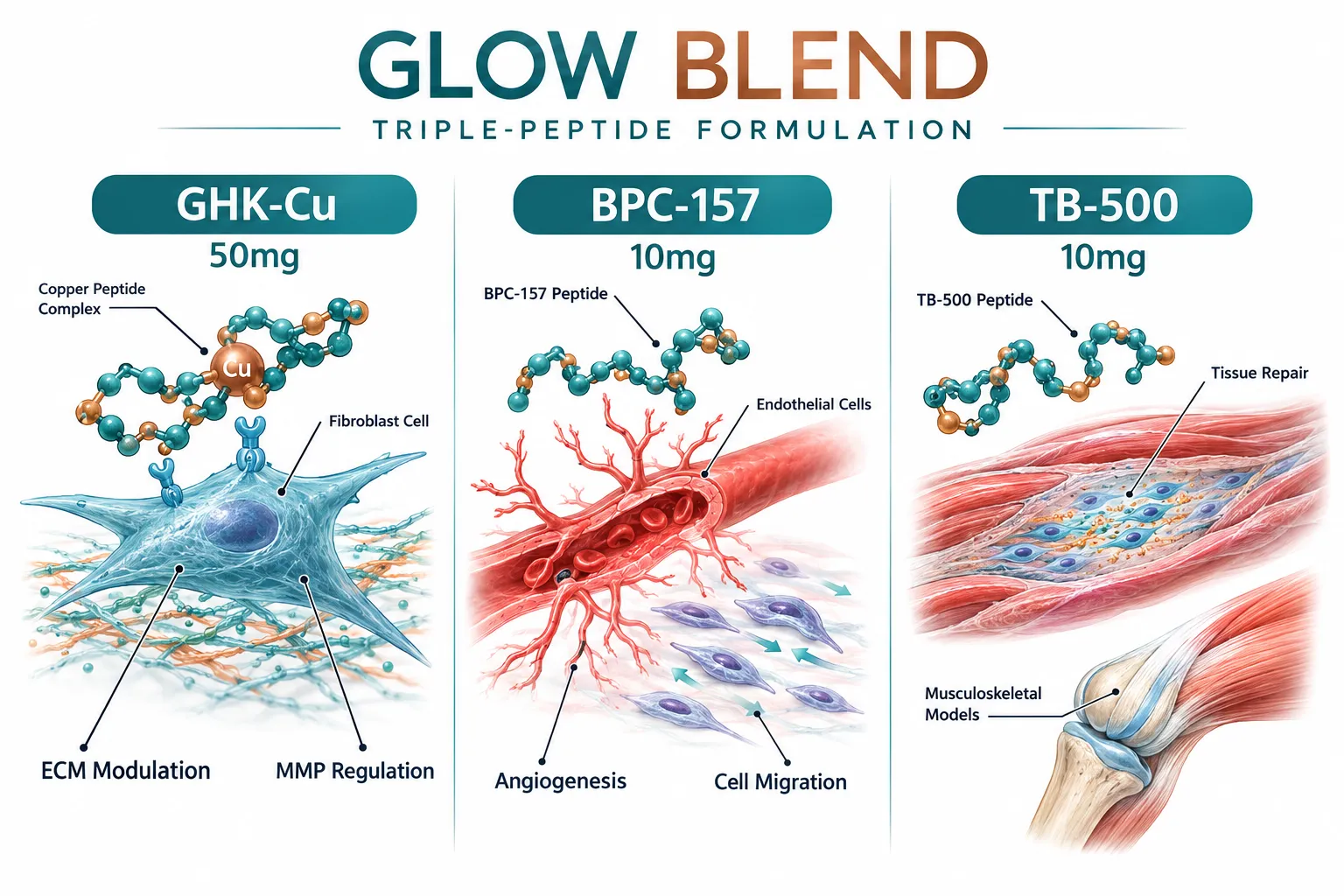
  • Glow Blend is a 70 mg lyophilized triple-peptide research formulation (50 mg GHK-Cu, 10 mg BPC-157, 10 mg TB-500) positioned strictly for in vitro and analytical research use, not clinical or cosmetic application.
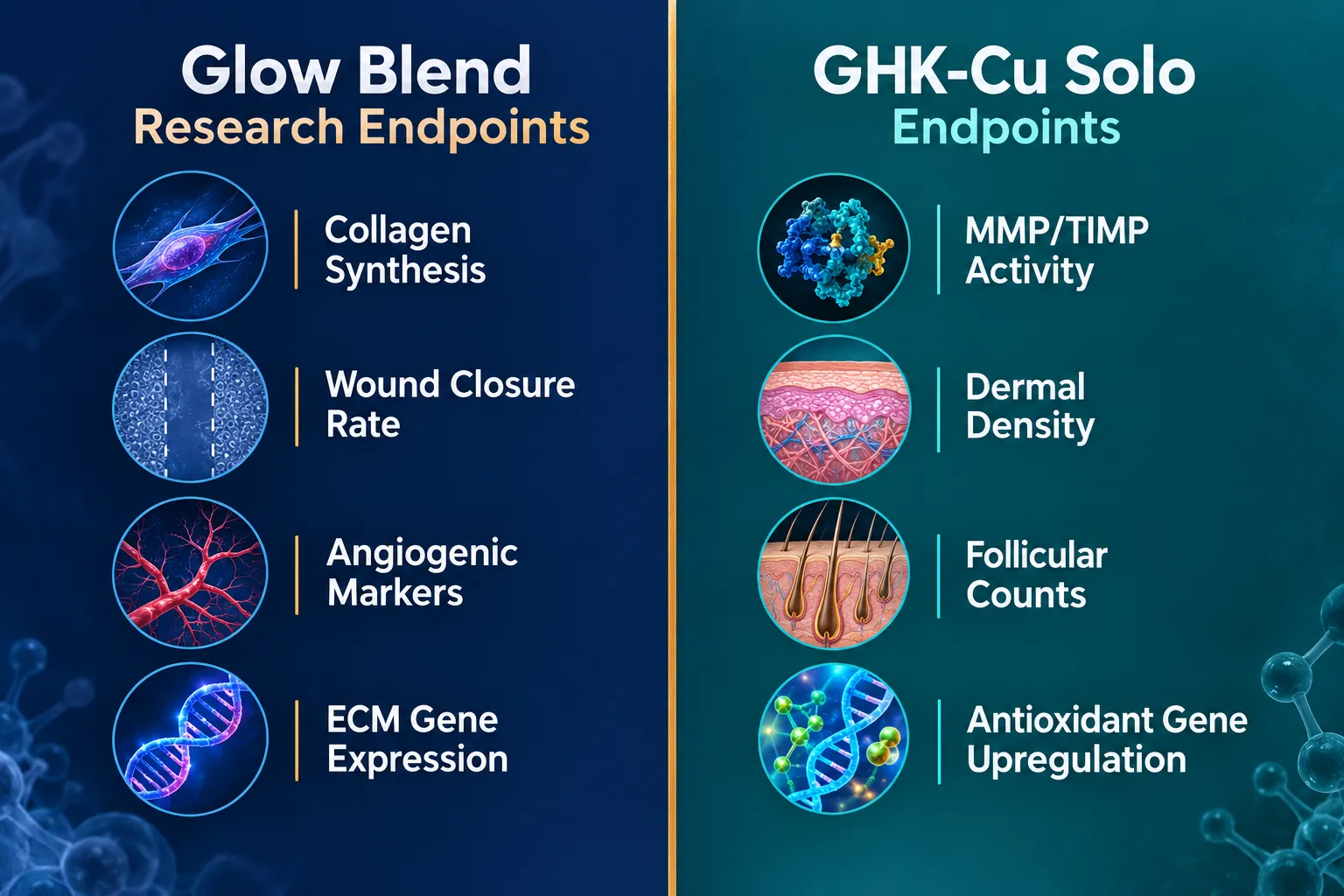
  • GHK-Cu has substantial published mechanistic evidence in dermal fibroblast and wound models, with clearly defined endpoints including collagen synthesis, MMP/TIMP activity, and gene expression profiling.
  • Glow Blend's claimed endpoints, collagen signaling, angiogenesis, tissue repair, are extrapolated from individual peptide literature; no published combination studies currently exist.
  • Research models that matter most include scratch assays, fibroblast proliferation assays, ECM gene panels, and histological wound-closure measurements.
  • Purity verification (HPLC, mass spectrometry, Certificate of Analysis) is necessary for research reproducibility but does not itself demonstrate biological efficacy.

What Glow Blend Actually Is in a Research Context

Multiple suppliers define Glow Blend as a 70 mg lyophilized triple-peptide formulation, typically 50 mg GHK-Cu, 10 mg BPC-157, and 10 mg TB-500 per vial. A variant featuring higher GHK-Cu content alongside TB-500 fragments and 10 mg BPC-157 has also appeared in late 2026 listings, reflecting active product development in this category. Across all vendors, the formulation is labeled "for research use only" and explicitly not intended for human or veterinary administration, nor classified as a drug, food, cosmetic, or dietary supplement.
What Glow Blend Actually Is in a Research Context

This framing matters. It positions Glow Blend within the research-chemical market as a reference material for in vitro and analytical work. The stated research applications converge on:

  • Collagen and extracellular matrix (ECM) signaling
  • Tissue regeneration and wound-healing pathways
  • Cell migration and angiogenesis models
  • Musculoskeletal repair systems

These are not subjective "anti-aging" endpoints. They are quantifiable outputs from controlled laboratory assays, a distinction that becomes central when comparing this blend to GHK-Cu studied in isolation. Researchers interested in related regenerative peptide research may also find value in reviewing GHK-Cu peptides for sale from verified suppliers to ensure analytical-grade material for their models.


Glow Blend Peptide vs GHK-Cu: What Skin and Tissue Research Models Actually Measure

Understanding the comparison requires mapping each peptide component to its known assay readouts.

GHK-Cu: Established Endpoints in Dermal Models

GHK-Cu (copper tripeptide-1) has the most robust individual evidence base of the three components. In dermal fibroblast and tissue explant models, it has been shown to:

  • Stimulate collagen type I and III synthesis, measured via biochemical collagen content assays and immunohistochemistry
  • Modulate metalloproteinase (MMP) and TIMP activity, quantified through enzyme-linked assays of MMP-1, MMP-2, and their inhibitors in conditioned media
  • Regulate glycosaminoglycan (GAG) synthesis, assessed by colorimetric or fluorometric assays of ECM components
  • Upregulate tissue-remodeling genes, captured through microarray or RNA-seq platforms targeting TGF-beta, integrin, and collagen-related gene families
  • Downregulate pro-inflammatory and fibrotic gene sets, including cytokine panels (IL-1, TNF-alpha) and fibrosis markers

In wound-healing models, GHK-Cu endpoints include wound-closure speed (scratch assay), re-epithelialization rate, granulation tissue formation, dermal density, and follicular counts in hair-follicle models. These are structural and functional tissue metrics, not cosmetic impressions. Researchers exploring complementary regenerative peptides can also consult the IPA Sermorelin stack research resource for context on how stacked peptide models are evaluated.

BPC-157 and TB-500: Complementary Assay Domains

Within the Glow Blend formulation, BPC-157 and TB-500 are described as components studied in angiogenesis, cell-migration, and musculoskeletal repair models. Their relevant assay readouts include:

Peptide Primary Model Type Key Measured Endpoints
BPC-157 Angiogenesis / GI tissue Endothelial sprouting, microvessel formation, vessel density
TB-500 Cell migration / soft tissue Actin-mediated migration rate, tendon/ligament cell motility, functional recovery scores

These endpoints are framed as complementary to GHK-Cu's ECM-focused effects. However, no publicly indexed peer-reviewed papers currently report combination data for Glow Blend itself. All current research claims draw on known properties of each peptide tested individually in preclinical models.
BPC-157 and TB-500: Complementary Assay Domains


Analytical Verification vs Biological Efficacy: A Critical Distinction

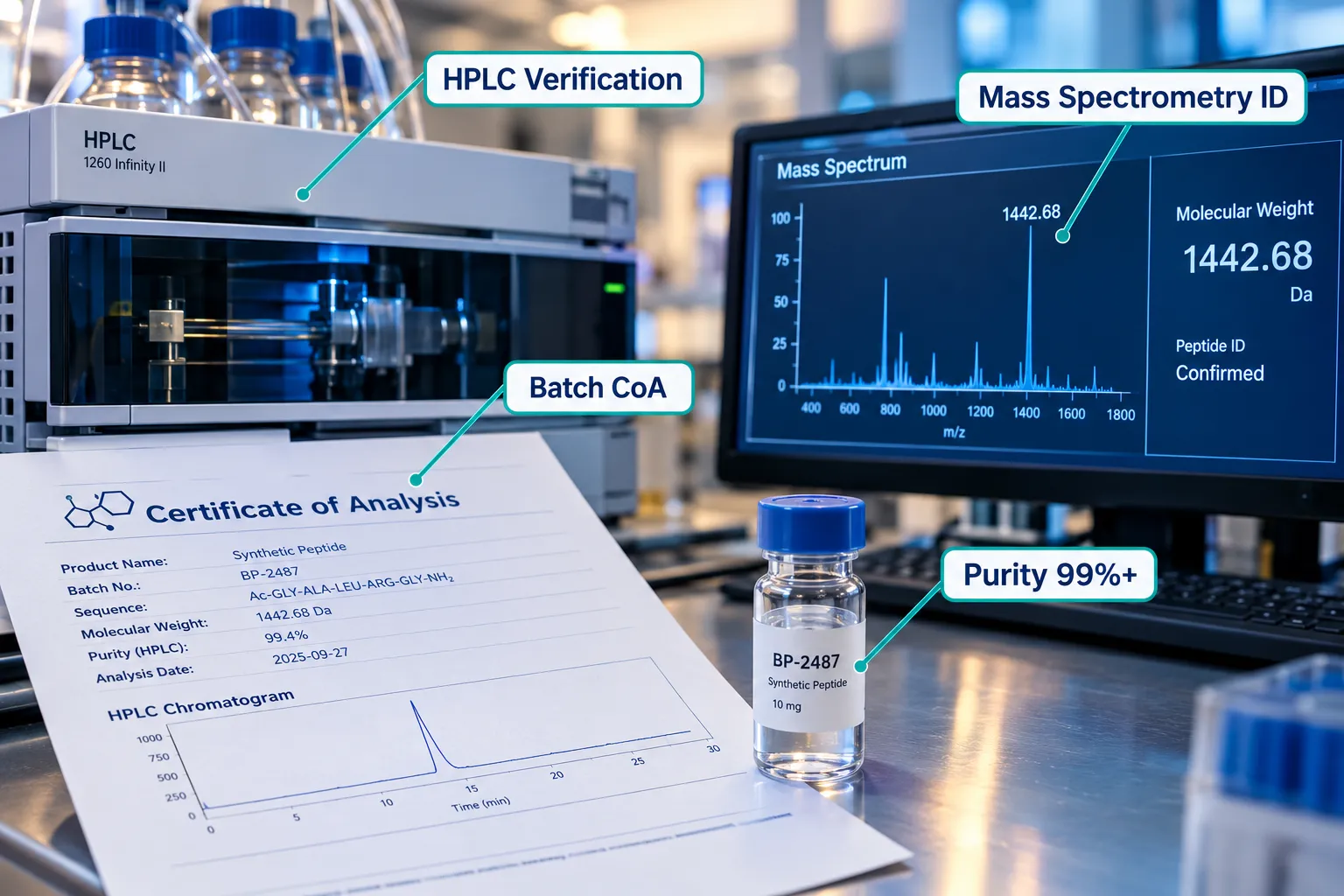
Several suppliers emphasize rigorous analytical characterization of Glow Blend: greater than or equal to 99% purity, HPLC and mass-spectrometry verification, defined molecular weights, amino acid counts, and batch-specific Certificates of Analysis. These are measured using standard chromatographic and spectrometric methods.

Key distinction: QC metrics confirm peptide identity and purity. They do not demonstrate biological efficacy. They are prerequisites for research reproducibility, not substitutes for functional assay data.

This distinction separates how a researcher should evaluate Glow Blend from how a consumer might evaluate a cosmetic product. For in vitro skin and tissue work, purity verification ensures that observed effects in fibroblast cultures or wound models are attributable to the peptide and not to contaminants. Researchers sourcing related compounds may also find it useful to review GHK-Cu peptide for sale listings that include CoA documentation.

By contrast, GHK-Cu has already transitioned from purely experimental peptide to a recognized active in commercial cosmetic formulations, a trajectory that reflects its accumulated mechanistic evidence base. Industry-facing sources describe similar "Glow Protocol" stacks as "synergistic multi-pathway regeneration," yet acknowledge these formulations remain experimental and rely on extrapolation from individual peptide literature.

For researchers interested in other peptides with established tissue-level evidence, the SS-31 mitochondrial research literature offers a useful parallel example of how mechanistic endpoint data builds over time in preclinical models.
Analytical Verification vs Biological Efficacy: A Critical Distinction

The clustering of new Glow Blend listings in September 2026 suggests rising interest in multi-peptide regeneration models. A reasonable forward-looking expectation is that upcoming preclinical work will focus on additive or synergistic effects in standardized systems, fibroblast cultures, reconstructed human skin, and animal wound-healing models, using metrics such as collagen content, wound-closure rate, capillary density, and inflammatory markers. This remains speculative and is not yet supported by published combination studies. Researchers interested in other regenerative research tools may also explore Ipamorelin peptide for sale as a related area of growth-factor pathway investigation.


Conclusion

The comparison of Glow Blend Peptide vs GHK-Cu: What Skin and Tissue Research Models Actually Measure ultimately comes down to evidence depth. GHK-Cu has a well-mapped endpoint profile, collagen synthesis, MMP modulation, gene expression, wound closure, validated across multiple published dermal and fibroblast studies. Glow Blend offers a rationally designed multi-pathway formulation, but its combination effects remain uncharacterized in published research as of 2026.

Actionable next steps for researchers:

  1. Use GHK-Cu's established endpoint library (collagen assays, MMP panels, scratch assays) as the benchmark when designing Glow Blend experiments.
  2. Require batch-specific CoA documentation with HPLC and mass-spec data before using any multi-peptide blend in tissue models.
  3. Design experiments that isolate individual component effects before testing the full blend, enabling additive vs. synergistic effect analysis.
  4. Track the emerging preclinical literature on BPC-157 and TB-500 combination models to identify validated assay frameworks as they become available.
  5. Distinguish cosmetic-use claims from research-model endpoints when evaluating supplier descriptions of any peptide formulation.
Tags: collagen synthesis, ecm signaling, ghk-cu, glow blend peptide, peptide research, skin research models, tissue research endpoints, wound healing assays
https://www.puretestedpeptides.com/wp-content/uploads/2026/09/glow-blend-peptide-vs-ghk-cu-what-skin-and-tissue-research-models-actually-measu.webp 1024 1536 https://www.puretestedpeptides.com/wp-content/uploads/2026/01/buy-peptides-online.jpg 2026-09-28 13:04:102026-09-28 13:04:10Glow Blend Peptide vs GHK-Cu: What Skin and Tissue Research Models Actually Measure
You might also like
Klow Blend and Glow Blend Peptides: Comparing Skin-Focused Peptide Formulations in Research Settings Klow Blend and Glow Blend Peptides: Comparing Skin-Focused Peptide Formulations in Research Settings
BPC-157 and TB-500 Synergy: Advanced Tissue Repair and Regeneration Protocols BPC-157 and TB-500 Synergy: Advanced Tissue Repair and Regeneration Protocols
Collagen Research Peptides: Where GHK-Cu, Glow Blend, and Skin-Focused Formulas Fit in Laboratory Models Collagen Research Peptides: Where GHK-Cu, Glow Blend, and Skin-Focused Formulas Fit in Laboratory Models
GHK-Cu Peptide: Collagen Synthesis, Tissue Repair, and Longevity Research Applications GHK-Cu Peptide: Collagen Synthesis, Tissue Repair, and Longevity Research Applications
PT-141 Peptide: Investigating Its Melanocortin Receptor Agonism and Applications in Sexual Function Research PT-141 Peptide: Investigating Its Melanocortin Receptor Agonism and Applications in Sexual Function Research
Collagen Signaling and Copper Peptides: What Researchers Measure With GHK-Cu and Related Skin Models Collagen Signaling and Copper Peptides: What Researchers Measure With GHK-Cu and Related Skin Models
Best Research‑Use GH Secretagogue Peptides: Comparing CJC‑1295 (With and Without DAC), Ipamorelin, and Tesamorelin Best Research‑Use GH Secretagogue Peptides: Comparing CJC‑1295 (With and Without DAC), Ipamorelin, and Tesamorelin
Collagen, GHK-Cu, and Glow Blend: How Classic Collagen Biology Intersects With Copper Peptide Research Collagen, GHK-Cu, and Glow Blend: How Classic Collagen Biology Intersects With Copper Peptide Research
0 replies

Leave a Reply

Want to join the discussion?
Feel free to contribute!

Leave a Reply Cancel reply

Your email address will not be published. Required fields are marked *

×

Helpful Links

  • My account
  • Cart
  • Checkout
  • Refund and Returns Policy
  • Privacy Policy
  • SMS Privacy Policy
  • Login
  • My Account
  • Logout

USA Made Lab Tested Peptides

All products are sold for research, laboratory, or analytical purposes only, and are not for human consumption


Pure Tested Peptides is a chemical supplier. Pure Tested Peptides is not a compounding / chemical compounding facility as defined under 503A of the Federal Food, Drug, and Cosmetic act. Pure Tested Peptides is not an outsourcing facility as defined under 503B of the Federal Food, Drug, and Cosmetic act.

The statements made within this website have not been evaluated by the US Food and Drug Administration. The products we offer are not intended to diagnose, treat, cure or prevent any disease.

Human/Animal Consumption Prohibited. Laboratory/In-Vitro Experimental Use Only

Link to: Enclomiphene Research Materials: Enclomiphene Base vs Citrate for Identity, Solubility, and COA Review Link to: Enclomiphene Research Materials: Enclomiphene Base vs Citrate for Identity, Solubility, and COA Review Enclomiphene Research Materials: Enclomiphene Base vs Citrate for Identity,...Enclomiphene Research Materials: Enclomiphene Base vs Citrate for Identity, Solubility, and COA Review Link to: Semax Nasal Spray Research Products: How to Compare Concentration, Excipient Disclosure, and Analytical Documentation Link to: Semax Nasal Spray Research Products: How to Compare Concentration, Excipient Disclosure, and Analytical Documentation Semax Nasal Spray Research Products: How to Compare Concentration, Excipient Disclosure, and Analytical DocumentationSemax Nasal Spray Research Products: How to Compare Concentration, Excipient...
Scroll to top Scroll to top Scroll to top