

Pregabalin Confounding Factors in BPC-157 Neuropathic Pain Models: Controlling Central vs. Peripheral Signaling
Fewer than a handful of peer-reviewed studies have tested BPC-157 and a gabapentinoid in the same neuropathic pain model, yet pregabalin remains one of the most commonly prescribed background treatments in patients and animals used in chronic pain research. That gap is a serious methodological problem. When pregabalin confounding factors in BPC-157 neuropathic pain models go unaddressed, researchers risk misattributing centrally driven analgesia to a peptide whose primary actions appear to be peripheral and reparative.
Key Takeaways
- BPC-157 exerts its analgesic and reparative effects largely through peripheral pathways, VEGFR2, PI3K-Akt-eNOS, and cytokine reduction, rather than through classic central neuromodulation.
- Pregabalin suppresses neuropathic pain by binding alpha-2-delta calcium channel subunits in the spinal cord and brain, a mechanism that can mask or mimic BPC-157's behavioral pain outcomes.
- No published protocol currently mandates pregabalin washout before BPC-157 administration in neuropathic pain assays, creating an uncontrolled variable in polypharmacy settings.
- Controlling central vs. peripheral signaling requires pairing behavioral tests with peripheral biomarkers such as cytokine profiles, oxidative stress indices, and angiogenesis markers.
- Standardized exclusion or stratification of gabapentinoid use is the single most actionable step researchers can take to improve mechanistic clarity in future BPC-157 trials.
Why the BPC-157 Signaling Profile Matters
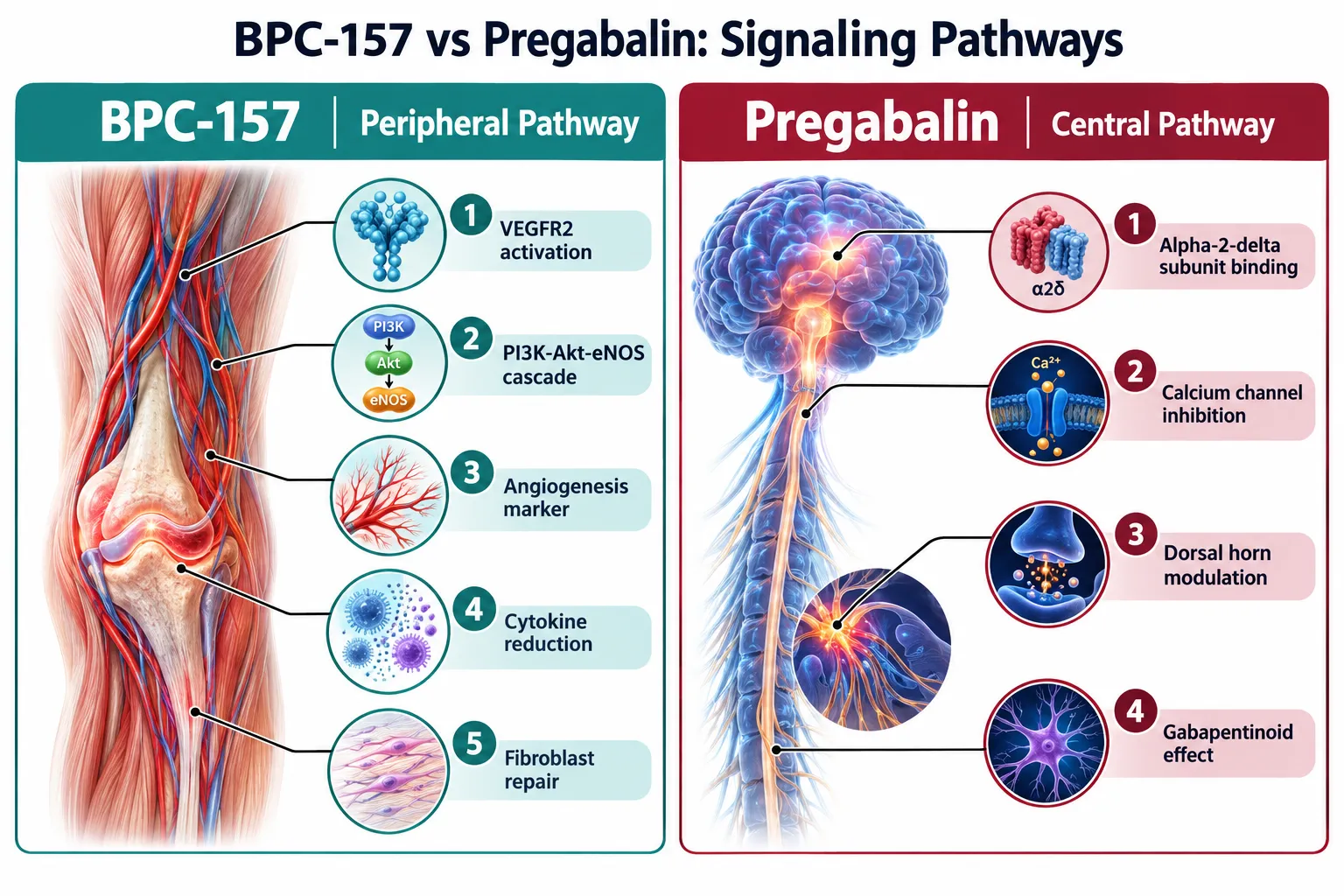
BPC-157 is a synthetic pentadecapeptide derived from a gastric protein. Across a wide range of preclinical models, nerve crush, ischemia-reperfusion, musculoskeletal injury, it consistently reduces inflammatory cytokines, improves microvascular integrity, and accelerates tissue repair. Its primary molecular targets include the VEGFR2-PI3K-Akt-eNOS axis and ERK1/2 pathways, both of which drive angiogenesis, fibroblast activity, and neuromuscular stabilization.
Crucially, the antinociceptive effects documented in these models appear to be largely anti-inflammatory and short-lived rather than the sustained central analgesia associated with classical pain drugs. Some preclinical data do show BPC-157 interacting with opioid and dopaminergic systems, suggesting a modest central component, but this remains poorly characterized. The peptide also shows a strong interaction with the nitric oxide (NO) system and can modulate morphine-induced analgesia, a finding that complicates any co-administration design.
Key peripheral biomarkers used to track BPC-157 effects include:
| Biomarker | Category | Relevance |
|---|---|---|
| IL-6 immunoreactivity | Inflammatory | Reduced by BPC-157 in nerve and brain injury |
| MDA (malondialdehyde) | Oxidative stress | Lowered in ischemia-reperfusion models |
| SOD activity | Antioxidant defense | Restored after BPC-157 treatment |
| VEGF expression | Angiogenesis | Partially upregulated by BPC-157 |
| Bax / Caspase-3 | Apoptosis | Down-regulated in neural tissue |
Researchers using only behavioral pain endpoints, paw withdrawal threshold, von Frey filaments, without these peripheral markers cannot distinguish whether observed improvements come from BPC-157's tissue-level repair or from a co-administered gabapentinoid suppressing spinal transmission.
Understanding Pregabalin Confounding Factors in BPC-157 Neuropathic Pain Models
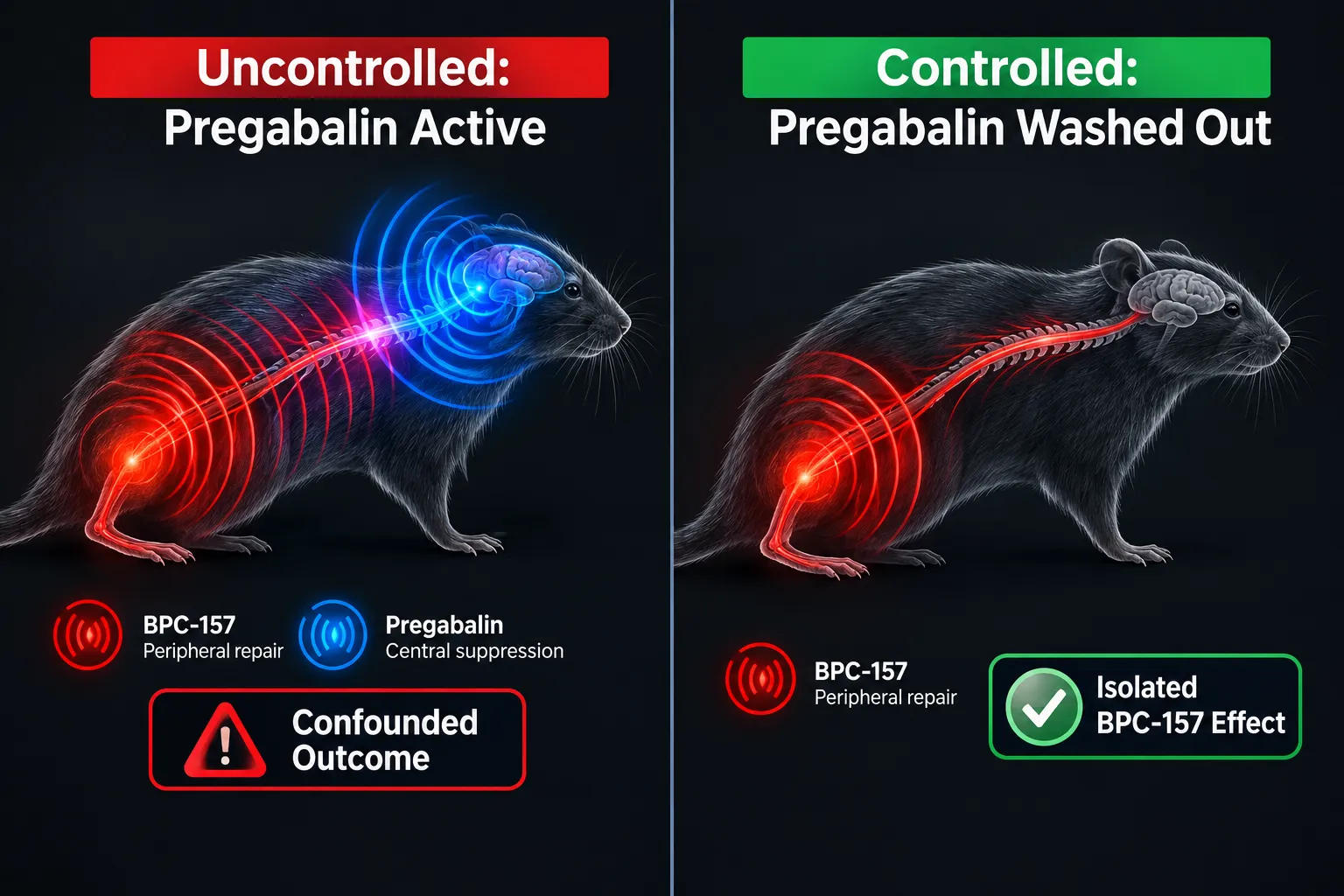
Pregabalin binds to the alpha-2-delta subunit of voltage-gated calcium channels throughout the central nervous system, reducing the release of excitatory neurotransmitters in the dorsal horn and supraspinal pain centers. This mechanism is entirely central, it does not repair peripheral nerve tissue, reduce cytokines at the injury site, or promote angiogenesis.
The confounding problem arises because behavioral pain tests measure the endpoint, not the mechanism. A rat that receives both BPC-157 and pregabalin will show reduced mechanical allodynia, but that reduction could reflect:
- Central calcium channel suppression from pregabalin alone
- Peripheral anti-inflammatory repair from BPC-157 alone
- An additive or synergistic interaction between both
- An antagonistic interaction canceling one agent's effect
Without pregabalin washout or a rigorous vehicle-control group, none of these scenarios can be separated.
"Attributing outcome changes to BPC-157 in any polypharmacy setting requires, at minimum, stratification or controlled exclusion of background gabapentinoid use."
This issue is amplified by the fact that gabapentinoids are standard-of-care comparators in many neuropathic pain protocols. Researchers testing BPC-157 against a pregabalin comparator arm sometimes fail to include a drug-free BPC-157 arm, making it impossible to know whether the peptide has independent analgesic activity or simply adds noise to a pregabalin-dominant effect.
Three scenarios where pregabalin confounding factors in BPC-157 neuropathic pain models most commonly arise:
- Background polypharmacy, Animals or patients already receiving pregabalin when BPC-157 is introduced
- Positive-control design flaws, Pregabalin used as a comparator without a washout between phases
- Translation errors, Preclinical models that inherit clinical dosing conventions where gabapentinoids are always on board
Controlling Central vs. Peripheral Signaling: A Practical Framework
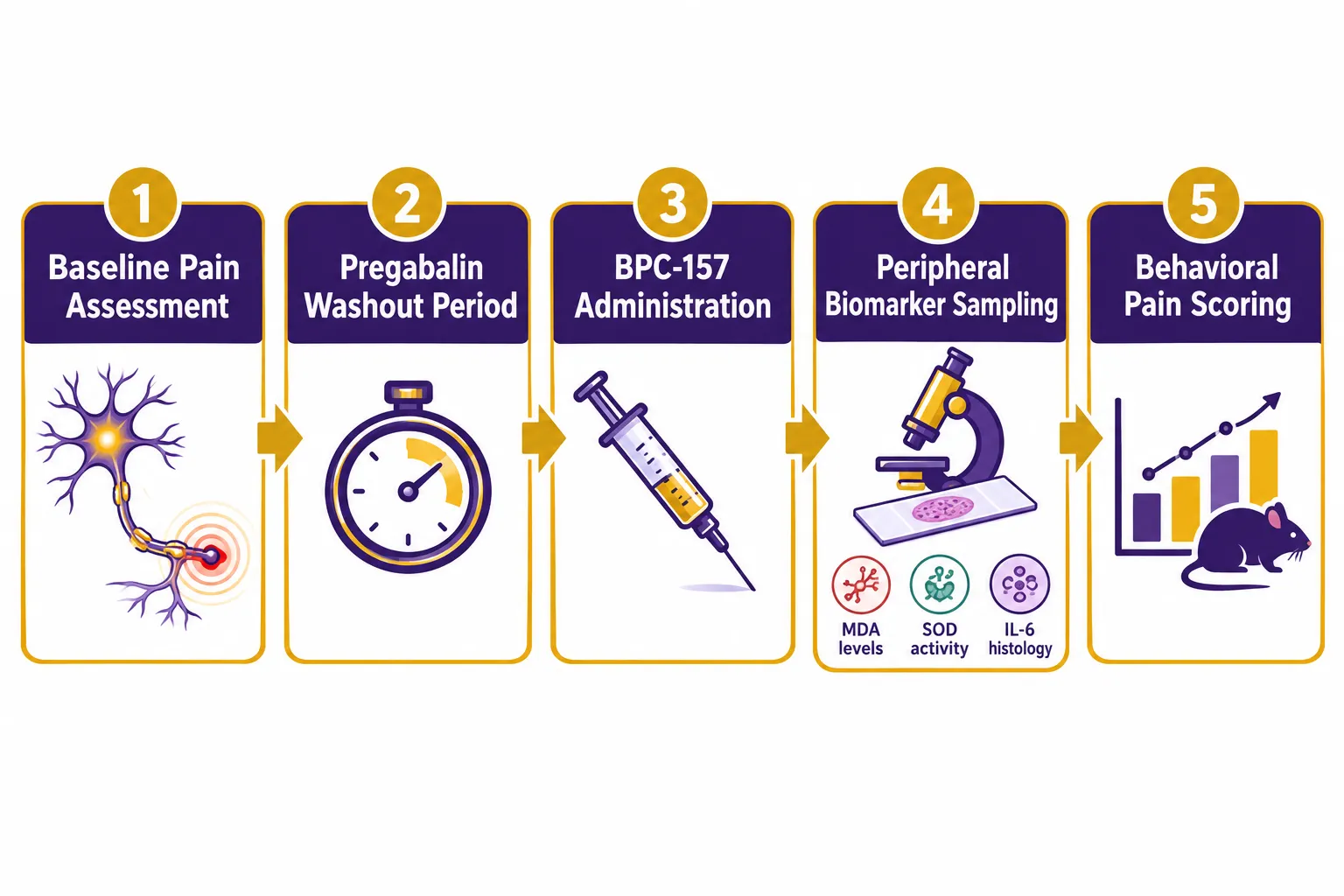
Controlling central vs. peripheral signaling in BPC-157 research requires more than removing pregabalin from the protocol. It demands a multi-layer experimental design that produces mechanistic evidence alongside behavioral data.
Recommended protocol elements:
- Pregabalin washout period of at least five half-lives before BPC-157 dosing begins, documented in the methods section
- Peripheral biomarker panel including cytokines, oxidative stress indices (MDA, SOD), and histological angiogenesis markers collected alongside behavioral tests
- Sham-surgery and vehicle arms that match every drug group for injection stress and handling
- Dose-response design for BPC-157 independent of any gabapentinoid, establishing its intrinsic analgesic ceiling
- Blinded behavioral assessment to prevent observer bias when groups receive different pharmacological profiles
Researchers interested in how structural peptides modulate systemic repair responses, similar in some ways to the cytoprotective profiles seen with SS-31 peptides, should apply the same rigor: isolate the peptide's contribution before adding co-interventions.
When combination studies are unavoidable, a factorial design (BPC-157 alone, pregabalin alone, both combined, vehicle control) allows statistical separation of each agent's contribution. This design is standard in pharmacology but is rarely applied to BPC-157 research, which currently lacks any randomized controlled trial in neuropathic pain.
The interaction between BPC-157 and the NO system is another variable requiring control. Because pregabalin does not directly modulate NO signaling, any difference in NO-pathway biomarkers between groups can serve as a partial internal control, but only if those markers are measured. Parallel peptide research, such as work with SS31 and MOTS-C combinations, has modeled how to separate mitochondrial from vascular endpoints in the same assay, a useful methodological template.
What the current evidence does and does not support:
- SUPPORTED: BPC-157 reduces peripheral inflammatory markers and promotes vascular repair in preclinical models
- SUPPORTED: Pregabalin provides central analgesia through a distinct, well-defined mechanism
- NOT YET ESTABLISHED: Whether BPC-157 provides independent neuropathic analgesia when gabapentinoids are excluded
- NOT YET ESTABLISHED: Whether combining BPC-157 and pregabalin is synergistic, additive, or neutral
The absence of human randomized trials in neuropathic pain means that clinical translation of any BPC-157 analgesic claim remains premature, particularly when gabapentinoid use has not been controlled. Small pilot studies in musculoskeletal pain and interstitial cystitis report potential benefit, but none rigorously excluded or stratified pregabalin use.
Conclusion
Pregabalin confounding factors in BPC-157 neuropathic pain models represent one of the most tractable but underaddressed problems in current peptide pain research. The solution is not exotic, it requires standard pharmacological controls that are already well-established in drug development.
Actionable next steps for researchers:
- Audit existing protocols for concurrent gabapentinoid use and document it explicitly, even in retrospective analyses.
- Mandate peripheral biomarker collection alongside every behavioral pain endpoint to separate tissue-level repair from central symptom suppression.
- Adopt factorial designs when combination studies are necessary, ensuring BPC-157's independent effect can be statistically isolated.
- Establish pregabalin washout standards specific to the animal model and publish them as part of the methods so replication is possible.
- Pre-register future neuropathic pain trials with explicit gabapentinoid exclusion or stratification criteria to improve mechanistic clarity and regulatory credibility.
Controlling central vs. peripheral signaling is not a minor methodological footnote, it is the difference between discovering a genuinely peripheral neuroregenerative agent and producing ambiguous data that cannot guide clinical use.


Leave a Reply
Want to join the discussion?Feel free to contribute!