Call or Text 727-513-9780
  • Shopping Cart Shopping Cart
    0Shopping Cart
Pure Tested Peptides | America's most trusted Peptides for sale online
  • Peptides for sale
    • Oral Peptides for sale
      • Peptide Capsules for sale
      • BPC 157 Capsules 1000mcg
      • SLU-PP-332 Capsules | 1000 mcg
      • 5-Amino-1MQ 50mg Capsules
      • Tesofensine 500mcg
    • All Peptides for sale
    • Peptide Sprays
      • BPC 157 Nasal Spray Kit
      • BPC-157 TB500 Nasal Spray Kit
      • Semax Nasal Spray 10mg
      • Selank – Nasal Spray Kit – 10mg
      • Epithalon 50MG Nasal Spray Kit
      • Ipamorelin 10mg Nasal Spray
      • Klow Nasal Spray (BPC-157 + TB-500 + GHK-Cu + KPV) | 80mg
      • Hulk Nasal Spray Tesa / Ipa Blend 6/3 MG
      • Klow Nasal Spray
      • NAD + 500 mg Nasal Spray
      • PT-141 Nasal Spray Kit
    • GHRH Peptides
      • Ipa Peptides
      • CJC-1295 Peptides
        • CJC-1295 with DAC 5 mg
        • CJC-1295 without DAC 5 mg
        • CJC-1295 Ipa 10mg
      • Tesa Peptides
        • Tesa Peptide
        • Tesa 20 mg
    • GHK-Cu Peptides
      • All GHK-Cu Peptides
      • GHK-Cu 100mg
      • KLOW Peptide Blend – Buy KLOW blend online
    • BPC Peptides
      • All BPC Peptides
      • BPC-157
      • BPC-157 TB-500
      • BPC 157 capsules 1000mcg
    • SLU-PP-332 Peptides
      • All SLU-PP-332 Peptides
      • SLU-PP-332 5mg
    • GLP3 Peptides
    • PT-141 Peptides
      • PT-141 Peptides for sale
      • PT-141 10mg
      • PT-141 Nasal Spray
    • CAG Peptides
      • Lipo-C Peptide Blend
      • CAG 5mg
      • CAG 10mg
    • MOTS-C Peptides
      • MOTS-C Peptides for sale
      • MOTS-c peptide
      • MOTS-c 10mg *6 pack*
    • 5 Amino 1MQ Peptides
      • 5 Amino 1MQ Peptides for sale
      • 5-Amino-1MQ 50mg Capsules
      • 5-Amino-1MQ 5mg
    • Epithalon Peptides
      • Epithalon Peptides for sale
      • Epithalon 10mg
      • Epithalon 50mg
  • Shop
    • GLPs
      • 5-Amino-1MQ 50mg Capsules
      • 5-Amino-1MQ 5mg
      • L-Carnitine 500mg/ml
      • Tesofensine 500mcg
      • SLU-PP-332 5mg
      • MOTS-c 10mg *6 pack*
    • Epithalon & BPC Peptides
      • Epithalon 10mg
      • Epithalon 50mg
      • BPC-157
      • BPC 157 capsules 1000mcg
      • BPC-157 TB-500
      • BPC-157 TB500 Nasal Spray Kit
      • BPC 157 Nasal Spray Kit
    • BPC TB-500 & NAD+ Peptides
      • NAD+ 500 mg
      • KLOW Peptide Blend – Buy KLOW blend online
      • GLOW Peptide Blend
      • TB 500 5mg
      • BPC 157 capsules 1000mcg – Supplement
      • BPC 157 Nasal Spray Kit
      • BPC-157
      • BPC-157 TB500 Nasal Spray Kit
      • BPC-157 TB-500
      • BPC 157 capsules 1000mcg
    • LL-37 Peptide
      • LL-37 10 mg
    • MOTS-C & Selank
      • MOTS-c peptide
      • Selank 10mg
    • GHK Peptides
      • GHK-Cu 100mg
      • GLOW Peptide Blend
      • KLOW Peptide Blend – Buy KLOW blend online
  • COAs
  • Wholesale
    • Wholesale Peptides for sale
  • PTP FAQ
  • Affiliates
    • Selank Peptide: Advanced Pharmacological Mechanisms Underlying Its Anxiolytic and Nootropic Effects in Research
      • 5-Amino-1MQ Peptide: Detailed Mechanisms of NNMT Inhibition and Its Impact on Cellular Metabolism Research
        • MOTS-C Peptide: Unraveling Its Role in Mitochondrial Dynamics and Energy Metabolism Research
          • Epithalon Peptide and Telomerase Regulation: Investigating Its Impact on Cellular Senescence and Lifespan Research Models
            • GLP2-T vs GLP2 Tirz Peptide: Understanding the Naming, Mechanistic Nuances, and Research Implications for Gut Health
      • Peptides and Polypeptides in Modern Pharmacology: What Research on Metoprolol, Prednisone, and Amlodipine Reveals
        • Polypeptide Peptides vs NSAIDs: What Naproxen and Diclofenac Teach Tissue-Repair Researchers About BPC‑157 and TB‑500
          • Peptides and Polypeptides in Endocrine Pharmacology: How GLP-1, GLP-2, and GLP-3 Retatrutide Differ From Classic Drugs Like Prednisone and Amlodipine
          • 5‑Amino‑1MQ Peptide and NNMT Inhibition: How It Compares With Statins Like Atorvastatin in Adipose and Lipid Metabolism Research
      • Enclomiphene, Estrogen Receptor Signaling, and Luteinizing Phase Biology: What Hormone Researchers Should Measure
        • Mesenchymal Stem Cells, BPC‑157, and GHK‑Cu: How Tissue Repair Peptides Compare With Classic NSAIDs Like Naproxen in Injury Models
          • Peptide Calculator Use Cases Beyond Growth Hormone: Working Through GLP‑3 Retatrutide, MOTS‑c, and BPC‑157 Research Dosing
        • Polypeptide Peptides in Endocrine and Metabolic Pharmacology: Lessons From Amlodipine, Prednisone, and Metoprolol
        • Peptides Calculator for Advanced Blends: Worked Examples for Tesamorelin, CJC‑1295, and Ipamorelin Stacks
          • Peptides and Polypeptides in Human Physiology: How Molecular Size Shapes Research Applications
            • Selank Peptide: Advanced Pharmacological Mechanisms Underlying Its Anxiolytic and Nootropic Effects in Research
          • 5-Amino-1MQ Peptide: Detailed Mechanisms of NNMT Inhibition and Its Impact on Cellular Metabolism Research
            • MOTS-C Peptide: Unraveling Its Role in Mitochondrial Dynamics and Energy Metabolism Research
              • Epithalon Peptide and Telomerase Regulation: Investigating Its Impact on Cellular Senescence and Lifespan Research Models
                • GLP2-T vs GLP2 Tirz Peptide: Understanding the Naming, Mechanistic Nuances, and Research Implications for Gut Health
                  • Peptides and Polypeptides in Endocrine Pharmacology: How GLP-1, GLP-2, and GLP-3 Retatrutide Differ From Classic Drugs Like Prednisone and Amlodipine
                    • Polypeptide Peptides vs NSAIDs: What Naproxen and Diclofenac Teach Tissue-Repair Researchers About BPC‑157 and TB‑500
                      • Peptides and Polypeptides in Modern Pharmacology: What Research on Metoprolol, Prednisone, and Amlodipine Reveals
                        • 5‑Amino‑1MQ Peptide and NNMT Inhibition: How It Compares With Statins Like Atorvastatin in Adipose and Lipid Metabolism Research
                        • Enclomiphene, Estrogen Receptor Signaling, and Luteinizing Phase Biology: What Hormone Researchers Should Measure
                        • Mesenchymal Stem Cells, BPC‑157, and GHK‑Cu: How Tissue Repair Peptides Compare With Classic NSAIDs Like Naproxen in Injury Models
                        • Peptide Calculator Use Cases Beyond Growth Hormone: Working Through GLP‑3 Retatrutide, MOTS‑c, and BPC‑157 Research Dosing
                        • Polypeptide Peptides in Endocrine and Metabolic Pharmacology: Lessons From Amlodipine, Prednisone, and Metoprolol
                        • Peptides Calculator for Advanced Blends: Worked Examples for Tesamorelin, CJC‑1295, and Ipamorelin Stacks
                        • Peptides and Polypeptides in Human Physiology: How Molecular Size Shapes Research Applications
                        • Selank Peptide: Advanced Pharmacological Mechanisms Underlying Its Anxiolytic and Nootropic Effects in Research
                        • MOTS-C Peptide: Unraveling Its Role in Mitochondrial Dynamics and Energy Metabolism Research
                        • Peptides and Polypeptides in Modern Pharmacology: What Research on Metoprolol, Prednisone, and Amlodipine Reveals
                        • Peptides and Polypeptides in Endocrine Pharmacology: How GLP-1, GLP-2, and GLP-3 Retatrutide Differ From Classic Drugs Like Prednisone and Amlodipine
                        • 5-Amino-1MQ Peptide: Detailed Mechanisms of NNMT Inhibition and Its Impact on Cellular Metabolism Research
                        • Mesenchymal Stem Cells, BPC‑157, and GHK‑Cu: How Tissue Repair Peptides Compare With Classic NSAIDs Like Naproxen in Injury Models
                        • Peptide Calculator Use Cases Beyond Growth Hormone: Working Through GLP‑3 Retatrutide, MOTS‑c, and BPC‑157 Research Dosing
                        • GLP2-T vs GLP2 Tirz Peptide: Understanding the Naming, Mechanistic Nuances, and Research Implications for Gut Health
                        • Polypeptide Peptides in Endocrine and Metabolic Pharmacology: Lessons From Amlodipine, Prednisone, and Metoprolol
                        • Polypeptide Peptides vs NSAIDs: What Naproxen and Diclofenac Teach Tissue-Repair Researchers About BPC‑157 and TB‑500
                        • Peptides and Polypeptides in Human Physiology: How Molecular Size Shapes Research Applications
                        • Peptides Calculator for Advanced Blends: Worked Examples for Tesamorelin, CJC‑1295, and Ipamorelin Stacks
                        • 5‑Amino‑1MQ Peptide and NNMT Inhibition: How It Compares With Statins Like Atorvastatin in Adipose and Lipid Metabolism Research
                        • Enclomiphene, Estrogen Receptor Signaling, and Luteinizing Phase Biology: What Hormone Researchers Should Measure
                        • Epithalon Peptide and Telomerase Regulation: Investigating Its Impact on Cellular Senescence and Lifespan Research Models
                        • Best research protocol Klow blend
                        • best time to take BPC-157
                        • best time to take DSIP (Delta Sleep Inducing Peptide)
                        • best time to take CJC-1295
                        • best time to take AOD-9604
                        • best time to take Follistatin 344
                        • best time to take Ipamorelin
                        • best time to take MK-677 (Ibutamoren)
                        • best time to take Ligandrol (LGD-4033) — research compound
                        • best time to take Ostarine (MK-2866) — research compound
                        • best time to take GHK-CU
                        • best time to take TB-500
                        • best time to take MOTS-c
                        • best time to take Semax
                        • best time to take RAD-140 (Testolone) — research compound
                        • best time to take Thymosin Alpha-1
                        • best time to take PEG-MGF
                        • Biolife Plasma, Octapharma Plasma, and Research Peptides: How Plasma Donation Labs Differ From Peptide Suppliers
                        • best time to take YK-11 — research compound
                        • best time to take PT-141 (Bremelanotide)
                        • Best research protocol Klow blend
                        • 5-Amino-1MQ and MOTS-C Synergy: Metabolic Signaling, Mitochondria, and Research Design
                        • BPC-157 and TB-500: Investigating Their Combined Effects on Angiogenesis and Cellular Migration in Tissue Repair Models
                        • BPC-157 Peptide: Gut Barrier Function, Inflammation, and Tissue-Recovery Research
                        • 5‑Amino‑1MQ and MOTS‑c Synergy in Metabolic Research: Designing NNMT and Mitochondrial Biogenesis Stacks
                        • CJC-1295 with DAC vs. Without DAC: Half-Life, Release Kinetics, and Research Implications
                        • CJC‑1295 with DAC vs. Without DAC: Expanding on Half‑Life Differences Using Tesamorelin and Ipamorelin Blend Case Studies
                        • Collagen Biology and Copper‑Binding Peptides: How GHK‑Cu, Glow Blend, and Klow Blend Interact with Skin and Connective Tissue
                        • Collagen Biology and Regenerative Peptides: How GHK‑Cu, Glow Blend, and Klow Blend Affect Extracellular Matrix Research
                    • DNA, Telomeres, and Longevity Peptides: Positioning Epithalon and MOTS‑c in Genetic Aging Research
                      • Enclomiphene Citrate: serm Mechanism, Testosterone Research, and Stack Compatibility
                        • Enclomiphene vs Enclomiphene Citrate: Formulation, Bioavailability, and Research Distinctions
                        • Epithalon Peptide Research: Telomerase Activation, Aging, and Pineal Gland Function
                        • Estrogen Receptor Signaling and Enclomiphene: How Selective Modulators Compare with Classic Polypeptide Hormones
                        • GHK-Cu Peptide: Advanced Mechanisms in Extracellular Matrix Remodeling and Wound Healing Research
                        • GHK-Cu Peptide: Collagen Synthesis, Wound Repair, and Skin-Barrier Research Models
                        • GLP-1 vs GLP-3 vs GLP-2: Peptide Classification and Research Applications
                        • GLP-2 Peptide Research Guide: Gut Barrier Function, Nutrient Absorption, and Intestinal Recovery Models
                        • GLP-3 Retatrutide vs. GLP-1 Drugs: What Triple-Agonist Biology Changes in Research Models
                        • Ipamorelin and Tesamorelin Combination: Synergistic GH Secretagogue Research and Dosing Protocols
                        • GLP2 Tirz Peptide: What It Is, Why the Name Exists, and How Researchers Should Interpret It
                        • Klow Blend Peptide Nasal Spray: What the Formulation Is Trying to Do in Cognitive Research
                        • Mitochondria, NNMT Inhibition, and Peptide Modulators: Where MOTS‑c and 5‑Amino‑1MQ Fit in Cellular Energy Research
                        • MOTS-c Peptide: Mitochondrial Function, Energy Metabolism, and What Researchers Measure
                        • MOTS-c vs. 5-Amino-1MQ: Which Metabolic Research Questions Each Compound Actually Answers
                        • Nasal Spray Peptides: Bioavailability, Administration, and Semax/Selank Research Applications
                        • PT-141 Peptide Research: Mechanism of Action and Melanocortin Receptor Signaling
                        • Retatrutide for Research: Mechanism, Structure, and GLP-1/GLP-3 Dual Action
                        • Retatrutide for Obesity and Type 2 Diabetes: What the Latest Trial Data Suggest
                        • Tesofensine Peptide Research: Mechanism, Appetite Suppression, and Neuropeptide Y Pathways
  • Contact
    • Contact Customer Service
    • Text Customer Support
  • About US
  • Shop all peptides
  • Affiliate Program
    • Affiliate Signup
  • Login / Register Login / Register Page Link Login / Register Page Link
  • Click to open the search input field Click to open the search input field Search
  • Menu Menu

Tag Archive for: a1c reduction

Retatrutide vs Ozempic in 2026: How to Compare A1C, Weight Loss, Tolerability, and Receptor Biology

Retatrutide vs Ozempic in 2026: How to Compare A1C, Weight Loss, Tolerability, and Receptor Biology

November 6, 2026/0 Comments/in Uncategorized/by

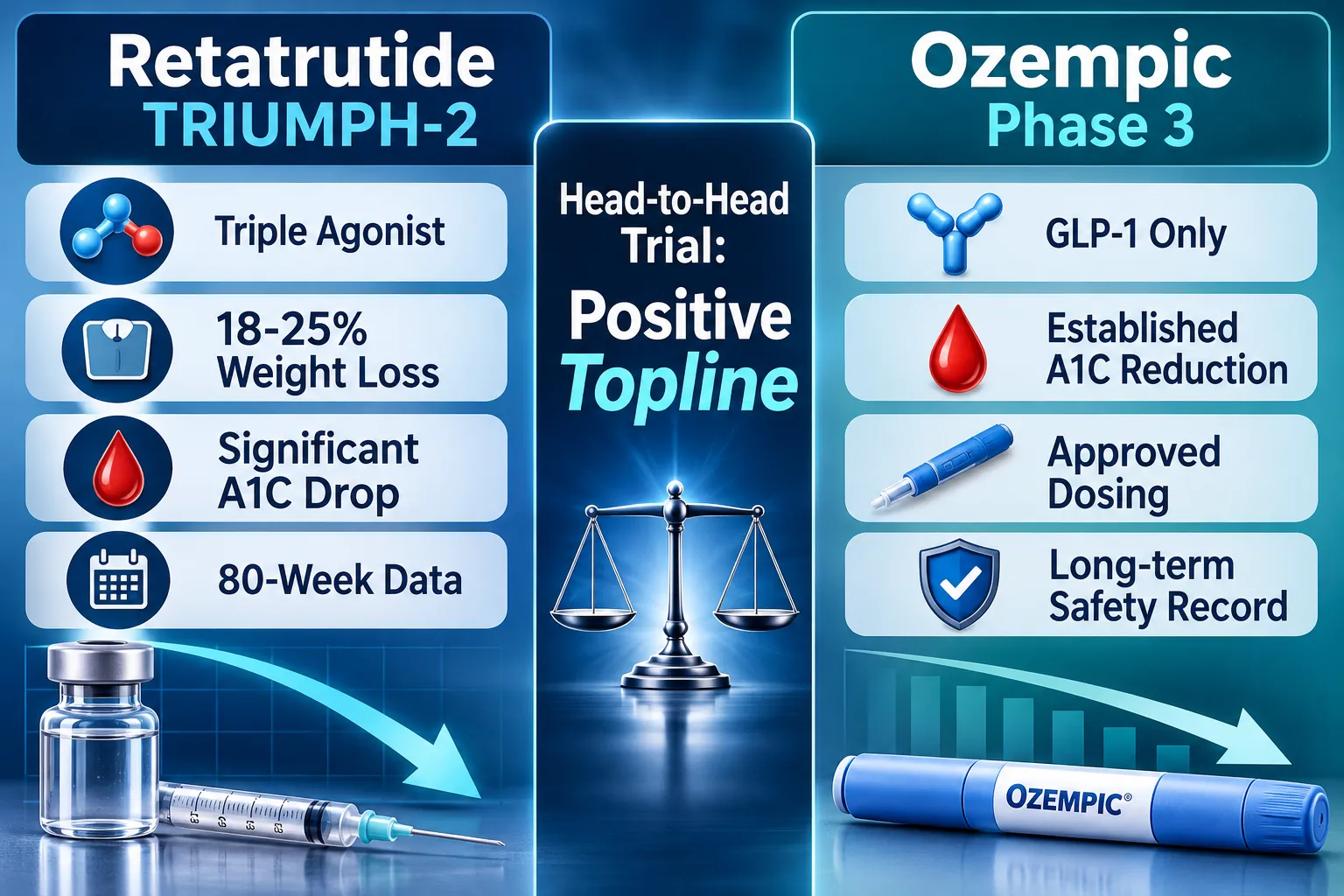
A head-to-head Phase 3 trial between retatrutide and Ozempic 2 mg has now reported positive topline results, the first direct comparative data between a triple-agonist peptide and the world's most prescribed GLP-1 drug. That milestone makes the full analysis of Retatrutide vs Ozempic in 2026: How to Compare A1C, Weight Loss, Tolerability, and Receptor Biology more clinically relevant than ever, even as retatrutide awaits a planned BLA submission in early 2027.

Key Takeaways

  • Retatrutide is a triple agonist (GLP-1, GIP, and glucagon receptors), while Ozempic targets only the GLP-1 receptor, a fundamental mechanistic difference.
  • Phase 2 and Phase 3 data show retatrutide achieving 18-25% body weight reduction, substantially above typical Ozempic benchmarks.
  • The TRIUMPH-2 trial demonstrated meaningful A1C improvements alongside weight loss in people with type 2 diabetes and obesity.
  • GI tolerability remains the primary class-wide concern; retatrutide requires careful dose titration, similar to other incretin-based therapies.
  • Retatrutide is still investigational in 2026; Ozempic carries full regulatory approval for type 2 diabetes management.

Receptor Biology: Why Triple Agonism Changes the Equation
Receptor Biology: Why Triple Agonism Changes the Equation

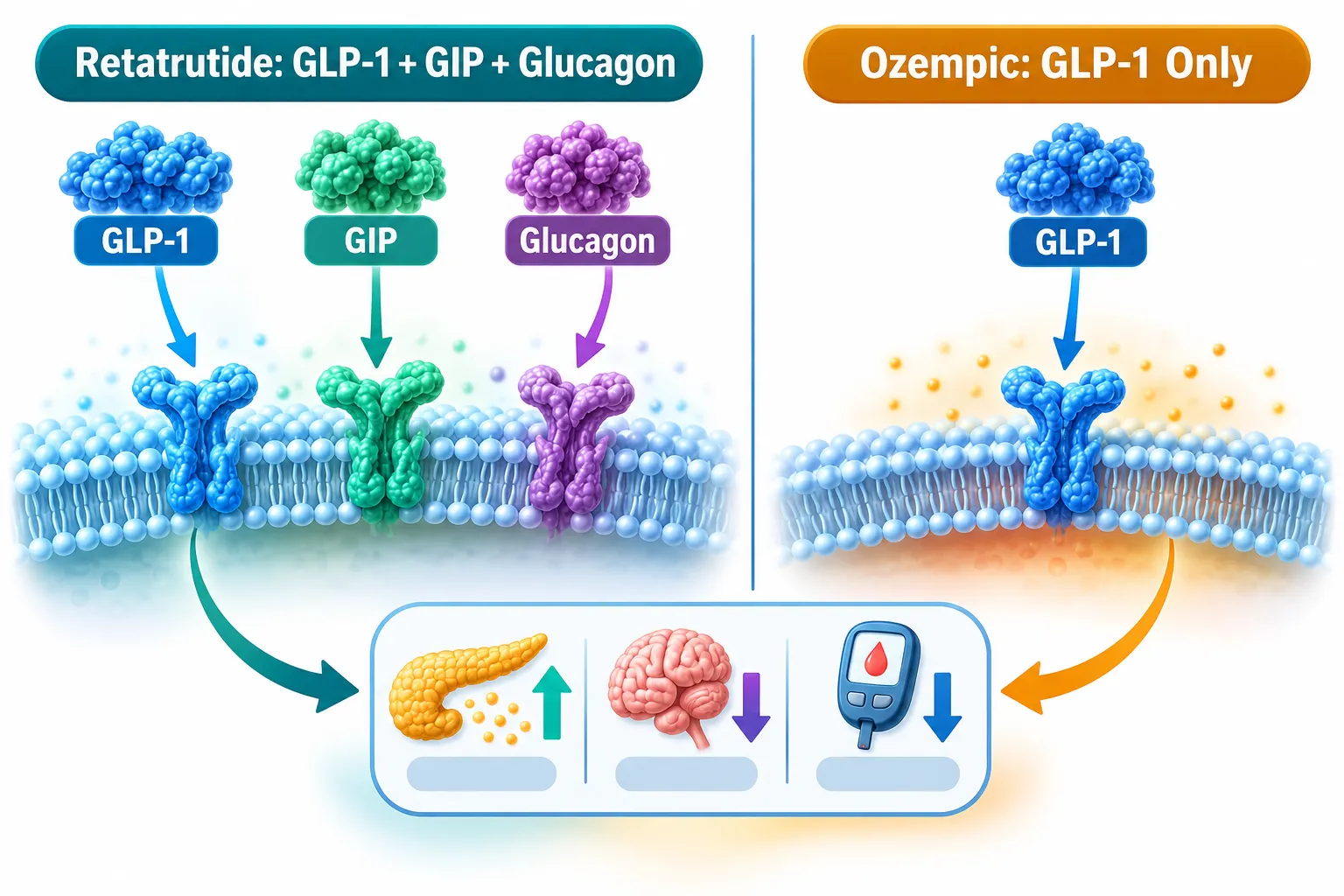
The most foundational difference in any Retatrutide vs Ozempic comparison starts at the receptor level. Ozempic (semaglutide) is a selective GLP-1 receptor agonist. It mimics the incretin hormone GLP-1, stimulating insulin secretion, suppressing glucagon, slowing gastric emptying, and reducing appetite through central nervous system pathways.

Retatrutide operates across three receptor systems simultaneously:

  • GLP-1 receptor, shared with Ozempic; drives insulin release and satiety signaling
  • GIP receptor, enhances insulin secretion and may improve fat metabolism; also targeted by tirzepatide
  • Glucagon receptor, promotes hepatic fat oxidation and increases energy expenditure

The glucagon receptor component is what separates retatrutide from both semaglutide and tirzepatide (Mounjaro/Zepbound). By activating energy expenditure pathways alongside appetite suppression, retatrutide may generate a broader metabolic effect. Experts have described this triple mechanism as potentially "next-generation" beyond existing dual GLP-1/GIP agonists.

"The glucagon receptor arm adds a thermogenic dimension that single or dual agonists simply do not engage."

This receptor breadth forms the biological rationale for retatrutide's outsized weight loss data relative to Ozempic.


Comparing A1C Reduction and Weight Loss Endpoints
Comparing A1C Reduction and Weight Loss Endpoints

When reviewing Retatrutide vs Ozempic in 2026 across weight loss and A1C metrics, it is important to harmonize endpoints rather than make direct consumer-style superiority claims. Most available data come from separate trial programs with different populations and titration schedules.

Weight Loss Data Summary

Metric Retatrutide Ozempic (semaglutide 2 mg)
Phase 2 peak weight loss ~23-24% body weight ~6-8% (Phase 3 avg)
Phase 3 obesity trial ~18-25% over 80 weeks Varies by indication
Head-to-head trial (2026) Positive topline vs Ozempic 2 mg Comparator arm
Primary indication status Investigational Approved (T2D, cardiovascular)

Retatrutide's Phase 3 obesity program has produced weight reduction numbers that exceed Ozempic's established benchmarks by a significant margin. A 2026 NEJM publication further solidified the evidence base for these outcomes.

A1C Outcomes in Diabetes

The TRIUMPH-2 trial, focused on participants with both type 2 diabetes and obesity, showed substantial A1C improvements alongside the dramatic weight reductions. While specific percentage-point reductions from TRIUMPH-2 are pending full publication, the direction is consistent with what the triple-agonist mechanism predicts: improved insulin sensitivity, reduced hepatic glucose output, and lower post-meal glucose spikes.

Ozempic's A1C reduction credentials are well-established. In pivotal SUSTAIN trials, semaglutide 2 mg reduced A1C by approximately 1.5-2.2 percentage points from baseline, with outcomes reinforced by over five years of real-world use.

Comparing these two datasets requires caution. Baseline A1C, diabetes duration, background therapy, and titration protocols all influence outcomes. What the head-to-head trial provides, for the first time, is a controlled comparative framework rather than cross-trial inference.


Tolerability, Titration, and Practical Differences
Tolerability, Titration, and Practical Differences

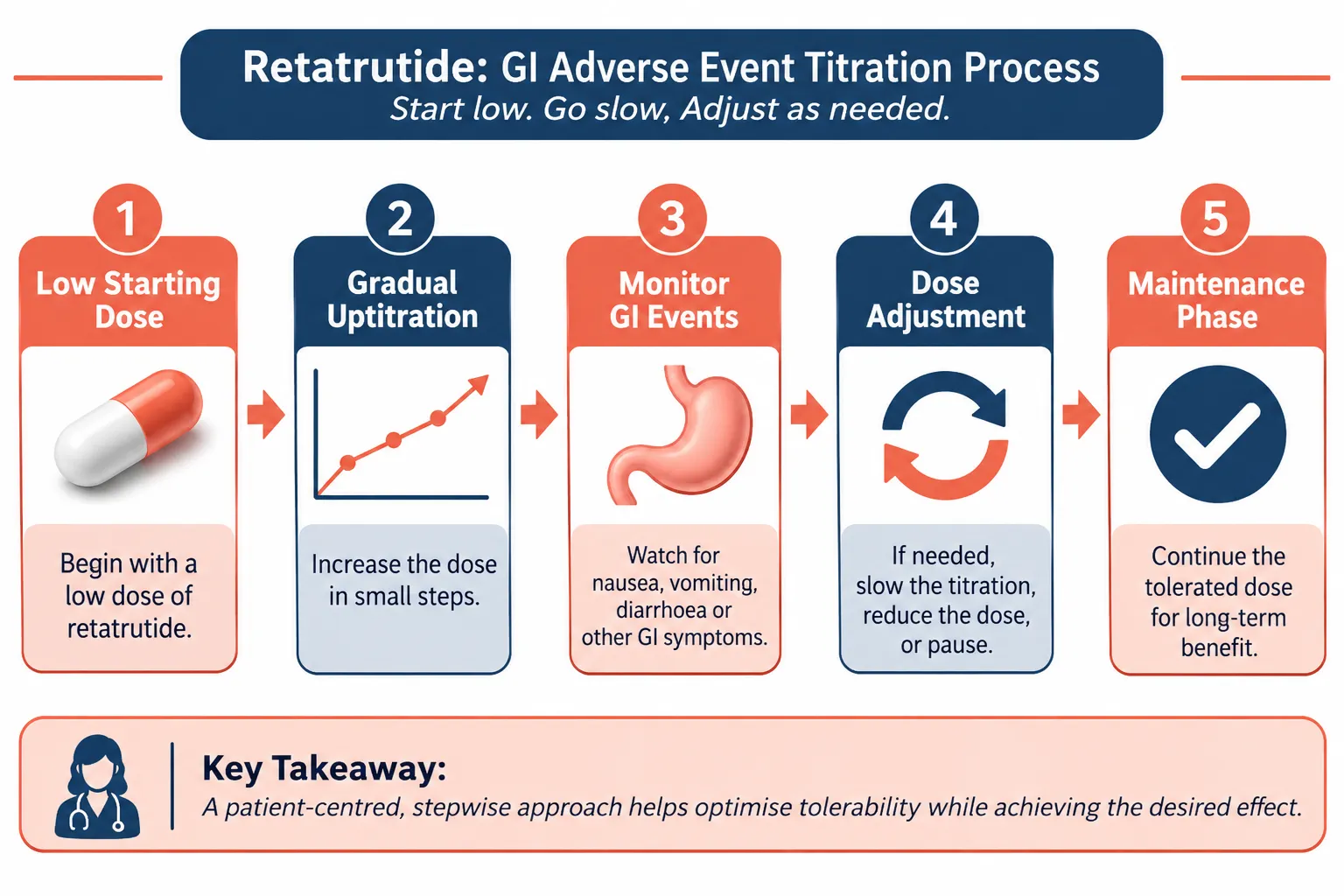
For clinicians and researchers evaluating Retatrutide vs Ozempic in 2026 for tolerability, the GI adverse event profile is the dominant concern across both agents.

Shared GI class effects include:

  • Nausea (most common, especially early in treatment)
  • Vomiting and diarrhea
  • Constipation
  • Decreased appetite (therapeutic but sometimes uncomfortable)

Retatrutide trials used a structured, stepwise dose escalation protocol to manage these effects. The glucagon receptor component may add a mild increase in GI burden compared with GLP-1-only agents, though this is managed through careful titration.

Ozempic's tolerability profile is extensively documented. Most GI events are mild to moderate, transient, and concentrated in the dose-escalation phase. Its once-weekly subcutaneous administration is well-understood by prescribers globally.

Key practical distinctions in 2026:

  • Ozempic is fully approved and widely available through standard pharmacy channels
  • Retatrutide remains investigational, with a BLA filing planned for the first quarter of 2027
  • Those interested in retatrutide for research purposes can explore options such as Reta 20mg for sale or GLP-3 Reta 30mg through research peptide sources
  • For sourcing clarity, resources covering where to buy reta peptide and how to buy reta provide category-level guidance
  • Those evaluating the buy GLP-3 Reta landscape should confirm certificate-of-analysis documentation and third-party testing standards before proceeding
  • Additional options at the Reta 30mg tier are also available for research contexts

Conclusion

The comparison of Retatrutide vs Ozempic in 2026 is no longer purely theoretical. Positive topline head-to-head data, a 2026 NEJM publication, and the TRIUMPH-2 diabetes results collectively establish retatrutide as the most clinically advanced triple-agonist peptide in development. Its weight loss outcomes, up to 25% body weight reduction over 80 weeks, represent a meaningful step beyond what semaglutide consistently achieves.

However, Ozempic's advantages are real: a decade-strong safety record, full regulatory approval across multiple indications, and a well-mapped tolerability profile. Retatrutide's BLA is not expected before 2027.

Actionable next steps for different audiences:

  • Clinicians: Monitor TRIUMPH-2 full publication and head-to-head trial data as they become available; align patient counseling around endpoint differences in weight vs. glycemic control
  • Researchers: Evaluate mechanism-of-action distinctions before designing comparative protocols; the glucagon receptor arm requires specific metabolic outcome measures
  • Research community: Assess buy reta peptide resources against institutional compliance standards and third-party testing requirements
  • Patients: Consult a qualified healthcare provider before making any treatment decisions; retatrutide is not yet approved for clinical use

The receptor biology, endpoint data, and tolerability considerations reviewed here all point in the same direction: retatrutide is a mechanistically distinct, potentially more potent metabolic agent than semaglutide, but the evidence base is still maturing. Watching the full data package emerge over the next 12-18 months will define where each drug ultimately fits in clinical practice.

https://www.puretestedpeptides.com/wp-content/uploads/2026/11/retatrutide-vs-ozempic-in-2026-how-to-compare-a1c-weight-loss-tolerability-and-r.webp 1024 1536 https://www.puretestedpeptides.com/wp-content/uploads/2026/01/buy-peptides-online.jpg 2026-11-06 14:07:302026-11-06 14:07:30Retatrutide vs Ozempic in 2026: How to Compare A1C, Weight Loss, Tolerability, and Receptor Biology
Retatrutide vs Ozempic in 2026: Translating Head-to-Head A1C and Weight Results Into Research Models

Retatrutide vs Ozempic in 2026: Translating Head-to-Head A1C and Weight Results Into Research Models

November 3, 2026/0 Comments/in Uncategorized/by

Nearly half of the 537 million adults living with type 2 diabetes worldwide fail to reach their glycemic targets on current first-line therapies. That stark gap is exactly why the top-line results from the TRANSCEND-T2D-2 trial stopped the metabolic research community in its tracks. The conversation around Retatrutide vs Ozempic in 2026: Translating Head-to-Head A1C and Weight Results Into Research Models is no longer speculative, it is grounded in the largest randomized, active-controlled head-to-head comparison ever conducted between a triple-receptor agonist and the highest approved dose of semaglutide for type 2 diabetes.

Key Takeaways

  • Retatrutide (9 mg and 12 mg) reduced A1C by 2.2 percentage points at 80 weeks, versus 1.8 points with Ozempic 2 mg, a meaningful incremental difference for modeling.
  • Retatrutide produced more than double the weight loss of Ozempic: roughly 20% body weight reduction compared to 9.4%.
  • The GIP/GLP-1/glucagon triple-agonist mechanism is the likely biological driver of these outsized results.
  • Direct head-to-head data dramatically improve the precision of health-economic and simulation models by eliminating the need for indirect comparisons.
  • Retatrutide remains investigational as of 2026; full peer-reviewed data and regulatory filings are still pending.

Receptor Biology: Why Triple Agonism Changes the Baseline Assumptions

Retatrutide triple agonist vs semaglutide GLP-1 receptor diagram

Understanding the clinical gap begins at the receptor level. Ozempic (semaglutide) is a GLP-1 receptor agonist. It stimulates one pathway: increasing insulin secretion, reducing glucagon, and slowing gastric emptying. Retatrutide is structurally different, it simultaneously activates three receptors: GIP (glucose-dependent insulinotropic polypeptide), GLP-1, and glucagon.

This distinction is not merely pharmacological trivia. Each additional receptor target contributes a distinct metabolic effect:

  • GIP receptor activation enhances insulin release and directly promotes fat-cell lipolysis, meaning fat is broken down more efficiently.
  • GLP-1 receptor activation suppresses appetite and improves insulin sensitivity, overlapping with semaglutide's core mechanism.
  • Glucagon receptor activation increases energy expenditure and accelerates hepatic fat clearance, a pathway semaglutide does not touch.

For researchers building disease-progression models, this mechanistic layering matters because the weight and glycemic effects are not simply additive versions of semaglutide's profile. They emerge from qualitatively different biological pathways. Any model that treats retatrutide as a "stronger GLP-1" rather than a distinct multi-receptor agent will misclassify its downstream complication risk reductions.

Explore the broader landscape of peptide weight loss research to understand where triple agonists sit relative to other investigational approaches.


TRANSCEND-T2D-2: What the Head-to-Head Numbers Actually Mean

TRANSCEND-T2D-2 trial outcome comparison infographic

The TRANSCEND-T2D-2 trial enrolled 1,298 adults with type 2 diabetes that was inadequately controlled on metformin, with or without an additional agent. Participants were randomized to weekly retatrutide 9 mg, retatrutide 12 mg, or Ozempic 2 mg, the highest dose of semaglutide currently approved for diabetes management. The 80-week duration is notably longer than most phase 2 studies, giving the data unusual weight-stability relevance.

A1C Outcomes

Both retatrutide doses achieved an average A1C reduction of 2.2 percentage points. Ozempic 2 mg produced a 1.8-point reduction. The 0.4-point incremental difference may appear modest in isolation, but in the context of a population starting at a mean A1C that already reflected failure on prior therapy, it translates to a meaningfully larger proportion of participants reaching guideline targets below 7% or even 6.5%.

Weight Outcomes

This is where the data diverge sharply. Participants had a mean baseline weight of approximately 225.8 lb (BMI 36.8):

Treatment Mean Weight Lost % Body Weight Lost
Retatrutide 9 mg 44.3 lb 19.5%
Retatrutide 12 mg 47.4 lb 20.9%
Ozempic 2 mg 20.9 lb 9.4%

Retatrutide 12 mg produced more than double the weight loss of Ozempic 2 mg. For health-economic modelers, this difference is transformative. Obesity-related complications, cardiovascular events, sleep apnea, osteoarthritis, non-alcoholic fatty liver disease, are tightly linked to the degree of sustained weight reduction. A 20% weight loss carries materially different complication-risk inputs than a 9% loss.

Those researching retatrutide for preclinical or analytical purposes can review retatrutide clinical trial resources for background on the compound's development trajectory.


Translating Head-to-Head Results Into Research Models

Step-by-step flow from clinical data to health-economic model outputs

The phrase Retatrutide vs Ozempic in 2026: Translating Head-to-Head A1C and Weight Results Into Research Models describes an urgent methodological challenge. Until these trial results, analysts comparing retatrutide to semaglutide were forced to use indirect treatment comparisons, a technique that introduces substantial uncertainty, particularly when baseline populations, trial lengths, and titration schedules differ across studies.

Direct head-to-head data eliminate that uncertainty layer. The modeling implications are concrete:

1. Cardiovascular risk reduction inputs
A 2.2% A1C drop versus 1.8% generates different 10-year MACE (major adverse cardiovascular events) probabilities in established risk engines like the UKPDS Outcomes Model. Even a 0.4-point difference compounded over simulated 20-year horizons shifts event counts meaningfully.

2. Quality-adjusted life year (QALY) calculations
Obesity severity is a direct determinant of health-state utility values. Moving a simulated patient cohort from Class II obesity (BMI 36.8) to near-overweight status (BMI 29-30) through a ~20% weight loss dramatically improves utility weights, raising QALY gains above what semaglutide comparator arms generate.

3. Complication cascade modeling
Weight-related comorbidities interact with glycemic control in simulation models. A 47 lb reduction, sustained over 80 weeks, is expected to suppress downstream modeling inputs for hypertension, dyslipidemia, and hepatic disease in ways that Ozempic's 21 lb reduction does not replicate at the same magnitude.

4. Cost-effectiveness thresholds
Payer and health-technology-assessment models will need to assess whether the incremental benefit justifies incremental cost. The direct numerical inputs, a 0.4-percentage-point A1C difference and an 11-12 percentage-point weight-loss advantage, are now available without the noise of adjusted indirect comparisons.

"The magnitude of benefit, a 2.2% A1C drop and roughly 20% body-weight reduction in a type 2 diabetes population, is unusually high, and it could shift treatment algorithms if long-term safety is confirmed."

Research into complementary peptide mechanisms, such as the IPA Sermorelin stack, offers additional context for how multi-target receptor strategies are evolving across the field.

What Is Still Missing

Top-line data released in late October and early November 2026 do not yet include:

  • Full subgroup analyses by baseline A1C, BMI, or duration of diabetes
  • Cardiovascular and renal outcomes data
  • Detailed discontinuation rates and adverse-event breakdowns beyond class-typical GI effects (nausea, vomiting, diarrhea)
  • Peer-reviewed publication of the complete TRANSCEND-T2D-2 dataset

Full scientific presentations and journal publication are anticipated but had not occurred at the time of this writing. Researchers should treat current inputs as directionally strong but incomplete pending formal review.

For those working with retatrutide compounds in research contexts, GLP-3 Reta 10mg (99% pure, third-party tested) and Reta 20mg research material represent options available for investigational purposes.


Conclusion

The TRANSCEND-T2D-2 data represent a pivotal shift in how modelers, payers, and researchers can evaluate retatrutide against the established GLP-1 standard. The key actionable takeaways for 2026:

  • Update model inputs to replace indirect comparison estimates with direct trial values: 2.2% vs 1.8% A1C reduction; ~20% vs ~9.4% weight loss over 80 weeks.
  • Reassess QALY and complication-cascade assumptions to reflect the qualitative difference between GLP-1-only and triple-agonist receptor engagement.
  • Flag data gaps, cardiovascular outcomes, subgroup analyses, and full discontinuation data, as uncertainty parameters until peer-reviewed publication.
  • Monitor regulatory timelines closely; retatrutide remains investigational, and approval status will determine whether modeled cost-effectiveness translates into real-world treatment algorithms.

The numbers are clearer than they have ever been. The modeling work that follows will shape how health systems, payers, and clinicians position this next-generation metabolic agent once it moves from trial to practice.

https://www.puretestedpeptides.com/wp-content/uploads/2026/11/retatrutide-vs-ozempic-in-2026-translating-head-to-head-a1c-and-weight-results-i.webp 1024 1536 https://www.puretestedpeptides.com/wp-content/uploads/2026/01/buy-peptides-online.jpg 2026-11-03 14:20:192026-11-03 14:20:19Retatrutide vs Ozempic in 2026: Translating Head-to-Head A1C and Weight Results Into Research Models
Retatrutide Phase 3 Diabetes Results: How Researchers Should Interpret Dose, A1C, Weight, and Discontinuation Data

Retatrutide Phase 3 Diabetes Results: How Researchers Should Interpret Dose, A1C, Weight, and Discontinuation Data

October 12, 2026/0 Comments/in Uncategorized/by

Fewer than 1 in 10 glucose-lowering drugs tested in Phase 2 trials ever produce weight loss exceeding 15% of body weight in people with type 2 diabetes. Retatrutide, a triple GIP/GLP-1/glucagon receptor agonist, has now done exactly that across two large Phase 3 programs, making the Retatrutide Phase 3 Diabetes Results: How Researchers Should Interpret Dose, A1C, Weight, and Discontinuation Data question one of the most important analytical tasks in metabolic research in 2026.

This guide is written for researchers, clinicians, and evidence reviewers who need a structured framework for reading the trial data accurately, not as a clinical recommendation or treatment guide.


Key Takeaways

  • Two Phase 3 trials, TRANSCEND-T2D-1 and TRIUMPH-2, provide the core evidence base for retatrutide in type 2 diabetes.
  • A1C reductions showed a clear dose-response pattern, roughly doubling the effect of placebo at the highest dose.
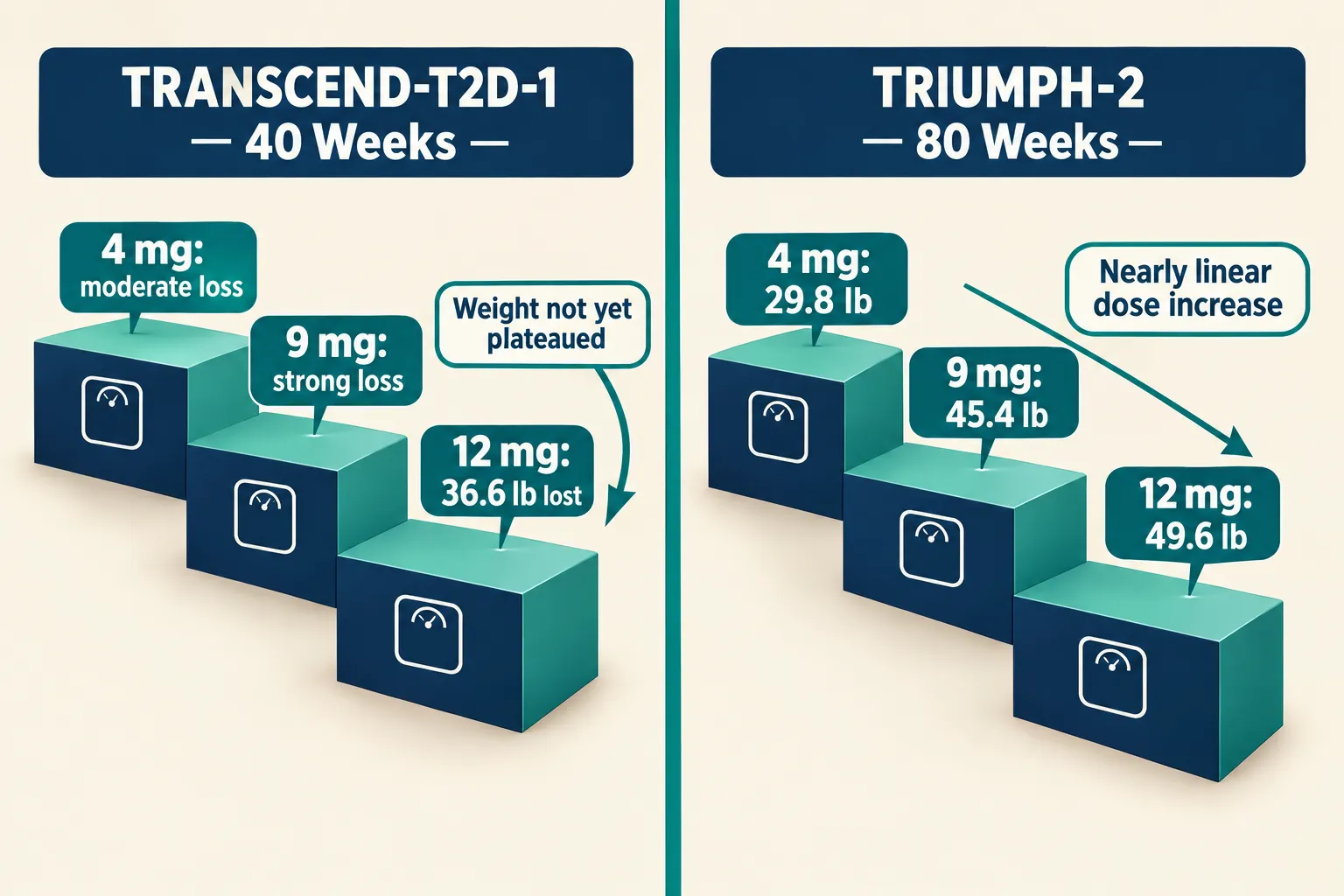
  • Weight loss was substantial and, in the 40-week trial, had not yet plateaued at study end.
  • Discontinuation due to adverse events was dose-dependent and driven primarily by gastrointestinal symptoms.
  • Tolerability, not efficacy, is likely to determine real-world dose selection and patient retention.

Understanding the Two Core Phase 3 Trials

Before analyzing any endpoint, researchers must distinguish between the two trials, because they enrolled different populations and ran for different durations.

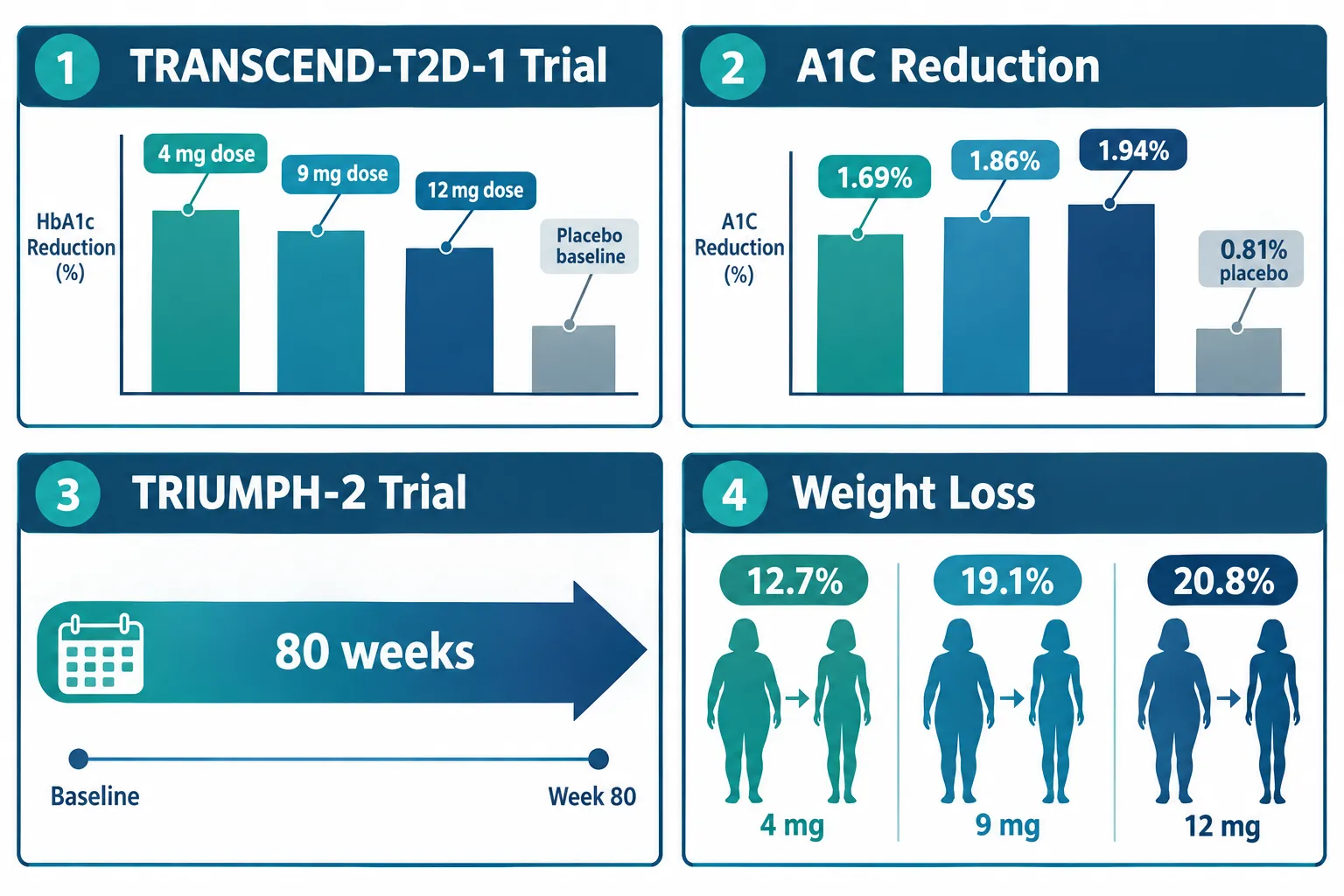
TRANSCEND-T2D-1 enrolled 537 adults with recent-onset type 2 diabetes, A1C between 7.0% and 9.5%, and BMI of 23 or higher. Participants received retatrutide monotherapy at 4, 9, or 12 mg once weekly for 40 weeks, with no background glucose-lowering medications. This design isolates the drug's intrinsic glycemic effect.

TRIUMPH-2 enrolled adults with established type 2 diabetes plus obesity or overweight and ran for 80 weeks. This longer trial captures durability and applies to a more complex metabolic phenotype seen frequently in clinical practice.

Conflating results from these two trials is one of the most common analytical errors. Baseline disease severity, background therapy status, and trial duration all affect the magnitude of observed A1C and weight outcomes.

Understanding the Two Core Phase 3 Trials

Researchers reviewing GLP-3 receptor agonist peptide research should note that retatrutide's triple-agonist mechanism distinguishes it from dual or single-target agents, which affects how dose-response curves should be modeled.


Interpreting A1C and Weight Data From Retatrutide Phase 3 Diabetes Results

A1C Reduction: Reading the Dose-Response Signal

In TRANSCEND-T2D-1, mean A1C reductions from a baseline of approximately 7.9% were:

Dose Mean A1C Reduction vs. Placebo
4 mg ~1.69% ~2x placebo
9 mg ~1.86% ~2.3x placebo
12 mg ~1.94% ~2.4x placebo
Placebo ~0.81% Reference

The incremental gain between 9 mg and 12 mg is small (roughly 0.08 percentage points), which researchers should weigh carefully against the larger jump in discontinuation risk at the highest dose.

In TRIUMPH-2, A1C reductions were somewhat smaller (approximately 1.4% to 1.6%), consistent with the more established disease state and likely background medication use in that population. Notably, up to 79.2% of participants achieved A1C at or below 6.5% on retatrutide versus roughly 26.3% on placebo, a clinically meaningful responder-rate difference.

Key analytical point: Absolute A1C reduction and responder rates (percentage reaching target) are different estimands. Both should be reported to avoid misleading summaries.

Weight Loss: A Metabolic Signal That Deserves Separate Analysis

Weight loss in these trials is not merely a secondary benefit. It is a primary metabolic outcome that may independently drive glycemic improvement.

In TRANSCEND-T2D-1 at 40 weeks:

  • 12 mg: approximately 36.6 lb (16.8% of body weight)
  • Weight loss curves had not plateaued, meaning the 40-week figure likely underestimates the drug's full effect.

In TRIUMPH-2 at 80 weeks:

  • 4 mg: approximately 29.8 lb (12.7%)
  • 9 mg: approximately 45.4 lb (19.1%)
  • 12 mg: approximately 49.6 lb (20.8%)

This near-linear dose-weight relationship positions retatrutide among the most potent pharmacologic weight-loss agents tested in diabetic populations. Researchers studying visceral fat reduction mechanisms will find the 80-week TRIUMPH-2 data particularly relevant for modeling adipose tissue dynamics.

For those sourcing research-grade material, GLP-3 Reta 30mg and GLP-3 Reta 20mg represent formulation options used in preclinical and translational research contexts.

Weight Loss: A Metabolic Signal That Deserves Separate Analysis


Discontinuation Data: The Critical Safety Estimand in Retatrutide Phase 3 Diabetes Results

Discontinuation due to adverse events is often under-analyzed in metabolic drug trials. For retatrutide, it is arguably the most important variable for predicting real-world uptake.

TRANSCEND-T2D-1 Discontinuation Rates

  • 4 mg: ~4.1%
  • 9 mg: ~6.9%
  • 12 mg: ~11.3%
  • Placebo: ~4.9%

The 12 mg arm saw discontinuation more than double the placebo rate. Gastrointestinal symptoms, primarily nausea, vomiting, and diarrhea, were the dominant drivers, consistent with other incretin-based agents.

TRIUMPH-2 Discontinuation Pattern

  • 4 mg: ~3.8%
  • 9 mg: ~11.6%
  • 12 mg: ~7.7%
  • Placebo: ~4.9%

A critical observation: In TRIUMPH-2, the 9 mg dose showed higher discontinuation than the 12 mg dose. This non-monotonic pattern suggests that intermediate doses may carry the greatest early tolerability burden, possibly because titration schedules at 9 mg produced faster GI exposure than at 12 mg. Researchers should not assume a simple linear relationship between dose and dropout risk.

Researchers examining peptide tolerability profiles, including those reviewing Reta peptide research formulations, should factor titration speed into any safety analysis. The Glp3 Reta 10mg formulation is relevant for lower-dose preclinical work where tolerability thresholds are being established.


A Framework for Benefit-Risk Modeling

When synthesizing Retatrutide Phase 3 Diabetes Results: How Researchers Should Interpret Dose, A1C, Weight, and Discontinuation Data into a coherent benefit-risk model, the following structure is recommended:

  1. Separate efficacy estimands – Distinguish A1C reduction, responder rates, and weight loss as distinct outcomes.
  2. Account for trial duration – 40-week data underestimates long-term weight outcomes.
  3. Model incremental gains vs. incremental risk – The 9-to-12 mg A1C gain is small; the discontinuation increase is not.
  4. Examine non-monotonic safety signals – TRIUMPH-2 discontinuation data requires dose-specific, not dose-linear, interpretation.
  5. Apply population context – Early monotherapy results do not transfer directly to established diabetes with obesity.

Expert commentary has characterized retatrutide as a breakthrough triple-hormone therapy whose tolerability profile, rather than its efficacy ceiling, will determine preferred clinical doses. Future research priorities include optimized titration schedules, head-to-head comparisons with tirzepatide and semaglutide, and structured evaluation in populations with chronic kidney disease and obstructive sleep apnea.


Conclusion

The Retatrutide Phase 3 Diabetes Results: How Researchers Should Interpret Dose, A1C, Weight, and Discontinuation Data evidence base is both robust and nuanced. The TRANSCEND-T2D-1 and TRIUMPH-2 trials confirm a strong, consistent efficacy signal, but accurate interpretation demands attention to trial design differences, the gap between absolute and responder-rate endpoints, the non-linear discontinuation pattern across doses, and the fact that weight loss curves had not plateaued at 40 weeks.

Actionable next steps for researchers:

  • Apply separate analytical frameworks to each trial rather than pooling results.
  • Report both mean A1C reduction and the percentage of participants reaching glycemic targets.
  • Treat the TRIUMPH-2 discontinuation pattern as a titration-schedule hypothesis, not a dose-safety anomaly.
  • Prioritize long-term follow-up data as it becomes available, particularly for weight plateau and cardiovascular outcomes.
  • When sourcing research-grade retatrutide formulations, consult verified suppliers such as those offering GLP-3 Reta 20mg Ga1 for structured preclinical protocols.

The data is strong. The interpretation requires precision.

https://www.puretestedpeptides.com/wp-content/uploads/2026/10/retatrutide-phase-3-diabetes-results-how-researchers-should-interpret-dose-a1c-w.webp 1024 1536 https://www.puretestedpeptides.com/wp-content/uploads/2026/01/buy-peptides-online.jpg 2026-10-12 13:13:532026-10-12 13:13:53Retatrutide Phase 3 Diabetes Results: How Researchers Should Interpret Dose, A1C, Weight, and Discontinuation Data
Retatrutide Phase 3 Results in 2026: How Researchers Should Interpret Weight Loss, A1C, and Cardiometabolic Endpoints

Retatrutide Phase 3 Results in 2026: How Researchers Should Interpret Weight Loss, A1C, and Cardiometabolic Endpoints

October 3, 2026/0 Comments/in Uncategorized/by

Fewer than five years after GLP-1 receptor agonists reshaped obesity medicine, a triple-receptor agonist is now producing weight loss figures that exceed nearly every benchmark set by its predecessors. Retatrutide Phase 3 Results in 2026, specifically from Eli Lilly's TRIUMPH program, have placed the research and clinical communities in the unusual position of needing new interpretive frameworks rather than simply updated numbers. Understanding what these results mean, how the trials were designed, and where the data should not be extrapolated is essential for any researcher working with this compound.

Key Takeaways

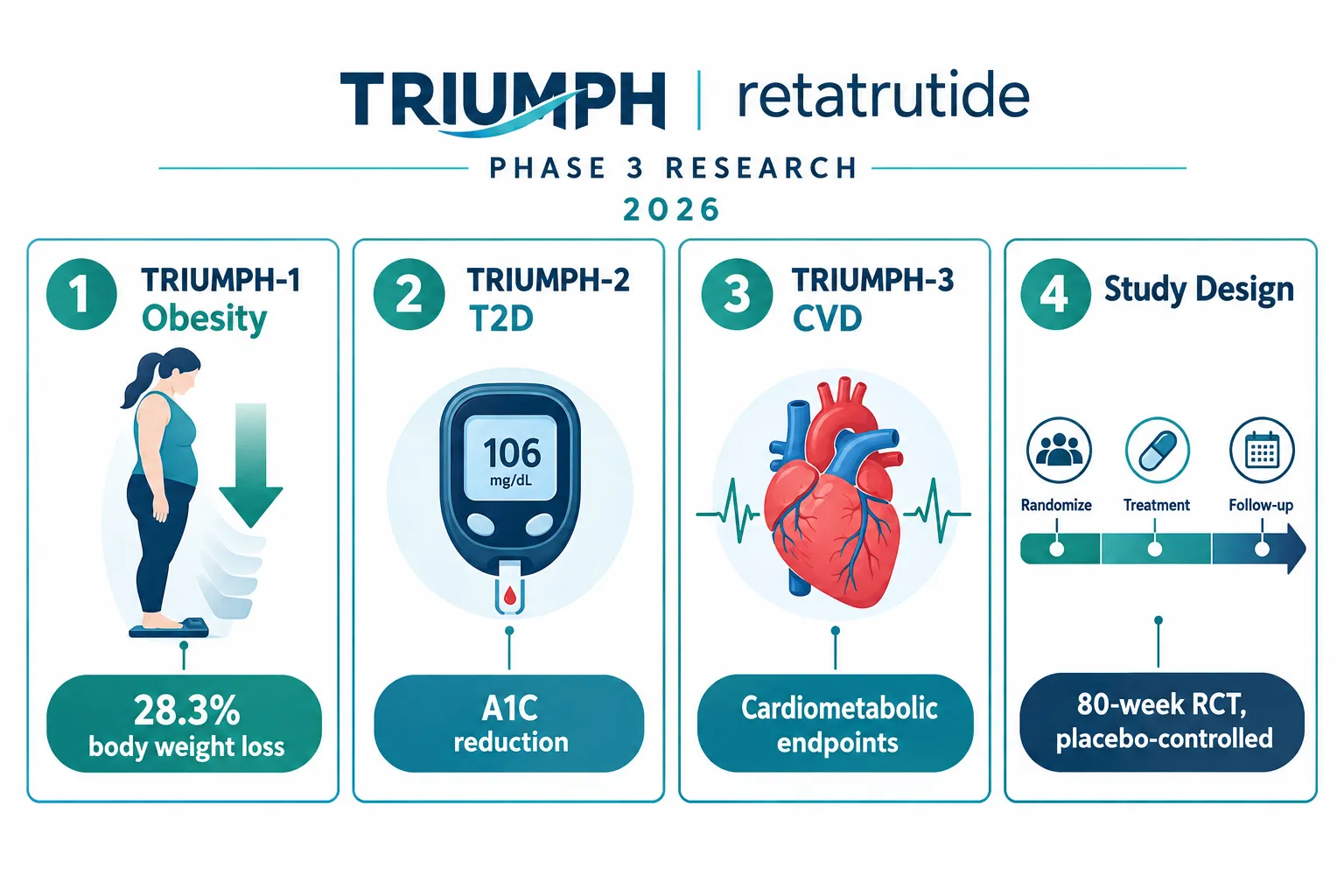
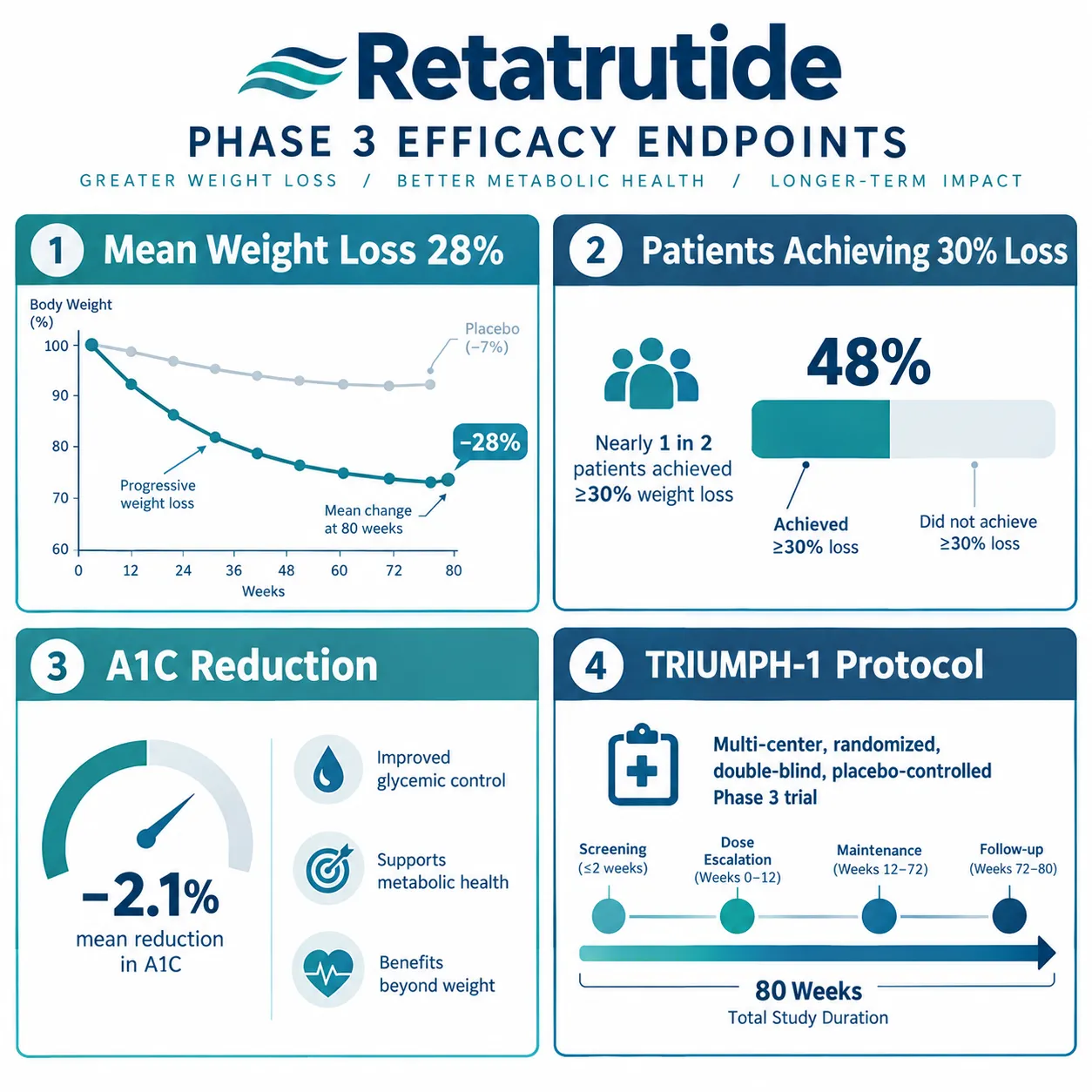
  • TRIUMPH-1 showed average body weight reductions of up to 28.3% at 80 weeks on the 12 mg dose, with roughly 45% of participants achieving at least 30% weight loss.
  • TRIUMPH-2 demonstrated meaningful A1C reductions alongside weight loss in adults with type 2 diabetes and obesity or overweight.
  • TRIUMPH-3 targeted adults with severe obesity and established cardiovascular disease, expanding the cardiometabolic endpoint dataset.
  • All three trials were 80-week, randomized, double-blind, placebo-controlled studies, setting a high methodological standard for interpretation.
  • Phase 3 clinical findings should not be directly extrapolated to research-use peptide materials without accounting for purity, formulation, and dosing differences.

Understanding the TRIUMPH Trial Architecture

The TRIUMPH program consists of three pivotal Phase 3 trials, each enrolling distinct populations to isolate different aspects of retatrutide's effects. TRIUMPH-1 enrolled adults with obesity or overweight without type 2 diabetes. TRIUMPH-2 enrolled adults who had both type 2 diabetes and obesity or overweight. TRIUMPH-3 focused on adults with severe obesity and established cardiovascular disease. Each trial ran for 80 weeks under a randomized, double-blind, placebo-controlled design, the gold standard for regulatory-grade evidence.

Understanding the TRIUMPH Trial Architecture

Retatrutide itself is a triple agonist acting simultaneously on GLP-1, GIP, and glucagon receptors. This mechanism distinguishes it from dual agonists like tirzepatide and single-receptor agents like semaglutide. Researchers reviewing the retatrutide clinical trial literature should note that the multi-receptor activity complicates direct comparisons with earlier compounds, since each receptor pathway contributes differently to energy expenditure, appetite suppression, and glucose metabolism.

Key dose arms tested across TRIUMPH trials:

Dose Trial Inclusion Primary Role
4 mg once weekly TRIUMPH-1, TRIUMPH-2 Lower-dose comparator
8 mg once weekly TRIUMPH-1, TRIUMPH-2 Mid-range efficacy arm
9 mg once weekly TRIUMPH-1 High-dose efficacy arm
12 mg once weekly TRIUMPH-1, TRIUMPH-2, TRIUMPH-3 Maximum dose efficacy arm

Interpreting Weight Loss Endpoints from Retatrutide Phase 3 Results in 2026

TRIUMPH-1 produced the most widely cited weight loss figures. Participants on the 9 mg dose lost an average of 64.4 lb, representing 25.9% of baseline body weight. Those on the 12 mg dose lost an average of 70.3 lb, or 28.3% of baseline weight. The placebo group lost approximately 2.2%. Approximately 45% of the roughly 2,500 participants achieved at least 30% weight loss, a threshold that had rarely appeared in prior obesity pharmacotherapy trials.

An extension to 104 weeks showed that participants with a BMI of 35 kg/m² or higher on the highest dose lost approximately 30.3% of body weight on average, suggesting the effect is durable rather than plateauing early.

"A 28% average weight reduction in a randomized controlled trial is not a ceiling, it is a new baseline expectation for next-generation obesity pharmacotherapy."

Researchers reviewing these figures alongside retatrutide endpoints data should apply several interpretive cautions:

  • Responder heterogeneity: Mean weight loss masks a wide distribution. Some participants lost far less; others exceeded 35%.
  • Baseline BMI matters: Higher baseline BMI was associated with greater absolute weight loss but not always greater percentage loss.
  • Titration schedules: The dose escalation protocol used in TRIUMPH trials is specific and structured. Rapid titration in research settings produces different tolerability profiles.
  • Placebo subtraction: The net treatment effect, not the absolute loss, is the relevant efficacy signal for mechanistic research.

A1C, Glycemic Control, and Cardiometabolic Endpoints: What the Data Show

TRIUMPH-2 specifically addressed glycemic outcomes in adults with type 2 diabetes. Retatrutide produced substantial A1C reductions across all active dose arms, with the 12 mg arm achieving the largest decreases from baseline. These reductions were accompanied by meaningful weight loss, making it difficult to isolate the glycemic effect of the receptor agonism from the indirect benefit of fat mass reduction, a distinction that matters significantly for mechanistic researchers.

A1C, Glycemic Control, and Cardiometabolic Endpoints: What the Data Show

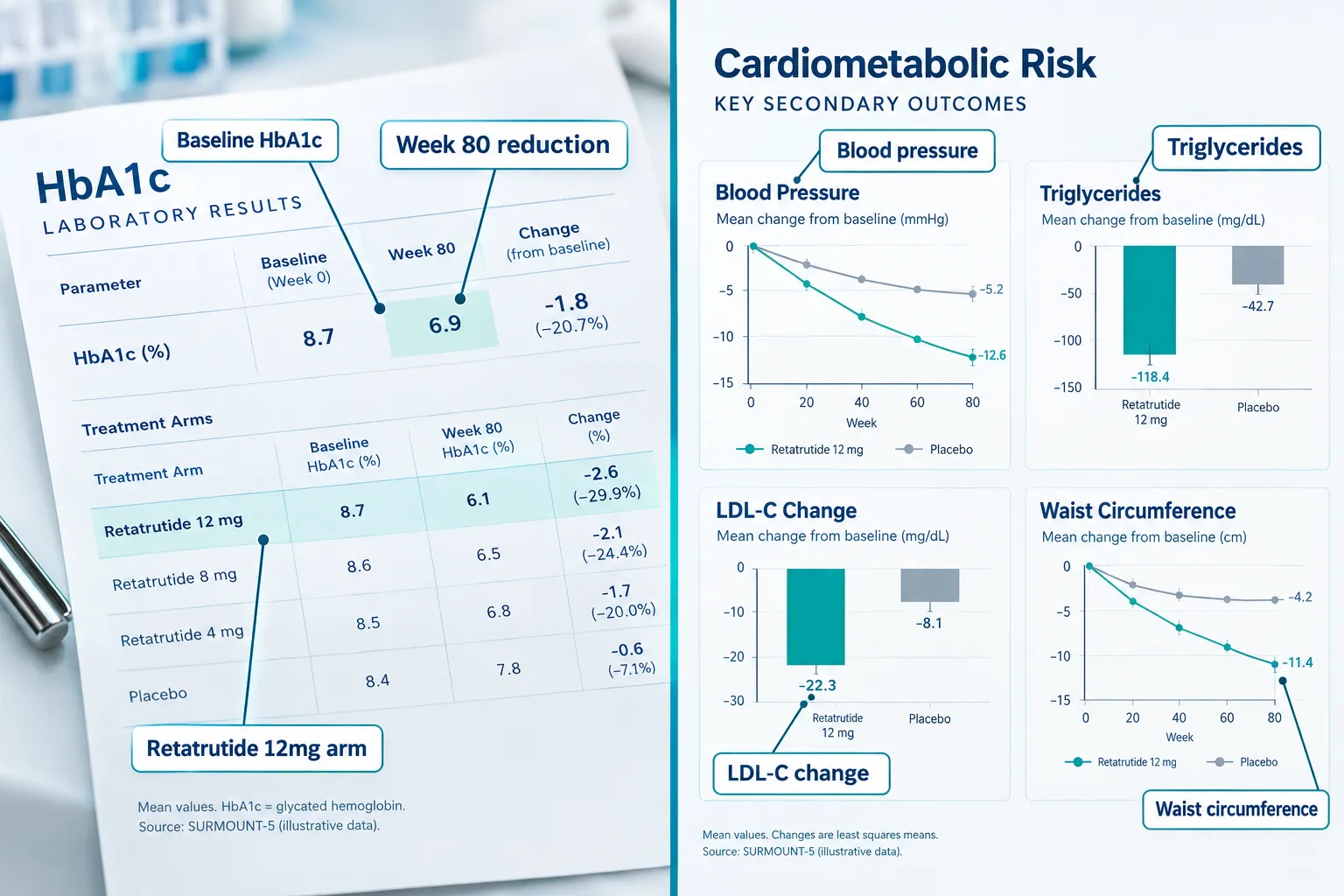
TRIUMPH-3 extended the dataset to cardiometabolic markers in a higher-risk population. Reported endpoints included changes in blood pressure, triglycerides, LDL-C, and waist circumference. While full cardiovascular outcomes data from a dedicated MACE trial are still pending as of 2026, the surrogate marker improvements observed in TRIUMPH-3 are consistent with the metabolic effects predicted by the triple-receptor mechanism.

Cardiometabolic endpoints researchers should track:

  • Systolic and diastolic blood pressure reduction
  • Fasting triglyceride change from baseline
  • HDL-C and LDL-C shifts
  • Waist circumference as a visceral adiposity proxy
  • Liver enzyme normalization in participants with metabolic-associated steatotic liver disease

How Researchers Should Avoid Misextrapolating Phase 3 Findings

Retatrutide Phase 3 Results in 2026 represent pharmaceutical-grade, GMP-manufactured material administered under controlled clinical conditions. Research-use peptide materials, such as those available as GLP-3 Reta 30mg or GLP-3 Reta 20mg for laboratory use, differ in formulation, excipient profile, and intended application. Researchers sourcing material should consult verified retatrutide peptide buy online resources that provide third-party purity documentation.

How Researchers Should Avoid Misextrapolating Phase 3 Findings

The following extrapolation errors are most common in the literature:

  1. Assuming equivalent bioavailability between pharmaceutical formulations and research-grade lyophilized peptides
  2. Applying TRIUMPH dose arms directly to non-human or in vitro research models without allometric scaling
  3. Conflating A1C reduction with direct receptor-mediated glycemic control when weight loss itself accounts for a significant portion of the glycemic benefit
  4. Ignoring the titration variable, TRIUMPH participants were dose-escalated over weeks, not started at maximum dose
  5. Overstating cardiovascular conclusions before dedicated MACE trial data are published

For researchers comparing retatrutide to other metabolic peptides, reviewing Tesamorelin dosage for fat loss frameworks offers a useful methodological contrast, since Tesamorelin's visceral fat reduction mechanism and endpoint structure differ substantially from triple-receptor agonism.


Conclusion

The Retatrutide Phase 3 Results in 2026 represent a landmark dataset for obesity, diabetes, and cardiometabolic research. The TRIUMPH program's three-trial architecture provides layered evidence across distinct populations, dose arms, and outcome categories. For researchers, the actionable steps are clear:

  • Treat the 80-week, placebo-controlled TRIUMPH data as the interpretive anchor for all mechanistic hypotheses involving retatrutide.
  • Distinguish between mean efficacy signals and responder distributions before drawing mechanistic conclusions.
  • Separate glycemic benefits attributable to weight loss from those attributable to direct receptor agonism when designing downstream studies.
  • Source research-grade material only from suppliers providing verified purity documentation, and never apply clinical dose arms directly to preclinical models without appropriate scaling.
  • Monitor the emerging MACE trial data before drawing cardiovascular outcome conclusions from surrogate markers alone.

The TRIUMPH results do not simply update a number, they reframe what metabolic pharmacotherapy can achieve and raise the methodological bar for how researchers must interpret, contextualize, and apply the data responsibly.

https://www.puretestedpeptides.com/wp-content/uploads/2026/10/retatrutide-phase-3-results-in-2026-how-researchers-should-interpret-weight-loss.webp 1024 1536 https://www.puretestedpeptides.com/wp-content/uploads/2026/01/buy-peptides-online.jpg 2026-10-03 13:08:402026-10-03 13:08:40Retatrutide Phase 3 Results in 2026: How Researchers Should Interpret Weight Loss, A1C, and Cardiometabolic Endpoints
Retatrutide Phase 3 Results: How Weight Loss, A1C, and Cardiovascular Findings Change Research Interpretation

Retatrutide Phase 3 Results: How Weight Loss, A1C, and Cardiovascular Findings Change Research Interpretation

September 26, 2026/0 Comments/in Uncategorized/by

Fewer than one in ten obesity drugs in history have produced mean weight loss exceeding 20 percent in a phase 3 trial. Retatrutide, a triple receptor agonist targeting GIP, GLP-1, and glucagon pathways simultaneously, has now cleared that threshold by a wide margin, and the implications reach far beyond a single efficacy number.

The full scope of Retatrutide Phase 3 Results: How Weight Loss, A1C, and Cardiovascular Findings Change Research Interpretation is still being absorbed by the research community. Topline data from the TRIUMPH master protocol and its obesity sub-programs show outcomes that reframe earlier phase 2 benchmarks, raise new questions about cardiovascular labeling, and complicate how scientists define a "weight-loss drug" in the first place.

Key Takeaways

  • Phase 3 obesity data show approximately 28 percent mean weight loss at 80 weeks, with nearly 45 percent of participants achieving 30 percent or greater body weight reduction.
  • A1C improvements in the type 2 diabetes arm reinforce retatrutide's glycemic potential beyond weight loss alone.
  • Cardiovascular outcome data from the obesity-plus-established-CVD trial show MACE hazard ratios that are neutral to modestly favorable, but do not yet confirm a cardiovascular label claim.
  • Phase 2 NEJM results are now viewed as a conservative baseline rather than a peak effect.
  • Retatrutide remains investigational; no regulatory approval has been granted as of 2026.

What the Obesity Efficacy Numbers Actually Mean

What the Obesity Efficacy Numbers Actually Mean

The headline figure from the pivotal obesity phase 3 program is approximately 28 percent mean body weight reduction at 80 weeks. That number demands context. Semaglutide 2.4 mg produced roughly 15 percent in its landmark trial; tirzepatide reached approximately 22 percent at its highest dose. Retatrutide's figure, if confirmed in peer-reviewed publication, would represent the largest mean weight loss ever reported for a pharmacological agent in a phase 3 obesity study.

Equally striking is the distribution of response. Roughly 45 percent of participants achieved 30 percent or greater weight loss, a threshold that, in earlier eras, was associated only with bariatric surgery. That figure matters because it shifts the clinical conversation from average outcomes to what a subset of patients might realistically expect.

"The ceiling for pharmacological weight loss may not have been reached yet, but retatrutide has moved it substantially higher."

Researchers tracking Retatrutide Clinical Trials note that discontinuation rates and tolerability data are critical to interpreting these numbers fairly. Gastrointestinal adverse events, nausea, vomiting, diarrhea, remain the most common side effects, consistent with the incretin class. Dropout rates tied to adverse events have not been negligible, which means the 28 percent figure reflects a population that tolerated the drug well enough to complete the protocol.


Glycemic and Cardiovascular Findings: Separating Signal from Claim

Glycemic and Cardiovascular Findings: Separating Signal from Claim

The type 2 diabetes arm of the phase 3 program adds a second layer of significance to the overall data picture. A1C reductions were clinically meaningful, and the breadth of cardiometabolic risk-factor improvements, including blood pressure, triglycerides, and waist circumference, reinforces the argument that retatrutide acts as a systemic cardiometabolic modulator rather than a simple appetite suppressant.

This distinction matters for research interpretation. When a compound simultaneously reduces body weight, lowers blood glucose, improves lipid panels, and reduces blood pressure, the mechanism of benefit becomes difficult to attribute to any single pathway. That complexity is scientifically valuable but also complicates regulatory discussions about labeling.

The cardiovascular outcome trial enrolled participants with obesity and established cardiovascular disease. MACE (major adverse cardiovascular events) hazard ratios came in neutral to modestly favorable, a result that is encouraging but not yet sufficient to support a dedicated cardiovascular risk-reduction label claim. Researchers reviewing Retatrutide Clinical Trial data consistently note that risk-factor improvement and hard cardiovascular event reduction are not interchangeable endpoints.

Key distinctions from the cardiovascular data:

  • Improved risk factors (blood pressure, lipids, weight) are confirmed across trials
  • MACE hazard ratios are neutral to modestly favorable, not definitively protective
  • A cardiovascular label claim would require additional event-driven data
  • Monitoring for cardiovascular and gastrointestinal signals remains active in ongoing maintenance studies

How Phase 3 Data Reshape Research Interpretation Going Forward

How Phase 3 Data Reshape Research Interpretation Going Forward

Understanding Retatrutide Phase 3 Results: How Weight Loss, A1C, and Cardiovascular Findings Change Research Interpretation requires stepping back from individual endpoints and examining what the data collectively signal about the incretin class ceiling.

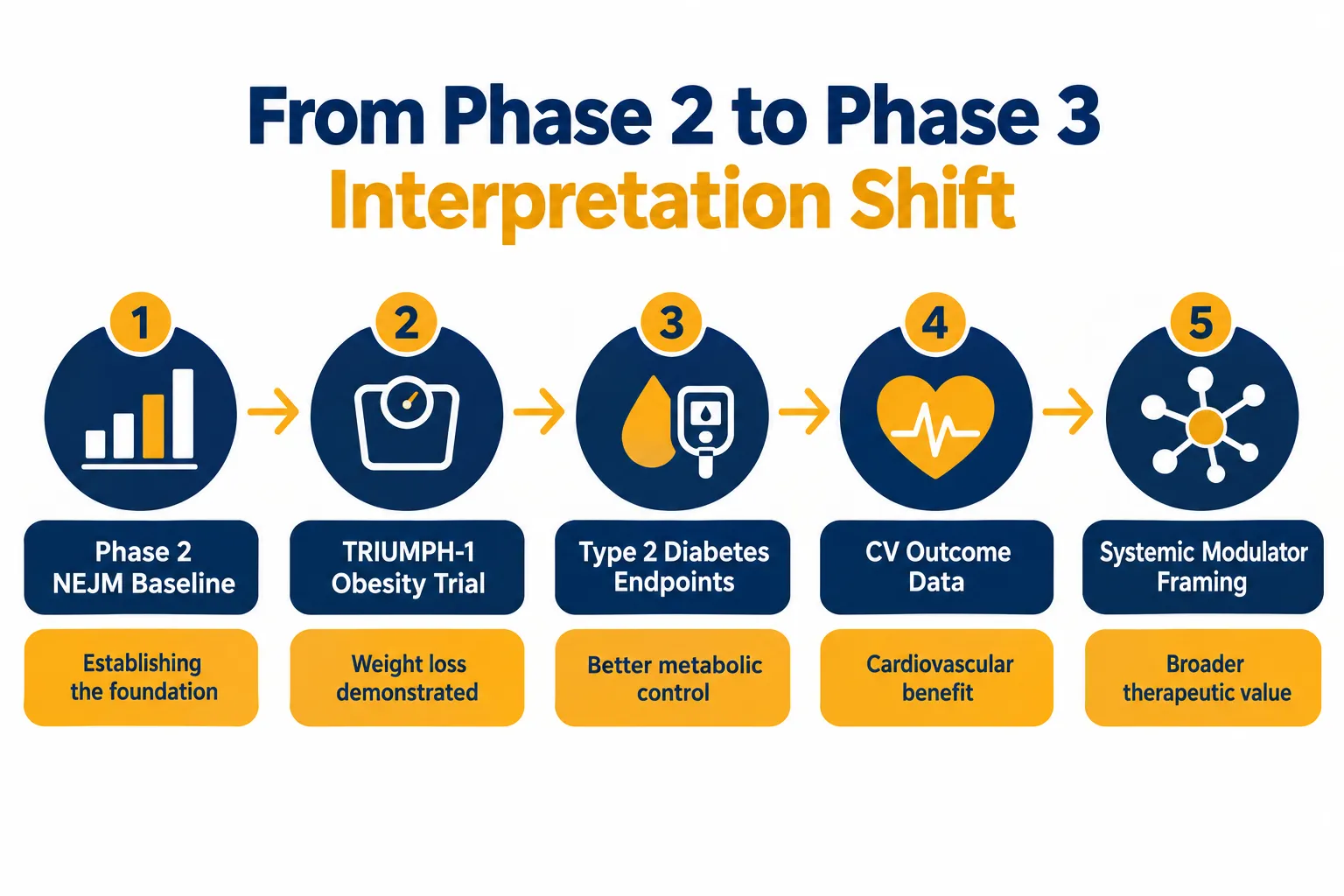
Phase 2 results published in the New England Journal of Medicine were widely cited as evidence of exceptional efficacy. Phase 3 data now reframe those results as a conservative baseline, not a peak effect. That inversion is unusual in drug development, where phase 3 trials frequently show more modest outcomes than earlier studies due to broader, more heterogeneous populations.

Several interpretive questions now dominate expert commentary:

Research Question Why It Matters
Duration of effect Does weight loss plateau, reverse, or persist beyond 80 weeks?
Head-to-head trials How does retatrutide compare directly to tirzepatide or semaglutide?
Class generalizability Do triple agonism benefits extend to other compounds in development?
Real-world CV impact Will risk-factor gains translate to event reduction outside trial conditions?
Cost and access High efficacy is only meaningful if patients can sustain treatment

The TRIUMPH maintenance study is still active, and its results will be central to answering the durability question. Industry framing has leaned heavily on "next-generation" language, but researchers caution that approval timelines and cardiovascular label expectations remain separate conversations from efficacy data.

For those following the science of triple-receptor agonism alongside related peptide research, including work on IPA Sermorelin Stack Research and metabolic modulation, the retatrutide data set offers a rare opportunity to observe how mechanism-of-action complexity translates into clinical outcomes at scale.


Conclusion

Retatrutide Phase 3 Results represent a genuine inflection point in obesity and cardiometabolic research, not because any single number is record-breaking in isolation, but because the combination of weight loss magnitude, glycemic improvement, and cardiovascular signal breadth forces a reclassification of what this compound is and what it does.

Actionable next steps for researchers and clinicians following this space:

  1. Wait for peer-reviewed publication of full TRIUMPH-1 data before drawing conclusions from topline press releases.
  2. Distinguish between risk-factor improvements and hard cardiovascular event data when evaluating cardiovascular claims.
  3. Track the maintenance study for durability evidence beyond 80 weeks.
  4. Monitor head-to-head trial announcements, which will provide the most clinically relevant comparative data.
  5. Evaluate discontinuation and tolerability rates alongside efficacy figures to form a complete picture of real-world applicability.

Retatrutide remains investigational as of 2026. The data are compelling, the mechanistic rationale is strong, and the research interpretation is still evolving. That combination makes this one of the most closely watched drug development programs in metabolic medicine today.

https://www.puretestedpeptides.com/wp-content/uploads/2026/09/retatrutide-phase-3-results-how-weight-loss-a1c-and-cardiovascular-findings-chan.webp 1024 1536 https://www.puretestedpeptides.com/wp-content/uploads/2026/01/buy-peptides-online.jpg 2026-09-26 13:10:202026-09-26 13:10:20Retatrutide Phase 3 Results: How Weight Loss, A1C, and Cardiovascular Findings Change Research Interpretation
×

Helpful Links

  • My account
  • Cart
  • Checkout
  • Refund and Returns Policy
  • Privacy Policy
  • SMS Privacy Policy
  • Login
  • My Account
  • Logout

USA Made Lab Tested Peptides

All products are sold for research, laboratory, or analytical purposes only, and are not for human consumption


Pure Tested Peptides is a chemical supplier. Pure Tested Peptides is not a compounding / chemical compounding facility as defined under 503A of the Federal Food, Drug, and Cosmetic act. Pure Tested Peptides is not an outsourcing facility as defined under 503B of the Federal Food, Drug, and Cosmetic act.

The statements made within this website have not been evaluated by the US Food and Drug Administration. The products we offer are not intended to diagnose, treat, cure or prevent any disease.

Human/Animal Consumption Prohibited. Laboratory/In-Vitro Experimental Use Only

Scroll to top Scroll to top Scroll to top