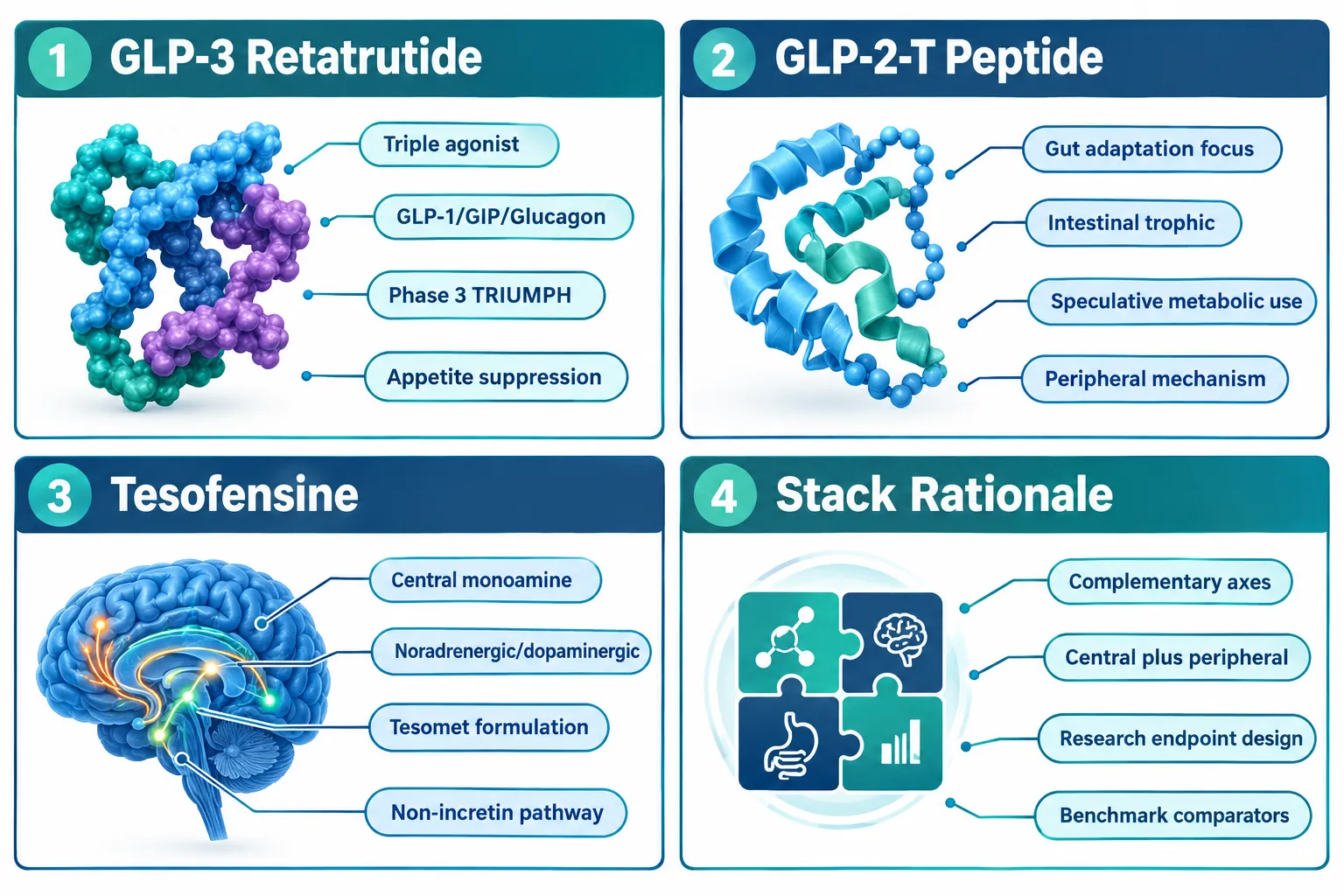
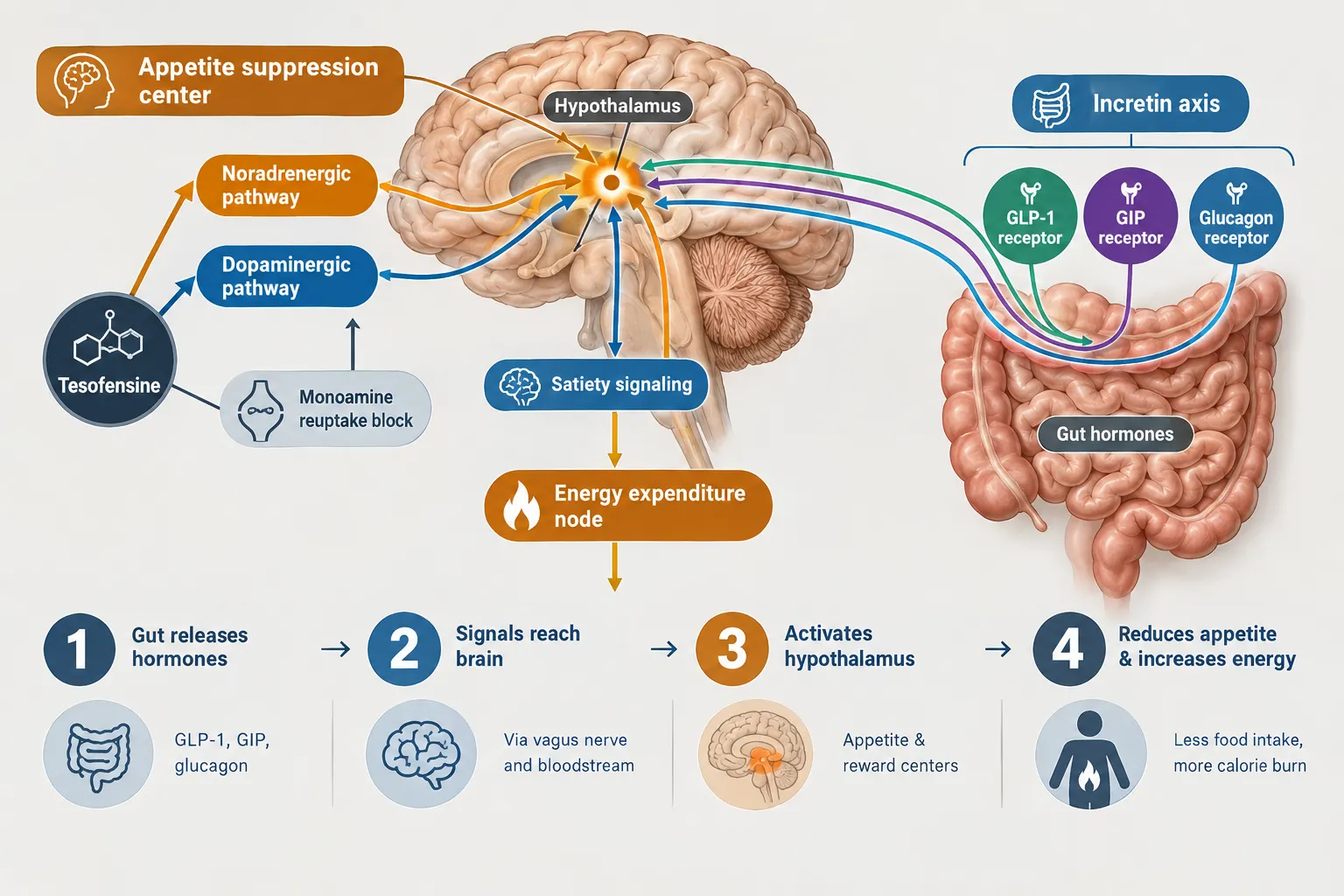
GLP-3 Retatrutide Research Models: Designing Controls for Appetite, Glycemia, and Body-Composition Outcomes
Fewer than five years after the GLP-1 class reshaped obesity medicine, retatrutide has already produced double-digit percentage weight loss in Phase 2 trials, numbers that rival bariatric surgery. Yet the most pressing methodological question for 2026 researchers is not whether the molecule works, but why it works: how much of the observed effect on appetite, blood glucose, and body composition comes from direct receptor signaling versus the cascade of secondary changes that follow any large reduction in caloric intake or body weight?
Getting that distinction right demands careful control architecture. This article walks through the key design choices for GLP-3 Retatrutide research models: designing controls for appetite, glycemia, and body-composition outcomes so that data can withstand regulatory and peer scrutiny.
Key Takeaways
- Retatrutide is a triple agonist at GLP-1R, GIPR, and GCGR, making endpoint attribution more complex than single-receptor studies.
- Pair-fed and weight-matched controls are essential to separate direct receptor effects from secondary consequences of reduced intake.
- Body-composition endpoints require DXA or equivalent imaging; fat-free mass preservation is a critical secondary outcome.
- Glycemic endpoints in type 2 diabetes models need hierarchical structuring with HbA1c as the primary measure and fasting glucose as confirmatory.
- Patient-reported appetite outcomes must be validated instruments, not ad hoc scales, to survive regulatory review.
Understanding Retatrutide's Triple-Agonist Mechanism
Retatrutide simultaneously activates three receptors: the glucagon-like peptide-1 receptor (GLP-1R), the glucose-dependent insulinotropic polypeptide receptor (GIPR), and the glucagon receptor (GCGR). Each receptor contributes differently to the observed phenotype.
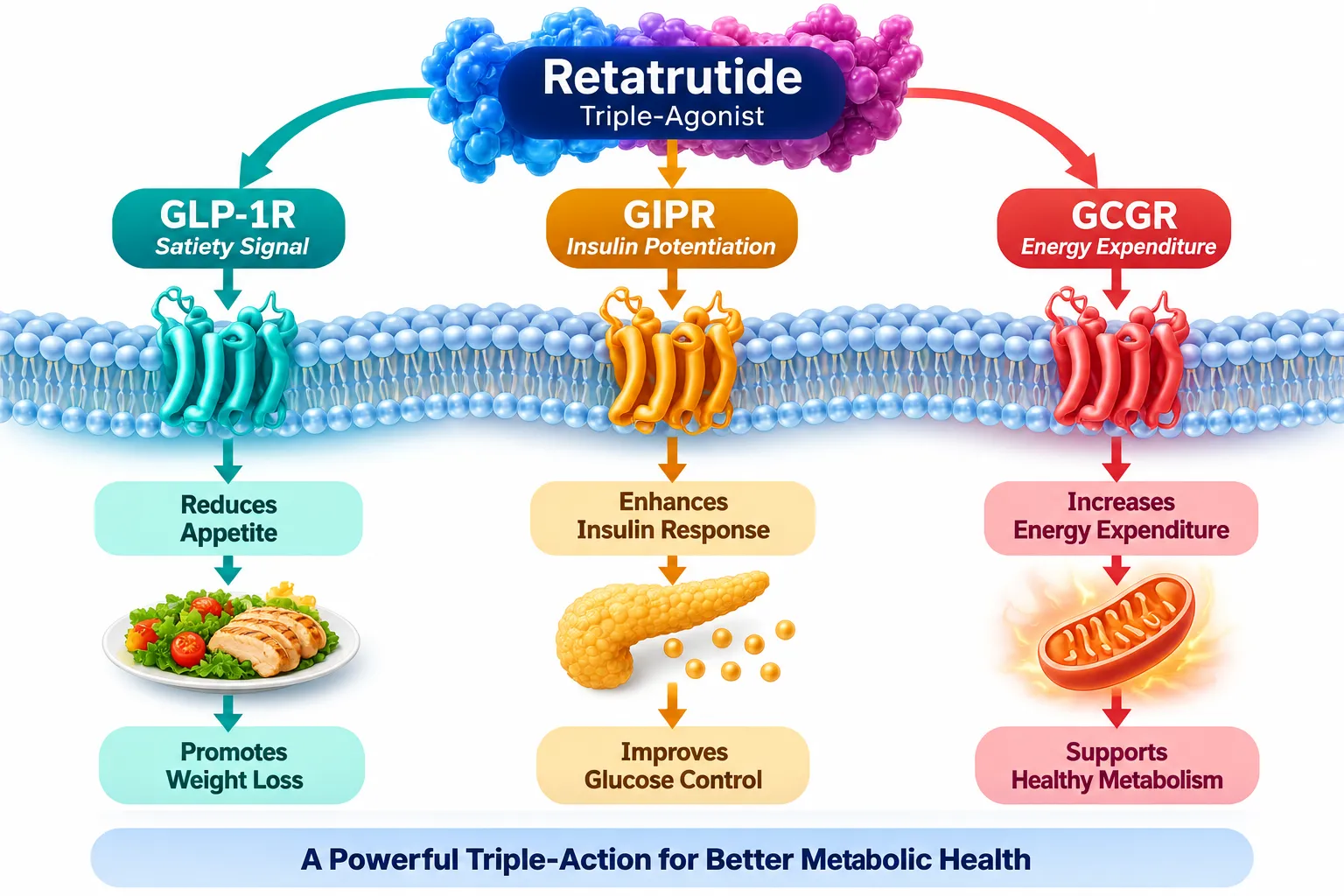
GLP-1R activation drives satiety signaling and slows gastric emptying. GIPR co-activation potentiates insulin secretion and may independently reduce adiposity. GCGR engagement elevates energy expenditure and promotes hepatic fat oxidation. The overlap between these pathways creates a confounding challenge: when a treated animal or participant loses weight and eats less, downstream hormonal changes mimic some receptor-mediated effects. Without the right controls, researchers cannot cleanly attribute outcomes to the molecule itself.
Researchers exploring this area can review GLP-1 and Reta mechanism resources and Retatrutide clinical trial data to contextualize receptor biology before finalizing a study design.
Core Control Strategies in GLP-3 Retatrutide Research Models: Designing Controls for Appetite, Glycemia, and Body-Composition Outcomes
Pair-Fed Controls
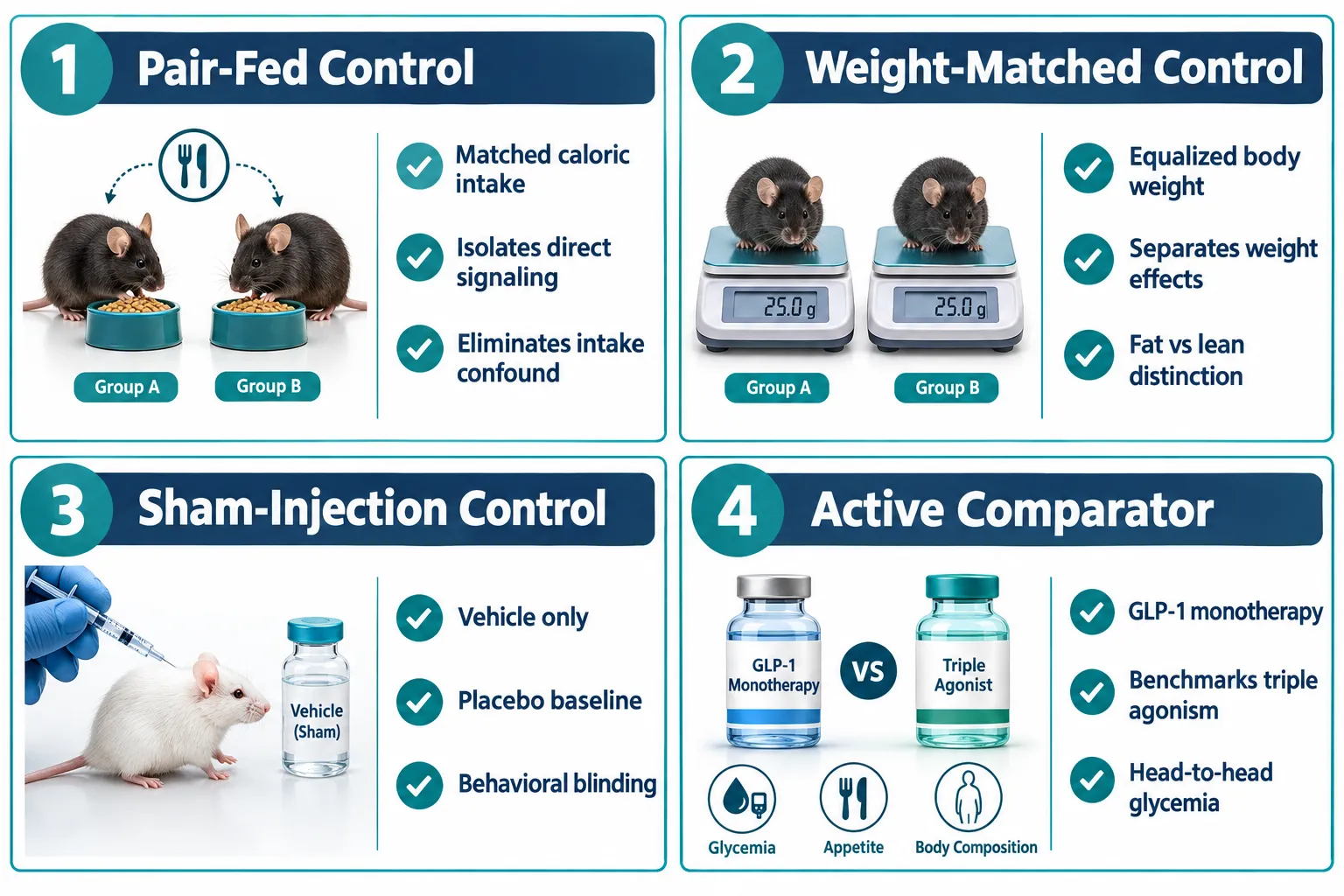
The pair-fed design is the gold standard for isolating direct pharmacological effects from caloric restriction effects. A vehicle-treated control group receives the same daily caloric intake as the drug-treated group, matched retrospectively or prospectively. Any difference between groups then reflects receptor signaling, not reduced food consumption.
Key implementation points:
- Match food intake within 24-hour windows, not weekly averages, to avoid lag artifacts.
- Monitor body weight daily; even small divergences accumulate over multi-week protocols.
- Include a third, ad-libitum vehicle group to quantify how much of the pair-fed group's phenotype is driven by caloric restriction alone.
Weight-Matched Controls
When the research question focuses on body composition rather than weight per se, weight-matched controls are more informative than pair-fed designs. Animals or participants are maintained at equivalent body weights through caloric adjustment, allowing the study to ask whether retatrutide shifts the fat-to-lean ratio independently of total mass reduction.
Phase 2 DXA substudies have shown that retatrutide-treated participants lose a disproportionate share of fat mass relative to fat-free mass compared to diet-alone controls at equivalent weight loss, a finding that only emerges when weight is held constant as a covariate.
Vehicle and Active Comparators
Every arm should include:
| Control Type | Purpose | Placement in Hierarchy |
|---|---|---|
| Vehicle injection | Behavioral and procedural placebo | Primary baseline |
| GLP-1 monotherapy | Benchmarks incremental GIPR/GCGR contribution | Secondary comparison |
| Pair-fed vehicle | Separates intake effects | Mechanistic arm |
| Weight-matched vehicle | Separates mass effects | Composition arm |
An active comparator arm using a GLP-1 monotherapy agent allows researchers to quantify the incremental contribution of GIPR and GCGR co-agonism, the defining pharmacological feature of retatrutide.
Designing Appetite and Glycemia Endpoints
Appetite Outcome Instruments
Appetite is a subjective construct that requires validated patient-reported outcome (PRO) instruments. In clinical models, the Three-Factor Eating Questionnaire (TFEQ) and the Control of Eating Questionnaire (CFEQ) are the most widely used. Both capture cognitive restraint, disinhibition, and hunger as separate dimensions, important because retatrutide appears to reduce hunger scores more than it reduces disinhibition, a pattern distinct from GLP-1 monotherapy.
"Appetite suppression measured only by caloric intake misses the cognitive and hedonic dimensions that predict long-term adherence and weight maintenance."
Preclinical models should pair meal pattern analysis (meal size, meal frequency, inter-meal interval) with lick-o-meter or operant-response paradigms to capture motivational aspects of feeding separately from homeostatic hunger.
Glycemic Endpoint Hierarchy
For type 2 diabetes models, endpoint hierarchy should follow this structure:
- Primary: HbA1c change from baseline at 24 weeks
- Key secondary: Fasting plasma glucose, 2-hour post-load glucose
- Exploratory: HOMA-IR, fasting insulin, C-peptide
Phase 2 data in type 2 diabetes demonstrated HbA1c reductions exceeding 2 percentage points at higher doses, but the glycemic benefit was partially confounded by weight loss. Pair-fed controls are therefore essential in glycemia-focused arms to determine how much glucose lowering is independent of mass reduction.
Body-Composition Endpoint Protocol for GLP-3 Retatrutide Research Models: Designing Controls for Appetite, Glycemia, and Body-Composition Outcomes
DXA as the Reference Standard
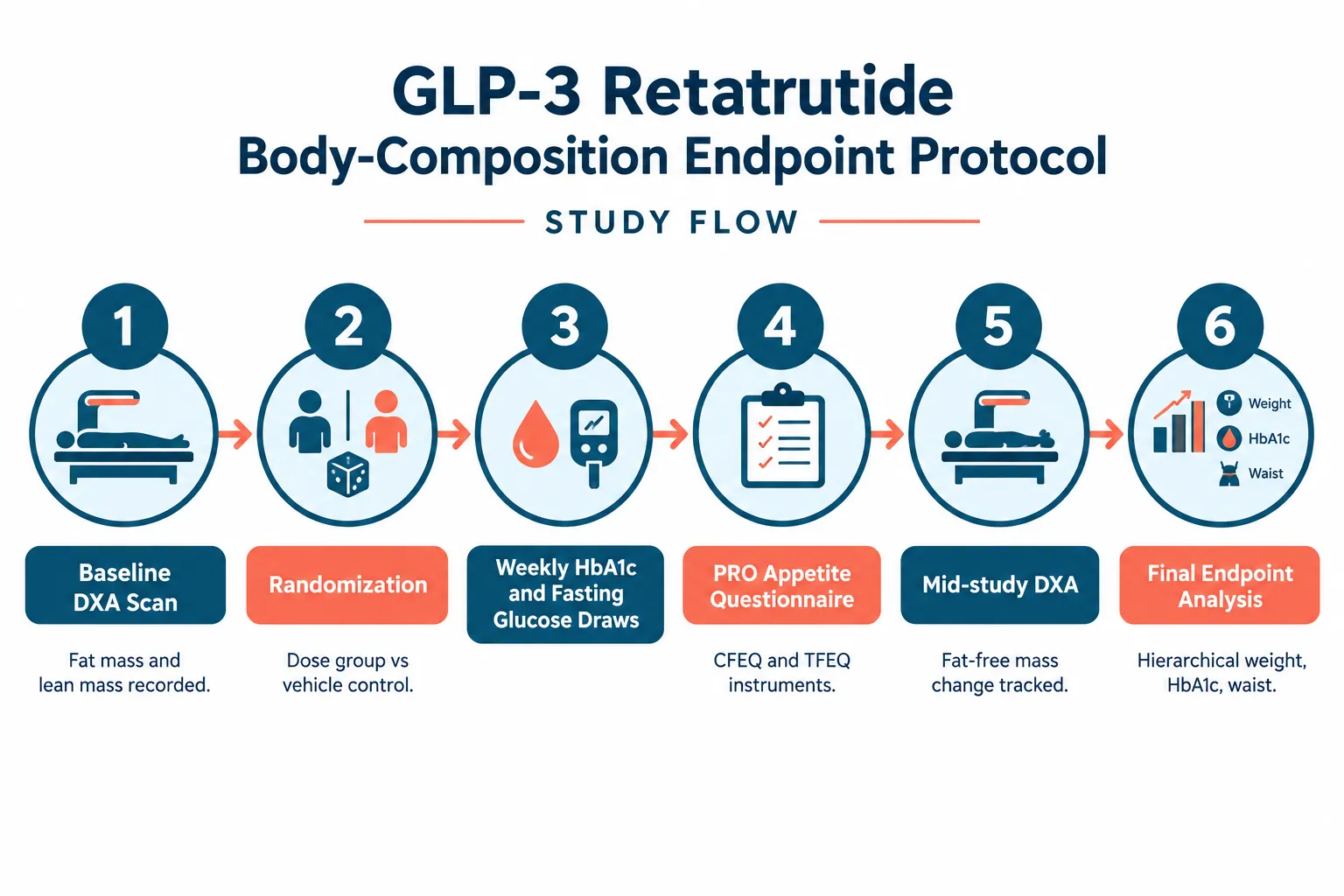
Dual-energy X-ray absorptiometry (DXA) remains the practical reference standard for body-composition substudies in human trials. Fat mass, lean mass, and bone mineral content are reported separately, allowing calculation of the fat-free mass (FFM) index.
A critical finding from retatrutide substudies is that FFM loss constitutes roughly 25-30% of total weight lost, lower than historical benchmarks for diet-alone interventions at comparable weight loss magnitudes. This suggests a preferential fat-mobilizing effect, likely mediated through GCGR-driven hepatic and adipose oxidation.
Methodological Cautions
- DXA cannot distinguish visceral from subcutaneous adipose tissue; MRI or CT is required for that distinction.
- Hydration status alters lean mass readings; standardize pre-scan hydration protocols.
- Repositioning error between scans can exceed 1 kg in total body lean mass; use the same operator and positioning protocol at every time point.
- In preclinical rodent models, micro-CT or EchoMRI provides equivalent resolution to clinical DXA.
Researchers sourcing reference compounds for body-composition controls may find the AOD 9604 research method notes on storage and traceability and the GHK-Cu peptide research sourcing guide useful for comparative compound handling standards.
For those sourcing retatrutide for research purposes, options include GLP-3 Reta 20mg GA5 and GLP-3 Reta CAG 10 mg as reference-grade research formats.
Conclusion
Designing rigorous controls for GLP-3 Retatrutide research models is not a procedural formality, it is the methodological foundation that determines whether findings are publishable, reproducible, and regulatorily credible.
Actionable next steps for researchers in 2026:
- Implement pair-fed and weight-matched control arms simultaneously rather than choosing one; they answer different questions.
- Pre-specify the endpoint hierarchy with HbA1c as the glycemic primary and FFM preservation as a key body-composition secondary.
- Select validated PRO instruments for appetite before study initiation and power the study to detect differences on cognitive restraint subscales, not just total caloric intake.
- Plan DXA scans at baseline, mid-study, and endpoint with standardized hydration and positioning protocols.
- Include an active GLP-1 monotherapy comparator arm to quantify the incremental value of triple agonism.
As the Phase 3 TRIUMPH program generates long-term data, the field will demand increasingly granular mechanistic attribution. Studies designed with the controls outlined here will be positioned to contribute meaningfully to that evidence base, and to distinguish what retatrutide does from what weight loss alone accomplishes.