Call or Text 727-513-9780
  • Shopping Cart Shopping Cart
    0Shopping Cart
Pure Tested Peptides | America's most trusted Peptides for sale online
  • Peptides for sale
    • Oral Peptides for sale
      • Peptide Capsules for sale
      • BPC 157 Capsules 1000mcg
      • SLU-PP-332 Capsules | 1000 mcg
      • 5-Amino-1MQ 50mg Capsules
      • Tesofensine 500mcg
    • All Peptides for sale
    • Peptide Sprays
      • BPC 157 Nasal Spray Kit
      • BPC-157 TB500 Nasal Spray Kit
      • Semax Nasal Spray 10mg
      • Selank – Nasal Spray Kit – 10mg
      • Epithalon 50MG Nasal Spray Kit
      • Ipamorelin 10mg Nasal Spray
      • Klow Nasal Spray (BPC-157 + TB-500 + GHK-Cu + KPV) | 80mg
      • Hulk Nasal Spray Tesa / Ipa Blend 6/3 MG
      • Klow Nasal Spray
      • NAD + 500 mg Nasal Spray
      • PT-141 Nasal Spray Kit
    • GHRH Peptides
      • Ipa Peptides
      • CJC-1295 Peptides
        • CJC-1295 with DAC 5 mg
        • CJC-1295 without DAC 5 mg
        • CJC-1295 Ipa 10mg
      • Tesa Peptides
        • Tesa Peptide
        • Tesa 20 mg
    • GHK-Cu Peptides
      • All GHK-Cu Peptides
      • GHK-Cu 100mg
      • KLOW Peptide Blend – Buy KLOW blend online
    • BPC Peptides
      • All BPC Peptides
      • BPC-157
      • BPC-157 TB-500
      • BPC 157 capsules 1000mcg
    • SLU-PP-332 Peptides
      • All SLU-PP-332 Peptides
      • SLU-PP-332 5mg
    • GLP3 Peptides
    • PT-141 Peptides
      • PT-141 Peptides for sale
      • PT-141 10mg
      • PT-141 Nasal Spray
    • CAG Peptides
      • Lipo-C Peptide Blend
      • CAG 5mg
      • CAG 10mg
    • MOTS-C Peptides
      • MOTS-C Peptides for sale
      • MOTS-c peptide
      • MOTS-c 10mg *6 pack*
    • 5 Amino 1MQ Peptides
      • 5 Amino 1MQ Peptides for sale
      • 5-Amino-1MQ 50mg Capsules
      • 5-Amino-1MQ 5mg
    • Epithalon Peptides
      • Epithalon Peptides for sale
      • Epithalon 10mg
      • Epithalon 50mg
  • Shop
    • GLPs
      • 5-Amino-1MQ 50mg Capsules
      • 5-Amino-1MQ 5mg
      • L-Carnitine 500mg/ml
      • Tesofensine 500mcg
      • SLU-PP-332 5mg
      • MOTS-c 10mg *6 pack*
    • Epithalon & BPC Peptides
      • Epithalon 10mg
      • Epithalon 50mg
      • BPC-157
      • BPC 157 capsules 1000mcg
      • BPC-157 TB-500
      • BPC-157 TB500 Nasal Spray Kit
      • BPC 157 Nasal Spray Kit
    • BPC TB-500 & NAD+ Peptides
      • NAD+ 500 mg
      • KLOW Peptide Blend – Buy KLOW blend online
      • GLOW Peptide Blend
      • TB 500 5mg
      • BPC 157 capsules 1000mcg – Supplement
      • BPC 157 Nasal Spray Kit
      • BPC-157
      • BPC-157 TB500 Nasal Spray Kit
      • BPC-157 TB-500
      • BPC 157 capsules 1000mcg
    • LL-37 Peptide
      • LL-37 10 mg
    • MOTS-C & Selank
      • MOTS-c peptide
      • Selank 10mg
    • GHK Peptides
      • GHK-Cu 100mg
      • GLOW Peptide Blend
      • KLOW Peptide Blend – Buy KLOW blend online
  • COAs
  • Wholesale
    • Wholesale Peptides for sale
  • PTP FAQ
  • Affiliates
    • Selank Peptide: Advanced Pharmacological Mechanisms Underlying Its Anxiolytic and Nootropic Effects in Research
      • 5-Amino-1MQ Peptide: Detailed Mechanisms of NNMT Inhibition and Its Impact on Cellular Metabolism Research
        • MOTS-C Peptide: Unraveling Its Role in Mitochondrial Dynamics and Energy Metabolism Research
          • Epithalon Peptide and Telomerase Regulation: Investigating Its Impact on Cellular Senescence and Lifespan Research Models
            • GLP2-T vs GLP2 Tirz Peptide: Understanding the Naming, Mechanistic Nuances, and Research Implications for Gut Health
      • Peptides and Polypeptides in Modern Pharmacology: What Research on Metoprolol, Prednisone, and Amlodipine Reveals
        • Polypeptide Peptides vs NSAIDs: What Naproxen and Diclofenac Teach Tissue-Repair Researchers About BPC‑157 and TB‑500
          • Peptides and Polypeptides in Endocrine Pharmacology: How GLP-1, GLP-2, and GLP-3 Retatrutide Differ From Classic Drugs Like Prednisone and Amlodipine
          • 5‑Amino‑1MQ Peptide and NNMT Inhibition: How It Compares With Statins Like Atorvastatin in Adipose and Lipid Metabolism Research
      • Enclomiphene, Estrogen Receptor Signaling, and Luteinizing Phase Biology: What Hormone Researchers Should Measure
        • Mesenchymal Stem Cells, BPC‑157, and GHK‑Cu: How Tissue Repair Peptides Compare With Classic NSAIDs Like Naproxen in Injury Models
          • Peptide Calculator Use Cases Beyond Growth Hormone: Working Through GLP‑3 Retatrutide, MOTS‑c, and BPC‑157 Research Dosing
        • Polypeptide Peptides in Endocrine and Metabolic Pharmacology: Lessons From Amlodipine, Prednisone, and Metoprolol
        • Peptides Calculator for Advanced Blends: Worked Examples for Tesamorelin, CJC‑1295, and Ipamorelin Stacks
          • Peptides and Polypeptides in Human Physiology: How Molecular Size Shapes Research Applications
            • Selank Peptide: Advanced Pharmacological Mechanisms Underlying Its Anxiolytic and Nootropic Effects in Research
          • 5-Amino-1MQ Peptide: Detailed Mechanisms of NNMT Inhibition and Its Impact on Cellular Metabolism Research
            • MOTS-C Peptide: Unraveling Its Role in Mitochondrial Dynamics and Energy Metabolism Research
              • Epithalon Peptide and Telomerase Regulation: Investigating Its Impact on Cellular Senescence and Lifespan Research Models
                • GLP2-T vs GLP2 Tirz Peptide: Understanding the Naming, Mechanistic Nuances, and Research Implications for Gut Health
                  • Peptides and Polypeptides in Endocrine Pharmacology: How GLP-1, GLP-2, and GLP-3 Retatrutide Differ From Classic Drugs Like Prednisone and Amlodipine
                    • Polypeptide Peptides vs NSAIDs: What Naproxen and Diclofenac Teach Tissue-Repair Researchers About BPC‑157 and TB‑500
                      • Peptides and Polypeptides in Modern Pharmacology: What Research on Metoprolol, Prednisone, and Amlodipine Reveals
                        • 5‑Amino‑1MQ Peptide and NNMT Inhibition: How It Compares With Statins Like Atorvastatin in Adipose and Lipid Metabolism Research
                        • Enclomiphene, Estrogen Receptor Signaling, and Luteinizing Phase Biology: What Hormone Researchers Should Measure
                        • Mesenchymal Stem Cells, BPC‑157, and GHK‑Cu: How Tissue Repair Peptides Compare With Classic NSAIDs Like Naproxen in Injury Models
                        • Peptide Calculator Use Cases Beyond Growth Hormone: Working Through GLP‑3 Retatrutide, MOTS‑c, and BPC‑157 Research Dosing
                        • Polypeptide Peptides in Endocrine and Metabolic Pharmacology: Lessons From Amlodipine, Prednisone, and Metoprolol
                        • Peptides Calculator for Advanced Blends: Worked Examples for Tesamorelin, CJC‑1295, and Ipamorelin Stacks
                        • Peptides and Polypeptides in Human Physiology: How Molecular Size Shapes Research Applications
                        • Selank Peptide: Advanced Pharmacological Mechanisms Underlying Its Anxiolytic and Nootropic Effects in Research
                        • MOTS-C Peptide: Unraveling Its Role in Mitochondrial Dynamics and Energy Metabolism Research
                        • Peptides and Polypeptides in Modern Pharmacology: What Research on Metoprolol, Prednisone, and Amlodipine Reveals
                        • Peptides and Polypeptides in Endocrine Pharmacology: How GLP-1, GLP-2, and GLP-3 Retatrutide Differ From Classic Drugs Like Prednisone and Amlodipine
                        • 5-Amino-1MQ Peptide: Detailed Mechanisms of NNMT Inhibition and Its Impact on Cellular Metabolism Research
                        • Mesenchymal Stem Cells, BPC‑157, and GHK‑Cu: How Tissue Repair Peptides Compare With Classic NSAIDs Like Naproxen in Injury Models
                        • Peptide Calculator Use Cases Beyond Growth Hormone: Working Through GLP‑3 Retatrutide, MOTS‑c, and BPC‑157 Research Dosing
                        • GLP2-T vs GLP2 Tirz Peptide: Understanding the Naming, Mechanistic Nuances, and Research Implications for Gut Health
                        • Polypeptide Peptides in Endocrine and Metabolic Pharmacology: Lessons From Amlodipine, Prednisone, and Metoprolol
                        • Polypeptide Peptides vs NSAIDs: What Naproxen and Diclofenac Teach Tissue-Repair Researchers About BPC‑157 and TB‑500
                        • Peptides and Polypeptides in Human Physiology: How Molecular Size Shapes Research Applications
                        • Peptides Calculator for Advanced Blends: Worked Examples for Tesamorelin, CJC‑1295, and Ipamorelin Stacks
                        • 5‑Amino‑1MQ Peptide and NNMT Inhibition: How It Compares With Statins Like Atorvastatin in Adipose and Lipid Metabolism Research
                        • Enclomiphene, Estrogen Receptor Signaling, and Luteinizing Phase Biology: What Hormone Researchers Should Measure
                        • Epithalon Peptide and Telomerase Regulation: Investigating Its Impact on Cellular Senescence and Lifespan Research Models
                        • Best research protocol Klow blend
                        • best time to take BPC-157
                        • best time to take DSIP (Delta Sleep Inducing Peptide)
                        • best time to take CJC-1295
                        • best time to take AOD-9604
                        • best time to take Follistatin 344
                        • best time to take Ipamorelin
                        • best time to take MK-677 (Ibutamoren)
                        • best time to take Ligandrol (LGD-4033) — research compound
                        • best time to take Ostarine (MK-2866) — research compound
                        • best time to take GHK-CU
                        • best time to take TB-500
                        • best time to take MOTS-c
                        • best time to take Semax
                        • best time to take RAD-140 (Testolone) — research compound
                        • best time to take Thymosin Alpha-1
                        • best time to take PEG-MGF
                        • Biolife Plasma, Octapharma Plasma, and Research Peptides: How Plasma Donation Labs Differ From Peptide Suppliers
                        • best time to take YK-11 — research compound
                        • best time to take PT-141 (Bremelanotide)
                        • Best research protocol Klow blend
                        • 5-Amino-1MQ and MOTS-C Synergy: Metabolic Signaling, Mitochondria, and Research Design
                        • BPC-157 and TB-500: Investigating Their Combined Effects on Angiogenesis and Cellular Migration in Tissue Repair Models
                        • BPC-157 Peptide: Gut Barrier Function, Inflammation, and Tissue-Recovery Research
                        • 5‑Amino‑1MQ and MOTS‑c Synergy in Metabolic Research: Designing NNMT and Mitochondrial Biogenesis Stacks
                        • CJC-1295 with DAC vs. Without DAC: Half-Life, Release Kinetics, and Research Implications
                        • CJC‑1295 with DAC vs. Without DAC: Expanding on Half‑Life Differences Using Tesamorelin and Ipamorelin Blend Case Studies
                        • Collagen Biology and Copper‑Binding Peptides: How GHK‑Cu, Glow Blend, and Klow Blend Interact with Skin and Connective Tissue
                        • Collagen Biology and Regenerative Peptides: How GHK‑Cu, Glow Blend, and Klow Blend Affect Extracellular Matrix Research
                    • DNA, Telomeres, and Longevity Peptides: Positioning Epithalon and MOTS‑c in Genetic Aging Research
                      • Enclomiphene Citrate: serm Mechanism, Testosterone Research, and Stack Compatibility
                        • Enclomiphene vs Enclomiphene Citrate: Formulation, Bioavailability, and Research Distinctions
                        • Epithalon Peptide Research: Telomerase Activation, Aging, and Pineal Gland Function
                        • Estrogen Receptor Signaling and Enclomiphene: How Selective Modulators Compare with Classic Polypeptide Hormones
                        • GHK-Cu Peptide: Advanced Mechanisms in Extracellular Matrix Remodeling and Wound Healing Research
                        • GHK-Cu Peptide: Collagen Synthesis, Wound Repair, and Skin-Barrier Research Models
                        • GLP-1 vs GLP-3 vs GLP-2: Peptide Classification and Research Applications
                        • GLP-2 Peptide Research Guide: Gut Barrier Function, Nutrient Absorption, and Intestinal Recovery Models
                        • GLP-3 Retatrutide vs. GLP-1 Drugs: What Triple-Agonist Biology Changes in Research Models
                        • Ipamorelin and Tesamorelin Combination: Synergistic GH Secretagogue Research and Dosing Protocols
                        • GLP2 Tirz Peptide: What It Is, Why the Name Exists, and How Researchers Should Interpret It
                        • Klow Blend Peptide Nasal Spray: What the Formulation Is Trying to Do in Cognitive Research
                        • Mitochondria, NNMT Inhibition, and Peptide Modulators: Where MOTS‑c and 5‑Amino‑1MQ Fit in Cellular Energy Research
                        • MOTS-c Peptide: Mitochondrial Function, Energy Metabolism, and What Researchers Measure
                        • MOTS-c vs. 5-Amino-1MQ: Which Metabolic Research Questions Each Compound Actually Answers
                        • Nasal Spray Peptides: Bioavailability, Administration, and Semax/Selank Research Applications
                        • PT-141 Peptide Research: Mechanism of Action and Melanocortin Receptor Signaling
                        • Retatrutide for Research: Mechanism, Structure, and GLP-1/GLP-3 Dual Action
                        • Retatrutide for Obesity and Type 2 Diabetes: What the Latest Trial Data Suggest
                        • Tesofensine Peptide Research: Mechanism, Appetite Suppression, and Neuropeptide Y Pathways
  • Contact
    • Contact Customer Service
    • Text Customer Support
  • About US
  • Shop all peptides
  • Affiliate Program
    • Affiliate Signup
  • Login / Register Login / Register Page Link Login / Register Page Link
  • Click to open the search input field Click to open the search input field Search
  • Menu Menu

Tag Archive for: appetite suppression mechanisms

Trazodone in Appetite and Sleep Experiments: Controlling Sedation When Testing Tesofensine or Retatrutide

Trazodone in Appetite and Sleep Experiments: Controlling Sedation When Testing Tesofensine or Retatrutide

October 16, 2026/0 Comments/in Uncategorized/by

Sedation is one of the most underestimated confounders in metabolic research. When a compound reduces food intake and body weight, investigators need to know whether that effect stems from genuine appetite suppression or from a drug-induced reduction in activity, alertness, and feeding motivation. That distinction becomes especially difficult when trazodone is used as a sleep adjunct alongside potent appetite-modifying agents. This article serves as a confounder guide for studies where sleep, feeding, and body weight are primary endpoints, with a direct focus on trazodone in appetite and sleep experiments: controlling sedation when testing tesofensine or retatrutide.

Key Takeaways

  • Trazodone improves objective sleep continuity but carries a meaningful sedation and dizziness burden that can confound activity and feeding endpoints.
  • Tesofensine acts through monoamine reuptake inhibition; its CNS stimulant profile may mask or interact with trazodone-induced sedation in unpredictable ways.
  • Retatrutide, a triple GLP-1/GIP/glucagon receptor agonist, shows no major sedation signal in phase 2 data, making trazodone co-administration particularly risky as a confounder.
  • Experimental designs must separate pharmacologic appetite effects from circadian disruption and sedation-driven reductions in feeding behavior.
  • Standardized polysomnography, actigraphy, and validated daytime alertness scales are essential tools for isolating trazodone's contribution to any observed outcome.

Pharmacological Profiles: Why the Combination Creates Complexity
Pharmacological Profiles: Why the Combination Creates Complexity

Understanding why trazodone in appetite and sleep experiments creates methodological tension requires a clear picture of each agent's mechanism.

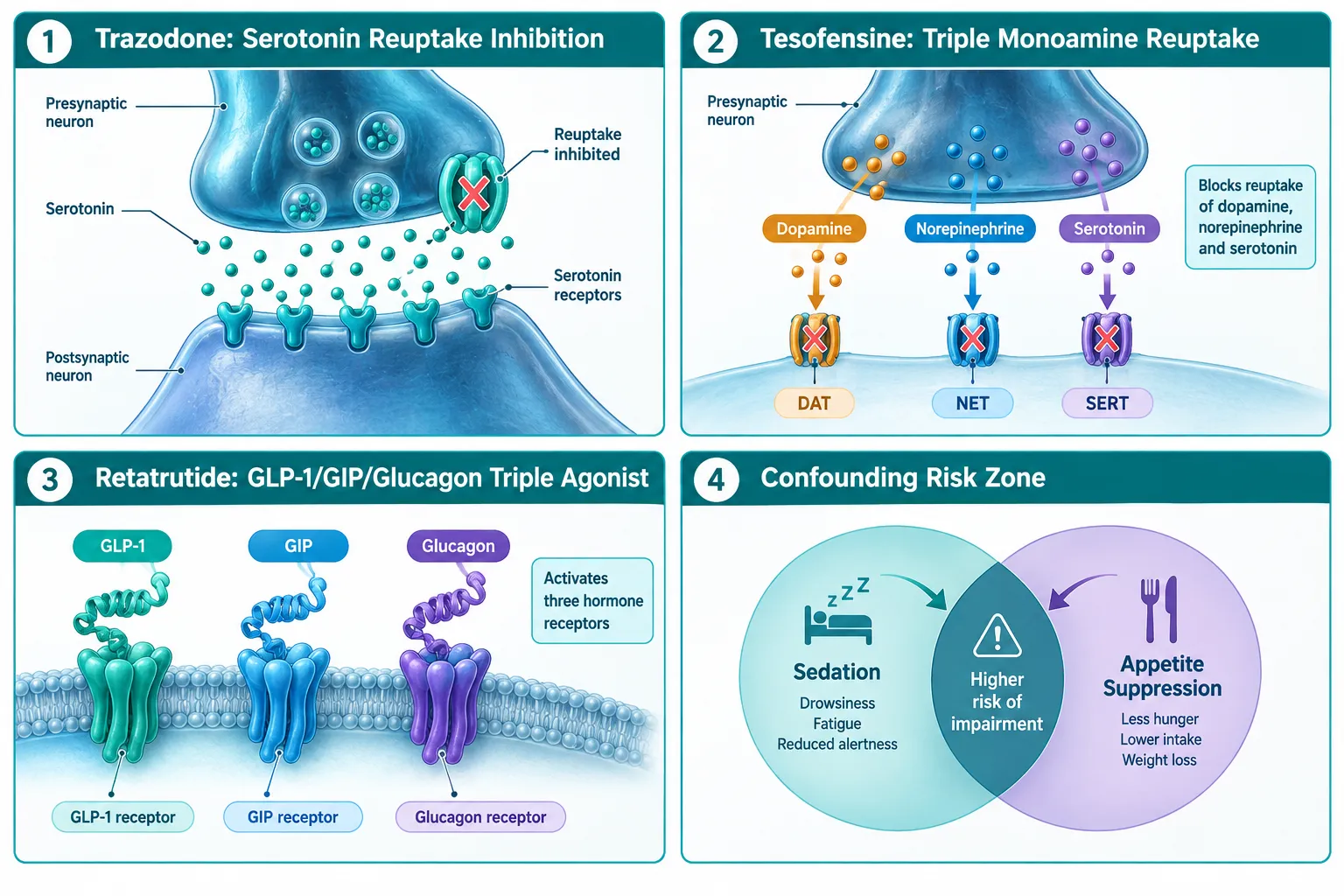
Trazodone is a serotonin antagonist and reuptake inhibitor (SARI). At low doses (50-150 mg), its histamine H1 and alpha-1 adrenergic antagonism produces sedation. At doses approaching 180 mg/day, where aggregated RCT data show the strongest improvements in subjective sleep quality, somnolence, dizziness, and next-day cognitive blunting become clinically significant. Importantly, trazodone alters sleep architecture even when it improves sleep continuity, reducing slow-wave and REM proportions in some polysomnographic analyses.

Tesofensine inhibits the reuptake of serotonin, dopamine, and norepinephrine. This triple monoamine mechanism produces appetite suppression but also increases arousal, heart rate, and locomotor activity. Pairing a stimulant-profile compound with a sedating one creates a pharmacodynamic tug-of-war that is nearly impossible to model cleanly.

Retatrutide is a triple agonist at GLP-1, GIP, and glucagon receptors. Phase 2 obesity trial data show substantial weight loss and GI side effects but no major sedation signal. Ongoing phase 3 TRIUMPH trials do not include standardized sedative adjuncts, which means adding trazodone to a retatrutide study introduces a variable absent from the pivotal evidence base. Researchers interested in the compound's dosing range can review options such as Reta 10mg and Reta 30mg for context on experimental formulations.


Separating Appetite Effects from Sedation: The Core Confounder Problem
Separating Appetite Effects from Sedation: The Core Confounder Problem

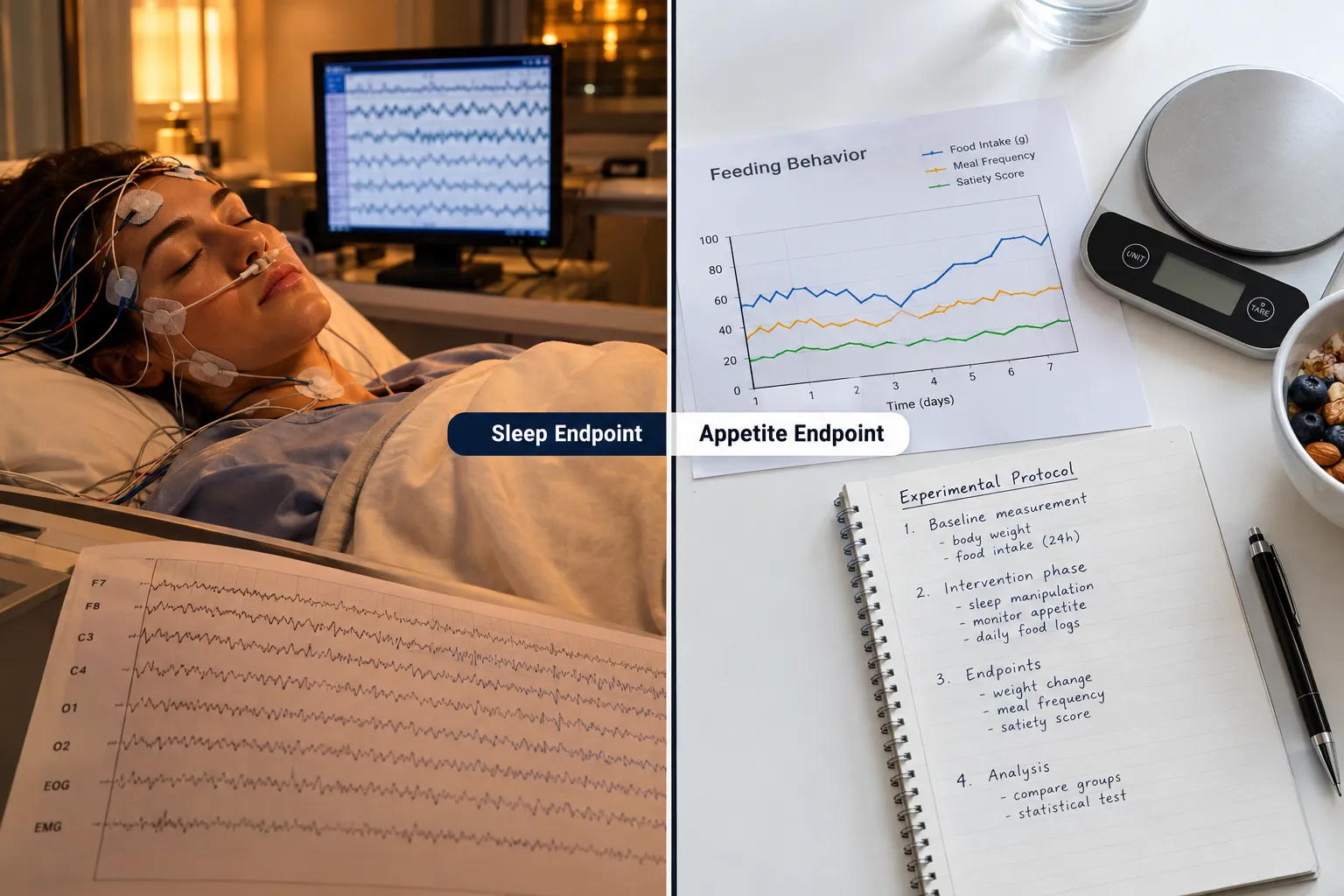
The central challenge in controlling sedation when testing tesofensine or retatrutide is that sedation reduces feeding through at least three independent pathways that have nothing to do with appetite:

Sedation-Driven Feeding Reduction Pharmacologic Appetite Suppression
Reduced locomotor activity lowers caloric demand Direct action on hypothalamic hunger circuits
Shortened waking window decreases meal opportunities Delayed gastric emptying reduces hunger signals
Cognitive blunting impairs food-seeking motivation GLP-1 receptor activation modulates reward pathways
Circadian phase shift alters meal timing Monoamine reuptake inhibition reduces hedonic eating

When trazodone is present, any reduction in food intake could reflect sedation-driven behavioral suppression rather than the test compound's pharmacologic action. This is not a theoretical concern. A head-to-head comparison of trazodone against zolpidem found trazodone to be less potent as a hypnotic yet more broadly sedating at standard doses, suggesting its sedation profile extends well beyond the sleep window.

Circadian disruption adds another layer. Trazodone shifts sleep architecture and may alter the timing of cortisol, ghrelin, and leptin secretion, all of which directly regulate appetite. An experiment that records feeding behavior without accounting for these hormonal shifts will misattribute circadian-driven appetite changes to the test compound.

For studies using retatrutide, which researchers can explore in formulations such as GLP3 Reta 20mg GSF or the Buy GLP-3 Peptide GLP3 Reta 10mg 99% Pure Third Party Tested option, the absence of a sedation signal in existing data makes any trazodone-induced sedation especially visible as a confound.


Designing Around the Confounder: A Practical Protocol Framework
Designing Around the Confounder: A Practical Protocol Framework

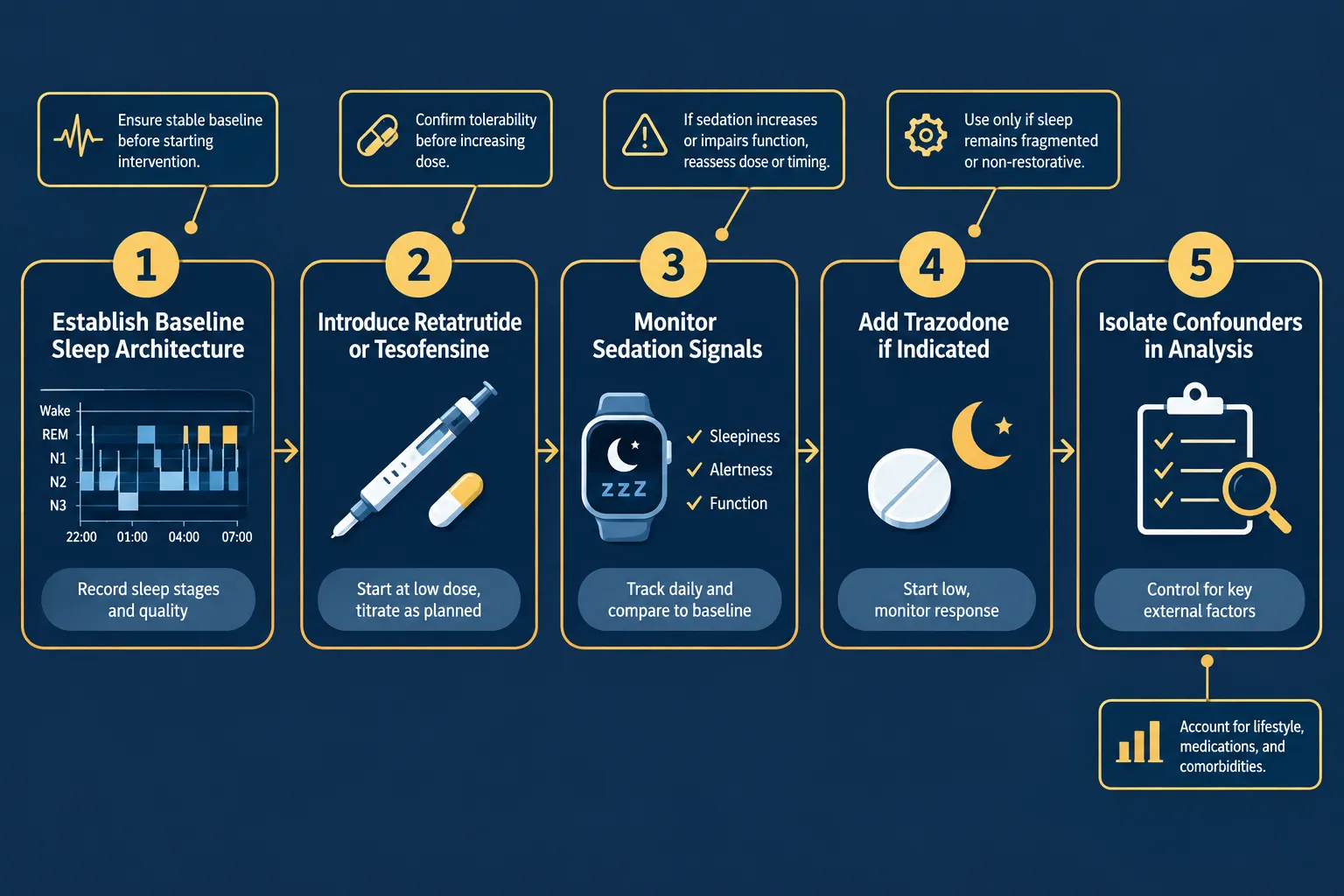
Applying trazodone in appetite and sleep experiments: controlling sedation when testing tesofensine or retatrutide responsibly requires a structured approach to experimental design. The following framework addresses the most common methodological gaps.

Establish a Trazodone-Only Baseline Period

Before introducing the test compound, run a washout and then a trazodone-alone phase of at least two weeks. Collect polysomnography, actigraphy, daytime alertness scores (Epworth Sleepiness Scale), and 24-hour food intake diaries. This baseline isolates trazodone's independent contribution to sedation and feeding behavior.

Use Objective Sleep Architecture Monitoring

Subjective sleep quality ratings are insufficient. Full polysomnography or validated wrist actigraphy must be used to document changes in sleep efficiency, wake-after-sleep-onset, and REM latency. A 2026 polysomnographic meta-analysis confirmed that trazodone improves objective sleep continuity but alters architecture, a finding that demands continuous monitoring rather than endpoint-only assessment.

Separate Daytime Alertness from Nighttime Sleep Metrics

Collect alertness data at fixed intervals during the active phase using validated tools such as the Psychomotor Vigilance Task (PVT) and the Karolinska Sleepiness Scale. This separates residual sedation from genuine improvements in sleep quality and prevents daytime hypoactivity from being recorded as reduced appetite.

Pre-register Sedation as a Competing Endpoint

Any protocol testing retatrutide or tesofensine alongside trazodone should pre-register sedation-related outcomes, somnolence, dizziness, activity counts, as competing endpoints. This forces statistical models to account for sedation's independent contribution to weight and feeding outcomes. Researchers sourcing retatrutide for such studies may find the Buy Reta and Buy GLP-3 Reta resources useful for procurement context.

Consider Non-Sedating Sleep Alternatives

Where sleep stabilization is needed but sedation confounding is unacceptable, low-dose melatonin or cognitive behavioral therapy for insomnia (CBT-I) protocols offer sleep support with minimal pharmacodynamic interference. These alternatives do not carry trazodone's alpha-1 and H1 antagonism burden.


Conclusion

The intersection of trazodone and novel metabolic agents like tesofensine or retatrutide is a genuine methodological minefield. Trazodone's sedation profile, well-documented across meta-analyses and head-to-head trials, can suppress activity, shift circadian hormone timing, and reduce meal frequency through mechanisms entirely independent of the test compound's appetite pharmacology. For studies where sleep, feeding, and body weight are primary endpoints, this is not a minor nuisance; it is a threat to internal validity.

Actionable next steps for researchers:

  • Implement a trazodone-only baseline phase before introducing the test compound.
  • Use polysomnography and actigraphy rather than self-report alone.
  • Pre-register sedation as a competing endpoint in every protocol.
  • Evaluate whether a non-sedating sleep intervention can replace trazodone without compromising sleep quality goals.
  • Review the existing phase 3 TRIUMPH trial design for retatrutide to align sedation monitoring approaches with the emerging gold standard.

Separating pharmacologic appetite suppression from sedation-driven behavioral changes is not optional in high-quality metabolic research. It is the difference between a publishable finding and a confounded dataset.

https://www.puretestedpeptides.com/wp-content/uploads/2026/10/trazodone-in-appetite-and-sleep-experiments-controlling-sedation-when-testing-te.webp 1024 1536 https://www.puretestedpeptides.com/wp-content/uploads/2026/01/buy-peptides-online.jpg 2026-10-16 13:04:162026-10-16 13:04:16Trazodone in Appetite and Sleep Experiments: Controlling Sedation When Testing Tesofensine or Retatrutide
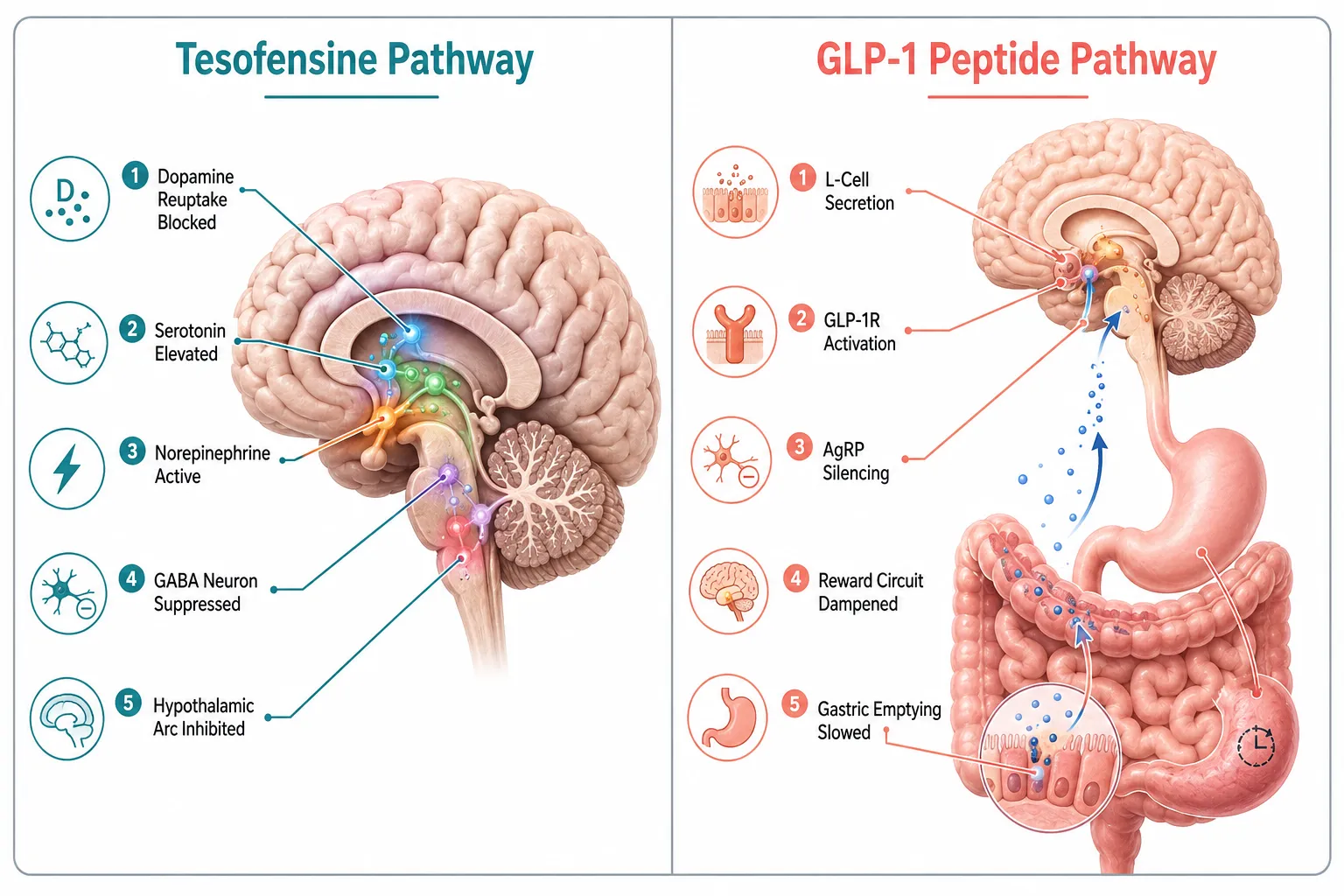
Tesofensine vs GLP Peptides: Appetite Research Pathways Compared for Lab Buyers

Tesofensine vs GLP Peptides: Appetite Research Pathways Compared for Lab Buyers

August 19, 2026/0 Comments/in Uncategorized/by

Only one in three obesity drug candidates that enters Phase 2 trials ever reaches approval, a statistic that makes the diverging fates of tesofensine and GLP-based peptides all the more instructive for researchers choosing where to direct their experimental budgets. The comparison of Tesofensine vs GLP Peptides: Appetite Research Pathways Compared for Lab Buyers is not simply a question of which compound produces more weight loss. It is a question of which neural circuit a lab wants to interrogate, which safety profile a protocol can accommodate, and which pipeline has the momentum to generate publishable, fundable science in 2026.

Key Takeaways

  • Tesofensine targets monoamine reuptake and hypothalamic GABA neurons; GLP-based peptides act through incretin receptors and gut-brain signaling.
  • GLP-1 agonists and dual/triple agonists dominate the current obesity pipeline, but tesofensine retains a distinct niche in monoamine-focused appetite research.
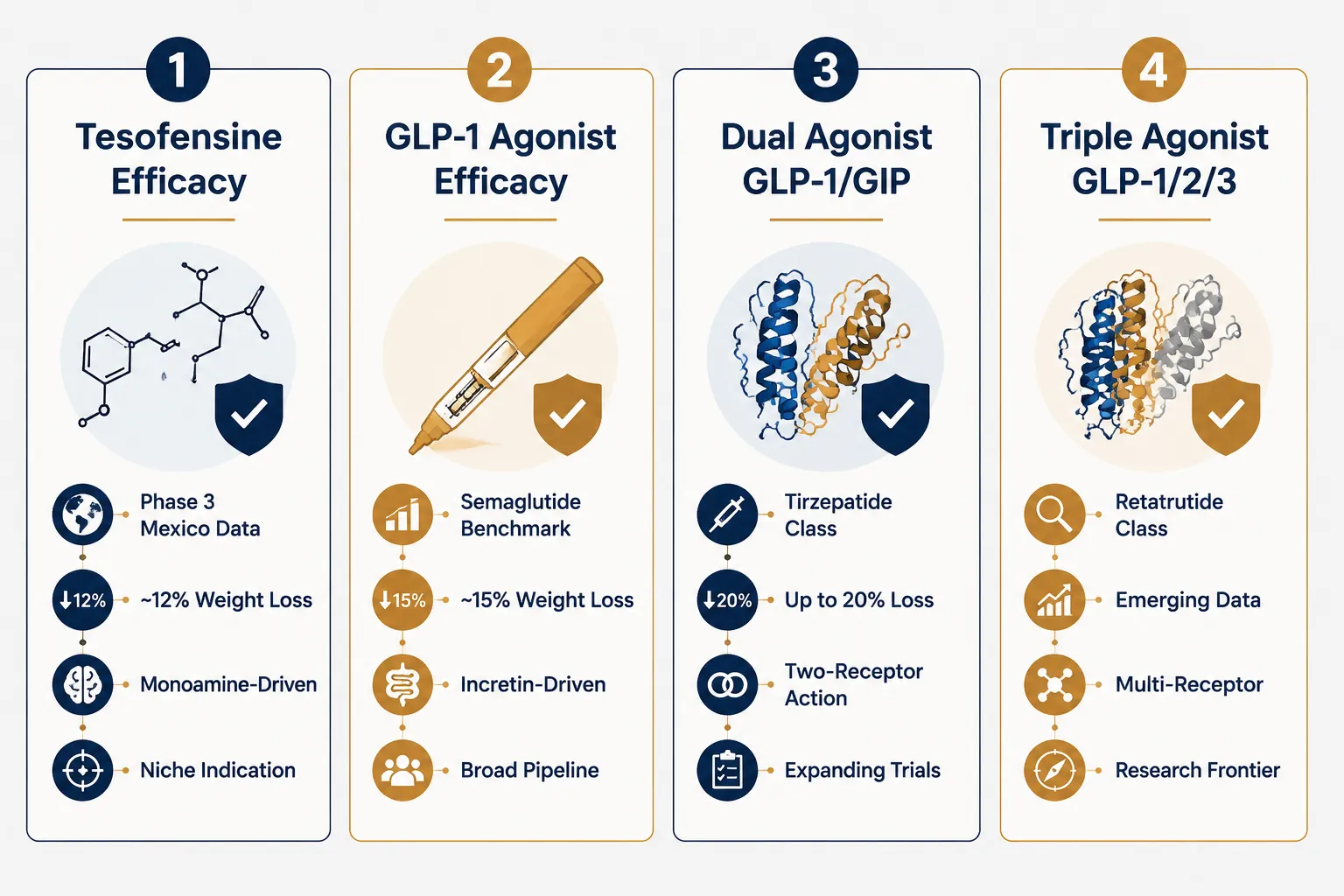
  • Efficacy data favor newer dual and triple agonists for raw weight-loss magnitude; tesofensine's Phase 3 data from Mexico show meaningful but narrower results.
  • Safety profiles differ substantially: tesofensine carries cardiovascular and stimulant-class risks; GLP peptides carry gastrointestinal tolerability concerns.
  • Lab buyers should match compound selection to research question, not to headline weight-loss numbers alone.

Mechanism Deep Dive: How Each Pathway Controls Appetite

Mechanism Deep Dive: How Each Pathway Controls Appetite

Understanding the biology is the first step in any rigorous comparison of Tesofensine vs GLP Peptides: Appetite Research Pathways Compared for Lab Buyers.

Tesofensine is a small-molecule triple monoamine reuptake inhibitor. It blocks the reuptake of dopamine, serotonin, and norepinephrine simultaneously. This elevates synaptic concentrations of all three neurotransmitters in regions that regulate energy balance. Critically, animal and human data indicate that tesofensine also suppresses a specific population of hypothalamic GABA neurons in the lateral hypothalamus, neurons that normally promote feeding. The result is a dual action: central stimulant-like appetite suppression combined with reduced reward salience for food.

GLP-1 peptides work through an entirely different axis. Glucagon-like peptide-1 is secreted by intestinal L-cells after eating. It binds GLP-1 receptors in the gut, pancreas, and brain. In the hypothalamus, GLP-1 receptor activation silences AgRP (agouti-related protein) neurons, the primary hunger-promoting neurons in the arcuate nucleus. GLP-1 also slows gastric emptying and modulates the mesolimbic reward circuit, reducing the motivational drive to eat. For a thorough breakdown of the GLP peptide family, see this researcher's guide to GLP-3, GLP-1, and GLP-2.

Dual agonists (GLP-1/GIP) and triple agonists add glucose-dependent insulinotropic polypeptide and glucagon receptor activity to the mix, amplifying both peripheral metabolic effects and central appetite suppression. Researchers tracking this frontier should review Retatrutide Phase 3 and beyond for the latest multi-agonist trial data.

Key distinction: Tesofensine answers questions about monoamine circuits and GABA-mediated feeding control. GLP peptides answer questions about incretin signaling, AgRP regulation, and gut-brain crosstalk. These are complementary, not interchangeable, research tools.

Efficacy and Safety: What the Data Show

Efficacy and Safety: What the Data Show

Weight-Loss Efficacy Compared

Compound Class Mechanism Approximate Weight Loss (Trial Data)
Tesofensine Triple monoamine reuptake inhibitor ~10-12% body weight
GLP-1 agonist (semaglutide class) GLP-1R agonism ~15% body weight
Dual agonist (GLP-1/GIP) GLP-1R + GIPR agonism ~18-20% body weight
Triple agonist (retatrutide class) GLP-1R + GIPR + GcgR Up to 24% body weight

Tesofensine's Phase 3 program, conducted primarily through a Mexican regulatory pathway, has confirmed meaningful weight reduction in obese adults. However, the magnitude sits below that of current GLP-1-based standards. This does not diminish tesofensine's research value, it simply frames where the compound fits. Labs studying monoaminergic contributions to appetite, or researching Parkinson's disease and obesity comorbidities, will find tesofensine's mechanism irreplaceable.

Safety Profiles: A Practical Comparison

Tesofensine risks to model in protocols:

  • Elevated heart rate and blood pressure (sympathomimetic effect)
  • Insomnia and dry mouth (monoamine elevation)
  • Potential for abuse liability in dopaminergic circuits
  • Contraindicated profiles overlap with stimulant-class compounds

GLP peptide risks to model in protocols:

  • Nausea, vomiting, and diarrhea (dose-dependent, typically transient)
  • Rare pancreatitis signals requiring monitoring
  • Injection-site reactions for subcutaneous formulations
  • Emerging data on muscle mass preservation with newer agonists

Labs sourcing GLP-1 compounds for in vitro or animal model work can explore GLP-1 peptides for research to compare available formats. Those evaluating hormone research protocols will also find relevant context for designing metabolic studies.

Strategic Considerations for Lab Buyers in 2026

Strategic Considerations for Lab Buyers in 2026

The practical question for lab buyers is not "which is better" but "which answers my research question." Here is a structured decision framework:

Choose tesofensine when the research question involves:

  • Monoamine reuptake inhibition and appetite regulation
  • Hypothalamic GABA neuron activity
  • Comparison of small-molecule vs peptide-based appetite suppression
  • Neurological comorbidities (Parkinson's, Alzheimer's metabolic overlap)

Choose GLP peptides when the research question involves:

  • Incretin signaling and pancreatic beta-cell function
  • AgRP/NPY neuron suppression models
  • Gut-brain axis communication
  • Multi-receptor metabolic synergy (dual/triple agonist models)

For labs exploring next-generation metabolic peptides, the GLP-3 and retatrutide research overview provides critical context on where the triple-agonist pipeline is heading. Labs that need oral delivery formats should also review oral peptides for sale to assess formulation compatibility with their protocols.

Sourcing Quality: A Non-Negotiable Variable

Regardless of which pathway a lab chooses, purity and documentation are paramount. Monoamine studies require compounds free of serotonergic contaminants; GLP receptor binding assays are sensitive to aggregation artifacts. Reviewing high purity peptide sourcing standards before procurement prevents confounded results and wasted budget.

When comparing vendors, peptide supplier comparisons offer a practical framework for evaluating certificate-of-analysis standards across the market.

Conclusion

The Tesofensine vs GLP Peptides: Appetite Research Pathways Compared for Lab Buyers decision ultimately maps onto mechanism, not marketing. Tesofensine remains the compound of choice for monoamine-circuit research and specialized neurological-metabolic crossover studies. GLP-based peptides, particularly dual and triple agonists, command the broader pipeline and offer richer incretin and gut-brain research opportunities.

Actionable next steps for lab buyers:

  1. Define the primary neural circuit or receptor system under investigation before selecting a compound.
  2. Review the latest Phase 3 safety data for both compound classes and model contraindicated profiles into your protocol design.
  3. Audit supplier purity documentation; demand HPLC and mass spectrometry certificates for every lot.
  4. Consider running parallel mechanistic arms, one monoamine-focused, one incretin-focused, to generate comparative data within a single study design.
  5. Monitor the triple-agonist pipeline closely; retatrutide-class compounds are reshaping the research landscape faster than most procurement cycles can adapt.

Matching compound to question, and sourcing to standard, is what separates publishable science from inconclusive data.

https://www.puretestedpeptides.com/wp-content/uploads/2026/08/tesofensine-vs-glp-peptides-appetite-research-pathways-compared-for-lab-buyers.webp 1024 1536 https://www.puretestedpeptides.com/wp-content/uploads/2026/01/buy-peptides-online.jpg 2026-08-19 13:04:102026-08-19 13:04:10Tesofensine vs GLP Peptides: Appetite Research Pathways Compared for Lab Buyers
×

Helpful Links

  • My account
  • Cart
  • Checkout
  • Refund and Returns Policy
  • Privacy Policy
  • SMS Privacy Policy
  • Login
  • My Account
  • Logout

USA Made Lab Tested Peptides

All products are sold for research, laboratory, or analytical purposes only, and are not for human consumption


Pure Tested Peptides is a chemical supplier. Pure Tested Peptides is not a compounding / chemical compounding facility as defined under 503A of the Federal Food, Drug, and Cosmetic act. Pure Tested Peptides is not an outsourcing facility as defined under 503B of the Federal Food, Drug, and Cosmetic act.

The statements made within this website have not been evaluated by the US Food and Drug Administration. The products we offer are not intended to diagnose, treat, cure or prevent any disease.

Human/Animal Consumption Prohibited. Laboratory/In-Vitro Experimental Use Only

Scroll to top Scroll to top Scroll to top