Best Nasal Spray Peptides for Cognitive and Appetite Research: Semax, Selank, Klow Spray, and Tesofensine Compared
Fewer than one in ten research compounds reach clinical advisory review at the FDA level, yet as of 2026, Semax is formally scheduled before the US Pharmacy Compounding Advisory Committee, a milestone that sets it apart from most peptides still confined to unregulated research markets. For labs evaluating intranasal peptide options, this regulatory asymmetry matters as much as formulation chemistry. This guide to the best nasal spray peptides for cognitive and appetite research: Semax, Selank, Klow Spray, and Tesofensine compared covers formulation details, excipients, dosing schemes, and bioavailability considerations that directly affect ordering decisions.
Key Takeaways
- Semax and Selank are the dominant intranasal cognitive peptides in 2026, often combined in a single spray for complementary nootropic and anxiolytic effects.
- Klow Spray is a branded intranasal blend designed for appetite and metabolic research, while Tesofensine is a monoamine reuptake inhibitor studied primarily for appetite suppression.
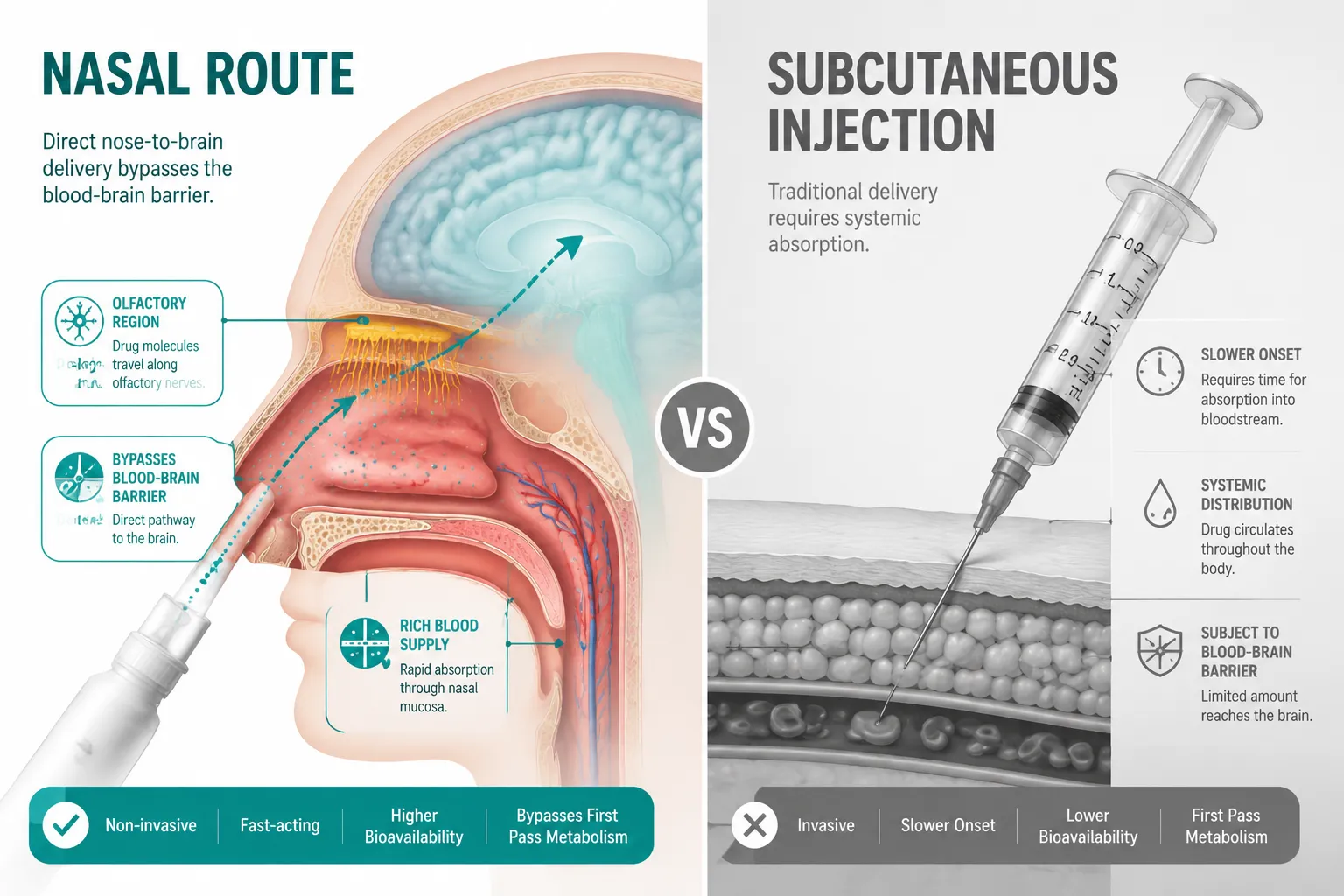
- Intranasal delivery bypasses first-pass metabolism and may allow direct olfactory-to-brain transport, making excipient choice and actuation volume critical quality variables.
- Combined Semax/Selank sprays typically offer lower cost per milligram than separate formulations, a practical factor for multi-week research protocols.
- Regulatory status differs significantly across these four compounds, which affects sourcing, labeling, and permissible research contexts.
Formulation and Excipient Profiles Across the Four Compounds
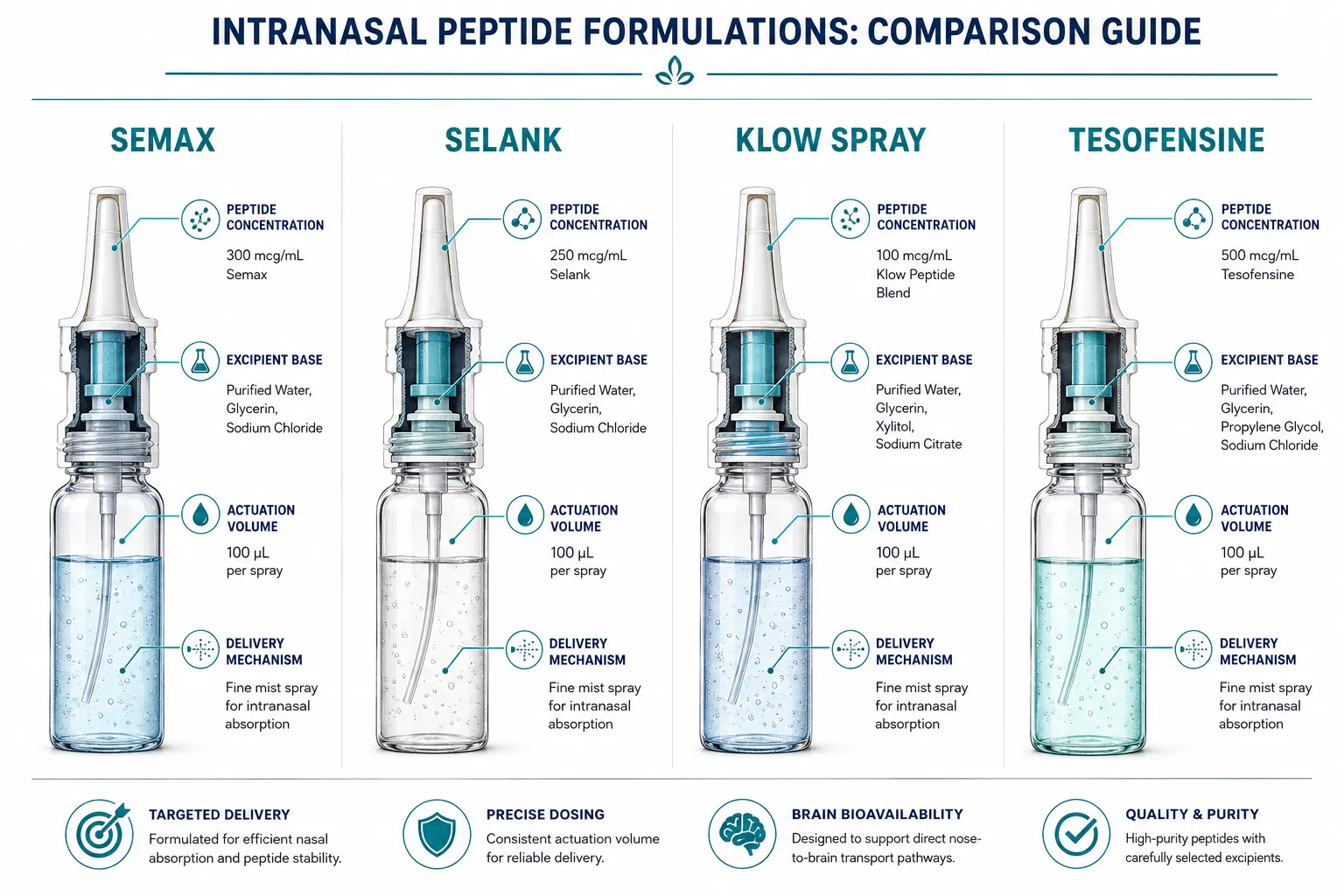
Understanding what surrounds the active peptide is as important as the peptide itself. Excipients affect stability, mucosal absorption, and shelf life, all critical for reproducible research outcomes.
Semax is an ACTH analog heptapeptide typically supplied as an aqueous nasal spray. Standard research formulations use sterile water or saline as the carrier, sometimes with a small amount of preservative such as benzalkonium chloride. Concentrations in research-grade products commonly range from 0.1% (1 mg/mL) to 1% (10 mg/mL). The Semax ACTH analog classification is relevant here because its short peptide chain confers reasonable aqueous stability without requiring lyophilization in most commercial formats.
Selank shares a similar aqueous delivery format. As an intranasal anxiolytic peptide, it is frequently co-formulated with Semax in dual-peptide blends. Research suppliers offer combined sprays at concentrations such as 2.5 mg/mL of each peptide, delivering approximately 250 mcg per actuation. Larger blends of 20 mg Semax plus 20 mg Selank per bottle are marketed for cognition and neuroprotection research. For labs comparing these two compounds, the Selank vs Semax profile is a useful starting reference. The Selank intranasal delivery format is well-documented in research contexts, and its aqueous stability is comparable to Semax.
Klow Spray is a branded intranasal formulation targeting appetite and metabolic pathways. While exact proprietary excipient data varies by supplier, Klow-type sprays typically use a buffered saline base with absorption enhancers designed to improve mucosal uptake of larger or more hydrophilic peptide structures. Labs should request a certificate of analysis confirming pH range (ideally 4.5-6.5 for nasal tolerability) and osmolality.
Tesofensine differs structurally from the peptide trio above. It is a small-molecule monoamine reuptake inhibitor, not a peptide, that inhibits reuptake of serotonin, dopamine, and norepinephrine. Intranasal tesofensine formulations are less standardized than oral capsule formats. Excipient considerations include solubility enhancers and viscosity agents to ensure consistent actuation. Its non-peptide nature means it does not face the same stability challenges as Semax or Selank, but it requires careful pH management to prevent mucosal irritation.
Dosing Schemes and Bioavailability Considerations
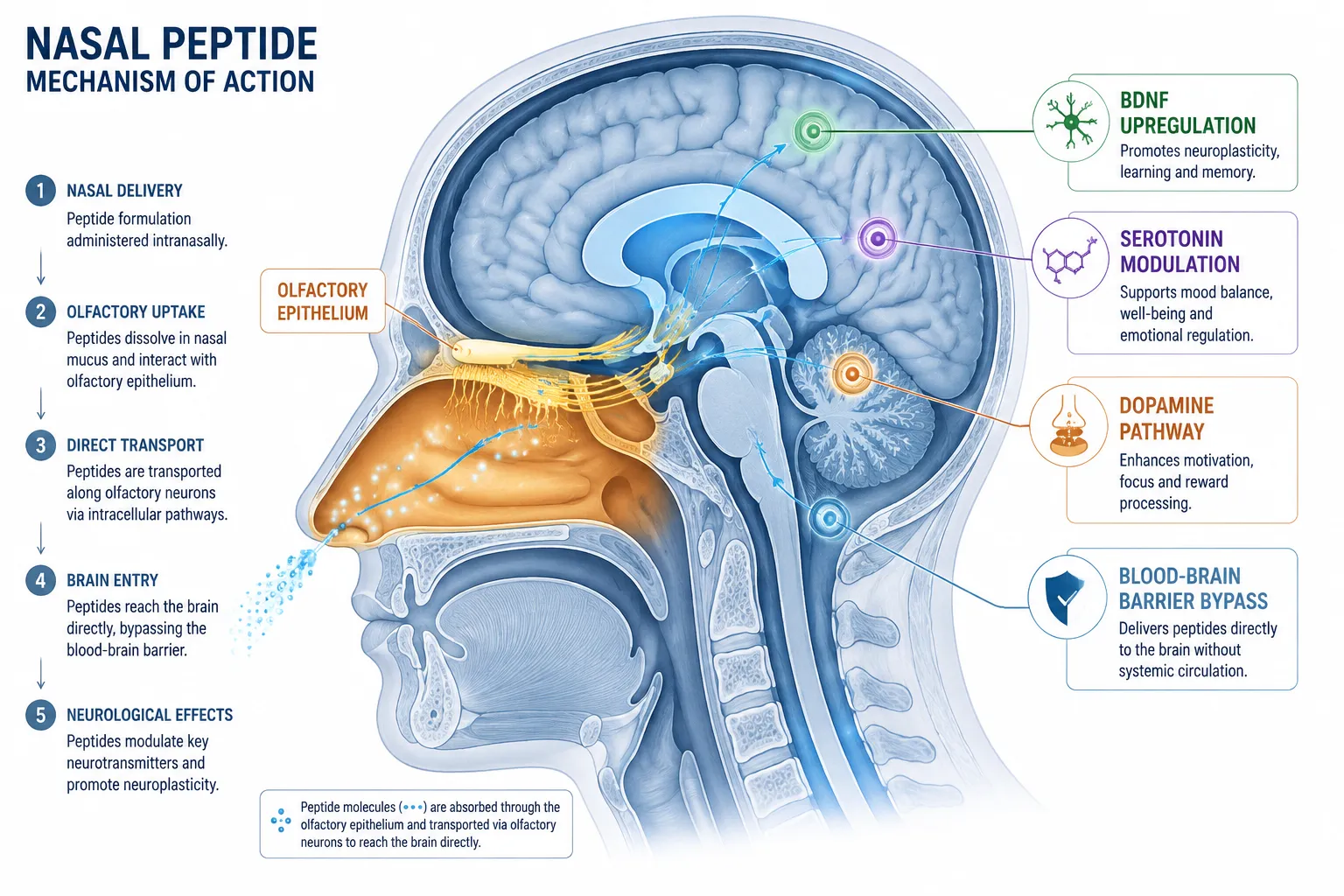
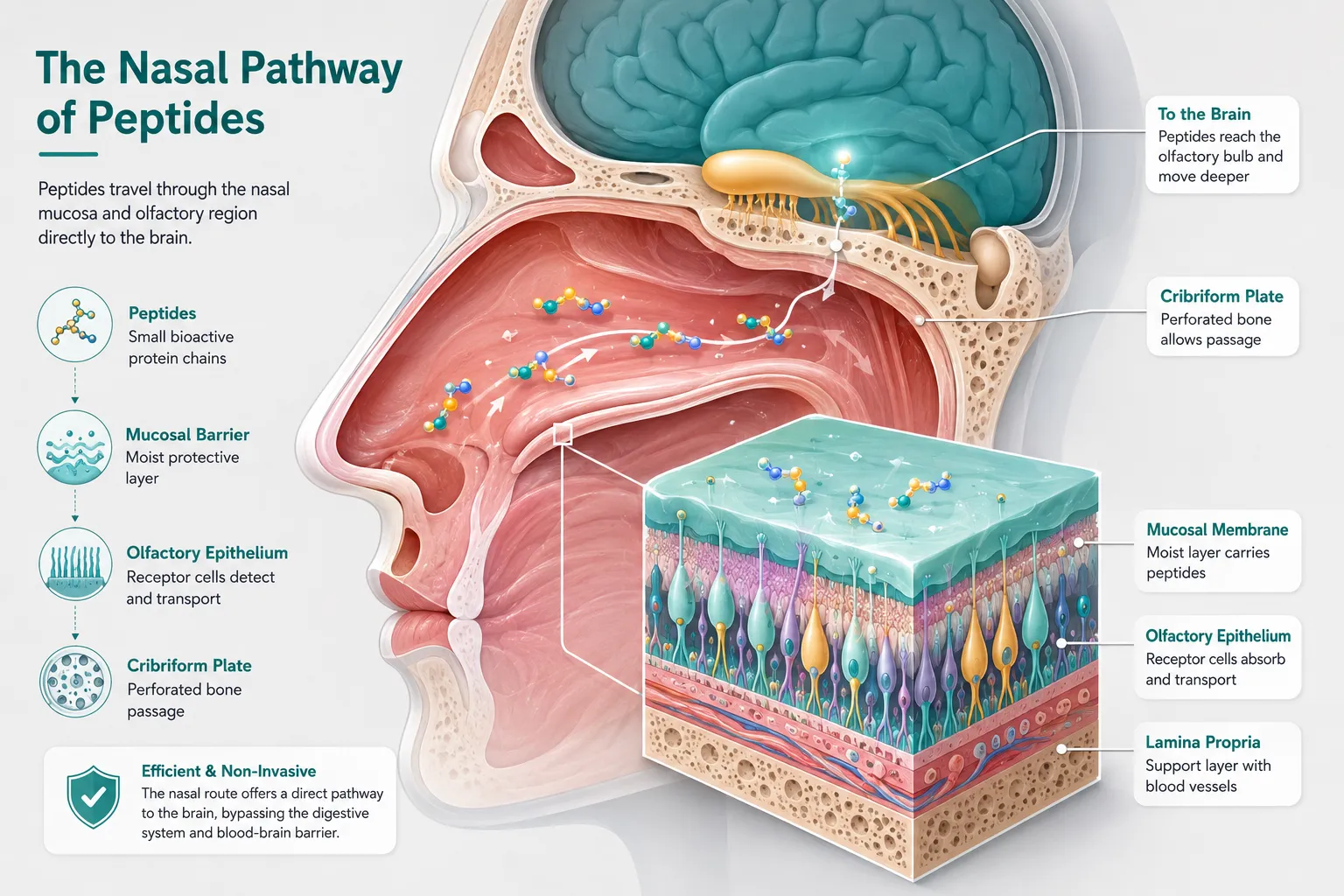
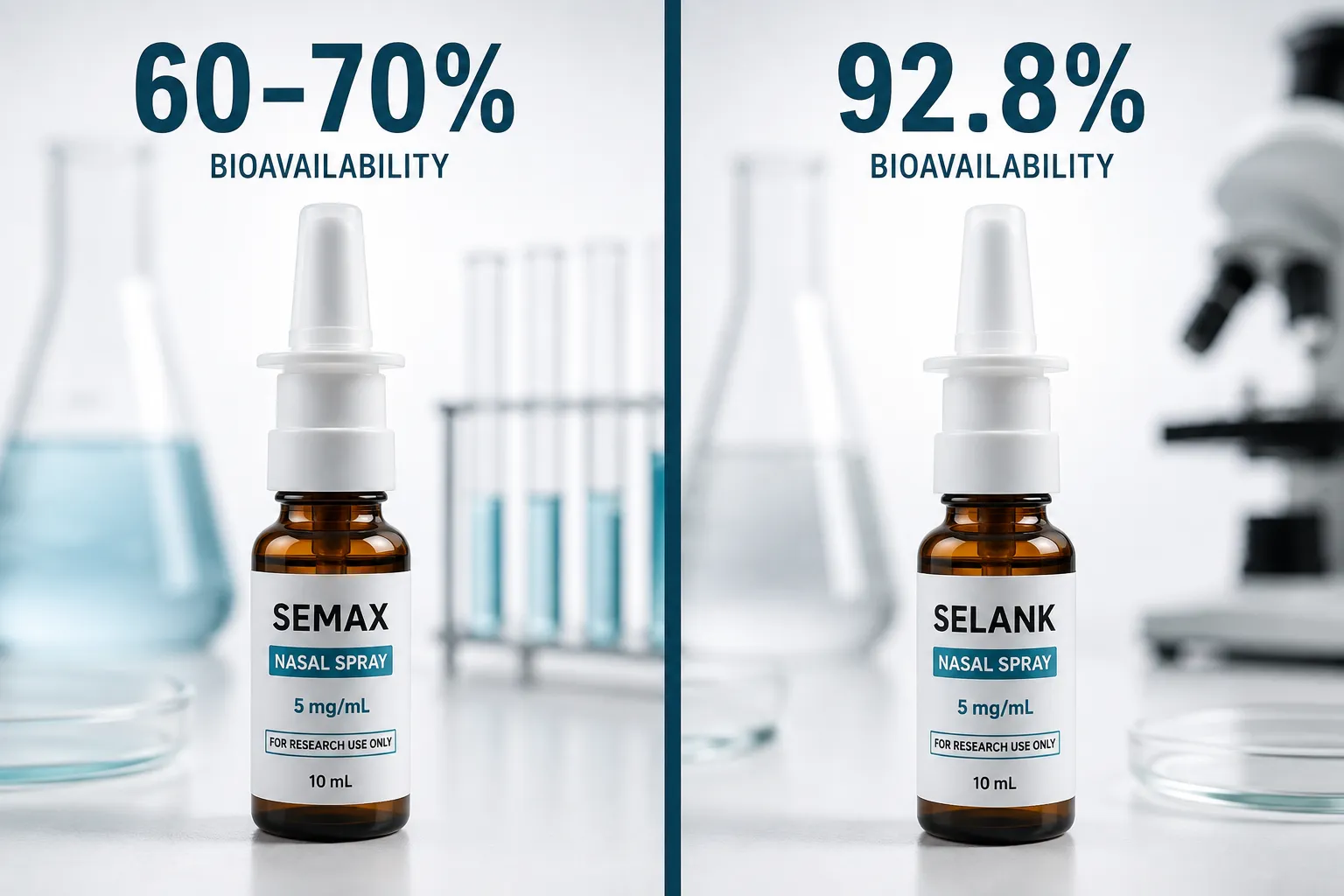
Bioavailability through the nasal mucosa is generally estimated at 10-30% for peptides, depending on molecular weight, lipophilicity, and formulation. The olfactory epithelium pathway offers a potential direct route to the central nervous system, bypassing the blood-brain barrier, a key reason intranasal delivery is preferred for cognitive peptides over subcutaneous injection in many research protocols.
Semax dosing in current 2026 research guides typically falls between 200 and 600 mcg intranasally, administered one to three times daily. A Semax BDNF upregulation mechanism is frequently cited as the basis for its cognitive-enhancement profile, with BDNF supporting neuroplasticity and memory consolidation.
Selank dosing is generally slightly lower, at 200-400 mcg per session. A well-documented 2026 stack protocol pairs 300 mcg Semax in the morning with 250 mcg Selank in the morning or early afternoon, cycled five days on and two days off. This cycling approach treats both peptides as short-course nootropics rather than continuous therapies. The Selank peptide research profile consistently highlights its anxiolytic and mood-stabilizing properties without sedation, a meaningful distinction from benzodiazepine-class compounds. Labs interested in that comparison can review the Selank vs benzodiazepine literature.
Klow Spray dosing protocols vary by supplier and target pathway. Research designs typically use one to two actuations per session, with sessions spaced to avoid receptor desensitization. Bioavailability data for Klow-type formulations is limited compared to the Semax/Selank literature, which is a consideration for labs designing quantitative outcome studies.
Tesofensine intranasal research doses are generally lower than oral equivalents due to the avoidance of first-pass metabolism. Oral clinical trials used 0.25-1 mg daily; intranasal equivalents require careful titration. The triple monoamine mechanism makes tesofensine relevant to triple agonist peptides research frameworks, even though tesofensine itself is not a peptide.
Key formulation note: For all four compounds, actuation volume consistency, typically 50-100 mcL per spray, directly determines dose reproducibility. Labs should verify actuation volume and pump mechanism before committing to a supplier.
Comparing Research Applications: Cognitive vs. Appetite Targets
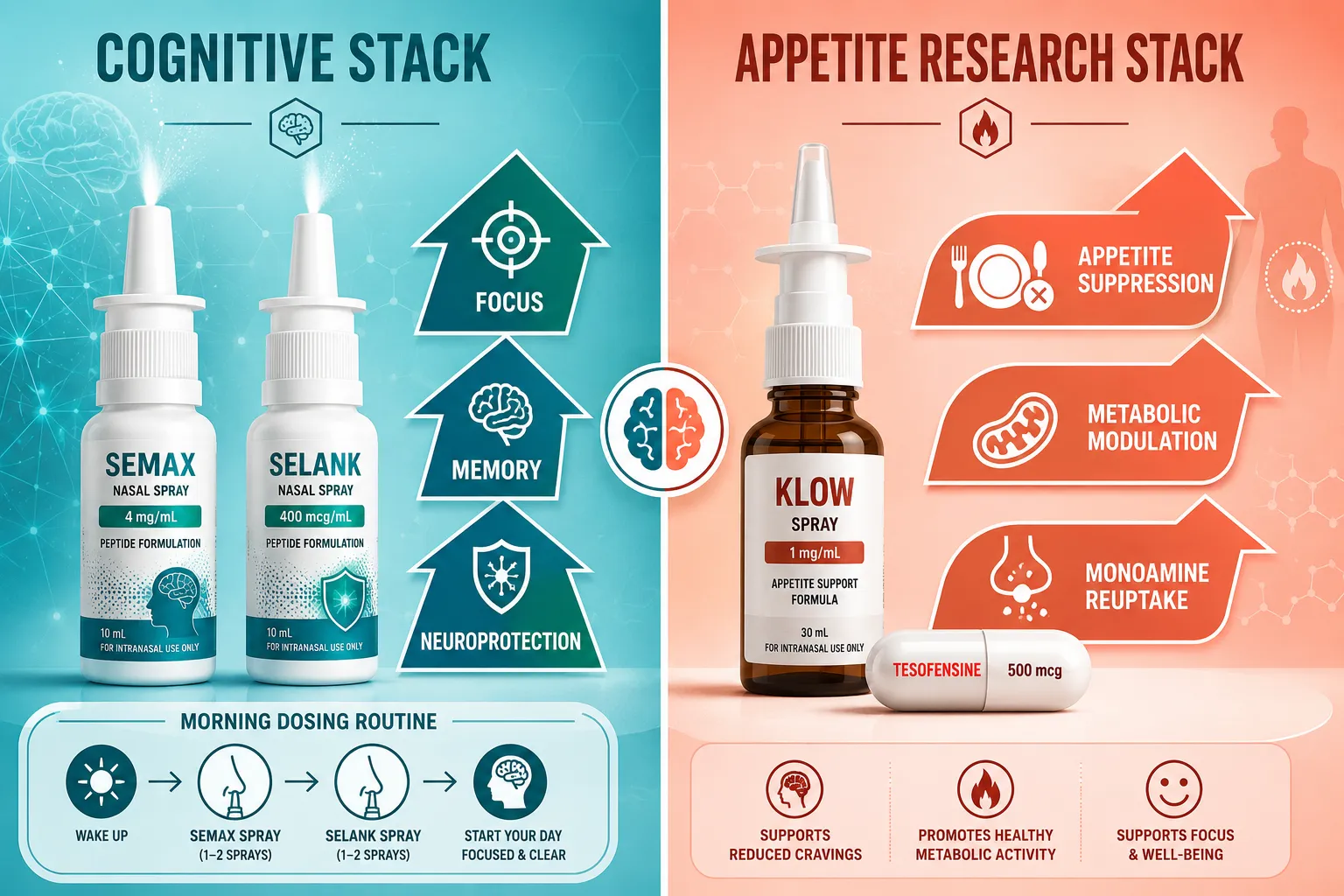
The four compounds divide naturally into two research categories, though overlap exists.
| Compound | Primary Research Target | Delivery Format | Regulatory Note (2026) |
|---|---|---|---|
| Semax | Cognition, neuroprotection, BDNF | Aqueous nasal spray | PCAC review scheduled July 2026 |
| Selank | Anxiety reduction, calm focus | Aqueous nasal spray | Research use only; no US docket |
| Klow Spray | Appetite, metabolic modulation | Buffered intranasal blend | Research use only |
| Tesofensine | Appetite suppression, monoamine reuptake | Small-molecule spray or oral | Research use only |
For labs focused on cognitive outcomes, the Semax/Selank combination remains the most evidence-supported intranasal option in 2026. The "focus and drive" profile of Semax complements the "calm and steady" anxiolytic character of Selank, and combined sprays reduce both cost and protocol complexity. Separate 30 mg sprays of each typically cost more per milligram than combined 1:1 blends, making dual-peptide formulations a practical choice for multi-week studies.
For appetite and metabolic research, Klow Spray and tesofensine address different mechanistic targets. Klow Spray operates through peptide-based pathways relevant to satiety signaling, while tesofensine's monoamine reuptake inhibition affects appetite through central dopaminergic and serotonergic circuits. Labs should not treat these as interchangeable; study design should reflect the distinct mechanisms. Broader systemic peptide research frameworks can help contextualize how these compounds interact with whole-body metabolic signaling.
Conclusion
For labs evaluating the best nasal spray peptides for cognitive and appetite research, Semax, Selank, Klow Spray, and Tesofensine compared, the ordering decision comes down to three practical priorities: research target alignment, formulation quality, and regulatory awareness.
Actionable next steps for research teams:
- Verify excipient data before ordering any intranasal peptide. Request certificates of analysis confirming pH, osmolality, preservative type, and actuation volume.
- Match the compound to the research question. Use Semax and Selank for cognitive and neuroprotective endpoints; use Klow Spray or tesofensine for appetite and metabolic studies.
- Apply cycling protocols for Semax and Selank (five days on, two days off) to maintain receptor sensitivity across multi-week study designs.
- Monitor Semax regulatory developments closely. Its July 2026 PCAC review could affect compounding availability and labeling requirements within the US market.
- Source from suppliers with transparent labeling. Products explicitly marked "for research use only" with full compositional disclosure are the appropriate standard for laboratory procurement.
Selecting the right intranasal peptide formulation is not just a chemistry decision, it is a study design decision. Matching mechanism to endpoint, and formulation to protocol, is what separates reproducible research from inconclusive data.