GLP-2 and GLP-2 Tirz Peptides: Intestinal Barrier Function and Research Applications
Roughly 70% of the immune system resides in the gut, yet the single-cell-thick epithelial lining separating the body from trillions of microbes is only about 0.1 millimeters thick. That fragile boundary is now a primary target for a new generation of peptide research tools. The study of GLP-2 and GLP-2 Tirz peptides: intestinal barrier function and research applications has accelerated sharply in 2026, driven by converging data from short bowel syndrome models, obesity research, and next-generation dual- and triple-agonist peptide designs.
Key Takeaways
- GLP-2 is a gut-derived hormone that directly stimulates intestinal epithelial growth and tightens barrier junctions.
- GLP-2 Tirz refers to peptide analogs that combine GLP-1 and GLP-2 receptor activity, expanding research utility beyond single-pathway models.
- Preclinical and clinical data show GLP-2 analogs reduce bacterial translocation, improve villus morphology, and reshape gut microbiota.
- Newer bispecific and Fc-fusion designs extend half-life and open once-weekly dosing windows for research protocols.
- Research applications span short bowel syndrome, obesity, type 2 diabetes, acute pancreatitis, and autoimmune gut models.
How GLP-2 Regulates Intestinal Barrier Function
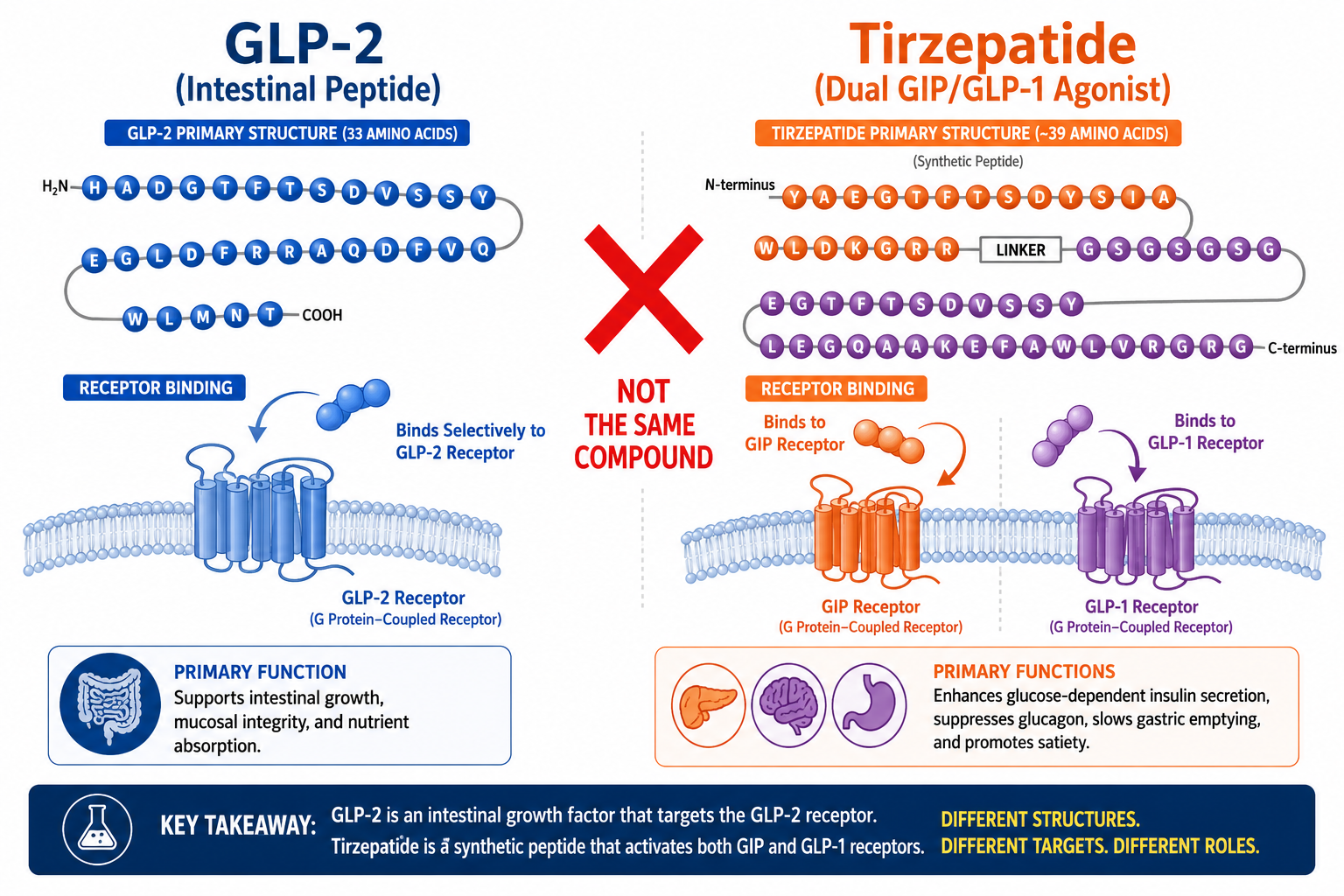
Glucagon-like peptide-2 (GLP-2) is a 33-amino-acid hormone secreted by enteroendocrine L-cells in the distal intestine in response to nutrient intake. Its primary receptor, GLP-2R, is expressed on enteric neurons, subepithelial myofibroblasts, and select immune cells rather than on enterocytes directly. Downstream signaling promotes enterocyte proliferation, reduces apoptosis, increases villus height, and, critically for barrier research, upregulates tight-junction proteins such as claudin-3 and occludin.
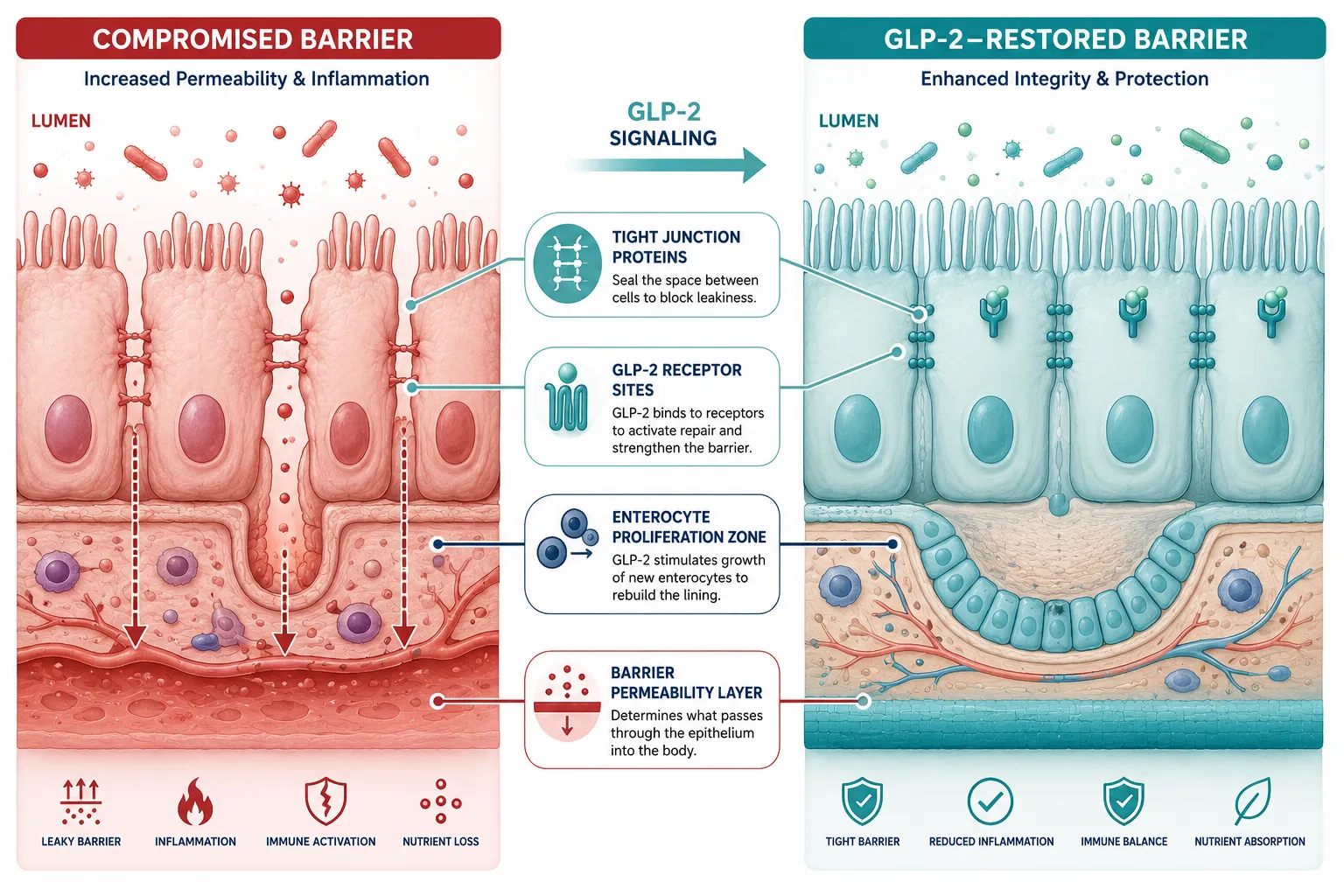
Why tight junctions matter: When these protein complexes weaken, the barrier becomes permeable. Lipopolysaccharide (LPS) and other microbial products cross into systemic circulation, triggering inflammatory cascades. Research in large-animal models has shown that LPS activates the MLCK/pMLC phosphorylation pathway, which physically retracts tight-junction strands. GLP-2 administration blunts this pathway, preserving barrier integrity even under endotoxin challenge.
Key barrier-related findings in preclinical models include:
- Acute endotoxin protection: GLP-2 reduces gut permeability within hours of LPS exposure.
- Age-related dysfunction: Older animal models show progressive loss of claudin and occludin expression; GLP-2 supplementation partially restores these proteins.
- Acute pancreatitis: Bacterial translocation from the gut to the pancreas is a major driver of complications; GLP-2 analogs reduce translocation rates in experimental models.
- Autoimmune limits: In autoimmune-driven gut injury, barrier correction by GLP-2 is partial, suggesting additional inflammatory mediators override receptor signaling.
"The intestinal barrier is not a passive wall, it is an actively regulated interface, and GLP-2 is one of its most potent molecular regulators."
For researchers exploring related tissue repair research paradigms, GLP-2's epithelial regeneration profile offers a mechanistically distinct comparison point alongside other repair-focused peptides.
GLP-2 Tirz Peptides: Dual-Agonist Research Applications
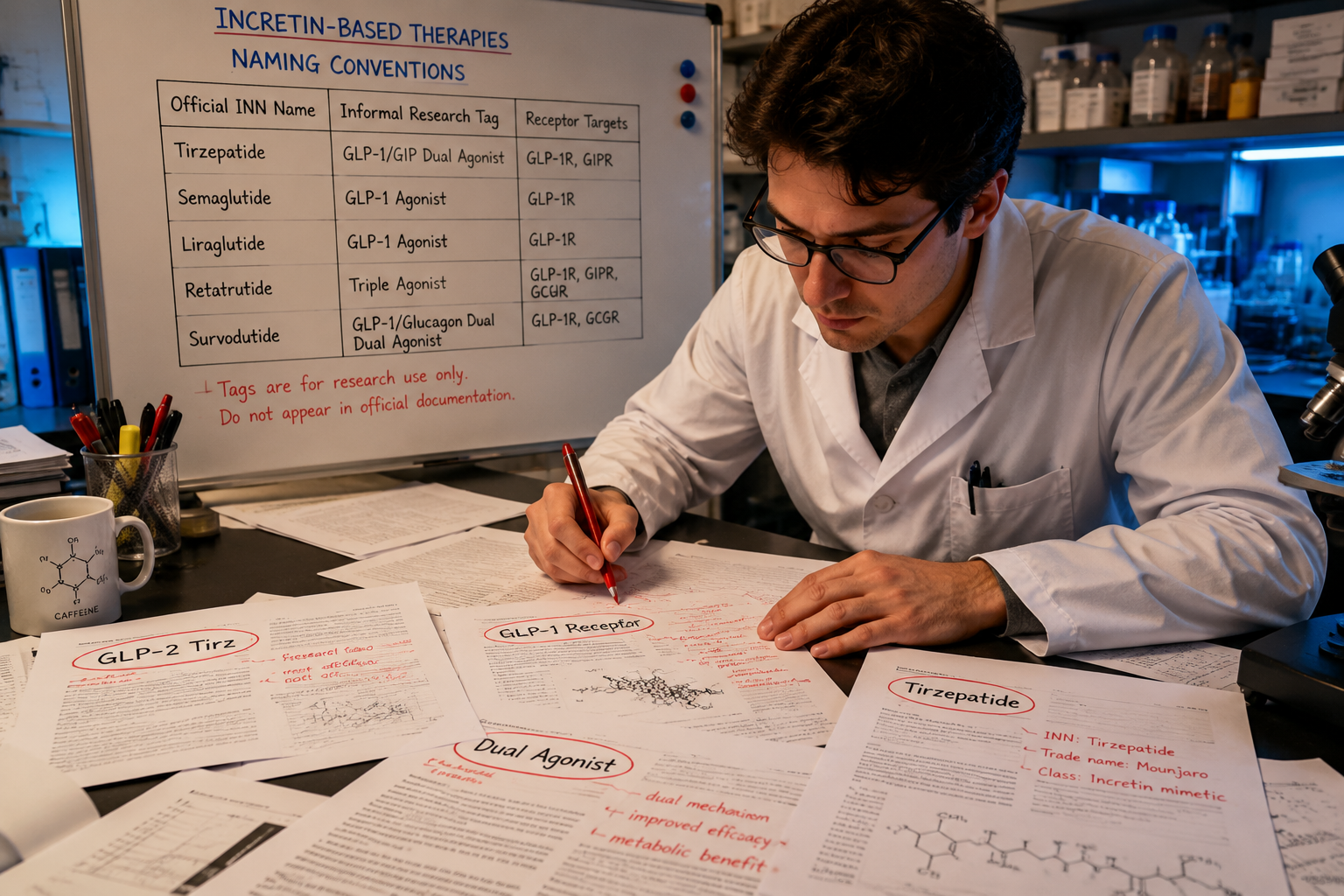
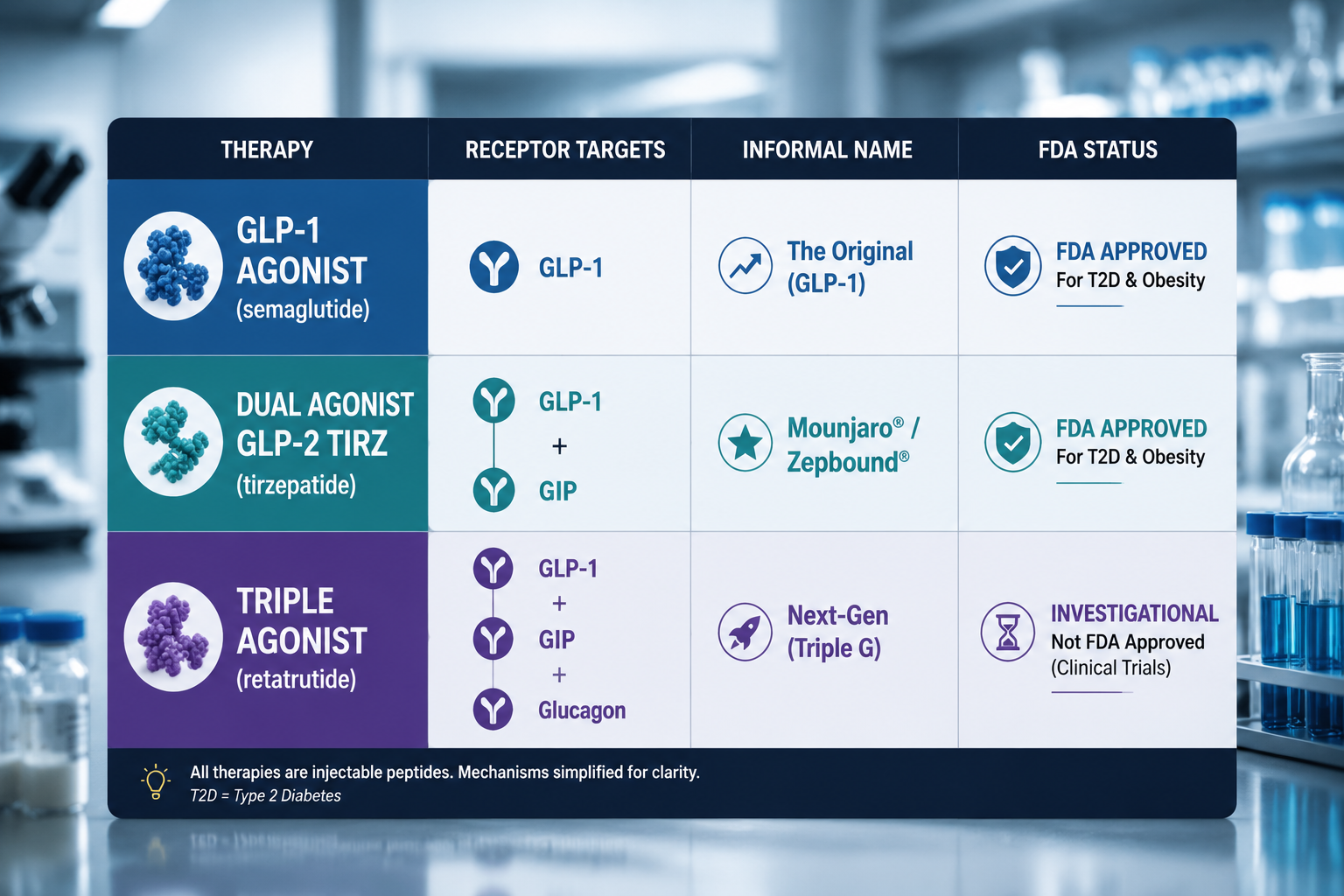
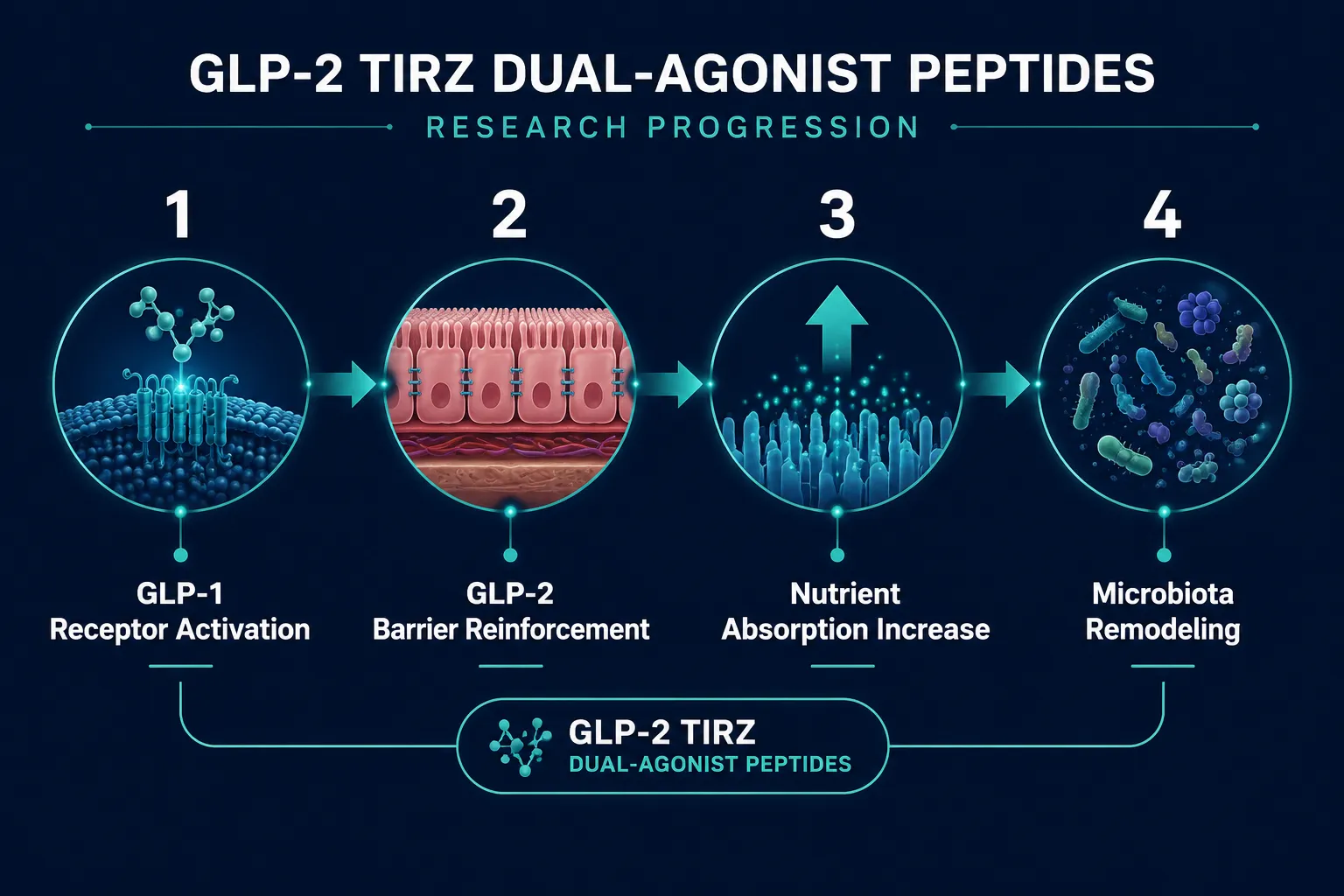
The term "GLP-2 Tirz" in research contexts refers to peptide constructs that combine GLP-1 receptor agonism with GLP-2 receptor agonism, inspired by the structural framework of tirzepatide (a GLP-1/GIP dual agonist). The rationale is straightforward: GLP-1 activity governs satiety and glucose metabolism, while GLP-2 activity governs intestinal structure and barrier function. Combining both in a single molecule creates a research tool with multi-system reach.
Dapiglutide and the Obesity-Barrier Connection
Dapiglutide, a dual GLP-1/GLP-2 agonist, has emerged as a key compound in 2024-2026 research. Studies report that it reduces body weight comparably to GLP-1-only analogs while simultaneously improving intestinal barrier scores. This dual effect is significant: obesity is associated with increased gut permeability, and correcting barrier dysfunction may reduce the low-grade endotoxemia that drives metabolic inflammation.
Bispecific Fc-Fusion Designs
The compound PG-102, a bispecific GLP-1/GLP-2 Fc-fusion protein, entered advanced type 2 diabetes research in 2026. Its extended half-life supports once-weekly dosing, a major practical advantage for longitudinal gut-remodeling studies. Researchers using single peptide protocols can benchmark PG-102 data against single-receptor models to isolate the GLP-2 contribution to metabolic outcomes.
Researchers interested in the broader tirzepatide gut effects literature will find that GLP-2 Tirz constructs extend that pharmacology into explicit barrier-function territory, adding a structural dimension that GLP-1/GIP-only analogs lack.
Short Bowel Syndrome Models and Translational Research Design
Short bowel syndrome (SBS) remains the most clinically validated model for GLP-2 intestinal research. In SBS, massive intestinal resection eliminates the absorptive surface needed for adequate nutrition, and GLP-2 analogs drive compensatory adaptation through villus elongation, crypt deepening, and increased mucosal blood perfusion.

Apraglutide, a once-weekly GLP-2 analog, has shown efficacy in both SBS type II (no colon) and SBS with intestinal failure, reducing parenteral nutrition dependence in clinical research cohorts. Its extended half-life is achieved through structural modification of the native GLP-2 sequence, a design principle also applied in truncated peptide analogs research more broadly.
Key morphological outcomes observed in SBS models:
| Parameter | Baseline | Post GLP-2 Analog |
|---|---|---|
| Villus height | Reduced | Significantly increased |
| Crypt depth | Shallow | Deepened |
| Mucosal perfusion | Impaired | Restored |
| Tight-junction density | Low | Elevated |
For researchers designing multi-compound studies, the translational research design framework is essential when moving GLP-2 findings from rodent models to large-animal or human-equivalent systems. Dosing schedules, receptor expression differences, and endpoint selection all require careful calibration.
The teduglutide research literature, teduglutide being the first approved GLP-2 analog for SBS, provides the foundational pharmacodynamic reference against which newer analogs like apraglutide and dapiglutide are benchmarked. Researchers sourcing high-purity analogs for comparative studies should consult resources on wholesale peptides for sale to ensure consistent compound quality across experimental batches.
Conclusion
The research landscape for GLP-2 and GLP-2 Tirz peptides in 2026 is defined by three converging priorities: mechanistic precision at the barrier level, multi-receptor designs that expand metabolic reach, and translational rigor that connects preclinical findings to clinical outcomes.
Actionable next steps for researchers:
- Define your receptor target. Single GLP-2R models (apraglutide, teduglutide) isolate barrier and absorptive effects; dual GLP-1/GLP-2 models (dapiglutide, PG-102) introduce metabolic variables that must be controlled for.
- Select validated endpoints. Tight-junction protein expression, villus morphology, LPS translocation assays, and microbiota profiling are the most reproducible markers in current literature.
- Match analog half-life to study duration. Once-weekly analogs suit longitudinal remodeling studies; shorter-acting peptides are preferable for acute permeability experiments.
- Benchmark against established analogs. Teduglutide data provides the most robust reference baseline for any new GLP-2 construct evaluation.
- Source verified compounds. Peptide purity and sequence accuracy are non-negotiable for reproducible barrier-function data.
As dual- and triple-agonist designs continue to mature, the intersection of gut barrier biology and systemic metabolic health will remain one of the most productive frontiers in peptide research.