Call or Text 727-513-9780
  • Shopping Cart Shopping Cart
    0Shopping Cart
Pure Tested Peptides | America's most trusted Peptides for sale online
  • Peptides for sale
    • Oral Peptides for sale
      • Peptide Capsules for sale
      • BPC 157 Capsules 1000mcg
      • SLU-PP-332 Capsules | 1000 mcg
      • 5-Amino-1MQ 50mg Capsules
      • Tesofensine 500mcg
    • All Peptides for sale
    • Peptide Sprays
      • BPC 157 Nasal Spray Kit
      • BPC-157 TB500 Nasal Spray Kit
      • Semax Nasal Spray 10mg
      • Selank – Nasal Spray Kit – 10mg
      • Epithalon 50MG Nasal Spray Kit
      • Ipamorelin 10mg Nasal Spray
      • Klow Nasal Spray (BPC-157 + TB-500 + GHK-Cu + KPV) | 80mg
      • Hulk Nasal Spray Tesa / Ipa Blend 6/3 MG
      • Klow Nasal Spray
      • NAD + 500 mg Nasal Spray
      • PT-141 Nasal Spray Kit
    • GHRH Peptides
      • Ipa Peptides
      • CJC-1295 Peptides
        • CJC-1295 with DAC 5 mg
        • CJC-1295 without DAC 5 mg
        • CJC-1295 Ipa 10mg
      • Tesa Peptides
        • Tesa Peptide
        • Tesa 20 mg
    • GHK-Cu Peptides
      • All GHK-Cu Peptides
      • GHK-Cu 100mg
      • KLOW Peptide Blend – Buy KLOW blend online
    • BPC Peptides
      • All BPC Peptides
      • BPC-157
      • BPC-157 TB-500
      • BPC 157 capsules 1000mcg
    • SLU-PP-332 Peptides
      • All SLU-PP-332 Peptides
      • SLU-PP-332 5mg
    • GLP3 Peptides
    • PT-141 Peptides
      • PT-141 Peptides for sale
      • PT-141 10mg
      • PT-141 Nasal Spray
    • CAG Peptides
      • Lipo-C Peptide Blend
      • CAG 5mg
      • CAG 10mg
    • MOTS-C Peptides
      • MOTS-C Peptides for sale
      • MOTS-c peptide
      • MOTS-c 10mg *6 pack*
    • 5 Amino 1MQ Peptides
      • 5 Amino 1MQ Peptides for sale
      • 5-Amino-1MQ 50mg Capsules
      • 5-Amino-1MQ 5mg
    • Epithalon Peptides
      • Epithalon Peptides for sale
      • Epithalon 10mg
      • Epithalon 50mg
  • Shop
    • GLPs
      • 5-Amino-1MQ 50mg Capsules
      • 5-Amino-1MQ 5mg
      • L-Carnitine 500mg/ml
      • Tesofensine 500mcg
      • SLU-PP-332 5mg
      • MOTS-c 10mg *6 pack*
    • Epithalon & BPC Peptides
      • Epithalon 10mg
      • Epithalon 50mg
      • BPC-157
      • BPC 157 capsules 1000mcg
      • BPC-157 TB-500
      • BPC-157 TB500 Nasal Spray Kit
      • BPC 157 Nasal Spray Kit
    • BPC TB-500 & NAD+ Peptides
      • NAD+ 500 mg
      • KLOW Peptide Blend – Buy KLOW blend online
      • GLOW Peptide Blend
      • TB 500 5mg
      • BPC 157 capsules 1000mcg – Supplement
      • BPC 157 Nasal Spray Kit
      • BPC-157
      • BPC-157 TB500 Nasal Spray Kit
      • BPC-157 TB-500
      • BPC 157 capsules 1000mcg
    • LL-37 Peptide
      • LL-37 10 mg
    • MOTS-C & Selank
      • MOTS-c peptide
      • Selank 10mg
    • GHK Peptides
      • GHK-Cu 100mg
      • GLOW Peptide Blend
      • KLOW Peptide Blend – Buy KLOW blend online
  • COAs
  • Wholesale
    • Wholesale Peptides for sale
  • PTP FAQ
  • Affiliates
    • Selank Peptide: Advanced Pharmacological Mechanisms Underlying Its Anxiolytic and Nootropic Effects in Research
      • 5-Amino-1MQ Peptide: Detailed Mechanisms of NNMT Inhibition and Its Impact on Cellular Metabolism Research
        • MOTS-C Peptide: Unraveling Its Role in Mitochondrial Dynamics and Energy Metabolism Research
          • Epithalon Peptide and Telomerase Regulation: Investigating Its Impact on Cellular Senescence and Lifespan Research Models
            • GLP2-T vs GLP2 Tirz Peptide: Understanding the Naming, Mechanistic Nuances, and Research Implications for Gut Health
      • Peptides and Polypeptides in Modern Pharmacology: What Research on Metoprolol, Prednisone, and Amlodipine Reveals
        • Polypeptide Peptides vs NSAIDs: What Naproxen and Diclofenac Teach Tissue-Repair Researchers About BPC‑157 and TB‑500
          • Peptides and Polypeptides in Endocrine Pharmacology: How GLP-1, GLP-2, and GLP-3 Retatrutide Differ From Classic Drugs Like Prednisone and Amlodipine
          • 5‑Amino‑1MQ Peptide and NNMT Inhibition: How It Compares With Statins Like Atorvastatin in Adipose and Lipid Metabolism Research
      • Enclomiphene, Estrogen Receptor Signaling, and Luteinizing Phase Biology: What Hormone Researchers Should Measure
        • Mesenchymal Stem Cells, BPC‑157, and GHK‑Cu: How Tissue Repair Peptides Compare With Classic NSAIDs Like Naproxen in Injury Models
          • Peptide Calculator Use Cases Beyond Growth Hormone: Working Through GLP‑3 Retatrutide, MOTS‑c, and BPC‑157 Research Dosing
        • Polypeptide Peptides in Endocrine and Metabolic Pharmacology: Lessons From Amlodipine, Prednisone, and Metoprolol
        • Peptides Calculator for Advanced Blends: Worked Examples for Tesamorelin, CJC‑1295, and Ipamorelin Stacks
          • Peptides and Polypeptides in Human Physiology: How Molecular Size Shapes Research Applications
            • Selank Peptide: Advanced Pharmacological Mechanisms Underlying Its Anxiolytic and Nootropic Effects in Research
          • 5-Amino-1MQ Peptide: Detailed Mechanisms of NNMT Inhibition and Its Impact on Cellular Metabolism Research
            • MOTS-C Peptide: Unraveling Its Role in Mitochondrial Dynamics and Energy Metabolism Research
              • Epithalon Peptide and Telomerase Regulation: Investigating Its Impact on Cellular Senescence and Lifespan Research Models
                • GLP2-T vs GLP2 Tirz Peptide: Understanding the Naming, Mechanistic Nuances, and Research Implications for Gut Health
                  • Peptides and Polypeptides in Endocrine Pharmacology: How GLP-1, GLP-2, and GLP-3 Retatrutide Differ From Classic Drugs Like Prednisone and Amlodipine
                    • Polypeptide Peptides vs NSAIDs: What Naproxen and Diclofenac Teach Tissue-Repair Researchers About BPC‑157 and TB‑500
                      • Peptides and Polypeptides in Modern Pharmacology: What Research on Metoprolol, Prednisone, and Amlodipine Reveals
                        • 5‑Amino‑1MQ Peptide and NNMT Inhibition: How It Compares With Statins Like Atorvastatin in Adipose and Lipid Metabolism Research
                        • Enclomiphene, Estrogen Receptor Signaling, and Luteinizing Phase Biology: What Hormone Researchers Should Measure
                        • Mesenchymal Stem Cells, BPC‑157, and GHK‑Cu: How Tissue Repair Peptides Compare With Classic NSAIDs Like Naproxen in Injury Models
                        • Peptide Calculator Use Cases Beyond Growth Hormone: Working Through GLP‑3 Retatrutide, MOTS‑c, and BPC‑157 Research Dosing
                        • Polypeptide Peptides in Endocrine and Metabolic Pharmacology: Lessons From Amlodipine, Prednisone, and Metoprolol
                        • Peptides Calculator for Advanced Blends: Worked Examples for Tesamorelin, CJC‑1295, and Ipamorelin Stacks
                        • Peptides and Polypeptides in Human Physiology: How Molecular Size Shapes Research Applications
                        • Selank Peptide: Advanced Pharmacological Mechanisms Underlying Its Anxiolytic and Nootropic Effects in Research
                        • MOTS-C Peptide: Unraveling Its Role in Mitochondrial Dynamics and Energy Metabolism Research
                        • Peptides and Polypeptides in Modern Pharmacology: What Research on Metoprolol, Prednisone, and Amlodipine Reveals
                        • Peptides and Polypeptides in Endocrine Pharmacology: How GLP-1, GLP-2, and GLP-3 Retatrutide Differ From Classic Drugs Like Prednisone and Amlodipine
                        • 5-Amino-1MQ Peptide: Detailed Mechanisms of NNMT Inhibition and Its Impact on Cellular Metabolism Research
                        • Mesenchymal Stem Cells, BPC‑157, and GHK‑Cu: How Tissue Repair Peptides Compare With Classic NSAIDs Like Naproxen in Injury Models
                        • Peptide Calculator Use Cases Beyond Growth Hormone: Working Through GLP‑3 Retatrutide, MOTS‑c, and BPC‑157 Research Dosing
                        • GLP2-T vs GLP2 Tirz Peptide: Understanding the Naming, Mechanistic Nuances, and Research Implications for Gut Health
                        • Polypeptide Peptides in Endocrine and Metabolic Pharmacology: Lessons From Amlodipine, Prednisone, and Metoprolol
                        • Polypeptide Peptides vs NSAIDs: What Naproxen and Diclofenac Teach Tissue-Repair Researchers About BPC‑157 and TB‑500
                        • Peptides and Polypeptides in Human Physiology: How Molecular Size Shapes Research Applications
                        • Peptides Calculator for Advanced Blends: Worked Examples for Tesamorelin, CJC‑1295, and Ipamorelin Stacks
                        • 5‑Amino‑1MQ Peptide and NNMT Inhibition: How It Compares With Statins Like Atorvastatin in Adipose and Lipid Metabolism Research
                        • Enclomiphene, Estrogen Receptor Signaling, and Luteinizing Phase Biology: What Hormone Researchers Should Measure
                        • Epithalon Peptide and Telomerase Regulation: Investigating Its Impact on Cellular Senescence and Lifespan Research Models
                        • Best research protocol Klow blend
                        • best time to take BPC-157
                        • best time to take DSIP (Delta Sleep Inducing Peptide)
                        • best time to take CJC-1295
                        • best time to take AOD-9604
                        • best time to take Follistatin 344
                        • best time to take Ipamorelin
                        • best time to take MK-677 (Ibutamoren)
                        • best time to take Ligandrol (LGD-4033) — research compound
                        • best time to take Ostarine (MK-2866) — research compound
                        • best time to take GHK-CU
                        • best time to take TB-500
                        • best time to take MOTS-c
                        • best time to take Semax
                        • best time to take RAD-140 (Testolone) — research compound
                        • best time to take Thymosin Alpha-1
                        • best time to take PEG-MGF
                        • Biolife Plasma, Octapharma Plasma, and Research Peptides: How Plasma Donation Labs Differ From Peptide Suppliers
                        • best time to take YK-11 — research compound
                        • best time to take PT-141 (Bremelanotide)
                        • Best research protocol Klow blend
                        • 5-Amino-1MQ and MOTS-C Synergy: Metabolic Signaling, Mitochondria, and Research Design
                        • BPC-157 and TB-500: Investigating Their Combined Effects on Angiogenesis and Cellular Migration in Tissue Repair Models
                        • BPC-157 Peptide: Gut Barrier Function, Inflammation, and Tissue-Recovery Research
                        • 5‑Amino‑1MQ and MOTS‑c Synergy in Metabolic Research: Designing NNMT and Mitochondrial Biogenesis Stacks
                        • CJC-1295 with DAC vs. Without DAC: Half-Life, Release Kinetics, and Research Implications
                        • CJC‑1295 with DAC vs. Without DAC: Expanding on Half‑Life Differences Using Tesamorelin and Ipamorelin Blend Case Studies
                        • Collagen Biology and Copper‑Binding Peptides: How GHK‑Cu, Glow Blend, and Klow Blend Interact with Skin and Connective Tissue
                        • Collagen Biology and Regenerative Peptides: How GHK‑Cu, Glow Blend, and Klow Blend Affect Extracellular Matrix Research
                    • DNA, Telomeres, and Longevity Peptides: Positioning Epithalon and MOTS‑c in Genetic Aging Research
                      • Enclomiphene Citrate: serm Mechanism, Testosterone Research, and Stack Compatibility
                        • Enclomiphene vs Enclomiphene Citrate: Formulation, Bioavailability, and Research Distinctions
                        • Epithalon Peptide Research: Telomerase Activation, Aging, and Pineal Gland Function
                        • Estrogen Receptor Signaling and Enclomiphene: How Selective Modulators Compare with Classic Polypeptide Hormones
                        • GHK-Cu Peptide: Advanced Mechanisms in Extracellular Matrix Remodeling and Wound Healing Research
                        • GHK-Cu Peptide: Collagen Synthesis, Wound Repair, and Skin-Barrier Research Models
                        • GLP-1 vs GLP-3 vs GLP-2: Peptide Classification and Research Applications
                        • GLP-2 Peptide Research Guide: Gut Barrier Function, Nutrient Absorption, and Intestinal Recovery Models
                        • GLP-3 Retatrutide vs. GLP-1 Drugs: What Triple-Agonist Biology Changes in Research Models
                        • Ipamorelin and Tesamorelin Combination: Synergistic GH Secretagogue Research and Dosing Protocols
                        • GLP2 Tirz Peptide: What It Is, Why the Name Exists, and How Researchers Should Interpret It
                        • Klow Blend Peptide Nasal Spray: What the Formulation Is Trying to Do in Cognitive Research
                        • Mitochondria, NNMT Inhibition, and Peptide Modulators: Where MOTS‑c and 5‑Amino‑1MQ Fit in Cellular Energy Research
                        • MOTS-c Peptide: Mitochondrial Function, Energy Metabolism, and What Researchers Measure
                        • MOTS-c vs. 5-Amino-1MQ: Which Metabolic Research Questions Each Compound Actually Answers
                        • Nasal Spray Peptides: Bioavailability, Administration, and Semax/Selank Research Applications
                        • PT-141 Peptide Research: Mechanism of Action and Melanocortin Receptor Signaling
                        • Retatrutide for Research: Mechanism, Structure, and GLP-1/GLP-3 Dual Action
                        • Retatrutide for Obesity and Type 2 Diabetes: What the Latest Trial Data Suggest
                        • Tesofensine Peptide Research: Mechanism, Appetite Suppression, and Neuropeptide Y Pathways
  • Contact
    • Contact Customer Service
    • Text Customer Support
  • About US
  • Shop all peptides
  • Affiliate Program
    • Affiliate Signup
  • Login / Register Login / Register Page Link Login / Register Page Link
  • Click to open the search input field Click to open the search input field Search
  • Menu Menu

Tag Archive for: gastric emptying

GLP-Class Peptides and Omeprazole: How Acid Suppression Can Alter Exposure, Intake, and Gastric-Emptying Experiments

GLP-Class Peptides and Omeprazole: How Acid Suppression Can Alter Exposure, Intake, and Gastric-Emptying Experiments

October 16, 2026/0 Comments/in Uncategorized/by

Proton pump inhibitors are among the most prescribed drugs worldwide, yet their interaction with GLP-class peptide research is rarely discussed in experimental design guides. When researchers combine GLP-class peptides and omeprazole, whether intentionally or as a background medication in a subject, acid suppression can quietly reshape gastric pH, slow motility, and distort the very endpoints the experiment was designed to measure. Understanding these interactions is not optional; it is a prerequisite for valid data.

Key Takeaways

  • Omeprazole raises intragastric pH, which can alter the stability, absorption, and bioavailability of orally administered GLP-class peptides.
  • GLP-1 and related peptides independently slow gastric emptying, and combining them with a PPI can compound motility delays in ways that confound pharmacokinetic readouts.
  • Food intake and nutrient-sensing endpoints are sensitive to gastric acid status, meaning PPI co-administration introduces a second variable that must be controlled.
  • Experiments measuring gastric emptying half-life must account for both the peptide effect and the omeprazole effect separately.
  • Robust study designs require dedicated vehicle-plus-PPI control groups to isolate true peptide activity from acid-suppression artifacts.

The Gastric Physiology Behind GLP-Class Peptides and Omeprazole
The Gastric Physiology Behind GLP-Class Peptides and Omeprazole

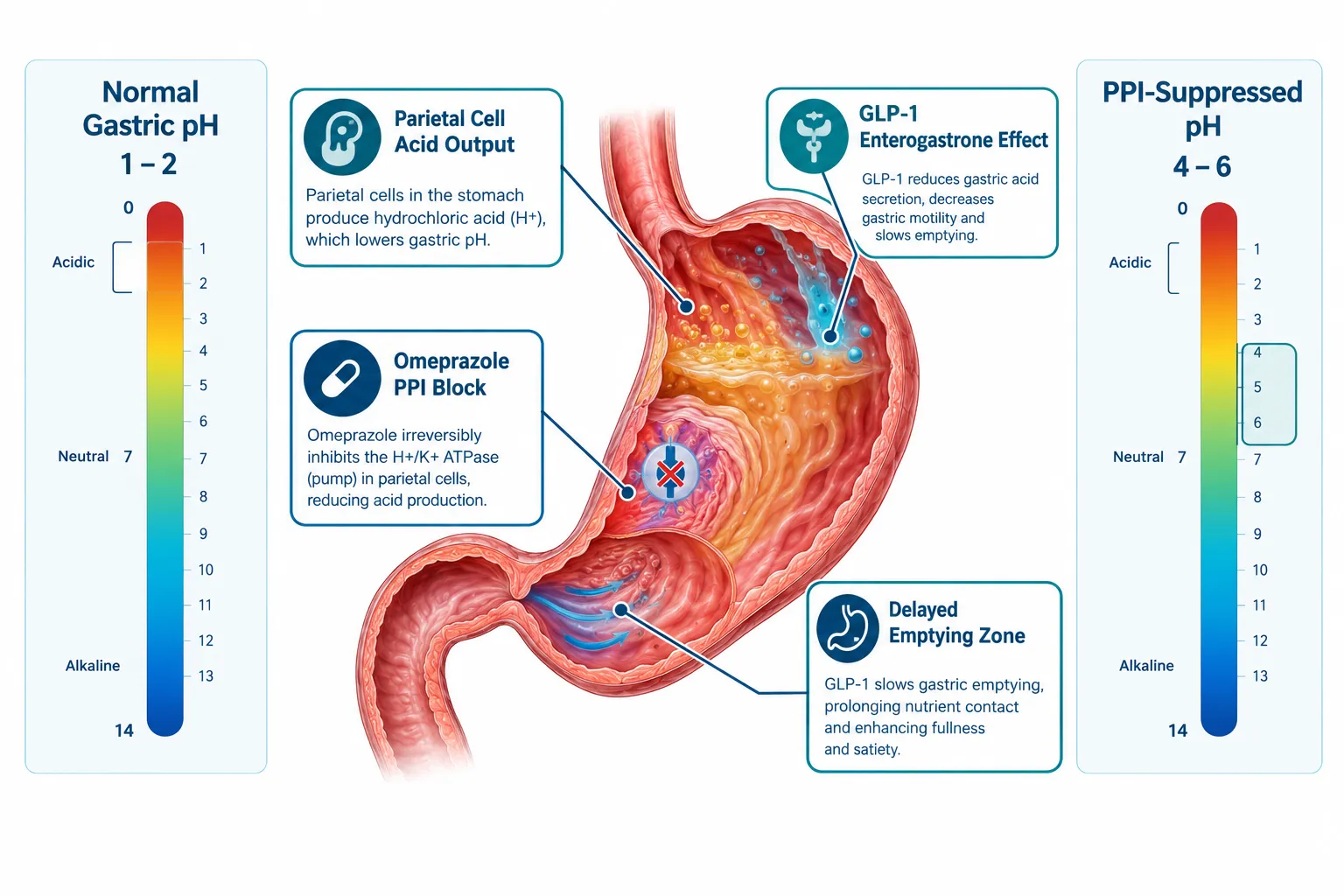
GLP-1 (glucagon-like peptide-1) and its structural relatives act as natural enterogastrones, hormones released from intestinal L-cells that suppress gastric acid secretion and slow gastric motility. This dual action is mediated through both vagal neural pathways and direct receptor signaling on parietal cells and smooth muscle. The result is a coordinated brake on gastric output that evolved to pace nutrient delivery into the small intestine.

Omeprazole works through an entirely different mechanism. As a proton pump inhibitor, it irreversibly blocks the H+/K+-ATPase enzyme on parietal cells, raising intragastric pH from the normal range of 1-2 up to 4-6 or higher. This pH shift has consequences far beyond acid reduction:

  • Peptide stability: Many peptides are acid-labile or protease-sensitive at specific pH ranges. Raising gastric pH changes the degradation environment for any orally administered compound.
  • Nutrient sensing: Gastric acid is a key trigger for cholecystokinin and secretin release. Suppress acid, and the entire upper GI hormonal cascade shifts, including signals that interact with GLP-receptor pathways.
  • Motility: Acid itself participates in feedback loops that govern antral contractions. PPI-induced acid suppression can independently slow gastric emptying, separate from any peptide effect.

When studying GLP-3 peptides or related analogs, this background physiology matters enormously. The peptide is not operating in a neutral gastric environment; it is operating in one already modified by the PPI.


How Omeprazole Confounds GLP-Class Peptide Exposure and Intake Experiments

The phrase "GLP-class peptides and omeprazole: how acid suppression can alter exposure, intake, and gastric-emptying experiments" captures a real and underappreciated methodological problem. Consider a standard food intake study where a GLP-1 receptor agonist is expected to reduce caloric consumption. If subjects or animals are also receiving omeprazole, the following confounders enter the data:

1. Altered peptide bioavailability
Oral peptide formulations depend on predictable gastric conditions for controlled release. A pH shift from omeprazole changes dissolution kinetics, potentially increasing or decreasing systemic exposure independent of the peptide's own pharmacology.

2. Independent appetite suppression via acid-suppression pathways
Reduced gastric acid alters ghrelin secretion patterns. Ghrelin, the primary hunger-stimulating hormone, is produced in the gastric fundus and its release is modulated by intragastric pH. Omeprazole-driven pH elevation can suppress ghrelin independently, creating a false signal of enhanced GLP-mediated appetite reduction.

3. Compounded gastric emptying delay
A 2026 systematic review confirmed that GLP-1 agonists prolong gastric emptying half-life by approximately 74 minutes on average. Omeprazole adds its own motility-slowing effect on top of this. In a combined scenario, gastric emptying delay becomes the sum of two independent mechanisms, making it impossible to attribute the observed delay to the peptide alone without proper controls.

Researchers exploring GLP peptides for research applications must account for these layered effects when designing protocols.

"The failure to separate vehicle effects, acid-suppression effects, and peptide effects in a single experimental arm is one of the most common sources of irreproducible GLP-related data."


Designing Controls That Separate Acid Suppression From Peptide Activity
Designing Controls That Separate Acid Suppression From Peptide Activity

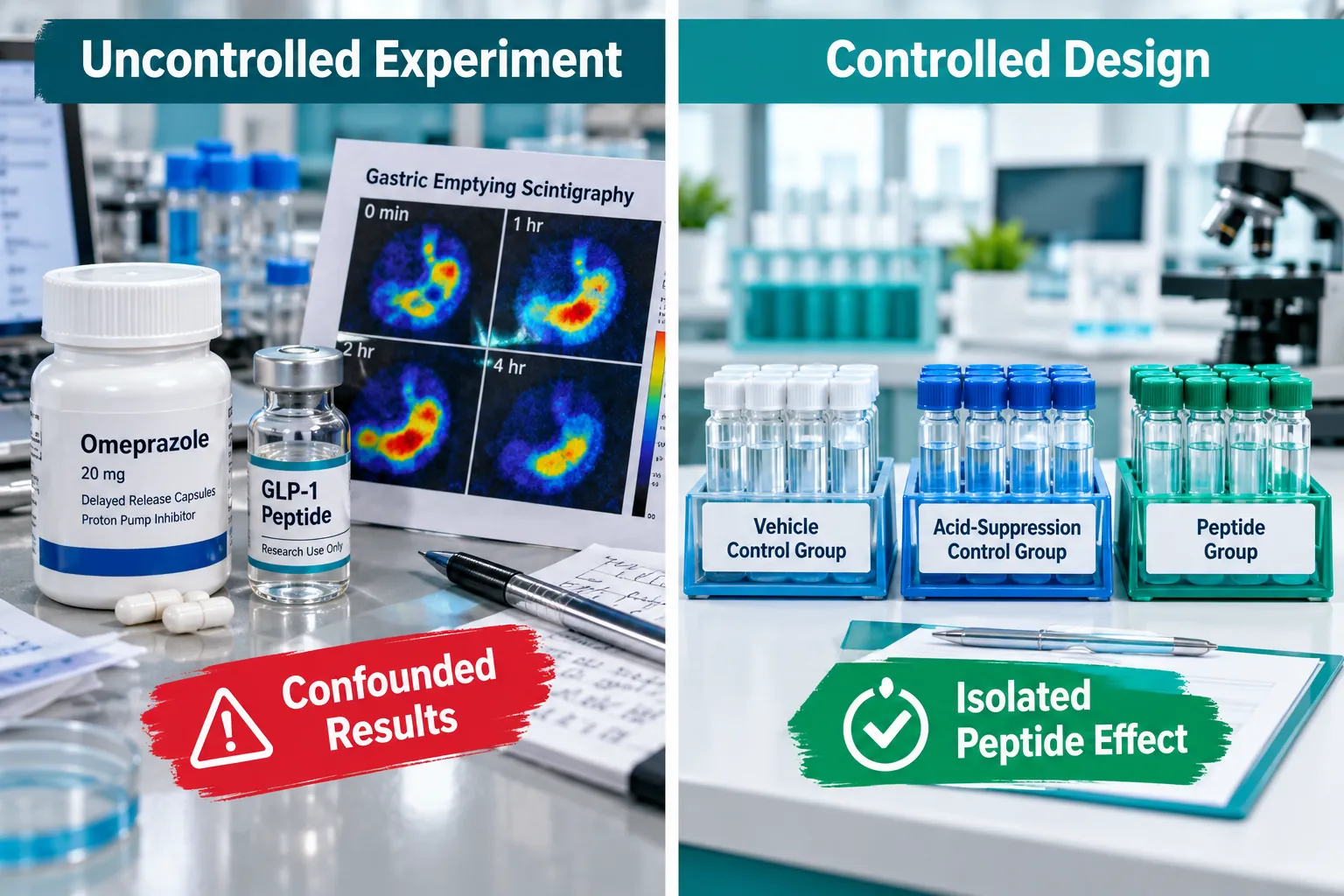
The solution to omeprazole-driven confounding is not to avoid PPIs, in many clinical or translational settings, co-administration is unavoidable. The solution is rigorous control group architecture.

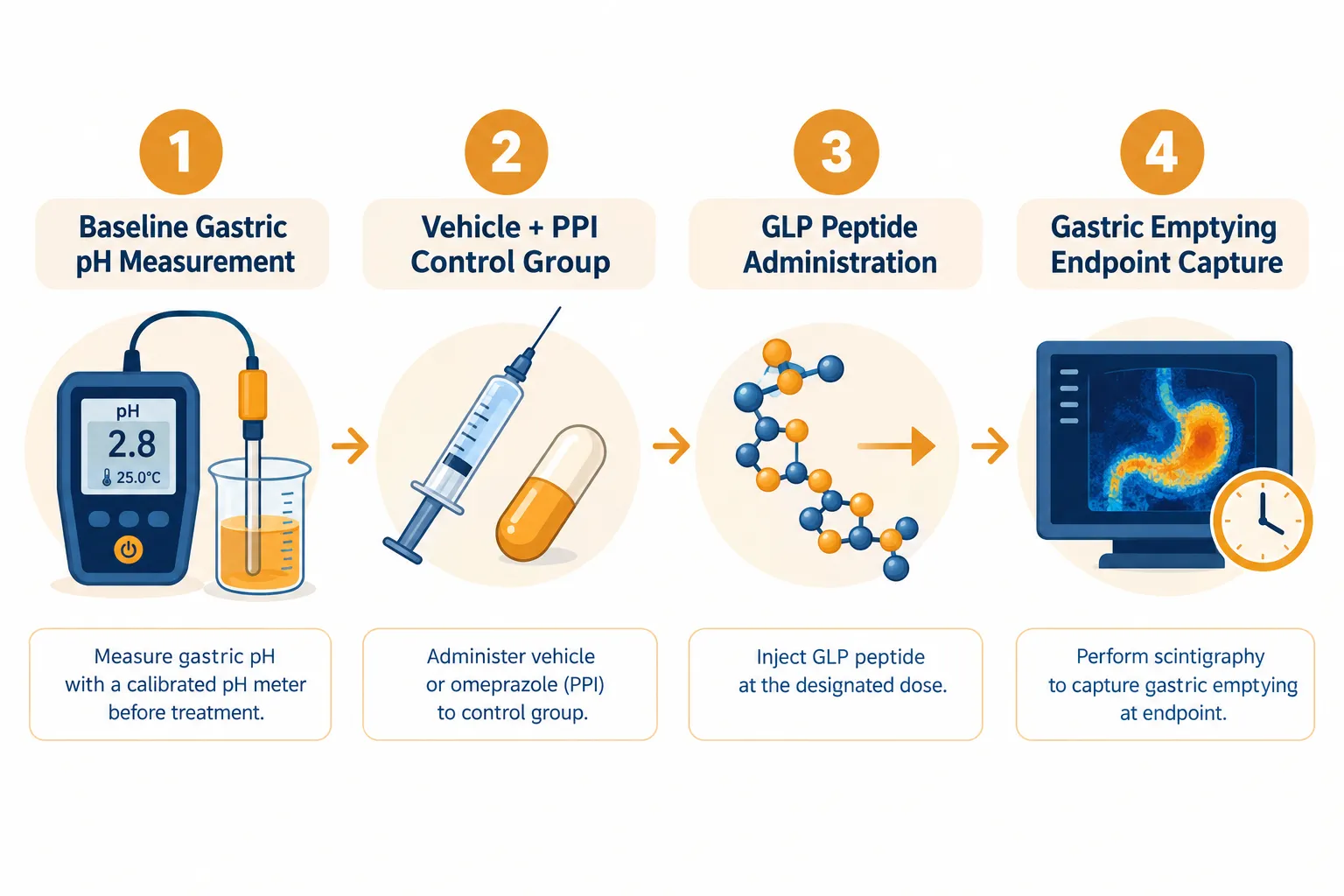
Minimum required control groups for a GLP-peptide gastric emptying study with PPI background:

Group Treatment Purpose
Vehicle only Saline or carrier, no PPI True baseline
PPI only Omeprazole at study dose Isolates acid-suppression effect
Peptide + vehicle GLP analog, no PPI Isolates peptide effect
Peptide + PPI Full combination Measures interaction

This four-arm design allows researchers to calculate the additive versus synergistic contribution of each agent to the observed endpoints. Without the PPI-only arm, any motility or intake change in the combination group cannot be cleanly attributed.

For experiments involving GLP-3 RT peptide formulations or nasal delivery routes, the acid-suppression concern shifts but does not disappear. Systemically absorbed peptides still encounter a GI tract altered by omeprazole, affecting downstream nutrient sensing and motility feedback even when the peptide bypasses gastric degradation entirely.

Additional design considerations:

  • Measure intragastric pH directly at baseline and post-PPI to confirm the degree of acid suppression achieved.
  • Use scintigraphy or the acetaminophen absorption method to quantify gastric emptying half-life independently for each arm.
  • Time blood draws for peptide pharmacokinetics relative to gastric emptying status, not just clock time post-dose.
  • In rodent models, note that omeprazole dosing required to achieve human-equivalent acid suppression is substantially higher per kilogram, an underdosed PPI arm produces incomplete suppression and noisy data.

Researchers sourcing compounds for these studies can explore GLP-3 peptide for sale options alongside appropriate vehicle and control materials. Those running multi-compound protocols may also find wholesale peptides for sale resources useful for consistent lot-to-lot supply.


Practical Implications for Translational and Clinical Research
Practical Implications for Translational and Clinical Research

The translational stakes of this issue are significant. Tirzepatide and other dual GLP-1/GIP receptor agonists show dose- and time-dependent effects on gastric emptying that evolve over weeks of repeated dosing. If a clinical pharmacokinetic study enrolls participants who are chronic PPI users, a common scenario given PPI prevalence, the gastric emptying baseline is already shifted before the peptide is introduced.

Peri-procedural gastroenterology guidance issued in 2026 highlights retained gastric contents as a safety concern with GLP-1 receptor agonists, particularly before endoscopy. Omeprazole co-administration does not resolve this risk and may extend it. Any protocol that monitors gastric residual volume as a safety endpoint must treat PPI use as a stratification variable, not a nuisance covariate.

For those investigating appetite-related endpoints alongside gastric physiology, understanding what the strongest peptide for weight loss research involves requires this same level of mechanistic clarity. Acid suppression is a background variable that can masquerade as peptide efficacy or attenuate it, depending on the direction of its effect on the specific endpoint measured.

It is worth noting that direct pharmacokinetic interaction trials specifically pairing GLP-class peptides with omeprazole remain limited in the published literature as of 2026. The mechanistic case for interaction is strong, but researchers should treat specific magnitude estimates as provisional until dedicated trials report. This gap itself represents a meaningful research opportunity.


Conclusion

GLP-class peptides and omeprazole represent a physiologically active combination that demands explicit attention in experimental design. Acid suppression alters gastric pH, modifies peptide stability, shifts hunger-hormone baselines, and adds an independent layer of motility delay on top of the peptide's own gastric-emptying effects. The result, in an uncontrolled study, is data that cannot cleanly attribute observed changes to the peptide under investigation.

Actionable next steps for researchers:

  1. Audit existing protocols for PPI co-administration, whether intentional or as a background medication in enrolled subjects.
  2. Add a dedicated PPI-only control arm to any gastric emptying, food intake, or oral bioavailability study involving GLP-class peptides.
  3. Measure intragastric pH directly rather than assuming omeprazole achieves a standard suppression level across all subjects.
  4. Pre-stratify clinical study participants by PPI use status before randomization.
  5. Treat the GLP-peptide-plus-omeprazole interaction as an open research question and design studies that generate, rather than obscure, mechanistic data on this pairing.

Clean data in this field requires acknowledging that the stomach is not a passive container. It is an active participant in every GLP-related endpoint being measured.

https://www.puretestedpeptides.com/wp-content/uploads/2026/10/glp-class-peptides-and-omeprazole-how-acid-suppression-can-alter-exposure-intake.webp 1024 1536 https://www.puretestedpeptides.com/wp-content/uploads/2026/01/buy-peptides-online.jpg 2026-10-16 13:04:352026-10-16 13:04:35GLP-Class Peptides and Omeprazole: How Acid Suppression Can Alter Exposure, Intake, and Gastric-Emptying Experiments
Ondansetron Beyond Nausea: Serotonin-Receptor Controls for Gastric Emptying, Intake, and GLP-Class Peptide Experiments

Ondansetron Beyond Nausea: Serotonin-Receptor Controls for Gastric Emptying, Intake, and GLP-Class Peptide Experiments

October 13, 2026/0 Comments/in Uncategorized/by

Blocking a single receptor subtype can change how much a person eats at a meal without meaningfully changing how fast the stomach empties, and that endpoint separation is exactly what makes ondansetron scientifically interesting far outside the antiemetic ward. This article examines the topic of Ondansetron Beyond Nausea: Serotonin-Receptor Controls for Gastric Emptying, Intake, and GLP-Class Peptide Experiments with a focus on receptor selectivity, measurable physiological endpoints, and what preclinical peptide work actually shows versus what clinical evidence supports.

Key Takeaways

  • Ondansetron is a selective 5-HT3 receptor antagonist whose effects on gastric emptying and food intake are largely independent of each other.
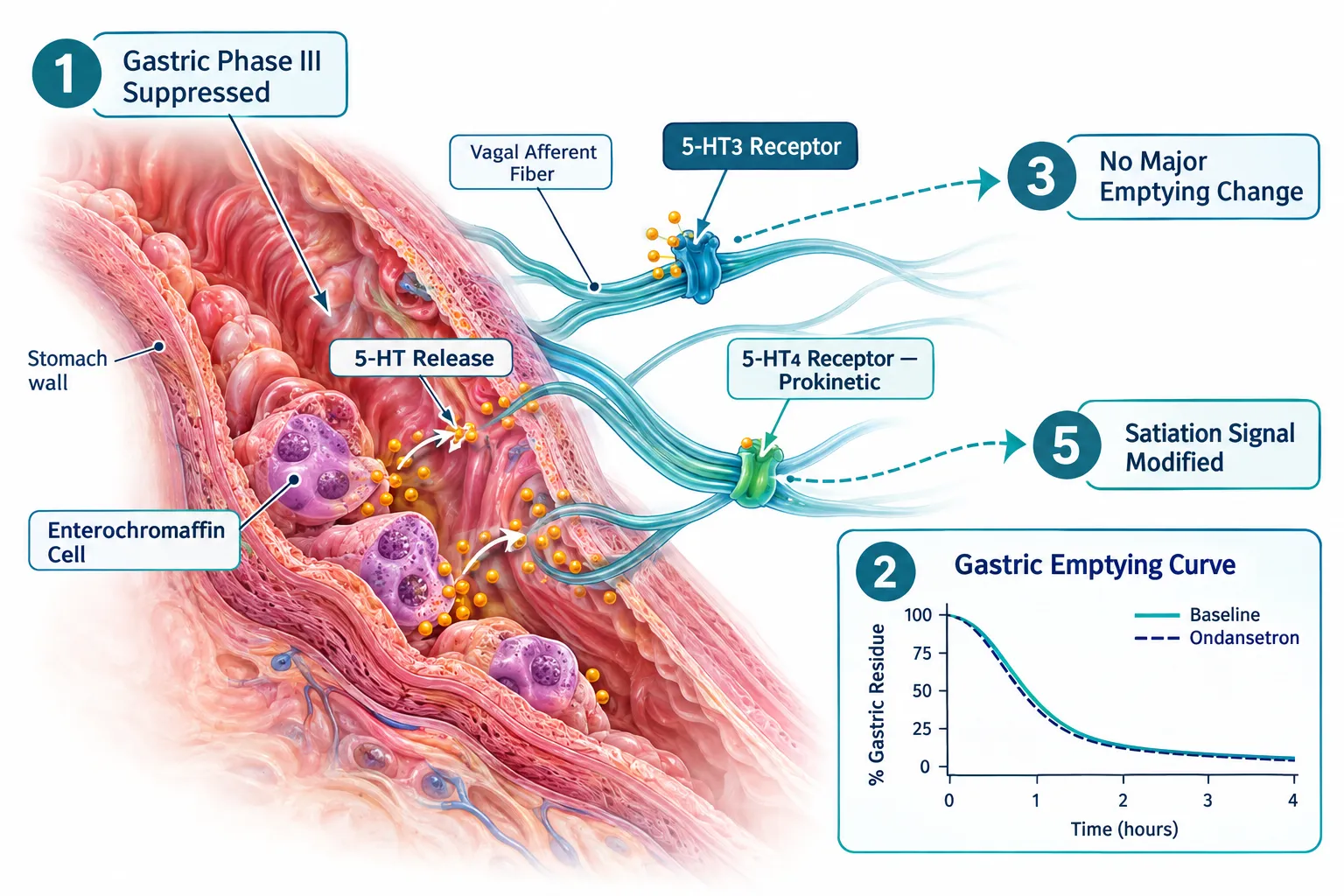
  • Human studies show it increases meal volume at maximum satiation without producing major changes in gastric emptying time.
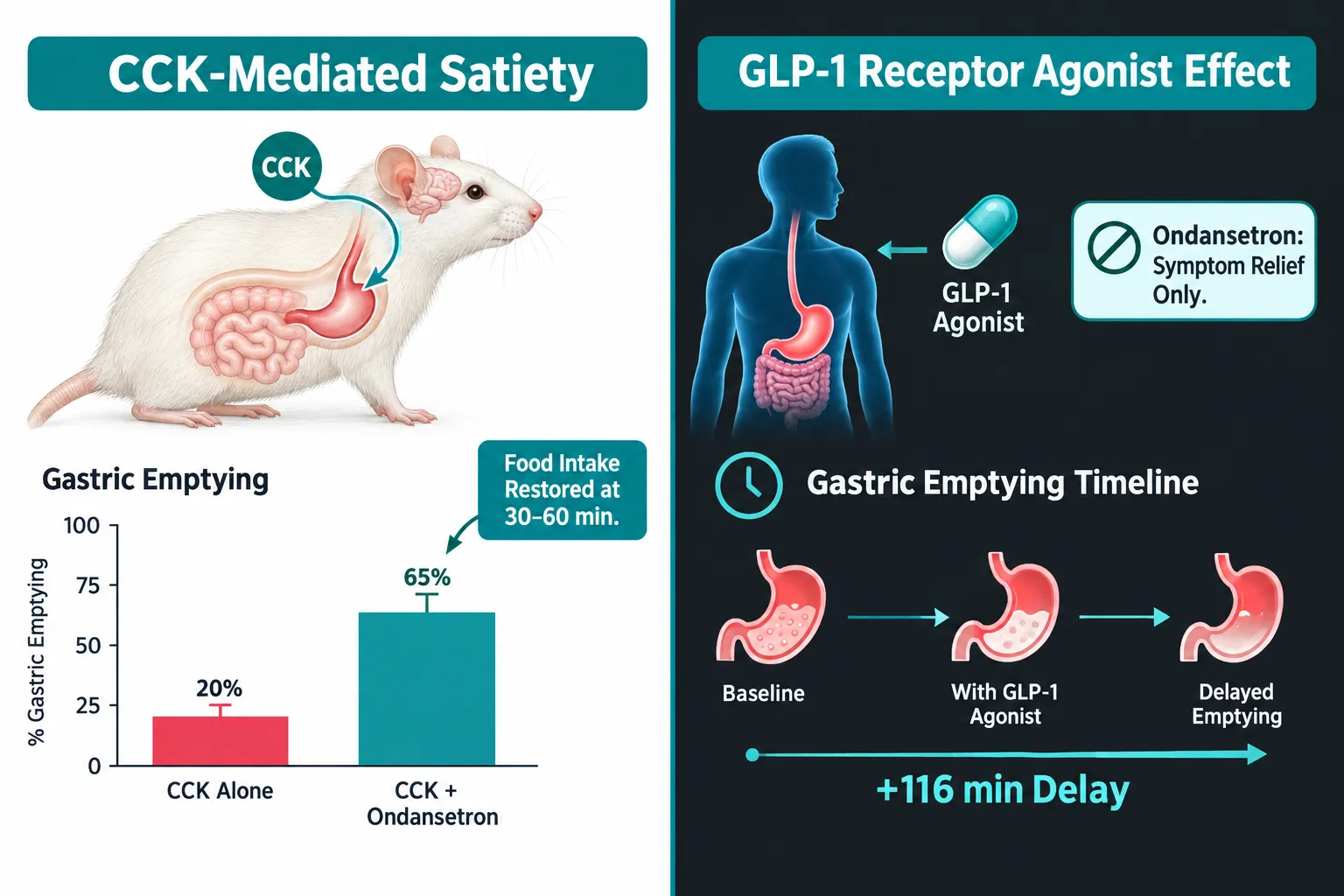
  • In animal models, 5-HT3 blockade reverses CCK-induced reductions in food intake and gastric emptying delay.
  • GLP-1 receptor agonists delay gastric emptying significantly; ondansetron manages the resulting nausea but does not correct the underlying motility disorder.
  • No high-quality clinical trials as of 2026 have established ondansetron as a modifier of GLP-1 or incretin peptide physiology.

How 5-HT3 Receptor Selectivity Creates Separated Endpoints

How 5-HT3 Receptor Selectivity Creates Separated Endpoints

The gastrointestinal tract contains more serotonin (5-hydroxytryptamine, or 5-HT) than the entire brain. Enterochromaffin cells lining the gut wall release 5-HT in response to mechanical pressure, nutrients, and chemical signals. That serotonin then acts on multiple receptor subtypes, primarily 5-HT3 and 5-HT4, which have opposite effects on gastric motility.

5-HT4 agonists accelerate gastric emptying and are classified as prokinetics. 5-HT3 antagonists like ondansetron do something more nuanced: they suppress gastric phase III contractions of the migrating motor complex, shift intestinal motor activity, and alter satiation signaling, yet produce no significant change in overall gastric emptying time in controlled human studies.

This is the core of the "beyond nausea" story. The receptor selectivity of ondansetron separates nausea suppression from motility acceleration, and it separates satiation modulation from mechanical gastric changes. In a placebo-controlled trial, ondansetron increased the volume of liquid meal consumed at maximum satiation from roughly 784 mL to 907 mL, a statistically significant shift, without altering gastric compliance, basal tone, or fundic relaxation. The stomach was not mechanically different; the satiation signal arriving at the brain was.

"The receptor selectivity of ondansetron separates nausea suppression from motility acceleration, and satiation modulation from mechanical gastric change."

This endpoint separation matters for researchers designing peptide experiments. If a compound under study delays gastric emptying and suppresses intake, adding ondansetron can help isolate which effect is driven by 5-HT3-mediated vagal signaling versus direct mechanical slowing.


CCK Interactions and the Preclinical Case for Serotonin-Receptor Controls for Gastric Emptying, Intake, and GLP-Class Peptide Experiments

CCK Interactions and the Preclinical Case for Serotonin-Receptor Controls for Gastric Emptying, Intake, and GLP-Class Peptide

The clearest mechanistic evidence for ondansetron's "beyond nausea" role comes from cholecystokinin (CCK) research, not GLP-1 work. CCK is a gut peptide released after fat and protein ingestion; it suppresses feeding partly by slowing gastric emptying of solid meals. In rat models:

  • Ondansetron significantly attenuated CCK-induced reductions in food intake at 30 and 60 minutes post-administration.
  • It reversed CCK-induced inhibition of gastric emptying of both solid meals and nutrient loads.
  • A 5-HT3 agonist (m-chlorophenylbiguanide) reduced food intake on its own, while ondansetron blocked that effect.

These findings establish a mechanistic framework: when peptide-induced satiety is mediated through slowed gastric emptying and vagal 5-HT3 signaling, blocking 5-HT3 receptors can restore intake and motility simultaneously. The pathway runs through the vagus nerve, not through central appetite circuits directly.

What This Means for GLP-Class Peptide Research

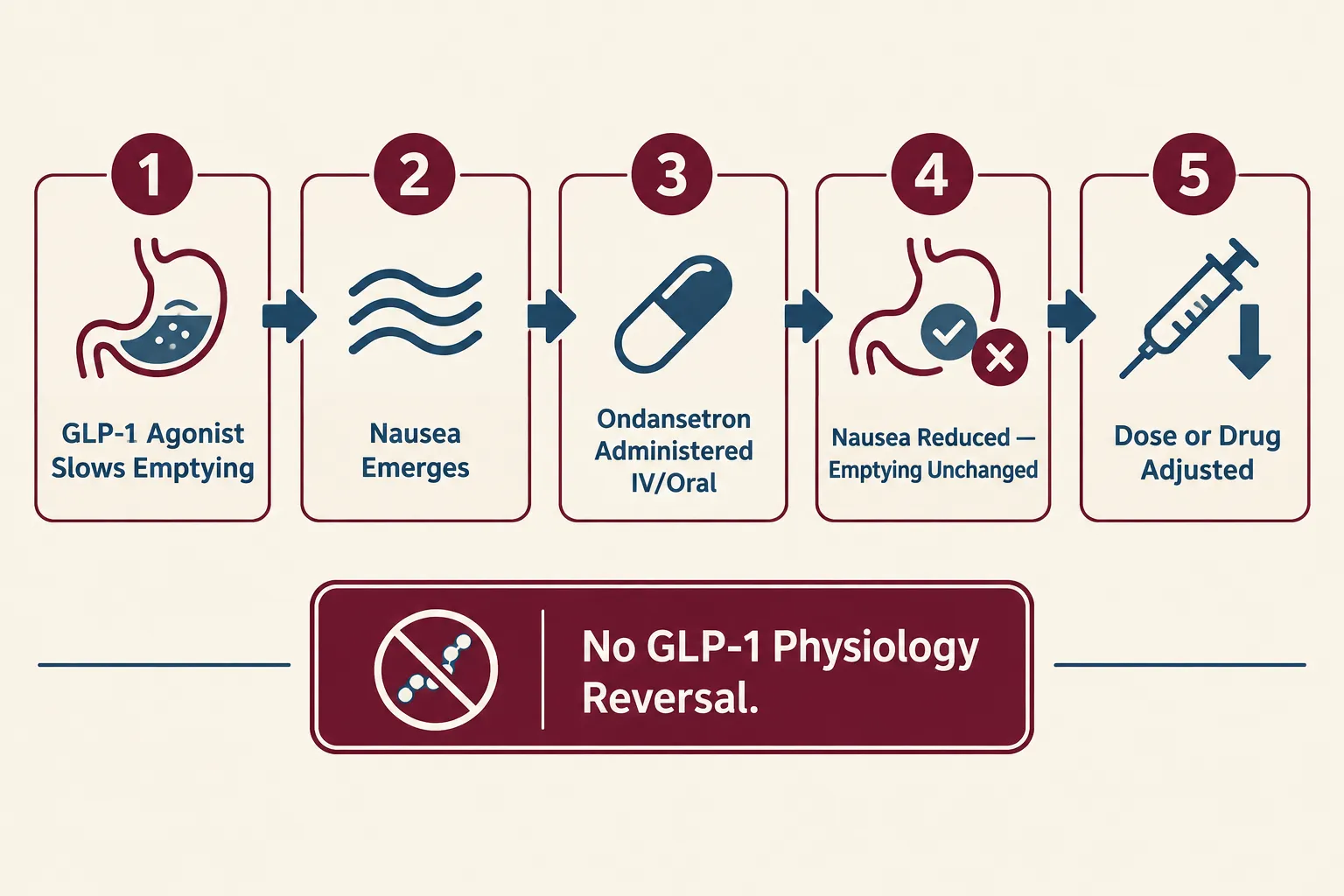
GLP-1 receptor agonists present a related but distinct picture. Short-acting agents like exenatide and lixisenatide increase gastric emptying half-time by approximately 116 minutes in clinical settings, raising aspiration risk during anesthesia and causing persistent nausea in a subset of patients. A case report of semaglutide-induced gastroparesis documented severe nausea and delayed emptying; intravenous ondansetron 4 mg every six hours improved nausea and allowed semisolid diet tolerance, but did not correct the underlying gastric emptying delay.

This is a critical distinction. The GLP-1 receptor itself drives the motility disorder. Ondansetron addresses the 5-HT3-mediated nausea signal that accompanies it, not the root cause. Current clinical reviews and guidelines treat ondansetron as adjunctive symptom control in this context, with primary management focused on dose reduction or discontinuation of the GLP-1 agent.

For researchers exploring GLP-3 peptide signaling pathways or working with GLP-3R 30mg peptide in experimental settings, understanding this receptor-level separation is essential for clean endpoint interpretation.


Clinical Limits and Experimental Opportunities in Ondansetron Beyond Nausea Research

Clinical Limits and Experimental Opportunities in Ondansetron Beyond Nausea Research

The table below summarizes what ondansetron does and does not do across key physiological endpoints, based on current evidence:

Endpoint Human Clinical Evidence Preclinical (Animal) Evidence
Gastric emptying time No significant change Accelerates; reverses drug-induced delay
Gastric compliance/tone No significant change Not well characterized
Meal volume at satiation Increases significantly Increases (CCK model)
Phase III motor activity Suppressed Suppressed
GLP-1-induced nausea Reduced (symptom control) Not established
GLP-1-induced emptying delay Not corrected Not established

The translational gap is real. Rodent studies show that ondansetron can prevent thermogenic supplement-induced gastric emptying delays and normalize food intake increases, effects blocked by 5-HT3 pretreatment. These findings are compelling for experimental design but have not moved into routine clinical protocols for GLP-1-related dysmotility.

For investigators sourcing research-grade compounds, resources on lab tested peptides and guidance on where to buy peptides can support rigorous experimental setups. Those studying mitochondrial and metabolic peptide interactions may also find value in reviewing SS-31 peptide benefits and SS-31 peptide research options for complementary mechanistic work.

No high-quality clinical trials published through 2026 have directly tested ondansetron as a regulator of GLP-1 or incretin peptide physiology. Expert consensus keeps its role squarely in symptom management while directing mechanistic and therapeutic attention toward modifying GLP-1 exposure itself, through dose adjustment, agent selection, or timing, and using established prokinetics when motility correction is the actual goal.


Conclusion

The science of Ondansetron Beyond Nausea: Serotonin-Receptor Controls for Gastric Emptying, Intake, and GLP-Class Peptide Experiments is best understood through the lens of receptor selectivity and endpoint separation. Ondansetron reliably modifies satiation signaling and suppresses nausea through 5-HT3 blockade, but it does not function as a prokinetic in humans and does not reverse GLP-1-mediated gastric slowing at the receptor level.

Actionable next steps for researchers and clinicians:

  • Use ondansetron as a pharmacological tool to isolate 5-HT3-dependent components of peptide-induced satiety in preclinical models.
  • Do not substitute it for prokinetics when gastric emptying correction is the therapeutic target.
  • In GLP-1 agonist protocols, prioritize dose management for motility issues and reserve ondansetron for symptomatic nausea relief.
  • Monitor the translational literature: the CCK and thermogenic-supplement animal data suggest 5-HT3 pathways may have untapped roles in peptide-mediated intake regulation that future trials could clarify.
  • Consult a peptides specialist when designing multi-peptide protocols that involve gastric motility endpoints.

The receptor is selective. The endpoints are separable. That precision is the opportunity.

https://www.puretestedpeptides.com/wp-content/uploads/2026/10/ondansetron-beyond-nausea-serotonin-receptor-controls-for-gastric-emptying-intak.webp 1024 1536 https://www.puretestedpeptides.com/wp-content/uploads/2026/01/buy-peptides-online.jpg 2026-10-13 13:05:032026-10-13 13:05:03Ondansetron Beyond Nausea: Serotonin-Receptor Controls for Gastric Emptying, Intake, and GLP-Class Peptide Experiments
GLP-3 Retatrutide and Oral GLP-1 Concepts: How Researchers Should Compare Exposure, Gastric Emptying, and Bioavailability

GLP-3 Retatrutide and Oral GLP-1 Concepts: How Researchers Should Compare Exposure, Gastric Emptying, and Bioavailability

October 9, 2026/0 Comments/in Uncategorized/by

}

Professional () hero image with 'GLP-3 Retatrutide and Oral GLP-1 Concepts' in crisp white modern centered on a deep teal

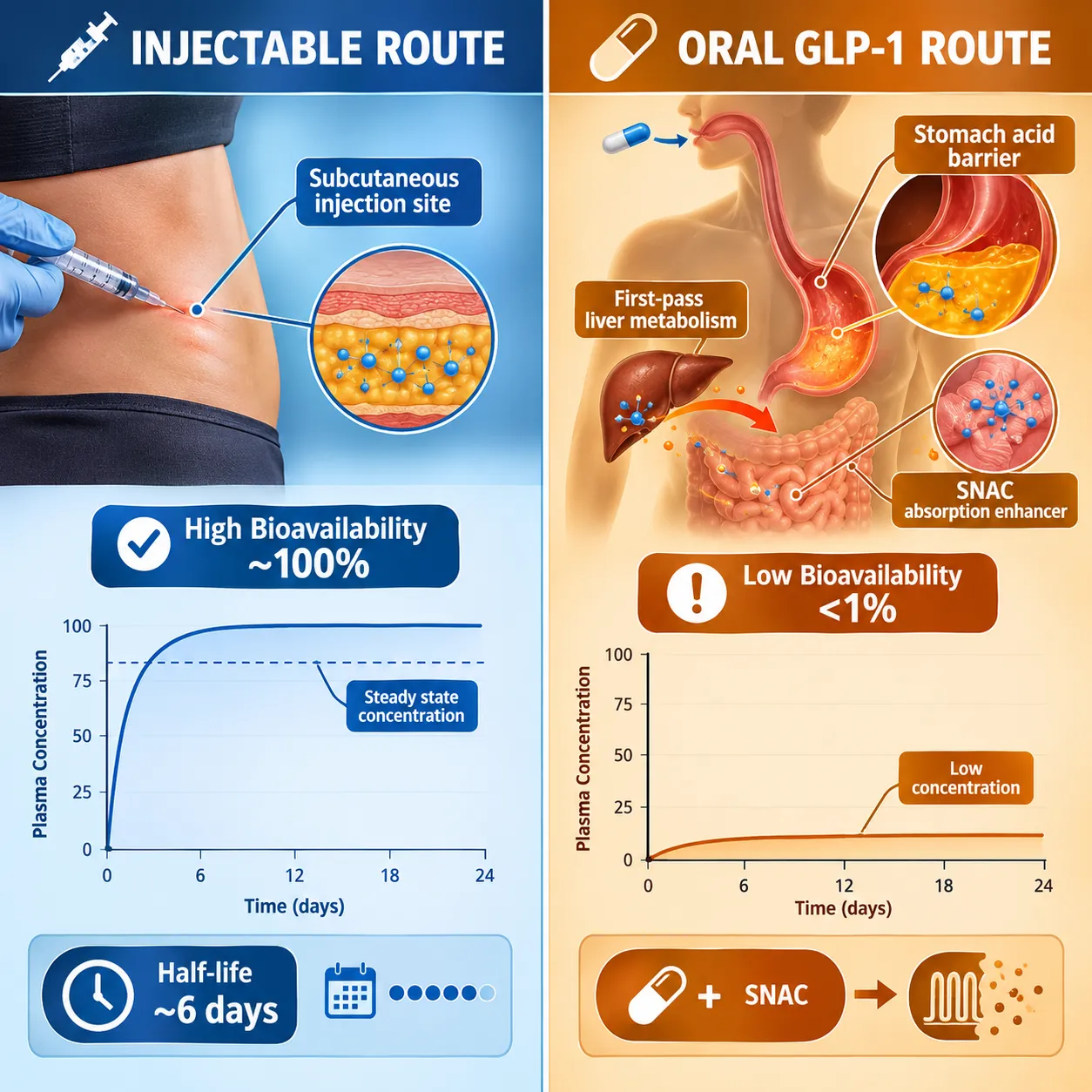
Fewer than one percent of an oral GLP-1 molecule typically survives the journey from stomach to systemic circulation, a stark contrast to the near-complete absorption seen with subcutaneous peptides. That single pharmacokinetic fact reshapes every study design attempting to compare retatrutide with oral GLP-1 agents. Understanding GLP-3 Retatrutide and Oral GLP-1 Concepts: How Researchers Should Compare Exposure, Gastric Emptying, and Bioavailability is not merely a matter of route preference; it demands rigorous attention to exposure matching, assay selection, and formulation controls before any meaningful head-to-head conclusion can be drawn.

Key Takeaways

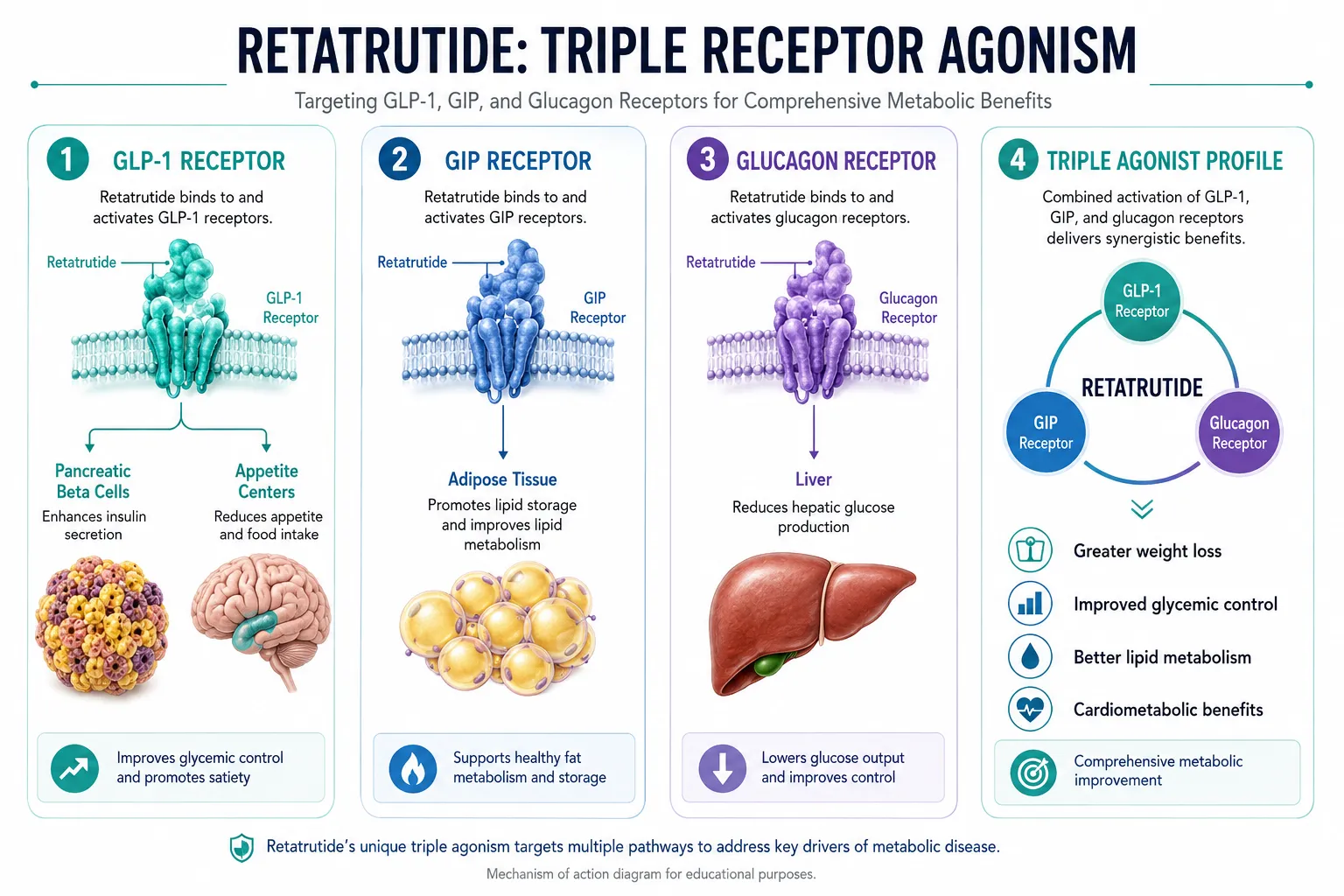
  • Retatrutide is a triple agonist (GLP-1, GIP, and glucagon receptors), giving it a fundamentally different receptor profile than single-target oral GLP-1 agents.
  • Subcutaneous retatrutide achieves near-complete bioavailability; oral GLP-1 formulations typically reach less than 1%, requiring careful dose-normalization in comparative studies.
  • Gastric emptying slows significantly with retatrutide, but the effect attenuates over time, a tolerance pattern researchers must account for in endpoint timing.
  • Exposure matching via AUC and Cmax normalization is the critical first step before comparing pharmacodynamic outcomes across routes.
  • Study designs must control for formulation variables (e.g., SNAC absorption enhancers in oral agents) that independently affect gastric physiology.

Retatrutide's Molecular Profile and Why Route Matters

Retatrutide is a long-acting peptide that simultaneously activates GLP-1, GIP (glucose-dependent insulinotropic polypeptide), and glucagon receptors. This triple-agonist architecture sets it apart from oral GLP-1 receptor agonists, which typically target only the GLP-1 pathway. Researchers exploring GLP-1 Retatrutide mechanisms should note that the glucagon receptor component drives additional hepatic glucose output modulation and energy expenditure, effects absent from most oral comparators.

Retatrutide's Molecular Profile and Why Route Matters

Administered subcutaneously, retatrutide displays a half-life of approximately six days, enabling once-weekly dosing and predictable steady-state accumulation. Its bioavailability via this route approaches 100%. Oral GLP-1 agents, by contrast, face sequential degradation barriers: gastric acid, peptidase activity in the intestinal lumen, and extensive hepatic first-pass metabolism. Even with absorption enhancers such as sodium N-[8-(2-hydroxybenzoyl)amino]caprylate (SNAC), systemic exposure remains a fraction of the administered dose.

This gap is not a minor technical detail. It fundamentally changes what "equivalent dose" means across routes, and it is the first problem any comparative study design must solve.


Comparing Exposure: AUC Matching and Normalization Strategies

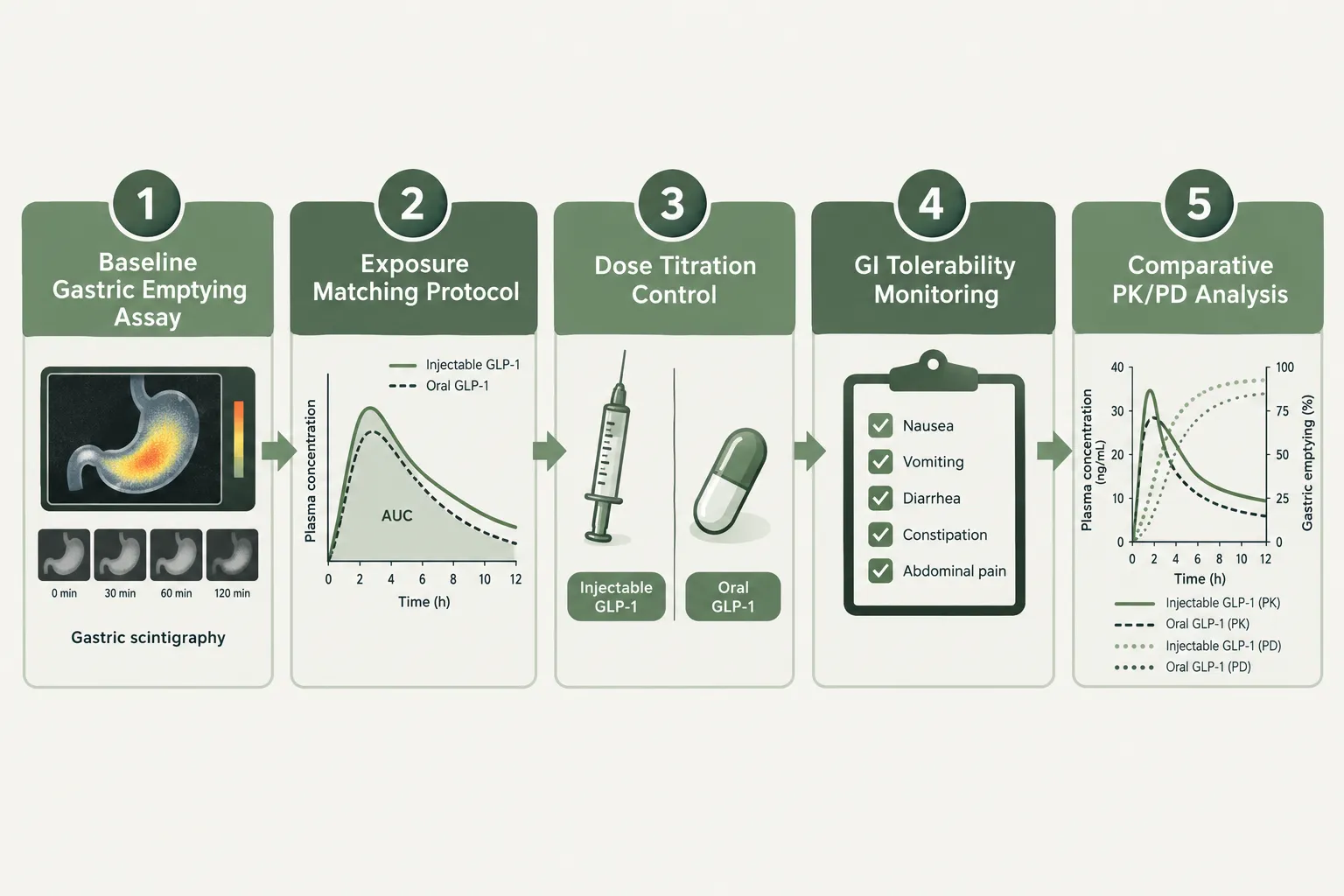
When researchers set out to apply GLP-3 Retatrutide and Oral GLP-1 Concepts: How Researchers Should Compare Exposure, Gastric Emptying, and Bioavailability to actual protocols, exposure normalization is the non-negotiable starting point. The standard approach uses area under the concentration-time curve (AUC) and peak plasma concentration (Cmax) as anchors.

Parameter Subcutaneous Retatrutide Oral GLP-1 Agent
Bioavailability ~100% <1%
Half-life ~6 days 12-14 hours (semaglutide oral)
Dosing frequency Once weekly Once daily
Steady-state variability Low Moderate-to-high

Key normalization steps for researchers:

  • Calculate molar AUC at steady state for each agent under study conditions.
  • Adjust oral doses iteratively until systemic AUC overlaps with the injectable comparator.
  • Document intra-subject variability in oral absorption, which is substantially higher than subcutaneous routes.
  • Account for food-state dependency: oral GLP-1 absorption drops sharply when taken with meals, while subcutaneous absorption is largely food-independent.

For labs sourcing materials, detailed product specifications for GLP-3 peptide (10mg, 99% pure, third-party tested) provide purity benchmarks that affect in vitro exposure calculations.


Gastric Emptying: Endpoints, Timing, and Tolerance

Gastric emptying slowing is a shared pharmacodynamic effect across GLP-1 class agents, but the magnitude, onset, and durability differ considerably between retatrutide and oral formulations.

Gastric Emptying: Endpoints, Timing, and Tolerance

With retatrutide, gastric emptying slows markedly in early treatment weeks. Scintigraphic studies show significant retention of gastric contents at four hours post-meal during dose escalation. Critically, this effect attenuates with continued exposure, a tolerance pattern driven by receptor desensitization and adaptive autonomic responses. By weeks 12 to 16 of continuous dosing, gastric emptying rates partially recover toward baseline even as plasma drug concentrations remain at steady state.

With oral GLP-1 agents, the gastric emptying effect is present but often less pronounced at clinically achievable systemic exposures. The SNAC excipient itself may exert local gastric effects independent of GLP-1 receptor activation, complicating interpretation of gastric emptying endpoints in oral-agent studies.

"Researchers who measure gastric emptying only at peak effect risk attributing a transient pharmacodynamic response to a sustained mechanism, a design flaw that inflates apparent potency differences between routes."

For comparative studies, the recommended approach is serial gastric emptying assessment at weeks 2, 8, and 16, capturing both peak effect and tolerance development. Acetaminophen absorption tests offer a practical surrogate when scintigraphy is unavailable.


Study Design Guidance for Comparing Routes

Applying GLP-3 Retatrutide and Oral GLP-1 Concepts: How Researchers Should Compare Exposure, Gastric Emptying, and Bioavailability to a rigorous protocol requires several additional controls beyond exposure matching.

Study Design Guidance for Comparing Routes

Formulation controls: SNAC and similar permeation enhancers alter gastric pH and mucosal permeability. Studies must include SNAC-only control arms to isolate GLP-1 receptor-mediated gastric effects from excipient-mediated ones.

Receptor specificity controls: Because retatrutide activates glucagon receptors, which independently influence gastric motility and hepatic metabolism, researchers comparing it to GLP-1-only oral agents should include receptor-selective antagonist arms where feasible.

GI tolerability endpoints: Nausea and vomiting rates differ across routes partly because of absorption rate differences. Subcutaneous delivery produces a slower Cmax rise than an oral bolus, which may translate to better early tolerability. Capturing time-to-event GI data alongside exposure metrics strengthens mechanistic interpretation.

Beyond obesity endpoints: Emerging research on metabolic dysfunction-associated steatotic liver disease (MASLD) and cardiometabolic markers requires longer observation windows. Researchers sourcing materials for extended studies can review options including GLP-3 Reta 20mg and GLP-3 Reta 30mg formats to support multi-week preclinical protocols.

For foundational background on peptide mechanisms relevant to this class, the Peptides 101 for Research-Use Only Buyers resource covers structure and receptor interaction concepts that inform study design. Researchers also comparing oral versus injectable delivery formats more broadly may find the Slupp332 Oral Versus Injectable Research analysis a useful methodological reference.


Conclusion

The comparison between retatrutide and oral GLP-1 agents is only as valid as the study design supporting it. Researchers in 2026 who treat route of administration as a secondary variable, rather than a primary pharmacokinetic determinant, risk generating data that cannot be meaningfully interpreted or replicated.

Actionable next steps for research teams:

  1. Begin every comparative protocol with AUC-matched exposure normalization, not nominal dose equivalence.
  2. Use serial gastric emptying assessments (weeks 2, 8, and 16 minimum) to capture tolerance development.
  3. Include SNAC-only control arms in any oral GLP-1 study measuring gastric endpoints.
  4. Pre-specify receptor-specificity controls when comparing multi-agonist injectables to single-agonist oral agents.
  5. Source verified, high-purity research materials, such as those available through the Buy Retatrutide Peptide catalog, to ensure compound integrity does not introduce confounding variables.

Rigorous attention to these pharmacokinetic and pharmacodynamic fundamentals is what separates publishable comparative data from inconclusive noise.

https://www.puretestedpeptides.com/wp-content/uploads/2026/10/glp-3-retatrutide-and-oral-glp-1-concepts-how-researchers-should-compare-exposur.webp 1254 1254 https://www.puretestedpeptides.com/wp-content/uploads/2026/01/buy-peptides-online.jpg 2026-10-09 13:07:312026-10-09 13:07:31GLP-3 Retatrutide and Oral GLP-1 Concepts: How Researchers Should Compare Exposure, Gastric Emptying, and Bioavailability
×

Helpful Links

  • My account
  • Cart
  • Checkout
  • Refund and Returns Policy
  • Privacy Policy
  • SMS Privacy Policy
  • Login
  • My Account
  • Logout

USA Made Lab Tested Peptides

All products are sold for research, laboratory, or analytical purposes only, and are not for human consumption


Pure Tested Peptides is a chemical supplier. Pure Tested Peptides is not a compounding / chemical compounding facility as defined under 503A of the Federal Food, Drug, and Cosmetic act. Pure Tested Peptides is not an outsourcing facility as defined under 503B of the Federal Food, Drug, and Cosmetic act.

The statements made within this website have not been evaluated by the US Food and Drug Administration. The products we offer are not intended to diagnose, treat, cure or prevent any disease.

Human/Animal Consumption Prohibited. Laboratory/In-Vitro Experimental Use Only

Scroll to top Scroll to top Scroll to top