

Ondansetron Beyond Nausea: Serotonin-Receptor Controls for Gastric Emptying, Intake, and GLP-Class Peptide Experiments
Blocking a single receptor subtype can change how much a person eats at a meal without meaningfully changing how fast the stomach empties, and that endpoint separation is exactly what makes ondansetron scientifically interesting far outside the antiemetic ward. This article examines the topic of Ondansetron Beyond Nausea: Serotonin-Receptor Controls for Gastric Emptying, Intake, and GLP-Class Peptide Experiments with a focus on receptor selectivity, measurable physiological endpoints, and what preclinical peptide work actually shows versus what clinical evidence supports.
Key Takeaways
- Ondansetron is a selective 5-HT3 receptor antagonist whose effects on gastric emptying and food intake are largely independent of each other.
- Human studies show it increases meal volume at maximum satiation without producing major changes in gastric emptying time.
- In animal models, 5-HT3 blockade reverses CCK-induced reductions in food intake and gastric emptying delay.
- GLP-1 receptor agonists delay gastric emptying significantly; ondansetron manages the resulting nausea but does not correct the underlying motility disorder.
- No high-quality clinical trials as of 2026 have established ondansetron as a modifier of GLP-1 or incretin peptide physiology.
How 5-HT3 Receptor Selectivity Creates Separated Endpoints
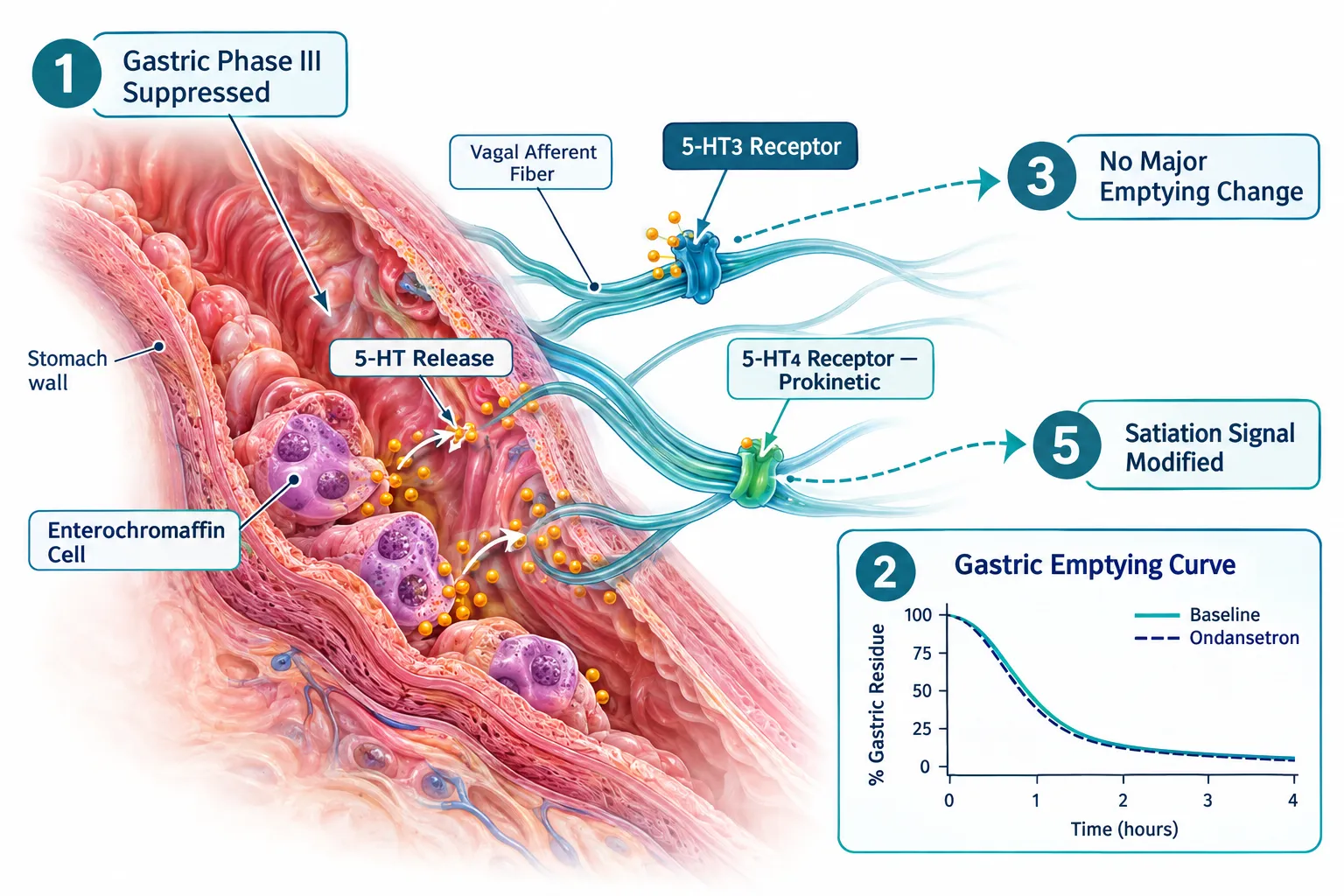
The gastrointestinal tract contains more serotonin (5-hydroxytryptamine, or 5-HT) than the entire brain. Enterochromaffin cells lining the gut wall release 5-HT in response to mechanical pressure, nutrients, and chemical signals. That serotonin then acts on multiple receptor subtypes, primarily 5-HT3 and 5-HT4, which have opposite effects on gastric motility.
5-HT4 agonists accelerate gastric emptying and are classified as prokinetics. 5-HT3 antagonists like ondansetron do something more nuanced: they suppress gastric phase III contractions of the migrating motor complex, shift intestinal motor activity, and alter satiation signaling, yet produce no significant change in overall gastric emptying time in controlled human studies.
This is the core of the "beyond nausea" story. The receptor selectivity of ondansetron separates nausea suppression from motility acceleration, and it separates satiation modulation from mechanical gastric changes. In a placebo-controlled trial, ondansetron increased the volume of liquid meal consumed at maximum satiation from roughly 784 mL to 907 mL, a statistically significant shift, without altering gastric compliance, basal tone, or fundic relaxation. The stomach was not mechanically different; the satiation signal arriving at the brain was.
"The receptor selectivity of ondansetron separates nausea suppression from motility acceleration, and satiation modulation from mechanical gastric change."
This endpoint separation matters for researchers designing peptide experiments. If a compound under study delays gastric emptying and suppresses intake, adding ondansetron can help isolate which effect is driven by 5-HT3-mediated vagal signaling versus direct mechanical slowing.
CCK Interactions and the Preclinical Case for Serotonin-Receptor Controls for Gastric Emptying, Intake, and GLP-Class Peptide Experiments
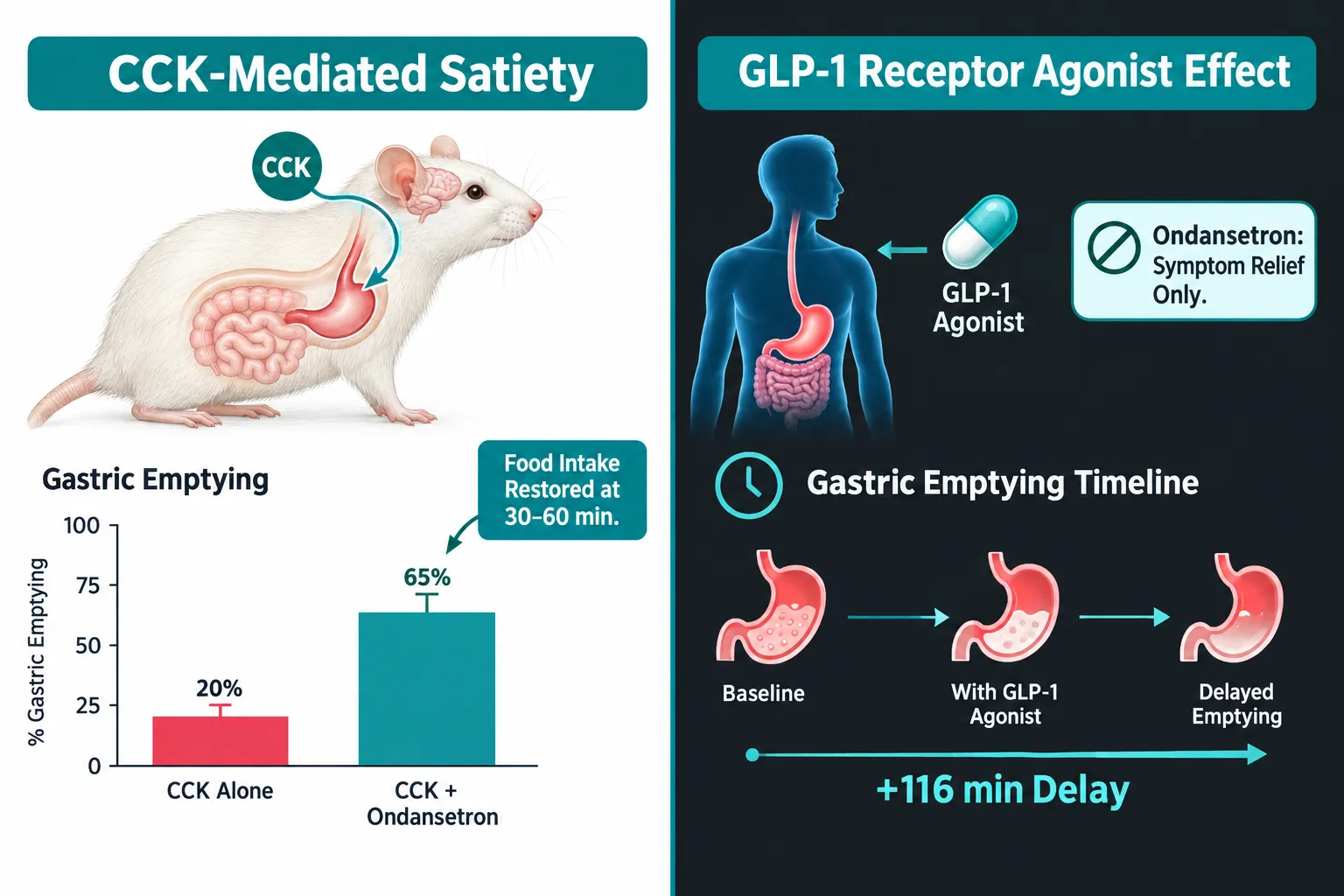
The clearest mechanistic evidence for ondansetron's "beyond nausea" role comes from cholecystokinin (CCK) research, not GLP-1 work. CCK is a gut peptide released after fat and protein ingestion; it suppresses feeding partly by slowing gastric emptying of solid meals. In rat models:
- Ondansetron significantly attenuated CCK-induced reductions in food intake at 30 and 60 minutes post-administration.
- It reversed CCK-induced inhibition of gastric emptying of both solid meals and nutrient loads.
- A 5-HT3 agonist (m-chlorophenylbiguanide) reduced food intake on its own, while ondansetron blocked that effect.
These findings establish a mechanistic framework: when peptide-induced satiety is mediated through slowed gastric emptying and vagal 5-HT3 signaling, blocking 5-HT3 receptors can restore intake and motility simultaneously. The pathway runs through the vagus nerve, not through central appetite circuits directly.
What This Means for GLP-Class Peptide Research
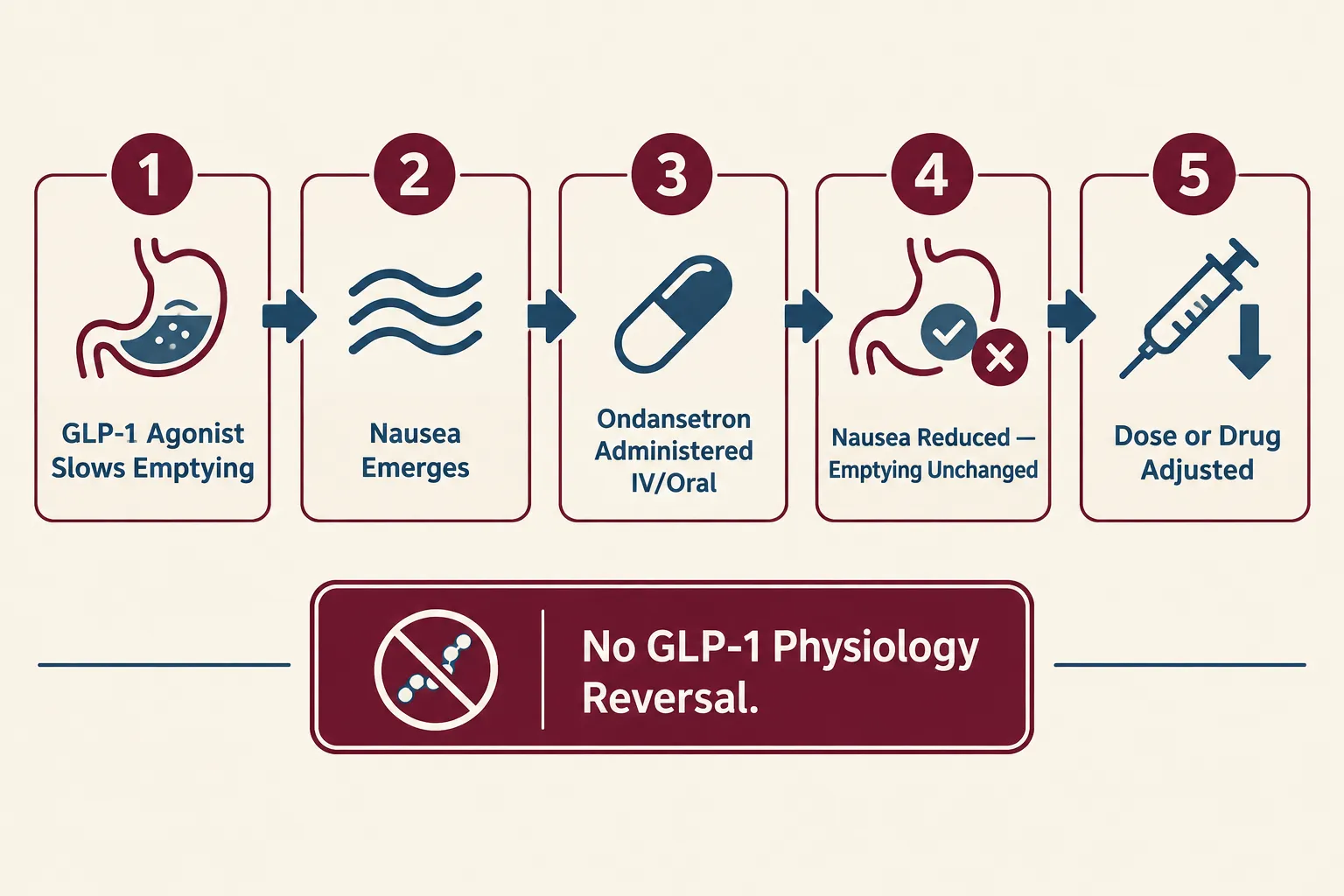
GLP-1 receptor agonists present a related but distinct picture. Short-acting agents like exenatide and lixisenatide increase gastric emptying half-time by approximately 116 minutes in clinical settings, raising aspiration risk during anesthesia and causing persistent nausea in a subset of patients. A case report of semaglutide-induced gastroparesis documented severe nausea and delayed emptying; intravenous ondansetron 4 mg every six hours improved nausea and allowed semisolid diet tolerance, but did not correct the underlying gastric emptying delay.
This is a critical distinction. The GLP-1 receptor itself drives the motility disorder. Ondansetron addresses the 5-HT3-mediated nausea signal that accompanies it, not the root cause. Current clinical reviews and guidelines treat ondansetron as adjunctive symptom control in this context, with primary management focused on dose reduction or discontinuation of the GLP-1 agent.
For researchers exploring GLP-3 peptide signaling pathways or working with GLP-3R 30mg peptide in experimental settings, understanding this receptor-level separation is essential for clean endpoint interpretation.
Clinical Limits and Experimental Opportunities in Ondansetron Beyond Nausea Research
The table below summarizes what ondansetron does and does not do across key physiological endpoints, based on current evidence:
| Endpoint | Human Clinical Evidence | Preclinical (Animal) Evidence |
|---|---|---|
| Gastric emptying time | No significant change | Accelerates; reverses drug-induced delay |
| Gastric compliance/tone | No significant change | Not well characterized |
| Meal volume at satiation | Increases significantly | Increases (CCK model) |
| Phase III motor activity | Suppressed | Suppressed |
| GLP-1-induced nausea | Reduced (symptom control) | Not established |
| GLP-1-induced emptying delay | Not corrected | Not established |
The translational gap is real. Rodent studies show that ondansetron can prevent thermogenic supplement-induced gastric emptying delays and normalize food intake increases, effects blocked by 5-HT3 pretreatment. These findings are compelling for experimental design but have not moved into routine clinical protocols for GLP-1-related dysmotility.
For investigators sourcing research-grade compounds, resources on lab tested peptides and guidance on where to buy peptides can support rigorous experimental setups. Those studying mitochondrial and metabolic peptide interactions may also find value in reviewing SS-31 peptide benefits and SS-31 peptide research options for complementary mechanistic work.
No high-quality clinical trials published through 2026 have directly tested ondansetron as a regulator of GLP-1 or incretin peptide physiology. Expert consensus keeps its role squarely in symptom management while directing mechanistic and therapeutic attention toward modifying GLP-1 exposure itself, through dose adjustment, agent selection, or timing, and using established prokinetics when motility correction is the actual goal.
Conclusion
The science of Ondansetron Beyond Nausea: Serotonin-Receptor Controls for Gastric Emptying, Intake, and GLP-Class Peptide Experiments is best understood through the lens of receptor selectivity and endpoint separation. Ondansetron reliably modifies satiation signaling and suppresses nausea through 5-HT3 blockade, but it does not function as a prokinetic in humans and does not reverse GLP-1-mediated gastric slowing at the receptor level.
Actionable next steps for researchers and clinicians:
- Use ondansetron as a pharmacological tool to isolate 5-HT3-dependent components of peptide-induced satiety in preclinical models.
- Do not substitute it for prokinetics when gastric emptying correction is the therapeutic target.
- In GLP-1 agonist protocols, prioritize dose management for motility issues and reserve ondansetron for symptomatic nausea relief.
- Monitor the translational literature: the CCK and thermogenic-supplement animal data suggest 5-HT3 pathways may have untapped roles in peptide-mediated intake regulation that future trials could clarify.
- Consult a peptides specialist when designing multi-peptide protocols that involve gastric motility endpoints.
The receptor is selective. The endpoints are separable. That precision is the opportunity.


Leave a Reply
Want to join the discussion?Feel free to contribute!