Call or Text 727-513-9780
  • Shopping Cart Shopping Cart
    0Shopping Cart
Pure Tested Peptides | America's most trusted Peptides for sale online
  • Peptides for sale
    • Oral Peptides for sale
      • Peptide Capsules for sale
      • BPC 157 Capsules 1000mcg
      • SLU-PP-332 Capsules | 1000 mcg
      • 5-Amino-1MQ 50mg Capsules
      • Tesofensine 500mcg
    • All Peptides for sale
    • Peptide Sprays
      • BPC 157 Nasal Spray Kit
      • BPC-157 TB500 Nasal Spray Kit
      • Semax Nasal Spray 10mg
      • Selank – Nasal Spray Kit – 10mg
      • Epithalon 50MG Nasal Spray Kit
      • Ipamorelin 10mg Nasal Spray
      • Klow Nasal Spray (BPC-157 + TB-500 + GHK-Cu + KPV) | 80mg
      • Hulk Nasal Spray Tesa / Ipa Blend 6/3 MG
      • Klow Nasal Spray
      • NAD + 500 mg Nasal Spray
      • PT-141 Nasal Spray Kit
    • GHRH Peptides
      • Ipa Peptides
      • CJC-1295 Peptides
        • CJC-1295 with DAC 5 mg
        • CJC-1295 without DAC 5 mg
        • CJC-1295 Ipa 10mg
      • Tesa Peptides
        • Tesa Peptide
        • Tesa 20 mg
    • GHK-Cu Peptides
      • All GHK-Cu Peptides
      • GHK-Cu 100mg
      • KLOW Peptide Blend – Buy KLOW blend online
    • BPC Peptides
      • All BPC Peptides
      • BPC-157
      • BPC-157 TB-500
      • BPC 157 capsules 1000mcg
    • SLU-PP-332 Peptides
      • All SLU-PP-332 Peptides
      • SLU-PP-332 5mg
    • GLP3 Peptides
    • PT-141 Peptides
      • PT-141 Peptides for sale
      • PT-141 10mg
      • PT-141 Nasal Spray
    • CAG Peptides
      • Lipo-C Peptide Blend
      • CAG 5mg
      • CAG 10mg
    • MOTS-C Peptides
      • MOTS-C Peptides for sale
      • MOTS-c peptide
      • MOTS-c 10mg *6 pack*
    • 5 Amino 1MQ Peptides
      • 5 Amino 1MQ Peptides for sale
      • 5-Amino-1MQ 50mg Capsules
      • 5-Amino-1MQ 5mg
    • Epithalon Peptides
      • Epithalon Peptides for sale
      • Epithalon 10mg
      • Epithalon 50mg
  • Shop
    • GLPs
      • 5-Amino-1MQ 50mg Capsules
      • 5-Amino-1MQ 5mg
      • L-Carnitine 500mg/ml
      • Tesofensine 500mcg
      • SLU-PP-332 5mg
      • MOTS-c 10mg *6 pack*
    • Epithalon & BPC Peptides
      • Epithalon 10mg
      • Epithalon 50mg
      • BPC-157
      • BPC 157 capsules 1000mcg
      • BPC-157 TB-500
      • BPC-157 TB500 Nasal Spray Kit
      • BPC 157 Nasal Spray Kit
    • BPC TB-500 & NAD+ Peptides
      • NAD+ 500 mg
      • KLOW Peptide Blend – Buy KLOW blend online
      • GLOW Peptide Blend
      • TB 500 5mg
      • BPC 157 capsules 1000mcg – Supplement
      • BPC 157 Nasal Spray Kit
      • BPC-157
      • BPC-157 TB500 Nasal Spray Kit
      • BPC-157 TB-500
      • BPC 157 capsules 1000mcg
    • LL-37 Peptide
      • LL-37 10 mg
    • MOTS-C & Selank
      • MOTS-c peptide
      • Selank 10mg
    • GHK Peptides
      • GHK-Cu 100mg
      • GLOW Peptide Blend
      • KLOW Peptide Blend – Buy KLOW blend online
  • COAs
  • Wholesale
    • Wholesale Peptides for sale
  • PTP FAQ
  • Affiliates
    • Selank Peptide: Advanced Pharmacological Mechanisms Underlying Its Anxiolytic and Nootropic Effects in Research
      • 5-Amino-1MQ Peptide: Detailed Mechanisms of NNMT Inhibition and Its Impact on Cellular Metabolism Research
        • MOTS-C Peptide: Unraveling Its Role in Mitochondrial Dynamics and Energy Metabolism Research
          • Epithalon Peptide and Telomerase Regulation: Investigating Its Impact on Cellular Senescence and Lifespan Research Models
            • GLP2-T vs GLP2 Tirz Peptide: Understanding the Naming, Mechanistic Nuances, and Research Implications for Gut Health
      • Peptides and Polypeptides in Modern Pharmacology: What Research on Metoprolol, Prednisone, and Amlodipine Reveals
        • Polypeptide Peptides vs NSAIDs: What Naproxen and Diclofenac Teach Tissue-Repair Researchers About BPC‑157 and TB‑500
          • Peptides and Polypeptides in Endocrine Pharmacology: How GLP-1, GLP-2, and GLP-3 Retatrutide Differ From Classic Drugs Like Prednisone and Amlodipine
          • 5‑Amino‑1MQ Peptide and NNMT Inhibition: How It Compares With Statins Like Atorvastatin in Adipose and Lipid Metabolism Research
      • Enclomiphene, Estrogen Receptor Signaling, and Luteinizing Phase Biology: What Hormone Researchers Should Measure
        • Mesenchymal Stem Cells, BPC‑157, and GHK‑Cu: How Tissue Repair Peptides Compare With Classic NSAIDs Like Naproxen in Injury Models
          • Peptide Calculator Use Cases Beyond Growth Hormone: Working Through GLP‑3 Retatrutide, MOTS‑c, and BPC‑157 Research Dosing
        • Polypeptide Peptides in Endocrine and Metabolic Pharmacology: Lessons From Amlodipine, Prednisone, and Metoprolol
        • Peptides Calculator for Advanced Blends: Worked Examples for Tesamorelin, CJC‑1295, and Ipamorelin Stacks
          • Peptides and Polypeptides in Human Physiology: How Molecular Size Shapes Research Applications
            • Selank Peptide: Advanced Pharmacological Mechanisms Underlying Its Anxiolytic and Nootropic Effects in Research
          • 5-Amino-1MQ Peptide: Detailed Mechanisms of NNMT Inhibition and Its Impact on Cellular Metabolism Research
            • MOTS-C Peptide: Unraveling Its Role in Mitochondrial Dynamics and Energy Metabolism Research
              • Epithalon Peptide and Telomerase Regulation: Investigating Its Impact on Cellular Senescence and Lifespan Research Models
                • GLP2-T vs GLP2 Tirz Peptide: Understanding the Naming, Mechanistic Nuances, and Research Implications for Gut Health
                  • Peptides and Polypeptides in Endocrine Pharmacology: How GLP-1, GLP-2, and GLP-3 Retatrutide Differ From Classic Drugs Like Prednisone and Amlodipine
                    • Polypeptide Peptides vs NSAIDs: What Naproxen and Diclofenac Teach Tissue-Repair Researchers About BPC‑157 and TB‑500
                      • Peptides and Polypeptides in Modern Pharmacology: What Research on Metoprolol, Prednisone, and Amlodipine Reveals
                        • 5‑Amino‑1MQ Peptide and NNMT Inhibition: How It Compares With Statins Like Atorvastatin in Adipose and Lipid Metabolism Research
                        • Enclomiphene, Estrogen Receptor Signaling, and Luteinizing Phase Biology: What Hormone Researchers Should Measure
                        • Mesenchymal Stem Cells, BPC‑157, and GHK‑Cu: How Tissue Repair Peptides Compare With Classic NSAIDs Like Naproxen in Injury Models
                        • Peptide Calculator Use Cases Beyond Growth Hormone: Working Through GLP‑3 Retatrutide, MOTS‑c, and BPC‑157 Research Dosing
                        • Polypeptide Peptides in Endocrine and Metabolic Pharmacology: Lessons From Amlodipine, Prednisone, and Metoprolol
                        • Peptides Calculator for Advanced Blends: Worked Examples for Tesamorelin, CJC‑1295, and Ipamorelin Stacks
                        • Peptides and Polypeptides in Human Physiology: How Molecular Size Shapes Research Applications
                        • Selank Peptide: Advanced Pharmacological Mechanisms Underlying Its Anxiolytic and Nootropic Effects in Research
                        • MOTS-C Peptide: Unraveling Its Role in Mitochondrial Dynamics and Energy Metabolism Research
                        • Peptides and Polypeptides in Modern Pharmacology: What Research on Metoprolol, Prednisone, and Amlodipine Reveals
                        • Peptides and Polypeptides in Endocrine Pharmacology: How GLP-1, GLP-2, and GLP-3 Retatrutide Differ From Classic Drugs Like Prednisone and Amlodipine
                        • 5-Amino-1MQ Peptide: Detailed Mechanisms of NNMT Inhibition and Its Impact on Cellular Metabolism Research
                        • Mesenchymal Stem Cells, BPC‑157, and GHK‑Cu: How Tissue Repair Peptides Compare With Classic NSAIDs Like Naproxen in Injury Models
                        • Peptide Calculator Use Cases Beyond Growth Hormone: Working Through GLP‑3 Retatrutide, MOTS‑c, and BPC‑157 Research Dosing
                        • GLP2-T vs GLP2 Tirz Peptide: Understanding the Naming, Mechanistic Nuances, and Research Implications for Gut Health
                        • Polypeptide Peptides in Endocrine and Metabolic Pharmacology: Lessons From Amlodipine, Prednisone, and Metoprolol
                        • Polypeptide Peptides vs NSAIDs: What Naproxen and Diclofenac Teach Tissue-Repair Researchers About BPC‑157 and TB‑500
                        • Peptides and Polypeptides in Human Physiology: How Molecular Size Shapes Research Applications
                        • Peptides Calculator for Advanced Blends: Worked Examples for Tesamorelin, CJC‑1295, and Ipamorelin Stacks
                        • 5‑Amino‑1MQ Peptide and NNMT Inhibition: How It Compares With Statins Like Atorvastatin in Adipose and Lipid Metabolism Research
                        • Enclomiphene, Estrogen Receptor Signaling, and Luteinizing Phase Biology: What Hormone Researchers Should Measure
                        • Epithalon Peptide and Telomerase Regulation: Investigating Its Impact on Cellular Senescence and Lifespan Research Models
                        • Best research protocol Klow blend
                        • best time to take BPC-157
                        • best time to take DSIP (Delta Sleep Inducing Peptide)
                        • best time to take CJC-1295
                        • best time to take AOD-9604
                        • best time to take Follistatin 344
                        • best time to take Ipamorelin
                        • best time to take MK-677 (Ibutamoren)
                        • best time to take Ligandrol (LGD-4033) — research compound
                        • best time to take Ostarine (MK-2866) — research compound
                        • best time to take GHK-CU
                        • best time to take TB-500
                        • best time to take MOTS-c
                        • best time to take Semax
                        • best time to take RAD-140 (Testolone) — research compound
                        • best time to take Thymosin Alpha-1
                        • best time to take PEG-MGF
                        • Biolife Plasma, Octapharma Plasma, and Research Peptides: How Plasma Donation Labs Differ From Peptide Suppliers
                        • best time to take YK-11 — research compound
                        • best time to take PT-141 (Bremelanotide)
                        • Best research protocol Klow blend
                        • 5-Amino-1MQ and MOTS-C Synergy: Metabolic Signaling, Mitochondria, and Research Design
                        • BPC-157 and TB-500: Investigating Their Combined Effects on Angiogenesis and Cellular Migration in Tissue Repair Models
                        • BPC-157 Peptide: Gut Barrier Function, Inflammation, and Tissue-Recovery Research
                        • 5‑Amino‑1MQ and MOTS‑c Synergy in Metabolic Research: Designing NNMT and Mitochondrial Biogenesis Stacks
                        • CJC-1295 with DAC vs. Without DAC: Half-Life, Release Kinetics, and Research Implications
                        • CJC‑1295 with DAC vs. Without DAC: Expanding on Half‑Life Differences Using Tesamorelin and Ipamorelin Blend Case Studies
                        • Collagen Biology and Copper‑Binding Peptides: How GHK‑Cu, Glow Blend, and Klow Blend Interact with Skin and Connective Tissue
                        • Collagen Biology and Regenerative Peptides: How GHK‑Cu, Glow Blend, and Klow Blend Affect Extracellular Matrix Research
                    • DNA, Telomeres, and Longevity Peptides: Positioning Epithalon and MOTS‑c in Genetic Aging Research
                      • Enclomiphene Citrate: serm Mechanism, Testosterone Research, and Stack Compatibility
                        • Enclomiphene vs Enclomiphene Citrate: Formulation, Bioavailability, and Research Distinctions
                        • Epithalon Peptide Research: Telomerase Activation, Aging, and Pineal Gland Function
                        • Estrogen Receptor Signaling and Enclomiphene: How Selective Modulators Compare with Classic Polypeptide Hormones
                        • GHK-Cu Peptide: Advanced Mechanisms in Extracellular Matrix Remodeling and Wound Healing Research
                        • GHK-Cu Peptide: Collagen Synthesis, Wound Repair, and Skin-Barrier Research Models
                        • GLP-1 vs GLP-3 vs GLP-2: Peptide Classification and Research Applications
                        • GLP-2 Peptide Research Guide: Gut Barrier Function, Nutrient Absorption, and Intestinal Recovery Models
                        • GLP-3 Retatrutide vs. GLP-1 Drugs: What Triple-Agonist Biology Changes in Research Models
                        • Ipamorelin and Tesamorelin Combination: Synergistic GH Secretagogue Research and Dosing Protocols
                        • GLP2 Tirz Peptide: What It Is, Why the Name Exists, and How Researchers Should Interpret It
                        • Klow Blend Peptide Nasal Spray: What the Formulation Is Trying to Do in Cognitive Research
                        • Mitochondria, NNMT Inhibition, and Peptide Modulators: Where MOTS‑c and 5‑Amino‑1MQ Fit in Cellular Energy Research
                        • MOTS-c Peptide: Mitochondrial Function, Energy Metabolism, and What Researchers Measure
                        • MOTS-c vs. 5-Amino-1MQ: Which Metabolic Research Questions Each Compound Actually Answers
                        • Nasal Spray Peptides: Bioavailability, Administration, and Semax/Selank Research Applications
                        • PT-141 Peptide Research: Mechanism of Action and Melanocortin Receptor Signaling
                        • Retatrutide for Research: Mechanism, Structure, and GLP-1/GLP-3 Dual Action
                        • Retatrutide for Obesity and Type 2 Diabetes: What the Latest Trial Data Suggest
                        • Tesofensine Peptide Research: Mechanism, Appetite Suppression, and Neuropeptide Y Pathways
  • Contact
    • Contact Customer Service
    • Text Customer Support
  • About US
  • Shop all peptides
  • Affiliate Program
    • Affiliate Signup
  • Login / Register Login / Register Page Link Login / Register Page Link
  • Click to open the search input field Click to open the search input field Search
  • Menu Menu

Tag Archive for: ondansetron

Ondansetron, Famotidine, and Peptide Feeding Studies: Controlling Nausea, Gastric Acidity, and Meal-Timing Bias

Ondansetron, Famotidine, and Peptide Feeding Studies: Controlling Nausea, Gastric Acidity, and Meal-Timing Bias

October 25, 2026/0 Comments/in Uncategorized/by

Roughly one-third of subjects in controlled enteral feeding trials experience moderate-to-severe nausea during nutrient infusion, yet most study protocols treat nausea, gastric acidity, and meal timing as background noise rather than as active confounders. That oversight can quietly invalidate outcome measurements. A rigorous understanding of how ondansetron, famotidine, and peptide feeding studies interact, and how to control for nausea, gastric acidity, and meal-timing bias, is now a practical requirement for any researcher or clinician designing a credible nutritional investigation.

Key Takeaways

  • Ondansetron reduces symptom perception during nutrient infusion without necessarily changing gastric emptying rate, which means nausea scores and true nutrient delivery timing can become decoupled.
  • Famotidine controls gastric pH independent of meal timing, but inconsistent pre-meal administration creates systematic bias when feeding-tolerance scores are compared across subjects.
  • Meal-timing bias arises when the pharmacologic window of acid suppression or antiemetic coverage does not align consistently with the actual feed delivery window.
  • Peptide-based enteral formulas interact with gastric transit differently than polymeric formulas, making standardized infusion rates and pH monitoring especially important.
  • Combining pre-defined antiemetic dosing, titrated acid suppression, and objectively measured gastric emptying is the emerging standard for minimizing confounders in feeding research.

How Ondansetron Affects Symptom Measurement in Feeding Studies
How Ondansetron Affects Symptom Measurement in Feeding Studies

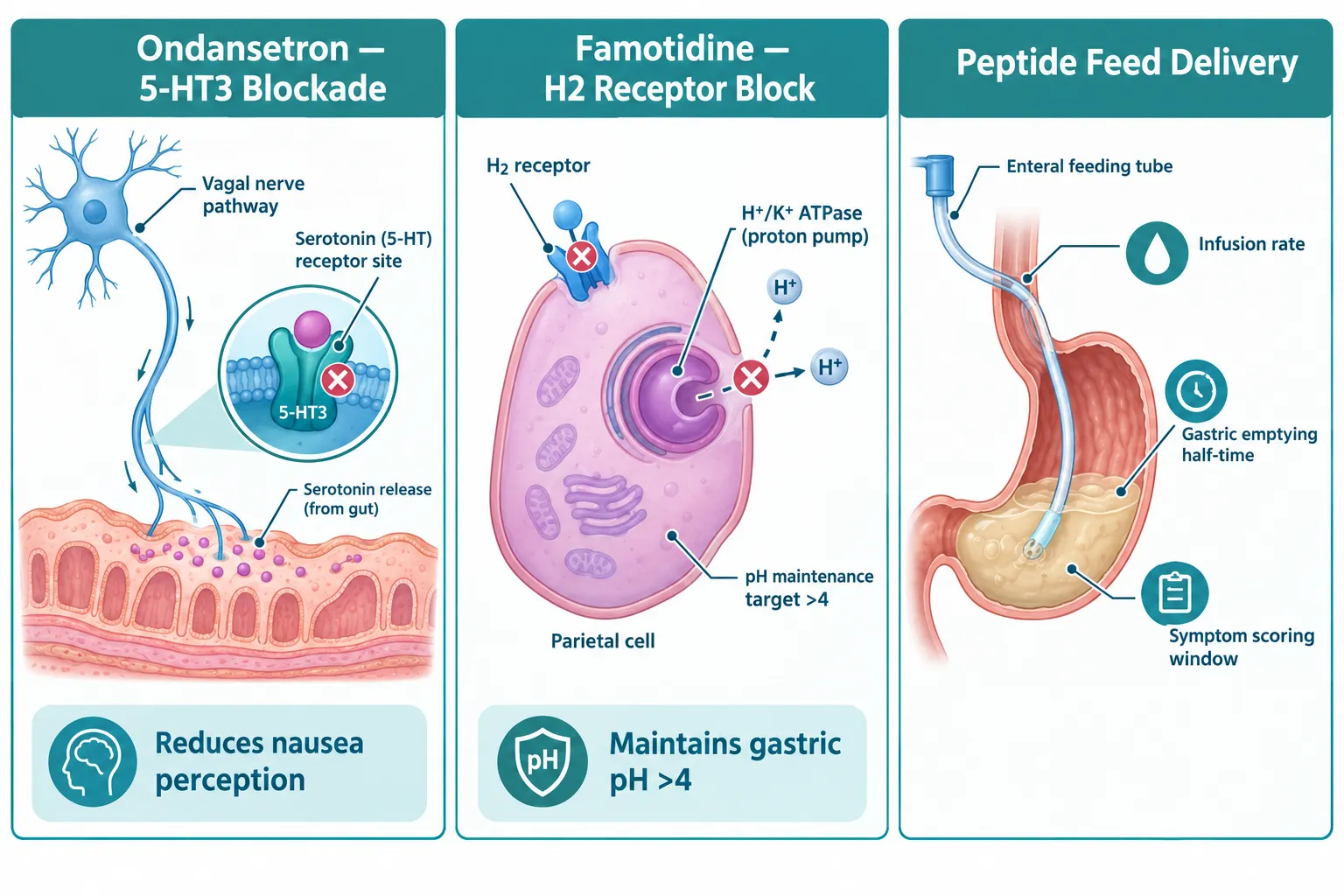
Ondansetron is a selective 5-HT3 receptor antagonist. It blocks serotonin receptors on vagal afferent nerves, reducing the gut-to-brain signaling that produces nausea and upper-GI discomfort. In a 2024 trial involving patients with delayed gastric emptying, ondansetron significantly reduced fullness (p = 0.02) and belching (p = 0.049) during a standardized enteral lipid challenge. Importantly, it did not change gastric emptying half-time. Severe nausea still occurred in approximately 32% of ondansetron subjects versus 29% on placebo.

"Ondansetron may allow patients to tolerate scheduled feeds better and report lower nausea scores, while underlying gastric emptying kinetics, and thus true nutrient delivery timing, remain unchanged."

This dissociation between symptom relief and motility has direct consequences for study design. If a trial uses patient-reported nausea as a proxy for feeding tolerance, ondansetron use will inflate the tolerance score without confirming that the peptide formula was actually absorbed on schedule. Researchers must therefore separate subjective symptom endpoints from objective delivery endpoints such as scintigraphic or breath-test gastric emptying measurements.

In chemotherapy research, a Bayesian network meta-analysis covering 16 randomized trials and more than 3,100 patients found that regimens combining an NK1 antagonist, ondansetron, and dexamethasone ranked highest for complete antiemetic response and were associated with better preservation of food intake. This positions ondansetron-based combinations as a practical tool not just for symptom control but for maintaining reliable oral and enteral intake, a prerequisite for valid nutritional outcome data.

For researchers exploring GLP-1 peptides in feeding protocols, the antiemetic coverage strategy is particularly relevant because GLP-class compounds themselves can induce nausea as an on-target effect.


Famotidine, Gastric pH Control, and the Meal-Timing Problem
Famotidine, Gastric pH Control, and the Meal-Timing Problem

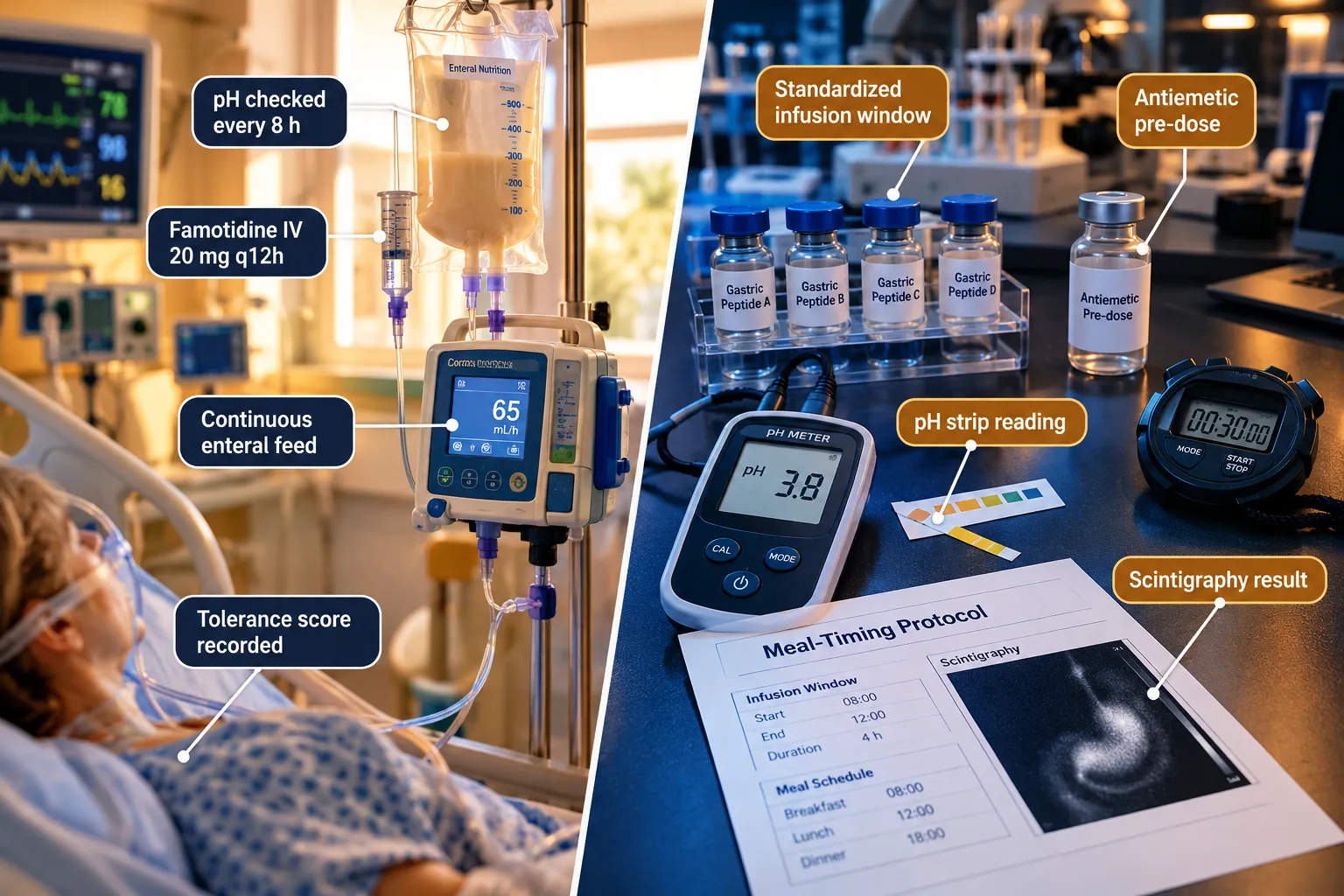
Famotidine is a histamine-2 (H2) receptor antagonist that suppresses parietal cell acid output. In pathological hypersecretory states, doses can range from 20 to 160 mg every six hours, titrated to keep basal gastric acid output below 10 mEq per hour. In standard stress-ulcer prophylaxis within critical care, the more common regimen is 20 mg intravenously every 12 hours, with pH checks every eight hours and escalation to a continuous infusion if gastric pH remains below 4 for more than 16 hours.

Meal-timing bias enters the picture in two ways:

  1. Pre-meal administration gap. Product monographs for famotidine tablets specify administration 10-15 minutes before eating to prevent food-triggered acid symptoms. In research settings, inconsistent adherence to this pre-meal window produces variation in gastric pH at the moment of feed delivery, which directly affects peptide stability, absorption kinetics, and symptom scores.

  2. Background versus meal-locked dosing. Neonatal guidelines note that famotidine drawn into enteral syringes "may be given anytime in relation to feeds," treating acid suppression as a continuous background modifier rather than a feed-synchronized event. When adult and neonatal protocols are mixed or when investigators switch between these philosophies mid-study, gastric pH at feed initiation becomes an unmeasured variable.

The practical solution is biochemical anchoring: document gastric pH at the start of each feed window, not just at scheduled dosing intervals. This converts famotidine from a source of noise into a controlled variable.

For teams working with GLP-3 peptides in feeding studies, gastric pH stability matters because peptide degradation at low pH can reduce bioavailability before absorption occurs, confounding dose-response calculations.

Additional context on specific peptide products, including purity standards relevant to research integrity, is available at the GLP-3 peptide for sale and buy GLP-3 peptide 10mg 99% pure pages for reference-grade sourcing considerations.


Building a Protocol That Controls All Three Confounders
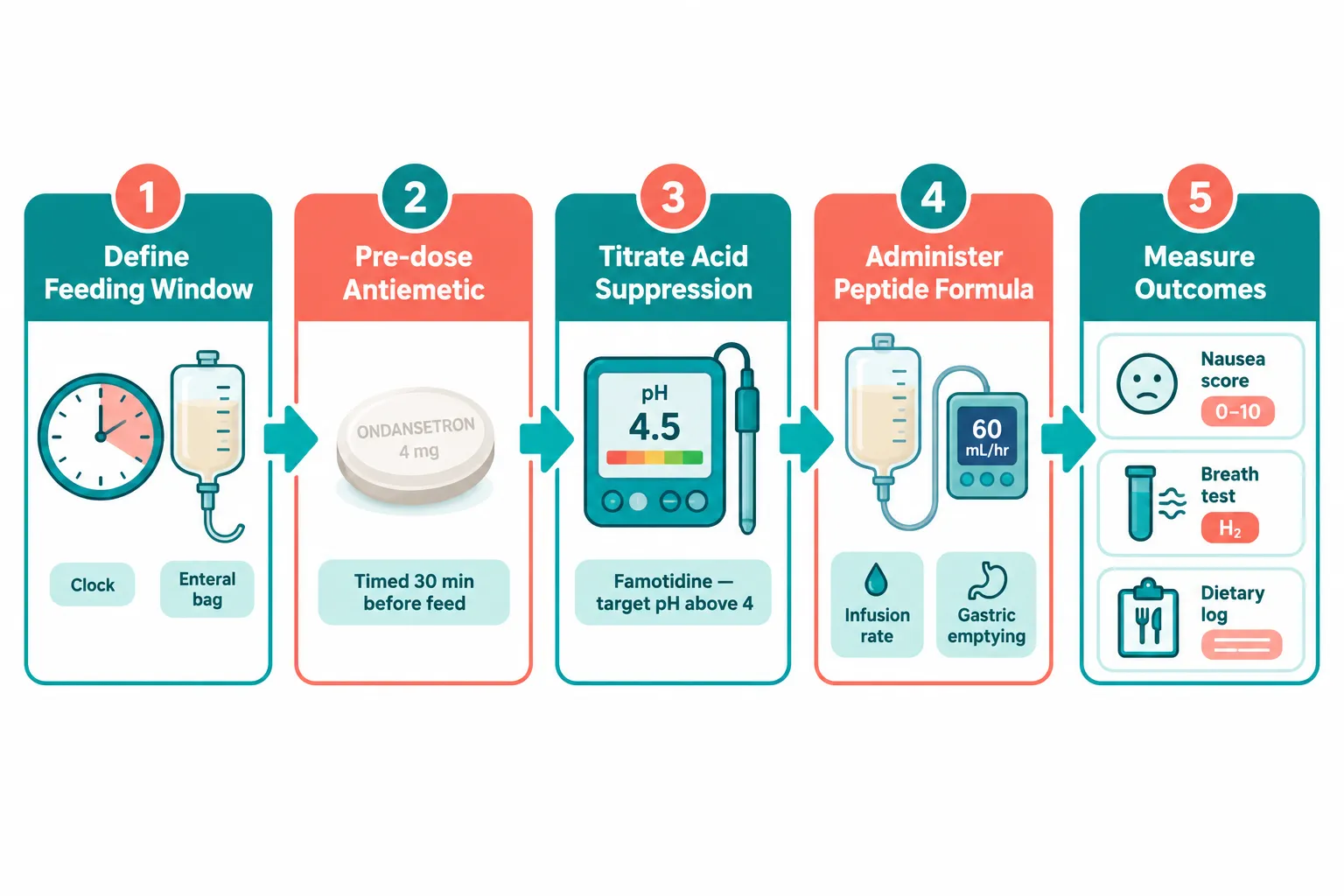
Building a Protocol That Controls All Three Confounders

Emerging best practice in ondansetron, famotidine, and peptide feeding studies integrates three elements into a single, time-anchored protocol. The table below summarizes the core design components.

Confounder Control Strategy Measurement Tool
Nausea perception Ondansetron dosed 30 min before feed initiation Validated nausea scale + separate emptying measurement
Gastric acidity Famotidine titrated to maintain pH above 4; documented at feed start Serial gastric pH strips or intragastric probe
Meal-timing bias Fixed infusion rate; pharmacologic window aligned to feed window Scintigraphy or C13 breath test; detailed dietary log

In critically ill patients receiving enteral or parenteral nutrition, these three controls overlap. ICU protocols that add 40 mg famotidine to total parenteral nutrition bags and initiate continuous infusion when pH control fails show how acid suppression can be operationalized alongside continuous feeding, a model research teams can adapt for peptide-formula trials.

Hyperemesis gravidarum data reinforce why this matters. Despite profound nausea where ondansetron is widely used, only 8-10% of affected patients receive enteral tube feeding. The absence of standardized enteral protocols in that population makes it nearly impossible to study meal timing or peptide composition systematically, a cautionary example for any research program that delays protocol standardization.

Researchers sourcing research-grade peptides for feeding investigations can review purity and formulation standards at resources such as the where to buy research-grade peptide: evaluating purity guide, which covers third-party testing criteria applicable across multiple peptide classes.


Conclusion

Controlling nausea, gastric acidity, and meal-timing bias is not optional in peptide feeding research, each variable independently alters the data. The actionable steps for 2026 protocols are clear:

  • Anchor ondansetron dosing to a defined pre-feed window and collect separate gastric emptying data so symptom relief and motility are never assumed to be the same endpoint.
  • Document gastric pH at feed initiation, not just at medication administration, to confirm that famotidine has achieved biochemical control before peptide delivery begins.
  • Standardize infusion rates and formulation composition, and use objective tools, scintigraphy, breath tests, dietary logs, to quantify true nutrient delivery timing rather than relying on scheduled times alone.
  • Align the pharmacologic window of both drugs to the feed window, treating ondansetron and famotidine as protocol variables rather than background medications.

Research teams seeking high-purity peptides with verified third-party testing for use in controlled feeding studies should also consult a peptides doctor near me resource to ensure appropriate oversight for any in-vivo investigations. With all three confounders addressed systematically, feeding studies can yield data that genuinely reflects peptide effects rather than artifacts of uncontrolled nausea, variable acidity, or inconsistent timing.

https://www.puretestedpeptides.com/wp-content/uploads/2026/10/ondansetron-famotidine-and-peptide-feeding-studies-controlling-nausea-gastric-ac.webp 1024 1536 https://www.puretestedpeptides.com/wp-content/uploads/2026/01/buy-peptides-online.jpg 2026-10-25 13:03:522026-11-13 20:07:04Ondansetron, Famotidine, and Peptide Feeding Studies: Controlling Nausea, Gastric Acidity, and Meal-Timing Bias
Ondansetron Beyond Nausea: Serotonin-Receptor Controls for Gastric Emptying, Intake, and GLP-Class Peptide Experiments

Ondansetron Beyond Nausea: Serotonin-Receptor Controls for Gastric Emptying, Intake, and GLP-Class Peptide Experiments

October 13, 2026/0 Comments/in Uncategorized/by

Blocking a single receptor subtype can change how much a person eats at a meal without meaningfully changing how fast the stomach empties, and that endpoint separation is exactly what makes ondansetron scientifically interesting far outside the antiemetic ward. This article examines the topic of Ondansetron Beyond Nausea: Serotonin-Receptor Controls for Gastric Emptying, Intake, and GLP-Class Peptide Experiments with a focus on receptor selectivity, measurable physiological endpoints, and what preclinical peptide work actually shows versus what clinical evidence supports.

Key Takeaways

  • Ondansetron is a selective 5-HT3 receptor antagonist whose effects on gastric emptying and food intake are largely independent of each other.
  • Human studies show it increases meal volume at maximum satiation without producing major changes in gastric emptying time.
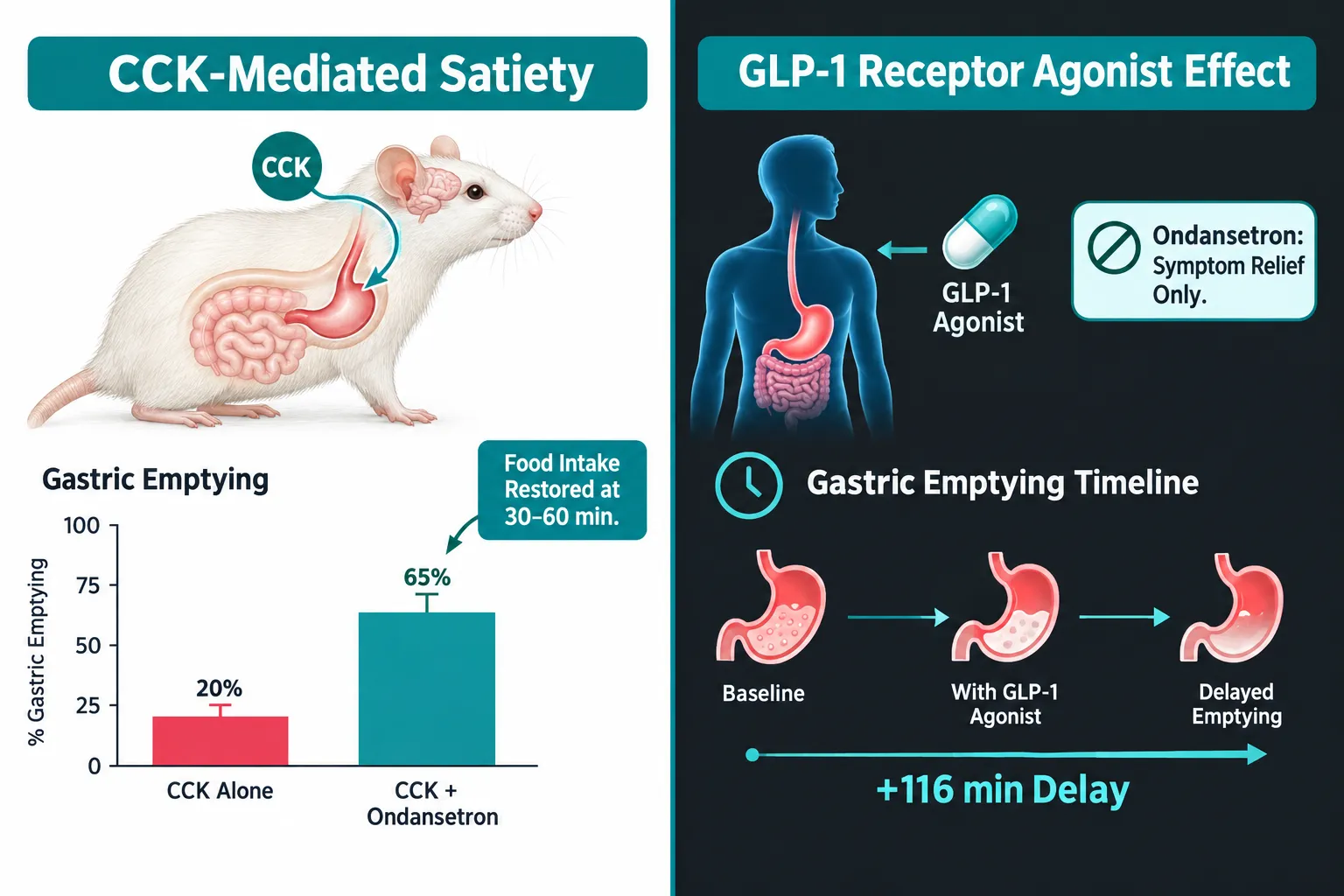
  • In animal models, 5-HT3 blockade reverses CCK-induced reductions in food intake and gastric emptying delay.
  • GLP-1 receptor agonists delay gastric emptying significantly; ondansetron manages the resulting nausea but does not correct the underlying motility disorder.
  • No high-quality clinical trials as of 2026 have established ondansetron as a modifier of GLP-1 or incretin peptide physiology.

How 5-HT3 Receptor Selectivity Creates Separated Endpoints

How 5-HT3 Receptor Selectivity Creates Separated Endpoints

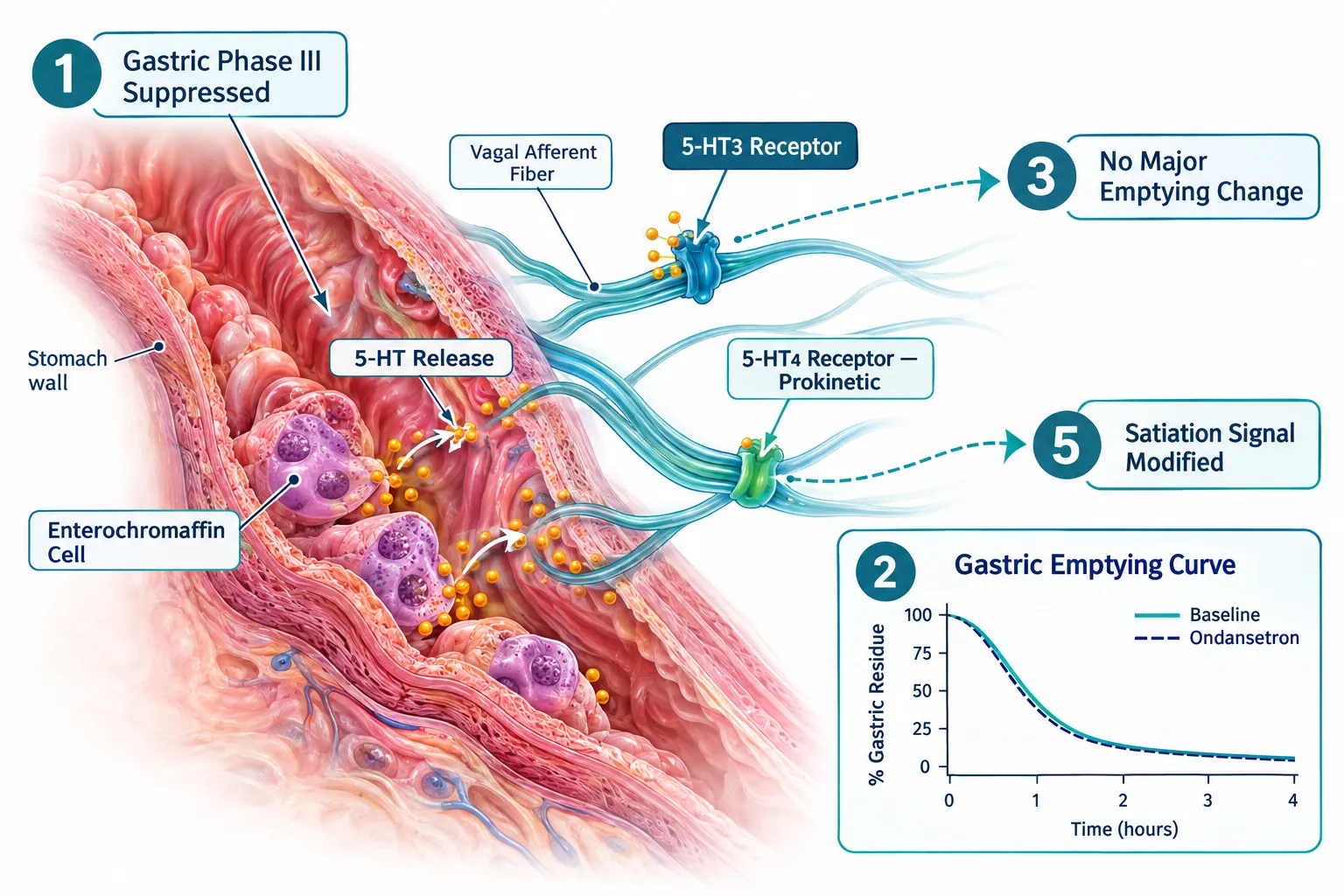
The gastrointestinal tract contains more serotonin (5-hydroxytryptamine, or 5-HT) than the entire brain. Enterochromaffin cells lining the gut wall release 5-HT in response to mechanical pressure, nutrients, and chemical signals. That serotonin then acts on multiple receptor subtypes, primarily 5-HT3 and 5-HT4, which have opposite effects on gastric motility.

5-HT4 agonists accelerate gastric emptying and are classified as prokinetics. 5-HT3 antagonists like ondansetron do something more nuanced: they suppress gastric phase III contractions of the migrating motor complex, shift intestinal motor activity, and alter satiation signaling, yet produce no significant change in overall gastric emptying time in controlled human studies.

This is the core of the "beyond nausea" story. The receptor selectivity of ondansetron separates nausea suppression from motility acceleration, and it separates satiation modulation from mechanical gastric changes. In a placebo-controlled trial, ondansetron increased the volume of liquid meal consumed at maximum satiation from roughly 784 mL to 907 mL, a statistically significant shift, without altering gastric compliance, basal tone, or fundic relaxation. The stomach was not mechanically different; the satiation signal arriving at the brain was.

"The receptor selectivity of ondansetron separates nausea suppression from motility acceleration, and satiation modulation from mechanical gastric change."

This endpoint separation matters for researchers designing peptide experiments. If a compound under study delays gastric emptying and suppresses intake, adding ondansetron can help isolate which effect is driven by 5-HT3-mediated vagal signaling versus direct mechanical slowing.


CCK Interactions and the Preclinical Case for Serotonin-Receptor Controls for Gastric Emptying, Intake, and GLP-Class Peptide Experiments

CCK Interactions and the Preclinical Case for Serotonin-Receptor Controls for Gastric Emptying, Intake, and GLP-Class Peptide

The clearest mechanistic evidence for ondansetron's "beyond nausea" role comes from cholecystokinin (CCK) research, not GLP-1 work. CCK is a gut peptide released after fat and protein ingestion; it suppresses feeding partly by slowing gastric emptying of solid meals. In rat models:

  • Ondansetron significantly attenuated CCK-induced reductions in food intake at 30 and 60 minutes post-administration.
  • It reversed CCK-induced inhibition of gastric emptying of both solid meals and nutrient loads.
  • A 5-HT3 agonist (m-chlorophenylbiguanide) reduced food intake on its own, while ondansetron blocked that effect.

These findings establish a mechanistic framework: when peptide-induced satiety is mediated through slowed gastric emptying and vagal 5-HT3 signaling, blocking 5-HT3 receptors can restore intake and motility simultaneously. The pathway runs through the vagus nerve, not through central appetite circuits directly.

What This Means for GLP-Class Peptide Research

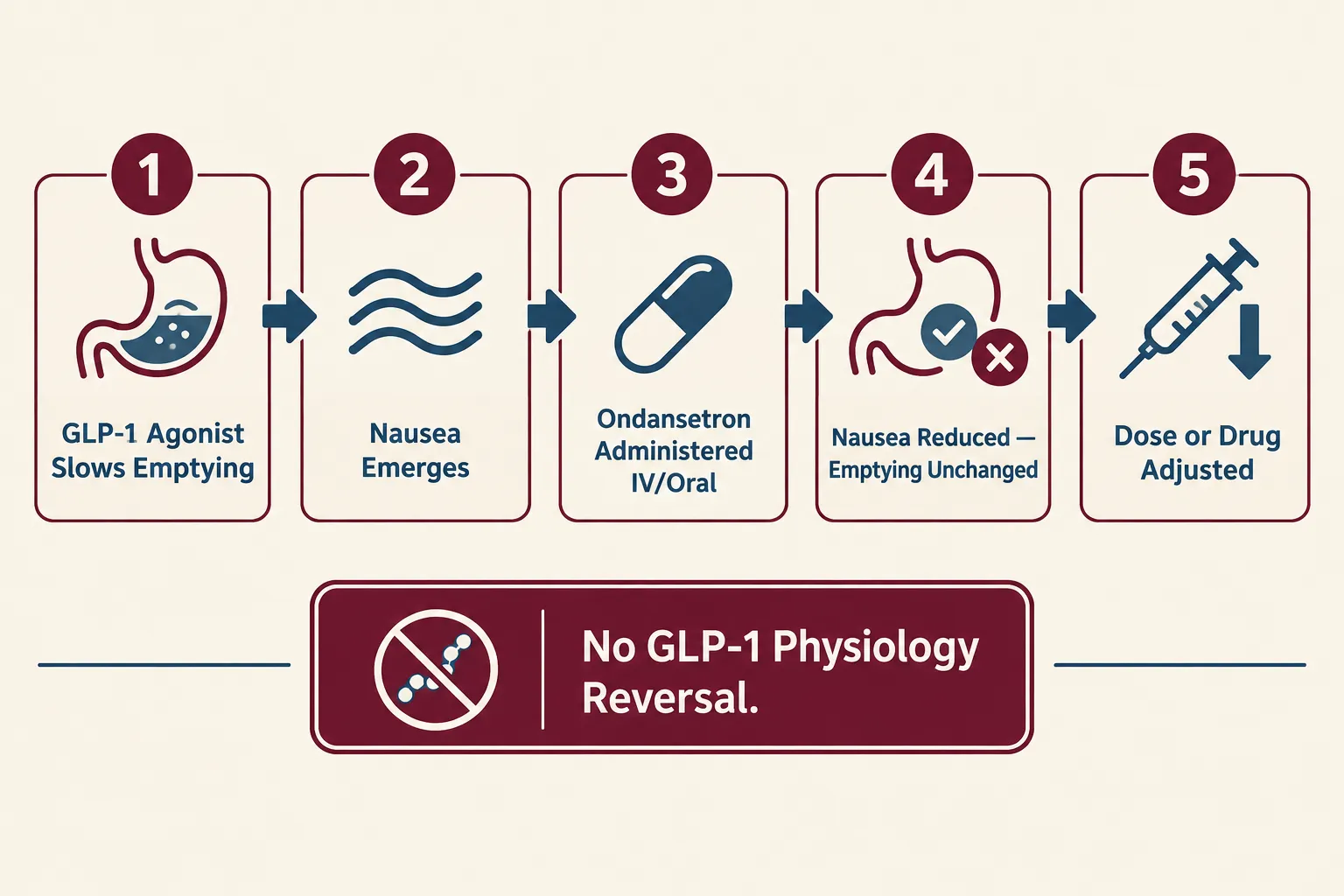
GLP-1 receptor agonists present a related but distinct picture. Short-acting agents like exenatide and lixisenatide increase gastric emptying half-time by approximately 116 minutes in clinical settings, raising aspiration risk during anesthesia and causing persistent nausea in a subset of patients. A case report of semaglutide-induced gastroparesis documented severe nausea and delayed emptying; intravenous ondansetron 4 mg every six hours improved nausea and allowed semisolid diet tolerance, but did not correct the underlying gastric emptying delay.

This is a critical distinction. The GLP-1 receptor itself drives the motility disorder. Ondansetron addresses the 5-HT3-mediated nausea signal that accompanies it, not the root cause. Current clinical reviews and guidelines treat ondansetron as adjunctive symptom control in this context, with primary management focused on dose reduction or discontinuation of the GLP-1 agent.

For researchers exploring GLP-3 peptide signaling pathways or working with GLP-3R 30mg peptide in experimental settings, understanding this receptor-level separation is essential for clean endpoint interpretation.


Clinical Limits and Experimental Opportunities in Ondansetron Beyond Nausea Research

Clinical Limits and Experimental Opportunities in Ondansetron Beyond Nausea Research

The table below summarizes what ondansetron does and does not do across key physiological endpoints, based on current evidence:

Endpoint Human Clinical Evidence Preclinical (Animal) Evidence
Gastric emptying time No significant change Accelerates; reverses drug-induced delay
Gastric compliance/tone No significant change Not well characterized
Meal volume at satiation Increases significantly Increases (CCK model)
Phase III motor activity Suppressed Suppressed
GLP-1-induced nausea Reduced (symptom control) Not established
GLP-1-induced emptying delay Not corrected Not established

The translational gap is real. Rodent studies show that ondansetron can prevent thermogenic supplement-induced gastric emptying delays and normalize food intake increases, effects blocked by 5-HT3 pretreatment. These findings are compelling for experimental design but have not moved into routine clinical protocols for GLP-1-related dysmotility.

For investigators sourcing research-grade compounds, resources on lab tested peptides and guidance on where to buy peptides can support rigorous experimental setups. Those studying mitochondrial and metabolic peptide interactions may also find value in reviewing SS-31 peptide benefits and SS-31 peptide research options for complementary mechanistic work.

No high-quality clinical trials published through 2026 have directly tested ondansetron as a regulator of GLP-1 or incretin peptide physiology. Expert consensus keeps its role squarely in symptom management while directing mechanistic and therapeutic attention toward modifying GLP-1 exposure itself, through dose adjustment, agent selection, or timing, and using established prokinetics when motility correction is the actual goal.


Conclusion

The science of Ondansetron Beyond Nausea: Serotonin-Receptor Controls for Gastric Emptying, Intake, and GLP-Class Peptide Experiments is best understood through the lens of receptor selectivity and endpoint separation. Ondansetron reliably modifies satiation signaling and suppresses nausea through 5-HT3 blockade, but it does not function as a prokinetic in humans and does not reverse GLP-1-mediated gastric slowing at the receptor level.

Actionable next steps for researchers and clinicians:

  • Use ondansetron as a pharmacological tool to isolate 5-HT3-dependent components of peptide-induced satiety in preclinical models.
  • Do not substitute it for prokinetics when gastric emptying correction is the therapeutic target.
  • In GLP-1 agonist protocols, prioritize dose management for motility issues and reserve ondansetron for symptomatic nausea relief.
  • Monitor the translational literature: the CCK and thermogenic-supplement animal data suggest 5-HT3 pathways may have untapped roles in peptide-mediated intake regulation that future trials could clarify.
  • Consult a peptides specialist when designing multi-peptide protocols that involve gastric motility endpoints.

The receptor is selective. The endpoints are separable. That precision is the opportunity.

https://www.puretestedpeptides.com/wp-content/uploads/2026/10/ondansetron-beyond-nausea-serotonin-receptor-controls-for-gastric-emptying-intak.webp 1024 1536 https://www.puretestedpeptides.com/wp-content/uploads/2026/01/buy-peptides-online.jpg 2026-10-13 13:05:032026-11-13 20:07:24Ondansetron Beyond Nausea: Serotonin-Receptor Controls for Gastric Emptying, Intake, and GLP-Class Peptide Experiments
×

Helpful Links

  • My account
  • Cart
  • Checkout
  • Refund and Returns Policy
  • Privacy Policy
  • SMS Privacy Policy
  • Login
  • My Account
  • Logout
  • About
  • Contact
  • COA / Lab Testing
  • Shipping Policy
  • Terms and Conditions
  • Research Use Disclaimer

USA Made Lab Tested Peptides

All products are sold for research, laboratory, or analytical purposes only, and are not for human consumption


Pure Tested Peptides is a chemical supplier. Pure Tested Peptides is not a compounding / chemical compounding facility as defined under 503A of the Federal Food, Drug, and Cosmetic act. Pure Tested Peptides is not an outsourcing facility as defined under 503B of the Federal Food, Drug, and Cosmetic act.

The statements made within this website have not been evaluated by the US Food and Drug Administration. The products we offer are not intended to diagnose, treat, cure or prevent any disease.

Human/Animal Consumption Prohibited. Laboratory/In-Vitro Experimental Use Only

Scroll to top Scroll to top Scroll to top