Call or Text 727-513-9780
  • Shopping Cart Shopping Cart
    0Shopping Cart
Pure Tested Peptides | America's most trusted Peptides for sale online
  • Peptides for sale
    • Oral Peptides for sale
      • Peptide Capsules for sale
      • BPC 157 Capsules 1000mcg
      • SLU-PP-332 Capsules | 1000 mcg
      • 5-Amino-1MQ 50mg Capsules
      • Tesofensine 500mcg
    • All Peptides for sale
    • Peptide Sprays
      • BPC 157 Nasal Spray Kit
      • BPC-157 TB500 Nasal Spray Kit
      • Semax Nasal Spray 10mg
      • Selank – Nasal Spray Kit – 10mg
      • Epithalon 50MG Nasal Spray Kit
      • Ipamorelin 10mg Nasal Spray
      • Klow Nasal Spray (BPC-157 + TB-500 + GHK-Cu + KPV) | 80mg
      • Hulk Nasal Spray Tesa / Ipa Blend 6/3 MG
      • Klow Nasal Spray
      • NAD + 500 mg Nasal Spray
      • PT-141 Nasal Spray Kit
    • GHRH Peptides
      • Ipa Peptides
      • CJC-1295 Peptides
        • CJC-1295 with DAC 5 mg
        • CJC-1295 without DAC 5 mg
        • CJC-1295 Ipa 10mg
      • Tesa Peptides
        • Tesa Peptide
        • Tesa 20 mg
    • GHK-Cu Peptides
      • All GHK-Cu Peptides
      • GHK-Cu 100mg
      • KLOW Peptide Blend – Buy KLOW blend online
    • BPC Peptides
      • All BPC Peptides
      • BPC-157
      • BPC-157 TB-500
      • BPC 157 capsules 1000mcg
    • SLU-PP-332 Peptides
      • All SLU-PP-332 Peptides
      • SLU-PP-332 5mg
    • GLP3 Peptides
    • PT-141 Peptides
      • PT-141 Peptides for sale
      • PT-141 10mg
      • PT-141 Nasal Spray
    • CAG Peptides
      • Lipo-C Peptide Blend
      • CAG 5mg
      • CAG 10mg
    • MOTS-C Peptides
      • MOTS-C Peptides for sale
      • MOTS-c peptide
      • MOTS-c 10mg *6 pack*
    • 5 Amino 1MQ Peptides
      • 5 Amino 1MQ Peptides for sale
      • 5-Amino-1MQ 50mg Capsules
      • 5-Amino-1MQ 5mg
    • Epithalon Peptides
      • Epithalon Peptides for sale
      • Epithalon 10mg
      • Epithalon 50mg
  • Shop
    • GLPs
      • 5-Amino-1MQ 50mg Capsules
      • 5-Amino-1MQ 5mg
      • L-Carnitine 500mg/ml
      • Tesofensine 500mcg
      • SLU-PP-332 5mg
      • MOTS-c 10mg *6 pack*
    • Epithalon & BPC Peptides
      • Epithalon 10mg
      • Epithalon 50mg
      • BPC-157
      • BPC 157 capsules 1000mcg
      • BPC-157 TB-500
      • BPC-157 TB500 Nasal Spray Kit
      • BPC 157 Nasal Spray Kit
    • BPC TB-500 & NAD+ Peptides
      • NAD+ 500 mg
      • KLOW Peptide Blend – Buy KLOW blend online
      • GLOW Peptide Blend
      • TB 500 5mg
      • BPC 157 capsules 1000mcg – Supplement
      • BPC 157 Nasal Spray Kit
      • BPC-157
      • BPC-157 TB500 Nasal Spray Kit
      • BPC-157 TB-500
      • BPC 157 capsules 1000mcg
    • LL-37 Peptide
      • LL-37 10 mg
    • MOTS-C & Selank
      • MOTS-c peptide
      • Selank 10mg
    • GHK Peptides
      • GHK-Cu 100mg
      • GLOW Peptide Blend
      • KLOW Peptide Blend – Buy KLOW blend online
  • COAs
  • Wholesale
    • Wholesale Peptides for sale
  • PTP FAQ
  • Affiliates
    • Selank Peptide: Advanced Pharmacological Mechanisms Underlying Its Anxiolytic and Nootropic Effects in Research
      • 5-Amino-1MQ Peptide: Detailed Mechanisms of NNMT Inhibition and Its Impact on Cellular Metabolism Research
        • MOTS-C Peptide: Unraveling Its Role in Mitochondrial Dynamics and Energy Metabolism Research
          • Epithalon Peptide and Telomerase Regulation: Investigating Its Impact on Cellular Senescence and Lifespan Research Models
            • GLP2-T vs GLP2 Tirz Peptide: Understanding the Naming, Mechanistic Nuances, and Research Implications for Gut Health
      • Peptides and Polypeptides in Modern Pharmacology: What Research on Metoprolol, Prednisone, and Amlodipine Reveals
        • Polypeptide Peptides vs NSAIDs: What Naproxen and Diclofenac Teach Tissue-Repair Researchers About BPC‑157 and TB‑500
          • Peptides and Polypeptides in Endocrine Pharmacology: How GLP-1, GLP-2, and GLP-3 Retatrutide Differ From Classic Drugs Like Prednisone and Amlodipine
          • 5‑Amino‑1MQ Peptide and NNMT Inhibition: How It Compares With Statins Like Atorvastatin in Adipose and Lipid Metabolism Research
      • Enclomiphene, Estrogen Receptor Signaling, and Luteinizing Phase Biology: What Hormone Researchers Should Measure
        • Mesenchymal Stem Cells, BPC‑157, and GHK‑Cu: How Tissue Repair Peptides Compare With Classic NSAIDs Like Naproxen in Injury Models
          • Peptide Calculator Use Cases Beyond Growth Hormone: Working Through GLP‑3 Retatrutide, MOTS‑c, and BPC‑157 Research Dosing
        • Polypeptide Peptides in Endocrine and Metabolic Pharmacology: Lessons From Amlodipine, Prednisone, and Metoprolol
        • Peptides Calculator for Advanced Blends: Worked Examples for Tesamorelin, CJC‑1295, and Ipamorelin Stacks
          • Peptides and Polypeptides in Human Physiology: How Molecular Size Shapes Research Applications
            • Selank Peptide: Advanced Pharmacological Mechanisms Underlying Its Anxiolytic and Nootropic Effects in Research
          • 5-Amino-1MQ Peptide: Detailed Mechanisms of NNMT Inhibition and Its Impact on Cellular Metabolism Research
            • MOTS-C Peptide: Unraveling Its Role in Mitochondrial Dynamics and Energy Metabolism Research
              • Epithalon Peptide and Telomerase Regulation: Investigating Its Impact on Cellular Senescence and Lifespan Research Models
                • GLP2-T vs GLP2 Tirz Peptide: Understanding the Naming, Mechanistic Nuances, and Research Implications for Gut Health
                  • Peptides and Polypeptides in Endocrine Pharmacology: How GLP-1, GLP-2, and GLP-3 Retatrutide Differ From Classic Drugs Like Prednisone and Amlodipine
                    • Polypeptide Peptides vs NSAIDs: What Naproxen and Diclofenac Teach Tissue-Repair Researchers About BPC‑157 and TB‑500
                      • Peptides and Polypeptides in Modern Pharmacology: What Research on Metoprolol, Prednisone, and Amlodipine Reveals
                        • 5‑Amino‑1MQ Peptide and NNMT Inhibition: How It Compares With Statins Like Atorvastatin in Adipose and Lipid Metabolism Research
                        • Enclomiphene, Estrogen Receptor Signaling, and Luteinizing Phase Biology: What Hormone Researchers Should Measure
                        • Mesenchymal Stem Cells, BPC‑157, and GHK‑Cu: How Tissue Repair Peptides Compare With Classic NSAIDs Like Naproxen in Injury Models
                        • Peptide Calculator Use Cases Beyond Growth Hormone: Working Through GLP‑3 Retatrutide, MOTS‑c, and BPC‑157 Research Dosing
                        • Polypeptide Peptides in Endocrine and Metabolic Pharmacology: Lessons From Amlodipine, Prednisone, and Metoprolol
                        • Peptides Calculator for Advanced Blends: Worked Examples for Tesamorelin, CJC‑1295, and Ipamorelin Stacks
                        • Peptides and Polypeptides in Human Physiology: How Molecular Size Shapes Research Applications
                        • Selank Peptide: Advanced Pharmacological Mechanisms Underlying Its Anxiolytic and Nootropic Effects in Research
                        • MOTS-C Peptide: Unraveling Its Role in Mitochondrial Dynamics and Energy Metabolism Research
                        • Peptides and Polypeptides in Modern Pharmacology: What Research on Metoprolol, Prednisone, and Amlodipine Reveals
                        • Peptides and Polypeptides in Endocrine Pharmacology: How GLP-1, GLP-2, and GLP-3 Retatrutide Differ From Classic Drugs Like Prednisone and Amlodipine
                        • 5-Amino-1MQ Peptide: Detailed Mechanisms of NNMT Inhibition and Its Impact on Cellular Metabolism Research
                        • Mesenchymal Stem Cells, BPC‑157, and GHK‑Cu: How Tissue Repair Peptides Compare With Classic NSAIDs Like Naproxen in Injury Models
                        • Peptide Calculator Use Cases Beyond Growth Hormone: Working Through GLP‑3 Retatrutide, MOTS‑c, and BPC‑157 Research Dosing
                        • GLP2-T vs GLP2 Tirz Peptide: Understanding the Naming, Mechanistic Nuances, and Research Implications for Gut Health
                        • Polypeptide Peptides in Endocrine and Metabolic Pharmacology: Lessons From Amlodipine, Prednisone, and Metoprolol
                        • Polypeptide Peptides vs NSAIDs: What Naproxen and Diclofenac Teach Tissue-Repair Researchers About BPC‑157 and TB‑500
                        • Peptides and Polypeptides in Human Physiology: How Molecular Size Shapes Research Applications
                        • Peptides Calculator for Advanced Blends: Worked Examples for Tesamorelin, CJC‑1295, and Ipamorelin Stacks
                        • 5‑Amino‑1MQ Peptide and NNMT Inhibition: How It Compares With Statins Like Atorvastatin in Adipose and Lipid Metabolism Research
                        • Enclomiphene, Estrogen Receptor Signaling, and Luteinizing Phase Biology: What Hormone Researchers Should Measure
                        • Epithalon Peptide and Telomerase Regulation: Investigating Its Impact on Cellular Senescence and Lifespan Research Models
                        • Best research protocol Klow blend
                        • best time to take BPC-157
                        • best time to take DSIP (Delta Sleep Inducing Peptide)
                        • best time to take CJC-1295
                        • best time to take AOD-9604
                        • best time to take Follistatin 344
                        • best time to take Ipamorelin
                        • best time to take MK-677 (Ibutamoren)
                        • best time to take Ligandrol (LGD-4033) — research compound
                        • best time to take Ostarine (MK-2866) — research compound
                        • best time to take GHK-CU
                        • best time to take TB-500
                        • best time to take MOTS-c
                        • best time to take Semax
                        • best time to take RAD-140 (Testolone) — research compound
                        • best time to take Thymosin Alpha-1
                        • best time to take PEG-MGF
                        • Biolife Plasma, Octapharma Plasma, and Research Peptides: How Plasma Donation Labs Differ From Peptide Suppliers
                        • best time to take YK-11 — research compound
                        • best time to take PT-141 (Bremelanotide)
                        • Best research protocol Klow blend
                        • 5-Amino-1MQ and MOTS-C Synergy: Metabolic Signaling, Mitochondria, and Research Design
                        • BPC-157 and TB-500: Investigating Their Combined Effects on Angiogenesis and Cellular Migration in Tissue Repair Models
                        • BPC-157 Peptide: Gut Barrier Function, Inflammation, and Tissue-Recovery Research
                        • 5‑Amino‑1MQ and MOTS‑c Synergy in Metabolic Research: Designing NNMT and Mitochondrial Biogenesis Stacks
                        • CJC-1295 with DAC vs. Without DAC: Half-Life, Release Kinetics, and Research Implications
                        • CJC‑1295 with DAC vs. Without DAC: Expanding on Half‑Life Differences Using Tesamorelin and Ipamorelin Blend Case Studies
                        • Collagen Biology and Copper‑Binding Peptides: How GHK‑Cu, Glow Blend, and Klow Blend Interact with Skin and Connective Tissue
                        • Collagen Biology and Regenerative Peptides: How GHK‑Cu, Glow Blend, and Klow Blend Affect Extracellular Matrix Research
                    • DNA, Telomeres, and Longevity Peptides: Positioning Epithalon and MOTS‑c in Genetic Aging Research
                      • Enclomiphene Citrate: serm Mechanism, Testosterone Research, and Stack Compatibility
                        • Enclomiphene vs Enclomiphene Citrate: Formulation, Bioavailability, and Research Distinctions
                        • Epithalon Peptide Research: Telomerase Activation, Aging, and Pineal Gland Function
                        • Estrogen Receptor Signaling and Enclomiphene: How Selective Modulators Compare with Classic Polypeptide Hormones
                        • GHK-Cu Peptide: Advanced Mechanisms in Extracellular Matrix Remodeling and Wound Healing Research
                        • GHK-Cu Peptide: Collagen Synthesis, Wound Repair, and Skin-Barrier Research Models
                        • GLP-1 vs GLP-3 vs GLP-2: Peptide Classification and Research Applications
                        • GLP-2 Peptide Research Guide: Gut Barrier Function, Nutrient Absorption, and Intestinal Recovery Models
                        • GLP-3 Retatrutide vs. GLP-1 Drugs: What Triple-Agonist Biology Changes in Research Models
                        • Ipamorelin and Tesamorelin Combination: Synergistic GH Secretagogue Research and Dosing Protocols
                        • GLP2 Tirz Peptide: What It Is, Why the Name Exists, and How Researchers Should Interpret It
                        • Klow Blend Peptide Nasal Spray: What the Formulation Is Trying to Do in Cognitive Research
                        • Mitochondria, NNMT Inhibition, and Peptide Modulators: Where MOTS‑c and 5‑Amino‑1MQ Fit in Cellular Energy Research
                        • MOTS-c Peptide: Mitochondrial Function, Energy Metabolism, and What Researchers Measure
                        • MOTS-c vs. 5-Amino-1MQ: Which Metabolic Research Questions Each Compound Actually Answers
                        • Nasal Spray Peptides: Bioavailability, Administration, and Semax/Selank Research Applications
                        • PT-141 Peptide Research: Mechanism of Action and Melanocortin Receptor Signaling
                        • Retatrutide for Research: Mechanism, Structure, and GLP-1/GLP-3 Dual Action
                        • Retatrutide for Obesity and Type 2 Diabetes: What the Latest Trial Data Suggest
                        • Tesofensine Peptide Research: Mechanism, Appetite Suppression, and Neuropeptide Y Pathways
  • Contact
    • Contact Customer Service
    • Text Customer Support
  • About US
  • Shop all peptides
  • Affiliate Program
    • Affiliate Signup
  • Login / Register Login / Register Page Link Login / Register Page Link
  • Click to open the search input field Click to open the search input field Search
  • Menu Menu

Tag Archive for: klow blend

Glow Blend vs Klow Blend Peptides: Ingredient Comparison and Research Applications

Glow Blend vs Klow Blend Peptides: Ingredient Comparison and Research Applications

August 20, 2026/0 Comments/in Uncategorized/by

Two peptide blends with nearly identical names are causing real confusion among researchers in 2026, and that confusion has a cost. Choosing the wrong formulation for a study protocol can skew results, waste materials, and delay timelines. The Glow Blend vs Klow Blend Peptides: Ingredient Comparison and Research Applications question is not just a naming issue; it reflects a meaningful difference in research intent, ingredient composition, and target tissue.

This article breaks down both blends side by side, explains what each is designed to study, and helps researchers make an informed decision.

Key Takeaways

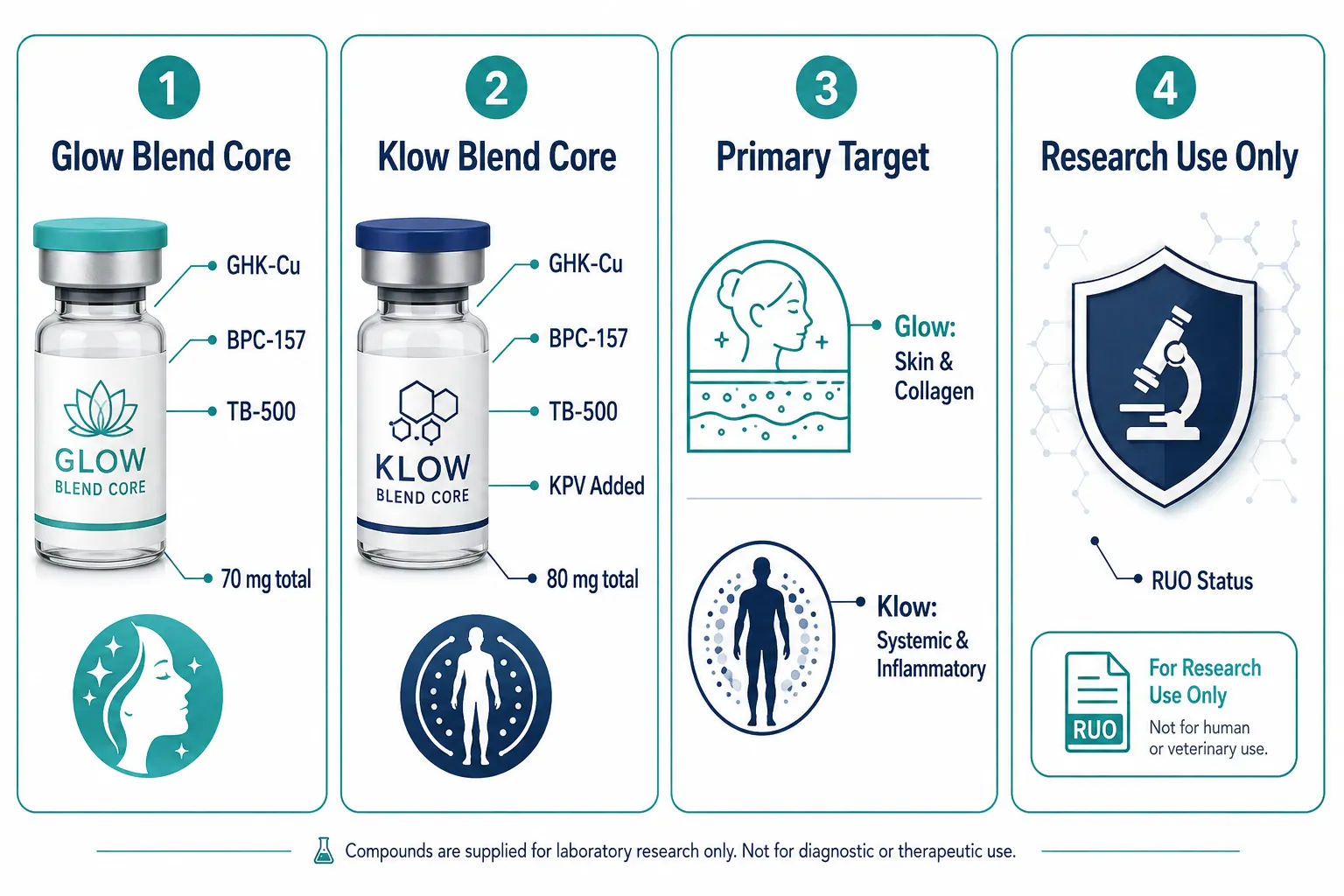
  • Glow Blend and Klow Blend share three core peptides but differ by one critical addition: KPV is exclusive to Klow Blend
  • Klow Blend carries a higher total mass (80 mg) versus Glow Blend (70 mg), reflecting the added KPV component
  • Glow Blend is positioned for skin, collagen, and tissue-repair research; Klow Blend targets systemic and inflammatory models
  • Both blends are research-use-only (RUO) compounds and are not approved therapeutic agents
  • Understanding the ingredient-level differences is essential before selecting either blend for a study protocol

What Are Glow Blend and Klow Blend?

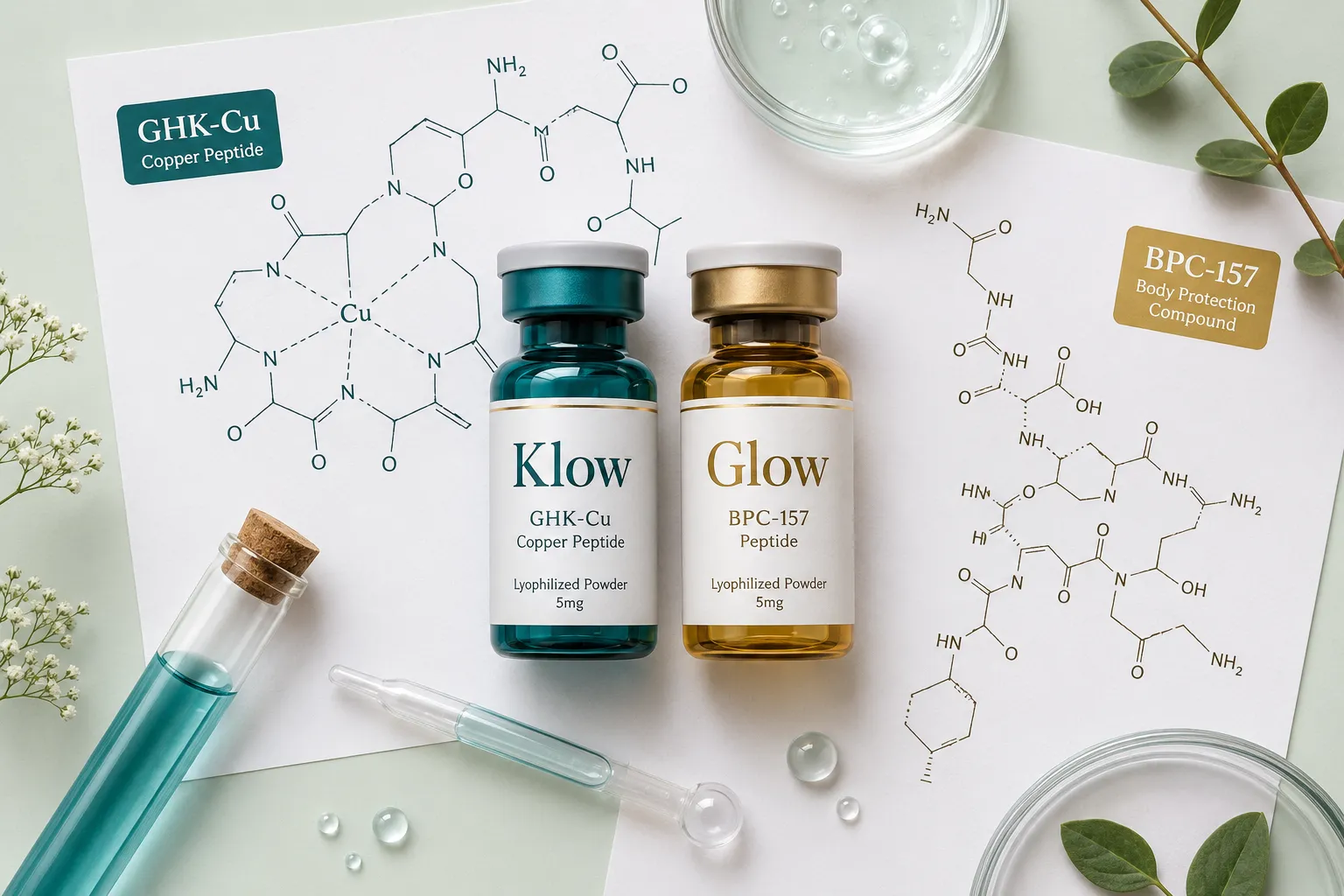
Glow Blend and Klow Blend are proprietary multi-peptide research formulations. Both contain a combination of well-documented research peptides, GHK-Cu, BPC-157, and TB-500, in comparable ratios. The core architecture of each blend is nearly identical, which is the primary source of buyer confusion.
What Are Glow Blend and Klow Blend?

The key structural difference is straightforward: Klow Blend adds KPV, a tripeptide fragment derived from alpha-melanocyte-stimulating hormone (alpha-MSH). This single addition shifts the blend's total mass from 70 mg (Glow) to 80 mg (Klow) and meaningfully expands its research scope beyond dermal applications.

Shared Core Ingredients

Ingredient Known Research Focus
GHK-Cu Collagen synthesis, wound healing, antioxidant signaling
BPC-157 Tendon repair, gut mucosal healing, angiogenesis
TB-500 Actin regulation, tissue regeneration, mobility models

All three ingredients appear in both blends at comparable ratios. Researchers already familiar with individual peptide studies, such as those exploring BDNF peptides or growth hormone secretagogue stacks, will recognize these components from adjacent research areas.

Glow Blend vs Klow Blend Peptides: Ingredient Comparison and Research Applications in Detail

The ingredient-level differences between these two blends directly determine which research applications each one fits.

Glow Blend: Skin and Collagen Research Focus

Glow Blend, at 70 mg total, is formulated with dermal and connective tissue research as its primary orientation. The combination of GHK-Cu and BPC-157 is well-suited to studies examining:

  • Collagen remodeling and extracellular matrix repair
  • Wound healing kinetics in skin tissue models
  • Fibroblast activity and dermal regeneration
  • Oxidative stress reduction in aging skin models

GHK-Cu has been studied extensively for its role in upregulating collagen and elastin gene expression. BPC-157 contributes to angiogenic signaling, which supports tissue repair at the vascular level. TB-500 rounds out the blend by addressing actin polymerization, a process relevant to cell migration during wound closure.

For researchers focused on dermatological or cosmetic science applications, Glow Blend offers a clean, targeted formulation without additional systemic variables.

Klow Blend: Systemic and Inflammatory Research Focus

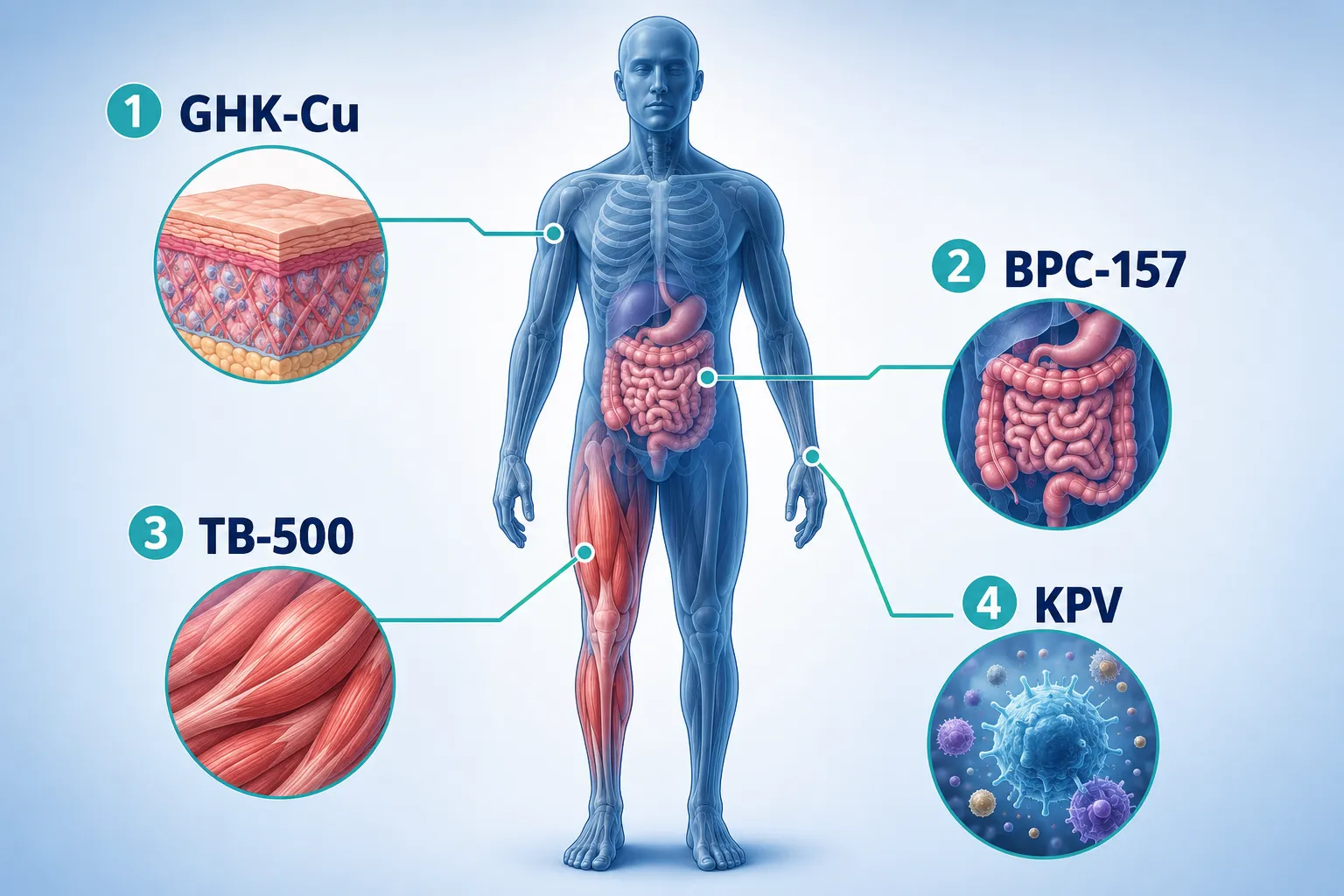
Klow Blend, at 80 mg total, builds on the same core but adds KPV, a tripeptide with documented research interest in inflammatory signaling pathways. This addition repositions the blend for multi-tissue and systemic research models.

KPV has been studied in the context of:

  • Intestinal inflammation and mucosal barrier function
  • Immune modulation via melanocortin receptor pathways
  • Skin inflammation as a secondary application
  • Systemic anti-inflammatory signaling in preclinical models

For researchers comparing intranasal or systemic peptide delivery models, the Klow Blend vs. Semax and Selank: Intranasal Nootropic Peptides resource provides useful context on how Klow fits within the broader nootropic and neuroimmune peptide landscape.

Key distinction: Glow Blend is optimized for localized tissue research. Klow Blend is designed for studies where inflammatory modulation across multiple tissue types is a variable.
Klow Blend: Systemic and Inflammatory Research Focus

Regulatory Status, Sourcing, and Research Considerations

Both Glow Blend and Klow Blend carry research-use-only (RUO) status. Neither is an approved therapeutic, and neither should be represented as such. This classification is consistent with how the broader peptide research market operates in 2026.

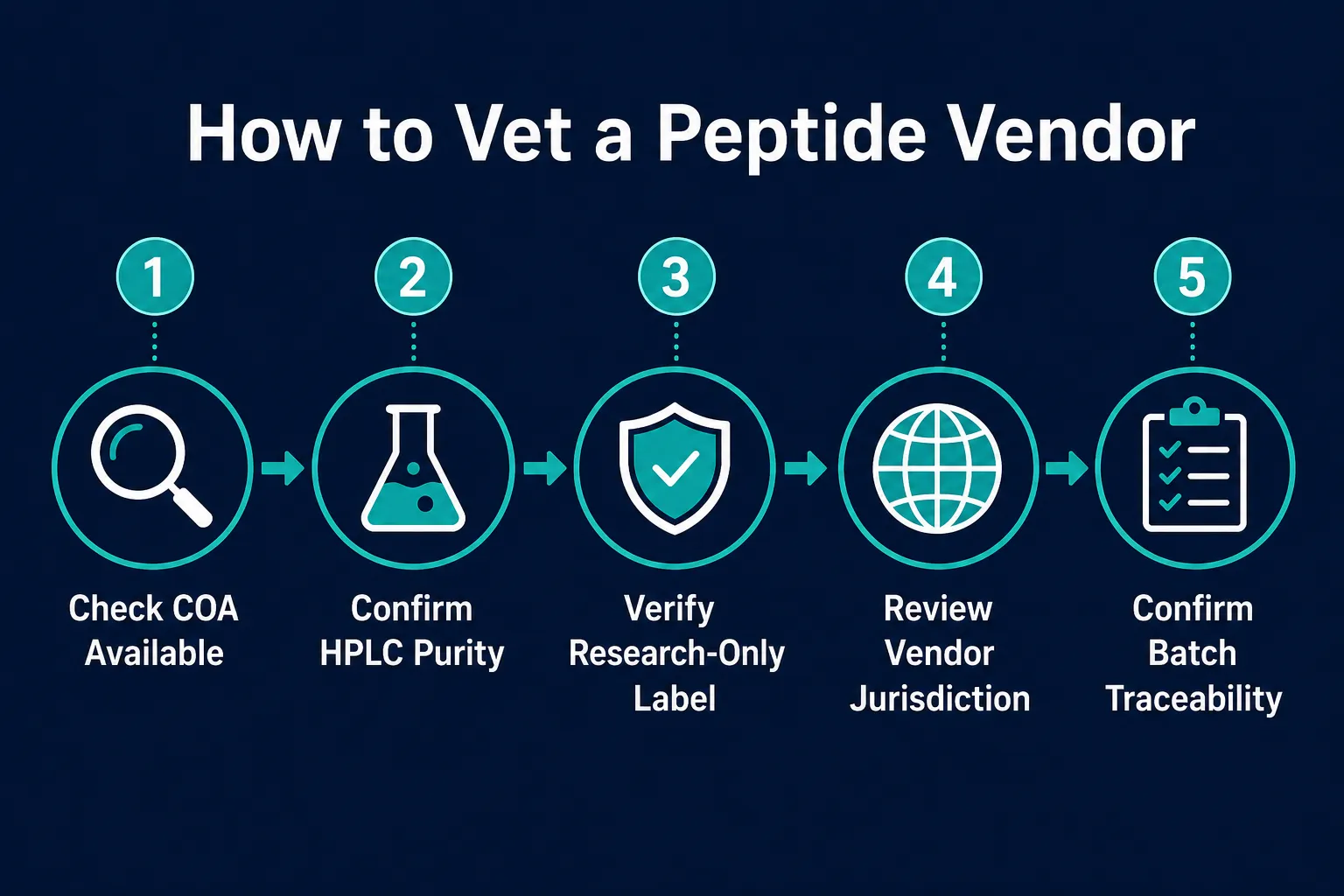
Researchers sourcing either blend should prioritize vendors that provide:

  • Certificate of Analysis (COA) from third-party laboratories
  • Documented purity levels above 98%
  • Accurate mass verification per vial

Understanding peptide COA verification is a foundational step before incorporating any blend into a formal study. Similarly, researchers should review peptide measurement standards to ensure accurate reconstitution and dosing in experimental protocols.

For those building broader metabolic or regenerative research panels, the top 5 research peptides for metabolic health guide offers useful comparative context for positioning either blend within a wider stack.

Choosing Between the Two Blends

The decision framework is relatively direct:

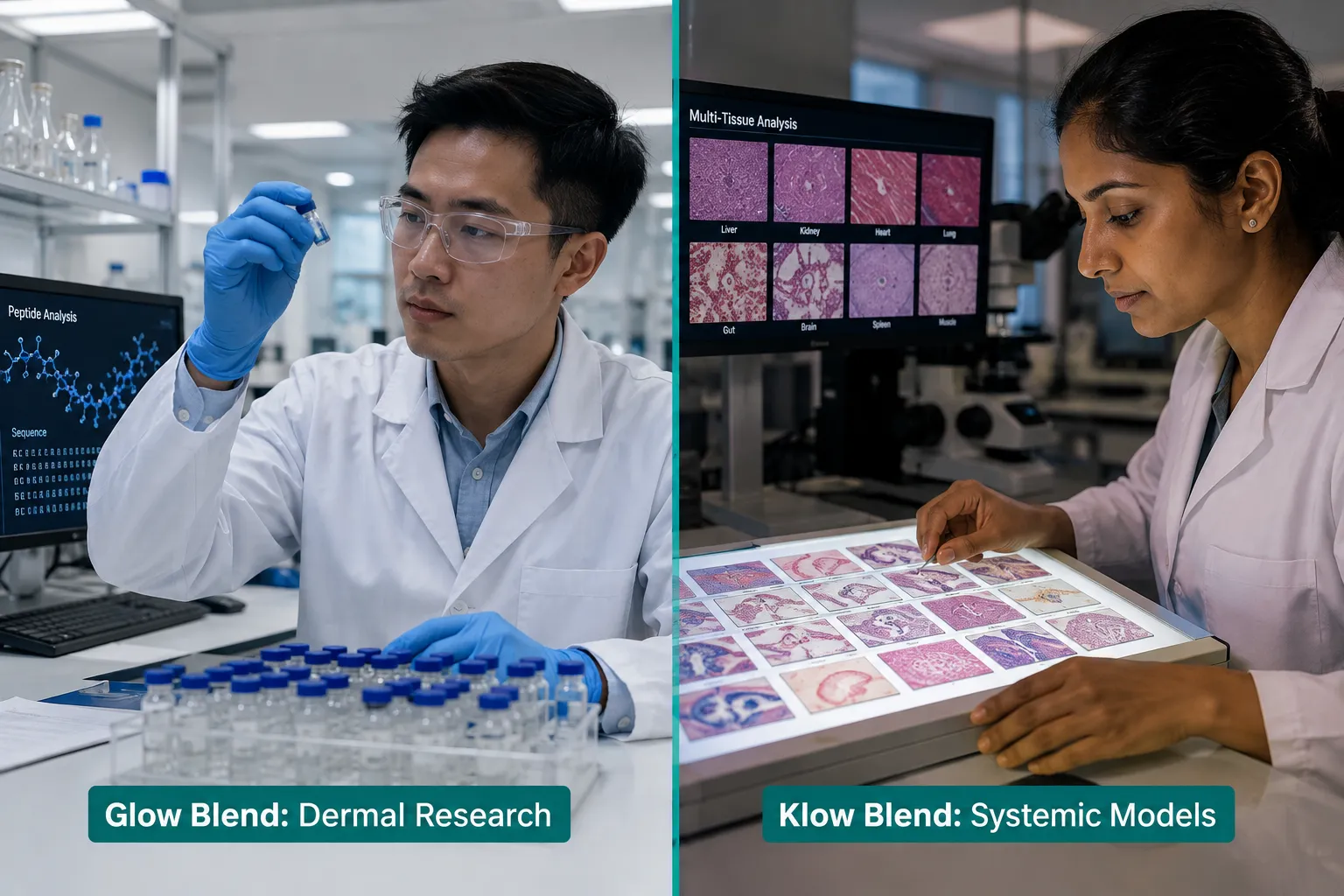
  • Choose Glow Blend when the study is focused on dermal tissue, collagen dynamics, or wound repair, and when introducing an inflammatory variable (KPV) would confound results
  • Choose Klow Blend when the study requires an anti-inflammatory component, involves gut or immune tissue models, or is designed to assess multi-system responses

Researchers also exploring growth hormone secretagogue combinations, such as those detailed in the Tesamorelin CJC-1295 Ipamorelin 12mg Blend dosage guide, may find that either blend can serve as a complementary formulation depending on the study's primary endpoint.
Choosing Between the Two Blends

Conclusion

The Glow Blend vs Klow Blend Peptides: Ingredient Comparison and Research Applications comparison ultimately comes down to one ingredient and one research intent. Both blends share a strong core of GHK-Cu, BPC-157, and TB-500. Klow Blend adds KPV, raises the total mass to 80 mg, and opens the door to inflammatory and systemic research models that Glow Blend is not designed to address.

Actionable next steps for researchers:

  1. Define the primary tissue target and whether inflammatory modulation is a study variable before ordering
  2. Request COA documentation from any vendor and verify third-party purity testing
  3. Review reconstitution and measurement protocols specific to multi-peptide blends
  4. Cross-reference with adjacent research literature on individual components before designing dosing protocols
  5. Consult the where to buy peptides resource to identify vendors with verified RUO-grade supply chains

Naming confusion between these two blends is real, but the underlying science is clear. Matching the formulation to the research question is the most important step any investigator can take before beginning a study.

https://www.puretestedpeptides.com/wp-content/uploads/2026/08/glow-blend-vs-klow-blend-peptides-ingredient-comparison-and-research-application.webp 1024 1536 https://www.puretestedpeptides.com/wp-content/uploads/2026/01/buy-peptides-online.jpg 2026-08-20 13:04:592026-08-20 13:04:59Glow Blend vs Klow Blend Peptides: Ingredient Comparison and Research Applications
Where to Buy Glow Blend, Klow Blend, and Klow Nasal Peptide Sprays: Lab-Grade vs Cosmetic-Grade Options

Where to Buy Glow Blend, Klow Blend, and Klow Nasal Peptide Sprays: Lab-Grade vs Cosmetic-Grade Options

August 17, 2026/0 Comments/in Uncategorized/by

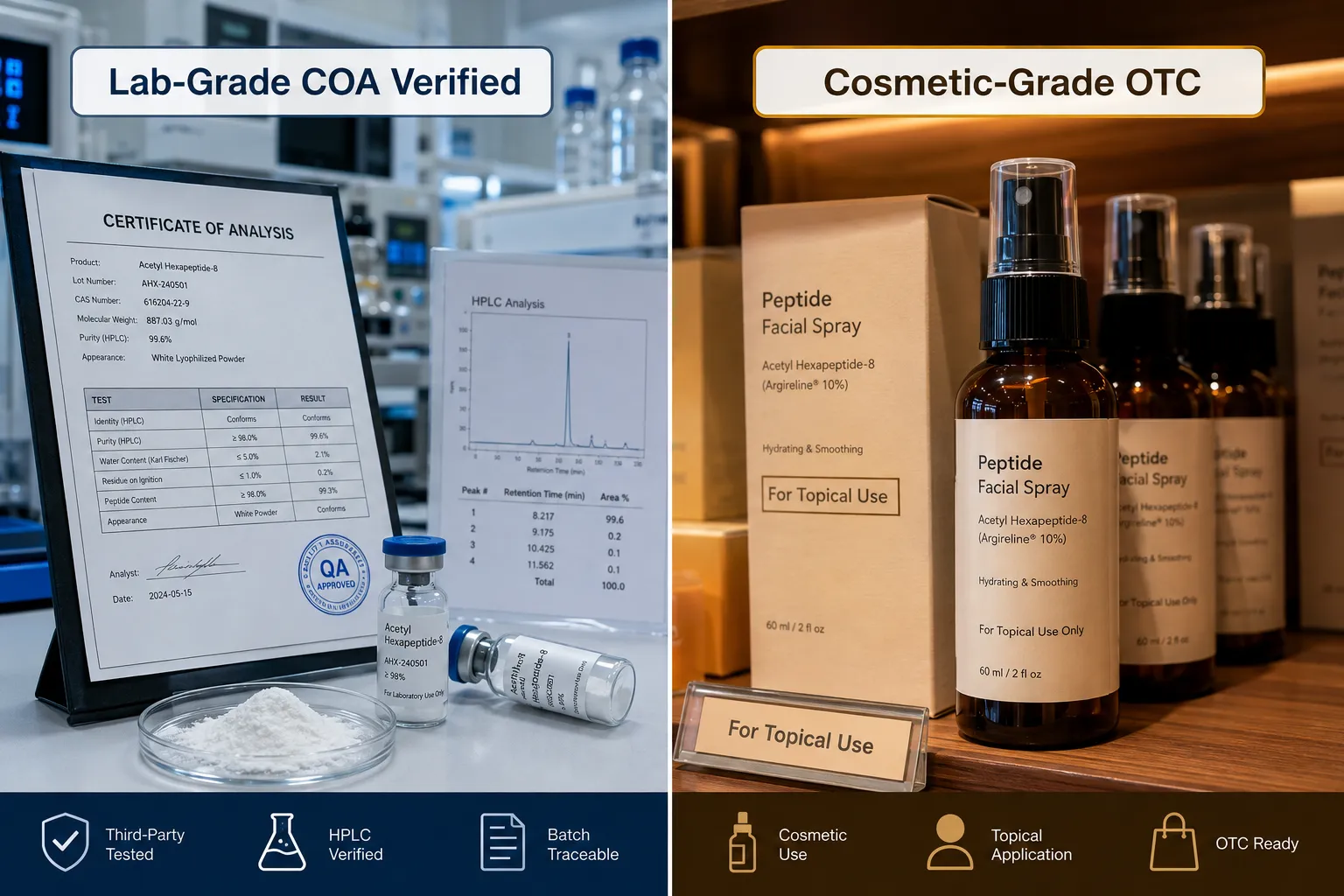
Fewer than 15% of peptide products sold online in 2026 carry independently verified purity data, yet demand for nasal peptide sprays like Glow Blend and Klow Blend has surged sharply across research and wellness communities. For anyone navigating where to buy Glow Blend, Klow Blend, and Klow Nasal Peptide Sprays: Lab-Grade vs Cosmetic-Grade Options, the distinction between a rigorously tested research vial and an unverified cosmetic spray is not a minor detail. It is the single most important factor in sourcing decisions.

Key Takeaways

  • Glow Blend and Klow Blend are proprietary multi-peptide research formulations, not FDA-approved or peer-reviewed products.
  • Lab-grade versions come with Certificate of Analysis (COA) documentation and HPLC purity data; cosmetic-grade versions typically do not.
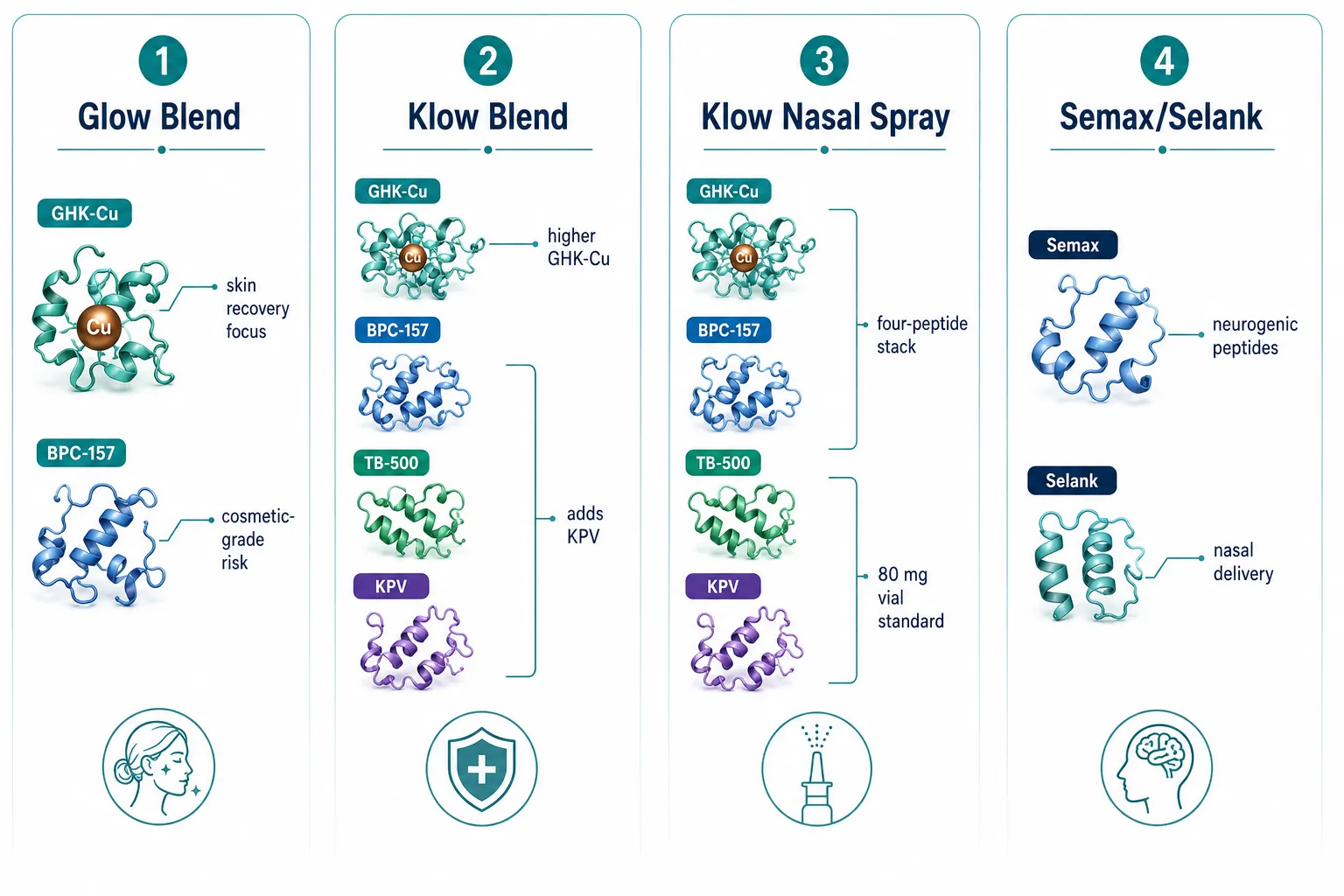
  • Klow Blend is often described as "Glow plus KPV with higher GHK-Cu concentration," making it a more complex research stack.
  • US and international vendors standardize Klow Blend at 80 mg lab-grade vials; cosmetic sprays vary widely in concentration.
  • All components in these blends remain unapproved for human therapeutic use and are sold strictly for research purposes.

Understanding Glow Blend and Klow Blend Formulations

Understanding Glow Blend and Klow Blend Formulations

Glow Blend is a multi-peptide formulation centered on skin and recovery-focused peptides, most commonly including GHK-Cu (copper peptide) and BPC-157. It is positioned by research vendors as a compound of interest for tissue repair and dermal research. Klow Blend extends this profile by adding KPV (a tripeptide fragment of alpha-MSH) and increasing the GHK-Cu concentration. Expert commentary from August 2026 consistently frames Klow as "Glow plus KPV, higher GHK-Cu", a more targeted stack for researchers studying inflammatory response and skin-barrier mechanisms.

The Klow Nasal Peptide Spray delivers this four-peptide stack via intranasal administration. Nasal delivery is chosen by researchers because it bypasses first-pass metabolism and allows faster systemic absorption compared to oral routes. Vendors such as Nova Labs, Research Peptides Europe, and PeptidePowerEU (EU-focused suppliers) have standardized their lab-grade Klow Blend offerings at 80 mg vials with full batch documentation.

It is critical to note that "Klow Blend" carries no regulatory recognition and no peer-reviewed clinical classification as of mid-2026. It is a proprietary research concept. Researchers and clinicians must treat it accordingly.

Comparison: Glow Blend vs Klow Blend

Feature Glow Blend Klow Blend
Core peptides GHK-Cu, BPC-157 GHK-Cu (higher), BPC-157, KPV
Primary research focus Skin recovery, tissue repair Inflammation, skin barrier, recovery
Standard vial size Varies by vendor 80 mg (US/international standard)
Nasal spray format Available (cosmetic risk) Yes, lab-grade framing
COA typically included Lab-grade only Lab-grade only

Lab-Grade vs Cosmetic-Grade: The Core Distinction

Lab-Grade vs Cosmetic-Grade: The Core Distinction

The phrase "lab-grade" in the peptide market refers to products manufactured under controlled conditions, tested by third-party laboratories, and supplied with a peptide COA (Certificate of Analysis). A genuine COA includes HPLC purity data, mass spectrometry confirmation, and batch-specific results. Without this documentation, there is no reliable way to confirm what is actually in the vial.

Cosmetic-grade nasal sprays occupy a legally ambiguous space. Glow nasal sprays marketed for "skin radiance" or "healing recovery" blur the line between research compounds and consumer wellness products. These products may use the same peptide names but offer no COA, no batch traceability, and no standardized concentration. The risk of underdosing, overdosing, or receiving a contaminated product increases significantly.

"A COA is not a marketing badge, it is the minimum evidence standard for any research-grade peptide purchase."

Researchers sourcing Semax, Selank, or complex blends like Glow and Klow should apply the same verification standard across all nasal peptide formats. For context on how rigorous sourcing applies to other peptide categories, the guide to where to buy SS31 and Epithalon online outlines the same COA-first framework.

Key markers of a lab-grade supplier:

  • Third-party HPLC and mass spec data per batch
  • Downloadable COA with lot number
  • "For research use only" labeling
  • Transparent manufacturing location
  • No therapeutic or cosmetic claims

Where to Buy Glow Blend, Klow Blend, and Klow Nasal Peptide Sprays: Lab-Grade vs Cosmetic-Grade Options

Where to Buy Glow Blend, Klow Blend, and Klow Nasal Peptide Sprays: Lab-Grade vs Cosmetic-Grade Options

Sourcing these compounds responsibly requires understanding where to buy Glow Blend, Klow Blend, and Klow Nasal Peptide Sprays across lab-grade vs cosmetic-grade options, and knowing which vendor categories to prioritize or avoid.

Lab-Grade Research Vendors (Recommended for Researchers)

US-based research peptide suppliers and EU-focused vendors including Nova Labs, Research Peptides Europe, and PeptidePowerEU have emerged as primary sources for verified Klow Blend in 2026. These vendors provide:

  • 80 mg standardized vials for Klow Blend
  • Full peptide COA verification with downloadable batch data
  • Research-only labeling with no therapeutic claims
  • Lyophilized powder format for stability

For researchers already familiar with growth hormone-related peptide blends, vendors offering products like the Tesamorelin CJC1295 Ipamorelin 12mg Blend typically apply the same documentation standards to Glow and Klow formulations. This consistency in quality control is a positive signal when evaluating a new supplier. Those seeking higher-dose configurations may also review the Tesamorelin CJC1295 Ipamorelin 12mg Blend Dosage140 as a benchmark for how reputable vendors structure multi-peptide research products.

Cosmetic and Wellness Channels (Use with Caution)

Cosmetic-grade Glow and Klow nasal sprays appear on wellness marketplaces, beauty retailers, and some compounding pharmacy-adjacent platforms. These products are often marketed as "radiance recovery" or "healing peptide therapy." They lack the documentation standards of lab-grade sources and should not be used in formal research contexts.

Nasal Peptide Sprays: Semax and Selank Context

Researchers comparing Glow and Klow to established nasal peptide formats should review the comparative research on Semax and Selank peptides, neurogenesis, and synaptic plasticity for a benchmark on how intranasal peptide delivery is studied. Semax and Selank have a longer research history and provide a useful reference point for evaluating newer nasal spray formulations.

For broader context on multi-peptide research sourcing, the top 5 research peptides for metabolic health buyer's guide covers vendor evaluation criteria applicable across peptide categories.

Regulatory and Safety Positioning

All components in Glow Blend, Klow Blend, and Klow Nasal Peptide Sprays remain unapproved by the FDA and equivalent regulatory bodies as of August 2026. They are not approved for human therapeutic use, diagnosis, or treatment. Every legitimate lab-grade supplier labels these products strictly for in vitro or preclinical research use only. Any vendor making health claims or omitting this labeling is a red flag.

Conclusion

Navigating where to buy Glow Blend, Klow Blend, and Klow Nasal Peptide Sprays: Lab-Grade vs Cosmetic-Grade Options comes down to one non-negotiable standard: documentation. Lab-grade suppliers provide COA data, batch traceability, and research-only labeling. Cosmetic-grade channels offer convenience but sacrifice the verification that research integrity demands.

Actionable next steps for researchers in 2026:

  1. Request a downloadable COA with HPLC data before purchasing any Glow or Klow formulation.
  2. Confirm the vendor uses "research use only" labeling, not cosmetic or therapeutic claims.
  3. Cross-reference batch numbers against the supplier's published documentation.
  4. Treat Klow Blend as a four-peptide research stack requiring the same rigor as any complex multi-peptide formulation.
  5. Avoid any nasal peptide spray that cannot provide independent third-party purity verification.

The peptide research space moves quickly, but quality standards do not change. Verified sourcing is the foundation of credible research outcomes.

https://www.puretestedpeptides.com/wp-content/uploads/2026/08/where-to-buy-glow-blend-klow-blend-and-klow-nasal-peptide-sprays-lab-grade-vs-co-1.webp 1024 1536 https://www.puretestedpeptides.com/wp-content/uploads/2026/01/buy-peptides-online.jpg 2026-08-17 13:05:172026-08-17 13:05:17Where to Buy Glow Blend, Klow Blend, and Klow Nasal Peptide Sprays: Lab-Grade vs Cosmetic-Grade Options
GHK-Cu vs Glow Blend vs Klow Blend: What Each Copper- and Skin-Focused Formula Is Used For in Research

GHK-Cu vs Glow Blend vs Klow Blend: What Each Copper- and Skin-Focused Formula Is Used For in Research

August 12, 2026/0 Comments/in Uncategorized/by

Copper peptides have generated more than three decades of peer-reviewed attention, yet researchers in 2026 still encounter significant confusion when supplier catalogs list "GHK-Cu," "Glow Blend," and "Klow Blend" as separate SKUs. These are not interchangeable names for the same compound. Understanding the compositional differences, and the distinct experimental goals each formula serves, is essential before designing any copper- or skin-focused research protocol.

This article breaks down GHK-Cu vs Glow Blend vs Klow Blend: What Each Copper- and Skin-Focused Formula Is Used For in Research, covering composition, proposed mechanisms, and the practical reasons blend naming drives search demand among researchers.

Key Takeaways

  • GHK-Cu is a single-ingredient tripeptide-copper complex with a well-characterized research profile focused on skin remodeling and wound healing.
  • Glow Blend combines GHK-Cu with complementary skin-focused peptides to address multiple dermal targets simultaneously in a single formulation.
  • Klow Blend incorporates GHK-Cu alongside peptides studied for hair follicle support and scalp health, targeting a different tissue compartment.
  • Blend naming creates search demand because researchers seek pre-combined formulas that reduce preparation complexity in multi-peptide studies.
  • All three formulas are intended for research use only and are not approved for human therapeutic application.

Key Takeaways

What Is GHK-Cu and Why Does It Anchor Every Comparison

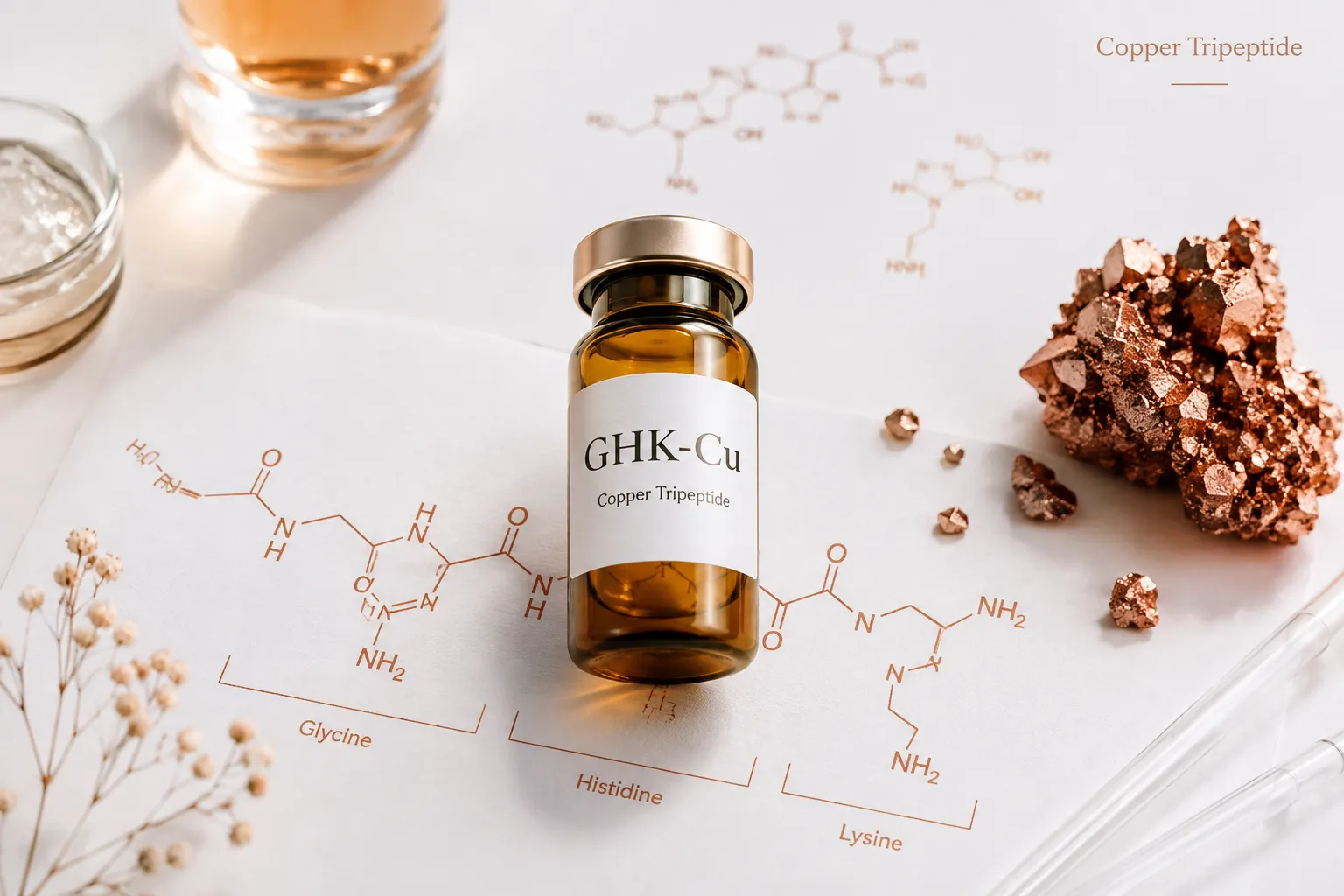
GHK-Cu (glycyl-L-histidyl-L-lysine copper complex) is a naturally occurring tripeptide first isolated from human plasma. Its molecular structure, three amino acids chelated to a copper(II) ion, gives it a high affinity for copper transport across biological membranes.

Core research areas for GHK-Cu include:

  • Collagen and elastin synthesis stimulation
  • Matrix metalloproteinase (MMP) regulation
  • Antioxidant gene expression
  • Wound contraction and tissue remodeling
  • Anti-inflammatory signaling pathways

Decades of in vitro and animal studies have documented GHK-Cu's ability to upregulate genes associated with skin repair. A landmark review by Pickart and Margolina (2018) catalogued over 4,000 human genes modulated by GHK-Cu, positioning it as one of the most studied tripeptides in dermatological research.

For researchers sourcing this compound independently, the GHK-Cu peptide purchase and copper peptide research sourcing guide provides purity benchmarks and quality criteria relevant to experimental design.

Because GHK-Cu is a single active ingredient, researchers can isolate its effects cleanly. This is its primary advantage over blended formulas when the experimental goal is mechanistic clarity.

How Glow Blend and Klow Blend Differ From Single-Ingredient GHK-Cu

When researchers move beyond single-compound studies, pre-formulated blends offer a different value proposition. The question in GHK-Cu vs Glow Blend vs Klow Blend: What Each Copper- and Skin-Focused Formula Is Used For in Research becomes one of experimental scope rather than ingredient quality.

Glow Blend: A Multi-Peptide Skin Remodeling Formula

Glow Blend is a pre-combined formulation that pairs GHK-Cu with additional peptides targeting complementary aspects of dermal biology. The blend is designed for research models where investigators want to assess synergistic effects across multiple skin-repair pathways in a single administration.

Typical research applications for Glow Blend:

  • Photoaging and UV-damage repair models
  • Collagen density studies in aged dermal tissue
  • Comparative efficacy trials against single-ingredient GHK-Cu controls
  • Multi-target anti-inflammatory skin protocols

The rationale for bundling is straightforward: skin aging involves simultaneous degradation of collagen, hyaluronic acid scaffolding, and vascular support structures. A single peptide addresses only one node of that network. Glow Blend allows researchers to probe whether combined peptide delivery produces additive or synergistic outcomes.

Klow Blend: Targeting Hair Follicle and Scalp Research Models

Klow Blend shifts the tissue target from dermal layers to the pilosebaceous unit. While it retains GHK-Cu as a core component, the additional peptides in Klow Blend are selected for their proposed roles in follicle cycling, scalp microcirculation, and keratinocyte activity.

Typical research applications for Klow Blend:

  • Androgenic alopecia models in rodent studies
  • Hair follicle miniaturization reversal protocols
  • Scalp inflammation and sebaceous gland research
  • Delivery vehicle comparisons (topical vs. nasal spray)

Notably, Klow Blend has also been studied in nasal delivery formats. Researchers interested in that delivery route can review research-use nasal spray peptide comparisons including Klow nasal for cognitive and anxiolytic models for context on how the same blend behaves across different administration routes.

For a comprehensive overview of both blends side by side, the Glow and Klow peptide blends product page details current formulation compositions relevant to research procurement.

Klow Blend: Targeting Hair Follicle and Scalp Research Models

Comparing Research Goals Across All Three Formulas

The table below summarizes the key distinctions that define the GHK-Cu vs Glow Blend vs Klow Blend comparison for research planning purposes.

Parameter GHK-Cu Glow Blend Klow Blend
Ingredient count Single Multi-peptide Multi-peptide
Primary tissue target Dermis / wound sites Dermis / photoaging Hair follicle / scalp
Best for Mechanistic isolation Synergy studies Follicle cycling models
Delivery routes studied Topical, subcutaneous Topical Topical, nasal
Experimental complexity Lower Moderate Moderate-High

"Single-ingredient studies establish mechanism. Multi-ingredient blends test real-world synergy. Both are necessary for a complete research picture."

Researchers building a broader skin and tissue recovery protocol may also consider pairing copper peptide work with synergistic compounds. The Skin Repair Stack combining BPC-157, TB-500, and GHK-Cu represents one such multi-compound research configuration.

For foundational context on how peptide structure influences experimental outcomes, the Peptides 101 guide for research-use buyers covers structure-mechanism relationships applicable across all three formulas discussed here.

Why Blend Naming Drives Search Demand in Peptide Research

The commercial naming of "Glow Blend" and "Klow Blend" is not arbitrary. It solves a practical problem for researchers: preparation complexity. Sourcing, weighing, and combining multiple peptides individually introduces compounding error at each step. Pre-formulated blends reduce that variability.

From an SEO and market perspective, blend names also signal intent. A researcher searching "Klow Blend" is specifically interested in the hair-and-scalp application stack, not a general copper peptide inquiry. This search specificity is why understanding GHK-Cu vs Glow Blend vs Klow Blend: What Each Copper- and Skin-Focused Formula Is Used For in Research matters beyond academic curiosity, it directly shapes how researchers find and evaluate the right compound for their model.

Researchers exploring broader peptide categories alongside copper-focused compounds may find value in the overview of polypeptide peptides from collagen and hormones to advanced research compounds for additional structural context.

Why Blend Naming Drives Search Demand in Peptide Research

Conclusion

The distinction between GHK-Cu, Glow Blend, and Klow Blend is fundamentally a question of experimental scope and tissue targeting. GHK-Cu delivers mechanistic precision as a single-ingredient copper peptide with a robust published literature. Glow Blend expands that scope into multi-pathway dermal remodeling research. Klow Blend redirects the focus toward follicle biology and scalp tissue, with additional delivery format flexibility.

Actionable next steps for researchers:

  1. Define the primary tissue target (dermis vs. follicle) before selecting a formula.
  2. Use single-ingredient GHK-Cu when mechanistic isolation is the priority.
  3. Select Glow Blend or Klow Blend when synergistic multi-peptide effects are the hypothesis.
  4. Verify purity certificates and third-party testing for any sourced compound before experimental use.
  5. Review delivery route data, particularly nasal vs. topical comparisons, when designing administration protocols for Klow Blend studies.

All compounds discussed are for research use only and are not approved for human therapeutic application.

https://www.puretestedpeptides.com/wp-content/uploads/2026/08/ghk-cu-vs-glow-blend-vs-klow-blend-what-each-copper-and-skin-focused-formula-is.webp 1024 1536 https://www.puretestedpeptides.com/wp-content/uploads/2026/01/buy-peptides-online.jpg 2026-08-12 13:03:512026-08-12 13:03:51GHK-Cu vs Glow Blend vs Klow Blend: What Each Copper- and Skin-Focused Formula Is Used For in Research
Klow Blend vs Glow Blend in Skin and Hair Research: How GHK‑Cu, BPC‑157, and Other Components Are Combined in Lab Formulations

Klow Blend vs Glow Blend in Skin and Hair Research: How GHK‑Cu, BPC‑157, and Other Components Are Combined in Lab Formulations

August 3, 2026/0 Comments/in Uncategorized/by

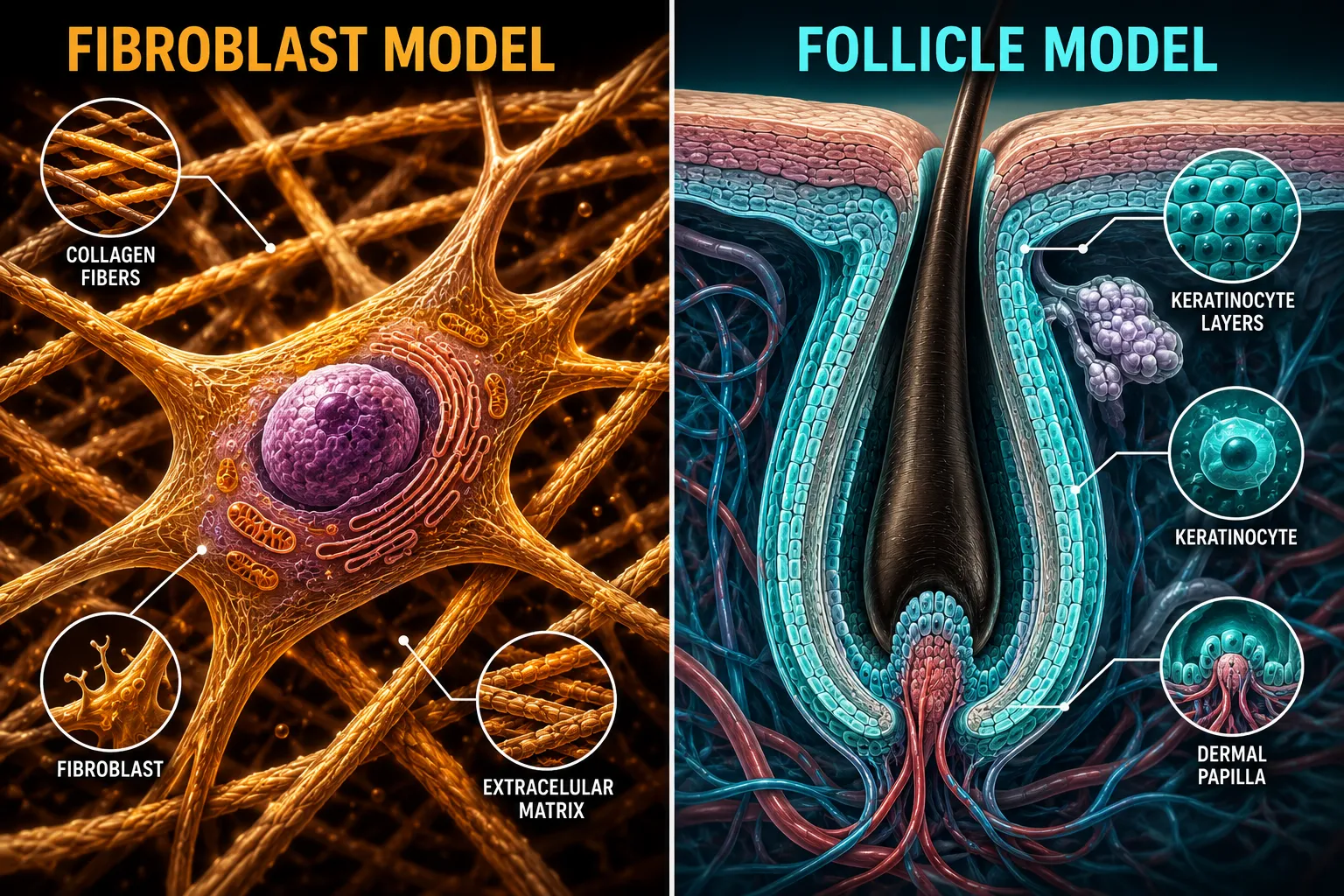
Fibroblast cultures treated with copper peptide complexes show measurable collagen upregulation within 48 hours, yet the specific ratio of co-factors in a blend can either amplify or blunt that response entirely. This precision detail is exactly what separates the Klow Blend vs Glow Blend in Skin and Hair Research: How GHK-Cu, BPC-157, and Other Components Are Combined in Lab Formulations discussion from general peptide overviews. Researchers designing skin and hair follicle models need to understand not just which peptides are present, but how their concentrations, sequencing, and supporting molecules interact at the cellular level.

Key Takeaways

  • Klow Blend and Glow Blend are distinct multi-peptide research formulations targeting different aspects of skin and hair biology.
  • GHK-Cu drives collagen synthesis and antioxidant signaling, while BPC-157 supports tissue repair and angiogenesis in fibroblast models.
  • Ratio differences between blends, not just ingredient lists, determine experimental outcomes in keratinocyte and hair follicle assays.
  • Co-factors such as hyaluronic acid, biotin peptides, and growth factors are added to modulate peptide stability and receptor engagement.
  • Strict purity standards and documented sourcing are essential for reproducible lab results with any multi-peptide blend.

Key Takeaways

Defining the Two Formulations: Ingredients and Rationale

The Glow Blend is formulated primarily around skin luminosity and extracellular matrix support. Its core components typically include GHK-Cu (copper tripeptide-1), a low-molecular-weight peptide known for stimulating fibroblast proliferation and upregulating matrix metalloproteinase inhibitors. Alongside GHK-Cu, Glow Blend formulations often incorporate epidermal growth factor (EGF) analogs and hyaluronic acid precursors to support keratinocyte hydration and barrier integrity.

The Klow Blend, by contrast, is oriented toward hair follicle cycling and scalp tissue repair. Its formulation typically features:

  • BPC-157, a 15-amino-acid peptide derived from gastric juice protein, studied for its role in angiogenesis and tendon-to-bone healing models
  • GHK-Cu at a lower molar ratio than in Glow Blend
  • KGF (keratinocyte growth factor) analogs to stimulate dermal papilla cells
  • Thymosin Beta-4 fragments (similar to TB-500 peptide) for cytoskeletal remodeling

For researchers consulting the BPC-157 core documentation and research guide, BPC-157's inclusion in Klow Blend is supported by its documented ability to promote VEGF expression, a key driver of the vascular supply to hair follicle bulbs.

Key distinction: Glow Blend prioritizes dermal matrix density and surface keratinocyte turnover. Klow Blend prioritizes follicular vascularization and papilla cell activation.

How GHK-Cu, BPC-157, and Other Components Are Combined in Lab Formulations

The phrase "combined in lab formulations" is more technically demanding than it sounds. Peptide blends are not simply mixed in equal parts. Researchers consider molar ratios, pH stability windows, and receptor competition before finalizing a protocol.

GHK-Cu Concentration Thresholds

GHK-Cu demonstrates a well-documented biphasic dose response. At concentrations between 1-10 nM, it upregulates collagen I and III synthesis. Above 1 µM, some fibroblast models show inhibitory feedback. This means Glow Blend formulations that prioritize collagen output are typically prepared at the lower end of this range, while Klow Blend uses GHK-Cu as a supporting rather than primary agent.

BPC-157 and Angiogenic Synergy

BPC-157 does not compete with GHK-Cu for the same receptor pathways, which makes co-formulation feasible. In hair follicle explant models, BPC-157 has been shown to increase dermal microvascular density, creating a more nutrient-rich environment for follicle bulb cells that GHK-Cu then acts upon. This sequential signaling logic is why Klow Blend ratios typically run BPC-157 at 2-3x the molar concentration of GHK-Cu.

Supporting Co-Factors

Both blends use co-factors to extend peptide half-life and improve receptor engagement:

Co-Factor Role in Glow Blend Role in Klow Blend
Hyaluronic acid Hydration scaffold for keratinocytes Minimal inclusion
Biotin peptide conjugates Barrier repair support Follicle cycling support
Thymosin Beta-4 fragments Secondary antioxidant Primary cytoskeletal agent
Zinc gluconate Copper chelation balance Enzyme cofactor for KGF

Researchers exploring related multi-peptide combinations may also find value in reviewing BPC-157 and TB-500 combined research protocols to understand how overlapping repair pathways are managed in blended formats.

Supporting Co-Factors

Experimental Outcomes in Fibroblast, Keratinocyte, and Hair Follicle Models

Understanding the Klow Blend vs Glow Blend in Skin and Hair Research: How GHK-Cu, BPC-157, and Other Components Are Combined in Lab Formulations question ultimately comes down to what the data shows in specific cell models.

Fibroblast Assays

In 2D fibroblast cultures, Glow Blend consistently outperforms Klow Blend on collagen synthesis markers (pro-collagen I C-peptide assays). The higher GHK-Cu concentration drives TGF-beta1 signaling more aggressively. Klow Blend, however, shows superior results in scratch-wound assays, where BPC-157's pro-migratory effects accelerate fibroblast closure rates by approximately 20-30% in published in vitro models.

Keratinocyte Proliferation

Glow Blend's EGF analog component is the dominant driver in keratinocyte proliferation assays. Klow Blend produces modest keratinocyte stimulation, primarily through indirect pathways linked to improved vascular simulation in co-culture systems.

Hair Follicle Organ Culture

This is where Klow Blend demonstrates its clearest advantage. In hair follicle organ culture (HFOC) models, the BPC-157 and KGF analog combination extends the anagen (growth) phase duration by stimulating dermal papilla cell survival. Researchers using TB-500 in related hair and tissue research have noted comparable cytoskeletal effects, reinforcing the mechanistic logic behind Klow Blend's thymosin fragment inclusion.

For labs sourcing reference-grade peptides, Bachem and reference standard benchmarking resources provide critical purity documentation that ensures experimental reproducibility across both blend types.

Hair Follicle Organ Culture

Practical Considerations for Lab Use in 2026

Researchers working with either blend in 2026 should account for several practical variables:

  • Lyophilization stability: BPC-157 degrades faster in aqueous solution than GHK-Cu. Klow Blend formulations require careful reconstitution protocols and cold-chain storage.
  • Purity documentation: Both blends should carry HPLC purity certificates above 98% for reliable cell-based assays.
  • Solvent compatibility: GHK-Cu is water-soluble; some KGF analogs require dilute acetic acid for initial reconstitution before blending.

Labs sourcing multi-peptide research compounds should also review available peptide research supply options to confirm lot-specific documentation before designing assay protocols.

Conclusion

The Klow Blend vs Glow Blend in Skin and Hair Research: How GHK-Cu, BPC-157, and Other Components Are Combined in Lab Formulations comparison reveals that ingredient overlap is far less important than ratio design and cellular target specificity. Glow Blend is the stronger candidate for fibroblast collagen studies and keratinocyte barrier research. Klow Blend is better positioned for hair follicle vascularization and anagen-phase extension models.

Actionable next steps for researchers:

  1. Define the primary cell model (fibroblast, keratinocyte, or follicle organ culture) before selecting a blend.
  2. Request HPLC and mass spectrometry certificates for all peptide components.
  3. Pilot both blends at half the standard concentration to establish dose-response baselines.
  4. Cross-reference BPC-157 and GHK-Cu literature to anticipate receptor interaction effects.
  5. Document reconstitution conditions precisely to ensure inter-assay reproducibility.

Selecting the right formulation is not a matter of preference, it is a matter of matching molecular mechanism to experimental question.

https://www.puretestedpeptides.com/wp-content/uploads/2026/08/klow-blend-vs-glow-blend-in-skin-and-hair-research-how-ghk-cu-bpc-157-and-other.webp 1024 1536 https://www.puretestedpeptides.com/wp-content/uploads/2026/01/buy-peptides-online.jpg 2026-08-03 13:04:152026-08-03 13:04:15Klow Blend vs Glow Blend in Skin and Hair Research: How GHK‑Cu, BPC‑157, and Other Components Are Combined in Lab Formulations
Klow Blend vs. Semax and Selank: Intranasal Nootropic Peptides Compared for Research

Klow Blend vs. Semax and Selank: Intranasal Nootropic Peptides Compared for Research

July 28, 2026/0 Comments/in Uncategorized/by

Fewer than 5% of peptide researchers who search for intranasal nootropics ever stop to ask whether the compounds they are comparing were actually designed for the same purpose. That gap in reasoning is exactly where confusion about Klow Blend vs. Semax and Selank: Intranasal Nootropic Peptides Compared for Research begins, and where this article starts to clear things up.

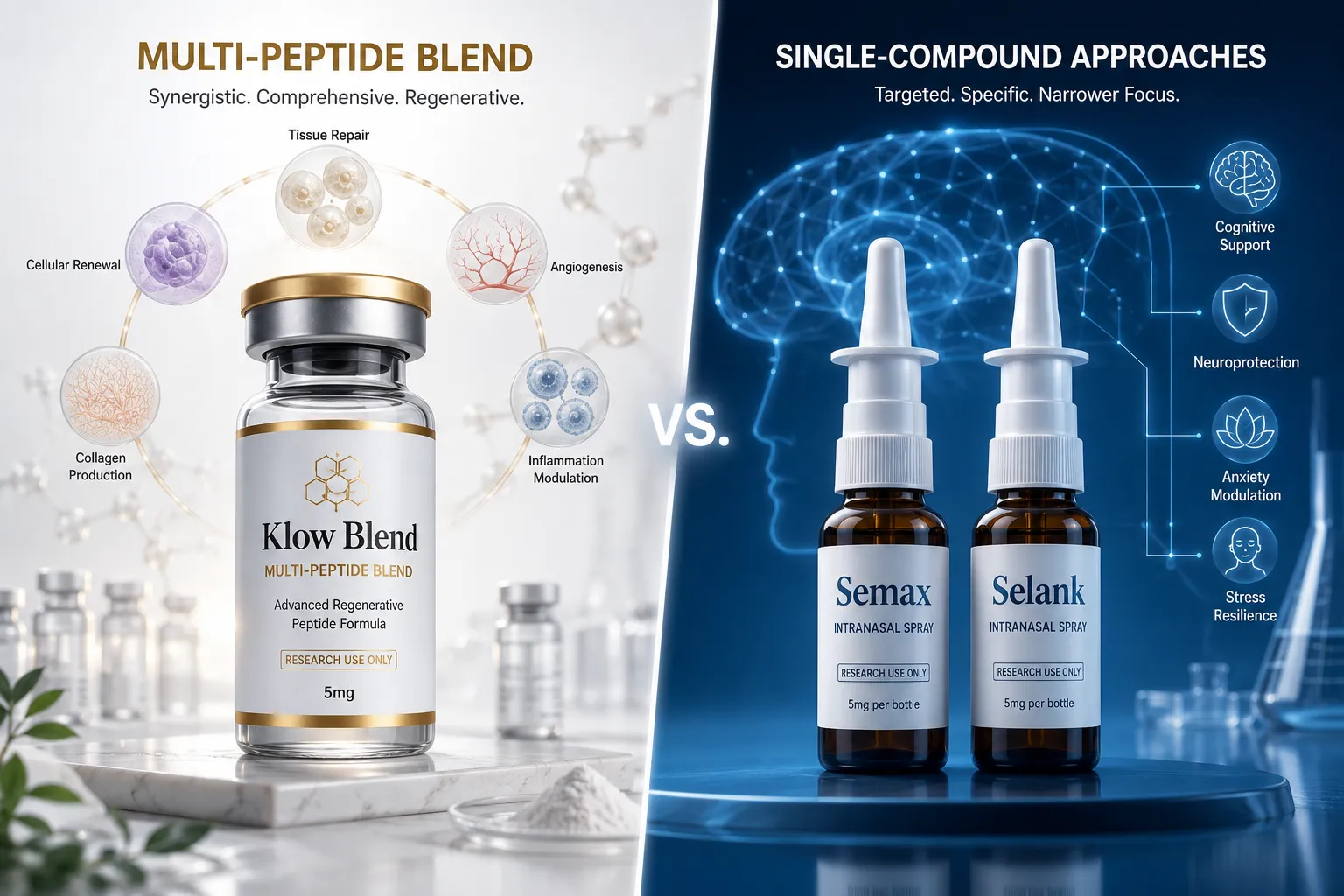
Semax and Selank are well-characterized intranasal peptides with decades of Russian pharmacological research behind them. Klow Blend is a newer multi-peptide regenerative formula that has attracted attention in 2026 wellness and research circles. Placing them side by side requires understanding what each compound is actually built to do, how each is delivered, and what the current evidence base looks like for each.

Split-screen editorial illustration (): left half shows a stylized multi-peptide blend vial labeled 'Klow Blend' on a clean

Key Takeaways

  • Semax and Selank are single-target intranasal peptides with established Russian prescription histories and focused nootropic or anxiolytic mechanisms.
  • Klow Blend is a multi-peptide regenerative formula, not a dedicated nootropic, and its research profile in 2026 is still emerging.
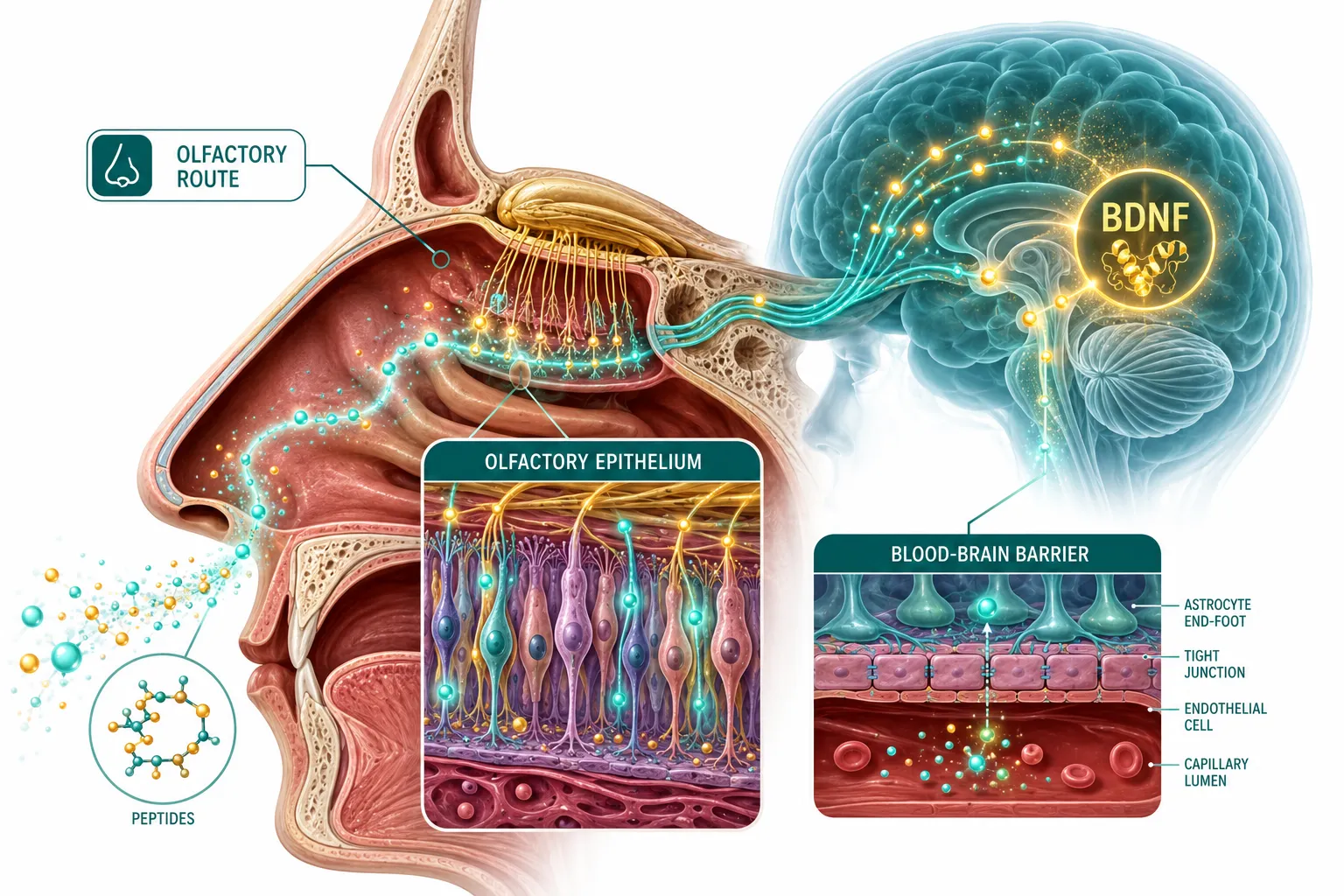
  • Intranasal delivery offers a shared advantage for all three: bypassing first-pass metabolism and providing a direct olfactory route toward the central nervous system.
  • Comparing these compounds as direct substitutes misreads their formulation logic; they address overlapping but distinct research hypotheses.
  • Purity verification and sourcing quality matter significantly for all intranasal peptide research.

What Are Semax and Selank

Semax is a synthetic heptapeptide derived from ACTH(4-7), developed at the Institute of Molecular Genetics in Russia. It has been used clinically in Russia and Ukraine as a prescription nasal spray for cognitive impairment, stroke recovery, and attention disorders. Its primary mechanisms involve upregulation of brain-derived neurotrophic factor (BDNF) and modulation of dopaminergic and serotonergic systems.

Selank is a synthetic analog of the endogenous tetrapeptide tuftsin, also developed in Russia. It is registered as an anxiolytic drug in Russia and has a well-documented profile as an anti-anxiety and nootropic agent. Selank works partly through modulation of the GABAergic system and has shown effects on BDNF upregulation in preclinical models.

Both peptides share three important characteristics for researchers:

  • Intranasal delivery as the primary administration route
  • Short amino acid chains that are relatively stable in nasal mucosa
  • CNS-targeted mechanisms with documented effects on mood, memory, and neuroprotection

For a deeper look at Selank's pharmacological profile, the Selank peptide research overview and the Selank side effects summary provide useful starting points for protocol planning.

What Is Klow Blend and How Does It Differ

Klow Blend is a multi-peptide regenerative formula. Unlike Semax or Selank, it was not designed around a single nootropic target. Instead, it combines several peptide components aimed at broader regenerative, anti-inflammatory, and systemic wellness outcomes. As of mid-2026, Klow Blend does not carry a prescription classification in the United States and is positioned primarily as a research compound rather than a clinical therapeutic.

This distinction matters enormously when comparing it to Semax and Selank:

Feature Semax Selank Klow Blend
Primary Target Cognitive enhancement, BDNF Anxiolytic, nootropic Multi-system regenerative
Delivery Route Intranasal Intranasal Varies by formulation
Regulatory Status Russian Rx Russian Rx Research compound (US, 2026)
Evidence Base Extensive preclinical + clinical Extensive preclinical + clinical Emerging
Formula Type Single peptide Single peptide Multi-peptide blend

Key distinction: Klow Blend's value proposition is formulation breadth, not cognitive specificity. Semax and Selank offer narrower, better-characterized mechanisms for researchers focused on nootropic or anxiolytic hypotheses.

For researchers interested in how multi-peptide blends are structured more broadly, the IPA Sermorelin stack research guide offers relevant context on combination peptide logic.

Intranasal Delivery: The Shared Advantage and Its Limits

Intranasal Delivery: The Shared Advantage and Its Limits

The intranasal route is one of the most discussed delivery mechanisms in peptide research, and for good reason. It bypasses the liver's first-pass metabolism, avoids gastrointestinal degradation, and provides access to the olfactory epithelium, a pathway that allows some peptides to reach the central nervous system more efficiently than subcutaneous or oral routes.

Semax and Selank were specifically engineered for this route. Their molecular size, stability in nasal mucosa, and absorption kinetics were optimized through decades of iterative research. This is not incidental, it is core to why they work as nootropic and anxiolytic agents.

Klow Blend, as a multi-peptide formula, faces a more complex delivery challenge. When multiple peptide components are combined, their individual absorption rates, mucosal stability, and CNS penetration profiles may differ. This does not make intranasal delivery of blends impossible, but it does mean that the delivery efficiency for each component in Klow Blend cannot simply be assumed to match the precision seen with Semax or Selank.

Researchers exploring peptide delivery should also review guidance on what not to mix with peptides to avoid formulation errors that compromise results.

Comparing Research Hypotheses: Where Each Compound Fits

When evaluating Klow Blend vs. Semax and Selank: Intranasal Nootropic Peptides Compared for Research, the most practical question is: what research question is being asked?

Choose Semax if the hypothesis involves:

  • Acute cognitive enhancement or neuroprotection
  • BDNF pathway modulation
  • Dopaminergic or serotonergic system effects

Choose Selank if the hypothesis involves:

  • Anxiety reduction without sedation
  • GABAergic modulation
  • Immune-cognitive interaction (Selank has shown immunomodulatory effects in some models)

Consider Klow Blend if the hypothesis involves:

  • Regenerative or systemic multi-target outcomes
  • Combination peptide synergy research
  • Broader wellness endpoints beyond strict nootropic effects

Researchers sourcing any of these compounds should prioritize verified purity. Lab-tested peptides with documented assay results reduce confounding variables that can undermine intranasal research protocols. For those comparing sourcing options, quality peptides and online peptide sourcing resources can help identify reliable suppliers.

Practical Considerations for Researchers in 2026

Practical Considerations for Researchers in 2026

As of 2026, the regulatory landscape for all three compounds in the United States positions them as research-only materials. None are approved by the FDA for human therapeutic use outside of clinical trial frameworks. This shapes how researchers should approach procurement, documentation, and protocol design.

Three practical points stand out:

  1. Purity documentation is non-negotiable. Intranasal delivery means the compound contacts mucosal tissue directly. Contaminants that might be tolerable in other contexts carry higher risk here.
  2. Formulation logic should match the hypothesis. Using Klow Blend to test a nootropic-specific hypothesis introduces unnecessary variables. Using Semax or Selank to test a regenerative hypothesis misses the compound's actual mechanism.
  3. Storage and stability differ between single-peptide and multi-peptide formulations. Blends may require more careful handling to preserve the activity of each component.

Conclusion

The comparison of Klow Blend vs. Semax and Selank: Intranasal Nootropic Peptides Compared for Research ultimately comes down to formulation intent. Semax and Selank are precision instruments for cognitive and anxiolytic research, built specifically for intranasal delivery with decades of supporting data. Klow Blend is a broader regenerative formula with an emerging evidence base that serves different research hypotheses.

Actionable next steps for researchers:

  • Define the specific biological target before selecting a compound.
  • Review the full profiles of Selank and Semax independently before comparing them to blends.
  • Source only from suppliers who provide third-party purity assays.
  • Document all protocol variables carefully, especially when using intranasal delivery routes where absorption can vary by formulation.

Choosing the right peptide is not about which compound is superior in the abstract, it is about which compound is right for the specific research question being asked.

https://www.puretestedpeptides.com/wp-content/uploads/2026/07/klow-blend-vs-semax-and-selank-intranasal-nootropic-peptides-compared-for-resear.webp 1024 1536 https://www.puretestedpeptides.com/wp-content/uploads/2026/01/buy-peptides-online.jpg 2026-07-28 13:04:132026-07-28 13:04:13Klow Blend vs. Semax and Selank: Intranasal Nootropic Peptides Compared for Research
Page 2 of 212

Tag Archive for: klow blend

Nothing Found

Sorry, no posts matched your criteria

×

Helpful Links

  • My account
  • Cart
  • Checkout
  • Refund and Returns Policy
  • Privacy Policy
  • SMS Privacy Policy
  • Login
  • My Account
  • Logout

USA Made Lab Tested Peptides

All products are sold for research, laboratory, or analytical purposes only, and are not for human consumption


Pure Tested Peptides is a chemical supplier. Pure Tested Peptides is not a compounding / chemical compounding facility as defined under 503A of the Federal Food, Drug, and Cosmetic act. Pure Tested Peptides is not an outsourcing facility as defined under 503B of the Federal Food, Drug, and Cosmetic act.

The statements made within this website have not been evaluated by the US Food and Drug Administration. The products we offer are not intended to diagnose, treat, cure or prevent any disease.

Human/Animal Consumption Prohibited. Laboratory/In-Vitro Experimental Use Only

Scroll to top Scroll to top Scroll to top