Call or Text 727-513-9780
  • Shopping Cart Shopping Cart
    0Shopping Cart
Pure Tested Peptides | America's most trusted Peptides for sale online
  • Peptides for sale
    • Oral Peptides for sale
      • Peptide Capsules for sale
      • BPC 157 Capsules 1000mcg
      • SLU-PP-332 Capsules | 1000 mcg
      • 5-Amino-1MQ 50mg Capsules
      • Tesofensine 500mcg
    • All Peptides for sale
    • Peptide Sprays
      • BPC 157 Nasal Spray Kit
      • BPC-157 TB500 Nasal Spray Kit
      • Semax Nasal Spray 10mg
      • Selank – Nasal Spray Kit – 10mg
      • Epithalon 50MG Nasal Spray Kit
      • Ipamorelin 10mg Nasal Spray
      • Klow Nasal Spray (BPC-157 + TB-500 + GHK-Cu + KPV) | 80mg
      • Hulk Nasal Spray Tesa / Ipa Blend 6/3 MG
      • Klow Nasal Spray
      • NAD + 500 mg Nasal Spray
      • PT-141 Nasal Spray Kit
    • GHRH Peptides
      • Ipa Peptides
      • CJC-1295 Peptides
        • CJC-1295 with DAC 5 mg
        • CJC-1295 without DAC 5 mg
        • CJC-1295 Ipa 10mg
      • Tesa Peptides
        • Tesa Peptide
        • Tesa 20 mg
    • GHK-Cu Peptides
      • All GHK-Cu Peptides
      • GHK-Cu 100mg
      • KLOW Peptide Blend – Buy KLOW blend online
    • BPC Peptides
      • All BPC Peptides
      • BPC-157
      • BPC-157 TB-500
      • BPC 157 capsules 1000mcg
    • SLU-PP-332 Peptides
      • All SLU-PP-332 Peptides
      • SLU-PP-332 5mg
    • GLP3 Peptides
      • GLP3-R
      • GLP3-R CAG 10mg
      • GLP3-R 20mg
    • PT-141 Peptides
      • PT-141 Peptides for sale
      • PT-141 10mg
      • PT-141 Nasal Spray
    • CAG Peptides
      • Lipo-C Peptide Blend
      • CAG 5mg
      • CAG 10mg
    • MOTS-C Peptides
      • MOTS-C Peptides for sale
      • MOTS-c peptide
      • MOTS-c 10mg *6 pack*
    • 5 Amino 1MQ Peptides
      • 5 Amino 1MQ Peptides for sale
      • 5-Amino-1MQ 50mg Capsules
      • 5-Amino-1MQ 5mg
    • Epithalon Peptides
      • Epithalon Peptides for sale
      • Epithalon 10mg
      • Epithalon 50mg
  • Shop
    • GLPs
      • 5-Amino-1MQ 50mg Capsules
      • 5-Amino-1MQ 5mg
      • GLP3-Reta
      • L-Carnitine 500mg/ml
      • Tesofensine 500mcg
      • SLU-PP-332 5mg
      • MOTS-c 10mg *6 pack*
    • Epithalon & BPC Peptides
      • Epithalon 10mg
      • Epithalon 50mg
      • BPC-157
      • BPC 157 capsules 1000mcg
      • BPC-157 TB-500
      • BPC-157 TB500 Nasal Spray Kit
      • BPC 157 Nasal Spray Kit
    • BPC TB-500 & NAD+ Peptides
      • NAD+ 500 mg
      • KLOW Peptide Blend – Buy KLOW blend online
      • GLOW Peptide Blend
      • TB 500 5mg
      • BPC 157 capsules 1000mcg – Supplement
      • BPC 157 Nasal Spray Kit
      • BPC-157
      • BPC-157 TB500 Nasal Spray Kit
      • BPC-157 TB-500
      • BPC 157 capsules 1000mcg
    • LL-37 Peptide
      • LL-37 10 mg
    • MOTS-C & Selank
      • MOTS-c peptide
      • Selank 10mg
    • GHK Peptides
      • GHK-Cu 100mg
      • GLOW Peptide Blend
      • KLOW Peptide Blend – Buy KLOW blend online
  • COAs
  • Wholesale
    • Wholesale Peptides for sale
  • PTP FAQ
  • Affiliates
    • Affiliate Program
    • Affiliate Signup
  • Contact
    • Contact Customer Service
    • Text Customer Support
  • About US
  • Shop all peptides
  • Login / Register Login / Register Page Link Login / Register Page Link
  • Click to open the search input field Click to open the search input field Search
  • Menu Menu

Tag Archive for: ly3437943

Where to Buy GLP-3 Retatrutide for Research: A Guide to Sourcing High-Purity Peptides

Where to Buy GLP-3 Retatrutide for Research: A Guide to Sourcing High-Purity Peptides

June 22, 2026/0 Comments/in Uncategorized/by

Fewer than a handful of investigational compounds have generated as much preclinical interest in 2026 as retatrutide — yet the vast majority of online suppliers offering it operate in a legal and scientific gray zone that can compromise both research integrity and regulatory standing. Knowing where to buy GLP-3 retatrutide for research means understanding far more than price per milligram.

() detailed illustration of a molecular structure diagram of a 39-amino acid triple agonist peptide chain overlaid on a

Key Takeaways

  • Retatrutide (LY3437943) is a 39-amino acid triple agonist targeting GIP, GLP-1, and glucagon receptors, currently unapproved by any regulatory authority as of 2026.
  • The only legal route for non-clinical researchers is the Research Use Only (RUO) supply chain; marketing for human use is unlawful.
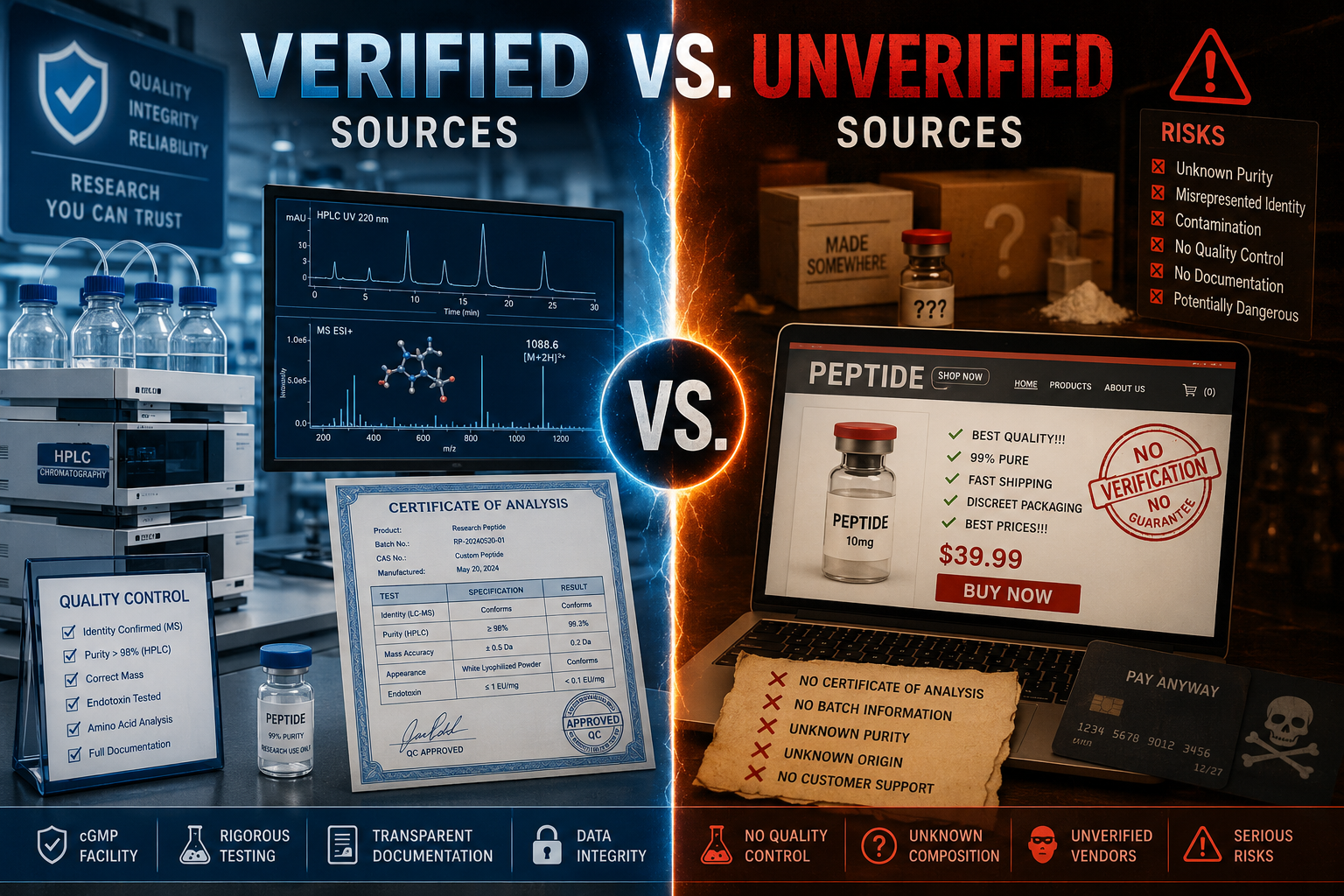
  • High-purity research peptides must be supported by third-party Certificates of Analysis (COA), HPLC data, and mass spectrometry confirmation.
  • Supplier vetting — not just price comparison — is the most critical step in the procurement process.
  • "Clinic-style" or wellness brands offering compounded retatrutide for patients fall entirely outside the approved legal framework.

Understanding Retatrutide's Research Status in 2026

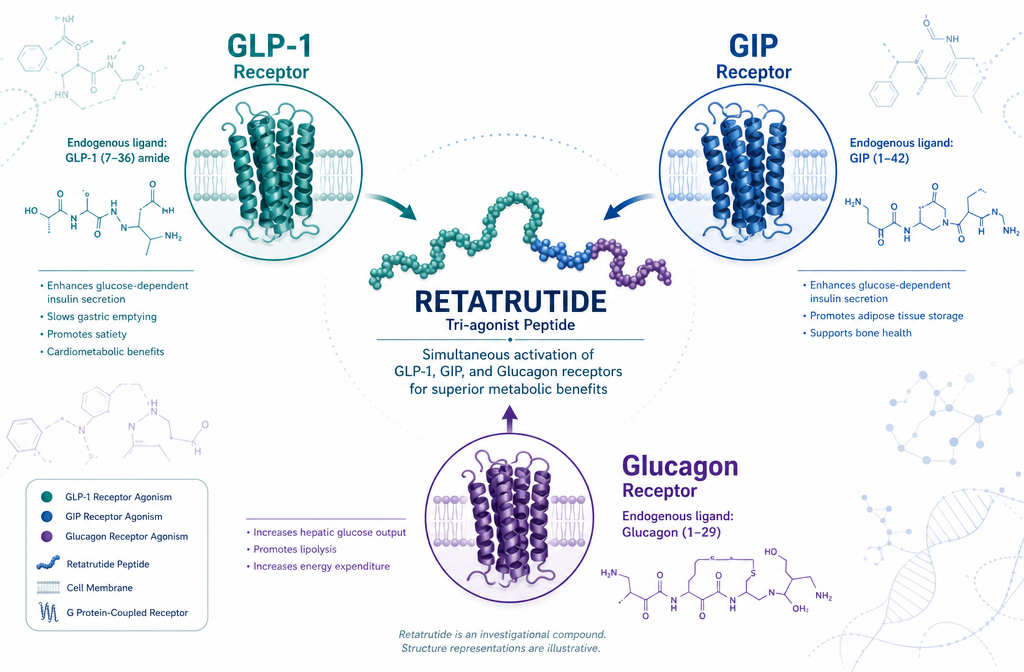
Retatrutide, developed by Eli Lilly under the designation LY3437943, is a 39-amino acid peptide engineered as a triple receptor agonist. It simultaneously targets GIP, GLP-1, and glucagon receptors, making it a structurally distinct compound from earlier incretin-based molecules. For a deeper look at how dual and triple receptor agonism differs mechanistically, the GLP-1 dual receptor agonism research breakdown provides useful context.

As of March 2026, retatrutide holds no approval from the FDA, EMA, or any comparable regulatory body. It remains an investigational new drug, accessible only through Lilly-sponsored clinical trials or through the RUO supply chain for legitimate preclinical and in-vitro research. Any product marketed for human injection, weight loss, or telehealth prescribing is operating outside the law — full stop.

The FDA has issued warning letters to companies marketing GLP-3 and retatrutide products for human use. Researchers should also review the broader GLP-1 incretin research themes to understand where retatrutide sits within the evolving incretin landscape, and how the generations of GLP-1 differences inform its novel mechanism.


A Guide to Sourcing High-Purity Peptides: Supplier Vetting Criteria

A Guide to Sourcing High-Purity Peptides: Supplier Vetting Criteria

This is where most researchers make costly mistakes. The question of where to buy GLP-3 retatrutide for research is not answered by a Google search alone — it requires a structured vetting process.

Analytical Documentation Standards

A reputable RUO supplier will provide, at minimum:

Documentation Type What to Look For
HPLC Chromatogram Purity of 98% or higher
Mass Spectrometry (MS) Confirmed molecular weight match
Certificate of Analysis (COA) Batch-specific, third-party verified
Sterility / Endotoxin Data Available on request for sensitive assays

Never accept a supplier's self-reported purity without independent third-party confirmation. Batch-to-batch consistency matters enormously in preclinical models.

Labeling and Legal Compliance

All legitimate research peptides must be labeled "Not for Human Consumption" and "Research Use Only." Vials sold without this labeling — or marketed alongside dosing guides for weight loss — are red flags. Researchers sourcing peptide blends for research should apply the same scrutiny to multi-compound formulations.

Cold-Chain and Storage Integrity

Retatrutide, like most peptides, is sensitive to temperature degradation. Confirm that the supplier uses validated cold-chain shipping and that lyophilized vials arrive intact and properly sealed.


Practical Steps for Researchers: Where to Buy GLP-3 Retatrutide for Research Safely

Practical Steps for Researchers: Where to Buy GLP-3 Retatrutide for Research Safely

Once the regulatory framework is clear, the practical procurement process follows a logical sequence.

Step 1 — Confirm institutional authorization. Most academic and commercial labs require IRB or institutional review before ordering investigational compounds. Confirm your lab's procurement policy before placing any order.

Step 2 — Request documentation before purchase. Contact the supplier and ask for a sample COA and HPLC data for the specific retatrutide batch. A trustworthy supplier will provide these without hesitation. Review the quality testing protocols used by established research peptide vendors to benchmark what acceptable documentation looks like.

Step 3 — Evaluate the supplier's broader catalog and transparency. Suppliers who publish detailed research context pages — not just product listings — tend to operate with greater scientific rigor. The GLP-3 Retatrutide research page is an example of the kind of transparent, research-oriented presentation that signals a credible vendor.

Step 4 — Avoid "wellness" or compounding channels. There is no approved compounding monograph for retatrutide. Any clinic or telehealth platform offering it as a patient therapy is operating unlawfully. Researchers should also be cautious of suppliers who list the same compound under both research and clinical wellness categories.

Step 5 — Cross-reference with the broader peptide research community. Peer-reviewed forums, institutional procurement offices, and established research networks can help validate supplier reputation. The ultimate guide to peptide therapy and research offers foundational context on how research-grade peptides are evaluated across the field.


Conclusion

Sourcing high-purity retatrutide for legitimate preclinical research in 2026 demands a disciplined, documentation-first approach. The compound's investigational status means that the RUO supply chain is the only lawful option outside of Lilly's clinical program — and within that channel, quality varies enormously.

Actionable next steps:

  • Verify your institution's procurement authorization before ordering.
  • Request batch-specific HPLC and MS documentation from any prospective supplier.
  • Reject any vendor marketing retatrutide for human use, injection, or wellness purposes.
  • Use the GIP receptor research overview to strengthen the scientific rationale behind your study design.
  • Bookmark reputable supplier quality standards pages and revisit them with each new batch order.

Rigorous sourcing is not a bureaucratic formality — it is the foundation of reproducible, defensible research.

https://www.puretestedpeptides.com/wp-content/uploads/2026/06/Where-to-Buy-GLP-3-Retatrutide-for-Research-A-Guide-to-Sourcing-High-Purity-Peptides.png 1024 1536 https://www.puretestedpeptides.com/wp-content/uploads/2026/01/buy-peptides-online.jpg 2026-06-22 13:03:412026-06-22 13:03:41Where to Buy GLP-3 Retatrutide for Research: A Guide to Sourcing High-Purity Peptides
GLP3 Peptide vs Retatrutide: Why the Naming Confusion Matters in Obesity Research

GLP3 Peptide vs Retatrutide: Why the Naming Confusion Matters in Obesity Research

June 11, 2026/0 Comments/in Uncategorized/by

Over 1 billion adults worldwide live with obesity, and the race to find more effective treatments has never moved faster. Yet one of the biggest obstacles in 2026 is not a scientific one — it is a language problem. The debate around GLP3 Peptide vs Retatrutide: Why the Naming Confusion Matters in Obesity Research is more than a semantic argument. When researchers, clinicians, and consumers use the same term to mean different things, the consequences range from misread study data to misguided purchasing decisions.

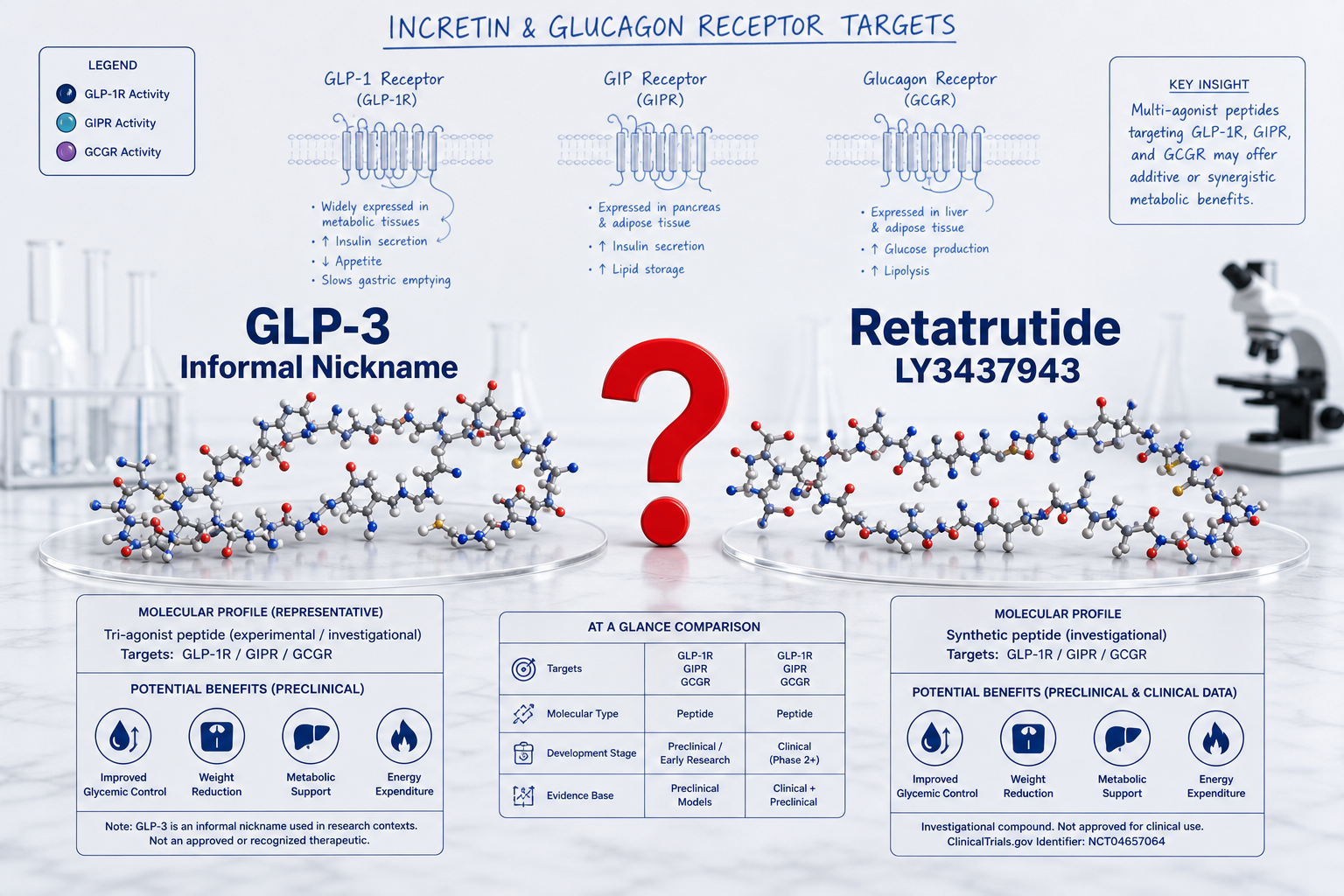
() scientific infographic-style illustration showing two labeled molecular structures side by side — one labeled 'GLP-3

Key Takeaways

  • "GLP-3" is an informal, consumer-driven nickname — not a recognized scientific classification for retatrutide.
  • Retatrutide (LY3437943) is a triple-receptor agonist targeting GLP-1, GIP, and glucagon receptors simultaneously.
  • Phase 3 trials have shown weight loss results as high as 28.7%, the highest ever recorded in an obesity drug trial.
  • Terminology confusion can distort research interpretation, marketplace trust, and regulatory understanding.
  • Researchers and buyers should verify compound identity by chemical name or CAS number, not informal labels.

What Is Retatrutide and Where Does "GLP-3" Come From

Retatrutide, developed by Eli Lilly under the code name LY3437943, is a first-in-class triple-receptor agonist. It activates three distinct hormone receptors at once:

Receptor Role in Metabolism
GLP-1 Appetite suppression, insulin secretion
GIP Fat metabolism, insulin sensitivity
Glucagon Energy expenditure, liver fat reduction

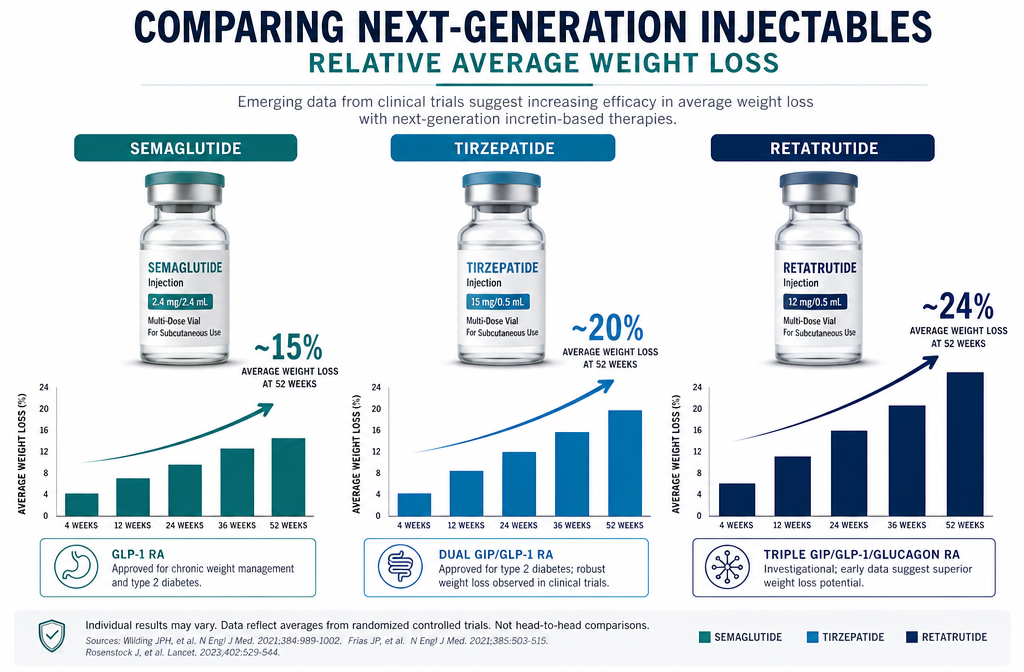
No approved drug before retatrutide has hit all three targets simultaneously. Semaglutide (Ozempic, Wegovy) targets only GLP-1. Tirzepatide (Mounjaro, Zepbound) targets GLP-1 and GIP. Retatrutide adds glucagon to the mix.

The nickname "GLP-3" emerged organically in consumer forums and social media. The logic was simple: GLP-1 targets one receptor, tirzepatide targets two, so this "third generation" drug must be GLP-3. The label stuck — but it is scientifically inaccurate.

"GLP-3" does not describe a receptor, a peptide family, or a drug class. It is marketing shorthand that has migrated into research discussions where precision is critical.

For a broader look at where peptide research is heading, the latest updates in peptide research provide useful context on how naming conventions evolve in this space.


Why the Naming Confusion Matters in Obesity Research and Clinical Trials

Why the Naming Confusion Matters in Obesity Research and Clinical Trials

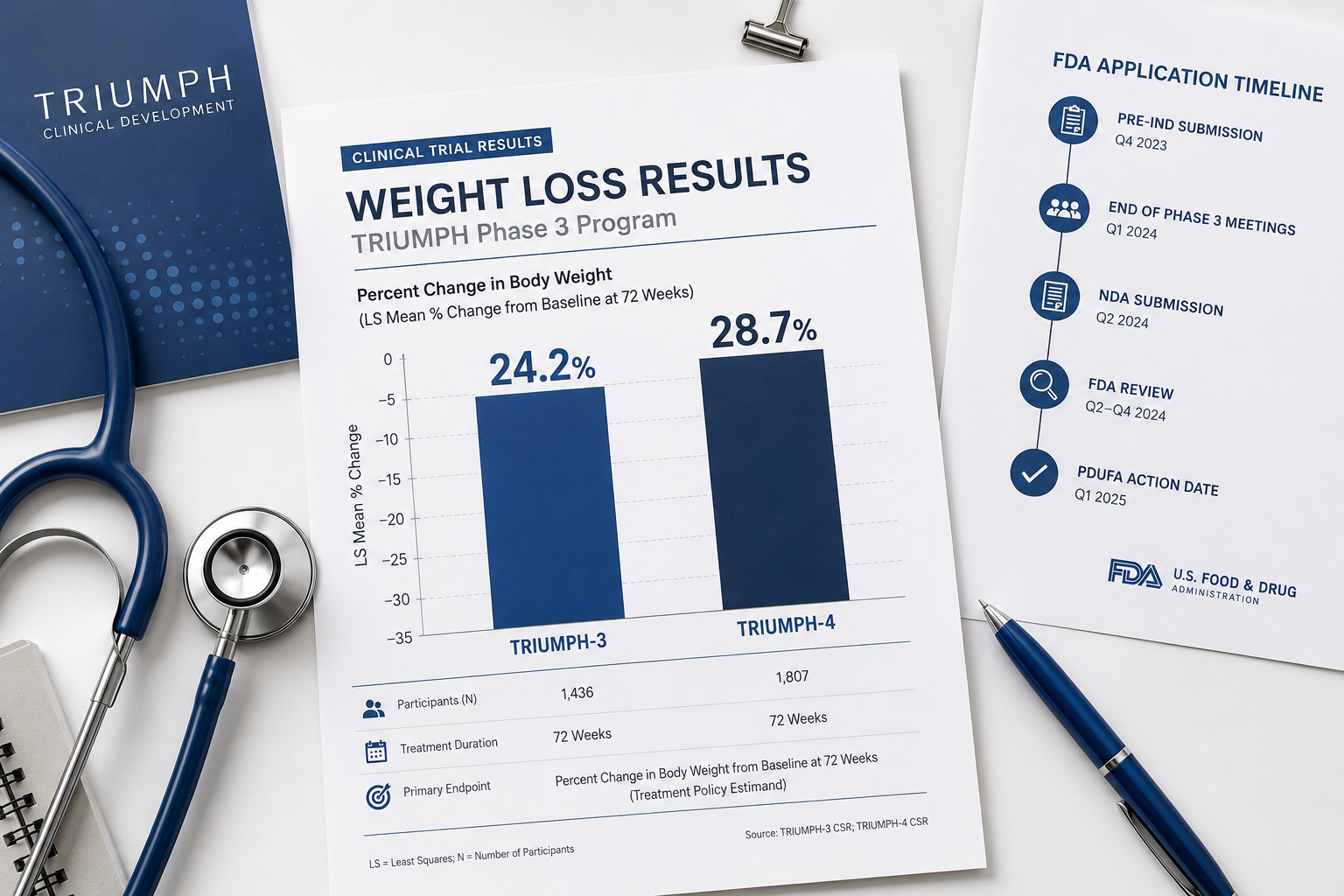
The stakes of this terminology gap become clear when looking at the trial data. In the TRIUMPH-4 Phase 3 trial, retatrutide produced a mean weight loss of 28.7% at 68 weeks in adults with obesity and knee osteoarthritis — the highest figure ever recorded in any Phase 3 obesity drug trial. The TRIUMPH-3 trial, presented at the American College of Cardiology Annual Scientific Session in March 2026, reported 24.2% mean weight loss at 72 weeks in adults with elevated cardiovascular risk.

These are landmark numbers. But when a researcher searches for "GLP-3 trial results" and finds a mix of retatrutide data alongside unrelated GLP receptor biology, the confusion compounds.

Three specific risks created by the GLP-3 label:

  • Research misattribution: Studies on actual GLP receptor peptide biology get conflated with retatrutide clinical outcomes.
  • Regulatory misunderstanding: Eli Lilly plans to file a New Drug Application in late 2026 or early 2027. Informal naming can create confusion in public commentary on regulatory submissions.
  • Marketplace errors: Buyers searching for research-grade retatrutide may encounter mislabeled products. Reviewing a detailed GLP-3 and retatrutide compound overview helps clarify what is actually being sourced.

For those researching metabolic peptides more broadly, resources on AOD9604 metabolic research and tesa benefits show how naming precision matters across the entire category.


How Researchers and Buyers Can Navigate the GLP3 Peptide vs Retatrutide Naming Issue

How Researchers and Buyers Can Navigate the GLP3 Peptide vs Retatrutide Naming Issue

The clearest solution is to anchor every discussion to the compound's chemical identity, not its nickname.

Best practices for accurate identification:

  • Always reference retatrutide by its INN (International Nonproprietary Name) or Eli Lilly's code: LY3437943.
  • Cross-check any "GLP-3" product listing against verified chemical specifications.
  • Use peer-reviewed databases rather than consumer forums as primary sources.
  • When sourcing for research, prioritize suppliers with transparent quality testing protocols and third-party verification.

The GLP-3 retatrutide product page and the RETA GLP-3 research overview are examples of how suppliers can bridge the naming gap by providing both the informal label and the verified compound name together.

For researchers exploring related metabolic compounds, the 5-Amino-1MQ research overview offers a useful parallel on how novel compounds gain informal names before formal classification catches up.


Conclusion

The GLP3 Peptide vs Retatrutide naming confusion is not a trivial issue. It shapes how clinical trial data is interpreted, how regulatory conversations unfold, and how research-grade compounds are sourced. Retatrutide is a precisely defined triple-receptor agonist with Phase 3 data that sets a new benchmark for obesity pharmacology. "GLP-3" is a convenient shorthand that, when used carelessly, undermines that precision.

Actionable next steps:

  • Replace "GLP-3" with "retatrutide" or "LY3437943" in all research documentation.
  • Verify any compound labeled "GLP-3" against its full chemical specification before use.
  • Stay current with TRIUMPH trial publications and the anticipated NDA filing timeline.
  • Source research peptides only from suppliers who publish verified testing data alongside both the common and scientific names.

Precision in language is the foundation of precision in science. In obesity research, where the stakes are high and the compounds are complex, that foundation matters more than ever.

https://www.puretestedpeptides.com/wp-content/uploads/2026/06/GLP3-Peptide-vs-Retatrutide-Why-the-Naming-Confusion-Matters-in-Obesity-Research.png 1024 1536 https://www.puretestedpeptides.com/wp-content/uploads/2026/01/buy-peptides-online.jpg 2026-06-11 13:06:552026-06-11 13:06:55GLP3 Peptide vs Retatrutide: Why the Naming Confusion Matters in Obesity Research
What Is the GLP3 Peptide? Research Distinctions, Naming Confusion, and How It Relates to Retatrutide

What Is the GLP3 Peptide? Research Distinctions, Naming Confusion, and How It Relates to Retatrutide

June 10, 2026/0 Comments/in Uncategorized/by

A single informal label is causing genuine confusion across research communities, patient forums, and peptide catalogs in 2026: "GLP-3." Researchers searching for this term are often looking for something very different from what the name implies. Understanding what the GLP-3 peptide actually refers to — and why that label is scientifically inaccurate — matters for anyone tracking the latest developments in metabolic research.

Key Takeaways

  • There is no hormone called "GLP-3." The term is an informal nickname, not a recognized scientific designation.
  • "GLP-3" almost always refers to retatrutide (LY3437943), a triple-agonist investigational compound developed by Eli Lilly.
  • Retatrutide simultaneously targets three receptors: GLP-1, GIP, and glucagon.
  • Phase 3 trial data shows approximately 28% average weight loss over 18 months — results comparable to bariatric surgery.
  • As of 2026, retatrutide is not FDA-approved and remains under active clinical investigation.

Key Takeaways

Understanding the Naming Confusion Around "GLP-3"

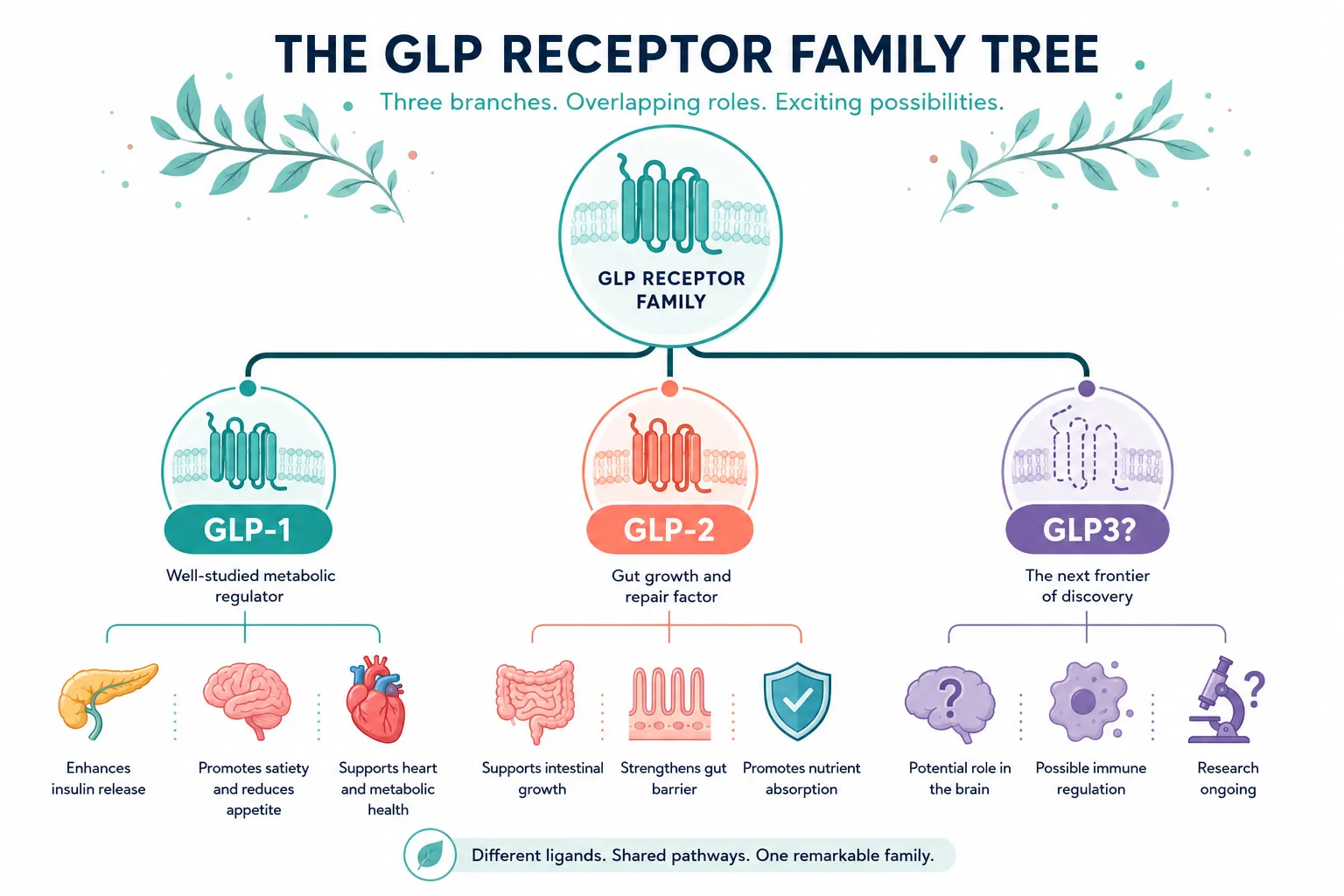
The phrase "GLP-3 peptide" does not correspond to any recognized hormone in human physiology. The glucagon-like peptide family includes GLP-1 and GLP-2, both derived from the proglucagon gene. GLP-1 is well-established for its role in insulin secretion and appetite regulation. GLP-2 supports intestinal growth. No GLP-3 exists in the official scientific literature.

So where does the term come from? It appears to have emerged organically from online communities and informal research discussions as shorthand for retatrutide — a compound that acts on three separate receptor pathways. The logic is loose: "triple action" became "GLP-3" in casual usage. The label stuck, even though it misrepresents the compound's actual mechanism.

This kind of naming drift is not unusual in peptide research. For a broader look at how terminology evolves in this field, the ultimate guide to peptide therapy provides useful context on how compounds are classified and discussed.


What Is the GLP3 Peptide? Research Distinctions, Naming Confusion, and How It Relates to Retatrutide — The Core Answer

Retatrutide (development code LY3437943) is the compound most commonly referenced when someone asks about the "GLP-3 peptide." It is an investigational drug developed by Eli Lilly that activates three distinct hormone receptors simultaneously:

Receptor Primary Research Function
GLP-1 Reduces appetite, slows gastric emptying
GIP Improves insulin sensitivity, supports fat distribution
Glucagon Increases energy expenditure, promotes fat breakdown via thermogenesis

This triple-agonist profile is what separates retatrutide from earlier-generation compounds. Semaglutide targets GLP-1 alone. Tirzepatide targets GLP-1 and GIP. Retatrutide adds glucagon receptor activation on top of both, creating a broader metabolic effect.

For researchers already familiar with the GLP-1 peptide research landscape, retatrutide represents a meaningful step forward in receptor-targeting strategy. Those planning research with this compound should also review GLP-3 triple agonist research planning resources before sourcing.


What Is the GLP3 Peptide? Research Distinctions, Naming Confusion, and How It Relates to Retatrutide — The Core Answer

Phase 3 Data and Regulatory Status in 2026

The clinical results for retatrutide are among the most discussed in metabolic medicine this year. In Phase 3 trials, participants achieved an average weight loss of approximately 28% over 18 months — a figure that rivals outcomes typically seen with bariatric surgery. No other injectable medication has produced comparable numbers in trial data to date.

"Retatrutide's Phase 3 results represent the highest weight loss figures recorded for any injectable medication in clinical trials."

Despite these results, retatrutide is not FDA-approved as of 2026. Eli Lilly anticipates filing for FDA approval in 2026–2027, with potential commercial availability projected for late 2027 or 2028, contingent on successful trial completion and regulatory review.

Beyond weight loss, researchers are examining retatrutide's potential influence on type 2 diabetes, cardiovascular risk factors, and metabolic liver disease. The GIP receptor and its importance in metabolic signaling provides additional background on one of the three pathways retatrutide engages.


What Is the GLP3 Peptide? Research Distinctions, Naming Confusion, and How It Relates to Retatrutide — Practical Implications for Researchers

For researchers navigating this space, the terminology distinction has real consequences. Searching for "GLP-3 peptide" may return inconsistent results across databases, catalogs, and literature because the label is not standardized. Using the correct terminology — triple agonist, GLP-1/GIP/glucagon receptor agonist, or retatrutide/LY3437943 — will yield more reliable and reproducible search results.

Retatrutide is administered as a once-weekly subcutaneous injection, a delivery format consistent with other compounds in the GLP-1 class. Researchers interested in innovative peptide delivery systems will find the subcutaneous format familiar, though the triple-receptor profile introduces unique considerations for study design.

Those tracking the broader metabolic peptide landscape may also find value in reviewing AOD-9604 metabolic research and SLU-PP-332 metabolic research themes for comparative context on fat metabolism pathways.


What Is the GLP3 Peptide? Research Distinctions, Naming Confusion, and How It Relates to Retatrutide — Practical Implications

Conclusion

The "GLP-3 peptide" is not a real hormone — it is a widely circulated misnomer for retatrutide, a triple-agonist compound targeting GLP-1, GIP, and glucagon receptors. Clarifying this distinction is essential for accurate research planning, catalog navigation, and literature review.

Actionable next steps for researchers:

  • Use "retatrutide," "LY3437943," or "triple agonist" in database and catalog searches instead of "GLP-3."
  • Review the GIP receptor pathway alongside GLP-1 mechanisms before designing studies.
  • Monitor FDA filing updates from Eli Lilly, expected in the 2026–2027 window.
  • Consult what is new in peptide research for ongoing developments in this fast-moving field.

Precise terminology is not a minor detail in peptide research — it directly affects sourcing accuracy, study reproducibility, and regulatory compliance awareness.

https://www.puretestedpeptides.com/wp-content/uploads/2026/06/What-Is-the-GLP3-Peptide-Research-Distinctions-Naming-Confusion-and-How-It-Relates-to-Retatrutide.png 672 1024 https://www.puretestedpeptides.com/wp-content/uploads/2026/01/buy-peptides-online.jpg 2026-06-10 13:06:532026-06-10 13:06:53What Is the GLP3 Peptide? Research Distinctions, Naming Confusion, and How It Relates to Retatrutide
×

Helpful Links

  • My account
  • Cart
  • Checkout
  • Refund and Returns Policy
  • Privacy Policy
  • SMS Privacy Policy
  • Login
  • My Account
  • Logout

USA Made Lab Tested Peptides

All products are sold for research, laboratory, or analytical purposes only, and are not for human consumption


Pure Tested Peptides is a chemical supplier. Pure Tested Peptides is not a compounding / chemical compounding facility as defined under 503A of the Federal Food, Drug, and Cosmetic act. Pure Tested Peptides is not an outsourcing facility as defined under 503B of the Federal Food, Drug, and Cosmetic act.

The statements made within this website have not been evaluated by the US Food and Drug Administration. The products we offer are not intended to diagnose, treat, cure or prevent any disease.

Human/Animal Consumption Prohibited. Laboratory/In-Vitro Experimental Use Only

Scroll to top Scroll to top Scroll to top