Call or Text 727-513-9780
  • Shopping Cart Shopping Cart
    0Shopping Cart
Pure Tested Peptides | America's most trusted Peptides for sale online
  • Peptides for sale
    • Oral Peptides for sale
      • Peptide Capsules for sale
      • BPC 157 Capsules 1000mcg
      • SLU-PP-332 Capsules | 1000 mcg
      • 5-Amino-1MQ 50mg Capsules
      • Tesofensine 500mcg
    • All Peptides for sale
    • Peptide Sprays
      • BPC 157 Nasal Spray Kit
      • BPC-157 TB500 Nasal Spray Kit
      • Semax Nasal Spray 10mg
      • Selank – Nasal Spray Kit – 10mg
      • Epithalon 50MG Nasal Spray Kit
      • Ipamorelin 10mg Nasal Spray
      • Klow Nasal Spray (BPC-157 + TB-500 + GHK-Cu + KPV) | 80mg
      • Hulk Nasal Spray Tesa / Ipa Blend 6/3 MG
      • Klow Nasal Spray
      • NAD + 500 mg Nasal Spray
      • PT-141 Nasal Spray Kit
    • GHRH Peptides
      • Ipa Peptides
      • CJC-1295 Peptides
        • CJC-1295 with DAC 5 mg
        • CJC-1295 without DAC 5 mg
        • CJC-1295 Ipa 10mg
      • Tesa Peptides
        • Tesa Peptide
        • Tesa 20 mg
    • GHK-Cu Peptides
      • All GHK-Cu Peptides
      • GHK-Cu 100mg
      • KLOW Peptide Blend – Buy KLOW blend online
    • BPC Peptides
      • All BPC Peptides
      • BPC-157
      • BPC-157 TB-500
      • BPC 157 capsules 1000mcg
    • SLU-PP-332 Peptides
      • All SLU-PP-332 Peptides
      • SLU-PP-332 5mg
    • GLP3 Peptides
    • PT-141 Peptides
      • PT-141 Peptides for sale
      • PT-141 10mg
      • PT-141 Nasal Spray
    • CAG Peptides
      • Lipo-C Peptide Blend
      • CAG 5mg
      • CAG 10mg
    • MOTS-C Peptides
      • MOTS-C Peptides for sale
      • MOTS-c peptide
      • MOTS-c 10mg *6 pack*
    • 5 Amino 1MQ Peptides
      • 5 Amino 1MQ Peptides for sale
      • 5-Amino-1MQ 50mg Capsules
      • 5-Amino-1MQ 5mg
    • Epithalon Peptides
      • Epithalon Peptides for sale
      • Epithalon 10mg
      • Epithalon 50mg
  • Shop
    • GLPs
      • 5-Amino-1MQ 50mg Capsules
      • 5-Amino-1MQ 5mg
      • L-Carnitine 500mg/ml
      • Tesofensine 500mcg
      • SLU-PP-332 5mg
      • MOTS-c 10mg *6 pack*
    • Epithalon & BPC Peptides
      • Epithalon 10mg
      • Epithalon 50mg
      • BPC-157
      • BPC 157 capsules 1000mcg
      • BPC-157 TB-500
      • BPC-157 TB500 Nasal Spray Kit
      • BPC 157 Nasal Spray Kit
    • BPC TB-500 & NAD+ Peptides
      • NAD+ 500 mg
      • KLOW Peptide Blend – Buy KLOW blend online
      • GLOW Peptide Blend
      • TB 500 5mg
      • BPC 157 capsules 1000mcg – Supplement
      • BPC 157 Nasal Spray Kit
      • BPC-157
      • BPC-157 TB500 Nasal Spray Kit
      • BPC-157 TB-500
      • BPC 157 capsules 1000mcg
    • LL-37 Peptide
      • LL-37 10 mg
    • MOTS-C & Selank
      • MOTS-c peptide
      • Selank 10mg
    • GHK Peptides
      • GHK-Cu 100mg
      • GLOW Peptide Blend
      • KLOW Peptide Blend – Buy KLOW blend online
  • COAs
  • Wholesale
    • Wholesale Peptides for sale
  • PTP FAQ
  • Affiliates
    • Selank Peptide: Advanced Pharmacological Mechanisms Underlying Its Anxiolytic and Nootropic Effects in Research
      • 5-Amino-1MQ Peptide: Detailed Mechanisms of NNMT Inhibition and Its Impact on Cellular Metabolism Research
        • MOTS-C Peptide: Unraveling Its Role in Mitochondrial Dynamics and Energy Metabolism Research
          • Epithalon Peptide and Telomerase Regulation: Investigating Its Impact on Cellular Senescence and Lifespan Research Models
            • GLP2-T vs GLP2 Tirz Peptide: Understanding the Naming, Mechanistic Nuances, and Research Implications for Gut Health
      • Peptides and Polypeptides in Modern Pharmacology: What Research on Metoprolol, Prednisone, and Amlodipine Reveals
        • Polypeptide Peptides vs NSAIDs: What Naproxen and Diclofenac Teach Tissue-Repair Researchers About BPC‑157 and TB‑500
          • Peptides and Polypeptides in Endocrine Pharmacology: How GLP-1, GLP-2, and GLP-3 Retatrutide Differ From Classic Drugs Like Prednisone and Amlodipine
          • 5‑Amino‑1MQ Peptide and NNMT Inhibition: How It Compares With Statins Like Atorvastatin in Adipose and Lipid Metabolism Research
      • Enclomiphene, Estrogen Receptor Signaling, and Luteinizing Phase Biology: What Hormone Researchers Should Measure
        • Mesenchymal Stem Cells, BPC‑157, and GHK‑Cu: How Tissue Repair Peptides Compare With Classic NSAIDs Like Naproxen in Injury Models
          • Peptide Calculator Use Cases Beyond Growth Hormone: Working Through GLP‑3 Retatrutide, MOTS‑c, and BPC‑157 Research Dosing
        • Polypeptide Peptides in Endocrine and Metabolic Pharmacology: Lessons From Amlodipine, Prednisone, and Metoprolol
        • Peptides Calculator for Advanced Blends: Worked Examples for Tesamorelin, CJC‑1295, and Ipamorelin Stacks
          • Peptides and Polypeptides in Human Physiology: How Molecular Size Shapes Research Applications
            • Selank Peptide: Advanced Pharmacological Mechanisms Underlying Its Anxiolytic and Nootropic Effects in Research
          • 5-Amino-1MQ Peptide: Detailed Mechanisms of NNMT Inhibition and Its Impact on Cellular Metabolism Research
            • MOTS-C Peptide: Unraveling Its Role in Mitochondrial Dynamics and Energy Metabolism Research
              • Epithalon Peptide and Telomerase Regulation: Investigating Its Impact on Cellular Senescence and Lifespan Research Models
                • GLP2-T vs GLP2 Tirz Peptide: Understanding the Naming, Mechanistic Nuances, and Research Implications for Gut Health
                  • Peptides and Polypeptides in Endocrine Pharmacology: How GLP-1, GLP-2, and GLP-3 Retatrutide Differ From Classic Drugs Like Prednisone and Amlodipine
                    • Polypeptide Peptides vs NSAIDs: What Naproxen and Diclofenac Teach Tissue-Repair Researchers About BPC‑157 and TB‑500
                      • Peptides and Polypeptides in Modern Pharmacology: What Research on Metoprolol, Prednisone, and Amlodipine Reveals
                        • 5‑Amino‑1MQ Peptide and NNMT Inhibition: How It Compares With Statins Like Atorvastatin in Adipose and Lipid Metabolism Research
                        • Enclomiphene, Estrogen Receptor Signaling, and Luteinizing Phase Biology: What Hormone Researchers Should Measure
                        • Mesenchymal Stem Cells, BPC‑157, and GHK‑Cu: How Tissue Repair Peptides Compare With Classic NSAIDs Like Naproxen in Injury Models
                        • Peptide Calculator Use Cases Beyond Growth Hormone: Working Through GLP‑3 Retatrutide, MOTS‑c, and BPC‑157 Research Dosing
                        • Polypeptide Peptides in Endocrine and Metabolic Pharmacology: Lessons From Amlodipine, Prednisone, and Metoprolol
                        • Peptides Calculator for Advanced Blends: Worked Examples for Tesamorelin, CJC‑1295, and Ipamorelin Stacks
                        • Peptides and Polypeptides in Human Physiology: How Molecular Size Shapes Research Applications
                        • Selank Peptide: Advanced Pharmacological Mechanisms Underlying Its Anxiolytic and Nootropic Effects in Research
                        • MOTS-C Peptide: Unraveling Its Role in Mitochondrial Dynamics and Energy Metabolism Research
                        • Peptides and Polypeptides in Modern Pharmacology: What Research on Metoprolol, Prednisone, and Amlodipine Reveals
                        • Peptides and Polypeptides in Endocrine Pharmacology: How GLP-1, GLP-2, and GLP-3 Retatrutide Differ From Classic Drugs Like Prednisone and Amlodipine
                        • 5-Amino-1MQ Peptide: Detailed Mechanisms of NNMT Inhibition and Its Impact on Cellular Metabolism Research
                        • Mesenchymal Stem Cells, BPC‑157, and GHK‑Cu: How Tissue Repair Peptides Compare With Classic NSAIDs Like Naproxen in Injury Models
                        • Peptide Calculator Use Cases Beyond Growth Hormone: Working Through GLP‑3 Retatrutide, MOTS‑c, and BPC‑157 Research Dosing
                        • GLP2-T vs GLP2 Tirz Peptide: Understanding the Naming, Mechanistic Nuances, and Research Implications for Gut Health
                        • Polypeptide Peptides in Endocrine and Metabolic Pharmacology: Lessons From Amlodipine, Prednisone, and Metoprolol
                        • Polypeptide Peptides vs NSAIDs: What Naproxen and Diclofenac Teach Tissue-Repair Researchers About BPC‑157 and TB‑500
                        • Peptides and Polypeptides in Human Physiology: How Molecular Size Shapes Research Applications
                        • Peptides Calculator for Advanced Blends: Worked Examples for Tesamorelin, CJC‑1295, and Ipamorelin Stacks
                        • 5‑Amino‑1MQ Peptide and NNMT Inhibition: How It Compares With Statins Like Atorvastatin in Adipose and Lipid Metabolism Research
                        • Enclomiphene, Estrogen Receptor Signaling, and Luteinizing Phase Biology: What Hormone Researchers Should Measure
                        • Epithalon Peptide and Telomerase Regulation: Investigating Its Impact on Cellular Senescence and Lifespan Research Models
                        • Best research protocol Klow blend
                        • best time to take BPC-157
                        • best time to take DSIP (Delta Sleep Inducing Peptide)
                        • best time to take CJC-1295
                        • best time to take AOD-9604
                        • best time to take Follistatin 344
                        • best time to take Ipamorelin
                        • best time to take MK-677 (Ibutamoren)
                        • best time to take Ligandrol (LGD-4033) — research compound
                        • best time to take Ostarine (MK-2866) — research compound
                        • best time to take GHK-CU
                        • best time to take TB-500
                        • best time to take MOTS-c
                        • best time to take Semax
                        • best time to take RAD-140 (Testolone) — research compound
                        • best time to take Thymosin Alpha-1
                        • best time to take PEG-MGF
                        • Biolife Plasma, Octapharma Plasma, and Research Peptides: How Plasma Donation Labs Differ From Peptide Suppliers
                        • best time to take YK-11 — research compound
                        • best time to take PT-141 (Bremelanotide)
                        • Best research protocol Klow blend
                        • 5-Amino-1MQ and MOTS-C Synergy: Metabolic Signaling, Mitochondria, and Research Design
                        • BPC-157 and TB-500: Investigating Their Combined Effects on Angiogenesis and Cellular Migration in Tissue Repair Models
                        • BPC-157 Peptide: Gut Barrier Function, Inflammation, and Tissue-Recovery Research
                        • 5‑Amino‑1MQ and MOTS‑c Synergy in Metabolic Research: Designing NNMT and Mitochondrial Biogenesis Stacks
                        • CJC-1295 with DAC vs. Without DAC: Half-Life, Release Kinetics, and Research Implications
                        • CJC‑1295 with DAC vs. Without DAC: Expanding on Half‑Life Differences Using Tesamorelin and Ipamorelin Blend Case Studies
                        • Collagen Biology and Copper‑Binding Peptides: How GHK‑Cu, Glow Blend, and Klow Blend Interact with Skin and Connective Tissue
                        • Collagen Biology and Regenerative Peptides: How GHK‑Cu, Glow Blend, and Klow Blend Affect Extracellular Matrix Research
                    • DNA, Telomeres, and Longevity Peptides: Positioning Epithalon and MOTS‑c in Genetic Aging Research
                      • Enclomiphene Citrate: serm Mechanism, Testosterone Research, and Stack Compatibility
                        • Enclomiphene vs Enclomiphene Citrate: Formulation, Bioavailability, and Research Distinctions
                        • Epithalon Peptide Research: Telomerase Activation, Aging, and Pineal Gland Function
                        • Estrogen Receptor Signaling and Enclomiphene: How Selective Modulators Compare with Classic Polypeptide Hormones
                        • GHK-Cu Peptide: Advanced Mechanisms in Extracellular Matrix Remodeling and Wound Healing Research
                        • GHK-Cu Peptide: Collagen Synthesis, Wound Repair, and Skin-Barrier Research Models
                        • GLP-1 vs GLP-3 vs GLP-2: Peptide Classification and Research Applications
                        • GLP-2 Peptide Research Guide: Gut Barrier Function, Nutrient Absorption, and Intestinal Recovery Models
                        • GLP-3 Retatrutide vs. GLP-1 Drugs: What Triple-Agonist Biology Changes in Research Models
                        • Ipamorelin and Tesamorelin Combination: Synergistic GH Secretagogue Research and Dosing Protocols
                        • GLP2 Tirz Peptide: What It Is, Why the Name Exists, and How Researchers Should Interpret It
                        • Klow Blend Peptide Nasal Spray: What the Formulation Is Trying to Do in Cognitive Research
                        • Mitochondria, NNMT Inhibition, and Peptide Modulators: Where MOTS‑c and 5‑Amino‑1MQ Fit in Cellular Energy Research
                        • MOTS-c Peptide: Mitochondrial Function, Energy Metabolism, and What Researchers Measure
                        • MOTS-c vs. 5-Amino-1MQ: Which Metabolic Research Questions Each Compound Actually Answers
                        • Nasal Spray Peptides: Bioavailability, Administration, and Semax/Selank Research Applications
                        • PT-141 Peptide Research: Mechanism of Action and Melanocortin Receptor Signaling
                        • Retatrutide for Research: Mechanism, Structure, and GLP-1/GLP-3 Dual Action
                        • Retatrutide for Obesity and Type 2 Diabetes: What the Latest Trial Data Suggest
                        • Tesofensine Peptide Research: Mechanism, Appetite Suppression, and Neuropeptide Y Pathways
  • Contact
    • Contact Customer Service
    • Text Customer Support
  • About US
  • Shop all peptides
  • Affiliate Program
    • Affiliate Signup
  • Login / Register Login / Register Page Link Login / Register Page Link
  • Click to open the search input field Click to open the search input field Search
  • Menu Menu

Tag Archive for: monoamine reuptake inhibitor

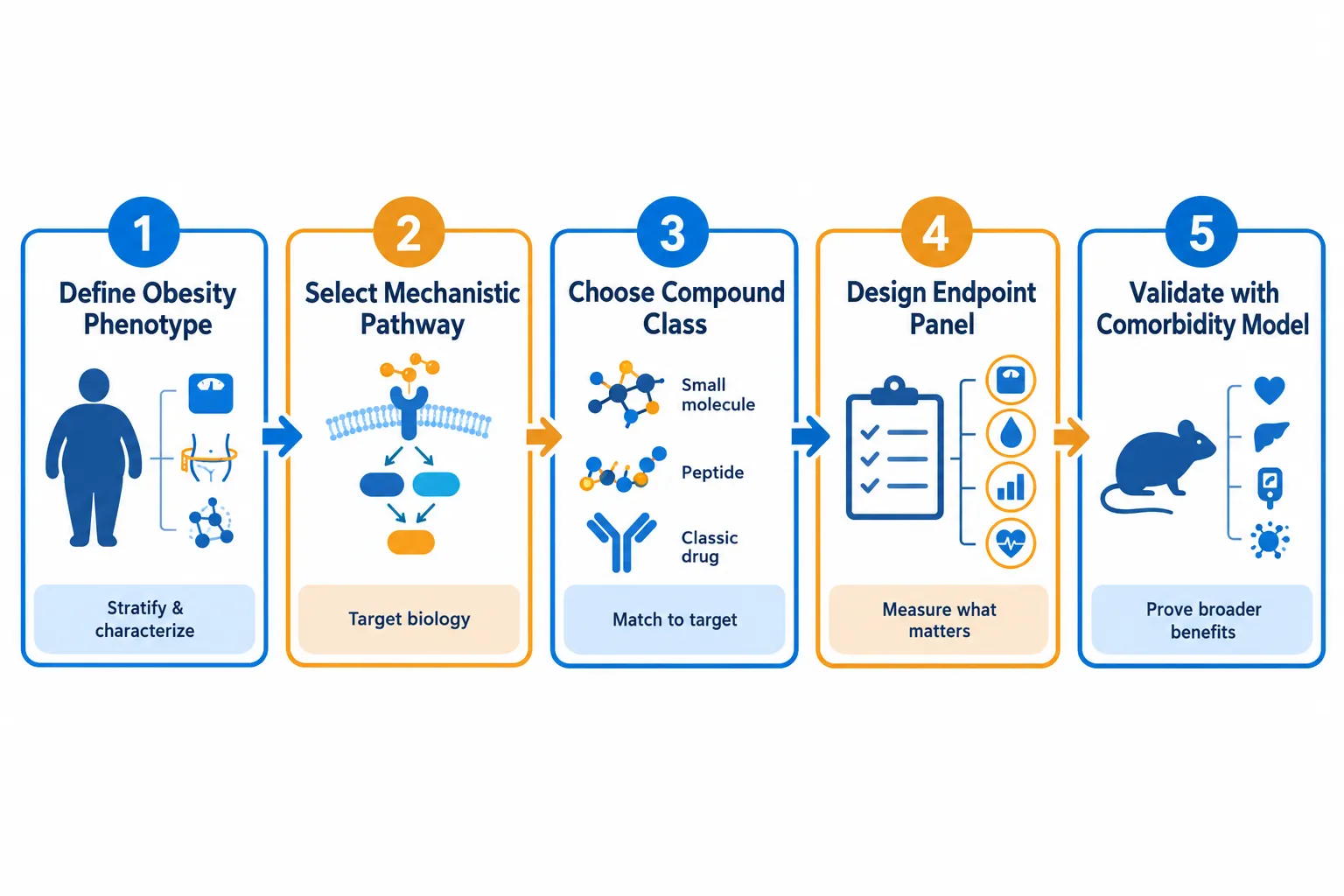
How to Design a Research Panel for Tesofensine: Appetite, Locomotion, Reward, Blood Pressure, and Sleep Endpoints

How to Design a Research Panel for Tesofensine: Appetite, Locomotion, Reward, Blood Pressure, and Sleep Endpoints

November 4, 2026/0 Comments/in Uncategorized/by

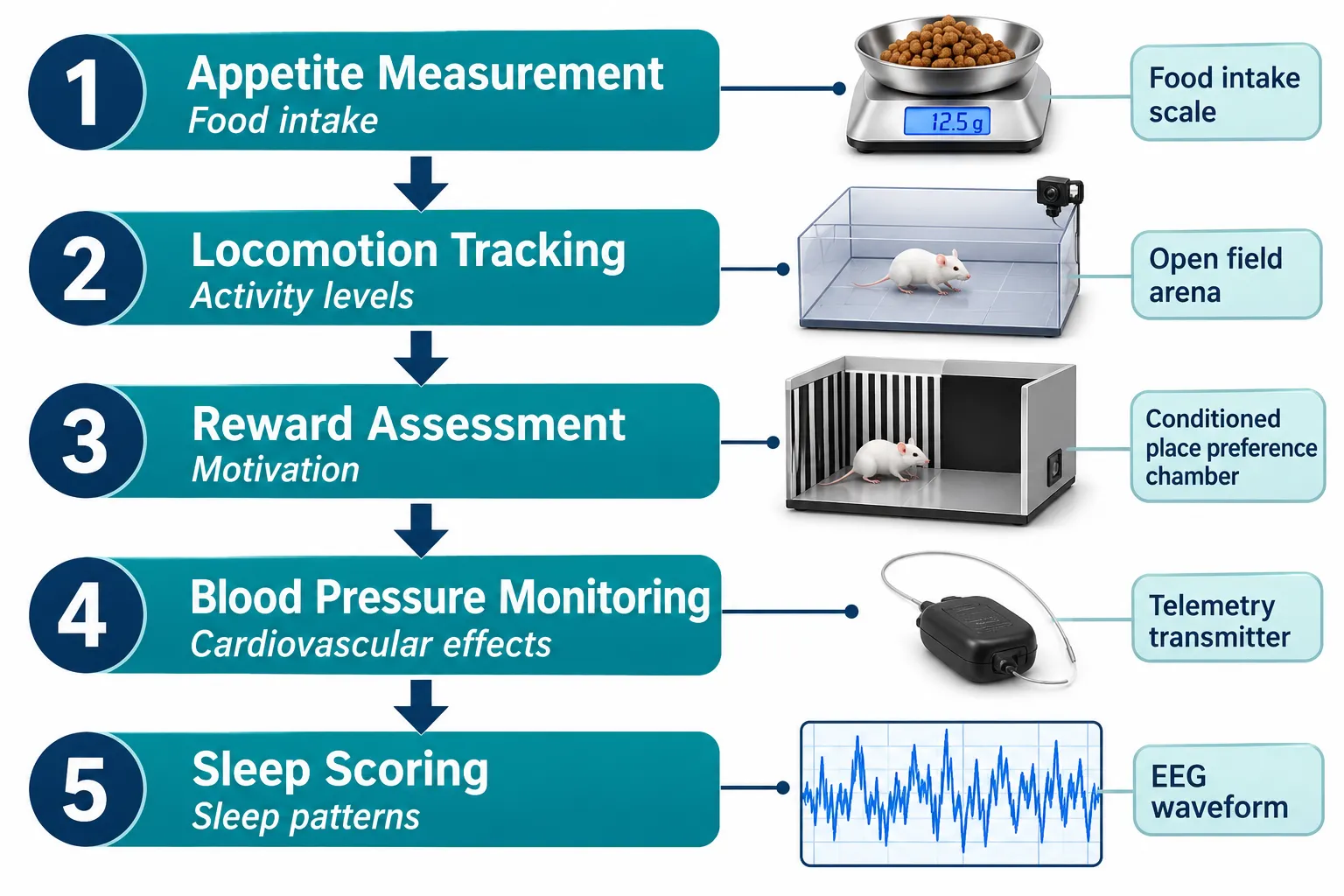
Separating true appetite suppression from generalized stimulation is one of the hardest methodological problems in obesity pharmacology, and tesofensine makes that problem acute. As a triple monoamine reuptake inhibitor blocking dopamine, norepinephrine, and serotonin transporters, tesofensine produced some of the largest weight-loss effect sizes reported in phase 2 obesity trials, yet its cardiovascular and neuropsychiatric signals demanded careful monitoring. Knowing how to design a research panel for tesofensine, covering appetite, locomotion, reward, blood pressure, and sleep endpoints, determines whether investigators can confidently attribute observed changes to central appetite circuits or to nonspecific stimulant activity.

Key Takeaways

  • Tesofensine's monoamine mechanism means every endpoint domain, appetite, locomotion, reward, blood pressure, and sleep, must be measured in parallel, not sequentially.
  • Weight and caloric intake data become uninterpretable unless locomotion and metabolic rate are co-measured to control for stimulant-driven energy expenditure.
  • Cardiovascular telemetry is not optional; blood pressure and heart rate elevations were documented in both the TIPO-1 trial and later Medix-related data.
  • Sleep architecture assessment (NREM/REM proportions, latency, fragmentation) is essential because insomnia was among the most reported neuropsychiatric adverse signals.
  • Reward and abuse-liability endpoints are a precautionary requirement for any dopaminergic compound entering long-term study protocols.

Building the Conceptual Framework
Building the Conceptual Framework

Before selecting any assay, researchers need a clear causal model. Tesofensine reduces body weight through at least two overlapping mechanisms: direct suppression of hypothalamic appetite circuits and an increase in locomotor activity that raises energy expenditure. These two pathways can produce identical weight outcomes but carry very different safety profiles and translational implications.

The study design template recommended here follows the logic established by the Tesomet hypothalamic obesity trial, which bundled multiple endpoint domains into a single protocol. That approach prevents the common error of measuring only body weight and food intake while ignoring downstream signals that may confound interpretation.

Core principle: Every appetite endpoint needs a locomotion control, every locomotion endpoint needs a sleep control, and every cardiovascular endpoint needs a time-of-day anchor.

Researchers sourcing comparison peptides for multi-arm panels may find guidance on vendor quality in the article on Bachem and reference standards for building robust peptide benchmarks, which covers purity documentation relevant to any preclinical design.


Appetite and Food Intake Endpoints

Appetite measurement in a tesofensine panel requires more than a simple food hopper. The following hierarchy of endpoints provides mechanistic resolution:

Endpoint What It Captures Key Confound
24-hour food intake (grams) Total caloric consumption Spillage, activity-driven intake suppression
Meal pattern analysis Meal size vs. meal frequency Circadian timing
Palatable food preference test Hedonic vs. homeostatic eating Reward circuit overlap
Hypothalamic neuropeptide expression NPY, AgRP, POMC at endpoint Terminal measure only

Meal pattern analysis is particularly important because tesofensine appears to reduce meal size more than meal frequency in rodent models, a signature of satiety enhancement rather than nausea-driven avoidance. Separating these two is a core methodological goal.

For comparison with GLP-based appetite mechanisms, the article on GLP-3 peptide signaling pathway provides useful mechanistic contrast when designing multi-arm panels that include incretin-based comparators.


Locomotion, Metabolic Rate, and Activity Endpoints
Locomotion, Metabolic Rate, and Activity Endpoints

The stimulant component of tesofensine's pharmacology is real and measurable. Increased locomotor activity inflates total energy expenditure, which means body weight loss data cannot be attributed to appetite suppression alone without co-registered activity data.

Recommended locomotion battery:

  1. Open-field test, Total distance, center-to-periphery ratio, and rearing frequency at 1, 7, and 21 days post-treatment onset.
  2. Indirect calorimetry, Oxygen consumption and respiratory exchange ratio in metabolic cages during both light and dark cycles.
  3. Home-cage activity telemetry, Continuous 24-hour activity counts to detect habituation or sensitization over time.
  4. Rotarod performance, Motor coordination control to rule out nonspecific motor impairment that might suppress measured movement.

Sensitization, the progressive increase in locomotor response to a fixed dose, is a dopaminergic hallmark. If locomotor counts rise across repeated dosing sessions, reward pathway recruitment is likely and should trigger the full reward endpoint battery described below.

For researchers designing panels that include growth-hormone-axis peptides alongside tesofensine, the IPA Sermorelin stack research resource addresses co-administration considerations that affect baseline metabolic endpoints.


Blood Pressure and Cardiovascular Endpoints

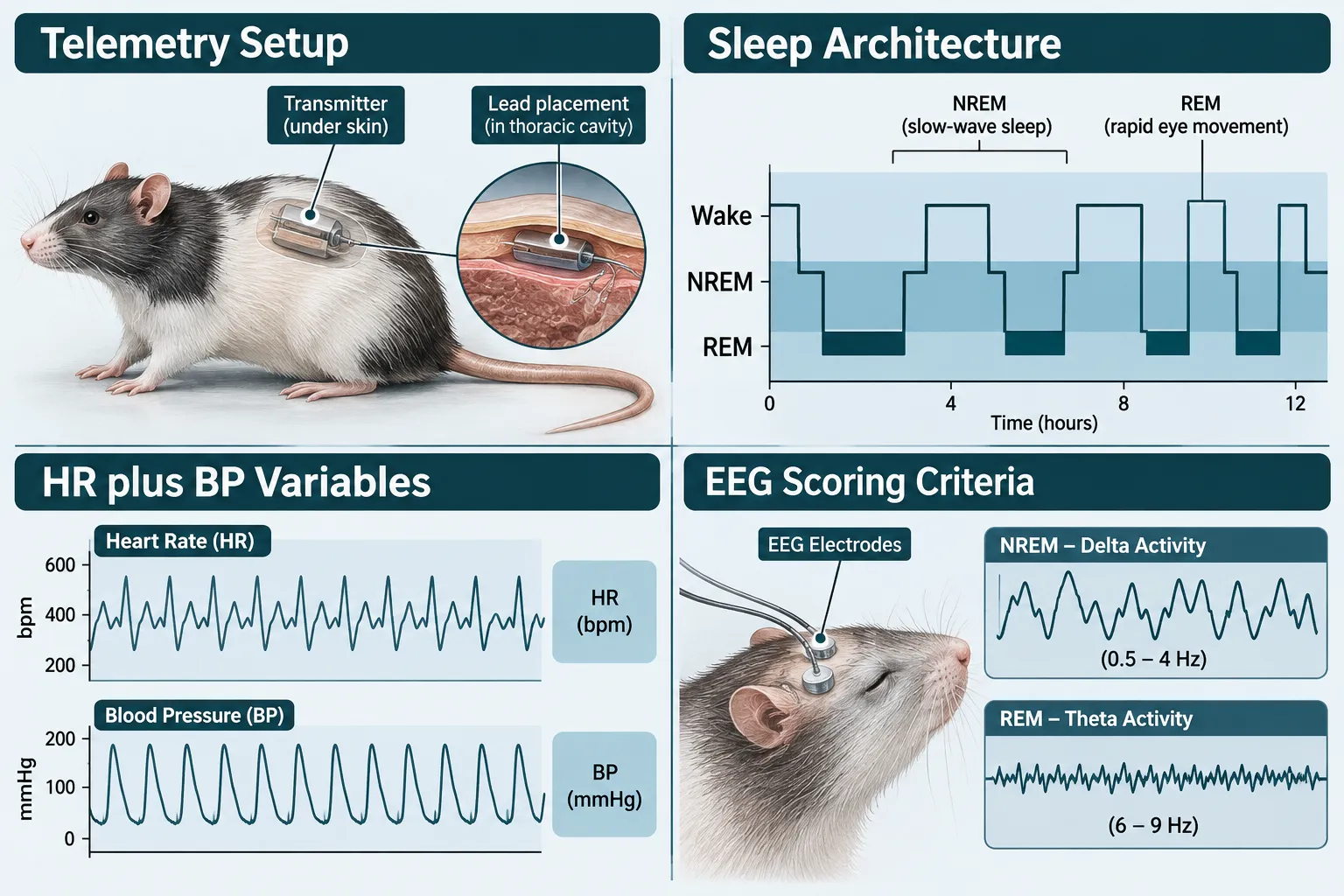
The norepinephrine reuptake inhibition component of tesofensine elevates sympathetic tone. In the TIPO-1 trial, heart rate increases were statistically significant even at the lowest effective dose. The Medix program data reinforced cardiovascular monitoring as a non-negotiable component.

Minimum cardiovascular endpoint set:

  • Systolic and diastolic blood pressure via radiotelemetry (implanted transmitter), sampled at 30-second intervals during light and dark cycles
  • Heart rate variability (HRV), low-frequency to high-frequency ratio as a sympathovagal balance index
  • Weekly tail-cuff verification as a secondary non-invasive cross-check
  • Electrocardiographic QTc interval at baseline, week 2, and study endpoint

Telemetry is preferable to tail-cuff alone because handling stress artificially elevates blood pressure in rodents and masks true drug-induced hypertension. Circadian anchoring, always comparing drug versus vehicle at matched zeitgeber times, prevents false conclusions driven by peak norepinephrine cycling.

"Cardiovascular endpoints in tesofensine panels are not safety add-ons, they are primary pharmacodynamic readouts of noradrenergic engagement."


Reward, Abuse Liability, and Sleep Endpoints
Reward, Abuse Liability, and Sleep Endpoints

Reward and Abuse-Liability Battery

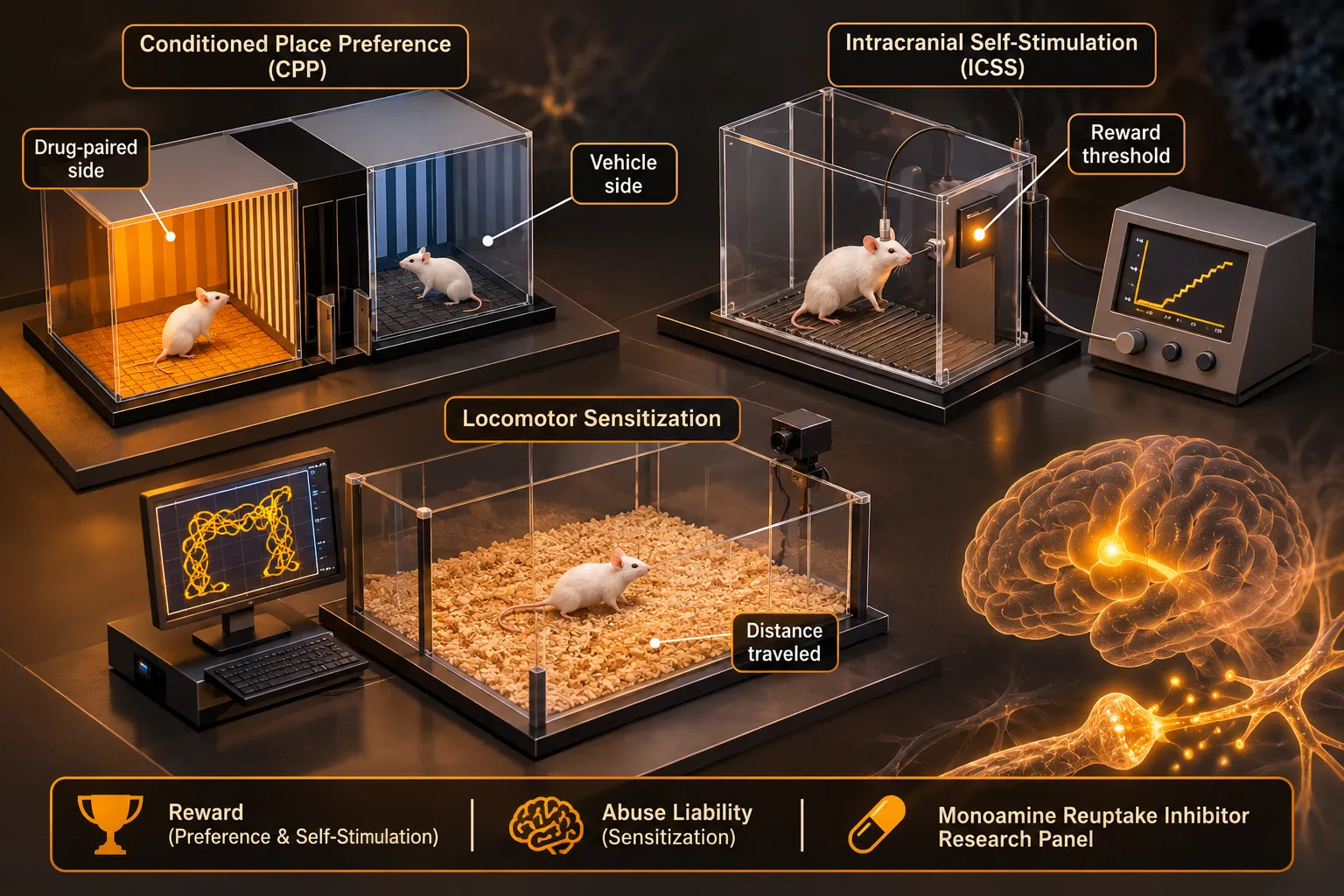
Dopamine transporter blockade places tesofensine in the same mechanistic neighborhood as compounds with known reinforcement potential. Precautionary reward monitoring is therefore a standard expectation in any well-designed panel.

Recommended reward endpoints:

  • Conditioned place preference (CPP), Drug-paired versus vehicle-paired chamber time; a CPP score greater than 20% above vehicle is a positive signal requiring follow-up.
  • Intracranial self-stimulation (ICSS), Reward threshold shifts; lowered thresholds indicate mesolimbic sensitization.
  • Locomotor sensitization across 10-day dosing, Progressive increases in distance are a proxy for dopaminergic neuroadaptation.

For context on how CNS-active research peptides are evaluated for reward-related confounds, the PT-141 peptide research context, QA, and controls article covers analogous monitoring strategies.

Sleep Architecture Endpoints

Insomnia and anxiety were among the most frequently reported adverse effects in human tesofensine trials. Sleep endpoints are therefore both a safety signal and a mechanistic window into serotonin and norepinephrine activity at arousal-regulating circuits.

Sleep endpoint panel:

  • EEG/EMG polysomnography during 48-hour continuous recording after steady-state dosing
  • NREM delta power as a homeostatic sleep pressure index
  • REM latency and total REM duration, serotonergic compounds typically suppress REM
  • Sleep fragmentation index, number of brief arousals per hour
  • Circadian alignment check, compare sleep-bout timing to light-cycle onset

Combining sleep and locomotion data allows researchers to distinguish drug-induced insomnia (fragmented sleep with normal activity) from true hyperactivity (elevated activity during the dark cycle with intact sleep architecture).

For researchers comparing tesofensine's CNS profile to growth-hormone secretagogues that also affect sleep, the article on GHRP-2 peptide vs Sermorelin provides relevant mechanistic contrast.


Integrating the Full Panel: Practical Protocol Notes

A complete how-to design for a research panel covering tesofensine's appetite, locomotion, reward, blood pressure, and sleep endpoints should follow these sequencing rules:

  1. Establish a 7-day vehicle baseline across all domains before any compound administration.
  2. Use within-subject crossover designs where possible to reduce animal numbers and increase statistical power.
  3. Stagger endpoint collection so that blood draws for neuropeptide panels do not acutely stress animals before locomotion or sleep recordings.
  4. Report effect sizes for each domain independently before constructing multi-domain composite scores.
  5. Pre-register the primary endpoint (typically food intake or body weight) and classify all other domains as secondary or exploratory.

Conclusion

Designing a rigorous research panel for tesofensine requires treating appetite, locomotion, reward, blood pressure, and sleep as an integrated system rather than isolated endpoints. The practical next steps are: finalize telemetry implantation protocols before dosing begins, pre-register locomotion and sleep as co-primary endpoints alongside food intake, include at least one reward assay from the CPP or ICSS menu, and anchor all cardiovascular measurements to circadian time. In 2026, with tesofensine's development profile still evolving, well-structured preclinical panels built around these five domains will provide the mechanistic clarity that future phase 3 designs will require. Researchers who invest in multi-domain endpoint architecture early will generate data that remains interpretable regardless of how the regulatory landscape develops.

https://www.puretestedpeptides.com/wp-content/uploads/2026/11/how-to-design-a-research-panel-for-tesofensine-appetite-locomotion-reward-blood.webp 1024 1536 https://www.puretestedpeptides.com/wp-content/uploads/2026/01/buy-peptides-online.jpg 2026-11-04 14:10:352026-11-22 02:20:35How to Design a Research Panel for Tesofensine: Appetite, Locomotion, Reward, Blood Pressure, and Sleep Endpoints
Retatrutide vs Tesofensine: How Receptor Biology and Monoamine Signaling Shape Metabolic Research Design

Retatrutide vs Tesofensine: How Receptor Biology and Monoamine Signaling Shape Metabolic Research Design

October 31, 2026/0 Comments/in Uncategorized/by

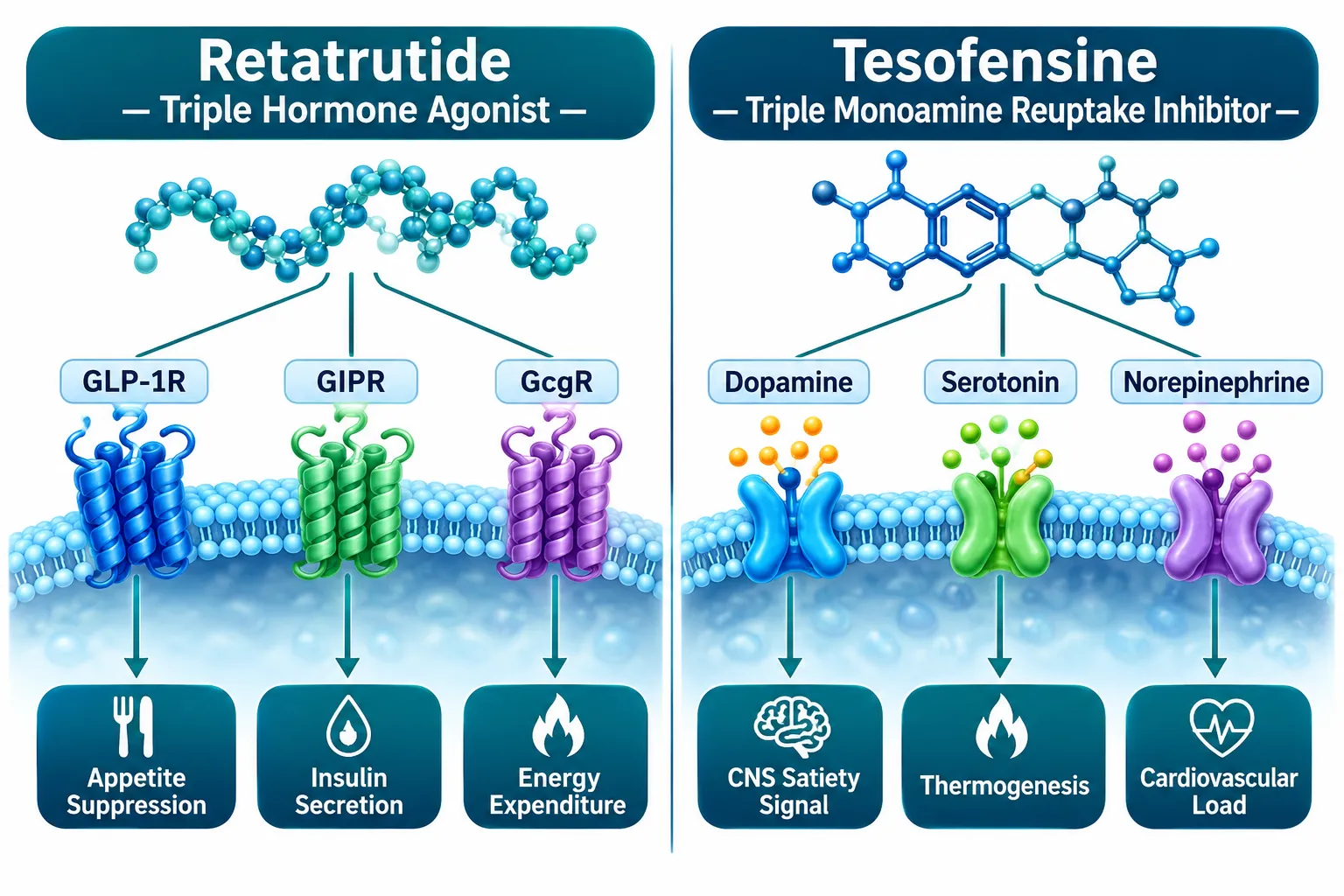
Nearly 24 percent of adults worldwide now meet criteria for obesity-related metabolic disease, yet two compounds under research scrutiny, retatrutide and tesofensine, attempt to address that burden through fundamentally different biological mechanisms. Understanding Retatrutide vs Tesofensine: How Receptor Biology and Monoamine Signaling Shape Metabolic Research Design is not simply an academic exercise. The receptor class each compound targets determines the endpoints researchers can reasonably measure, the safety signals they must monitor, and the patient populations they can safely study.

Key Takeaways

  • Retatrutide is a triple hormone receptor agonist (GLP-1R, GIPR, GcgR); tesofensine is a small-molecule triple monoamine reuptake inhibitor, these are fundamentally different pharmacological classes.
  • Receptor biology drives endpoint selection: hormone agonism supports glycemic, hepatic, renal, and cardiovascular endpoints, while monoamine blockade demands central nervous system and cardiovascular safety monitoring.
  • Retatrutide's TRIUMPH-1 phase 3 data set a new efficacy benchmark for obesity pharmacotherapy.
  • Tesofensine remains a niche research compound with a narrower endpoint profile and a more cautious regulatory trajectory.
  • Choosing between these mechanisms as a research scaffold determines which patient populations can ethically be included in a trial.

Distinct Mechanisms: Triple Hormone Agonism vs Monoamine Reuptake Inhibition

Distinct Mechanisms: Triple Hormone Agonism vs Monoamine Reuptake Inhibition

Retatrutide is a peptide-based triple agonist that activates three G-protein-coupled receptors (GPCRs): the glucagon-like peptide-1 receptor (GLP-1R), the glucose-dependent insulinotropic polypeptide receptor (GIPR), and the glucagon receptor (GcgR). Each receptor axis contributes a distinct metabolic function. GLP-1R activation reduces appetite and slows gastric emptying. GIPR activation enhances insulin release and may augment the satiety signal from GLP-1R. GcgR activation increases hepatic glucose output at low doses but, more importantly at therapeutic doses, raises energy expenditure through brown adipose tissue activation.

Tesofensine is a small molecule, not a peptide, that blocks the reuptake of dopamine, serotonin, and norepinephrine in the central nervous system. This monoamine reuptake inhibition reduces food intake primarily through central appetite suppression and may modestly increase thermogenesis via sympathomimetic activity. Because it does not engage endocrine GPCRs, it produces no direct incretin effect and no glucagon-mediated boost to energy expenditure.

"The receptor class a compound targets is the single most important variable a metabolic research team will confront when designing a trial from the ground up."

This mechanistic divide explains why researchers exploring visceral fat research increasingly orient their protocols around GPCR-based compounds rather than monoamine modulators: the hormone agonist axis provides multiple measurable tissue-level endpoints that monoamine signaling simply cannot reach.


Cardiometabolic Endpoints: Where Receptor Biology Shapes Research Design

Cardiometabolic Endpoints: Where Receptor Biology Shapes Research Design

The depth of measurable outcomes differs sharply between these two pharmacological classes. Retatrutide's TRIUMPH-1 phase 3 trial data, the most rigorous dataset available for the compound, demonstrated average body weight reductions that surpassed any previously approved pharmacotherapy in comparable populations. Beyond weight, the hormone receptor axes produce quantifiable effects across a broad endpoint portfolio.

Retatrutide endpoint categories in active investigation:

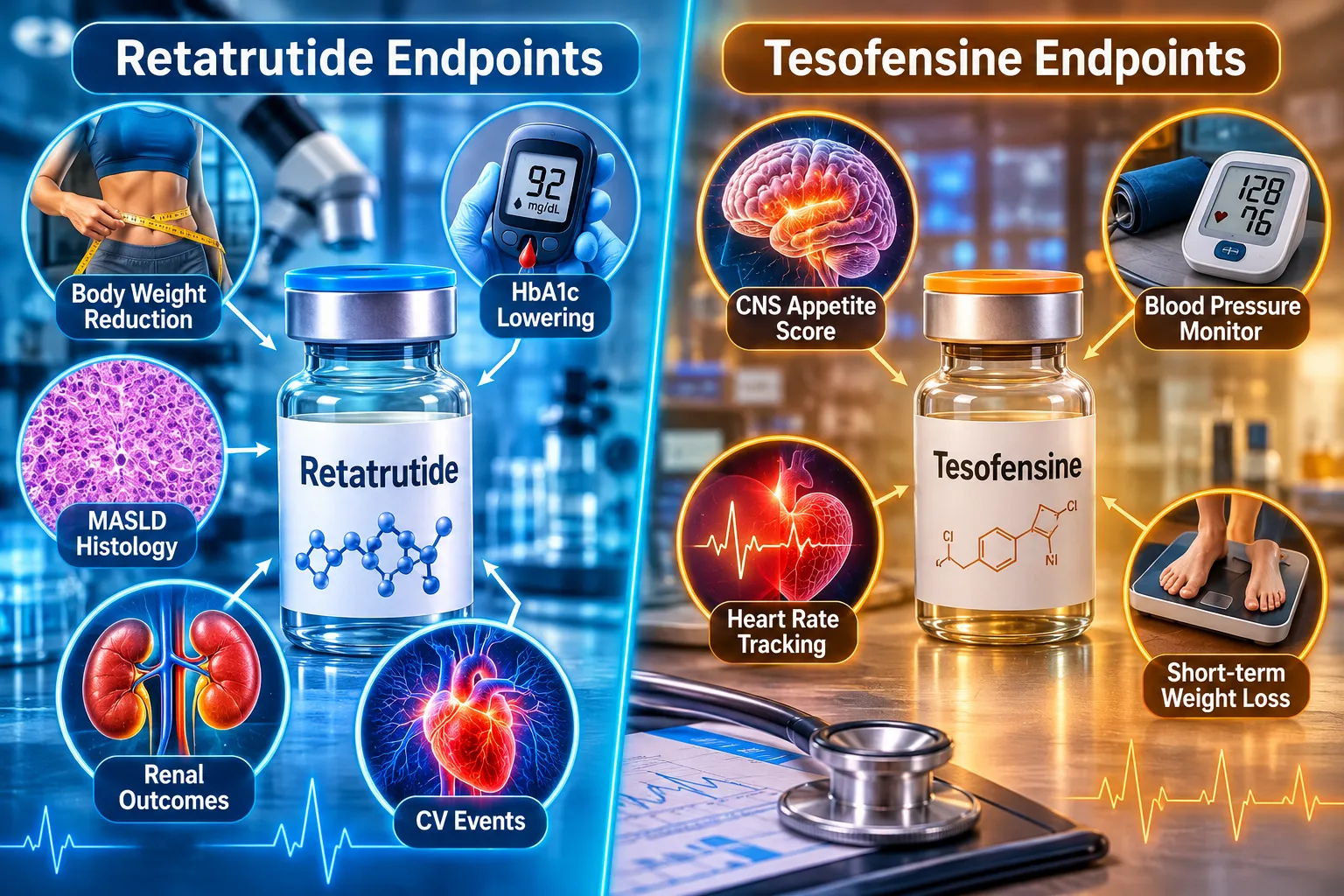
  • Glycemia: HbA1c reduction and fasting glucose in type 2 diabetes
  • Hepatic histology: Liver fat fraction and inflammation scores relevant to metabolic dysfunction-associated steatotic liver disease (MASLD)
  • Cardiovascular: Blood pressure, lipid panels, and emerging cardiovascular outcome trials
  • Renal: Albuminuria and estimated glomerular filtration rate (eGFR)
  • Musculoskeletal: Osteoarthritis pain and functional scores
  • Sleep: Apnea severity indices

Researchers sourcing retatrutide for clinical trial work can therefore design basket-style protocols that capture multi-system effects within a single compound arm.

Tesofensine's endpoint landscape is narrower. The monoamine mechanism does produce meaningful short-term weight reduction, but the primary safety concern, elevated heart rate and blood pressure from norepinephrine signaling, constrains the populations eligible for inclusion. Patients with pre-existing cardiovascular disease, which represents a large share of the high-BMI population, require careful screening and more intensive monitoring when tesofensine is the study compound.

Key monitoring differences by mechanism class:

Monitoring Domain Retatrutide (GPCR Agonist) Tesofensine (Monoamine Inhibitor)
Gastrointestinal tolerability Titration-managed nausea Minimal
Cardiovascular Blood pressure, lipid trending Heart rate, blood pressure, primary concern
CNS effects Minimal Mood, insomnia, anxiety screening
Glycemic safety Hypoglycemia in T2D combos Not applicable

Trial Population Design and Regulatory Trajectory

Trial Population Design and Regulatory Trajectory

Understanding Retatrutide vs Tesofensine: How Receptor Biology and Monoamine Signaling Shape Metabolic Research Design at the population level reveals another critical divergence. Because retatrutide's titration profile manages gastrointestinal side effects gradually and does not carry significant sympathomimetic cardiovascular load, trial teams can include patients with severe obesity (BMI above 40) and those with established cardiovascular disease. This broadens the generalizability of findings and aligns with regulatory expectations for a broad obesity pharmacotherapy label.

Tesofensine's sympathomimetic activity demands that researchers apply stricter cardiovascular exclusion criteria. This effectively limits the study population to lower-risk participants, which may inflate observed efficacy relative to the general target population, a recognized limitation in earlier phase 2 work.

From a regulatory standpoint, retatrutide is advancing toward new drug application filings following strong phase 3 readouts. Expert and association commentary in 2026 has described it as the first "triple hormone therapy" for obesity, a framing that reflects genuine novelty in the GPCR agonist space. Tesofensine remains a niche investigational compound without a clear path to broad regulatory approval in major markets, making it more relevant as a mechanistic research tool than a clinical development candidate.

Researchers working with related peptide scaffolds can explore resources on GLP-3 triple agonist research planning to understand how multi-receptor designs are being structured across the broader incretin space. Those sourcing materials for cardiometabolic studies should also review AOD 9604 research method notes on storage and traceability for best practices applicable across metabolic peptide protocols.

For researchers looking at specific retatrutide material formats, catalog options such as RETA 20mg for sale and GLP-3 RETA 30mg reflect the range of dosing configurations available for pre-clinical and translational work. Mitochondrial energy expenditure pathways relevant to GcgR activation are explored further in SS-31 mitochondrial research themes.


Conclusion

The comparison of Retatrutide vs Tesofensine: How Receptor Biology and Monoamine Signaling Shape Metabolic Research Design ultimately reduces to one foundational question: which receptor class aligns with the metabolic questions a research team wants to answer?

Retatrutide's triple GPCR agonism enables broad, multi-system endpoint selection, inclusive trial populations, and a regulatory trajectory consistent with eventual clinical adoption. Tesofensine's monoamine reuptake inhibition is a useful mechanistic tool for studying central appetite circuitry, but its cardiovascular monitoring demands and narrow endpoint scope limit its utility in high-risk populations.

Actionable steps for research teams in 2026:

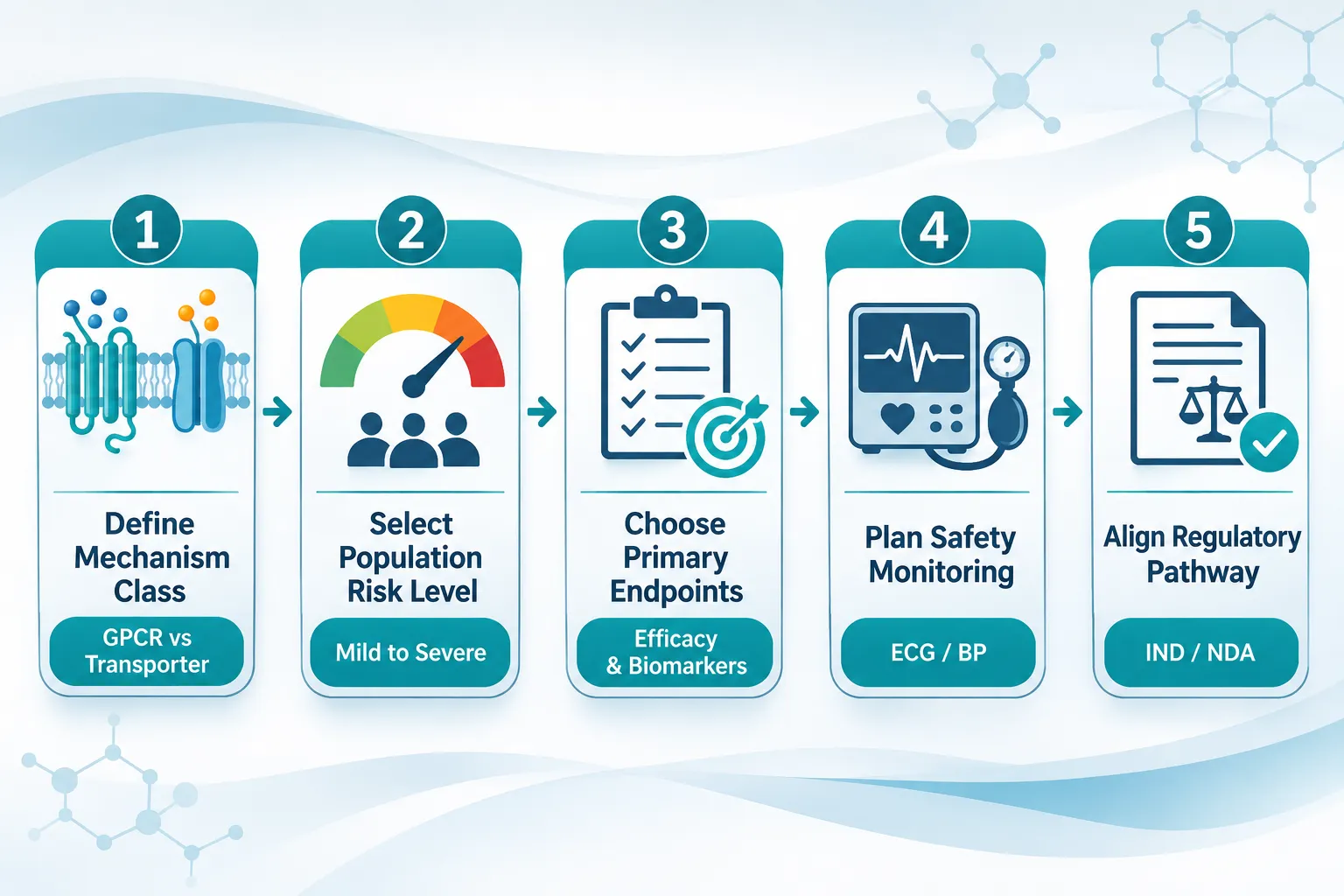
  1. Map receptor targets to endpoints first, confirm that the compound's mechanism can actually produce measurable change at your chosen endpoint before committing to a protocol.
  2. Assess population risk tolerance, monoamine reuptake inhibition requires tighter cardiovascular exclusion criteria; plan for this during power calculations.
  3. Align safety monitoring to mechanism class, GPCR agonists demand GI tolerability tracking and titration schedules; monoamine inhibitors demand heart rate and blood pressure surveillance.
  4. Consider multi-system designs for GPCR agonists, the breadth of retatrutide's receptor engagement supports basket-style trial architectures that would be impractical with monoamine-based compounds.
  5. Track regulatory signals closely, retatrutide's development timeline is accelerating; research programs designed around its mechanism are more likely to translate into clinical practice.

Choosing the right mechanistic scaffold is not merely a pharmacology decision, it is a research design decision that shapes every downstream element of a study.

https://www.puretestedpeptides.com/wp-content/uploads/2026/10/retatrutide-vs-tesofensine-how-receptor-biology-and-monoamine-signaling-shape-me.webp 1024 1536 https://www.puretestedpeptides.com/wp-content/uploads/2026/01/buy-peptides-online.jpg 2026-10-31 13:05:202026-11-22 02:20:29Retatrutide vs Tesofensine: How Receptor Biology and Monoamine Signaling Shape Metabolic Research Design
Tesofensine vs GLP‑3 Retatrutide vs Classic Appetite Drugs: Which Pathways Researchers Model for Weight‑Related Studies

Tesofensine vs GLP‑3 Retatrutide vs Classic Appetite Drugs: Which Pathways Researchers Model for Weight‑Related Studies

August 28, 2026/0 Comments/in Uncategorized/by

Fewer than one in five adults with obesity achieve durable weight loss through lifestyle intervention alone, a gap that has pushed research labs to evaluate an increasingly diverse toolkit of pharmacological agents. The question of Tesofensine vs GLP‑3 Retatrutide vs Classic Appetite Drugs: Which Pathways Researchers Model for Weight‑Related Studies is no longer academic; it directly shapes how labs allocate resources, design endpoints, and interpret data in 2026.

Key Takeaways

  • Tesofensine acts as a triple monoamine reuptake inhibitor, targeting the central nervous system, while retatrutide engages three peripheral metabolic receptors simultaneously.
  • Classic appetite drugs operate through single or dual monoaminergic pathways, making them simpler to model but narrower in scope.
  • Retatrutide's TRIUMPH-1 Phase 3 data produced weight-loss magnitudes approaching bariatric surgery outcomes.
  • Researchers increasingly favor gut-brain peptide network models over pure CNS-appetite frameworks.
  • Study design choices, including endpoint selection and comorbidity integration, differ substantially across all three compound classes.

Mechanistic Foundations: Three Distinct Pathways

Mechanistic Foundations: Three Distinct Pathways

Understanding the mechanistic differences is the starting point for any lab comparing these agents. For context on how tesofensine fits within the broader noradrenergic and monoaminergic landscape, see this detailed breakdown of tesofensine and metabolic research as a noradrenergic appetite modulator.

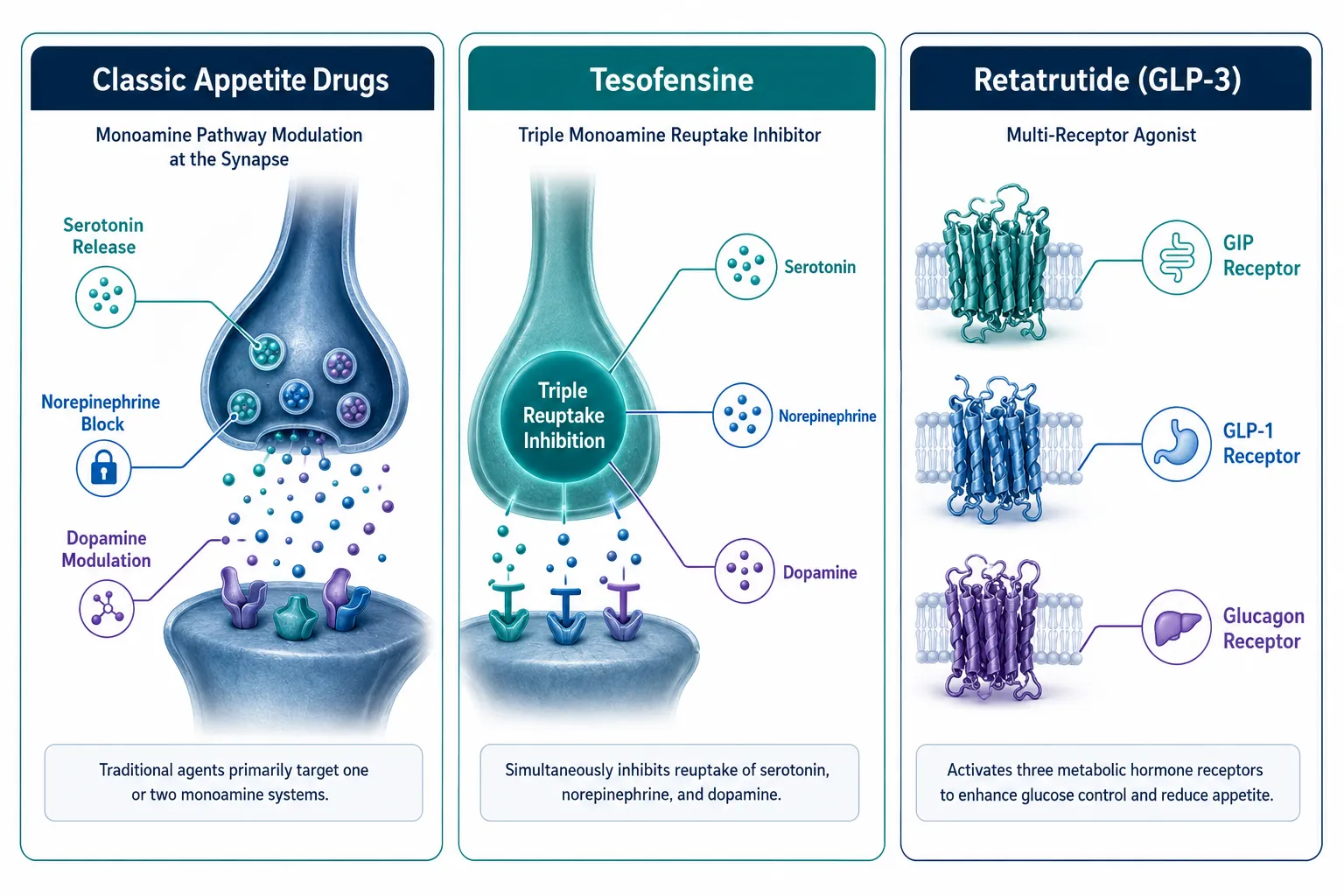
Classic appetite drugs, including older phentermine-class agents and serotonergic compounds, work primarily by stimulating catecholamine release or blocking serotonin reuptake in the hypothalamus. Their mechanism is relatively linear: reduce hunger signals, lower caloric intake, observe body weight change. This simplicity made them the default model substrate for decades, but it also limits their translational value for complex metabolic phenotypes.

Tesofensine expands on that architecture by simultaneously inhibiting the reuptake of serotonin, norepinephrine, and dopamine. This triple reuptake inhibition produces stronger appetite suppression than single-target agents and also affects reward-related eating behavior. Researchers modeling tesofensine must account for CNS-driven endpoints alongside peripheral metabolic markers, adding complexity but also richer mechanistic insight.

Retatrutide represents a structural departure from both. As a triple agonist at GIP, GLP-1, and glucagon receptors, it operates primarily through gut-derived hormonal signaling rather than central monoamine pathways. For a thorough overview of how this peptide family is classified, the GLP-3, GLP-1, and GLP-2 researcher's guide to the peptide family provides essential background. Labs modeling retatrutide must incorporate insulin secretion dynamics, glucagon suppression, gastric emptying, and energy expenditure, a multi-tissue endpoint panel that classic appetite drug models were never designed to handle.

Study Design Considerations Across Compound Classes

Study Design Considerations Across Compound Classes

The divergence in mechanism translates directly into divergent study architectures. When researchers examine Tesofensine vs GLP‑3 Retatrutide vs Classic Appetite Drugs: Which Pathways Researchers Model for Weight‑Related Studies, the endpoint selection question becomes central.

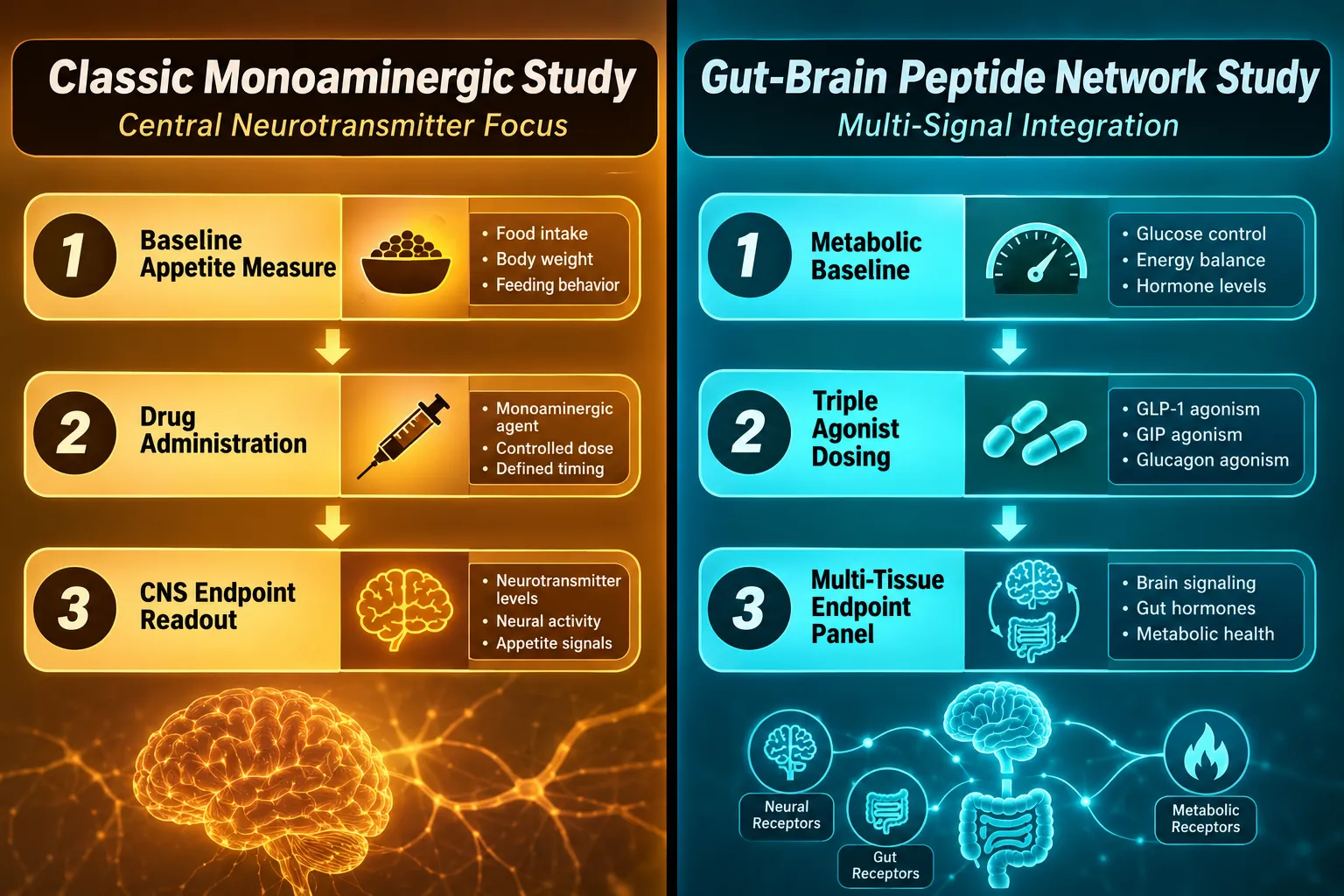
Classic appetite drug models typically use:

  • Short-duration feeding behavior assays
  • Hypothalamic gene expression panels
  • Single-tissue (adipose or liver) metabolic readouts
  • Monoamine metabolite profiling in cerebrospinal fluid or plasma

Tesofensine-focused models commonly add:

  • Dopaminergic reward circuit assessments
  • Locomotor activity tracking to distinguish appetite suppression from stimulant effects
  • Multi-neurotransmitter plasma panels
  • Longer washout periods given CNS accumulation dynamics

Retatrutide models require the most expansive design:

  • Pancreatic beta-cell function assays
  • Incretin hormone time-course sampling
  • Multi-organ imaging endpoints (liver fat, visceral adipose volume)
  • Comorbidity integration for cardiovascular, sleep apnea, and osteoarthritis markers

This last point is not incidental. The TRIUMPH program, the Phase 3 trial series for retatrutide, explicitly integrates obesity-related comorbidities including obstructive sleep apnea, osteoarthritis, and cardiovascular disease into its endpoints. A dedicated cardiovascular outcomes trial completed enrollment in 2026, signaling that multi-indication modeling is now the expected standard for next-generation obesity agents. Labs that design single-endpoint studies for retatrutide risk missing the compound's most scientifically significant effects.

"The shift from monoaminergic appetite suppression to gut-brain peptide network modulation represents the most significant methodological change in obesity research in two decades."

For researchers interested in how cellular energy pathways intersect with these metabolic models, the work on MOTS-C peptide and mitochondrial biogenesis for cellular energy research offers a complementary framework.

Selecting the Right Compound for a Research Program

Selecting the Right Compound for a Research Program

Choosing between these agents is not purely a mechanistic decision, it is also a question of what the research program is designed to answer. The full picture of Tesofensine vs GLP‑3 Retatrutide vs Classic Appetite Drugs: Which Pathways Researchers Model for Weight‑Related Studies depends on research objectives, available infrastructure, and the target phenotype.

Research Goal Best-Fit Compound Class
CNS appetite circuit mapping Classic appetite drugs or tesofensine
Reward-driven eating behavior Tesofensine
Multi-tissue metabolic profiling Retatrutide
Cardiovascular-obesity interaction Retatrutide
Rapid, low-cost pilot screening Classic appetite drugs

For labs focused on hormone regulation studies, retatrutide's incretin-axis activity makes it the most information-dense option. Its Phase 3 data demonstrated weight loss approaching bariatric surgery outcomes, a benchmark that repositions the compound from a pharmacological agent to a near-procedural intervention in research framing.

Tesofensine occupies a valuable middle ground. Its CNS-peripheral hybrid mechanism makes it well-suited for studies that need to bridge appetite neuroscience with metabolic outcomes without the full complexity of a triple incretin agonist protocol. Researchers can find additional context on how retatrutide advances beyond single-receptor agents in this overview of GLP-3 retatrutide and the future of metabolic research beyond GLP-1.

Classic appetite drugs retain relevance as mechanistic controls and for studies requiring well-characterized pharmacokinetic baselines. Their regulatory and safety profiles are extensively documented, making them useful reference compounds in comparative designs.

Conclusion

The comparison of Tesofensine vs GLP‑3 Retatrutide vs Classic Appetite Drugs: Which Pathways Researchers Model for Weight‑Related Studies ultimately reflects a field in transition, moving from single-pathway CNS models toward integrated gut-brain-metabolic frameworks. Labs designing weight-related studies in 2026 should take three concrete steps: first, define whether the primary research question is CNS-centric, peripherally metabolic, or multi-system; second, select the compound class whose mechanism maps directly to that question; third, build endpoint panels that match the compound's known biology rather than defaulting to legacy assay formats. Retatrutide's TRIUMPH data and its anticipated 2027 regulatory filing will continue to raise the methodological bar, researchers who align their study designs now will be best positioned to generate translatable, high-impact findings.

https://www.puretestedpeptides.com/wp-content/uploads/2026/08/tesofensine-vs-glp-3-retatrutide-vs-classic-appetite-drugs-which-pathways-resear.webp 1024 1536 https://www.puretestedpeptides.com/wp-content/uploads/2026/01/buy-peptides-online.jpg 2026-08-28 13:08:022026-08-28 13:08:02Tesofensine vs GLP‑3 Retatrutide vs Classic Appetite Drugs: Which Pathways Researchers Model for Weight‑Related Studies

Tag Archive for: monoamine reuptake inhibitor

Tesofensine Peptide Research: Mechanism, Appetite Suppression, and Neuropeptide Y Pathways

Tesofensine Peptide Research: Mechanism, Appetite Suppression, and Neuropeptide Y Pathways

July 24, 2026/0 Comments/by Pure Tested

Obesity affects more than one billion people worldwide, yet fewer than five approved pharmacological treatments exist that produce sustained, clinically meaningful weight loss. That gap has driven researchers toward compounds like tesofensine, a triple monoamine reuptake inhibitor that first appeared in neurodegenerative disease trials before its dramatic weight-loss effects redirected scientific attention entirely. Tesofensine peptide research, mechanism, appetite suppression, and neuropeptide Y pathways have since become central themes in metabolic science, making this compound one of the more closely watched molecules in preclinical and clinical obesity research.

Professional () hero image with (≤42 chars): 'Tesofensine Peptide Research' in crisp white centered on a deep navy

Key Takeaways

  • Tesofensine blocks the reuptake of dopamine, norepinephrine, and serotonin simultaneously, elevating extracellular levels of all three neurotransmitters.
  • Originally developed for Alzheimer's and Parkinson's diseases, its significant weight-loss side effects redirected research toward obesity treatment.
  • Phase 2 clinical trials demonstrated approximately 10% body weight reduction, though cardiovascular side effects remain a barrier to approval.
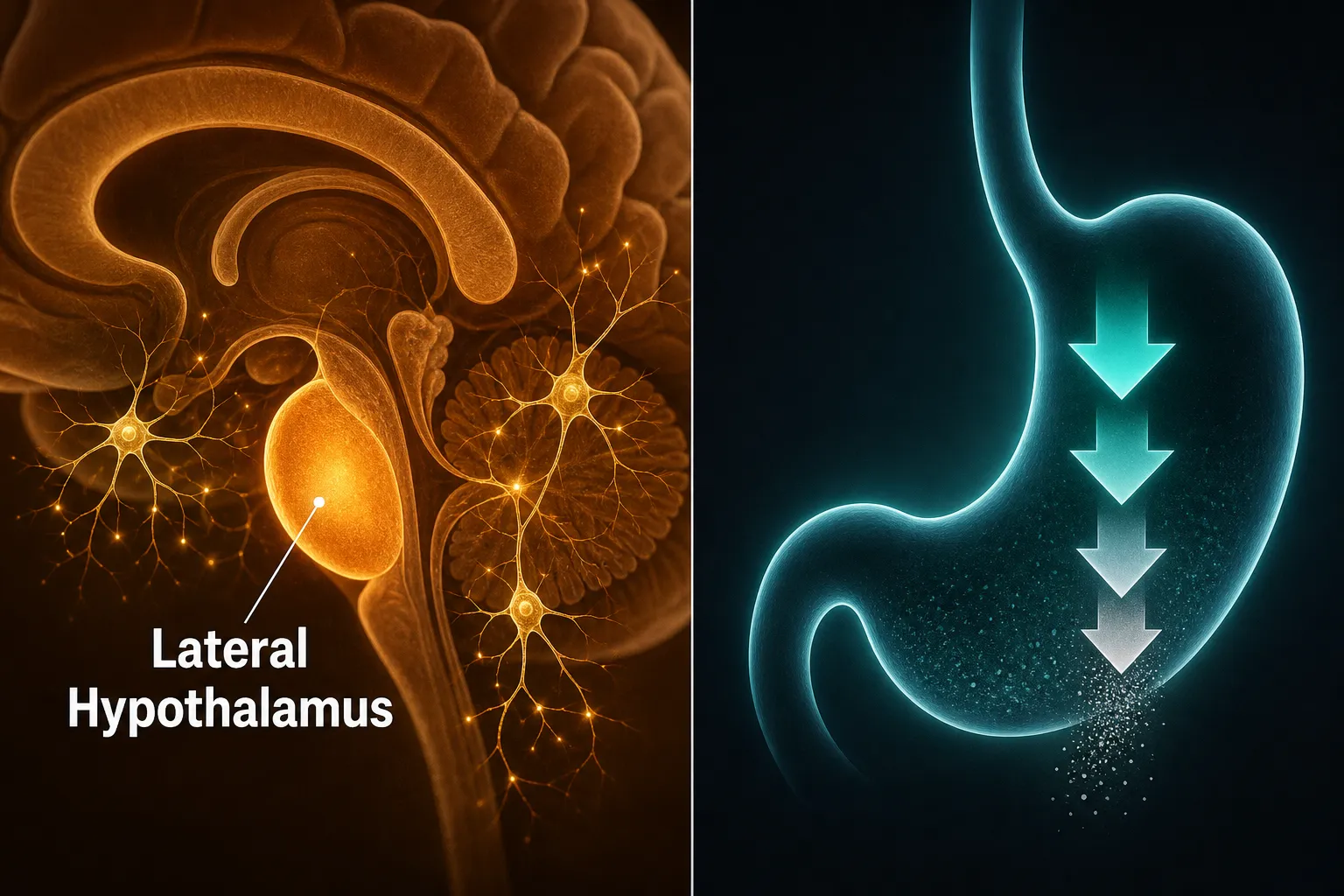
  • Appetite suppression appears to involve GABAergic neuron silencing in the lateral hypothalamus and indirect adrenoceptor and dopamine receptor stimulation.
  • As of 2026, tesofensine has not received regulatory approval for obesity treatment, and research continues to refine its safety profile.

Understanding the Mechanism Behind Tesofensine Peptide Research

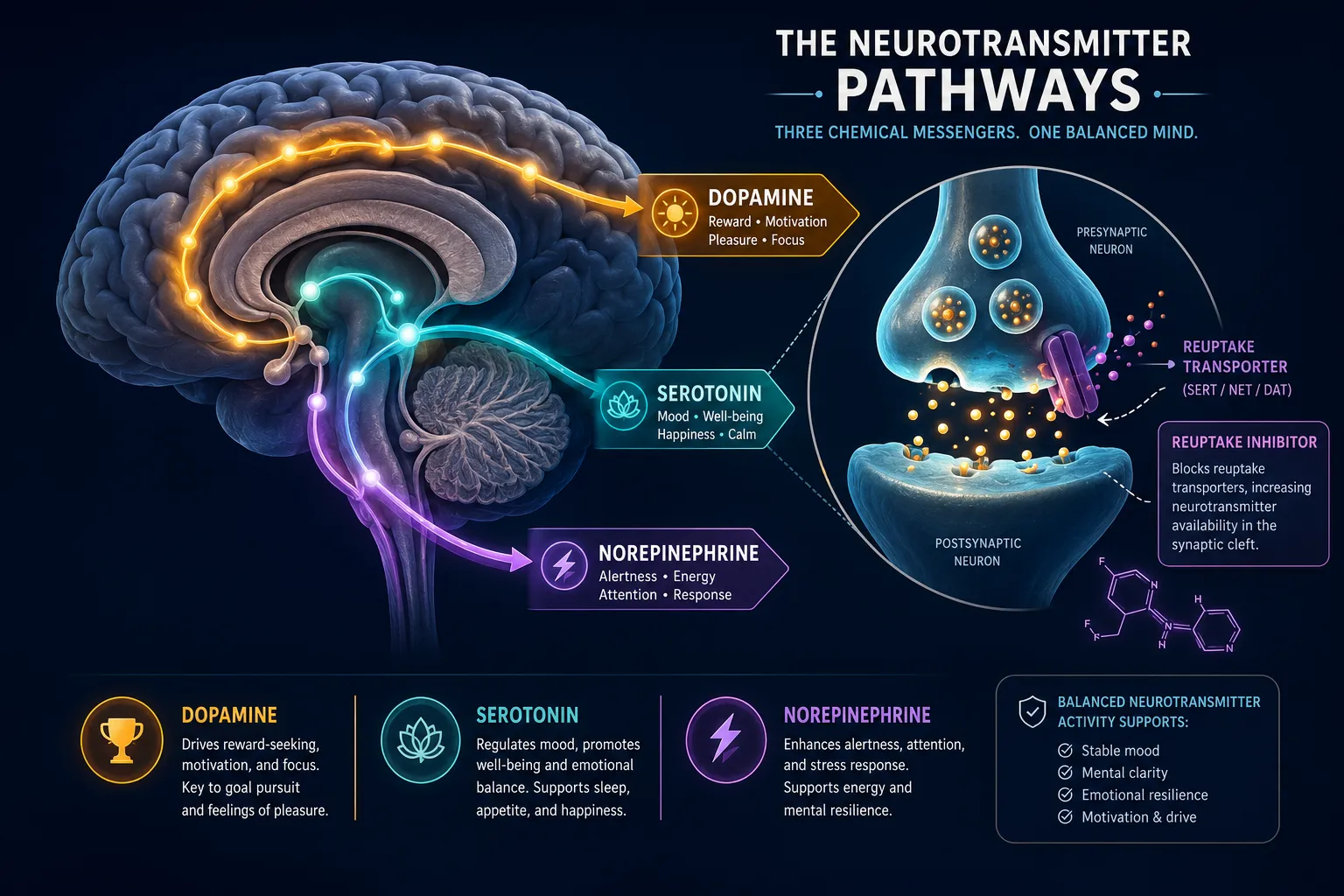
Tesofensine operates as a triple monoamine reuptake inhibitor (TMRI). Its primary action is blocking presynaptic transporters responsible for clearing dopamine, norepinephrine, and serotonin from the synaptic cleft. By preventing reuptake, tesofensine raises extracellular concentrations of all three neurotransmitters simultaneously, a broader mechanism than compounds that target only one or two pathways.

This multi-target approach distinguishes tesofensine from older single-mechanism agents. The elevated monoamine activity produces downstream effects across several brain regions involved in energy balance, reward processing, and satiety signaling.

Key neurotransmitter roles in tesofensine's mechanism:

Neurotransmitter Primary Role in Energy Balance
Dopamine Reward signaling, motivation to eat
Norepinephrine Sympathetic activation, thermogenesis
Serotonin Satiety, mood, food intake regulation

Research in diet-induced obese (DIO) rat models showed that tesofensine reverses abnormally low forebrain dopamine levels, a deficit commonly observed in obesity. Restoring dopamine tone appears to reduce the reward-driven motivation to overeat, contributing meaningfully to caloric restriction without direct appetite suppression alone.

For researchers exploring how metabolic peptides interact with neurotransmitter systems, understanding compounds like tesa and its metabolic effects offers useful comparative context for how different mechanisms produce body composition changes.

Appetite Suppression Pathways: What the Research Shows

Appetite Suppression Pathways: What the Research Shows

Tesofensine peptide research on mechanism, appetite suppression, and neuropeptide Y pathways reveals that hunger reduction is not a single-step process. Multiple neural circuits are engaged.

Lateral Hypothalamus and GABAergic Neurons

Recent research points to a compelling mechanism: tesofensine may silence GABAergic (inhibitory) neurons in the lateral hypothalamus (LH). The lateral hypothalamus is classically known as a hunger-promoting region. When GABAergic neurons in this area are suppressed, the net effect is reduced drive to seek and consume food.

"Silencing inhibitory neurons in a hunger-promoting brain region creates a functional brake on appetite, a mechanism distinct from simple satiety signaling."

This finding suggests tesofensine's appetite effects go beyond monoamine elevation and involve direct modulation of hypothalamic circuitry.

Adrenoceptor and Dopamine Receptor Involvement

Studies in DIO rats demonstrated that tesofensine suppresses appetite through indirect stimulation of alpha-1 adrenoceptors and dopamine D1 receptors. These receptor pathways are not directly activated by tesofensine itself, rather, elevated norepinephrine and dopamine levels produced by reuptake inhibition create the downstream receptor stimulation.

This indirect mechanism has important implications for researchers studying metabolic modulation compounds and how receptor selectivity shapes both efficacy and side effect profiles.

Phase 2 Clinical Trial Findings

In a Phase 2 clinical trial, tesofensine produced approximately 10% body weight reduction in participants, a result that significantly outperformed placebo and compared favorably to other approved anti-obesity agents at the time. However, dose-dependent increases in heart rate and blood pressure emerged as consistent findings, raising cardiovascular safety concerns that have since slowed regulatory progress.

Neuropeptide Y Pathways and Tesofensine: Current Research Landscape

Neuropeptide Y Pathways and Tesofensine: Current Research Landscape

Neuropeptide Y Pathways and Tesofensine: Current Research Landscape

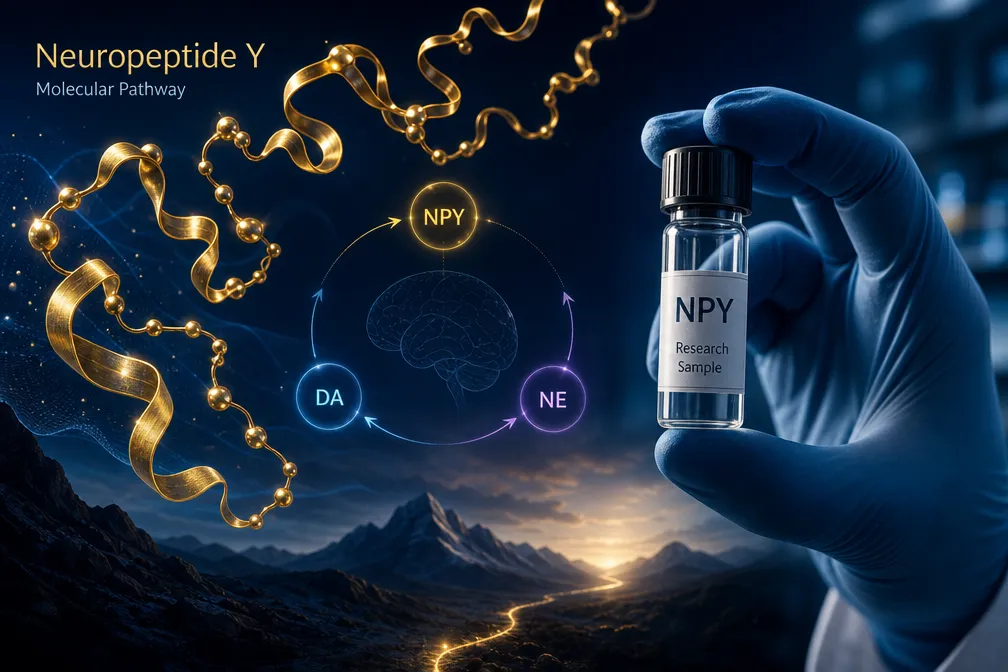
Neuropeptide Y (NPY) is one of the most potent appetite-stimulating peptides in the central nervous system. It is produced primarily in the arcuate nucleus of the hypothalamus and acts on multiple receptor subtypes (Y1 through Y5) to promote food intake, reduce energy expenditure, and regulate fat storage.

The intersection of tesofensine peptide research on mechanism, appetite suppression, and neuropeptide Y pathways is an area of active scientific interest, though not without important caveats.

What current research suggests:

  • Elevated dopamine and norepinephrine levels from tesofensine's reuptake inhibition may indirectly modulate NPY neuronal activity, since monoaminergic neurons interact with NPY-expressing cells in the hypothalamus.
  • Norepinephrine, in particular, has well-established inhibitory effects on NPY release via alpha-2 adrenoceptor signaling in the arcuate nucleus.
  • However, direct, conclusive evidence that tesofensine specifically targets NPY receptor subtypes has not been established in published literature as of 2026.

This distinction matters for researchers. Tesofensine likely influences NPY pathways as a secondary consequence of monoamine elevation rather than as a primary pharmacological target. Understanding this distinction helps frame tesofensine within the broader landscape of appetite-regulating compounds.

Researchers interested in complementary metabolic peptide mechanisms may also find value in reviewing MOTS-c mitochondrial research themes and SLU-PP-332 metabolic research for comparative mechanistic insights.

Regulatory and Safety Status in 2026

As of 2026, tesofensine has not received regulatory approval for obesity treatment from the FDA or EMA. The cardiovascular concerns, primarily elevated heart rate and blood pressure at therapeutic doses, remain the primary obstacle. Ongoing research is exploring whether lower doses combined with adjunct therapies might preserve efficacy while reducing cardiovascular burden.

For researchers building a broader understanding of peptide-based metabolic research, the ultimate guide to peptide therapy provides foundational context, while tesofensine product research information offers compound-specific details.

Conclusion

Tesofensine represents a scientifically compelling case study in how unexpected clinical findings, in this case, significant weight loss during neurodegenerative disease trials, can redirect an entire research program. Its triple monoamine reuptake inhibition mechanism, combined with evidence of lateral hypothalamic GABAergic neuron silencing and indirect NPY pathway modulation, makes it a multifaceted compound for researchers studying metabolic health.

Actionable next steps for researchers in 2026:

  • Review published Phase 2 trial data to understand the dose-response relationship between tesofensine and cardiovascular outcomes.
  • Examine preclinical DIO rat studies for detailed mechanistic data on adrenoceptor and dopamine D1 receptor involvement.
  • Explore how tesofensine's monoaminergic effects may interact with NPY-expressing arcuate nucleus neurons in future study designs.
  • Consider comparative analysis with GLP-1 pathway compounds to contextualize tesofensine's mechanism within the broader anti-obesity pharmacology landscape.
  • Monitor regulatory developments, as ongoing safety refinement research may shift tesofensine's clinical status.

The science surrounding tesofensine continues to evolve. For researchers committed to understanding novel compounds in metabolic health and weight management, it remains a high-value subject worthy of rigorous investigation.

https://www.puretestedpeptides.com/wp-content/uploads/2026/07/tesofensine-peptide-research-mechanism-appetite-suppression-and-neuropeptide-y-p.webp 672 1008 Pure Tested https://www.puretestedpeptides.com/wp-content/uploads/2026/01/buy-peptides-online.jpg Pure Tested2026-07-24 13:04:522026-07-27 13:32:07Tesofensine Peptide Research: Mechanism, Appetite Suppression, and Neuropeptide Y Pathways
×

Helpful Links

  • My account
  • Cart
  • Checkout
  • Refund and Returns Policy
  • Privacy Policy
  • SMS Privacy Policy
  • Login
  • My Account
  • Logout
  • About
  • Contact
  • COA / Lab Testing
  • Shipping Policy
  • Terms and Conditions
  • Research Use Disclaimer

USA Made Lab Tested Peptides

All products are sold for research, laboratory, or analytical purposes only, and are not for human consumption


Pure Tested Peptides is a chemical supplier. Pure Tested Peptides is not a compounding / chemical compounding facility as defined under 503A of the Federal Food, Drug, and Cosmetic act. Pure Tested Peptides is not an outsourcing facility as defined under 503B of the Federal Food, Drug, and Cosmetic act.

The statements made within this website have not been evaluated by the US Food and Drug Administration. The products we offer are not intended to diagnose, treat, cure or prevent any disease.

Human/Animal Consumption Prohibited. Laboratory/In-Vitro Experimental Use Only

Scroll to top Scroll to top Scroll to top