Call or Text 727-513-9780
  • Shopping Cart Shopping Cart
    0Shopping Cart
Pure Tested Peptides | America's most trusted Peptides for sale online
  • Peptides for sale
    • Oral Peptides for sale
      • Peptide Capsules for sale
      • BPC 157 Capsules 1000mcg
      • SLU-PP-332 Capsules | 1000 mcg
      • 5-Amino-1MQ 50mg Capsules
      • Tesofensine 500mcg
    • All Peptides for sale
    • Peptide Sprays
      • BPC 157 Nasal Spray Kit
      • BPC-157 TB500 Nasal Spray Kit
      • Semax Nasal Spray 10mg
      • Selank – Nasal Spray Kit – 10mg
      • Epithalon 50MG Nasal Spray Kit
      • Ipamorelin 10mg Nasal Spray
      • Klow Nasal Spray (BPC-157 + TB-500 + GHK-Cu + KPV) | 80mg
      • Hulk Nasal Spray Tesa / Ipa Blend 6/3 MG
      • Klow Nasal Spray
      • NAD + 500 mg Nasal Spray
      • PT-141 Nasal Spray Kit
    • GHRH Peptides
      • Ipa Peptides
      • CJC-1295 Peptides
        • CJC-1295 with DAC 5 mg
        • CJC-1295 without DAC 5 mg
        • CJC-1295 Ipa 10mg
      • Tesa Peptides
        • Tesa Peptide
        • Tesa 20 mg
    • GHK-Cu Peptides
      • All GHK-Cu Peptides
      • GHK-Cu 100mg
      • KLOW Peptide Blend – Buy KLOW blend online
    • BPC Peptides
      • All BPC Peptides
      • BPC-157
      • BPC-157 TB-500
      • BPC 157 capsules 1000mcg
    • SLU-PP-332 Peptides
      • All SLU-PP-332 Peptides
      • SLU-PP-332 5mg
    • GLP3 Peptides
    • PT-141 Peptides
      • PT-141 Peptides for sale
      • PT-141 10mg
      • PT-141 Nasal Spray
    • CAG Peptides
      • Lipo-C Peptide Blend
      • CAG 5mg
      • CAG 10mg
    • MOTS-C Peptides
      • MOTS-C Peptides for sale
      • MOTS-c peptide
      • MOTS-c 10mg *6 pack*
    • 5 Amino 1MQ Peptides
      • 5 Amino 1MQ Peptides for sale
      • 5-Amino-1MQ 50mg Capsules
      • 5-Amino-1MQ 5mg
    • Epithalon Peptides
      • Epithalon Peptides for sale
      • Epithalon 10mg
      • Epithalon 50mg
  • Shop
    • GLPs
      • 5-Amino-1MQ 50mg Capsules
      • 5-Amino-1MQ 5mg
      • L-Carnitine 500mg/ml
      • Tesofensine 500mcg
      • SLU-PP-332 5mg
      • MOTS-c 10mg *6 pack*
    • Epithalon & BPC Peptides
      • Epithalon 10mg
      • Epithalon 50mg
      • BPC-157
      • BPC 157 capsules 1000mcg
      • BPC-157 TB-500
      • BPC-157 TB500 Nasal Spray Kit
      • BPC 157 Nasal Spray Kit
    • BPC TB-500 & NAD+ Peptides
      • NAD+ 500 mg
      • KLOW Peptide Blend – Buy KLOW blend online
      • GLOW Peptide Blend
      • TB 500 5mg
      • BPC 157 capsules 1000mcg – Supplement
      • BPC 157 Nasal Spray Kit
      • BPC-157
      • BPC-157 TB500 Nasal Spray Kit
      • BPC-157 TB-500
      • BPC 157 capsules 1000mcg
    • LL-37 Peptide
      • LL-37 10 mg
    • MOTS-C & Selank
      • MOTS-c peptide
      • Selank 10mg
    • GHK Peptides
      • GHK-Cu 100mg
      • GLOW Peptide Blend
      • KLOW Peptide Blend – Buy KLOW blend online
  • COAs
  • Wholesale
    • Wholesale Peptides for sale
  • PTP FAQ
  • Affiliates
    • Selank Peptide: Advanced Pharmacological Mechanisms Underlying Its Anxiolytic and Nootropic Effects in Research
      • 5-Amino-1MQ Peptide: Detailed Mechanisms of NNMT Inhibition and Its Impact on Cellular Metabolism Research
        • MOTS-C Peptide: Unraveling Its Role in Mitochondrial Dynamics and Energy Metabolism Research
          • Epithalon Peptide and Telomerase Regulation: Investigating Its Impact on Cellular Senescence and Lifespan Research Models
            • GLP2-T vs GLP2 Tirz Peptide: Understanding the Naming, Mechanistic Nuances, and Research Implications for Gut Health
      • Peptides and Polypeptides in Modern Pharmacology: What Research on Metoprolol, Prednisone, and Amlodipine Reveals
        • Polypeptide Peptides vs NSAIDs: What Naproxen and Diclofenac Teach Tissue-Repair Researchers About BPC‑157 and TB‑500
          • Peptides and Polypeptides in Endocrine Pharmacology: How GLP-1, GLP-2, and GLP-3 Retatrutide Differ From Classic Drugs Like Prednisone and Amlodipine
          • 5‑Amino‑1MQ Peptide and NNMT Inhibition: How It Compares With Statins Like Atorvastatin in Adipose and Lipid Metabolism Research
      • Enclomiphene, Estrogen Receptor Signaling, and Luteinizing Phase Biology: What Hormone Researchers Should Measure
        • Mesenchymal Stem Cells, BPC‑157, and GHK‑Cu: How Tissue Repair Peptides Compare With Classic NSAIDs Like Naproxen in Injury Models
          • Peptide Calculator Use Cases Beyond Growth Hormone: Working Through GLP‑3 Retatrutide, MOTS‑c, and BPC‑157 Research Dosing
        • Polypeptide Peptides in Endocrine and Metabolic Pharmacology: Lessons From Amlodipine, Prednisone, and Metoprolol
        • Peptides Calculator for Advanced Blends: Worked Examples for Tesamorelin, CJC‑1295, and Ipamorelin Stacks
          • Peptides and Polypeptides in Human Physiology: How Molecular Size Shapes Research Applications
            • Selank Peptide: Advanced Pharmacological Mechanisms Underlying Its Anxiolytic and Nootropic Effects in Research
          • 5-Amino-1MQ Peptide: Detailed Mechanisms of NNMT Inhibition and Its Impact on Cellular Metabolism Research
            • MOTS-C Peptide: Unraveling Its Role in Mitochondrial Dynamics and Energy Metabolism Research
              • Epithalon Peptide and Telomerase Regulation: Investigating Its Impact on Cellular Senescence and Lifespan Research Models
                • GLP2-T vs GLP2 Tirz Peptide: Understanding the Naming, Mechanistic Nuances, and Research Implications for Gut Health
                  • Peptides and Polypeptides in Endocrine Pharmacology: How GLP-1, GLP-2, and GLP-3 Retatrutide Differ From Classic Drugs Like Prednisone and Amlodipine
                    • Polypeptide Peptides vs NSAIDs: What Naproxen and Diclofenac Teach Tissue-Repair Researchers About BPC‑157 and TB‑500
                      • Peptides and Polypeptides in Modern Pharmacology: What Research on Metoprolol, Prednisone, and Amlodipine Reveals
                        • 5‑Amino‑1MQ Peptide and NNMT Inhibition: How It Compares With Statins Like Atorvastatin in Adipose and Lipid Metabolism Research
                        • Enclomiphene, Estrogen Receptor Signaling, and Luteinizing Phase Biology: What Hormone Researchers Should Measure
                        • Mesenchymal Stem Cells, BPC‑157, and GHK‑Cu: How Tissue Repair Peptides Compare With Classic NSAIDs Like Naproxen in Injury Models
                        • Peptide Calculator Use Cases Beyond Growth Hormone: Working Through GLP‑3 Retatrutide, MOTS‑c, and BPC‑157 Research Dosing
                        • Polypeptide Peptides in Endocrine and Metabolic Pharmacology: Lessons From Amlodipine, Prednisone, and Metoprolol
                        • Peptides Calculator for Advanced Blends: Worked Examples for Tesamorelin, CJC‑1295, and Ipamorelin Stacks
                        • Peptides and Polypeptides in Human Physiology: How Molecular Size Shapes Research Applications
                        • Selank Peptide: Advanced Pharmacological Mechanisms Underlying Its Anxiolytic and Nootropic Effects in Research
                        • MOTS-C Peptide: Unraveling Its Role in Mitochondrial Dynamics and Energy Metabolism Research
                        • Peptides and Polypeptides in Modern Pharmacology: What Research on Metoprolol, Prednisone, and Amlodipine Reveals
                        • Peptides and Polypeptides in Endocrine Pharmacology: How GLP-1, GLP-2, and GLP-3 Retatrutide Differ From Classic Drugs Like Prednisone and Amlodipine
                        • 5-Amino-1MQ Peptide: Detailed Mechanisms of NNMT Inhibition and Its Impact on Cellular Metabolism Research
                        • Mesenchymal Stem Cells, BPC‑157, and GHK‑Cu: How Tissue Repair Peptides Compare With Classic NSAIDs Like Naproxen in Injury Models
                        • Peptide Calculator Use Cases Beyond Growth Hormone: Working Through GLP‑3 Retatrutide, MOTS‑c, and BPC‑157 Research Dosing
                        • GLP2-T vs GLP2 Tirz Peptide: Understanding the Naming, Mechanistic Nuances, and Research Implications for Gut Health
                        • Polypeptide Peptides in Endocrine and Metabolic Pharmacology: Lessons From Amlodipine, Prednisone, and Metoprolol
                        • Polypeptide Peptides vs NSAIDs: What Naproxen and Diclofenac Teach Tissue-Repair Researchers About BPC‑157 and TB‑500
                        • Peptides and Polypeptides in Human Physiology: How Molecular Size Shapes Research Applications
                        • Peptides Calculator for Advanced Blends: Worked Examples for Tesamorelin, CJC‑1295, and Ipamorelin Stacks
                        • 5‑Amino‑1MQ Peptide and NNMT Inhibition: How It Compares With Statins Like Atorvastatin in Adipose and Lipid Metabolism Research
                        • Enclomiphene, Estrogen Receptor Signaling, and Luteinizing Phase Biology: What Hormone Researchers Should Measure
                        • Epithalon Peptide and Telomerase Regulation: Investigating Its Impact on Cellular Senescence and Lifespan Research Models
                        • Best research protocol Klow blend
                        • best time to take BPC-157
                        • best time to take DSIP (Delta Sleep Inducing Peptide)
                        • best time to take CJC-1295
                        • best time to take AOD-9604
                        • best time to take Follistatin 344
                        • best time to take Ipamorelin
                        • best time to take MK-677 (Ibutamoren)
                        • best time to take Ligandrol (LGD-4033) — research compound
                        • best time to take Ostarine (MK-2866) — research compound
                        • best time to take GHK-CU
                        • best time to take TB-500
                        • best time to take MOTS-c
                        • best time to take Semax
                        • best time to take RAD-140 (Testolone) — research compound
                        • best time to take Thymosin Alpha-1
                        • best time to take PEG-MGF
                        • Biolife Plasma, Octapharma Plasma, and Research Peptides: How Plasma Donation Labs Differ From Peptide Suppliers
                        • best time to take YK-11 — research compound
                        • best time to take PT-141 (Bremelanotide)
                        • Best research protocol Klow blend
                        • 5-Amino-1MQ and MOTS-C Synergy: Metabolic Signaling, Mitochondria, and Research Design
                        • BPC-157 and TB-500: Investigating Their Combined Effects on Angiogenesis and Cellular Migration in Tissue Repair Models
                        • BPC-157 Peptide: Gut Barrier Function, Inflammation, and Tissue-Recovery Research
                        • 5‑Amino‑1MQ and MOTS‑c Synergy in Metabolic Research: Designing NNMT and Mitochondrial Biogenesis Stacks
                        • CJC-1295 with DAC vs. Without DAC: Half-Life, Release Kinetics, and Research Implications
                        • CJC‑1295 with DAC vs. Without DAC: Expanding on Half‑Life Differences Using Tesamorelin and Ipamorelin Blend Case Studies
                        • Collagen Biology and Copper‑Binding Peptides: How GHK‑Cu, Glow Blend, and Klow Blend Interact with Skin and Connective Tissue
                        • Collagen Biology and Regenerative Peptides: How GHK‑Cu, Glow Blend, and Klow Blend Affect Extracellular Matrix Research
                    • DNA, Telomeres, and Longevity Peptides: Positioning Epithalon and MOTS‑c in Genetic Aging Research
                      • Enclomiphene Citrate: serm Mechanism, Testosterone Research, and Stack Compatibility
                        • Enclomiphene vs Enclomiphene Citrate: Formulation, Bioavailability, and Research Distinctions
                        • Epithalon Peptide Research: Telomerase Activation, Aging, and Pineal Gland Function
                        • Estrogen Receptor Signaling and Enclomiphene: How Selective Modulators Compare with Classic Polypeptide Hormones
                        • GHK-Cu Peptide: Advanced Mechanisms in Extracellular Matrix Remodeling and Wound Healing Research
                        • GHK-Cu Peptide: Collagen Synthesis, Wound Repair, and Skin-Barrier Research Models
                        • GLP-1 vs GLP-3 vs GLP-2: Peptide Classification and Research Applications
                        • GLP-2 Peptide Research Guide: Gut Barrier Function, Nutrient Absorption, and Intestinal Recovery Models
                        • GLP-3 Retatrutide vs. GLP-1 Drugs: What Triple-Agonist Biology Changes in Research Models
                        • Ipamorelin and Tesamorelin Combination: Synergistic GH Secretagogue Research and Dosing Protocols
                        • GLP2 Tirz Peptide: What It Is, Why the Name Exists, and How Researchers Should Interpret It
                        • Klow Blend Peptide Nasal Spray: What the Formulation Is Trying to Do in Cognitive Research
                        • Mitochondria, NNMT Inhibition, and Peptide Modulators: Where MOTS‑c and 5‑Amino‑1MQ Fit in Cellular Energy Research
                        • MOTS-c Peptide: Mitochondrial Function, Energy Metabolism, and What Researchers Measure
                        • MOTS-c vs. 5-Amino-1MQ: Which Metabolic Research Questions Each Compound Actually Answers
                        • Nasal Spray Peptides: Bioavailability, Administration, and Semax/Selank Research Applications
                        • PT-141 Peptide Research: Mechanism of Action and Melanocortin Receptor Signaling
                        • Retatrutide for Research: Mechanism, Structure, and GLP-1/GLP-3 Dual Action
                        • Retatrutide for Obesity and Type 2 Diabetes: What the Latest Trial Data Suggest
                        • Tesofensine Peptide Research: Mechanism, Appetite Suppression, and Neuropeptide Y Pathways
  • Contact
    • Contact Customer Service
    • Text Customer Support
  • About US
  • Shop all peptides
  • Affiliate Program
    • Affiliate Signup
  • Login / Register Login / Register Page Link Login / Register Page Link
  • Click to open the search input field Click to open the search input field Search
  • Menu Menu

Tag Archive for: orforglipron

Retatrutide Research Alternatives: Comparing Incretin Peptides, Tesofensine, and Metabolic Small Molecules by Endpoint Fit

Retatrutide Research Alternatives: Comparing Incretin Peptides, Tesofensine, and Metabolic Small Molecules by Endpoint Fit

October 9, 2026/0 Comments/in Uncategorized/by

Selecting the wrong compound for a metabolic research model does not just waste resources, it produces uninterpretable data. That problem is the core reason why retatrutide research alternatives: comparing incretin peptides, tesofensine, and metabolic small molecules by endpoint fit has become one of the most practical questions in preclinical and translational obesity science as of 2026. With retatrutide's TRIUMPH phase 3 program delivering landmark results, including a 23.7% mean body-weight reduction at 68 weeks in the TRIUMPH-4 trial, researchers now need a rigorous framework for matching comparator compounds to specific endpoint targets, not to marketing claims.

Key Takeaways

  • Retatrutide's triple agonist mechanism (GLP-1, GIP, glucagon receptors) produces the broadest endpoint coverage of any current incretin peptide, making it a high-bar comparator.
  • Dual incretin peptides like tirzepatide suit glucose and lipid endpoints but offer narrower energy-expenditure signaling than triple agonists.
  • Oral GLP-1 small molecules such as orforglipron expand access research but carry less mature phase 3 data than injectable incretin peptides.
  • Tesofensine addresses catecholamine and central appetite pathways but carries cardiovascular safety concerns that limit endpoint compatibility.
  • Model selection should begin with the primary endpoint, appetite, glucose, lipid, energy expenditure, catecholamine, or receptor signaling, before choosing a compound.

Why Endpoint Fit Matters More Than Compound Popularity

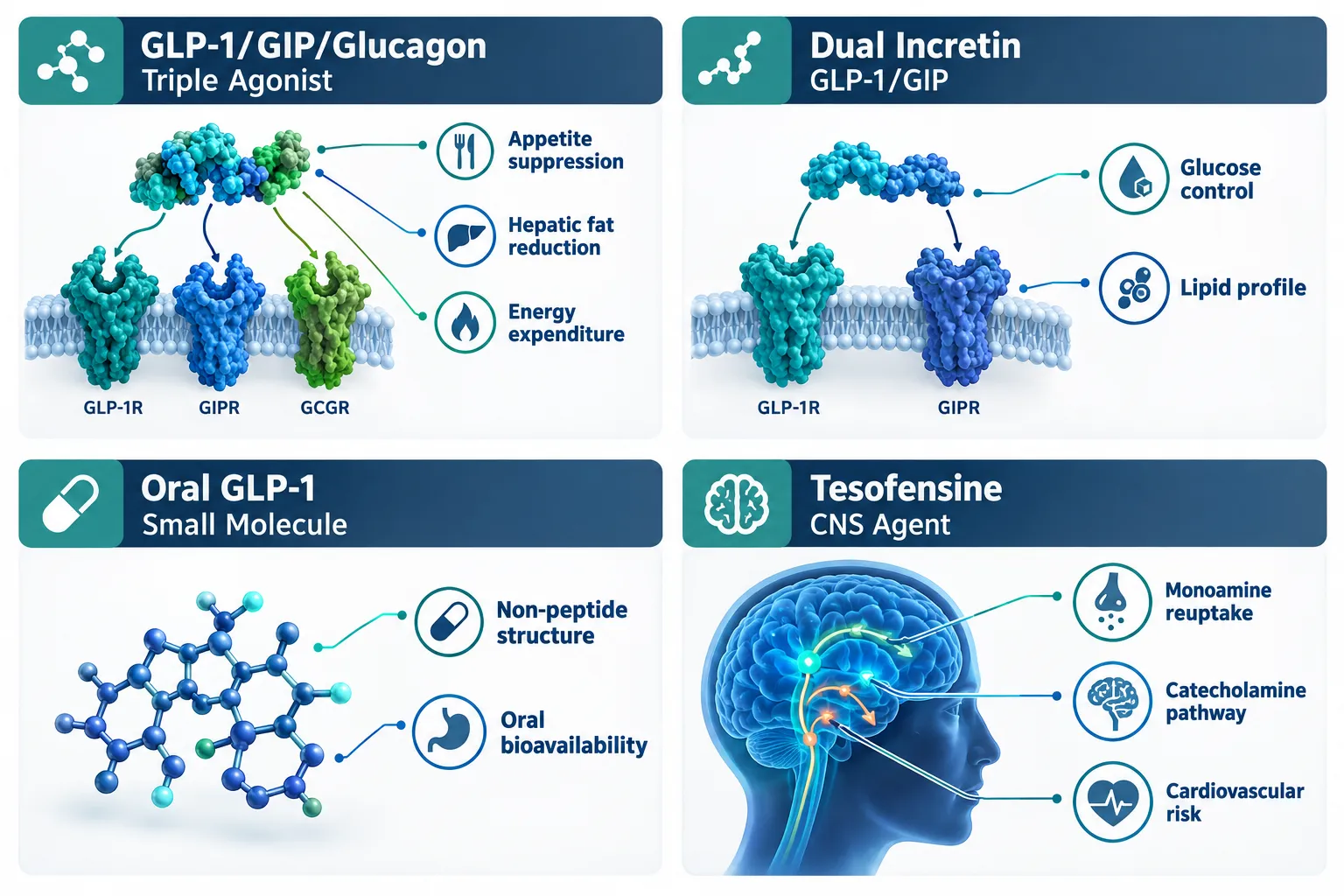
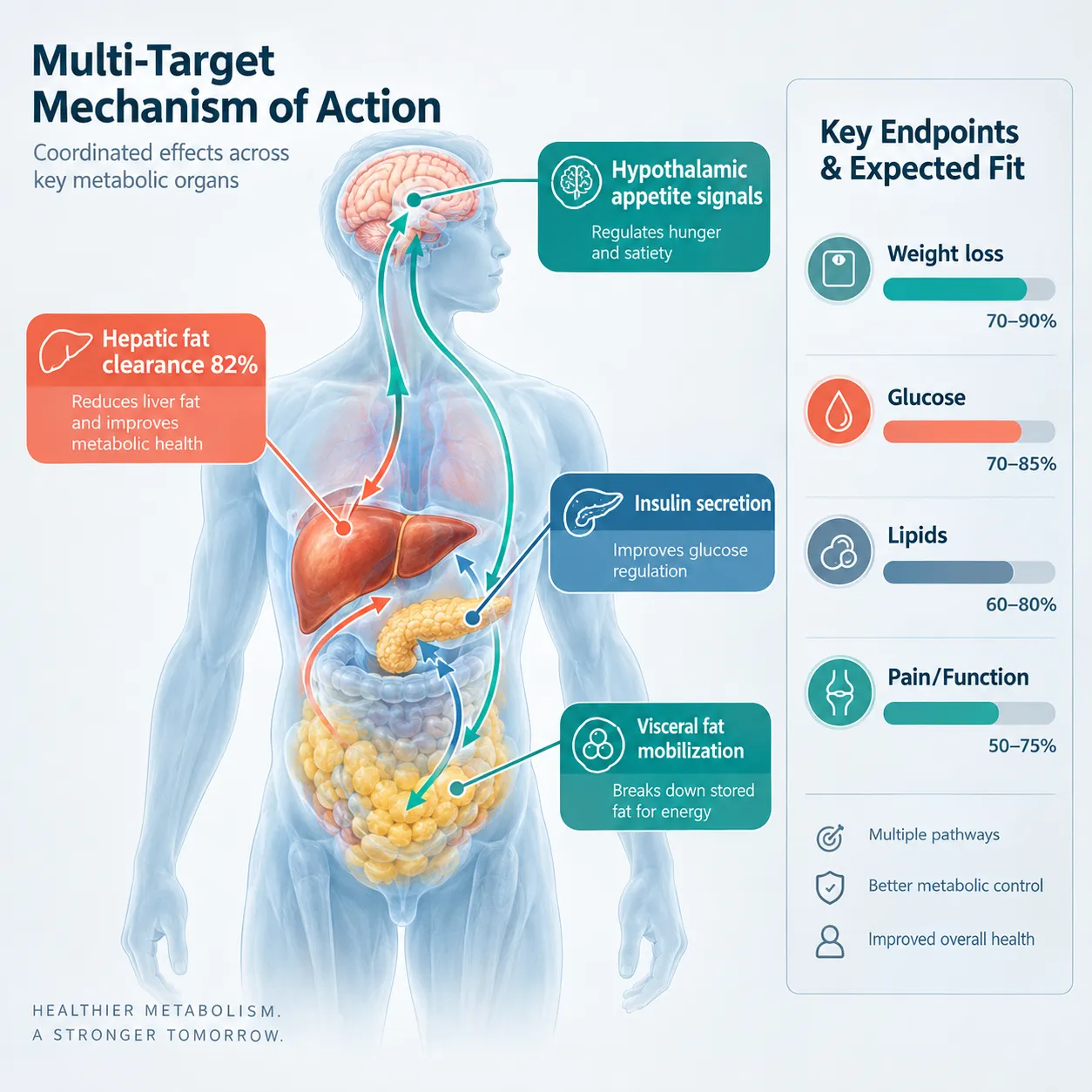
The metabolic research field in 2026 is crowded with potent compounds, and popularity is a poor proxy for scientific fit. Retatrutide simultaneously activates GLP-1, GIP, and glucagon receptors, generating overlapping signals across appetite suppression, hepatic fat clearance, insulin secretion, and thermogenesis. Phase 2 data showed approximately 82% relative reduction in liver fat alongside a 24.2% mean weight loss at 48 weeks with the 12 mg dose. That breadth is valuable, but it also means retatrutide is a noisy tool when a study only needs to isolate one pathway.
Why Endpoint Fit Matters More Than Compound Popularity

A decision matrix built around the primary research endpoint cuts through this complexity. The six endpoint categories most relevant to metabolic compound selection are:

  • Appetite / satiety signaling, hypothalamic and vagal pathways
  • Glucose homeostasis, insulin secretion, HbA1c, fasting plasma glucose
  • Lipid metabolism, hepatic fat, triglycerides, LDL/HDL profiles
  • Energy expenditure, thermogenesis, resting metabolic rate, glucagon-driven brown adipose activation
  • Catecholamine / monoamine signaling, dopamine, norepinephrine, serotonin reuptake
  • Receptor-level signaling fidelity, clean agonism at a single receptor vs. multi-receptor crosstalk

Mapping each compound to these categories before designing a protocol prevents the most common error in metabolic research: choosing a compound because it produces the largest weight-loss number rather than because it isolates the pathway under investigation.


Incretin Peptides: Where Retatrutide and Its Closest Alternatives Sit

Among injectable incretin peptides, the comparison landscape in 2026 centers on three tiers of receptor engagement.

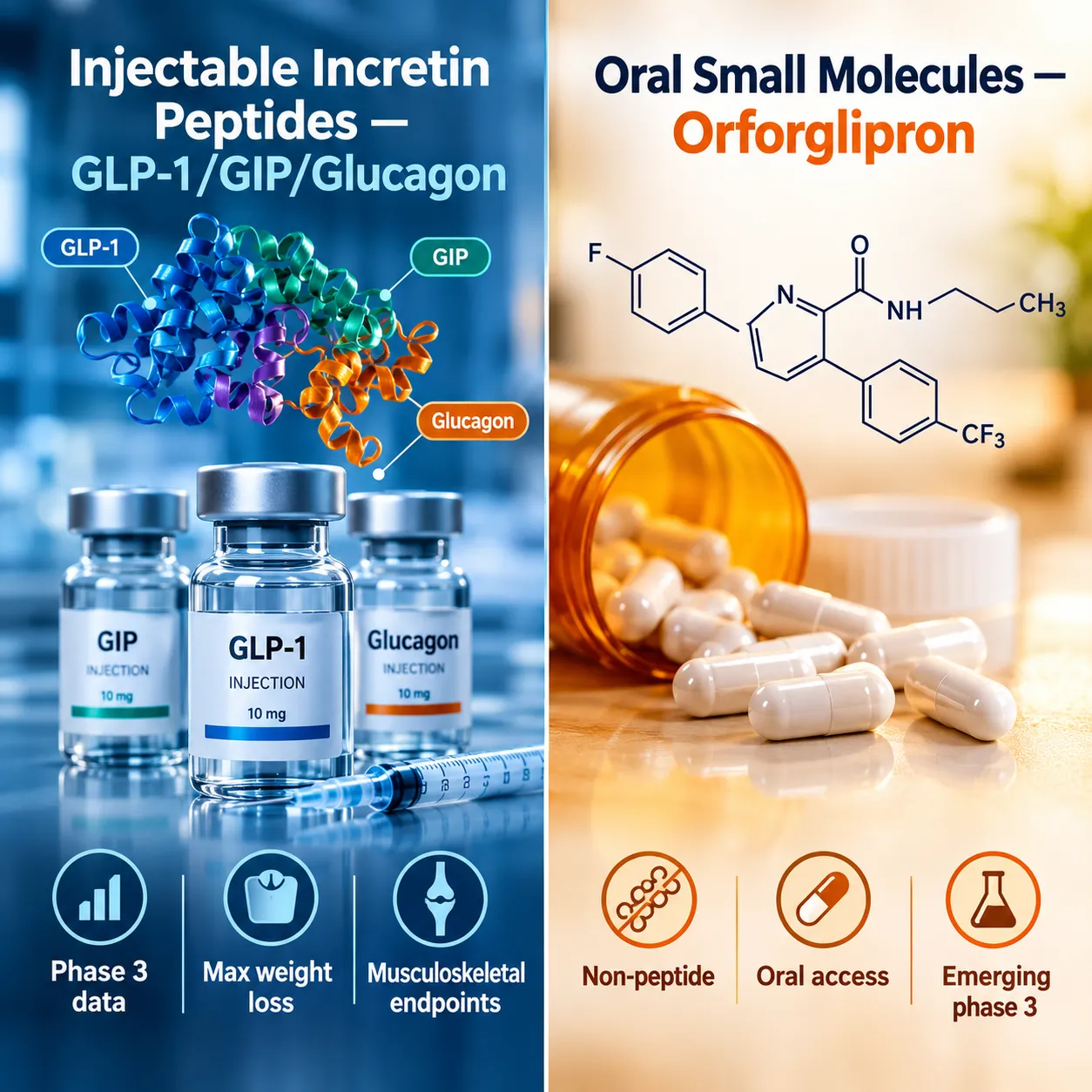
Retatrutide (GLP-1 / GIP / Glucagon triple agonist) is the highest-coverage option. The meta-analytic evidence across three randomized controlled trials confirms mean weight reduction of approximately 14.33%, BMI reduction of 5.38 units, and meaningful improvements in fasting plasma glucose, HbA1c, and blood pressure, all at very low statistical significance thresholds. For researchers studying retatrutide endpoints that span weight, metabolic, and musculoskeletal outcomes simultaneously, this breadth is the primary advantage. The TRIUMPH program's pairing of weight loss with pain endpoints in TRIUMPH-4 (knee osteoarthritis) and TRIUMPH-7 (chronic low back pain) illustrates this endpoint-fit strategy explicitly.

Tirzepatide (GLP-1 / GIP dual agonist) is the closest comparator for glucose and lipid endpoints without glucagon-driven thermogenesis. TRIUMPH-5 will provide direct head-to-head data against retatrutide in obesity, which will clarify how much the glucagon arm contributes to incremental weight loss and energy expenditure. Until those data arrive, tirzepatide remains the preferred compound when glucagon receptor crosstalk would confound interpretation.

Single GLP-1 receptor agonists (semaglutide class) offer the cleanest receptor-signaling fidelity for studies where isolating GLP-1R biology is the goal. For a broader overview of how these peptide classes are structured mechanistically, the Peptides 101 for Research-Use Only Buyers resource provides a useful structural and mechanistic foundation.

Researchers sourcing GLP-3/retatrutide analogs for preclinical work can review GLP-3 peptides for research use or explore lab tested peptides verified by third-party analysis to ensure compound integrity before endpoint data collection begins.


Tesofensine and Oral Small Molecules: Endpoint Fit for Catecholamine and Access Research
Tesofensine and Oral Small Molecules: Endpoint Fit for Catecholamine and Access Research

Tesofensine: A Legacy CNS Tool With a Narrow Endpoint Window

Tesofensine is a centrally acting triple monoamine reuptake inhibitor, blocking dopamine, norepinephrine, and serotonin reuptake, originally developed for neurodegenerative conditions. In mid-2000s obesity trials, it produced roughly 10-12% weight loss over approximately 24 weeks. That figure is meaningful in absolute terms but is substantially below the 20-24% range seen with retatrutide at higher doses.

More importantly, tesofensine's endpoint fit is narrow and specific:

Endpoint Category Tesofensine Fit Retatrutide Fit
Appetite / CNS satiety Strong (catecholamine) Strong (incretin)
Glucose homeostasis Weak Strong
Hepatic lipid reduction Weak Strong (~82% relative)
Energy expenditure Moderate (sympathomimetic) Strong (glucagon arm)
Cardiovascular safety margin Narrow (HR/BP elevation) Broader (phase 3 data)
Musculoskeletal pain endpoints Not established Active (TRIUMPH-4, 7)

Tesofensine is a legitimate research tool when the study question specifically involves catecholamine-mediated appetite suppression or monoamine pathway modulation. It is not a frontline alternative for glucose, lipid, or energy-expenditure endpoints, and its cardiovascular signal, increased heart rate and blood pressure, introduces confounders in cardiometabolic models. As of 2026, no new phase 3 obesity program for tesofensine has been widely reported, confirming its position as a legacy pharmacologic comparator rather than a contemporary competitor.

Oral GLP-1 Small Molecules: Orforglipron and the Access Endpoint

Orforglipron represents a structurally distinct category: a non-peptide, oral GLP-1 receptor agonist evaluated in the ATTAIN-1 trial for obesity. Its primary research value is not maximum weight-loss magnitude but oral bioavailability and adherence modeling. For studies where the endpoint involves treatment access, patient adherence behavior, or oral-route pharmacokinetics, orforglipron and related oral GLP-1 receptor agonists are the appropriate comparators.

The tradeoff is data maturity. As of early 2026, oral GLP-1 small molecules carry less complete phase 3 obesity data than injectable incretin peptides. Researchers designing studies that will need to reference a robust efficacy benchmark should note this gap when selecting comparators.


Building the Decision Matrix: Matching Compound to Research Question

The practical output of this analysis is a compound-selection protocol driven by the primary endpoint, not by compound prestige. The framework below summarizes the match:

Use retatrutide or a GLP-3 analog when:

  • The primary endpoint spans weight, metabolic markers, and functional outcomes simultaneously
  • Visceral fat research is a core outcome
  • Energy expenditure and glucagon-receptor biology are within scope

Use a dual incretin (tirzepatide class) when:

  • Glucose and lipid endpoints are primary, and glucagon-arm crosstalk would confound
  • Head-to-head incretin comparison is the study design

Use a single GLP-1 agonist when:

  • Receptor-signaling fidelity at GLP-1R alone is required
  • The study needs the cleanest possible GLP-1 pathway attribution

Use tesofensine when:

  • The research question is explicitly about monoamine reuptake inhibition or catecholamine-mediated satiety
  • Cardiovascular confounders are controlled for or are themselves the endpoint

Use oral GLP-1 small molecules when:

  • The endpoint involves oral-route pharmacology, adherence, or access modeling
  • Injectable peptide format is a study constraint
Building the Decision Matrix: Matching Compound to Research Question

Researchers reviewing the full retatrutide clinical trials landscape, including TRIUMPH-1 through TRIUMPH-8, will find that Eli Lilly's own endpoint-fit strategy mirrors this matrix: each TRIUMPH sub-study pairs retatrutide's weight-loss mechanism with a distinct comorbidity endpoint, from knee osteoarthritis pain to chronic low back pain to long-term weight maintenance. That design logic is directly transferable to preclinical model selection.

For researchers sourcing compounds, the TESA IPA blend peptide page offers a relevant example of how multi-mechanism blends are positioned for specific research applications, reinforcing the endpoint-fit principle at the product level.


Conclusion

The most consequential decision in metabolic peptide research is not which compound produces the largest effect size, it is which compound isolates the pathway the study is actually designed to interrogate. Retatrutide research alternatives: comparing incretin peptides, tesofensine, and metabolic small molecules by endpoint fit is not an academic exercise; it is a protocol-design requirement.

Actionable next steps for research teams in 2026:

  1. Define the primary endpoint category first, appetite, glucose, lipid, energy expenditure, catecholamine, or receptor signaling, before shortlisting compounds.
  2. Use retatrutide or GLP-3 analogs for broad metabolic and functional endpoint studies; use single-receptor agonists when signaling fidelity is paramount.
  3. Reserve tesofensine for CNS monoamine pathway studies with appropriate cardiovascular controls.
  4. Monitor TRIUMPH phase 3 readouts through 2026 to update the efficacy benchmarks used in comparator selection.
  5. Verify compound purity through third-party testing before any endpoint data collection begins, using lab tested peptides from verified suppliers.

Endpoint fit, not headline weight-loss numbers, is the standard that produces reproducible, interpretable metabolic research.

https://www.puretestedpeptides.com/wp-content/uploads/2026/10/retatrutide-research-alternatives-comparing-incretin-peptides-tesofensine-and-me.webp 672 1008 https://www.puretestedpeptides.com/wp-content/uploads/2026/01/buy-peptides-online.jpg 2026-10-09 13:10:262026-10-09 13:10:26Retatrutide Research Alternatives: Comparing Incretin Peptides, Tesofensine, and Metabolic Small Molecules by Endpoint Fit
What Is a GLP-1 Pill? Comparing Oral Delivery Concepts With Research-Use GLP-3 Retatrutide Models

What Is a GLP-1 Pill? Comparing Oral Delivery Concepts With Research-Use GLP-3 Retatrutide Models

October 6, 2026/0 Comments/in Uncategorized/by

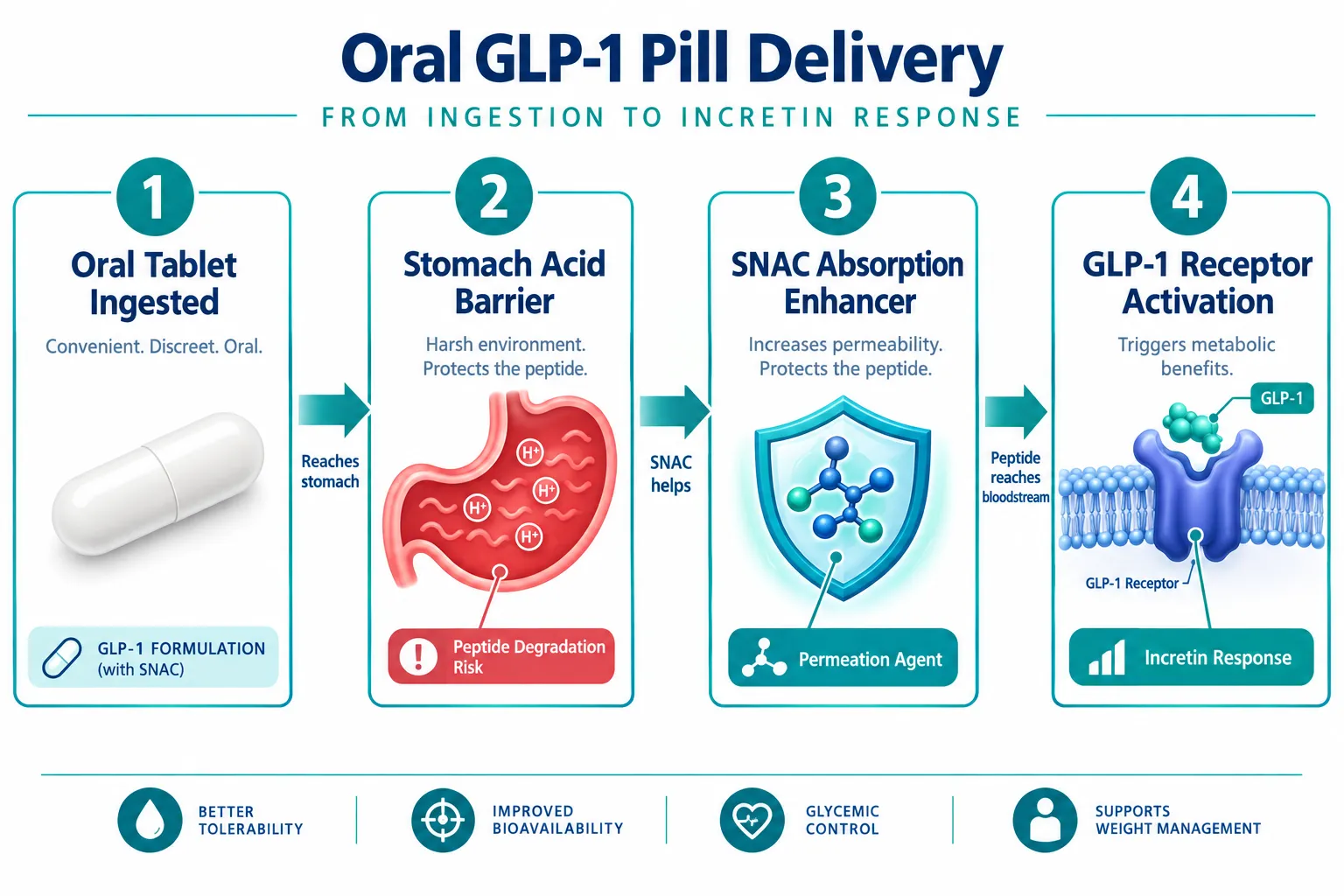
An oral tablet approved for weight loss sounds like a major leap forward, and in 2026, that leap has officially happened. But the question researchers, clinicians, and informed consumers are now asking is whether a GLP-1 pill and an injectable triple agonist like retatrutide are even playing the same game. Understanding what is a GLP-1 pill, comparing oral delivery concepts with research-use GLP-3 retatrutide models, reveals a surprisingly wide gap between two approaches that share a name but differ sharply in mechanism, scope, and research application.

Key Takeaways

  • GLP-1 pills are oral small-molecule drugs that activate the GLP-1 receptor; two were approved in the U.S. in 2026 for obesity.
  • Oral delivery faces significant biochemical barriers, requiring absorption enhancers to survive the digestive tract.
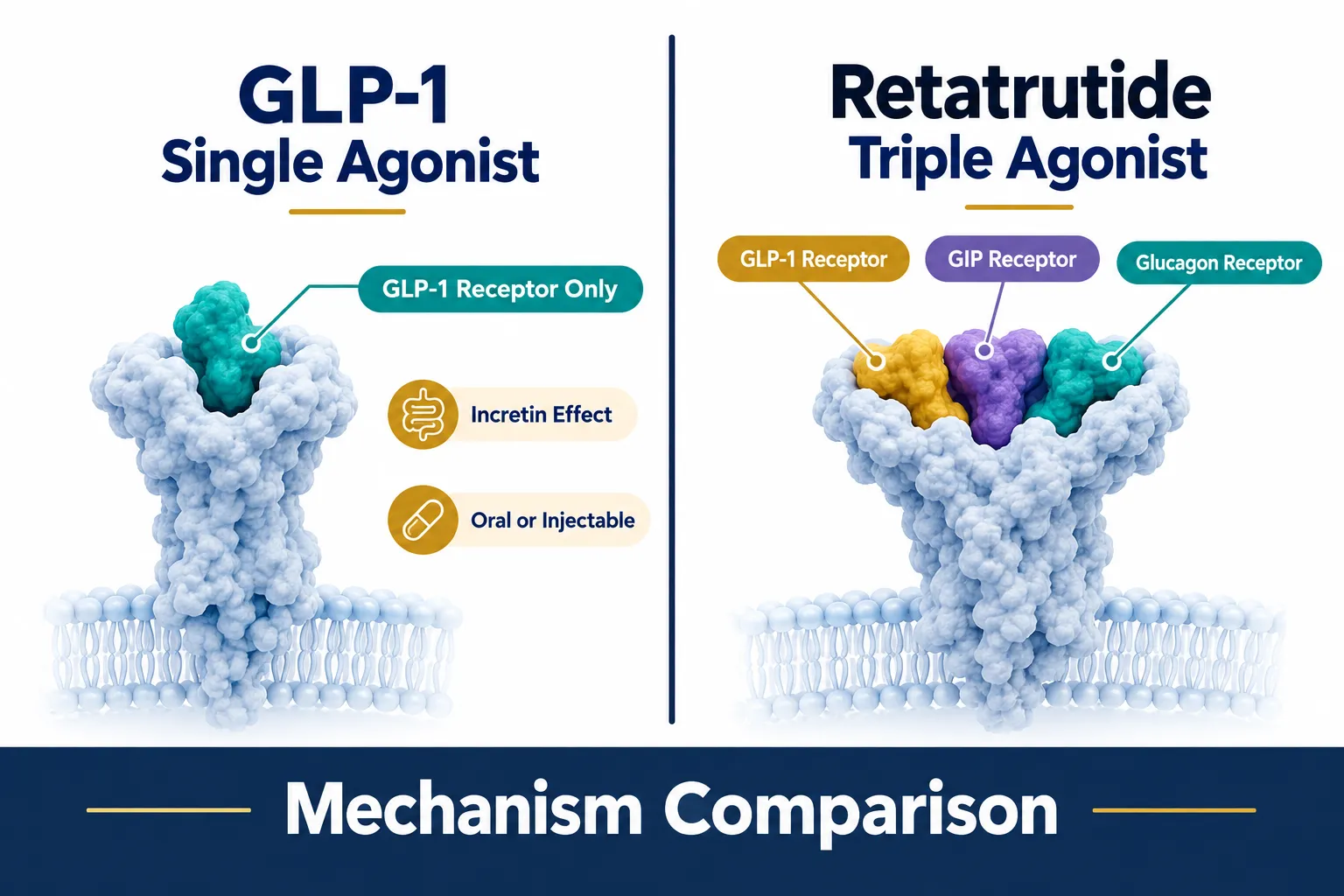
  • Retatrutide is a triple agonist targeting GLP-1, GIP, and glucagon receptors simultaneously, making it mechanistically distinct from any single-agonist pill.
  • The TRIUMPH Phase 3 program is testing retatrutide across obesity, type 2 diabetes, cardiovascular disease, and osteoarthritis populations.
  • An oral GLP-1 pill is not a substitute for a triple-agonist injectable in research or clinical contexts.

How a GLP-1 Pill Actually Works

The glucagon-like peptide-1 (GLP-1) receptor is a well-validated target for metabolic disease. When activated, it slows gastric emptying, reduces appetite, and stimulates insulin secretion in a glucose-dependent manner. Injectable GLP-1 receptor agonists have dominated this space for years, but 2026 marks a turning point for oral delivery.

How a GLP-1 Pill Actually Works

Two oral GLP-1 agents reached U.S. approval in 2026. Eli Lilly's orforglipron (brand name Foundayo) became the first approved oral-only GLP-1 pill specifically indicated for obesity. Novo Nordisk's semaglutide pill, already available for type 2 diabetes, also received approval for weight loss in adults in both the U.S. and EU markets. These are not peptide-based tablets, they are small-molecule non-peptide compounds or peptide formulations engineered to survive the hostile environment of the gastrointestinal tract.

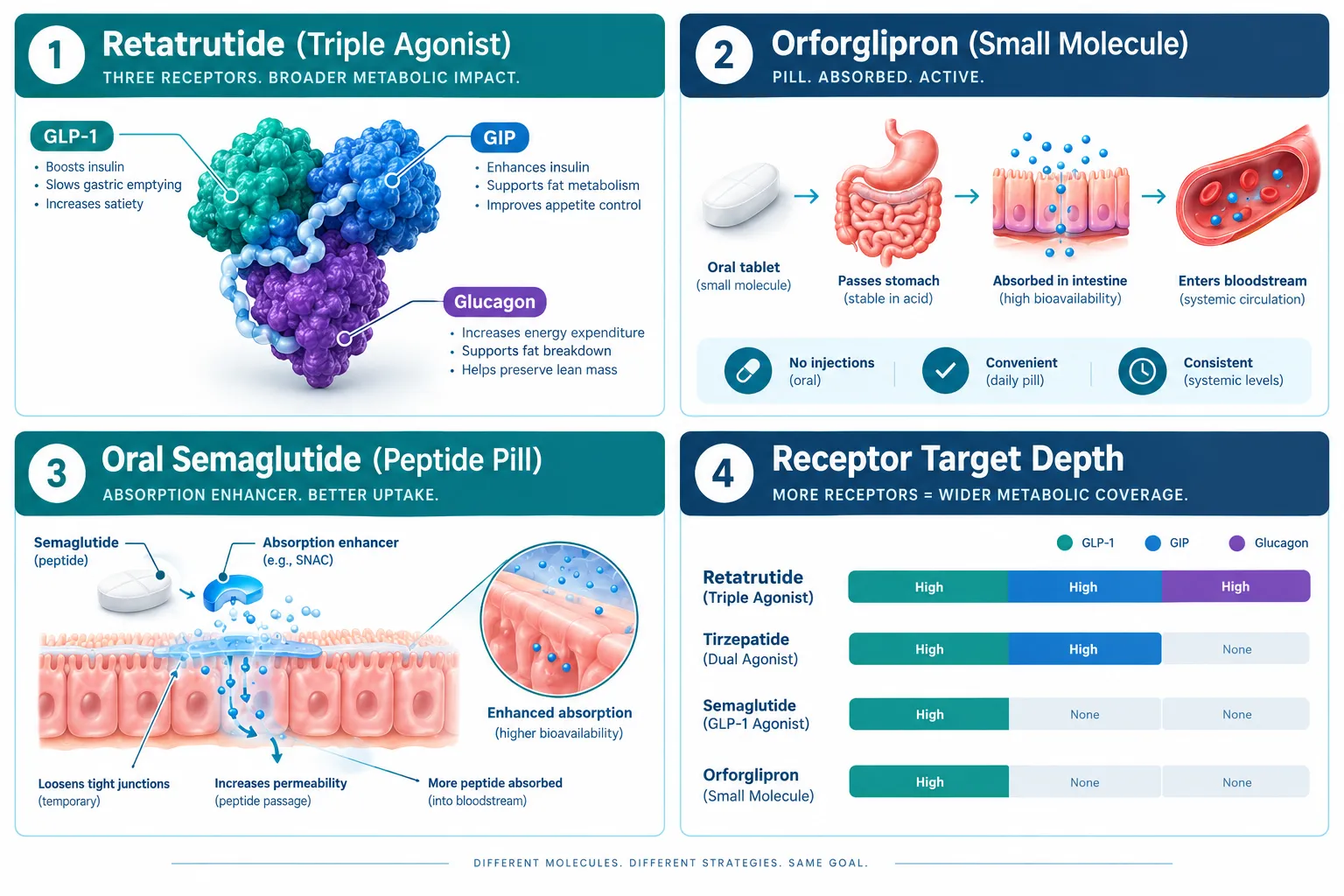
The core challenge with oral peptide delivery is enzymatic degradation. Stomach acid and proteases break down peptide chains before they can reach systemic circulation. Semaglutide tablets overcome this using a co-formulation with sodium N-(8-[2-hydroxybenzoyl] amino) caprylate (SNAC), an absorption enhancer that temporarily raises local gastric pH and facilitates mucosal permeation. Orforglipron sidesteps this problem entirely by being a small-molecule compound that does not require an absorption enhancer.

Key oral delivery constraints include:

  • Low bioavailability compared to subcutaneous injection
  • Strict fasting requirements before dosing (for semaglutide tablets)
  • Narrower therapeutic window due to absorption variability
  • No flexibility in dose titration beyond what the formulation allows

For those exploring the broader landscape of peptides used in metabolic and weight-loss research, what is the strongest peptide for weight loss provides useful context on how different compound classes compare.


Retatrutide: The Triple-Agonist Model That Changes the Comparison

Calling retatrutide a "GLP-3" is a colloquial shorthand that has gained traction in research communities, but it is worth clarifying what that label actually means. Retatrutide is a single peptide molecule that simultaneously activates three receptors: GLP-1, glucose-dependent insulinotropic polypeptide (GIP), and glucagon. This triple agonism is why it is sometimes distinguished from standard GLP-1 agents with the informal "GLP-3" designation.

Retatrutide: The Triple-Agonist Model That Changes the Comparison

This mechanistic distinction is critical when comparing oral delivery concepts with research-use GLP-3 retatrutide models. A GLP-1 pill activates one receptor pathway. Retatrutide activates three, producing overlapping and synergistic metabolic effects that include:

  • GLP-1 activity: appetite suppression, insulin secretion, slowed gastric emptying
  • GIP activity: enhanced insulin response, potential adipose tissue effects
  • Glucagon activity: increased energy expenditure, hepatic fat mobilization

Phase 2 data for retatrutide showed weight reductions exceeding 24% of body weight at the highest dose over 48 weeks, a benchmark that no single GLP-1 agonist, oral or injectable, has matched in head-to-head comparisons at similar timepoints.

For more background on how retatrutide fits within the GLP-1 research landscape, see the GLP-1 retatrutide overview. Researchers seeking access to standardized research-grade material can also review GLP3 Reta 10mg and GLP-3 Reta 30mg for sale options for preclinical study use.


The TRIUMPH Phase 3 Program and What It Tells Researchers

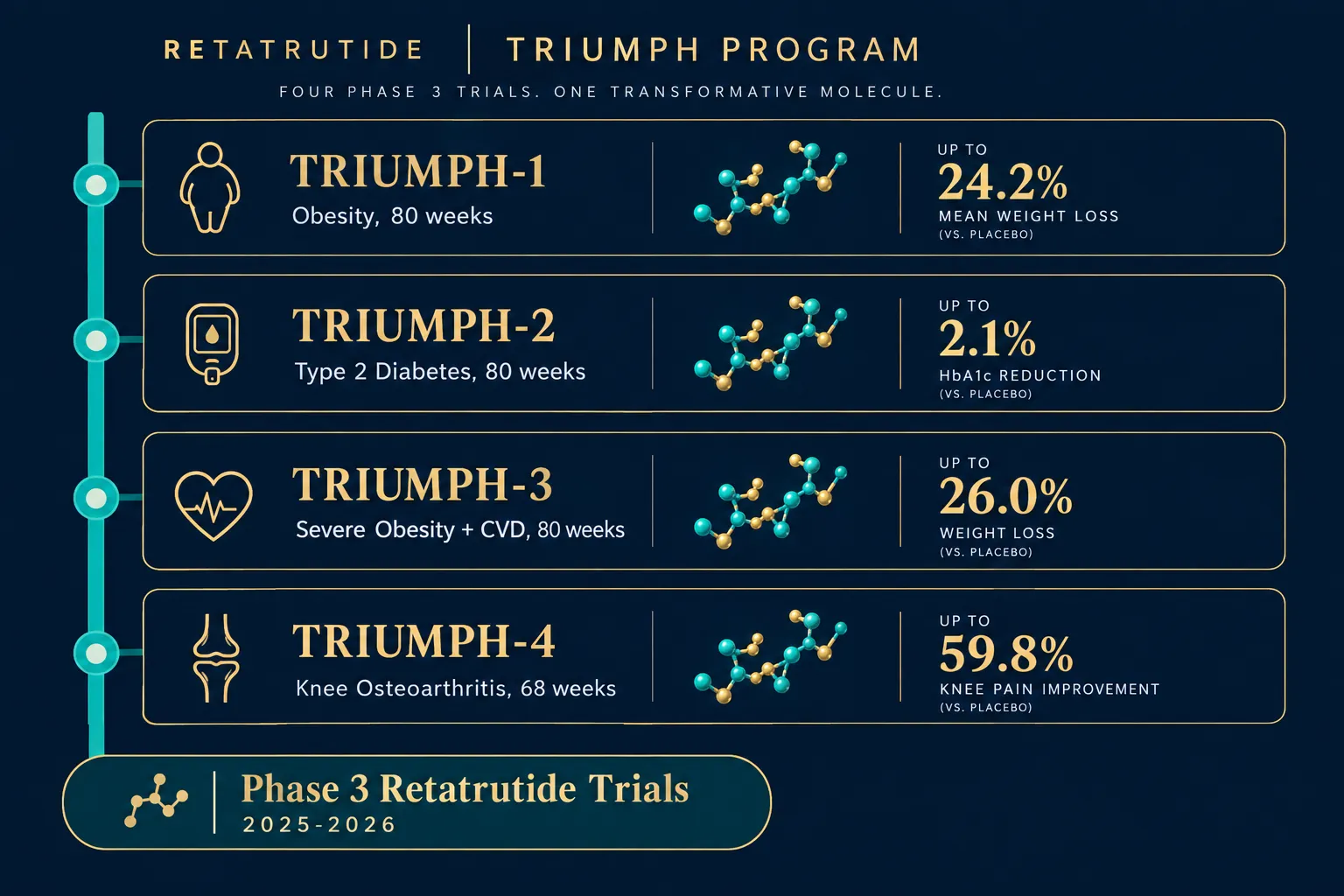
The most comprehensive data set currently being generated on retatrutide comes from the TRIUMPH Phase 3 program, a suite of large-scale trials running across 2025 and 2026. These trials are designed to test retatrutide across multiple disease populations, not just general obesity.

The TRIUMPH Phase 3 Program and What It Tells Researchers

Trial Population Duration Primary Focus
TRIUMPH-1 Obesity or overweight (no T2D) 80 weeks Weight loss efficacy and safety
TRIUMPH-2 Type 2 diabetes + obesity 80 weeks Weight loss and glycemic control
TRIUMPH-3 Severe obesity + CVD (BMI 35+) 80 weeks Cardiovascular and weight outcomes
TRIUMPH-4 Obesity + knee osteoarthritis 68 weeks Weight loss and knee pain reduction

Topline 2026 results from the TRIUMPH program and the parallel TRANSCEND-T2D-1 diabetes trial have shown meaningful reductions in A1C, body weight, and comorbidity burden. These outcomes extend well beyond what a single-receptor oral pill is designed to achieve.

For researchers tracking the evolution of this compound, the retatrutide clinical trials resource aggregates ongoing study data in one place.

"Retatrutide's triple-receptor mechanism produces metabolic effects that are qualitatively different from those of any approved oral GLP-1 agent, not just quantitatively larger."

It is also worth noting that retatrutide remains an injectable peptide in all clinical and research settings. There is no oral formulation in development at this stage, which means the oral vs. injectable distinction is not merely a delivery preference, it reflects a fundamental difference in what each compound can do.

For researchers interested in combinatorial peptide approaches in metabolic contexts, the article on combining Tesamorelin with CDC Ipamorelin offers relevant mechanistic parallels.


Conclusion

Understanding what is a GLP-1 pill, comparing oral delivery concepts with research-use GLP-3 retatrutide models, makes one conclusion unavoidable: these are fundamentally different tools. The 2026 approvals of orforglipron and oral semaglutide for obesity represent a genuine advance in patient convenience and access. However, their single-receptor mechanism, oral bioavailability constraints, and narrower metabolic scope place them in a separate category from retatrutide's triple-agonist profile.

Actionable next steps for researchers and informed readers:

  1. Review the TRIUMPH trial registry entries to follow Phase 3 retatrutide data as it becomes available.
  2. Distinguish between oral GLP-1 agents (small-molecule or SNAC-formulated peptide) and injectable triple agonists before drawing efficacy comparisons.
  3. If evaluating retatrutide for preclinical research, source only verified, tested-grade material and consult current retatrutide clinical trial literature before designing protocols.
  4. Do not assume that oral availability implies equivalent biological activity, receptor breadth, bioavailability, and dosing pharmacokinetics all differ substantially between compound classes.

The GLP-1 pill is a meaningful milestone. Retatrutide is a different kind of milestone entirely.

https://www.puretestedpeptides.com/wp-content/uploads/2026/10/what-is-a-glp-1-pill-comparing-oral-delivery-concepts-with-research-use-glp-3-re.webp 1024 1536 https://www.puretestedpeptides.com/wp-content/uploads/2026/01/buy-peptides-online.jpg 2026-10-06 13:05:492026-10-06 13:05:49What Is a GLP-1 Pill? Comparing Oral Delivery Concepts With Research-Use GLP-3 Retatrutide Models
Retatrutide, GLP-1 Pills, and Small-Molecule Weight-Loss Options: What Researchers Should Compare Before Selecting a Model

Retatrutide, GLP-1 Pills, and Small-Molecule Weight-Loss Options: What Researchers Should Compare Before Selecting a Model

October 1, 2026/0 Comments/in Uncategorized/by

Fewer than five years ago, the only oral option for metabolic research was a single approved peptide formulation with modest weight-loss signals. By mid-2026, the landscape includes a triple-receptor injectable peptide, a first-in-class non-peptide oral GLP-1 agonist, and a reformulated oral semaglutide, each with a distinct mechanism, tolerability profile, and regulatory standing. Choosing the wrong model for a given research question wastes resources and produces data that cannot be compared across studies. Understanding the key variables in Retatrutide, GLP-1 Pills, and Small-Molecule Weight-Loss Options is the first step toward designing a rigorous protocol.

Key Takeaways

  • Retatrutide is a triple agonist (GLP-1, GIP, glucagon receptors) with phase 3 data showing substantially higher weight-loss magnitude than single-agonist comparators.
  • Orforglipron (Foundayo) is a non-peptide small molecule that achieves oral bioavailability without an absorption enhancer, making it mechanistically distinct from oral semaglutide.
  • Oral semaglutide (Wegovy pill) is a peptide formulation requiring a specific absorption agent; it is broadly available in the US but shows more modest weight-loss numbers in smaller patient cohorts.
  • Regulatory status differs sharply: some agents are approved, others remain in late-stage trials or are available only for research purposes.
  • Researchers must explicitly encode receptor target depth, delivery route, glycemic endpoints, and tolerability variables before selecting any model.

Understanding the Compound Classes in Play

Understanding the Compound Classes in Play

Not all weight-loss agents work the same way, and conflating them in a research design leads to flawed conclusions. The current field breaks into three meaningful categories.

Retatrutide is a single-molecule triple agonist that activates GLP-1, GIP, and glucagon receptors simultaneously. Phase 3 data from the TRIUMPH-1 trial in obesity showed weight reductions that outpaced earlier dual-agonist benchmarks. In a separate type 2 diabetes cohort, weight loss was more modest and gastrointestinal adverse events were notably more frequent, a signal researchers must account for when selecting a population model. The broader TRIUMPH program also covers comorbidity-focused indications including obstructive sleep apnea, knee osteoarthritis, and cardiovascular disease, making it one of the most expansive obesity drug programs currently running. The planned TRIUMPH-5 head-to-head against tirzepatide will eventually serve as a key benchmark, but that data is not yet available. Researchers interested in the evidence base can review Retatrutide clinical trial summaries and Retatrutide clinical trials data as the program evolves.

Orforglipron (Foundayo) is a non-peptide small molecule, meaning it is not built from amino acids and does not require an absorption enhancer to survive the GI tract. ATTAIN-1 phase 3 data for obesity showed meaningful weight loss with an all-oral dosing schedule. Because it engages only the GLP-1 receptor, its appetite and glycemic effects are narrower than retatrutide's triple-agonist profile.

Oral semaglutide (Wegovy pill) is a peptide reformulated with the absorption enhancer SNAC. It is broadly available in the US market as of 2026 but carries more modest weight-loss numbers in published cohorts compared to injectable semaglutide or the newer agents. Its primary research value lies in head-to-head oral comparisons.

For a broader orientation to peptide classes and how GLP-3 compounds fit alongside these agents, the Peptides 101 for research-use only buyers resource provides useful structural context.


Core Variables Researchers Must Encode When Comparing Retatrutide, GLP-1 Pills, and Small-Molecule Weight-Loss Options

Core Variables Researchers Must Encode When Comparing Retatrutide, GLP-1 Pills, and Small-Molecule Weight-Loss Options

Selecting a model without explicitly defining the following variables produces data that cannot be interpreted cleanly.

Receptor Target Depth

"A single receptor target and a triple receptor target are not interchangeable models, even when the primary endpoint is body weight."

The table below summarizes receptor engagement across the three compound classes:

Compound GLP-1 GIP Glucagon Delivery
Retatrutide Yes Yes Yes Injectable
Orforglipron Yes No No Oral (non-peptide)
Oral Semaglutide Yes No No Oral (peptide + SNAC)

Glucagon receptor activation drives additional energy expenditure beyond appetite suppression. Researchers modeling thermogenic pathways must account for this difference. Researchers sourcing retatrutide for in-vitro or preclinical work can reference GLP-3 Reta 10mg 99% pure third-party tested or GLP-3 Reta 30mg for sale for research-grade supply options.

Oral Exposure and Bioavailability

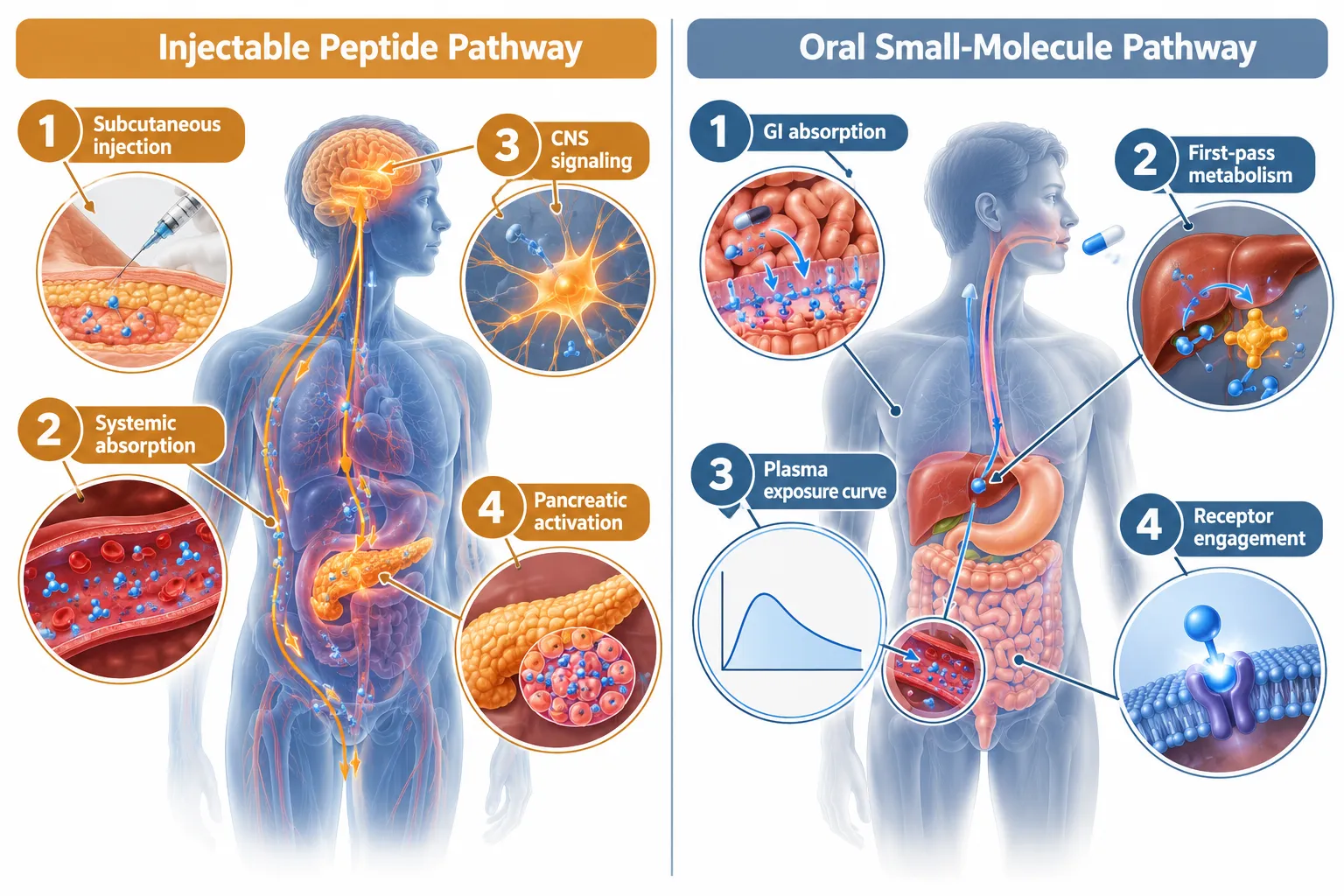
Oral bioavailability varies dramatically between a non-peptide small molecule and a peptide-based oral agent. Orforglipron achieves systemic exposure without an absorption enhancer, producing a cleaner pharmacokinetic curve. Oral semaglutide depends on SNAC to open tight junctions in the gastric mucosa, which introduces variability based on food timing and gastric pH. Researchers designing oral exposure models must encode this difference explicitly in their protocols.

Glycemic vs. Weight Endpoints

Retatrutide's type 2 diabetes cohort showed that glycemic and weight outcomes do not move in parallel. Models built around HbA1c reduction require different dose-escalation assumptions than models built around percent body weight change. Researchers should not assume that a compound's obesity-trial weight-loss magnitude will replicate in a glycemic-focused design.

Tolerability Variables

Gastrointestinal adverse events, nausea, vomiting, diarrhea, appear across all three agents but with different frequency profiles. Retatrutide's diabetes cohort showed notably higher GI event rates than its obesity cohort, likely reflecting dose-escalation speed and baseline metabolic status. Any comparative model must pre-specify tolerability endpoints rather than treating them as secondary observations.


Regulatory Status and Research-Use Considerations in 2026

Regulatory Status and Research-Use Considerations in 2026

As of 2026, orforglipron (Foundayo) has received regulatory approval for obesity, making it the first non-peptide oral GLP-1 agonist to reach that status. Oral semaglutide for obesity is also approved and commercially available in the US. Retatrutide remains in phase 3 trials and has not yet received approval; it is available only as a research compound through verified research-grade suppliers.

This distinction matters for study design. Approved agents can be studied in clinical settings with standard IRB frameworks. Research compounds require additional documentation, sourcing from qualified suppliers, and strict adherence to research-use-only protocols.

Researchers building comparative models should also consider how retatrutide's comorbidity-focused TRIUMPH sub-studies (OSA, knee OA, CVD) may eventually generate approval pathways beyond obesity, expanding the range of valid research questions.

For researchers exploring related peptide mechanisms, resources on Tesamorelin dosage for fat loss and Tesamorelin before and after offer useful comparisons for growth-hormone-mediated fat metabolism models alongside GLP-1-axis compounds.


Conclusion

The question of which model to select from Retatrutide, GLP-1 Pills, and Small-Molecule Weight-Loss Options is not answered by weight-loss magnitude alone. Receptor target depth, oral bioavailability mechanism, glycemic versus weight endpoints, tolerability profiles, and current regulatory status all shape what a given compound can and cannot tell a researcher.

Actionable next steps for researchers:

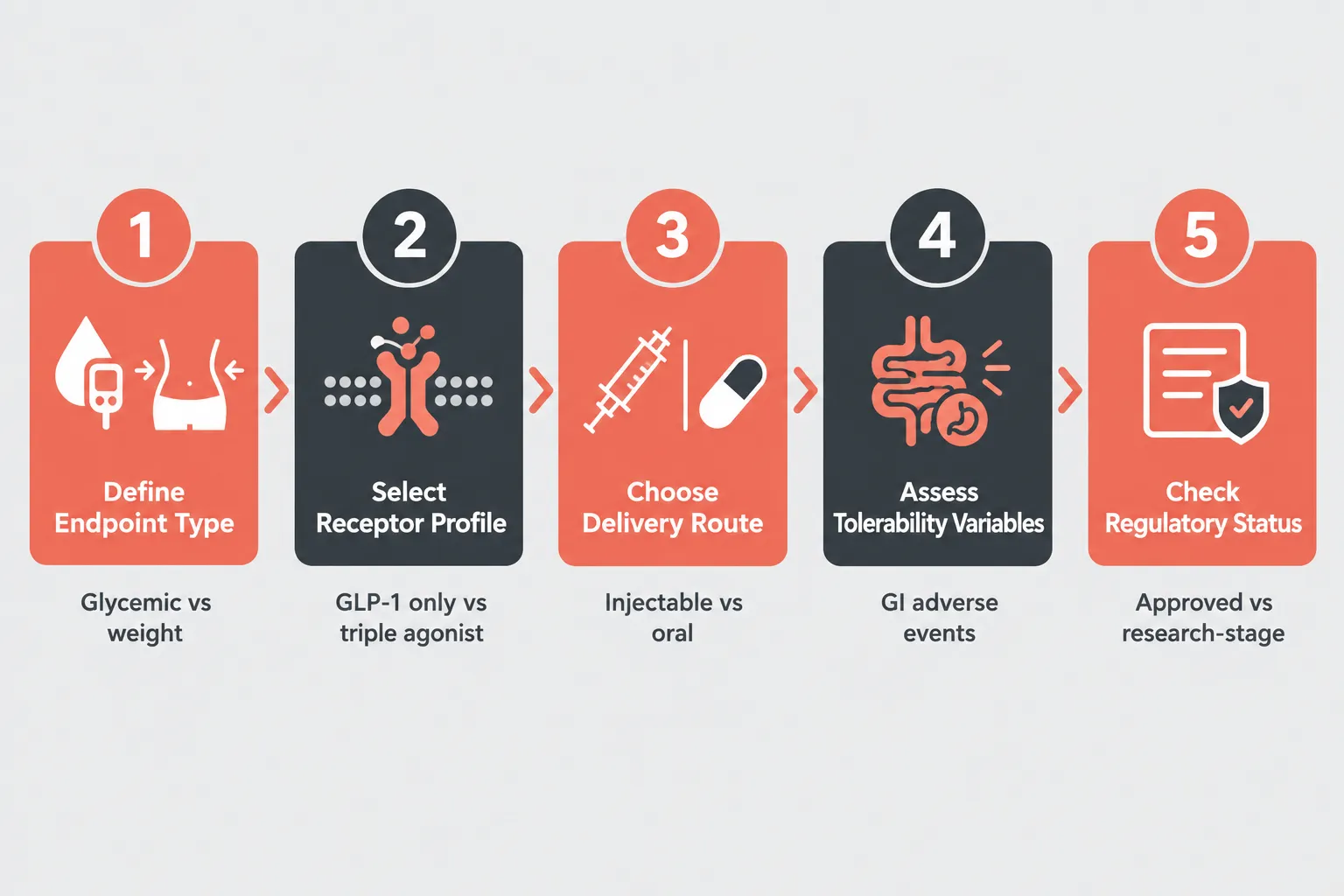
  1. Define the primary endpoint first, weight loss, glycemic control, or comorbidity reduction, before selecting a compound.
  2. Map receptor targets explicitly; do not treat GLP-1-only agents as equivalent to triple agonists in mechanistic models.
  3. Account for oral exposure variability when designing pharmacokinetic comparisons between peptide-based and non-peptide oral agents.
  4. Pre-specify tolerability endpoints, particularly in diabetic population models where GI event rates differ from obesity cohorts.
  5. Verify regulatory status before sourcing; approved agents and research-stage compounds require different procurement and documentation protocols.

The TRIUMPH-5 head-to-head data, when available, will provide the most direct comparative benchmark in this field. Until then, rigorous model selection depends on encoding the variables above with precision.

https://www.puretestedpeptides.com/wp-content/uploads/2026/10/retatrutide-glp-1-pills-and-small-molecule-weight-loss-options-what-researchers.webp 1024 1536 https://www.puretestedpeptides.com/wp-content/uploads/2026/01/buy-peptides-online.jpg 2026-10-01 13:05:002026-10-01 13:05:00Retatrutide, GLP-1 Pills, and Small-Molecule Weight-Loss Options: What Researchers Should Compare Before Selecting a Model

Tag Archive for: orforglipron

GLP-3, GLP-1, and GLP-2 Explained: A Researcher’s Guide to the Peptide Family

GLP-3, GLP-1, and GLP-2 Explained: A Researcher’s Guide to the Peptide Family

June 28, 2026/0 Comments/by Pure Tested

The term "GLP-3" now appears in clinical trial press releases, investor calls, and research databases — yet no such peptide exists in standard biochemistry textbooks. That naming gap reveals something important: the glucagon-like peptide family is evolving faster than its own vocabulary. This guide to GLP-3, GLP-1, and GLP-2 explained as a peptide family cuts through the marketing language to focus on mechanism, receptor biology, and what the evidence actually shows.

Key Takeaways

  • GLP-1 and GLP-2 are both derived from the same precursor protein, proglucagon, through tissue-specific processing.
  • GLP-1 targets the GLP-1 receptor to regulate insulin secretion and appetite; GLP-2 targets a separate receptor to support intestinal growth and repair.
  • "GLP-3" is an informal nickname for retatrutide, a triple agonist hitting GLP-1, GIP, and glucagon receptors — not a distinct endogenous peptide.
  • Multiple next-generation agents in 2026 are blurring receptor boundaries, making precise terminology more important than ever.
  • Researchers should distinguish receptor pharmacology from peptide taxonomy to avoid conflating mechanism with marketing.

GLP-1, GLP-2, and GLP-3 peptide family molecular overview

The Proglucagon Origin: Where GLP-1 and GLP-2 Begin

Understanding GLP-3, GLP-1, and GLP-2 explained as a peptide family starts with a single precursor: proglucagon. This 160-amino-acid protein is encoded by the GCG gene and processed differently depending on the tissue.

Tissue-specific cleavage produces distinct peptides:

Tissue Primary Products
Pancreatic alpha cells Glucagon, glicentin-related peptide
Intestinal L-cells GLP-1, GLP-2, oxyntomodulin
Brain neurons GLP-1, glicentin

This differential processing is controlled by prohormone convertases — PC2 in the pancreas and PC1/3 in the gut and brain. The result is that GLP-1 and GLP-2 are co-secreted from intestinal L-cells in a roughly 1:1 molar ratio following nutrient ingestion.

GLP-1 (glucagon-like peptide-1) is a 30-amino-acid incretin hormone. It binds the GLP-1 receptor (GLP-1R), a class B G-protein-coupled receptor expressed in pancreatic beta cells, the vagus nerve, the hypothalamus, and the heart. Activation drives glucose-dependent insulin secretion, suppresses glucagon, slows gastric emptying, and reduces appetite. Its plasma half-life is under two minutes due to rapid degradation by DPP-4 enzyme.

GLP-2 (glucagon-like peptide-2) is a 33-amino-acid peptide that binds its own distinct receptor, GLP-2R, expressed primarily in intestinal enteroendocrine cells, submucosal neurons, and the hypothalamus. Its core functions center on intestinal epithelial growth, barrier integrity, and nutrient absorption — not glucose regulation. Teduglutide (Gattex/Revestive), a GLP-2 analog, is the only approved agent in this class and generates over $800 million annually. As of 2026, at least six novel GLP-2 analog programs are in active clinical development targeting short bowel syndrome, Crohn's disease, and gut barrier dysfunction. Researchers exploring GLP-1 incretin research themes will find the GLP-2 pathway a compelling parallel.

"GLP-1 and GLP-2 are not interchangeable — they share a precursor but act on entirely different receptor systems with non-overlapping physiological roles."


What "GLP-3" Actually Means: Receptor Taxonomy vs. Peptide Naming

Researcher comparing GLP peptide vials and clinical trial data

The phrase "GLP-3" does not describe a third endogenous glucagon-like peptide. It is an informal shorthand for retatrutide, a synthetic triple agonist developed by Eli Lilly that simultaneously targets three receptors: GLP-1R, GIP receptor (GIPR), and glucagon receptor (GCGR). The "3" refers to the number of receptor targets, not a peptide sequence.

This distinction matters enormously for researchers. Calling retatrutide "GLP-3" is pharmacologically imprecise. The correct terminology is triple receptor agonist or GLP-1/GIP/glucagon tri-agonist. Retatrutide is not FDA-approved as of 2026 and remains available only through clinical trials. Phase 3 data have shown up to 28.7% weight loss, with approval anticipated no earlier than 2027. For more on this compound's research profile, see the dedicated retatrutide and GLP-3 research overview.

Why does the naming confusion persist?

  • Dual agonists like tirzepatide (GLP-1/GIP) were informally called "GLP-2" by some media outlets before that term was corrected.
  • The pharmaceutical pipeline moves faster than regulatory taxonomy.
  • Marketing teams favor simple numerical progressions.

Researchers should also note the generational differences across GLP-1 drug classes to contextualize where triple agonists sit in the therapeutic timeline.


The 2026 Pipeline: Next-Generation Agents Across the GLP Family

Next-generation GLP peptide pipeline timeline and weight-loss data chart

The peptide family landscape in 2026 is defined by receptor combination strategies rather than single-target approaches. Key agents include:

Orforglipron (Foundayo) — Eli Lilly
A once-daily oral GLP-1 receptor agonist. In the ACHIEVE-3 trial, the 17.2 mg dose produced 57.1% greater relative A1C reduction and 73.6% greater relative weight loss compared to oral semaglutide 14 mg. Lilly plans FDA submission by end of Q2 2026.

PF-08653944 — Pfizer
An ultra-long-acting injectable GLP-1 RA achieving 12.3% mean placebo-adjusted weight loss at 28 weeks in the VESPER-3 Phase 2b study, with weight loss continuing after transitioning from weekly to monthly dosing. Ten Phase 3 trials are anticipated in 2026.

Amycretin — Novo Nordisk
A single molecule activating both amylin and GLP-1 receptors, showing 22% weight loss in 36 weeks in Phase 1b/2a trials. Both oral and injectable formulations advance to Phase 3 in 2026.

Survodutide — Boehringer Ingelheim
A dual glucagon/GLP-1 agonist showing 18.7% weight loss at 46 weeks in Phase 2, with 62% of MASH patients achieving disease resolution. Phase 3 trials span 14 countries.

Researchers interested in the broader metabolic peptide landscape can explore metabolic modulation research lines and GIP receptor biology for mechanistic context. Those studying adjacent metabolic compounds may also find value in reviewing AOD9604 metabolic research and SLU-PP-332 metabolic research as comparative reference points.


Conclusion

The GLP peptide family is one of the most productive areas in current biomedical research, but imprecise language creates real confusion. GLP-1 and GLP-2 are endogenous peptides with distinct receptors and non-overlapping functions — both derived from proglucagon but acting on entirely separate physiological systems. "GLP-3" is not a peptide; it is a colloquial label for a triple-receptor agonist strategy.

Actionable next steps for researchers:

  • Anchor all literature searches to receptor nomenclature (GLP-1R, GLP-2R, GIPR, GCGR) rather than informal drug nicknames.
  • Track the orforglipron and retatrutide Phase 3 readouts expected in 2026-2027 as benchmark data for receptor combination strategies.
  • Distinguish between endogenous peptide biology and synthetic analog pharmacology when designing assay protocols.
  • Review the GLP-1 peptide product research library for current research-grade compound availability.

Precise taxonomy is not pedantry — it is the foundation of reproducible science.

https://www.puretestedpeptides.com/wp-content/uploads/2026/06/GLP-3-GLP-1-and-GLP-2-Explained-A-Researchers-Guide-to-the-Peptide-Family.png 1024 1536 Pure Tested https://www.puretestedpeptides.com/wp-content/uploads/2026/01/buy-peptides-online.jpg Pure Tested2026-06-28 13:27:522026-07-20 15:01:58GLP-3, GLP-1, and GLP-2 Explained: A Researcher’s Guide to the Peptide Family
GLP-3, GLP-1, and GLP-2 Explained: A Researcher’s Guide to the Peptide Family

GLP-3, GLP-1, and GLP-2 Explained: A Researcher’s Guide to the Peptide Family

June 28, 2026/0 Comments/by Pure Tested

The term "GLP-3" now appears in clinical trial press releases, investor calls, and research databases — yet no such peptide exists in standard biochemistry textbooks. That naming gap reveals something important: the glucagon-like peptide family is evolving faster than its own vocabulary. This guide to GLP-3, GLP-1, and GLP-2 explained as a peptide family cuts through the marketing language to focus on mechanism, receptor biology, and what the evidence actually shows.

Key Takeaways

  • GLP-1 and GLP-2 are both derived from the same precursor protein, proglucagon, through tissue-specific processing.
  • GLP-1 targets the GLP-1 receptor to regulate insulin secretion and appetite; GLP-2 targets a separate receptor to support intestinal growth and repair.
  • "GLP-3" is an informal nickname for retatrutide, a triple agonist hitting GLP-1, GIP, and glucagon receptors — not a distinct endogenous peptide.
  • Multiple next-generation agents in 2026 are blurring receptor boundaries, making precise terminology more important than ever.
  • Researchers should distinguish receptor pharmacology from peptide taxonomy to avoid conflating mechanism with marketing.

GLP-1, GLP-2, and GLP-3 peptide family molecular overview

The Proglucagon Origin: Where GLP-1 and GLP-2 Begin

Understanding GLP-3, GLP-1, and GLP-2 explained as a peptide family starts with a single precursor: proglucagon. This 160-amino-acid protein is encoded by the GCG gene and processed differently depending on the tissue.

Tissue-specific cleavage produces distinct peptides:

Tissue Primary Products
Pancreatic alpha cells Glucagon, glicentin-related peptide
Intestinal L-cells GLP-1, GLP-2, oxyntomodulin
Brain neurons GLP-1, glicentin

This differential processing is controlled by prohormone convertases — PC2 in the pancreas and PC1/3 in the gut and brain. The result is that GLP-1 and GLP-2 are co-secreted from intestinal L-cells in a roughly 1:1 molar ratio following nutrient ingestion.

GLP-1 (glucagon-like peptide-1) is a 30-amino-acid incretin hormone. It binds the GLP-1 receptor (GLP-1R), a class B G-protein-coupled receptor expressed in pancreatic beta cells, the vagus nerve, the hypothalamus, and the heart. Activation drives glucose-dependent insulin secretion, suppresses glucagon, slows gastric emptying, and reduces appetite. Its plasma half-life is under two minutes due to rapid degradation by DPP-4 enzyme.

GLP-2 (glucagon-like peptide-2) is a 33-amino-acid peptide that binds its own distinct receptor, GLP-2R, expressed primarily in intestinal enteroendocrine cells, submucosal neurons, and the hypothalamus. Its core functions center on intestinal epithelial growth, barrier integrity, and nutrient absorption — not glucose regulation. Teduglutide (Gattex/Revestive), a GLP-2 analog, is the only approved agent in this class and generates over $800 million annually. As of 2026, at least six novel GLP-2 analog programs are in active clinical development targeting short bowel syndrome, Crohn's disease, and gut barrier dysfunction. Researchers exploring GLP-1 incretin research themes will find the GLP-2 pathway a compelling parallel.

"GLP-1 and GLP-2 are not interchangeable — they share a precursor but act on entirely different receptor systems with non-overlapping physiological roles."


What "GLP-3" Actually Means: Receptor Taxonomy vs. Peptide Naming

Researcher comparing GLP peptide vials and clinical trial data

The phrase "GLP-3" does not describe a third endogenous glucagon-like peptide. It is an informal shorthand for retatrutide, a synthetic triple agonist developed by Eli Lilly that simultaneously targets three receptors: GLP-1R, GIP receptor (GIPR), and glucagon receptor (GCGR). The "3" refers to the number of receptor targets, not a peptide sequence.

This distinction matters enormously for researchers. Calling retatrutide "GLP-3" is pharmacologically imprecise. The correct terminology is triple receptor agonist or GLP-1/GIP/glucagon tri-agonist. Retatrutide is not FDA-approved as of 2026 and remains available only through clinical trials. Phase 3 data have shown up to 28.7% weight loss, with approval anticipated no earlier than 2027. For more on this compound's research profile, see the dedicated retatrutide and GLP-3 research overview.

Why does the naming confusion persist?

  • Dual agonists like tirzepatide (GLP-1/GIP) were informally called "GLP-2" by some media outlets before that term was corrected.
  • The pharmaceutical pipeline moves faster than regulatory taxonomy.
  • Marketing teams favor simple numerical progressions.

Researchers should also note the generational differences across GLP-1 drug classes to contextualize where triple agonists sit in the therapeutic timeline.


The 2026 Pipeline: Next-Generation Agents Across the GLP Family

Next-generation GLP peptide pipeline timeline and weight-loss data chart

The peptide family landscape in 2026 is defined by receptor combination strategies rather than single-target approaches. Key agents include:

Orforglipron (Foundayo) — Eli Lilly
A once-daily oral GLP-1 receptor agonist. In the ACHIEVE-3 trial, the 17.2 mg dose produced 57.1% greater relative A1C reduction and 73.6% greater relative weight loss compared to oral semaglutide 14 mg. Lilly plans FDA submission by end of Q2 2026.

PF-08653944 — Pfizer
An ultra-long-acting injectable GLP-1 RA achieving 12.3% mean placebo-adjusted weight loss at 28 weeks in the VESPER-3 Phase 2b study, with weight loss continuing after transitioning from weekly to monthly dosing. Ten Phase 3 trials are anticipated in 2026.

Amycretin — Novo Nordisk
A single molecule activating both amylin and GLP-1 receptors, showing 22% weight loss in 36 weeks in Phase 1b/2a trials. Both oral and injectable formulations advance to Phase 3 in 2026.

Survodutide — Boehringer Ingelheim
A dual glucagon/GLP-1 agonist showing 18.7% weight loss at 46 weeks in Phase 2, with 62% of MASH patients achieving disease resolution. Phase 3 trials span 14 countries.

Researchers interested in the broader metabolic peptide landscape can explore metabolic modulation research lines and GIP receptor biology for mechanistic context. Those studying adjacent metabolic compounds may also find value in reviewing AOD9604 metabolic research and SLU-PP-332 metabolic research as comparative reference points.


Conclusion

The GLP peptide family is one of the most productive areas in current biomedical research, but imprecise language creates real confusion. GLP-1 and GLP-2 are endogenous peptides with distinct receptors and non-overlapping functions — both derived from proglucagon but acting on entirely separate physiological systems. "GLP-3" is not a peptide; it is a colloquial label for a triple-receptor agonist strategy.

Actionable next steps for researchers:

  • Anchor all literature searches to receptor nomenclature (GLP-1R, GLP-2R, GIPR, GCGR) rather than informal drug nicknames.
  • Track the orforglipron and retatrutide Phase 3 readouts expected in 2026-2027 as benchmark data for receptor combination strategies.
  • Distinguish between endogenous peptide biology and synthetic analog pharmacology when designing assay protocols.
  • Review the GLP-1 peptide product research library for current research-grade compound availability.

Precise taxonomy is not pedantry — it is the foundation of reproducible science.

https://www.puretestedpeptides.com/wp-content/uploads/2026/06/GLP-3-GLP-1-and-GLP-2-Explained-A-Researchers-Guide-to-the-Peptide-Family.png 1024 1536 Pure Tested https://www.puretestedpeptides.com/wp-content/uploads/2026/01/buy-peptides-online.jpg Pure Tested2026-06-28 13:27:522026-07-20 15:01:59GLP-3, GLP-1, and GLP-2 Explained: A Researcher’s Guide to the Peptide Family
GLP-3, GLP-1, and GLP-2 Explained: A Researcher’s Guide to the Peptide Family

GLP-3, GLP-1, and GLP-2 Explained: A Researcher’s Guide to the Peptide Family

June 28, 2026/0 Comments/by Pure Tested

The term "GLP-3" now appears in clinical trial press releases, investor calls, and research databases — yet no such peptide exists in standard biochemistry textbooks. That naming gap reveals something important: the glucagon-like peptide family is evolving faster than its own vocabulary. This guide to GLP-3, GLP-1, and GLP-2 explained as a peptide family cuts through the marketing language to focus on mechanism, receptor biology, and what the evidence actually shows.

Key Takeaways

  • GLP-1 and GLP-2 are both derived from the same precursor protein, proglucagon, through tissue-specific processing.
  • GLP-1 targets the GLP-1 receptor to regulate insulin secretion and appetite; GLP-2 targets a separate receptor to support intestinal growth and repair.
  • "GLP-3" is an informal nickname for retatrutide, a triple agonist hitting GLP-1, GIP, and glucagon receptors — not a distinct endogenous peptide.
  • Multiple next-generation agents in 2026 are blurring receptor boundaries, making precise terminology more important than ever.
  • Researchers should distinguish receptor pharmacology from peptide taxonomy to avoid conflating mechanism with marketing.

GLP-1, GLP-2, and GLP-3 peptide family molecular overview

The Proglucagon Origin: Where GLP-1 and GLP-2 Begin

Understanding GLP-3, GLP-1, and GLP-2 explained as a peptide family starts with a single precursor: proglucagon. This 160-amino-acid protein is encoded by the GCG gene and processed differently depending on the tissue.

Tissue-specific cleavage produces distinct peptides:

Tissue Primary Products
Pancreatic alpha cells Glucagon, glicentin-related peptide
Intestinal L-cells GLP-1, GLP-2, oxyntomodulin
Brain neurons GLP-1, glicentin

This differential processing is controlled by prohormone convertases — PC2 in the pancreas and PC1/3 in the gut and brain. The result is that GLP-1 and GLP-2 are co-secreted from intestinal L-cells in a roughly 1:1 molar ratio following nutrient ingestion.

GLP-1 (glucagon-like peptide-1) is a 30-amino-acid incretin hormone. It binds the GLP-1 receptor (GLP-1R), a class B G-protein-coupled receptor expressed in pancreatic beta cells, the vagus nerve, the hypothalamus, and the heart. Activation drives glucose-dependent insulin secretion, suppresses glucagon, slows gastric emptying, and reduces appetite. Its plasma half-life is under two minutes due to rapid degradation by DPP-4 enzyme.

GLP-2 (glucagon-like peptide-2) is a 33-amino-acid peptide that binds its own distinct receptor, GLP-2R, expressed primarily in intestinal enteroendocrine cells, submucosal neurons, and the hypothalamus. Its core functions center on intestinal epithelial growth, barrier integrity, and nutrient absorption — not glucose regulation. Teduglutide (Gattex/Revestive), a GLP-2 analog, is the only approved agent in this class and generates over $800 million annually. As of 2026, at least six novel GLP-2 analog programs are in active clinical development targeting short bowel syndrome, Crohn's disease, and gut barrier dysfunction. Researchers exploring GLP-1 incretin research themes will find the GLP-2 pathway a compelling parallel.

"GLP-1 and GLP-2 are not interchangeable — they share a precursor but act on entirely different receptor systems with non-overlapping physiological roles."


What "GLP-3" Actually Means: Receptor Taxonomy vs. Peptide Naming

Researcher comparing GLP peptide vials and clinical trial data

The phrase "GLP-3" does not describe a third endogenous glucagon-like peptide. It is an informal shorthand for retatrutide, a synthetic triple agonist developed by Eli Lilly that simultaneously targets three receptors: GLP-1R, GIP receptor (GIPR), and glucagon receptor (GCGR). The "3" refers to the number of receptor targets, not a peptide sequence.

This distinction matters enormously for researchers. Calling retatrutide "GLP-3" is pharmacologically imprecise. The correct terminology is triple receptor agonist or GLP-1/GIP/glucagon tri-agonist. Retatrutide is not FDA-approved as of 2026 and remains available only through clinical trials. Phase 3 data have shown up to 28.7% weight loss, with approval anticipated no earlier than 2027. For more on this compound's research profile, see the dedicated retatrutide and GLP-3 research overview.

Why does the naming confusion persist?

  • Dual agonists like tirzepatide (GLP-1/GIP) were informally called "GLP-2" by some media outlets before that term was corrected.
  • The pharmaceutical pipeline moves faster than regulatory taxonomy.
  • Marketing teams favor simple numerical progressions.

Researchers should also note the generational differences across GLP-1 drug classes to contextualize where triple agonists sit in the therapeutic timeline.


The 2026 Pipeline: Next-Generation Agents Across the GLP Family

Next-generation GLP peptide pipeline timeline and weight-loss data chart

The peptide family landscape in 2026 is defined by receptor combination strategies rather than single-target approaches. Key agents include:

Orforglipron (Foundayo) — Eli Lilly
A once-daily oral GLP-1 receptor agonist. In the ACHIEVE-3 trial, the 17.2 mg dose produced 57.1% greater relative A1C reduction and 73.6% greater relative weight loss compared to oral semaglutide 14 mg. Lilly plans FDA submission by end of Q2 2026.

PF-08653944 — Pfizer
An ultra-long-acting injectable GLP-1 RA achieving 12.3% mean placebo-adjusted weight loss at 28 weeks in the VESPER-3 Phase 2b study, with weight loss continuing after transitioning from weekly to monthly dosing. Ten Phase 3 trials are anticipated in 2026.

Amycretin — Novo Nordisk
A single molecule activating both amylin and GLP-1 receptors, showing 22% weight loss in 36 weeks in Phase 1b/2a trials. Both oral and injectable formulations advance to Phase 3 in 2026.

Survodutide — Boehringer Ingelheim
A dual glucagon/GLP-1 agonist showing 18.7% weight loss at 46 weeks in Phase 2, with 62% of MASH patients achieving disease resolution. Phase 3 trials span 14 countries.

Researchers interested in the broader metabolic peptide landscape can explore metabolic modulation research lines and GIP receptor biology for mechanistic context. Those studying adjacent metabolic compounds may also find value in reviewing AOD9604 metabolic research and SLU-PP-332 metabolic research as comparative reference points.


Conclusion

The GLP peptide family is one of the most productive areas in current biomedical research, but imprecise language creates real confusion. GLP-1 and GLP-2 are endogenous peptides with distinct receptors and non-overlapping functions — both derived from proglucagon but acting on entirely separate physiological systems. "GLP-3" is not a peptide; it is a colloquial label for a triple-receptor agonist strategy.

Actionable next steps for researchers:

  • Anchor all literature searches to receptor nomenclature (GLP-1R, GLP-2R, GIPR, GCGR) rather than informal drug nicknames.
  • Track the orforglipron and retatrutide Phase 3 readouts expected in 2026-2027 as benchmark data for receptor combination strategies.
  • Distinguish between endogenous peptide biology and synthetic analog pharmacology when designing assay protocols.
  • Review the GLP-1 peptide product research library for current research-grade compound availability.

Precise taxonomy is not pedantry — it is the foundation of reproducible science.

https://www.puretestedpeptides.com/wp-content/uploads/2026/06/GLP-3-GLP-1-and-GLP-2-Explained-A-Researchers-Guide-to-the-Peptide-Family.png 1024 1536 Pure Tested https://www.puretestedpeptides.com/wp-content/uploads/2026/01/buy-peptides-online.jpg Pure Tested2026-06-28 13:27:512026-07-20 15:01:59GLP-3, GLP-1, and GLP-2 Explained: A Researcher’s Guide to the Peptide Family
GLP-3, GLP-1, and GLP-2 Explained: A Researcher’s Guide to the Peptide Family

GLP-3, GLP-1, and GLP-2 Explained: A Researcher’s Guide to the Peptide Family

June 28, 2026/0 Comments/by Pure Tested

The term "GLP-3" now appears in clinical trial press releases, investor calls, and research databases — yet no such peptide exists in standard biochemistry textbooks. That naming gap reveals something important: the glucagon-like peptide family is evolving faster than its own vocabulary. This guide to GLP-3, GLP-1, and GLP-2 explained as a peptide family cuts through the marketing language to focus on mechanism, receptor biology, and what the evidence actually shows.

Key Takeaways

  • GLP-1 and GLP-2 are both derived from the same precursor protein, proglucagon, through tissue-specific processing.
  • GLP-1 targets the GLP-1 receptor to regulate insulin secretion and appetite; GLP-2 targets a separate receptor to support intestinal growth and repair.
  • "GLP-3" is an informal nickname for retatrutide, a triple agonist hitting GLP-1, GIP, and glucagon receptors — not a distinct endogenous peptide.
  • Multiple next-generation agents in 2026 are blurring receptor boundaries, making precise terminology more important than ever.
  • Researchers should distinguish receptor pharmacology from peptide taxonomy to avoid conflating mechanism with marketing.

GLP-1, GLP-2, and GLP-3 peptide family molecular overview

The Proglucagon Origin: Where GLP-1 and GLP-2 Begin

Understanding GLP-3, GLP-1, and GLP-2 explained as a peptide family starts with a single precursor: proglucagon. This 160-amino-acid protein is encoded by the GCG gene and processed differently depending on the tissue.

Tissue-specific cleavage produces distinct peptides:

Tissue Primary Products
Pancreatic alpha cells Glucagon, glicentin-related peptide
Intestinal L-cells GLP-1, GLP-2, oxyntomodulin
Brain neurons GLP-1, glicentin

This differential processing is controlled by prohormone convertases — PC2 in the pancreas and PC1/3 in the gut and brain. The result is that GLP-1 and GLP-2 are co-secreted from intestinal L-cells in a roughly 1:1 molar ratio following nutrient ingestion.

GLP-1 (glucagon-like peptide-1) is a 30-amino-acid incretin hormone. It binds the GLP-1 receptor (GLP-1R), a class B G-protein-coupled receptor expressed in pancreatic beta cells, the vagus nerve, the hypothalamus, and the heart. Activation drives glucose-dependent insulin secretion, suppresses glucagon, slows gastric emptying, and reduces appetite. Its plasma half-life is under two minutes due to rapid degradation by DPP-4 enzyme.

GLP-2 (glucagon-like peptide-2) is a 33-amino-acid peptide that binds its own distinct receptor, GLP-2R, expressed primarily in intestinal enteroendocrine cells, submucosal neurons, and the hypothalamus. Its core functions center on intestinal epithelial growth, barrier integrity, and nutrient absorption — not glucose regulation. Teduglutide (Gattex/Revestive), a GLP-2 analog, is the only approved agent in this class and generates over $800 million annually. As of 2026, at least six novel GLP-2 analog programs are in active clinical development targeting short bowel syndrome, Crohn's disease, and gut barrier dysfunction. Researchers exploring GLP-1 incretin research themes will find the GLP-2 pathway a compelling parallel.

"GLP-1 and GLP-2 are not interchangeable — they share a precursor but act on entirely different receptor systems with non-overlapping physiological roles."


What "GLP-3" Actually Means: Receptor Taxonomy vs. Peptide Naming

Researcher comparing GLP peptide vials and clinical trial data

The phrase "GLP-3" does not describe a third endogenous glucagon-like peptide. It is an informal shorthand for retatrutide, a synthetic triple agonist developed by Eli Lilly that simultaneously targets three receptors: GLP-1R, GIP receptor (GIPR), and glucagon receptor (GCGR). The "3" refers to the number of receptor targets, not a peptide sequence.

This distinction matters enormously for researchers. Calling retatrutide "GLP-3" is pharmacologically imprecise. The correct terminology is triple receptor agonist or GLP-1/GIP/glucagon tri-agonist. Retatrutide is not FDA-approved as of 2026 and remains available only through clinical trials. Phase 3 data have shown up to 28.7% weight loss, with approval anticipated no earlier than 2027. For more on this compound's research profile, see the dedicated retatrutide and GLP-3 research overview.

Why does the naming confusion persist?

  • Dual agonists like tirzepatide (GLP-1/GIP) were informally called "GLP-2" by some media outlets before that term was corrected.
  • The pharmaceutical pipeline moves faster than regulatory taxonomy.
  • Marketing teams favor simple numerical progressions.

Researchers should also note the generational differences across GLP-1 drug classes to contextualize where triple agonists sit in the therapeutic timeline.


The 2026 Pipeline: Next-Generation Agents Across the GLP Family

Next-generation GLP peptide pipeline timeline and weight-loss data chart

The peptide family landscape in 2026 is defined by receptor combination strategies rather than single-target approaches. Key agents include:

Orforglipron (Foundayo) — Eli Lilly
A once-daily oral GLP-1 receptor agonist. In the ACHIEVE-3 trial, the 17.2 mg dose produced 57.1% greater relative A1C reduction and 73.6% greater relative weight loss compared to oral semaglutide 14 mg. Lilly plans FDA submission by end of Q2 2026.

PF-08653944 — Pfizer
An ultra-long-acting injectable GLP-1 RA achieving 12.3% mean placebo-adjusted weight loss at 28 weeks in the VESPER-3 Phase 2b study, with weight loss continuing after transitioning from weekly to monthly dosing. Ten Phase 3 trials are anticipated in 2026.

Amycretin — Novo Nordisk
A single molecule activating both amylin and GLP-1 receptors, showing 22% weight loss in 36 weeks in Phase 1b/2a trials. Both oral and injectable formulations advance to Phase 3 in 2026.

Survodutide — Boehringer Ingelheim
A dual glucagon/GLP-1 agonist showing 18.7% weight loss at 46 weeks in Phase 2, with 62% of MASH patients achieving disease resolution. Phase 3 trials span 14 countries.

Researchers interested in the broader metabolic peptide landscape can explore metabolic modulation research lines and GIP receptor biology for mechanistic context. Those studying adjacent metabolic compounds may also find value in reviewing AOD9604 metabolic research and SLU-PP-332 metabolic research as comparative reference points.


Conclusion

The GLP peptide family is one of the most productive areas in current biomedical research, but imprecise language creates real confusion. GLP-1 and GLP-2 are endogenous peptides with distinct receptors and non-overlapping functions — both derived from proglucagon but acting on entirely separate physiological systems. "GLP-3" is not a peptide; it is a colloquial label for a triple-receptor agonist strategy.

Actionable next steps for researchers:

  • Anchor all literature searches to receptor nomenclature (GLP-1R, GLP-2R, GIPR, GCGR) rather than informal drug nicknames.
  • Track the orforglipron and retatrutide Phase 3 readouts expected in 2026-2027 as benchmark data for receptor combination strategies.
  • Distinguish between endogenous peptide biology and synthetic analog pharmacology when designing assay protocols.
  • Review the GLP-1 peptide product research library for current research-grade compound availability.

Precise taxonomy is not pedantry — it is the foundation of reproducible science.

https://www.puretestedpeptides.com/wp-content/uploads/2026/06/GLP-3-GLP-1-and-GLP-2-Explained-A-Researchers-Guide-to-the-Peptide-Family.png 1024 1536 Pure Tested https://www.puretestedpeptides.com/wp-content/uploads/2026/01/buy-peptides-online.jpg Pure Tested2026-06-28 13:27:512026-07-20 15:02:00GLP-3, GLP-1, and GLP-2 Explained: A Researcher’s Guide to the Peptide Family
×

Helpful Links

  • My account
  • Cart
  • Checkout
  • Refund and Returns Policy
  • Privacy Policy
  • SMS Privacy Policy
  • Login
  • My Account
  • Logout

USA Made Lab Tested Peptides

All products are sold for research, laboratory, or analytical purposes only, and are not for human consumption


Pure Tested Peptides is a chemical supplier. Pure Tested Peptides is not a compounding / chemical compounding facility as defined under 503A of the Federal Food, Drug, and Cosmetic act. Pure Tested Peptides is not an outsourcing facility as defined under 503B of the Federal Food, Drug, and Cosmetic act.

The statements made within this website have not been evaluated by the US Food and Drug Administration. The products we offer are not intended to diagnose, treat, cure or prevent any disease.

Human/Animal Consumption Prohibited. Laboratory/In-Vitro Experimental Use Only

Scroll to top Scroll to top Scroll to top