

What Is a GLP-1 Pill? Comparing Oral Delivery Concepts With Research-Use GLP-3 Retatrutide Models
An oral tablet approved for weight loss sounds like a major leap forward, and in 2026, that leap has officially happened. But the question researchers, clinicians, and informed consumers are now asking is whether a GLP-1 pill and an injectable triple agonist like retatrutide are even playing the same game. Understanding what is a GLP-1 pill, comparing oral delivery concepts with research-use GLP-3 retatrutide models, reveals a surprisingly wide gap between two approaches that share a name but differ sharply in mechanism, scope, and research application.
Key Takeaways
- GLP-1 pills are oral small-molecule drugs that activate the GLP-1 receptor; two were approved in the U.S. in 2026 for obesity.
- Oral delivery faces significant biochemical barriers, requiring absorption enhancers to survive the digestive tract.
- Retatrutide is a triple agonist targeting GLP-1, GIP, and glucagon receptors simultaneously, making it mechanistically distinct from any single-agonist pill.
- The TRIUMPH Phase 3 program is testing retatrutide across obesity, type 2 diabetes, cardiovascular disease, and osteoarthritis populations.
- An oral GLP-1 pill is not a substitute for a triple-agonist injectable in research or clinical contexts.
How a GLP-1 Pill Actually Works
The glucagon-like peptide-1 (GLP-1) receptor is a well-validated target for metabolic disease. When activated, it slows gastric emptying, reduces appetite, and stimulates insulin secretion in a glucose-dependent manner. Injectable GLP-1 receptor agonists have dominated this space for years, but 2026 marks a turning point for oral delivery.
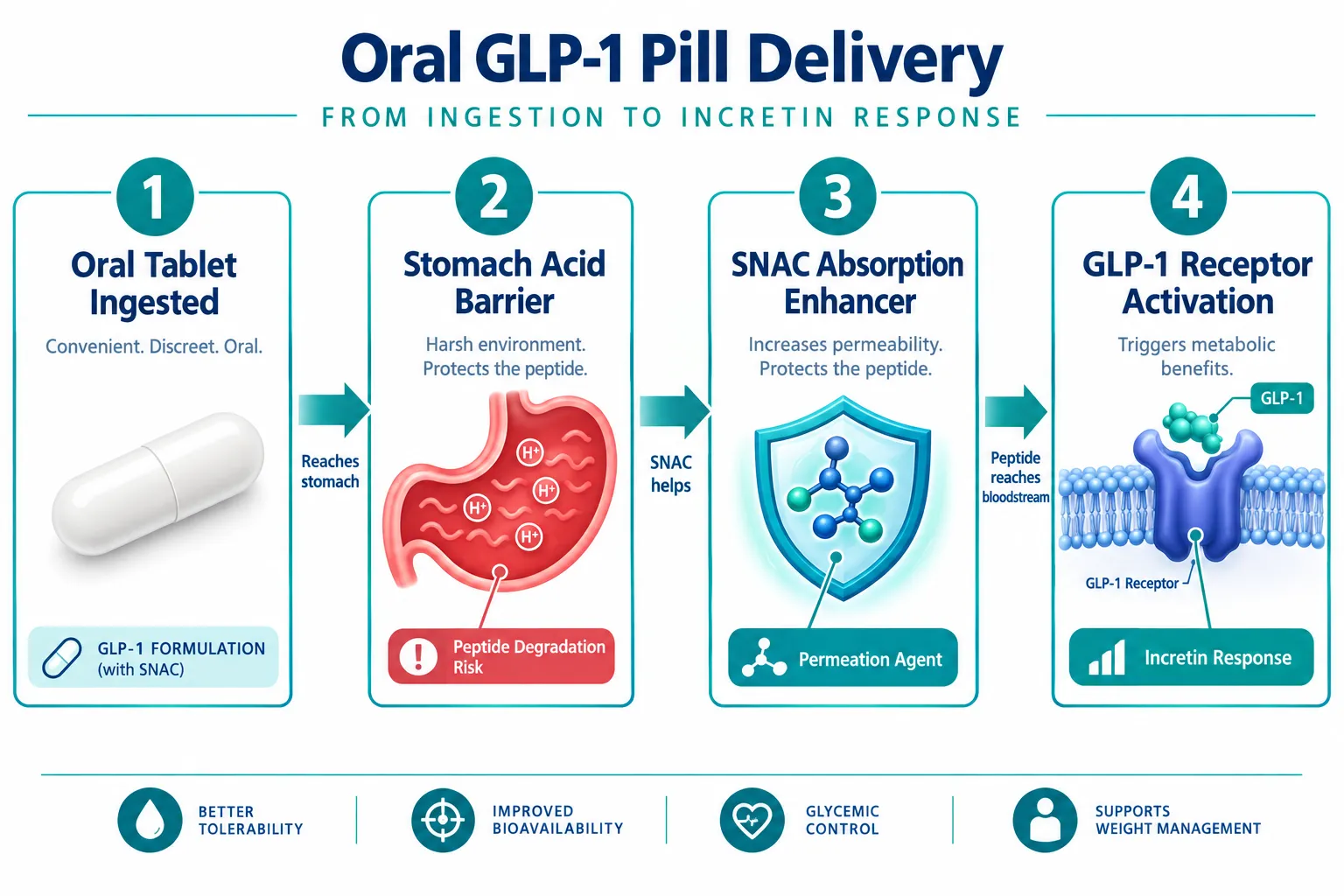
Two oral GLP-1 agents reached U.S. approval in 2026. Eli Lilly's orforglipron (brand name Foundayo) became the first approved oral-only GLP-1 pill specifically indicated for obesity. Novo Nordisk's semaglutide pill, already available for type 2 diabetes, also received approval for weight loss in adults in both the U.S. and EU markets. These are not peptide-based tablets, they are small-molecule non-peptide compounds or peptide formulations engineered to survive the hostile environment of the gastrointestinal tract.
The core challenge with oral peptide delivery is enzymatic degradation. Stomach acid and proteases break down peptide chains before they can reach systemic circulation. Semaglutide tablets overcome this using a co-formulation with sodium N-(8-[2-hydroxybenzoyl] amino) caprylate (SNAC), an absorption enhancer that temporarily raises local gastric pH and facilitates mucosal permeation. Orforglipron sidesteps this problem entirely by being a small-molecule compound that does not require an absorption enhancer.
Key oral delivery constraints include:
- Low bioavailability compared to subcutaneous injection
- Strict fasting requirements before dosing (for semaglutide tablets)
- Narrower therapeutic window due to absorption variability
- No flexibility in dose titration beyond what the formulation allows
For those exploring the broader landscape of peptides used in metabolic and weight-loss research, what is the strongest peptide for weight loss provides useful context on how different compound classes compare.
Retatrutide: The Triple-Agonist Model That Changes the Comparison
Calling retatrutide a "GLP-3" is a colloquial shorthand that has gained traction in research communities, but it is worth clarifying what that label actually means. Retatrutide is a single peptide molecule that simultaneously activates three receptors: GLP-1, glucose-dependent insulinotropic polypeptide (GIP), and glucagon. This triple agonism is why it is sometimes distinguished from standard GLP-1 agents with the informal "GLP-3" designation.
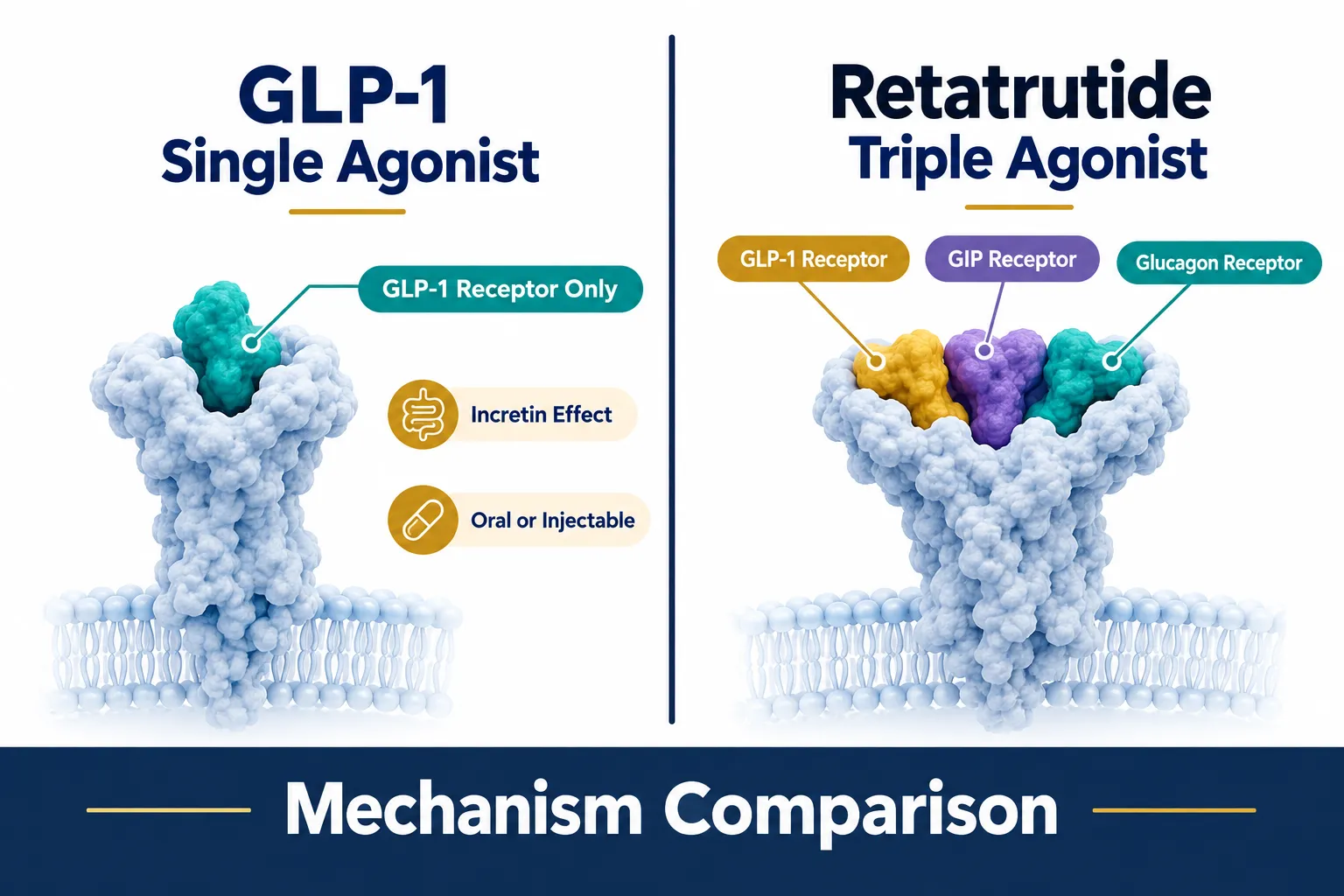
This mechanistic distinction is critical when comparing oral delivery concepts with research-use GLP-3 retatrutide models. A GLP-1 pill activates one receptor pathway. Retatrutide activates three, producing overlapping and synergistic metabolic effects that include:
- GLP-1 activity: appetite suppression, insulin secretion, slowed gastric emptying
- GIP activity: enhanced insulin response, potential adipose tissue effects
- Glucagon activity: increased energy expenditure, hepatic fat mobilization
Phase 2 data for retatrutide showed weight reductions exceeding 24% of body weight at the highest dose over 48 weeks, a benchmark that no single GLP-1 agonist, oral or injectable, has matched in head-to-head comparisons at similar timepoints.
For more background on how retatrutide fits within the GLP-1 research landscape, see the GLP-1 retatrutide overview. Researchers seeking access to standardized research-grade material can also review GLP3 Reta 10mg and GLP-3 Reta 30mg for sale options for preclinical study use.
The TRIUMPH Phase 3 Program and What It Tells Researchers
The most comprehensive data set currently being generated on retatrutide comes from the TRIUMPH Phase 3 program, a suite of large-scale trials running across 2025 and 2026. These trials are designed to test retatrutide across multiple disease populations, not just general obesity.
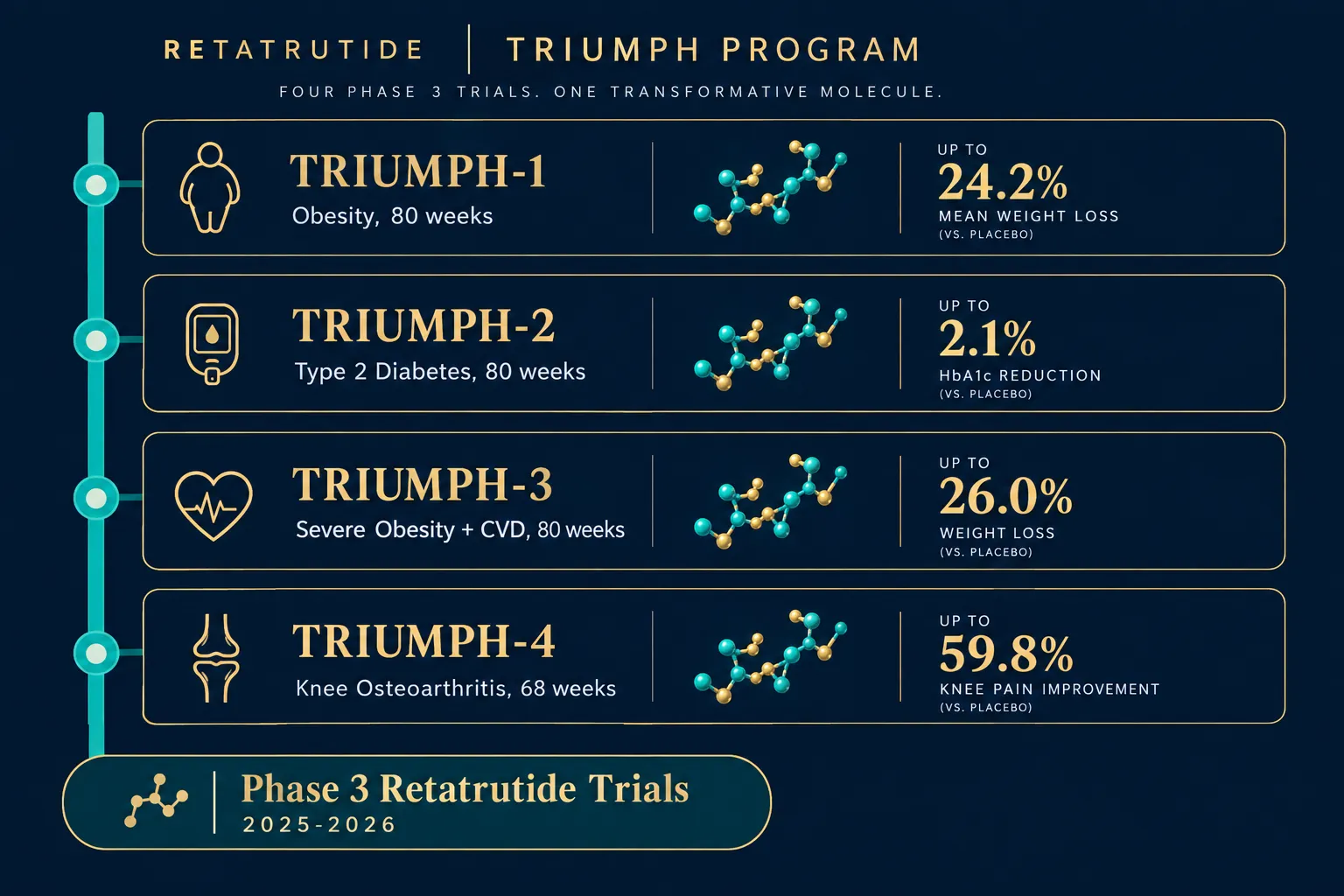
| Trial | Population | Duration | Primary Focus |
|---|---|---|---|
| TRIUMPH-1 | Obesity or overweight (no T2D) | 80 weeks | Weight loss efficacy and safety |
| TRIUMPH-2 | Type 2 diabetes + obesity | 80 weeks | Weight loss and glycemic control |
| TRIUMPH-3 | Severe obesity + CVD (BMI 35+) | 80 weeks | Cardiovascular and weight outcomes |
| TRIUMPH-4 | Obesity + knee osteoarthritis | 68 weeks | Weight loss and knee pain reduction |
Topline 2026 results from the TRIUMPH program and the parallel TRANSCEND-T2D-1 diabetes trial have shown meaningful reductions in A1C, body weight, and comorbidity burden. These outcomes extend well beyond what a single-receptor oral pill is designed to achieve.
For researchers tracking the evolution of this compound, the retatrutide clinical trials resource aggregates ongoing study data in one place.
"Retatrutide's triple-receptor mechanism produces metabolic effects that are qualitatively different from those of any approved oral GLP-1 agent, not just quantitatively larger."
It is also worth noting that retatrutide remains an injectable peptide in all clinical and research settings. There is no oral formulation in development at this stage, which means the oral vs. injectable distinction is not merely a delivery preference, it reflects a fundamental difference in what each compound can do.
For researchers interested in combinatorial peptide approaches in metabolic contexts, the article on combining Tesamorelin with CDC Ipamorelin offers relevant mechanistic parallels.
Conclusion
Understanding what is a GLP-1 pill, comparing oral delivery concepts with research-use GLP-3 retatrutide models, makes one conclusion unavoidable: these are fundamentally different tools. The 2026 approvals of orforglipron and oral semaglutide for obesity represent a genuine advance in patient convenience and access. However, their single-receptor mechanism, oral bioavailability constraints, and narrower metabolic scope place them in a separate category from retatrutide's triple-agonist profile.
Actionable next steps for researchers and informed readers:
- Review the TRIUMPH trial registry entries to follow Phase 3 retatrutide data as it becomes available.
- Distinguish between oral GLP-1 agents (small-molecule or SNAC-formulated peptide) and injectable triple agonists before drawing efficacy comparisons.
- If evaluating retatrutide for preclinical research, source only verified, tested-grade material and consult current retatrutide clinical trial literature before designing protocols.
- Do not assume that oral availability implies equivalent biological activity, receptor breadth, bioavailability, and dosing pharmacokinetics all differ substantially between compound classes.
The GLP-1 pill is a meaningful milestone. Retatrutide is a different kind of milestone entirely.


Leave a Reply
Want to join the discussion?Feel free to contribute!