

Adenosine Triphosphate, Cellular Energy, and Metabolic Peptides: How MOTS‑c and 5‑Amino‑1MQ Influence ATP-Linked Pathways
Every cell in the human body burns through roughly its own weight in adenosine triphosphate (ATP) each day, a staggering metabolic fact that underscores just how central this molecule is to survival. When that production falters, fatigue, metabolic dysfunction, and accelerated aging follow. Researchers are now exploring how specific mitochondrial peptides, particularly MOTS-c and 5-Amino-1MQ, can modulate the very signaling networks that govern ATP synthesis and consumption. The study of Adenosine Triphosphate, Cellular Energy, and Metabolic Peptides: How MOTS-c and 5-Amino-1MQ Influence ATP-Linked Pathways sits at the frontier of metabolic science, offering new frameworks for understanding energy regulation at the cellular level.
Key Takeaways
- ATP is the universal energy currency of the cell, produced primarily through mitochondrial oxidative phosphorylation.
- MOTS-c is a mitochondria-derived peptide that activates AMPK and supports metabolic flexibility.
- 5-Amino-1MQ inhibits NNMT, raising NAD+ availability and enhancing mitochondrial energy output.
- Both peptides influence overlapping ATP-linked signaling pathways, including AMPK, NAD+/SIRT1, and PGC-1 alpha.
- Current research is preclinical; these compounds are studied in controlled laboratory settings.
ATP Production: The Mitochondrial Engine
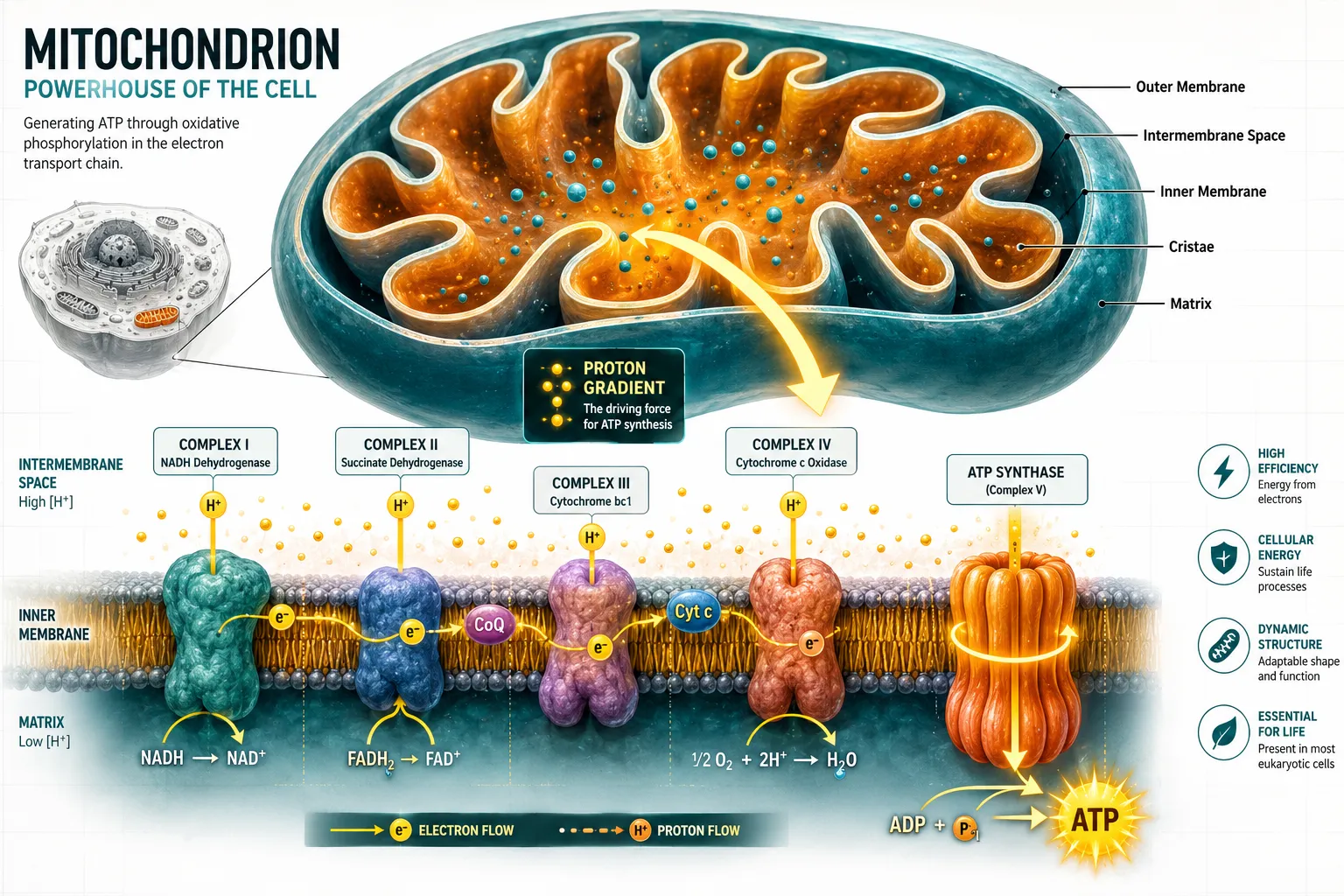
Adenosine triphosphate is synthesized primarily through oxidative phosphorylation, a process occurring across the inner mitochondrial membrane. Electrons stripped from nutrients like glucose and fatty acids travel down the electron transport chain (ETC), releasing energy that pumps protons across the membrane. ATP synthase then harnesses this proton gradient to phosphorylate ADP into ATP, a process called chemiosmosis.
Key stages of ATP production include:
- Glycolysis, produces 2 net ATP per glucose molecule in the cytoplasm
- Citric acid cycle (Krebs cycle), generates electron carriers (NADH, FADH2) in the mitochondrial matrix
- Oxidative phosphorylation, yields approximately 30-32 ATP per glucose molecule
"Mitochondrial efficiency is not just about energy output, it determines how well a cell responds to metabolic stress, inflammation, and aging."
When mitochondrial function declines, ATP output drops, triggering compensatory stress responses. This is where metabolic peptides enter the picture. Compounds like SS-31 (Elamipretide) have been studied for their ability to stabilize cardiolipin on the inner mitochondrial membrane, directly supporting ETC integrity and ATP production efficiency.
How MOTS-c and 5-Amino-1MQ Influence ATP-Linked Pathways
Understanding Adenosine Triphosphate, Cellular Energy, and Metabolic Peptides: How MOTS-c and 5-Amino-1MQ Influence ATP-Linked Pathways requires examining each compound's distinct mechanism, and where those mechanisms converge.
MOTS-c: A Mitochondria-Encoded Metabolic Regulator
MOTS-c (Mitochondrial Open Reading Frame of the 12S rRNA type-c) is a 16-amino-acid peptide encoded within mitochondrial DNA. Unlike most peptides, it originates inside the mitochondria and can translocate to the nucleus, where it regulates gene expression related to metabolism.
Primary mechanisms of MOTS-c:
| Mechanism | Effect on ATP-Linked Signaling |
|---|---|
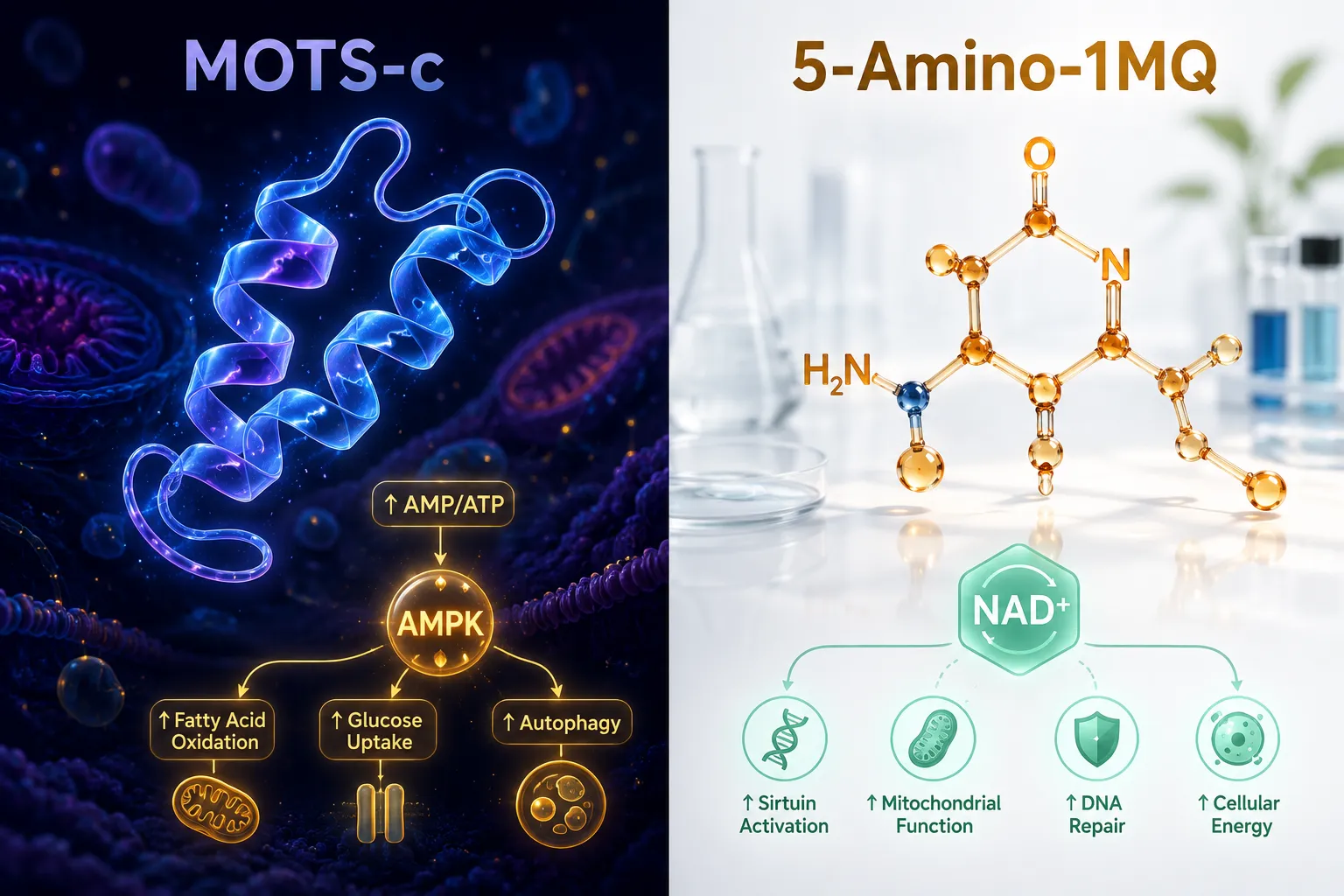
| AMPK activation | Increases glucose uptake, inhibits anabolic pathways that consume ATP |
| Folate cycle modulation | Reduces AICAR accumulation, fine-tuning purine synthesis |
| Mitochondrial biogenesis | Upregulates PGC-1 alpha, increasing mitochondrial mass and ATP capacity |
| Insulin sensitization | Improves glucose flux into energy-producing pathways |
AMPK (AMP-activated protein kinase) is essentially the cell's low-energy sensor. When ATP levels fall and AMP rises, AMPK switches on catabolic pathways to restore energy balance. MOTS-c amplifies this response, making cells more responsive to metabolic stress. Research on MOTS-c and related mitochondrial peptides highlights its role in exercise mimicry and metabolic flexibility.
Researchers interested in combined mitochondrial support have also examined SS-31 and MOTS-c together, given their complementary actions on membrane integrity and AMPK signaling respectively.
5-Amino-1MQ: Targeting NNMT to Elevate NAD+
5-Amino-1-methylquinolinium (5-Amino-1MQ) takes a different approach. It is a small-molecule inhibitor of nicotinamide N-methyltransferase (NNMT), an enzyme that consumes SAM (S-adenosylmethionine) and diverts nicotinamide away from NAD+ synthesis.
By blocking NNMT, 5-Amino-1MQ:
- Raises intracellular NAD+ levels, fueling the electron transport chain
- Activates SIRT1, a NAD+-dependent deacetylase that promotes mitochondrial biogenesis
- Reduces fat cell differentiation by altering methylation patterns in adipocytes
- Supports PGC-1 alpha expression, linking NAD+ status to mitochondrial ATP output
NAD+ is indispensable to ATP production, it serves as the primary electron carrier feeding into Complex I of the ETC. When NAD+ availability increases, the mitochondrial proton gradient strengthens, and ATP synthase output rises accordingly.
This mechanism places 5-Amino-1MQ squarely within the broader landscape of metabolic peptides and small molecules that target ATP-linked pathways from the upstream NAD+ supply side. Researchers exploring mitochondrial dynamics and SS-31 will recognize the parallel logic: support the upstream inputs, and ATP production follows.

Convergence Points: AMPK, NAD+, and Mitochondrial Biogenesis
The deepest insight from studying Adenosine Triphosphate, Cellular Energy, and Metabolic Peptides: How MOTS-c and 5-Amino-1MQ Influence ATP-Linked Pathways is that these two compounds converge on the same downstream targets through different upstream routes.
Shared pathway nodes:
- AMPK activation, MOTS-c directly activates AMPK; elevated NAD+ from 5-Amino-1MQ activates SIRT1, which deacetylates and activates LKB1, an upstream AMPK kinase
- PGC-1 alpha upregulation, both compounds promote this master regulator of mitochondrial biogenesis
- Mitochondrial membrane potential, improved NAD+ flux and AMPK-mediated fission/fusion balance both support a healthy proton gradient
This convergence suggests potential complementarity in research models, though all current data remains preclinical. For researchers building comprehensive metabolic protocols, resources on quality-tested peptides and aging support compounds provide relevant context for experimental design.
It is also worth noting that other peptides studied in metabolic contexts, such as those reviewed in SS-31 peptide benefits research, share the theme of protecting mitochondrial function to preserve ATP output under stress conditions.
Conclusion
The science of adenosine triphosphate, cellular energy, and metabolic peptides is rapidly evolving. MOTS-c and 5-Amino-1MQ represent two mechanistically distinct but functionally convergent tools for modulating ATP-linked signaling, one acting through AMPK activation at the mitochondrial genome level, the other through NAD+ elevation via NNMT inhibition.
Actionable next steps for researchers:
- Review preclinical literature on MOTS-c's AMPK activation and compare dosing models used in rodent metabolic studies.
- Examine NNMT inhibition data for 5-Amino-1MQ in adipocyte and hepatocyte models to understand tissue-specific NAD+ responses.
- Explore complementary mitochondrial peptides, including SS-31, to build multi-target experimental frameworks.
- Source compounds only from verified, purity-tested suppliers to ensure research integrity.
- Consult current regulatory guidelines, as these compounds are for research use only and not approved for human therapeutic use.
The intersection of ATP biology and mitochondrial peptide research offers one of the most promising avenues in metabolic science today.
References
- Lee, C., Zeng, J., Drew, B. G., Sallam, T., Martin-Montalvo, A., Wan, J., Kim, S. J., Mehta, H., Hevener, A. L., de Cabo, R., & Cohen, P. (2015). The mitochondrial-derived peptide MOTS-c promotes metabolic homeostasis and reduces obesity and insulin resistance. Cell Metabolism, 21(3), 443-454.
- Kim, S. J., Mehta, H. H., Wan, J., Kuehnemann, C., Chen, J., Hu, J. F., Hoffman, A. R., & Cohen, P. (2018). Mitochondrial peptides modulate mitochondrial function during cellular senescence. Aging, 10(6), 1239-1256.
- Neelakantan, H., Vance, V., Wetzel, M. D., Wang, H. L., McHardy, S. F., Finnerty, C. C., Hommel, J. D., & Watowich, S. J. (2018). Selective and membrane-permeable small molecule inhibitors of nicotinamide N-methyltransferase reverse high fat diet-induced obesity in mice. Biochemical Pharmacology, 147, 141-152.
- Hardie, D. G., Ross, F. A., & Hawley, S. A. (2012). AMPK: a nutrient and energy sensor that maintains energy homeostasis. Nature Reviews Molecular Cell Biology, 13(4), 251-262.
- Yoshino, J., Baur, J. A., & Imai, S. I. (2018). NAD+ intermediates: the biology and therapeutic potential of NMN and NR. Cell Metabolism, 27(3), 513-528.


Leave a Reply
Want to join the discussion?Feel free to contribute!