Call or Text 727-513-9780
  • Shopping Cart Shopping Cart
    0Shopping Cart
Pure Tested Peptides | America's most trusted Peptides for sale online
  • Peptides for sale
    • Oral Peptides for sale
      • Peptide Capsules for sale
      • BPC 157 Capsules 1000mcg
      • SLU-PP-332 Capsules | 1000 mcg
      • 5-Amino-1MQ 50mg Capsules
      • Tesofensine 500mcg
    • All Peptides for sale
    • Peptide Sprays
      • BPC 157 Nasal Spray Kit
      • BPC-157 TB500 Nasal Spray Kit
      • Semax Nasal Spray 10mg
      • Selank – Nasal Spray Kit – 10mg
      • Epithalon 50MG Nasal Spray Kit
      • Ipamorelin 10mg Nasal Spray
      • Klow Nasal Spray (BPC-157 + TB-500 + GHK-Cu + KPV) | 80mg
      • Hulk Nasal Spray Tesa / Ipa Blend 6/3 MG
      • Klow Nasal Spray
      • NAD + 500 mg Nasal Spray
      • PT-141 Nasal Spray Kit
    • GHRH Peptides
      • Ipa Peptides
      • CJC-1295 Peptides
        • CJC-1295 with DAC 5 mg
        • CJC-1295 without DAC 5 mg
        • CJC-1295 Ipa 10mg
      • Tesa Peptides
        • Tesa Peptide
        • Tesa 20 mg
    • GHK-Cu Peptides
      • All GHK-Cu Peptides
      • GHK-Cu 100mg
      • KLOW Peptide Blend – Buy KLOW blend online
    • BPC Peptides
      • All BPC Peptides
      • BPC-157
      • BPC-157 TB-500
      • BPC 157 capsules 1000mcg
    • SLU-PP-332 Peptides
      • All SLU-PP-332 Peptides
      • SLU-PP-332 5mg
    • GLP3 Peptides
      • GLP3-R
      • GLP3-R CAG 10mg
      • GLP3-R 20mg
    • PT-141 Peptides
      • PT-141 Peptides for sale
      • PT-141 10mg
      • PT-141 Nasal Spray
    • CAG Peptides
      • Lipo-C Peptide Blend
      • CAG 5mg
      • CAG 10mg
    • MOTS-C Peptides
      • MOTS-C Peptides for sale
      • MOTS-c peptide
      • MOTS-c 10mg *6 pack*
    • 5 Amino 1MQ Peptides
      • 5 Amino 1MQ Peptides for sale
      • 5-Amino-1MQ 50mg Capsules
      • 5-Amino-1MQ 5mg
    • Epithalon Peptides
      • Epithalon Peptides for sale
      • Epithalon 10mg
      • Epithalon 50mg
  • Shop
    • GLPs
      • 5-Amino-1MQ 50mg Capsules
      • 5-Amino-1MQ 5mg
      • GLP3-Reta
      • L-Carnitine 500mg/ml
      • Tesofensine 500mcg
      • SLU-PP-332 5mg
      • MOTS-c 10mg *6 pack*
    • Epithalon & BPC Peptides
      • Epithalon 10mg
      • Epithalon 50mg
      • BPC-157
      • BPC 157 capsules 1000mcg
      • BPC-157 TB-500
      • BPC-157 TB500 Nasal Spray Kit
      • BPC 157 Nasal Spray Kit
    • BPC TB-500 & NAD+ Peptides
      • NAD+ 500 mg
      • KLOW Peptide Blend – Buy KLOW blend online
      • GLOW Peptide Blend
      • TB 500 5mg
      • BPC 157 capsules 1000mcg – Supplement
      • BPC 157 Nasal Spray Kit
      • BPC-157
      • BPC-157 TB500 Nasal Spray Kit
      • BPC-157 TB-500
      • BPC 157 capsules 1000mcg
    • LL-37 Peptide
      • LL-37 10 mg
    • MOTS-C & Selank
      • MOTS-c peptide
      • Selank 10mg
    • GHK Peptides
      • GHK-Cu 100mg
      • GLOW Peptide Blend
      • KLOW Peptide Blend – Buy KLOW blend online
  • COAs
  • Wholesale
    • Wholesale Peptides for sale
  • PTP FAQ
  • Affiliates
    • Selank Peptide: Advanced Pharmacological Mechanisms Underlying Its Anxiolytic and Nootropic Effects in Research
      • 5-Amino-1MQ Peptide: Detailed Mechanisms of NNMT Inhibition and Its Impact on Cellular Metabolism Research
        • MOTS-C Peptide: Unraveling Its Role in Mitochondrial Dynamics and Energy Metabolism Research
          • Epithalon Peptide and Telomerase Regulation: Investigating Its Impact on Cellular Senescence and Lifespan Research Models
            • GLP2-T vs GLP2 Tirz Peptide: Understanding the Naming, Mechanistic Nuances, and Research Implications for Gut Health
      • Peptides and Polypeptides in Modern Pharmacology: What Research on Metoprolol, Prednisone, and Amlodipine Reveals
        • Polypeptide Peptides vs NSAIDs: What Naproxen and Diclofenac Teach Tissue-Repair Researchers About BPC‑157 and TB‑500
          • Peptides and Polypeptides in Endocrine Pharmacology: How GLP-1, GLP-2, and GLP-3 Retatrutide Differ From Classic Drugs Like Prednisone and Amlodipine
          • 5‑Amino‑1MQ Peptide and NNMT Inhibition: How It Compares With Statins Like Atorvastatin in Adipose and Lipid Metabolism Research
      • Enclomiphene, Estrogen Receptor Signaling, and Luteinizing Phase Biology: What Hormone Researchers Should Measure
        • Mesenchymal Stem Cells, BPC‑157, and GHK‑Cu: How Tissue Repair Peptides Compare With Classic NSAIDs Like Naproxen in Injury Models
          • Peptide Calculator Use Cases Beyond Growth Hormone: Working Through GLP‑3 Retatrutide, MOTS‑c, and BPC‑157 Research Dosing
        • Polypeptide Peptides in Endocrine and Metabolic Pharmacology: Lessons From Amlodipine, Prednisone, and Metoprolol
        • Peptides Calculator for Advanced Blends: Worked Examples for Tesamorelin, CJC‑1295, and Ipamorelin Stacks
          • Peptides and Polypeptides in Human Physiology: How Molecular Size Shapes Research Applications
            • Selank Peptide: Advanced Pharmacological Mechanisms Underlying Its Anxiolytic and Nootropic Effects in Research
          • 5-Amino-1MQ Peptide: Detailed Mechanisms of NNMT Inhibition and Its Impact on Cellular Metabolism Research
            • MOTS-C Peptide: Unraveling Its Role in Mitochondrial Dynamics and Energy Metabolism Research
              • Epithalon Peptide and Telomerase Regulation: Investigating Its Impact on Cellular Senescence and Lifespan Research Models
                • GLP2-T vs GLP2 Tirz Peptide: Understanding the Naming, Mechanistic Nuances, and Research Implications for Gut Health
                  • Peptides and Polypeptides in Endocrine Pharmacology: How GLP-1, GLP-2, and GLP-3 Retatrutide Differ From Classic Drugs Like Prednisone and Amlodipine
                    • Polypeptide Peptides vs NSAIDs: What Naproxen and Diclofenac Teach Tissue-Repair Researchers About BPC‑157 and TB‑500
                      • Peptides and Polypeptides in Modern Pharmacology: What Research on Metoprolol, Prednisone, and Amlodipine Reveals
                        • 5‑Amino‑1MQ Peptide and NNMT Inhibition: How It Compares With Statins Like Atorvastatin in Adipose and Lipid Metabolism Research
                        • Enclomiphene, Estrogen Receptor Signaling, and Luteinizing Phase Biology: What Hormone Researchers Should Measure
                        • Mesenchymal Stem Cells, BPC‑157, and GHK‑Cu: How Tissue Repair Peptides Compare With Classic NSAIDs Like Naproxen in Injury Models
                        • Peptide Calculator Use Cases Beyond Growth Hormone: Working Through GLP‑3 Retatrutide, MOTS‑c, and BPC‑157 Research Dosing
                        • Polypeptide Peptides in Endocrine and Metabolic Pharmacology: Lessons From Amlodipine, Prednisone, and Metoprolol
                        • Peptides Calculator for Advanced Blends: Worked Examples for Tesamorelin, CJC‑1295, and Ipamorelin Stacks
                        • Peptides and Polypeptides in Human Physiology: How Molecular Size Shapes Research Applications
                        • Selank Peptide: Advanced Pharmacological Mechanisms Underlying Its Anxiolytic and Nootropic Effects in Research
                        • MOTS-C Peptide: Unraveling Its Role in Mitochondrial Dynamics and Energy Metabolism Research
                        • Peptides and Polypeptides in Modern Pharmacology: What Research on Metoprolol, Prednisone, and Amlodipine Reveals
                        • Peptides and Polypeptides in Endocrine Pharmacology: How GLP-1, GLP-2, and GLP-3 Retatrutide Differ From Classic Drugs Like Prednisone and Amlodipine
                        • 5-Amino-1MQ Peptide: Detailed Mechanisms of NNMT Inhibition and Its Impact on Cellular Metabolism Research
                        • Mesenchymal Stem Cells, BPC‑157, and GHK‑Cu: How Tissue Repair Peptides Compare With Classic NSAIDs Like Naproxen in Injury Models
                        • Peptide Calculator Use Cases Beyond Growth Hormone: Working Through GLP‑3 Retatrutide, MOTS‑c, and BPC‑157 Research Dosing
                        • GLP2-T vs GLP2 Tirz Peptide: Understanding the Naming, Mechanistic Nuances, and Research Implications for Gut Health
                        • Polypeptide Peptides in Endocrine and Metabolic Pharmacology: Lessons From Amlodipine, Prednisone, and Metoprolol
                        • Polypeptide Peptides vs NSAIDs: What Naproxen and Diclofenac Teach Tissue-Repair Researchers About BPC‑157 and TB‑500
                        • Peptides and Polypeptides in Human Physiology: How Molecular Size Shapes Research Applications
                        • Peptides Calculator for Advanced Blends: Worked Examples for Tesamorelin, CJC‑1295, and Ipamorelin Stacks
                        • 5‑Amino‑1MQ Peptide and NNMT Inhibition: How It Compares With Statins Like Atorvastatin in Adipose and Lipid Metabolism Research
                        • Enclomiphene, Estrogen Receptor Signaling, and Luteinizing Phase Biology: What Hormone Researchers Should Measure
                        • Epithalon Peptide and Telomerase Regulation: Investigating Its Impact on Cellular Senescence and Lifespan Research Models
                        • Best research protocol Klow blend
                        • best time to take BPC-157
                        • best time to take DSIP (Delta Sleep Inducing Peptide)
                        • best time to take CJC-1295
                        • best time to take AOD-9604
                        • best time to take Follistatin 344
                        • best time to take Ipamorelin
                        • best time to take MK-677 (Ibutamoren)
                        • best time to take Ligandrol (LGD-4033) — research compound
                        • best time to take Ostarine (MK-2866) — research compound
                        • best time to take GHK-CU
                        • best time to take TB-500
                        • best time to take MOTS-c
                        • best time to take Semax
                        • best time to take RAD-140 (Testolone) — research compound
                        • best time to take Thymosin Alpha-1
                        • best time to take PEG-MGF
                        • Biolife Plasma, Octapharma Plasma, and Research Peptides: How Plasma Donation Labs Differ From Peptide Suppliers
                        • best time to take YK-11 — research compound
                        • best time to take PT-141 (Bremelanotide)
                        • Best research protocol Klow blend
                        • 5-Amino-1MQ and MOTS-C Synergy: Metabolic Signaling, Mitochondria, and Research Design
                        • BPC-157 and TB-500: Investigating Their Combined Effects on Angiogenesis and Cellular Migration in Tissue Repair Models
                        • BPC-157 Peptide: Gut Barrier Function, Inflammation, and Tissue-Recovery Research
                        • 5‑Amino‑1MQ and MOTS‑c Synergy in Metabolic Research: Designing NNMT and Mitochondrial Biogenesis Stacks
                        • CJC-1295 with DAC vs. Without DAC: Half-Life, Release Kinetics, and Research Implications
                        • CJC‑1295 with DAC vs. Without DAC: Expanding on Half‑Life Differences Using Tesamorelin and Ipamorelin Blend Case Studies
                        • Collagen Biology and Copper‑Binding Peptides: How GHK‑Cu, Glow Blend, and Klow Blend Interact with Skin and Connective Tissue
                        • Collagen Biology and Regenerative Peptides: How GHK‑Cu, Glow Blend, and Klow Blend Affect Extracellular Matrix Research
                    • DNA, Telomeres, and Longevity Peptides: Positioning Epithalon and MOTS‑c in Genetic Aging Research
                      • Enclomiphene Citrate: serm Mechanism, Testosterone Research, and Stack Compatibility
                        • Enclomiphene vs Enclomiphene Citrate: Formulation, Bioavailability, and Research Distinctions
                        • Epithalon Peptide Research: Telomerase Activation, Aging, and Pineal Gland Function
                        • Estrogen Receptor Signaling and Enclomiphene: How Selective Modulators Compare with Classic Polypeptide Hormones
                        • GHK-Cu Peptide: Advanced Mechanisms in Extracellular Matrix Remodeling and Wound Healing Research
                        • GHK-Cu Peptide: Collagen Synthesis, Wound Repair, and Skin-Barrier Research Models
                        • GLP-1 vs GLP-3 vs GLP-2: Peptide Classification and Research Applications
                        • GLP-2 Peptide Research Guide: Gut Barrier Function, Nutrient Absorption, and Intestinal Recovery Models
                        • GLP-3 Retatrutide vs. GLP-1 Drugs: What Triple-Agonist Biology Changes in Research Models
                        • Ipamorelin and Tesamorelin Combination: Synergistic GH Secretagogue Research and Dosing Protocols
                        • GLP2 Tirz Peptide: What It Is, Why the Name Exists, and How Researchers Should Interpret It
                        • Klow Blend Peptide Nasal Spray: What the Formulation Is Trying to Do in Cognitive Research
                        • Mitochondria, NNMT Inhibition, and Peptide Modulators: Where MOTS‑c and 5‑Amino‑1MQ Fit in Cellular Energy Research
                        • MOTS-c Peptide: Mitochondrial Function, Energy Metabolism, and What Researchers Measure
                        • MOTS-c vs. 5-Amino-1MQ: Which Metabolic Research Questions Each Compound Actually Answers
                        • Nasal Spray Peptides: Bioavailability, Administration, and Semax/Selank Research Applications
                        • PT-141 Peptide Research: Mechanism of Action and Melanocortin Receptor Signaling
                        • Retatrutide for Research: Mechanism, Structure, and GLP-1/GLP-3 Dual Action
                        • Retatrutide for Obesity and Type 2 Diabetes: What the Latest Trial Data Suggest
                        • Tesofensine Peptide Research: Mechanism, Appetite Suppression, and Neuropeptide Y Pathways
  • Contact
    • Contact Customer Service
    • Text Customer Support
  • About US
  • Shop all peptides
  • Affiliate Program
    • Affiliate Signup
  • Login / Register Login / Register Page Link Login / Register Page Link
  • Click to open the search input field Click to open the search input field Search
  • Menu Menu
Peptides and Polypeptides in Modern Research: How MOTS-c, 5-Amino-1MQ, and GLP-3 Retatrutide Fit Into the Big Picture

Peptides and Polypeptides in Modern Research: How MOTS-c, 5-Amino-1MQ, and GLP-3 Retatrutide Fit Into the Big Picture

September 1, 2026/0 Comments/in Uncategorized/by

More than 80 FDA-approved peptide-based drugs are now on the market, and the global peptide therapeutics pipeline has grown faster in the past decade than at any point in pharmaceutical history. Yet most people discussing MOTS-c, 5-Amino-1MQ, or retatrutide skip past a foundational question: what exactly separates a peptide from a polypeptide, and how does that distinction shape what these molecules can and cannot do? Understanding peptides and polypeptides in modern research, and how MOTS-c, 5-Amino-1MQ, and GLP-3 retatrutide fit into the big picture, starts with getting the biology right.

Key Takeaways

  • Peptides contain fewer than 50 amino acids; polypeptides contain 50 or more, and this structural difference drives major differences in stability, delivery, and mechanism.
  • Classic small-molecule drugs like prednisone and atorvastatin work differently from peptides, they are not chains of amino acids and generally cross cell membranes more easily.
  • MOTS-c is a 16-amino-acid mitochondrial peptide entering early human trials as a potential exercise-mimetic and metabolic regulator.
  • 5-Amino-1MQ is a small-molecule NNMT inhibitor at the preclinical stage, not a peptide, but often discussed alongside peptide metabolic research.
  • Retatrutide is a polypeptide triple agonist in Phase 3 trials showing surgical-scale weight loss, representing the frontier of cardiometabolic drug development.

The Classification Foundation: Peptides, Polypeptides, and Why It Matters
The Classification Foundation: Peptides, Polypeptides, and Why It Matters

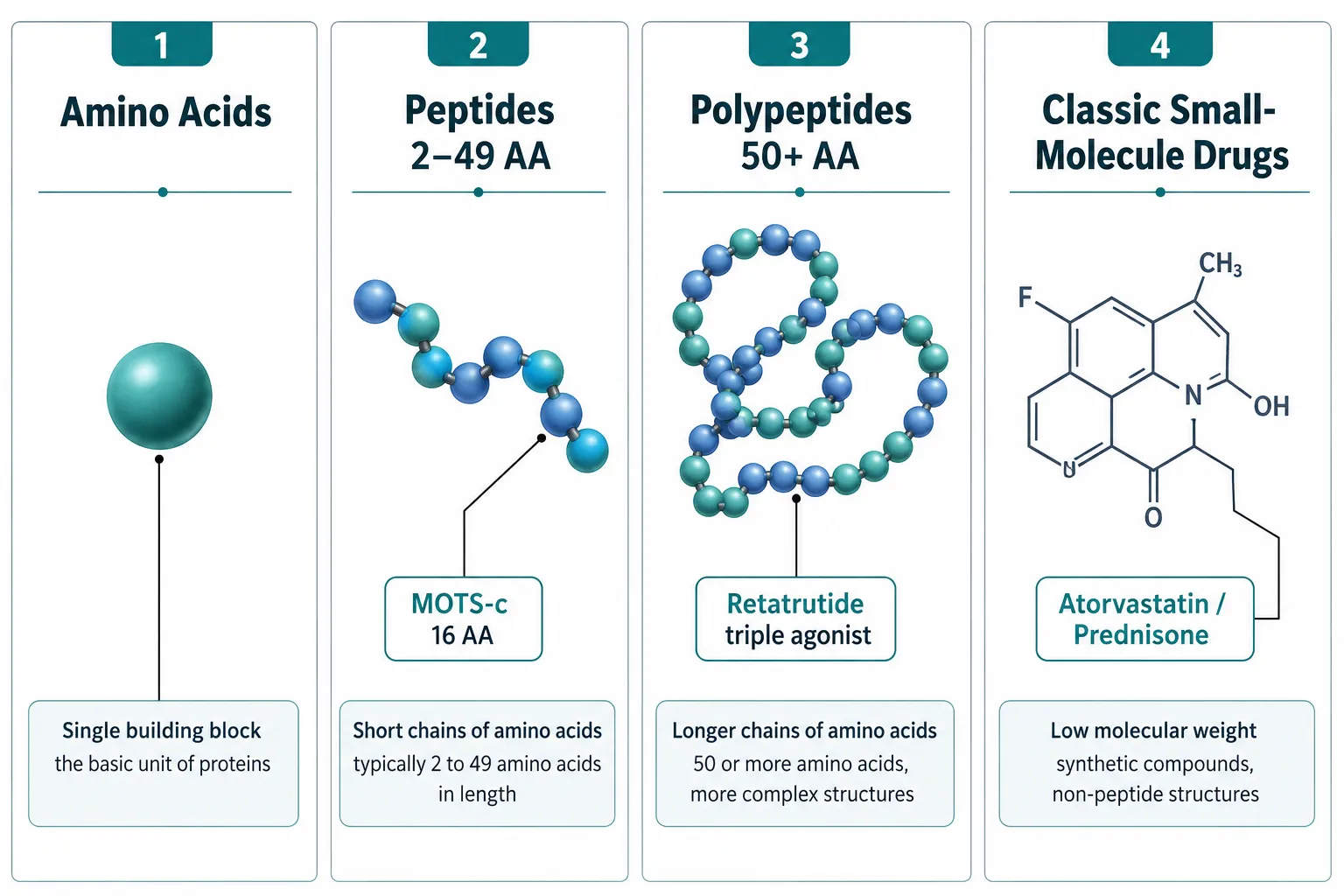
The terms peptide and polypeptide are often used interchangeably, but researchers draw a clear line. A peptide is a chain of 2 to approximately 49 amino acids. A polypeptide is a chain of 50 or more amino acids. Proteins are typically polypeptides that fold into complex three-dimensional structures.

This distinction is not merely academic. Chain length affects:

  • Stability, shorter peptides degrade faster in the bloodstream
  • Delivery method, many peptides require injection because stomach acid breaks them down
  • Target specificity, longer chains can engage more complex receptor sites
  • Manufacturing cost, polypeptides are harder and more expensive to synthesize at scale

How do classic drugs compare? Prednisone is a corticosteroid, a small lipid-derived molecule. Atorvastatin (Lipitor) is a synthetic small molecule that inhibits an enzyme in the liver. Neither is a peptide. They work by different mechanisms, cross cell membranes more easily, and are typically taken orally. Peptides and polypeptides occupy a distinct pharmacological space between these traditional small molecules and full biological proteins like monoclonal antibodies.

Other research peptides illustrate the range of this space. CJC-1295 is a 30-amino-acid growth hormone-releasing hormone analogue. PT-141 (bremelanotide) is a cyclic heptapeptide studied for sexual health. GHK-Cu is a tripeptide with copper-binding properties relevant to skin repair peptides research. GLP-2-T is a gut-derived peptide involved in intestinal repair. Each sits at a different point on the amino acid chain spectrum, and each behaves differently as a result.

"Knowing whether a compound is a small molecule, a peptide, or a polypeptide is the first step toward understanding its research potential and its limitations."

Researchers exploring synergistic peptides often combine compounds from different parts of this spectrum to target multiple pathways simultaneously, a strategy that has become central to modern metabolic research.

MOTS-c and 5-Amino-1MQ: Two Very Different Approaches to Metabolic Research
MOTS-c and 5-Amino-1MQ: Two Very Different Approaches to Metabolic Research

MOTS-c: A Mitochondrial Peptide Moving Toward Human Trials

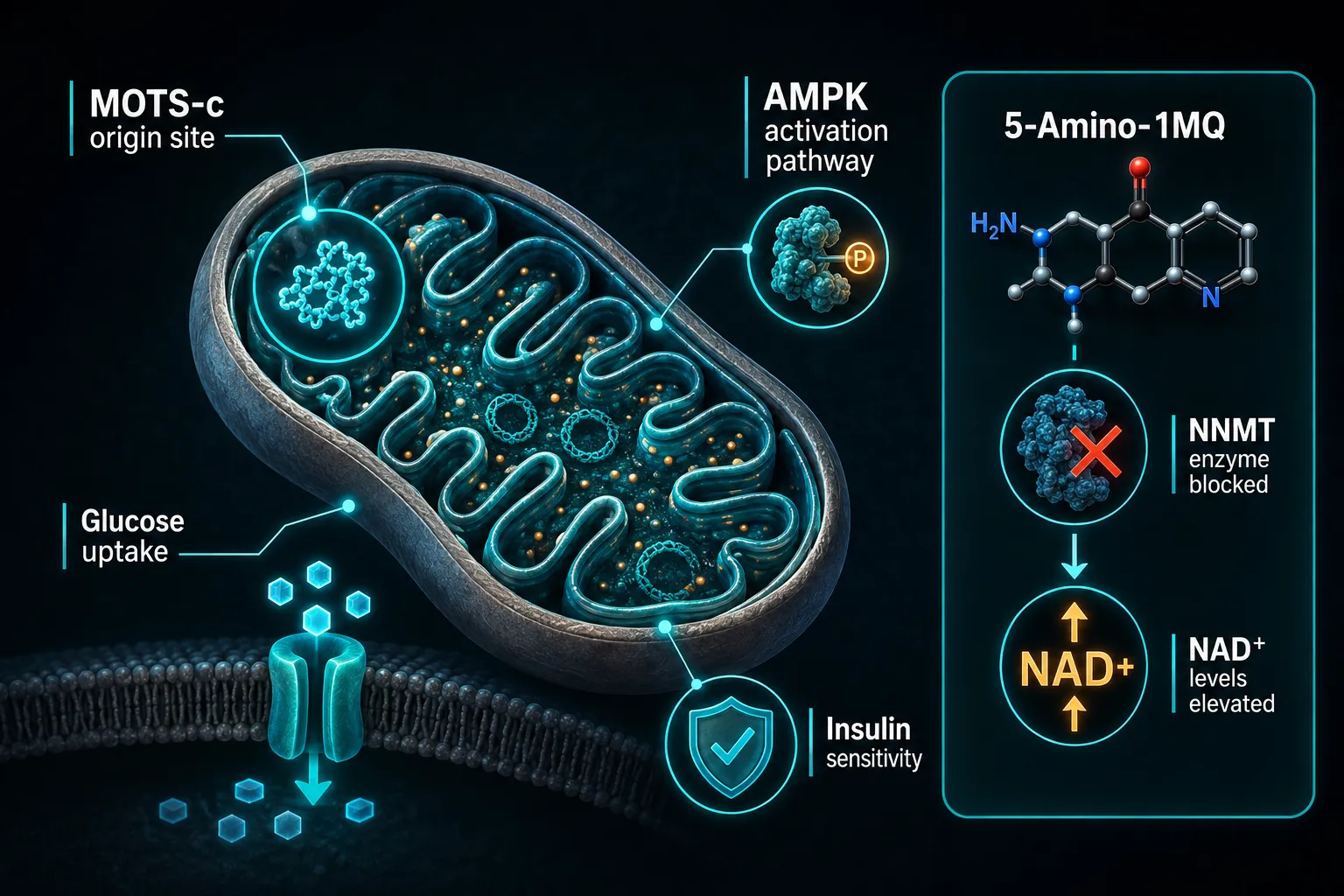
MOTS-c (Mitochondrial Open Reading Frame of the 12S rRNA-c) is a 16-amino-acid peptide encoded not in the cell nucleus but in mitochondrial DNA. That origin makes it biologically unusual. It functions as what researchers call an exercise-mimetic, a compound that activates some of the same metabolic pathways triggered by physical activity, particularly AMPK signaling and improved glucose uptake.

In 2026, MOTS-c has advanced into a Phase 2a clinical trial targeting prediabetes and overweight or obese adults. Early human biomarker data show promising signals around insulin sensitivity and skeletal muscle metabolism. A July 2026 FDA advisory panel has begun reviewing the regulatory and compounding status of MOTS-c, reflecting growing institutional interest.

The SS31 and MOTS-c research area is particularly active, as both peptides target mitochondrial function through complementary mechanisms. SS-31, a tetrapeptide that concentrates in the inner mitochondrial membrane, is explored extensively in SS-31 mitochondrial research themes and represents the kind of SS-31 mitochondrial peptide work that contextualizes MOTS-c's significance.

5-Amino-1MQ: A Small Molecule, Not a Peptide

Despite frequent appearances in peptide research discussions, 5-Amino-1MQ is not a peptide. It is a small-molecule inhibitor of nicotinamide N-methyltransferase (NNMT), an enzyme involved in energy metabolism and fat storage. By blocking NNMT, 5-Amino-1MQ raises NAD+ precursor availability and appears to reduce adipogenesis in diet-induced obesity models in rodents.

Key points researchers should understand about 5-Amino-1MQ in 2026:

Feature Detail
Classification Small-molecule NNMT inhibitor
Development stage Preclinical (animal models)
Human trial data None published as of mid-2026
Regulatory status No FDA approval or IND filing
Expert caution level High, extrapolation from rodent data is premature

The contrast with MOTS-c is sharp. MOTS-c has human biomarker data and an active clinical trial. 5-Amino-1MQ remains in early preclinical territory, and experts caution strongly against drawing clinical conclusions from rodent studies alone.

Retatrutide and the Polypeptide Frontier in Cardiometabolic Disease
Retatrutide and the Polypeptide Frontier in Cardiometabolic Disease

Retatrutide represents the most advanced example of how peptides and polypeptides in modern research, including how MOTS-c, 5-Amino-1MQ, and GLP-3 retatrutide fit into the big picture, are reshaping treatment expectations for obesity and metabolic disease.

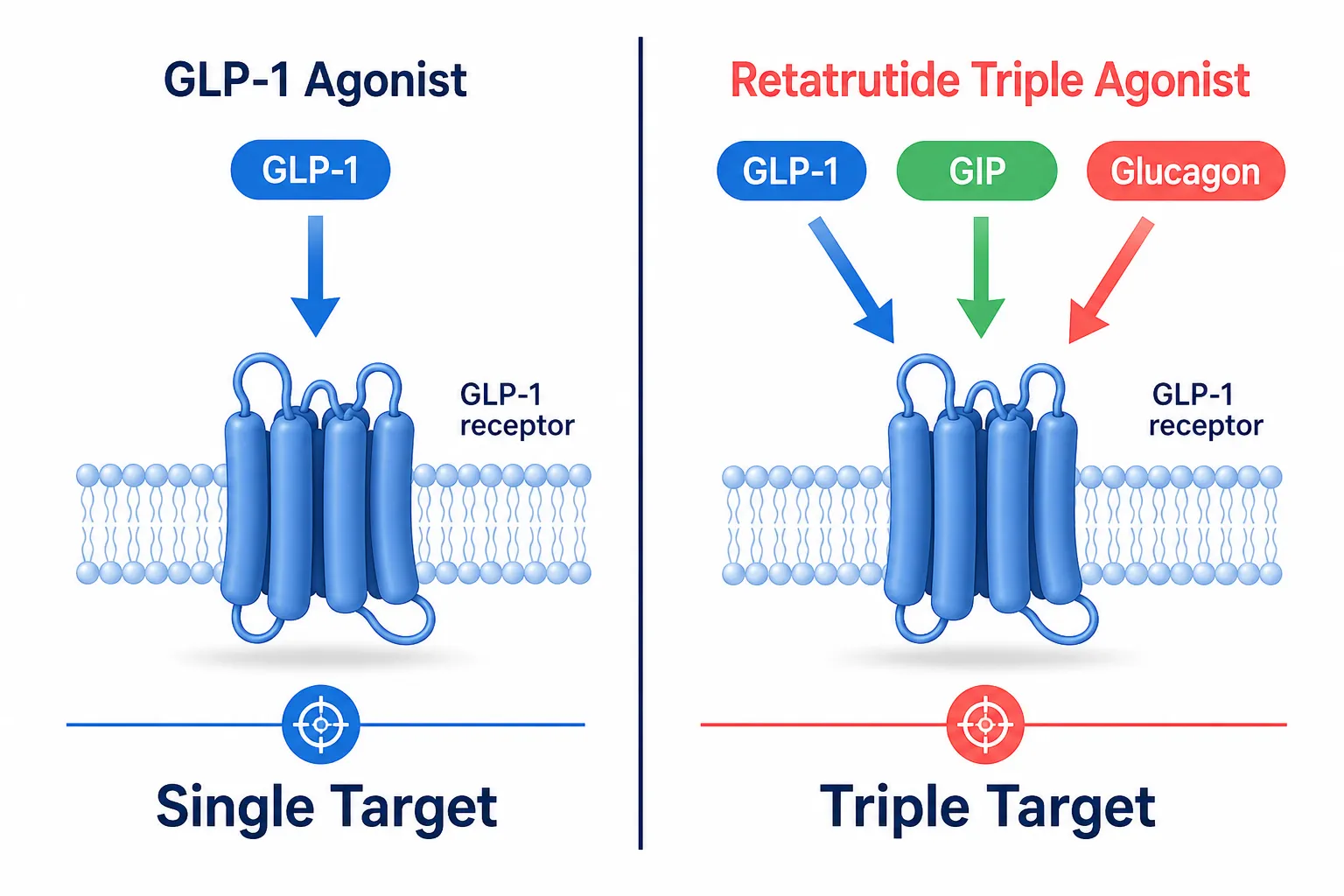
Retatrutide is a polypeptide triple agonist, simultaneously activating three receptors:

  1. GLP-1 receptor, reduces appetite and slows gastric emptying
  2. GIP receptor, enhances insulin secretion and fat metabolism
  3. Glucagon receptor, increases energy expenditure and hepatic fat clearance

Phase 2 trial data showed average weight loss exceeding 24% of body weight over 48 weeks, figures previously associated only with bariatric surgery. Broad cardiometabolic benefits included improvements in blood pressure, triglycerides, and liver fat. The pivotal Phase 3 TRIUMPH program is now underway, with retatrutide pushing toward market readiness. As of mid-2026, regulatory submissions are being prepared, making retatrutide one of the most closely watched compounds in pharmaceutical development.

The Reta 10mg research-use designation reflects the preclinical and research community's parallel interest in studying this compound's mechanisms at the molecular level.

For context, this polypeptide approach contrasts sharply with earlier single-target GLP-1 drugs. The multi-receptor strategy mirrors the tissue repair research philosophy of engaging several biological pathways simultaneously rather than relying on a single mechanism.

Conclusion

The field of peptides and polypeptides in modern research, spanning MOTS-c, 5-Amino-1MQ, and GLP-3 retatrutide, is not a collection of isolated compounds. It is a structured landscape where chain length, receptor targeting, and development stage determine what each molecule can realistically offer.

Actionable next steps for researchers and informed readers:

  • Ground every compound in its classification first. Confirm whether a molecule is a true peptide, a polypeptide, or a small molecule like 5-Amino-1MQ before comparing research outcomes.
  • Weight evidence by development stage. Retatrutide's Phase 3 human data carries far more weight than 5-Amino-1MQ's rodent studies.
  • Watch MOTS-c clinical trial readouts in late 2026. Phase 2a results will be the first real test of whether exercise-mimetic peptides translate from animal models to human benefit.
  • Explore synergistic combinations carefully. Pairing mitochondrial peptides like SS-31 and MOTS-c follows a logical mechanistic rationale, but human safety data must lead any protocol design.

The peptide revolution is not hype, it is a well-funded, rigorously studied shift in how researchers approach metabolic disease, aging, and tissue repair. Understanding the structural and mechanistic foundations of each compound is the clearest path to interpreting the science accurately.

Tags: 5-amino-1mq, exercise mimetic peptide, metabolic research 2026, mitochondrial peptides, mots-c research, peptide therapeutics, peptides and polypeptides, retatrutide glp-3
https://www.puretestedpeptides.com/wp-content/uploads/2026/09/peptides-and-polypeptides-in-modern-research-how-mots-c-5-amino-1mq-and-glp-3-re.webp 1024 1536 https://www.puretestedpeptides.com/wp-content/uploads/2026/01/buy-peptides-online.jpg 2026-09-01 13:04:572026-09-01 13:04:57Peptides and Polypeptides in Modern Research: How MOTS-c, 5-Amino-1MQ, and GLP-3 Retatrutide Fit Into the Big Picture
You might also like
Peptides 201: From Simple Peptides to Complex Polypeptides in Mitochondrial Research With MOTS-c and 5-Amino-1MQ Peptides 201: From Simple Peptides to Complex Polypeptides in Mitochondrial Research With MOTS-c and 5-Amino-1MQ
Peptides in Basic Cell Biology: How GLP, GHRH, and Mitochondrial Peptides Are Used to Probe Cellular Signaling Pathways Peptides in Basic Cell Biology: How GLP, GHRH, and Mitochondrial Peptides Are Used to Probe Cellular Signaling Pathways
Where to Buy Research-Grade MOTS‑c and 5‑Amino‑1MQ: Quality Criteria for Mitochondrial Peptide Studies Where to Buy Research-Grade MOTS‑c and 5‑Amino‑1MQ: Quality Criteria for Mitochondrial Peptide Studies
Peptides and Polypeptides in Modern Research: How Molecular Size Shapes Function, Stability, and Experimental Design Peptides and Polypeptides in Modern Research: How Molecular Size Shapes Function, Stability, and Experimental Design
MOTS‑c and 5‑Amino‑1MQ Beyond Adiposity: How Labs Are Starting to Explore Cognitive, Cardiometabolic, and Longevity Endpoints MOTS‑c and 5‑Amino‑1MQ Beyond Adiposity: How Labs Are Starting to Explore Cognitive, Cardiometabolic, and Longevity Endpoints
Mesenchymal Stem Cells and Mitochondrial Peptides: Where MOTS-c and 5-Amino-1MQ Fit in Regenerative Cell Models Mesenchymal Stem Cells and Mitochondrial Peptides: Where MOTS-c and 5-Amino-1MQ Fit in Regenerative Cell Models
Where to Buy Research-Grade MOTS-c and 5-Amino-1MQ: Vendor Selection, Purity Standards, and Certificate of Analysis Essentials Where to Buy Research-Grade MOTS-c and 5-Amino-1MQ: Vendor Selection, Purity Standards, and Certificate of Analysis Essentials
The Fundamental Difference: Peptides vs. Polypeptides in Research and Their Distinct Applications The Fundamental Difference: Peptides vs. Polypeptides in Research and Their Distinct Applications
0 replies

Leave a Reply

Want to join the discussion?
Feel free to contribute!

Leave a Reply Cancel reply

Your email address will not be published. Required fields are marked *

×

Helpful Links

  • My account
  • Cart
  • Checkout
  • Refund and Returns Policy
  • Privacy Policy
  • SMS Privacy Policy
  • Login
  • My Account
  • Logout

USA Made Lab Tested Peptides

All products are sold for research, laboratory, or analytical purposes only, and are not for human consumption


Pure Tested Peptides is a chemical supplier. Pure Tested Peptides is not a compounding / chemical compounding facility as defined under 503A of the Federal Food, Drug, and Cosmetic act. Pure Tested Peptides is not an outsourcing facility as defined under 503B of the Federal Food, Drug, and Cosmetic act.

The statements made within this website have not been evaluated by the US Food and Drug Administration. The products we offer are not intended to diagnose, treat, cure or prevent any disease.

Human/Animal Consumption Prohibited. Laboratory/In-Vitro Experimental Use Only

Link to: GLP-2 and GLP-2 Tirz Peptides: Intestinal Barrier Function and Research Applications Link to: GLP-2 and GLP-2 Tirz Peptides: Intestinal Barrier Function and Research Applications GLP-2 and GLP-2 Tirz Peptides: Intestinal Barrier Function and Research App...GLP-2 and GLP-2 Tirz Peptides: Intestinal Barrier Function and Research Applications Link to: Estrogen Receptors, Enclomiphene, and Peptide Hormones: How serms Interface With GLP-Class and Growth Hormone Peptides Link to: Estrogen Receptors, Enclomiphene, and Peptide Hormones: How serms Interface With GLP-Class and Growth Hormone Peptides Estrogen Receptors, Enclomiphene, and Peptide Hormones: How serms Interface With GLP-Class and Growth Hormone PeptidesEstrogen Receptors, Enclomiphene, and Peptide Hormones: How serms Interface...
Scroll to top Scroll to top Scroll to top