

Peptides 201: From Simple Peptides to Complex Polypeptides in Mitochondrial Research With MOTS-c and 5-Amino-1MQ
Mitochondria produce more than ATP. They encode at least one peptide that acts like a hormone, travels through the bloodstream, and may mimic the metabolic effects of exercise, a discovery that fundamentally changes how researchers classify biologically active molecules. This is the advanced conversation that Peptides 201: From Simple Peptides to Complex Polypeptides in Mitochondrial Research With MOTS-c and 5-Amino-1MQ is designed to open: moving beyond amino acid chains and into the functional biology that makes mitochondrial peptides a frontier research category in 2026.
Key Takeaways
- Peptides range from two amino acids to roughly 50, and their size directly shapes how they signal, penetrate membranes, and interact with receptors.
- MOTS-c is a 16-amino-acid peptide encoded in mitochondrial DNA, not nuclear DNA, making it structurally unique among known signaling peptides.
- 5-Amino-1MQ is a small-molecule NNMT inhibitor, not a peptide, yet it works alongside mitochondrial peptides by elevating NAD+ availability and suppressing fat-cell expansion.
- Both MOTS-c and 5-Amino-1MQ remain in preclinical and early-phase research as of 2026, with no approved therapeutic use.
- Classic mitochondrial drugs such as statins and metoprolol act on downstream pathways; MOTS-c and 5-Amino-1MQ target upstream mitochondrial regulation, representing a conceptually different intervention layer.
From Dipeptides to Polypeptides: The Classification Framework
Understanding where any research compound sits on the structural spectrum is the first step in evaluating its biological potential. A dipeptide contains two amino acids joined by a single peptide bond. An oligopeptide contains three to ten. Once a chain reaches roughly ten to fifty amino acids, it is classified as a polypeptide, large enough to fold into secondary structures, small enough to avoid the regulatory and manufacturing complexity of full proteins.
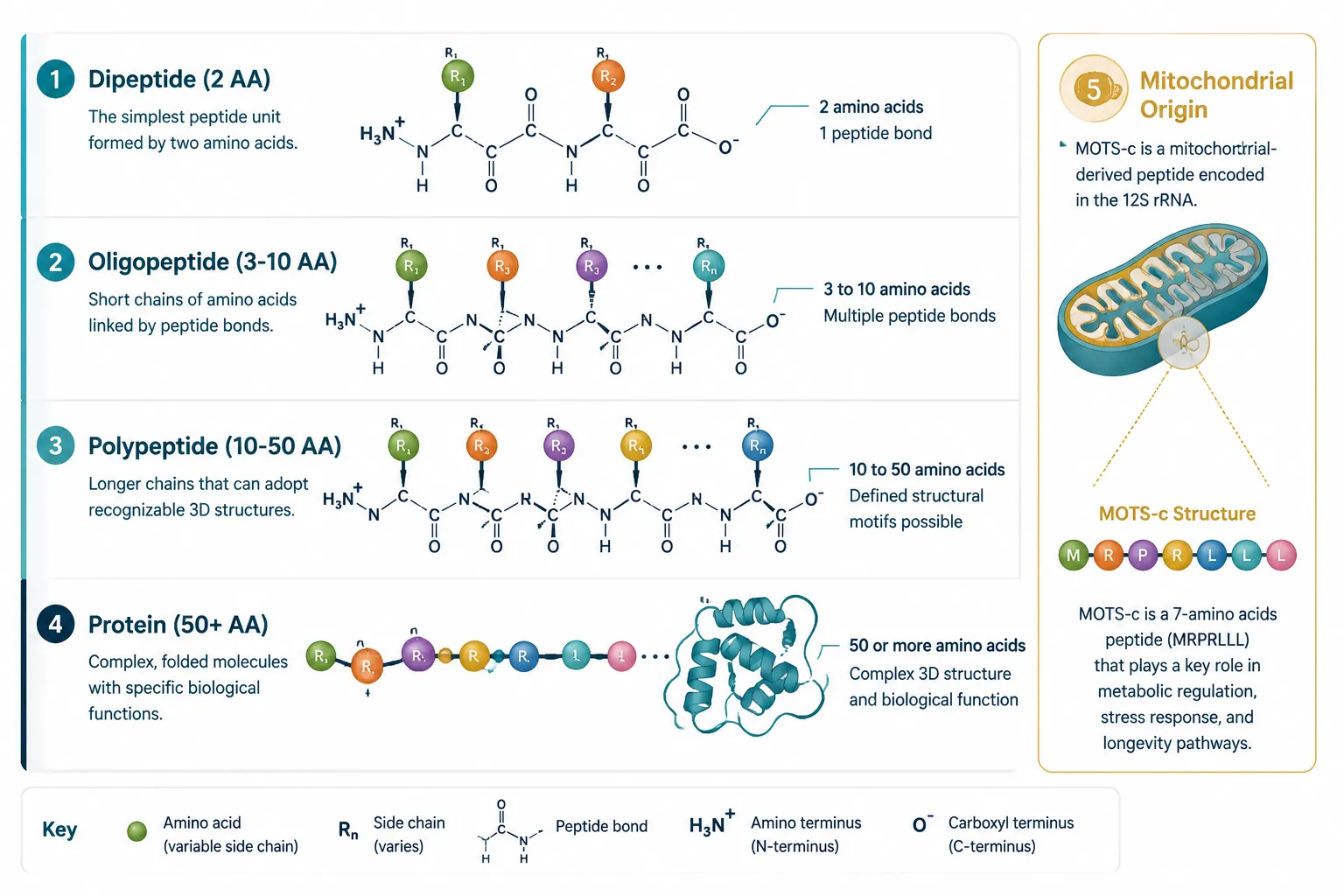
This size gradient matters for several practical reasons:
| Category | Chain Length | Example | Key Property |
|---|---|---|---|
| Dipeptide | 2 AA | Carnosine | High membrane permeability |
| Oligopeptide | 3-10 AA | BPC-157 | Receptor specificity |
| Polypeptide | 10-50 AA | MOTS-c (16 AA) | Hormonal signaling range |
| Protein | 50+ AA | Insulin (51 AA) | Full tertiary structure |
For researchers exploring peptide classification and research peptides, this framework is foundational. Smaller peptides typically cross biological barriers more easily; larger polypeptides carry more signaling complexity but face greater stability challenges in formulation.
Classic mitochondrial drugs occupy a different category entirely. Statins inhibit cholesterol synthesis enzymes. Metoprolol blocks beta-adrenergic receptors to reduce cardiac workload. Both act on downstream consequences of mitochondrial dysfunction. Neither targets the mitochondrion's own signaling output. That distinction is central to understanding why mitochondrial peptides represent a conceptually new research direction.
MOTS-c and 5-Amino-1MQ: Mechanisms in Mitochondrial Research With MOTS-c and 5-Amino-1MQ
MOTS-c: A Peptide Encoded in Mitochondrial DNA
MOTS-c (Mitochondrial Open Reading Frame of the 12S rRNA type-c) is a 16-amino-acid polypeptide encoded within the mitochondrial genome, specifically within the 12S ribosomal RNA gene. This origin is extraordinary. Nearly all human peptides are encoded in nuclear DNA. MOTS-c's mitochondrial origin suggests it evolved as a direct communication signal between the cell's energy-producing organelle and the rest of the body.
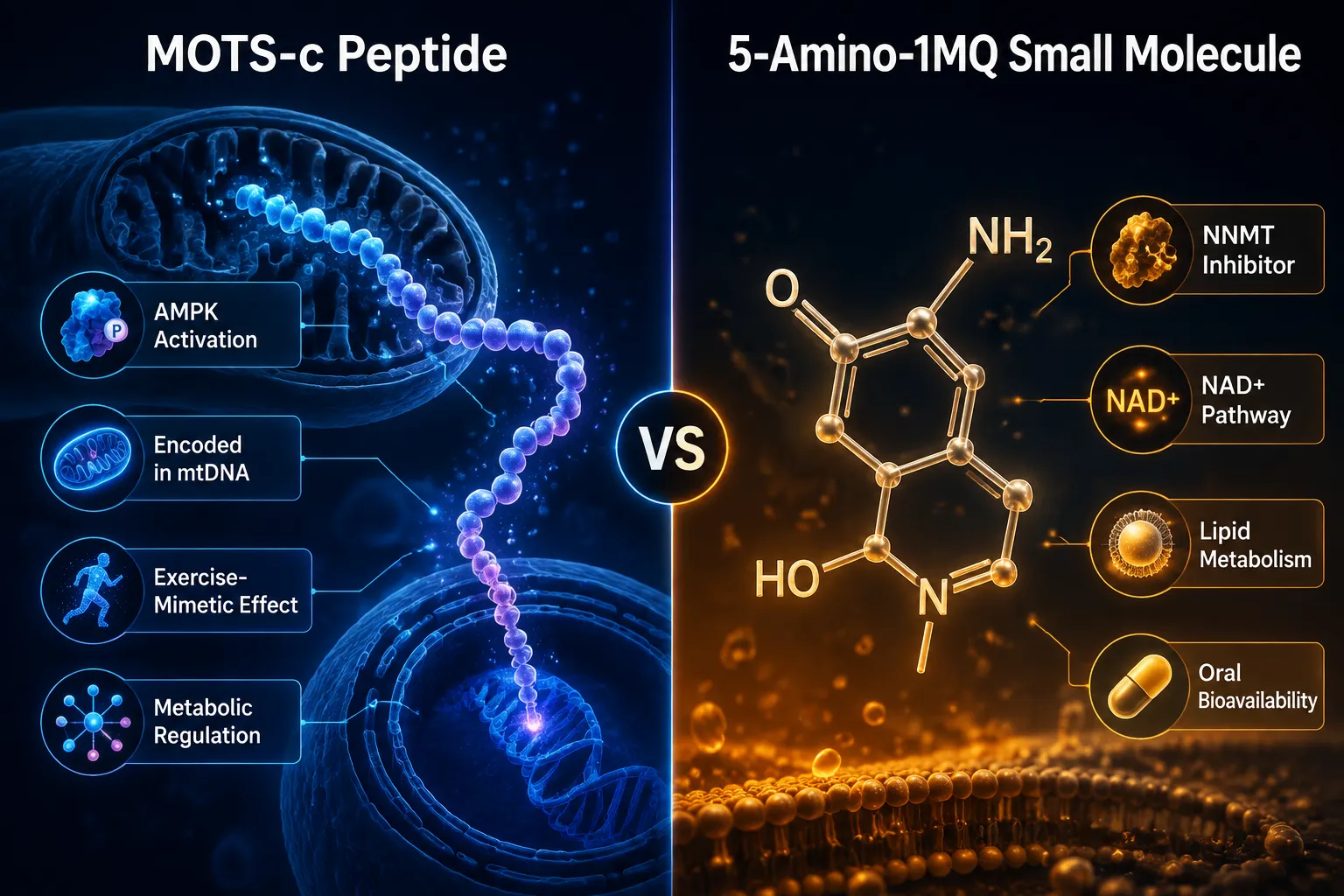
Preclinical data published through 2025 and 2026 show MOTS-c activating AMPK (AMP-activated protein kinase), the master energy sensor of the cell. This activation:
- Suppresses de novo lipogenesis (new fat production)
- Enhances glucose uptake in skeletal muscle
- Supports mitochondrial biogenesis
- Reduces markers of systemic inflammation in aged animal models
Researchers have labeled MOTS-c an "exercise-mimetic" because its metabolic effects in preclinical models resemble those produced by sustained aerobic exercise. Circulating MOTS-c levels decline with age and obesity in both rodent and human observational studies, adding to its relevance in aging and metabolic disease research.
Those looking to source compounds for study can review quality criteria for research-grade MOTS-c before proceeding, as purity standards vary significantly across suppliers. The MOTS-c product tag provides a useful starting reference for available research-grade material.
5-Amino-1MQ: The Small-Molecule Companion
5-Amino-1-methylquinolinium (5-Amino-1MQ) is not a peptide. It is a small organic molecule that inhibits NNMT (nicotinamide N-methyltransferase), an enzyme that consumes methyl groups and degrades NAD+ precursors. By blocking NNMT, 5-Amino-1MQ effectively raises intracellular NAD+ availability, which in turn supports mitochondrial electron transport chain efficiency.
Key distinction: MOTS-c signals from the mitochondrion outward. 5-Amino-1MQ acts on the metabolic environment that the mitochondrion operates within. Together, they address mitochondrial function from two complementary directions.
In obesity models, 5-Amino-1MQ has demonstrated:
- Reduced adipocyte differentiation and fat cell expansion
- Improved insulin sensitivity markers
- Favorable lipid profile shifts without significant toxicity signals at studied doses
The 5-Amino-1MQ product category details available research-grade options for laboratory use.
Emerging Research Stacks and the Bigger Picture in Peptides 201
Combining Mitochondrial Peptides With GLP-1 Agonists and NAD+ Precursors
One of the more active areas of 2026 preclinical discussion involves combining mitochondrial-targeting compounds with GLP-1 receptor agonists. The logic is layered: GLP-1 agonists reduce caloric intake and improve insulin signaling; MOTS-c addresses the mitochondrial efficiency deficit that often underlies metabolic disease; 5-Amino-1MQ raises the NAD+ substrate pool that mitochondria need to function optimally.
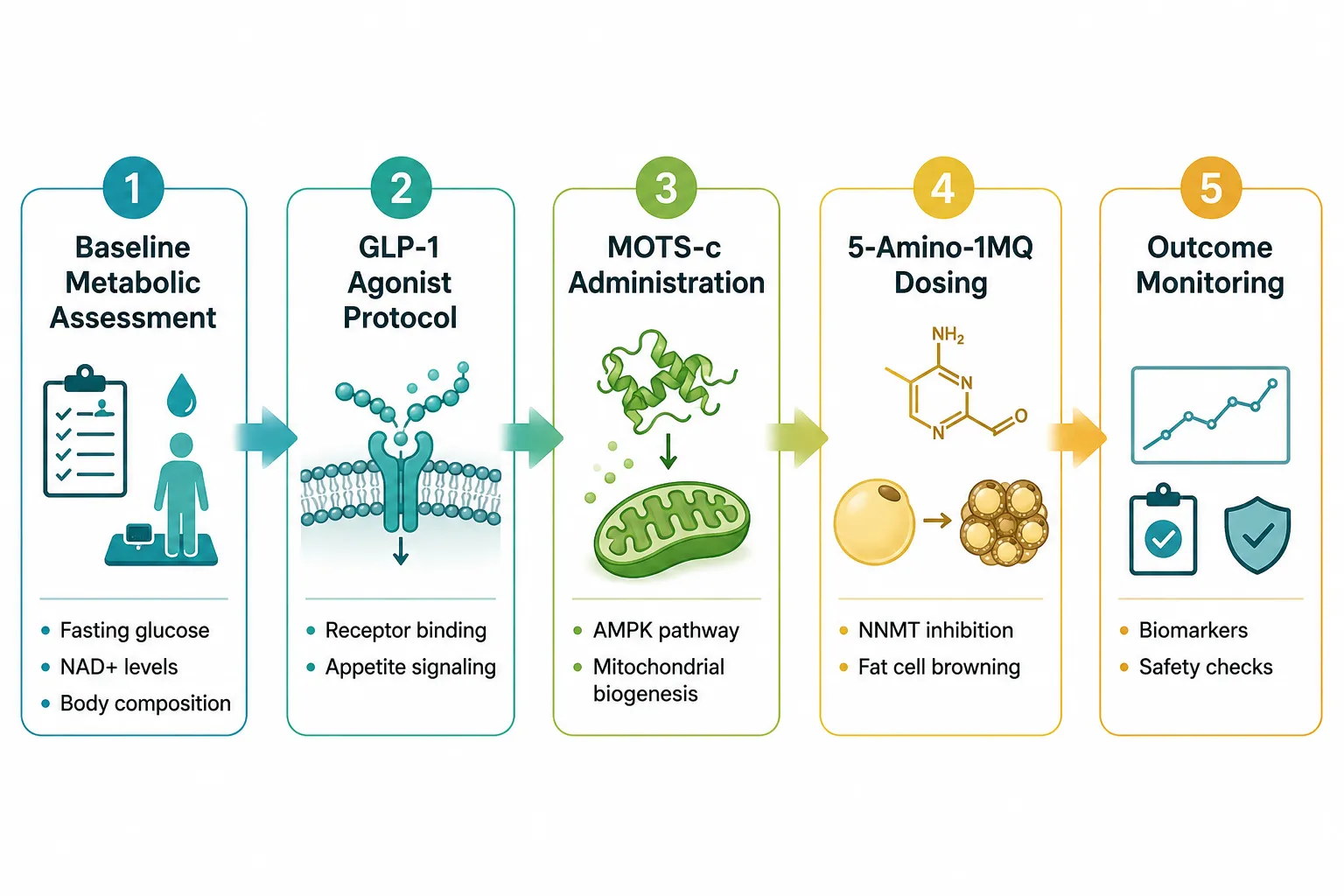
Researchers exploring this area may also find value in reviewing GLP-3 retatrutide and metabolic research beyond GLP-1 for context on how next-generation metabolic peptides are being positioned alongside mitochondrial compounds.
Similarly, mitochondria-targeted antioxidant peptides like SS-31 are increasingly studied alongside MOTS-c in aging models. Resources covering SS-31 and kidney health research illustrate how mitochondrial protection strategies are diversifying across organ systems.
Safety Considerations and Expert Caution
No mitochondrial peptide or NNMT inhibitor has received regulatory approval for human therapeutic use as of mid-2026. All data referenced here derives from preclinical animal models or early-phase observational work. Key unknowns include:
- Long-term effects of chronic AMPK activation via exogenous MOTS-c
- Potential off-target effects of sustained NNMT inhibition
- Optimal dosing windows, delivery routes, and washout periods
- Interaction profiles when combined with approved metabolic drugs
Researchers should also review formulation considerations carefully. For comparison, bioavailability considerations in peptide nasal spray formulations highlight how delivery route dramatically affects peptide stability and receptor availability.
Conclusion
The progression from basic peptide chemistry to mitochondrial signaling biology is not merely academic, it reframes how researchers think about metabolic intervention. Peptides 201: From Simple Peptides to Complex Polypeptides in Mitochondrial Research With MOTS-c and 5-Amino-1MQ represents a conceptual upgrade: from downstream symptom management (as with statins or beta-blockers) to upstream mitochondrial communication.
Actionable next steps for researchers in 2026:
- Establish a clear classification framework before sourcing any compound, know whether you are working with a dipeptide, polypeptide, or small molecule.
- Review purity and certificate-of-analysis standards before acquiring MOTS-c or 5-Amino-1MQ for any study.
- Design protocols that account for the complementary mechanisms of peptide-based and small-molecule mitochondrial compounds rather than treating them as interchangeable.
- Monitor emerging clinical trial registrations, as MOTS-c analogs are expected to enter Phase I evaluation within the next 12 to 24 months based on current preclinical momentum.
- Approach combination protocols (MOTS-c + GLP-1 + NAD+ precursors) with documented safety checkpoints, given the limited long-term interaction data available.
The mitochondrion has moved from background organelle to active research target. The peptides it encodes, and the small molecules that support its function, are now central to the most compelling metabolic science of this decade.


Leave a Reply
Want to join the discussion?Feel free to contribute!