Call or Text 727-513-9780
  • Shopping Cart Shopping Cart
    0Shopping Cart
Pure Tested Peptides | America's most trusted Peptides for sale online
  • Peptides for sale
    • Oral Peptides for sale
      • Peptide Capsules for sale
      • BPC 157 Capsules 1000mcg
      • SLU-PP-332 Capsules | 1000 mcg
      • 5-Amino-1MQ 50mg Capsules
      • Tesofensine 500mcg
    • All Peptides for sale
    • Peptide Sprays
      • BPC 157 Nasal Spray Kit
      • BPC-157 TB500 Nasal Spray Kit
      • Semax Nasal Spray 10mg
      • Selank – Nasal Spray Kit – 10mg
      • Epithalon 50MG Nasal Spray Kit
      • Ipamorelin 10mg Nasal Spray
      • Klow Nasal Spray (BPC-157 + TB-500 + GHK-Cu + KPV) | 80mg
      • Hulk Nasal Spray Tesa / Ipa Blend 6/3 MG
      • Klow Nasal Spray
      • NAD + 500 mg Nasal Spray
      • PT-141 Nasal Spray Kit
    • GHRH Peptides
      • Ipa Peptides
      • CJC-1295 Peptides
        • CJC-1295 with DAC 5 mg
        • CJC-1295 without DAC 5 mg
        • CJC-1295 Ipa 10mg
      • Tesa Peptides
        • Tesa Peptide
        • Tesa 20 mg
    • GHK-Cu Peptides
      • All GHK-Cu Peptides
      • GHK-Cu 100mg
      • KLOW Peptide Blend – Buy KLOW blend online
    • BPC Peptides
      • All BPC Peptides
      • BPC-157
      • BPC-157 TB-500
      • BPC 157 capsules 1000mcg
    • SLU-PP-332 Peptides
      • All SLU-PP-332 Peptides
      • SLU-PP-332 5mg
    • GLP3 Peptides
      • GLP3-R
      • GLP3-R CAG 10mg
      • GLP3-R 20mg
    • PT-141 Peptides
      • PT-141 Peptides for sale
      • PT-141 10mg
      • PT-141 Nasal Spray
    • CAG Peptides
      • Lipo-C Peptide Blend
      • CAG 5mg
      • CAG 10mg
    • MOTS-C Peptides
      • MOTS-C Peptides for sale
      • MOTS-c peptide
      • MOTS-c 10mg *6 pack*
    • 5 Amino 1MQ Peptides
      • 5 Amino 1MQ Peptides for sale
      • 5-Amino-1MQ 50mg Capsules
      • 5-Amino-1MQ 5mg
    • Epithalon Peptides
      • Epithalon Peptides for sale
      • Epithalon 10mg
      • Epithalon 50mg
  • Shop
    • GLPs
      • 5-Amino-1MQ 50mg Capsules
      • 5-Amino-1MQ 5mg
      • GLP3-Reta
      • L-Carnitine 500mg/ml
      • Tesofensine 500mcg
      • SLU-PP-332 5mg
      • MOTS-c 10mg *6 pack*
    • Epithalon & BPC Peptides
      • Epithalon 10mg
      • Epithalon 50mg
      • BPC-157
      • BPC 157 capsules 1000mcg
      • BPC-157 TB-500
      • BPC-157 TB500 Nasal Spray Kit
      • BPC 157 Nasal Spray Kit
    • BPC TB-500 & NAD+ Peptides
      • NAD+ 500 mg
      • KLOW Peptide Blend – Buy KLOW blend online
      • GLOW Peptide Blend
      • TB 500 5mg
      • BPC 157 capsules 1000mcg – Supplement
      • BPC 157 Nasal Spray Kit
      • BPC-157
      • BPC-157 TB500 Nasal Spray Kit
      • BPC-157 TB-500
      • BPC 157 capsules 1000mcg
    • LL-37 Peptide
      • LL-37 10 mg
    • MOTS-C & Selank
      • MOTS-c peptide
      • Selank 10mg
    • GHK Peptides
      • GHK-Cu 100mg
      • GLOW Peptide Blend
      • KLOW Peptide Blend – Buy KLOW blend online
  • COAs
  • Wholesale
    • Wholesale Peptides for sale
  • PTP FAQ
  • Affiliates
    • Selank Peptide: Advanced Pharmacological Mechanisms Underlying Its Anxiolytic and Nootropic Effects in Research
      • 5-Amino-1MQ Peptide: Detailed Mechanisms of NNMT Inhibition and Its Impact on Cellular Metabolism Research
        • MOTS-C Peptide: Unraveling Its Role in Mitochondrial Dynamics and Energy Metabolism Research
          • Epithalon Peptide and Telomerase Regulation: Investigating Its Impact on Cellular Senescence and Lifespan Research Models
            • GLP2-T vs GLP2 Tirz Peptide: Understanding the Naming, Mechanistic Nuances, and Research Implications for Gut Health
      • Peptides and Polypeptides in Modern Pharmacology: What Research on Metoprolol, Prednisone, and Amlodipine Reveals
        • Polypeptide Peptides vs NSAIDs: What Naproxen and Diclofenac Teach Tissue-Repair Researchers About BPC‑157 and TB‑500
          • Peptides and Polypeptides in Endocrine Pharmacology: How GLP-1, GLP-2, and GLP-3 Retatrutide Differ From Classic Drugs Like Prednisone and Amlodipine
          • 5‑Amino‑1MQ Peptide and NNMT Inhibition: How It Compares With Statins Like Atorvastatin in Adipose and Lipid Metabolism Research
      • Enclomiphene, Estrogen Receptor Signaling, and Luteinizing Phase Biology: What Hormone Researchers Should Measure
        • Mesenchymal Stem Cells, BPC‑157, and GHK‑Cu: How Tissue Repair Peptides Compare With Classic NSAIDs Like Naproxen in Injury Models
          • Peptide Calculator Use Cases Beyond Growth Hormone: Working Through GLP‑3 Retatrutide, MOTS‑c, and BPC‑157 Research Dosing
        • Polypeptide Peptides in Endocrine and Metabolic Pharmacology: Lessons From Amlodipine, Prednisone, and Metoprolol
        • Peptides Calculator for Advanced Blends: Worked Examples for Tesamorelin, CJC‑1295, and Ipamorelin Stacks
          • Peptides and Polypeptides in Human Physiology: How Molecular Size Shapes Research Applications
            • Selank Peptide: Advanced Pharmacological Mechanisms Underlying Its Anxiolytic and Nootropic Effects in Research
          • 5-Amino-1MQ Peptide: Detailed Mechanisms of NNMT Inhibition and Its Impact on Cellular Metabolism Research
            • MOTS-C Peptide: Unraveling Its Role in Mitochondrial Dynamics and Energy Metabolism Research
              • Epithalon Peptide and Telomerase Regulation: Investigating Its Impact on Cellular Senescence and Lifespan Research Models
                • GLP2-T vs GLP2 Tirz Peptide: Understanding the Naming, Mechanistic Nuances, and Research Implications for Gut Health
                  • Peptides and Polypeptides in Endocrine Pharmacology: How GLP-1, GLP-2, and GLP-3 Retatrutide Differ From Classic Drugs Like Prednisone and Amlodipine
                    • Polypeptide Peptides vs NSAIDs: What Naproxen and Diclofenac Teach Tissue-Repair Researchers About BPC‑157 and TB‑500
                      • Peptides and Polypeptides in Modern Pharmacology: What Research on Metoprolol, Prednisone, and Amlodipine Reveals
                        • 5‑Amino‑1MQ Peptide and NNMT Inhibition: How It Compares With Statins Like Atorvastatin in Adipose and Lipid Metabolism Research
                        • Enclomiphene, Estrogen Receptor Signaling, and Luteinizing Phase Biology: What Hormone Researchers Should Measure
                        • Mesenchymal Stem Cells, BPC‑157, and GHK‑Cu: How Tissue Repair Peptides Compare With Classic NSAIDs Like Naproxen in Injury Models
                        • Peptide Calculator Use Cases Beyond Growth Hormone: Working Through GLP‑3 Retatrutide, MOTS‑c, and BPC‑157 Research Dosing
                        • Polypeptide Peptides in Endocrine and Metabolic Pharmacology: Lessons From Amlodipine, Prednisone, and Metoprolol
                        • Peptides Calculator for Advanced Blends: Worked Examples for Tesamorelin, CJC‑1295, and Ipamorelin Stacks
                        • Peptides and Polypeptides in Human Physiology: How Molecular Size Shapes Research Applications
                        • Selank Peptide: Advanced Pharmacological Mechanisms Underlying Its Anxiolytic and Nootropic Effects in Research
                        • MOTS-C Peptide: Unraveling Its Role in Mitochondrial Dynamics and Energy Metabolism Research
                        • Peptides and Polypeptides in Modern Pharmacology: What Research on Metoprolol, Prednisone, and Amlodipine Reveals
                        • Peptides and Polypeptides in Endocrine Pharmacology: How GLP-1, GLP-2, and GLP-3 Retatrutide Differ From Classic Drugs Like Prednisone and Amlodipine
                        • 5-Amino-1MQ Peptide: Detailed Mechanisms of NNMT Inhibition and Its Impact on Cellular Metabolism Research
                        • Mesenchymal Stem Cells, BPC‑157, and GHK‑Cu: How Tissue Repair Peptides Compare With Classic NSAIDs Like Naproxen in Injury Models
                        • Peptide Calculator Use Cases Beyond Growth Hormone: Working Through GLP‑3 Retatrutide, MOTS‑c, and BPC‑157 Research Dosing
                        • GLP2-T vs GLP2 Tirz Peptide: Understanding the Naming, Mechanistic Nuances, and Research Implications for Gut Health
                        • Polypeptide Peptides in Endocrine and Metabolic Pharmacology: Lessons From Amlodipine, Prednisone, and Metoprolol
                        • Polypeptide Peptides vs NSAIDs: What Naproxen and Diclofenac Teach Tissue-Repair Researchers About BPC‑157 and TB‑500
                        • Peptides and Polypeptides in Human Physiology: How Molecular Size Shapes Research Applications
                        • Peptides Calculator for Advanced Blends: Worked Examples for Tesamorelin, CJC‑1295, and Ipamorelin Stacks
                        • 5‑Amino‑1MQ Peptide and NNMT Inhibition: How It Compares With Statins Like Atorvastatin in Adipose and Lipid Metabolism Research
                        • Enclomiphene, Estrogen Receptor Signaling, and Luteinizing Phase Biology: What Hormone Researchers Should Measure
                        • Epithalon Peptide and Telomerase Regulation: Investigating Its Impact on Cellular Senescence and Lifespan Research Models
                        • Best research protocol Klow blend
                        • best time to take BPC-157
                        • best time to take DSIP (Delta Sleep Inducing Peptide)
                        • best time to take CJC-1295
                        • best time to take AOD-9604
                        • best time to take Follistatin 344
                        • best time to take Ipamorelin
                        • best time to take MK-677 (Ibutamoren)
                        • best time to take Ligandrol (LGD-4033) — research compound
                        • best time to take Ostarine (MK-2866) — research compound
                        • best time to take GHK-CU
                        • best time to take TB-500
                        • best time to take MOTS-c
                        • best time to take Semax
                        • best time to take RAD-140 (Testolone) — research compound
                        • best time to take Thymosin Alpha-1
                        • best time to take PEG-MGF
                        • Biolife Plasma, Octapharma Plasma, and Research Peptides: How Plasma Donation Labs Differ From Peptide Suppliers
                        • best time to take YK-11 — research compound
                        • best time to take PT-141 (Bremelanotide)
                        • Best research protocol Klow blend
                        • 5-Amino-1MQ and MOTS-C Synergy: Metabolic Signaling, Mitochondria, and Research Design
                        • BPC-157 and TB-500: Investigating Their Combined Effects on Angiogenesis and Cellular Migration in Tissue Repair Models
                        • BPC-157 Peptide: Gut Barrier Function, Inflammation, and Tissue-Recovery Research
                        • 5‑Amino‑1MQ and MOTS‑c Synergy in Metabolic Research: Designing NNMT and Mitochondrial Biogenesis Stacks
                        • CJC-1295 with DAC vs. Without DAC: Half-Life, Release Kinetics, and Research Implications
                        • CJC‑1295 with DAC vs. Without DAC: Expanding on Half‑Life Differences Using Tesamorelin and Ipamorelin Blend Case Studies
                        • Collagen Biology and Copper‑Binding Peptides: How GHK‑Cu, Glow Blend, and Klow Blend Interact with Skin and Connective Tissue
                        • Collagen Biology and Regenerative Peptides: How GHK‑Cu, Glow Blend, and Klow Blend Affect Extracellular Matrix Research
                    • DNA, Telomeres, and Longevity Peptides: Positioning Epithalon and MOTS‑c in Genetic Aging Research
                      • Enclomiphene Citrate: serm Mechanism, Testosterone Research, and Stack Compatibility
                        • Enclomiphene vs Enclomiphene Citrate: Formulation, Bioavailability, and Research Distinctions
                        • Epithalon Peptide Research: Telomerase Activation, Aging, and Pineal Gland Function
                        • Estrogen Receptor Signaling and Enclomiphene: How Selective Modulators Compare with Classic Polypeptide Hormones
                        • GHK-Cu Peptide: Advanced Mechanisms in Extracellular Matrix Remodeling and Wound Healing Research
                        • GHK-Cu Peptide: Collagen Synthesis, Wound Repair, and Skin-Barrier Research Models
                        • GLP-1 vs GLP-3 vs GLP-2: Peptide Classification and Research Applications
                        • GLP-2 Peptide Research Guide: Gut Barrier Function, Nutrient Absorption, and Intestinal Recovery Models
                        • GLP-3 Retatrutide vs. GLP-1 Drugs: What Triple-Agonist Biology Changes in Research Models
                        • Ipamorelin and Tesamorelin Combination: Synergistic GH Secretagogue Research and Dosing Protocols
                        • GLP2 Tirz Peptide: What It Is, Why the Name Exists, and How Researchers Should Interpret It
                        • Klow Blend Peptide Nasal Spray: What the Formulation Is Trying to Do in Cognitive Research
                        • Mitochondria, NNMT Inhibition, and Peptide Modulators: Where MOTS‑c and 5‑Amino‑1MQ Fit in Cellular Energy Research
                        • MOTS-c Peptide: Mitochondrial Function, Energy Metabolism, and What Researchers Measure
                        • MOTS-c vs. 5-Amino-1MQ: Which Metabolic Research Questions Each Compound Actually Answers
                        • Nasal Spray Peptides: Bioavailability, Administration, and Semax/Selank Research Applications
                        • PT-141 Peptide Research: Mechanism of Action and Melanocortin Receptor Signaling
                        • Retatrutide for Research: Mechanism, Structure, and GLP-1/GLP-3 Dual Action
                        • Retatrutide for Obesity and Type 2 Diabetes: What the Latest Trial Data Suggest
                        • Tesofensine Peptide Research: Mechanism, Appetite Suppression, and Neuropeptide Y Pathways
  • Contact
    • Contact Customer Service
    • Text Customer Support
  • About US
  • Shop all peptides
  • Affiliate Program
    • Affiliate Signup
  • Login / Register Login / Register Page Link Login / Register Page Link
  • Click to open the search input field Click to open the search input field Search
  • Menu Menu
MOTS-c Peptide: Mitochondrial Signaling, Metabolic Research, and Why Researchers Study It

MOTS-c Peptide: Mitochondrial Signaling, Metabolic Research, and Why Researchers Study It

August 8, 2026/0 Comments/in Uncategorized/by

Fewer than two decades ago, scientists believed mitochondria served one primary purpose, producing energy. The discovery that mitochondrial DNA encodes its own signaling molecules, including the MOTS-c peptide, fundamentally changed that assumption. MOTS-c Peptide: Mitochondrial Signaling, Metabolic Research, and Why Researchers Study It has become a central topic in metabolic biology precisely because this small molecule appears to do far more than anyone expected from a peptide encoded outside the cell nucleus.

Key Takeaways

  • MOTS-c is a mitochondria-derived peptide encoded by the 12S rRNA gene within mitochondrial DNA.
  • It acts as an intracellular and systemic signaling molecule that influences glucose metabolism and cellular stress responses.
  • Researchers study MOTS-c primarily for its role in metabolic regulation, insulin sensitivity, and exercise-related physiology.
  • MOTS-c is often studied alongside other mitochondria-targeted compounds such as SS-31 peptide in experimental models.
  • All current research is preclinical; MOTS-c is not approved for human therapeutic use.
Key Takeaways

What Is MOTS-c and Where Does It Come From

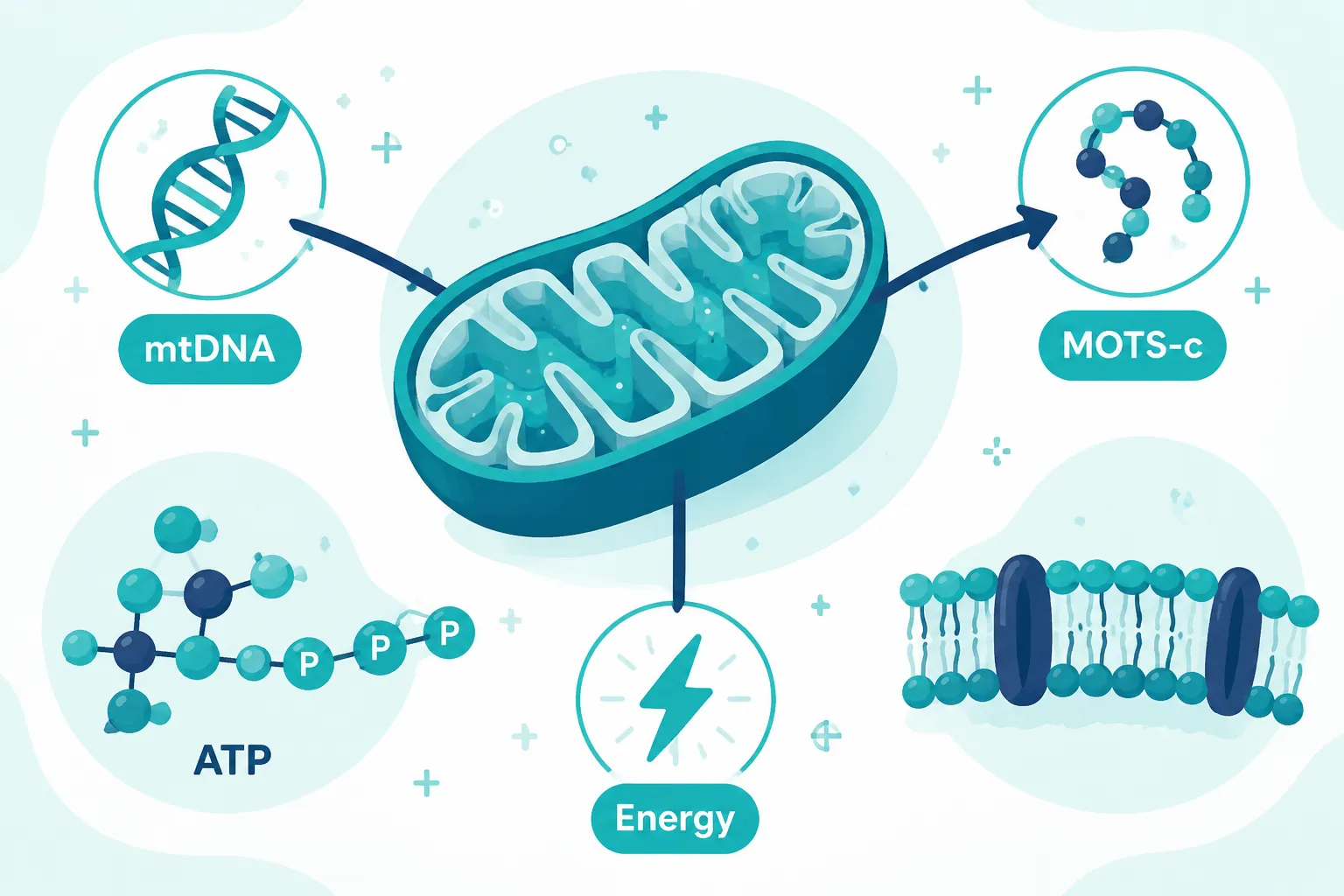
MOTS-c stands for Mitochondrial Open Reading Frame of the 12S rRNA-c. It is a 16-amino acid peptide encoded within the mitochondrial genome, specifically within the 12S ribosomal RNA gene. This origin makes it a member of a broader class of molecules called mitochondria-derived peptides (MDPs).

Unlike most peptides, which are encoded by nuclear DNA, MOTS-c is produced directly inside the mitochondria. Under conditions of metabolic stress, it can translocate to the cell nucleus, where it interacts with gene expression pathways. This dual location, mitochondrial origin, nuclear activity, is a key reason it attracts significant research attention.

Basic structural profile:

Feature Detail
Length 16 amino acids
Encoding gene Mitochondrial 12S rRNA
Molecular weight Approximately 2.17 kDa
Primary research area Metabolic regulation, cellular stress

Researchers also note that MOTS-c can be detected in circulating blood, suggesting it functions as a systemic hormone-like signal, not just a local intracellular messenger.

MOTS-c Peptide: Mitochondrial Signaling Mechanisms Researchers Measure

Understanding how MOTS-c works requires looking at the specific pathways researchers track in experimental settings.

AMPK Pathway Activation

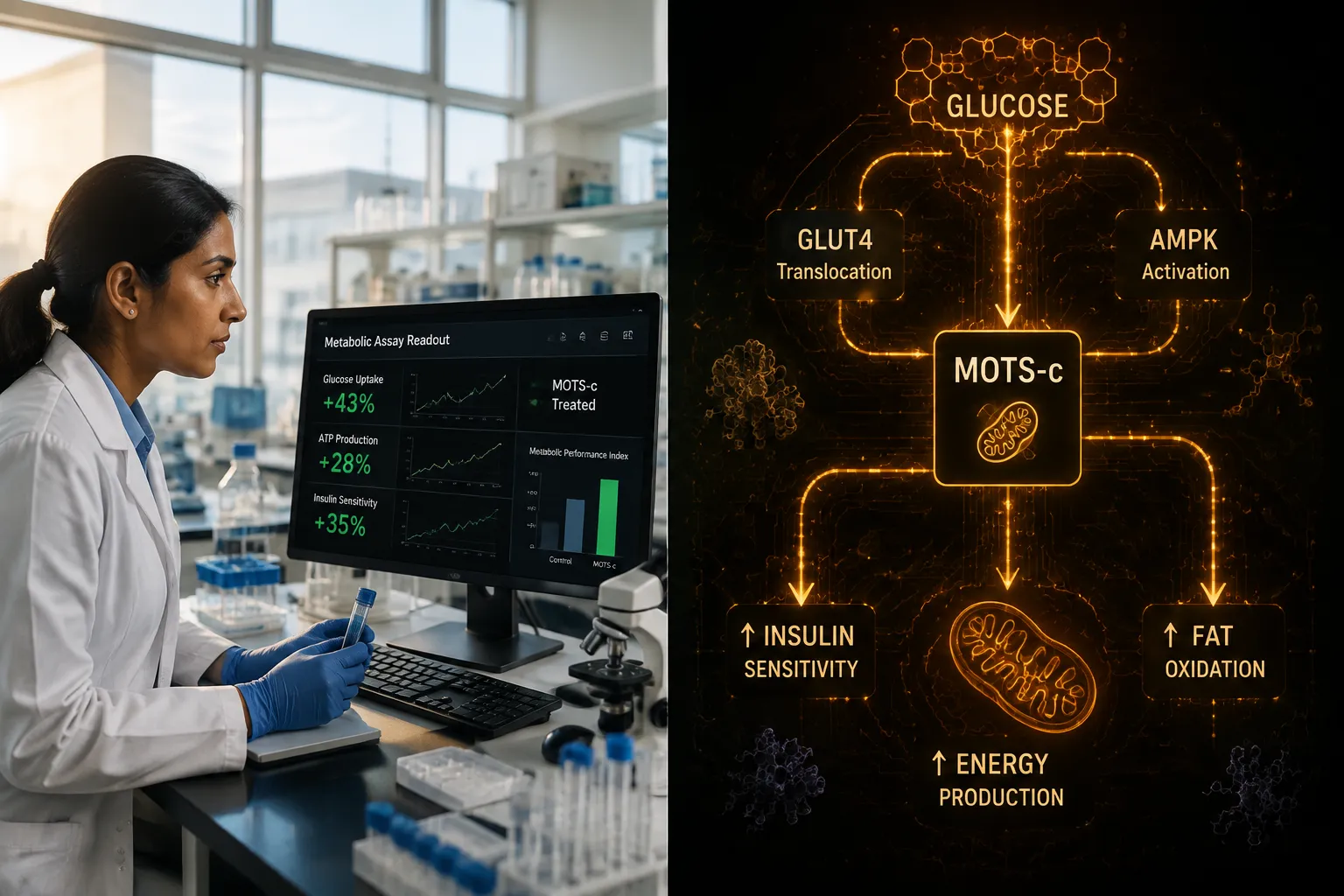
One of the most studied mechanisms involves AMP-activated protein kinase (AMPK), a master regulator of cellular energy balance. Preclinical data suggest MOTS-c activates AMPK, which in turn promotes glucose uptake and fatty acid oxidation. This pathway is particularly relevant in models examining insulin resistance and type 2 diabetes.

Folate Cycle and One-Carbon Metabolism

Research published by Lee et al. (2015) identified that MOTS-c targets the folate cycle within the methionine pathway. By inhibiting the AICAR transformylase enzyme, MOTS-c increases intracellular AICAR levels, a natural AMPK activator. This mechanism links mitochondrial signaling directly to nuclear gene regulation.

Nuclear Translocation Under Stress

Under oxidative or metabolic stress, MOTS-c moves from the mitochondria to the nucleus. Once there, it binds to antioxidant response elements (ARE) and modulates stress-response gene expression. This makes it a candidate for research into cellular resilience and aging biology.

"MOTS-c represents a new class of mitochondrial signals that coordinate nuclear gene expression in response to metabolic demand.", Adapted from Lee et al., 2015

Researchers studying mitochondrial compounds often compare MOTS-c alongside SS31 and MOTS-c combination protocols to understand how different mitochondria-targeted peptides interact within the same experimental model.
Nuclear Translocation Under Stress

Metabolic Research Applications and Experimental Design

The scope of MOTS-c Peptide: Mitochondrial Signaling, Metabolic Research, and Why Researchers Study It extends across several active research domains.

Insulin Sensitivity Models

In rodent studies, MOTS-c administration improved insulin sensitivity and reduced fat accumulation in diet-induced obesity models. Researchers measure outcomes including fasting glucose, insulin tolerance, and lipid profiles when designing these experiments.

Exercise Physiology

MOTS-c levels in human subjects appear to rise during physical exercise. This observation has prompted researchers to investigate whether the peptide mediates some of the metabolic adaptations associated with regular physical activity, including improved mitochondrial biogenesis.

Aging and Longevity Research

Circulating MOTS-c levels decline with age in both animal models and human populations. Studies examining centenarians have identified specific mitochondrial DNA variants associated with higher MOTS-c expression. This has positioned it within the broader field of geroscience alongside compounds like Epithalon peptide, which is also studied for longevity-related mechanisms.

How MOTS-c Differs from Broader Metabolic Peptides

Researchers frequently compare MOTS-c to GLP-1 receptor agonists and growth hormone-releasing peptides. The distinction is important for experimental design:

  • GLP-1 peptides (see GLP-1 peptide research resources) act primarily through extracellular receptor binding.
  • MOTS-c works largely through intracellular and nuclear mechanisms, making it a fundamentally different tool for studying mitochondrial-nuclear communication.
  • Tesamorelin (reviewed in Tesamorelin peptide benefits research) targets growth hormone pathways, a separate axis from mitochondrial signaling.

This distinction matters when researchers select compounds for multi-peptide experimental panels.

How MOTS-c Differs from Broader Metabolic Peptides

Sourcing Considerations for Research Use

Researchers sourcing MOTS-c for preclinical studies should prioritize suppliers that provide third-party purity verification. Peptide integrity directly affects experimental reproducibility. Reviewing lab tested peptides and understanding peptide supplier comparison resources can help research teams make informed procurement decisions.

Key sourcing criteria:

  • Certificate of Analysis (CoA) with HPLC purity data
  • Mass spectrometry confirmation of molecular weight
  • Lyophilized format for storage stability
  • Clear lot-specific documentation

Conclusion

MOTS-c is a compelling subject for mitochondrial and metabolic research because it bridges intracellular energy sensing with systemic signaling, a combination rarely seen in a single 16-amino acid molecule. Researchers studying insulin resistance, exercise adaptation, or cellular aging have concrete, measurable endpoints to work with, from AMPK activation to nuclear gene expression changes.

Actionable next steps for research teams:

  1. Review the current preclinical literature on MOTS-c and AMPK pathway interaction before designing protocols.
  2. Define whether the experimental question requires isolated intracellular endpoints or systemic metabolic outcomes, this shapes dosing and model selection.
  3. Compare MOTS-c against complementary mitochondrial compounds in multi-arm study designs.
  4. Source only from suppliers providing verified purity documentation to ensure data integrity.
  5. Register experimental protocols with institutional review boards where applicable and stay current with regulatory guidance on peptide research.

The field is moving quickly. Researchers who establish rigorous baseline protocols now will be best positioned to build on findings as the science matures.


References

  • Lee, C., Zeng, J., Drew, B. G., Sallam, T., Martin-Montalvo, A., Wan, J., Kim, S. J., Mehta, H., Hevener, A. L., de Cabo, R., & Cohen, P. (2015). The mitochondrial-derived peptide MOTS-c promotes metabolic homeostasis and reduces obesity and insulin resistance. Cell Metabolism, 21(3), 443-454.
  • Kim, S. J., Xiao, J., Wan, J., Cohen, P., & Yen, K. (2017). Mitochondrially derived peptides as novel regulators of metabolism. Journal of Physiology, 595(21), 6613-6621.
  • Reynolds, J. C., Lai, R. W., Woodhead, J. S. T., Joly, J. H., Mitchell, C. J., Cameron-Smith, D., Lu, R., Cohen, P., Graham, N. A., Bhatt, D. L., Bhatt, D., & Yen, K. (2021). MOTS-c is an exercise-induced mitochondrial-encoded regulator of age-dependent physical decline and muscle homeostasis. Nature Communications, 12(1), 470.
  • Zempo, H., Kim, S. J., Fuku, N., Nishida, Y., Higaki, Y., Wan, J., Yen, K., & Cohen, P. (2021). A pro-diabetogenic mtDNA polymorphism in the mitochondrial-derived peptide MOTS-c. Aging, 13(2), 1692-1717.
Tags: aging biology, ampk activation, cellular stress response, exercise physiology, insulin sensitivity, metabolic research, mitochondria-derived peptides, mitochondrial dna, mitochondrial signaling, mots-c peptide, peptide research, preclinical peptide studies
https://www.puretestedpeptides.com/wp-content/uploads/2026/08/mots-c-peptide-mitochondrial-signaling-metabolic-research-and-why-researchers-st.webp 1024 1536 https://www.puretestedpeptides.com/wp-content/uploads/2026/01/buy-peptides-online.jpg 2026-08-08 13:03:472026-08-08 13:03:47MOTS-c Peptide: Mitochondrial Signaling, Metabolic Research, and Why Researchers Study It
You might also like
Collagen, GHK-Cu, and Glow Blend: How Classic Collagen Biology Intersects With Copper Peptide Research Collagen, GHK-Cu, and Glow Blend: How Classic Collagen Biology Intersects With Copper Peptide Research
Peptides Mechanism 101: From GLP‑3 Retatrutide to CJC‑1295 and MOTS‑c in Cellular and Receptor-Level Research Peptides Mechanism 101: From GLP‑3 Retatrutide to CJC‑1295 and MOTS‑c in Cellular and Receptor-Level Research
Peptides and Polypeptides in Modern Research: How Molecular Size Shapes Function, Stability, and Experimental Design Peptides and Polypeptides in Modern Research: How Molecular Size Shapes Function, Stability, and Experimental Design
GHK-Cu vs Glow Blend vs Klow Blend: What Each Copper- and Skin-Focused Formula Is Used For in Research GHK-Cu vs Glow Blend vs Klow Blend: What Each Copper- and Skin-Focused Formula Is Used For in Research
Polypeptide Peptides and Drug Mechanisms: What Common Medications Reveal About Research-Use Peptide Pharmacology Polypeptide Peptides and Drug Mechanisms: What Common Medications Reveal About Research-Use Peptide Pharmacology
Klow Blend vs. Semax and Selank: Intranasal Nootropic Peptides Compared for Research Klow Blend vs. Semax and Selank: Intranasal Nootropic Peptides Compared for Research
DNA, Mitochondria, and Research Peptides: How MOTS-c and 5-Amino-1MQ Interface With Cellular Energy and Genomic Pathways DNA, Mitochondria, and Research Peptides: How MOTS-c and 5-Amino-1MQ Interface With Cellular Energy and Genomic Pathways
Tesofensine and Metabolic Research: How a Noradrenergic Appetite Modulator Compares With GLP‑3 Peptides in Study Design Tesofensine and Metabolic Research: How a Noradrenergic Appetite Modulator Compares With GLP‑3 Peptides in Study Design
0 replies

Leave a Reply

Want to join the discussion?
Feel free to contribute!

Leave a Reply Cancel reply

Your email address will not be published. Required fields are marked *

×

Helpful Links

  • My account
  • Cart
  • Checkout
  • Refund and Returns Policy
  • Privacy Policy
  • SMS Privacy Policy
  • Login
  • My Account
  • Logout

USA Made Lab Tested Peptides

All products are sold for research, laboratory, or analytical purposes only, and are not for human consumption


Pure Tested Peptides is a chemical supplier. Pure Tested Peptides is not a compounding / chemical compounding facility as defined under 503A of the Federal Food, Drug, and Cosmetic act. Pure Tested Peptides is not an outsourcing facility as defined under 503B of the Federal Food, Drug, and Cosmetic act.

The statements made within this website have not been evaluated by the US Food and Drug Administration. The products we offer are not intended to diagnose, treat, cure or prevent any disease.

Human/Animal Consumption Prohibited. Laboratory/In-Vitro Experimental Use Only

Link to: Selank Peptide: Research Benefits, Dosing Concepts, and Mechanism of Action Link to: Selank Peptide: Research Benefits, Dosing Concepts, and Mechanism of Action Selank Peptide: Research Benefits, Dosing Concepts, and Mechanism of ActionSelank Peptide: Research Benefits, Dosing Concepts, and Mechanism of Action Link to: Tesamorelin and Ipamorelin Peptides: Mechanism, Synergy, and Growth Hormone Research Design Link to: Tesamorelin and Ipamorelin Peptides: Mechanism, Synergy, and Growth Hormone Research Design Tesamorelin and Ipamorelin Peptides: Mechanism, Synergy, and Growth Hormone Research DesignTesamorelin and Ipamorelin Peptides: Mechanism, Synergy, and Growth Hormone...
Scroll to top Scroll to top Scroll to top