Call or Text 727-513-9780
  • Shopping Cart Shopping Cart
    0Shopping Cart
Pure Tested Peptides | America's most trusted Peptides for sale online
  • Peptides for sale
    • Oral Peptides for sale
      • Peptide Capsules for sale
      • BPC 157 Capsules 1000mcg
      • SLU-PP-332 Capsules | 1000 mcg
      • 5-Amino-1MQ 50mg Capsules
      • Tesofensine 500mcg
    • All Peptides for sale
    • Peptide Sprays
      • BPC 157 Nasal Spray Kit
      • BPC-157 TB500 Nasal Spray Kit
      • Semax Nasal Spray 10mg
      • Selank – Nasal Spray Kit – 10mg
      • Epithalon 50MG Nasal Spray Kit
      • Ipamorelin 10mg Nasal Spray
      • Klow Nasal Spray (BPC-157 + TB-500 + GHK-Cu + KPV) | 80mg
      • Hulk Nasal Spray Tesa / Ipa Blend 6/3 MG
      • Klow Nasal Spray
      • NAD + 500 mg Nasal Spray
      • PT-141 Nasal Spray Kit
    • GHRH Peptides
      • Ipa Peptides
      • CJC-1295 Peptides
        • CJC-1295 with DAC 5 mg
        • CJC-1295 without DAC 5 mg
        • CJC-1295 Ipa 10mg
      • Tesa Peptides
        • Tesa Peptide
        • Tesa 20 mg
    • GHK-Cu Peptides
      • All GHK-Cu Peptides
      • GHK-Cu 100mg
      • KLOW Peptide Blend – Buy KLOW blend online
    • BPC Peptides
      • All BPC Peptides
      • BPC-157
      • BPC-157 TB-500
      • BPC 157 capsules 1000mcg
    • SLU-PP-332 Peptides
      • All SLU-PP-332 Peptides
      • SLU-PP-332 5mg
    • GLP3 Peptides
      • GLP3-R
      • GLP3-R CAG 10mg
      • GLP3-R 20mg
    • PT-141 Peptides
      • PT-141 Peptides for sale
      • PT-141 10mg
      • PT-141 Nasal Spray
    • CAG Peptides
      • Lipo-C Peptide Blend
      • CAG 5mg
      • CAG 10mg
    • MOTS-C Peptides
      • MOTS-C Peptides for sale
      • MOTS-c peptide
      • MOTS-c 10mg *6 pack*
    • 5 Amino 1MQ Peptides
      • 5 Amino 1MQ Peptides for sale
      • 5-Amino-1MQ 50mg Capsules
      • 5-Amino-1MQ 5mg
    • Epithalon Peptides
      • Epithalon Peptides for sale
      • Epithalon 10mg
      • Epithalon 50mg
  • Shop
    • GLPs
      • 5-Amino-1MQ 50mg Capsules
      • 5-Amino-1MQ 5mg
      • GLP3-Reta
      • L-Carnitine 500mg/ml
      • Tesofensine 500mcg
      • SLU-PP-332 5mg
      • MOTS-c 10mg *6 pack*
    • Epithalon & BPC Peptides
      • Epithalon 10mg
      • Epithalon 50mg
      • BPC-157
      • BPC 157 capsules 1000mcg
      • BPC-157 TB-500
      • BPC-157 TB500 Nasal Spray Kit
      • BPC 157 Nasal Spray Kit
    • BPC TB-500 & NAD+ Peptides
      • NAD+ 500 mg
      • KLOW Peptide Blend – Buy KLOW blend online
      • GLOW Peptide Blend
      • TB 500 5mg
      • BPC 157 capsules 1000mcg – Supplement
      • BPC 157 Nasal Spray Kit
      • BPC-157
      • BPC-157 TB500 Nasal Spray Kit
      • BPC-157 TB-500
      • BPC 157 capsules 1000mcg
    • LL-37 Peptide
      • LL-37 10 mg
    • MOTS-C & Selank
      • MOTS-c peptide
      • Selank 10mg
    • GHK Peptides
      • GHK-Cu 100mg
      • GLOW Peptide Blend
      • KLOW Peptide Blend – Buy KLOW blend online
  • COAs
  • Wholesale
    • Wholesale Peptides for sale
  • PTP FAQ
  • Affiliates
    • Selank Peptide: Advanced Pharmacological Mechanisms Underlying Its Anxiolytic and Nootropic Effects in Research
      • 5-Amino-1MQ Peptide: Detailed Mechanisms of NNMT Inhibition and Its Impact on Cellular Metabolism Research
        • MOTS-C Peptide: Unraveling Its Role in Mitochondrial Dynamics and Energy Metabolism Research
          • Epithalon Peptide and Telomerase Regulation: Investigating Its Impact on Cellular Senescence and Lifespan Research Models
            • GLP2-T vs GLP2 Tirz Peptide: Understanding the Naming, Mechanistic Nuances, and Research Implications for Gut Health
      • Peptides and Polypeptides in Modern Pharmacology: What Research on Metoprolol, Prednisone, and Amlodipine Reveals
        • Polypeptide Peptides vs NSAIDs: What Naproxen and Diclofenac Teach Tissue-Repair Researchers About BPC‑157 and TB‑500
          • Peptides and Polypeptides in Endocrine Pharmacology: How GLP-1, GLP-2, and GLP-3 Retatrutide Differ From Classic Drugs Like Prednisone and Amlodipine
          • 5‑Amino‑1MQ Peptide and NNMT Inhibition: How It Compares With Statins Like Atorvastatin in Adipose and Lipid Metabolism Research
      • Enclomiphene, Estrogen Receptor Signaling, and Luteinizing Phase Biology: What Hormone Researchers Should Measure
        • Mesenchymal Stem Cells, BPC‑157, and GHK‑Cu: How Tissue Repair Peptides Compare With Classic NSAIDs Like Naproxen in Injury Models
          • Peptide Calculator Use Cases Beyond Growth Hormone: Working Through GLP‑3 Retatrutide, MOTS‑c, and BPC‑157 Research Dosing
        • Polypeptide Peptides in Endocrine and Metabolic Pharmacology: Lessons From Amlodipine, Prednisone, and Metoprolol
        • Peptides Calculator for Advanced Blends: Worked Examples for Tesamorelin, CJC‑1295, and Ipamorelin Stacks
          • Peptides and Polypeptides in Human Physiology: How Molecular Size Shapes Research Applications
            • Selank Peptide: Advanced Pharmacological Mechanisms Underlying Its Anxiolytic and Nootropic Effects in Research
          • 5-Amino-1MQ Peptide: Detailed Mechanisms of NNMT Inhibition and Its Impact on Cellular Metabolism Research
            • MOTS-C Peptide: Unraveling Its Role in Mitochondrial Dynamics and Energy Metabolism Research
              • Epithalon Peptide and Telomerase Regulation: Investigating Its Impact on Cellular Senescence and Lifespan Research Models
                • GLP2-T vs GLP2 Tirz Peptide: Understanding the Naming, Mechanistic Nuances, and Research Implications for Gut Health
                  • Peptides and Polypeptides in Endocrine Pharmacology: How GLP-1, GLP-2, and GLP-3 Retatrutide Differ From Classic Drugs Like Prednisone and Amlodipine
                    • Polypeptide Peptides vs NSAIDs: What Naproxen and Diclofenac Teach Tissue-Repair Researchers About BPC‑157 and TB‑500
                      • Peptides and Polypeptides in Modern Pharmacology: What Research on Metoprolol, Prednisone, and Amlodipine Reveals
                        • 5‑Amino‑1MQ Peptide and NNMT Inhibition: How It Compares With Statins Like Atorvastatin in Adipose and Lipid Metabolism Research
                        • Enclomiphene, Estrogen Receptor Signaling, and Luteinizing Phase Biology: What Hormone Researchers Should Measure
                        • Mesenchymal Stem Cells, BPC‑157, and GHK‑Cu: How Tissue Repair Peptides Compare With Classic NSAIDs Like Naproxen in Injury Models
                        • Peptide Calculator Use Cases Beyond Growth Hormone: Working Through GLP‑3 Retatrutide, MOTS‑c, and BPC‑157 Research Dosing
                        • Polypeptide Peptides in Endocrine and Metabolic Pharmacology: Lessons From Amlodipine, Prednisone, and Metoprolol
                        • Peptides Calculator for Advanced Blends: Worked Examples for Tesamorelin, CJC‑1295, and Ipamorelin Stacks
                        • Peptides and Polypeptides in Human Physiology: How Molecular Size Shapes Research Applications
                        • Selank Peptide: Advanced Pharmacological Mechanisms Underlying Its Anxiolytic and Nootropic Effects in Research
                        • MOTS-C Peptide: Unraveling Its Role in Mitochondrial Dynamics and Energy Metabolism Research
                        • Peptides and Polypeptides in Modern Pharmacology: What Research on Metoprolol, Prednisone, and Amlodipine Reveals
                        • Peptides and Polypeptides in Endocrine Pharmacology: How GLP-1, GLP-2, and GLP-3 Retatrutide Differ From Classic Drugs Like Prednisone and Amlodipine
                        • 5-Amino-1MQ Peptide: Detailed Mechanisms of NNMT Inhibition and Its Impact on Cellular Metabolism Research
                        • Mesenchymal Stem Cells, BPC‑157, and GHK‑Cu: How Tissue Repair Peptides Compare With Classic NSAIDs Like Naproxen in Injury Models
                        • Peptide Calculator Use Cases Beyond Growth Hormone: Working Through GLP‑3 Retatrutide, MOTS‑c, and BPC‑157 Research Dosing
                        • GLP2-T vs GLP2 Tirz Peptide: Understanding the Naming, Mechanistic Nuances, and Research Implications for Gut Health
                        • Polypeptide Peptides in Endocrine and Metabolic Pharmacology: Lessons From Amlodipine, Prednisone, and Metoprolol
                        • Polypeptide Peptides vs NSAIDs: What Naproxen and Diclofenac Teach Tissue-Repair Researchers About BPC‑157 and TB‑500
                        • Peptides and Polypeptides in Human Physiology: How Molecular Size Shapes Research Applications
                        • Peptides Calculator for Advanced Blends: Worked Examples for Tesamorelin, CJC‑1295, and Ipamorelin Stacks
                        • 5‑Amino‑1MQ Peptide and NNMT Inhibition: How It Compares With Statins Like Atorvastatin in Adipose and Lipid Metabolism Research
                        • Enclomiphene, Estrogen Receptor Signaling, and Luteinizing Phase Biology: What Hormone Researchers Should Measure
                        • Epithalon Peptide and Telomerase Regulation: Investigating Its Impact on Cellular Senescence and Lifespan Research Models
                        • Best research protocol Klow blend
                        • best time to take BPC-157
                        • best time to take DSIP (Delta Sleep Inducing Peptide)
                        • best time to take CJC-1295
                        • best time to take AOD-9604
                        • best time to take Follistatin 344
                        • best time to take Ipamorelin
                        • best time to take MK-677 (Ibutamoren)
                        • best time to take Ligandrol (LGD-4033) — research compound
                        • best time to take Ostarine (MK-2866) — research compound
                        • best time to take GHK-CU
                        • best time to take TB-500
                        • best time to take MOTS-c
                        • best time to take Semax
                        • best time to take RAD-140 (Testolone) — research compound
                        • best time to take Thymosin Alpha-1
                        • best time to take PEG-MGF
                        • Biolife Plasma, Octapharma Plasma, and Research Peptides: How Plasma Donation Labs Differ From Peptide Suppliers
                        • best time to take YK-11 — research compound
                        • best time to take PT-141 (Bremelanotide)
                        • Best research protocol Klow blend
                        • 5-Amino-1MQ and MOTS-C Synergy: Metabolic Signaling, Mitochondria, and Research Design
                        • BPC-157 and TB-500: Investigating Their Combined Effects on Angiogenesis and Cellular Migration in Tissue Repair Models
                        • BPC-157 Peptide: Gut Barrier Function, Inflammation, and Tissue-Recovery Research
                        • 5‑Amino‑1MQ and MOTS‑c Synergy in Metabolic Research: Designing NNMT and Mitochondrial Biogenesis Stacks
                        • CJC-1295 with DAC vs. Without DAC: Half-Life, Release Kinetics, and Research Implications
                        • CJC‑1295 with DAC vs. Without DAC: Expanding on Half‑Life Differences Using Tesamorelin and Ipamorelin Blend Case Studies
                        • Collagen Biology and Copper‑Binding Peptides: How GHK‑Cu, Glow Blend, and Klow Blend Interact with Skin and Connective Tissue
                        • Collagen Biology and Regenerative Peptides: How GHK‑Cu, Glow Blend, and Klow Blend Affect Extracellular Matrix Research
                    • DNA, Telomeres, and Longevity Peptides: Positioning Epithalon and MOTS‑c in Genetic Aging Research
                      • Enclomiphene Citrate: serm Mechanism, Testosterone Research, and Stack Compatibility
                        • Enclomiphene vs Enclomiphene Citrate: Formulation, Bioavailability, and Research Distinctions
                        • Epithalon Peptide Research: Telomerase Activation, Aging, and Pineal Gland Function
                        • Estrogen Receptor Signaling and Enclomiphene: How Selective Modulators Compare with Classic Polypeptide Hormones
                        • GHK-Cu Peptide: Advanced Mechanisms in Extracellular Matrix Remodeling and Wound Healing Research
                        • GHK-Cu Peptide: Collagen Synthesis, Wound Repair, and Skin-Barrier Research Models
                        • GLP-1 vs GLP-3 vs GLP-2: Peptide Classification and Research Applications
                        • GLP-2 Peptide Research Guide: Gut Barrier Function, Nutrient Absorption, and Intestinal Recovery Models
                        • GLP-3 Retatrutide vs. GLP-1 Drugs: What Triple-Agonist Biology Changes in Research Models
                        • Ipamorelin and Tesamorelin Combination: Synergistic GH Secretagogue Research and Dosing Protocols
                        • GLP2 Tirz Peptide: What It Is, Why the Name Exists, and How Researchers Should Interpret It
                        • Klow Blend Peptide Nasal Spray: What the Formulation Is Trying to Do in Cognitive Research
                        • Mitochondria, NNMT Inhibition, and Peptide Modulators: Where MOTS‑c and 5‑Amino‑1MQ Fit in Cellular Energy Research
                        • MOTS-c Peptide: Mitochondrial Function, Energy Metabolism, and What Researchers Measure
                        • MOTS-c vs. 5-Amino-1MQ: Which Metabolic Research Questions Each Compound Actually Answers
                        • Nasal Spray Peptides: Bioavailability, Administration, and Semax/Selank Research Applications
                        • PT-141 Peptide Research: Mechanism of Action and Melanocortin Receptor Signaling
                        • Retatrutide for Research: Mechanism, Structure, and GLP-1/GLP-3 Dual Action
                        • Retatrutide for Obesity and Type 2 Diabetes: What the Latest Trial Data Suggest
                        • Tesofensine Peptide Research: Mechanism, Appetite Suppression, and Neuropeptide Y Pathways
  • Contact
    • Contact Customer Service
    • Text Customer Support
  • About US
  • Shop all peptides
  • Affiliate Program
    • Affiliate Signup
  • Login / Register Login / Register Page Link Login / Register Page Link
  • Click to open the search input field Click to open the search input field Search
  • Menu Menu
Best Research Applications for PT-141: What Makes It Different From Other Melanocortin Peptides?

Best Research Applications for PT-141: What Makes It Different From Other Melanocortin Peptides?

August 12, 2026/0 Comments/in Uncategorized/by

Only one melanocortin peptide has received FDA approval specifically for a centrally mediated indication, and it is not alpha-MSH, Melanotan II, or any broad-spectrum analog. PT-141 (bremelanotide) earned that distinction by targeting a narrower receptor profile, which is precisely what makes exploring the best research applications for PT-141 and what makes it different from other melanocortin peptides such a productive focus for experimental design in 2026.
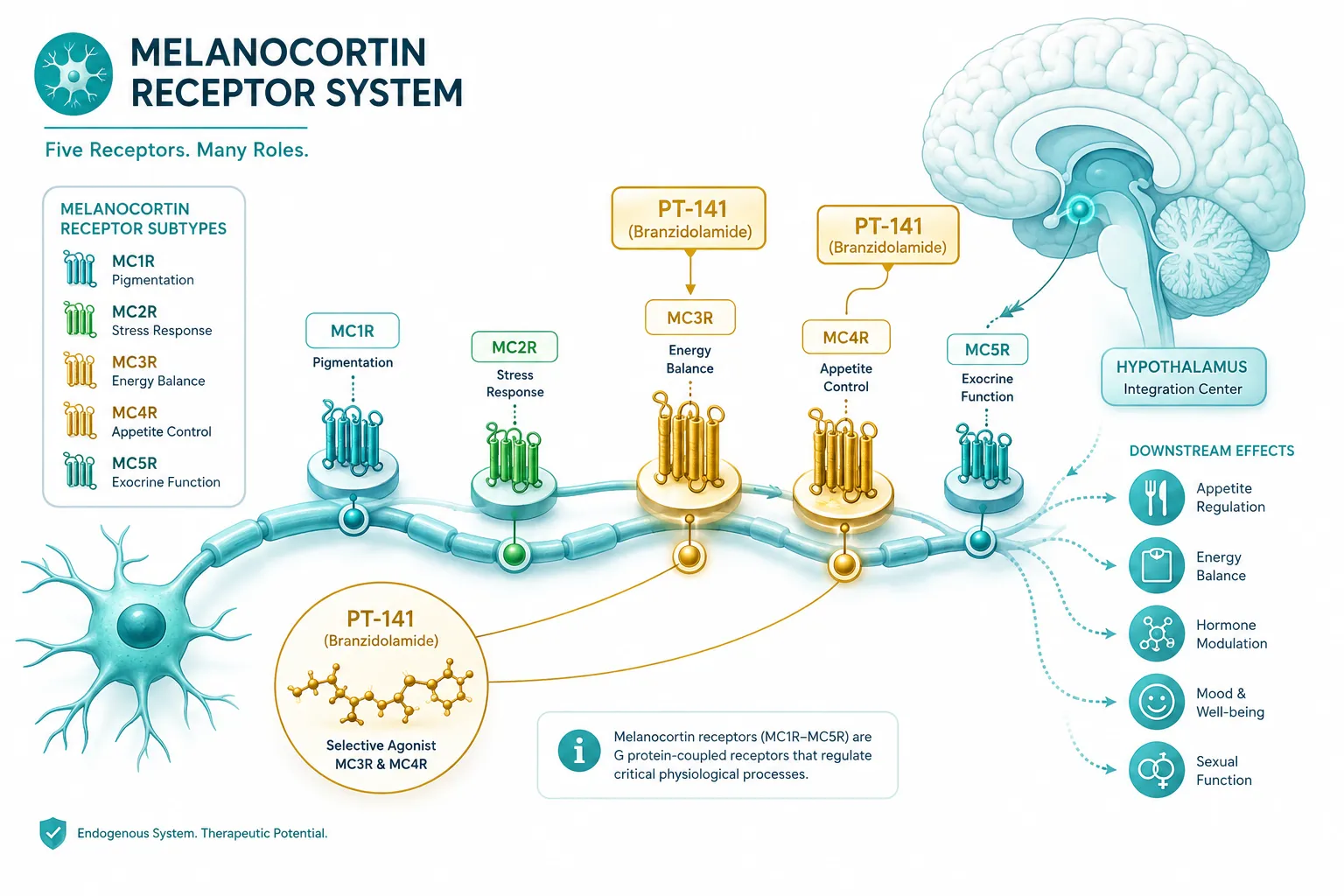
Isometric scientific illustration in bright teal and white palette, (): a detailed cross-section diagram of the melanocortin

Key Takeaways

  • PT-141 selectively activates MC3R and MC4R receptors rather than the full melanocortin receptor family, separating its research profile from broader analogs like Melanotan II.
  • Its central nervous system mechanism distinguishes it from peripherally acting melanocortin peptides and from non-peptide approaches.
  • The best research applications for PT-141 center on CNS-mediated pathways, appetite regulation, and receptor selectivity studies.
  • Purity and structural integrity are critical variables when designing PT-141 experiments; sourcing from verified suppliers affects data reliability.
  • Understanding PT-141's receptor biology helps researchers avoid conflating its findings with those from structurally similar but functionally distinct peptides.

The Melanocortin System: A Quick Receptor Map

The melanocortin system comprises five G-protein-coupled receptors (MC1R through MC5R), each with distinct tissue distribution and downstream signaling roles.

Receptor Primary Location Key Research Associations
MC1R Melanocytes, skin Pigmentation, UV response
MC2R Adrenal cortex ACTH signaling, cortisol
MC3R Hypothalamus, limbic Energy balance, reward
MC4R Hypothalamus, CNS Appetite, sexual function
MC5R Exocrine glands Secretion, immune modulation

Alpha-melanocyte-stimulating hormone (alpha-MSH), the endogenous ligand for this system, binds all five receptor subtypes with varying affinity. That broad binding profile makes alpha-MSH a useful reference compound but a poor model for targeted mechanistic research.

To understand how peptide structure shapes receptor selectivity at a foundational level, the resource on polypeptide peptides and drug mechanisms provides useful pharmacological context.

Best Research Applications for PT-141: Receptor Selectivity as the Core Differentiator

PT-141 is a cyclic heptapeptide derived from Melanotan II, but with one critical structural modification: removal of the C-terminal amide and addition of a hydroxyl group. That change shifts its receptor binding preference toward MC3R and MC4R while reducing affinity for MC1R.

Why does this matter for experimental design?

  • Melanotan II activates MC1R strongly, producing pigmentation effects that complicate interpretation in CNS-focused studies.
  • PT-141's reduced MC1R activity means researchers studying hypothalamic or limbic pathways encounter fewer confounding peripheral signals.
  • MC4R in particular is densely expressed in hypothalamic nuclei involved in energy homeostasis and reward circuitry, making PT-141 a more precise tool for those research questions.

"Receptor selectivity is not just a pharmacological footnote, it is the variable that determines whether an experimental result is attributable to a specific pathway or to systemic noise."

For researchers building models around MC4R specifically, the MC4R research tag aggregates relevant studies and product information in one place.
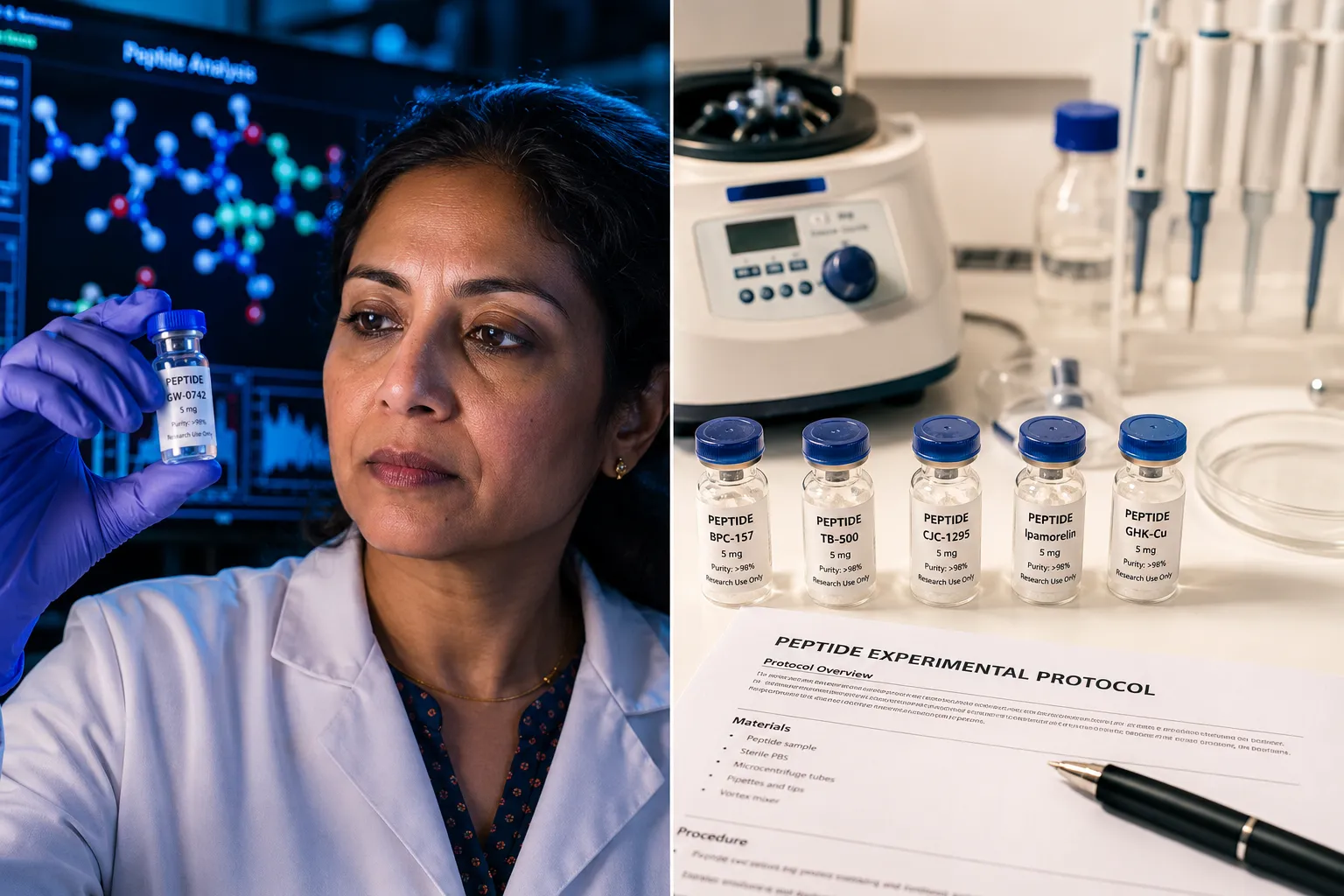
Best Research Applications for PT-141: Receptor Selectivity as the Core Differentiator

How PT-141 Compares to Other Melanocortin Peptides in Research Models

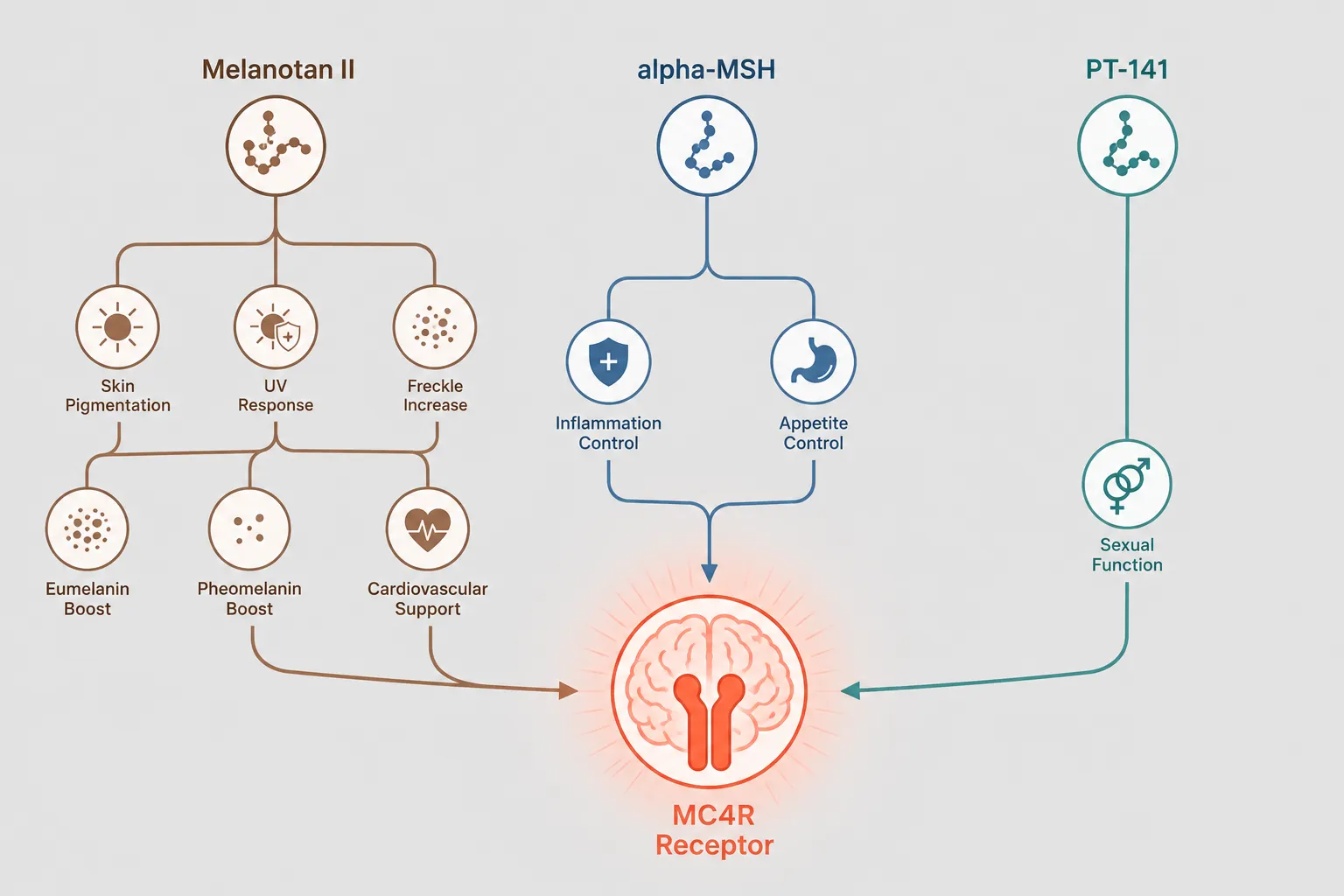
Melanotan II

Melanotan II is a non-selective melanocortin agonist. Its strong MC1R activity produces robust tanning responses, which is useful in dermatology-adjacent research but introduces variables when the target is central receptor function. Blood pressure effects linked to MC3R/MC4R co-activation also complicate cardiovascular safety profiling.

Alpha-MSH

Alpha-MSH is the endogenous standard. It is valuable for baseline receptor characterization but lacks the stability needed for sustained in vitro or in vivo protocols. Its short half-life requires frequent dosing adjustments that add experimental noise.

ACTH (1-24)

ACTH fragments bind MC2R preferentially. They are used in adrenal axis research but are largely irrelevant to CNS pathway studies where PT-141 excels.

PT-141's position: Its cyclic structure confers greater metabolic stability than linear peptides like alpha-MSH, and its MC3R/MC4R preference makes it the most targeted tool currently available for hypothalamic receptor research among the melanocortin class.

For a broader look at how peptide structure affects research utility across categories, the Peptides 101 for research-use only buyers guide covers foundational mechanisms clearly.

Best Research Applications for PT-141: Where Experimental Value Is Highest
Best Research Applications for PT-141: Where Experimental Value Is Highest

The best research applications for PT-141 cluster around three areas where its receptor profile provides a genuine advantage over other melanocortin peptides:

1. Hypothalamic Energy Regulation Studies
MC4R knockout models have established this receptor's role in obesity and feeding behavior. PT-141 serves as a pharmacological probe to activate MC4R selectively without triggering the full receptor cascade that Melanotan II would produce.

2. CNS Reward and Motivation Pathway Research
MC3R expression in limbic structures positions PT-141 as a useful compound for studying dopaminergic interactions. Researchers investigating motivation circuits benefit from a compound that reaches central receptors efficiently.

3. Receptor Binding Kinetics and Selectivity Profiling
PT-141's defined binding preference makes it a reference compound for competitive binding assays. When researchers need to establish MC3R/MC4R occupancy baselines, PT-141 provides cleaner data than non-selective analogs.

For labs also working with delivery optimization, the article on nasal spray peptides, delivery methods, and bioavailability is directly relevant, as bremelanotide's approved clinical form uses subcutaneous delivery and bioavailability modeling informs dosing protocols in research settings.

Sourcing and Purity Considerations for PT-141 Research

Structural integrity is non-negotiable for melanocortin research. A degraded or impure PT-141 sample will produce off-target receptor activation that mimics a broader binding profile, effectively turning a selective tool into a noisy one.

Key sourcing criteria:

  • Certificate of Analysis (CoA) confirming peptide purity above 98%
  • HPLC and mass spectrometry data verifying molecular weight and sequence integrity
  • Endotoxin testing for any in vivo application
  • Proper lyophilization and cold-chain storage

Researchers evaluating suppliers should consult resources like the peptide supplier comparisons guide and review where to buy peptides for verified sourcing options.

For labs working across multiple peptide categories simultaneously, the top 5 research peptides for metabolic health guide provides useful cross-category context for experimental planning.

Conclusion

The best research applications for PT-141 and what makes it different from other melanocortin peptides come down to one core principle: receptor selectivity translates directly into experimental precision. Where Melanotan II and alpha-MSH cast a wide net across the melanocortin receptor family, PT-141's preference for MC3R and MC4R gives researchers a more controlled instrument for CNS-focused, hypothalamic, and receptor kinetics work.

Actionable next steps for researchers in 2026:

  1. Map your research question to the specific receptor subtype involved before selecting a melanocortin compound.
  2. Obtain CoA documentation and HPLC data before committing PT-141 to any protocol.
  3. Use PT-141 as a selectivity benchmark in competitive binding assays when characterizing novel melanocortin analogs.
  4. Review delivery method literature to ensure reconstitution and administration protocols match the receptor expression profile you are targeting.

Choosing the right melanocortin peptide is not a minor sourcing decision, it is a foundational experimental design choice that shapes every result downstream.

Tags: bremelanotide, cns peptide research, hypothalamic peptides, mc3r, mc4r research, melanocortin agonist, melanocortin peptides, melanocortin system, peptide receptor selectivity, peptide sourcing, pt-141 research, research peptides
https://www.puretestedpeptides.com/wp-content/uploads/2026/08/best-research-applications-for-pt-141-what-makes-it-different-from-other-melanoc.webp 1024 1536 https://www.puretestedpeptides.com/wp-content/uploads/2026/01/buy-peptides-online.jpg 2026-08-12 13:03:572026-08-12 13:03:57Best Research Applications for PT-141: What Makes It Different From Other Melanocortin Peptides?
You might also like
What Is the GLP-2-T Peptide? Research Context, Target Biology, and Why It Is Confused With GLP-2 What Is the GLP-2-T Peptide? Research Context, Target Biology, and Why It Is Confused With GLP-2
Top 5 Research Peptides for Metabolic Health: An Updated Buyer's Guide Top 5 Research Peptides for Metabolic Health: An Updated Buyer’s Guide
Peptides and Polypeptides in Modern Research: How Molecular Size Shapes Function, Stability, and Experimental Design Peptides and Polypeptides in Modern Research: How Molecular Size Shapes Function, Stability, and Experimental Design
Klow Blend Peptide Nasal Spray: Research Applications and Bioavailability Considerations Klow Blend Peptide Nasal Spray: Research Applications and Bioavailability Considerations
PT-141 Peptide Research: Mechanism, Applications, and Comparison to Traditional Approaches PT-141 Peptide Research: Mechanism, Applications, and Comparison to Traditional Approaches
GHK-Cu Peptide: Collagen Synthesis, Tissue Repair, and Longevity Research Applications GHK-Cu Peptide: Collagen Synthesis, Tissue Repair, and Longevity Research Applications
Peptides 101 for Research-Use Only Buyers: Structure, Mechanisms, and Where GLP-3, MOTS-c, and 5-Amino-1MQ Fit In Peptides 101 for Research-Use Only Buyers: Structure, Mechanisms, and Where GLP-3, MOTS-c, and 5-Amino-1MQ Fit In
Carbohydrate Antigens and Peptide-Based Assays: How Glycoprotein Markers Interface With Modern Research Peptides Carbohydrate Antigens and Peptide-Based Assays: How Glycoprotein Markers Interface With Modern Research Peptides
0 replies

Leave a Reply

Want to join the discussion?
Feel free to contribute!

Leave a Reply Cancel reply

Your email address will not be published. Required fields are marked *

×

Helpful Links

  • My account
  • Cart
  • Checkout
  • Refund and Returns Policy
  • Privacy Policy
  • SMS Privacy Policy
  • Login
  • My Account
  • Logout

USA Made Lab Tested Peptides

All products are sold for research, laboratory, or analytical purposes only, and are not for human consumption


Pure Tested Peptides is a chemical supplier. Pure Tested Peptides is not a compounding / chemical compounding facility as defined under 503A of the Federal Food, Drug, and Cosmetic act. Pure Tested Peptides is not an outsourcing facility as defined under 503B of the Federal Food, Drug, and Cosmetic act.

The statements made within this website have not been evaluated by the US Food and Drug Administration. The products we offer are not intended to diagnose, treat, cure or prevent any disease.

Human/Animal Consumption Prohibited. Laboratory/In-Vitro Experimental Use Only

Link to: Where Researchers Compare Enclomiphene vs Enclomiphene Citrate in Lab-Use Planning Link to: Where Researchers Compare Enclomiphene vs Enclomiphene Citrate in Lab-Use Planning Where Researchers Compare Enclomiphene vs Enclomiphene Citrate in Lab-Use P...Where Researchers Compare Enclomiphene vs Enclomiphene Citrate in Lab-Use Planning Link to: Tesofensine vs Semaglutide vs Retatrutide: Appetite Research Pathways Compared Link to: Tesofensine vs Semaglutide vs Retatrutide: Appetite Research Pathways Compared Tesofensine vs Semaglutide vs Retatrutide: Appetite Research Pathways ComparedTesofensine vs Semaglutide vs Retatrutide: Appetite Research Pathways Compa...
Scroll to top Scroll to top Scroll to top