

Peptides vs Classic NSAIDs: How BPC‑157 and TB‑500 Compare With Naproxen and Diclofenac in Injury Research Models
Roughly 50% of all sports-related injuries involve tendon or ligament damage, yet the standard pharmacological response has remained largely unchanged for decades: reach for an NSAID. The growing body of preclinical work on regenerative peptides has prompted researchers to ask a more pointed question. In the context of Peptides vs Classic NSAIDs: How BPC‑157 and TB‑500 Compare With Naproxen and Diclofenac in Injury Research Models, the distinction is not simply about potency, it is about whether a compound suppresses the injury response or actively supports tissue repair.
Key Takeaways
- BPC-157 and TB-500 are studied for pro-healing mechanisms, including angiogenesis and collagen remodeling, rather than symptom suppression alone.
- Naproxen and diclofenac block COX enzymes effectively but may impair tendon matrix synthesis in prolonged preclinical exposure models.
- Peptide research remains largely preclinical; a Phase 2 clinical trial for BPC-157 in acute hamstring strain launched in 2026.
- TB-500 (thymosin beta-4 fragment) shows promise in muscle-to-bone healing models according to a June 2026 scoping review.
- Regulatory and ethical frameworks for research peptides differ substantially from those governing approved NSAIDs.
How Classic NSAIDs Work, and Where They Fall Short in Injury Models
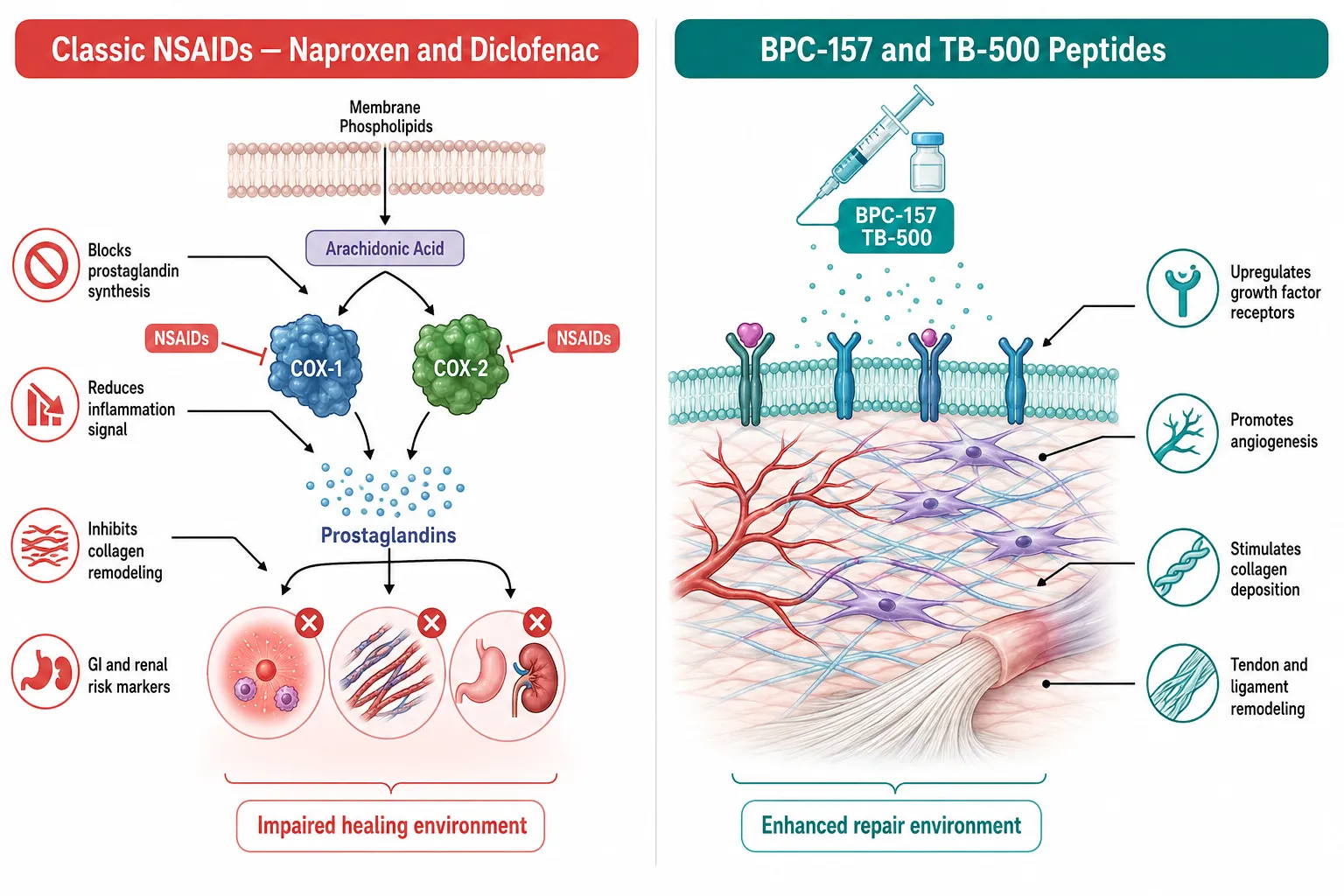
Naproxen and diclofenac belong to the non-selective and preferentially selective COX-inhibitor classes, respectively. Both reduce prostaglandin synthesis, which drives the inflammatory cascade responsible for pain, swelling, and heat at an injury site. In acute injury management, this mechanism delivers measurable short-term relief and is well-validated across decades of clinical use.
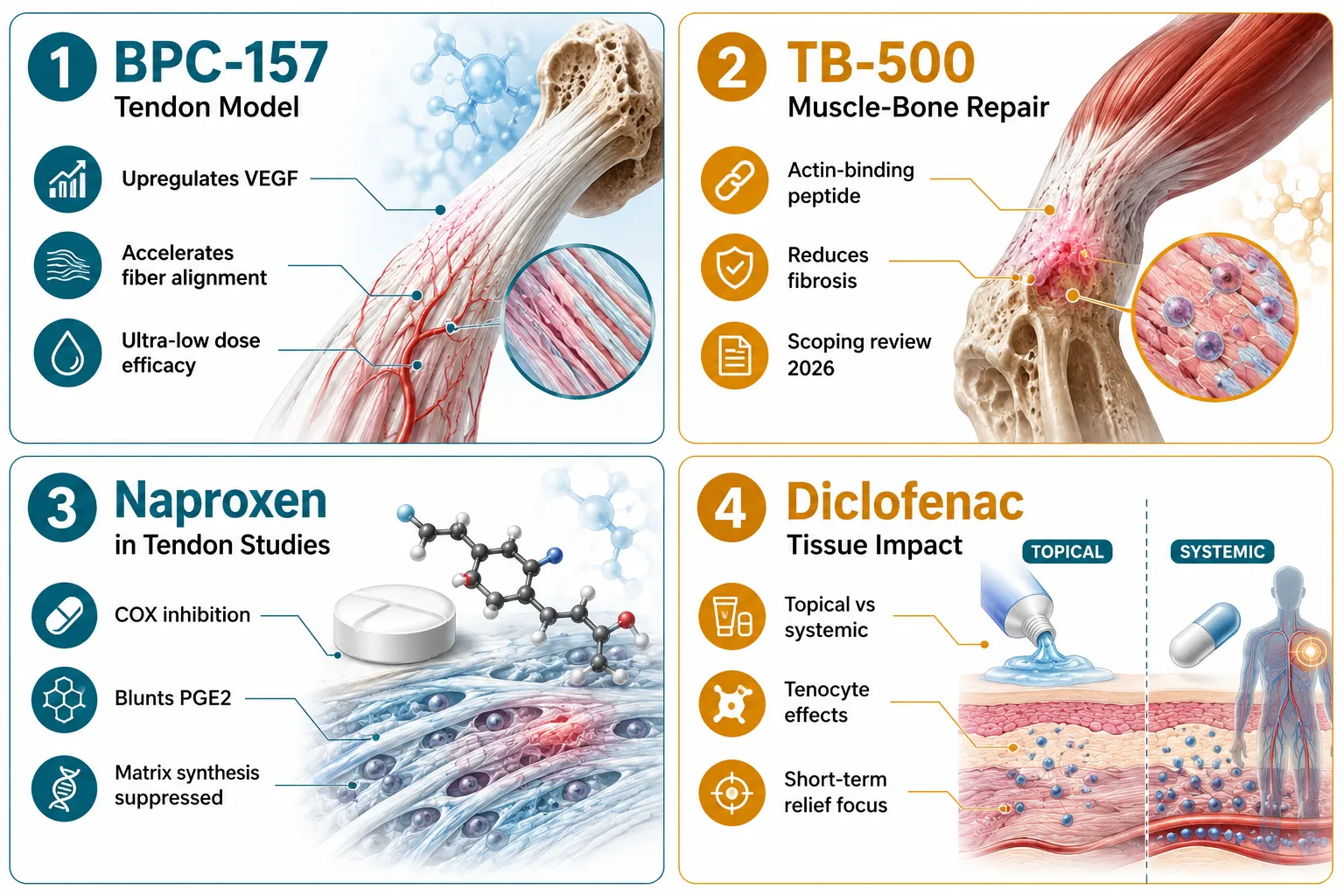
The limitation surfaces when researchers shift focus from symptom control to tissue regeneration. Prostaglandins, particularly PGE2, are not purely destructive. They play a signaling role in tenocyte proliferation and extracellular matrix remodeling. Preclinical tendon models using naproxen at sustained doses have shown suppressed collagen type-I synthesis, a finding that raises questions about long-term structural recovery. Diclofenac, whether administered systemically or topically, demonstrates similar tenocyte-level effects in rodent models, though topical routes appear to reduce systemic matrix disruption.
This is not an argument against NSAID use, it is a mechanistic observation that frames why researchers are investigating compounds with a different action profile. For a broader look at how drug mechanisms inform peptide pharmacology research, the article on polypeptide peptides and drug mechanisms provides useful context.
BPC‑157 and TB‑500 in Preclinical Injury Research: Mechanisms and Models
BPC‑157: Angiogenesis, Collagen, and Ultra-Low Dose Findings
BPC-157 (Body Protection Compound-157) is a synthetic pentadecapeptide derived from a gastric protein sequence. Its preclinical profile in musculoskeletal injury models has expanded considerably through 2025 and into 2026. Systematic reviews now cover tendon, ligament, and muscle-to-bone healing endpoints, with consistent findings across several model types.
Key mechanistic observations include:
- Upregulation of VEGF receptors, supporting new blood vessel formation at injury sites
- Promotion of collagen fiber alignment in ruptured tendon models
- Activation of the FAK-paxillin pathway, linked to fibroblast migration and wound closure
- Efficacy at ultra-low doses (nanogram-to-microgram range in rodent models), distinguishing it from conventional anti-inflammatory dosing
A Phase 2 clinical trial (NCT07437547) launched in 2026 to evaluate BPC-157 in acute hamstring strain, a meaningful step from bench to bedside, though orthopedic researchers have been careful to label current enthusiasm as "promising but hype-prone" pending robust human data.
TB‑500: Thymosin Beta-4 Fragment and Tissue Repair
TB-500 is a synthetic analog of thymosin beta-4, an actin-sequestering peptide naturally present in most human cells. A scoping review published in June 2026 consolidated findings from muscle-to-bone healing, cardiac, and connective tissue models. The core mechanism involves binding to G-actin, which reduces local fibrosis, promotes cell migration, and modulates the inflammatory microenvironment without fully suppressing it.
In direct contrast to NSAID-mediated prostaglandin blockade, TB-500 appears to work alongside the inflammatory process rather than against it, a distinction that has practical implications for how researchers design injury recovery protocols. For those exploring rodent models used in peptide research, these mechanistic differences are central to study design.
Peptides vs Classic NSAIDs: Comparing the Evidence Frameworks
When placing Peptides vs Classic NSAIDs: How BPC‑157 and TB‑500 Compare With Naproxen and Diclofenac in Injury Research Models side by side, several structural differences in the evidence base become apparent.
| Parameter | BPC-157 / TB-500 | Naproxen / Diclofenac |
|---|---|---|
| Primary mechanism | Pro-regenerative (angiogenesis, collagen, actin modulation) | Anti-inflammatory (COX-1/COX-2 inhibition) |
| Evidence stage | Primarily preclinical; Phase 2 trial launched 2026 | Extensive clinical trial and real-world data |
| Tendon matrix effect | Appears to support collagen remodeling | May suppress matrix synthesis at sustained doses |
| Regulatory status | Research compound; not approved for clinical use | Approved OTC and prescription medications |
| Safety profile | Emerging human safety data; long-term unknowns | Well-characterized; GI, renal, and cardiovascular risks known |
Pain and Functional Outcomes: The Evidence Gap
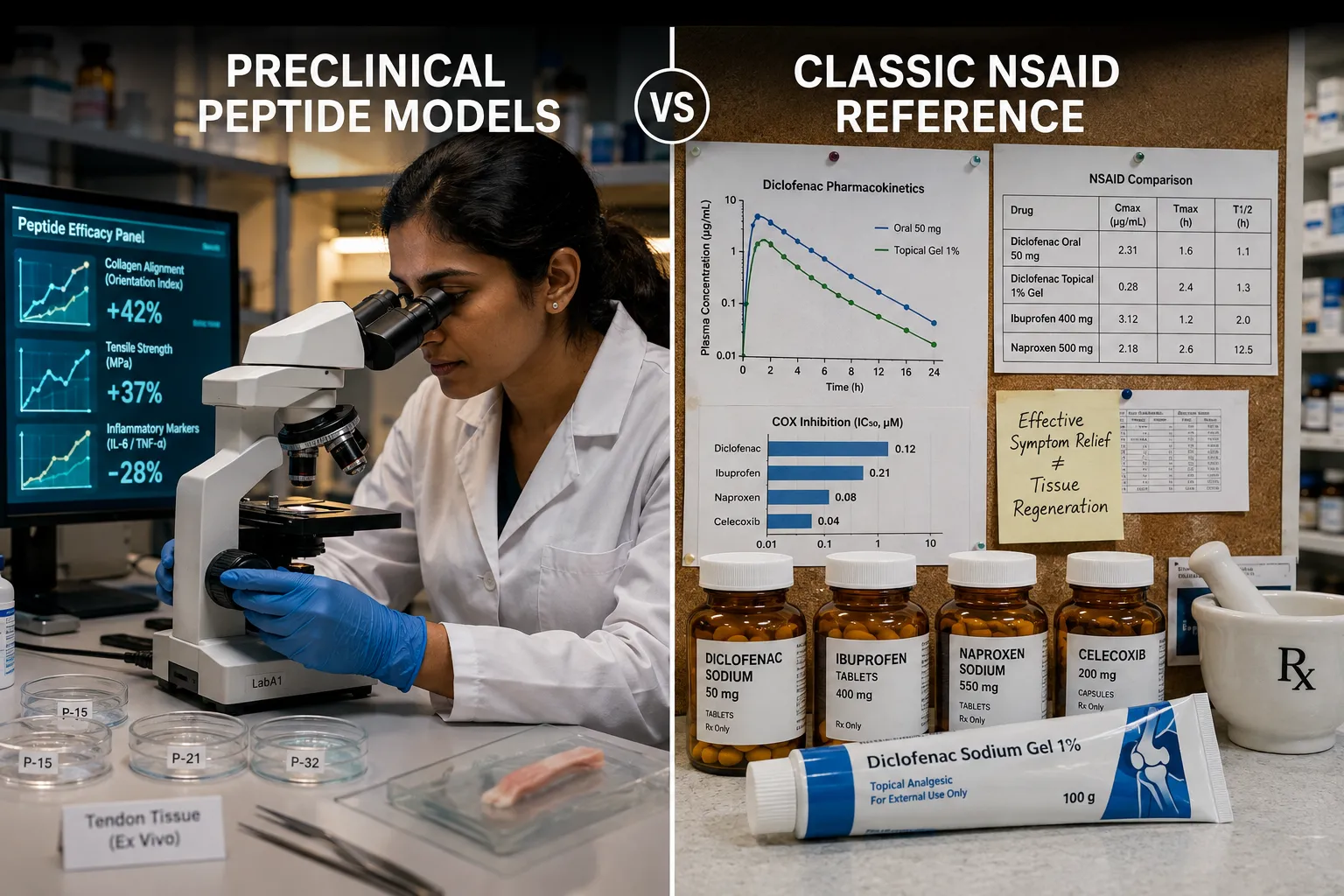
One area where NSAIDs maintain a clear advantage is pain and functional outcome data in humans. Naproxen and diclofenac have been tested in thousands of clinical trials measuring validated pain scores, return-to-activity timelines, and quality-of-life endpoints. BPC-157 and TB-500 have not yet accumulated comparable human data, making direct efficacy comparisons premature outside of preclinical settings.
The honest framing for 2026 research: peptides like BPC-157 and TB-500 are not replacements for NSAIDs in clinical practice, they are mechanistically distinct compounds being studied to understand whether regenerative pathways can be pharmacologically supported.
Researchers interested in research peptides 2026 should note that orthopedic societies have adopted a cautious stance: the preclinical signal is genuine, but translational gaps remain wide.
Regulatory and Ethical Considerations
The regulatory asymmetry between these compound classes is significant. Naproxen and diclofenac operate within established pharmacovigilance systems. Peptide research compounds like BPC-157 and TB-500 are subject to different ethical oversight frameworks, particularly in human-adjacent study designs. A 2025-2026 analysis of regulatory considerations in peptide research highlights that institutional review requirements, supply chain verification, and purity standards are all active concerns for investigators.
Purity verification is especially relevant, researchers sourcing peptides for study should consult resources on peptide COA verification to ensure compound integrity before any experimental protocol begins. For those comparing supplier quality standards, the guide on peptide supplier comparisons offers practical evaluation criteria.
Conclusion
The comparison of Peptides vs Classic NSAIDs: How BPC‑157 and TB‑500 Compare With Naproxen and Diclofenac in Injury Research Models ultimately comes down to a question of research purpose. NSAIDs are well-characterized tools for managing inflammation and pain, with a robust clinical evidence base but documented limitations in tendon matrix biology. BPC-157 and TB-500 represent a mechanistically distinct class, compounds that appear to work with tissue repair processes rather than suppressing them, at least in preclinical models.
Actionable next steps for researchers in 2026:
- Define the research question clearly, if the goal is modeling anti-inflammatory pharmacology, NSAIDs remain the reference standard; if the goal is studying regenerative tissue pathways, peptides offer a different mechanistic lens.
- Monitor the BPC-157 Phase 2 trial (NCT07437547) for emerging human data that may narrow the translational gap.
- Prioritize compound purity, verify certificates of analysis before any experimental use of research-grade peptides.
- Consult updated scoping reviews on TB-500 (June 2026) and BPC-157 systematic reviews for the most current preclinical evidence synthesis.
- Avoid conflating preclinical promise with clinical equivalence, the mechanistic data is compelling, but orthopedic caution remains warranted until human trial data matures.
For researchers exploring adjacent peptide mechanisms, the overview of SS-31 10mg research peptide considerations offers a useful parallel on how mitochondrial-targeted peptides are evaluated in injury-adjacent models.


Leave a Reply
Want to join the discussion?Feel free to contribute!