

Creatine Supplementation vs. 5-Amino-1MQ: Comparing NNMT Inhibition and Phosphagen Energy Systems in Muscle Cell Models
Two compounds. Two entirely different mechanisms. Yet both are discussed in the same breath when researchers explore how muscle cells generate and sustain energy. The comparison of Creatine Supplementation vs. 5-Amino-1MQ: Comparing NNMT Inhibition and Phosphagen Energy Systems in Muscle Cell Models is not a straightforward head-to-head, it is a study in contrast between a well-validated phosphagen buffer and an experimental enzyme inhibitor operating on entirely separate biochemical pathways.
Key Takeaways
- Creatine replenishes ATP directly through the phosphocreatine shuttle during high-intensity muscle activity, making it an acute energy buffer.
- 5-Amino-1MQ inhibits nicotinamide N-methyltransferase (NNMT), elevating intracellular NAD+ and altering upstream metabolic signaling rather than buffering phosphagens.
- No peer-reviewed studies have directly compared these two compounds in muscle cell models or exercise performance contexts as of 2026.
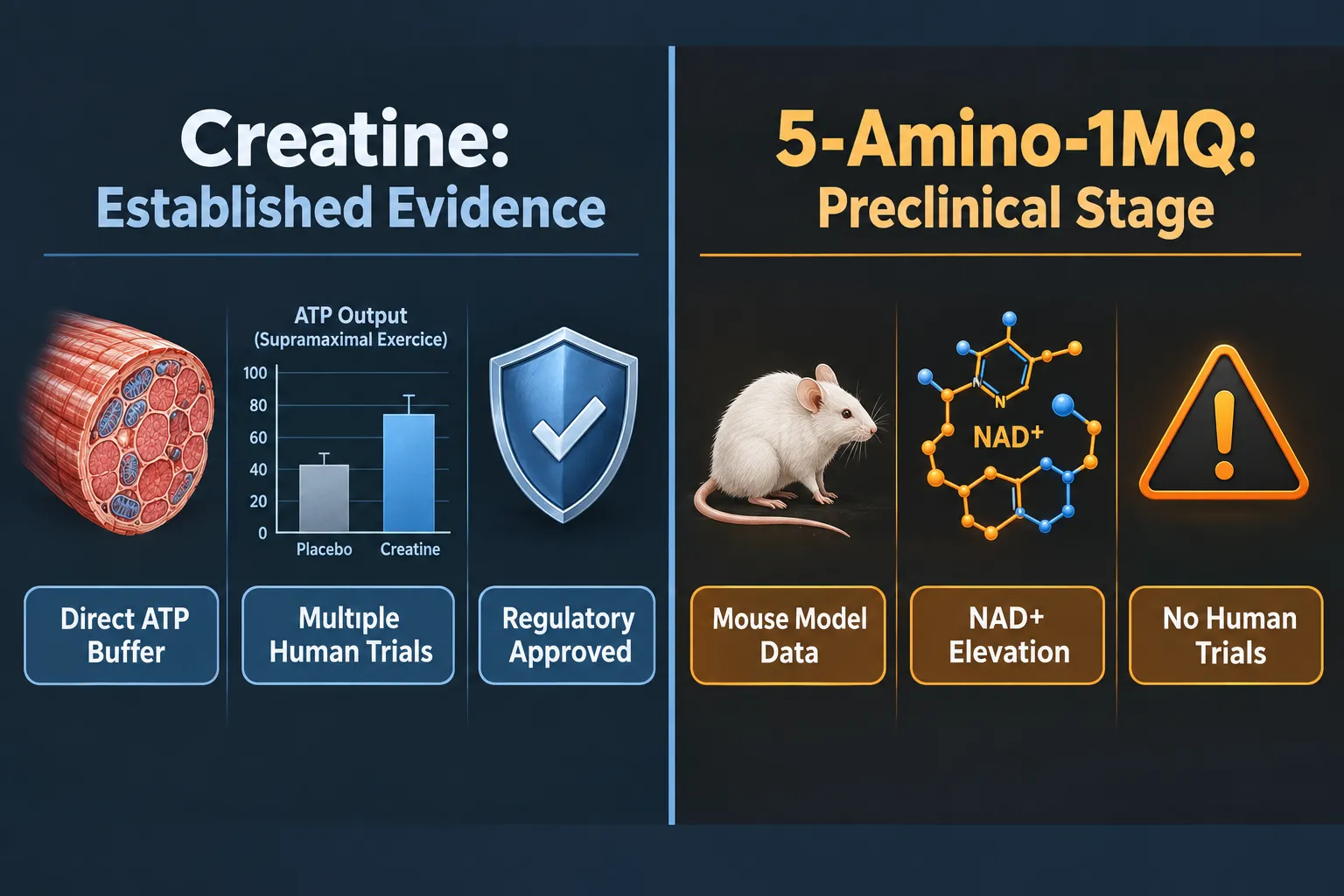
- Creatine has robust human trial data; 5-Amino-1MQ remains a preclinical research compound with no published human safety or efficacy data.
- These compounds are best understood as tools for different research questions, not interchangeable performance agents.
How Creatine Powers the Phosphagen Energy System
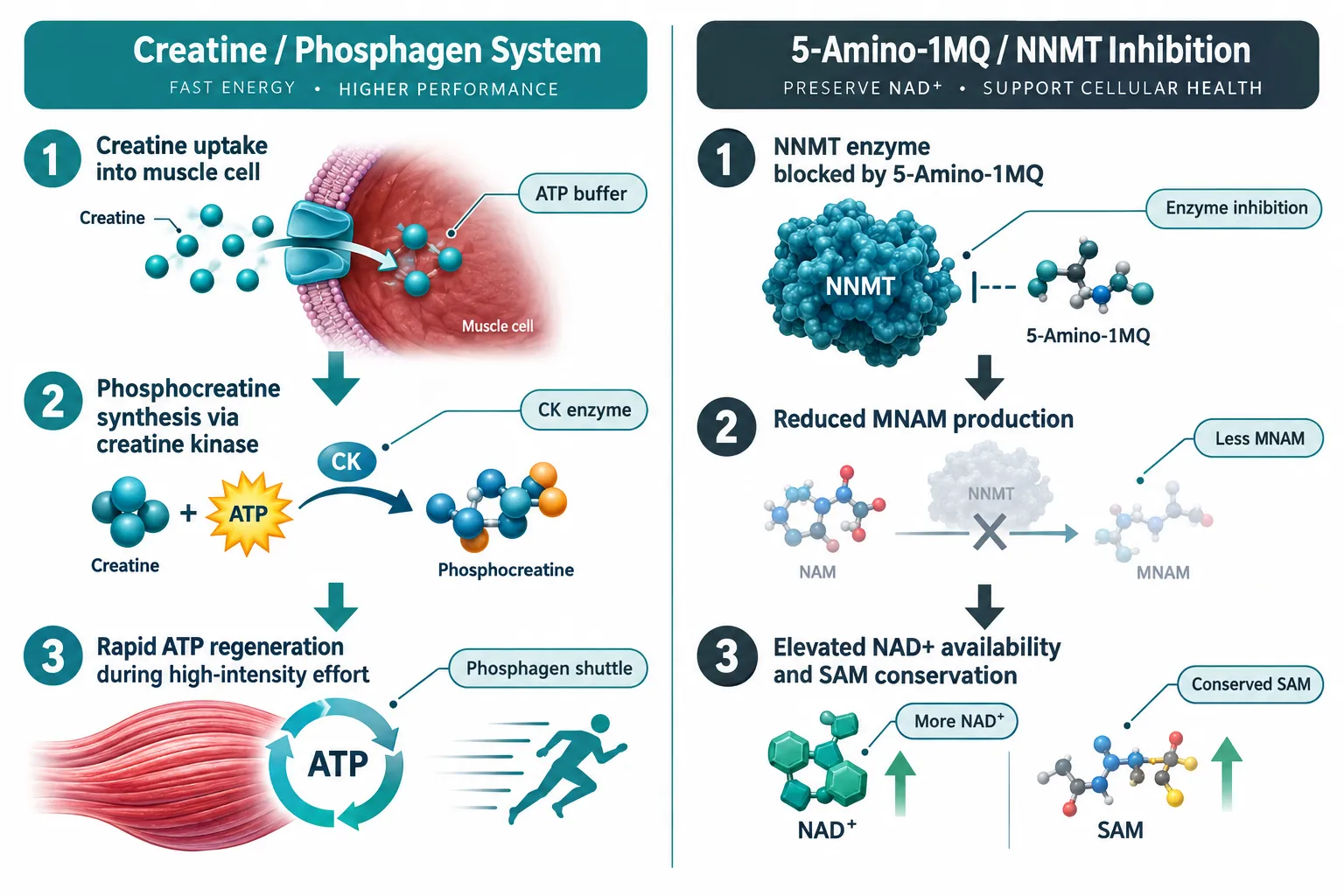
The phosphagen system is the fastest energy pathway available to skeletal muscle. When a muscle fiber fires during a sprint, a heavy lift, or any supramaximal effort, it burns through available ATP within seconds. Creatine steps in as the primary replenishment agent.
Inside muscle cells, creatine is phosphorylated by the enzyme creatine kinase to form phosphocreatine (PCr). When ATP is depleted, PCr donates its phosphate group back to ADP, instantly regenerating ATP. This creatine kinase/phosphocreatine shuttle is the cornerstone of short-duration, high-power output.
Human exercise research confirms that creatine supplementation measurably increases the phosphagen energy contribution during supramaximal running. Notably, this benefit is specific: creatine does not significantly alter anaerobic glycolytic contribution or time to exhaustion. It is a targeted, acute energy buffer, not a systemic metabolic reprogrammer.
Understanding skeletal muscle metabolism helps clarify why creatine's mechanism is so well-defined. Its effects are local, rapid, and directly tied to high-energy phosphate availability in the muscle cell.
Key characteristics of creatine in muscle models:
- Acts via the creatine kinase enzyme directly within the muscle cell
- Increases phosphocreatine stores available for ATP regeneration
- Supports short-burst, high-intensity power output
- Backed by multiple human trials demonstrating safety and efficacy
- Available as a regulated dietary supplement in most jurisdictions
5-Amino-1MQ and NNMT Inhibition: A Different Kind of Energy Modulation
5-Amino-1MQ (5-amino-1-methylquinolinium iodide) operates at a fundamentally different level of cellular biology. It is a synthetic, membrane-permeable small molecule that inhibits nicotinamide N-methyltransferase (NNMT), the enzyme responsible for methylating nicotinamide using S-adenosylmethionine (SAM) as a methyl donor.
When NNMT is active, it converts nicotinamide into 1-methylnicotinamide (MNAM), consuming SAM in the process. This reduces the pool of nicotinamide available for NAD+ biosynthesis. By inhibiting NNMT with high potency (biochemical IC50 approximately 1 µM), 5-Amino-1MQ interrupts this pathway, allowing more nicotinamide to re-enter the NAD+ salvage pathway and elevating intracellular NAD+ levels.
Higher NAD+ availability has downstream effects on sirtuin enzyme activity, mitochondrial function, and cellular energy sensing, none of which involve direct ATP buffering during acute exercise.
"5-Amino-1MQ does not replenish phosphocreatine. It reshapes the upstream metabolic environment in which energy decisions are made at the cellular level."
Preclinical mouse studies show that NNMT inhibition with 5-Amino-1MQ reduces MNAM levels, elevates NAD+, and can reverse diet-induced obesity and insulin resistance. These are systemic metabolic effects, not acute phosphagen-system enhancements.
Importantly, 5-Amino-1MQ demonstrates high selectivity for NNMT, with negligible activity against other methyltransferases such as PNMT and COMT. This targeted profile makes it a precise research tool, though its translational relevance to muscle performance remains unestablished.
Comparing the Two Approaches: What Muscle Cell Models Reveal
The direct comparison of Creatine Supplementation vs. 5-Amino-1MQ: Comparing NNMT Inhibition and Phosphagen Energy Systems in Muscle Cell Models reveals a critical gap: as of 2026, no peer-reviewed studies have placed these two compounds side by side in a muscle cell model, exercise protocol, or phosphagen dynamics experiment.
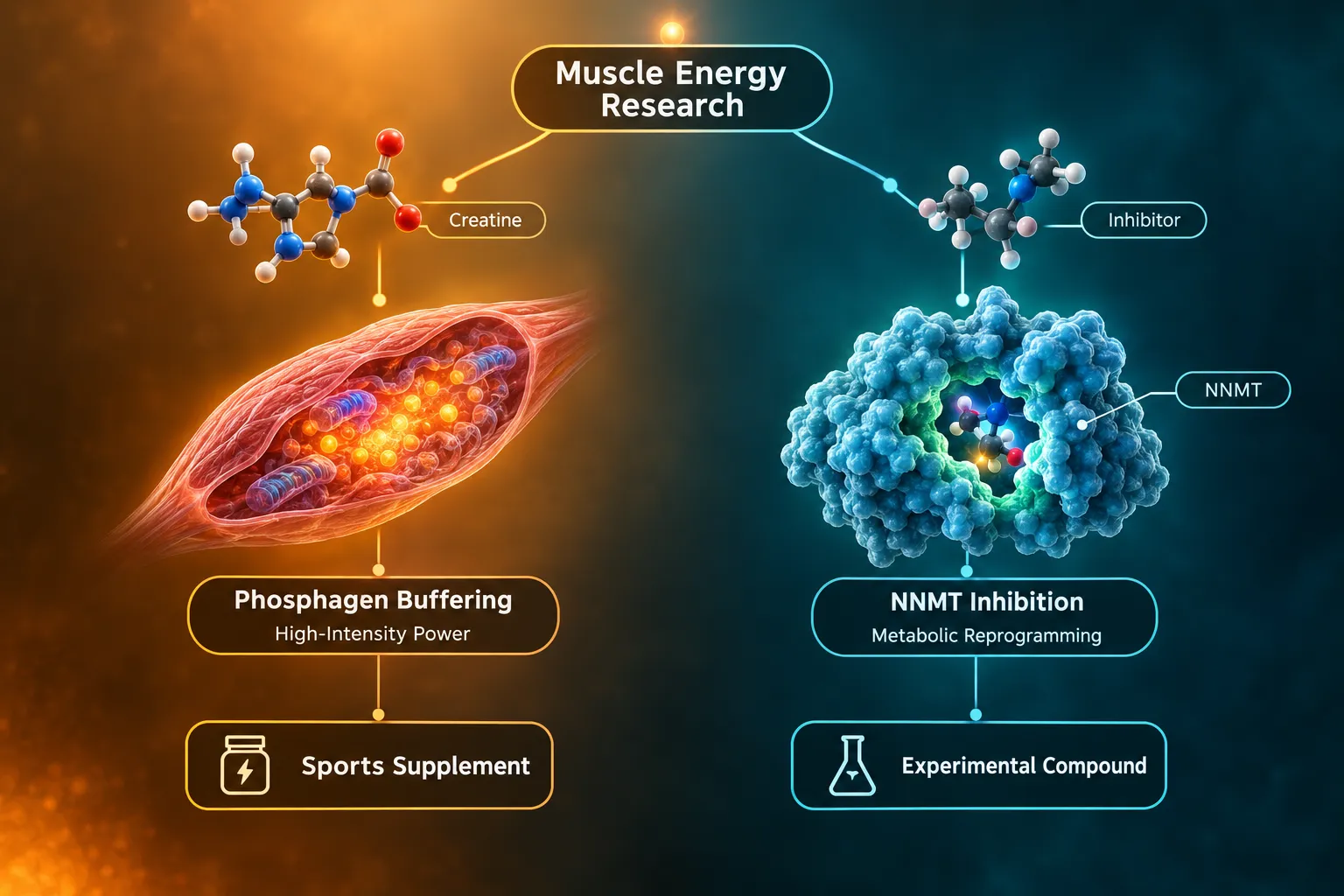
Any comparison must therefore be extrapolated from separate research domains. The table below summarizes the key distinctions:
| Feature | Creatine | 5-Amino-1MQ |
|---|---|---|
| Primary mechanism | Phosphocreatine / ATP regeneration | NNMT inhibition / NAD+ elevation |
| Target enzyme | Creatine kinase | Nicotinamide N-methyltransferase |
| Effect on muscle performance | Acute high-intensity power output | Not established in muscle models |
| Human trial data | Extensive | None as of 2026 |
| Regulatory status | Approved dietary supplement | Experimental research compound |
| Primary research application | Athletic performance, clinical rehab | Obesity, metabolic syndrome models |
Regulatory and Safety Context
Creatine carries a well-established safety profile supported by decades of human research. It is widely available as a dietary supplement and used in both athletic and clinical rehabilitation contexts.
5-Amino-1MQ, by contrast, is distributed primarily through research chemical channels. As of 2026, there are no published human pharmacokinetic or safety data, no regulatory approvals, and no established clinical compounding protocols. Researchers interested in peptide dosing and experimental compound protocols should treat 5-Amino-1MQ strictly as a research-use NNMT inhibitor, not as a consumer supplement.
Research on compounds that influence mitochondrial energy dynamics, such as those explored in SS-31 mitochondrial research, provides useful context for understanding how intracellular energy modulators differ from direct phosphagen buffers like creatine. Similarly, work on senescence markers in aging muscle models is relevant to understanding why NAD+ elevation is a target of interest in metabolic research.
Where Each Compound Fits in Research Design
- Creatine is the appropriate tool when studying phosphagen system dynamics, ATP regeneration kinetics, or high-intensity exercise capacity in muscle cell models.
- 5-Amino-1MQ is the appropriate tool when studying NNMT activity, NAD+ salvage pathway modulation, SAM utilization, or metabolic reprogramming in adipose or metabolic disease models.
- Using either compound to answer the other's research question would represent a significant methodological mismatch.
Forward-looking analysis in 2026 suggests that if NNMT inhibitors like 5-Amino-1MQ advance into formal drug development, the most likely indication would be obesity or metabolic syndrome, not athletic performance enhancement. This remains speculative and is not yet supported by clinical trial data.
Conclusion
The comparison of Creatine Supplementation vs. 5-Amino-1MQ: Comparing NNMT Inhibition and Phosphagen Energy Systems in Muscle Cell Models ultimately underscores that these are not competing supplements, they are tools designed for different biochemical questions.
Creatine is a proven, direct phosphagen buffer with robust human evidence supporting its role in high-intensity muscle performance. 5-Amino-1MQ is a potent, selective NNMT inhibitor that elevates NAD+ and modulates upstream metabolic pathways, currently supported only by preclinical data.
Actionable next steps for researchers and practitioners:
- Use creatine when the research question involves phosphocreatine dynamics, ATP buffering, or acute power output in muscle models.
- Use 5-Amino-1MQ only in controlled preclinical research settings, with full awareness of its experimental status and absence of human safety data.
- Do not conflate NAD+ elevation with phosphagen enhancement, these are distinct mechanisms with distinct physiological outcomes.
- Monitor peer-reviewed literature for any future studies that directly compare NNMT inhibition with phosphagen-system interventions in muscle cell models, as this remains an open research gap as of 2026.
- Consult resources on lab tested peptides and verified research compounds when sourcing experimental agents to ensure purity and research integrity.


Leave a Reply
Want to join the discussion?Feel free to contribute!