Call or Text 727-513-9780
  • Shopping Cart Shopping Cart
    0Shopping Cart
Pure Tested Peptides | America's most trusted Peptides for sale online
  • Peptides for sale
    • Oral Peptides for sale
      • Peptide Capsules for sale
      • BPC 157 Capsules 1000mcg
      • SLU-PP-332 Capsules | 1000 mcg
      • 5-Amino-1MQ 50mg Capsules
      • Tesofensine 500mcg
    • All Peptides for sale
    • Peptide Sprays
      • BPC 157 Nasal Spray Kit
      • BPC-157 TB500 Nasal Spray Kit
      • Semax Nasal Spray 10mg
      • Selank – Nasal Spray Kit – 10mg
      • Epithalon 50MG Nasal Spray Kit
      • Ipamorelin 10mg Nasal Spray
      • Klow Nasal Spray (BPC-157 + TB-500 + GHK-Cu + KPV) | 80mg
      • Hulk Nasal Spray Tesa / Ipa Blend 6/3 MG
      • Klow Nasal Spray
      • NAD + 500 mg Nasal Spray
      • PT-141 Nasal Spray Kit
    • GHRH Peptides
      • Ipa Peptides
      • CJC-1295 Peptides
        • CJC-1295 with DAC 5 mg
        • CJC-1295 without DAC 5 mg
        • CJC-1295 Ipa 10mg
      • Tesa Peptides
        • Tesa Peptide
        • Tesa 20 mg
    • GHK-Cu Peptides
      • All GHK-Cu Peptides
      • GHK-Cu 100mg
      • KLOW Peptide Blend – Buy KLOW blend online
    • BPC Peptides
      • All BPC Peptides
      • BPC-157
      • BPC-157 TB-500
      • BPC 157 capsules 1000mcg
    • SLU-PP-332 Peptides
      • All SLU-PP-332 Peptides
      • SLU-PP-332 5mg
    • GLP3 Peptides
    • PT-141 Peptides
      • PT-141 Peptides for sale
      • PT-141 10mg
      • PT-141 Nasal Spray
    • CAG Peptides
      • Lipo-C Peptide Blend
      • CAG 5mg
      • CAG 10mg
    • MOTS-C Peptides
      • MOTS-C Peptides for sale
      • MOTS-c peptide
      • MOTS-c 10mg *6 pack*
    • 5 Amino 1MQ Peptides
      • 5 Amino 1MQ Peptides for sale
      • 5-Amino-1MQ 50mg Capsules
      • 5-Amino-1MQ 5mg
    • Epithalon Peptides
      • Epithalon Peptides for sale
      • Epithalon 10mg
      • Epithalon 50mg
  • Shop
    • GLPs
      • 5-Amino-1MQ 50mg Capsules
      • 5-Amino-1MQ 5mg
      • L-Carnitine 500mg/ml
      • Tesofensine 500mcg
      • SLU-PP-332 5mg
      • MOTS-c 10mg *6 pack*
    • Epithalon & BPC Peptides
      • Epithalon 10mg
      • Epithalon 50mg
      • BPC-157
      • BPC 157 capsules 1000mcg
      • BPC-157 TB-500
      • BPC-157 TB500 Nasal Spray Kit
      • BPC 157 Nasal Spray Kit
    • BPC TB-500 & NAD+ Peptides
      • NAD+ 500 mg
      • KLOW Peptide Blend – Buy KLOW blend online
      • GLOW Peptide Blend
      • TB 500 5mg
      • BPC 157 capsules 1000mcg – Supplement
      • BPC 157 Nasal Spray Kit
      • BPC-157
      • BPC-157 TB500 Nasal Spray Kit
      • BPC-157 TB-500
      • BPC 157 capsules 1000mcg
    • LL-37 Peptide
      • LL-37 10 mg
    • MOTS-C & Selank
      • MOTS-c peptide
      • Selank 10mg
    • GHK Peptides
      • GHK-Cu 100mg
      • GLOW Peptide Blend
      • KLOW Peptide Blend – Buy KLOW blend online
  • COAs
  • Wholesale
    • Wholesale Peptides for sale
  • PTP FAQ
  • Affiliates
    • Selank Peptide: Advanced Pharmacological Mechanisms Underlying Its Anxiolytic and Nootropic Effects in Research
      • 5-Amino-1MQ Peptide: Detailed Mechanisms of NNMT Inhibition and Its Impact on Cellular Metabolism Research
        • MOTS-C Peptide: Unraveling Its Role in Mitochondrial Dynamics and Energy Metabolism Research
          • Epithalon Peptide and Telomerase Regulation: Investigating Its Impact on Cellular Senescence and Lifespan Research Models
            • GLP2-T vs GLP2 Tirz Peptide: Understanding the Naming, Mechanistic Nuances, and Research Implications for Gut Health
      • Peptides and Polypeptides in Modern Pharmacology: What Research on Metoprolol, Prednisone, and Amlodipine Reveals
        • Polypeptide Peptides vs NSAIDs: What Naproxen and Diclofenac Teach Tissue-Repair Researchers About BPC‑157 and TB‑500
          • Peptides and Polypeptides in Endocrine Pharmacology: How GLP-1, GLP-2, and GLP-3 Retatrutide Differ From Classic Drugs Like Prednisone and Amlodipine
          • 5‑Amino‑1MQ Peptide and NNMT Inhibition: How It Compares With Statins Like Atorvastatin in Adipose and Lipid Metabolism Research
      • Enclomiphene, Estrogen Receptor Signaling, and Luteinizing Phase Biology: What Hormone Researchers Should Measure
        • Mesenchymal Stem Cells, BPC‑157, and GHK‑Cu: How Tissue Repair Peptides Compare With Classic NSAIDs Like Naproxen in Injury Models
          • Peptide Calculator Use Cases Beyond Growth Hormone: Working Through GLP‑3 Retatrutide, MOTS‑c, and BPC‑157 Research Dosing
        • Polypeptide Peptides in Endocrine and Metabolic Pharmacology: Lessons From Amlodipine, Prednisone, and Metoprolol
        • Peptides Calculator for Advanced Blends: Worked Examples for Tesamorelin, CJC‑1295, and Ipamorelin Stacks
          • Peptides and Polypeptides in Human Physiology: How Molecular Size Shapes Research Applications
            • Selank Peptide: Advanced Pharmacological Mechanisms Underlying Its Anxiolytic and Nootropic Effects in Research
          • 5-Amino-1MQ Peptide: Detailed Mechanisms of NNMT Inhibition and Its Impact on Cellular Metabolism Research
            • MOTS-C Peptide: Unraveling Its Role in Mitochondrial Dynamics and Energy Metabolism Research
              • Epithalon Peptide and Telomerase Regulation: Investigating Its Impact on Cellular Senescence and Lifespan Research Models
                • GLP2-T vs GLP2 Tirz Peptide: Understanding the Naming, Mechanistic Nuances, and Research Implications for Gut Health
                  • Peptides and Polypeptides in Endocrine Pharmacology: How GLP-1, GLP-2, and GLP-3 Retatrutide Differ From Classic Drugs Like Prednisone and Amlodipine
                    • Polypeptide Peptides vs NSAIDs: What Naproxen and Diclofenac Teach Tissue-Repair Researchers About BPC‑157 and TB‑500
                      • Peptides and Polypeptides in Modern Pharmacology: What Research on Metoprolol, Prednisone, and Amlodipine Reveals
                        • 5‑Amino‑1MQ Peptide and NNMT Inhibition: How It Compares With Statins Like Atorvastatin in Adipose and Lipid Metabolism Research
                        • Enclomiphene, Estrogen Receptor Signaling, and Luteinizing Phase Biology: What Hormone Researchers Should Measure
                        • Mesenchymal Stem Cells, BPC‑157, and GHK‑Cu: How Tissue Repair Peptides Compare With Classic NSAIDs Like Naproxen in Injury Models
                        • Peptide Calculator Use Cases Beyond Growth Hormone: Working Through GLP‑3 Retatrutide, MOTS‑c, and BPC‑157 Research Dosing
                        • Polypeptide Peptides in Endocrine and Metabolic Pharmacology: Lessons From Amlodipine, Prednisone, and Metoprolol
                        • Peptides Calculator for Advanced Blends: Worked Examples for Tesamorelin, CJC‑1295, and Ipamorelin Stacks
                        • Peptides and Polypeptides in Human Physiology: How Molecular Size Shapes Research Applications
                        • Selank Peptide: Advanced Pharmacological Mechanisms Underlying Its Anxiolytic and Nootropic Effects in Research
                        • MOTS-C Peptide: Unraveling Its Role in Mitochondrial Dynamics and Energy Metabolism Research
                        • Peptides and Polypeptides in Modern Pharmacology: What Research on Metoprolol, Prednisone, and Amlodipine Reveals
                        • Peptides and Polypeptides in Endocrine Pharmacology: How GLP-1, GLP-2, and GLP-3 Retatrutide Differ From Classic Drugs Like Prednisone and Amlodipine
                        • 5-Amino-1MQ Peptide: Detailed Mechanisms of NNMT Inhibition and Its Impact on Cellular Metabolism Research
                        • Mesenchymal Stem Cells, BPC‑157, and GHK‑Cu: How Tissue Repair Peptides Compare With Classic NSAIDs Like Naproxen in Injury Models
                        • Peptide Calculator Use Cases Beyond Growth Hormone: Working Through GLP‑3 Retatrutide, MOTS‑c, and BPC‑157 Research Dosing
                        • GLP2-T vs GLP2 Tirz Peptide: Understanding the Naming, Mechanistic Nuances, and Research Implications for Gut Health
                        • Polypeptide Peptides in Endocrine and Metabolic Pharmacology: Lessons From Amlodipine, Prednisone, and Metoprolol
                        • Polypeptide Peptides vs NSAIDs: What Naproxen and Diclofenac Teach Tissue-Repair Researchers About BPC‑157 and TB‑500
                        • Peptides and Polypeptides in Human Physiology: How Molecular Size Shapes Research Applications
                        • Peptides Calculator for Advanced Blends: Worked Examples for Tesamorelin, CJC‑1295, and Ipamorelin Stacks
                        • 5‑Amino‑1MQ Peptide and NNMT Inhibition: How It Compares With Statins Like Atorvastatin in Adipose and Lipid Metabolism Research
                        • Enclomiphene, Estrogen Receptor Signaling, and Luteinizing Phase Biology: What Hormone Researchers Should Measure
                        • Epithalon Peptide and Telomerase Regulation: Investigating Its Impact on Cellular Senescence and Lifespan Research Models
                        • Best research protocol Klow blend
                        • best time to take BPC-157
                        • best time to take DSIP (Delta Sleep Inducing Peptide)
                        • best time to take CJC-1295
                        • best time to take AOD-9604
                        • best time to take Follistatin 344
                        • best time to take Ipamorelin
                        • best time to take MK-677 (Ibutamoren)
                        • best time to take Ligandrol (LGD-4033) — research compound
                        • best time to take Ostarine (MK-2866) — research compound
                        • best time to take GHK-CU
                        • best time to take TB-500
                        • best time to take MOTS-c
                        • best time to take Semax
                        • best time to take RAD-140 (Testolone) — research compound
                        • best time to take Thymosin Alpha-1
                        • best time to take PEG-MGF
                        • Biolife Plasma, Octapharma Plasma, and Research Peptides: How Plasma Donation Labs Differ From Peptide Suppliers
                        • best time to take YK-11 — research compound
                        • best time to take PT-141 (Bremelanotide)
                        • Best research protocol Klow blend
                        • 5-Amino-1MQ and MOTS-C Synergy: Metabolic Signaling, Mitochondria, and Research Design
                        • BPC-157 and TB-500: Investigating Their Combined Effects on Angiogenesis and Cellular Migration in Tissue Repair Models
                        • BPC-157 Peptide: Gut Barrier Function, Inflammation, and Tissue-Recovery Research
                        • 5‑Amino‑1MQ and MOTS‑c Synergy in Metabolic Research: Designing NNMT and Mitochondrial Biogenesis Stacks
                        • CJC-1295 with DAC vs. Without DAC: Half-Life, Release Kinetics, and Research Implications
                        • CJC‑1295 with DAC vs. Without DAC: Expanding on Half‑Life Differences Using Tesamorelin and Ipamorelin Blend Case Studies
                        • Collagen Biology and Copper‑Binding Peptides: How GHK‑Cu, Glow Blend, and Klow Blend Interact with Skin and Connective Tissue
                        • Collagen Biology and Regenerative Peptides: How GHK‑Cu, Glow Blend, and Klow Blend Affect Extracellular Matrix Research
                    • DNA, Telomeres, and Longevity Peptides: Positioning Epithalon and MOTS‑c in Genetic Aging Research
                      • Enclomiphene Citrate: serm Mechanism, Testosterone Research, and Stack Compatibility
                        • Enclomiphene vs Enclomiphene Citrate: Formulation, Bioavailability, and Research Distinctions
                        • Epithalon Peptide Research: Telomerase Activation, Aging, and Pineal Gland Function
                        • Estrogen Receptor Signaling and Enclomiphene: How Selective Modulators Compare with Classic Polypeptide Hormones
                        • GHK-Cu Peptide: Advanced Mechanisms in Extracellular Matrix Remodeling and Wound Healing Research
                        • GHK-Cu Peptide: Collagen Synthesis, Wound Repair, and Skin-Barrier Research Models
                        • GLP-1 vs GLP-3 vs GLP-2: Peptide Classification and Research Applications
                        • GLP-2 Peptide Research Guide: Gut Barrier Function, Nutrient Absorption, and Intestinal Recovery Models
                        • GLP-3 Retatrutide vs. GLP-1 Drugs: What Triple-Agonist Biology Changes in Research Models
                        • Ipamorelin and Tesamorelin Combination: Synergistic GH Secretagogue Research and Dosing Protocols
                        • GLP2 Tirz Peptide: What It Is, Why the Name Exists, and How Researchers Should Interpret It
                        • Klow Blend Peptide Nasal Spray: What the Formulation Is Trying to Do in Cognitive Research
                        • Mitochondria, NNMT Inhibition, and Peptide Modulators: Where MOTS‑c and 5‑Amino‑1MQ Fit in Cellular Energy Research
                        • MOTS-c Peptide: Mitochondrial Function, Energy Metabolism, and What Researchers Measure
                        • MOTS-c vs. 5-Amino-1MQ: Which Metabolic Research Questions Each Compound Actually Answers
                        • Nasal Spray Peptides: Bioavailability, Administration, and Semax/Selank Research Applications
                        • PT-141 Peptide Research: Mechanism of Action and Melanocortin Receptor Signaling
                        • Retatrutide for Research: Mechanism, Structure, and GLP-1/GLP-3 Dual Action
                        • Retatrutide for Obesity and Type 2 Diabetes: What the Latest Trial Data Suggest
                        • Tesofensine Peptide Research: Mechanism, Appetite Suppression, and Neuropeptide Y Pathways
  • Contact
    • Contact Customer Service
    • Text Customer Support
  • About US
  • Shop all peptides
  • Affiliate Program
    • Affiliate Signup
  • Login / Register Login / Register Page Link Login / Register Page Link
  • Click to open the search input field Click to open the search input field Search
  • Menu Menu
Magnesium Supplementation and Peptide Reconstitution Stability: Ionic Interactions in Solution Protocols

Magnesium Supplementation and Peptide Reconstitution Stability: Ionic Interactions in Solution Protocols

September 17, 2026/0 Comments/in Uncategorized/by

Fewer than 30% of researchers and formulators who reconstitute research peptides account for the ionic environment of their diluent, yet that single oversight can silently degrade a peptide's tertiary structure before the first dose is ever prepared. Understanding Magnesium Supplementation and Peptide Reconstitution Stability: Ionic Interactions in Solution Protocols is no longer a niche biochemistry concern; it sits at the center of modern formulation science, from injectable research compounds to oral supplement delivery systems.

Key Takeaways

  • Divalent Mg2+ cations directly alter peptide tertiary structure, solubility, and aggregation behavior in liquid storage formats.
  • Phosphate-buffered solutions must be avoided when magnesium is present, as precipitation is a predictable and preventable outcome.
  • Optimal Mg2+ concentration windows exist, too little provides no stabilizing benefit; too much drives aggregation under contamination conditions.
  • Thermal stability of both cysteine-containing and non-cysteine peptides improves measurably in the presence of controlled magnesium concentrations.
  • Reconstitution protocol design should treat ionic composition as a primary variable, not an afterthought.

How Mg2+ Cations Alter Peptide Tertiary Structure in Solution
How Mg2+ Cations Alter Peptide Tertiary Structure in Solution

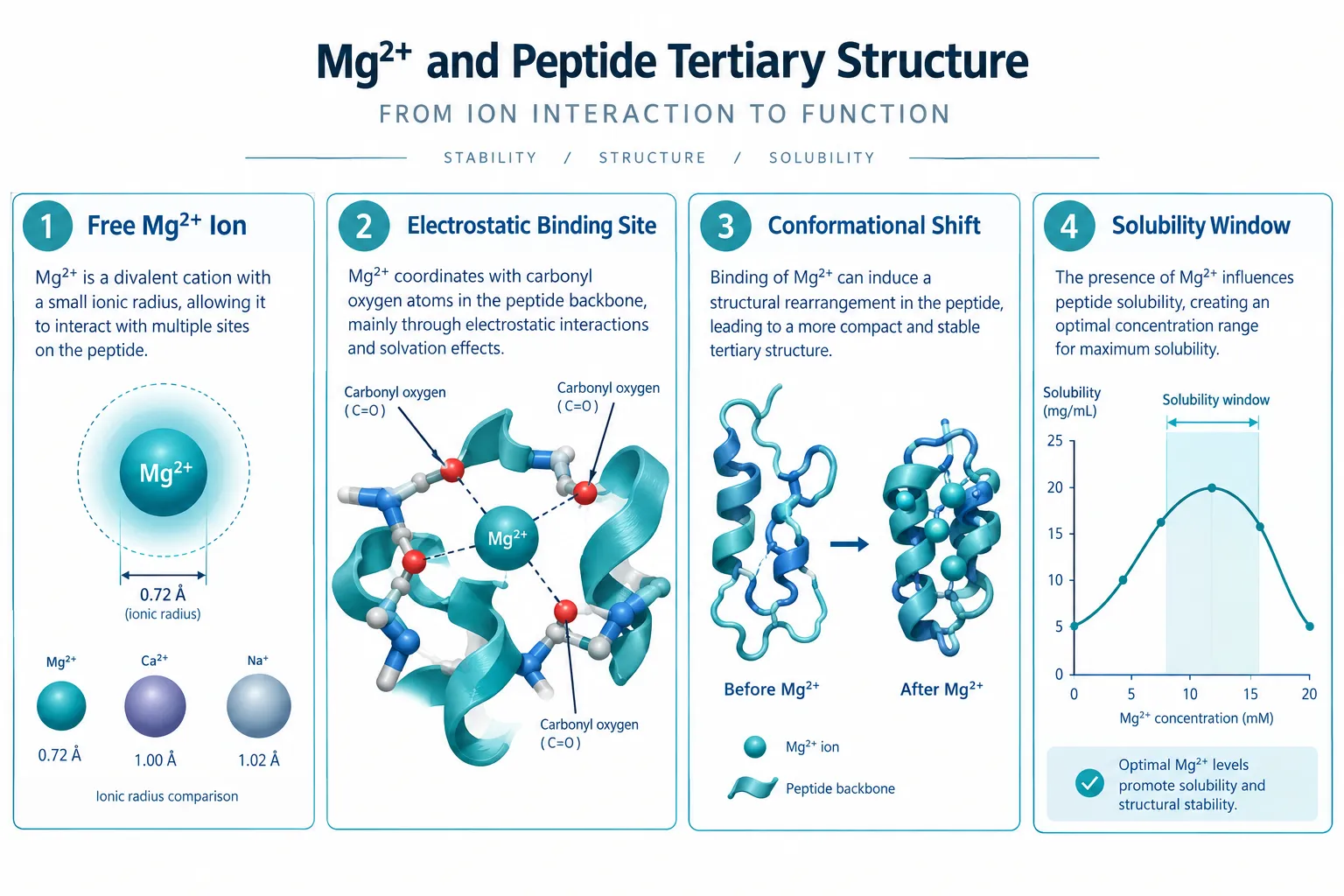
Magnesium exists in solution as a divalent cation (Mg2+), carrying two positive charges that create strong electrostatic fields around the ion. When a peptide is dissolved into a solution containing free Mg2+, those charges interact with negatively charged or polar residues along the peptide backbone, particularly carbonyl oxygens, carboxylate side chains, and certain aromatic groups.

This is not a passive relationship. Mg2+ actively reshapes the electrostatic landscape around a peptide, which in turn influences how the chain folds, how exposed hydrophobic patches become, and whether the molecule remains in stable monomeric form or begins to self-associate.

Recent mechanistic data confirm that Mg2+ enhances thermal stability across both cysteine-containing and non-cysteine peptides. The proposed mechanism involves bridging interactions between Mg2+ and multiple electronegative sites on the same peptide chain, effectively acting as a conformational clamp that resists unfolding under thermal stress. This has direct implications for peptides stored at ambient temperature during shipping or in field-use conditions.

"Ionic composition is not background noise in a reconstitution protocol, it is a primary structural variable."

For peptides with known metal-binding motifs, such as those found in antimicrobial peptide classes, Mg2+ dependence goes further. Conformational activity, the ability of the peptide to adopt its bioactive shape, has been shown to shift meaningfully based on available Mg2+ concentrations. This means that a peptide reconstituted in magnesium-depleted water may behave differently from the same peptide reconstituted in a physiologically relevant ionic environment.

Researchers working with SS-31 peptides for sale or similar mitochondria-targeted sequences should pay particular attention here, as charge-dense peptides are especially sensitive to divalent cation environments.

Reconstitution Protocol Design: Applying Magnesium Supplementation and Peptide Reconstitution Stability Principles
Reconstitution Protocol Design: Applying Magnesium Supplementation and Peptide Reconstitution Stability Principles

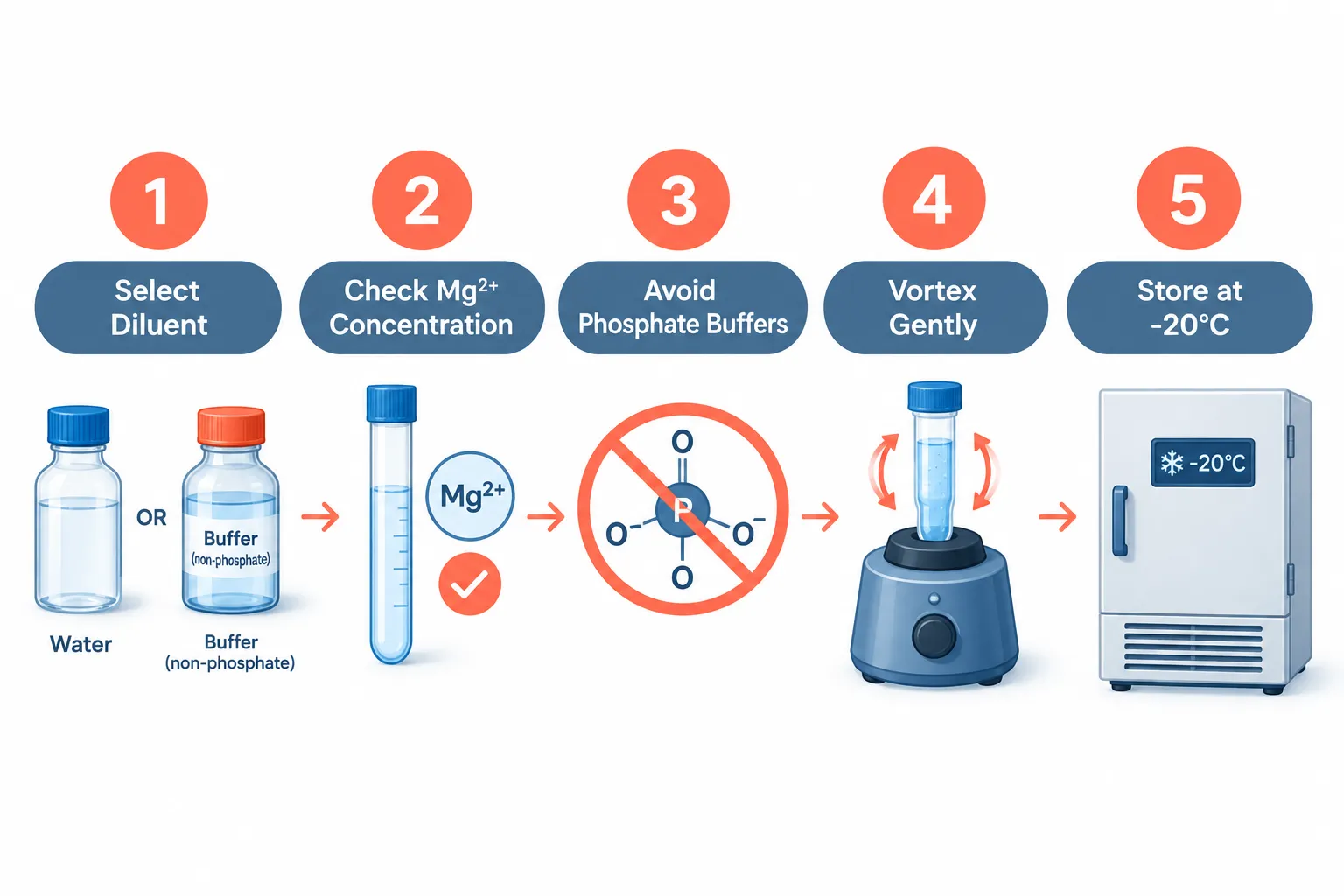
Translating ionic chemistry into a practical bench protocol requires clear decision points. The table below summarizes the most critical variables in a magnesium-aware reconstitution workflow.

Variable Recommended Approach Risk if Ignored
Diluent selection Sterile water or acetate buffer Ionic incompatibility
Buffer type Avoid phosphate buffers with Mg2+ Precipitation, loss of peptide
Mg2+ concentration 1-10 mM range for most peptides Aggregation at higher levels
pH 6.5-7.5 for most sequences Charge state shifts
Storage temperature -20C for long-term Hydrolysis, oxidation

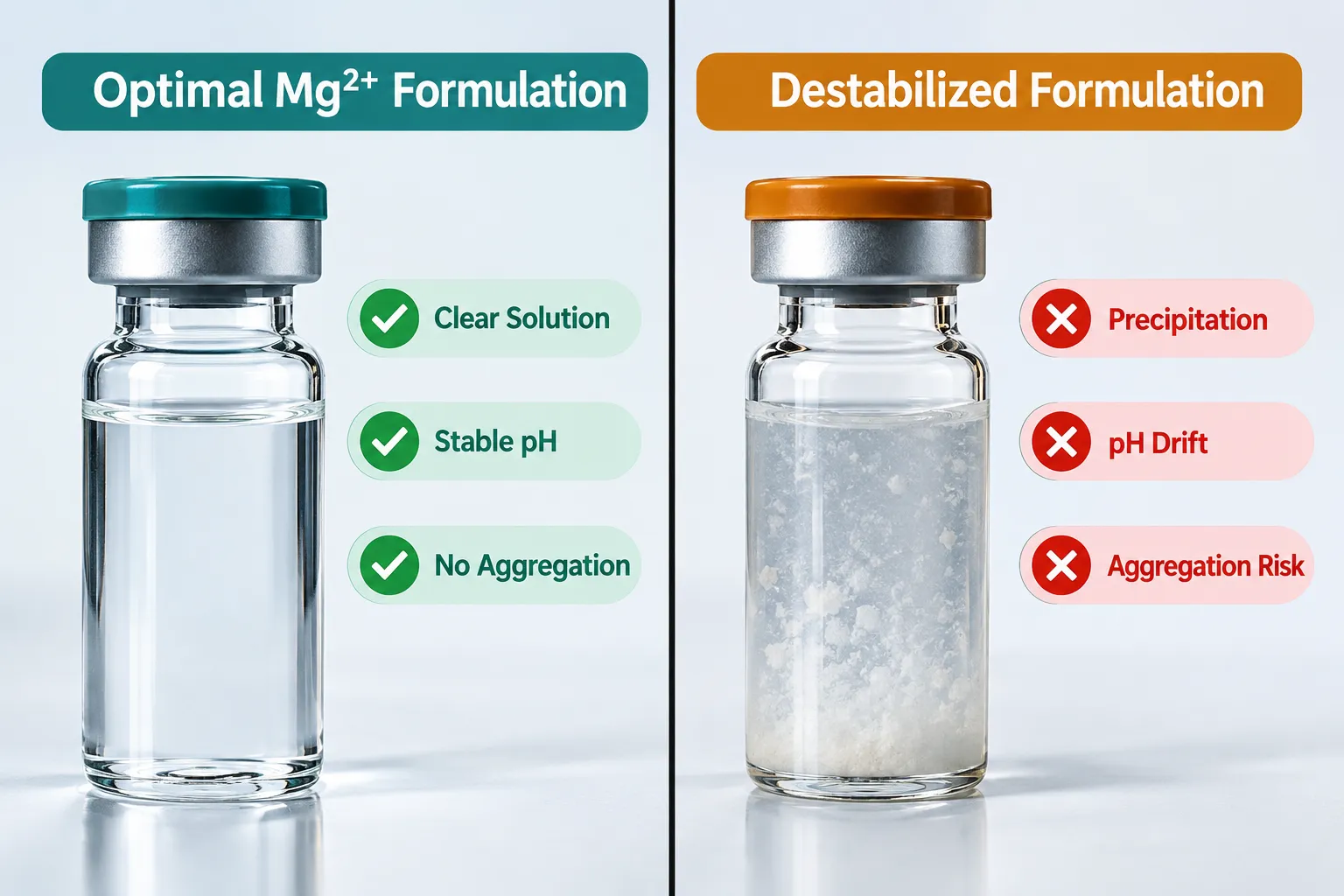
Phosphate buffers represent the most commonly cited formulation error when magnesium is present. Mg2+ reacts with phosphate ions to form insoluble magnesium phosphate salts. This precipitation removes both free magnesium from solution and can co-precipitate the peptide itself, causing catastrophic loss of usable material. Current 2026 formulation guidance is unambiguous: phosphate buffers and Mg2+ do not belong in the same reconstitution vial.

Acetate and histidine buffers are preferred alternatives. They maintain pH stability without introducing phosphate anions, preserving the free Mg2+ needed for its stabilizing role.

For those working with complex formulations such as GLP-3R 30mg Peptide GA7 or GLP-3R 30mg Peptide GA9, multi-component ionic environments add another layer of complexity. When multiple peptides or excipients share a single vial, each ionic interaction must be evaluated independently.

Concentration Thresholds and Aggregation Risk

Mg2+ as a formulation excipient follows a non-linear dose-response curve for stability. At low concentrations (below 1 mM), the cation provides minimal structural benefit. Within the 1-10 mM window, stabilizing electrostatic interactions dominate. Above 10 mM, particularly when trace contaminants are present, Mg2+ can paradoxically increase protein and peptide aggregation by screening repulsive charges between molecules, allowing them to cluster.

This aggregation-under-contamination risk is well-documented in biologics data from 2025 to 2026 and represents a practical ceiling for magnesium use in reconstitution protocols.

Ionic Interactions, Hydrogel Stability, and Emerging Formulation Strategies
Ionic Interactions, Hydrogel Stability, and Emerging Formulation Strategies

Beyond simple reconstitution, Magnesium Supplementation and Peptide Reconstitution Stability: Ionic Interactions in Solution Protocols intersects with emerging delivery formats, particularly peptide hydrogels used in wound repair and sustained-release applications.

Divalent cations including Mg2+ markedly alter the gelation behavior and mechanical properties of self-assembling peptide hydrogels. By coordinating with charged residues at gel fiber junctions, Mg2+ can either reinforce or disrupt the crosslink density depending on concentration and peptide sequence. Formulators designing depot-style peptide delivery systems must therefore validate Mg2+ concentration as part of the gelation protocol, not just the reconstitution step.

Researchers exploring wound repair peptides or GHK-Cu peptides for sale, both of which operate in ionic-rich biological environments, benefit from understanding how Mg2+ at wound sites or injection depots will interact with their chosen peptide scaffold.

Mechanistic analogies from nucleic acid aptamer research also inform this space. Mg2+ stabilizes folded aptamer structures through backbone coordination, a process structurally analogous to how it stabilizes folded peptide mimetics. This cross-disciplinary insight supports the use of Mg2+ as a deliberate excipient in DNA-peptide hybrid constructs gaining traction in 2026 research pipelines.

For cognitively active peptides delivered via alternative routes, such as those found in peptides nasal spray formats or Semax peptide preparations, the nasal mucosa presents its own ionic environment. Formulation scientists are beginning to account for endogenous magnesium concentrations in mucosal fluid when designing these delivery systems.

Timing and Synergy in Supplementation Contexts

At the practice level, a magnesium-peptide synergy timing protocol has emerged from expert consensus in 2026. The core principle: when magnesium is used as a co-supplement alongside peptide injection protocols, separating oral magnesium intake from injection timing by at least two hours reduces the likelihood that systemic magnesium fluctuations will interfere with peptide pharmacokinetics in the immediate post-injection window. This is an expert-opinion level recommendation, but it reflects growing awareness that systemic ionic status is not irrelevant to peptide behavior in vivo.

Conclusion

The relationship between divalent magnesium cations and peptide stability in solution is precise, predictable, and actionable. Formulators and researchers who treat ionic composition as a primary protocol variable, rather than background chemistry, will consistently produce more stable, more reproducible results.

Actionable next steps for 2026 practice:

  • Audit existing reconstitution protocols for phosphate buffer use and replace with acetate or histidine alternatives when Mg2+ is present.
  • Target a Mg2+ concentration of 1-10 mM for stabilizing applications, and validate the upper boundary against aggregation assays for each specific peptide.
  • For hydrogel or depot formats, run gelation validation studies across the intended Mg2+ concentration range before finalizing the formulation.
  • When combining oral magnesium supplementation with injectable peptide protocols, apply a minimum two-hour separation window as a precautionary measure.
  • Treat ionic environment as a documented, controlled variable in all stability and storage studies, not an assumption.

Mastering Magnesium Supplementation and Peptide Reconstitution Stability: Ionic Interactions in Solution Protocols is one of the highest-leverage improvements available to any researcher or formulator working with peptide-based compounds in 2026.

Tags: divalent cations, formulation protocols, ionic interactions, magnesium supplementation, mg2+ excipient, peptide hydrogel, peptide reconstitution, peptide stability
https://www.puretestedpeptides.com/wp-content/uploads/2026/09/magnesium-supplementation-and-peptide-reconstitution-stability-ionic-interaction.webp 1024 1536 https://www.puretestedpeptides.com/wp-content/uploads/2026/01/buy-peptides-online.jpg 2026-09-17 13:04:332026-09-17 13:04:33Magnesium Supplementation and Peptide Reconstitution Stability: Ionic Interactions in Solution Protocols
You might also like
Peptides and Polypeptides in Modern Research: How Molecular Size Shapes Function, Stability, and Experimental Design Peptides and Polypeptides in Modern Research: How Molecular Size Shapes Function, Stability, and Experimental Design
Epithalon Peptide Formulations: How Labs Compare Lyophilized vs Solution Stability in Telomere Research Epithalon Peptide Formulations: How Labs Compare Lyophilized vs Solution Stability in Telomere Research
PT-141 Peptide: Mechanism of Action, Research Applications, and Protocol Questions PT-141 Peptide: Mechanism of Action, Research Applications, and Protocol Questions
Phosphate Buffered Saline for Peptide Reconstitution: A Complete Research Protocol Guide Phosphate Buffered Saline for Peptide Reconstitution: A Complete Research Protocol Guide
Peptide Calculators in Research: How Labs Estimate Dosing, Concentration, and Reconstitution Peptide Calculators in Research: How Labs Estimate Dosing, Concentration, and Reconstitution
Research-Use Only Peptides: How "Peptides" Differ From Classic Small-Molecule Drugs Like Prednisone and Atorvastatin in Lab Design Research-Use Only Peptides: How “Peptides” Differ From Classic Small-Molecule Drugs Like Prednisone and Atorvastatin in Lab Design
Klow Peptide Nasal Spray: Formulation Science, Carrier Solvents, and Brain Delivery Considerations Klow Peptide Nasal Spray: Formulation Science, Carrier Solvents, and Brain Delivery Considerations
Peptide Calculators for Tesamorelin and Ipamorelin: Optimizing Reconstitution and Dosing Accuracy Peptide Calculators for Tesamorelin and Ipamorelin: Optimizing Reconstitution and Dosing Accuracy
0 replies

Leave a Reply

Want to join the discussion?
Feel free to contribute!

Leave a Reply Cancel reply

Your email address will not be published. Required fields are marked *

×

Helpful Links

  • My account
  • Cart
  • Checkout
  • Refund and Returns Policy
  • Privacy Policy
  • SMS Privacy Policy
  • Login
  • My Account
  • Logout

USA Made Lab Tested Peptides

All products are sold for research, laboratory, or analytical purposes only, and are not for human consumption


Pure Tested Peptides is a chemical supplier. Pure Tested Peptides is not a compounding / chemical compounding facility as defined under 503A of the Federal Food, Drug, and Cosmetic act. Pure Tested Peptides is not an outsourcing facility as defined under 503B of the Federal Food, Drug, and Cosmetic act.

The statements made within this website have not been evaluated by the US Food and Drug Administration. The products we offer are not intended to diagnose, treat, cure or prevent any disease.

Human/Animal Consumption Prohibited. Laboratory/In-Vitro Experimental Use Only

Link to: Best Research-Grade Hair Follicle and Tissue Compounds: Finasteride vs. GHK-Cu and Copper Peptide Formulations Link to: Best Research-Grade Hair Follicle and Tissue Compounds: Finasteride vs. GHK-Cu and Copper Peptide Formulations Best Research-Grade Hair Follicle and Tissue Compounds: Finasteride vs. GHK-Cu...Best Research-Grade Hair Follicle and Tissue Compounds: Finasteride vs. GHK-Cu and Copper Peptide Formulations Link to: Musculoskeletal Recovery Protocols: Methocarbamol Muscle Relaxants Compared to BPC-157 and TB-500 Cellular Signaling Link to: Musculoskeletal Recovery Protocols: Methocarbamol Muscle Relaxants Compared to BPC-157 and TB-500 Cellular Signaling Musculoskeletal Recovery Protocols: Methocarbamol Muscle Relaxants Compared to BPC-157 and TB-500 Cellular SignalingMusculoskeletal Recovery Protocols: Methocarbamol Muscle Relaxants Compared...
Scroll to top Scroll to top Scroll to top