Call or Text 727-513-9780
  • Shopping Cart Shopping Cart
    0Shopping Cart
Pure Tested Peptides | America's most trusted Peptides for sale online
  • Peptides for sale
    • Oral Peptides for sale
      • Peptide Capsules for sale
      • BPC 157 Capsules 1000mcg
      • SLU-PP-332 Capsules | 1000 mcg
      • 5-Amino-1MQ 50mg Capsules
      • Tesofensine 500mcg
    • All Peptides for sale
    • Peptide Sprays
      • BPC 157 Nasal Spray Kit
      • BPC-157 TB500 Nasal Spray Kit
      • Semax Nasal Spray 10mg
      • Selank – Nasal Spray Kit – 10mg
      • Epithalon 50MG Nasal Spray Kit
      • Ipamorelin 10mg Nasal Spray
      • Klow Nasal Spray (BPC-157 + TB-500 + GHK-Cu + KPV) | 80mg
      • Hulk Nasal Spray Tesa / Ipa Blend 6/3 MG
      • Klow Nasal Spray
      • NAD + 500 mg Nasal Spray
      • PT-141 Nasal Spray Kit
    • GHRH Peptides
      • Ipa Peptides
      • CJC-1295 Peptides
        • CJC-1295 with DAC 5 mg
        • CJC-1295 without DAC 5 mg
        • CJC-1295 Ipa 10mg
      • Tesa Peptides
        • Tesa Peptide
        • Tesa 20 mg
    • GHK-Cu Peptides
      • All GHK-Cu Peptides
      • GHK-Cu 100mg
      • KLOW Peptide Blend – Buy KLOW blend online
    • BPC Peptides
      • All BPC Peptides
      • BPC-157
      • BPC-157 TB-500
      • BPC 157 capsules 1000mcg
    • SLU-PP-332 Peptides
      • All SLU-PP-332 Peptides
      • SLU-PP-332 5mg
    • GLP3 Peptides
    • PT-141 Peptides
      • PT-141 Peptides for sale
      • PT-141 10mg
      • PT-141 Nasal Spray
    • CAG Peptides
      • Lipo-C Peptide Blend
      • CAG 5mg
      • CAG 10mg
    • MOTS-C Peptides
      • MOTS-C Peptides for sale
      • MOTS-c peptide
      • MOTS-c 10mg *6 pack*
    • 5 Amino 1MQ Peptides
      • 5 Amino 1MQ Peptides for sale
      • 5-Amino-1MQ 50mg Capsules
      • 5-Amino-1MQ 5mg
    • Epithalon Peptides
      • Epithalon Peptides for sale
      • Epithalon 10mg
      • Epithalon 50mg
  • Shop
    • GLPs
      • 5-Amino-1MQ 50mg Capsules
      • 5-Amino-1MQ 5mg
      • L-Carnitine 500mg/ml
      • Tesofensine 500mcg
      • SLU-PP-332 5mg
      • MOTS-c 10mg *6 pack*
    • Epithalon & BPC Peptides
      • Epithalon 10mg
      • Epithalon 50mg
      • BPC-157
      • BPC 157 capsules 1000mcg
      • BPC-157 TB-500
      • BPC-157 TB500 Nasal Spray Kit
      • BPC 157 Nasal Spray Kit
    • BPC TB-500 & NAD+ Peptides
      • NAD+ 500 mg
      • KLOW Peptide Blend – Buy KLOW blend online
      • GLOW Peptide Blend
      • TB 500 5mg
      • BPC 157 capsules 1000mcg – Supplement
      • BPC 157 Nasal Spray Kit
      • BPC-157
      • BPC-157 TB500 Nasal Spray Kit
      • BPC-157 TB-500
      • BPC 157 capsules 1000mcg
    • LL-37 Peptide
      • LL-37 10 mg
    • MOTS-C & Selank
      • MOTS-c peptide
      • Selank 10mg
    • GHK Peptides
      • GHK-Cu 100mg
      • GLOW Peptide Blend
      • KLOW Peptide Blend – Buy KLOW blend online
  • COAs
  • Wholesale
    • Wholesale Peptides for sale
  • PTP FAQ
  • Affiliates
    • Selank Peptide: Advanced Pharmacological Mechanisms Underlying Its Anxiolytic and Nootropic Effects in Research
      • 5-Amino-1MQ Peptide: Detailed Mechanisms of NNMT Inhibition and Its Impact on Cellular Metabolism Research
        • MOTS-C Peptide: Unraveling Its Role in Mitochondrial Dynamics and Energy Metabolism Research
          • Epithalon Peptide and Telomerase Regulation: Investigating Its Impact on Cellular Senescence and Lifespan Research Models
            • GLP2-T vs GLP2 Tirz Peptide: Understanding the Naming, Mechanistic Nuances, and Research Implications for Gut Health
      • Peptides and Polypeptides in Modern Pharmacology: What Research on Metoprolol, Prednisone, and Amlodipine Reveals
        • Polypeptide Peptides vs NSAIDs: What Naproxen and Diclofenac Teach Tissue-Repair Researchers About BPC‑157 and TB‑500
          • Peptides and Polypeptides in Endocrine Pharmacology: How GLP-1, GLP-2, and GLP-3 Retatrutide Differ From Classic Drugs Like Prednisone and Amlodipine
          • 5‑Amino‑1MQ Peptide and NNMT Inhibition: How It Compares With Statins Like Atorvastatin in Adipose and Lipid Metabolism Research
      • Enclomiphene, Estrogen Receptor Signaling, and Luteinizing Phase Biology: What Hormone Researchers Should Measure
        • Mesenchymal Stem Cells, BPC‑157, and GHK‑Cu: How Tissue Repair Peptides Compare With Classic NSAIDs Like Naproxen in Injury Models
          • Peptide Calculator Use Cases Beyond Growth Hormone: Working Through GLP‑3 Retatrutide, MOTS‑c, and BPC‑157 Research Dosing
        • Polypeptide Peptides in Endocrine and Metabolic Pharmacology: Lessons From Amlodipine, Prednisone, and Metoprolol
        • Peptides Calculator for Advanced Blends: Worked Examples for Tesamorelin, CJC‑1295, and Ipamorelin Stacks
          • Peptides and Polypeptides in Human Physiology: How Molecular Size Shapes Research Applications
            • Selank Peptide: Advanced Pharmacological Mechanisms Underlying Its Anxiolytic and Nootropic Effects in Research
          • 5-Amino-1MQ Peptide: Detailed Mechanisms of NNMT Inhibition and Its Impact on Cellular Metabolism Research
            • MOTS-C Peptide: Unraveling Its Role in Mitochondrial Dynamics and Energy Metabolism Research
              • Epithalon Peptide and Telomerase Regulation: Investigating Its Impact on Cellular Senescence and Lifespan Research Models
                • GLP2-T vs GLP2 Tirz Peptide: Understanding the Naming, Mechanistic Nuances, and Research Implications for Gut Health
                  • Peptides and Polypeptides in Endocrine Pharmacology: How GLP-1, GLP-2, and GLP-3 Retatrutide Differ From Classic Drugs Like Prednisone and Amlodipine
                    • Polypeptide Peptides vs NSAIDs: What Naproxen and Diclofenac Teach Tissue-Repair Researchers About BPC‑157 and TB‑500
                      • Peptides and Polypeptides in Modern Pharmacology: What Research on Metoprolol, Prednisone, and Amlodipine Reveals
                        • 5‑Amino‑1MQ Peptide and NNMT Inhibition: How It Compares With Statins Like Atorvastatin in Adipose and Lipid Metabolism Research
                        • Enclomiphene, Estrogen Receptor Signaling, and Luteinizing Phase Biology: What Hormone Researchers Should Measure
                        • Mesenchymal Stem Cells, BPC‑157, and GHK‑Cu: How Tissue Repair Peptides Compare With Classic NSAIDs Like Naproxen in Injury Models
                        • Peptide Calculator Use Cases Beyond Growth Hormone: Working Through GLP‑3 Retatrutide, MOTS‑c, and BPC‑157 Research Dosing
                        • Polypeptide Peptides in Endocrine and Metabolic Pharmacology: Lessons From Amlodipine, Prednisone, and Metoprolol
                        • Peptides Calculator for Advanced Blends: Worked Examples for Tesamorelin, CJC‑1295, and Ipamorelin Stacks
                        • Peptides and Polypeptides in Human Physiology: How Molecular Size Shapes Research Applications
                        • Selank Peptide: Advanced Pharmacological Mechanisms Underlying Its Anxiolytic and Nootropic Effects in Research
                        • MOTS-C Peptide: Unraveling Its Role in Mitochondrial Dynamics and Energy Metabolism Research
                        • Peptides and Polypeptides in Modern Pharmacology: What Research on Metoprolol, Prednisone, and Amlodipine Reveals
                        • Peptides and Polypeptides in Endocrine Pharmacology: How GLP-1, GLP-2, and GLP-3 Retatrutide Differ From Classic Drugs Like Prednisone and Amlodipine
                        • 5-Amino-1MQ Peptide: Detailed Mechanisms of NNMT Inhibition and Its Impact on Cellular Metabolism Research
                        • Mesenchymal Stem Cells, BPC‑157, and GHK‑Cu: How Tissue Repair Peptides Compare With Classic NSAIDs Like Naproxen in Injury Models
                        • Peptide Calculator Use Cases Beyond Growth Hormone: Working Through GLP‑3 Retatrutide, MOTS‑c, and BPC‑157 Research Dosing
                        • GLP2-T vs GLP2 Tirz Peptide: Understanding the Naming, Mechanistic Nuances, and Research Implications for Gut Health
                        • Polypeptide Peptides in Endocrine and Metabolic Pharmacology: Lessons From Amlodipine, Prednisone, and Metoprolol
                        • Polypeptide Peptides vs NSAIDs: What Naproxen and Diclofenac Teach Tissue-Repair Researchers About BPC‑157 and TB‑500
                        • Peptides and Polypeptides in Human Physiology: How Molecular Size Shapes Research Applications
                        • Peptides Calculator for Advanced Blends: Worked Examples for Tesamorelin, CJC‑1295, and Ipamorelin Stacks
                        • 5‑Amino‑1MQ Peptide and NNMT Inhibition: How It Compares With Statins Like Atorvastatin in Adipose and Lipid Metabolism Research
                        • Enclomiphene, Estrogen Receptor Signaling, and Luteinizing Phase Biology: What Hormone Researchers Should Measure
                        • Epithalon Peptide and Telomerase Regulation: Investigating Its Impact on Cellular Senescence and Lifespan Research Models
                        • Best research protocol Klow blend
                        • best time to take BPC-157
                        • best time to take DSIP (Delta Sleep Inducing Peptide)
                        • best time to take CJC-1295
                        • best time to take AOD-9604
                        • best time to take Follistatin 344
                        • best time to take Ipamorelin
                        • best time to take MK-677 (Ibutamoren)
                        • best time to take Ligandrol (LGD-4033) — research compound
                        • best time to take Ostarine (MK-2866) — research compound
                        • best time to take GHK-CU
                        • best time to take TB-500
                        • best time to take MOTS-c
                        • best time to take Semax
                        • best time to take RAD-140 (Testolone) — research compound
                        • best time to take Thymosin Alpha-1
                        • best time to take PEG-MGF
                        • Biolife Plasma, Octapharma Plasma, and Research Peptides: How Plasma Donation Labs Differ From Peptide Suppliers
                        • best time to take YK-11 — research compound
                        • best time to take PT-141 (Bremelanotide)
                        • Best research protocol Klow blend
                        • 5-Amino-1MQ and MOTS-C Synergy: Metabolic Signaling, Mitochondria, and Research Design
                        • BPC-157 and TB-500: Investigating Their Combined Effects on Angiogenesis and Cellular Migration in Tissue Repair Models
                        • BPC-157 Peptide: Gut Barrier Function, Inflammation, and Tissue-Recovery Research
                        • 5‑Amino‑1MQ and MOTS‑c Synergy in Metabolic Research: Designing NNMT and Mitochondrial Biogenesis Stacks
                        • CJC-1295 with DAC vs. Without DAC: Half-Life, Release Kinetics, and Research Implications
                        • CJC‑1295 with DAC vs. Without DAC: Expanding on Half‑Life Differences Using Tesamorelin and Ipamorelin Blend Case Studies
                        • Collagen Biology and Copper‑Binding Peptides: How GHK‑Cu, Glow Blend, and Klow Blend Interact with Skin and Connective Tissue
                        • Collagen Biology and Regenerative Peptides: How GHK‑Cu, Glow Blend, and Klow Blend Affect Extracellular Matrix Research
                    • DNA, Telomeres, and Longevity Peptides: Positioning Epithalon and MOTS‑c in Genetic Aging Research
                      • Enclomiphene Citrate: serm Mechanism, Testosterone Research, and Stack Compatibility
                        • Enclomiphene vs Enclomiphene Citrate: Formulation, Bioavailability, and Research Distinctions
                        • Epithalon Peptide Research: Telomerase Activation, Aging, and Pineal Gland Function
                        • Estrogen Receptor Signaling and Enclomiphene: How Selective Modulators Compare with Classic Polypeptide Hormones
                        • GHK-Cu Peptide: Advanced Mechanisms in Extracellular Matrix Remodeling and Wound Healing Research
                        • GHK-Cu Peptide: Collagen Synthesis, Wound Repair, and Skin-Barrier Research Models
                        • GLP-1 vs GLP-3 vs GLP-2: Peptide Classification and Research Applications
                        • GLP-2 Peptide Research Guide: Gut Barrier Function, Nutrient Absorption, and Intestinal Recovery Models
                        • GLP-3 Retatrutide vs. GLP-1 Drugs: What Triple-Agonist Biology Changes in Research Models
                        • Ipamorelin and Tesamorelin Combination: Synergistic GH Secretagogue Research and Dosing Protocols
                        • GLP2 Tirz Peptide: What It Is, Why the Name Exists, and How Researchers Should Interpret It
                        • Klow Blend Peptide Nasal Spray: What the Formulation Is Trying to Do in Cognitive Research
                        • Mitochondria, NNMT Inhibition, and Peptide Modulators: Where MOTS‑c and 5‑Amino‑1MQ Fit in Cellular Energy Research
                        • MOTS-c Peptide: Mitochondrial Function, Energy Metabolism, and What Researchers Measure
                        • MOTS-c vs. 5-Amino-1MQ: Which Metabolic Research Questions Each Compound Actually Answers
                        • Nasal Spray Peptides: Bioavailability, Administration, and Semax/Selank Research Applications
                        • PT-141 Peptide Research: Mechanism of Action and Melanocortin Receptor Signaling
                        • Retatrutide for Research: Mechanism, Structure, and GLP-1/GLP-3 Dual Action
                        • Retatrutide for Obesity and Type 2 Diabetes: What the Latest Trial Data Suggest
                        • Tesofensine Peptide Research: Mechanism, Appetite Suppression, and Neuropeptide Y Pathways
  • Contact
    • Contact Customer Service
    • Text Customer Support
  • About US
  • Shop all peptides
  • Affiliate Program
    • Affiliate Signup
  • Login / Register Login / Register Page Link Login / Register Page Link
  • Click to open the search input field Click to open the search input field Search
  • Menu Menu
GHK-Cu and Glow Blend in Keratinocyte Models: Separating Copper Signaling From Multi-Peptide Formulation Effects

GHK-Cu and Glow Blend in Keratinocyte Models: Separating Copper Signaling From Multi-Peptide Formulation Effects

October 23, 2026/0 Comments/in Uncategorized/by

Keratinocytes make up roughly 90 percent of the human epidermis, yet most peptide research in dermal biology focuses on fibroblasts. That oversight matters when evaluating GHK-Cu and Glow Blend in keratinocyte models: separating copper signaling from multi-peptide formulation effects requires a different set of assays, different readouts, and a much stricter eye for what the data actually prove.

The Glow Blend is a three-peptide research formulation containing GHK-Cu 50 mg, BPC-157 10 mg, and TB-500 10 mg in a single 70 mg vial. Each component carries its own mechanistic story, but no published study has yet tested all three together in a controlled keratinocyte model. Understanding what is known, and what is being extrapolated, is essential before drawing any conclusions about the blend's epidermal effects.

Key Takeaways

  • GHK-Cu has the strongest keratinocyte-specific evidence, including biopsy-confirmed proliferation data and at least one small randomized controlled trial in humans.
  • The Glow Blend (GHK-Cu 50 mg, BPC-157 10 mg, TB-500 10 mg) has no published multi-peptide keratinocyte study; all blend claims are extrapolated from single-peptide data.
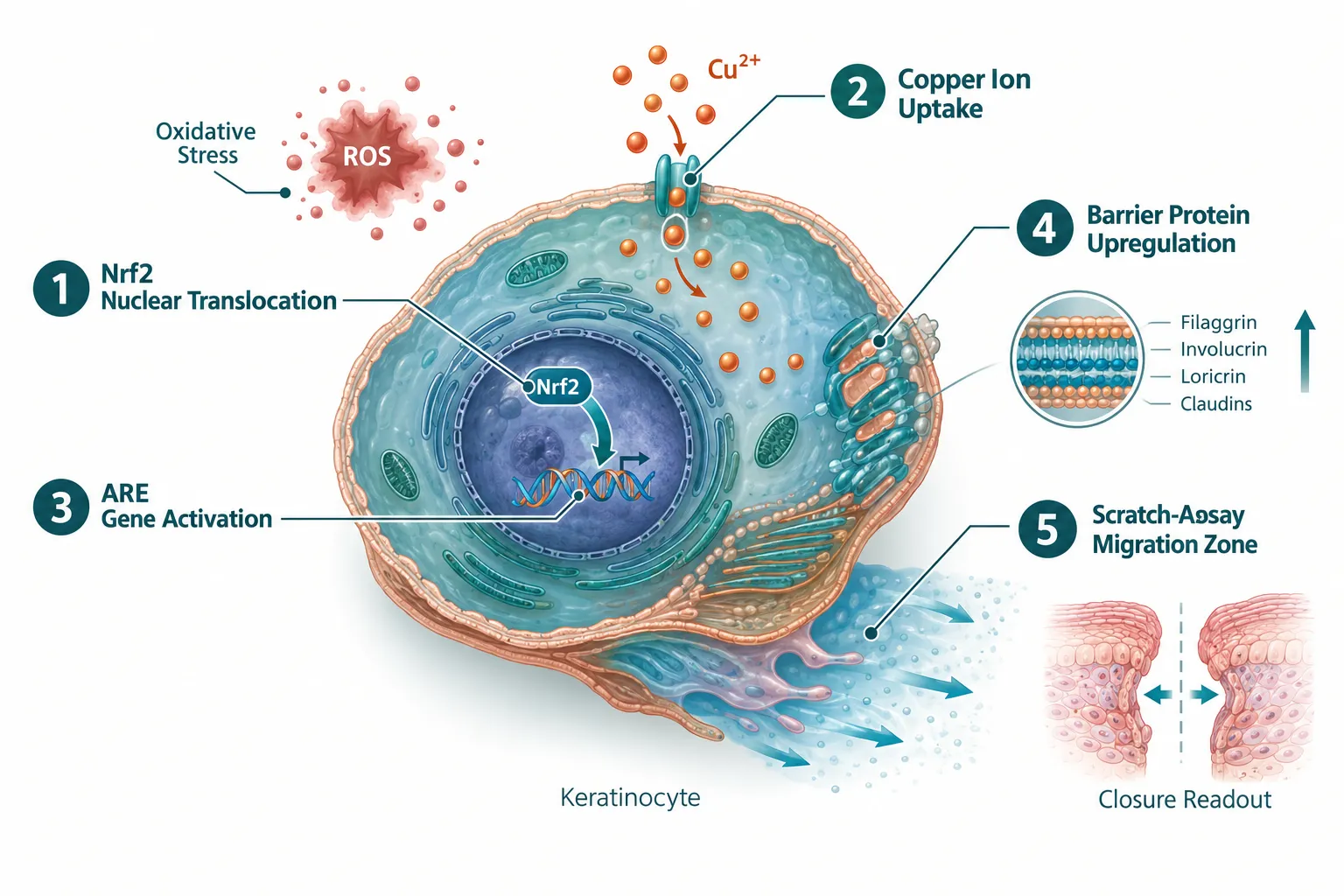
  • Copper signaling through GHK-Cu drives Nrf2 nuclear translocation, antioxidant response element gene expression, and barrier protein production in epidermal keratinocyte assays.
  • BPC-157 and TB-500 primarily target vascularization and actin-mediated migration respectively, pathways that are secondary rather than primary in keratinocyte monolayer models.
  • Research suppliers explicitly frame the Glow Blend as a hypothesis-generating tool for studying pathway complementarity, not as a validated synergistic protocol.

How Copper Signaling Works in Keratinocyte Assays
How Copper Signaling Works in Keratinocyte Assays

GHK-Cu (glycyl-L-histidyl-L-lysine copper complex) is the dominant copper-signaling agent in the Glow Blend, and keratinocyte assays are where its evidence base is most clearly defined. In human epidermal keratinocyte (HEK) monolayer cultures and wound-healing scratch assays, GHK-Cu has been shown to modulate the expression of thousands of genes, stimulating type I and type III collagen, elastin, and glycosaminoglycan production. More relevant to the epidermis specifically, biopsy data from a study of 67 women aged 50 to 59 using a GHK-Cu cream showed strong keratinocyte proliferation alongside improvements in laxity, clarity, and firmness.

The mechanistic pathway most studied in keratinocyte-specific models involves Nrf2 nuclear translocation and activation of antioxidant response element (ARE) gene expression. Standard HEK cultures and scratch-assay protocols allow researchers to quantify:

  • Migration rate, how fast keratinocytes close a defined wound gap
  • Oxidative stress markers, reactive oxygen species levels before and after copper complex exposure
  • Barrier protein expression, genes associated with tight junction and cornified envelope integrity
  • Proliferation index, cell count and division rate as direct readouts of copper-driven signaling

This set of readouts is distinct from the fibroblast-matrix assays that dominate most GHK-Cu literature. Separating these epidermal endpoints from fibroblast collagen endpoints is central to understanding what "copper signaling" actually does at the skin's outermost functional layer.

A 2024 study on GHK-Cu-functionalized silver nanoparticles also reported accelerated re-epithelialization and preserved keratinocyte viability in a rat full-thickness wound model, adding further support for copper-mediated repair signaling that operates independently of any multi-peptide blend. Researchers sourcing materials for these models should review the GHK-Cu peptide purchase and copper peptide research sourcing guide before designing experiments.


Parsing Each Peptide's Role: What the Glow Blend Components Do in Epidermal Models
Parsing Each Peptide's Role: What the Glow Blend Components Do in Epidermal Models

When evaluating GHK-Cu and Glow Blend in keratinocyte models: separating copper signaling from multi-peptide formulation effects depends on understanding where BPC-157 and TB-500 fit, and where they do not, in the epidermal context.

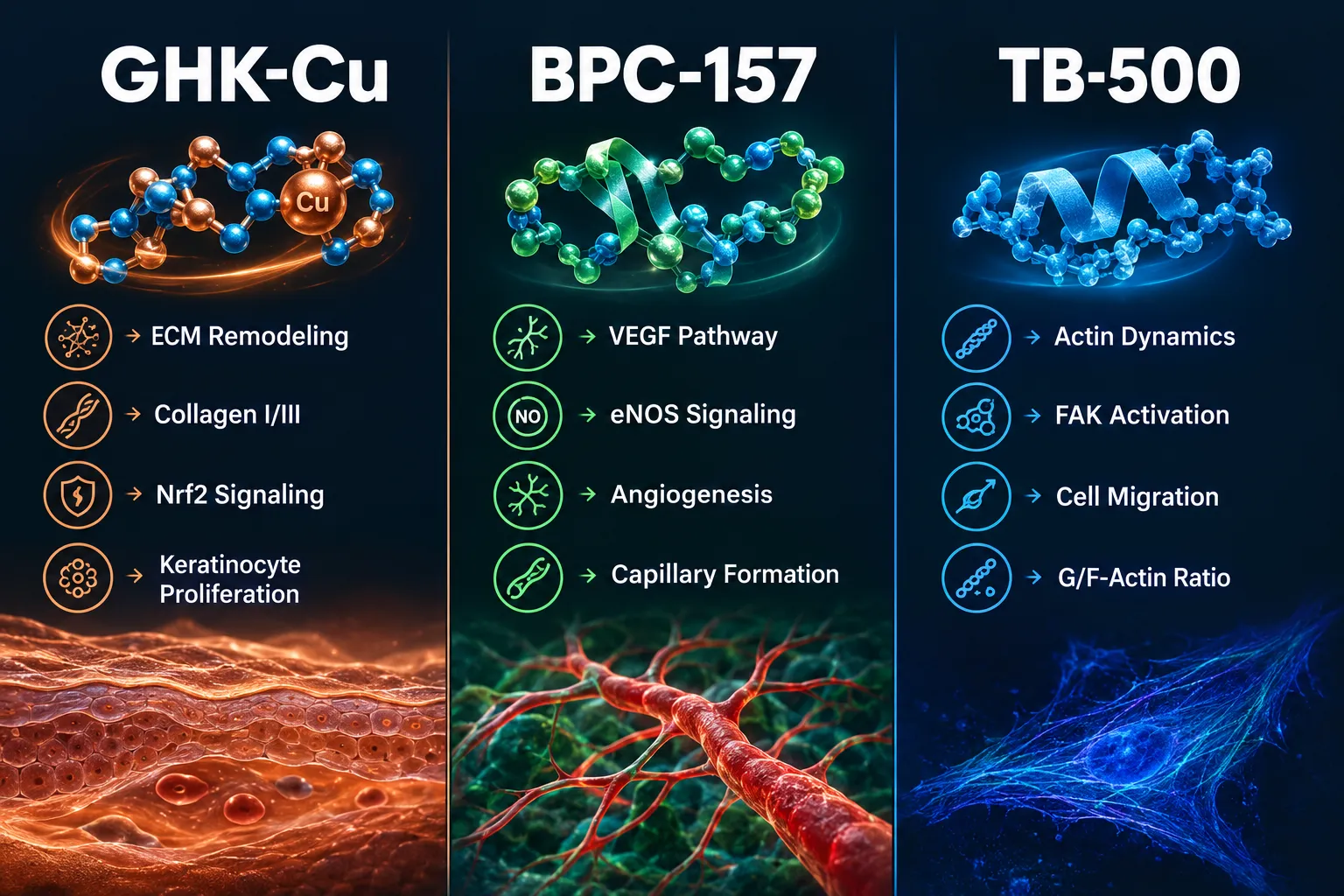
GHK-Cu functions primarily as an extracellular matrix remodeler and gene expression driver. In keratinocyte-rich models, its copper-dependent activity governs ECM remodeling and barrier gene upregulation.

BPC-157 promotes angiogenesis through VEGF and eNOS signaling pathways and drives new dermal capillary formation. These effects are more relevant to the dermis and subdermal tissue than to the epidermis itself. Keratinocyte monolayers, which lack vasculature, will show limited response to BPC-157's primary mechanism. For context on BPC-157 documentation standards in preclinical work, the BPC-157 core peptides documentation and first research guide provides a useful framework.

TB-500, the thymosin β4 fragment, regulates G/F-actin dynamics and drives keratinocyte, endothelial, and fibroblast migration. This is one area where TB-500 does have direct keratinocyte relevance: actin polymerization is central to scratch-assay closure. However, when BPC-157 and TB-500 were combined in a 2026 rat Achilles-tendon model, the combination did not outperform either peptide alone, a result that should temper assumptions about synergy in any multi-peptide context.

Research note: The Glow Blend’s three components are described as targeting “non-overlapping repair pathways”, but non-overlapping does not automatically mean additive. In keratinocyte models, pathway complementarity must be measured, not assumed.
Peptide Primary Mechanism Keratinocyte Relevance
GHK-Cu ECM remodeling, Nrf2/ARE gene expression High, direct proliferation and barrier data
BPC-157 VEGF/eNOS angiogenesis Low-to-moderate, no vasculature in monolayer
TB-500 G/F-actin dynamics, migration Moderate, scratch-assay closure readouts

Protocols seeking to isolate GHK-Cu's keratinocyte effects should run single-peptide controls before testing any blend. Researchers can also review comparable quality-control workflows in the TB-500 buy controlled experimental models and QC workflow resource.


Evidence Gaps and the Preclinical Status of Multi-Peptide Formulation Effects
Evidence Gaps and the Preclinical Status of Multi-Peptide Formulation Effects

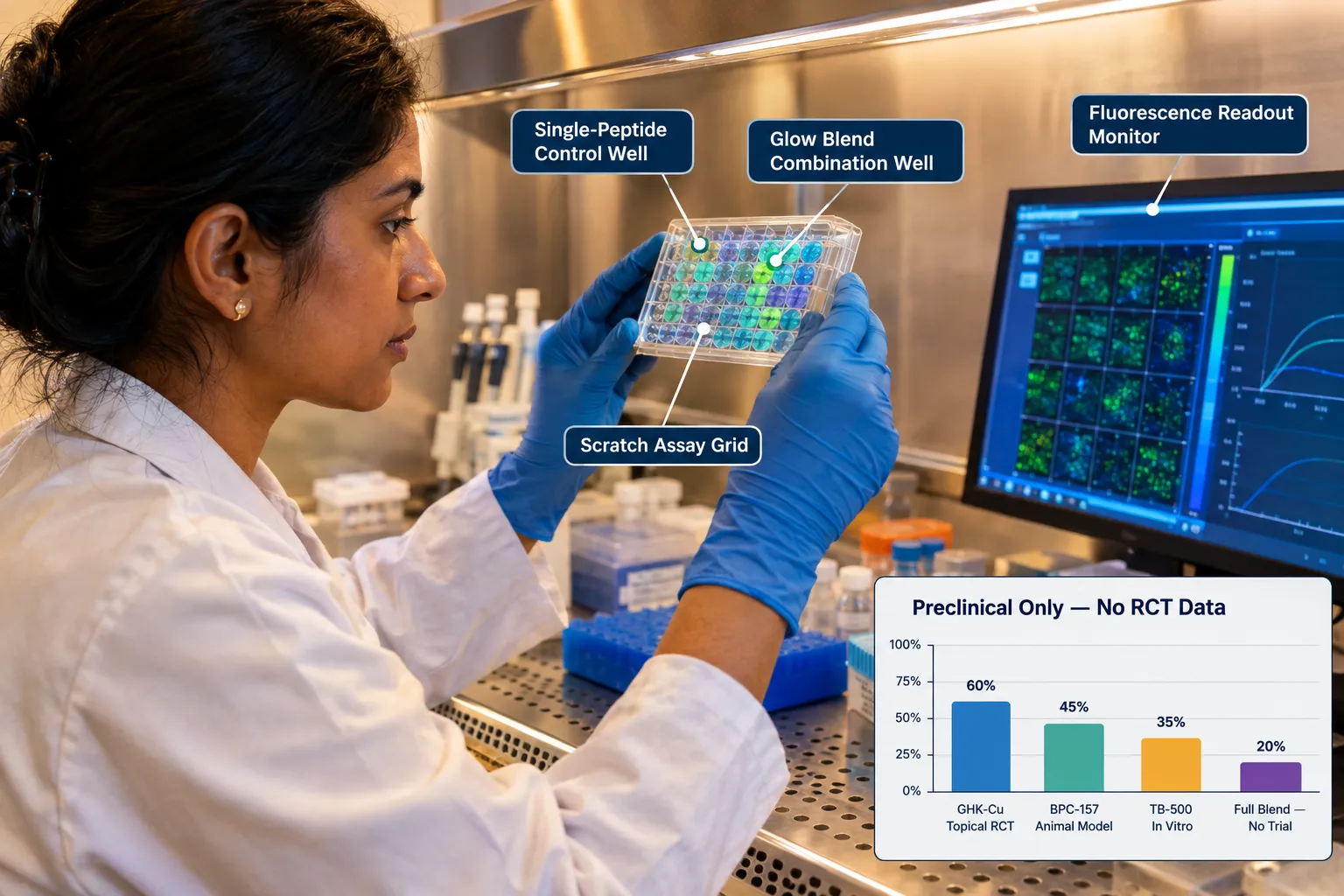
The most important point in any discussion of GHK-Cu and Glow Blend in keratinocyte models: separating copper signaling from multi-peptide formulation effects is this, the blend has never been tested as a unit in a published keratinocyte study. Every claim about how the three peptides work together in epidermal tissue is an extrapolation from single-peptide preclinical data.

GHK-Cu alone does have the highest evidence tier among the three components in skin contexts. There is at least one small randomized controlled trial (CO2-laser-resurfaced skin, n=13) showing improved patient-rated skin quality (P=0.04), though blinded assessor ratings showed no significant difference in redness or wrinkles versus control. This makes GHK-Cu's topical human evidence notable compared to the purely preclinical status of BPC-157 and TB-500 in skin applications.

The Glow Blend and related formulations such as KLOW (combining GHK-Cu with KPV) are currently supplied as research-grade materials. Published safety data for all three Glow components come from animal models, in vitro studies, or topical human applications of GHK-Cu alone. Long-term systemic safety of injected multi-peptide combinations is essentially uncharacterized. Research suppliers consistently emphasize that the blend is intended for in vitro or animal use and is not approved for human injection. For researchers comparing suppliers before sourcing blend components, the peptide supplier comparisons guide interpreting PeptideTech and PeptideSC is a practical reference. Broader guidance on sourcing is also available at where to buy peptides.

Critical gaps that future keratinocyte studies should address:

  1. Does TB-500 enhance GHK-Cu-driven scratch-assay closure, or does it operate redundantly?
  2. Does BPC-157 contribute measurable readouts in avascular epidermal monolayers?
  3. Are copper availability and ARE activation affected by the presence of BPC-157 or TB-500 at physiological concentrations?
  4. Do any of the three peptides interfere with each other's receptor binding or intracellular signaling at the concentrations used in blend formulations?

Until these questions are answered with controlled keratinocyte data, the Glow Blend should be treated as a hypothesis-generating platform rather than a validated synergistic protocol.


Conclusion

Keratinocyte models give researchers a more direct window into epidermal biology than fibroblast systems, and GHK-Cu's copper signaling record in those models is the strongest element of the Glow Blend's evidence base. Nrf2 activation, barrier protein expression, proliferation indices, and scratch-assay migration rates all offer concrete, measurable readouts that can isolate copper-dependent effects from the noise of a multi-peptide formulation.

Actionable next steps for researchers:

  • Design single-peptide keratinocyte controls before introducing the full Glow Blend to any assay.
  • Select readouts specific to the epidermis: barrier protein expression, oxidative stress markers, proliferation, and scratch-closure rate rather than collagen deposition alone.
  • Apply the tendon-model lesson, combination did not outperform single agents, and treat synergy as a hypothesis requiring proof, not a default assumption.
  • Source research-grade materials from documented, third-party-tested suppliers and maintain strict QC records throughout experimental design.
  • Avoid extrapolating preclinical keratinocyte findings to clinical or injectable contexts without formal pharmacokinetic, toxicity, and interaction data.

The science of copper signaling in skin is well-grounded. The science of multi-peptide formulation effects in keratinocyte-specific models is, as of 2026, still an open question worth answering rigorously.

Tags: bpc-157, copper peptide research, epidermal biology, ghk-cu, glow blend, keratinocyte models, multi-peptide formulation, tb-500
https://www.puretestedpeptides.com/wp-content/uploads/2026/10/ghk-cu-and-glow-blend-in-keratinocyte-models-separating-copper-signaling-from-mu.webp 1024 1536 https://www.puretestedpeptides.com/wp-content/uploads/2026/01/buy-peptides-online.jpg 2026-10-23 13:05:022026-10-23 13:05:02GHK-Cu and Glow Blend in Keratinocyte Models: Separating Copper Signaling From Multi-Peptide Formulation Effects
You might also like
Collagen, GHK-Cu, and Glow Blend: How Classic Collagen Biology Intersects With Copper Peptide Research Collagen, GHK-Cu, and Glow Blend: How Classic Collagen Biology Intersects With Copper Peptide Research
Klow Blend and Glow Blend Peptides: Comparing Skin-Focused Peptide Formulations in Research Settings Klow Blend and Glow Blend Peptides: Comparing Skin-Focused Peptide Formulations in Research Settings
Mesenchymal Stem Cells, Collagen, and Copper Peptides: How GHK-Cu and Glow Blend Are Used in Regenerative Skin and Tissue Research Mesenchymal Stem Cells, Collagen, and Copper Peptides: How GHK-Cu and Glow Blend Are Used in Regenerative Skin and Tissue Research
Peptides and Polypeptides in Modern Research: How Molecular Size Shapes Function, Stability, and Experimental Design Peptides and Polypeptides in Modern Research: How Molecular Size Shapes Function, Stability, and Experimental Design
GHK-Cu, Glow Blend, and Klow Blend: Choosing Skin-Model Endpoints for Matrix Remodeling Research GHK-Cu, Glow Blend, and Klow Blend: Choosing Skin-Model Endpoints for Matrix Remodeling Research
What Is GHK-Cu? Copper-Dependent Matrix Remodeling and Fibroblast, Keratinocyte Crosstalk in Research Models What Is GHK-Cu? Copper-Dependent Matrix Remodeling and Fibroblast, Keratinocyte Crosstalk in Research Models
Glow Blend vs Klow Blend Peptides: Ingredient Comparison and Research Applications Glow Blend vs Klow Blend Peptides: Ingredient Comparison and Research Applications
Klow Blend Peptide: Investigating Its Unique Formulation and Research Applications for Wellness Studies Klow Blend Peptide: Investigating Its Unique Formulation and Research Applications for Wellness Studies
0 replies

Leave a Reply

Want to join the discussion?
Feel free to contribute!

Leave a Reply Cancel reply

Your email address will not be published. Required fields are marked *

×

Helpful Links

  • My account
  • Cart
  • Checkout
  • Refund and Returns Policy
  • Privacy Policy
  • SMS Privacy Policy
  • Login
  • My Account
  • Logout

USA Made Lab Tested Peptides

All products are sold for research, laboratory, or analytical purposes only, and are not for human consumption


Pure Tested Peptides is a chemical supplier. Pure Tested Peptides is not a compounding / chemical compounding facility as defined under 503A of the Federal Food, Drug, and Cosmetic act. Pure Tested Peptides is not an outsourcing facility as defined under 503B of the Federal Food, Drug, and Cosmetic act.

The statements made within this website have not been evaluated by the US Food and Drug Administration. The products we offer are not intended to diagnose, treat, cure or prevent any disease.

Human/Animal Consumption Prohibited. Laboratory/In-Vitro Experimental Use Only

Link to: MOTS-c and Slupp332 in Skeletal-Muscle Regeneration Models: Mitochondrial Flux, AMPK Readouts, and Fiber-Type Controls Link to: MOTS-c and Slupp332 in Skeletal-Muscle Regeneration Models: Mitochondrial Flux, AMPK Readouts, and Fiber-Type Controls MOTS-c and Slupp332 in Skeletal-Muscle Regeneration Models: Mitochondrial Flux,...MOTS-c and Slupp332 in Skeletal-Muscle Regeneration Models: Mitochondrial Flux, AMPK Readouts, and Fiber-Type Controls Link to: GLP-1 Receptor Agonists vs Traditional Weight-Loss Medications: What Researchers Should Measure Beyond the Drug Name Link to: GLP-1 Receptor Agonists vs Traditional Weight-Loss Medications: What Researchers Should Measure Beyond the Drug Name GLP-1 Receptor Agonists vs Traditional Weight-Loss Medications: What Researchers Should Measure Beyond the Drug NameGLP-1 Receptor Agonists vs Traditional Weight-Loss Medications: What Researchers...
Scroll to top Scroll to top Scroll to top