Call or Text 727-513-9780
  • Shopping Cart Shopping Cart
    0Shopping Cart
Pure Tested Peptides | America's most trusted Peptides for sale online
  • Peptides for sale
    • Oral Peptides for sale
      • Peptide Capsules for sale
      • BPC 157 Capsules 1000mcg
      • SLU-PP-332 Capsules | 1000 mcg
      • 5-Amino-1MQ 50mg Capsules
      • Tesofensine 500mcg
    • All Peptides for sale
    • Peptide Sprays
      • BPC 157 Nasal Spray Kit
      • BPC-157 TB500 Nasal Spray Kit
      • Semax Nasal Spray 10mg
      • Selank – Nasal Spray Kit – 10mg
      • Epithalon 50MG Nasal Spray Kit
      • Ipamorelin 10mg Nasal Spray
      • Klow Nasal Spray (BPC-157 + TB-500 + GHK-Cu + KPV) | 80mg
      • Hulk Nasal Spray Tesa / Ipa Blend 6/3 MG
      • Klow Nasal Spray
      • NAD + 500 mg Nasal Spray
      • PT-141 Nasal Spray Kit
    • GHRH Peptides
      • Ipa Peptides
      • CJC-1295 Peptides
        • CJC-1295 with DAC 5 mg
        • CJC-1295 without DAC 5 mg
        • CJC-1295 Ipa 10mg
      • Tesa Peptides
        • Tesa Peptide
        • Tesa 20 mg
    • GHK-Cu Peptides
      • All GHK-Cu Peptides
      • GHK-Cu 100mg
      • KLOW Peptide Blend – Buy KLOW blend online
    • BPC Peptides
      • All BPC Peptides
      • BPC-157
      • BPC-157 TB-500
      • BPC 157 capsules 1000mcg
    • SLU-PP-332 Peptides
      • All SLU-PP-332 Peptides
      • SLU-PP-332 5mg
    • GLP3 Peptides
    • PT-141 Peptides
      • PT-141 Peptides for sale
      • PT-141 10mg
      • PT-141 Nasal Spray
    • CAG Peptides
      • Lipo-C Peptide Blend
      • CAG 5mg
      • CAG 10mg
    • MOTS-C Peptides
      • MOTS-C Peptides for sale
      • MOTS-c peptide
      • MOTS-c 10mg *6 pack*
    • 5 Amino 1MQ Peptides
      • 5 Amino 1MQ Peptides for sale
      • 5-Amino-1MQ 50mg Capsules
      • 5-Amino-1MQ 5mg
    • Epithalon Peptides
      • Epithalon Peptides for sale
      • Epithalon 10mg
      • Epithalon 50mg
  • Shop
    • GLPs
      • 5-Amino-1MQ 50mg Capsules
      • 5-Amino-1MQ 5mg
      • L-Carnitine 500mg/ml
      • Tesofensine 500mcg
      • SLU-PP-332 5mg
      • MOTS-c 10mg *6 pack*
    • Epithalon & BPC Peptides
      • Epithalon 10mg
      • Epithalon 50mg
      • BPC-157
      • BPC 157 capsules 1000mcg
      • BPC-157 TB-500
      • BPC-157 TB500 Nasal Spray Kit
      • BPC 157 Nasal Spray Kit
    • BPC TB-500 & NAD+ Peptides
      • NAD+ 500 mg
      • KLOW Peptide Blend – Buy KLOW blend online
      • GLOW Peptide Blend
      • TB 500 5mg
      • BPC 157 capsules 1000mcg – Supplement
      • BPC 157 Nasal Spray Kit
      • BPC-157
      • BPC-157 TB500 Nasal Spray Kit
      • BPC-157 TB-500
      • BPC 157 capsules 1000mcg
    • LL-37 Peptide
      • LL-37 10 mg
    • MOTS-C & Selank
      • MOTS-c peptide
      • Selank 10mg
    • GHK Peptides
      • GHK-Cu 100mg
      • GLOW Peptide Blend
      • KLOW Peptide Blend – Buy KLOW blend online
  • COAs
  • Wholesale
    • Wholesale Peptides for sale
  • PTP FAQ
  • Affiliates
    • Selank Peptide: Advanced Pharmacological Mechanisms Underlying Its Anxiolytic and Nootropic Effects in Research
      • 5-Amino-1MQ Peptide: Detailed Mechanisms of NNMT Inhibition and Its Impact on Cellular Metabolism Research
        • MOTS-C Peptide: Unraveling Its Role in Mitochondrial Dynamics and Energy Metabolism Research
          • Epithalon Peptide and Telomerase Regulation: Investigating Its Impact on Cellular Senescence and Lifespan Research Models
            • GLP2-T vs GLP2 Tirz Peptide: Understanding the Naming, Mechanistic Nuances, and Research Implications for Gut Health
      • Peptides and Polypeptides in Modern Pharmacology: What Research on Metoprolol, Prednisone, and Amlodipine Reveals
        • Polypeptide Peptides vs NSAIDs: What Naproxen and Diclofenac Teach Tissue-Repair Researchers About BPC‑157 and TB‑500
          • Peptides and Polypeptides in Endocrine Pharmacology: How GLP-1, GLP-2, and GLP-3 Retatrutide Differ From Classic Drugs Like Prednisone and Amlodipine
          • 5‑Amino‑1MQ Peptide and NNMT Inhibition: How It Compares With Statins Like Atorvastatin in Adipose and Lipid Metabolism Research
      • Enclomiphene, Estrogen Receptor Signaling, and Luteinizing Phase Biology: What Hormone Researchers Should Measure
        • Mesenchymal Stem Cells, BPC‑157, and GHK‑Cu: How Tissue Repair Peptides Compare With Classic NSAIDs Like Naproxen in Injury Models
          • Peptide Calculator Use Cases Beyond Growth Hormone: Working Through GLP‑3 Retatrutide, MOTS‑c, and BPC‑157 Research Dosing
        • Polypeptide Peptides in Endocrine and Metabolic Pharmacology: Lessons From Amlodipine, Prednisone, and Metoprolol
        • Peptides Calculator for Advanced Blends: Worked Examples for Tesamorelin, CJC‑1295, and Ipamorelin Stacks
          • Peptides and Polypeptides in Human Physiology: How Molecular Size Shapes Research Applications
            • Selank Peptide: Advanced Pharmacological Mechanisms Underlying Its Anxiolytic and Nootropic Effects in Research
          • 5-Amino-1MQ Peptide: Detailed Mechanisms of NNMT Inhibition and Its Impact on Cellular Metabolism Research
            • MOTS-C Peptide: Unraveling Its Role in Mitochondrial Dynamics and Energy Metabolism Research
              • Epithalon Peptide and Telomerase Regulation: Investigating Its Impact on Cellular Senescence and Lifespan Research Models
                • GLP2-T vs GLP2 Tirz Peptide: Understanding the Naming, Mechanistic Nuances, and Research Implications for Gut Health
                  • Peptides and Polypeptides in Endocrine Pharmacology: How GLP-1, GLP-2, and GLP-3 Retatrutide Differ From Classic Drugs Like Prednisone and Amlodipine
                    • Polypeptide Peptides vs NSAIDs: What Naproxen and Diclofenac Teach Tissue-Repair Researchers About BPC‑157 and TB‑500
                      • Peptides and Polypeptides in Modern Pharmacology: What Research on Metoprolol, Prednisone, and Amlodipine Reveals
                        • 5‑Amino‑1MQ Peptide and NNMT Inhibition: How It Compares With Statins Like Atorvastatin in Adipose and Lipid Metabolism Research
                        • Enclomiphene, Estrogen Receptor Signaling, and Luteinizing Phase Biology: What Hormone Researchers Should Measure
                        • Mesenchymal Stem Cells, BPC‑157, and GHK‑Cu: How Tissue Repair Peptides Compare With Classic NSAIDs Like Naproxen in Injury Models
                        • Peptide Calculator Use Cases Beyond Growth Hormone: Working Through GLP‑3 Retatrutide, MOTS‑c, and BPC‑157 Research Dosing
                        • Polypeptide Peptides in Endocrine and Metabolic Pharmacology: Lessons From Amlodipine, Prednisone, and Metoprolol
                        • Peptides Calculator for Advanced Blends: Worked Examples for Tesamorelin, CJC‑1295, and Ipamorelin Stacks
                        • Peptides and Polypeptides in Human Physiology: How Molecular Size Shapes Research Applications
                        • Selank Peptide: Advanced Pharmacological Mechanisms Underlying Its Anxiolytic and Nootropic Effects in Research
                        • MOTS-C Peptide: Unraveling Its Role in Mitochondrial Dynamics and Energy Metabolism Research
                        • Peptides and Polypeptides in Modern Pharmacology: What Research on Metoprolol, Prednisone, and Amlodipine Reveals
                        • Peptides and Polypeptides in Endocrine Pharmacology: How GLP-1, GLP-2, and GLP-3 Retatrutide Differ From Classic Drugs Like Prednisone and Amlodipine
                        • 5-Amino-1MQ Peptide: Detailed Mechanisms of NNMT Inhibition and Its Impact on Cellular Metabolism Research
                        • Mesenchymal Stem Cells, BPC‑157, and GHK‑Cu: How Tissue Repair Peptides Compare With Classic NSAIDs Like Naproxen in Injury Models
                        • Peptide Calculator Use Cases Beyond Growth Hormone: Working Through GLP‑3 Retatrutide, MOTS‑c, and BPC‑157 Research Dosing
                        • GLP2-T vs GLP2 Tirz Peptide: Understanding the Naming, Mechanistic Nuances, and Research Implications for Gut Health
                        • Polypeptide Peptides in Endocrine and Metabolic Pharmacology: Lessons From Amlodipine, Prednisone, and Metoprolol
                        • Polypeptide Peptides vs NSAIDs: What Naproxen and Diclofenac Teach Tissue-Repair Researchers About BPC‑157 and TB‑500
                        • Peptides and Polypeptides in Human Physiology: How Molecular Size Shapes Research Applications
                        • Peptides Calculator for Advanced Blends: Worked Examples for Tesamorelin, CJC‑1295, and Ipamorelin Stacks
                        • 5‑Amino‑1MQ Peptide and NNMT Inhibition: How It Compares With Statins Like Atorvastatin in Adipose and Lipid Metabolism Research
                        • Enclomiphene, Estrogen Receptor Signaling, and Luteinizing Phase Biology: What Hormone Researchers Should Measure
                        • Epithalon Peptide and Telomerase Regulation: Investigating Its Impact on Cellular Senescence and Lifespan Research Models
                        • Best research protocol Klow blend
                        • best time to take BPC-157
                        • best time to take DSIP (Delta Sleep Inducing Peptide)
                        • best time to take CJC-1295
                        • best time to take AOD-9604
                        • best time to take Follistatin 344
                        • best time to take Ipamorelin
                        • best time to take MK-677 (Ibutamoren)
                        • best time to take Ligandrol (LGD-4033) — research compound
                        • best time to take Ostarine (MK-2866) — research compound
                        • best time to take GHK-CU
                        • best time to take TB-500
                        • best time to take MOTS-c
                        • best time to take Semax
                        • best time to take RAD-140 (Testolone) — research compound
                        • best time to take Thymosin Alpha-1
                        • best time to take PEG-MGF
                        • Biolife Plasma, Octapharma Plasma, and Research Peptides: How Plasma Donation Labs Differ From Peptide Suppliers
                        • best time to take YK-11 — research compound
                        • best time to take PT-141 (Bremelanotide)
                        • Best research protocol Klow blend
                        • 5-Amino-1MQ and MOTS-C Synergy: Metabolic Signaling, Mitochondria, and Research Design
                        • BPC-157 and TB-500: Investigating Their Combined Effects on Angiogenesis and Cellular Migration in Tissue Repair Models
                        • BPC-157 Peptide: Gut Barrier Function, Inflammation, and Tissue-Recovery Research
                        • 5‑Amino‑1MQ and MOTS‑c Synergy in Metabolic Research: Designing NNMT and Mitochondrial Biogenesis Stacks
                        • CJC-1295 with DAC vs. Without DAC: Half-Life, Release Kinetics, and Research Implications
                        • CJC‑1295 with DAC vs. Without DAC: Expanding on Half‑Life Differences Using Tesamorelin and Ipamorelin Blend Case Studies
                        • Collagen Biology and Copper‑Binding Peptides: How GHK‑Cu, Glow Blend, and Klow Blend Interact with Skin and Connective Tissue
                        • Collagen Biology and Regenerative Peptides: How GHK‑Cu, Glow Blend, and Klow Blend Affect Extracellular Matrix Research
                    • DNA, Telomeres, and Longevity Peptides: Positioning Epithalon and MOTS‑c in Genetic Aging Research
                      • Enclomiphene Citrate: serm Mechanism, Testosterone Research, and Stack Compatibility
                        • Enclomiphene vs Enclomiphene Citrate: Formulation, Bioavailability, and Research Distinctions
                        • Epithalon Peptide Research: Telomerase Activation, Aging, and Pineal Gland Function
                        • Estrogen Receptor Signaling and Enclomiphene: How Selective Modulators Compare with Classic Polypeptide Hormones
                        • GHK-Cu Peptide: Advanced Mechanisms in Extracellular Matrix Remodeling and Wound Healing Research
                        • GHK-Cu Peptide: Collagen Synthesis, Wound Repair, and Skin-Barrier Research Models
                        • GLP-1 vs GLP-3 vs GLP-2: Peptide Classification and Research Applications
                        • GLP-2 Peptide Research Guide: Gut Barrier Function, Nutrient Absorption, and Intestinal Recovery Models
                        • GLP-3 Retatrutide vs. GLP-1 Drugs: What Triple-Agonist Biology Changes in Research Models
                        • Ipamorelin and Tesamorelin Combination: Synergistic GH Secretagogue Research and Dosing Protocols
                        • GLP2 Tirz Peptide: What It Is, Why the Name Exists, and How Researchers Should Interpret It
                        • Klow Blend Peptide Nasal Spray: What the Formulation Is Trying to Do in Cognitive Research
                        • Mitochondria, NNMT Inhibition, and Peptide Modulators: Where MOTS‑c and 5‑Amino‑1MQ Fit in Cellular Energy Research
                        • MOTS-c Peptide: Mitochondrial Function, Energy Metabolism, and What Researchers Measure
                        • MOTS-c vs. 5-Amino-1MQ: Which Metabolic Research Questions Each Compound Actually Answers
                        • Nasal Spray Peptides: Bioavailability, Administration, and Semax/Selank Research Applications
                        • PT-141 Peptide Research: Mechanism of Action and Melanocortin Receptor Signaling
                        • Retatrutide for Research: Mechanism, Structure, and GLP-1/GLP-3 Dual Action
                        • Retatrutide for Obesity and Type 2 Diabetes: What the Latest Trial Data Suggest
                        • Tesofensine Peptide Research: Mechanism, Appetite Suppression, and Neuropeptide Y Pathways
  • Contact
    • Contact Customer Service
    • Text Customer Support
  • About US
  • Shop all peptides
  • Affiliate Program
    • Affiliate Signup
  • Login / Register Login / Register Page Link Login / Register Page Link
  • Click to open the search input field Click to open the search input field Search
  • Menu Menu
Estrogen Receptor Signaling and Enclomiphene: How ER and LH Pathways Inform Male Endocrine Research

Estrogen Receptor Signaling and Enclomiphene: How ER and LH Pathways Inform Male Endocrine Research

June 8, 2026/0 Comments/by Pure Tested

Male testosterone levels have declined measurably across populations over the past several decades, yet the molecular machinery governing male hormone regulation remains underappreciated outside specialist circles. At the center of this biology sits a counterintuitive truth: estrogen receptors are not just a female concern. Estrogen receptor signaling and enclomiphene — and how ER and LH pathways inform male endocrine research — represent one of the most productive intersections in modern reproductive endocrinology.

Key Takeaways

  • Estrogen receptors ERα and ERβ both play active roles in male hormonal regulation, particularly within the hypothalamic-pituitary-gonadal (HPG) axis.
  • Enclomiphene is the trans-isomer of clomiphene citrate and functions as a selective estrogen receptor modulator (serm) that blocks hypothalamic ERα to stimulate LH and FSH release.
  • Clinical data show enclomiphene raises testosterone comparably to clomiphene while producing significantly lower estradiol increases and fewer side effects.
  • Membrane-localized estrogen receptor 1 (mESR1) has a distinct, nongenomic role in male fertility that is separate from classical nuclear ER signaling.
  • Research on enclomiphene provides a practical model for studying selective ER modulation without suppressing the HPG axis.
Key Takeaways

ERα and ERβ: The Two Receptors Driving Male Hormonal Balance

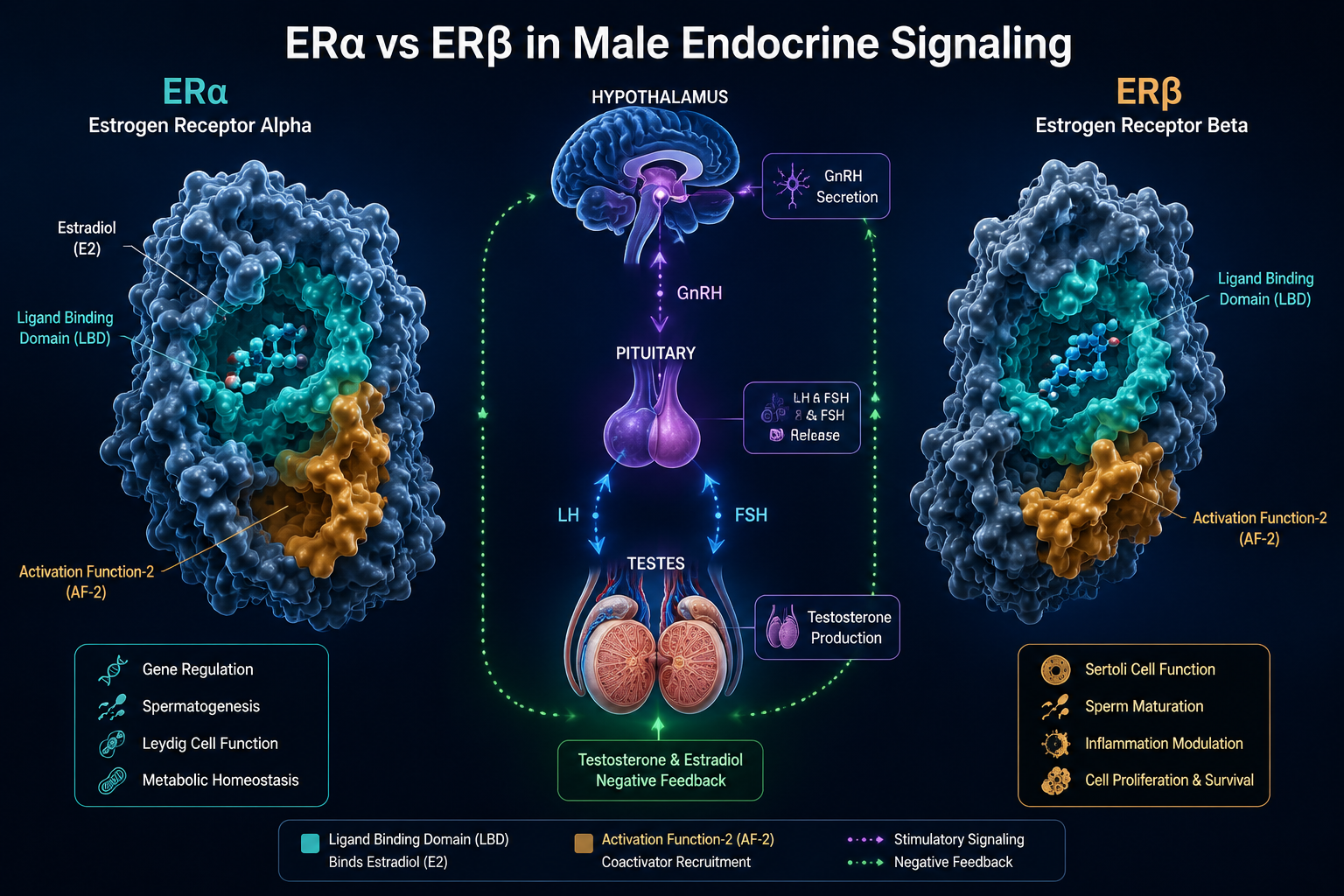
Estrogen actions in males are mediated by two primary receptor subtypes: ERα (encoded by the ESR1 gene) and ERβ (encoded by ESR2). These receptors differ in ligand binding affinity, tissue distribution, and transcriptional output.

Receptor Primary Male Tissue Sites Key Function
ERα Hypothalamus, bone, liver Negative feedback on GnRH/LH release
ERβ Testis, epididymis, prostate Local spermatogenesis support

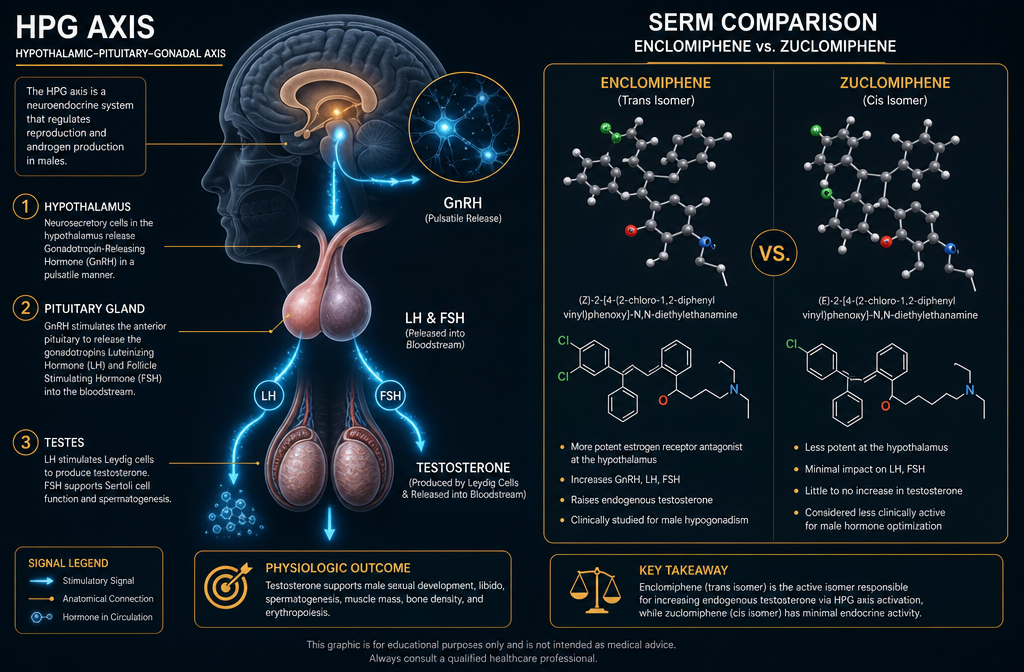
In the hypothalamus, ERα is the dominant subtype mediating estradiol's negative feedback on gonadotropin-releasing hormone (GnRH) pulsatility. When circulating estradiol binds ERα, it suppresses GnRH release, which in turn reduces pituitary output of luteinizing hormone (LH) and follicle-stimulating hormone (FSH). Less LH means less Leydig cell stimulation and lower endogenous testosterone production.

Beyond classical nuclear signaling, research published in 2024 identified membrane-localized estrogen receptor 1 (mESR1) as a separate and critical player. Male mice lacking mESR1 developed progressive infertility due to testicular and reproductive tract abnormalities, even when nuclear ERα signaling remained intact. This finding points to a nongenomic signaling layer that standard receptor models do not fully capture.

Researchers exploring broader endocrine signaling networks — including those studying GLP-1 and dual receptor agonism — recognize that receptor subtype specificity has major implications for how compounds are designed and interpreted.

Enclomiphene Mechanism: Selective ER Blockade and the LH Pathway
Enclomiphene Mechanism: Selective ER Blockade and the LH Pathway

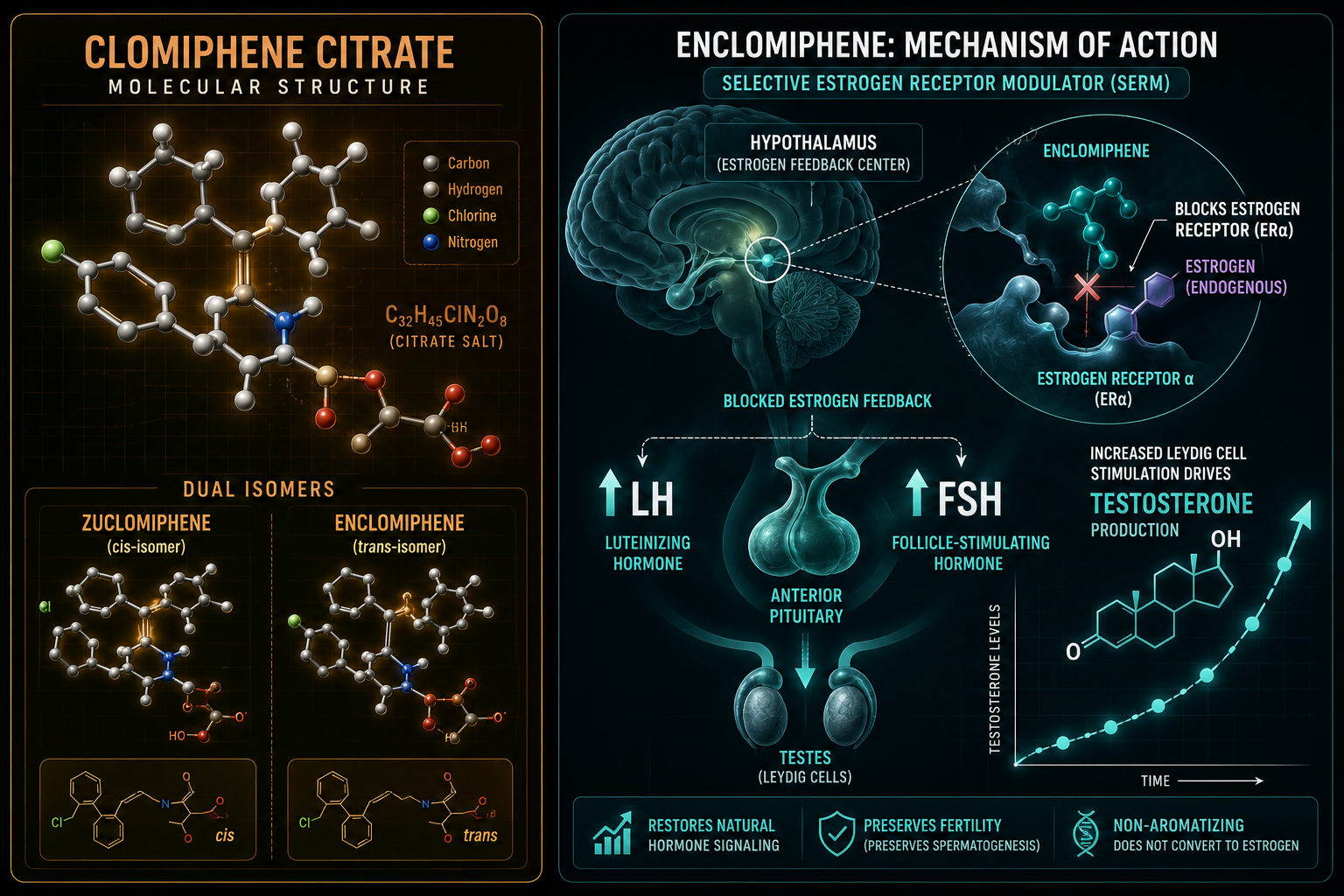
Enclomiphene is the trans-isomer of clomiphene citrate. Its counterpart, zuclomiphene (the cis-isomer), has estrogenic properties and a much longer half-life. By isolating the trans-isomer, researchers gain a cleaner pharmacological tool for studying selective ER modulation in male subjects.

How enclomiphene works:

  1. Binds competitively to ERα in the hypothalamus
  2. Blocks estradiol from suppressing GnRH pulsatility
  3. GnRH pulses increase, driving pituitary LH and FSH secretion
  4. Elevated LH stimulates Leydig cells to produce testosterone
  5. The HPG axis remains intact and functional throughout

This mechanism preserves the body's own hormonal feedback loop — a meaningful distinction from exogenous testosterone replacement, which suppresses the HPG axis and reduces endogenous production.

Enclomiphene has a half-life of approximately 10 to 15 hours and is typically studied at oral doses ranging from 12.5 to 25 mg per day. One study demonstrated measurable testosterone increases within just 14 days of administration, underscoring the speed of HPG axis responsiveness when hypothalamic ER blockade is applied.

This targeted approach to endocrine modulation parallels research on other selective compounds. For example, serm stack research explores how combining receptor-selective agents can produce synergistic hormonal outcomes. Similarly, researchers working with ipamorelin as a GHRH secretagogue are familiar with the principle of stimulating endogenous hormone release rather than replacing it directly.

Clinical Research Findings: What the Data Show in 2026
Clinical Research Findings: What the Data Show in 2026

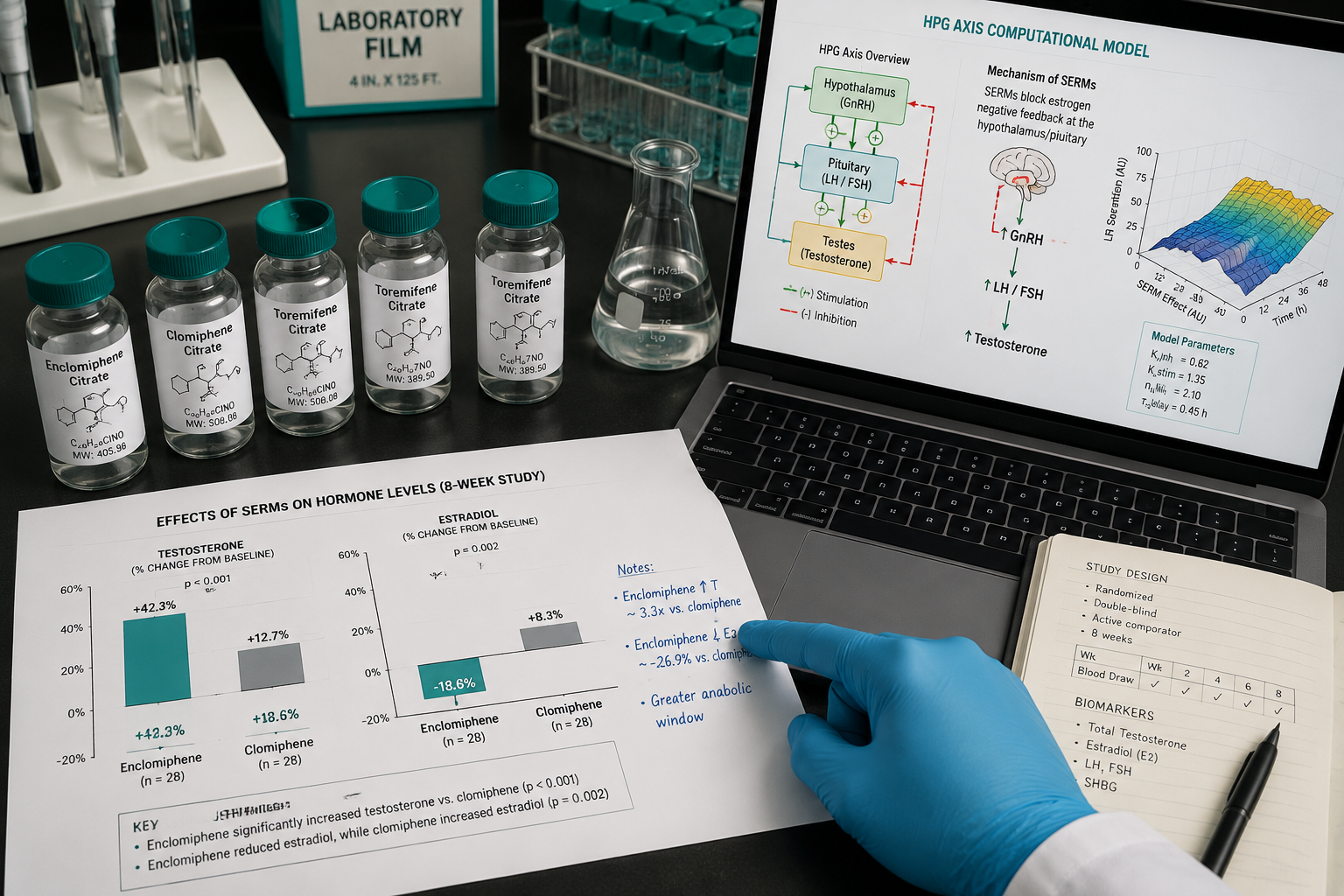
The clinical picture for enclomiphene in male hypogonadism research has sharpened considerably. A retrospective cohort study found that both enclomiphene and clomiphene significantly increased testosterone, with a mean rise of approximately 210 ng/dL across groups. The two compounds showed no statistically significant difference in testosterone outcomes.

Where enclomiphene diverges from clomiphene:

  • Estradiol increase: Enclomiphene produced a significantly lower estradiol rise (approximately -5.92 pg/mL vs. +17.50 pg/mL for clomiphene, P=0.001)
  • Side effect profile: Fewer reports of decreased libido, reduced energy, and mood changes with enclomiphene
  • Median testosterone gain: Approximately 166 ng/dL in comparative studies

The lower estradiol elevation seen with enclomiphene is directly attributable to the absence of zuclomiphene, which carries estrogenic activity. This makes enclomiphene a more precise research instrument when the goal is to study LH-driven testosterone stimulation without confounding estrogenic effects.

A 2025 systematic review and meta-analysis further evaluated serms against testosterone gel, human chorionic gonadotropin (hCG), anastrozole, and placebo in men with baseline testosterone at or below 300 ng/dL. As of 2026, enclomiphene has accumulated over 190 indexed citations including clinical trials, randomized controlled trials, and meta-analyses — a growing evidence base for a compound that was once considered a secondary isomer.

Researchers interested in how metabolic and hormonal pathways intersect may also find value in reviewing muscle and fat research themes related to ipamorelin and AOD9604 metabolic research, both of which touch on endocrine-metabolic crosstalk. Computational modeling advances have also improved understanding of pituitary gonadotropin signaling dynamics within the HPG axis, offering new tools for interpreting serm research data.

For those tracking broader developments in the field, the latest peptide research updates provide relevant context on how receptor-targeted compounds continue to evolve.

Conclusion

Estrogen receptor signaling and enclomiphene — and how ER and LH pathways inform male endocrine research — offer a precise window into the HPG axis that few other research tools match. The distinction between ERα and ERβ, the newly recognized role of mESR1 in nongenomic male fertility signaling, and enclomiphene's clean pharmacological profile collectively make this an area of high research value.

Actionable next steps for researchers:

  • Prioritize ERα-specific assays when studying hypothalamic feedback in male subjects
  • Use enclomiphene as a mechanistic comparator to isolate LH-driven testosterone responses from estrogenic confounders
  • Track estradiol alongside testosterone in any serm-related endocrine study to capture the full hormonal picture
  • Consult the growing meta-analytic literature to benchmark expected testosterone and estradiol response ranges
  • Consider how nongenomic ER signaling (mESR1) may require separate experimental models beyond standard nuclear receptor assays
https://www.puretestedpeptides.com/wp-content/uploads/2026/06/Estrogen-Receptor-Signaling-and-Enclomiphene-How-ER-and-LH-Pathways-Inform-Male-Endocrine-Research.png 1024 1536 Pure Tested https://www.puretestedpeptides.com/wp-content/uploads/2026/01/buy-peptides-online.jpg Pure Tested2026-06-08 13:03:182026-07-20 15:03:47Estrogen Receptor Signaling and Enclomiphene: How ER and LH Pathways Inform Male Endocrine Research
GHK-Cu Peptide: Copper Binding, Collagen Synthesis, and Skin-Repair Pathways in Laboratory Models

GHK-Cu Peptide: Copper Binding, Collagen Synthesis, and Skin-Repair Pathways in Laboratory Models

June 7, 2026/0 Comments/by Pure Tested

Plasma levels of GHK-Cu drop by more than 60% between early adulthood and age 60 — a measurable biochemical shift that researchers now link directly to declining tissue repair capacity. This decline has made the study of GHK-Cu Peptide: Copper Binding, Collagen Synthesis, and Skin-Repair Pathways in Laboratory Models one of the more productive areas in dermatologic peptide research. Understanding what drives this peptide's activity at the molecular level is essential for designing rigorous preclinical assays and interpreting experimental results accurately.

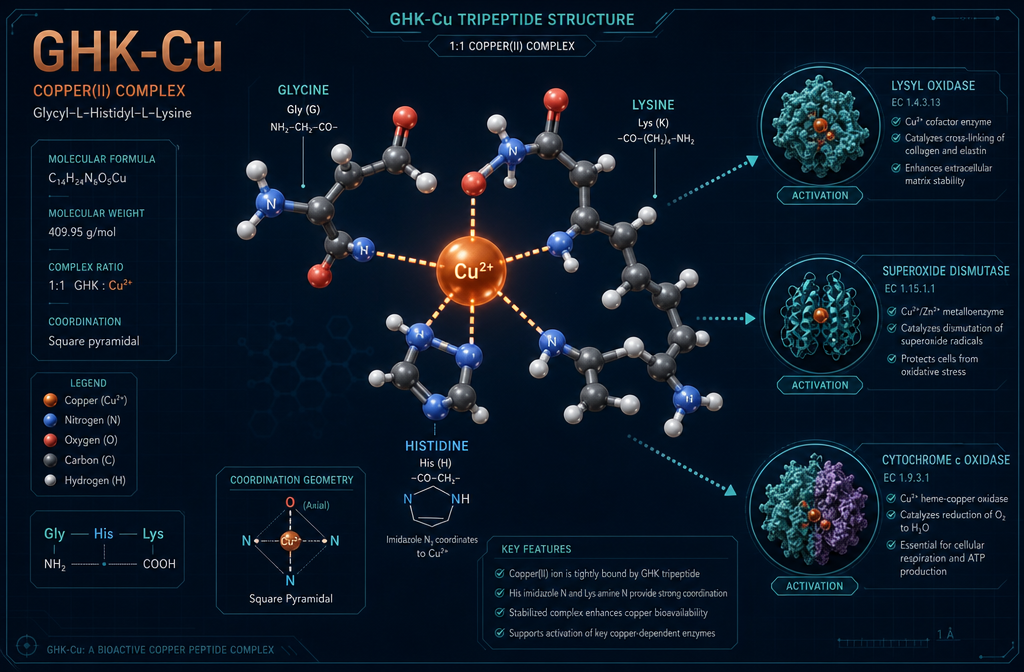
Detailed () scientific diagram illustration showing GHK-Cu tripeptide molecular structure binding a copper(II) ion in a 1:1

Key Takeaways

  • GHK-Cu is a tripeptide that binds copper(II) ions with high affinity, enabling targeted delivery to repair-critical enzymes
  • It modulates the expression of more than 4,000 human genes, including those governing extracellular matrix remodeling and antioxidant defense
  • In vitro models show increased synthesis of collagen types I and III, elastin, and glycosaminoglycans in GHK-Cu-treated fibroblasts
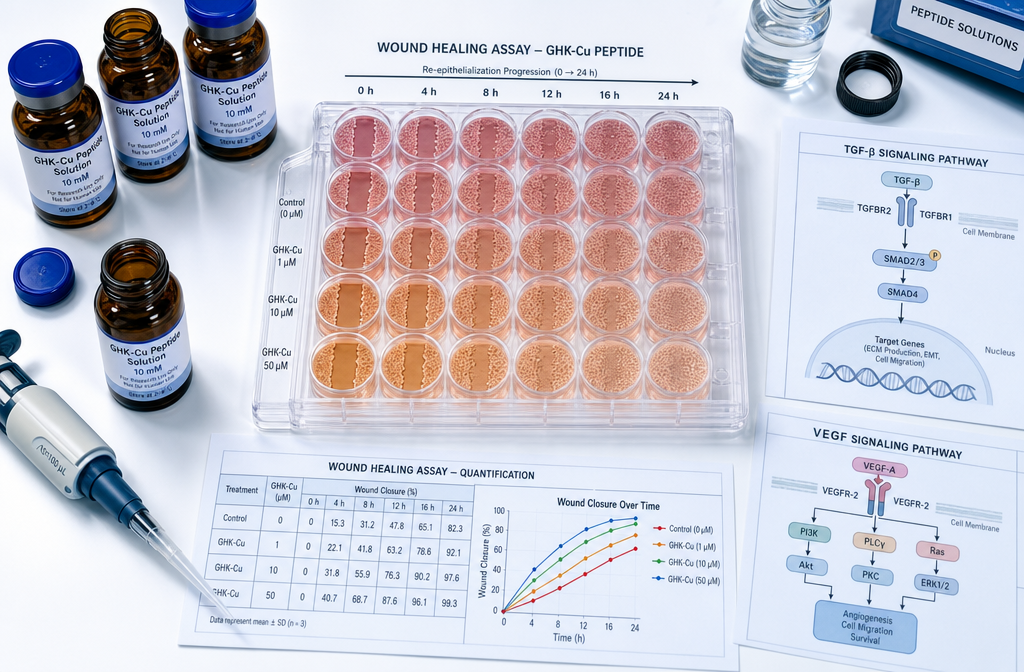
  • Preclinical wound-healing models demonstrate accelerated re-epithelialization and improved tissue tensile strength
  • No controlled human trials exist for injectable use; laboratory findings remain the primary evidence base as of 2026

Molecular Architecture: How GHK-Cu Binds Copper

The peptide glycyl-L-histidyl-L-lysine (GHK) forms a stable 1:1 complex with copper(II) ions. The histidine residue plays a central role, providing the nitrogen coordination site that anchors the copper ion with high affinity. This structure is not incidental — it is precisely what allows GHK-Cu to act as a chaperone, delivering bioavailable copper to enzymes that would otherwise lack sufficient substrate.

Three enzymes are particularly relevant in skin-repair research:

Enzyme Function in Tissue Repair
Lysyl oxidase Cross-links collagen and elastin fibers
Superoxide dismutase Neutralizes reactive oxygen species
Cytochrome c oxidase Supports mitochondrial energy production

By supplying copper to these targets, GHK-Cu positions itself at the intersection of structural repair and oxidative defense — two processes that are tightly coupled in wound-healing biology.

Researchers exploring peptides in skincare and the science behind skin health will recognize this mechanism as foundational to how copper peptides differ from signaling peptides or carrier peptides in their mode of action.


Gene Expression Modulation and Extracellular Matrix Remodeling

Perhaps the most striking finding in GHK-Cu research is its breadth of genomic influence. Transcriptomic analyses have identified modulation of over 4,000 human genes following GHK-Cu exposure. These genes cluster around several key pathways:

  • Extracellular matrix (ECM) synthesis and degradation
  • Inflammatory signal regulation
  • Antioxidant and stress-response systems
  • Vascular remodeling via VEGF upregulation
  • Fibroblast activation through TGF-beta signaling

Metalloproteinase (MMP) balance is a particularly important target. GHK-Cu appears to modulate both MMP activity and tissue inhibitors of metalloproteinases (TIMPs), preventing excessive ECM breakdown while still allowing remodeling to proceed. This bidirectional regulation is what makes it useful in wound-healing assay design, where uncontrolled proteolysis is a common confounding variable.

For researchers comparing multi-pathway peptide activity, the GLOW peptide blend benefits and KLOW blend multipathway research pages offer useful context on how combinatorial approaches are being studied alongside single-peptide models.


Collagen Synthesis, Wound Healing, and Assay Considerations in Laboratory Models

The core of GHK-Cu Peptide: Copper Binding, Collagen Synthesis, and Skin-Repair Pathways in Laboratory Models research centers on fibroblast behavior. In vitro studies consistently show that GHK-Cu-treated fibroblasts produce significantly more collagen type I and type III, along with elastin and glycosaminoglycans. These are the structural proteins that determine skin thickness, elasticity, and tensile strength.

In preclinical wound models, topical GHK-Cu application accelerates:

  • Re-epithelialization — faster closure of the epidermal layer
  • Granulation tissue formation — increased tensile strength in healing tissue
  • Vascularization — supported by VEGF pathway upregulation

"The peptide's ability to simultaneously address structural protein synthesis and oxidative stress makes it a compelling candidate for multi-endpoint wound-healing assays."

Critical assay note: Researchers must monitor copper saturation carefully. Excess free copper ions generate reactive oxygen species, introducing cytotoxicity that can confound results. A well-designed assay includes copper-only controls to isolate peptide-specific effects from ionic copper effects.

Topical cosmetic studies report improvements in skin thickness and fine-line reduction, though many lack placebo controls. As of 2026, no controlled human trials support injectable GHK-Cu use — all mechanistic evidence comes from in vitro and preclinical models.

Emerging tissue engineering applications are also worth tracking. Recent work has explored GHK-Cu in peptide-guided supramolecular assembly for vascularized adipose tissue regeneration, suggesting the peptide's utility may extend well beyond dermatology.

For broader context on how peptides are being studied across repair and regeneration models, the BPC-157 core peptides research guide and TB-500 experimental models and QC workflow provide useful methodological comparisons. Researchers interested in oxidative stress endpoints may also find value in reviewing SS-31 mitochondrial research themes, given the overlapping antioxidant defense pathways.

Collagen Synthesis, Wound Healing, and Assay Considerations in Laboratory Models


Conclusion

The evidence base for GHK-Cu Peptide: Copper Binding, Collagen Synthesis, and Skin-Repair Pathways in Laboratory Models is robust at the preclinical level and mechanistically coherent. Researchers designing dermatologic or wound-healing studies in 2026 should prioritize three actionable steps:

  1. Include copper-only controls in every cellular assay to isolate GHK-Cu-specific effects
  2. Use transcriptomic endpoints alongside protein-level readouts to capture the full scope of gene expression modulation
  3. Standardize peptide purity and concentration — variability in source material remains a leading cause of inconsistent results across laboratories

For those building out peptide research programs, staying current with what is new in peptide research and reviewing aging support peptide categories can help contextualize GHK-Cu findings within the broader landscape of tissue repair science.

https://www.puretestedpeptides.com/wp-content/uploads/2026/06/GHK-Cu-Peptide-Copper-Binding-Collagen-Synthesis-and-Skin-Repair-Pathways-in-Laboratory-Models.png 672 1024 Pure Tested https://www.puretestedpeptides.com/wp-content/uploads/2026/01/buy-peptides-online.jpg Pure Tested2026-06-07 13:05:482026-07-20 15:03:48GHK-Cu Peptide: Copper Binding, Collagen Synthesis, and Skin-Repair Pathways in Laboratory Models
BPC-157 and TB-500 Research Models: When Combination Stacks Make Sense and When They Do Not

BPC-157 and TB-500 Research Models: When Combination Stacks Make Sense and When They Do Not

June 7, 2026/0 Comments/by Pure Tested

No published peer-reviewed study has ever tested BPC-157 and TB-500 together in any model — cell, animal, or human. That single fact should anchor every conversation about the so-called "Wolverine Stack." Yet researchers and procurement teams continue to evaluate this combination, often relying on mechanism-based reasoning rather than outcomes data. Understanding BPC-157 and TB-500 research models: when combination stacks make sense and when they do not requires separating what the preclinical literature actually shows from what is still untested extrapolation.

Key Takeaways

  • No controlled study has examined BPC-157 and TB-500 co-administration in any experimental model as of 2026.
  • Both peptides share overlapping repair pathways, which creates a plausible rationale but also a significant confounding risk in study design.
  • BPC-157 human data consists of only three small pilot studies; TB-500 has no FDA-approved indication and no controlled human trials.
  • Combination stacks may make sense when pathways are genuinely complementary and non-redundant; they rarely make sense when baseline single-agent data are still missing.
  • Rigorous study design — including single-agent controls — is essential before any combination result can be meaningfully interpreted.

What the Individual Preclinical Evidence Actually Shows

BPC-157

BPC-157 is a synthetic pentadecapeptide derived from a gastric protein. Dozens of animal studies document its effects across tendon, muscle, nerve, gut, and vascular tissue. Key mechanisms include nitric-oxide-mediated microvascular repair, fibroblast activation, and anti-inflammatory signaling. A 2025 narrative review in musculoskeletal medicine catalogued these findings and confirmed that the evidence base, while broad, remains almost entirely preclinical.

Human data are thin. Only three small pilot studies exist: one in intra-articular knee pain, one in interstitial cystitis, and one recent IV safety and pharmacokinetics protocol. In that IV pilot, BPC-157 was infused at doses up to 20 mg in two healthy adults with no adverse events or meaningful lab changes — but a sample size of two cannot define safety or efficacy. Reviewers consistently classify BPC-157 as investigational, pending properly powered clinical trials.

For researchers building a sourcing and documentation baseline, the BPC-157 core peptides documentation and first research guide provides a structured starting point before any combination design is considered.

TB-500

TB-500 is a synthetic fragment of thymosin-beta4 that regulates actin dynamics and cell migration. Animal models of musculoskeletal and cardiac injury show tissue repair, angiogenesis promotion, and reduced inflammatory markers. TB-500 is not FDA-approved for human use, has no standardized dosing protocol, and its human exposure data are limited to anecdotal reports and uncontrolled observations. Reported side effects — mild injection-site reactions, transient fatigue, occasional headache — come from these uncontrolled sources, not clinical trials.

Researchers evaluating procurement and quality control workflows should review the TB-500 controlled experimental models and QC workflow resource before designing any protocol.


BPC-157 and TB-500 Research Models: When Combination Stacks Make Sense

When do combination stacks have scientific merit? The answer depends on three design criteria.

Criterion Combination Makes Sense Combination Does Not Make Sense
Pathway overlap Complementary, non-redundant Largely redundant — adds noise
Single-agent baseline Established in same model Missing or from different species
Outcome measurability Distinct endpoints per agent Shared endpoints, no attribution

BPC-157 and TB-500 share angiogenesis and anti-inflammatory signaling. That overlap is precisely where combination research becomes methodologically difficult. If both agents promote vascular repair through partially overlapping mechanisms, a combination result cannot be cleanly attributed to either compound without rigorous factorial design — meaning four groups: vehicle control, BPC-157 alone, TB-500 alone, and the combination.

Without that structure, any observed effect is uninterpretable. This is not a minor limitation; it is a fundamental confound that invalidates the combination result entirely.

Researchers exploring other peptides with distinct, non-overlapping mechanisms — such as GHK-Cu copper peptide acting on extracellular matrix remodeling, or LL-37 innate research models targeting antimicrobial and epithelial pathways — may find cleaner combination rationales because the mechanisms diverge more clearly.


BPC-157 and TB-500 Research Models: When Combination Stacks Do Not Make Sense

BPC-157 and TB-500 Research Models: When Combination Stacks Do Not Make Sense

The combination stack does not make sense under several common research conditions.

When single-agent data are absent from your model. If a lab has not first characterized BPC-157 or TB-500 individually in its specific tissue or injury model, combining them produces uninterpretable data. The preclinical literature for each compound spans multiple species and injury types; results do not transfer across models without validation.

When the goal is mechanism attribution. A combination design cannot isolate which peptide drives an observed outcome. Researchers interested in understanding pathway-specific contributions must run single-agent arms first.

When pharmacodynamic interaction data do not exist. As of 2026, there is a complete absence of published data on how BPC-157 and TB-500 interact pharmacodynamically when co-administered. All synergy claims are mechanism-based extrapolation, not measured outcomes. Independent analyses of the combination stack confirm this gap explicitly, describing all combination rationales as "untested extrapolation" from separate experiments.

For researchers evaluating other combination or multi-target peptide frameworks, the GLP-1 peptide generational research concepts and CJC-1295 Ipamorelin assay planning and sourcing checklist resources illustrate how more mature combination frameworks are structured when underlying single-agent data already exist.


Conclusion

The core finding is straightforward: BPC-157 and TB-500 research models make sense as a combination only when single-agent baselines are already established, pathways are non-redundant, and study design includes proper factorial controls. In most current research contexts, none of those conditions are fully met.

Actionable next steps for researchers in 2026:

  • Establish single-agent dose-response data for each peptide in your specific model before any combination protocol.
  • Design combination studies with at least four groups to enable proper attribution.
  • Treat all published synergy claims as hypothesis-generating, not hypothesis-confirming.
  • Verify peptide purity and documentation through quality-controlled sources before procurement.
  • Consult the PT-141 peptide research context and QA controls framework as a model for how rigorous QA documentation should precede any experimental design.

The combination stack is not inherently invalid — it is currently unvalidated. That distinction matters for anyone designing experiments, interpreting results, or making sourcing decisions based on the existing literature.

https://www.puretestedpeptides.com/wp-content/uploads/2026/06/BPC-157-and-TB-500-Research-Models-When-Combination-Stacks-Make-Sense-and-When-They-Do-Not.png 1024 1024 Pure Tested https://www.puretestedpeptides.com/wp-content/uploads/2026/01/buy-peptides-online.jpg Pure Tested2026-06-07 13:04:272026-07-20 15:03:48BPC-157 and TB-500 Research Models: When Combination Stacks Make Sense and When They Do Not
Enclomiphene Research for Male Hormone Optimization: LH, FSH, and Testosterone Signaling Without the Clomiphene Noise

Enclomiphene Research for Male Hormone Optimization: LH, FSH, and Testosterone Signaling Without the Clomiphene Noise

June 7, 2026/0 Comments/by Pure Tested

Men with secondary hypogonadism who start standard clomiphene citrate often see testosterone numbers improve — but they also report mood swings, visual disturbances, and erratic estrogen readings that are hard to explain from the testosterone signal alone. The culprit is not the therapy concept; it is a single unwanted isomer. Enclomiphene research for male hormone optimization: LH, FSH, and testosterone signaling without the clomiphene noise is now a serious clinical conversation, and the lab data behind it deserves a clear-eyed look.

Key Takeaways

  • Enclomiphene is the active trans-isomer of clomiphene citrate; isolating it removes the estrogenic "noise" caused by zuclomiphene.
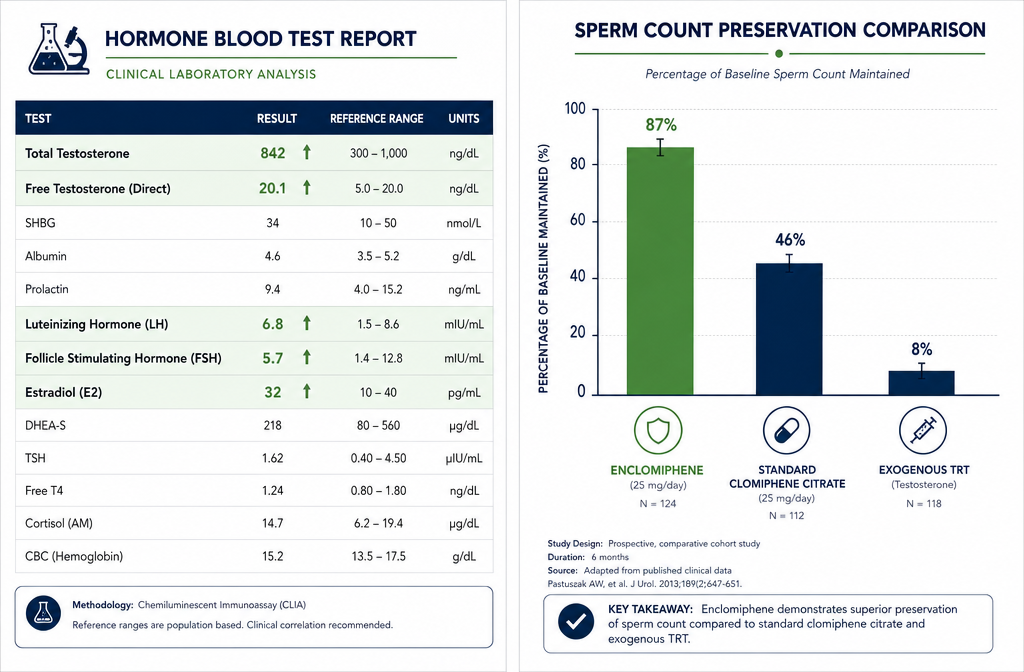
  • It stimulates LH and FSH release through the HPG axis, raising endogenous testosterone without suppressing spermatogenesis.
  • Phase II and III trials confirm meaningful increases in total and free testosterone in men with secondary hypogonadism.
  • Standard oral dosing ranges from 12.5 to 25 mg per day, with estradiol monitoring required at higher doses.
  • It is not suitable for primary hypogonadism or cases requiring highly predictable testosterone levels from injectable TRT.

Key Takeaways

The Isomer Problem: Why Clomiphene Carries Unwanted Signals

Clomiphene citrate is a 50/50 mixture of two geometric isomers: enclomiphene (trans) and zuclomiphene (cis). They behave very differently inside the body.

Enclomiphene blocks estrogen receptors in the hypothalamus. That blockade triggers increased gonadotropin-releasing hormone (GnRH) output, which tells the pituitary to release more LH and FSH. Higher LH drives Leydig cells in the testes to produce testosterone. Higher FSH supports Sertoli cell function and sperm production. The entire HPG axis stays intact and active.

Zuclomiphene, by contrast, is a weak estrogen receptor agonist with a notably long half-life. It accumulates over weeks of dosing, activating rather than blocking estrogen receptors. That activation contributes to mood disturbances, visual side effects, and confusing estradiol readings that complicate lab interpretation.

"The clinical noise attributed to clomiphene therapy in men is largely a zuclomiphene problem, not an enclomiphene problem."

Isolating enclomiphene removes that competing signal entirely, leaving a cleaner pharmacological profile for male hormone optimization.

Researchers studying multi-pathway peptide compounds face similar signal-isolation challenges. For context on how compound purity affects research outcomes, the discussion on multi-pathway research blends offers useful framing.

Reading the Lab Panel: LH, FSH, and Testosterone Under Enclomiphene

Understanding enclomiphene research for male hormone optimization: LH, FSH, and testosterone signaling without the clomiphene noise requires knowing what to look for on a hormone panel — and in what order.

Reading the Lab Panel: LH, FSH, and Testosterone Under Enclomiphene

Baseline Labs Before Starting

Before initiating enclomiphene, a complete baseline panel should include:

Lab Marker Why It Matters
Total Testosterone Establishes starting point
Free Testosterone Reflects bioavailable fraction
LH and FSH Confirms secondary (not primary) hypogonadism
Estradiol (E2) Monitors aromatization risk
Complete Metabolic Panel Assesses liver and kidney function
Lipid Panel Cardiovascular baseline
Complete Blood Count Rules out hematologic issues

What Changes at 4 to 6 Weeks

Phase II and III clinical trials show that enclomiphene produces statistically significant increases in both total and free testosterone in men with secondary hypogonadism. Crucially, LH and FSH rise alongside testosterone — the opposite of what happens with exogenous TRT, which suppresses both gonadotropins through negative feedback.

Sperm counts are maintained or improved, a finding that distinguishes enclomiphene sharply from injectable testosterone, which reliably reduces sperm production.

Estradiol should be rechecked at the 4-to-6-week follow-up. At doses above 25 mg daily, increased aromatization to estradiol has been observed, which may require dose adjustment or monitoring strategy changes.

For researchers exploring peptide-based growth hormone secretagogues alongside hormonal optimization protocols, the CJC-1295 with DAC deeper dive provides relevant background on pituitary-axis signaling. Similarly, those examining body composition endpoints may find the IPA muscle and fat research themes useful for comparative context.

Practical Research Considerations: Dosing, Patient Selection, and Monitoring

Enclomiphene research for male hormone optimization: LH, FSH, and testosterone signaling without the clomiphene noise is most productive when patient selection criteria are applied carefully.

Who Is a Strong Research Candidate

  • Men with confirmed secondary hypogonadism (low testosterone with low or normal LH/FSH)
  • Men who want to raise testosterone while preserving fertility
  • Younger men who may plan to have children
  • Men who prefer oral administration over injectable protocols

Who Is Not

  • Men with primary hypogonadism (testicular failure) — the testes cannot respond to LH stimulation
  • Men requiring highly predictable, high-level testosterone that only injectable TRT reliably delivers

Standard Dosing Protocol

The most studied oral dosing range is 12.5 to 25 mg per day. Lower doses reduce aromatization risk while still producing meaningful gonadotropin stimulation. Higher doses should be paired with closer estradiol monitoring.

As of 2026, enclomiphene is available via prescription under the brand name Androxal and is also accessible as a research compound. Any clinical application requires physician oversight and proper lab monitoring.

For researchers interested in related peptide compounds that intersect with metabolic and hormonal research, the tesa benefits overview and the PT-141 research context provide relevant comparative reading on endocrine-adjacent signaling pathways.

Ongoing research in 2026 continues to examine enclomiphene's long-term effects on bone density, cardiovascular markers, and broader applications in testosterone-deficiency conditions beyond secondary hypogonadism.

Conclusion

Enclomiphene research for male hormone optimization: LH, FSH, and testosterone signaling without the clomiphene noise represents one of the more clinically precise tools available for secondary hypogonadism management. By removing zuclomiphene from the equation, researchers and clinicians gain a cleaner signal — rising LH, rising FSH, rising testosterone, and preserved spermatogenesis — without the estrogenic interference that has historically complicated clomiphene therapy interpretation.

Actionable next steps for researchers and clinicians:

  1. Confirm secondary hypogonadism with a full baseline panel before initiating any protocol.
  2. Start at 12.5 mg daily and recheck total testosterone, free testosterone, LH, FSH, and estradiol at 4 to 6 weeks.
  3. Adjust dosing based on estradiol response, not testosterone alone.
  4. Exclude primary hypogonadism candidates early to avoid non-response.
  5. Track sperm parameters if fertility preservation is a stated research or clinical goal.

The endocrine signal is only as clean as the compound producing it. Enclomiphene's isomer isolation is precisely why its lab results are finally readable.

https://www.puretestedpeptides.com/wp-content/uploads/2026/06/Enclomiphene-Research-for-Male-Hormone-Optimization-LH-FSH-and-Testosterone-Signaling-Without-the-Clomiphene-Noise.png 672 1024 Pure Tested https://www.puretestedpeptides.com/wp-content/uploads/2026/01/buy-peptides-online.jpg Pure Tested2026-06-07 13:04:162026-07-20 15:03:49Enclomiphene Research for Male Hormone Optimization: LH, FSH, and Testosterone Signaling Without the Clomiphene Noise
Cystathionine Beta Synthase, Homocysteine, and Peptides: Where Metabolism Pathways Meet Experimental MOTS‑c and 5‑Amino‑1MQ Research

Cystathionine Beta Synthase, Homocysteine, and Peptides: Where Metabolism Pathways Meet Experimental MOTS‑c and 5‑Amino‑1MQ Research

June 7, 2026/0 Comments/by Pure Tested

Elevated homocysteine is detected in roughly 5–7% of the general population, yet its upstream enzyme — cystathionine beta synthase — remains underappreciated outside specialist circles. The intersection of Cystathionine Beta Synthase, Homocysteine, and Peptides: Where Metabolism Pathways Meet Experimental MOTS‑c and 5‑Amino‑1MQ Research is drawing growing preclinical attention, particularly as researchers probe how mitochondrial peptides and NNMT-targeting small molecules might interact with the same metabolic nodes that CBS dysfunction disrupts.

Key Takeaways

  • CBS is the gatekeeper enzyme of the transsulfuration pathway, directly controlling homocysteine clearance and cysteine synthesis.
  • CBS deficiency links to oxidative stress, mitochondrial dysfunction, and elevated thrombosis risk.
  • MOTS-c, a mitochondrial-derived peptide, influences metabolic signaling pathways that overlap with CBS-related dysfunction.
  • 5-Amino-1MQ targets NNMT, an enzyme connected to methylation balance and metabolic regulation.
  • Both compounds remain strictly experimental and are subjects of preclinical research only.

Understanding CBS and the Transsulfuration Pathway

Cystathionine beta synthase (CBS) is a pyridoxal-5-phosphate-dependent enzyme that catalyzes the condensation of homocysteine and serine into cystathionine. That intermediate is then cleaved into cysteine — a precursor to glutathione, the body's primary intracellular antioxidant.

The CBS enzyme has three structural domains:

Domain Role
Catalytic core Performs the condensation reaction
N-terminal heme domain Responds to redox signals
C-terminal regulatory domain Activated by S-adenosylmethionine (SAM)

This architecture makes CBS uniquely sensitive to both oxidative status and methylation capacity. When CBS activity falls — due to genetic mutation or cofactor deficiency — homocysteine accumulates, driving a cascade that includes oxidative damage, mitochondrial dysfunction, and prothrombotic changes in vascular tissue.

CBS also produces hydrogen sulfide (H2S), a neuromodulatory gasotransmitter. This secondary function underscores the enzyme's broad influence beyond simple amino acid metabolism.

"CBS sits at a metabolic crossroads: its dysfunction simultaneously impairs antioxidant synthesis, disrupts methylation balance, and reduces a key signaling molecule in the nervous system."

Betaine supplementation combined with methionine restriction has demonstrated the ability to reduce plasma homocysteine in CBS-deficient individuals who do not respond to vitamin B6, illustrating how nutritional cofactors modulate this pathway.

How MOTS-c Research Connects to Cystathionine Beta Synthase, Homocysteine, and Peptides

MOTS-c is a 16-amino-acid peptide encoded within the mitochondrial 12S rRNA gene. Its discovery repositioned mitochondria as active signaling organelles rather than passive energy producers.

In preclinical models, MOTS-c has been shown to:

  • Activate AMPK, a master energy sensor
  • Improve insulin sensitivity in skeletal muscle
  • Reduce oxidative stress markers
  • Support cardiovascular metabolic function

These effects are directly relevant to the CBS-homocysteine axis. CBS deficiency is associated with mitochondrial dysfunction and elevated oxidative damage — the same cellular environment that MOTS-c appears to modulate in experimental settings. Researchers studying MOTS-c mechanisms and research themes note its potential role in metabolic resilience, which positions it as a candidate for co-investigation alongside methylation pathway research.

The synergy of LL-37 and MOTS-c in combined preclinical protocols further illustrates how mitochondrial peptides are being studied alongside other signaling molecules to address overlapping metabolic deficits.

5-Amino-1MQ, NNMT, and the Methylation Connection

5-Amino-1MQ is a small-molecule inhibitor of nicotinamide N-methyltransferase (NNMT), an enzyme that consumes SAM — the same methyl donor that regulates CBS activity. When NNMT is overactive, SAM availability drops, potentially impairing the methylation reactions that keep homocysteine in check.

This creates a logical experimental rationale: by inhibiting NNMT, 5-Amino-1MQ may help preserve SAM pools, indirectly supporting CBS function and reducing homocysteine burden. Preclinical data on 5-Amino-1MQ suggest effects on fat metabolism and cellular energy balance, consistent with its NNMT-targeting mechanism.

Researchers examining NAD+ energetics and longevity themes have noted that NNMT inhibition also affects NAD+ availability — another metabolite tied to mitochondrial function and oxidative stress response. This places 5-Amino-1MQ squarely within the same metabolic territory as CBS dysfunction and MOTS-c research.

For context on related mitochondrial peptide work, the SS-31 research peptide is also studied for its mitochondrial membrane-stabilizing properties, offering a complementary angle to MOTS-c in cardiovascular and metabolic preclinical models.

5-Amino-1MQ, NNMT, and the Methylation Connection

Conclusion

The convergence of CBS biology, homocysteine metabolism, and experimental peptide research represents one of the more intellectually rich areas in current preclinical science. Cystathionine Beta Synthase, Homocysteine, and Peptides: Where Metabolism Pathways Meet Experimental MOTS‑c and 5‑Amino‑1MQ Research highlights a framework where mitochondrial signaling, methylation capacity, and antioxidant synthesis are treated as an integrated system rather than isolated targets.

Actionable next steps for researchers and informed readers:

  • Review current CBS enzyme literature to understand the full scope of transsulfuration pathway dysregulation.
  • Explore preclinical MOTS-c data, particularly studies examining AMPK activation and cardiovascular metabolic outcomes.
  • Investigate NNMT inhibition research to understand how SAM preservation may support methylation balance.
  • Consult MOTS-c peptides for research and related compound pages for sourcing and purity specifications relevant to laboratory use.
  • Consider how humanin cellular protection research — another mitochondrial-derived peptide — may complement CBS-related metabolic investigations.

All compounds discussed here are strictly for research purposes and are not approved for human therapeutic use.

https://www.puretestedpeptides.com/wp-content/uploads/2026/06/Cystathionine-Beta-Synthase-Homocysteine-and-Peptides-Where-Metabolism-Pathways-Meet-Experimental-MOTS‑c-and-5‑Amino‑1MQ-Research.png 672 1024 Pure Tested https://www.puretestedpeptides.com/wp-content/uploads/2026/01/buy-peptides-online.jpg Pure Tested2026-06-07 13:04:032026-07-20 15:03:49Cystathionine Beta Synthase, Homocysteine, and Peptides: Where Metabolism Pathways Meet Experimental MOTS‑c and 5‑Amino‑1MQ Research
Semax and Selank Peptide Nasal Sprays: Comparative Mechanisms in Neurotrophic and Anxiolytic Research

Semax and Selank Peptide Nasal Sprays: Comparative Mechanisms in Neurotrophic and Anxiolytic Research

June 7, 2026/0 Comments/by Pure Tested

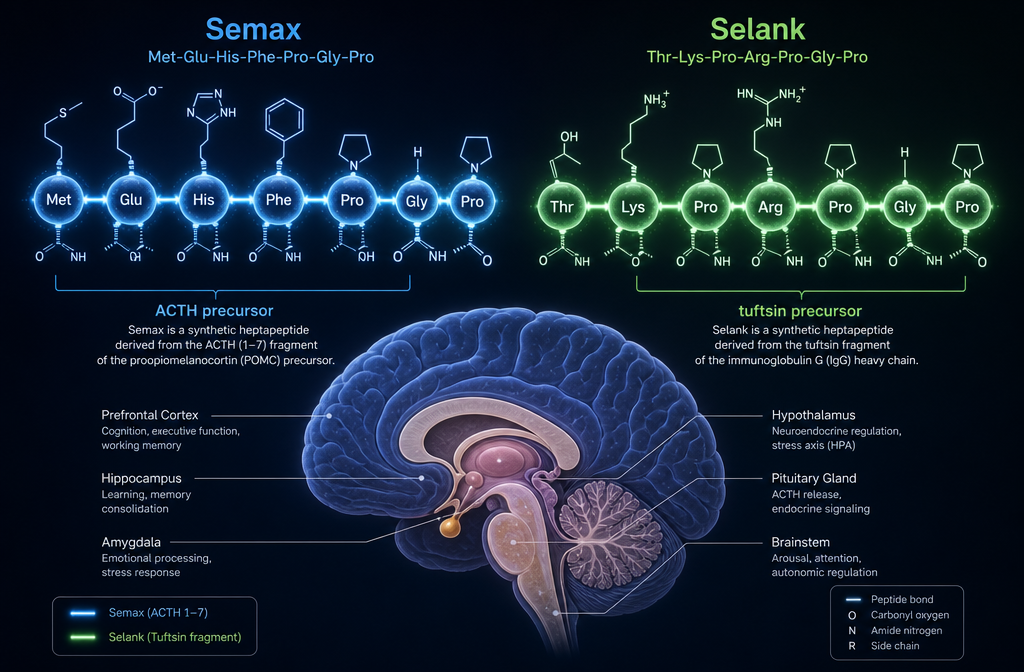
Two synthetic heptapeptides developed at the Russian Academy of Sciences have drawn sustained attention in preclinical neuroscience: Semax and Selank. Despite sharing a seven-amino-acid backbone and the same intranasal delivery route, their downstream effects diverge sharply — one drives neurotrophin expression, the other recalibrates GABAergic tone. Understanding this divergence is central to Semax and Selank peptide nasal sprays: comparative mechanisms in neurotrophic and anxiolytic research.

Key Takeaways

  • Semax is an ACTH(4-10) analog that upregulates BDNF and NGF, supporting cognitive and neuroprotective research models.
  • Selank is derived from the immunomodulatory peptide tuftsin and modulates GABAergic signaling without direct receptor binding.
  • Intranasal delivery bypasses first-pass metabolism, enabling rapid CNS uptake in animal research models.
  • Both peptides carry favorable preclinical safety profiles, but large-scale Western-standard trials remain limited.
  • Regulatory status differs by jurisdiction; researchers should verify current compliance requirements before sourcing.

Key Takeaways

Structural Origins and Mechanistic Divergence

Both peptides are heptapeptides, yet their parent sequences define entirely different pharmacological identities.

Semax (Met-Glu-His-Phe-Pro-Gly-Pro) is a synthetic analog of the ACTH(4-10) fragment. Its primary research interest lies in neurotrophin modulation. Preclinical data from rat glial cultures show that Semax rapidly induces BDNF mRNA expression approximately eight-fold and NGF mRNA approximately five-fold within hours of administration. These upregulations are believed to underlie the peptide's cognitive-enhancing and neuroprotective properties, making it a focus in stroke and ischemic injury models. In Russia, it holds approved status for ischemic stroke and transient ischemic attacks.

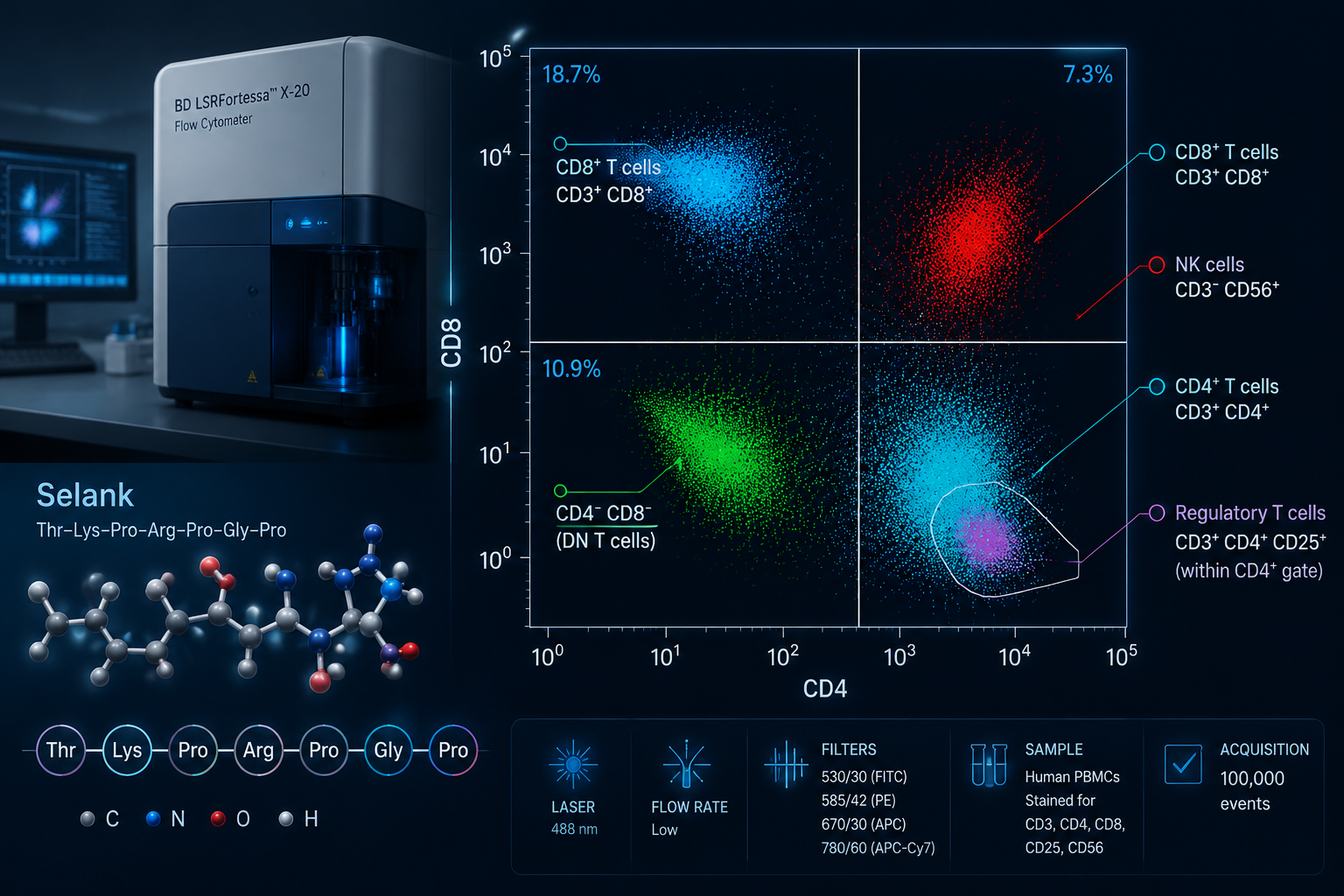
Selank (Thr-Lys-Pro-Arg-Pro-Gly-Pro) descends from tuftsin, a naturally occurring immunomodulatory tetrapeptide. Rather than driving neurotrophin synthesis, Selank modulates the GABAergic system by increasing expression of genes encoding GABA-A receptor subunits in the hippocampus and prefrontal cortex. Critically, it does not directly bind GABA-A receptors. Instead, it enhances receptor sensitivity to endogenous GABA — a mechanism that produces anxiolytic effects without the sedation, dependence, or withdrawal risks associated with benzodiazepines. Selank is registered in Russia for generalized anxiety disorder.

Feature Semax Selank
Parent sequence ACTH(4-10) Tuftsin
Primary mechanism BDNF/NGF upregulation GABAergic modulation
Key research area Neuroprotection, cognition Anxiety, stress response
Sedation risk Minimal None reported
Russian approval Ischemic stroke Generalized anxiety disorder

Researchers exploring broader neuropeptide frameworks may also find value in reviewing GHK-Cu longevity research themes and neuroendocrine and innate immunity interactions for comparative context.


Intranasal Delivery as a CNS Research Tool

The shared intranasal route is not incidental — it is mechanistically significant in Semax and Selank peptide nasal sprays: comparative mechanisms in neurotrophic and anxiolytic research.

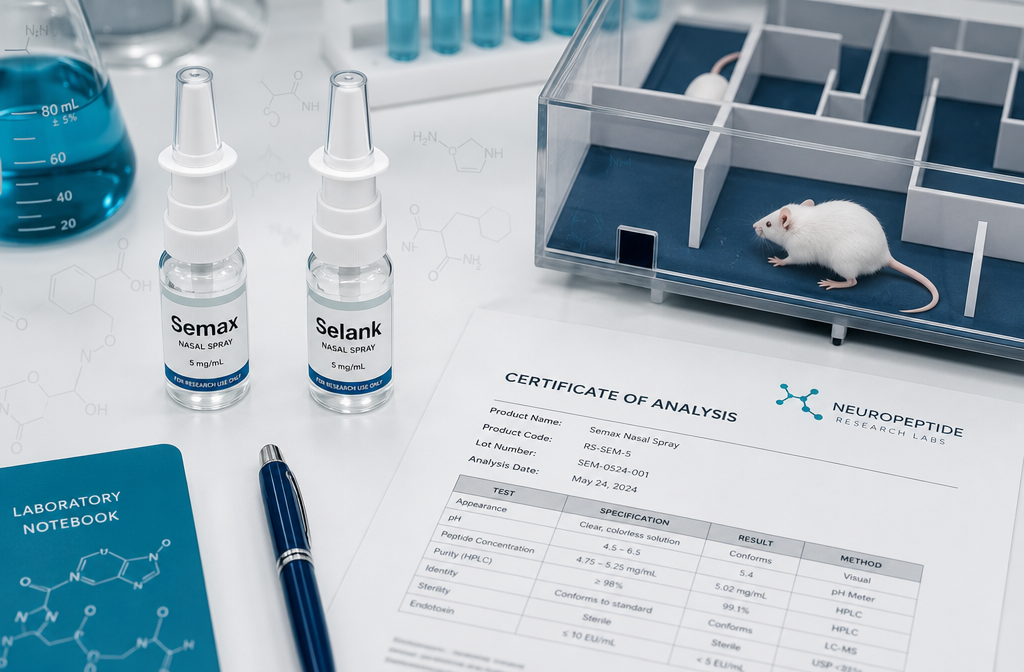
Intranasal administration bypasses the blood-brain barrier via olfactory and trigeminal pathways, enabling direct CNS uptake without first-pass hepatic metabolism. In animal models, this translates to faster onset and more predictable CNS bioavailability compared to oral routes. Both peptides benefit from this delivery advantage, which is why nasal spray formulations remain the standard in preclinical protocols.

"Intranasal delivery offers a non-invasive pathway to CNS-targeted peptide exposure, making it particularly valuable in rodent behavioral and neurochemical research."

This delivery principle is relevant across multiple peptide research lines. For example, PT-141 neural and metabolic research themes similarly highlight how administration route shapes CNS receptor engagement. Likewise, Epithalon research demonstrates how peptide structure and delivery interact in longevity-focused models.


Evidence Landscape, Safety, and Research Gaps

The clinical evidence base for Semax and Selank peptide nasal sprays: comparative mechanisms in neurotrophic and anxiolytic research is real but geographically concentrated. Most published studies originate from Russian-language literature and report positive outcomes — improved cognitive markers with Semax, reduced anxiety indices with Selank. However, large-scale, randomized, double-blind, placebo-controlled trials meeting Western regulatory standards are sparse, limiting generalizability.

Safety profiles for both peptides appear favorable in available data. Selank in particular shows no sedation, dependence, or withdrawal effects across reported use, a meaningful distinction from classical anxiolytics.

On the regulatory front, Selank was placed on the FDA's Category 2 list in September 2023, restricting pharmacy compounding. A reclassification announced in February 2026 is expected to return it to Category 1 status, which would restore legal compounding access in the United States.

Evidence Landscape, Safety, and Research Gaps

Combination protocols pairing Semax's neurotrophic effects with Selank's anxiolytic profile are an emerging research direction. The rationale is straightforward: BDNF-driven plasticity and reduced stress-pathway interference may complement each other in cognitive performance models. Researchers interested in multi-pathway peptide stacking can also review the KLOW blend multipathway research overview and Selank side effects research for additional context.

For sourcing decisions, verifying supplier quality documentation is essential. Reviewing a supplier's certificate of analysis standards helps ensure peptide purity and traceability in research applications.


Conclusion

Semax and Selank represent two distinct but complementary research tools within CNS-targeted peptide science. Semax drives neurotrophin expression — particularly BDNF and NGF — making it relevant to neuroprotection and cognitive research models. Selank modulates GABAergic receptor sensitivity without direct binding, offering anxiolytic effects free of dependence risk. Intranasal delivery amplifies both peptides' CNS accessibility, making nasal spray formulations the preferred vehicle in animal research.

Actionable next steps for researchers:

  • Prioritize peer-reviewed preclinical data when designing protocols; acknowledge the Western-trial gap.
  • Verify current regulatory status in your jurisdiction before sourcing either peptide.
  • Request certificates of analysis from suppliers to confirm purity and batch consistency.
  • Consider combination protocols only after establishing individual baseline responses in your model system.
  • Monitor the FDA reclassification timeline for Selank, anticipated to shift in 2026.
https://www.puretestedpeptides.com/wp-content/uploads/2026/06/Semax-and-Selank-Peptide-Nasal-Sprays-Comparative-Mechanisms-in-Neurotrophic-and-Anxiolytic-Research.png 672 1024 Pure Tested https://www.puretestedpeptides.com/wp-content/uploads/2026/01/buy-peptides-online.jpg Pure Tested2026-06-07 13:03:562026-07-20 15:03:50Semax and Selank Peptide Nasal Sprays: Comparative Mechanisms in Neurotrophic and Anxiolytic Research
Epithalon Peptide and Telomere Biology: What Cell and Animal Studies Really Show (and Don’t Show)

Epithalon Peptide and Telomere Biology: What Cell and Animal Studies Really Show (and Don’t Show)

June 6, 2026/0 Comments/by Pure Tested

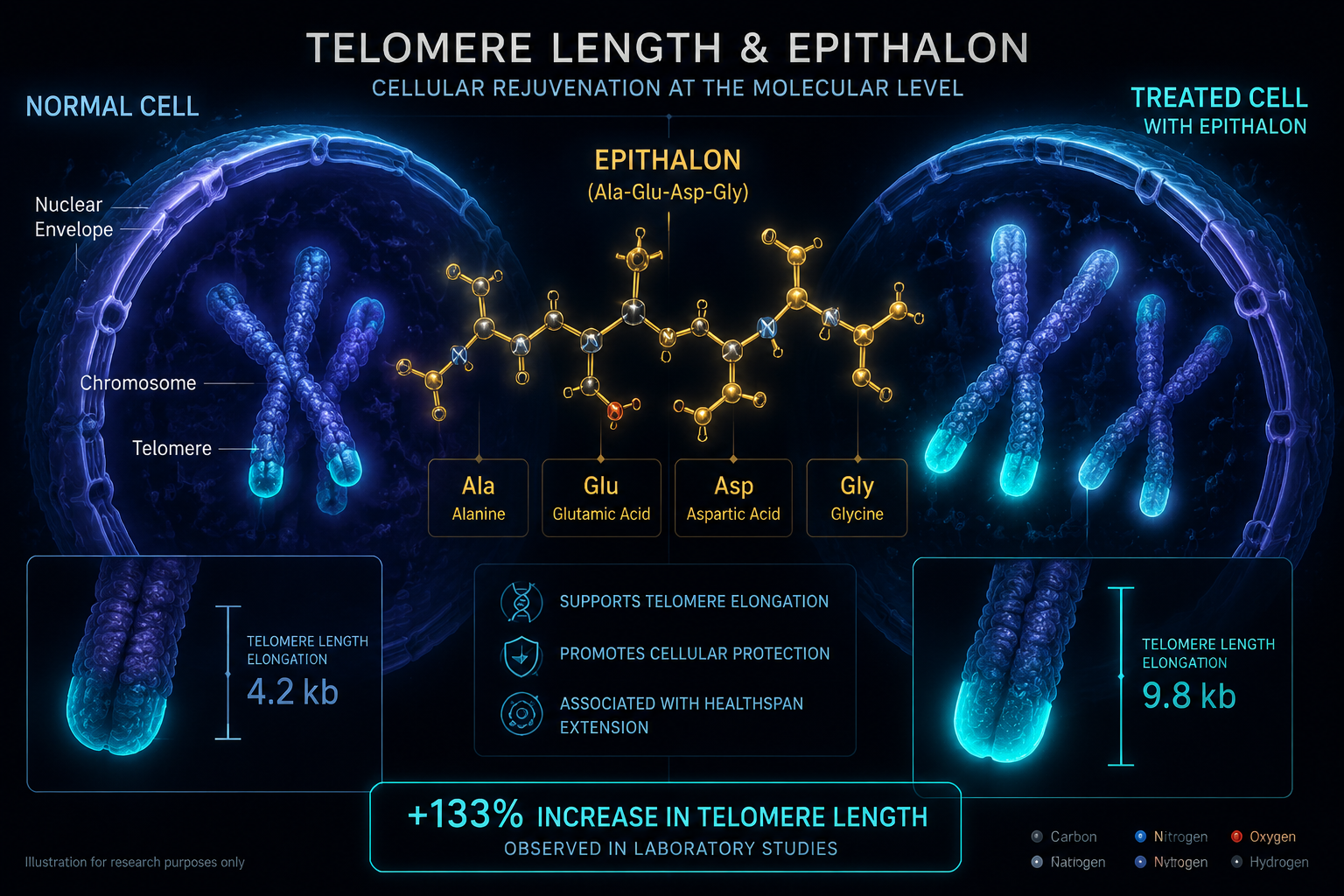
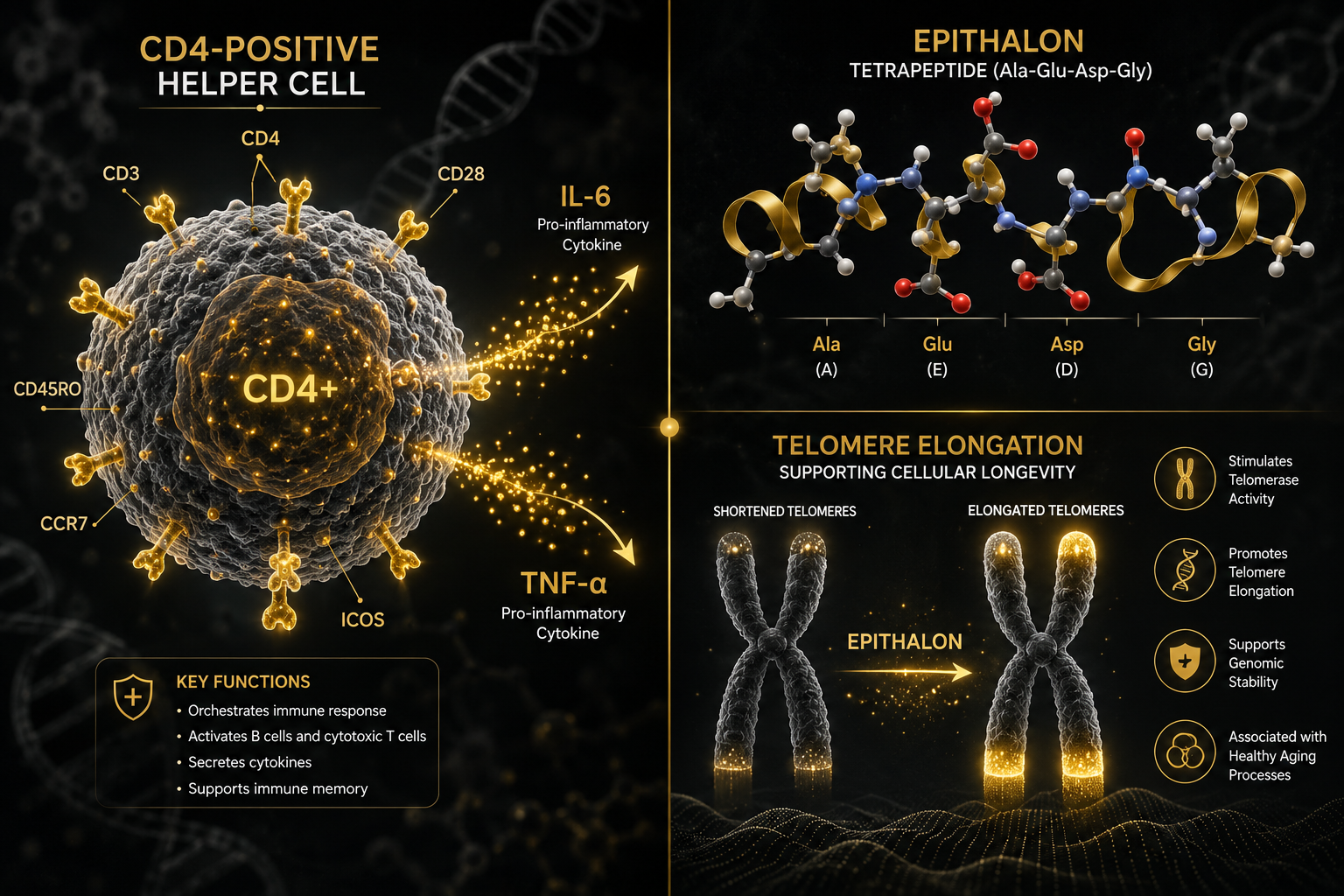
A synthetic tetrapeptide of just four amino acids — Ala-Glu-Asp-Gly — has generated decades of research interest by appearing to reactivate one of biology's most tightly regulated aging mechanisms. Epithalon peptide and telomere biology intersect in ways that are genuinely compelling, but also frequently overstated. Understanding what the cell and animal data actually demonstrate, and where the evidence falls short, is essential for anyone following aging research in 2026.

Detailed () scientific illustration showing a cross-section of a human cell nucleus with elongated telomere caps glowing in

Key Takeaways

  • Epithalon is a synthetic tetrapeptide derived from a natural pineal gland extract, with molecular formula C14H22N4O9.
  • Cell studies show it can upregulate telomerase activity and extend telomere length in normal human cells, with a distinct mechanism observed in cancer cell lines.
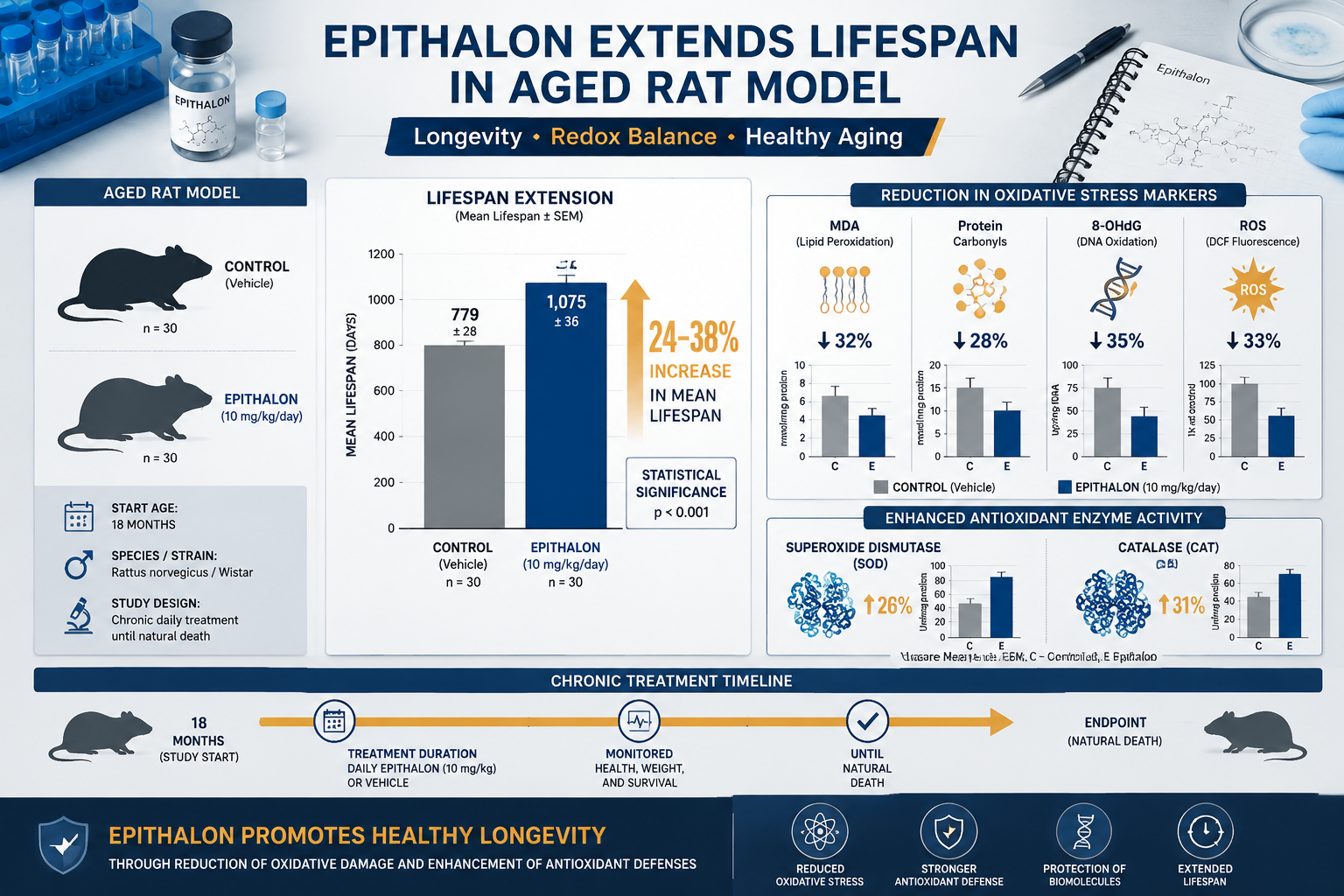
  • Animal studies report 24-38% mean lifespan increases and reduced tumor incidence, but most data come from a single research group.
  • Antioxidant and anti-inflammatory effects are among the most consistently reported secondary findings.
  • Independent replication using modern molecular tools remains limited, which is a critical gap before drawing firm mechanistic conclusions.

What Epithalon Is and Where It Comes From

Epithalon was developed by Russian gerontologist Vladimir Khavinson and is based on epithalamin, a natural polypeptide extract from the pineal gland. The synthetic version condenses this activity into four amino acids, making it chemically stable and reproducible for research purposes.

The pineal gland connection is relevant. Epithalamin was historically associated with melatonin regulation and circadian signaling. Epithalon appears to retain some of this influence, with proposed mechanisms including melatonin upregulation and modulation of the Nrf2/ARE pathway — a transcription system that governs the body's endogenous antioxidant proteins.

Researchers interested in peptides for aging and longevity research will find Epithalon sits at a unique crossroads of telomere biology, oxidative stress reduction, and circadian regulation.


Epithalon Peptide and Telomere Biology: What Cell and Animal Studies Really Show

Telomerase Activation in Normal Human Cells

The foundational 2003 work by Khavinson and colleagues was the first published demonstration that a short synthetic peptide could reactivate telomerase in human somatic cells. This was a notable finding because telomerase is typically silenced in most adult tissues, and its reactivation had previously been associated almost exclusively with cancer biology.

A 2025 study extended this work, showing that Epithalon treatment produced a dose-dependent increase in telomere length in normal human epithelial and fibroblast cells. This effect was linked to upregulation of hTERT mRNA expression — the gene encoding the catalytic subunit of telomerase — and measurable increases in telomerase enzyme activity.

In cancer cell lines, the picture was different. Rather than activating telomerase, Epithalon appeared to extend telomere length through the Alternative Lengthening of Telomeres (ALT) pathway. This distinction matters: the mechanism shifts depending on cell type, which has implications for how researchers interpret safety and applicability data.

Animal Lifespan and Tumor Data

Long-term rodent studies have reported some of the most striking findings in this literature. Chronic Epithalon administration was associated with:

Outcome Observed Effect
Mean lifespan 24-38% increase vs. controls
Mammary tumor incidence Reduced in treated groups
Hepatic tumor incidence Reduced in treated groups
Oxidative stress markers Decreased lipid peroxidation
Antioxidant enzyme activity Restored superoxide dismutase and catalase

These effects were observed in brain, liver, and blood tissue of aged rats following chronic treatment. The antioxidant findings are among the most replicated secondary outcomes in this body of research.


What the Studies Don't Show: Gaps and Limitations

What the Studies Don't Show: Gaps and Limitations

This is where Epithalon peptide and telomere biology research requires careful reading. Several important caveats apply.

First, the replication problem. A significant portion of published Epithalon research originates from a single research group. While the findings are internally consistent, independent replication using modern molecular biology tools has been limited. This is not a reason to dismiss the data, but it is a reason to hold conclusions loosely.

Second, the translation gap. Rodent lifespan data does not translate automatically to human outcomes. The cellular mechanisms may differ, dosing relationships are unclear, and long-term safety in humans has not been systematically studied.

Third, mechanistic complexity. The dual-pathway finding — telomerase in normal cells, ALT in cancer cells — raises questions that have not been fully resolved. Researchers exploring NAD+ and energetics in longevity research will recognize this pattern: promising mechanisms often prove more context-dependent than initial studies suggest.

A 2002 clinical study in patients with retinitis pigmentosa did report electrophysiological improvements, attributed to antioxidant and anti-apoptotic effects on photoreceptors. This represents one of the few human-adjacent data points, though it is limited in scope.

For broader context on how peptide research translates from bench to application, resources on MOTS-c mitochondrial research themes and GHK-Cu peptide research offer useful comparative frameworks.


Epithalon Peptide and Telomere Biology: Putting the Evidence in Context

Epithalon Peptide and Telomere Biology: Putting the Evidence in Context

The honest summary is this: Epithalon has produced genuinely interesting results in cell and animal models. The telomerase activation data is mechanistically plausible, the antioxidant findings are consistent, and the lifespan data — if replicated — would be significant. However, the field needs broader independent validation before any definitive claims can be made.

Researchers comparing peptide mechanisms may also find value in reviewing SS-31 elamipretide mitochondrial research and BPC-157 core peptide documentation for contrast in how different peptide classes approach cellular protection.

Those sourcing research-grade compounds should prioritize verified purity and documentation. Exploring tested peptides available for research with transparent assay data is a practical starting point.


Conclusion

Epithalon occupies a legitimate and interesting position in aging research, particularly within telomere biology. The cell data supporting telomerase upregulation in normal human cells is the strongest signal in the literature. Animal lifespan findings are provocative but require independent confirmation. The antioxidant and circadian-related effects may prove to be the most durable findings over time.

Actionable next steps for researchers:

  • Prioritize studies that include independent replication and modern genomic tools when evaluating Epithalon claims.
  • Distinguish between normal cell data and cancer cell data, as the mechanisms appear to differ.
  • Track emerging 2026 publications for independent validation efforts.
  • Source only research-grade, assay-documented compounds for any in vitro or in vivo work.

The science is worth following. The conclusions, for now, should remain provisional.

https://www.puretestedpeptides.com/wp-content/uploads/2026/06/Epithalon-Peptide-and-Telomere-Biology-What-Cell-and-Animal-Studies-Really-Show-and-Dont-Show.png 1024 1536 Pure Tested https://www.puretestedpeptides.com/wp-content/uploads/2026/01/buy-peptides-online.jpg Pure Tested2026-06-06 13:04:582026-07-20 15:03:51Epithalon Peptide and Telomere Biology: What Cell and Animal Studies Really Show (and Don’t Show)
Retatrutide vs GLP-1 and GLP-2 Pathways: How Triple Agonism Changes the Research Conversation

Retatrutide vs GLP-1 and GLP-2 Pathways: How Triple Agonism Changes the Research Conversation

June 6, 2026/0 Comments/by Pure Tested

A single peptide producing nearly 29% body weight reduction in a Phase 3 trial is not an incremental advance — it is a structural shift in how researchers think about metabolic intervention. That result, recorded in the TRIUMPH-4 trial with retatrutide, has forced a direct comparison between the emerging triple agonist approach and the narrower incretin pathways that have defined obesity pharmacology for the past decade. The discussion around Retatrutide vs GLP-1 and GLP-2 Pathways: How Triple Agonism Changes the Research Conversation is no longer speculative; it is grounded in late-stage clinical data that demands a closer look at mechanism.

() scientific infographic showing a side-by-side molecular comparison of three peptide receptor pathways: GIP receptor node

Key Takeaways

  • Retatrutide activates three receptors — GIP, GLP-1, and glucagon — making it mechanistically distinct from both semaglutide (single agonist) and tirzepatide (dual agonist).
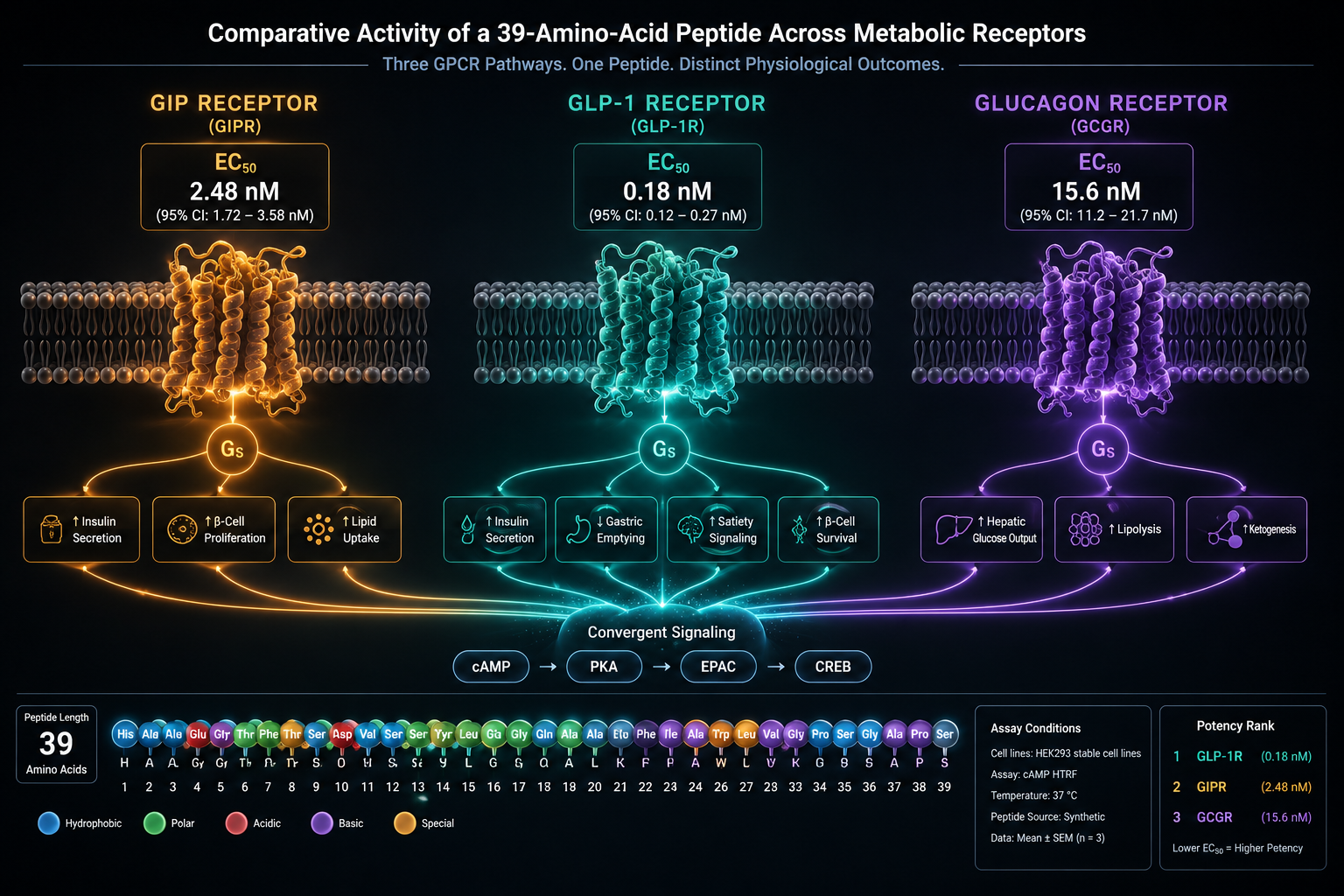
  • Its receptor potency is GIP-primary, with EC50 values of 0.0643 nM at GIP, 0.775 nM at GLP-1, and 5.79 nM at glucagon.
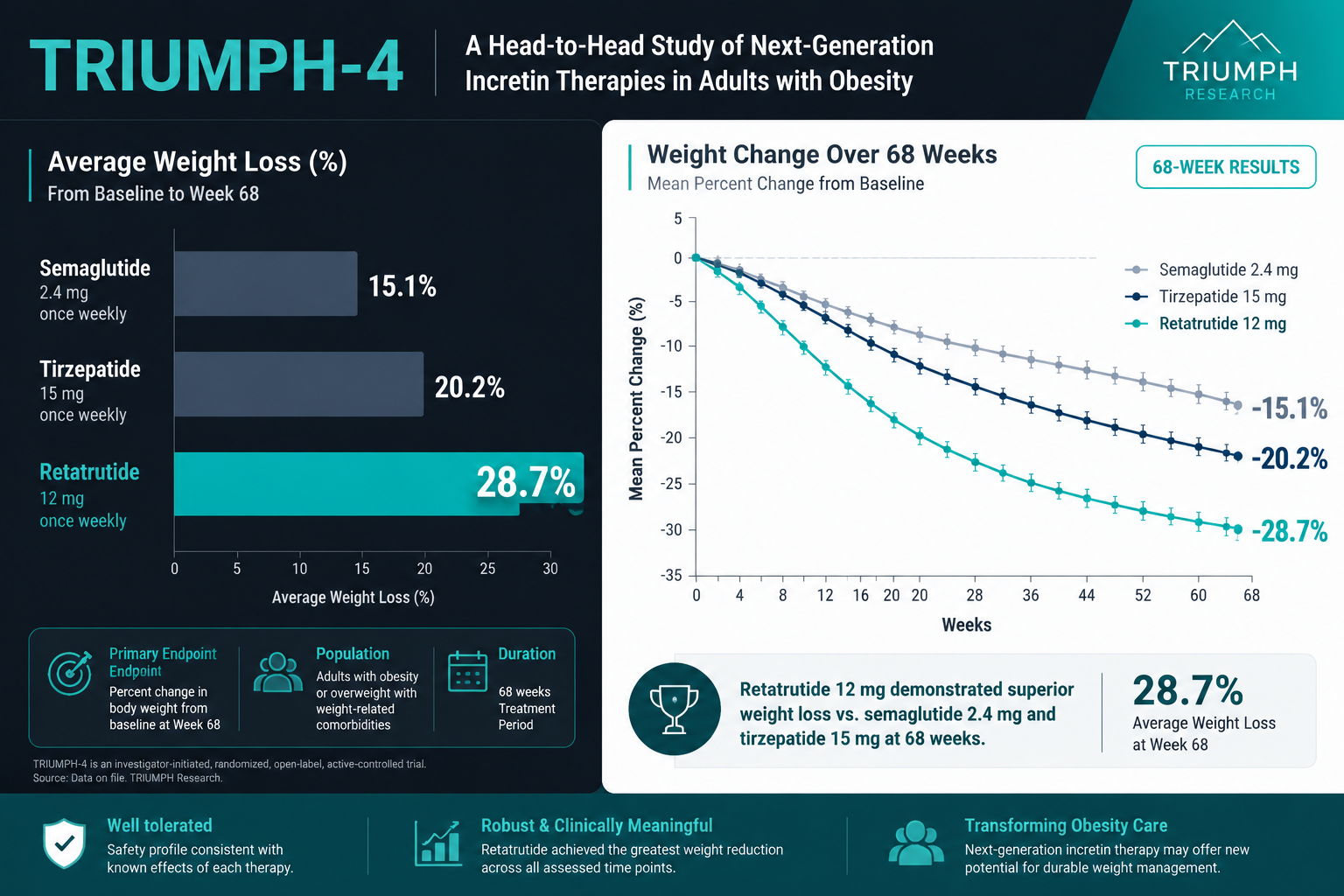
  • TRIUMPH-4 Phase 3 data showed an average weight loss of 28.7% over 68 weeks, roughly 71 pounds from a baseline of 249 pounds.
  • Glucagon receptor activity is considered a key driver of enhanced energy expenditure, separating retatrutide from pure incretin strategies.
  • As of 2026, retatrutide is not FDA-approved, with Eli Lilly targeting a regulatory submission by late 2026.

What Separates Triple Agonism from Incretin-Only Approaches

The GLP-1 receptor pathway has been the dominant target in metabolic research since the early success of semaglutide. GLP-1 agonism reduces appetite, slows gastric emptying, and improves insulin secretion. Adding GIP receptor activation — as tirzepatide does — brought a meaningful improvement in both glucose control and weight outcomes. However, both approaches remain within the incretin framework.

Retatrutide steps outside that framework. As a 39-amino acid peptide, it simultaneously activates the GIP, GLP-1, and glucagon receptors. The glucagon component is what most fundamentally changes the research conversation. Glucagon receptor activation increases energy expenditure and promotes fat breakdown in the liver, effects that incretin-only molecules cannot replicate. Researchers exploring GLP-3 and incretin research themes have noted that this third receptor engagement may explain why retatrutide's weight loss outcomes exceed what dual agonists have produced.

"The inclusion of glucagon receptor activity may represent the ceiling-raising mechanism that separates retatrutide from every prior pharmacological approach to obesity."

The potency hierarchy matters here. Retatrutide's EC50 values place GIP activation as the primary driver (0.0643 nM), followed by GLP-1 (0.775 nM), then glucagon (5.79 nM). This graduated profile is intentional — high glucagon activity without GLP-1 co-activation would raise blood sugar, so the balance is a deliberate design feature, not a side effect.

For researchers comparing generational differences in GLP-1 receptor approaches, this receptor hierarchy represents a fundamentally new design philosophy rather than a refinement of existing ones.


Retatrutide vs GLP-1 and GLP-2 Pathways: What the Phase 3 Data Reveals

Retatrutide vs GLP-1 and GLP-2 Pathways: What the Phase 3 Data Reveals

The TRIUMPH-4 trial enrolled participants with obesity and knee osteoarthritis. Over 68 weeks, the average participant lost 28.7% of body weight — approximately 71 pounds from a starting weight of 249 pounds. No approved pharmacological therapy has produced comparable results in a controlled Phase 3 setting.

Comparison of key obesity drug mechanisms:

Drug Receptors Targeted Avg. Weight Loss (Phase 3)
Semaglutide GLP-1 ~15%
Tirzepatide GIP + GLP-1 ~20-22%
Retatrutide GIP + GLP-1 + Glucagon ~28.7%

The TRIUMPH program spans multiple indications, including type 2 diabetes and metabolic liver disease, reflecting the breadth of conditions that researchers believe triple agonism may address. Eli Lilly is targeting an FDA submission by late 2026, though as of 2026 the compound remains investigational.

Side effects reported in trials include nausea, vomiting, constipation, and diarrhea — a profile consistent with other GLP-class peptides. Researchers sourcing compounds for preclinical models can review the retatrutide research compound page for current availability context.

Those tracking the broader landscape of what is new in peptide research will recognize that retatrutide's data has elevated expectations across the entire metabolic peptide category.


How Triple Agonism Reshapes Metabolic Research Models

The Retatrutide vs GLP-1 and GLP-2 Pathways conversation extends beyond weight loss percentages. It raises questions about how researchers should model metabolic intervention going forward. Single-pathway models are increasingly insufficient for studying complex conditions like obesity-related liver disease or insulin resistance, where energy expenditure, appetite, and hepatic fat metabolism must be addressed simultaneously.

How Triple Agonism Reshapes Metabolic Research Models

Researchers working with metabolic modulation research lines are already integrating multi-receptor thinking into their experimental designs. The question is no longer whether multi-agonism outperforms single-agonism — the data answers that — but which receptor combinations produce the most favorable benefit-to-risk profiles for specific conditions.

Complementary research areas are also gaining attention. Compounds like MOTS-c, studied for metabolic flexibility, and SLU-PP-332, explored for metabolic modulation, represent parallel lines of inquiry that may eventually intersect with incretin-based approaches in combination research models.

The GLP-1 receptor remains central, but retatrutide's data suggests that anchoring research exclusively to that pathway may limit what is discoverable. For researchers sourcing GLP-1 class compounds, the GLP-1 peptide research and sourcing notes page provides useful context on how this category has evolved.


Conclusion

The evidence from retatrutide's Phase 3 program makes the case clearly: triple agonism is not a variation on existing GLP-1 therapy — it is a different category of metabolic intervention. The glucagon receptor component adds an energy expenditure dimension that incretin-only approaches cannot replicate, and the clinical outcomes reflect that mechanistic difference.

For researchers, the actionable steps are straightforward. First, review the TRIUMPH trial data to understand how the three-receptor model performs across different patient populations. Second, evaluate whether current research models account for glucagon receptor activity alongside incretin pathways. Third, monitor the regulatory timeline, as Eli Lilly's planned FDA submission by late 2026 will bring additional data into the public domain. The research conversation has shifted — and the mechanism is the reason why.

https://www.puretestedpeptides.com/wp-content/uploads/2026/06/Retatrutide-vs-GLP-1-and-GLP-2-Pathways-How-Triple-Agonism-Changes-the-Research-Conversation.png 1024 1536 Pure Tested https://www.puretestedpeptides.com/wp-content/uploads/2026/01/buy-peptides-online.jpg Pure Tested2026-06-06 13:04:302026-07-20 15:03:51Retatrutide vs GLP-1 and GLP-2 Pathways: How Triple Agonism Changes the Research Conversation
BPC-157 and TB-500 in Experimental Tissue-Repair Models: Synergy, Overlaps, and Key Differences

BPC-157 and TB-500 in Experimental Tissue-Repair Models: Synergy, Overlaps, and Key Differences

June 6, 2026/0 Comments/by Pure Tested

Over 100 preclinical studies have examined BPC-157 alone — yet researchers increasingly argue the more interesting story begins when this peptide is paired with TB-500. The study of BPC-157 and TB-500 in experimental tissue-repair models: synergy, overlaps, and key differences has become one of the more active corners of peptide research in 2026, driven by animal and cell-based data suggesting these two compounds may address healing from complementary angles.

Detailed () scientific illustration showing side-by-side molecular diagrams of BPC-157 (15-amino-acid chain highlighted in

Key Takeaways

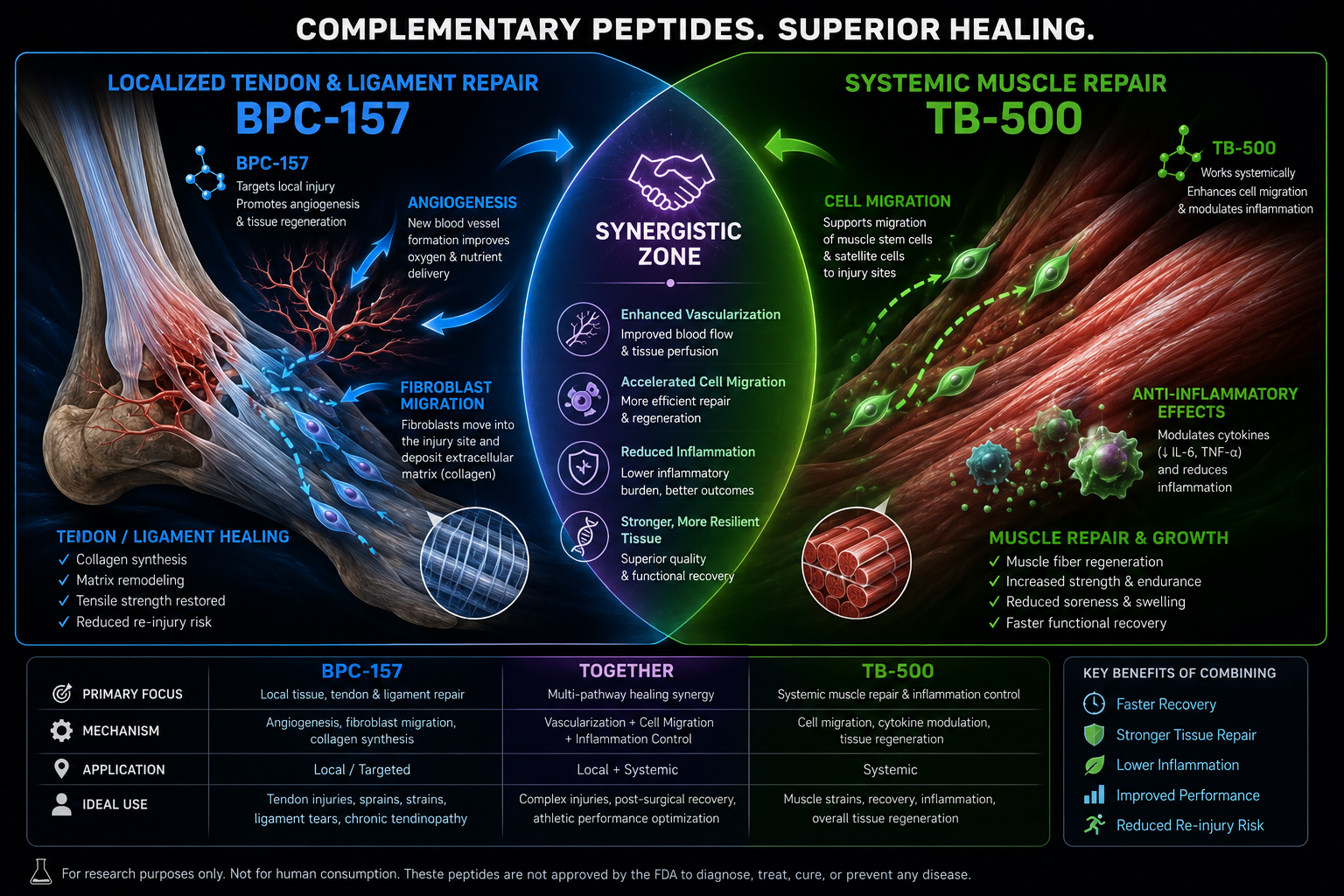
  • BPC-157 drives localized repair through angiogenesis and nitric oxide modulation; TB-500 promotes systemic healing via G-actin binding and cell migration.
  • In animal models, combining both peptides — sometimes called the "Wolverine Stack" — may accelerate recovery faster than either compound alone.
  • BPC-157 shows stronger preclinical evidence for tendon, ligament, and gastrointestinal repair; TB-500 is better studied for muscle and post-surgical recovery.
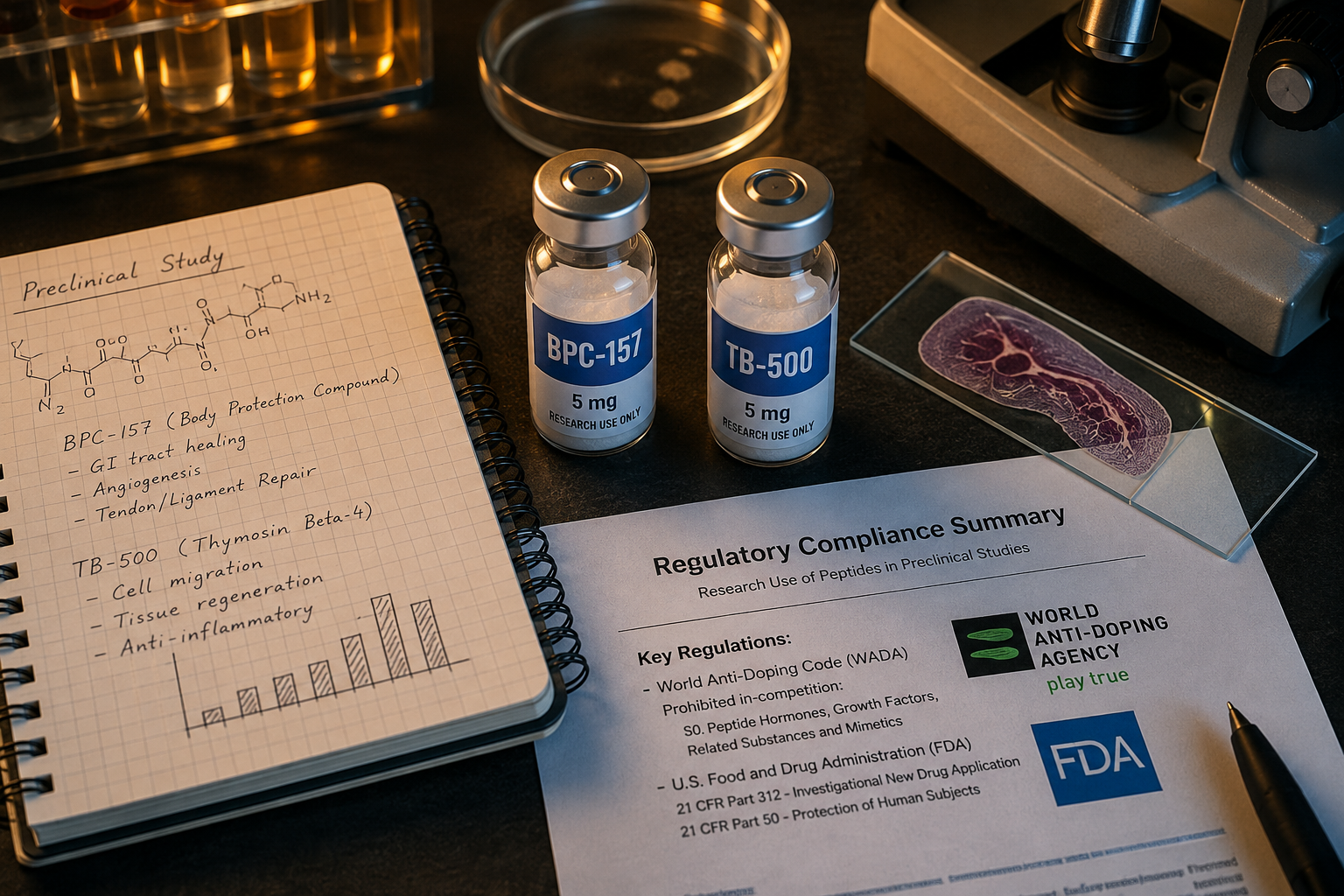
  • Neither peptide holds FDA approval for human use, and both are banned by WADA under the S0 category.
  • All findings discussed here come from preclinical and experimental models; human clinical evidence remains limited.

Distinct Mechanisms: How Each Peptide Acts on Tissue

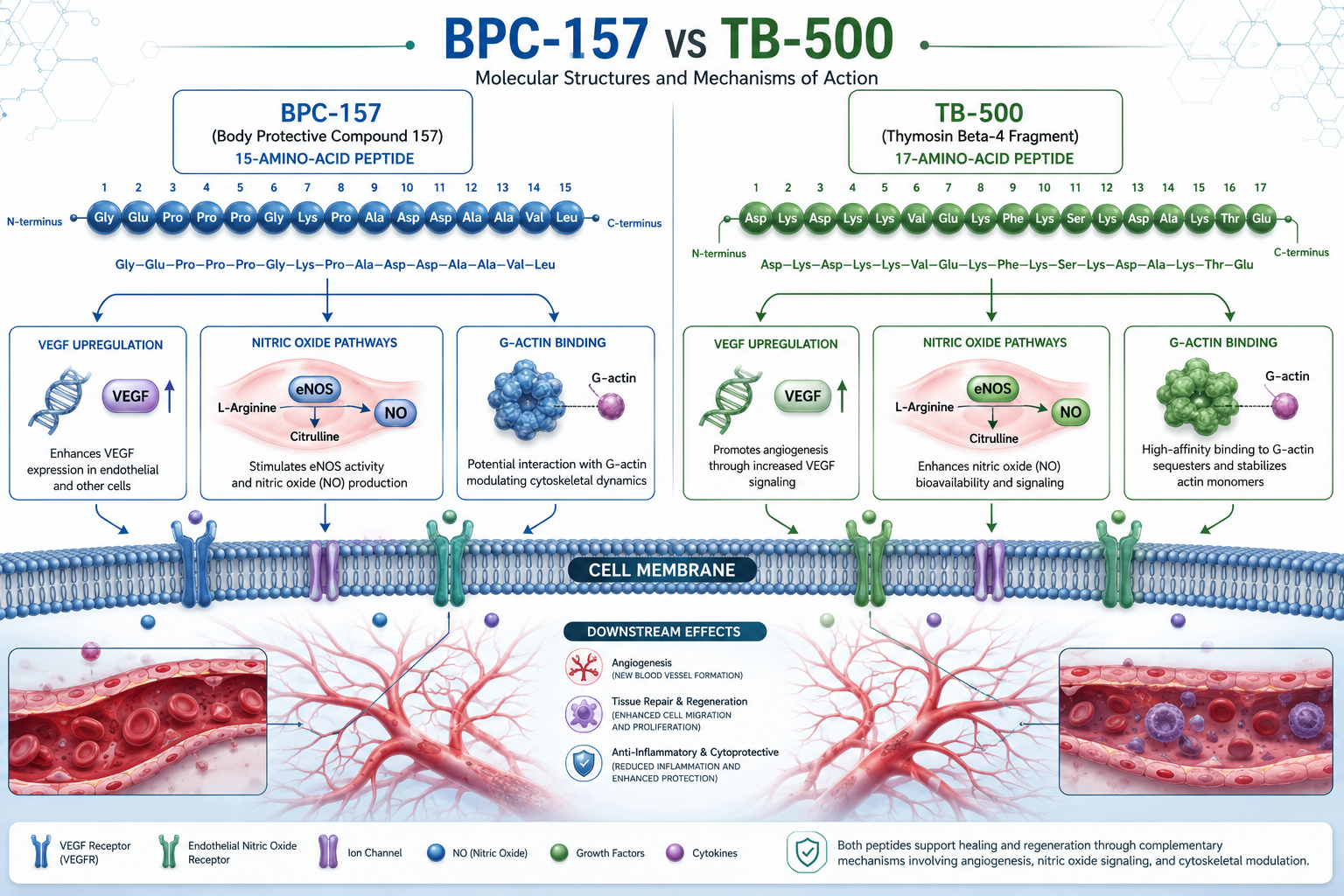
BPC-157 is a 15-amino-acid peptide derived from human gastric juice. In cell-based and animal studies, it promotes localized tissue repair primarily through two pathways: upregulation of vascular endothelial growth factor (VEGF) and modulation of nitric oxide signaling. The result, as seen in rodent tendon and ligament models, is faster formation of new blood vessels at the injury site — a process called angiogenesis. This vascular scaffolding appears to support downstream fibroblast activity and collagen deposition.

You can explore a deeper breakdown of BPC-157's documented research profile in this BPC-157 core peptides documentation and research guide.

TB-500, a synthetic fragment of thymosin beta-4, works differently. Rather than anchoring to a specific injury site, it binds to G-actin — a protein involved in cytoskeletal structure — and facilitates cell migration throughout the body. In preclinical inflammation models, TB-500 also demonstrates measurable reductions in pro-inflammatory cytokines, suggesting a systemic anti-inflammatory role that complements localized repair.

Feature BPC-157 TB-500
Source Gastric juice-derived Thymosin beta-4 fragment
Primary action Angiogenesis, NO modulation G-actin binding, cell migration
Repair focus Localized (tendon, GI, ligament) Systemic (muscle, post-surgical)
Typical dose range 250-500 mcg/day 2-2.5 mg twice weekly (loading)
Administration route Subcutaneous or oral Subcutaneous, any site

Overlaps and Synergy in Experimental Tissue-Repair Models

Overlaps and Synergy in Experimental Tissue-Repair Models

The question researchers ask most often is whether BPC-157 and TB-500 in experimental tissue-repair models produce additive or truly synergistic effects. The distinction matters: additive effects simply stack two separate benefits, while synergy means the combined outcome exceeds what either compound achieves independently.

Animal studies on musculoskeletal injuries suggest the combination — informally called the "Wolverine Stack" — may lean toward synergy. BPC-157 builds the vascular infrastructure at the wound site, while TB-500 mobilizes repair cells from distant tissue depots and dampens the inflammatory environment systemically. These roles do not overlap significantly, which is precisely why researchers find the pairing compelling.

"The two peptides appear to operate on different rungs of the healing ladder — one building the road, the other sending the workers."

Both compounds share some overlap in fibroblast stimulation and anti-inflammatory activity, but the mechanisms differ enough that co-administration in rodent models has not shown obvious redundancy. For researchers interested in how peptide combinations can be designed around complementary pathways, the synergy of LL-37 and SS-31 offers a useful parallel framework.

Those looking to review available research-grade formulations can browse the BPC-157 and TB-500 combined product page for sourcing context.


Regulatory Status, Safety Signals, and Research Limitations

Regulatory Status, Safety Signals, and Research Limitations

Understanding BPC-157 and TB-500 in experimental tissue-repair models: synergy, overlaps, and key differences requires an honest look at what the data cannot yet confirm. As of 2026, neither peptide holds FDA approval for human therapeutic use. Both are listed under WADA's S0 category — non-approved substances — making them prohibited in competitive sports regardless of context.

TB-500's parent compound, thymosin beta-4, has progressed through Phase 2 and Phase 3 clinical trials in certain formulations, providing a broader human safety dataset than BPC-157, which has only three small pilot studies in humans alongside its extensive animal literature.

Potential side effects for both remain under active investigation. Reported concerns in preclinical settings include injection-site reactions and, at high doses, possible effects on cell proliferation pathways. Researchers working with these compounds should consult current literature and institutional review protocols before designing any study.

For researchers interested in other peptides with documented aging and tissue-support profiles, the GHK-Cu research overview and epithalon research page provide useful comparative context. Those exploring oral delivery formats may also find the oral BPC-157 research themes relevant to bioavailability questions.


Conclusion

The preclinical case for studying BPC-157 and TB-500 together is built on a logical foundation: two peptides with non-overlapping primary mechanisms, each addressing a different phase or dimension of tissue repair. BPC-157 anchors vascular and fibroblast activity locally; TB-500 coordinates systemic cell migration and inflammation control. Where they overlap — in fibroblast support and anti-inflammatory signaling — the redundancy appears minimal rather than wasteful.

Actionable next steps for researchers:

  • Review the full preclinical literature for each compound separately before designing combination protocols.
  • Note dosing asymmetry: BPC-157 requires daily administration while TB-500 follows a loading-then-maintenance schedule.
  • Prioritize models that measure both local and systemic healing markers to capture the full potential of the combination.
  • Stay current on regulatory updates, as the status of unapproved peptides can shift rapidly.
  • Ensure all research use complies with institutional ethics guidelines and applicable jurisdiction rules.

The data available in 2026 is promising but not conclusive for human application. Rigorous, well-controlled clinical trials remain the necessary next step before any therapeutic claims can be made with confidence.

https://www.puretestedpeptides.com/wp-content/uploads/2026/06/BPC-157-and-TB-500-in-Experimental-Tissue-Repair-Models-Synergy-Overlaps-and-Key-Differences.png 1024 1536 Pure Tested https://www.puretestedpeptides.com/wp-content/uploads/2026/01/buy-peptides-online.jpg Pure Tested2026-06-06 13:03:512026-07-20 15:03:52BPC-157 and TB-500 in Experimental Tissue-Repair Models: Synergy, Overlaps, and Key Differences
Cluster of Differentiation Markers and Experimental Peptides: Mapping Immune Pathways for Selank, Epithalon, and BPC‑157

Cluster of Differentiation Markers and Experimental Peptides: Mapping Immune Pathways for Selank, Epithalon, and BPC‑157

June 6, 2026/0 Comments/by Pure Tested

Flow cytometry panels routinely detect shifts in CD4-to-CD8 ratios within hours of peptide exposure in murine models — a detail that reveals just how precisely researchers can now track immune responses to compounds like Selank, Epithalon, and BPC-157. Understanding cluster of differentiation markers and experimental peptides is central to mapping immune pathways for Selank, Epithalon, and BPC-157 in a rigorous lab setting.

Key Takeaways

  • CD markers are surface proteins used to identify and quantify specific immune cell populations via flow cytometry.
  • Selank, Epithalon, and BPC-157 each interact with immune pathways through distinct mechanisms, including cytokine modulation and inflammatory regulation.
  • Flow cytometry is the gold-standard tool for measuring peptide-driven shifts in CD marker expression.
  • Human clinical data for all three peptides remains limited; most evidence comes from animal and in vitro models.
  • Thoughtful panel design — selecting the right CD markers for each peptide's mechanism — is critical for meaningful experimental results.

Key Takeaways

What Are CD Markers and Why Do They Matter in Peptide Research

Cluster of differentiation (CD) markers are glycoproteins expressed on the surface of immune cells. They act as molecular identity tags, allowing researchers to distinguish T cells, B cells, natural killer cells, macrophages, and regulatory populations from one another. Common markers include:

CD Marker Cell Type Function
CD3 T cells T-cell receptor complex
CD4 Helper T cells MHC class II interaction
CD8 Cytotoxic T cells MHC class I interaction
CD25 Regulatory T cells (Tregs) IL-2 receptor alpha chain
CD56 Natural killer cells Cell adhesion and activation
CD68 Macrophages Phagocytic activity marker

When an experimental peptide is introduced, shifts in these populations — measured by flow cytometry — provide quantitative evidence of immunomodulatory activity. This approach is far more precise than measuring cytokine levels alone, because it identifies which cell types are being affected and in what proportion.

For researchers designing panels, the choice of fluorochrome combinations and gating strategies directly determines the quality of the data. A poorly designed panel can miss a meaningful CD4-to-CD8 ratio shift entirely.


Mapping Immune Pathways for Selank, Epithalon, and BPC-157 Using CD Markers

Each peptide engages immune biology differently, which means the optimal CD marker panel differs by compound.

Selank

Selank is a synthetic heptapeptide originally derived from the immunomodulatory peptide tuftsin. Its primary research interest lies in anxiety modulation and cognitive support, but its immune relevance is significant. Selank has been shown in preclinical models to influence IL-6 and interferon-gamma expression, both of which are linked to T-cell activation states. Researchers tracking Selank's immune effects typically include CD3, CD4, CD8, and CD25 in their panels to capture T-cell subset dynamics and regulatory T-cell expansion.

Reviewing Selank's known side effects and biological activity can help researchers anticipate which immune compartments may show the most change during an experiment.

Epithalon

Epithalon (Ala-Glu-Asp-Gly) is a tetrapeptide studied primarily for its telomerase-activating and potential anti-aging properties. Its immune relevance connects to thymic function — the organ responsible for T-cell maturation. Preclinical data suggests Epithalon may support thymic peptide activity, which could influence naive T-cell output. A targeted flow cytometry panel for Epithalon research might include CD45RA (naive T cells), CD45RO (memory T cells), and CD56 to monitor NK cell activity. For a broader comparison of Epithalon's molecular targets, the Epithalon vs NAD evidence review provides useful context on its longevity-related mechanisms.

BPC-157

BPC-157 is a 15-amino-acid peptide (GEPPPGKPADDAGLV) derived from human gastric juice, with a molecular weight of approximately 1,419 Da and a half-life under 30 minutes. Its immune-relevant actions include promoting angiogenesis via VEGFR2 upregulation, modulating nitric oxide signaling, and regulating inflammatory cytokine cascades. Unlike classical immunosuppressants, BPC-157 appears to rebalance immune function rather than broadly suppress it.

For CD marker mapping, researchers commonly target CD68 (macrophage polarization), CD31 (endothelial and angiogenic activity), and CD4/CD8 ratios to assess systemic inflammatory tone. Oral BPC-157 research formats have also introduced questions about how route of administration affects peripheral immune marker profiles.

"The most informative experiments pair CD marker flow cytometry with cytokine multiplex assays — neither method alone tells the full story."


BPC-157

Designing a Flow Cytometry Model for Cluster of Differentiation Markers and Experimental Peptides

A well-structured experimental model for cluster of differentiation markers and experimental peptides should follow a logical sequence:

  1. Define the research question — Is the goal to detect immunosuppression, immune activation, or specific cell subset expansion?
  2. Select the peptide dose and route — BPC-157 typical research doses range from 250 to 500 mcg once or twice daily in animal models; Selank and Epithalon protocols vary.
  3. Choose the CD panel — Match markers to the peptide's known mechanism (see table above).
  4. Set time points — Acute (24-48 hours), subacute (1-2 weeks), and chronic (4-8 weeks) time points capture different phases of immune modulation.
  5. Include controls — Vehicle controls, positive immunomodulatory controls (e.g., LPS stimulation), and unstained samples are essential.
  6. Validate with secondary assays — CBC and comprehensive metabolic panel assessments at baseline and week 8 add clinical-translational value.

Researchers interested in how other peptides interact with immune and metabolic pathways may find the Thymosin Alpha-1 mechanism overview useful for comparative panel design, given Thymosin Alpha-1's well-characterized CD4 and CD8 effects.

It is worth noting that human clinical data for BPC-157 remains sparse — only three small pilot studies with a combined enrollment of 30 subjects have been published, all from a single clinic, and no randomized controlled trials exist. Selank and Epithalon face similar evidentiary gaps in human immune research. As of 2026, BPC-157's regulatory status in the United States is also in transition, with a Pharmacy Compounding Advisory Committee vote scheduled for later this year.

For researchers exploring adjacent peptide categories, IPA peptide research resources and the LL-37 innate immunity research themes page offer complementary perspectives on innate and adaptive immune pathway mapping.


Designing a Flow Cytometry Model for Cluster of Differentiation Markers and Experimental Peptides

Conclusion

Mapping immune pathways for Selank, Epithalon, and BPC-157 through cluster of differentiation markers and experimental peptides requires deliberate panel design, appropriate model selection, and honest acknowledgment of current data limitations. The actionable steps for researchers in 2026 are clear:

  • Anchor every experiment to a specific CD marker rationale tied to the peptide's known mechanism.
  • Use flow cytometry as the primary quantification tool, supported by cytokine multiplex and standard blood panels.
  • Prioritize multi-time-point designs to distinguish acute immune shifts from sustained modulation.
  • Track regulatory developments for BPC-157 in particular, as its compounding status may affect research access.

The science of peptide immunomodulation is advancing rapidly. Researchers who build rigorous CD marker frameworks now will be best positioned to generate translatable, reproducible data as clinical trials eventually expand.

https://www.puretestedpeptides.com/wp-content/uploads/2026/06/Cluster-of-Differentiation-Markers-and-Experimental-Peptides-Mapping-Immune-Pathways-for-Selank-Epithalon-and-BPC‑157.png 1024 1536 Pure Tested https://www.puretestedpeptides.com/wp-content/uploads/2026/01/buy-peptides-online.jpg Pure Tested2026-06-06 13:03:442026-07-20 15:03:52Cluster of Differentiation Markers and Experimental Peptides: Mapping Immune Pathways for Selank, Epithalon, and BPC‑157
Page 64 of 81«‹6263646566›»
×

Helpful Links

  • My account
  • Cart
  • Checkout
  • Refund and Returns Policy
  • Privacy Policy
  • SMS Privacy Policy
  • Login
  • My Account
  • Logout

USA Made Lab Tested Peptides

All products are sold for research, laboratory, or analytical purposes only, and are not for human consumption


Pure Tested Peptides is a chemical supplier. Pure Tested Peptides is not a compounding / chemical compounding facility as defined under 503A of the Federal Food, Drug, and Cosmetic act. Pure Tested Peptides is not an outsourcing facility as defined under 503B of the Federal Food, Drug, and Cosmetic act.

The statements made within this website have not been evaluated by the US Food and Drug Administration. The products we offer are not intended to diagnose, treat, cure or prevent any disease.

Human/Animal Consumption Prohibited. Laboratory/In-Vitro Experimental Use Only

Scroll to top Scroll to top Scroll to top