Call or Text 727-513-9780
  • Shopping Cart Shopping Cart
    0Shopping Cart
Pure Tested Peptides | America's most trusted Peptides for sale online
  • Peptides for sale
    • Oral Peptides for sale
      • Peptide Capsules for sale
      • BPC 157 Capsules 1000mcg
      • SLU-PP-332 Capsules | 1000 mcg
      • 5-Amino-1MQ 50mg Capsules
      • Tesofensine 500mcg
    • All Peptides for sale
    • Peptide Sprays
      • BPC 157 Nasal Spray Kit
      • BPC-157 TB500 Nasal Spray Kit
      • Semax Nasal Spray 10mg
      • Selank – Nasal Spray Kit – 10mg
      • Epithalon 50MG Nasal Spray Kit
      • Ipamorelin 10mg Nasal Spray
      • Klow Nasal Spray (BPC-157 + TB-500 + GHK-Cu + KPV) | 80mg
      • Hulk Nasal Spray Tesa / Ipa Blend 6/3 MG
      • Klow Nasal Spray
      • NAD + 500 mg Nasal Spray
      • PT-141 Nasal Spray Kit
    • GHRH Peptides
      • Ipa Peptides
      • CJC-1295 Peptides
        • CJC-1295 with DAC 5 mg
        • CJC-1295 without DAC 5 mg
        • CJC-1295 Ipa 10mg
      • Tesa Peptides
        • Tesa Peptide
        • Tesa 20 mg
    • GHK-Cu Peptides
      • All GHK-Cu Peptides
      • GHK-Cu 100mg
      • KLOW Peptide Blend – Buy KLOW blend online
    • BPC Peptides
      • All BPC Peptides
      • BPC-157
      • BPC-157 TB-500
      • BPC 157 capsules 1000mcg
    • SLU-PP-332 Peptides
      • All SLU-PP-332 Peptides
      • SLU-PP-332 5mg
    • GLP3 Peptides
      • GLP3-R
      • GLP3-R CAG 10mg
      • GLP3-R 20mg
    • PT-141 Peptides
      • PT-141 Peptides for sale
      • PT-141 10mg
      • PT-141 Nasal Spray
    • CAG Peptides
      • Lipo-C Peptide Blend
      • CAG 5mg
      • CAG 10mg
    • MOTS-C Peptides
      • MOTS-C Peptides for sale
      • MOTS-c peptide
      • MOTS-c 10mg *6 pack*
    • 5 Amino 1MQ Peptides
      • 5 Amino 1MQ Peptides for sale
      • 5-Amino-1MQ 50mg Capsules
      • 5-Amino-1MQ 5mg
    • Epithalon Peptides
      • Epithalon Peptides for sale
      • Epithalon 10mg
      • Epithalon 50mg
  • Shop
    • GLPs
      • 5-Amino-1MQ 50mg Capsules
      • 5-Amino-1MQ 5mg
      • GLP3-Reta
      • L-Carnitine 500mg/ml
      • Tesofensine 500mcg
      • SLU-PP-332 5mg
      • MOTS-c 10mg *6 pack*
    • Epithalon & BPC Peptides
      • Epithalon 10mg
      • Epithalon 50mg
      • BPC-157
      • BPC 157 capsules 1000mcg
      • BPC-157 TB-500
      • BPC-157 TB500 Nasal Spray Kit
      • BPC 157 Nasal Spray Kit
    • BPC TB-500 & NAD+ Peptides
      • NAD+ 500 mg
      • KLOW Peptide Blend – Buy KLOW blend online
      • GLOW Peptide Blend
      • TB 500 5mg
      • BPC 157 capsules 1000mcg – Supplement
      • BPC 157 Nasal Spray Kit
      • BPC-157
      • BPC-157 TB500 Nasal Spray Kit
      • BPC-157 TB-500
      • BPC 157 capsules 1000mcg
    • LL-37 Peptide
      • LL-37 10 mg
    • MOTS-C & Selank
      • MOTS-c peptide
      • Selank 10mg
    • GHK Peptides
      • GHK-Cu 100mg
      • GLOW Peptide Blend
      • KLOW Peptide Blend – Buy KLOW blend online
  • COAs
  • Wholesale
    • Wholesale Peptides for sale
  • PTP FAQ
  • Affiliates
    • Selank Peptide: Advanced Pharmacological Mechanisms Underlying Its Anxiolytic and Nootropic Effects in Research
      • 5-Amino-1MQ Peptide: Detailed Mechanisms of NNMT Inhibition and Its Impact on Cellular Metabolism Research
        • MOTS-C Peptide: Unraveling Its Role in Mitochondrial Dynamics and Energy Metabolism Research
          • Epithalon Peptide and Telomerase Regulation: Investigating Its Impact on Cellular Senescence and Lifespan Research Models
            • GLP2-T vs GLP2 Tirz Peptide: Understanding the Naming, Mechanistic Nuances, and Research Implications for Gut Health
      • Peptides and Polypeptides in Modern Pharmacology: What Research on Metoprolol, Prednisone, and Amlodipine Reveals
        • Polypeptide Peptides vs NSAIDs: What Naproxen and Diclofenac Teach Tissue-Repair Researchers About BPC‑157 and TB‑500
          • Peptides and Polypeptides in Endocrine Pharmacology: How GLP-1, GLP-2, and GLP-3 Retatrutide Differ From Classic Drugs Like Prednisone and Amlodipine
          • 5‑Amino‑1MQ Peptide and NNMT Inhibition: How It Compares With Statins Like Atorvastatin in Adipose and Lipid Metabolism Research
      • Enclomiphene, Estrogen Receptor Signaling, and Luteinizing Phase Biology: What Hormone Researchers Should Measure
        • Mesenchymal Stem Cells, BPC‑157, and GHK‑Cu: How Tissue Repair Peptides Compare With Classic NSAIDs Like Naproxen in Injury Models
          • Peptide Calculator Use Cases Beyond Growth Hormone: Working Through GLP‑3 Retatrutide, MOTS‑c, and BPC‑157 Research Dosing
        • Polypeptide Peptides in Endocrine and Metabolic Pharmacology: Lessons From Amlodipine, Prednisone, and Metoprolol
        • Peptides Calculator for Advanced Blends: Worked Examples for Tesamorelin, CJC‑1295, and Ipamorelin Stacks
          • Peptides and Polypeptides in Human Physiology: How Molecular Size Shapes Research Applications
            • Selank Peptide: Advanced Pharmacological Mechanisms Underlying Its Anxiolytic and Nootropic Effects in Research
          • 5-Amino-1MQ Peptide: Detailed Mechanisms of NNMT Inhibition and Its Impact on Cellular Metabolism Research
            • MOTS-C Peptide: Unraveling Its Role in Mitochondrial Dynamics and Energy Metabolism Research
              • Epithalon Peptide and Telomerase Regulation: Investigating Its Impact on Cellular Senescence and Lifespan Research Models
                • GLP2-T vs GLP2 Tirz Peptide: Understanding the Naming, Mechanistic Nuances, and Research Implications for Gut Health
                  • Peptides and Polypeptides in Endocrine Pharmacology: How GLP-1, GLP-2, and GLP-3 Retatrutide Differ From Classic Drugs Like Prednisone and Amlodipine
                    • Polypeptide Peptides vs NSAIDs: What Naproxen and Diclofenac Teach Tissue-Repair Researchers About BPC‑157 and TB‑500
                      • Peptides and Polypeptides in Modern Pharmacology: What Research on Metoprolol, Prednisone, and Amlodipine Reveals
                        • 5‑Amino‑1MQ Peptide and NNMT Inhibition: How It Compares With Statins Like Atorvastatin in Adipose and Lipid Metabolism Research
                        • Enclomiphene, Estrogen Receptor Signaling, and Luteinizing Phase Biology: What Hormone Researchers Should Measure
                        • Mesenchymal Stem Cells, BPC‑157, and GHK‑Cu: How Tissue Repair Peptides Compare With Classic NSAIDs Like Naproxen in Injury Models
                        • Peptide Calculator Use Cases Beyond Growth Hormone: Working Through GLP‑3 Retatrutide, MOTS‑c, and BPC‑157 Research Dosing
                        • Polypeptide Peptides in Endocrine and Metabolic Pharmacology: Lessons From Amlodipine, Prednisone, and Metoprolol
                        • Peptides Calculator for Advanced Blends: Worked Examples for Tesamorelin, CJC‑1295, and Ipamorelin Stacks
                        • Peptides and Polypeptides in Human Physiology: How Molecular Size Shapes Research Applications
                        • Selank Peptide: Advanced Pharmacological Mechanisms Underlying Its Anxiolytic and Nootropic Effects in Research
                        • MOTS-C Peptide: Unraveling Its Role in Mitochondrial Dynamics and Energy Metabolism Research
                        • Peptides and Polypeptides in Modern Pharmacology: What Research on Metoprolol, Prednisone, and Amlodipine Reveals
                        • Peptides and Polypeptides in Endocrine Pharmacology: How GLP-1, GLP-2, and GLP-3 Retatrutide Differ From Classic Drugs Like Prednisone and Amlodipine
                        • 5-Amino-1MQ Peptide: Detailed Mechanisms of NNMT Inhibition and Its Impact on Cellular Metabolism Research
                        • Mesenchymal Stem Cells, BPC‑157, and GHK‑Cu: How Tissue Repair Peptides Compare With Classic NSAIDs Like Naproxen in Injury Models
                        • Peptide Calculator Use Cases Beyond Growth Hormone: Working Through GLP‑3 Retatrutide, MOTS‑c, and BPC‑157 Research Dosing
                        • GLP2-T vs GLP2 Tirz Peptide: Understanding the Naming, Mechanistic Nuances, and Research Implications for Gut Health
                        • Polypeptide Peptides in Endocrine and Metabolic Pharmacology: Lessons From Amlodipine, Prednisone, and Metoprolol
                        • Polypeptide Peptides vs NSAIDs: What Naproxen and Diclofenac Teach Tissue-Repair Researchers About BPC‑157 and TB‑500
                        • Peptides and Polypeptides in Human Physiology: How Molecular Size Shapes Research Applications
                        • Peptides Calculator for Advanced Blends: Worked Examples for Tesamorelin, CJC‑1295, and Ipamorelin Stacks
                        • 5‑Amino‑1MQ Peptide and NNMT Inhibition: How It Compares With Statins Like Atorvastatin in Adipose and Lipid Metabolism Research
                        • Enclomiphene, Estrogen Receptor Signaling, and Luteinizing Phase Biology: What Hormone Researchers Should Measure
                        • Epithalon Peptide and Telomerase Regulation: Investigating Its Impact on Cellular Senescence and Lifespan Research Models
                        • Best research protocol Klow blend
                        • best time to take BPC-157
                        • best time to take DSIP (Delta Sleep Inducing Peptide)
                        • best time to take CJC-1295
                        • best time to take AOD-9604
                        • best time to take Follistatin 344
                        • best time to take Ipamorelin
                        • best time to take MK-677 (Ibutamoren)
                        • best time to take Ligandrol (LGD-4033) — research compound
                        • best time to take Ostarine (MK-2866) — research compound
                        • best time to take GHK-CU
                        • best time to take TB-500
                        • best time to take MOTS-c
                        • best time to take Semax
                        • best time to take RAD-140 (Testolone) — research compound
                        • best time to take Thymosin Alpha-1
                        • best time to take PEG-MGF
                        • Biolife Plasma, Octapharma Plasma, and Research Peptides: How Plasma Donation Labs Differ From Peptide Suppliers
                        • best time to take YK-11 — research compound
                        • best time to take PT-141 (Bremelanotide)
                        • Best research protocol Klow blend
                        • 5-Amino-1MQ and MOTS-C Synergy: Metabolic Signaling, Mitochondria, and Research Design
                        • BPC-157 and TB-500: Investigating Their Combined Effects on Angiogenesis and Cellular Migration in Tissue Repair Models
                        • BPC-157 Peptide: Gut Barrier Function, Inflammation, and Tissue-Recovery Research
                        • 5‑Amino‑1MQ and MOTS‑c Synergy in Metabolic Research: Designing NNMT and Mitochondrial Biogenesis Stacks
                        • CJC-1295 with DAC vs. Without DAC: Half-Life, Release Kinetics, and Research Implications
                        • CJC‑1295 with DAC vs. Without DAC: Expanding on Half‑Life Differences Using Tesamorelin and Ipamorelin Blend Case Studies
                        • Collagen Biology and Copper‑Binding Peptides: How GHK‑Cu, Glow Blend, and Klow Blend Interact with Skin and Connective Tissue
                        • Collagen Biology and Regenerative Peptides: How GHK‑Cu, Glow Blend, and Klow Blend Affect Extracellular Matrix Research
                    • DNA, Telomeres, and Longevity Peptides: Positioning Epithalon and MOTS‑c in Genetic Aging Research
                      • Enclomiphene Citrate: serm Mechanism, Testosterone Research, and Stack Compatibility
                        • Enclomiphene vs Enclomiphene Citrate: Formulation, Bioavailability, and Research Distinctions
                        • Epithalon Peptide Research: Telomerase Activation, Aging, and Pineal Gland Function
                        • Estrogen Receptor Signaling and Enclomiphene: How Selective Modulators Compare with Classic Polypeptide Hormones
                        • GHK-Cu Peptide: Advanced Mechanisms in Extracellular Matrix Remodeling and Wound Healing Research
                        • GHK-Cu Peptide: Collagen Synthesis, Wound Repair, and Skin-Barrier Research Models
                        • GLP-1 vs GLP-3 vs GLP-2: Peptide Classification and Research Applications
                        • GLP-2 Peptide Research Guide: Gut Barrier Function, Nutrient Absorption, and Intestinal Recovery Models
                        • GLP-3 Retatrutide vs. GLP-1 Drugs: What Triple-Agonist Biology Changes in Research Models
                        • Ipamorelin and Tesamorelin Combination: Synergistic GH Secretagogue Research and Dosing Protocols
                        • GLP2 Tirz Peptide: What It Is, Why the Name Exists, and How Researchers Should Interpret It
                        • Klow Blend Peptide Nasal Spray: What the Formulation Is Trying to Do in Cognitive Research
                        • Mitochondria, NNMT Inhibition, and Peptide Modulators: Where MOTS‑c and 5‑Amino‑1MQ Fit in Cellular Energy Research
                        • MOTS-c Peptide: Mitochondrial Function, Energy Metabolism, and What Researchers Measure
                        • MOTS-c vs. 5-Amino-1MQ: Which Metabolic Research Questions Each Compound Actually Answers
                        • Nasal Spray Peptides: Bioavailability, Administration, and Semax/Selank Research Applications
                        • PT-141 Peptide Research: Mechanism of Action and Melanocortin Receptor Signaling
                        • Retatrutide for Research: Mechanism, Structure, and GLP-1/GLP-3 Dual Action
                        • Retatrutide for Obesity and Type 2 Diabetes: What the Latest Trial Data Suggest
                        • Tesofensine Peptide Research: Mechanism, Appetite Suppression, and Neuropeptide Y Pathways
  • Contact
    • Contact Customer Service
    • Text Customer Support
  • About US
  • Shop all peptides
  • Affiliate Program
    • Affiliate Signup
  • Login / Register Login / Register Page Link Login / Register Page Link
  • Click to open the search input field Click to open the search input field Search
  • Menu Menu

Tag Archive for: multi-peptide blend

Klow Blend vs. Semax and Selank: Intranasal Nootropic Peptides Compared for Research

Klow Blend vs. Semax and Selank: Intranasal Nootropic Peptides Compared for Research

July 28, 2026/0 Comments/in Uncategorized/by

Fewer than 5% of peptide researchers who search for intranasal nootropics ever stop to ask whether the compounds they are comparing were actually designed for the same purpose. That gap in reasoning is exactly where confusion about Klow Blend vs. Semax and Selank: Intranasal Nootropic Peptides Compared for Research begins, and where this article starts to clear things up.

Semax and Selank are well-characterized intranasal peptides with decades of Russian pharmacological research behind them. Klow Blend is a newer multi-peptide regenerative formula that has attracted attention in 2026 wellness and research circles. Placing them side by side requires understanding what each compound is actually built to do, how each is delivered, and what the current evidence base looks like for each.

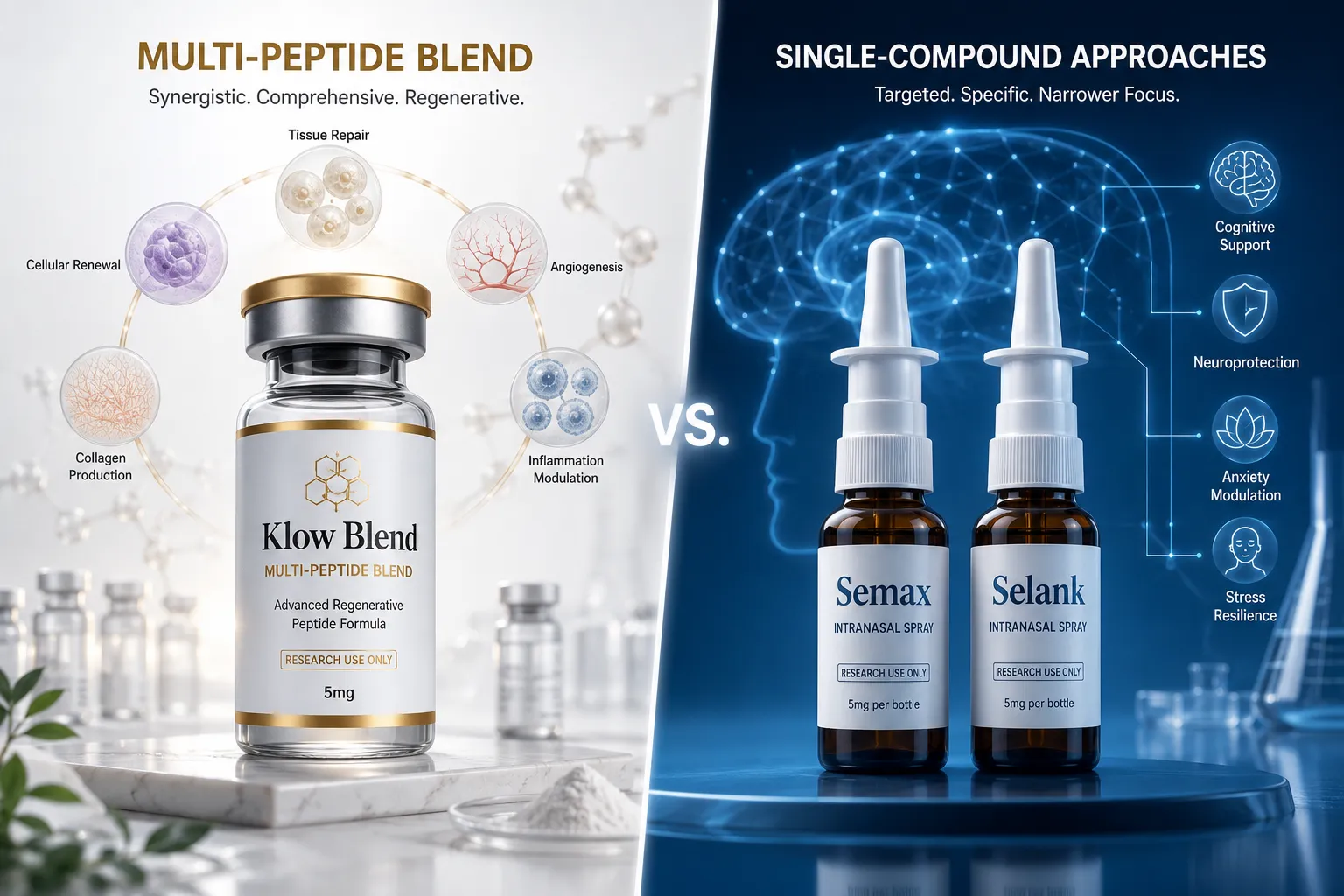
Split-screen editorial illustration (): left half shows a stylized multi-peptide blend vial labeled 'Klow Blend' on a clean

Key Takeaways

  • Semax and Selank are single-target intranasal peptides with established Russian prescription histories and focused nootropic or anxiolytic mechanisms.
  • Klow Blend is a multi-peptide regenerative formula, not a dedicated nootropic, and its research profile in 2026 is still emerging.
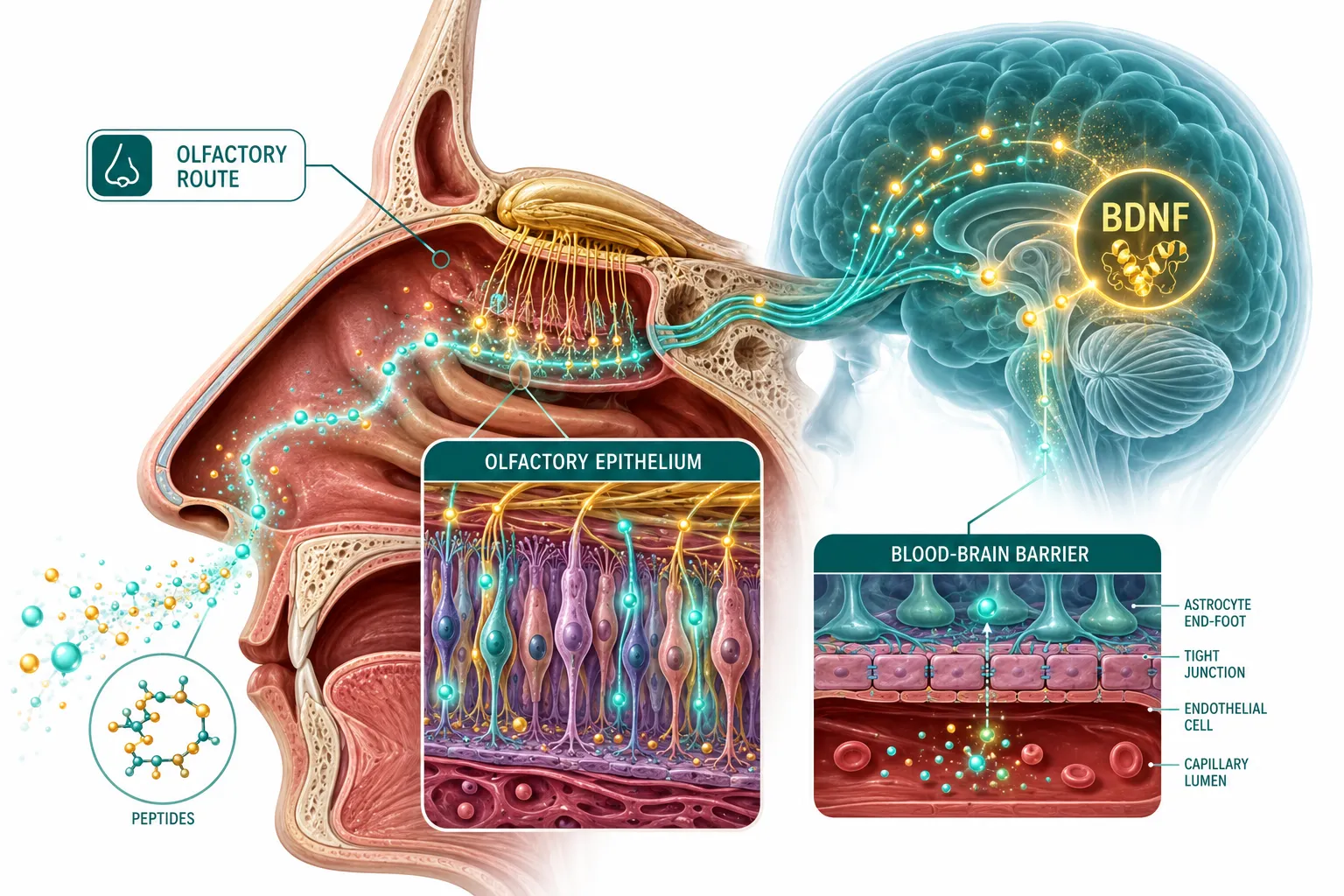
  • Intranasal delivery offers a shared advantage for all three: bypassing first-pass metabolism and providing a direct olfactory route toward the central nervous system.
  • Comparing these compounds as direct substitutes misreads their formulation logic; they address overlapping but distinct research hypotheses.
  • Purity verification and sourcing quality matter significantly for all intranasal peptide research.

What Are Semax and Selank

Semax is a synthetic heptapeptide derived from ACTH(4-7), developed at the Institute of Molecular Genetics in Russia. It has been used clinically in Russia and Ukraine as a prescription nasal spray for cognitive impairment, stroke recovery, and attention disorders. Its primary mechanisms involve upregulation of brain-derived neurotrophic factor (BDNF) and modulation of dopaminergic and serotonergic systems.

Selank is a synthetic analog of the endogenous tetrapeptide tuftsin, also developed in Russia. It is registered as an anxiolytic drug in Russia and has a well-documented profile as an anti-anxiety and nootropic agent. Selank works partly through modulation of the GABAergic system and has shown effects on BDNF upregulation in preclinical models.

Both peptides share three important characteristics for researchers:

  • Intranasal delivery as the primary administration route
  • Short amino acid chains that are relatively stable in nasal mucosa
  • CNS-targeted mechanisms with documented effects on mood, memory, and neuroprotection

For a deeper look at Selank's pharmacological profile, the Selank peptide research overview and the Selank side effects summary provide useful starting points for protocol planning.

What Is Klow Blend and How Does It Differ

Klow Blend is a multi-peptide regenerative formula. Unlike Semax or Selank, it was not designed around a single nootropic target. Instead, it combines several peptide components aimed at broader regenerative, anti-inflammatory, and systemic wellness outcomes. As of mid-2026, Klow Blend does not carry a prescription classification in the United States and is positioned primarily as a research compound rather than a clinical therapeutic.

This distinction matters enormously when comparing it to Semax and Selank:

Feature Semax Selank Klow Blend
Primary Target Cognitive enhancement, BDNF Anxiolytic, nootropic Multi-system regenerative
Delivery Route Intranasal Intranasal Varies by formulation
Regulatory Status Russian Rx Russian Rx Research compound (US, 2026)
Evidence Base Extensive preclinical + clinical Extensive preclinical + clinical Emerging
Formula Type Single peptide Single peptide Multi-peptide blend

Key distinction: Klow Blend's value proposition is formulation breadth, not cognitive specificity. Semax and Selank offer narrower, better-characterized mechanisms for researchers focused on nootropic or anxiolytic hypotheses.

For researchers interested in how multi-peptide blends are structured more broadly, the IPA Sermorelin stack research guide offers relevant context on combination peptide logic.

Intranasal Delivery: The Shared Advantage and Its Limits

Intranasal Delivery: The Shared Advantage and Its Limits

The intranasal route is one of the most discussed delivery mechanisms in peptide research, and for good reason. It bypasses the liver's first-pass metabolism, avoids gastrointestinal degradation, and provides access to the olfactory epithelium, a pathway that allows some peptides to reach the central nervous system more efficiently than subcutaneous or oral routes.

Semax and Selank were specifically engineered for this route. Their molecular size, stability in nasal mucosa, and absorption kinetics were optimized through decades of iterative research. This is not incidental, it is core to why they work as nootropic and anxiolytic agents.

Klow Blend, as a multi-peptide formula, faces a more complex delivery challenge. When multiple peptide components are combined, their individual absorption rates, mucosal stability, and CNS penetration profiles may differ. This does not make intranasal delivery of blends impossible, but it does mean that the delivery efficiency for each component in Klow Blend cannot simply be assumed to match the precision seen with Semax or Selank.

Researchers exploring peptide delivery should also review guidance on what not to mix with peptides to avoid formulation errors that compromise results.

Comparing Research Hypotheses: Where Each Compound Fits

When evaluating Klow Blend vs. Semax and Selank: Intranasal Nootropic Peptides Compared for Research, the most practical question is: what research question is being asked?

Choose Semax if the hypothesis involves:

  • Acute cognitive enhancement or neuroprotection
  • BDNF pathway modulation
  • Dopaminergic or serotonergic system effects

Choose Selank if the hypothesis involves:

  • Anxiety reduction without sedation
  • GABAergic modulation
  • Immune-cognitive interaction (Selank has shown immunomodulatory effects in some models)

Consider Klow Blend if the hypothesis involves:

  • Regenerative or systemic multi-target outcomes
  • Combination peptide synergy research
  • Broader wellness endpoints beyond strict nootropic effects

Researchers sourcing any of these compounds should prioritize verified purity. Lab-tested peptides with documented assay results reduce confounding variables that can undermine intranasal research protocols. For those comparing sourcing options, quality peptides and online peptide sourcing resources can help identify reliable suppliers.

Practical Considerations for Researchers in 2026

Practical Considerations for Researchers in 2026

As of 2026, the regulatory landscape for all three compounds in the United States positions them as research-only materials. None are approved by the FDA for human therapeutic use outside of clinical trial frameworks. This shapes how researchers should approach procurement, documentation, and protocol design.

Three practical points stand out:

  1. Purity documentation is non-negotiable. Intranasal delivery means the compound contacts mucosal tissue directly. Contaminants that might be tolerable in other contexts carry higher risk here.
  2. Formulation logic should match the hypothesis. Using Klow Blend to test a nootropic-specific hypothesis introduces unnecessary variables. Using Semax or Selank to test a regenerative hypothesis misses the compound's actual mechanism.
  3. Storage and stability differ between single-peptide and multi-peptide formulations. Blends may require more careful handling to preserve the activity of each component.

Conclusion

The comparison of Klow Blend vs. Semax and Selank: Intranasal Nootropic Peptides Compared for Research ultimately comes down to formulation intent. Semax and Selank are precision instruments for cognitive and anxiolytic research, built specifically for intranasal delivery with decades of supporting data. Klow Blend is a broader regenerative formula with an emerging evidence base that serves different research hypotheses.

Actionable next steps for researchers:

  • Define the specific biological target before selecting a compound.
  • Review the full profiles of Selank and Semax independently before comparing them to blends.
  • Source only from suppliers who provide third-party purity assays.
  • Document all protocol variables carefully, especially when using intranasal delivery routes where absorption can vary by formulation.

Choosing the right peptide is not about which compound is superior in the abstract, it is about which compound is right for the specific research question being asked.

https://www.puretestedpeptides.com/wp-content/uploads/2026/07/klow-blend-vs-semax-and-selank-intranasal-nootropic-peptides-compared-for-resear.webp 1024 1536 https://www.puretestedpeptides.com/wp-content/uploads/2026/01/buy-peptides-online.jpg 2026-07-28 13:04:132026-07-28 13:04:13Klow Blend vs. Semax and Selank: Intranasal Nootropic Peptides Compared for Research
×

Helpful Links

  • My account
  • Cart
  • Checkout
  • Refund and Returns Policy
  • Privacy Policy
  • SMS Privacy Policy
  • Login
  • My Account
  • Logout

USA Made Lab Tested Peptides

All products are sold for research, laboratory, or analytical purposes only, and are not for human consumption


Pure Tested Peptides is a chemical supplier. Pure Tested Peptides is not a compounding / chemical compounding facility as defined under 503A of the Federal Food, Drug, and Cosmetic act. Pure Tested Peptides is not an outsourcing facility as defined under 503B of the Federal Food, Drug, and Cosmetic act.

The statements made within this website have not been evaluated by the US Food and Drug Administration. The products we offer are not intended to diagnose, treat, cure or prevent any disease.

Human/Animal Consumption Prohibited. Laboratory/In-Vitro Experimental Use Only

Scroll to top Scroll to top Scroll to top