CJC-1295 With DAC vs Without DAC: Half-Life, Release Profile, and Research Selection Guide
{"cover":"Professional landscape format (1536×1024) hero image with bold text overlay 'CJC-1295 With DAC vs Without DAC' in crisp white sans-serif on a deep navy semi-transparent overlay panel, centered with 8% safe margins from every edge. Background: high-resolution editorial split composition showing two glass laboratory vials side by side on a clean white lab bench, one labeled DAC and one labeled No DAC, soft studio lighting with cool blue and teal tones, shallow depth of field, molecular structure silhouettes faintly visible in background, pharmaceutical research magazine cover aesthetic, professional 2-color palette of navy and teal.","content":["Annotated mechanism diagram (1536×1024) illustrating half-life extension: left panel titled 'Without DAC, Mod GRF 1-29' shows a short curved arrow labeled '30 min half-life' with callout lines pointing to 'rapid clearance', 'pulsatile GH spike', and 'enzyme degradation sites'; right panel titled 'With DAC' shows a long curved arc labeled '6-8 day half-life' with callout lines pointing to 'albumin binding site', 'sustained GH elevation', and 'DAC moiety attachment point'; clean white background, teal and navy palette, thin callout lines, editorial medical-diagram polish, landscape 1536×1024.","Four-panel labelled comparison guide (1536×1024) for GH release profiles: Panel 1 heading 'Pulsatile Release' with bullet labels 'sharp GH peak', 'mimics natural rhythm', 'short dosing window'; Panel 2 heading 'Sustained Release' with bullet labels 'blunted peak', 'prolonged elevation', 'less frequent dosing'; Panel 3 heading 'Research Use: No DAC' with bullet labels 'stack flexibility', 'timing control', 'GHRP pairing'; Panel 4 heading 'Research Use: With DAC' with bullet labels 'once-weekly dosing', 'steady baseline', 'trough monitoring'; bright clinical white background, coral and navy accent colors, thin panel dividers, editorial infographic polish, landscape format.","Numbered step-by-step research selection flow diagram (1536×1024) titled 'Selecting the Right CJC-1295 Form': Step 1 labeled 'Define Research Goal' with sub-label 'pulsatile vs steady GH'; Step 2 labeled 'Assess Dosing Frequency' with sub-label 'daily vs weekly protocol'; Step 3 labeled 'Consider Stack Partners' with sub-label 'GHRP, ipamorelin, tesa'; Step 4 labeled 'Evaluate Safety Profile' with sub-label 'tachyphylaxis risk, DAC caution'; Step 5 labeled 'Source Verified Peptide' with sub-label 'purity testing required'; connected by bold directional arrows on a clean slate-gray background, teal step nodes, white label boxes, professional research-guide aesthetic, landscape 1536×1024."]
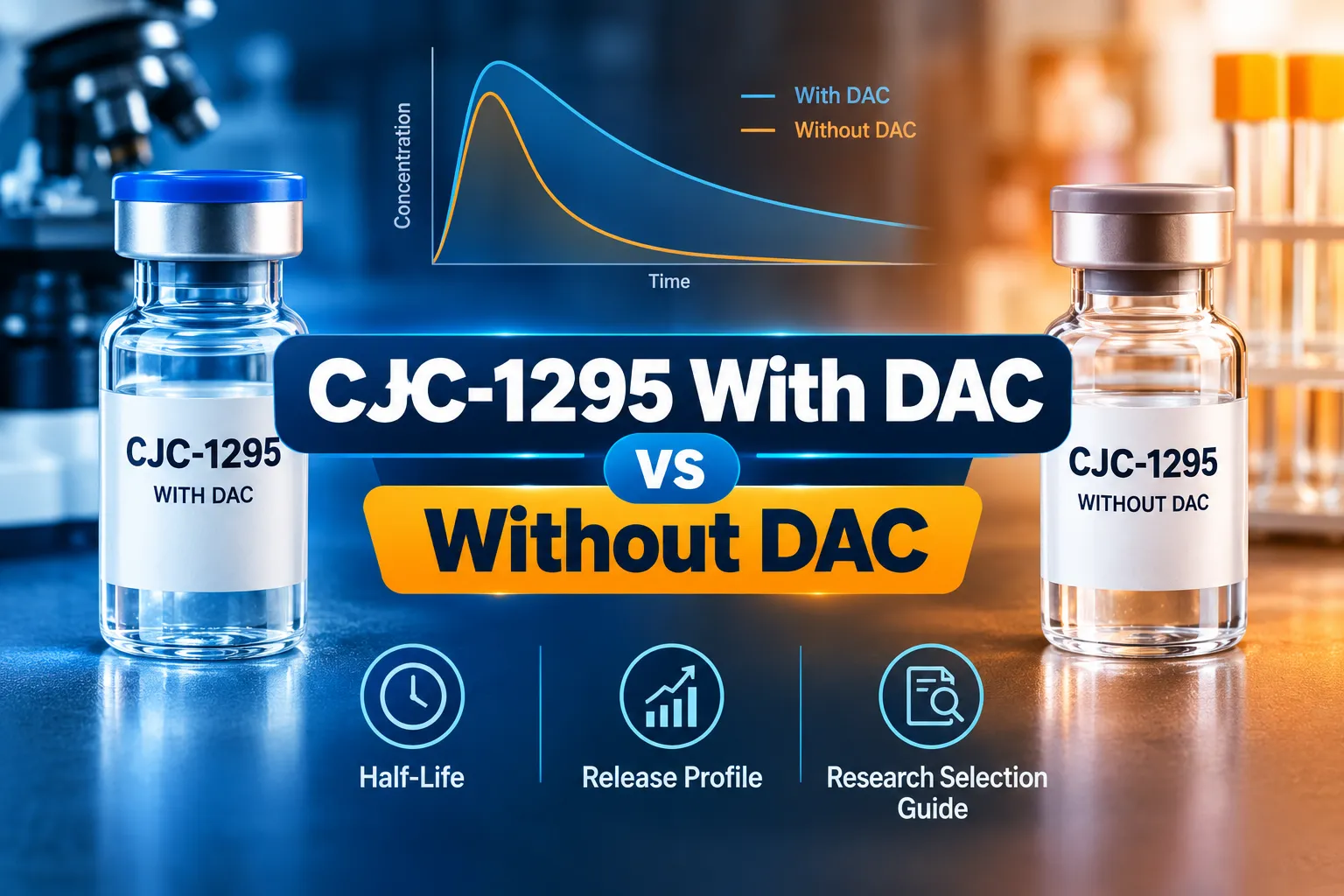
Two peptides share nearly identical names, yet their pharmacokinetic behavior is so different that swapping one for the other in a research protocol can produce completely opposite GH release patterns. Understanding the CJC-1295 with DAC vs without DAC distinction, including half-life, release profile, and research selection, is one of the most practically important decisions in growth hormone secretagogue research today.
Key Takeaways
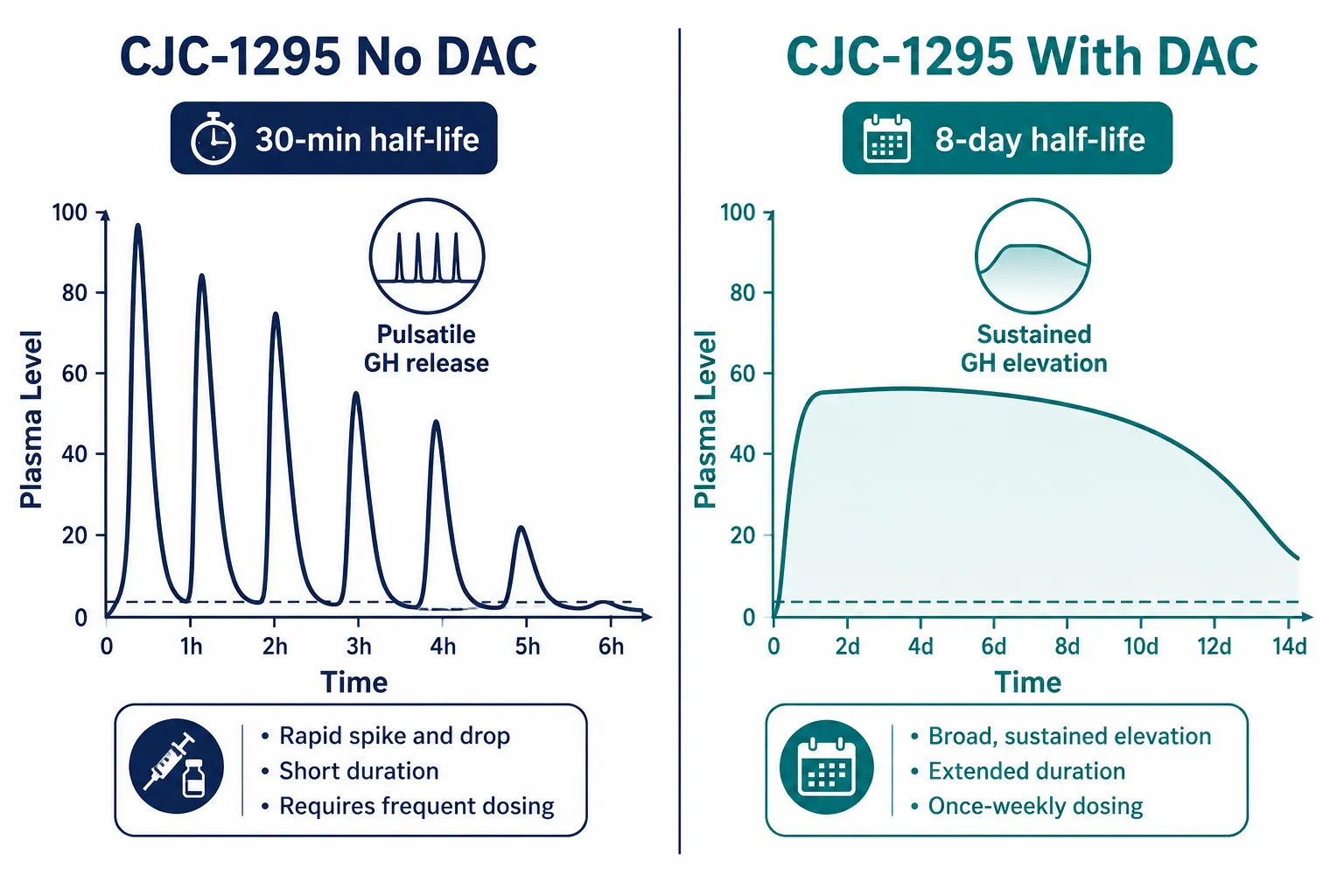
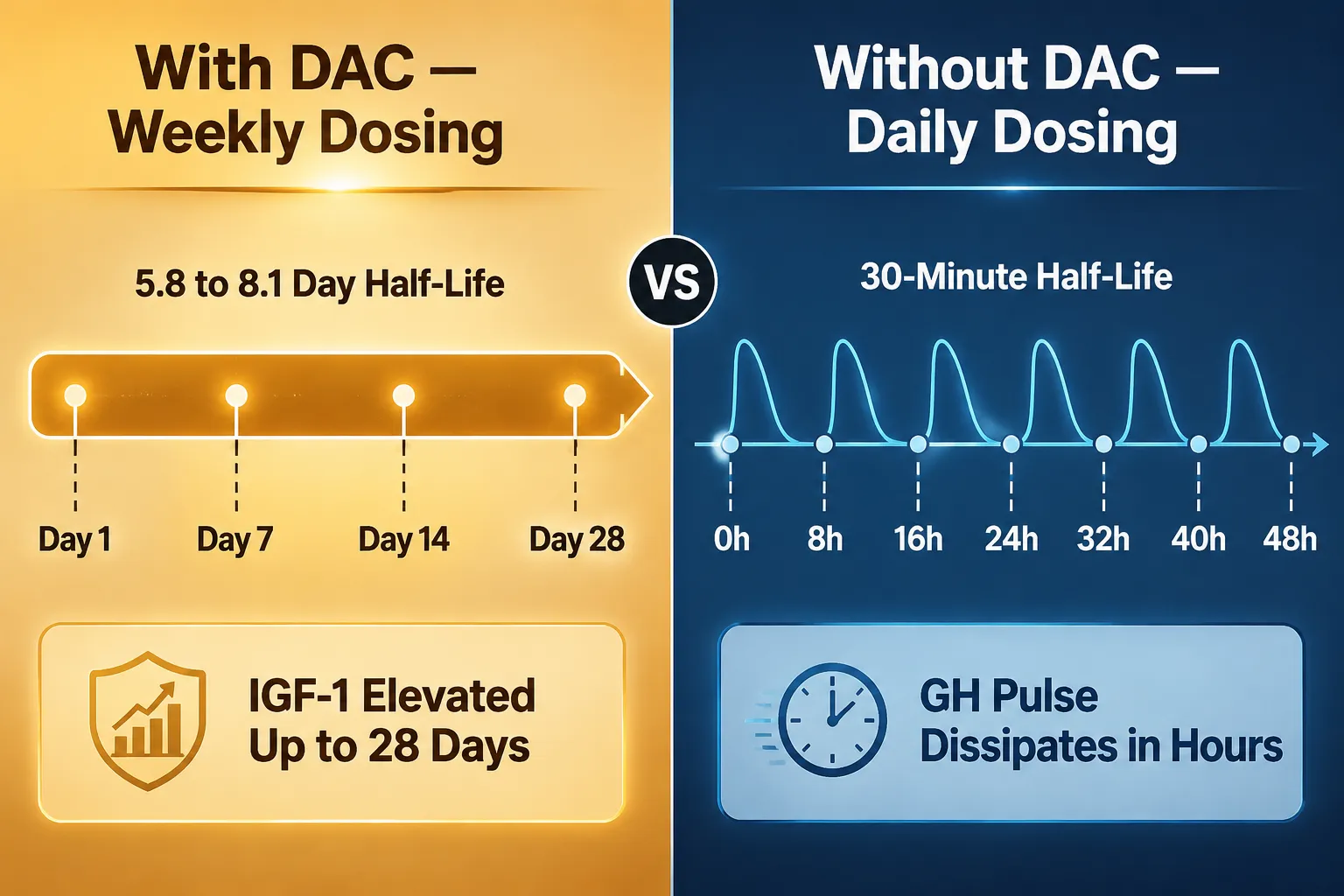
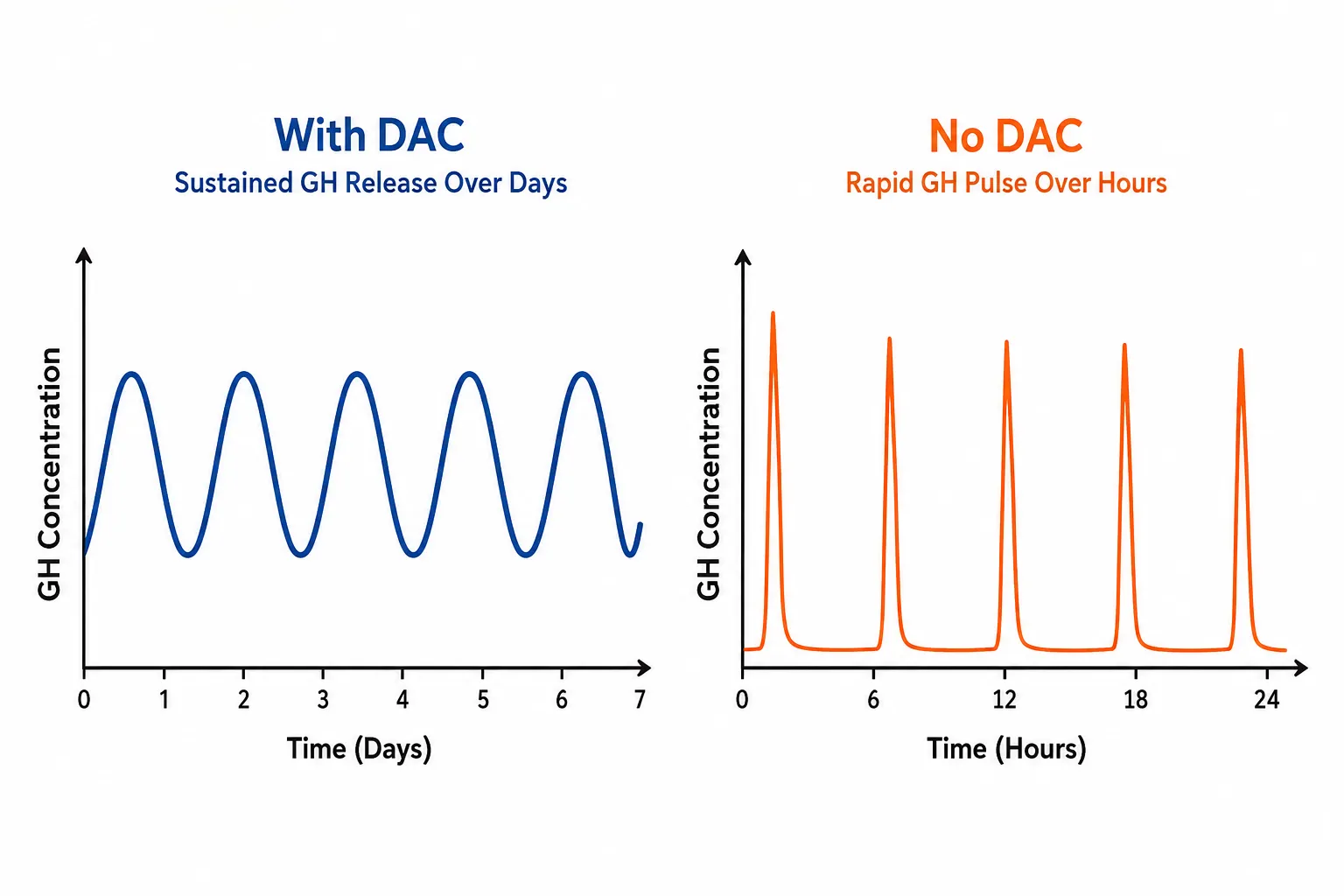
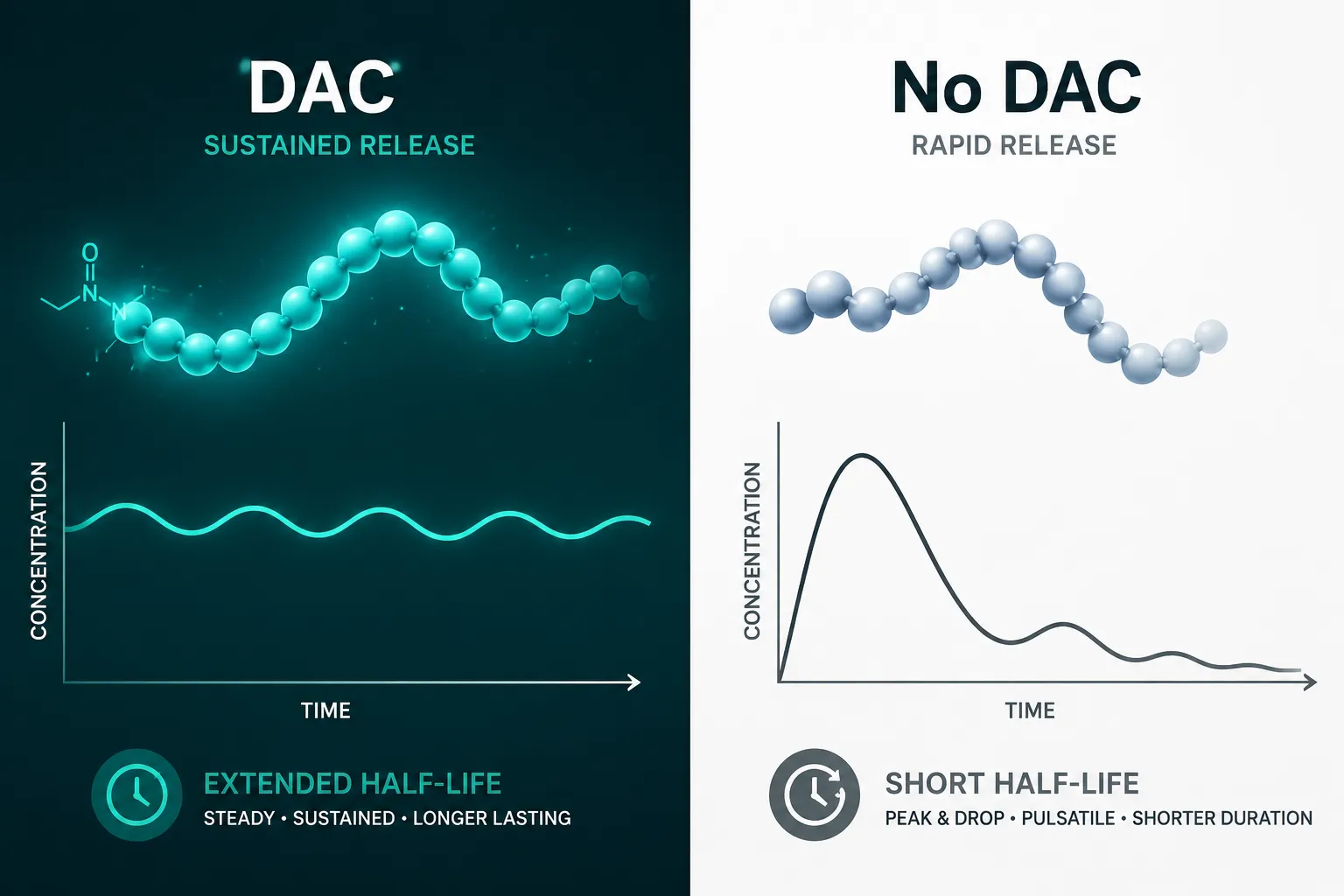
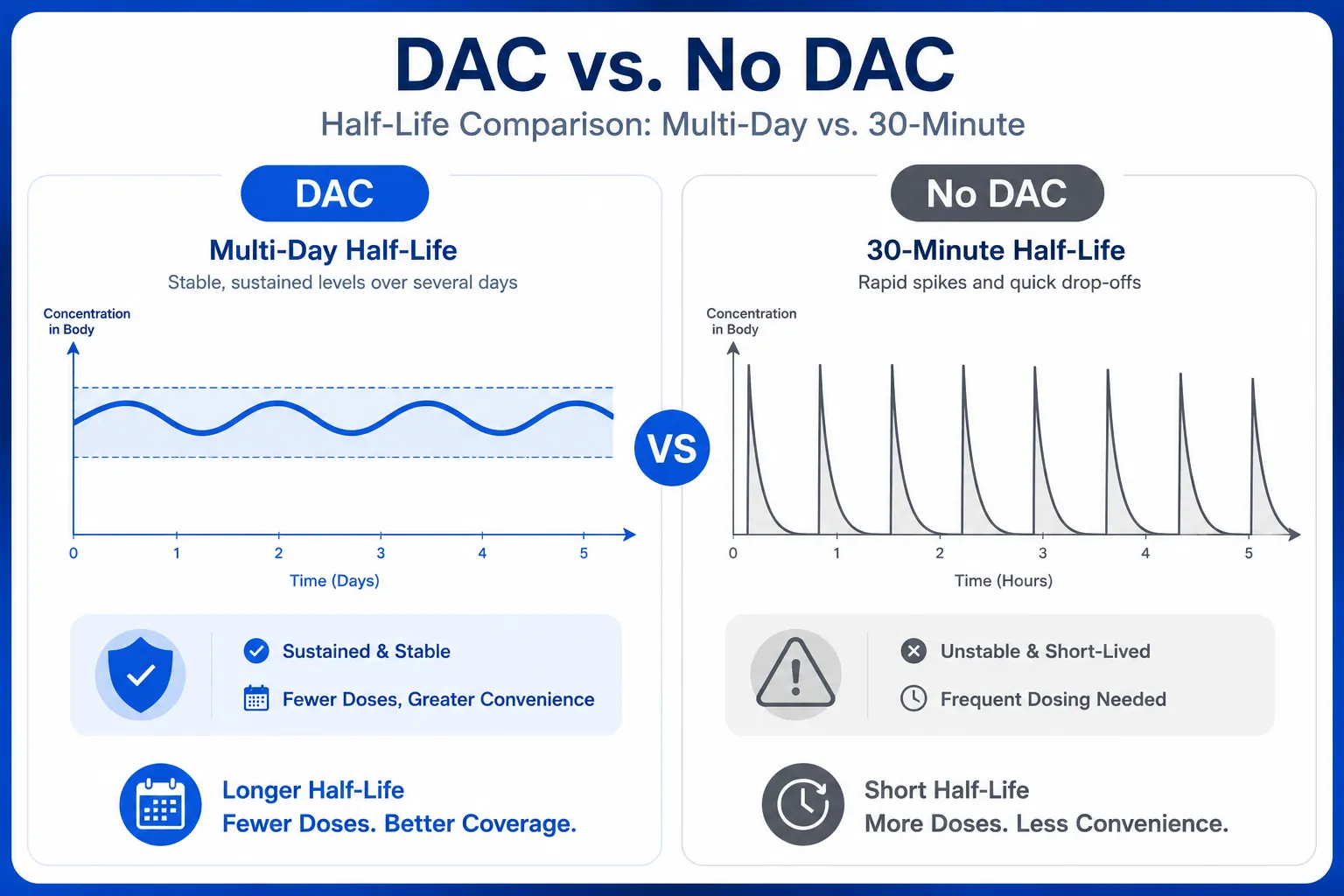
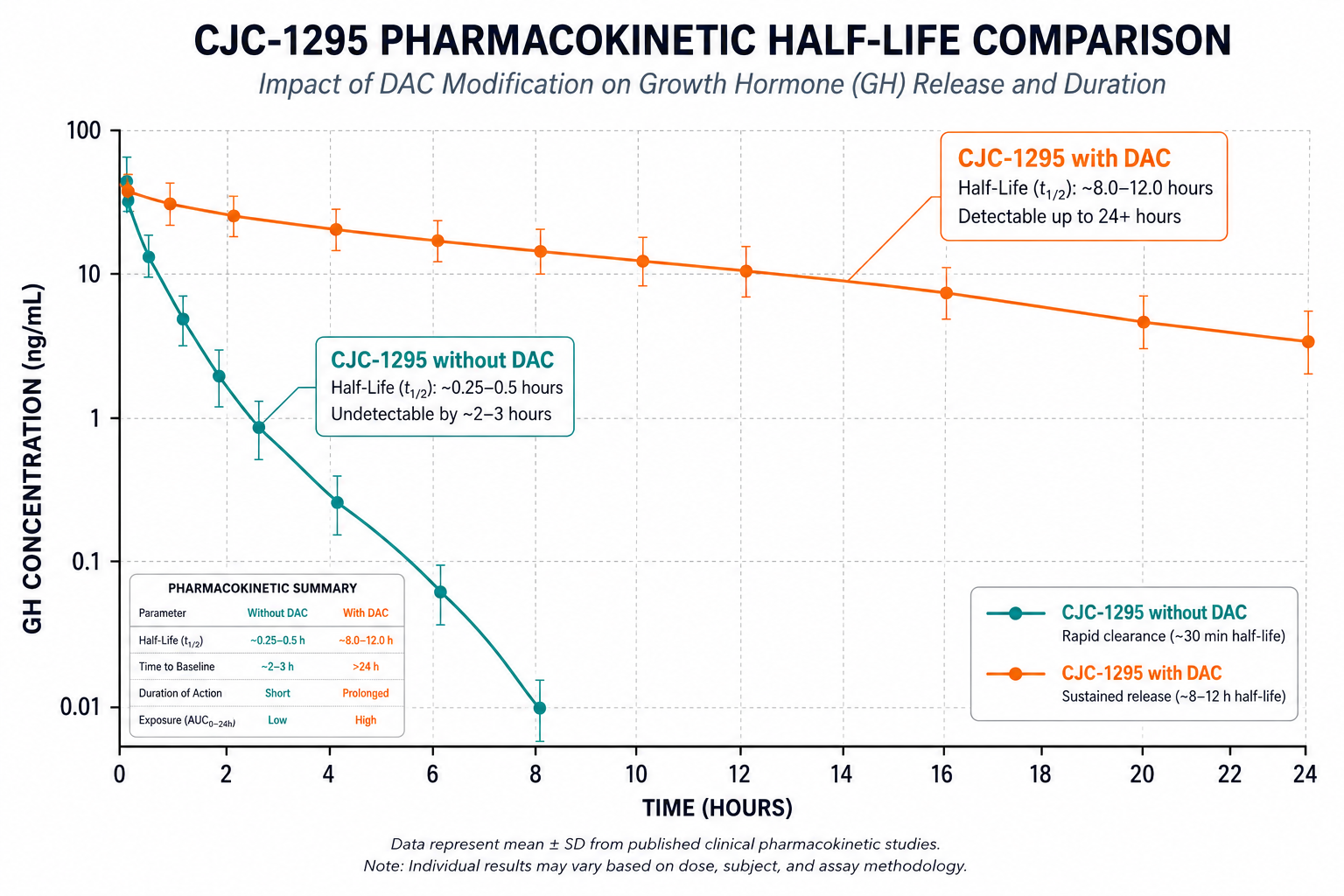
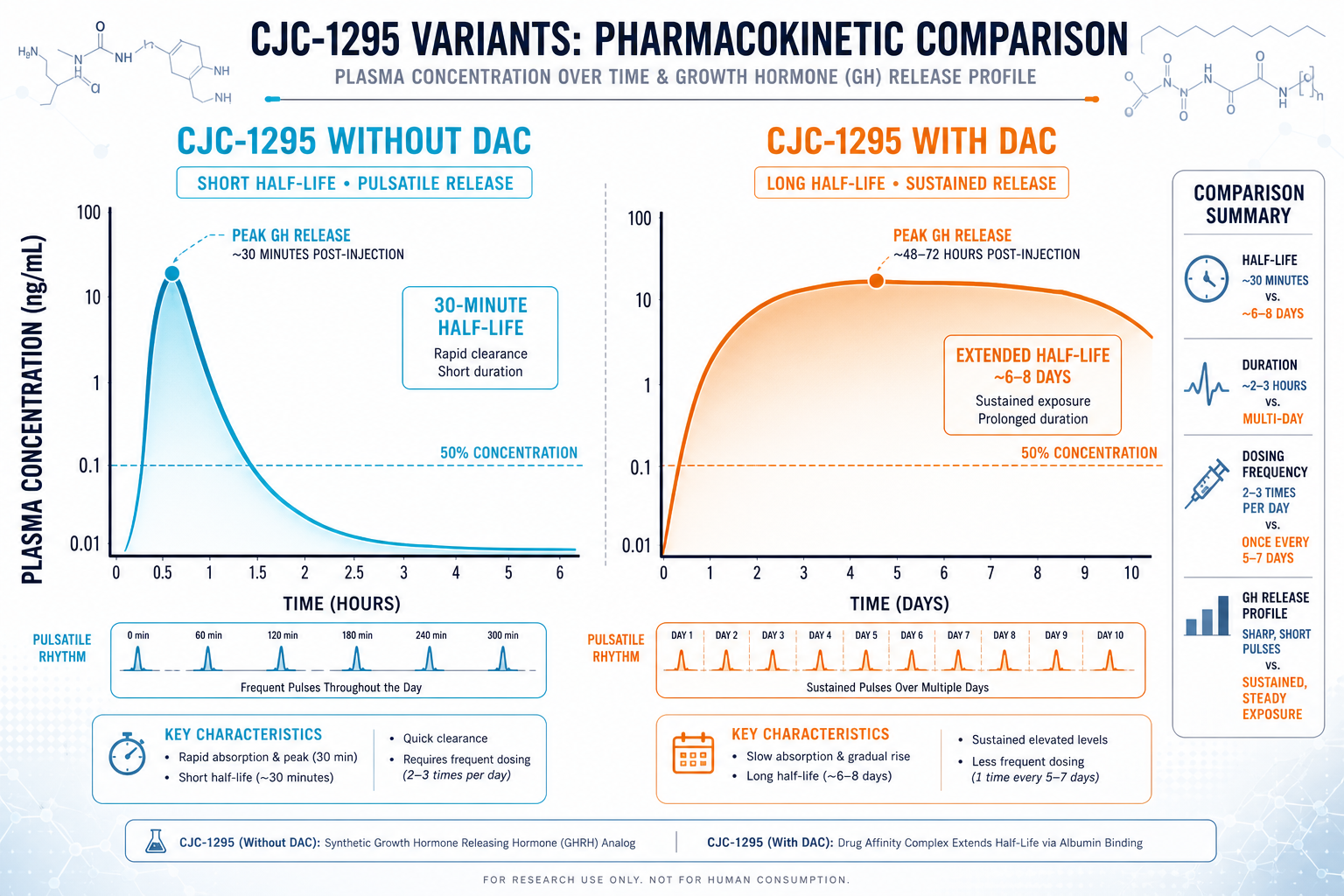
- CJC-1295 without DAC (also called Mod GRF 1-29) has a half-life of roughly 30 minutes, producing a sharp, pulsatile GH spike.
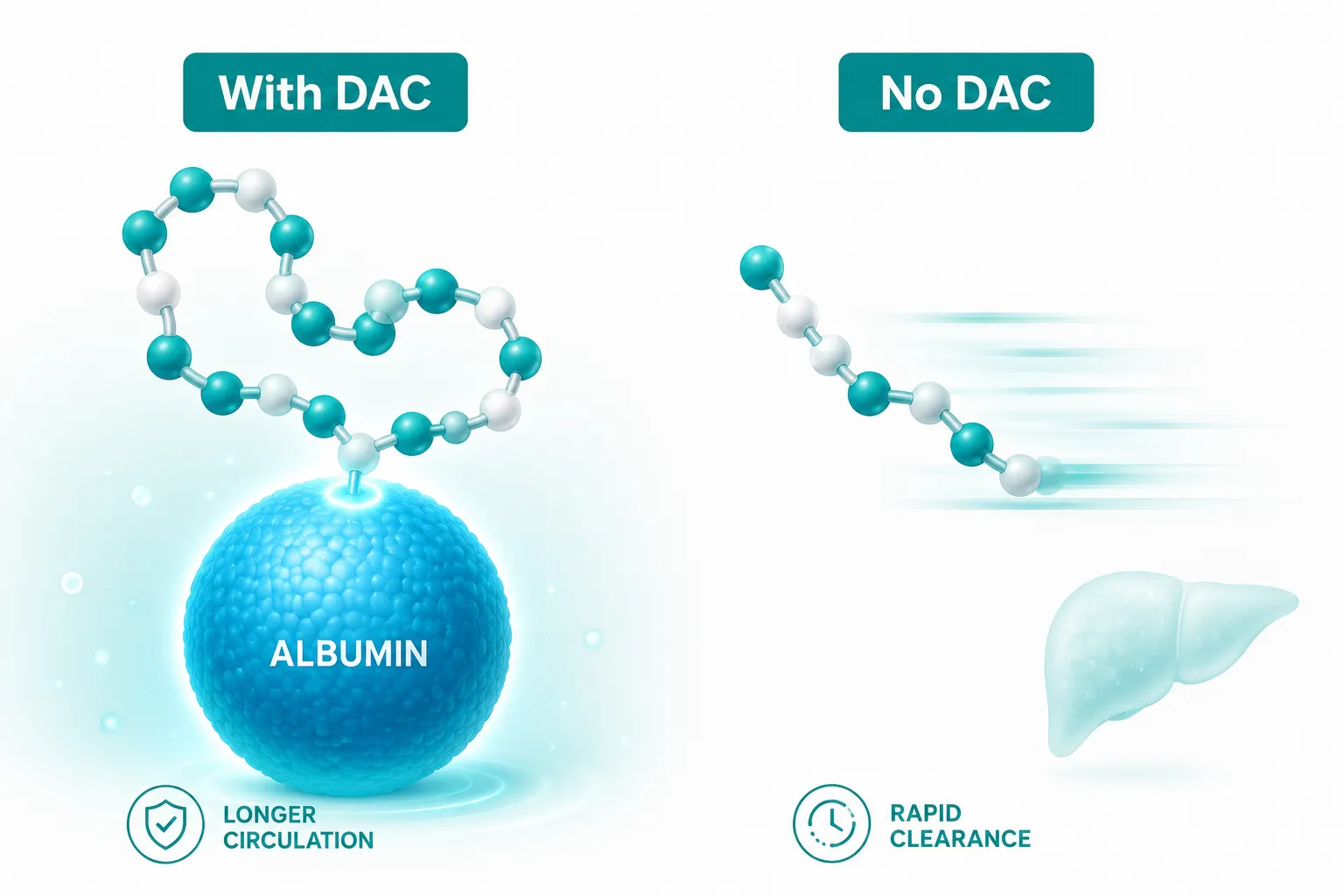
- CJC-1295 with DAC binds to albumin in plasma, extending its half-life to approximately 6-8 days and producing a sustained, blunted GH elevation.
- The two variants are not interchangeable; each suits different research designs and stacking strategies.
- Nomenclature confusion is common, "CJC-1295 no DAC" and "Mod GRF 1-29" refer to the same peptide.
- Both remain research-only compounds in 2026, with no approved clinical indications.
What Is CJC-1295 and Why Does DAC Change Everything
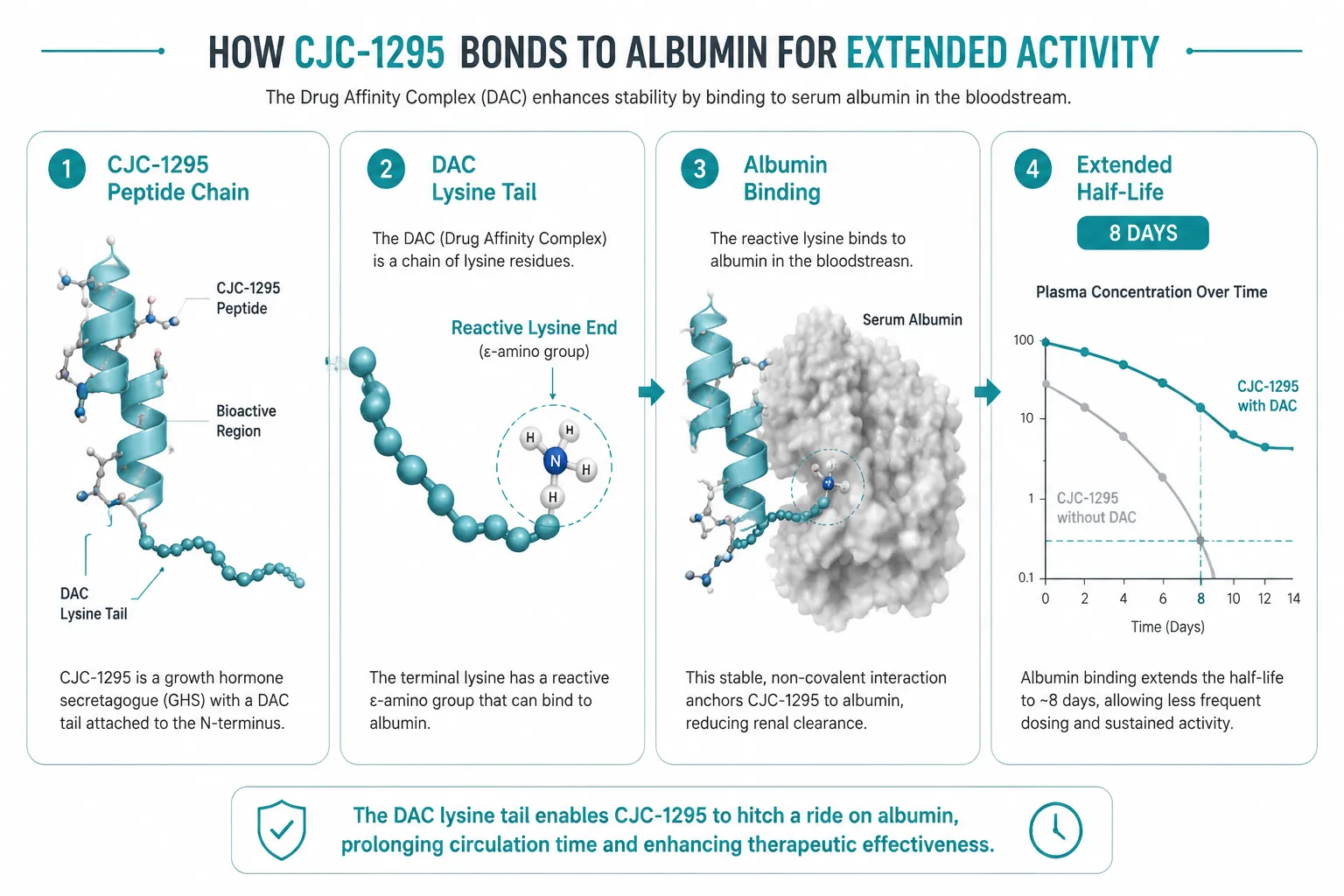
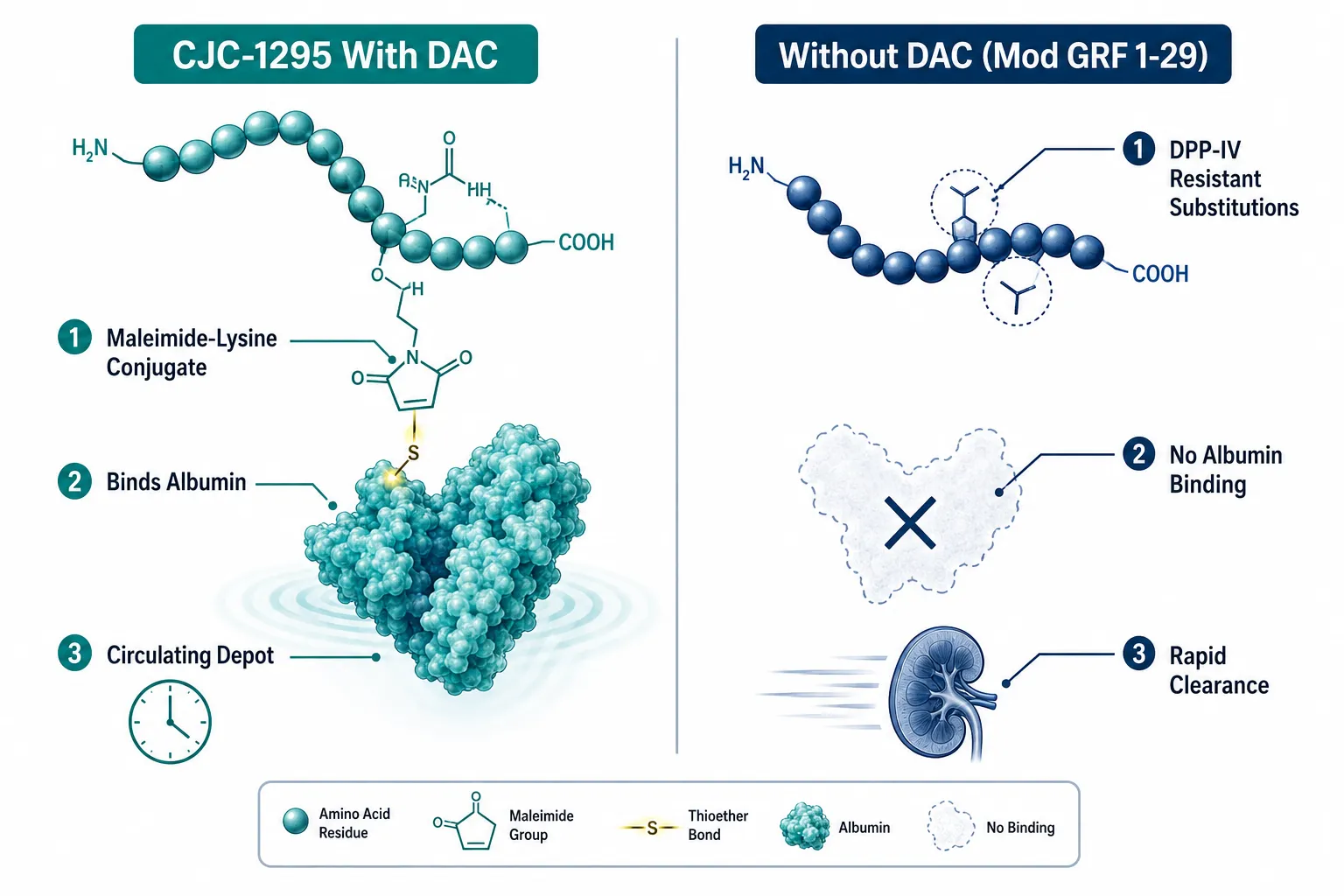
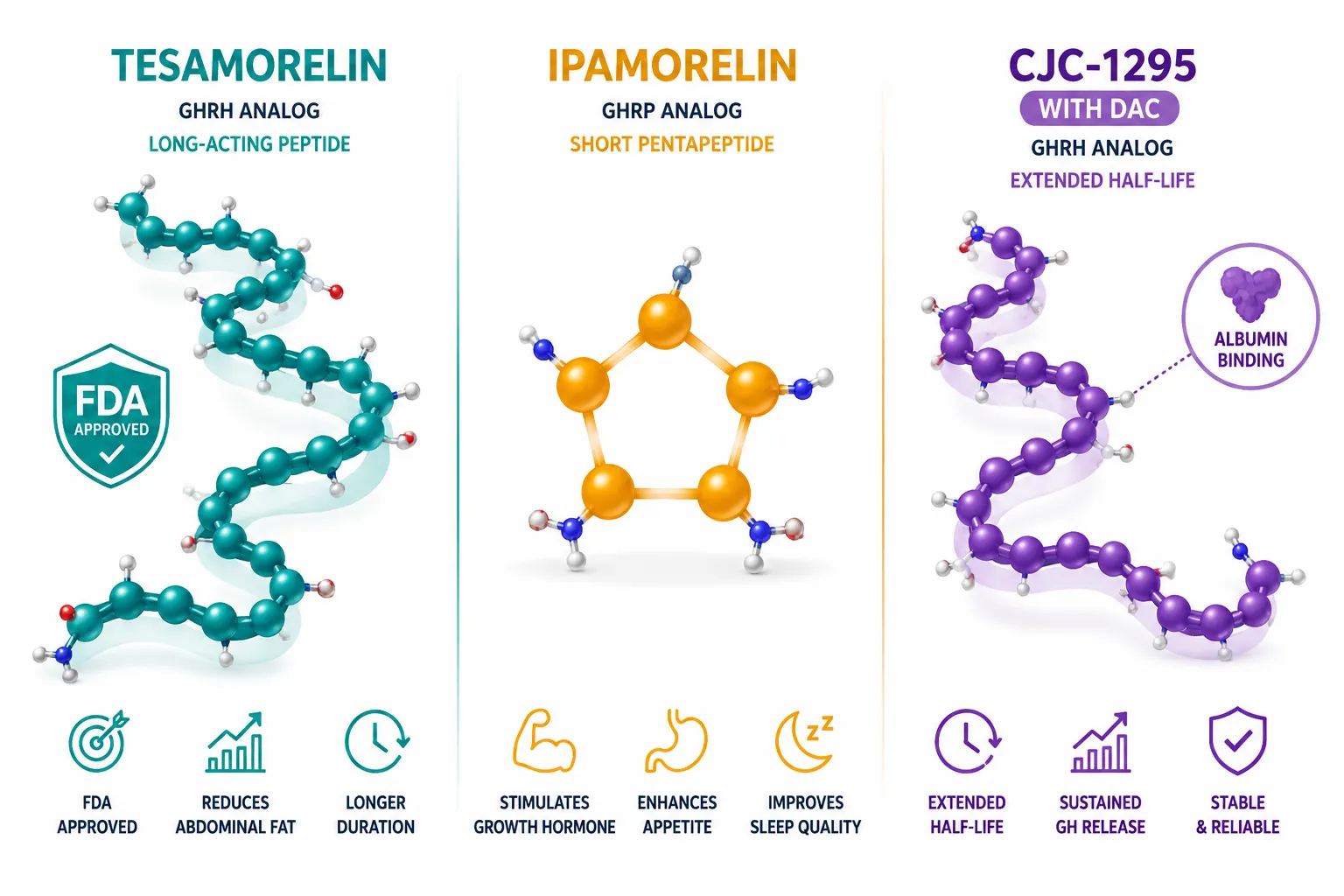
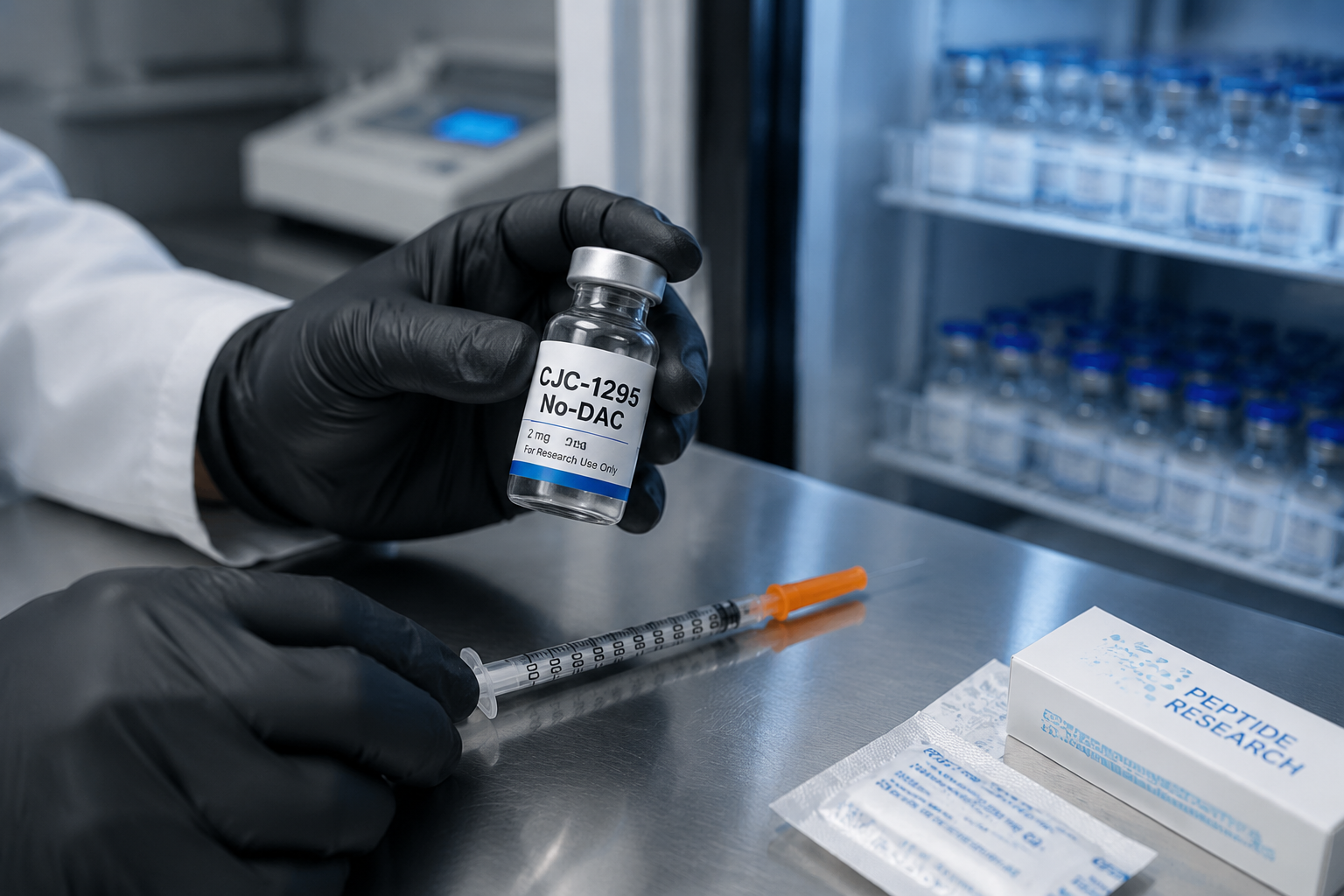
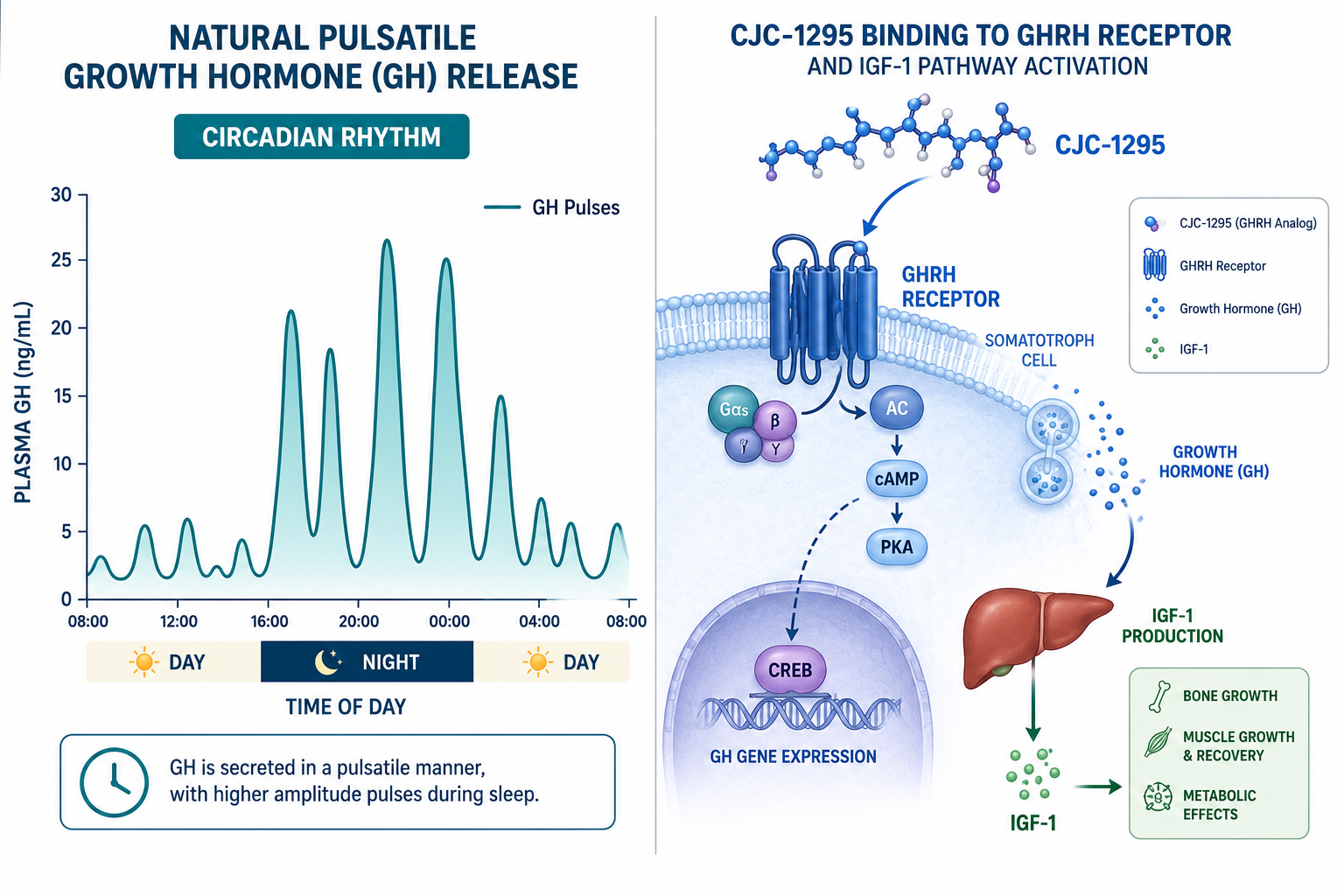
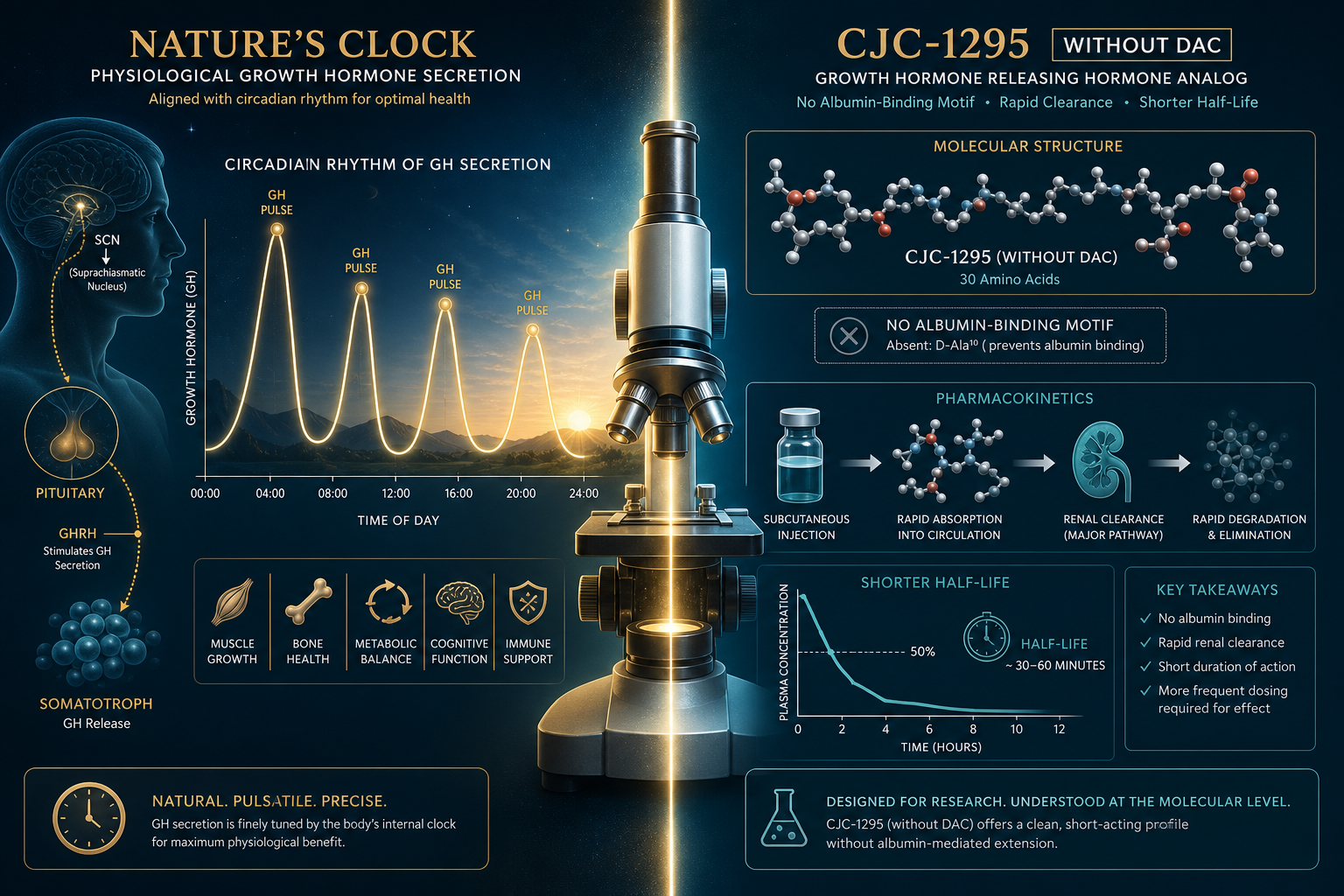
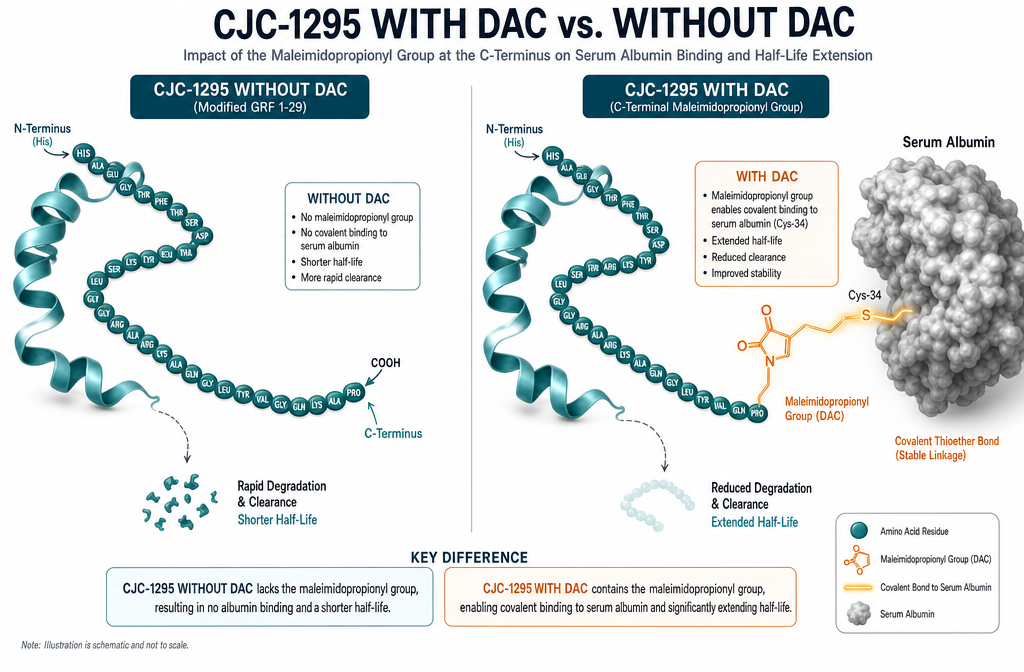
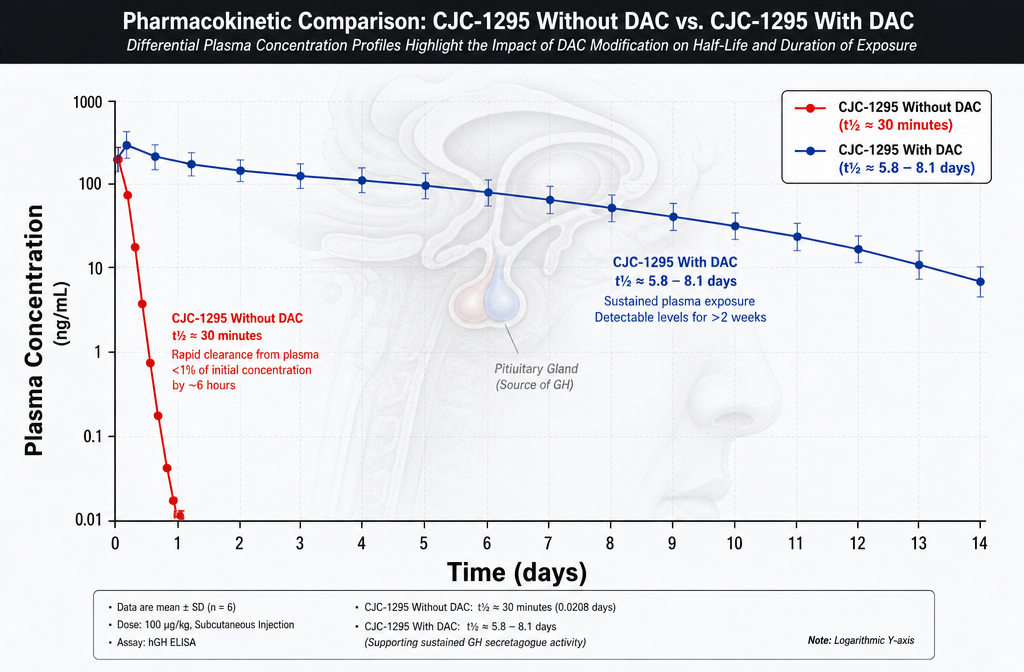
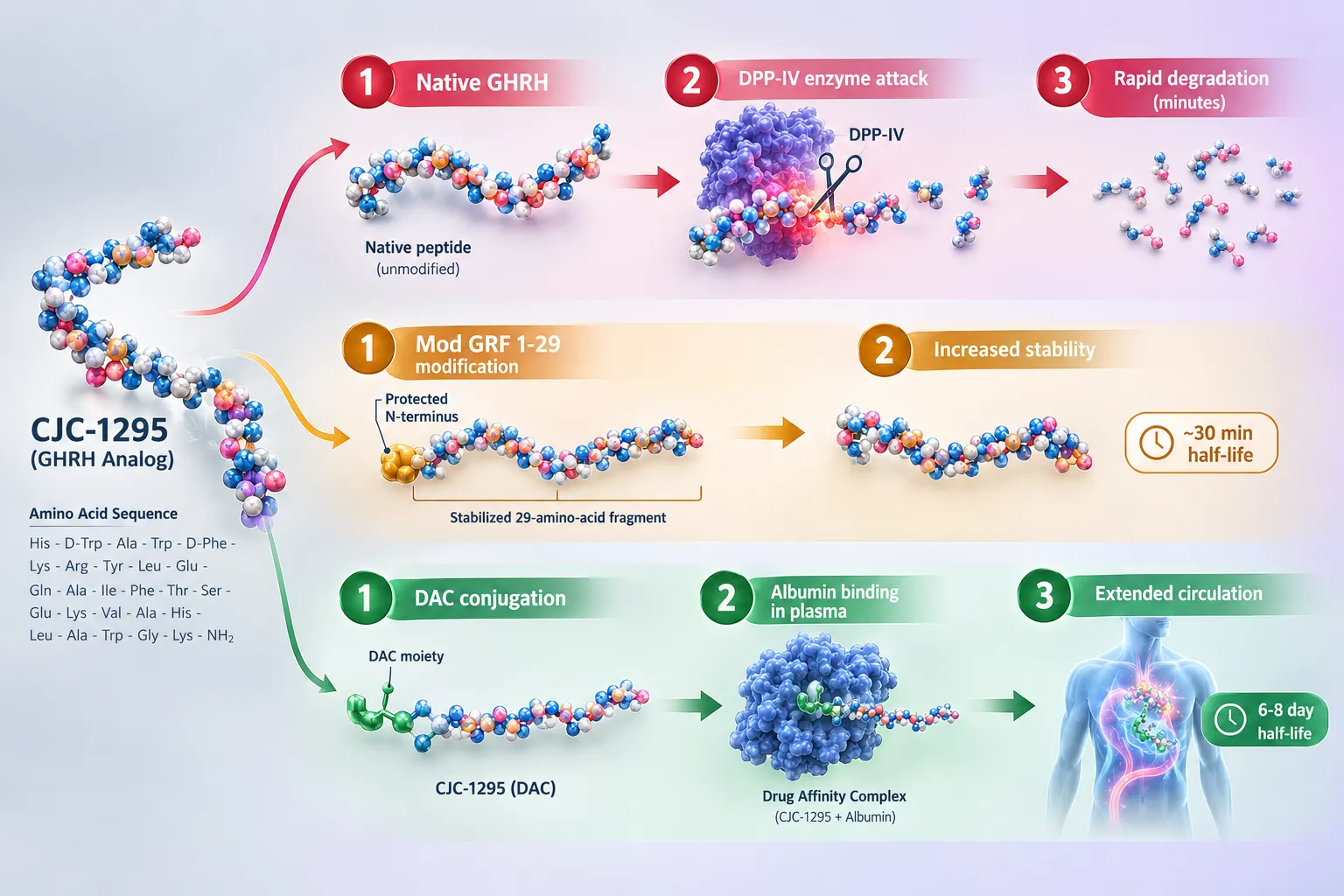
CJC-1295 is a synthetic analogue of growth hormone-releasing hormone (GHRH). Native GHRH is rapidly degraded by dipeptidyl peptidase IV (DPP-IV) enzymes in plasma, giving it a half-life of only a few minutes. Early modifications produced Mod GRF 1-29, a stabilized 29-amino-acid fragment with a half-life extended to roughly 30 minutes. This version is widely sold as "CJC-1295 without DAC" or simply "CJC-1295 no DAC."
The Drug Affinity Complex (DAC) technology takes stabilization a step further. A lysine residue is modified with a maleimidoproprionic acid group that forms a covalent bond with circulating albumin. Because albumin itself has a half-life of roughly 19 days, the DAC-conjugated peptide is shielded from clearance, extending its effective half-life to approximately 6-8 days in research models.
For a deeper look at the structural and pharmacokinetic differences between these two forms, the CJC-1295 with and without DAC mechanism and pharmacokinetic comparison covers the underlying science in detail.
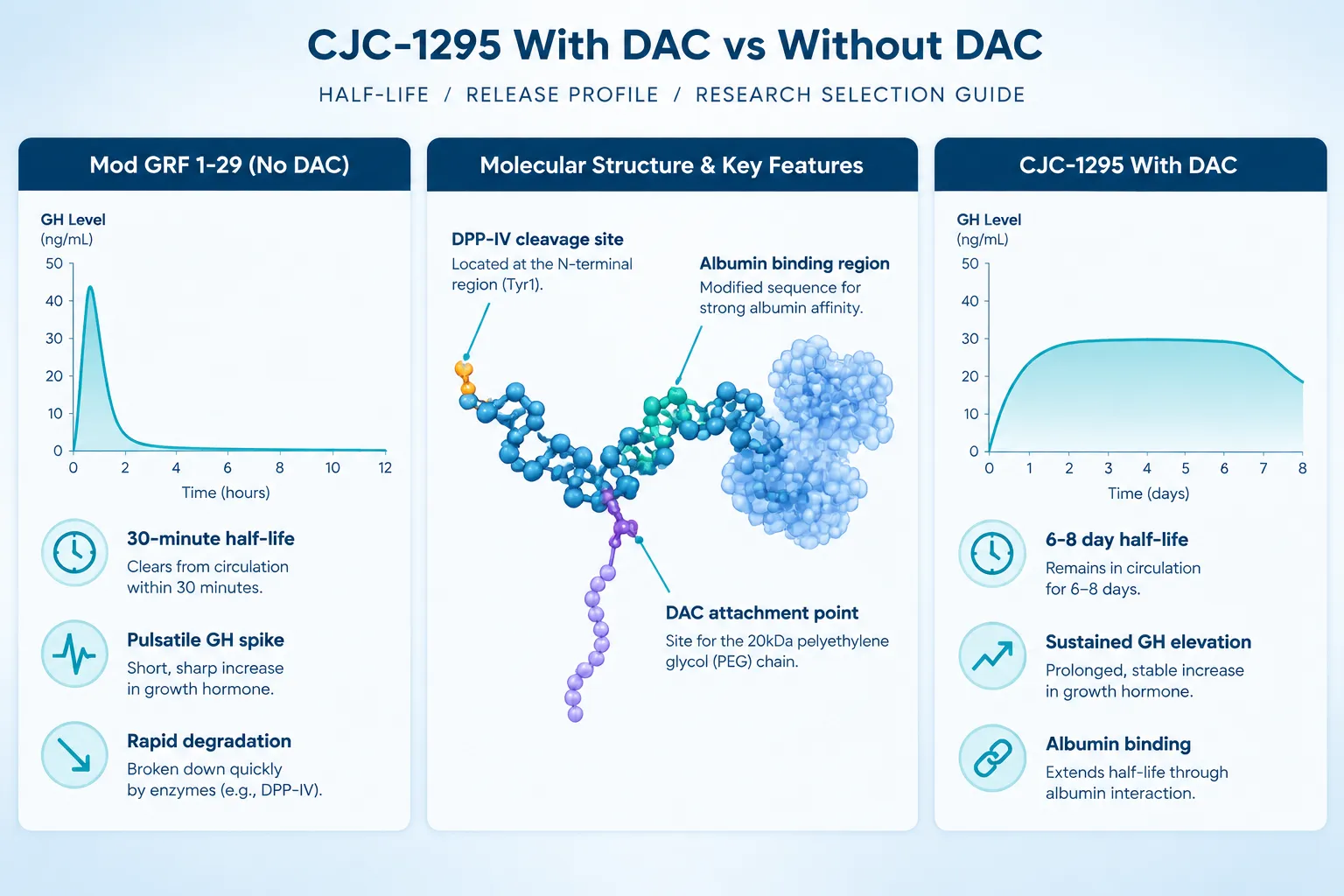
The core structural difference:
| Feature | Mod GRF 1-29 (No DAC) | CJC-1295 With DAC |
|---|---|---|
| Half-life | ~30 minutes | ~6-8 days |
| Albumin binding | No | Yes (covalent) |
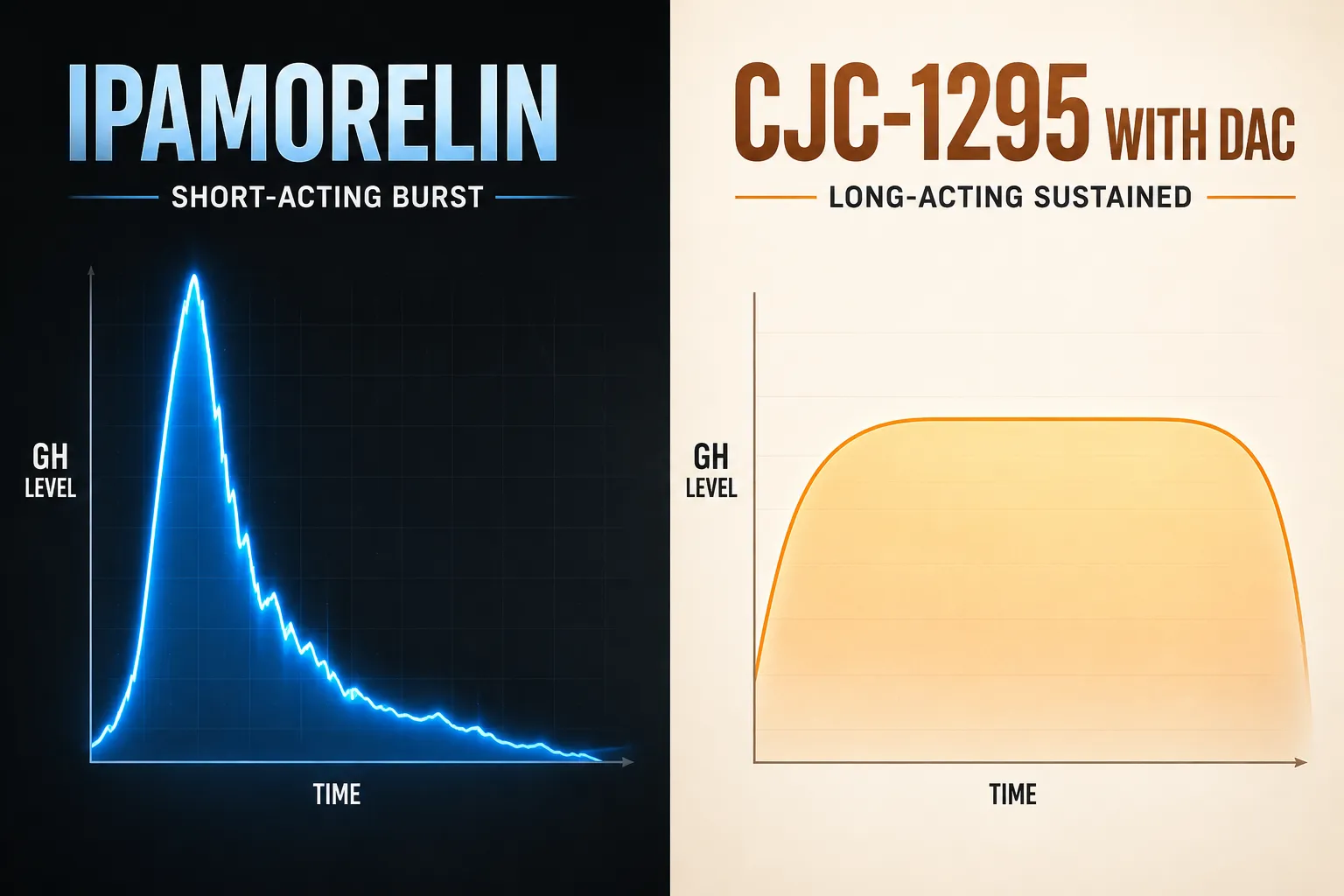
| GH release pattern | Pulsatile spike | Sustained elevation |
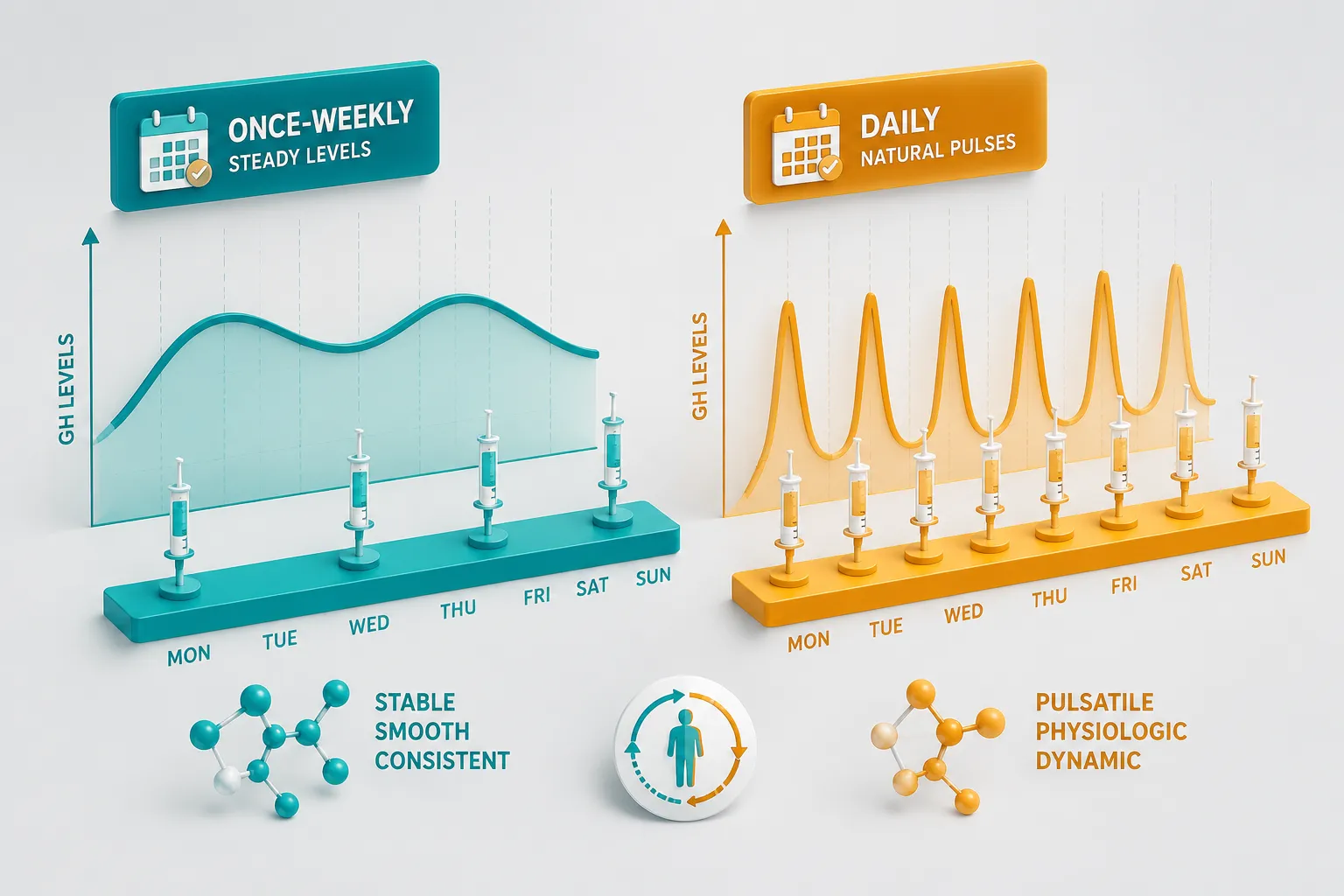
| Dosing frequency | Daily or per-session | Once or twice weekly |
| DPP-IV resistance | Partial | High |
Release Profile: Pulsatile vs Sustained GH Stimulation
The half-life gap between these two variants directly determines their GH release profiles, and this distinction sits at the heart of the CJC-1295 with DAC vs without DAC research selection guide.
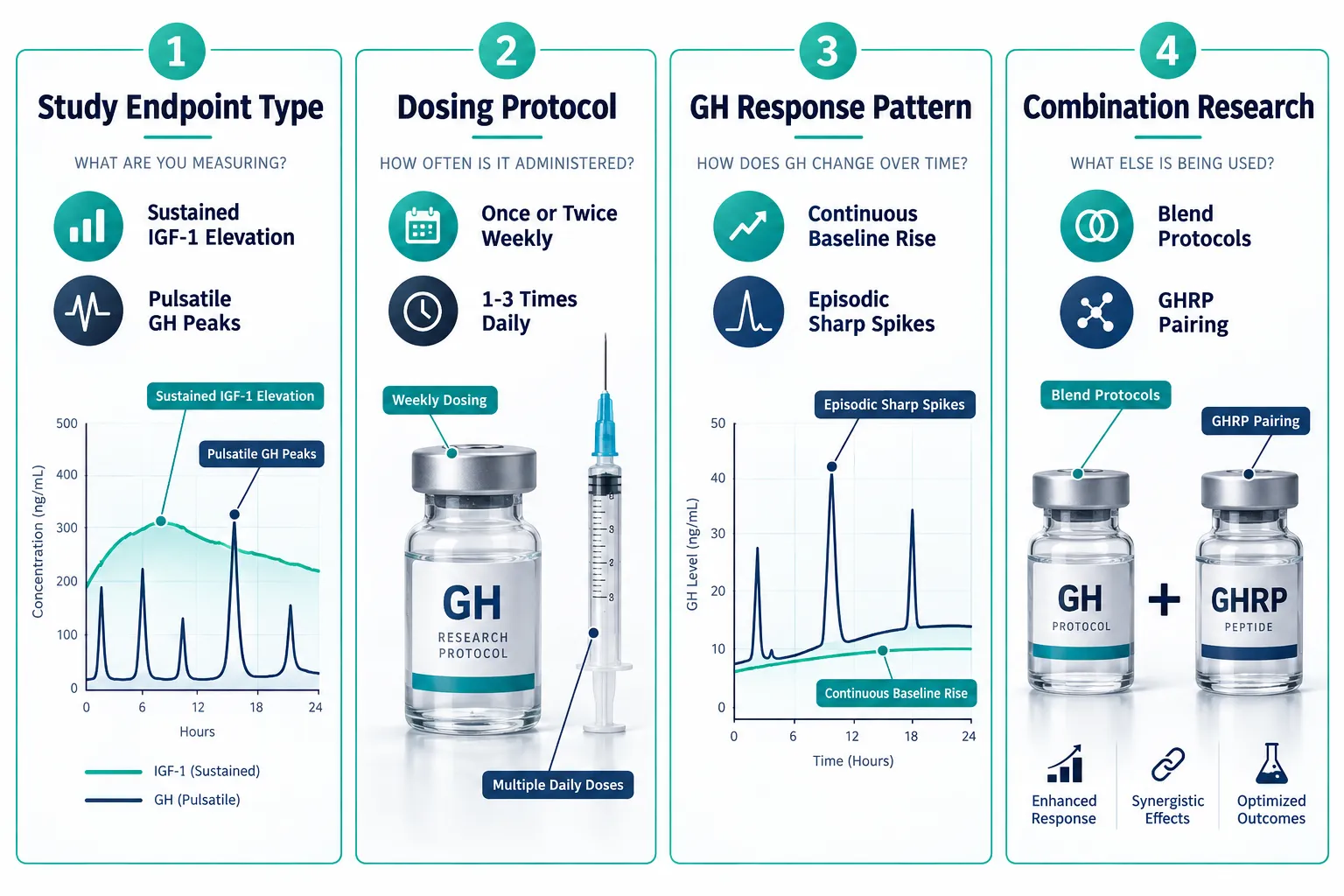
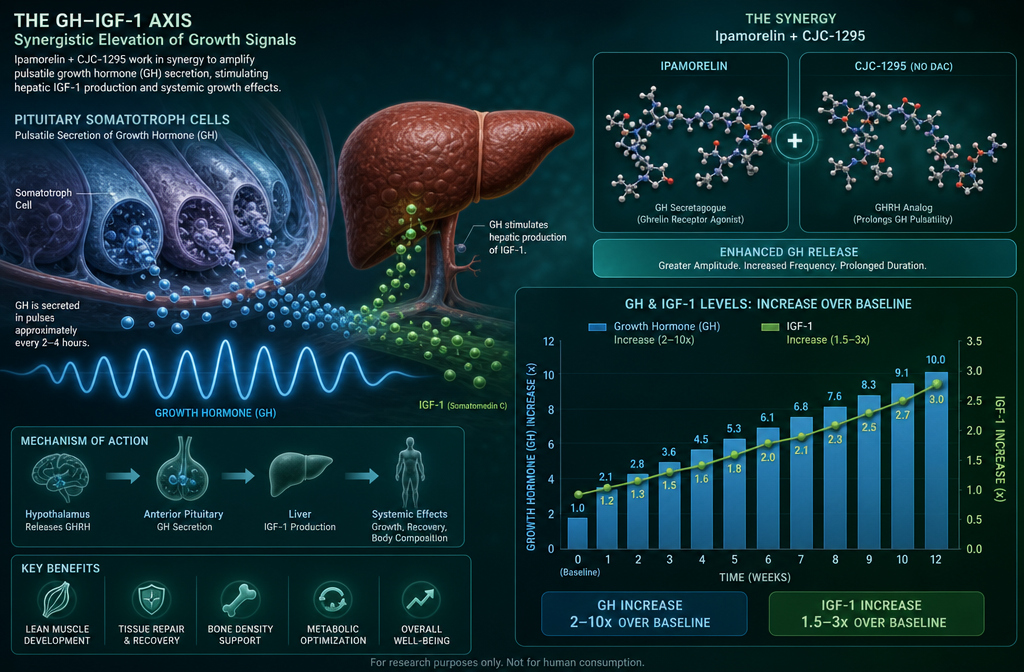
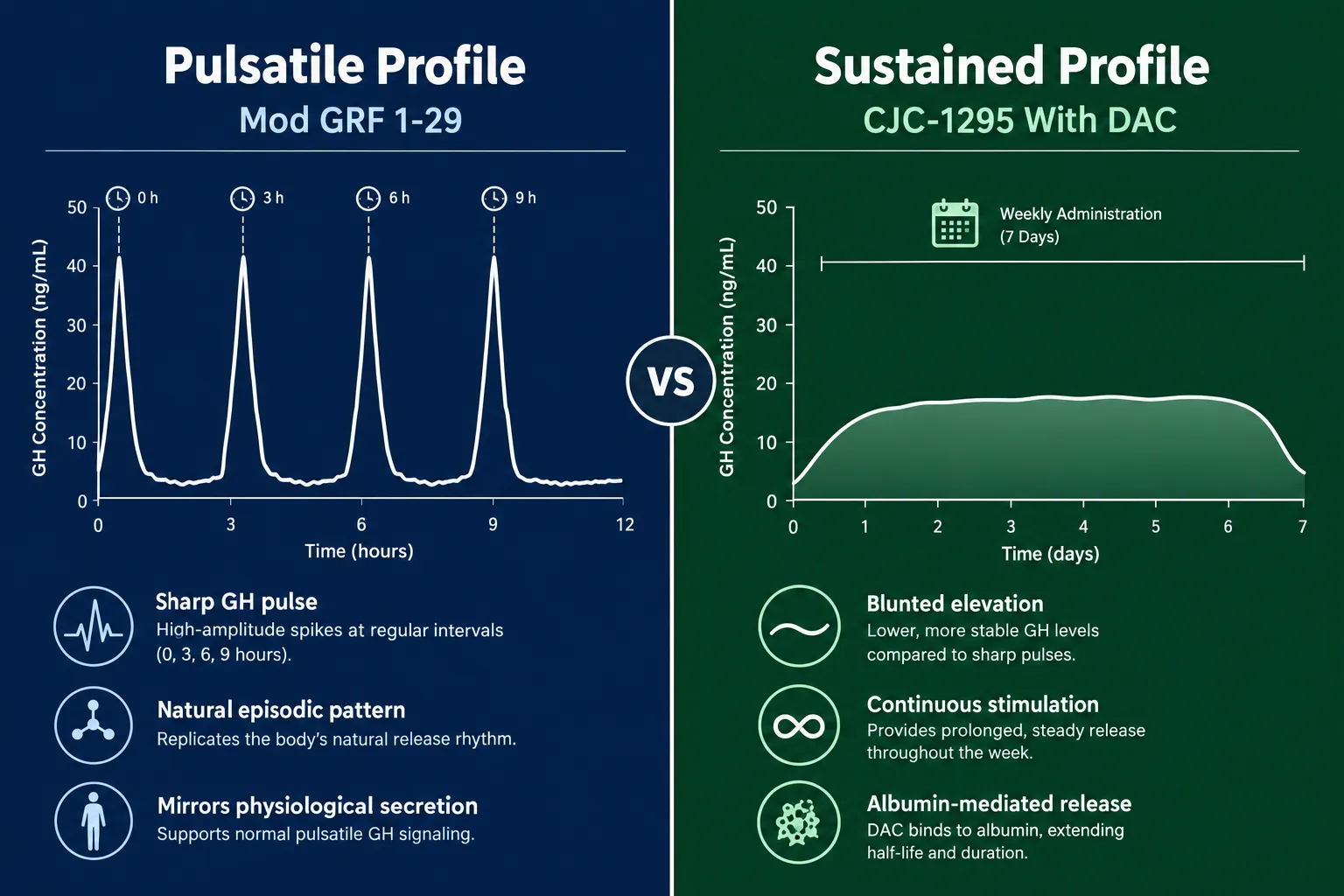
Mod GRF 1-29 (no DAC) produces a sharp, high-amplitude GH pulse that mirrors the body's natural episodic secretion pattern. Peak GH levels appear within 15-30 minutes of administration and return to baseline within a few hours. This pulsatile pattern is considered physiologically favorable by many researchers because it preserves the natural on-off rhythm of the somatotropic axis. It also offers precise timing control, making it easier to pair with ghrelin mimetics like ipamorelin or GHRP-2 for synergistic GH release.
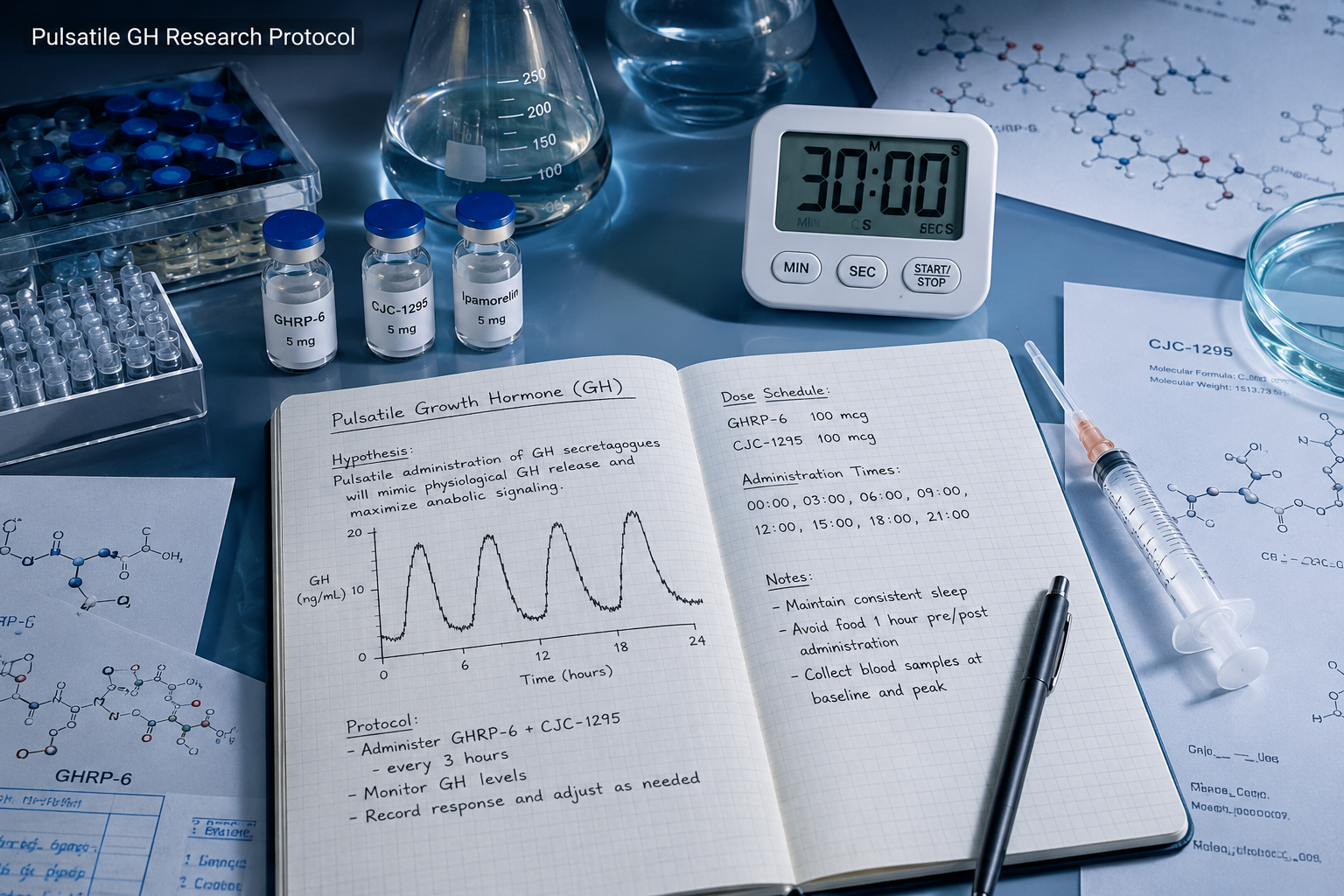
Researchers studying GH secretagogue stacks often combine Mod GRF 1-29 with ipamorelin, as explored in resources on sermorelin, ipamorelin, and CJC-1295 combination protocols.
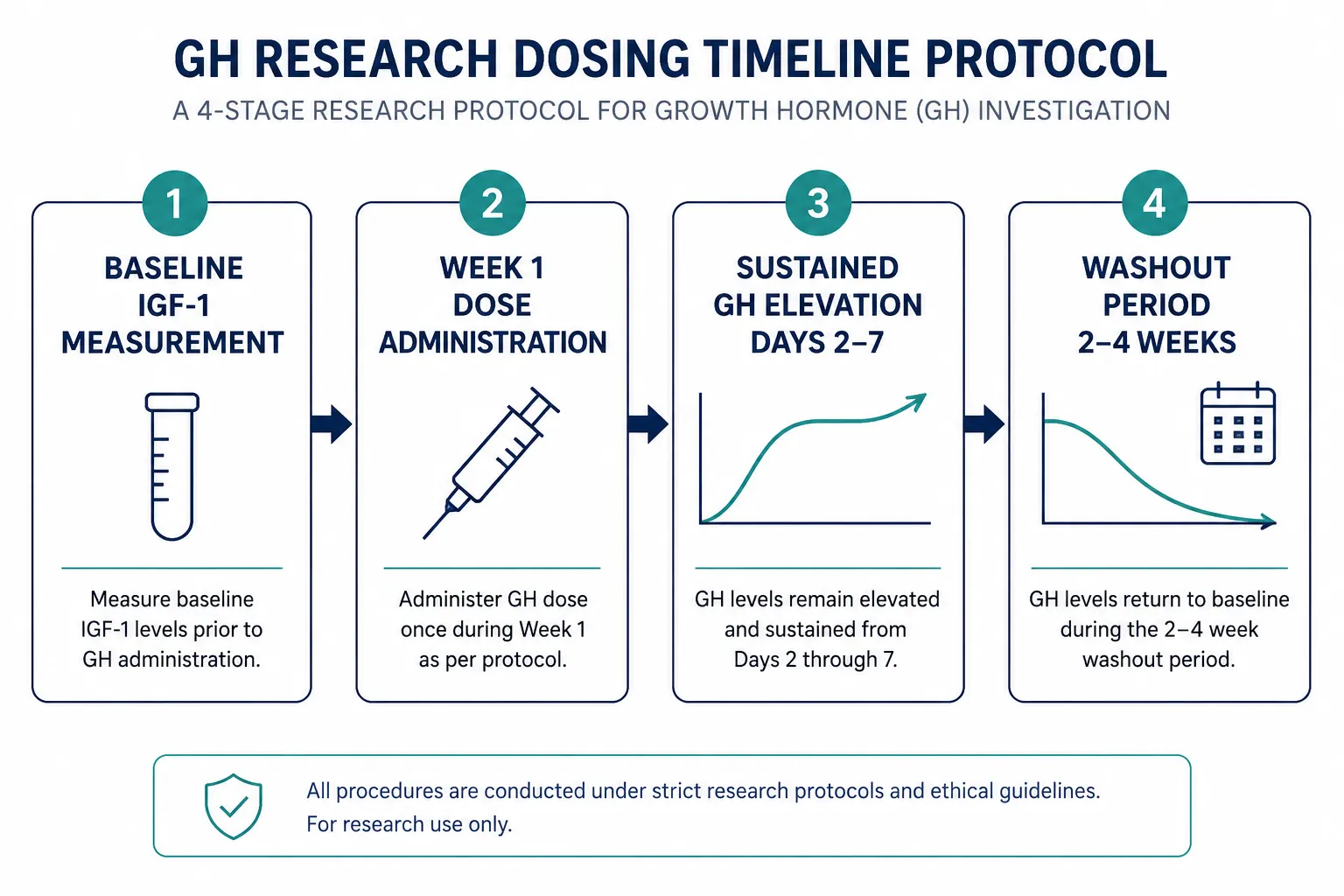
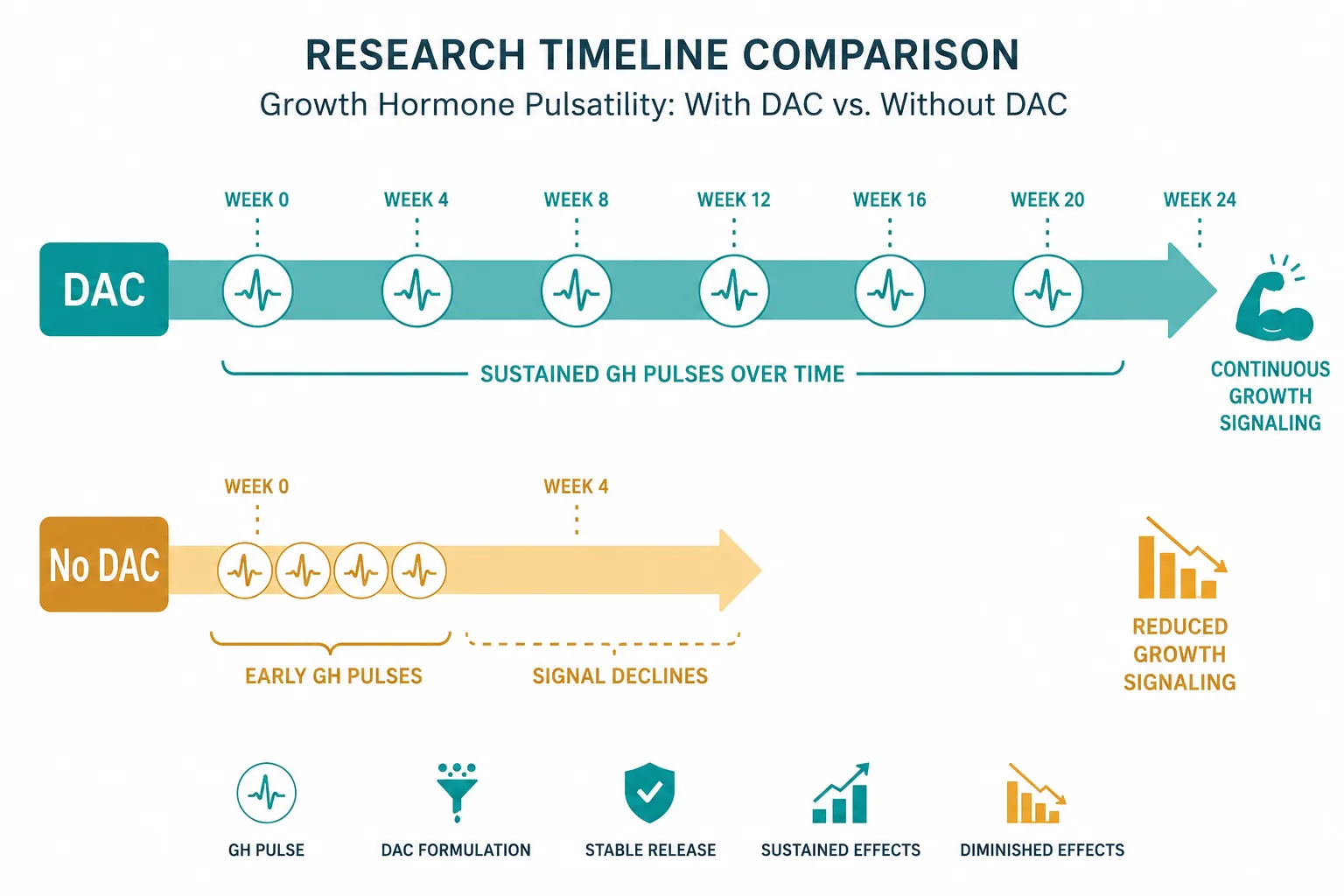
CJC-1295 with DAC produces a blunted but prolonged GH elevation. The Teichman 2006 Phase 1 study remains the most-cited pharmacokinetic anchor for this variant, demonstrating dose-dependent increases in IGF-1 lasting several days after a single injection. This sustained profile reduces the need for daily dosing but also raises concerns about tachyphylaxis, a desensitization of pituitary receptors caused by continuous GHRH stimulation rather than intermittent pulses.
"A sustained GH elevation is not automatically superior to a pulsatile one. The research question determines which profile is appropriate."
Researchers interested in body composition outcomes, including visceral fat reduction, may find relevant context in visceral fat research protocols that examine GH secretagogue effects on adipose tissue.
Research Selection Guide: Choosing Between CJC-1295 With DAC vs Without DAC
Selecting the correct variant depends on three primary research variables: the desired GH release pattern, the dosing schedule, and the peptide stack being used.
Choose Mod GRF 1-29 (no DAC) when:
- The protocol requires mimicking natural pulsatile GH secretion
- Daily or per-session administration is feasible
- The peptide will be stacked with a GHRP or ipamorelin for amplified pulse height
- Researchers want fine-grained control over timing and amplitude
Choose CJC-1295 with DAC when:
- The protocol benefits from less frequent dosing (once or twice weekly)
- A sustained IGF-1 elevation is the primary endpoint
- The research design does not require precise pulse timing
- Stacking with other secretagogues is not a primary concern
For multi-peptide research designs, blended formulations such as tesa, CJC-1295, and ipamorelin combination protocols offer an alternative approach worth reviewing.
Researchers should also note that the DAC variant carries a more cautious safety profile in 2026 consensus literature. Continuous GHRH receptor stimulation raises questions about receptor downregulation, and some protocols now include structured off-weeks when using the DAC form. The no-DAC variant's short half-life makes receptor rest automatic between doses.
For context on how other peptide classes interact with endocrine pathways, the overview of peptides and polypeptides in endocrine pharmacology provides useful background on receptor biology.
Nomenclature note: The label "CJC-1295 no DAC" is a vendor convention, not an official chemical name. The correct scientific designation is Modified GRF 1-29 (Mod GRF 1-29). Researchers sourcing peptides should confirm which compound is actually present, as mislabeling remains a documented issue in the research peptide supply chain.
Both compounds remain strictly research-use-only substances in 2026 with no approved human therapeutic applications.
Conclusion
The CJC-1295 with DAC vs without DAC comparison is not a question of which peptide is better, it is a question of which release profile matches the research objective. Mod GRF 1-29 delivers a short, sharp GH pulse ideal for pulsatile protocols and multi-peptide stacks. CJC-1295 with DAC delivers sustained GH elevation suited to low-frequency dosing designs, but demands greater attention to receptor desensitization risk.
Actionable next steps for researchers in 2026:
- Confirm the exact compound identity before designing any protocol, verify whether the supplier is providing Mod GRF 1-29 or the DAC-conjugated form.
- Match the release profile to the research endpoint: pulsatile for physiological mimicry, sustained for steady IGF-1 elevation studies.
- Review stacking compatibility before combining either variant with GHRPs or other secretagogues.
- Source only from suppliers with documented third-party purity testing to ensure compound integrity.
- Monitor current literature, as mid-2026 consensus continues to favor the no-DAC variant for most stacked research designs due to its more controllable pharmacokinetic profile.