Call or Text 727-513-9780
  • Shopping Cart Shopping Cart
    0Shopping Cart
Pure Tested Peptides | America's most trusted Peptides for sale online
  • Peptides for sale
    • Oral Peptides for sale
      • Peptide Capsules for sale
      • BPC 157 Capsules 1000mcg
      • SLU-PP-332 Capsules | 1000 mcg
      • 5-Amino-1MQ 50mg Capsules
      • Tesofensine 500mcg
    • All Peptides for sale
    • Peptide Sprays
      • BPC 157 Nasal Spray Kit
      • BPC-157 TB500 Nasal Spray Kit
      • Semax Nasal Spray 10mg
      • Selank – Nasal Spray Kit – 10mg
      • Epithalon 50MG Nasal Spray Kit
      • Ipamorelin 10mg Nasal Spray
      • Klow Nasal Spray (BPC-157 + TB-500 + GHK-Cu + KPV) | 80mg
      • Hulk Nasal Spray Tesa / Ipa Blend 6/3 MG
      • Klow Nasal Spray
      • NAD + 500 mg Nasal Spray
      • PT-141 Nasal Spray Kit
    • GHRH Peptides
      • Ipa Peptides
      • CJC-1295 Peptides
        • CJC-1295 with DAC 5 mg
        • CJC-1295 without DAC 5 mg
        • CJC-1295 Ipa 10mg
      • Tesa Peptides
        • Tesa Peptide
        • Tesa 20 mg
    • GHK-Cu Peptides
      • All GHK-Cu Peptides
      • GHK-Cu 100mg
      • KLOW Peptide Blend – Buy KLOW blend online
    • BPC Peptides
      • All BPC Peptides
      • BPC-157
      • BPC-157 TB-500
      • BPC 157 capsules 1000mcg
    • SLU-PP-332 Peptides
      • All SLU-PP-332 Peptides
      • SLU-PP-332 5mg
    • GLP3 Peptides
      • GLP3-R
      • GLP3-R CAG 10mg
      • GLP3-R 20mg
    • PT-141 Peptides
      • PT-141 Peptides for sale
      • PT-141 10mg
      • PT-141 Nasal Spray
    • CAG Peptides
      • Lipo-C Peptide Blend
      • CAG 5mg
      • CAG 10mg
    • MOTS-C Peptides
      • MOTS-C Peptides for sale
      • MOTS-c peptide
      • MOTS-c 10mg *6 pack*
    • 5 Amino 1MQ Peptides
      • 5 Amino 1MQ Peptides for sale
      • 5-Amino-1MQ 50mg Capsules
      • 5-Amino-1MQ 5mg
    • Epithalon Peptides
      • Epithalon Peptides for sale
      • Epithalon 10mg
      • Epithalon 50mg
  • Shop
    • GLPs
      • 5-Amino-1MQ 50mg Capsules
      • 5-Amino-1MQ 5mg
      • GLP3-Reta
      • L-Carnitine 500mg/ml
      • Tesofensine 500mcg
      • SLU-PP-332 5mg
      • MOTS-c 10mg *6 pack*
    • Epithalon & BPC Peptides
      • Epithalon 10mg
      • Epithalon 50mg
      • BPC-157
      • BPC 157 capsules 1000mcg
      • BPC-157 TB-500
      • BPC-157 TB500 Nasal Spray Kit
      • BPC 157 Nasal Spray Kit
    • BPC TB-500 & NAD+ Peptides
      • NAD+ 500 mg
      • KLOW Peptide Blend – Buy KLOW blend online
      • GLOW Peptide Blend
      • TB 500 5mg
      • BPC 157 capsules 1000mcg – Supplement
      • BPC 157 Nasal Spray Kit
      • BPC-157
      • BPC-157 TB500 Nasal Spray Kit
      • BPC-157 TB-500
      • BPC 157 capsules 1000mcg
    • LL-37 Peptide
      • LL-37 10 mg
    • MOTS-C & Selank
      • MOTS-c peptide
      • Selank 10mg
    • GHK Peptides
      • GHK-Cu 100mg
      • GLOW Peptide Blend
      • KLOW Peptide Blend – Buy KLOW blend online
  • COAs
  • Wholesale
    • Wholesale Peptides for sale
  • PTP FAQ
  • Affiliates
    • Selank Peptide: Advanced Pharmacological Mechanisms Underlying Its Anxiolytic and Nootropic Effects in Research
      • 5-Amino-1MQ Peptide: Detailed Mechanisms of NNMT Inhibition and Its Impact on Cellular Metabolism Research
        • MOTS-C Peptide: Unraveling Its Role in Mitochondrial Dynamics and Energy Metabolism Research
          • Epithalon Peptide and Telomerase Regulation: Investigating Its Impact on Cellular Senescence and Lifespan Research Models
            • GLP2-T vs GLP2 Tirz Peptide: Understanding the Naming, Mechanistic Nuances, and Research Implications for Gut Health
      • Peptides and Polypeptides in Modern Pharmacology: What Research on Metoprolol, Prednisone, and Amlodipine Reveals
        • Polypeptide Peptides vs NSAIDs: What Naproxen and Diclofenac Teach Tissue-Repair Researchers About BPC‑157 and TB‑500
          • Peptides and Polypeptides in Endocrine Pharmacology: How GLP-1, GLP-2, and GLP-3 Retatrutide Differ From Classic Drugs Like Prednisone and Amlodipine
          • 5‑Amino‑1MQ Peptide and NNMT Inhibition: How It Compares With Statins Like Atorvastatin in Adipose and Lipid Metabolism Research
      • Enclomiphene, Estrogen Receptor Signaling, and Luteinizing Phase Biology: What Hormone Researchers Should Measure
        • Mesenchymal Stem Cells, BPC‑157, and GHK‑Cu: How Tissue Repair Peptides Compare With Classic NSAIDs Like Naproxen in Injury Models
          • Peptide Calculator Use Cases Beyond Growth Hormone: Working Through GLP‑3 Retatrutide, MOTS‑c, and BPC‑157 Research Dosing
        • Polypeptide Peptides in Endocrine and Metabolic Pharmacology: Lessons From Amlodipine, Prednisone, and Metoprolol
        • Peptides Calculator for Advanced Blends: Worked Examples for Tesamorelin, CJC‑1295, and Ipamorelin Stacks
          • Peptides and Polypeptides in Human Physiology: How Molecular Size Shapes Research Applications
            • Selank Peptide: Advanced Pharmacological Mechanisms Underlying Its Anxiolytic and Nootropic Effects in Research
          • 5-Amino-1MQ Peptide: Detailed Mechanisms of NNMT Inhibition and Its Impact on Cellular Metabolism Research
            • MOTS-C Peptide: Unraveling Its Role in Mitochondrial Dynamics and Energy Metabolism Research
              • Epithalon Peptide and Telomerase Regulation: Investigating Its Impact on Cellular Senescence and Lifespan Research Models
                • GLP2-T vs GLP2 Tirz Peptide: Understanding the Naming, Mechanistic Nuances, and Research Implications for Gut Health
                  • Peptides and Polypeptides in Endocrine Pharmacology: How GLP-1, GLP-2, and GLP-3 Retatrutide Differ From Classic Drugs Like Prednisone and Amlodipine
                    • Polypeptide Peptides vs NSAIDs: What Naproxen and Diclofenac Teach Tissue-Repair Researchers About BPC‑157 and TB‑500
                      • Peptides and Polypeptides in Modern Pharmacology: What Research on Metoprolol, Prednisone, and Amlodipine Reveals
                        • 5‑Amino‑1MQ Peptide and NNMT Inhibition: How It Compares With Statins Like Atorvastatin in Adipose and Lipid Metabolism Research
                        • Enclomiphene, Estrogen Receptor Signaling, and Luteinizing Phase Biology: What Hormone Researchers Should Measure
                        • Mesenchymal Stem Cells, BPC‑157, and GHK‑Cu: How Tissue Repair Peptides Compare With Classic NSAIDs Like Naproxen in Injury Models
                        • Peptide Calculator Use Cases Beyond Growth Hormone: Working Through GLP‑3 Retatrutide, MOTS‑c, and BPC‑157 Research Dosing
                        • Polypeptide Peptides in Endocrine and Metabolic Pharmacology: Lessons From Amlodipine, Prednisone, and Metoprolol
                        • Peptides Calculator for Advanced Blends: Worked Examples for Tesamorelin, CJC‑1295, and Ipamorelin Stacks
                        • Peptides and Polypeptides in Human Physiology: How Molecular Size Shapes Research Applications
                        • Selank Peptide: Advanced Pharmacological Mechanisms Underlying Its Anxiolytic and Nootropic Effects in Research
                        • MOTS-C Peptide: Unraveling Its Role in Mitochondrial Dynamics and Energy Metabolism Research
                        • Peptides and Polypeptides in Modern Pharmacology: What Research on Metoprolol, Prednisone, and Amlodipine Reveals
                        • Peptides and Polypeptides in Endocrine Pharmacology: How GLP-1, GLP-2, and GLP-3 Retatrutide Differ From Classic Drugs Like Prednisone and Amlodipine
                        • 5-Amino-1MQ Peptide: Detailed Mechanisms of NNMT Inhibition and Its Impact on Cellular Metabolism Research
                        • Mesenchymal Stem Cells, BPC‑157, and GHK‑Cu: How Tissue Repair Peptides Compare With Classic NSAIDs Like Naproxen in Injury Models
                        • Peptide Calculator Use Cases Beyond Growth Hormone: Working Through GLP‑3 Retatrutide, MOTS‑c, and BPC‑157 Research Dosing
                        • GLP2-T vs GLP2 Tirz Peptide: Understanding the Naming, Mechanistic Nuances, and Research Implications for Gut Health
                        • Polypeptide Peptides in Endocrine and Metabolic Pharmacology: Lessons From Amlodipine, Prednisone, and Metoprolol
                        • Polypeptide Peptides vs NSAIDs: What Naproxen and Diclofenac Teach Tissue-Repair Researchers About BPC‑157 and TB‑500
                        • Peptides and Polypeptides in Human Physiology: How Molecular Size Shapes Research Applications
                        • Peptides Calculator for Advanced Blends: Worked Examples for Tesamorelin, CJC‑1295, and Ipamorelin Stacks
                        • 5‑Amino‑1MQ Peptide and NNMT Inhibition: How It Compares With Statins Like Atorvastatin in Adipose and Lipid Metabolism Research
                        • Enclomiphene, Estrogen Receptor Signaling, and Luteinizing Phase Biology: What Hormone Researchers Should Measure
                        • Epithalon Peptide and Telomerase Regulation: Investigating Its Impact on Cellular Senescence and Lifespan Research Models
                        • Best research protocol Klow blend
                        • best time to take BPC-157
                        • best time to take DSIP (Delta Sleep Inducing Peptide)
                        • best time to take CJC-1295
                        • best time to take AOD-9604
                        • best time to take Follistatin 344
                        • best time to take Ipamorelin
                        • best time to take MK-677 (Ibutamoren)
                        • best time to take Ligandrol (LGD-4033) — research compound
                        • best time to take Ostarine (MK-2866) — research compound
                        • best time to take GHK-CU
                        • best time to take TB-500
                        • best time to take MOTS-c
                        • best time to take Semax
                        • best time to take RAD-140 (Testolone) — research compound
                        • best time to take Thymosin Alpha-1
                        • best time to take PEG-MGF
                        • Biolife Plasma, Octapharma Plasma, and Research Peptides: How Plasma Donation Labs Differ From Peptide Suppliers
                        • best time to take YK-11 — research compound
                        • best time to take PT-141 (Bremelanotide)
                        • Best research protocol Klow blend
  • Contact
    • Contact Customer Service
    • Text Customer Support
  • About US
  • Shop all peptides
  • Affiliate Program
    • Affiliate Signup
  • Login / Register Login / Register Page Link Login / Register Page Link
  • Click to open the search input field Click to open the search input field Search
  • Menu Menu

Tag Archive for: peptide quality control

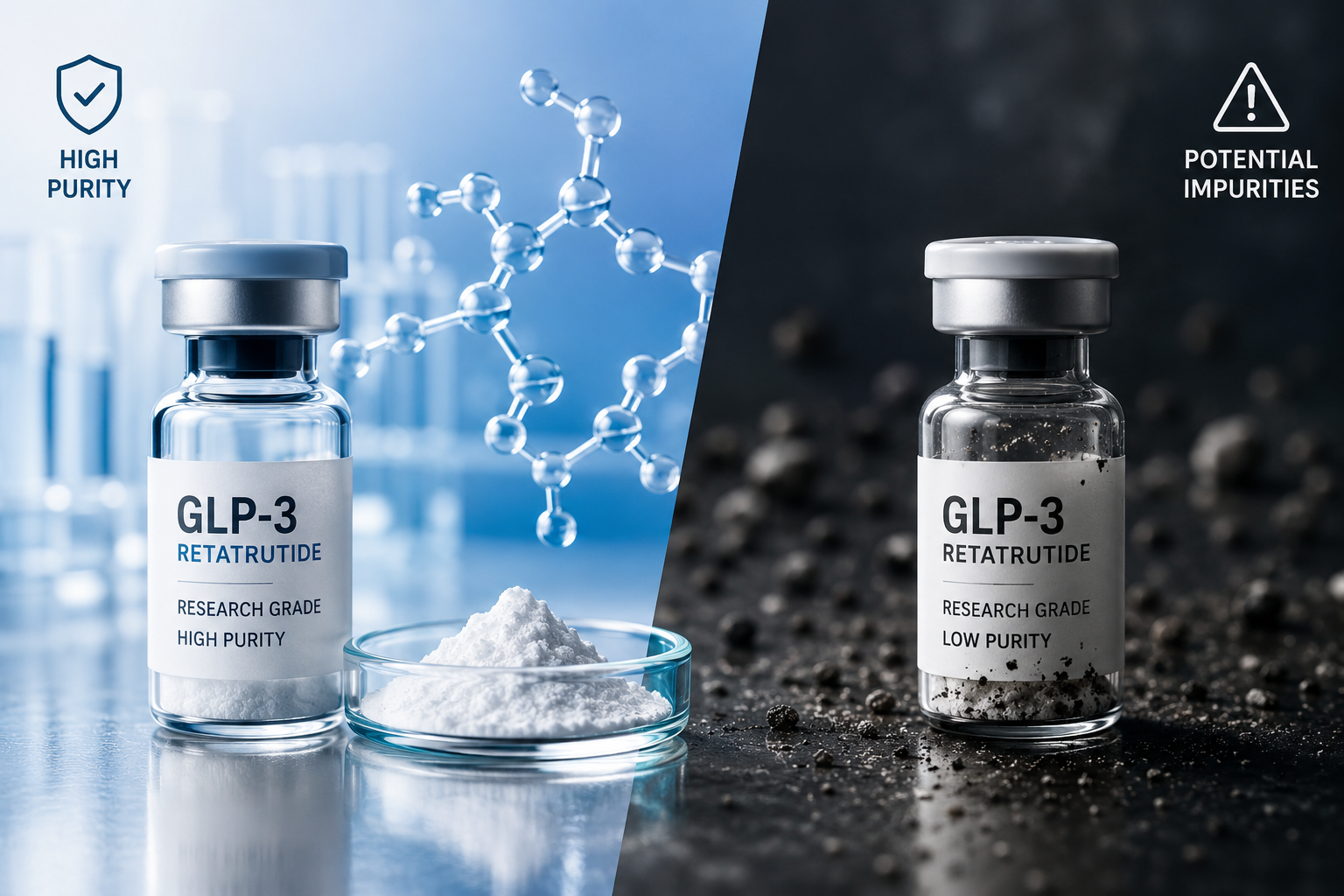
Understanding Peptide Purity and Impurities: A Guide for Research-Grade GLP-3 Retatrutide

Understanding Peptide Purity and Impurities: A Guide for Research-Grade GLP-3 Retatrutide

July 12, 2026/0 Comments/by Pure Tested

Fewer than 30% of research failures involving synthetic peptides are traced back to protocol errors, the majority stem from compromised compound quality that was never detected before the experiment began. For researchers working with complex triple-agonist molecules, understanding peptide purity and impurities: a guide for research-grade GLP-3 Retatrutide is not optional reading. It is a prerequisite for generating data that holds up to scrutiny.

Key Takeaways

  • Peptide purity directly affects experimental reproducibility and the validity of research outcomes.
  • Common impurities in synthetic peptides include deletion sequences, oxidized residues, and residual solvents.
  • A Certificate of Analysis (COA) is the primary tool for evaluating research-grade peptide quality.
  • HPLC purity of 98% or greater is the accepted benchmark for reliable research-grade peptides.
  • Proper storage and handling preserve purity after the vial leaves the manufacturer.

Key Takeaways

What Makes Peptide Purity Critical for GLP-3 Retatrutide Research

Retatrutide is a 39-amino-acid peptide that simultaneously targets GLP-1, GIP, and glucagon receptors. Its structural complexity makes it more susceptible to synthesis-related impurities than shorter, simpler peptides. Even minor contaminants can bind off-target receptors, alter dose-response curves, or trigger inflammatory artifacts in cell-based assays.

Researchers sourcing material for in vitro or preclinical work should treat purity as a primary variable, not an afterthought. For context on how reference standards and benchmarks are established across the peptide research field, the resource on Bachem and reference standards for peptide benchmarks provides a useful foundation.

The 98% Purity Threshold

The research community broadly accepts 98% HPLC purity as the minimum standard for peptides used in quantitative assays. Below this threshold:

  • Impurities may represent 1 in 50 molecules in solution
  • Biological activity measurements become unreliable
  • Batch-to-batch reproducibility drops significantly

For a peptide as structurally demanding as Retatrutide, some researchers prefer 99%+ purity to reduce noise in receptor-binding studies.

Common Impurities Found in Synthetic Peptides

Understanding peptide purity and impurities in research-grade GLP-3 Retatrutide requires knowing exactly what contaminants to look for. Impurities in synthetic peptides fall into three main categories:

Impurity Type Origin Risk to Research
Deletion sequences Incomplete coupling during synthesis Altered receptor binding
Oxidized residues Methionine/tryptophan oxidation Reduced biological activity
Residual solvents Incomplete purification Cytotoxicity in cell assays
Aggregates Improper lyophilization Inconsistent solubility
Acetylation artifacts Capping reagent carryover False activity signals

Deletion sequences are the most common impurity. They arise when a single amino acid coupling step fails during solid-phase synthesis, producing a truncated chain that is one or more residues shorter than the target molecule.

Oxidized methionine is particularly relevant for Retatrutide because oxidation can occur during storage if the peptide is exposed to moisture or oxygen. This is one reason proper lyophilization and cold-chain storage matter as much as the synthesis itself.

Researchers working with other peptide classes such as AOD-9604 research methods and storage will recognize that these same impurity categories apply broadly across synthetic peptides.

Common Impurities Found in Synthetic Peptides

How to Read a COA for Research-Grade GLP-3 Retatrutide

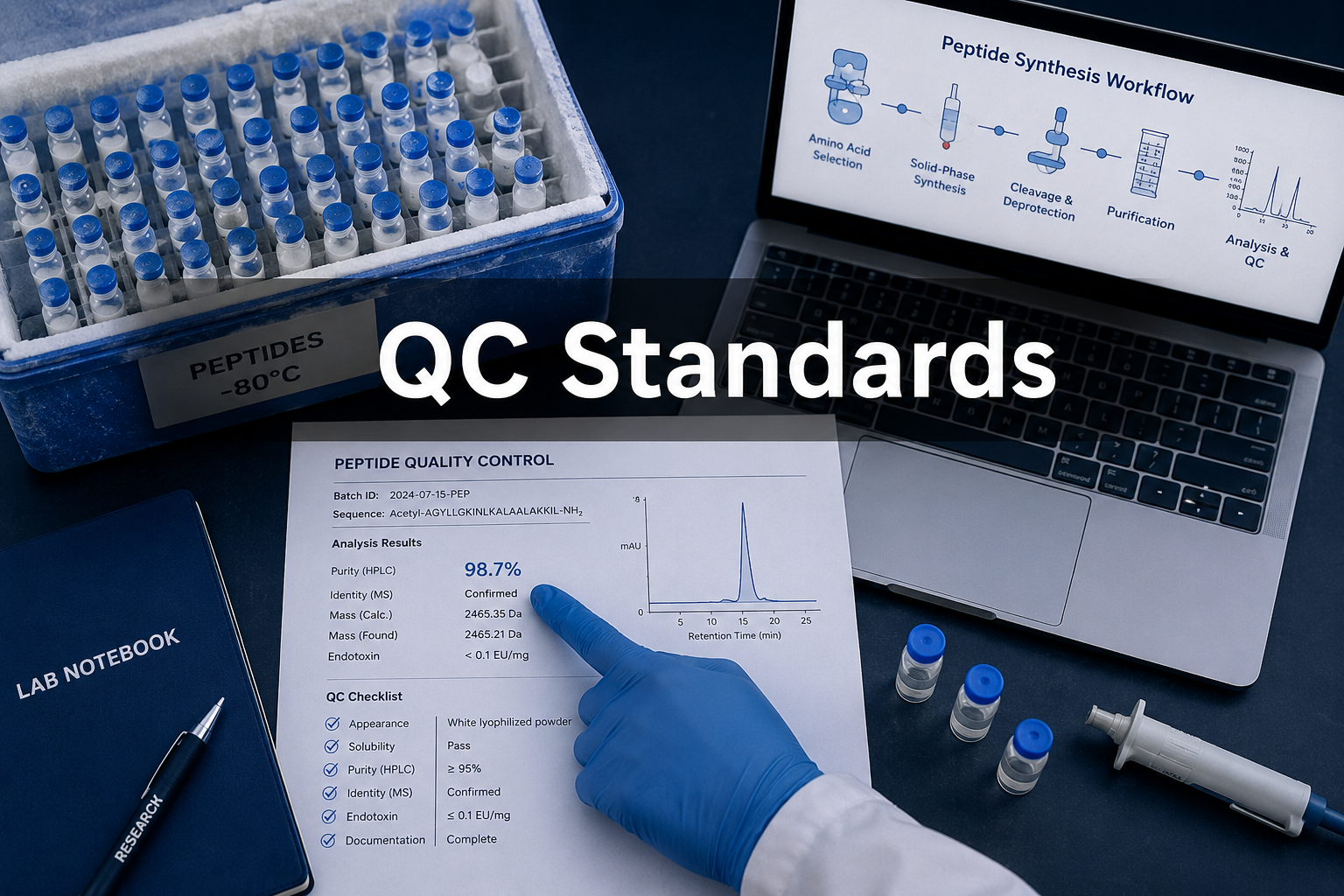
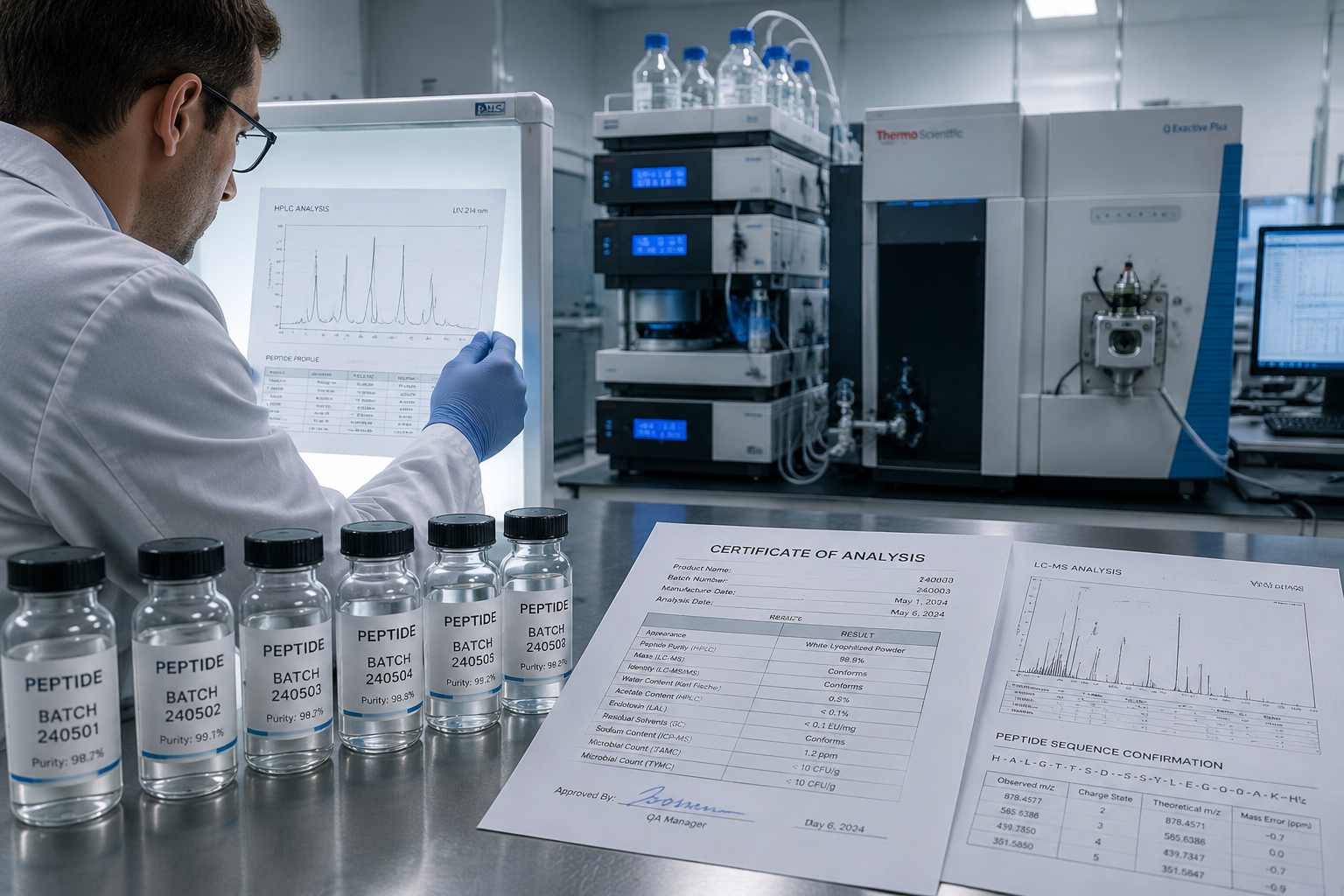
A Certificate of Analysis (COA) is the primary quality document for any research peptide. When evaluating a COA for Retatrutide, look for these specific data points:

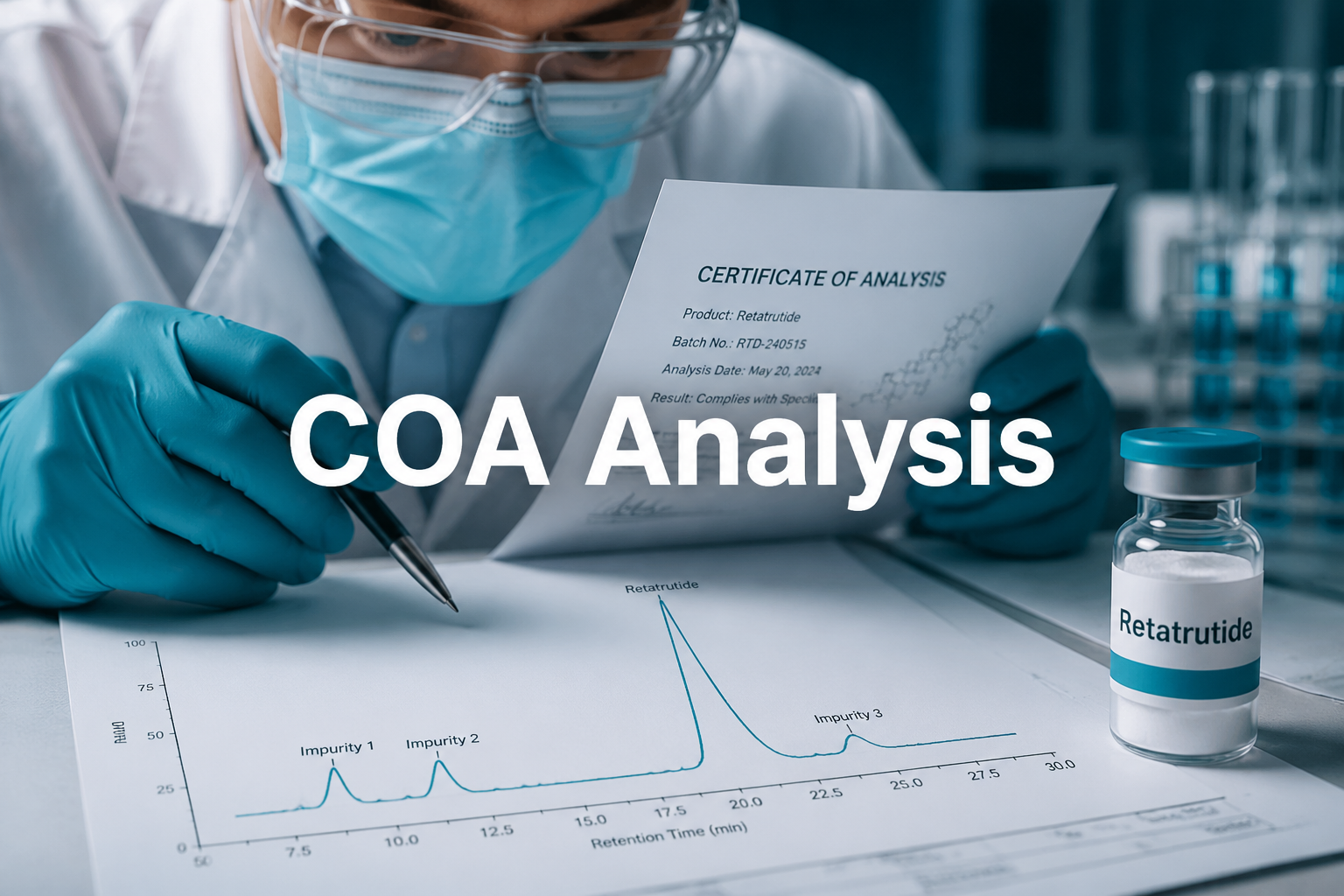
  1. HPLC chromatogram, The main peak area percentage should be clearly stated and visually dominant. Request the raw chromatogram, not just a number.
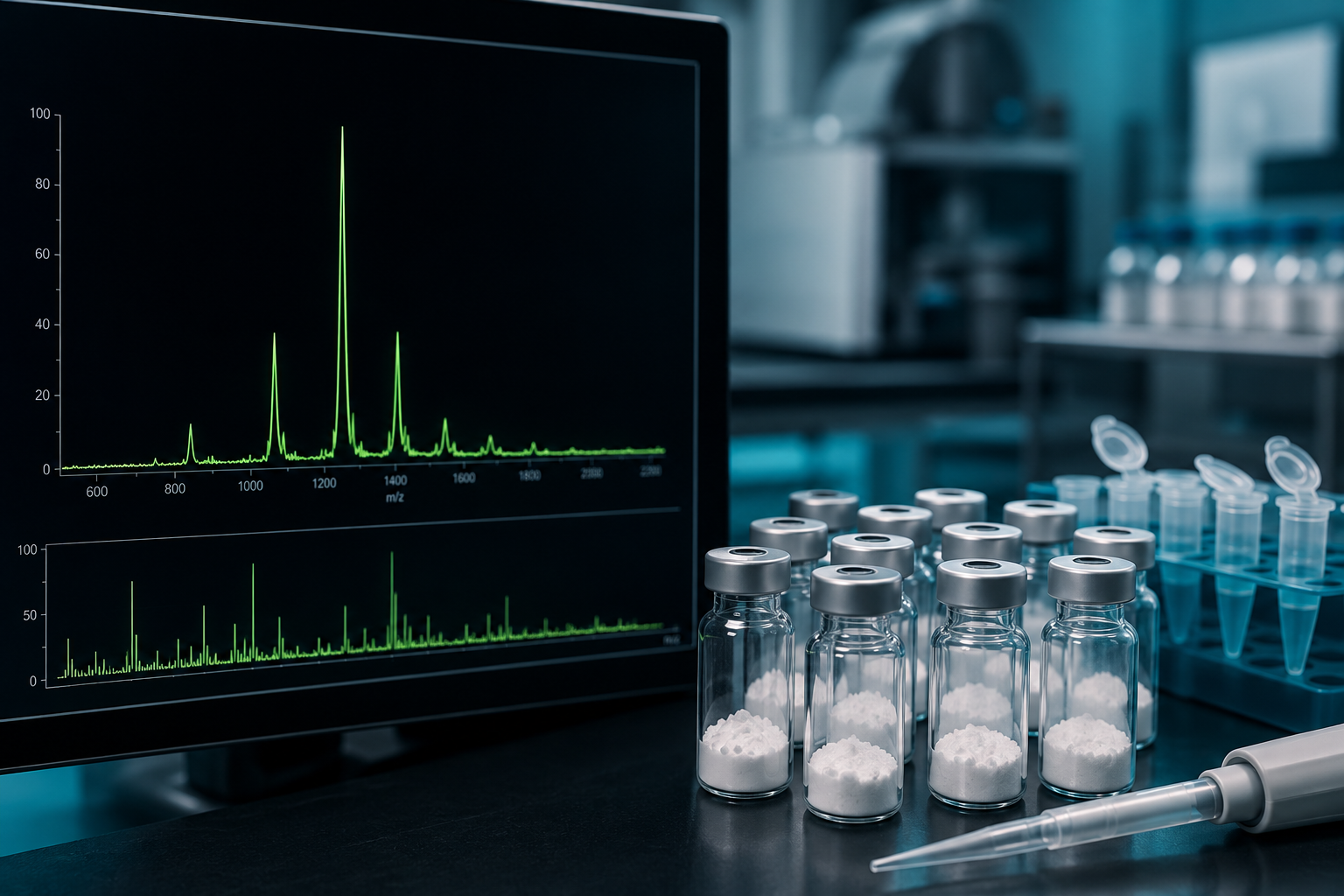
  2. Mass spectrometry confirmation, The observed molecular weight should match the theoretical mass of Retatrutide (approximately 4,531 Da). This confirms the correct sequence was synthesized.
  3. Water content (Karl Fischer), Lyophilized peptides typically contain 5-12% water by weight. High water content reduces the effective peptide dose per milligram.
  4. Residual solvent testing, Confirms that acetonitrile and TFA from the purification process have been removed to safe levels.
  5. Lot-specific data, A legitimate COA is lot-specific, not a generic document reused across batches.

"A COA without a lot number is not a COA, it is a marketing document."

Researchers can review verified COA documentation standards to understand what a properly formatted quality document should contain.

For additional context on how purity standards apply to other research peptides, the GLP-1 Retatrutide product page and the Reta 10mg product tag offer relevant sourcing information.

Storage Conditions That Preserve Purity

Even a 99% pure peptide degrades rapidly under poor storage conditions. Follow these guidelines:

  • Store lyophilized peptide at -20C or colder
  • Avoid repeated freeze-thaw cycles (aliquot before first use)
  • Reconstitute only the volume needed for immediate use
  • Use sterile bacteriostatic water or DMSO as appropriate for the assay

These principles apply across the research peptide category. For example, the same cold-chain logic governs SS-31 peptide research considerations and other sensitive compounds.

Storage Conditions That Preserve Purity

Sourcing and Verification Best Practices

Understanding peptide purity and impurities in a guide for research-grade GLP-3 Retatrutide ultimately comes down to sourcing decisions. Researchers should apply the following checklist before committing to a supplier:

  • Does the supplier provide lot-specific COAs with HPLC and MS data?
  • Is the synthesis performed under GMP-aligned conditions?
  • Are third-party analytical results available on request?
  • Does the supplier use HPLC-grade solvents and validated purification columns?

Researchers planning multi-peptide protocols, such as those combining GLP-class compounds with growth hormone secretagogues, should also review resources like the IPA-Sermorelin stack research guide to understand how purity standards interact across compound combinations.

For those evaluating broader catalog options, the GLP-3 for sale research planning guide provides practical sourcing and planning context specific to triple-agonist peptides.

Conclusion

Peptide purity is not a background variable, it is a core experimental parameter. For researchers working with structurally complex molecules like Retatrutide, even a 2-3% impurity burden can introduce confounding signals that invalidate assay results. The actionable steps are clear: demand lot-specific COAs with both HPLC and mass spectrometry data, verify the molecular weight against the theoretical value, confirm proper storage conditions from synthesis through delivery, and aliquot immediately upon receipt to prevent degradation. Treating purity verification as a standard pre-experiment step, alongside buffer preparation and calibration, is what separates reproducible research from wasted resources.

https://www.puretestedpeptides.com/wp-content/uploads/2026/07/understanding-peptide-purity-and-impurities-a-guide-for-research-grade-glp-3-ret.png 1024 1536 Pure Tested https://www.puretestedpeptides.com/wp-content/uploads/2026/01/buy-peptides-online.jpg Pure Tested2026-07-12 13:02:542026-07-20 15:00:16Understanding Peptide Purity and Impurities: A Guide for Research-Grade GLP-3 Retatrutide
How Safe Are Mail‑Order Research Peptides? Evidence Gaps, Regulatory Gray Zones, and Risk‑Mitigation for Labs

How Safe Are Mail‑Order Research Peptides? Evidence Gaps, Regulatory Gray Zones, and Risk‑Mitigation for Labs

June 11, 2026/0 Comments/by Pure Tested

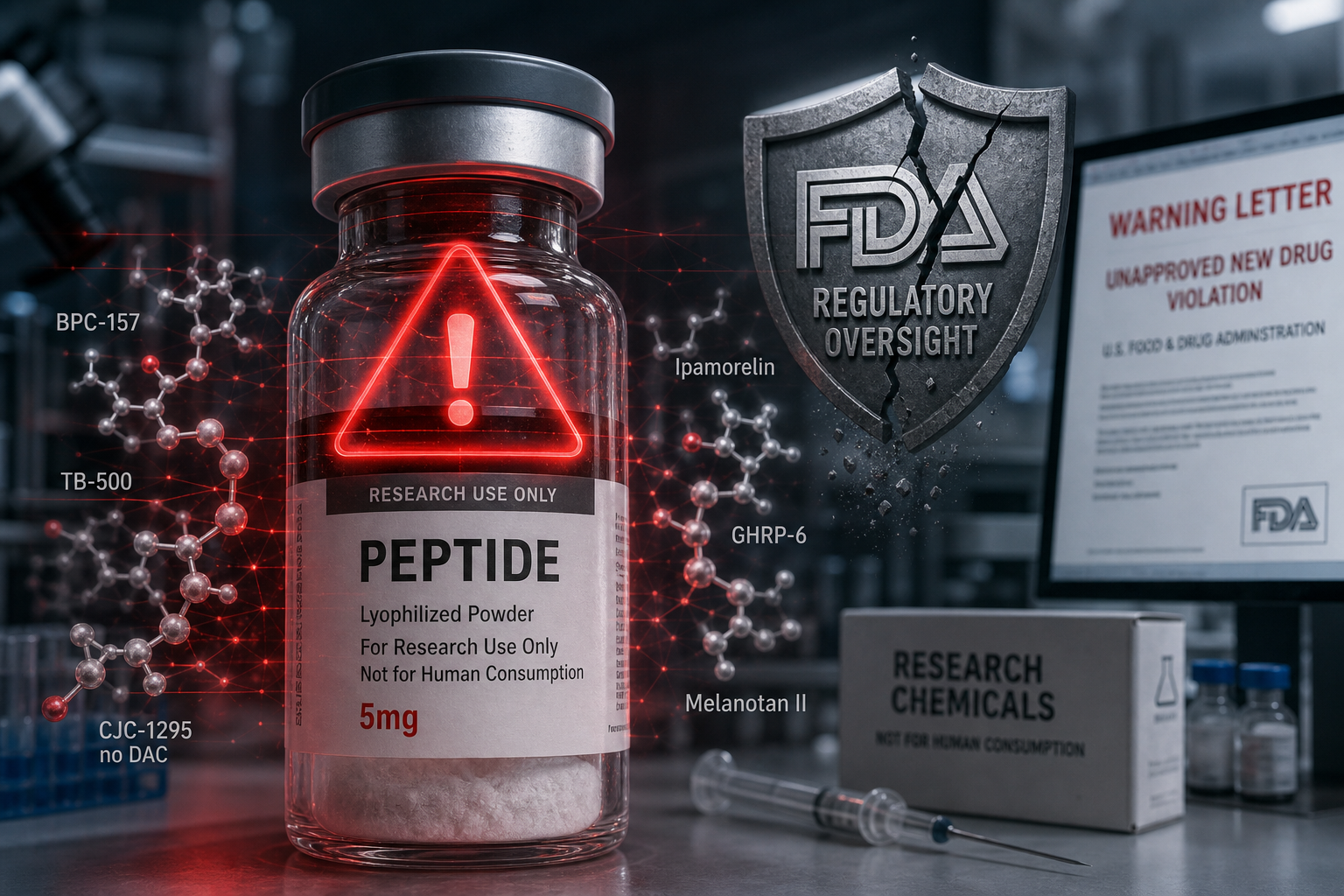
A February 2025 FDA warning letter to a major online peptide vendor confirmed what regulators had long suspected: "For Research Use Only" labels do not shield sellers — or buyers — from enforcement when products are clearly marketed for human use. That single enforcement action crystallized a debate that has grown louder as the peptide market expands rapidly in 2026.

Understanding how safe are mail-order research peptides, evidence gaps, regulatory gray zones, and risk-mitigation for labs is no longer optional for serious researchers. The stakes — legal, scientific, and physiological — demand a clear-eyed look at what the evidence actually shows.

Detailed () editorial illustration showing a magnified view of a peptide vial with a glowing red warning symbol overlaid,

Key Takeaways

  • The FDA classifies peptides with biological activity as drugs; "research use only" labeling does not create a legal exemption for human consumption.
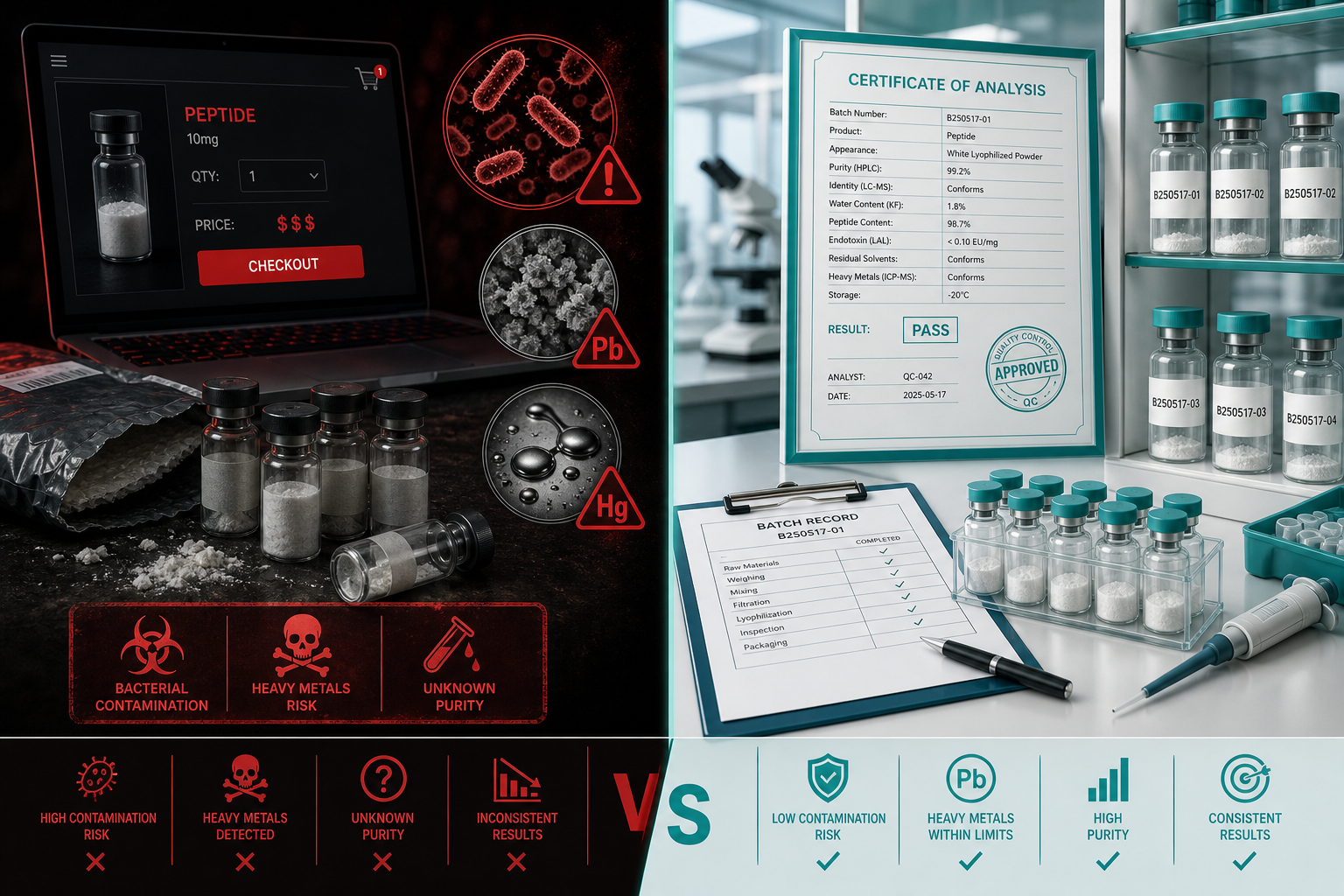
  • Unverified peptide suppliers carry documented risks including bacterial contamination, heavy metal presence, and incorrect potency.
  • The American Peptide Research Alliance reported two adverse events linked to unlicensed vendors in early 2026, with investigations ongoing.
  • Certificates of Analysis (COAs), batch traceability, and cold-chain compliance are the minimum quality benchmarks for legitimate lab sourcing.
  • Legal, prescription-based compounding pathways exist for clinical contexts and represent the gold standard for human-use peptides.

The Regulatory Gray Zone: What "Research Use Only" Actually Means

The phrase "For Research Use Only" (RUO) appears on thousands of peptide product pages, but its legal weight is far weaker than most buyers assume. Under U.S. law, any compound with biological activity intended for human use qualifies as a drug — regardless of how it is labeled. The FDA evaluates actual intent and use, not packaging language.

When a vendor's website includes testimonials, dosing guides, or health benefit claims alongside an RUO disclaimer, regulators treat the disclaimer as void. Marketing language that implies human health outcomes can trigger enforcement actions and has done so repeatedly. Vendors who operate in this space are not protected by a "research chemical" carve-out because no such exemption exists in federal statute.

For buyers, individual possession for genuine laboratory research has not historically been a primary enforcement target. However, that tolerance is not a legal right — it is an unenforced gray area that can shift with regulatory priorities. Labs that source peptides for in-vitro or animal studies should document their research purpose clearly and maintain records accordingly.

Researchers exploring compounds like GLP-1 peptides or AOD-9604 will find that sourcing documentation matters as much as the science itself.


Evidence Gaps and Safety Concerns With Unregulated Suppliers

Evidence Gaps and Safety Concerns With Unregulated Suppliers

Asking how safe are mail-order research peptides requires confronting uncomfortable data gaps. Because unregulated peptide vendors operate outside pharmaceutical manufacturing standards, independent quality data is scarce. What exists is not reassuring.

Documented risks from unverified sources include:

  • Bacterial and fungal contamination from non-sterile synthesis environments
  • Heavy metal residues from uncontrolled reagents
  • Incorrect peptide sequences or truncated chains
  • Mislabeled concentrations leading to unknown potency
  • Degraded product from improper cold-chain handling during shipping

The American Peptide Research Alliance issued a safety alert in March 2026 reporting two adverse events tied to products from unlicensed vendors. Investigations remain ongoing, but the alert underscores that the risk is not theoretical.

"Absence of a Certificate of Analysis is not a minor oversight — it is a fundamental indicator that manufacturing standards were not followed."

For labs researching mitochondrial compounds such as SS-31 peptides or MOTS-c, purity is a scientific necessity, not just a compliance checkbox. Contaminated or mislabeled compounds corrupt experimental results and make data unreproducible.

Red flags when evaluating a peptide supplier:

Warning Sign What It Suggests
No COA or outdated COA No independent purity verification
Price significantly below market Cost-cutting in synthesis or testing
No batch or lot number No traceability if contamination occurs
Health benefit claims on product pages Likely FDA enforcement risk
No cold-chain shipping options Degradation during transit

Risk-Mitigation for Labs: Practical Sourcing Standards

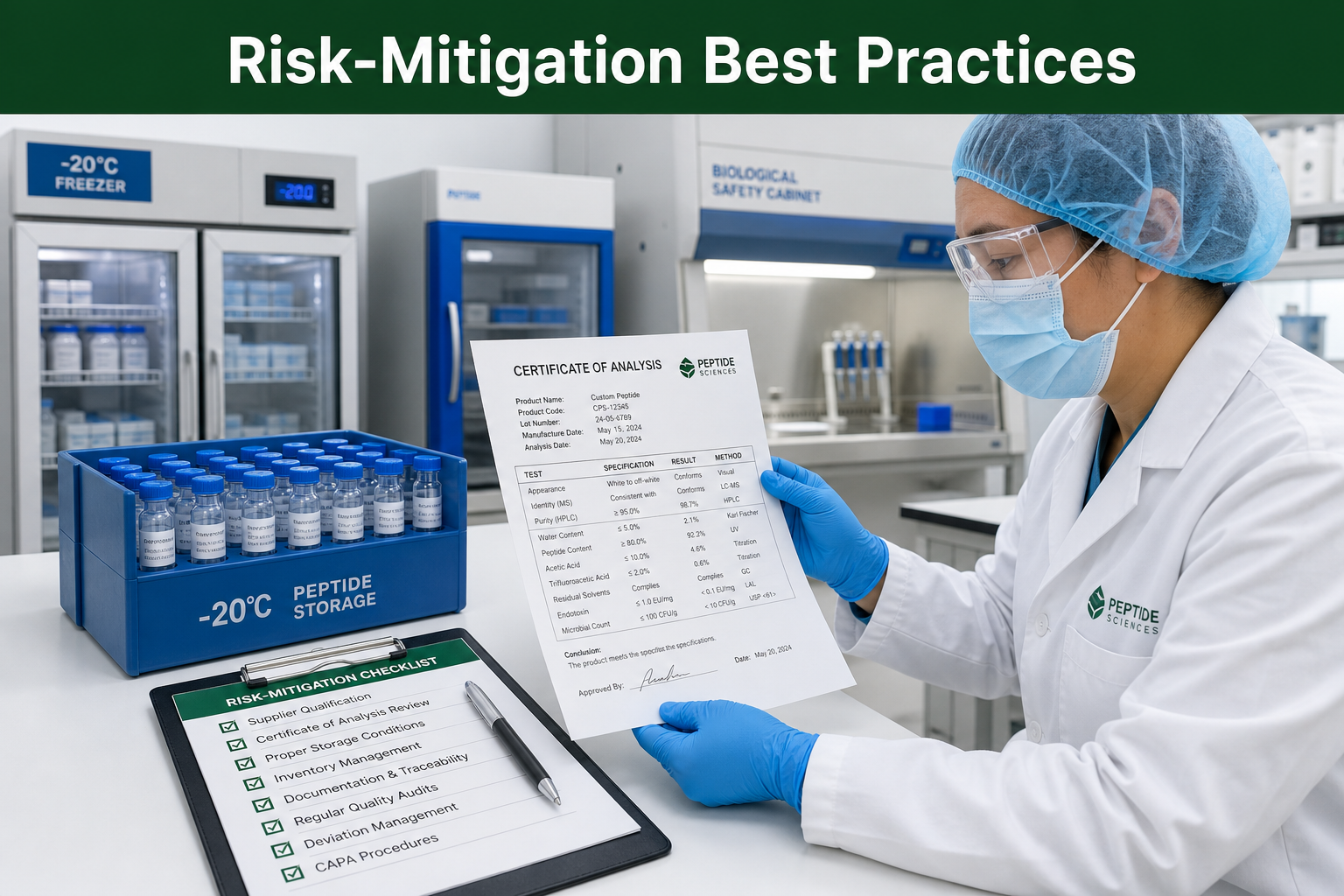
Addressing how safe are mail-order research peptides, evidence gaps, regulatory gray zones, and risk-mitigation for labs ultimately comes down to sourcing discipline. The following standards represent current best practice for legitimate research environments.

Minimum sourcing requirements:

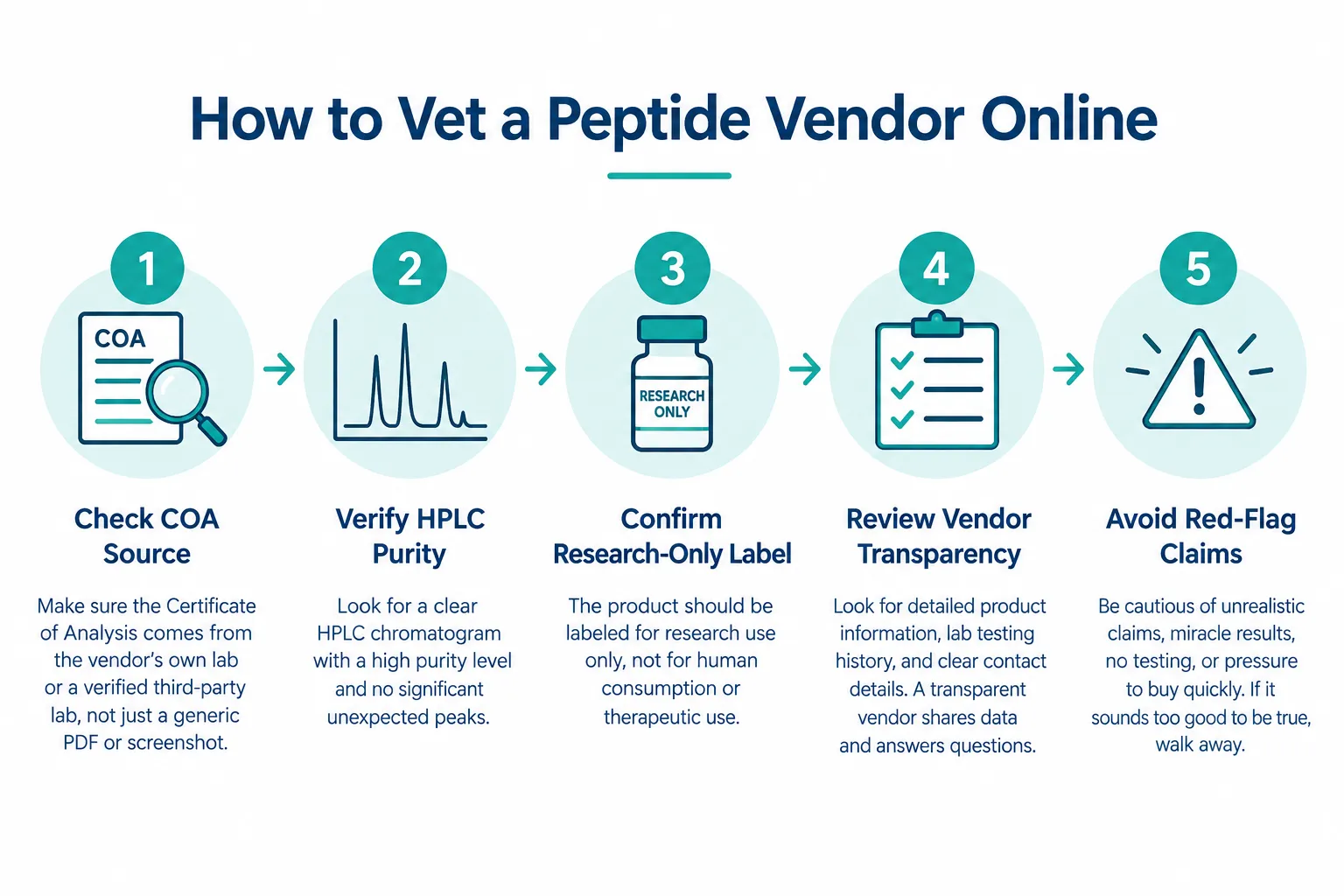
  1. Third-party COA — Verify purity, sequence confirmation, and residual solvent levels from an independent laboratory, not just the vendor's internal testing.
  2. Batch traceability — Every vial should carry a lot number traceable to a specific synthesis run and test report.
  3. Cold-chain compliance — Lyophilized peptides require refrigerated or frozen shipping. Avoid vendors who ship at ambient temperature without insulation.
  4. No human-use marketing — Vendors making health claims are operating outside regulatory boundaries, which signals broader quality control problems.
  5. Transparent manufacturing disclosures — Reputable suppliers disclose synthesis method, facility standards, and sterility testing.

For labs working with compounds like BPC-157, GHK-Cu, or LL-37, these standards are non-negotiable for data integrity.

When human use is the clinical goal, the legally sound pathway is a patient-specific prescription filled by a 503A-licensed compounding pharmacy. This route ensures regulatory compliance, pharmaceutical-grade quality, and prescriber accountability — none of which exist in the unregulated market.

Researchers can also review innovative peptide delivery systems to understand how formulation choices affect both stability and research validity.

Risk-Mitigation for Labs: Practical Sourcing Standards


Conclusion

The peptide research market in 2026 is expanding faster than the regulatory infrastructure designed to govern it. That gap creates real risk — for lab data quality, for legal compliance, and for public safety when products migrate from "research" to human use without oversight.

Actionable next steps for labs and researchers:

  • Audit current suppliers against the COA, batch traceability, and cold-chain checklist above before the next order.
  • Document the research purpose for every peptide purchase and retain records.
  • Reject any vendor whose product pages include dosing guidance, testimonials, or health outcome claims.
  • For any human-use application, engage a licensed prescriber and 503A compounding pharmacy — not an online vendor.
  • Stay current with FDA enforcement actions, which signal which compounds and vendor practices are under active scrutiny.

The science behind peptide research is genuinely compelling. Protecting that science — and the people conducting it — requires sourcing standards that match the seriousness of the work.

https://www.puretestedpeptides.com/wp-content/uploads/2026/06/How-Safe-Are-Mail‑Order-Research-Peptides-Evidence-Gaps-Regulatory-Gray-Zones-and-Risk‑Mitigation-for-Labs.png 1024 1536 Pure Tested https://www.puretestedpeptides.com/wp-content/uploads/2026/01/buy-peptides-online.jpg Pure Tested2026-06-11 13:06:492026-07-20 15:03:31How Safe Are Mail‑Order Research Peptides? Evidence Gaps, Regulatory Gray Zones, and Risk‑Mitigation for Labs
How to Choose a Peptide Supplier for Research Use Only: Purity, COAs, and Red Flags Explained

How to Choose a Peptide Supplier for Research Use Only: Purity, COAs, and Red Flags Explained

June 9, 2026/0 Comments/by Pure Tested

Roughly 30% of research compounds purchased online fail independent purity verification — a sobering figure for any scientist whose experimental outcomes depend on what is actually inside the vial. Understanding how to choose a peptide supplier for research use only: purity, COAs, and red flags explained is not a bureaucratic exercise; it is the foundation of reproducible science.

Key Takeaways

  • Research-grade peptides should carry a minimum purity of 98% confirmed by HPLC analysis from an independent, accredited laboratory.
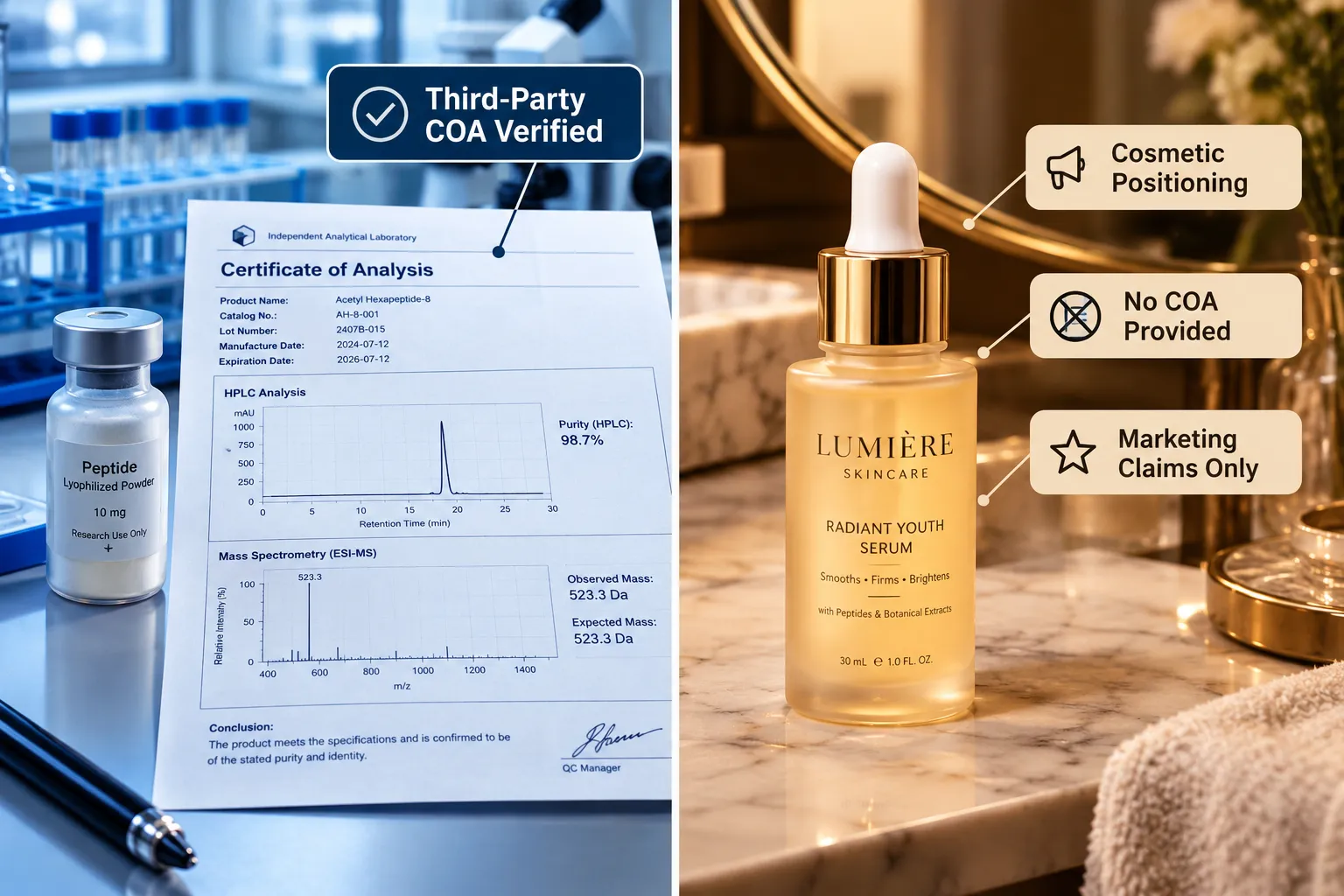
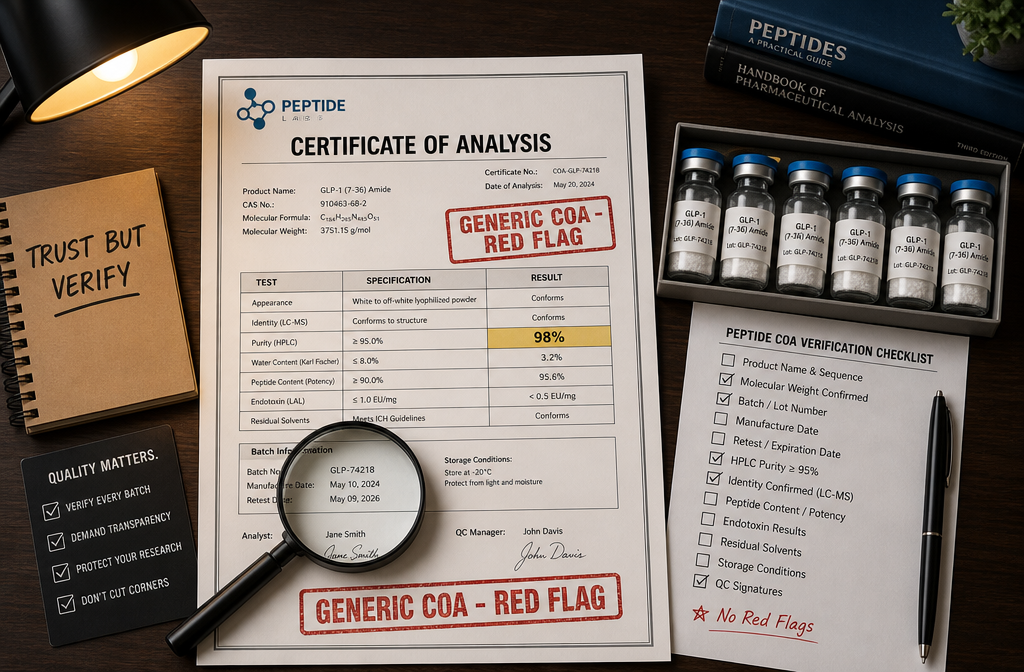
  • Every batch needs its own unique Certificate of Analysis (COA) with a matching lot number — generic, reused COAs are a serious red flag.
  • Legitimate COAs include both HPLC chromatograms and mass spectrometry data confirming peptide identity.
  • Suppliers must label products "Research Use Only" and must not make therapeutic or clinical claims.
  • Price, community reputation, and supplier transparency are secondary filters that help narrow down trustworthy vendors.

Key Takeaways

Purity Standards: Why 98% Is the Baseline, Not a Bonus

When evaluating any research peptide vendor, purity is the first non-negotiable metric. Research-grade peptides should achieve a minimum purity of 98% as measured by High-Performance Liquid Chromatography (HPLC). Any product falling below this threshold introduces impurities — truncated sequences, oxidized residues, or synthesis byproducts — that can skew binding assays, cell viability studies, and animal model outcomes in ways that are difficult to detect and nearly impossible to correct retroactively.

HPLC alone, however, is not sufficient. A credible supplier pairs HPLC data with mass spectrometry (LC-MS or MALDI-TOF) to confirm that the molecular weight of the compound matches the theoretical sequence. Together, these two analytical methods answer two distinct questions:

Test What It Confirms
HPLC Purity percentage and absence of major impurities
Mass Spectrometry Correct molecular identity and sequence integrity

For in vivo research models, a third data point becomes critical: endotoxin testing. Bacterial endotoxins — lipopolysaccharides shed from gram-negative bacteria during synthesis — can trigger severe immune responses in animal subjects, completely confounding experimental results. Any supplier serving researchers running in vivo protocols should include endotoxin levels on the COA.

Researchers studying compounds like SS-31 peptides or BPC-157 should specifically verify that purity documentation covers the exact batch received, not a representative sample from a prior production run.


Purity Standards: Why 98% Is the Baseline, Not a Bonus

How to Read a COA: Batch Numbers, Chromatograms, and What Legitimate Documentation Looks Like

A Certificate of Analysis is only as useful as the information it contains. Knowing how to choose a peptide supplier for research use only means knowing how to interrogate this document critically.

Four elements every legitimate COA must include:

  1. Batch or lot number that matches the number printed on the product label — if these do not align, the COA may not apply to the vial in hand.
  2. HPLC chromatogram showing the actual peak profile, not just a reported percentage. A supplier providing only a number without the underlying chromatogram is offering an unverifiable claim.
  3. Mass spectrometry spectrum confirming molecular weight, ideally with the observed versus theoretical mass comparison clearly stated.
  4. Name of the third-party testing laboratory — independent accredited labs carry far more credibility than in-house testing, which cannot be independently audited.

"A COA that cannot be traced to a specific batch and a named independent laboratory is not a certificate of analysis — it is a marketing document."

Generic COAs reused across multiple products or batches are among the most common red flags in the peptide research supply market. Suppliers offering compounds such as Epithalon or Thymosin Alpha-1 should provide batch-specific documentation for every order. Reviewing a supplier's published COA library before purchasing is a practical first step.


How to Read a COA: Batch Numbers, Chromatograms, and What Legitimate Documentation Looks Like

Red Flags, Regulatory Language, and Supplier Transparency

The final layer of due diligence in how to choose a peptide supplier for research use only: purity, COAs, and red flags explained involves evaluating the supplier's conduct, not just their paperwork.

Red flags to watch for:

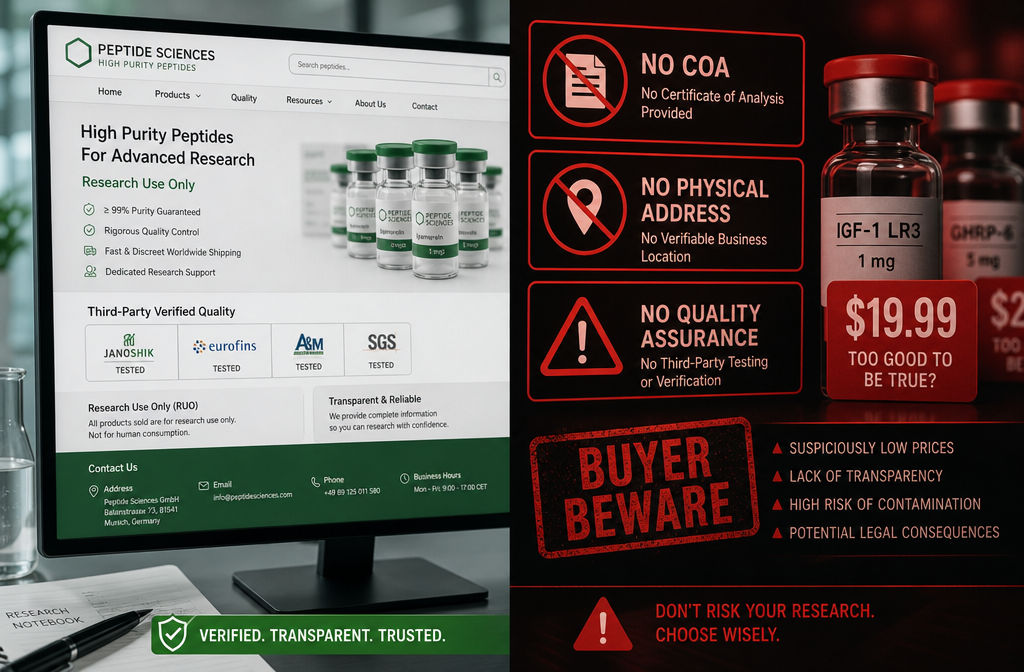
  • No physical address or verifiable contact information on the website
  • Therapeutic or clinical claims about peptide effects (e.g., "treats," "cures," "prescribed for")
  • Pricing dramatically below market average — underdosed or impure products are the most common explanation
  • Identical COAs across multiple different peptides or batches
  • No visible third-party lab affiliation

What legitimate suppliers do differently:

  • Label every product clearly as "Research Use Only" with no implied human-use endorsement
  • Publish transparent quality control processes and are willing to discuss testing methodology directly
  • Maintain an active, verifiable community reputation through documented reviews and scientific forums

Pricing deserves a direct note: suspiciously low prices are not a value proposition. They are a signal. Peptide synthesis at research-grade purity is resource-intensive. A vendor offering MOTS-c or PT-141 at a fraction of market rate has almost certainly cut corners somewhere in synthesis, purification, or testing.

Regulatory compliance is equally non-negotiable. In 2026, regulatory scrutiny of research peptide vendors continues to increase. Suppliers making health claims or marketing peptides for human use are operating outside compliance boundaries — and purchasing from them exposes researchers to both scientific and legal risk. Reviewing a supplier's full product catalog and FAQ documentation before committing to a vendor relationship is a sound practice.


Conclusion

Choosing a research peptide supplier is a scientific decision, not a shopping decision. The checklist is straightforward: demand 98%+ HPLC-confirmed purity, require batch-specific COAs from named independent laboratories, verify mass spectrometry data, and confirm endotoxin testing for any in vivo application. Walk away from any vendor missing these elements, making therapeutic claims, or offering prices that defy the economics of quality synthesis.

Actionable next steps for 2026:

  • Before ordering, request the COA for the specific batch you will receive and cross-reference the lot number.
  • Verify the named testing laboratory is accredited and independently searchable.
  • Search the supplier's name in scientific community forums and documented review sources.
  • Confirm all product pages carry "Research Use Only" language with no clinical claims.
  • Consult the supplier's FAQ section and documentation resources to assess transparency before purchase.

Rigorous vendor selection is the first experiment in any research protocol — and it deserves the same analytical rigor as every experiment that follows.

https://www.puretestedpeptides.com/wp-content/uploads/2026/06/How-to-Choose-a-Peptide-Supplier-for-Research-Use-Only-Purity-COAs-and-Red-Flags-Explained.png 672 1024 Pure Tested https://www.puretestedpeptides.com/wp-content/uploads/2026/01/buy-peptides-online.jpg Pure Tested2026-06-09 13:05:422026-07-20 15:03:35How to Choose a Peptide Supplier for Research Use Only: Purity, COAs, and Red Flags Explained
Polypeptide Peptides in Modern Lab Research: From Structure to Synthesis Workflows

Polypeptide Peptides in Modern Lab Research: From Structure to Synthesis Workflows

June 3, 2026/0 Comments/by Pure Tested

Over 7,000 naturally occurring peptides have been identified in the human body, yet the synthetic peptide research market continues to expand rapidly as labs unlock new biological applications. The study of polypeptide peptides in modern lab research: from structure to synthesis workflows sits at the intersection of structural biochemistry, computational design, and precision manufacturing — a convergence that is reshaping how researchers approach GLP receptor agonism, growth hormone secretagogue design, and mitochondrial-targeted compounds in 2026.

Key Takeaways

  • Peptides are short chains of 2 to 50 amino acids; polypeptides extend beyond that range, and both categories are central to modern biomedical research.
  • Solid-phase peptide synthesis (SPPS) remains the dominant method for producing research-grade peptides with high precision and reproducibility.
  • Sequence design, solubility, and amino acid selection critically determine whether a synthesized peptide performs as intended.
  • Quality control via HPLC and mass spectrometry is non-negotiable for validating peptide purity before research use.
  • Specialized research peptides — including GH secretagogues, GLP-class compounds, and mitochondria-targeting sequences — follow the same foundational synthesis principles but require additional design considerations.

Key Takeaways

Understanding Peptide Structure: The Foundation of Research Design

Every synthesis workflow begins with a clear understanding of molecular architecture. Peptides form when amino acids link together through peptide bonds — covalent connections created by condensation reactions between the carboxyl group of one amino acid and the amino group of the next. The resulting chain adopts secondary structures including alpha-helices and beta-sheets, which directly influence biological activity.

Structural Level Description Research Relevance
Primary Linear amino acid sequence Determines identity and function
Secondary Alpha-helix, beta-sheet Affects receptor binding geometry
Tertiary 3D folding Critical for target specificity

Sequence length matters significantly. Peptides of 5 to 20 residues are often sufficient for receptor interaction studies, while longer polypeptides may be required for enzyme mimicry or scaffold-based applications. Researchers designing compounds like GHK-Cu for longevity and tissue research must account for how tripeptide geometry enables copper chelation — a property entirely dependent on primary sequence.

Solubility is another early-stage consideration. Hydrophobic sequences tend to aggregate, reducing yield and complicating purification. Incorporating charged residues or using solubility-enhancing tags can address this during the design phase rather than after synthesis has begun.


Solid-Phase Peptide Synthesis: The Core Workflow for Modern Lab Peptides

Solid-Phase Peptide Synthesis: The Core Workflow for Modern Lab Peptides

Robert Bruce Merrifield's introduction of SPPS in 1963 transformed peptide chemistry from a slow, solution-based process into a scalable, automatable workflow. The method anchors the growing peptide chain to an insoluble resin support, allowing reagents and solvents to be washed away between each coupling step without losing the target compound.

The standard SPPS workflow proceeds as follows:

  1. Resin loading with the first protected amino acid
  2. Deprotection of the terminal amine
  3. Coupling of the next amino acid using activating reagents
  4. Washing and repeat cycling through the full sequence
  5. Global deprotection and cleavage from the resin
  6. Purification by reverse-phase HPLC
  7. Characterization by mass spectrometry

Recent protocol refinements have focused on reducing aggregation during chain elongation — a persistent challenge when synthesizing hydrophobic or beta-sheet-prone sequences. Pseudoproline dipeptide building blocks and microwave-assisted coupling have both improved outcomes for difficult sequences.

This workflow applies directly to the synthesis of research compounds like tesa and CJC-1295, both of which are growth hormone-releasing hormone analogs requiring precise sequence fidelity to maintain receptor selectivity. Similarly, MOTS-c, a mitochondria-derived peptide studied for metabolic regulation, demands high synthesis accuracy given its short but functionally dense 16-amino-acid sequence.

For researchers exploring incretin biology, compounds such as those covered in GLP-1 dual receptor agonism research illustrate how incremental sequence modifications — often single residue substitutions — can dramatically shift receptor binding profiles and metabolic outcomes.


Quality Control and Research-Grade Standards in Peptide Synthesis Workflows

Quality Control and Research-Grade Standards in Peptide Synthesis Workflows

Polypeptide peptides in modern lab research: from structure to synthesis workflows are only as valuable as the purity standards applied at the end of production. Two analytical tools dominate quality assurance:

  • Reverse-phase HPLC — separates peptide from truncated sequences, deletion products, and synthesis byproducts; purity above 95% is standard for research use
  • Mass spectrometry — confirms molecular weight and detects sequence errors or incomplete deprotection

Stability profiling is equally important. Lyophilized peptides stored at -20°C generally maintain integrity longer than reconstituted solutions. Researchers should always verify reconstitution conditions against the specific peptide's isoelectric point and solubility profile.

Benchmarking synthesis quality against established reference standards — as discussed in resources covering Bachem and reference standards for peptide benchmarks — helps labs maintain reproducibility across experimental batches. This is especially critical when comparing data across institutions or scaling from discovery to preclinical stages.

Peptidomics workflows have further elevated quality expectations. Modern peptidomics integrates genetic analysis, peptide characterization, and computational processing to handle complex biological samples and enrich low-abundance peptides — requiring that any synthetic reference compound used in such studies meets strict purity criteria.


Conclusion

Understanding polypeptide peptides in modern lab research: from structure to synthesis workflows is not optional for researchers who want reproducible, meaningful results. The path from sequence design to purified compound involves deliberate decisions at every stage — amino acid selection, synthesis strategy, coupling chemistry, and analytical validation.

Actionable next steps for researchers in 2026:

  • Audit current peptide design protocols against solubility and aggregation risk factors before initiating synthesis
  • Standardize HPLC purity thresholds at 95% or above for all research-grade compounds
  • Cross-reference synthesis workflows with published benchmarks to ensure batch-to-batch consistency
  • Explore the comprehensive peptide catalog to identify well-characterized research compounds relevant to GH axis, metabolic, and mitochondrial research lines
  • Review metabolic modulation research lines for context on how synthesized peptides are being applied in current experimental models

Precision at the synthesis stage protects the integrity of every downstream experiment.


https://www.puretestedpeptides.com/wp-content/uploads/2026/06/Polypeptide-Peptides-in-Modern-Lab-Research-From-Structure-to-Synthesis-Workflows.png 672 1024 Pure Tested https://www.puretestedpeptides.com/wp-content/uploads/2026/01/buy-peptides-online.jpg Pure Tested2026-06-03 13:05:382026-07-20 15:04:11Polypeptide Peptides in Modern Lab Research: From Structure to Synthesis Workflows
×

Helpful Links

  • My account
  • Cart
  • Checkout
  • Refund and Returns Policy
  • Privacy Policy
  • SMS Privacy Policy
  • Login
  • My Account
  • Logout

USA Made Lab Tested Peptides

All products are sold for research, laboratory, or analytical purposes only, and are not for human consumption


Pure Tested Peptides is a chemical supplier. Pure Tested Peptides is not a compounding / chemical compounding facility as defined under 503A of the Federal Food, Drug, and Cosmetic act. Pure Tested Peptides is not an outsourcing facility as defined under 503B of the Federal Food, Drug, and Cosmetic act.

The statements made within this website have not been evaluated by the US Food and Drug Administration. The products we offer are not intended to diagnose, treat, cure or prevent any disease.

Human/Animal Consumption Prohibited. Laboratory/In-Vitro Experimental Use Only

Scroll to top Scroll to top Scroll to top