Call or Text 727-513-9780
  • Shopping Cart Shopping Cart
    0Shopping Cart
Pure Tested Peptides | America's most trusted Peptides for sale online
  • Peptides for sale
    • Oral Peptides for sale
      • Peptide Capsules for sale
      • BPC 157 Capsules 1000mcg
      • SLU-PP-332 Capsules | 1000 mcg
      • 5-Amino-1MQ 50mg Capsules
      • Tesofensine 500mcg
    • All Peptides for sale
    • Peptide Sprays
      • BPC 157 Nasal Spray Kit
      • BPC-157 TB500 Nasal Spray Kit
      • Semax Nasal Spray 10mg
      • Selank – Nasal Spray Kit – 10mg
      • Epithalon 50MG Nasal Spray Kit
      • Ipamorelin 10mg Nasal Spray
      • Klow Nasal Spray (BPC-157 + TB-500 + GHK-Cu + KPV) | 80mg
      • Hulk Nasal Spray Tesa / Ipa Blend 6/3 MG
      • Klow Nasal Spray
      • NAD + 500 mg Nasal Spray
      • PT-141 Nasal Spray Kit
    • GHRH Peptides
      • Ipa Peptides
      • CJC-1295 Peptides
        • CJC-1295 with DAC 5 mg
        • CJC-1295 without DAC 5 mg
        • CJC-1295 Ipa 10mg
      • Tesa Peptides
        • Tesa Peptide
        • Tesa 20 mg
    • GHK-Cu Peptides
      • All GHK-Cu Peptides
      • GHK-Cu 100mg
      • KLOW Peptide Blend – Buy KLOW blend online
    • BPC Peptides
      • All BPC Peptides
      • BPC-157
      • BPC-157 TB-500
      • BPC 157 capsules 1000mcg
    • SLU-PP-332 Peptides
      • All SLU-PP-332 Peptides
      • SLU-PP-332 5mg
    • GLP3 Peptides
    • PT-141 Peptides
      • PT-141 Peptides for sale
      • PT-141 10mg
      • PT-141 Nasal Spray
    • CAG Peptides
      • Lipo-C Peptide Blend
      • CAG 5mg
      • CAG 10mg
    • MOTS-C Peptides
      • MOTS-C Peptides for sale
      • MOTS-c peptide
      • MOTS-c 10mg *6 pack*
    • 5 Amino 1MQ Peptides
      • 5 Amino 1MQ Peptides for sale
      • 5-Amino-1MQ 50mg Capsules
      • 5-Amino-1MQ 5mg
    • Epithalon Peptides
      • Epithalon Peptides for sale
      • Epithalon 10mg
      • Epithalon 50mg
  • Shop
    • GLPs
      • 5-Amino-1MQ 50mg Capsules
      • 5-Amino-1MQ 5mg
      • L-Carnitine 500mg/ml
      • Tesofensine 500mcg
      • SLU-PP-332 5mg
      • MOTS-c 10mg *6 pack*
    • Epithalon & BPC Peptides
      • Epithalon 10mg
      • Epithalon 50mg
      • BPC-157
      • BPC 157 capsules 1000mcg
      • BPC-157 TB-500
      • BPC-157 TB500 Nasal Spray Kit
      • BPC 157 Nasal Spray Kit
    • BPC TB-500 & NAD+ Peptides
      • NAD+ 500 mg
      • KLOW Peptide Blend – Buy KLOW blend online
      • GLOW Peptide Blend
      • TB 500 5mg
      • BPC 157 capsules 1000mcg – Supplement
      • BPC 157 Nasal Spray Kit
      • BPC-157
      • BPC-157 TB500 Nasal Spray Kit
      • BPC-157 TB-500
      • BPC 157 capsules 1000mcg
    • LL-37 Peptide
      • LL-37 10 mg
    • MOTS-C & Selank
      • MOTS-c peptide
      • Selank 10mg
    • GHK Peptides
      • GHK-Cu 100mg
      • GLOW Peptide Blend
      • KLOW Peptide Blend – Buy KLOW blend online
  • COAs
  • Wholesale
    • Wholesale Peptides for sale
  • PTP FAQ
  • Affiliates
    • Selank Peptide: Advanced Pharmacological Mechanisms Underlying Its Anxiolytic and Nootropic Effects in Research
      • 5-Amino-1MQ Peptide: Detailed Mechanisms of NNMT Inhibition and Its Impact on Cellular Metabolism Research
        • MOTS-C Peptide: Unraveling Its Role in Mitochondrial Dynamics and Energy Metabolism Research
          • Epithalon Peptide and Telomerase Regulation: Investigating Its Impact on Cellular Senescence and Lifespan Research Models
            • GLP2-T vs GLP2 Tirz Peptide: Understanding the Naming, Mechanistic Nuances, and Research Implications for Gut Health
      • Peptides and Polypeptides in Modern Pharmacology: What Research on Metoprolol, Prednisone, and Amlodipine Reveals
        • Polypeptide Peptides vs NSAIDs: What Naproxen and Diclofenac Teach Tissue-Repair Researchers About BPC‑157 and TB‑500
          • Peptides and Polypeptides in Endocrine Pharmacology: How GLP-1, GLP-2, and GLP-3 Retatrutide Differ From Classic Drugs Like Prednisone and Amlodipine
          • 5‑Amino‑1MQ Peptide and NNMT Inhibition: How It Compares With Statins Like Atorvastatin in Adipose and Lipid Metabolism Research
      • Enclomiphene, Estrogen Receptor Signaling, and Luteinizing Phase Biology: What Hormone Researchers Should Measure
        • Mesenchymal Stem Cells, BPC‑157, and GHK‑Cu: How Tissue Repair Peptides Compare With Classic NSAIDs Like Naproxen in Injury Models
          • Peptide Calculator Use Cases Beyond Growth Hormone: Working Through GLP‑3 Retatrutide, MOTS‑c, and BPC‑157 Research Dosing
        • Polypeptide Peptides in Endocrine and Metabolic Pharmacology: Lessons From Amlodipine, Prednisone, and Metoprolol
        • Peptides Calculator for Advanced Blends: Worked Examples for Tesamorelin, CJC‑1295, and Ipamorelin Stacks
          • Peptides and Polypeptides in Human Physiology: How Molecular Size Shapes Research Applications
            • Selank Peptide: Advanced Pharmacological Mechanisms Underlying Its Anxiolytic and Nootropic Effects in Research
          • 5-Amino-1MQ Peptide: Detailed Mechanisms of NNMT Inhibition and Its Impact on Cellular Metabolism Research
            • MOTS-C Peptide: Unraveling Its Role in Mitochondrial Dynamics and Energy Metabolism Research
              • Epithalon Peptide and Telomerase Regulation: Investigating Its Impact on Cellular Senescence and Lifespan Research Models
                • GLP2-T vs GLP2 Tirz Peptide: Understanding the Naming, Mechanistic Nuances, and Research Implications for Gut Health
                  • Peptides and Polypeptides in Endocrine Pharmacology: How GLP-1, GLP-2, and GLP-3 Retatrutide Differ From Classic Drugs Like Prednisone and Amlodipine
                    • Polypeptide Peptides vs NSAIDs: What Naproxen and Diclofenac Teach Tissue-Repair Researchers About BPC‑157 and TB‑500
                      • Peptides and Polypeptides in Modern Pharmacology: What Research on Metoprolol, Prednisone, and Amlodipine Reveals
                        • 5‑Amino‑1MQ Peptide and NNMT Inhibition: How It Compares With Statins Like Atorvastatin in Adipose and Lipid Metabolism Research
                        • Enclomiphene, Estrogen Receptor Signaling, and Luteinizing Phase Biology: What Hormone Researchers Should Measure
                        • Mesenchymal Stem Cells, BPC‑157, and GHK‑Cu: How Tissue Repair Peptides Compare With Classic NSAIDs Like Naproxen in Injury Models
                        • Peptide Calculator Use Cases Beyond Growth Hormone: Working Through GLP‑3 Retatrutide, MOTS‑c, and BPC‑157 Research Dosing
                        • Polypeptide Peptides in Endocrine and Metabolic Pharmacology: Lessons From Amlodipine, Prednisone, and Metoprolol
                        • Peptides Calculator for Advanced Blends: Worked Examples for Tesamorelin, CJC‑1295, and Ipamorelin Stacks
                        • Peptides and Polypeptides in Human Physiology: How Molecular Size Shapes Research Applications
                        • Selank Peptide: Advanced Pharmacological Mechanisms Underlying Its Anxiolytic and Nootropic Effects in Research
                        • MOTS-C Peptide: Unraveling Its Role in Mitochondrial Dynamics and Energy Metabolism Research
                        • Peptides and Polypeptides in Modern Pharmacology: What Research on Metoprolol, Prednisone, and Amlodipine Reveals
                        • Peptides and Polypeptides in Endocrine Pharmacology: How GLP-1, GLP-2, and GLP-3 Retatrutide Differ From Classic Drugs Like Prednisone and Amlodipine
                        • 5-Amino-1MQ Peptide: Detailed Mechanisms of NNMT Inhibition and Its Impact on Cellular Metabolism Research
                        • Mesenchymal Stem Cells, BPC‑157, and GHK‑Cu: How Tissue Repair Peptides Compare With Classic NSAIDs Like Naproxen in Injury Models
                        • Peptide Calculator Use Cases Beyond Growth Hormone: Working Through GLP‑3 Retatrutide, MOTS‑c, and BPC‑157 Research Dosing
                        • GLP2-T vs GLP2 Tirz Peptide: Understanding the Naming, Mechanistic Nuances, and Research Implications for Gut Health
                        • Polypeptide Peptides in Endocrine and Metabolic Pharmacology: Lessons From Amlodipine, Prednisone, and Metoprolol
                        • Polypeptide Peptides vs NSAIDs: What Naproxen and Diclofenac Teach Tissue-Repair Researchers About BPC‑157 and TB‑500
                        • Peptides and Polypeptides in Human Physiology: How Molecular Size Shapes Research Applications
                        • Peptides Calculator for Advanced Blends: Worked Examples for Tesamorelin, CJC‑1295, and Ipamorelin Stacks
                        • 5‑Amino‑1MQ Peptide and NNMT Inhibition: How It Compares With Statins Like Atorvastatin in Adipose and Lipid Metabolism Research
                        • Enclomiphene, Estrogen Receptor Signaling, and Luteinizing Phase Biology: What Hormone Researchers Should Measure
                        • Epithalon Peptide and Telomerase Regulation: Investigating Its Impact on Cellular Senescence and Lifespan Research Models
                        • Best research protocol Klow blend
                        • best time to take BPC-157
                        • best time to take DSIP (Delta Sleep Inducing Peptide)
                        • best time to take CJC-1295
                        • best time to take AOD-9604
                        • best time to take Follistatin 344
                        • best time to take Ipamorelin
                        • best time to take MK-677 (Ibutamoren)
                        • best time to take Ligandrol (LGD-4033) — research compound
                        • best time to take Ostarine (MK-2866) — research compound
                        • best time to take GHK-CU
                        • best time to take TB-500
                        • best time to take MOTS-c
                        • best time to take Semax
                        • best time to take RAD-140 (Testolone) — research compound
                        • best time to take Thymosin Alpha-1
                        • best time to take PEG-MGF
                        • Biolife Plasma, Octapharma Plasma, and Research Peptides: How Plasma Donation Labs Differ From Peptide Suppliers
                        • best time to take YK-11 — research compound
                        • best time to take PT-141 (Bremelanotide)
                        • Best research protocol Klow blend
                        • 5-Amino-1MQ and MOTS-C Synergy: Metabolic Signaling, Mitochondria, and Research Design
                        • BPC-157 and TB-500: Investigating Their Combined Effects on Angiogenesis and Cellular Migration in Tissue Repair Models
                        • BPC-157 Peptide: Gut Barrier Function, Inflammation, and Tissue-Recovery Research
                        • 5‑Amino‑1MQ and MOTS‑c Synergy in Metabolic Research: Designing NNMT and Mitochondrial Biogenesis Stacks
                        • CJC-1295 with DAC vs. Without DAC: Half-Life, Release Kinetics, and Research Implications
                        • CJC‑1295 with DAC vs. Without DAC: Expanding on Half‑Life Differences Using Tesamorelin and Ipamorelin Blend Case Studies
                        • Collagen Biology and Copper‑Binding Peptides: How GHK‑Cu, Glow Blend, and Klow Blend Interact with Skin and Connective Tissue
                        • Collagen Biology and Regenerative Peptides: How GHK‑Cu, Glow Blend, and Klow Blend Affect Extracellular Matrix Research
                    • DNA, Telomeres, and Longevity Peptides: Positioning Epithalon and MOTS‑c in Genetic Aging Research
                      • Enclomiphene Citrate: serm Mechanism, Testosterone Research, and Stack Compatibility
                        • Enclomiphene vs Enclomiphene Citrate: Formulation, Bioavailability, and Research Distinctions
                        • Epithalon Peptide Research: Telomerase Activation, Aging, and Pineal Gland Function
                        • Estrogen Receptor Signaling and Enclomiphene: How Selective Modulators Compare with Classic Polypeptide Hormones
                        • GHK-Cu Peptide: Advanced Mechanisms in Extracellular Matrix Remodeling and Wound Healing Research
                        • GHK-Cu Peptide: Collagen Synthesis, Wound Repair, and Skin-Barrier Research Models
                        • GLP-1 vs GLP-3 vs GLP-2: Peptide Classification and Research Applications
                        • GLP-2 Peptide Research Guide: Gut Barrier Function, Nutrient Absorption, and Intestinal Recovery Models
                        • GLP-3 Retatrutide vs. GLP-1 Drugs: What Triple-Agonist Biology Changes in Research Models
                        • Ipamorelin and Tesamorelin Combination: Synergistic GH Secretagogue Research and Dosing Protocols
                        • GLP2 Tirz Peptide: What It Is, Why the Name Exists, and How Researchers Should Interpret It
                        • Klow Blend Peptide Nasal Spray: What the Formulation Is Trying to Do in Cognitive Research
                        • Mitochondria, NNMT Inhibition, and Peptide Modulators: Where MOTS‑c and 5‑Amino‑1MQ Fit in Cellular Energy Research
                        • MOTS-c Peptide: Mitochondrial Function, Energy Metabolism, and What Researchers Measure
                        • MOTS-c vs. 5-Amino-1MQ: Which Metabolic Research Questions Each Compound Actually Answers
                        • Nasal Spray Peptides: Bioavailability, Administration, and Semax/Selank Research Applications
                        • PT-141 Peptide Research: Mechanism of Action and Melanocortin Receptor Signaling
                        • Retatrutide for Research: Mechanism, Structure, and GLP-1/GLP-3 Dual Action
                        • Retatrutide for Obesity and Type 2 Diabetes: What the Latest Trial Data Suggest
                        • Tesofensine Peptide Research: Mechanism, Appetite Suppression, and Neuropeptide Y Pathways
  • Contact
    • Contact Customer Service
    • Text Customer Support
  • About US
  • Shop all peptides
  • Affiliate Program
    • Affiliate Signup
  • Login / Register Login / Register Page Link Login / Register Page Link
  • Click to open the search input field Click to open the search input field Search
  • Menu Menu

Tag Archive for: phosphate buffered saline

Selecting Research Supplies for Peptides: Evaluating Phosphate-Buffered Saline pH, Excipients, and Reconstitution Vehicles

Selecting Research Supplies for Peptides: Evaluating Phosphate-Buffered Saline pH, Excipients, and Reconstitution Vehicles

October 27, 2026/0 Comments/in Uncategorized/by

Roughly 70% of peptide reconstitution failures in research settings trace back to a single avoidable error: choosing a buffer based on habit rather than sequence chemistry. For lab researchers who depend on clean, reproducible assay data, that mistake erodes months of work. Selecting research supplies for peptides: evaluating phosphate-buffered saline pH, excipients, and reconstitution vehicles is not a routine procurement task, it is an analytical decision that directly shapes experimental validity.

Key Takeaways

  • PBS at pH 7.0-7.4 is a reliable default diluent for many peptides at concentrations of 1 mg/mL or below, but it is not universally appropriate.
  • Peptides with free cysteine residues require degassed acidic buffers because thiol groups oxidize rapidly above pH 7.
  • Organic co-solvents such as DMSO, ACN, or DMF may be needed first for hydrophobic peptides, followed by slow dilution into PBS.
  • Excipient choice, including bulking agents, sugars, polyols, and surfactants, affects aggregation and long-term stability.
  • The product data sheet or peer-reviewed literature for a specific peptide always overrides generic PBS guidance.

Why PBS pH Is the Starting Point, Not the Final Answer
Why PBS pH Is the Starting Point, Not the Final Answer

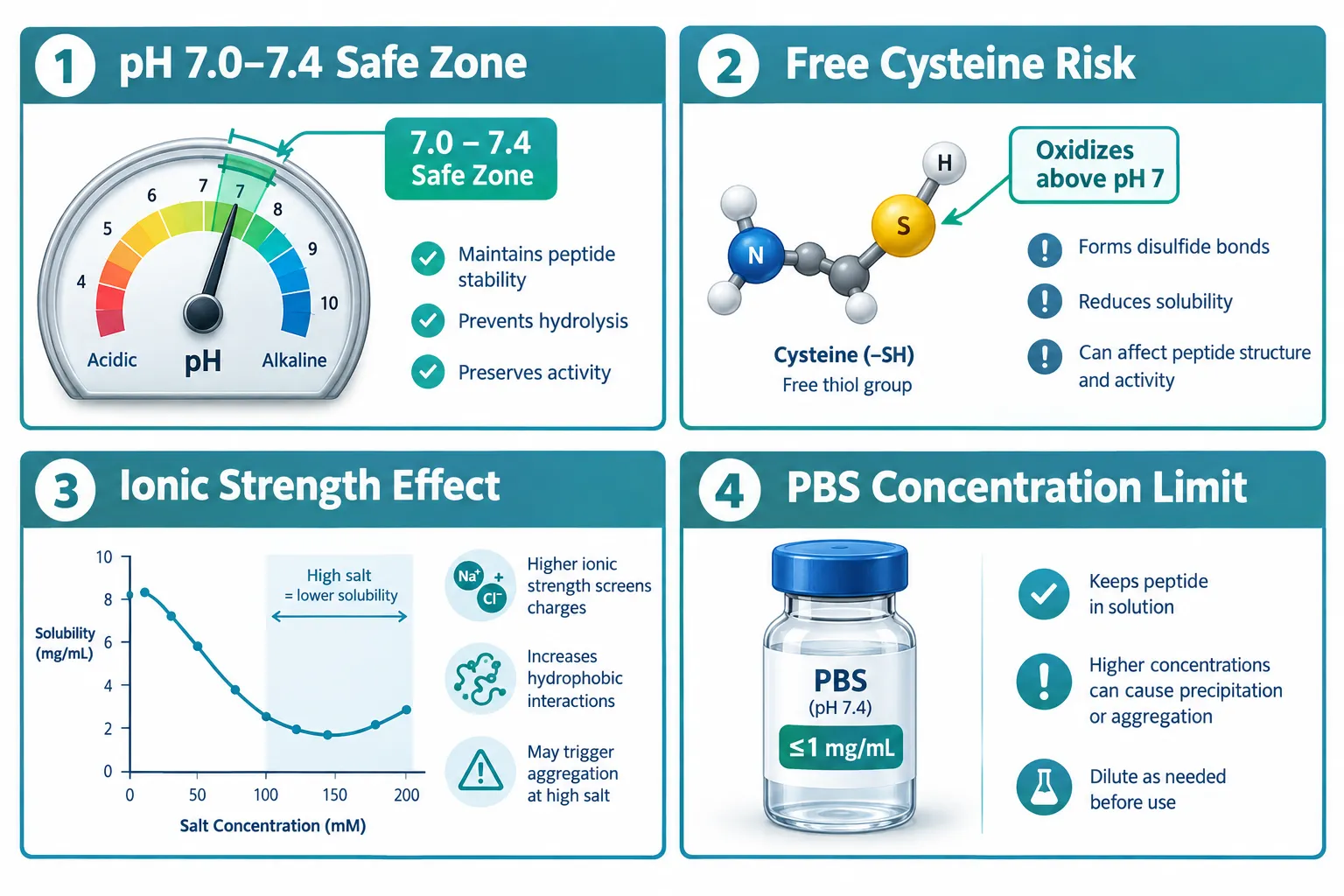
Phosphate-buffered saline at pH 7.0-7.4 with approximately 150 mM ionic strength remains the most widely cited starting vehicle for peptide reconstitution. Its physiological relevance makes it attractive for cell-based assays, and major suppliers consistently endorse it as a safe choice when a working concentration at or below 1 mg/mL is sufficient for the experiment.

However, "safe" does not mean "universal." PBS introduces two variables that can destabilize certain peptide classes: pH and ionic strength.

pH sensitivity is the more critical concern. Peptides containing free cysteine residues are particularly vulnerable. Above pH 7, thiol groups oxidize rapidly, forming intermolecular disulfide bonds that change the peptide's structure and biological activity. For these sequences, supplier guidance recommends dissolution in carefully degassed acidic buffers before any further dilution.

Ionic strength poses a separate problem. For some peptides, particularly those with stretches of charged residues, higher salt concentrations reduce net solubility by screening electrostatic repulsion between chains. If a peptide clumps or crashes out in PBS at standard ionic strength, the buffer itself may be the culprit, not the peptide lot.

"The solvent should be chosen based on the sequence and assay requirements, not based on laboratory convention."

A 2026 technical guide from Alan Scientific reinforces this directly: PBS is not always the first solvent, and ionic strength can reduce solubility for some sequences. Researchers sourcing peptides such as those covered in the BPC-157 core peptides documentation first research guide will recognize that even well-characterized peptides require buffer-specific evaluation.


Evaluating Excipients Beyond the Buffer
Evaluating Excipients Beyond the Buffer

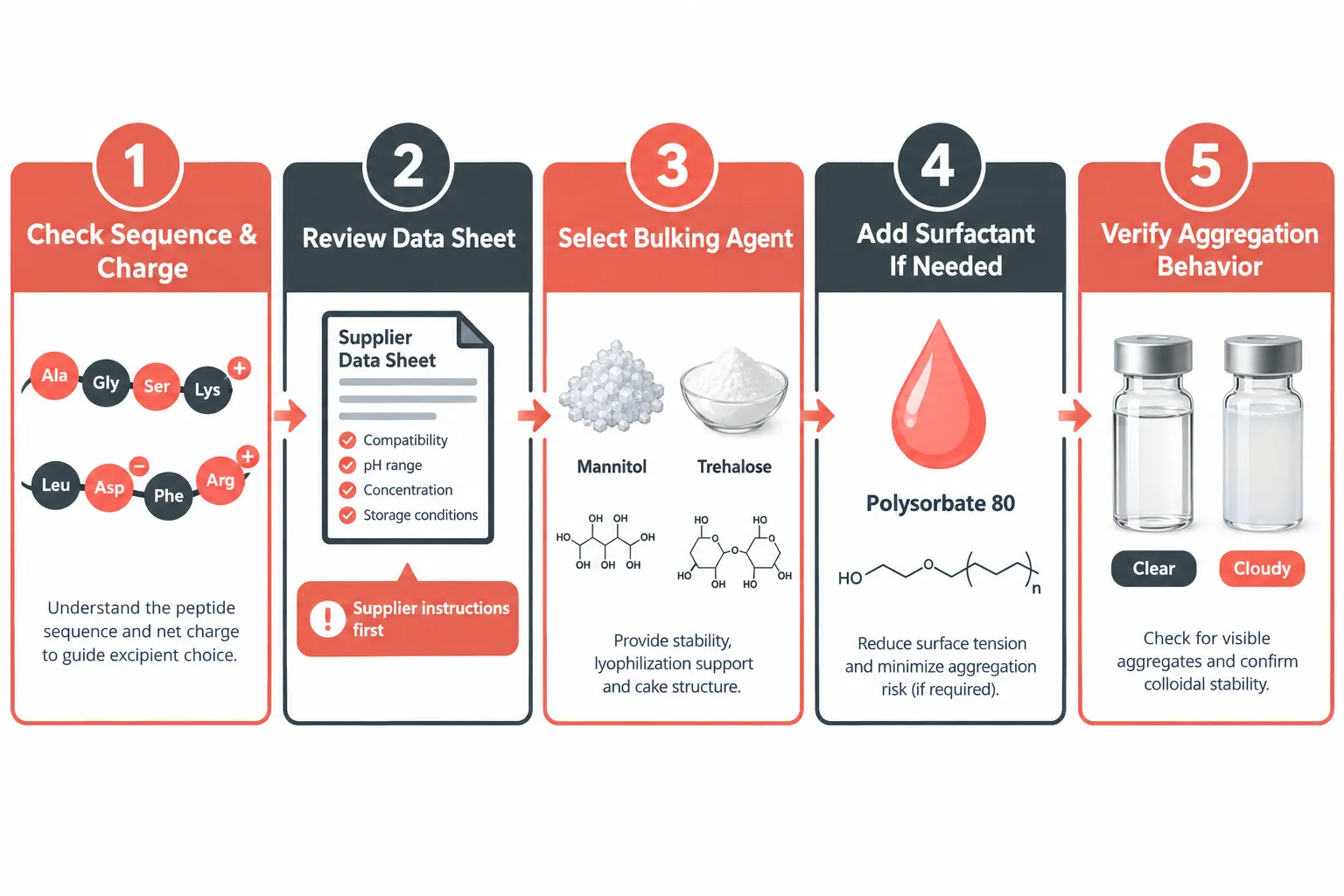
When selecting research supplies for peptides and evaluating phosphate-buffered saline pH alongside excipients and reconstitution vehicles, researchers often focus exclusively on the diluent while overlooking formulation components that affect stability before and after reconstitution.

Lyophilized peptides are rarely pure active compound. Commercial research-grade peptides frequently include bulking agents, sugars or polyols, and surfactants added during the freeze-drying process to protect the peptide from aggregation and structural collapse. Understanding what is in the vial is essential before selecting a compatible reconstitution vehicle.

Common excipient categories and their functions:

Excipient Class Common Examples Primary Role
Bulking agents Mannitol, glycine Provides cake structure during lyophilization
Cryoprotectants Trehalose, sucrose Prevents aggregation during freezing
Surfactants Polysorbate 80 Reduces surface-mediated denaturation
pH adjusters Acetic acid, NaOH Maintains target pH during formulation

For researchers working with metabolic or structural peptides, such as those described in the GLP-1 peptide buy: generational research concepts and sourcing notes, excipient compatibility with downstream assay reagents is especially important. A surfactant that protects the peptide during storage may interfere with receptor-binding assays if not accounted for.

For acidic peptides that resist dissolution in PBS alone, a practical first step is dissolving the peptide in a small volume of a basic solvent such as 0.1% aqueous ammonia, then diluting to the target concentration in PBS. This sequential approach prevents precipitation and avoids forcing the peptide into a pH environment that promotes degradation.

The data sheet provided by the supplier remains the authoritative source for solvent compatibility. Generic PBS rules should yield to peptide-specific instructions whenever they exist.


Selecting the Right Reconstitution Vehicle for Hydrophobic and Hydrophilic Peptides
Selecting the Right Reconstitution Vehicle for Hydrophobic and Hydrophilic Peptides

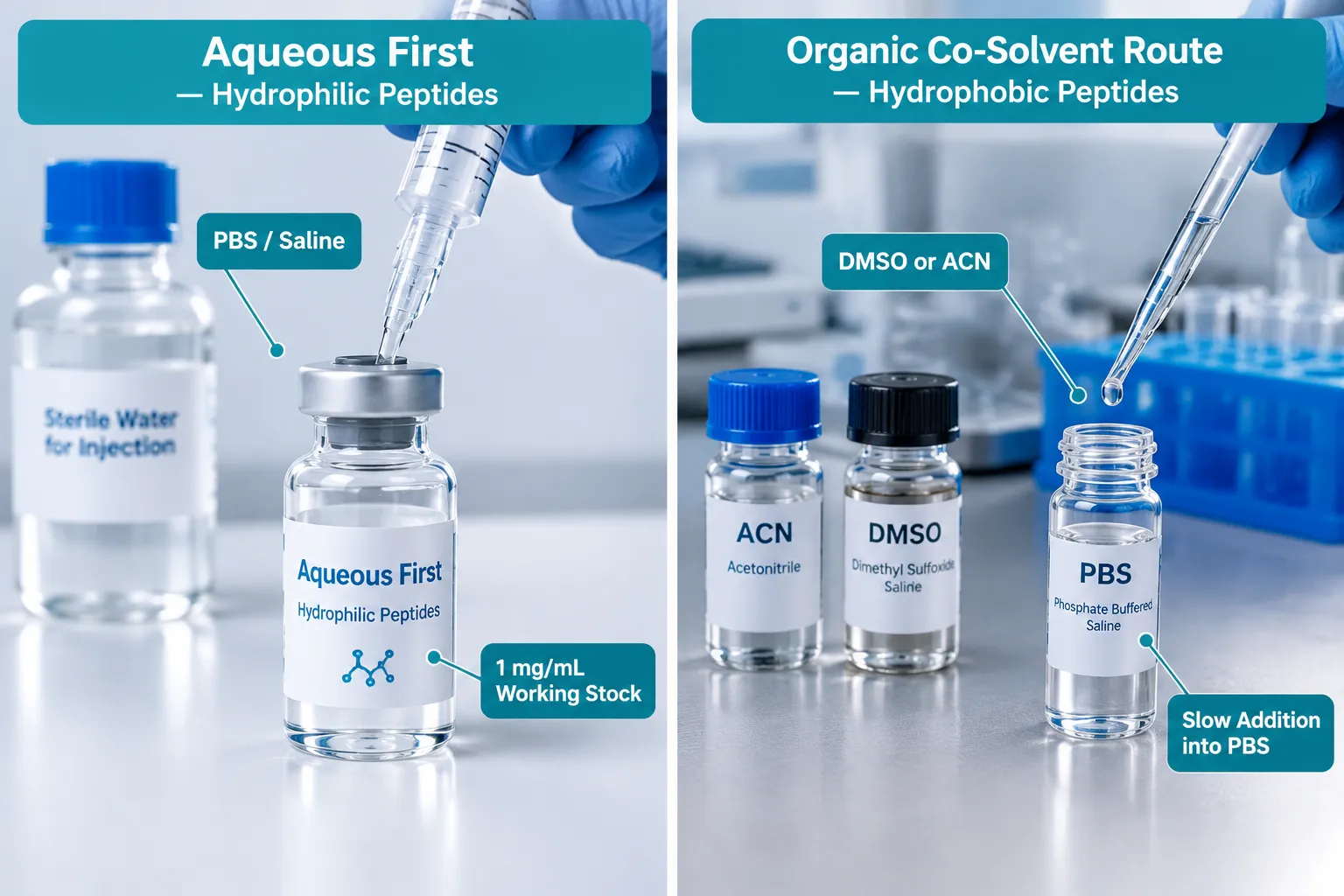
The practical framework for selecting research supplies for peptides, evaluating phosphate-buffered saline pH, excipients, and reconstitution vehicles together, becomes clearest when researchers categorize their target peptide by hydrophilicity before opening a vial.

For hydrophilic peptides, the recommended workflow is straightforward:

  1. Attempt dissolution in sterile water, PBS, or physiological saline at 1 mg/mL.
  2. If soluble, use PBS pH 7.0-7.4 as the working stock vehicle.
  3. Store aliquots appropriately to avoid freeze-thaw degradation.

For hydrophobic peptides, PBS alone will often fail. The recommended approach:

  1. Dissolve the peptide in a small volume of an organic co-solvent, ACN, DMSO, or DMF are most commonly cited.
  2. Add PBS or aqueous buffer slowly into the organic solution rather than the reverse.
  3. Verify clarity and confirm concentration before use.

DMSO in particular warrants careful handling: residual DMSO above approximately 0.1% can affect cell viability in biological assays, so the final dilution factor matters.

Bacteriostatic vehicles, those containing preservatives such as benzyl alcohol, are sometimes discussed in injectable product literature, but the appropriate vehicle for any specific peptide remains product-determined rather than category-determined. Researchers evaluating compounds like those discussed in the PT-141 peptide for sale: research context, QA, and controls resource benefit from this discipline: confirm vehicle compatibility against the specific lot documentation.

For work with antioxidant peptides where mitochondrial or structural integrity is a study variable, see the SS-31 mechanism and research: where to buy SS-31 and Epithalon overview, reconstitution vehicle choice can directly influence whether oxidative endpoints reflect real biological signal or buffer artifact.

Researchers building a broader sourcing strategy should also consult a vetted where to buy peptides resource to ensure that purity documentation accompanies every lot before reconstitution decisions are made.


Conclusion

Selecting research supplies for peptides requires more than ordering a standard PBS solution and reconstituting to a convenient volume. The evaluation framework should follow a consistent sequence: assess the peptide sequence for pH-sensitive residues, confirm ionic-strength tolerances, review the supplier data sheet for approved vehicles, select excipient-compatible buffers, and match reconstitution strategy to hydrophilicity class.

Actionable next steps for 2026 lab procurement:

  • Request a certificate of analysis and full data sheet for every peptide lot before selecting a reconstitution vehicle.
  • Default to PBS pH 7.0-7.4 only when concentration requirements are at or below 1 mg/mL and the sequence contains no free cysteines.
  • Keep degassed acidic buffer, DMSO, and ACN on hand as secondary vehicles for difficult sequences.
  • Document excipient composition from the supplier and verify compatibility with all downstream assay reagents.
  • Revisit reconstitution protocols when switching peptide suppliers, even for nominally identical compounds.

Treating buffer and vehicle selection as a scientific decision, not a supply-closet default, is the single highest-leverage action available to researchers who want clean, reproducible peptide data.

https://www.puretestedpeptides.com/wp-content/uploads/2026/10/selecting-research-supplies-for-peptides-evaluating-phosphate-buffered-saline-ph.webp 1024 1536 https://www.puretestedpeptides.com/wp-content/uploads/2026/01/buy-peptides-online.jpg 2026-10-27 13:06:122026-10-27 13:06:12Selecting Research Supplies for Peptides: Evaluating Phosphate-Buffered Saline pH, Excipients, and Reconstitution Vehicles
What Is Phosphate-Buffered Saline? pH, Osmolality, Sterility, and Vehicle Controls in Peptide Research

What Is Phosphate-Buffered Saline? pH, Osmolality, Sterility, and Vehicle Controls in Peptide Research

October 8, 2026/0 Comments/in Uncategorized/by

A single degree of pH drift in a buffer solution can degrade a peptide's bioactivity by more than 50 percent before a single experiment even begins. That fact alone explains why understanding what is phosphate-buffered saline, pH, osmolality, sterility, and vehicle controls in peptide research is not a background detail, it is a foundational requirement for producing reliable data.

Phosphate-buffered saline (PBS) is the most widely used aqueous vehicle in preclinical peptide work. Yet many researchers apply it by default without verifying whether its properties actually match the peptide being studied. This article clarifies what PBS is, what its critical parameters mean, and how to use it correctly as both a solvent and a vehicle control.

Key Takeaways

  • PBS is an isotonic, phosphate-based buffer formulated to mimic physiological salt concentration and pH.
  • The target pH for standard PBS is 7.2 to 7.4, and osmolality should fall between 280 and 310 mOsm/kg.
  • Sterility and endotoxin control are non-negotiable quality criteria, especially in cell-based and in vivo peptide assays.
  • A vehicle-only control group is essential for isolating the true effect of a peptide from the effect of the buffer itself.
  • PBS is not always the optimal vehicle; some peptides require alternative buffers or pH adjustments to maintain stability.

PBS Composition and Core Properties

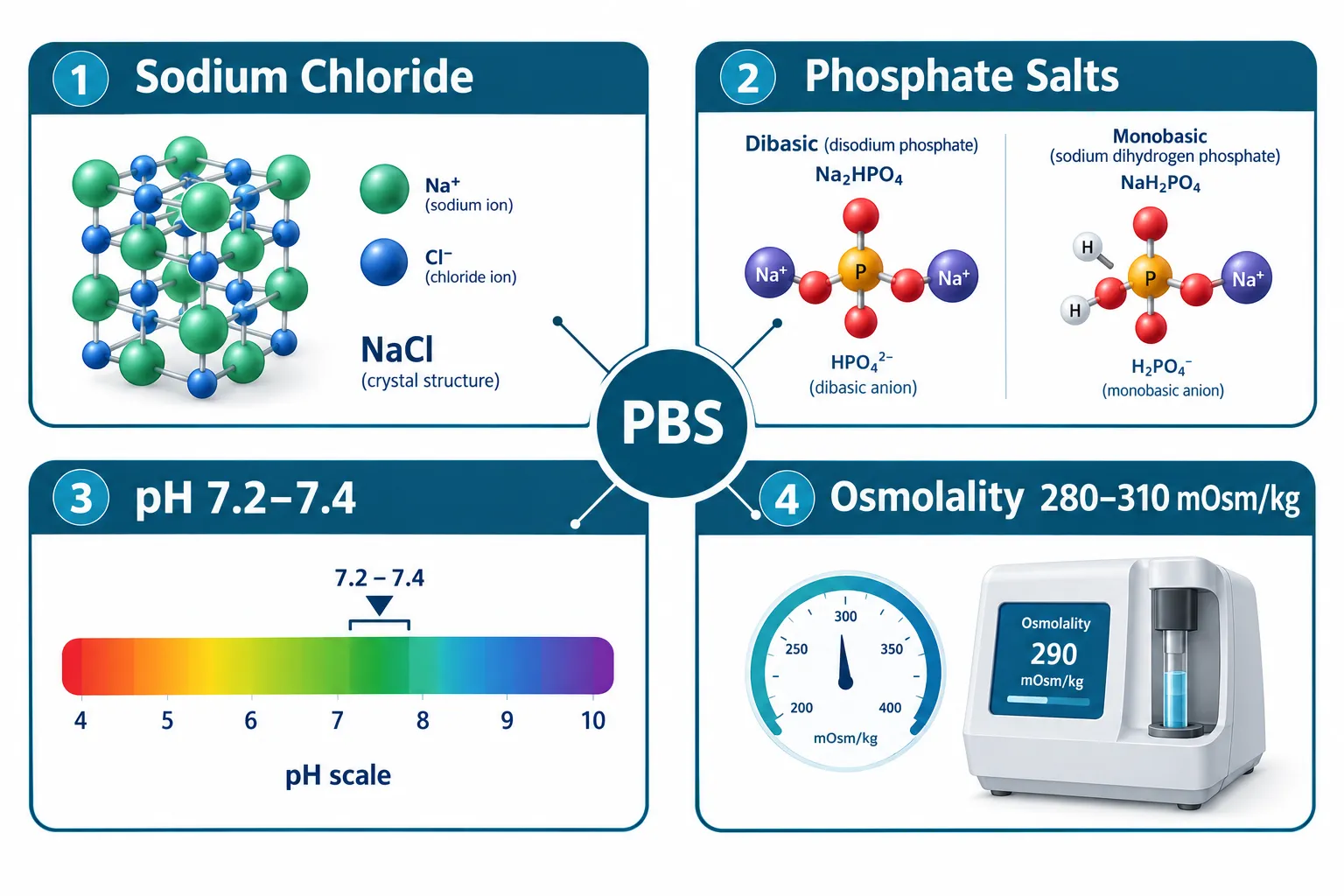
Phosphate-buffered saline is an aqueous solution containing sodium chloride, disodium hydrogen phosphate, and potassium dihydrogen phosphate, with potassium chloride sometimes included. These components work together to maintain a stable pH while keeping the solution isotonic with mammalian cells.

PBS Composition and Core Properties

The standard formulation targets a pH of 7.2 to 7.4 and an osmolality of 280 to 310 mOsm/kg. Both values are chosen to approximate normal physiological conditions in human and rodent tissue. When these parameters are met, PBS is considered isotonic and physiologically compatible, meaning it will not cause osmotic stress or pH-driven damage to cells during an assay.

A common variant is Dulbecco's PBS (DPBS), which is available with or without calcium and magnesium ions. The calcium- and magnesium-free version is preferred in most peptide and cell-dissociation protocols because divalent cations can interfere with certain peptide conformations and promote unwanted aggregation.

Key compositional parameters at a glance:

Parameter Standard PBS Target
pH 7.2-7.4
Osmolality 280-310 mOsm/kg
Sodium chloride ~137 mM
Phosphate concentration ~10 mM
Endotoxin limit Less than 0.1 EU/mL

pH, Osmolality, and Sterility in Peptide Research

Understanding what is phosphate-buffered saline, pH, osmolality, sterility, and vehicle controls in peptide research requires looking at each parameter as a potential source of experimental error.

pH stability is critical because most peptides carry ionizable side chains. Even a modest shift from pH 7.4 to pH 6.8 can alter the charge state of histidine, lysine, or aspartate residues, changing solubility, folding, and receptor binding. PBS resists pH drift through its phosphate buffering capacity, but that resistance is not unlimited. Dilution, CO2 absorption from ambient air, and freeze-thaw cycles can all shift pH outside the acceptable window. Researchers working with peptides such as those explored in SS-31 mitochondrial research themes should verify pH at the time of use, not just at preparation.

Osmolality drift is a subtler problem. Adding a concentrated peptide stock to PBS can raise osmolality above the isotonic range if the stock volume is significant relative to the total. Hyperosmotic solutions cause cell shrinkage and can trigger stress responses that confound results. Measuring osmolality with a calibrated osmometer before each experiment is best practice, particularly for in vivo dosing.

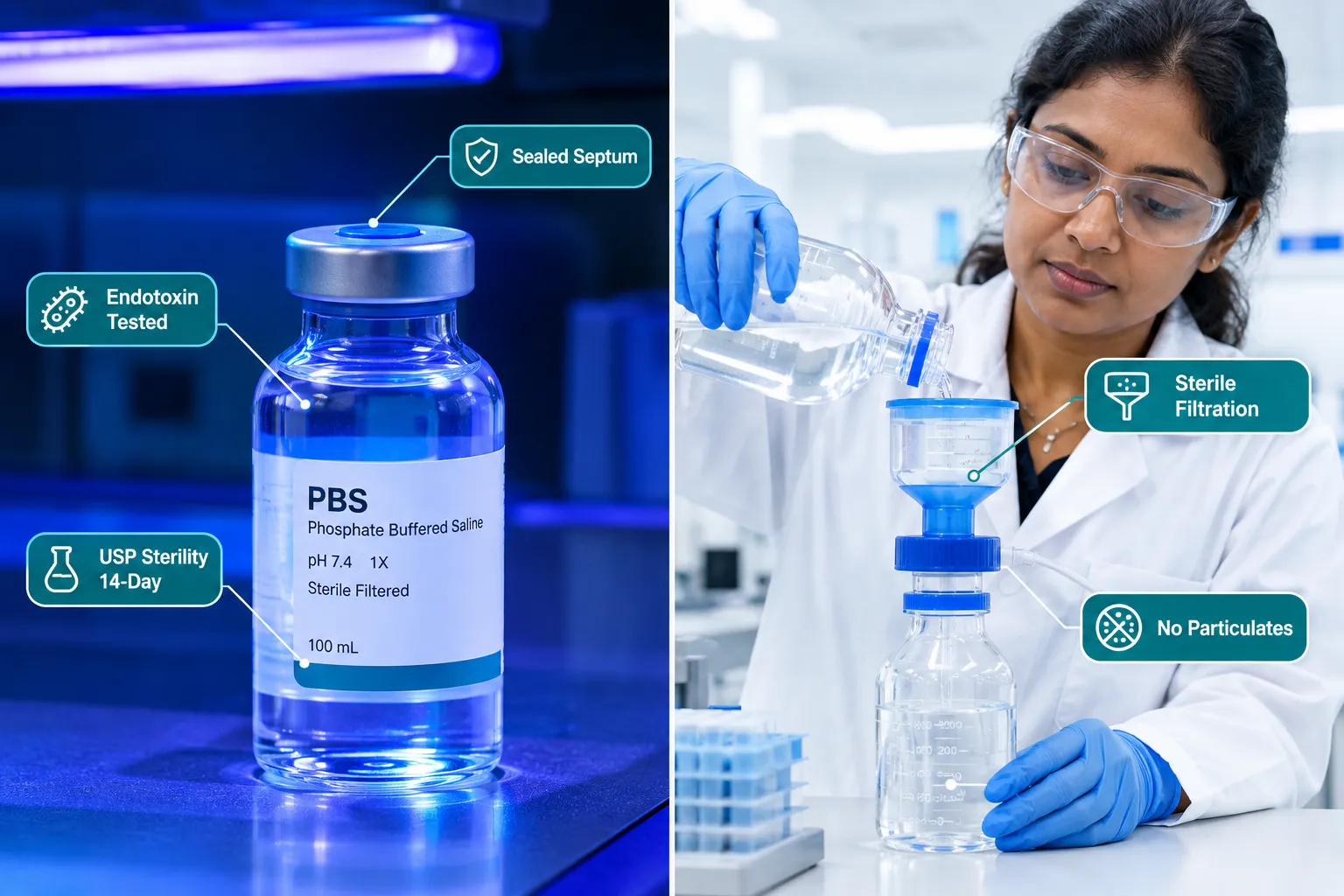
Sterility and endotoxin control represent the most consequential quality criteria in 2026. Commercial PBS products intended for cell culture and in vivo use are typically manufactured under USP-aligned sterility protocols, with no bacterial growth observed at 14 days. Endotoxin limits are set at less than 0.1 EU/mL, because even trace lipopolysaccharide contamination can trigger inflammatory responses that mask or amplify a peptide's apparent effect. Researchers sourcing lab-tested peptides should apply the same scrutiny to their buffer as they do to the peptide itself.

"The buffer is not inert. Every property of PBS, pH, osmolality, ionic strength, and sterility, becomes part of the experimental condition the moment it contacts a peptide."

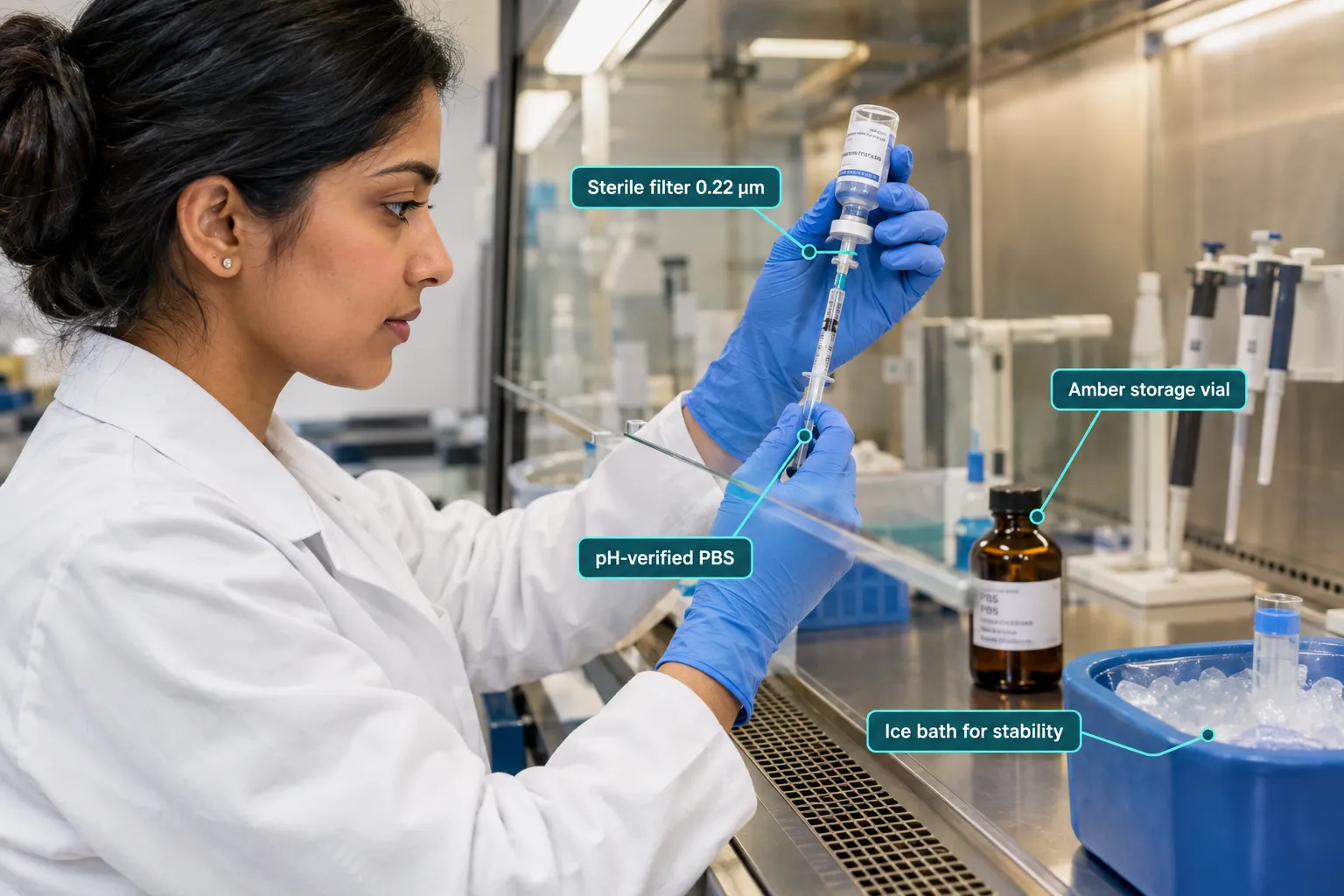
Sterile filtration through a 0.22-micron membrane is the standard method for preparing PBS in-house. Autoclaving is less preferred because high heat can alter phosphate equilibria and shift pH.


Vehicle Controls and Buffer Optimization in Peptide Experiments

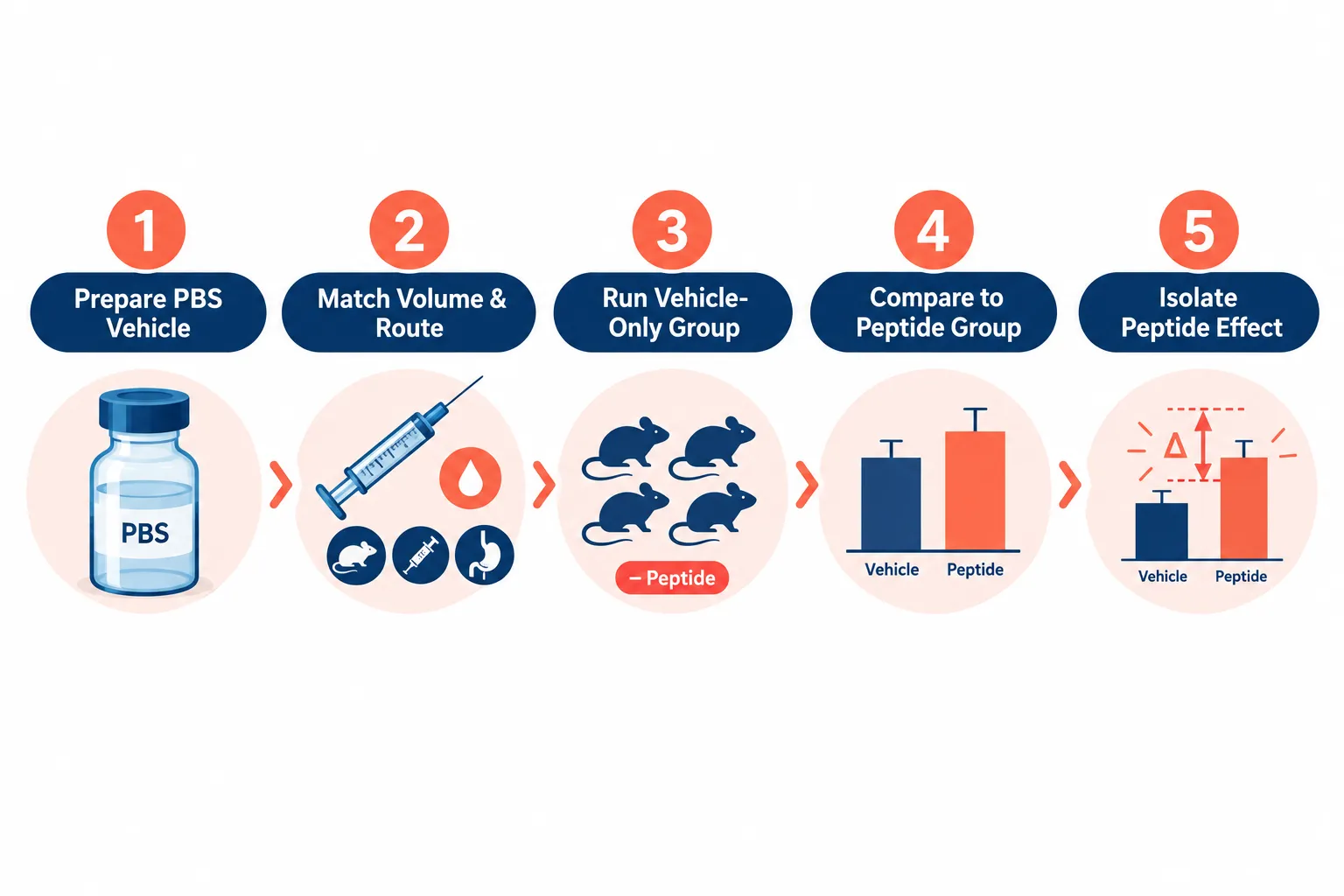
The most overlooked application of PBS in peptide research is its role as a vehicle control. A vehicle control group receives the same volume of PBS by the same route and at the same time as the treatment group, but without the peptide. This design element is essential for distinguishing the biological effect of the peptide from any effect caused by the injection itself, the volume delivered, or minor buffer-related stress.

Vehicle Controls and Buffer Optimization in Peptide Experiments

Without a vehicle control, a researcher cannot confidently attribute an observed outcome to the peptide. This matters especially for peptides studied in metabolic, neurological, or inflammatory contexts, areas where PBS alone can produce measurable physiological responses at larger volumes or in sensitive models.

When PBS is appropriate as a peptide vehicle:

  • The peptide is stable at pH 7.2 to 7.4
  • The peptide does not require organic co-solvents for solubility
  • The assay uses mammalian cells or rodent models where isotonic conditions are required
  • Endotoxin-free formulation is available

When PBS may not be the right choice:

  • Peptides with hydrophobic sequences often require DMSO or acetic acid as a co-solvent
  • Peptides sensitive to phosphate (some calcium-binding sequences) may aggregate in PBS
  • Acidic or basic peptides may require a buffer with a different pH range

The emerging consensus in 2026 is that researchers should optimize buffer choice for each peptide rather than defaulting to PBS. For example, GHK-Cu peptide formulations often benefit from slightly acidic buffers that preserve the copper-peptide complex, while GLP-1 peptides used in metabolic research are frequently formulated in PBS with added stabilizers. Researchers comparing peptides, such as those evaluating SLU-PP-332 versus MOTS-C, should use identical vehicle conditions in both arms to ensure the comparison is valid.

For peptides stored long-term, PBS is generally not the preferred medium. Lyophilized peptide reconstituted in sterile water and stored at -80°C outperforms PBS storage in most stability analyses, because phosphate ions can catalyze hydrolysis of certain peptide bonds over time. When PBS is used for short-term working solutions, single-use aliquots minimize freeze-thaw degradation.

Researchers working with mitochondria-targeted compounds can find additional context in the SS-31 kidney health research literature, where PBS vehicle controls are used consistently to isolate peptide-specific renoprotective effects.

Vehicle Controls and Buffer Optimization in Peptide Experiments


Conclusion

PBS remains the default buffer in peptide research for good reasons: it is isotonic, physiologically compatible, and well-characterized. However, treating it as a passive background component is a methodological error. pH must be verified at the point of use, osmolality should be measured when adding concentrated peptide stocks, and sterility plus endotoxin status must meet validated thresholds before any in vivo or cell-based application.

Actionable next steps for researchers:

  1. Measure pH and osmolality of every PBS preparation before use, do not rely solely on the manufacturer's certificate of analysis.
  2. Include a vehicle-only control group in every peptide experiment to isolate the peptide's true effect.
  3. Evaluate whether PBS is actually the optimal vehicle for each specific peptide, or whether a different buffer pH, ionic strength, or co-solvent is warranted.
  4. Use endotoxin-free, sterile-filtered PBS for all cell-based and in vivo work, and document the lot number and endotoxin test result.
  5. Store peptide working solutions as single-use aliquots in PBS to avoid freeze-thaw degradation.

Applying these practices consistently will strengthen the reproducibility and interpretability of peptide research data in 2026 and beyond.

https://www.puretestedpeptides.com/wp-content/uploads/2026/10/what-is-phosphate-buffered-saline-ph-osmolality-sterility-and-vehicle-controls-i.webp 1024 1536 https://www.puretestedpeptides.com/wp-content/uploads/2026/01/buy-peptides-online.jpg 2026-10-08 13:11:222026-10-08 13:11:22What Is Phosphate-Buffered Saline? pH, Osmolality, Sterility, and Vehicle Controls in Peptide Research
Phosphate-Buffered Saline for Peptide Research: Osmolality, pH Drift, and Vehicle-Control Design

Phosphate-Buffered Saline for Peptide Research: Osmolality, pH Drift, and Vehicle-Control Design

October 5, 2026/0 Comments/in Uncategorized/by

Fewer than half of published peptide studies explicitly report the osmolality of their vehicle solution, yet that single omission can invalidate injection-site comparisons, confound receptor-binding data, and mask sequence-specific degradation. Getting phosphate-buffered saline for peptide research right, from osmolality and pH drift to vehicle-control design, is not a minor procedural detail. It is a foundational experimental decision.

Key Takeaways

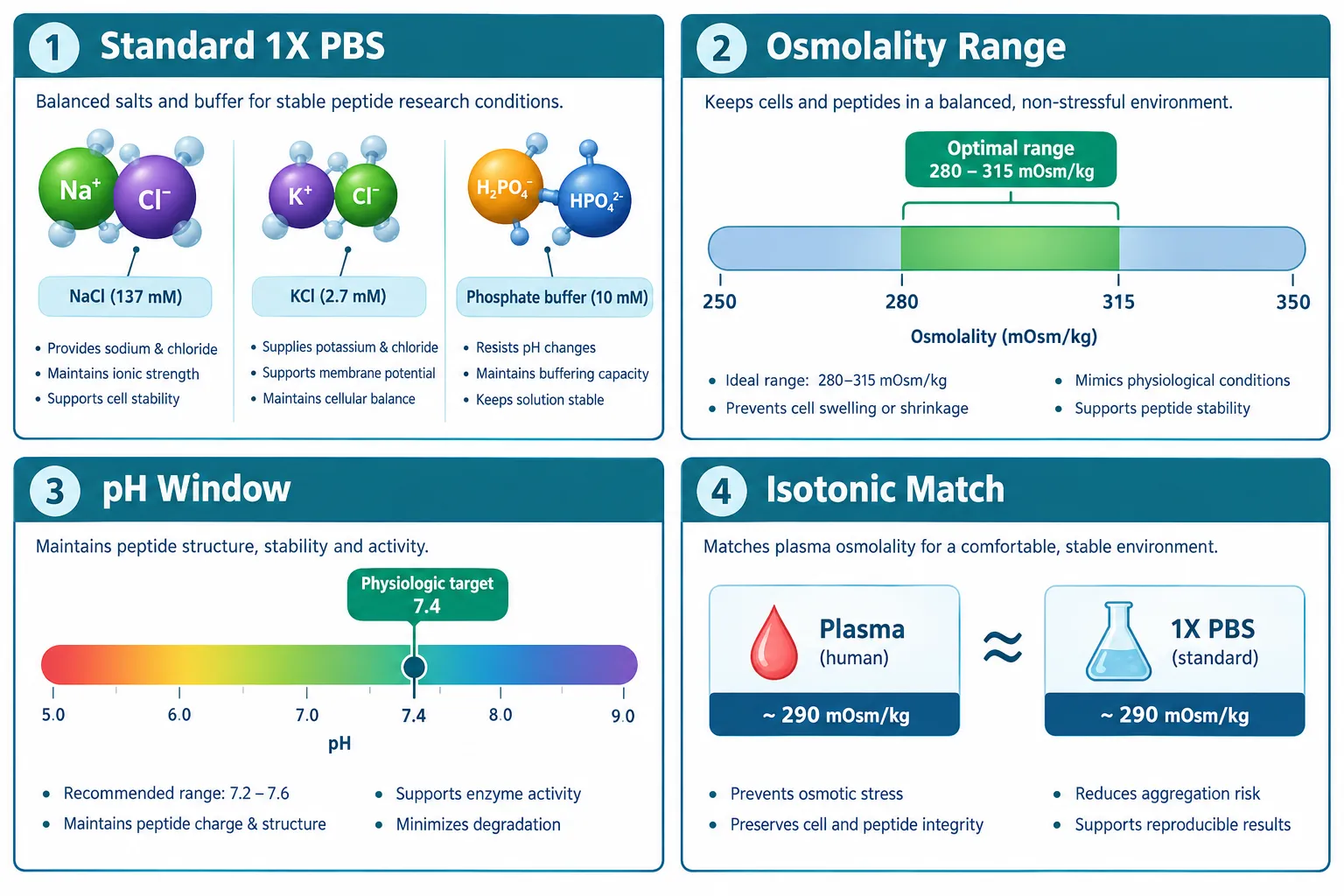
  • Standard 1X PBS at pH 7.4 with an osmolality of 280-315 mOsm/kg is isotonic with plasma and appropriate for most short-term peptide assays.
  • pH drift during storage, not osmolality alone, is the primary driver of hydrolysis and deamidation in PBS-stored peptides.
  • PBS is not universally recommended as a primary reconstitution medium; marginally soluble or deamidation-prone peptides may need alternative buffers.
  • Vehicle controls must match the active peptide solution in both PBS formulation and osmolality to isolate pharmacologic effects.
  • Peptides reconstituted in PBS typically have a working shelf life of one to four weeks at 4 degrees C, depending on sequence sensitivity.

PBS Composition, Osmolality, and Why Isotonicity Matters

Standard 1X PBS used in peptide work contains approximately 137 mM NaCl, 2.7 mM KCl, and a 10 mM phosphate buffer. Together, these components yield an osmolality in the 280-315 mOsm/kg range, which closely mirrors physiological plasma osmolality. Modern commercial PBS products marketed specifically for peptide and cellular assays now explicitly specify osmolality around 290-310 mOsm/kg, framing this as "physiological osmotic conditions" rather than leaving it as an implied property.

PBS Composition, Osmolality, and Why Isotonicity Matters

Why does osmolality matter so much? Hypo-osmotic vehicles cause cells to swell; hyperosmotic vehicles cause shrinkage. Both alter membrane permeability and local pharmacokinetics at injection sites, introducing confounding variables that have nothing to do with the peptide being studied. A diluent-selection review from 2026 notes that vehicles outside the 280-300 mOsm/kg window are associated with increased injection-site irritation and altered local peptide uptake. For researchers sourcing peptides such as those reviewed in resources covering GH analogue peptides or SS-31 mitochondrial research themes, matching vehicle osmolality to the physiologic range is a prerequisite for clean data.

Practical osmolality checklist:

Parameter Target Value Risk if Outside Range
Osmolality 280-315 mOsm/kg Injection-site irritation, altered PK
pH 7.4 (± 0.1) Hydrolysis, deamidation, aggregation
NaCl concentration ~137 mM Precipitation for low-solubility peptides
Phosphate buffer ~10 mM Catalytic hydrolysis at higher concentrations

pH Drift in PBS: The Hidden Stability Risk

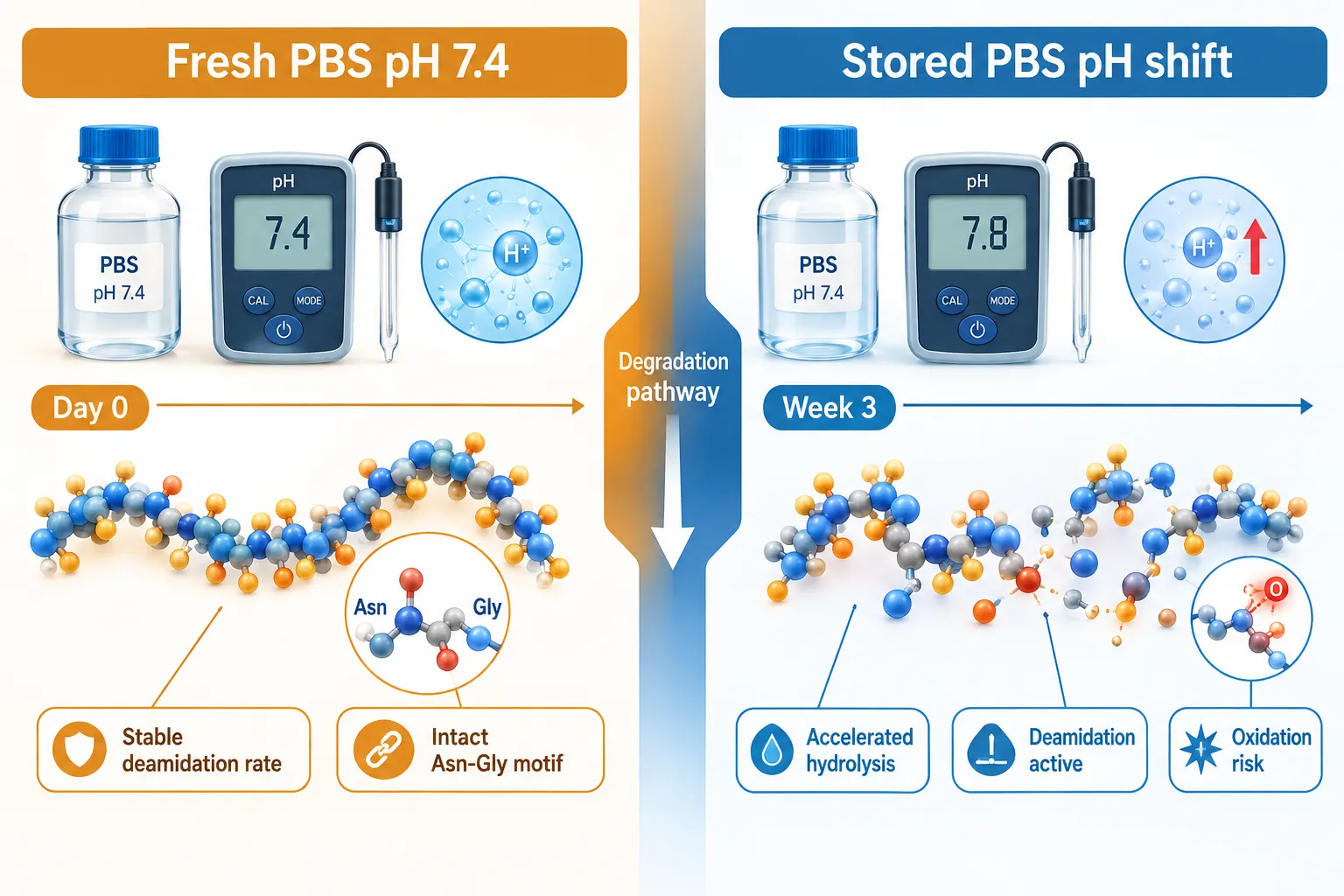
Osmolality sets the stage, but pH drift is the real antagonist in long-term peptide storage. PBS provides good initial pH control at 7.4, yet gradual drift during storage can accelerate hydrolysis, deamidation, and oxidation independently of osmolality. Even a shift of 0.2-0.3 pH units can materially shorten the working-stock stability of sensitive sequences.

pH Drift in PBS: The Hidden Stability Risk

The mechanism is specific. Phosphate buffers at physiologic pH promote general acid-base catalysis. Deamidation of asparagine-containing peptides, particularly those with Asn-Gly motifs, proceeds measurably faster in phosphate buffer than in unbuffered water at the same nominal pH. This means that even a well-prepared PBS stock does not offer indefinite protection.

"Peptides reconstituted in PBS typically have a working shelf life of about one to four weeks at 4 degrees C, depending on sequence and susceptibility to hydrolysis or deamidation."

Sequences at elevated risk in PBS:

  • Peptides containing Asn-Gly motifs (deamidation-prone)
  • Methionine-containing peptides (oxidation risk)
  • Peptides with labile ester or amide bonds (hydrolysis risk)
  • Marginally soluble peptides with high ionic-strength sensitivity

For researchers working with complex peptide formulations, such as those described in the polypeptide peptides in cardiometabolic models overview, understanding these sequence-specific risks before committing to PBS as a vehicle is essential.

When to consider alternatives to PBS:

  • Deamidation-prone sequences: histidine buffer (pH 5.5-7) or acetate buffer (pH 3.5-5.5)
  • Long-term storage beyond four weeks: reduced-phosphate or non-phosphate formulations
  • Marginally soluble peptides: HEPES-buffered saline or low-salt alternatives
  • Peptides with metal-binding motifs: avoid PBS due to phosphate-divalent cation interactions

Vehicle-Control Design Using Phosphate-Buffered Saline for Peptide Research

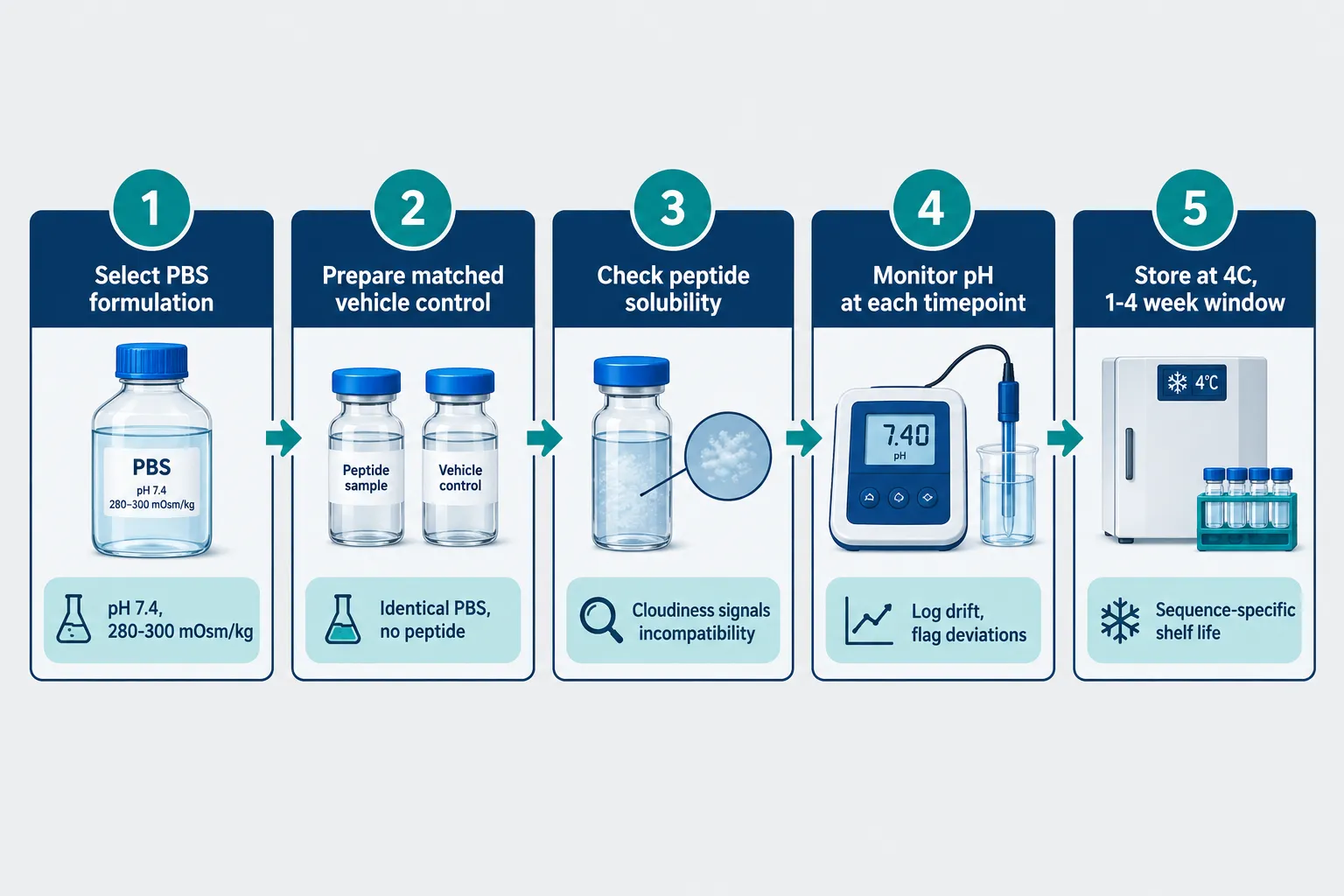
Designing a proper vehicle control is where phosphate-buffered saline for peptide research moves from chemistry into experimental rigor. The vehicle control must be identical to the active peptide solution in every parameter except the presence of the peptide itself. That means matching pH, osmolality, buffer concentration, and preparation method, not simply using "PBS" as a generic label.

Vehicle-Control Design Using Phosphate-Buffered Saline for Peptide Research

Core principles for matched vehicle-control design:

  1. Use the same PBS lot for both vehicle control and active peptide solution to eliminate batch-to-batch variability.
  2. Verify osmolality of both solutions with an osmometer before use; do not rely solely on calculated values.
  3. Monitor pH at each experimental timepoint, not just at preparation. Log any drift and flag deviations exceeding 0.1 pH units.
  4. Check solubility visually after adding PBS to the peptide. Cloudiness or particulate formation signals incompatibility; switch to an alternative buffer rather than proceeding.
  5. Store vehicle control under identical conditions, same temperature, same container type, same light exposure, as the peptide solution.

Researchers sourcing peptides from a best peptide supplier should request certificate-of-analysis data that includes solubility recommendations, as these directly inform whether PBS is an appropriate vehicle for a given sequence.

For studies involving receptor-binding assays, cell-based models, or preclinical in vivo work, including research with peptides such as those discussed in resources on where to buy research-grade Glow Blend peptide, a matched PBS vehicle control at pH 7.4 and 280-300 mOsm/kg remains the standard baseline. Deviating from this standard without documentation introduces uncontrolled variables that reviewers and regulatory bodies will flag.

Buffer alternatives at a glance:

Buffer pH Range Best Use Case
PBS (pH 7.4) 6.8-7.6 Cell-based assays, receptor binding, short-term in vivo
HEPES-buffered saline 7.0-7.6 High ionic-strength-sensitive peptides
Histidine buffer 5.5-7.0 Deamidation-prone sequences, formulation stability
Acetate buffer 3.5-5.5 Acidic-pH stability studies

Expert consensus in 2026 points toward conditional PBS use with tighter experimental controls, not abandonment. PBS remains the appropriate vehicle for physiologic, short-duration experiments where its osmolality and pH profile are genuine advantages. The movement is toward tailored buffer systems for long-term storage and sequence-specific challenges, with PBS retained as the default for well-characterized, water-soluble peptides in cell culture and receptor-binding contexts. Researchers exploring newer peptide classes, including those reviewed in the SLUPP332 oral versus injectable research discussion, will find that route of administration adds another layer of vehicle-selection complexity that PBS alone may not address.


Conclusion

Phosphate-buffered saline for peptide research remains a cornerstone vehicle, but it demands deliberate selection rather than default use. The practical steps are clear: verify osmolality falls within 280-315 mOsm/kg, confirm pH at 7.4 before and during storage, monitor for pH drift that accelerates deamidation and hydrolysis, and design vehicle controls that are compositionally identical to the active solution. For deamidation-prone, marginally soluble, or metal-binding peptides, pivot to histidine, acetate, or HEPES-based buffers before data collection begins rather than after anomalies appear. Document every parameter, use the same PBS lot across all arms of a study, and treat visible precipitation as a hard incompatibility signal. These steps will protect data integrity, reduce confounding, and produce vehicle-control comparisons that hold up to scrutiny.

https://www.puretestedpeptides.com/wp-content/uploads/2026/10/phosphate-buffered-saline-for-peptide-research-osmolality-ph-drift-and-vehicle-c.webp 1024 1536 https://www.puretestedpeptides.com/wp-content/uploads/2026/01/buy-peptides-online.jpg 2026-10-05 13:04:002026-10-05 13:04:00Phosphate-Buffered Saline for Peptide Research: Osmolality, pH Drift, and Vehicle-Control Design
Where to Buy Research-Grade Phosphate Buffered Saline and Reconstitution Solvents: Lab Standards and Quality Verification

Where to Buy Research-Grade Phosphate Buffered Saline and Reconstitution Solvents: Lab Standards and Quality Verification

September 17, 2026/0 Comments/in Uncategorized/by

Endotoxin contamination in a single lot of buffer has derailed entire peptide assay series, a costly, time-consuming failure that begins not at the bench but at the purchasing decision. Knowing where to buy research-grade phosphate buffered saline and reconstitution solvents, and how to verify their quality before use, is one of the most practical skills a lab manager can develop in 2026.

Key Takeaways

  • Research-grade PBS must carry a documented pH specification (typically 7.4), sterility testing, and a certificate of analysis (COA) for every lot.
  • Reconstitution solvents, bacteriostatic water, sterile water for injection (WFI), and sterile saline, should meet USP, PhEur, or JP standards and be tested for endotoxins.
  • Major distributors such as VWR, Fisher Scientific, and BD offer multiple PBS formats including liquid, dehydrated, and assay-specific grades.
  • Specialized suppliers focus on pharmacopeial-grade WFI and bacteriostatic water with ISO 5 packaging and HPLC-verified lots.
  • Always match the solvent grade to the assay type, peptide reconstitution for research use has different requirements than routine cell culture.

Understanding PBS Grades and Why They Matter for Peptide Assays

Understanding PBS Grades and Why They Matter for Peptide Assays

Not all phosphate buffered saline is equal. The label "PBS" on a catalog page can describe anything from a basic buffer for routine washing steps to a rigorously tested, endotoxin-controlled solution intended for sensitive biological assays. When researchers work with peptides, including compounds studied for visceral fat research or Semax research, the purity of the reconstitution solvent directly affects data reliability.

Key PBS specifications to evaluate:

Specification Minimum Standard Preferred for Peptide Assays
pH Labeled (e.g., 7.4) Verified per lot, COA provided
Sterility Filtered Tested, documented
Endotoxin Not stated EU/mL limit specified
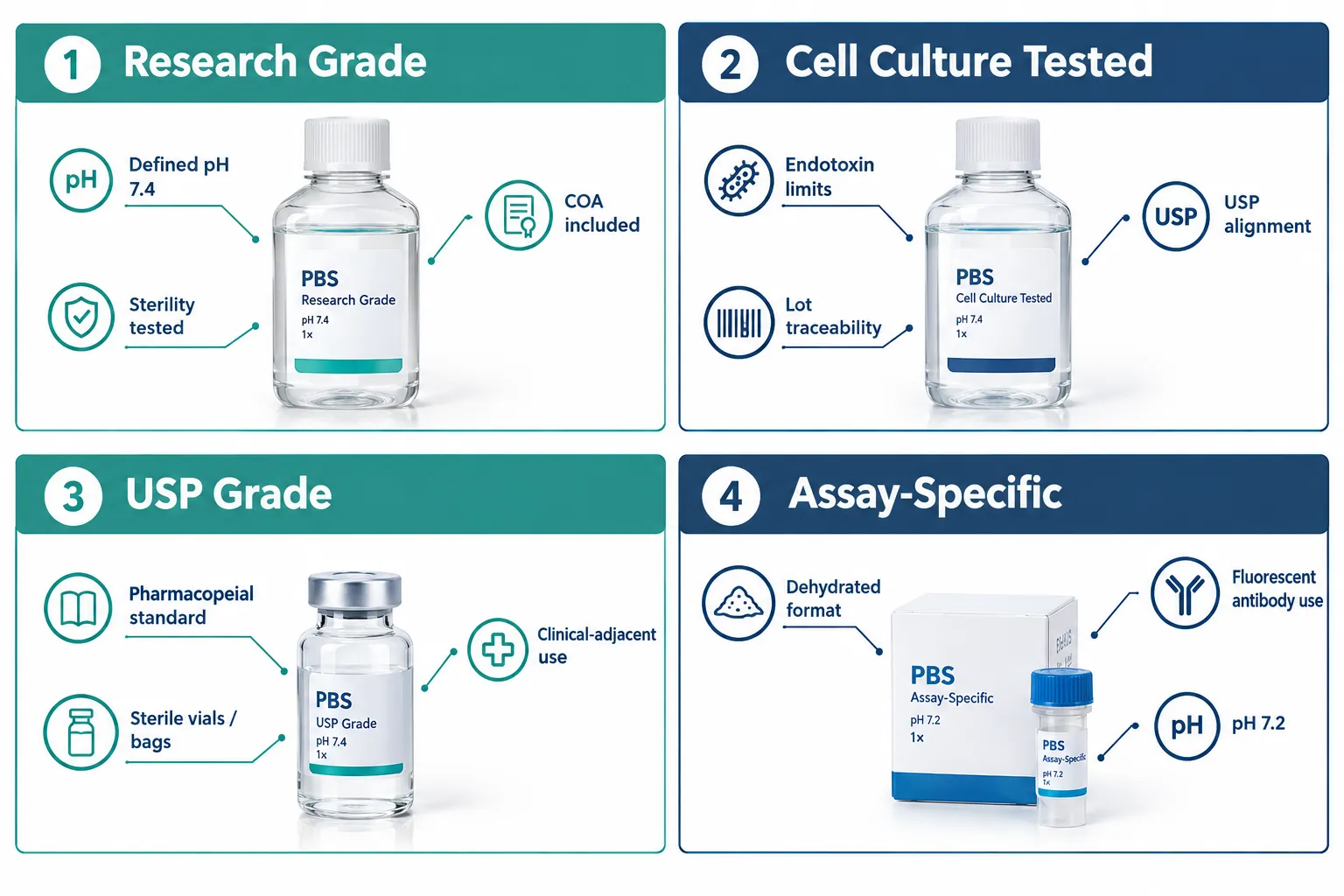
Grade Research Cell-culture-tested or USP
Format Liquid or powder Ready-to-use liquid, lot-tracked

Research-grade PBS is the baseline for most molecular biology and protein work. It carries a defined pH, a sterile preparation method, and a COA. Cell-culture-tested PBS adds endotoxin screening and lot-to-lot consistency documentation. USP-grade PBS, such as the sterile 1x PBS offered in vials, bags, and bottles by suppliers like Alanza Inc., is appropriate for applications closer to pharmaceutical or clinical use where pharmacopeial compliance is mandatory.

For peptide assay work specifically, cell-culture-tested or USP-grade PBS is the safer choice. Endotoxin contamination at even low levels can interfere with receptor-binding assays, cell viability measurements, and ELISA results.

Where to Buy Research-Grade Phosphate Buffered Saline and Reconstitution Solvents: Top Supplier Categories

Where to Buy Research-Grade Phosphate Buffered Saline and Reconstitution Solvents: Top Supplier Categories

Understanding where to buy research-grade phosphate buffered saline and reconstitution solvents requires mapping the supplier landscape by category. Each tier serves different lab needs.

Major Scientific Distributors

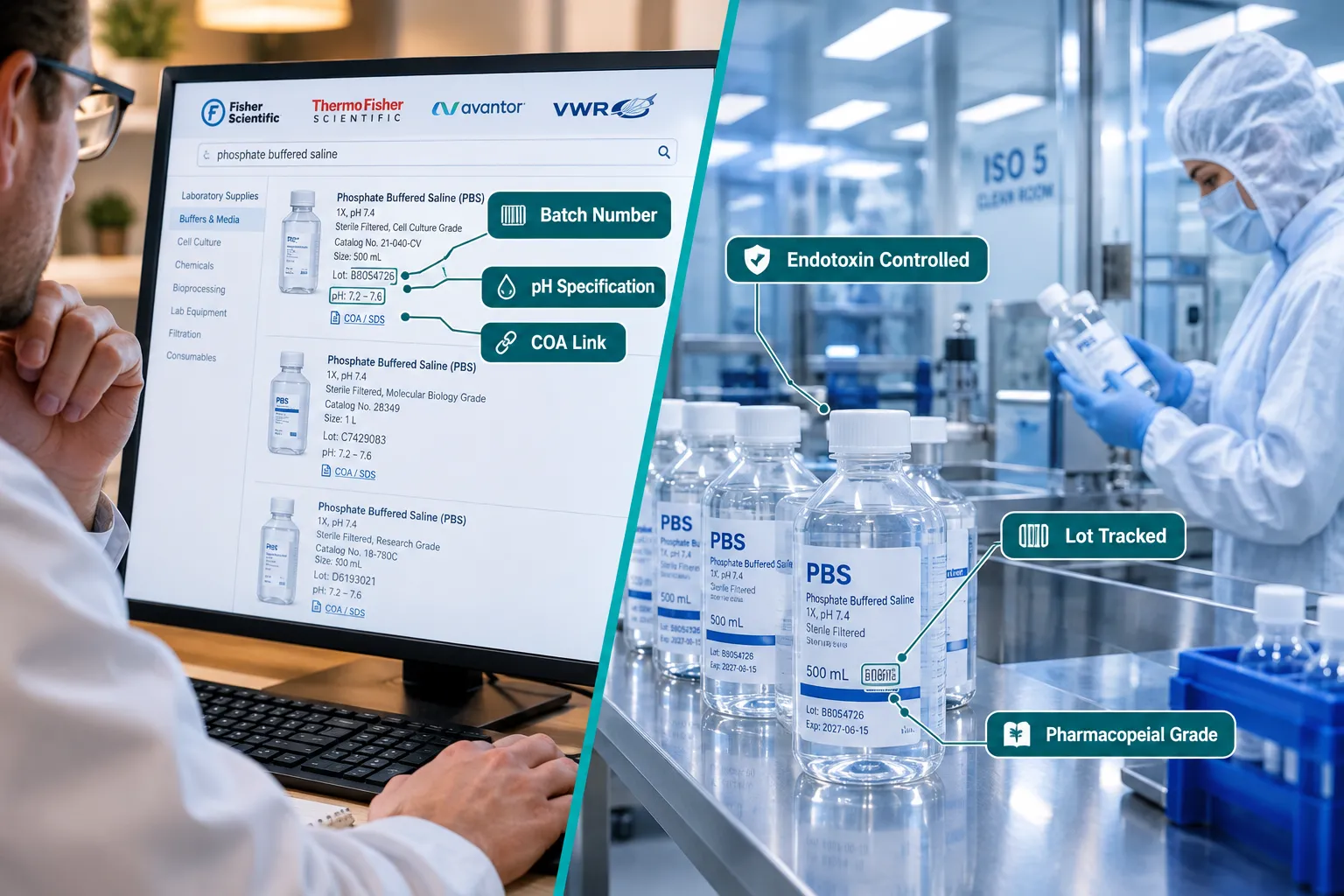
VWR remains one of the most widely used sources for research-grade PBS. Their core PBS line includes ready-to-use liquid formulations with defined pH and composition, supported by COA and specification sheets. VWR also distributes CellPro PBS from Alkali Scientific, a standard phosphate buffered saline validated for routine cell and tissue culture workflows. The advantage of large distributors is catalog tracking, batch documentation, and consistent availability.

Fisher Scientific offers a broad "Sterile Life Science Water" portfolio that includes multiple WFI-quality sterile purified waters and cell-culture-tested formulations. Each lot is tested to USP, PhEur, and JP requirements for sterile water for injection and shipped with a certificate of analysis, making Fisher a strong choice for reconstitution solvents in regulated or near-regulated research environments.

BD supplies PBS in dehydrated, assay-specific formats, including a dried PBS FA buffer at pH 7.2 designed for fluorescent antibody reagents. BD notes more than 400 different media and ingredient formulations in dehydrated form, giving immunofluorescence and diagnostic labs access to PBS tailored to specific assay workflows.

Specialized Pharmaceutical-Grade Suppliers

For labs requiring the highest solvent purity, particularly those reconstituting peptides for sensitive assays, specialized suppliers offer pharmacopeial-grade products with tighter documentation.

Renew Lab Group, a U.S. pharmaceutical-grade water manufacturer, supplies bacteriostatic water and sterile water for injection that is HPLC-tested, COA-certified, and packaged in ISO 5 conditions. Their products are explicitly aligned with USP and EP monograph specifications and are marketed to compounding pharmacies, biotech firms, and research laboratories. This level of quality documentation is directly relevant to researchers working with peptides such as those reviewed in SS-31 mechanism and research or Tesamorelin CJC1295 Ipamorelin blend reconstitution.

Bacteriostatic Water Lab focuses specifically on supplying authentic bacteriostatic water for injection formulated with 0.9% benzyl alcohol as a preservative. This is the preferred reconstitution solvent when a peptide vial will be accessed multiple times, as the preservative inhibits microbial growth between uses.

Bio-Link markets sterile water for injection (WFI) to global customers, confirming ongoing international availability of pharmacopeial-grade WFI for labs and manufacturers needing large-volume sterile water that meets injection standards.

Global Supplier Directories

Aggregated directories such as ChemicalBook list over 200 global PBS suppliers, including Sigma-Aldrich and numerous regional biotech vendors. These directories are useful for identifying bulk or cost-sensitive procurement options, though they require more rigorous independent vetting of quality documentation.

Quality Verification Practices: What to Check Before Using Any Lot

Quality Verification Practices: What to Check Before Using Any Lot

Knowing where to buy research-grade phosphate buffered saline and reconstitution solvents is only half the process. Verifying quality before use is equally critical.

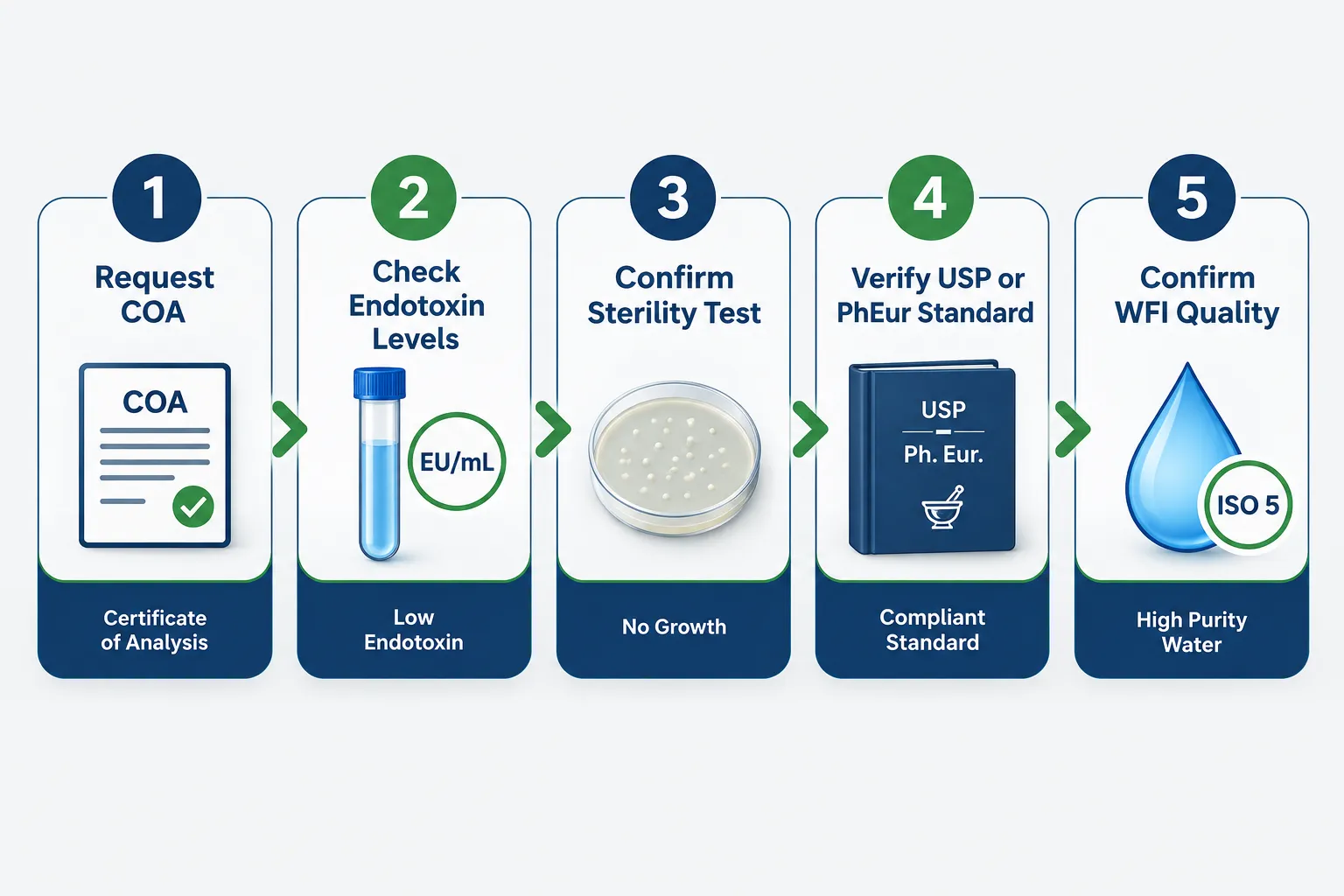
A practical pre-use verification checklist:

  • Certificate of Analysis (COA): Request a lot-specific COA. Confirm pH, sterility method, and endotoxin results are listed.
  • Endotoxin limits: For peptide assays, look for EU/mL values that meet or exceed cell-culture-grade standards.
  • Sterility testing: Confirm the lot was tested, not just filtered.
  • Pharmacopeial alignment: USP, PhEur, or JP compliance indicates the product meets internationally recognized standards.
  • WFI quality: For reconstitution solvents, "WFI quality" or "water for injection" labeling signals endotoxin control and process rigor.
  • Packaging integrity: ISO 5 fill environments and tamper-evident seals reduce contamination risk during transit.

"The COA is not a formality, it is the primary quality document that connects a specific lot to its test results. Never use a lot without one."

In 2026, industry messaging from suppliers like Fisher Scientific and Renew Lab Group reflects a clear trend: stronger emphasis on pharmacopeial compliance (USP/PhEur/JP), HPLC-based analytical testing, endotoxin control, and detailed lot documentation. This shift aligns with growing demand from biotech companies and research labs that need reagents bridging research and regulated manufacturing environments.

For labs working with complex peptide blends, such as those described in Tesamorelin peptide benefits or where to buy Tesamorelin online, choosing solvents with this level of documentation protects both the integrity of the compound and the validity of the data.

Conclusion

Selecting the right PBS and reconstitution solvents is a foundational decision that shapes the reproducibility of every downstream assay. The actionable steps are clear:

  1. Match grade to application, use cell-culture-tested or USP-grade PBS for peptide assays; reserve basic research-grade PBS for washing and general buffer steps.
  2. Source from documented suppliers, VWR, Fisher Scientific, BD, Renew Lab Group, and Bacteriostatic Water Lab all provide lot-specific COAs and pharmacopeial alignment.
  3. Verify before use, check endotoxin values, sterility test results, and pH confirmation on every incoming lot.
  4. Use the right reconstitution solvent, bacteriostatic water for multi-use vials, sterile WFI for single-use reconstitution, and PBS only when the protocol specifically calls for it.

Labs that treat solvent selection as a quality event, not a routine supply task, consistently produce cleaner data and fewer unexplained assay failures.

https://www.puretestedpeptides.com/wp-content/uploads/2026/09/where-to-buy-research-grade-phosphate-buffered-saline-and-reconstitution-solvent-1.webp 1024 1536 https://www.puretestedpeptides.com/wp-content/uploads/2026/01/buy-peptides-online.jpg 2026-09-17 13:03:542026-09-17 13:03:54Where to Buy Research-Grade Phosphate Buffered Saline and Reconstitution Solvents: Lab Standards and Quality Verification
Phosphate Buffered Saline for Peptide Reconstitution: A Complete Research Protocol Guide

Phosphate Buffered Saline for Peptide Reconstitution: A Complete Research Protocol Guide

September 14, 2026/0 Comments/in Uncategorized/by

Roughly 30% of peptide reconstitution failures in research settings trace back to a single, preventable error: choosing the wrong solvent. For researchers working with synthetic peptides, that choice starts with understanding when phosphate buffered saline is the right tool and when it is not. This guide to Phosphate Buffered Saline for Peptide Reconstitution: A Complete Research Protocol Guide covers everything a researcher needs to make that decision confidently, execute the protocol correctly, and store reconstituted stocks safely.

Key Takeaways

  • PBS at pH 7.4 closely mimics physiological conditions, making it ideal for hydrophilic and cell-compatible peptide assays.
  • Phosphate ions can catalyze deamidation and other degradation pathways in susceptible peptides, so PBS is not universally appropriate.
  • Proper concentration calculation, sterile filtration, and cold-chain storage are non-negotiable steps in any PBS reconstitution protocol.
  • Alternatives such as bacteriostatic water, HEPES-buffered saline, and dilute acetic acid each serve specific peptide chemistries better than PBS in certain cases.
  • Sourcing high-purity, third-party-tested peptides is the foundation of any reliable reconstitution outcome.

Why PBS Remains the Default Solvent in Peptide Research

Phosphate buffered saline is a water-based salt solution that maintains a stable pH of 7.4 while matching the osmolarity of human plasma at approximately 300 mOsm/kg. Those two properties explain its dominance in cell culture, biochemical assays, and in vivo research models.

Why PBS Remains the Default Solvent in Peptide Research

For hydrophilic peptides with a net neutral or slightly negative charge at physiological pH, PBS provides an aqueous environment that supports full dissolution without introducing organic solvents that could disrupt downstream cell viability. Researchers running Semax research protocols and similar neuropeptide studies frequently rely on PBS precisely because the buffer does not interfere with receptor-binding assays or neuronal cell lines.

When PBS is the right choice:

  • Hydrophilic peptides that dissolve readily in water
  • Cell-based assays requiring physiological osmolarity
  • In vivo models where isotonicity is critical
  • Short-term stocks used within 24 to 72 hours

When PBS should be avoided:

  • Peptides containing asparagine or glutamine residues prone to deamidation (phosphate accelerates this reaction)
  • Highly hydrophobic sequences that require DMSO or dilute organic acid as a primary solvent
  • Long-term frozen stocks where phosphate precipitation at low temperatures can alter effective concentration

"PBS is not a universal default. It is the best default for a defined subset of peptide chemistries."

Core Protocol Steps for Reconstituting Peptides in PBS

Following a standardized workflow reduces variability and protects peptide integrity from the moment the lyophilized powder is opened.

Core Protocol Steps for Reconstituting Peptides in PBS

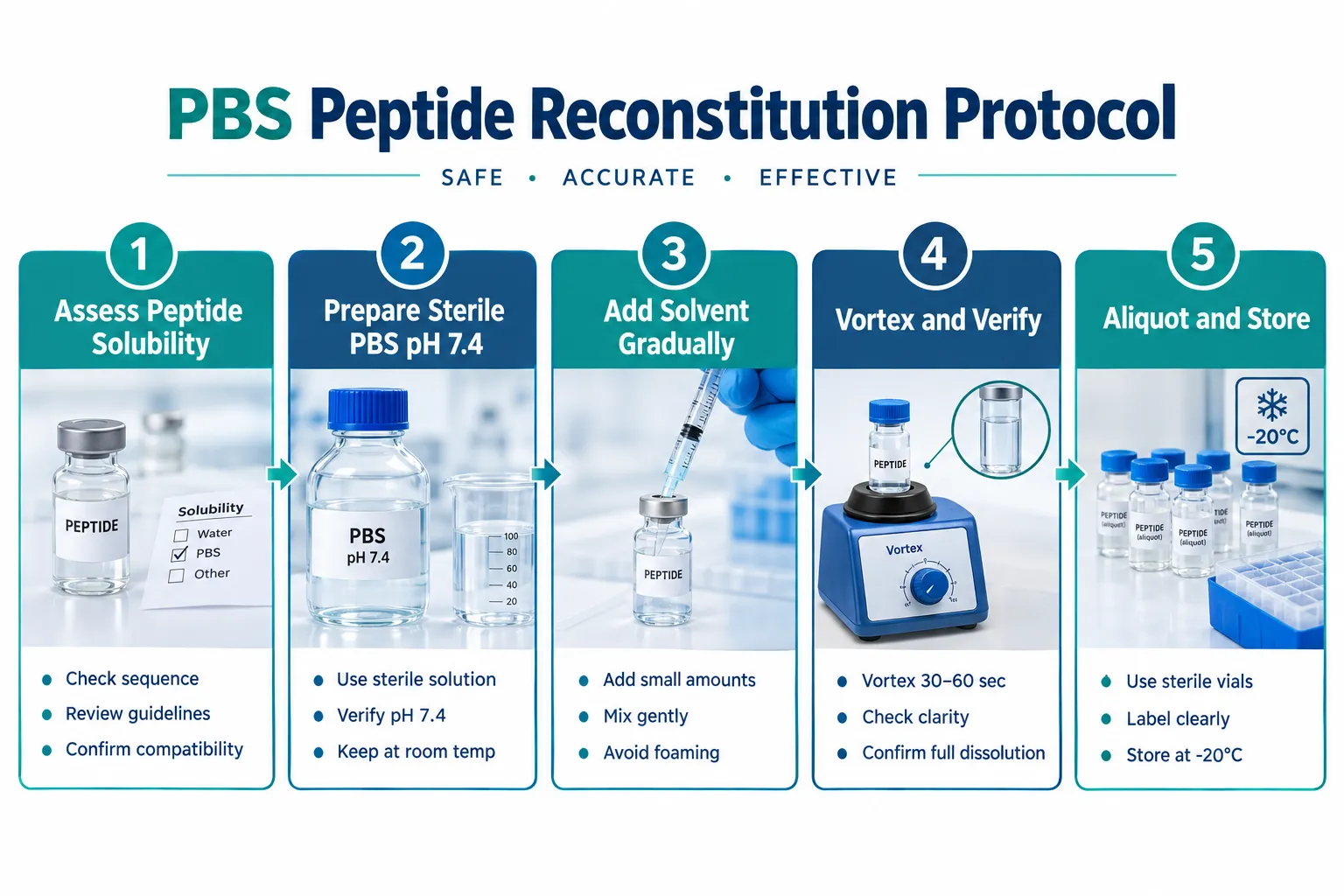
Step 1: Assess Peptide Solubility Before Reconstitution

Review the manufacturer's certificate of analysis and any published solubility data. Peptides with a high proportion of hydrophobic residues (leucine, isoleucine, phenylalanine, valine) will likely require a co-solvent step before PBS dilution. Peptides with multiple charged residues at physiological pH are strong candidates for direct PBS dissolution.

Step 2: Prepare or Verify Sterile PBS

Use sterile, endotoxin-tested PBS at pH 7.4. For in vivo or cell-culture work, confirm the endotoxin level is below 0.1 EU/mL. If preparing PBS in-house, sterile-filter through a 0.22 µm membrane after preparation.

Step 3: Calculate Target Concentration

Use the molecular weight from the certificate of analysis, not a generic database value, since counterion salts affect actual mass.

Target Concentration Peptide Mass (1 mg) PBS Volume Required
1 mg/mL 1 mg 1.0 mL
0.5 mg/mL 1 mg 2.0 mL
0.1 mg/mL 1 mg 10.0 mL

Step 4: Add Solvent Gradually and Mix Gently

Add PBS in small increments to the lyophilized peptide. Avoid vortexing at high speed for extended periods, as mechanical shear can fragment sensitive sequences. Gentle swirling or brief low-speed vortexing for 5 to 10 seconds is sufficient for most hydrophilic peptides.

Step 5: Verify Dissolution and Filter

Inspect the solution visually for particulates. For critical applications, confirm concentration using UV absorbance at 280 nm if the peptide contains aromatic residues, or via HPLC for absolute quantification. Filter through a 0.22 µm syringe filter before aliquoting.

PBS vs. Alternative Solvents: Choosing the Right Buffer

Researchers working with a broad peptide library will encounter situations where PBS is not the optimal first choice. Understanding the alternatives is essential.

PBS vs. Alternative Solvents: Choosing the Right Buffer

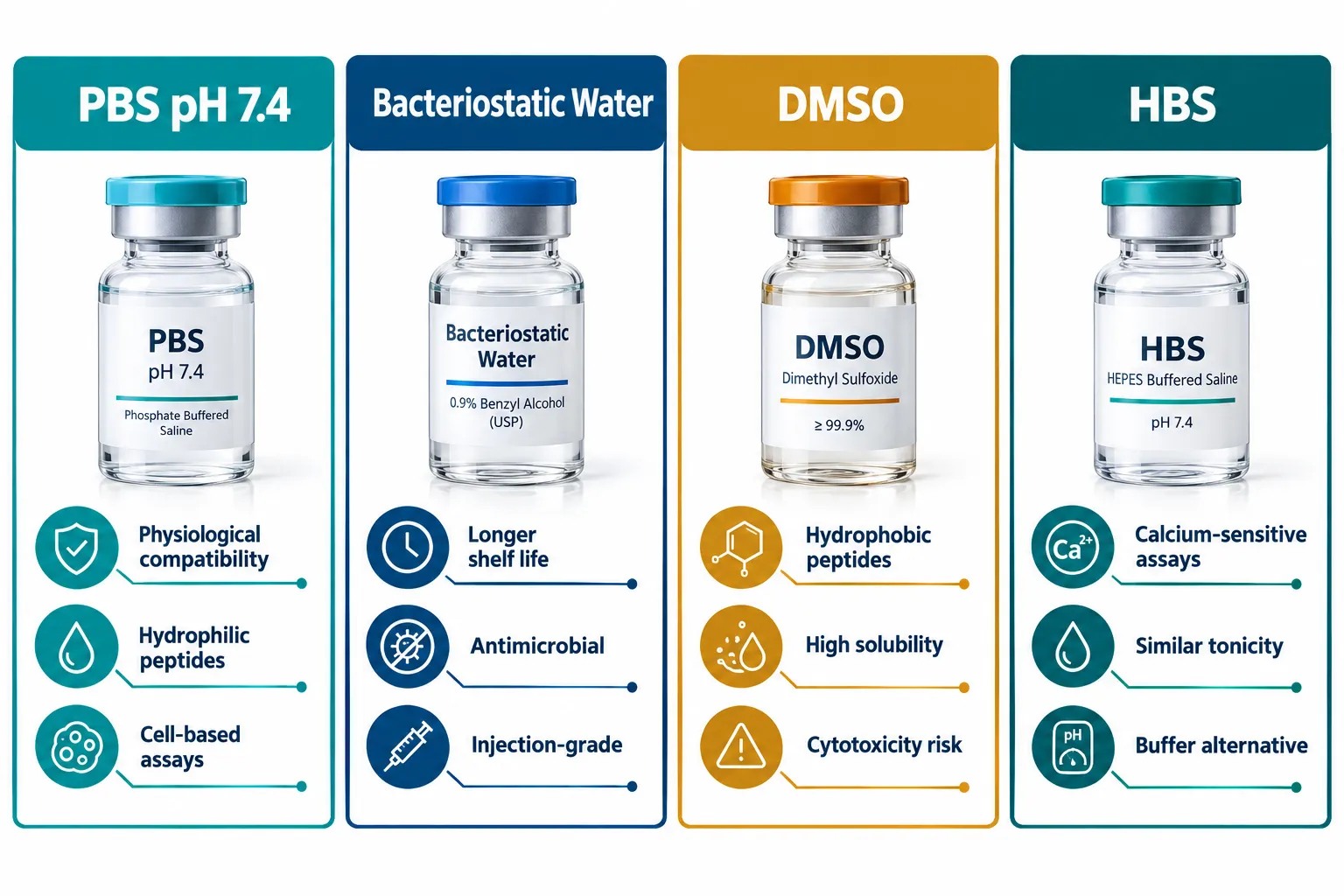
Bacteriostatic water contains 0.9% benzyl alcohol, which inhibits microbial growth and extends the usable life of a reconstituted stock. It is commonly used for peptides intended for repeated withdrawal from the same vial. However, it lacks the buffering capacity of PBS and is not appropriate for pH-sensitive assays. Researchers exploring SS-31 peptide research and related mitochondria-targeted compounds often weigh bacteriostatic water against PBS depending on the assay format.

HEPES-buffered saline (HBS) offers a phosphate-free alternative at physiological pH, making it preferable for calcium-sensitive assays or any protocol where phosphate ions could interfere with signaling pathways. The tradeoff is higher cost and less universal availability.

Dilute acetic acid (0.1% to 1%) is the go-to primary solvent for hydrophobic or aggregation-prone peptides. After initial dissolution in acetic acid, the researcher then dilutes into PBS to reach physiological conditions, keeping the final acetic acid concentration below 0.01%.

DMSO is reserved for extremely hydrophobic sequences. Final DMSO concentration in cell-based assays should remain below 0.1% to avoid cytotoxicity.

For those sourcing peptides for structured research programs, working with a best peptide supplier that provides solubility guidance alongside the certificate of analysis removes much of the guesswork from solvent selection.

Storage and Handling of PBS-Reconstituted Peptide Stocks

Reconstitution is only half the protocol. Improper storage is one of the most common sources of data variability in peptide research.

Recommended storage practices for 2026:

  • Short-term use (less than 72 hours): Store at 2 to 8 degrees Celsius in a sealed, sterile vial. Minimize freeze-thaw cycles.
  • Medium-term storage (up to 4 weeks): Aliquot into single-use volumes and store at -20 degrees Celsius. Label each aliquot with peptide name, concentration, date, and lot number.
  • Long-term storage (beyond 4 weeks): Store at -80 degrees Celsius. Note that phosphate salts can precipitate during freezing; allow complete thaw and gentle mixing before use.
  • Light sensitivity: Many peptides degrade under UV exposure. Use amber vials or wrap clear vials in foil.

Researchers working with compounds such as SS-31 peptide or Mot-C peptide should follow the specific storage guidance provided with each product, as mitochondria-targeted and growth-hormone-related peptides can have unique stability profiles that modify general PBS storage rules.

For broader research contexts such as wound healing peptide studies or metabolic peptide investigations, maintaining a cold chain from reconstitution through assay setup is non-negotiable.

Conclusion

Phosphate Buffered Saline for Peptide Reconstitution: A Complete Research Protocol Guide comes down to three decisions: assess whether PBS suits the peptide's chemistry, execute the reconstitution with sterile technique and accurate concentration math, and store aliquots under conditions that prevent degradation. PBS earns its status as the most common reconstitution solvent because it is physiologically compatible, widely available, and well-characterized, but it is not appropriate for every peptide or every assay.

Actionable next steps for researchers:

  1. Always obtain and review the certificate of analysis before selecting a solvent.
  2. Default to PBS for hydrophilic, charge-bearing peptides destined for cell-based or in vivo work.
  3. Switch to bacteriostatic water, HBS, or acetic acid pre-dissolution when PBS chemistry creates stability or solubility concerns.
  4. Aliquot immediately after reconstitution and label every vial with full traceability information.
  5. Source peptides from a best peptide manufacturer that provides third-party purity testing, so the reconstitution protocol starts with a verified, high-quality substrate.

A disciplined approach to solvent selection and storage transforms peptide reconstitution from a potential failure point into a reliable, reproducible foundation for research.

https://www.puretestedpeptides.com/wp-content/uploads/2026/09/phosphate-buffered-saline-for-peptide-reconstitution-a-complete-research-protoco.webp 1024 1536 https://www.puretestedpeptides.com/wp-content/uploads/2026/01/buy-peptides-online.jpg 2026-09-14 13:05:452026-09-14 13:05:45Phosphate Buffered Saline for Peptide Reconstitution: A Complete Research Protocol Guide
×

Helpful Links

  • My account
  • Cart
  • Checkout
  • Refund and Returns Policy
  • Privacy Policy
  • SMS Privacy Policy
  • Login
  • My Account
  • Logout

USA Made Lab Tested Peptides

All products are sold for research, laboratory, or analytical purposes only, and are not for human consumption


Pure Tested Peptides is a chemical supplier. Pure Tested Peptides is not a compounding / chemical compounding facility as defined under 503A of the Federal Food, Drug, and Cosmetic act. Pure Tested Peptides is not an outsourcing facility as defined under 503B of the Federal Food, Drug, and Cosmetic act.

The statements made within this website have not been evaluated by the US Food and Drug Administration. The products we offer are not intended to diagnose, treat, cure or prevent any disease.

Human/Animal Consumption Prohibited. Laboratory/In-Vitro Experimental Use Only

Scroll to top Scroll to top Scroll to top