Call or Text 727-513-9780
  • Shopping Cart Shopping Cart
    0Shopping Cart
Pure Tested Peptides | America's most trusted Peptides for sale online
  • Peptides for sale
    • Oral Peptides for sale
      • Peptide Capsules for sale
      • BPC 157 Capsules 1000mcg
      • SLU-PP-332 Capsules | 1000 mcg
      • 5-Amino-1MQ 50mg Capsules
      • Tesofensine 500mcg
    • All Peptides for sale
    • Peptide Sprays
      • BPC 157 Nasal Spray Kit
      • BPC-157 TB500 Nasal Spray Kit
      • Semax Nasal Spray 10mg
      • Selank – Nasal Spray Kit – 10mg
      • Epithalon 50MG Nasal Spray Kit
      • Ipamorelin 10mg Nasal Spray
      • Klow Nasal Spray (BPC-157 + TB-500 + GHK-Cu + KPV) | 80mg
      • Hulk Nasal Spray Tesa / Ipa Blend 6/3 MG
      • Klow Nasal Spray
      • NAD + 500 mg Nasal Spray
      • PT-141 Nasal Spray Kit
    • GHRH Peptides
      • Ipa Peptides
      • CJC-1295 Peptides
        • CJC-1295 with DAC 5 mg
        • CJC-1295 without DAC 5 mg
        • CJC-1295 Ipa 10mg
      • Tesa Peptides
        • Tesa Peptide
        • Tesa 20 mg
    • GHK-Cu Peptides
      • All GHK-Cu Peptides
      • GHK-Cu 100mg
      • KLOW Peptide Blend – Buy KLOW blend online
    • BPC Peptides
      • All BPC Peptides
      • BPC-157
      • BPC-157 TB-500
      • BPC 157 capsules 1000mcg
    • SLU-PP-332 Peptides
      • All SLU-PP-332 Peptides
      • SLU-PP-332 5mg
    • GLP3 Peptides
    • PT-141 Peptides
      • PT-141 Peptides for sale
      • PT-141 10mg
      • PT-141 Nasal Spray
    • CAG Peptides
      • Lipo-C Peptide Blend
      • CAG 5mg
      • CAG 10mg
    • MOTS-C Peptides
      • MOTS-C Peptides for sale
      • MOTS-c peptide
      • MOTS-c 10mg *6 pack*
    • 5 Amino 1MQ Peptides
      • 5 Amino 1MQ Peptides for sale
      • 5-Amino-1MQ 50mg Capsules
      • 5-Amino-1MQ 5mg
    • Epithalon Peptides
      • Epithalon Peptides for sale
      • Epithalon 10mg
      • Epithalon 50mg
  • Shop
    • GLPs
      • 5-Amino-1MQ 50mg Capsules
      • 5-Amino-1MQ 5mg
      • L-Carnitine 500mg/ml
      • Tesofensine 500mcg
      • SLU-PP-332 5mg
      • MOTS-c 10mg *6 pack*
    • Epithalon & BPC Peptides
      • Epithalon 10mg
      • Epithalon 50mg
      • BPC-157
      • BPC 157 capsules 1000mcg
      • BPC-157 TB-500
      • BPC-157 TB500 Nasal Spray Kit
      • BPC 157 Nasal Spray Kit
    • BPC TB-500 & NAD+ Peptides
      • NAD+ 500 mg
      • KLOW Peptide Blend – Buy KLOW blend online
      • GLOW Peptide Blend
      • TB 500 5mg
      • BPC 157 capsules 1000mcg – Supplement
      • BPC 157 Nasal Spray Kit
      • BPC-157
      • BPC-157 TB500 Nasal Spray Kit
      • BPC-157 TB-500
      • BPC 157 capsules 1000mcg
    • LL-37 Peptide
      • LL-37 10 mg
    • MOTS-C & Selank
      • MOTS-c peptide
      • Selank 10mg
    • GHK Peptides
      • GHK-Cu 100mg
      • GLOW Peptide Blend
      • KLOW Peptide Blend – Buy KLOW blend online
  • COAs
  • Wholesale
    • Wholesale Peptides for sale
  • PTP FAQ
  • Affiliates
    • Selank Peptide: Advanced Pharmacological Mechanisms Underlying Its Anxiolytic and Nootropic Effects in Research
      • 5-Amino-1MQ Peptide: Detailed Mechanisms of NNMT Inhibition and Its Impact on Cellular Metabolism Research
        • MOTS-C Peptide: Unraveling Its Role in Mitochondrial Dynamics and Energy Metabolism Research
          • Epithalon Peptide and Telomerase Regulation: Investigating Its Impact on Cellular Senescence and Lifespan Research Models
            • GLP2-T vs GLP2 Tirz Peptide: Understanding the Naming, Mechanistic Nuances, and Research Implications for Gut Health
      • Peptides and Polypeptides in Modern Pharmacology: What Research on Metoprolol, Prednisone, and Amlodipine Reveals
        • Polypeptide Peptides vs NSAIDs: What Naproxen and Diclofenac Teach Tissue-Repair Researchers About BPC‑157 and TB‑500
          • Peptides and Polypeptides in Endocrine Pharmacology: How GLP-1, GLP-2, and GLP-3 Retatrutide Differ From Classic Drugs Like Prednisone and Amlodipine
          • 5‑Amino‑1MQ Peptide and NNMT Inhibition: How It Compares With Statins Like Atorvastatin in Adipose and Lipid Metabolism Research
      • Enclomiphene, Estrogen Receptor Signaling, and Luteinizing Phase Biology: What Hormone Researchers Should Measure
        • Mesenchymal Stem Cells, BPC‑157, and GHK‑Cu: How Tissue Repair Peptides Compare With Classic NSAIDs Like Naproxen in Injury Models
          • Peptide Calculator Use Cases Beyond Growth Hormone: Working Through GLP‑3 Retatrutide, MOTS‑c, and BPC‑157 Research Dosing
        • Polypeptide Peptides in Endocrine and Metabolic Pharmacology: Lessons From Amlodipine, Prednisone, and Metoprolol
        • Peptides Calculator for Advanced Blends: Worked Examples for Tesamorelin, CJC‑1295, and Ipamorelin Stacks
          • Peptides and Polypeptides in Human Physiology: How Molecular Size Shapes Research Applications
            • Selank Peptide: Advanced Pharmacological Mechanisms Underlying Its Anxiolytic and Nootropic Effects in Research
          • 5-Amino-1MQ Peptide: Detailed Mechanisms of NNMT Inhibition and Its Impact on Cellular Metabolism Research
            • MOTS-C Peptide: Unraveling Its Role in Mitochondrial Dynamics and Energy Metabolism Research
              • Epithalon Peptide and Telomerase Regulation: Investigating Its Impact on Cellular Senescence and Lifespan Research Models
                • GLP2-T vs GLP2 Tirz Peptide: Understanding the Naming, Mechanistic Nuances, and Research Implications for Gut Health
                  • Peptides and Polypeptides in Endocrine Pharmacology: How GLP-1, GLP-2, and GLP-3 Retatrutide Differ From Classic Drugs Like Prednisone and Amlodipine
                    • Polypeptide Peptides vs NSAIDs: What Naproxen and Diclofenac Teach Tissue-Repair Researchers About BPC‑157 and TB‑500
                      • Peptides and Polypeptides in Modern Pharmacology: What Research on Metoprolol, Prednisone, and Amlodipine Reveals
                        • 5‑Amino‑1MQ Peptide and NNMT Inhibition: How It Compares With Statins Like Atorvastatin in Adipose and Lipid Metabolism Research
                        • Enclomiphene, Estrogen Receptor Signaling, and Luteinizing Phase Biology: What Hormone Researchers Should Measure
                        • Mesenchymal Stem Cells, BPC‑157, and GHK‑Cu: How Tissue Repair Peptides Compare With Classic NSAIDs Like Naproxen in Injury Models
                        • Peptide Calculator Use Cases Beyond Growth Hormone: Working Through GLP‑3 Retatrutide, MOTS‑c, and BPC‑157 Research Dosing
                        • Polypeptide Peptides in Endocrine and Metabolic Pharmacology: Lessons From Amlodipine, Prednisone, and Metoprolol
                        • Peptides Calculator for Advanced Blends: Worked Examples for Tesamorelin, CJC‑1295, and Ipamorelin Stacks
                        • Peptides and Polypeptides in Human Physiology: How Molecular Size Shapes Research Applications
                        • Selank Peptide: Advanced Pharmacological Mechanisms Underlying Its Anxiolytic and Nootropic Effects in Research
                        • MOTS-C Peptide: Unraveling Its Role in Mitochondrial Dynamics and Energy Metabolism Research
                        • Peptides and Polypeptides in Modern Pharmacology: What Research on Metoprolol, Prednisone, and Amlodipine Reveals
                        • Peptides and Polypeptides in Endocrine Pharmacology: How GLP-1, GLP-2, and GLP-3 Retatrutide Differ From Classic Drugs Like Prednisone and Amlodipine
                        • 5-Amino-1MQ Peptide: Detailed Mechanisms of NNMT Inhibition and Its Impact on Cellular Metabolism Research
                        • Mesenchymal Stem Cells, BPC‑157, and GHK‑Cu: How Tissue Repair Peptides Compare With Classic NSAIDs Like Naproxen in Injury Models
                        • Peptide Calculator Use Cases Beyond Growth Hormone: Working Through GLP‑3 Retatrutide, MOTS‑c, and BPC‑157 Research Dosing
                        • GLP2-T vs GLP2 Tirz Peptide: Understanding the Naming, Mechanistic Nuances, and Research Implications for Gut Health
                        • Polypeptide Peptides in Endocrine and Metabolic Pharmacology: Lessons From Amlodipine, Prednisone, and Metoprolol
                        • Polypeptide Peptides vs NSAIDs: What Naproxen and Diclofenac Teach Tissue-Repair Researchers About BPC‑157 and TB‑500
                        • Peptides and Polypeptides in Human Physiology: How Molecular Size Shapes Research Applications
                        • Peptides Calculator for Advanced Blends: Worked Examples for Tesamorelin, CJC‑1295, and Ipamorelin Stacks
                        • 5‑Amino‑1MQ Peptide and NNMT Inhibition: How It Compares With Statins Like Atorvastatin in Adipose and Lipid Metabolism Research
                        • Enclomiphene, Estrogen Receptor Signaling, and Luteinizing Phase Biology: What Hormone Researchers Should Measure
                        • Epithalon Peptide and Telomerase Regulation: Investigating Its Impact on Cellular Senescence and Lifespan Research Models
                        • Best research protocol Klow blend
                        • best time to take BPC-157
                        • best time to take DSIP (Delta Sleep Inducing Peptide)
                        • best time to take CJC-1295
                        • best time to take AOD-9604
                        • best time to take Follistatin 344
                        • best time to take Ipamorelin
                        • best time to take MK-677 (Ibutamoren)
                        • best time to take Ligandrol (LGD-4033) — research compound
                        • best time to take Ostarine (MK-2866) — research compound
                        • best time to take GHK-CU
                        • best time to take TB-500
                        • best time to take MOTS-c
                        • best time to take Semax
                        • best time to take RAD-140 (Testolone) — research compound
                        • best time to take Thymosin Alpha-1
                        • best time to take PEG-MGF
                        • Biolife Plasma, Octapharma Plasma, and Research Peptides: How Plasma Donation Labs Differ From Peptide Suppliers
                        • best time to take YK-11 — research compound
                        • best time to take PT-141 (Bremelanotide)
                        • Best research protocol Klow blend
                        • 5-Amino-1MQ and MOTS-C Synergy: Metabolic Signaling, Mitochondria, and Research Design
                        • BPC-157 and TB-500: Investigating Their Combined Effects on Angiogenesis and Cellular Migration in Tissue Repair Models
                        • BPC-157 Peptide: Gut Barrier Function, Inflammation, and Tissue-Recovery Research
                        • 5‑Amino‑1MQ and MOTS‑c Synergy in Metabolic Research: Designing NNMT and Mitochondrial Biogenesis Stacks
                        • CJC-1295 with DAC vs. Without DAC: Half-Life, Release Kinetics, and Research Implications
                        • CJC‑1295 with DAC vs. Without DAC: Expanding on Half‑Life Differences Using Tesamorelin and Ipamorelin Blend Case Studies
                        • Collagen Biology and Copper‑Binding Peptides: How GHK‑Cu, Glow Blend, and Klow Blend Interact with Skin and Connective Tissue
                        • Collagen Biology and Regenerative Peptides: How GHK‑Cu, Glow Blend, and Klow Blend Affect Extracellular Matrix Research
                    • DNA, Telomeres, and Longevity Peptides: Positioning Epithalon and MOTS‑c in Genetic Aging Research
                      • Enclomiphene Citrate: serm Mechanism, Testosterone Research, and Stack Compatibility
                        • Enclomiphene vs Enclomiphene Citrate: Formulation, Bioavailability, and Research Distinctions
                        • Epithalon Peptide Research: Telomerase Activation, Aging, and Pineal Gland Function
                        • Estrogen Receptor Signaling and Enclomiphene: How Selective Modulators Compare with Classic Polypeptide Hormones
                        • GHK-Cu Peptide: Advanced Mechanisms in Extracellular Matrix Remodeling and Wound Healing Research
                        • GHK-Cu Peptide: Collagen Synthesis, Wound Repair, and Skin-Barrier Research Models
                        • GLP-1 vs GLP-3 vs GLP-2: Peptide Classification and Research Applications
                        • GLP-2 Peptide Research Guide: Gut Barrier Function, Nutrient Absorption, and Intestinal Recovery Models
                        • GLP-3 Retatrutide vs. GLP-1 Drugs: What Triple-Agonist Biology Changes in Research Models
                        • Ipamorelin and Tesamorelin Combination: Synergistic GH Secretagogue Research and Dosing Protocols
                        • GLP2 Tirz Peptide: What It Is, Why the Name Exists, and How Researchers Should Interpret It
                        • Klow Blend Peptide Nasal Spray: What the Formulation Is Trying to Do in Cognitive Research
                        • Mitochondria, NNMT Inhibition, and Peptide Modulators: Where MOTS‑c and 5‑Amino‑1MQ Fit in Cellular Energy Research
                        • MOTS-c Peptide: Mitochondrial Function, Energy Metabolism, and What Researchers Measure
                        • MOTS-c vs. 5-Amino-1MQ: Which Metabolic Research Questions Each Compound Actually Answers
                        • Nasal Spray Peptides: Bioavailability, Administration, and Semax/Selank Research Applications
                        • PT-141 Peptide Research: Mechanism of Action and Melanocortin Receptor Signaling
                        • Retatrutide for Research: Mechanism, Structure, and GLP-1/GLP-3 Dual Action
                        • Retatrutide for Obesity and Type 2 Diabetes: What the Latest Trial Data Suggest
                        • Tesofensine Peptide Research: Mechanism, Appetite Suppression, and Neuropeptide Y Pathways
  • Contact
    • Contact Customer Service
    • Text Customer Support
  • About US
  • Shop all peptides
  • Affiliate Program
    • Affiliate Signup
  • Login / Register Login / Register Page Link Login / Register Page Link
  • Click to open the search input field Click to open the search input field Search
  • Menu Menu

Tag Archive for: retatrutide

Tesofensine and Metabolic Research: How a Noradrenergic Appetite Modulator Compares With GLP‑3 Peptides in Study Design

Tesofensine and Metabolic Research: How a Noradrenergic Appetite Modulator Compares With GLP‑3 Peptides in Study Design

July 30, 2026/0 Comments/in Uncategorized/by

Obesity affects more than one billion adults worldwide, yet fewer than five percent of patients sustain meaningful weight loss beyond two years with lifestyle intervention alone. That gap has pushed preclinical researchers toward a broader toolkit, one that now includes both small-molecule reuptake inhibitors and next-generation incretin peptides. Tesofensine and metabolic research exploring how a noradrenergic appetite modulator compares with GLP-3 peptides in study design sits at the center of this conversation, raising important questions about mechanism, model selection, and how these two compound classes might inform each other.

Key Takeaways

  • Tesofensine is a triple monoamine reuptake inhibitor that reduces appetite primarily through central noradrenergic and dopaminergic signaling.
  • GLP-3 peptides such as retatrutide act peripherally and centrally via incretin receptors, creating a mechanistically distinct pathway from tesofensine.
  • Preclinical dosing models for tesofensine typically use 0.5-2.0 mg/kg ranges in rodent studies, while peptide-based protocols require different reconstitution and delivery planning.
  • Combining or comparing these two compound classes in study design can reveal additive appetite-suppression effects not achievable with either agent alone.
  • Researchers sourcing compounds for metabolic studies should prioritize purity verification and documented lot testing.
Key Takeaways

Mechanism of Action: What Makes Tesofensine Distinct in Metabolic Research

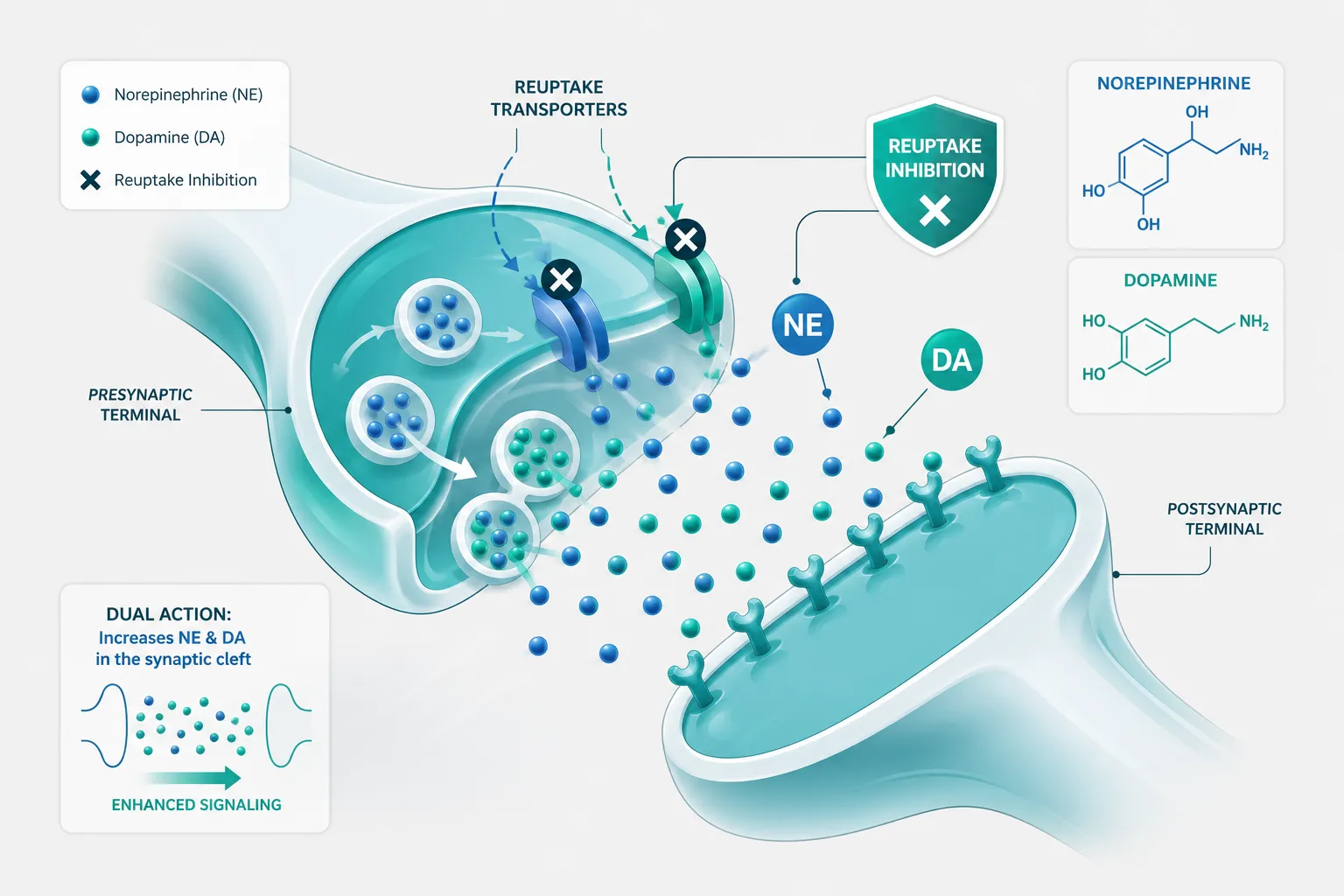
Tesofensine is a pre-synaptic reuptake inhibitor of serotonin, norepinephrine, and dopamine, a triple monoamine reuptake inhibitor (TMRI). Its appetite-suppressing effect is driven predominantly by noradrenergic and dopaminergic activity in the hypothalamus and mesolimbic reward circuits. Unlike GLP-1 receptor agonists, tesofensine does not engage incretin pathways directly. Instead, it modulates the central "hunger thermostat" by increasing synaptic availability of catecholamines.

Key mechanistic features:

  • Norepinephrine reuptake inhibition reduces orexigenic signaling in the lateral hypothalamus
  • Dopamine reuptake inhibition blunts food-reward motivation in the nucleus accumbens
  • Serotonin component contributes to satiety signaling, though it is weaker than dedicated SSRIs

This central mechanism stands in contrast to GLP-3 peptide research, which targets peripheral gut-derived incretin receptors and vagal afferent pathways before reaching the hypothalamus. Understanding this distinction is essential when designing comparative studies, because each compound class requires different outcome measures, tissue sampling protocols, and washout periods.

"Mechanistic diversity is not a weakness in obesity research, it is the foundation for rational combination study design."

Researchers working with BDNF-related appetite pathways may also find it useful to review BDNF peptide research themes, since central neurotrophic signaling intersects with both noradrenergic tone and incretin activity.

Preclinical Dosing Models and Study Design Considerations

Preclinical Dosing Models and Study Design Considerations

Tesofensine Dosing in Rodent Models

Published rodent studies have used tesofensine in the range of 0.5 to 2.0 mg/kg/day, typically administered by oral gavage or subcutaneous injection. Diet-induced obesity (DIO) mouse models are the most common platform because they replicate the hypercaloric, low-activity conditions seen in human metabolic syndrome.

Parameter Typical Range
Species C57BL/6 mice, Sprague-Dawley rats
Dose range 0.5-2.0 mg/kg/day
Duration 4-12 weeks
Primary endpoints Body weight, food intake, fat mass
Secondary endpoints Glucose tolerance, plasma lipids

GLP-3 Peptide Protocols for Comparison

GLP-3 class peptides, including retatrutide, which acts as a GLP-1/GIP/glucagon tri-agonist, require subcutaneous injection and are typically dosed in the 0.1-1.0 nmol/kg range in rodent models. Researchers interested in the evidence base around GLP-3 peptides for weight loss will note that these peptides have a fundamentally different pharmacokinetic profile: longer half-lives, receptor-mediated clearance, and dose-dependent nausea at higher concentrations.

When designing a head-to-head or combination study, researchers must account for:

  1. Different administration routes (oral vs. subcutaneous)
  2. Non-overlapping receptor targets requiring separate washout periods
  3. Distinct biomarker panels, catecholamine metabolites for tesofensine vs. GLP-1 and GIP levels for incretin peptides
  4. Potential additive effects on food intake without additive cardiovascular burden

For researchers also exploring growth hormone secretagogue peptides in metabolic panels, the tesa peptide research overview provides useful context on visceral fat endpoints that can be adapted for comparative metabolic studies.

How Tesofensine and Metabolic Research Compares With GLP-3 Peptides in Study Design: Practical Implications

How Tesofensine and Metabolic Research Compares With GLP-3 Peptides in Study Design: Practical Implications

Appetite Suppression: Central vs. Peripheral Pathways

The core design challenge when comparing tesofensine with GLP-3 peptides is that they suppress appetite through non-competing pathways. Tesofensine acts upstream in the CNS; retatrutide and related peptides act at peripheral receptors before triggering central satiety signals. This means:

  • Additive appetite suppression is plausible without simple pharmacological overlap
  • Combination protocols may reveal synergistic effects at sub-maximal doses of each compound
  • Adverse event profiles differ significantly, cardiovascular monitoring is critical for tesofensine, while GI tolerability is the primary concern for incretin peptides

Compound Sourcing and Purity Standards

Study validity depends heavily on compound quality. Researchers sourcing tesofensine or GLP-3 peptides for preclinical work should require:

  • Certificate of Analysis (CoA) with HPLC purity data (minimum 98%)
  • Mass spectrometry confirmation of molecular identity
  • Endotoxin testing for injectable preparations

Those looking to buy peptides online for research purposes should verify that suppliers provide lot-specific documentation. Researchers in Canada may also find the peptides in Canada sourcing guide a useful reference for regulatory context.

For teams comparing multiple peptide classes in the same metabolic panel, lab-tested peptide sourcing from documented suppliers reduces batch-to-batch variability that can confound longitudinal data.

Additionally, researchers building multi-compound metabolic panels may want to review GLP-1 peptide sourcing and generational research concepts to understand how incretin compound generations differ in receptor binding profiles.

Conclusion

Tesofensine and metabolic research examining how a noradrenergic appetite modulator compares with GLP-3 peptides in study design represents one of the more nuanced areas of obesity pharmacology. The two compound classes operate through distinct, potentially complementary mechanisms, central catecholamine reuptake inhibition versus peripheral incretin receptor activation, making them valuable both as standalone research tools and as candidates for combination protocol design.

Actionable next steps for researchers:

  • Define primary endpoints early: body weight and food intake for tesofensine; GLP-1 and insulin secretion indices for incretin peptides
  • Build separate washout periods into crossover designs to prevent mechanistic interference
  • Source compounds with full lot-specific CoA documentation to protect data integrity
  • Consider sub-maximal combination dosing to explore additive appetite suppression without compounding adverse event risk
  • Review the growing literature on tri-agonist peptides like retatrutide to understand where GLP-3 class compounds are headed

As the obesity research landscape evolves, understanding how small-molecule modulators and peptide-based agents interact at the systems level will be critical to designing studies that translate meaningfully from bench to clinic.


References

  • Astrup, A., Meier, D. H., Mikkelsen, B. O., Villumsen, J. S., & Larsen, T. M. (2008). Weight loss produced by tesofensine in patients with Parkinson's or Alzheimer's disease. Obesity, 16(6), 1363-1369.
  • Lehr, T., Staab, A., Tillmann, C., Trommeshauser, D., Schaefer, H. G., & Kloft, C. (2008). A quantitative enterohepatic circulation model: development and evaluation with tesofensine and meloxicam. Clinical Pharmacokinetics, 47(4), 291-307.
  • Friedrichsen, M., Sørensen, A., Faber, J., Holst, J. J., Carr, R. D., Petersen, J. S., & Bagger, J. I. (2015). Differential effects of tesofensine on gut hormones in humans. Obesity, 23(9), 1789-1796.
  • Nauck, M. A., & D'Alessio, D. A. (2022). Tirzepatide, a dual GIP/GLP-1 receptor co-agonist for the treatment of type 2 diabetes with unmatched effectiveness regrading glycaemic control and body weight reduction. Cardiovascular Diabetology, 21(1), 169.
  • Jastreboff, A. M., Aronne, L. J., Ahmad, N. N., Wharton, S., Connery, L., Alves, B., & Kiyosue, A. (2023). Tirzepatide once weekly for the treatment of obesity. New England Journal of Medicine, 387(3), 205-216.
https://www.puretestedpeptides.com/wp-content/uploads/2026/07/tesofensine-and-metabolic-research-how-a-noradrenergic-appetite-modulator-compar.webp 1024 1536 https://www.puretestedpeptides.com/wp-content/uploads/2026/01/buy-peptides-online.jpg 2026-07-30 13:04:482026-07-30 13:04:48Tesofensine and Metabolic Research: How a Noradrenergic Appetite Modulator Compares With GLP‑3 Peptides in Study Design
Retatrutide and MASLD: How Triple-Agonist Research Is Reframing Liver-Fat Endpoints

Retatrutide and MASLD: How Triple-Agonist Research Is Reframing Liver-Fat Endpoints

July 28, 2026/0 Comments/in Uncategorized/by

Nearly 38% of adults worldwide carry excess liver fat, yet until recently, no single drug candidate had shown the ability to clear it with the speed and depth that phase 2 data now attribute to retatrutide. The conversation around Retatrutide and MASLD: How Triple-Agonist Research Is Reframing Liver-Fat Endpoints is no longer speculative. It sits at the center of hepatology and metabolic medicine in 2026, driven by trial results that are forcing researchers to reconsider what "meaningful" liver-fat reduction actually looks like.

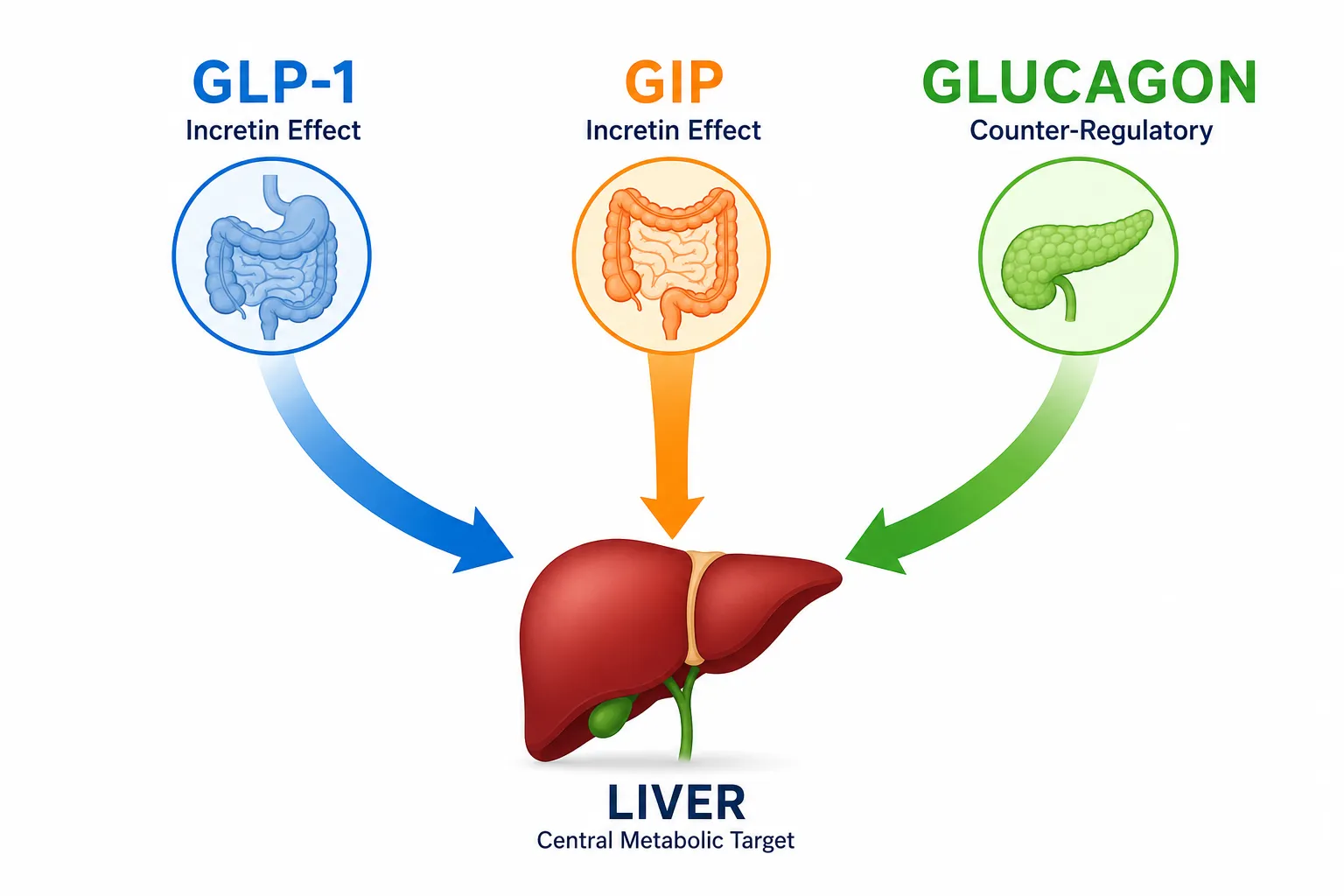
Bright editorial infographic-style landscape (): labeled diagram of three receptor pathways — GLP-1, GIP, and glucagon —

Key Takeaways

  • Retatrutide simultaneously activates GLP-1, GIP, and glucagon receptors, giving it a broader metabolic reach than dual-agonist or single-agonist alternatives.
  • Phase 2a data published in Nature Medicine showed relative liver-fat reductions exceeding 70% at higher doses, with steatosis resolution in the majority of participants.
  • MASLD (Metabolic dysfunction-Associated Steatotic Liver Disease) researchers are now debating whether older endpoints, such as modest fat reduction thresholds, remain adequate benchmarks.
  • Histologic improvement, not just imaging-based fat reduction, is emerging as the next critical endpoint frontier.
  • Researchers sourcing retatrutide for preclinical work should prioritize verified purity and documented assay data.

Why MASLD Needed a New Benchmark

Metabolic dysfunction-Associated Steatotic Liver Disease replaced the older "NAFLD" terminology to better reflect the condition's metabolic roots. The renaming was more than cosmetic, it signaled a shift toward treating liver disease as an organ-level consequence of systemic metabolic dysfunction, not an isolated condition.

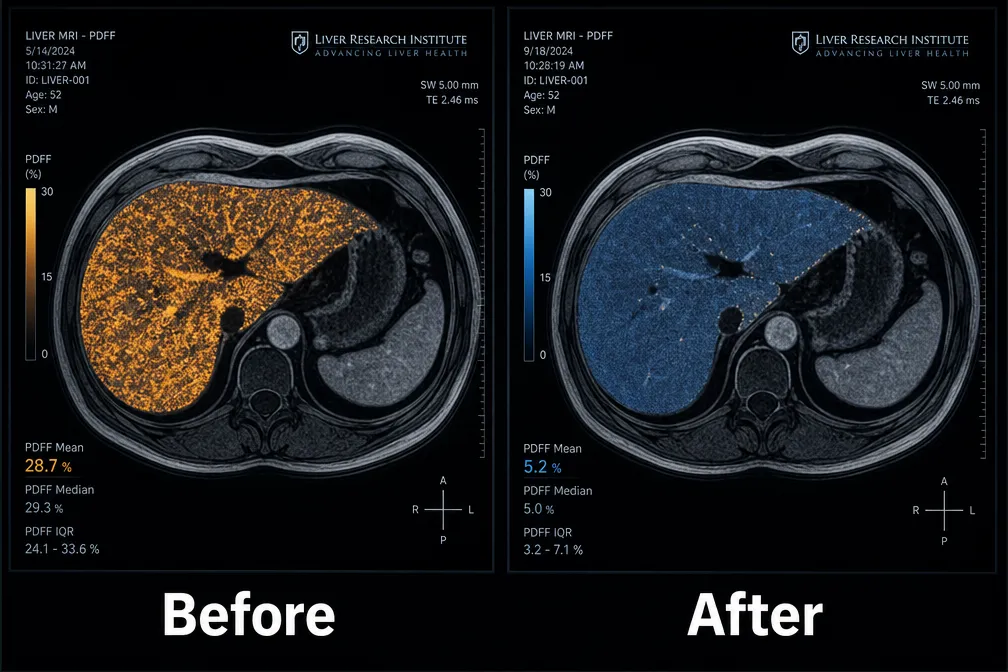
For years, clinical trials defined success as a relative reduction in liver fat of 30% or more by MRI-PDFF (magnetic resonance imaging proton density fat fraction). That threshold made sense when available therapies could barely reach it. Retatrutide has made it look modest.

Why does this matter for endpoint design?

  • Trials built around 30% reduction thresholds may underestimate a drug's true biological impact.
  • Regulators and investigators are now asking whether resolution of steatosis, not just reduction, should be the primary bar.
  • Histologic endpoints (biopsy-confirmed MASH resolution without worsening fibrosis) are gaining weight as co-primary outcomes.

The GLP-3 retatrutide peptide research overview provides useful background on how the molecule's receptor profile distinguishes it from earlier GLP-1-only compounds.

The Triple-Agonist Mechanism Driving Liver-Fat Results

Retatrutide's defining feature is its simultaneous activity at three receptors: GLP-1R, GIPR, and GCGR (glucagon receptor). Each contributes to the liver-fat story in a distinct way.

Receptor Primary Liver-Relevant Action
GLP-1R Reduces hepatic glucose output, improves insulin sensitivity
GIPR Enhances lipid clearance, supports adipose remodeling
GCGR Directly stimulates hepatic fat oxidation

The glucagon component is especially significant for MASLD. Glucagon receptor activation accelerates beta-oxidation, the process by which liver cells burn fatty acids for energy. Earlier GLP-1 agonists largely bypassed this pathway. By adding glucagon agonism, retatrutide essentially recruits the liver's own fat-burning machinery rather than relying solely on upstream metabolic improvements.

This mechanistic depth helps explain why the phase 2a trial results were so striking. At the highest doses studied, more than 80% of participants achieved steatosis resolution by MRI-PDFF criteria, a figure that outpaced anything previously reported for a pharmacological intervention in this disease area.

Researchers interested in the broader landscape of metabolic peptides may also find value in reviewing tesa's mechanisms and fat-loss research, which similarly targets visceral and hepatic fat through a different pathway.

For those exploring related receptor biology, the GLP-2 receptor tag offers additional context on incretin-family signaling in metabolic tissues.

Retatrutide and MASLD: How Triple-Agonist Research Is Reframing Liver-Fat Endpoints in Clinical Practice

Retatrutide and MASLD: How Triple-Agonist Research Is Reframing Liver-Fat Endpoints in Clinical Practice

The phase 2a data published in Nature Medicine did more than demonstrate efficacy, they created a measurement problem. When a drug achieves greater than 70% relative liver-fat reduction and resolves steatosis in the majority of subjects at higher doses, the field must ask: are current endpoints sensitive enough to differentiate between candidates, or do they simply confirm a floor?

Three shifts now underway in MASLD trial design:

  1. Raising the resolution bar. Some investigators now propose complete steatosis resolution (liver fat below 5% by MRI-PDFF) as a primary endpoint rather than a secondary one.
  2. Integrating histology earlier. Biopsy-confirmed MASH resolution without fibrosis progression is moving from exploratory to co-primary status in phase 3 designs.
  3. Longer follow-up windows. Durable liver-fat suppression, not just end-of-treatment snapshots, is becoming a key differentiator.

For preclinical researchers building MASLD study protocols, understanding what GLP-3 retatrutide is and how it is named can help clarify nomenclature when reviewing cross-study literature.

Mitochondrial health is another area gaining attention in MASLD research. Compounds like SS-31 are being studied for their role in hepatic mitochondrial dynamics, see the SS-31 mitochondrial dynamics research summary for parallel mechanistic context.

What Researchers Should Watch Next

The most important open questions in retatrutide-MASLD research heading into late 2026 center on three areas:

Fibrosis outcomes. Liver-fat reduction is necessary but not sufficient. Phase 3 trials must demonstrate that steatosis resolution translates into meaningful antifibrotic effects, the endpoint that actually predicts long-term liver-related mortality.

Dose-response durability. The phase 2a trial showed a clear dose-response relationship for liver-fat reduction. Whether the highest-dose benefits are maintained beyond 48 weeks, and whether any rebound occurs after discontinuation, remains to be established.

Biomarker validation. Non-invasive biomarkers, including liver stiffness measurement and circulating fibrosis panels, are being evaluated as surrogate endpoints. Their validation against biopsy data in retatrutide-treated cohorts will shape how future trials are powered.

Researchers sourcing retatrutide for preclinical investigations should consult verified suppliers. The retatrutide 10mg product page and the GLP-3 retatrutide 10mg product listing both offer documented purity specifications relevant to laboratory-grade work.

What Researchers Should Watch Next

Conclusion

Retatrutide and MASLD: How Triple-Agonist Research Is Reframing Liver-Fat Endpoints represents one of the most consequential developments in hepatology research in over a decade. The data are clear: triple-receptor agonism produces liver-fat reductions that older endpoints were never designed to fully capture.

For researchers and clinicians, the actionable steps are straightforward. First, review current MASLD trial protocols against the new efficacy benchmarks emerging from phase 2a data, endpoints built for modest reductions may need revision. Second, prioritize histologic and fibrosis outcomes alongside imaging-based fat measures in any new study design. Third, monitor phase 3 trial publications closely, as durability and antifibrotic data will define retatrutide's ultimate clinical position.

The field is moving fast. Researchers who align their endpoint frameworks with the new evidence now will be better positioned to contribute meaningfully to the next generation of MASLD trials.

https://www.puretestedpeptides.com/wp-content/uploads/2026/07/retatrutide-and-masld-how-triple-agonist-research-is-reframing-liver-fat-endpoin-1.webp 1024 1536 https://www.puretestedpeptides.com/wp-content/uploads/2026/01/buy-peptides-online.jpg 2026-07-28 13:14:132026-07-28 13:14:13Retatrutide and MASLD: How Triple-Agonist Research Is Reframing Liver-Fat Endpoints
Retatrutide Phase 3 and Beyond: What Ongoing Obesity Trials Mean for Research Readers

Retatrutide Phase 3 and Beyond: What Ongoing Obesity Trials Mean for Research Readers

July 28, 2026/0 Comments/in Uncategorized/by

Obesity now affects more than one billion people worldwide, and the pharmaceutical pipeline has never moved faster to address it. At the center of that momentum is retatrutide, a triple-receptor agonist that produced weight-loss results in Phase 2 trials that surprised even seasoned researchers. For anyone tracking the obesity drug pipeline, understanding Retatrutide Phase 3 and Beyond: What Ongoing Obesity Trials Mean for Research Readers is no longer optional, it is essential context for interpreting what comes next without overreading early signals.

Key Takeaways

  • Retatrutide simultaneously activates GLP-1, GIP, and glucagon receptors, setting it apart from dual-agonist competitors.
  • Phase 2 data showed up to 24% mean body weight reduction at 48 weeks, among the highest figures recorded in an obesity drug trial.
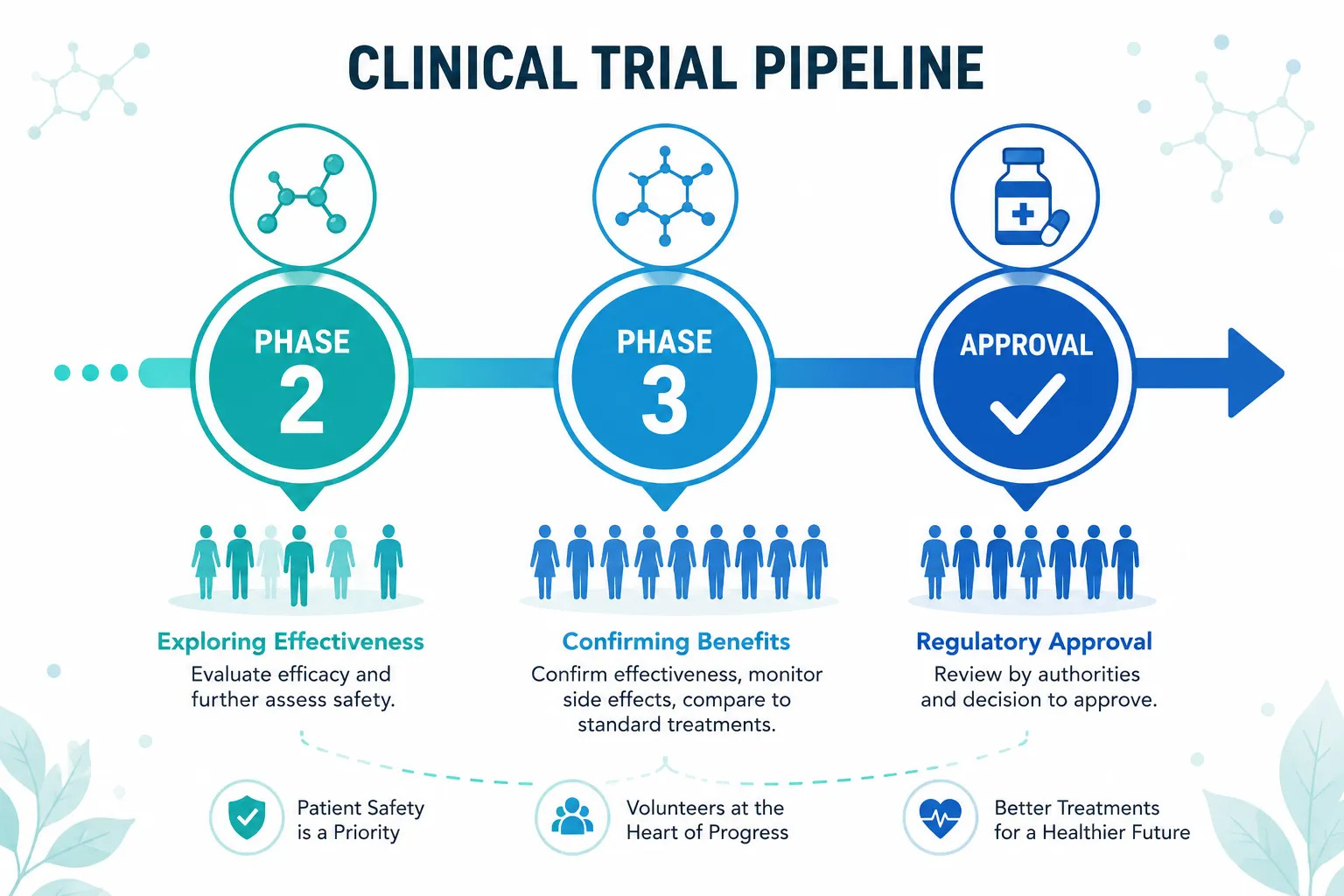
  • Phase 3 trials (the TRIUMPH program) are actively enrolling and will provide the larger, longer-term safety and efficacy data that Phase 2 cannot.
  • Research readers should distinguish between statistically significant results and clinically meaningful outcomes before drawing conclusions.
  • The broader GLP-1 and multi-agonist peptide research space is expanding rapidly, with retatrutide representing one of several active pipelines.

Understanding the Triple-Agonist Mechanism Behind the Headlines

Retatrutide (LY3437943) is developed by Eli Lilly. Unlike semaglutide or tirzepatide, it targets three receptors simultaneously: GLP-1 (glucagon-like peptide-1), GIP (glucose-dependent insulinotropic polypeptide), and glucagon receptors. This triple action is the core reason researchers are watching it so closely.

  • GLP-1 receptor activation suppresses appetite and slows gastric emptying.
  • GIP receptor activation enhances insulin secretion and may improve the tolerability of GLP-1 effects.
  • Glucagon receptor activation increases energy expenditure and promotes fat breakdown in the liver.

The combination theoretically creates a stronger metabolic effect than any single pathway alone. For readers exploring the broader landscape of metabolic peptides, it is worth noting that GLP-1 class peptides represent a rapidly growing category of research compounds, and retatrutide sits at the frontier of that category.

"Triple agonism is not just additive, it may be synergistic, which is why the Phase 2 weight-loss numbers were so striking."

What Phase 2 Results Actually Showed, and What They Did Not

What Phase 2 Results Actually Showed, and What They Did Not

The Phase 2 SURMOUNT-adjacent trial published in 2023 enrolled 338 adults with obesity or overweight. At the highest dose (12 mg weekly), participants lost a mean of 24.2% of body weight at 48 weeks. That figure circulated widely and generated significant excitement.

However, research readers should apply careful filters before extrapolating:

What Phase 2 Established What Phase 2 Did Not Establish
Dose-response relationship Long-term cardiovascular outcomes
Short-term tolerability profile Safety in diverse real-world populations
Preliminary efficacy signals Durability of weight loss after discontinuation
Biomarker improvements (lipids, glucose) Regulatory-grade safety data

Phase 2 trials are designed to find the right dose and detect obvious safety signals, not to confirm that a drug is safe and effective for broad clinical use. The sample size is intentionally small. Adverse events that occur in fewer than 1 in 100 patients may not appear at all.

For context on how peptide research benchmarks are established before large trials, the Bachem reference standards and peptide benchmarking guide provides useful background on how analytical rigor shapes compound evaluation.

Retatrutide Phase 3 and Beyond: What Ongoing Obesity Trials Mean for Research Readers

Retatrutide Phase 3 and Beyond: What Ongoing Obesity Trials Mean for Research Readers

The TRIUMPH Phase 3 program is the critical next step. As of 2026, multiple arms of this program are actively running, covering:

  • Adults with obesity (BMI 30 or above)
  • Adults with obesity and type 2 diabetes
  • Cardiovascular outcomes in high-risk populations
  • Adolescents with obesity (a newer, closely watched cohort)

Phase 3 trials typically enroll thousands of participants across multiple countries and run for one to five years. This scale is what allows researchers to detect rarer adverse events, assess durability, and compare outcomes across demographic subgroups.

What research readers should watch for in Phase 3 reporting:

  1. Primary endpoint clarity, Is the trial powered for weight loss, cardiovascular events, or both?
  2. Dropout and completion rates, High dropout can bias results in either direction.
  3. Comparator arms, Is retatrutide being tested against placebo, tirzepatide, or standard of care?
  4. Safety signal monitoring, Thyroid C-cell findings (a concern with GLP-1 agents in rodents) will be tracked closely.

Understanding how multi-receptor peptides interact with metabolic pathways is also relevant to adjacent research areas. Readers interested in related receptor research may find the MC4R research tag useful for exploring how central appetite-regulation pathways connect to broader obesity biology.

How to Interpret Ongoing Trial Data Without Overreading It

How to Interpret Ongoing Trial Data Without Overreading It

One of the most common mistakes in following active drug trials is treating interim data as definitive. Here is a practical framework for staying grounded:

Apply the "so what" test to every headline. A statistically significant result means the finding is unlikely to be due to chance, it does not automatically mean the effect is large enough to matter clinically.

Track the full publication, not the press release. Pharmaceutical companies release top-line results before peer-reviewed data is available. The full dataset often reveals nuances, particularly around adverse event rates and subgroup performance, that headlines omit.

Compare effect sizes in context. Retatrutide's Phase 2 weight-loss figures exceeded those of tirzepatide at comparable time points. But tirzepatide itself exceeded semaglutide. Each comparison requires matching dose, duration, and population characteristics.

Monitor regulatory milestones, not just trial milestones. A successful Phase 3 trial is necessary but not sufficient for approval. The FDA and EMA review manufacturing consistency, labeling, and risk-management plans alongside efficacy data.

For research readers building a broader understanding of the peptide research landscape, including how compounds like GLP-3 class agents are being characterized, staying current with the research blog provides ongoing context across multiple peptide categories.

Those specifically tracking retatrutide's compound profile for research purposes can also review available Reta 10mg research material listings for sourcing context.

Conclusion

Retatrutide Phase 3 and Beyond: What Ongoing Obesity Trials Mean for Research Readers comes down to one discipline: calibrated patience. The Phase 2 data is genuinely remarkable, but it is a starting point, not a conclusion. Phase 3 will answer the questions that matter most: long-term safety, cardiovascular impact, durability after treatment ends, and performance across diverse populations.

Actionable next steps for research readers in 2026:

  • Bookmark ClinicalTrials.gov entries for the TRIUMPH program and set alerts for status updates.
  • Read full peer-reviewed publications rather than relying on company press releases.
  • Cross-reference retatrutide findings with the broader multi-agonist literature, including tirzepatide and emerging GLP-1/glucagon dual agents.
  • Apply the Phase 2 vs. Phase 3 interpretive framework above every time new data surfaces.
  • Explore how adjacent peptide mechanisms, including peptide supplier quality standards, affect the reliability of research-grade compounds used in parallel studies.

The obesity treatment pipeline is moving at an unprecedented pace. Staying analytically rigorous, rather than reactive, is what separates informed research readers from those chasing headlines.

https://www.puretestedpeptides.com/wp-content/uploads/2026/07/retatrutide-phase-3-and-beyond-what-ongoing-obesity-trials-mean-for-research-rea-1.webp 1024 1536 https://www.puretestedpeptides.com/wp-content/uploads/2026/01/buy-peptides-online.jpg 2026-07-28 13:04:352026-07-28 13:04:35Retatrutide Phase 3 and Beyond: What Ongoing Obesity Trials Mean for Research Readers
Page 8 of 8«‹678

Tag Archive for: retatrutide

Nothing Found

Sorry, no posts matched your criteria

×

Helpful Links

  • My account
  • Cart
  • Checkout
  • Refund and Returns Policy
  • Privacy Policy
  • SMS Privacy Policy
  • Login
  • My Account
  • Logout

USA Made Lab Tested Peptides

All products are sold for research, laboratory, or analytical purposes only, and are not for human consumption


Pure Tested Peptides is a chemical supplier. Pure Tested Peptides is not a compounding / chemical compounding facility as defined under 503A of the Federal Food, Drug, and Cosmetic act. Pure Tested Peptides is not an outsourcing facility as defined under 503B of the Federal Food, Drug, and Cosmetic act.

The statements made within this website have not been evaluated by the US Food and Drug Administration. The products we offer are not intended to diagnose, treat, cure or prevent any disease.

Human/Animal Consumption Prohibited. Laboratory/In-Vitro Experimental Use Only

Scroll to top Scroll to top Scroll to top